Proceso de Planificación Estratégica: Los 6 Pasos Explicados (Con Ejemplos)
Turn this article into takeaways for your work.


Each assistant summarizes the article only for you and suggests best practices for your work.
La mayoría de las organizaciones tienen una estrategia. Muchas menos cuentan con un proceso para construirla. El proceso de planificación estratégica es lo que transforma las buenas intenciones en un plan coordinado y acotado en el tiempo sobre el que todos, desde la alta dirección hasta el primer nivel operativo, pueden realmente actuar. Cuando se hace bien, alinea los recursos con las prioridades correctas. Cuando se omite, el resultado es una presentación elaborada que nadie sigue.
¿Qué es el proceso de planificación estratégica?
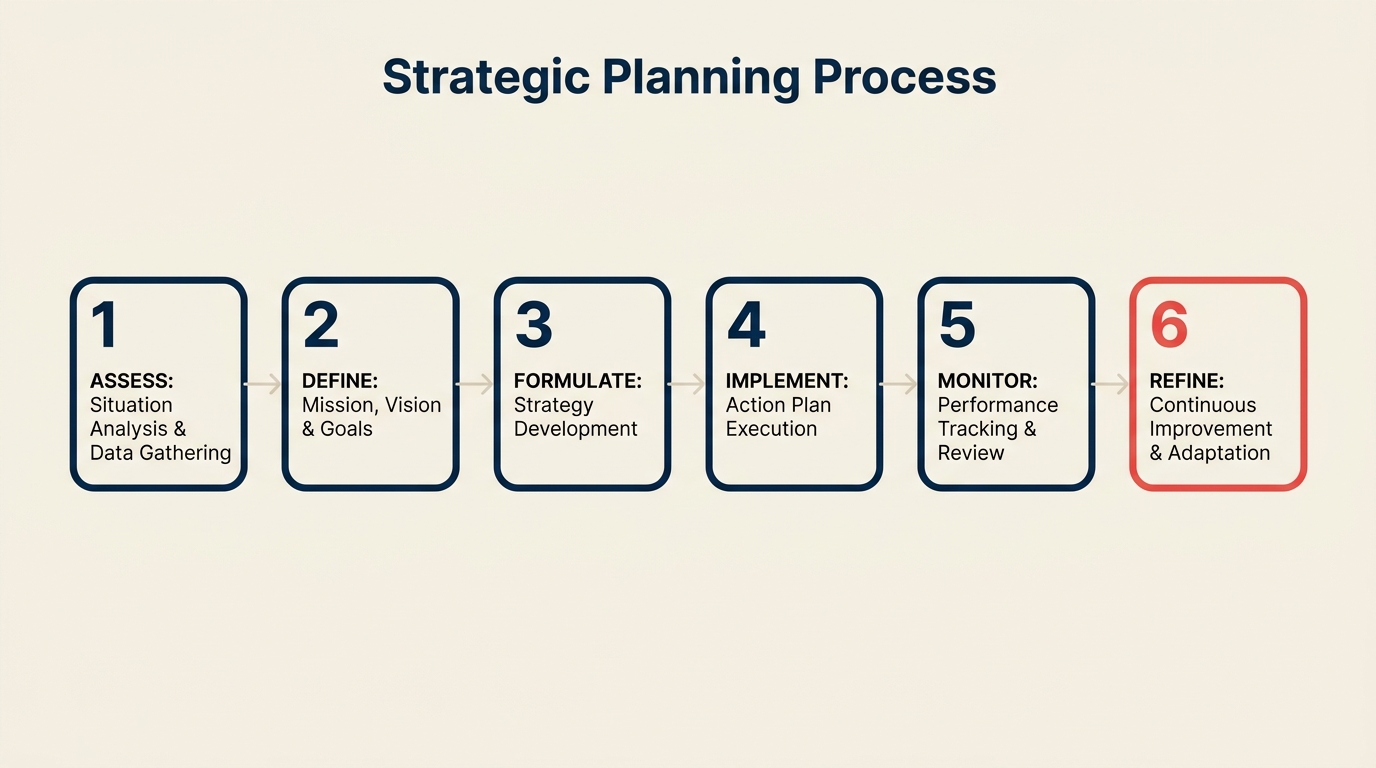
El proceso de planificación estratégica es una secuencia estructurada de pasos que una organización utiliza para definir su dirección, asignar recursos, establecer prioridades y determinar cómo medirá el éxito durante un horizonte de planificación definido, normalmente de uno a cinco años.
Comienza con la clarificación del propósito y termina con un bucle de retroalimentación que evita que el plan quede obsoleto. Entre medias, los líderes evalúan el entorno competitivo, establecen objetivos y toman decisiones deliberadas sobre dónde centrarse y dónde no. El resultado no es solo un documento. Es un compromiso compartido con una dirección respaldada por acciones específicas y responsables.
Datos clave
- Las organizaciones que siguen un proceso de planificación estratégica formal tienen el doble de probabilidades de alcanzar sus objetivos de rendimiento que las que planifican de forma informal (Harvard Business Review, 2023).
- Solo el 40% de los empleados afirma que la estrategia de su organización está bien comunicada, lo que significa que las brechas de ejecución comienzan con fallos de comunicación, no solo con errores de planificación (Gartner, 2024).
- Las empresas que revisan la estrategia trimestralmente en lugar de anualmente tienen un 30% más de probabilidades de adaptarse antes de que un cambio de mercado les afecte (McKinsey, 2022).
Por qué importa el proceso de planificación estratégica
Sin un proceso deliberado, la estrategia se convierte en la agenda de quien grita más fuerte o de la iniciativa con el patrocinador interno más influyente. Los recursos se dispersan. Los equipos tiran en direcciones distintas. Y cuando el liderazgo lo nota, meses de esfuerzo se han acumulado en forma de deriva.
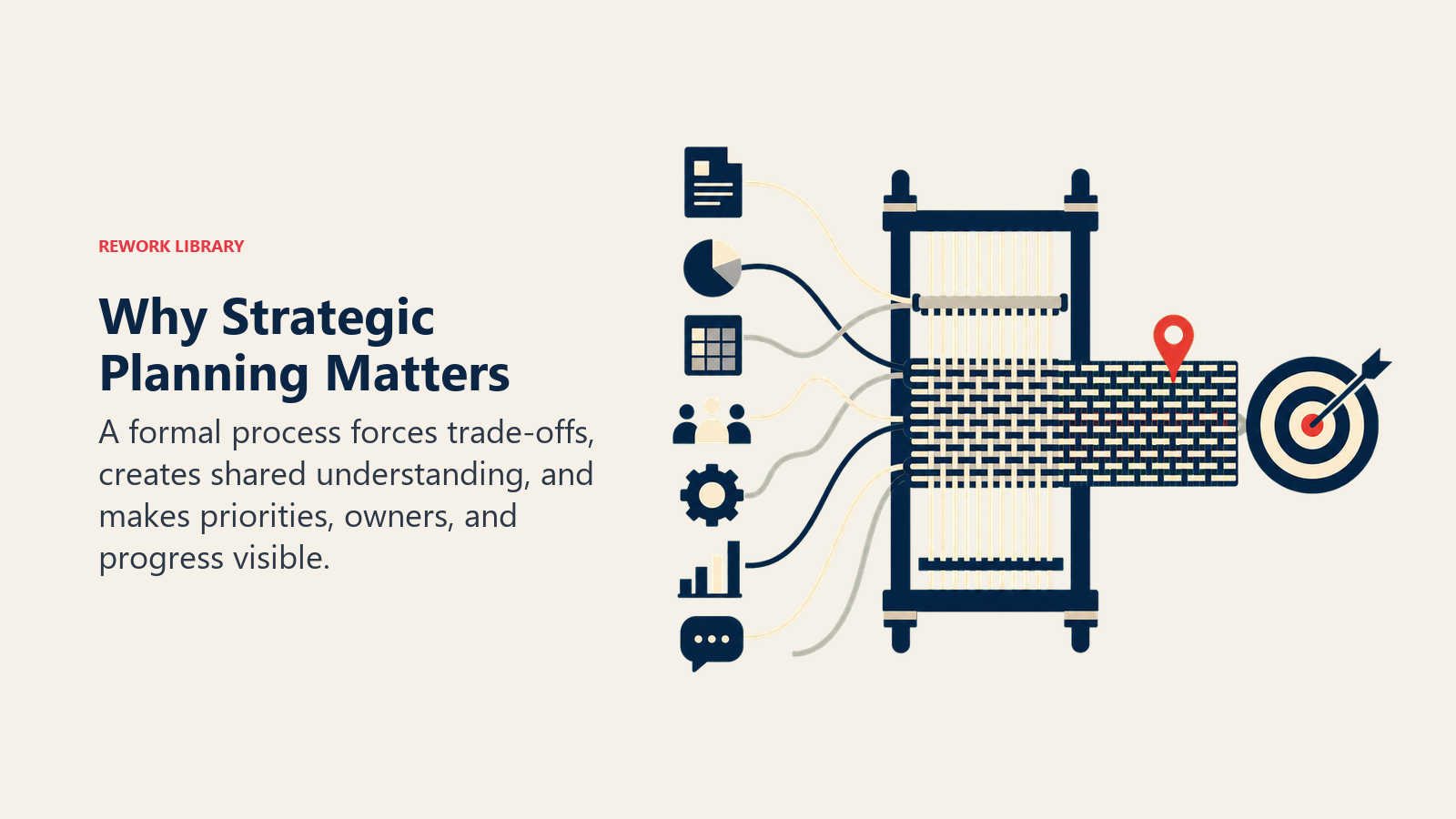
Un proceso formal hace tres cosas que ninguna cantidad de buenas intenciones puede reemplazar.
Obliga a tomar decisiones difíciles. Toda organización tiene más ideas que capacidad. Un proceso estructurado pone de manifiesto las decisiones de equilibrio de forma explícita: si invertimos aquí, ¿qué no hacemos? Los líderes que omiten el proceso suelen descubrir a mitad de año que se comprometieron con demasiadas prioridades y realmente no pueden cumplir ninguna.
Crea una comprensión compartida. Cuando un equipo atraviesa el mismo análisis del entorno, debate el mismo conjunto de objetivos y acuerda las mismas métricas de éxito, todos salen con un modelo mental común. Ese modelo les acompaña en cada decisión trimestral, en cada conversación presupuestaria y en cada contratación.
Genera rendición de cuentas. Un plan con responsables, hitos y fechas de revisión es auditable. Las personas saben a qué se comprometieron. El progreso es visible. Esa visibilidad resulta incómoda a veces, pero es lo que hace real el plan.
Los 6 pasos del proceso de planificación estratégica
Los pasos que se presentan a continuación reflejan la estructura más ampliamente utilizada, basada en marcos de McKinsey, Bain y las principales escuelas de negocios. La terminología varía entre organizaciones, pero la lógica subyacente se mantiene independientemente del término que se use.
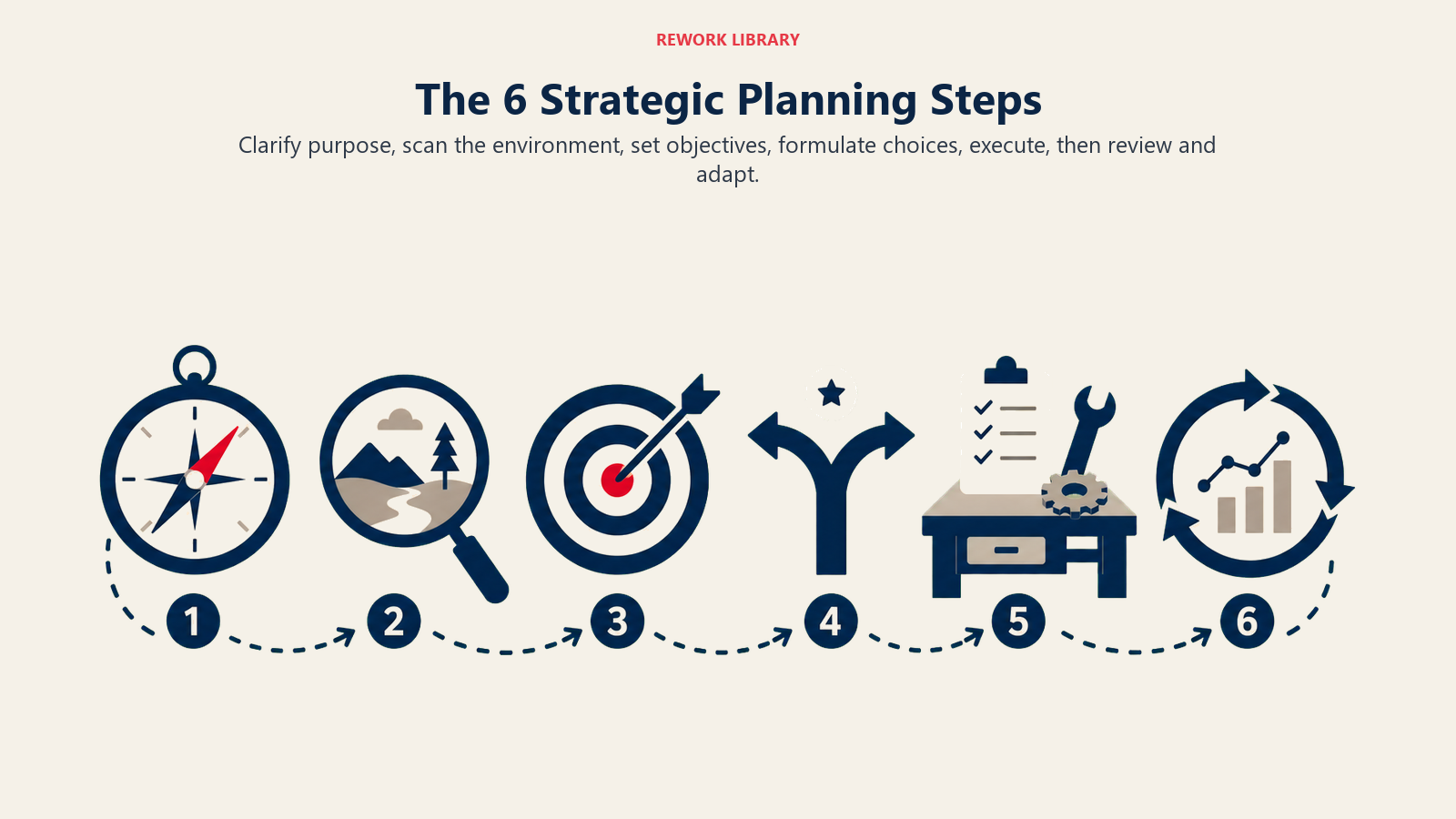
Paso 1: Clarifique la misión, la visión y los valores
Antes de analizar mercados o establecer objetivos, el liderazgo debe acordar por qué existe la organización y hacia dónde se dirige en última instancia.
Su misión responde a "¿qué hacemos y para quién?" Su visión responde a "¿cómo es el éxito en 5 a 10 años?" Sus valores definen los principios que delimitan cómo perseguir ambos.
Estas declaraciones suenan abstractas, pero realizan un trabajo práctico serio. Una empresa manufacturera cuya misión se centra en la excelencia operativa tomará decisiones estratégicas muy diferentes a una cuya misión se centra en la innovación en diseño. La misión es el filtro a través del cual pasan todos los pasos siguientes.
Si su misión y visión actuales ya no reflejan el negocio en el que se ha convertido, este es el momento de revisarlas antes de superponer objetivos sobre una base que ya no encaja.
Paso 2: Realice un análisis del entorno
Con la dirección establecida, el siguiente paso es una evaluación honesta del panorama: fortalezas y debilidades internas, oportunidades y amenazas externas. También ayuda a juzgar cuán predecible es ese panorama, que es donde el marco Cynefin demuestra su valor, clasificando las situaciones en simples, complicadas, complejas y caóticas para que el enfoque de planificación se ajuste a las condiciones reales.
Las herramientas más habituales son:
- Análisis SWOT (Fortalezas, Debilidades, Oportunidades y Amenazas): Mapea las capacidades internas frente a las condiciones externas. Resulta más útil cuando se realiza con rigor honesto que como un ejercicio complaciente.
- Análisis PESTEL (Político, Económico, Social, Tecnológico, Ambiental y Legal): Analiza el macroentorno en busca de fuerzas que podrían reconfigurar el sector durante el horizonte de planificación.
- Análisis comparativo de la competencia: Identifica dónde los competidores están ganando terreno y dónde su organización tiene ventajas defensibles.
El análisis debe poner de manifiesto hechos, no reforzar las creencias existentes. Incorpore datos: investigación de clientes, informes de mercado, comparativas financieras. El objetivo es saber realmente con qué se está trabajando antes de comprometer recursos.
Véase nuestra guía en profundidad sobre análisis SWOT para obtener instrucciones paso a paso sobre cómo ejecutar el análisis.
Paso 3: Establezca los objetivos estratégicos
Los objetivos estratégicos traducen la visión en resultados específicos y medibles que la organización pretende alcanzar dentro del período de planificación.
Los buenos objetivos estratégicos comparten varias características. Son lo suficientemente específicos como para ser verificables. Tienen un horizonte temporal definido. Se conectan directamente con la misión y los resultados del análisis del entorno. Y son limitados en número: la mayoría de las organizaciones puede ejecutar de tres a cinco objetivos estratégicos a escala real. Más que eso y se está distribuyendo el esfuerzo en demasiados frentes.
Marcos como los OKR (Objetivos y Resultados Clave) y los objetivos empresariales SMART son útiles en este paso. Para una guía completa sobre cómo redactarlos y desplegarlos correctamente, véase objetivos estratégicos. Estos marcos imponen precisión. En lugar de "mejorar la satisfacción del cliente", se obtiene "lograr un Net Promoter Score superior a 65 para el cuarto trimestre de 2027". La diferencia es enorme cuando llega el momento de asignar recursos y medir resultados.
El cuadro de mando integral es otra herramienta que vale la pena considerar aquí. Estructura los objetivos en cuatro perspectivas (financiera, clientes, procesos internos y aprendizaje y crecimiento) para garantizar que el plan sea equilibrado en lugar de estrictamente financiero.
Paso 4: Formule la estrategia
Con los objetivos establecidos, este paso pregunta: ¿cómo llegaremos realmente ahí? La formulación de la estrategia consiste en tomar decisiones deliberadas sobre el enfoque, no simplemente en listar cosas que le gustaría hacer.
Preguntas clave en este paso:
- ¿Qué mercados o segmentos de clientes debemos priorizar y cuáles debemos relegar a un segundo plano?
- ¿Dónde vamos a competir y en qué base (precio, calidad, servicio, velocidad)?
- ¿Qué capacidades necesitamos construir, tomar prestadas o comprar?
- ¿Qué iniciativas importantes financiaremos y a qué nivel?
Este es el paso donde los niveles de estrategia se vuelven concretos. Las decisiones a nivel corporativo sobre cartera y asignación de capital se despliegan en estrategias competitivas de unidades de negocio, que a su vez se despliegan en planes funcionales de marketing, operaciones, finanzas y personas.
Evite la trampa de formular la estrategia como una lista de actividades. Las actividades describen lo que harán las personas. La estrategia describe la lógica de cómo esas actividades, tomadas en conjunto, crearán ventaja competitiva. La prueba de una buena estrategia es que explica por qué el enfoque elegido funcionará mejor que las alternativas que rechazó.
Paso 5: Implemente y ejecute
La formulación de la estrategia recibe la mayor atención. La ejecución es donde la mayoría de los planes fracasan. La implementación convierte la estrategia en iniciativas financiadas con responsables con nombre, hitos claros y los recursos para realizar el trabajo.
El Marco de las 7S de McKinsey es un buen punto de vista aquí. Comprueba si la estructura, los sistemas, los valores compartidos, el personal, las habilidades y el estilo de la organización están alineados con la estrategia, no solo con el plan declarado. Una estrategia que requiere una cultura colaborativa pero se implementa en una organización muy compartimentada tendrá dificultades independientemente de lo bien que luzca el plan.
Pasos prácticos de implementación:
- Desglose cada objetivo estratégico en iniciativas financiadas con un responsable con nombre y una fecha de finalización.
- Alinee el presupuesto anual con la estrategia. Si el presupuesto no refleja las prioridades, la estrategia no es real.
- Comunique la estrategia en un lenguaje sencillo a las personas que la ejecutarán. No asuma que el plan se transmitirá por sí mismo a través de una presentación.
- Establezca un ritmo de gobernanza: revisiones periódicas a cada nivel, con una vía de escalada clara cuando algo se desvíe.
La disciplina de ejecución de la estrategia es un campo en sí mismo. Cuando se hace mal, incluso las estrategias brillantes no producen nada. Cuando se hace bien, la ejecución es la capacidad organizacional que transforma buenos planes en resultados duraderos.
Paso 6: Monitoree, revise y adapte
El paso final es un bucle, no un punto final. Los mercados cambian. Los competidores se mueven. Las suposiciones que hizo en el paso dos resultan incorrectas. Un plan estratégico que no se adapta no es un plan; es una predicción.
Un seguimiento eficaz tiene tres componentes:
- Revisiones periódicas del rendimiento: Haga un seguimiento de las métricas clave con una cadencia definida, normalmente mensual para los datos operativos y trimestral para el progreso estratégico.
- Revisiones estructuradas de la estrategia: Al menos anualmente, revise el plan completo con datos del entorno actualizados. Pregunte si los objetivos estratégicos siguen reflejando las prioridades correctas.
- Revisiones basadas en detonadores: Defina las condiciones que automáticamente motivarían una recalibración de la estrategia: un movimiento relevante de un competidor, un cambio regulatorio, una disrupción tecnológica. No espere al ciclo anual.
El cuadro de mando integral está diseñado específicamente para este tipo de seguimiento estratégico continuo. Convierte la estrategia en un conjunto de métricas vinculadas que el liderazgo puede revisar periódicamente, en lugar de tratar la estrategia como algo que solo existe en una sesión de planificación anual.
Ejemplos del proceso de planificación estratégica
La secuencia central se adapta a diferentes tipos de organizaciones. A continuación se muestra cómo se ven los seis pasos en la práctica en distintos niveles.
| Tipo de organización | Claridad de misión | Análisis del entorno | Objetivos | Formulación de estrategia | Ejecución | Cadencia de revisión |
|---|---|---|---|---|---|---|
| Gran empresa (más de 3.000 empleados) | Narrativa estratégica a nivel de consejo actualizada cada 3 años | SWOT completo más PESTEL, con apoyo de consultores externos | De 3 a 5 OKR para toda la empresa desplegados a nivel de unidad de negocio | Reasignación de cartera, análisis de M&A, decisiones de entrada a nuevos mercados | Oficina de estrategia dedicada, revisiones trimestrales de negocio | Revisión anual completa, paneles de control trimestrales |
| Empresa mediana (200-1.000 empleados) | Misión impulsada por el fundador o CEO con adhesión del equipo ejecutivo | Taller SWOT interno, entrevistas a clientes, análisis comparativo de la competencia | De 4 a 6 objetivos SMART con responsables departamentales | Priorización del crecimiento orgánico, inversión en capacidad, selección de canal | Los directores de departamento son responsables de la ejecución, sincronizaciones de liderazgo quincenales | Revisión semestral de la estrategia, seguimiento mensual de KPI |
| Pequeña empresa (menos de 50 empleados) | Misión y visión de una página redactadas por el equipo fundador | SWOT simplificado centrado en el mercado inmediato y los 3 principales competidores | De 2 a 3 objetivos medibles para los próximos 12 meses | Decisiones de enfoque: qué segmento de clientes atender, qué servicios eliminar | Responsabilidad de toda la organización, revisiones operativas semanales | Revisión trimestral, reinicio anual |
| Organización sin fines de lucro | Misión basada en el impacto social o comunitario | Evaluación de necesidades de las partes interesadas, análisis del panorama de financiación | Resultados a nivel de programa vinculados a los requisitos de las subvenciones y las prioridades del consejo | Estrategia de asociaciones, combinación de recaudación de fondos, decisiones sobre la cartera de programas | Los responsables de programa son propietarios de los entregables, ciclo de informes a los donantes | Revisiones por ciclo de subvención, sesión anual de estrategia del consejo |
Errores frecuentes
La mayoría de los fracasos en la planificación estratégica se remontan a un pequeño conjunto de errores recurrentes.
Confundir el plan con la estrategia. Un largo documento lleno de iniciativas no es una estrategia. La estrategia es una decisión sobre dónde competir y cómo ganar. Los planes describen acciones. Si no puede enunciar su estrategia en dos o tres frases, probablemente aún no la tiene.
Empezar con soluciones en lugar de con el diagnóstico. Los equipos suelen saltar a "¿qué deberíamos hacer?" antes de completar un análisis honesto del entorno. El resultado es un conjunto de iniciativas que reflejan preferencias existentes en lugar de necesidades estratégicas reales.
Establecer demasiados objetivos. Cinco prioridades estratégicas tratadas con igual urgencia equivalen a no tener prioridades. Cuando todo es importante, nada recibe los recursos que necesita para tener éxito. Imponga la decisión.
Omitir el despliegue. Una estrategia a nivel corporativo que no se traduce en mandatos de unidades de negocio y planes funcionales se mantiene abstracta. El despliegue desde la visión hasta la acción a nivel departamental es la parte más difícil e importante del proceso.
Planificar anualmente pero nunca revisar. Los mercados no hacen una pausa por su año fiscal. Una estrategia revisada solo a fin de año ya está operando con suposiciones de 12 meses de antigüedad. Incorpore revisiones trimestrales como mínimo.
Confundir la actividad con el progreso. Los equipos pueden estar ocupados ejecutando las cosas equivocadas. Mida los resultados vinculados a los objetivos estratégicos, no solo la finalización de tareas.
Mejores prácticas
- Realice el análisis del entorno antes de establecer los objetivos. El orden importa. Los objetivos establecidos sin un análisis riguroso reflejan más pensamiento desiderativo que realidad estratégica.
- Limite los objetivos estratégicos a cinco o menos. Menos prioridades, correctamente financiadas, superan sistemáticamente a listas largas de iniciativas financiadas a medias.
- Redacte la estrategia en lenguaje sencillo. Si la estrategia requiere un glosario para entenderse, no se desplegará a través de la organización. El lenguaje sencillo no es señal de pensamiento superficial.
- Asigne un responsable con nombre a cada iniciativa estratégica. La responsabilidad compartida casi siempre significa no tener responsabilidad cuando llega la presión.
- Conecte explícitamente el presupuesto con la estrategia. Si el objetivo de mayor prioridad no tiene la mayor parte del presupuesto discrecional, las prioridades reales de la organización no son las que dice el plan.
- Incorpore los ciclos de revisión al proceso desde el primer día. No trate el seguimiento como algo secundario. Prográmelo antes de que se lance el plan.
- Utilice las herramientas adecuadas en el paso adecuado. SWOT y PESTEL corresponden al análisis. Los OKR y el cuadro de mando integral corresponden al establecimiento de objetivos y al seguimiento. Las 7S de McKinsey corresponden al diseño de la implementación. Mezclar herramientas sin vincularlas al paso correspondiente genera confusión.

Senior Operations & Growth Strategist
On this page
- ¿Qué es el proceso de planificación estratégica?
- Por qué importa el proceso de planificación estratégica
- Los 6 pasos del proceso de planificación estratégica
- Paso 1: Clarifique la misión, la visión y los valores
- Paso 2: Realice un análisis del entorno
- Paso 3: Establezca los objetivos estratégicos
- Paso 4: Formule la estrategia
- Paso 5: Implemente y ejecute
- Paso 6: Monitoree, revise y adapte
- Ejemplos del proceso de planificación estratégica
- Errores frecuentes
- Mejores prácticas