Bowman's Strategy Clock: 8 Posiciones Competitivas
Turn this article into takeaways for your work.


Each assistant summarizes the article only for you and suggests best practices for your work.
Bowman's Strategy Clock ofrece a los estrategas una imagen clara de cómo puede competir cualquier empresa. Mapea todas las posiciones competitivas viables (y algunas inviables) combinando dos dimensiones: el precio que cobra una empresa y el valor percibido que reciben los clientes.
Comprender dónde se sitúa en el reloj es el primer paso hacia un posicionamiento competitivo deliberado en lugar de una deriva accidental.
¿Qué es Bowman's Strategy Clock?
Datos clave
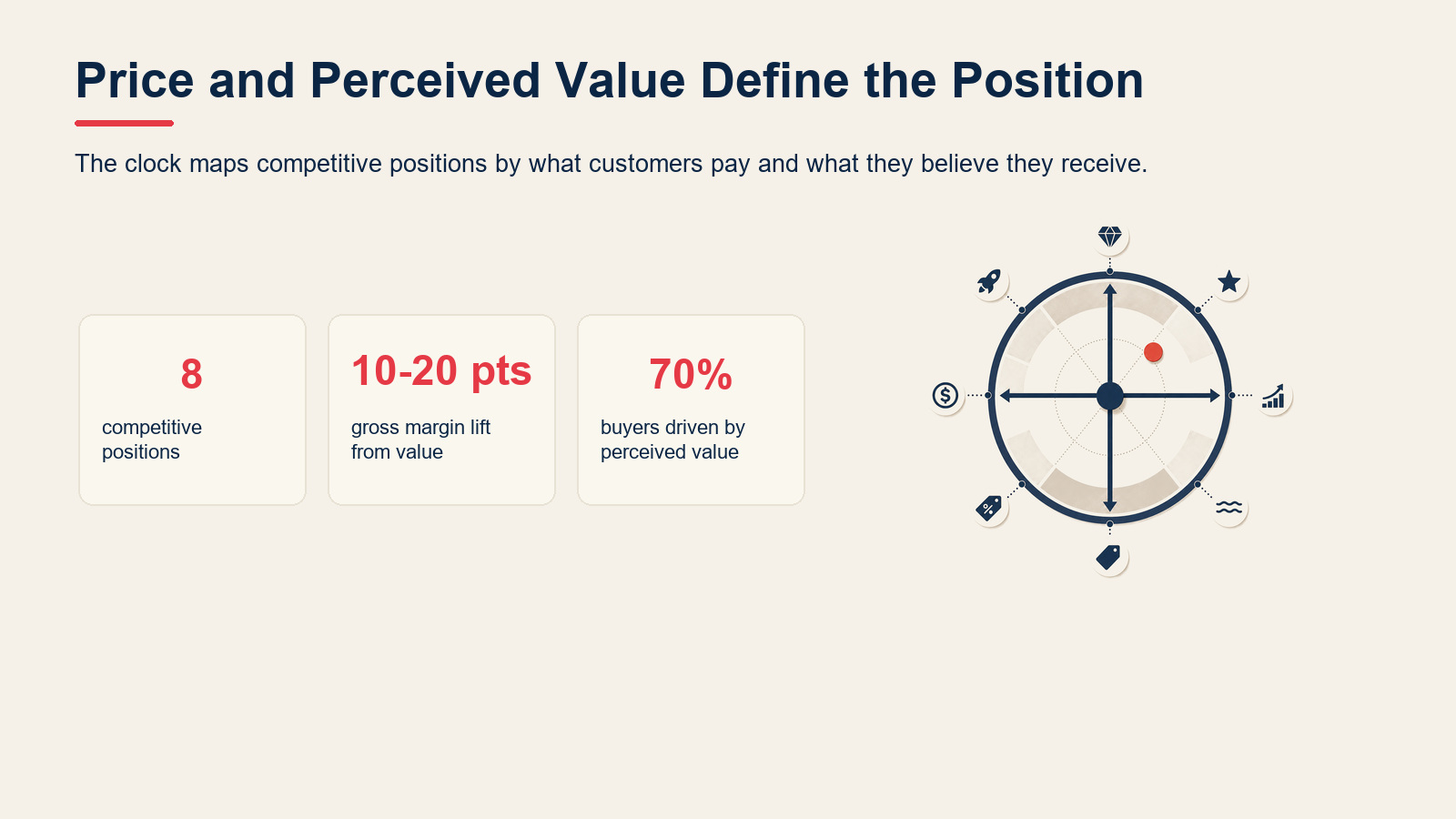
- Las empresas que compiten en valor percibido en lugar de solo en precio obtienen márgenes brutos entre 10 y 20 puntos porcentuales más altos que los competidores de puro costo (McKinsey Pricing Practice, 2023).
- El 70% de los compradores B2B afirma que el valor percibido es el principal impulsor de las decisiones de compra, por delante del precio (Gartner, 2022).
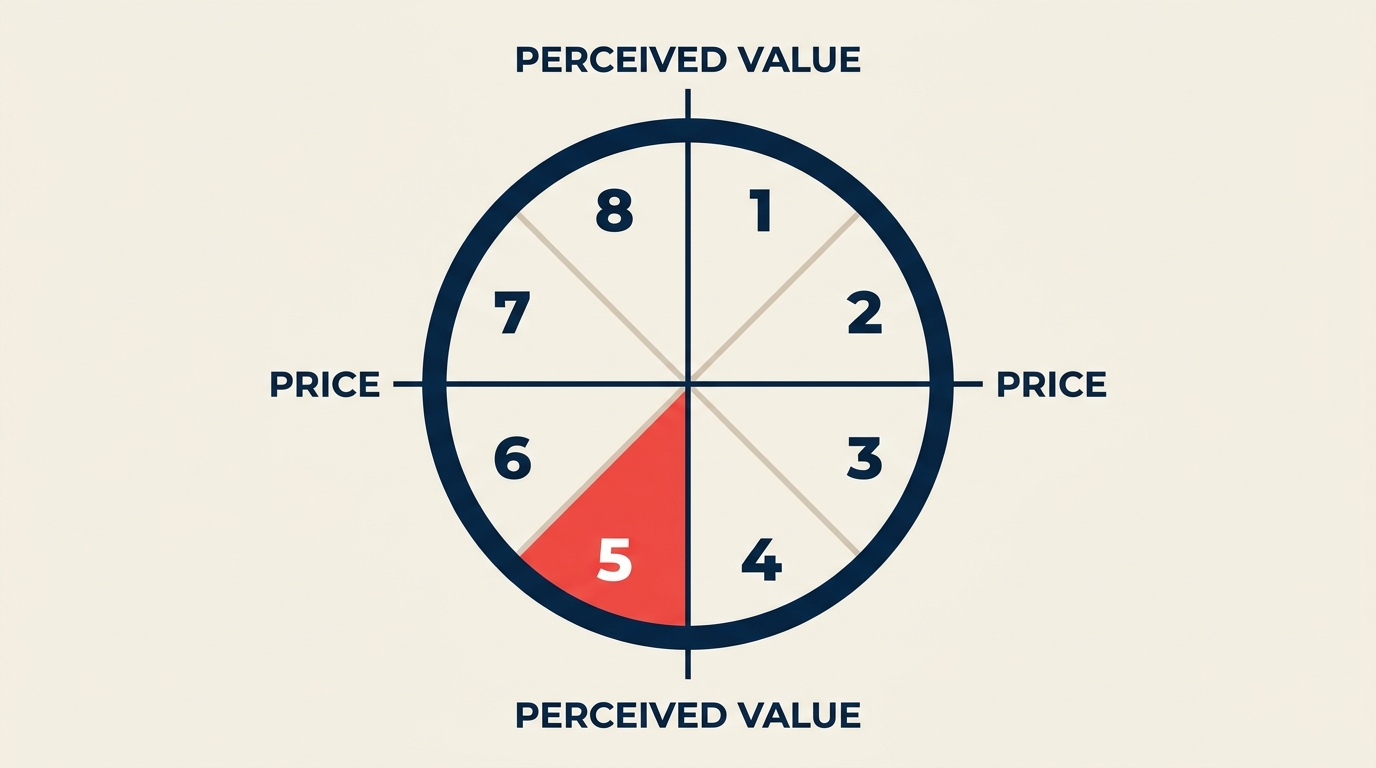
Bowman's Strategy Clock es un modelo de estrategia competitiva desarrollado por Cliff Bowman y David Faulkner a principios de la década de 1990. Amplía las tres estrategias genéricas de Michael Porter a ocho posiciones distintas, dispuestas alrededor de la esfera de un reloj. El eje horizontal representa el precio (de bajo a alto) y el eje vertical representa el valor percibido (de bajo a alto).
Cada posición describe una combinación diferente de lo que pagan los clientes y lo que creen que están obteniendo. Algunas posiciones son comercialmente viables a largo plazo. Otras son trampas que erosionan la rentabilidad o la cuota de mercado. El formato visual del reloj facilita trazar la posición de su propia empresa, la de sus competidores y el espacio en blanco entre ellos.
El modelo pertenece al conjunto de herramientas más amplio del análisis de ventaja competitiva. Donde el marco de Porter reduce la elección a tres carriles (liderazgo en costos, diferenciación, enfoque), el reloj de Bowman muestra los matices dentro de esos carriles y revela posiciones que el modelo de Porter simplemente no nombra.
Las 8 posiciones explicadas
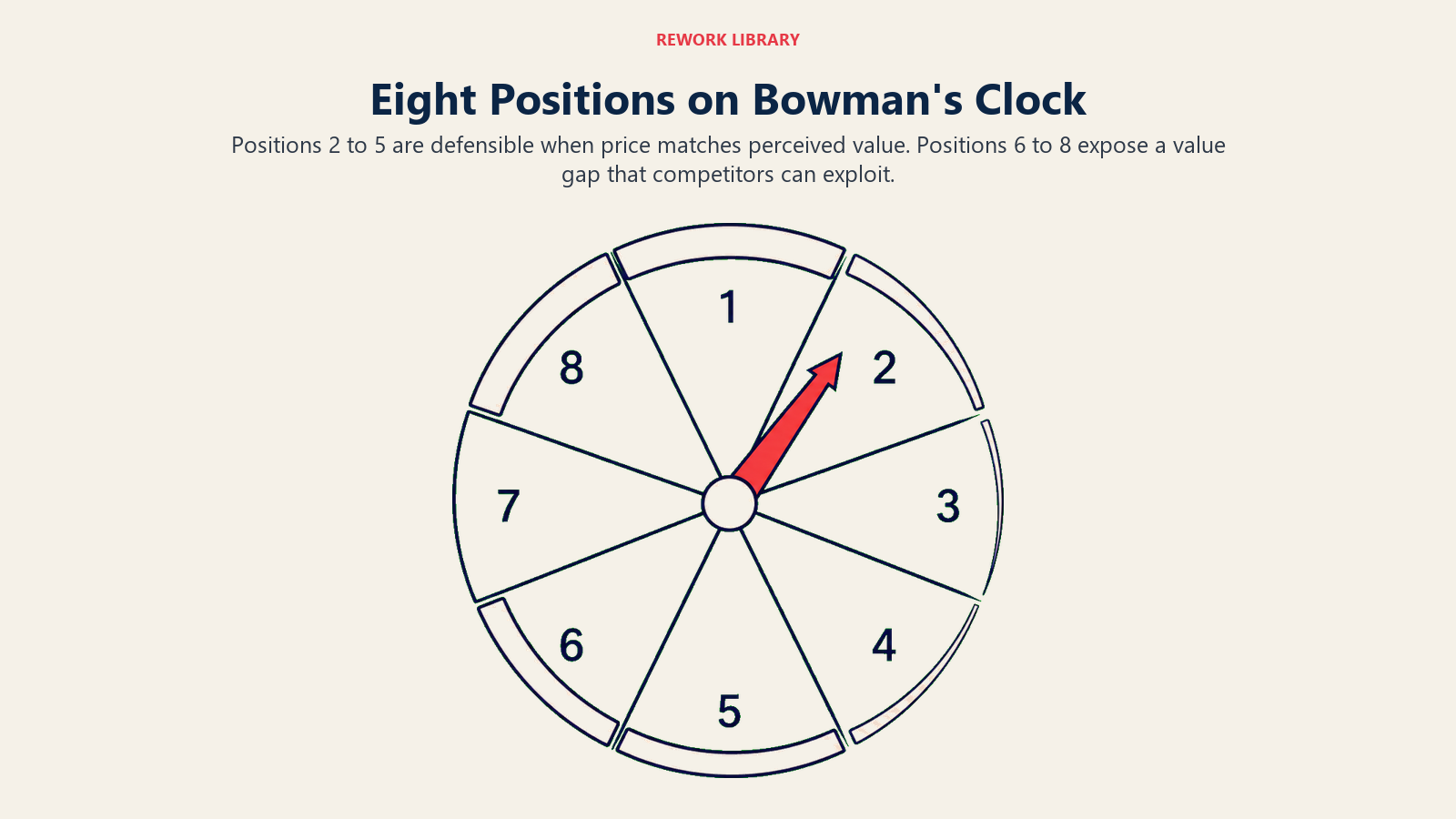
| Posición | Nombre | Nivel de precio | Valor percibido | Viabilidad |
|---|---|---|---|---|
| 1 | Precio bajo / valor bajo | Bajo | Bajo | Débil. Sobrevive solo en segmentos de productos básicos con compradores cautivos; raro e insostenible para la mayoría de las empresas. |
| 2 | Precio bajo | Bajo | Medio | Viable. La apuesta clásica de liderazgo en costos. Funciona cuando se tienen ventajas de costo estructurales genuinas (escala, automatización, cadena de suministro). Los especialistas en mercados de productos básicos viven aquí. |
| 3 | Híbrido | Medio-bajo | Medio-alto | Sólido. Precio más bajo que los rivales, pero claramente mejor valor que las posiciones 1 y 2. IKEA y Ryanair ocupan esta zona; requiere disciplina de costos y una percepción de calidad sólida. |
| 4 | Diferenciación | Medio-alto | Alto | Sólido. Estrategia de diferenciación amplia con un precio acorde al valor entregado. La línea Mac de Apple, las zapatillas de running de Nike. |
| 5 | Diferenciación enfocada | Alto | Muy alto | Sólido en nichos. Precio premium para una audiencia específica que valora la exclusividad, la artesanía o la especialización. Porsche, LVMH, herramientas SaaS de boutique. |
| 6 | Márgenes altos de riesgo | Alto | Medio | Arriesgado. Cobrar precios premium sin entregar el valor correspondiente. Los clientes lo notan con el tiempo. Las empresas llegan aquí por complacencia o tras el pico de un ciclo de producto. |
| 7 | Precios de monopolio | Muy alto | Bajo-medio | Muy arriesgado. Solo funciona donde existe un cuasi-monopolio o protección regulatoria. Queda expuesto de inmediato cuando entra la competencia. |
| 8 | Pérdida de cuota de mercado | Medio-alto | Bajo | Zona de fracaso. Precio alto, baja percepción de valor. Es una cuenta regresiva hacia la pérdida de clientes, no una posición estratégica. |
Las posiciones 6, 7 y 8 son conocidas ampliamente como las «posiciones perdedoras». Pueden persistir durante un tiempo, pero no indefinidamente. Cualquier competidor que entre con mejor valor al mismo precio vaciará el mercado.
Bowman's Strategy Clock vs las estrategias genéricas de Porter
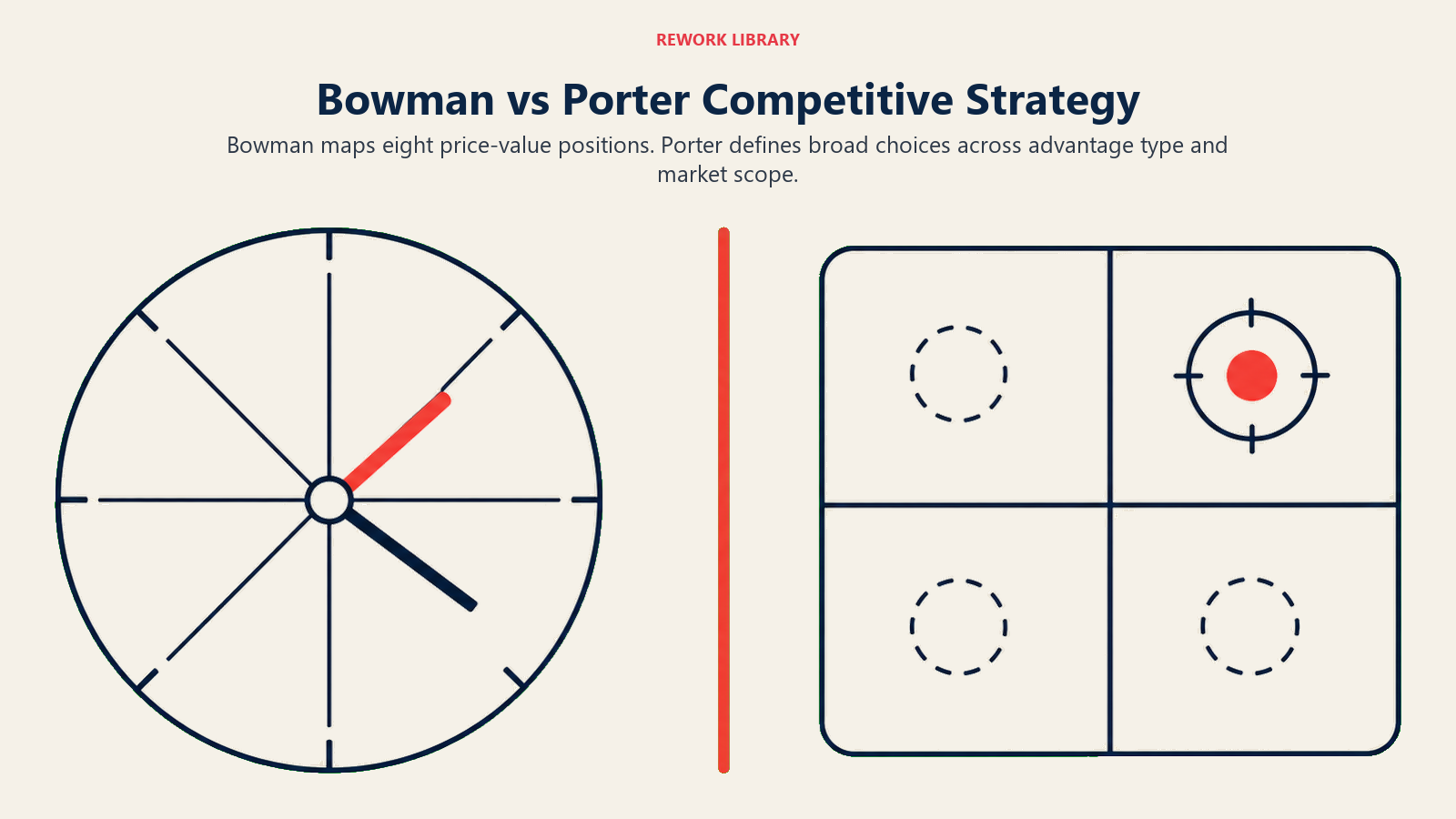
Estos dos marcos responden a preguntas ligeramente diferentes. Porter pregunta «¿en qué carril amplio debo competir?» Bowman pregunta «dentro de ese carril, ¿exactamente dónde estoy y adónde quiero ir?». La siguiente tabla muestra la correspondencia.
| Estrategia genérica de Porter | Posiciones equivalentes de Bowman | Diferencia clave |
|---|---|---|
| Liderazgo en costos | 2 (Precio bajo) | Porter lo trata como un único carril; Bowman muestra que se puede competir en precio mientras se mantiene un valor medio (posición 3 híbrida) |
| Diferenciación | 4 (Diferenciación) | Porter no distingue entre diferenciación amplia y enfocada a nivel de precio |
| Enfoque (basado en costos) | 2 o 3 en un nicho | Bowman muestra cómo un competidor de nicho en costos puede ocupar la posición 2 sin ir a puro producto básico |
| Enfoque (basado en diferenciación) | 5 (Diferenciación enfocada) | Bowman le da a esta una posición dedicada con su propia lógica de precio-valor |
| Sin equivalente | 1, 6, 7, 8 | El modelo de Porter solo describe estrategias viables; Bowman nombra explícitamente los modos de fracaso |
Para un análisis más profundo de cómo funciona el marco de Porter, consulte las estrategias genéricas de Porter.
Ventajas de usar el Strategy Clock
Obliga a hacer una auditoría de competidores. No puede ubicarse en el reloj sin ubicar también a sus tres o cinco principales competidores. Esa comparación a menudo hace emerger verdades incómodas más rápido que un análisis SWOT.
Separa el precio del valor. Muchos gerentes los confunden. Un precio alto no significa valor alto en la mente de los clientes. Los ejes de Bowman hacen esa separación explícita y medible.
Revela opciones de movimiento. El reloj no es una instantánea; es un mapa de trayectorias posibles. Si está en la posición 4 y enfrenta una guerra de precios, el reloj muestra si moverse hacia la posición 3 (híbrida) o doblar la apuesta hacia la posición 5 (enfocada) es más defendible. El mapeo perceptual puede cuantificar esos datos de percepción del cliente.
Funciona junto a otros modelos. Puede superponer el reloj sobre un canvas de estrategia océano azul para identificar innovaciones de valor, o combinarlo con diagnósticos de estrategia de liderazgo en costos para evaluar si un movimiento hacia la posición 2 es estructuralmente posible para su base de costos.
Se comunica con claridad a los no estrategas. Ocho posiciones etiquetadas en la esfera de un reloj son intuitivas. Las presentaciones ante el consejo, los briefings para el equipo de ventas y las sesiones de Roadmap de producto se benefician de un lenguaje visual compartido.
Limitaciones
El valor percibido es difícil de medir. El modelo asume que usted sabe lo que los clientes creen que están obteniendo. En la práctica, eso requiere una investigación real: encuestas, entrevistas de win/loss, paneles de asesoramiento de clientes. Sin esos datos, está adivinando su posición.
El reloj es estático. Captura un momento en el tiempo. Los mercados cambian; los movimientos de los competidores cambian las coordenadas de todos en el reloj. Una posición que era posición 4 (diferenciación) el año pasado puede derivar hacia la posición 6 (márgenes altos de riesgo) si un seguidor rápido iguala sus características a un costo menor.
No tiene en cuenta la diversidad de segmentos. Una sola empresa puede ocupar posiciones diferentes para diferentes segmentos de clientes o líneas de productos. El reloj funciona mejor cuando está circunscrito a un segmento o una categoría de productos a la vez.
Subestima la ejecución. Saber que quiere pasar de la posición 6 a la posición 4 no le dice nada sobre cómo llegar. Sigue necesitando la hoja de ruta operativa y de innovación. El modelo de disciplinas de valor y el marco de estrategia de enfoque añaden profundidad de ejecución que el reloj por sí solo no tiene.
La percepción de marca puede invalidar el posicionamiento. Una empresa puede entregar un valor genuinamente alto pero ser percibida como de bajo valor debido a su historia de marca o a una comunicación deficiente. El reloj describe la percepción, no la calidad objetiva, por lo que la reidentificación de marca puede ser tan importante como los cambios en el producto.
Cómo usar Bowman's Strategy Clock
Paso 1: Definir el alcance
Elija una categoría de producto y un segmento de clientes objetivo. Aplicar el reloj a toda una cartera de negocios produce ruido, no información valiosa.
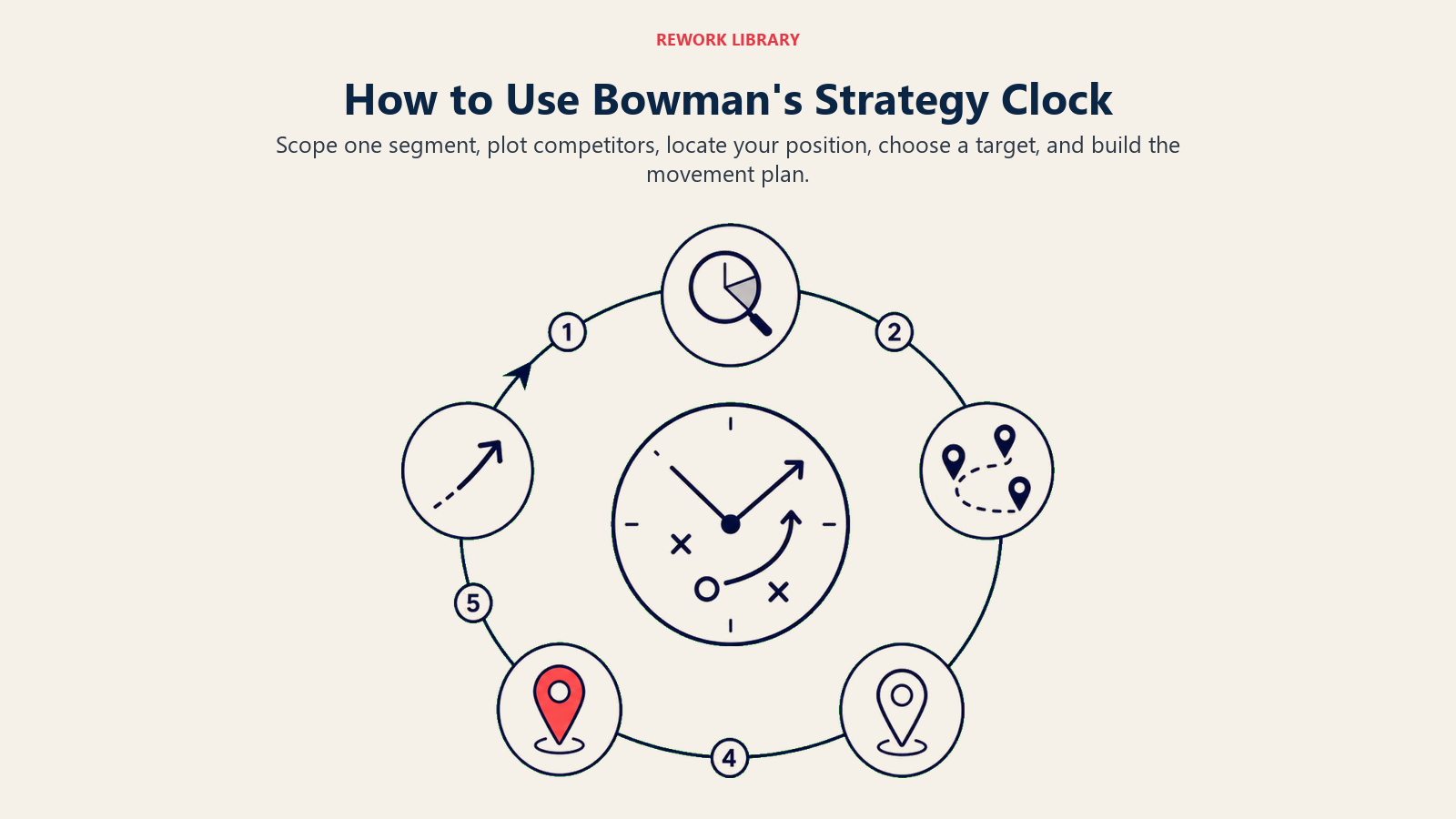
Paso 2: Trazar la posición de los competidores
Haga una lista de sus tres a cinco competidores más directos. Para cada uno, estime su nivel de precio en relación con el promedio del mercado y el valor percibido que entregan en su segmento objetivo. Use entrevistas con clientes, datos de reseñas o análisis de win/loss para fundamentar la estimación de valor percibido. Marque a cada uno en el reloj.
Paso 3: Trazar su propia posición
Sea honesto. Use las mismas fuentes de datos que usó para los competidores. Muchos equipos se sorprenden al descubrir que creen estar en la posición 4 mientras que los clientes los ubican más cerca de la posición 3 o 6. La brecha entre la autoevaluación y la percepción del cliente es en sí misma un riesgo estratégico.
Paso 4: Identificar su posición objetivo
Decida adónde quiere llegar. La posición 3 (híbrida) y las posiciones 4 y 5 son las tres con el historial más sólido a largo plazo. El objetivo correcto depende de su estructura de costos, el capital de marca y el espacio en blanco competitivo que identifica en el reloj.
Paso 5: Construir el plan de movimiento
Trace los cambios operativos necesarios para cerrar la brecha entre la posición actual y la objetivo. Pasar de la posición 6 a la posición 4 suele requerir una combinación de inversión en el producto, disciplina en precios y comunicación con los clientes. Pasar de la posición 4 a la posición 5 requiere un enfoque más estrecho y la voluntad de perder clientes de volumen. Defina hitos, asigne responsables y revise el reloj en cada ciclo de planificación estratégica.
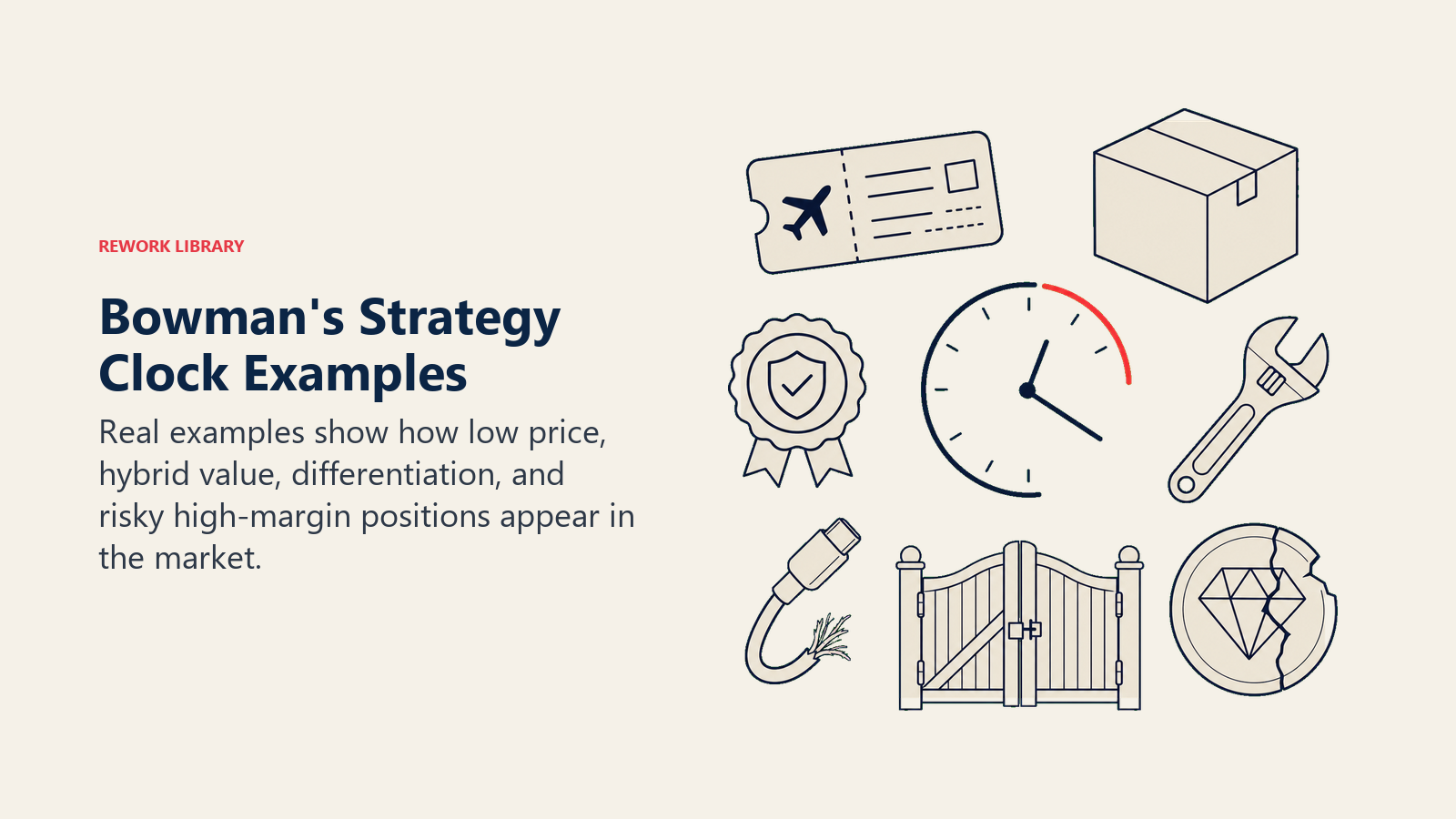
Ejemplos
Los ejemplos facilitan el uso del reloj porque muestran cómo se combinan el precio y el valor percibido en posiciones reales del mercado.
| Marca / Ejemplo ilustrativo | Posición | Justificación |
|---|---|---|
| Ryanair | 2 (Precio bajo) | Sistemáticamente la opción más económica; la percepción de valor es funcional, no aspiracional |
| IKEA | 3 (Híbrido) | Precios más bajos que los rivales del sector del mueble, pero el fuerte diseño y la percepción de marca elevan el valor percibido por encima del puro descuento |
| Toyota Camry | 4 (Diferenciación) | Precio de gama media con una sólida reputación de fiabilidad; diferenciación amplia para el mercado masivo |
| Apple Mac Pro | 5 (Diferenciación enfocada) | Precio premium para una audiencia profesional definida; la exclusividad y la capacidad percibidas son el núcleo de la propuesta |
| Una telecom legada con infraestructura obsoleta | 6 (Márgenes altos de riesgo) | Precios heredados mantenidos después de que los competidores mejoraron sus redes; satisfacción del cliente en declive |
| Compañías históricas de cable en posición de cuasi-monopolio | 7 (Precios de monopolio) | El mercado cautivo permitió fijar precios por encima del valor; se erosionó rápidamente cuando llegaron las alternativas de streaming |
| Una marca premium con calidad poco fiable | 8 (Pérdida de cuota de mercado) | Precio alto sin la justificación de valor; el Churn de clientes se acelera |
Preguntas Frecuentes
¿Cuál es la mejor posición en Bowman's Strategy Clock?
No existe una posición universalmente mejor. Las posiciones 3 (híbrida), 4 (diferenciación) y 5 (diferenciación enfocada) tienen los historiales a largo plazo más sólidos. La elección correcta depende de su estructura de costos, el tamaño del segmento que desea atender y cuán defendible es su ventaja en valor percibido. La mayoría de las pequeñas y medianas empresas encuentran las posiciones 3 o 5 más alcanzables que la posición 4, que requiere tanto calidad de producto como escala de marketing.
¿En qué se diferencia Bowman's Strategy Clock de una estrategia de precios?
Bowman's Strategy Clock es un marco de posicionamiento competitivo, no una fórmula de precios. Muestra la relación entre lo que cobra y lo que los clientes creen que reciben, a lo largo de toda su propuesta de valor. Una estrategia de precios responde a la pregunta más concreta de qué número poner en una factura. Necesita ambas cosas: el reloj le dice en qué cuadrante apuntar, y su modelo de precios especifica el punto de precio exacto.
¿Puede una empresa ocupar múltiples posiciones a la vez?
Sí, pero solo si las posiciones se aplican a líneas de productos o segmentos de clientes distintos. Una empresa que intenta ser posición 2 (precio bajo) y posición 5 (diferenciación enfocada) para el mismo producto en el mismo segmento confundirá a los compradores. Las estrategias multiposición requieren una arquitectura de marca clara para que los clientes entiendan qué producto pertenece a qué promesa.
¿Con qué frecuencia se debe revisar el reloj?
Como mínimo, una vez por ciclo de estrategia anual. En mercados de rápido movimiento (SaaS, tecnología de consumo, retail), tiene sentido una revisión trimestral. Los movimientos de los competidores, la paridad de características y los cambios de precios pueden desplazar su posición efectiva más rápido de lo que los ciclos anuales capturan.
¿Cómo se relaciona el reloj de Bowman con el mapeo perceptual?
Se complementan directamente. El mapeo perceptual usa datos de encuestas a clientes para trazar marcas en dos ejes de atributos. Si establece esos ejes como «precio» y «percepción general de valor», su mapa perceptual ES su Strategy Clock, poblado con datos reales de clientes en lugar de estimaciones de la dirección. El reloj es el marco; el mapeo perceptual es una forma rigurosa de llenarlo con evidencia.
Bowman's Strategy Clock recompensa la autoevaluación honesta. La mayoría de las empresas que lo usan descubren que están derivando hacia una posición perdedora sin darse cuenta. El reloj no corrige esa deriva por sí solo, pero hace visible la brecha y proporciona un lenguaje compartido para decidir hacia dónde moverse. Combínelo con la profundidad de ejecución de marcos como el modelo de disciplinas de valor o la estrategia de enfoque, y tendrá la base para una estrategia fundamentada y defendible.
Lecturas Relacionadas

Co-Founder & COO
On this page
- ¿Qué es Bowman's Strategy Clock?
- Las 8 posiciones explicadas
- Bowman's Strategy Clock vs las estrategias genéricas de Porter
- Ventajas de usar el Strategy Clock
- Limitaciones
- Cómo usar Bowman's Strategy Clock
- Paso 1: Definir el alcance
- Paso 2: Trazar la posición de los competidores
- Paso 3: Trazar su propia posición
- Paso 4: Identificar su posición objetivo
- Paso 5: Construir el plan de movimiento
- Ejemplos
- Lecturas Relacionadas