More in
Chat & Conversational News
Slack Is Becoming the Front Door for AI Agents: What CX Leaders Should Redesign Before the Pattern Sets
Apr 17, 2026
Intercom Raised $250M to Build AI Agents That Sell: What CMOs Need to Decide About Conversational AI Investment
Mar 27, 2026
WhatsApp Calls and Chats Are Now in One Platform: What That Means for Your Lead Capture Funnel
Feb 17, 2026
Voice Agents Are Now a $11B Category: How Growth Leads Should Evaluate Adding Voice to Their Conversational Stack
Feb 13, 2026
The B2B Chat Tool Market Is Consolidating: What CMOs Need to Know About Vendor Stability Before the Next Budget Cycle
Feb 2, 2026 · Currently reading
Meta Added the Lead Objective to WhatsApp Ads: Here's Why Performance Marketers Should Restructure Their Campaigns Now
Jan 9, 2026
A 93% Autonomous Resolution Rate: What Demand Gen Leaders Need to Know About the New Ceiling for AI-Led Lead Qualification
Jan 6, 2026
The B2B Chat Tool Market Is Consolidating: What CMOs Need to Know About Vendor Stability Before the Next Budget Cycle

Turn this article into takeaways for your work.


Each assistant summarizes the article only for you and suggests best practices for your work.
Drift didn't fail. It was acquired for over $100M, integrated into a larger revenue platform, and then wound down when that platform's strategic direction shifted. And that's precisely the problem.
According to Demand Gen Report, Clari and Salesloft's recently announced partnership with 1mind AI signals the gradual phaseout of Drift as a standalone product within the Salesloft ecosystem. The 1mind platform, which positions its AI agents as "digital teammates" for revenue orchestration, is being positioned as the next-generation conversational layer for the combined entity.
For the thousands of B2B companies that built their website chat, lead routing, and account-based conversation workflows on Drift, this is not a theoretical risk. It's a live migration project. But the real story for CMOs isn't about Drift specifically. It's about the pattern the Drift sunset reveals in how the conversational marketing category works under acquisition pressure. If you're in the middle of evaluating what comes next, the guide to multi-channel inbox platforms is worth reading before you shortlist vendors.
The Acquisition Lifecycle That Keeps Claiming Chat Tools
Drift's journey from independent leader to acquisition to sunset has a recognizable shape. The platform launched, scaled to become a category-defining product in conversational marketing, attracted a significant acquisition premium from Salesloft in early 2024, and then became subject to a larger integration calculus that had nothing to do with whether the product was good.
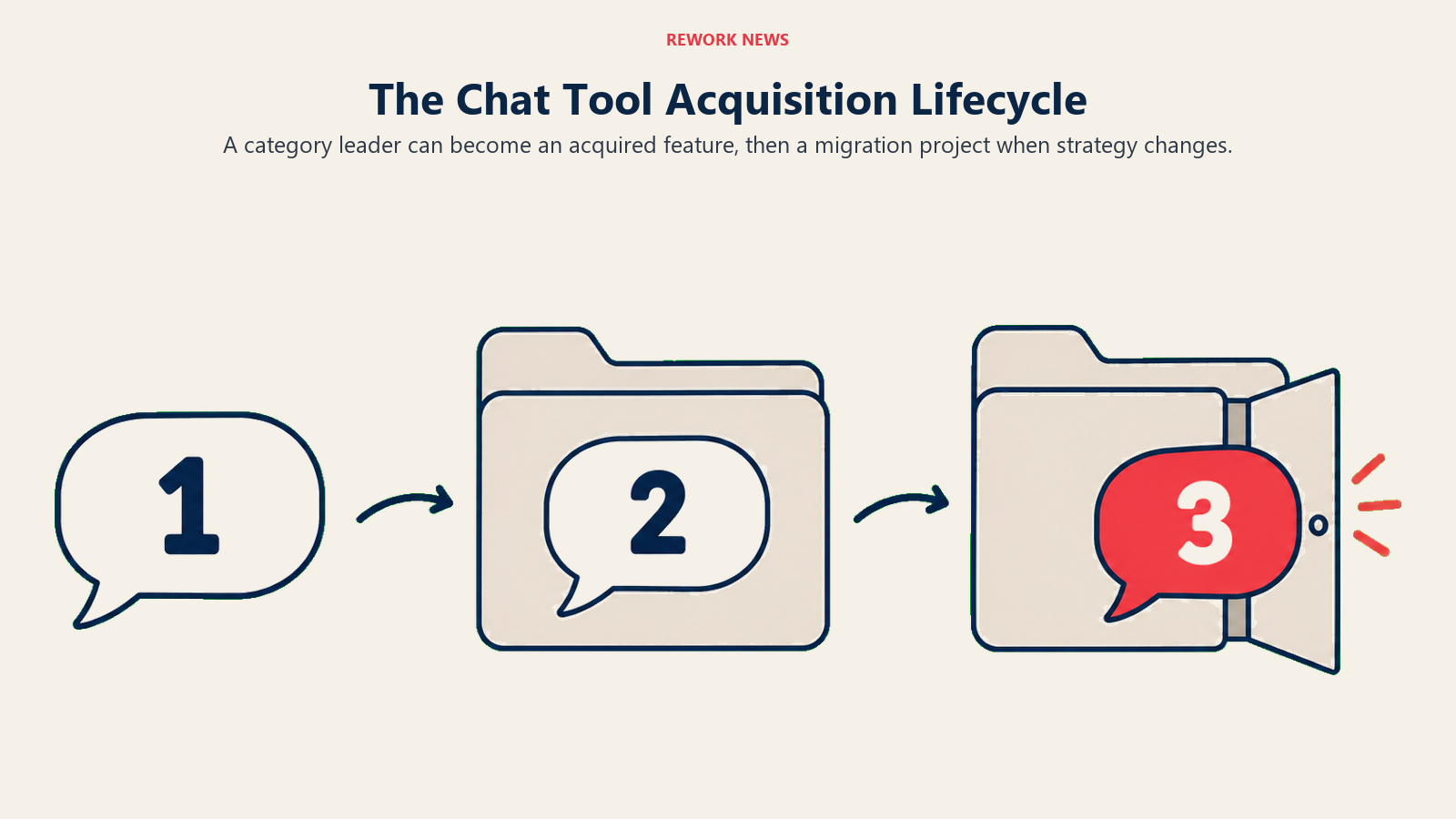
When revenue platforms consolidate (and the Clari+Salesloft merger is one of the largest in recent B2B history), the features that get prioritized are the ones that serve the combined entity's core thesis. Salesloft's thesis is revenue orchestration, not standalone conversational marketing. Drift served a broader marketing-and-sales audience. In the combined portfolio, it was a tool looking for a strategic home, and the 1mind partnership was the answer to that question.
For CMOs evaluating a standalone chat platform today, the risk isn't bad software. The risk is betting on a vendor's independence when independence is what the category acquires away.
Why Pure-Play Conversational Marketing Is a Consolidation Target
The conversational marketing category occupies an awkward position in the enterprise software map. It's too important to ignore. Chat-driven lead capture, ABM conversation flows, and real-time visitor engagement are now standard demand gen infrastructure. But it's also not quite large enough to sustain major standalone valuations when the adjacent CRM and revenue intelligence platforms start building toward full-stack.
Salesforce has built Einstein bots and messaging into the platform. HubSpot has live chat and AI-powered conversation tools deeply embedded in its CRM. Intercom has explicitly expanded from support-focused chat into revenue-generating AI agents. When these platforms add conversational features, they don't eliminate the need for specialist tools, but they do compress the addressable market for standalone vendors.
The question isn't whether your current chat vendor is good at what it does. It's whether the vendor will still exist in its current form in 18 months, or whether it will have been acquired, repositioned, or rationalized into something unrecognizable.
Five Vendor Stability Criteria CMOs Should Add to Their Evaluation
Most vendor evaluation scorecards focus on features, integrations, and pricing. For conversational marketing tools specifically, CMOs need five additional criteria before signing a multi-year contract.
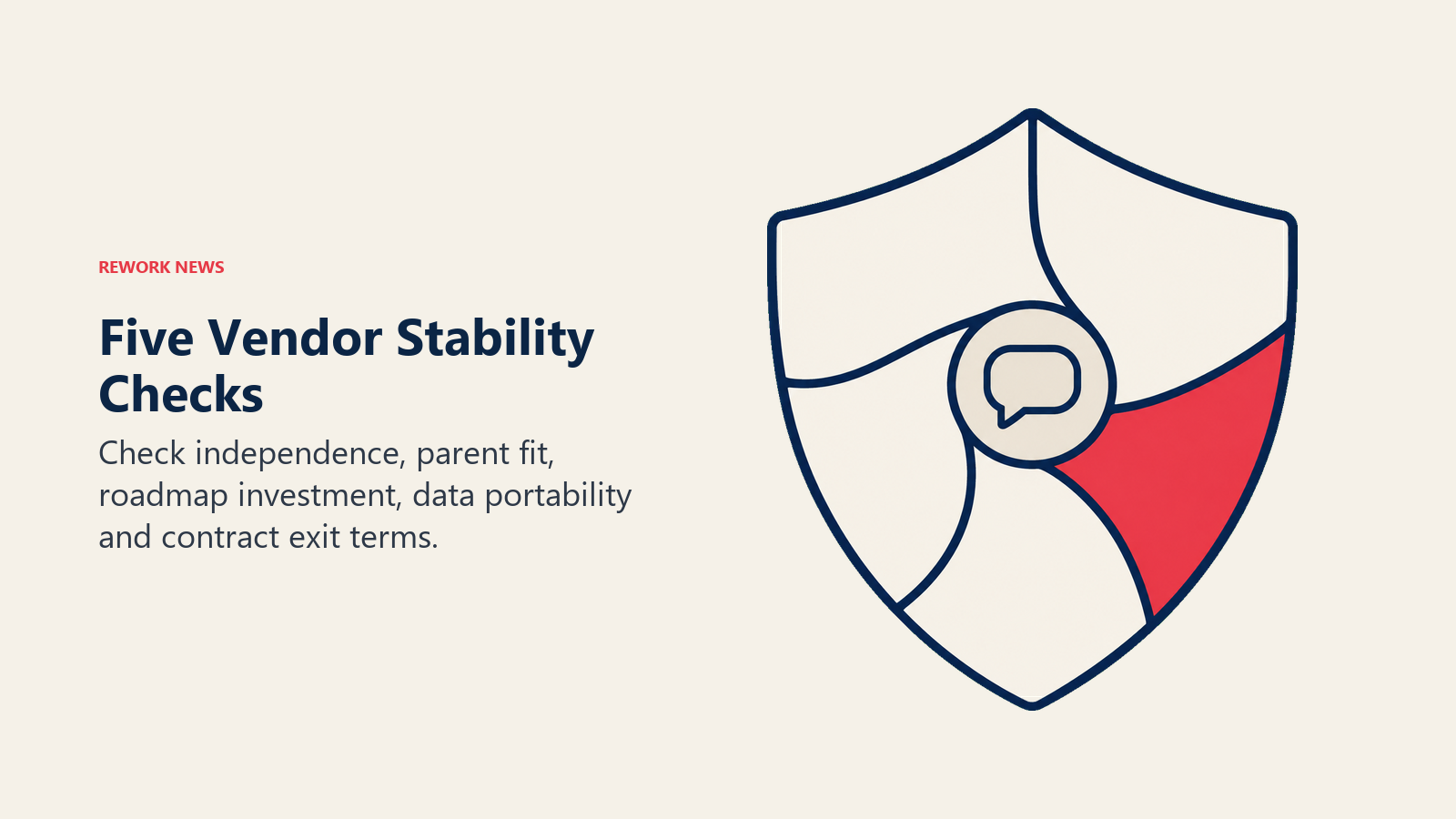
1. Revenue independence. Is the vendor's revenue coming from its own product, or does it depend on another platform's ecosystem for distribution and customer access? A tool that sells through an acquired parent's install base is one executive strategy change away from sunset.
2. Parent company strategic alignment. If the vendor has been acquired, does the acquiring company's core thesis actually require a conversational marketing product to be healthy? For Drift inside Salesloft, the answer was no. Salesloft's thesis became revenue orchestration via 1mind, not standalone website chat. For Intercom, the answer appears to be yes. Conversational AI is their core bet, not a feature they acquired.
3. Roadmap transparency and frequency. How often does the vendor publish product updates, and do those updates reflect genuine investment or maintenance mode? A vendor in maintenance mode is typically preparing for a different outcome. Look for feature velocity, not just feature counts.
4. Data portability and migration terms. Before signing, verify exactly what happens to conversation logs, contact records, routing configurations, and integrations if the product is discontinued or materially changed. A contract that doesn't include data portability clauses is a contract that traps you.
5. Contract flexibility and exit terms. Annual contracts with auto-renewal and limited exit provisions are common in SaaS. For a category with documented consolidation risk, CMOs should negotiate shorter initial terms, pilot periods, and explicit provisions covering what happens to contracts in acquisition scenarios.
What the Open Market Looks Like for Drift Customers
The Drift sunset leaves an active displacement market. Platforms covering different parts of the conversational marketing stack are positioned to absorb this traffic, and the evaluation criteria matter more than the vendor list.
For teams that primarily used Drift for website visitor engagement and routing, the relevant question is whether the replacement platform does routing well, not just chat. For teams using Drift's account-based conversation features, the question is CRM depth and integration quality with their existing revenue stack.
Several categories of platforms are worth considering: full-stack conversational CRM platforms that own the conversation record end-to-end, specialist routing tools focused specifically on meeting-booking and qualification flow, and multi-channel inbox platforms that bundle chat with WhatsApp and other conversational channels in a single workspace. The WhatsApp in B2B sales motion breakdown is useful context for evaluating the multi-channel inbox category specifically.
What's worth avoiding in this evaluation is simply picking the next vendor without applying the stability criteria above. The same consolidation dynamics that sunset Drift will affect other pure-play conversational marketing vendors over the next 24 months.
What the Consolidation Pattern Means for CMO Planning
The broader takeaway from the Drift sunset isn't tactical. It's strategic. Conversational marketing is becoming a feature inside larger platforms, not a standalone category. That doesn't mean standalone tools are dead. It means the evaluation requires a different kind of rigor.
CMOs who treat conversational marketing as infrastructure, like email automation or form capture, need to evaluate it the same way: with contractual protections, clear migration paths, and vendor health criteria built into renewal decisions. The companies that got burned by Drift weren't wrong to adopt it. They were wrong to adopt it without a contingency plan for exactly the scenario that happened.
The chat tool market will keep consolidating over the next few years. The CMOs who get ahead of this are the ones who audit their current conversational stack before the next renewal cycle, not after the sunset notice arrives.
What to Audit in Your Current Conversational Stack Before Next Renewal
Before your next budget cycle, run through this audit:
- Vendor ownership status. Is your current chat tool independently owned, recently acquired, or part of a platform where chat is not the core product?
- Contract exit terms. What happens to your data and integrations if the vendor is discontinued or materially changed?
- Strategic fit with parent. If the vendor has a parent company, does the parent's strategy require conversational marketing to succeed?
- Roadmap cadence. When was the last meaningful product update? Is the vendor investing in the product or maintaining it?
- Integration lock-in depth. How deeply embedded is this tool in your demand gen workflows? The deeper the lock-in, the more critical the stability evaluation.
- Displacement readiness. If this vendor announced sunset tomorrow, do you have a migration plan, or would you be starting from scratch?
The Drift story isn't over. It will happen again with a different product and a different acquiring company. CMOs who build vendor stability into their evaluation process won't be immune to industry consolidation, but they'll be positioned to move faster and lose less when it happens. See also: Clari-Salesloft platform evaluation for CROs for a closer look at how the combined entity's revenue platform thesis is taking shape.
Learn More
- Drift Is Being Sunset: 5-Step Migration Playbook for Sales Ops: The operational migration steps Sales Ops needs to run in parallel with the CMO's vendor evaluation
- Drift Is Being Phased Out: RevOps Migration Checklist: RevOps preparation for the conversational workflow transition
- Chat Funnel Setup Guide: Rebuilding chat-based lead capture and qualification after platform migration
- Intercom Raised $250M to Build AI Agents That Sell: Evaluating Intercom as a Drift replacement with a strong AI qualification track record

On this page
- The Acquisition Lifecycle That Keeps Claiming Chat Tools
- Why Pure-Play Conversational Marketing Is a Consolidation Target
- Five Vendor Stability Criteria CMOs Should Add to Their Evaluation
- What the Open Market Looks Like for Drift Customers
- What the Consolidation Pattern Means for CMO Planning
- What to Audit in Your Current Conversational Stack Before Next Renewal