More in
Chat & Conversational News
Slack Is Becoming the Front Door for AI Agents: What CX Leaders Should Redesign Before the Pattern Sets
Apr 17, 2026
Intercom Raised $250M to Build AI Agents That Sell: What CMOs Need to Decide About Conversational AI Investment
Mar 27, 2026
WhatsApp Calls and Chats Are Now in One Platform: What That Means for Your Lead Capture Funnel
Feb 17, 2026
Voice Agents Are Now a $11B Category: How Growth Leads Should Evaluate Adding Voice to Their Conversational Stack
Feb 13, 2026 · Currently reading
The B2B Chat Tool Market Is Consolidating: What CMOs Need to Know About Vendor Stability Before the Next Budget Cycle
Feb 2, 2026
Meta Added the Lead Objective to WhatsApp Ads: Here's Why Performance Marketers Should Restructure Their Campaigns Now
Jan 9, 2026
A 93% Autonomous Resolution Rate: What Demand Gen Leaders Need to Know About the New Ceiling for AI-Led Lead Qualification
Jan 6, 2026
Voice Agents Are Now a $11B Category: How Growth Leads Should Evaluate Adding Voice to Their Conversational Stack
Turn this article into takeaways for your work.


Each assistant summarizes the article only for you and suggests best practices for your work.
At some point a funding round stops being a bet on the future and starts being a signal that something is already working. ElevenLabs crossing $330M ARR before closing a $500M Series D at an $11B valuation, reported by PYMNTS, is that kind of signal.
This isn't a startup on a promising trajectory. It's a category benchmark. And for growth leads who are still treating voice AI as a "watch and wait" item on the 2027 roadmap, the velocity of the market is making that position harder to justify.
The same week ElevenLabs announced its round, PolyAI, which builds agentic voice agents for complex phone-based customer service, raised $86M Series D to accelerate deployment in 40+ languages. According to a 2026 market analysis from AssemblyAI, VC investment into voice AI grew eightfold to $2.1B in 2025 alone. That doesn't happen because investors are speculating. It happens because the technology is converting at numbers that justify the capital.
What Voice Agents Actually Do (That Chat Doesn't)
The easy mistake is treating voice AI as a chat-to-audio translation layer. It isn't. Voice agents handle a distinct set of interactions where text-based chat underperforms: real-time objection handling, complex qualification conversations that require back-and-forth, and scenarios where the lead is in a context where typing is difficult (driving, at a trade show, responding to a Click-to-WhatsApp ad that escalates naturally into a call).
The 2026 Voice Agent Report cited by AssemblyAI found that 87.5% of builders are actively constructing voice agents right now, not just researching them. The primary use cases breaking through are inbound call qualification, appointment scheduling without human involvement, and follow-up sequences where a call converts better than a text message.
For growth teams specifically, the integration question is the most important one. A voice agent that doesn't feed structured data back into your CRM and doesn't connect to your existing chat flows is just a disconnected call recorder. The value is in the handoff chain: chat initiates, voice qualifies, CRM records. The lead capture automation guide for CRM integration covers the field-mapping groundwork that applies equally to voice agent outputs.
Three Use Cases Where Voice Changes the Conversion Flow
Inbound call qualification from paid ads. If you're running Click-to-WhatsApp campaigns and some percentage of leads prefer to call rather than text, a voice agent handles that call without routing to a human SDR. The agent qualifies the lead, captures the key data points your CRM needs, and either books a meeting or routes to a human based on predefined criteria. The SDR team only sees the qualified outcomes.
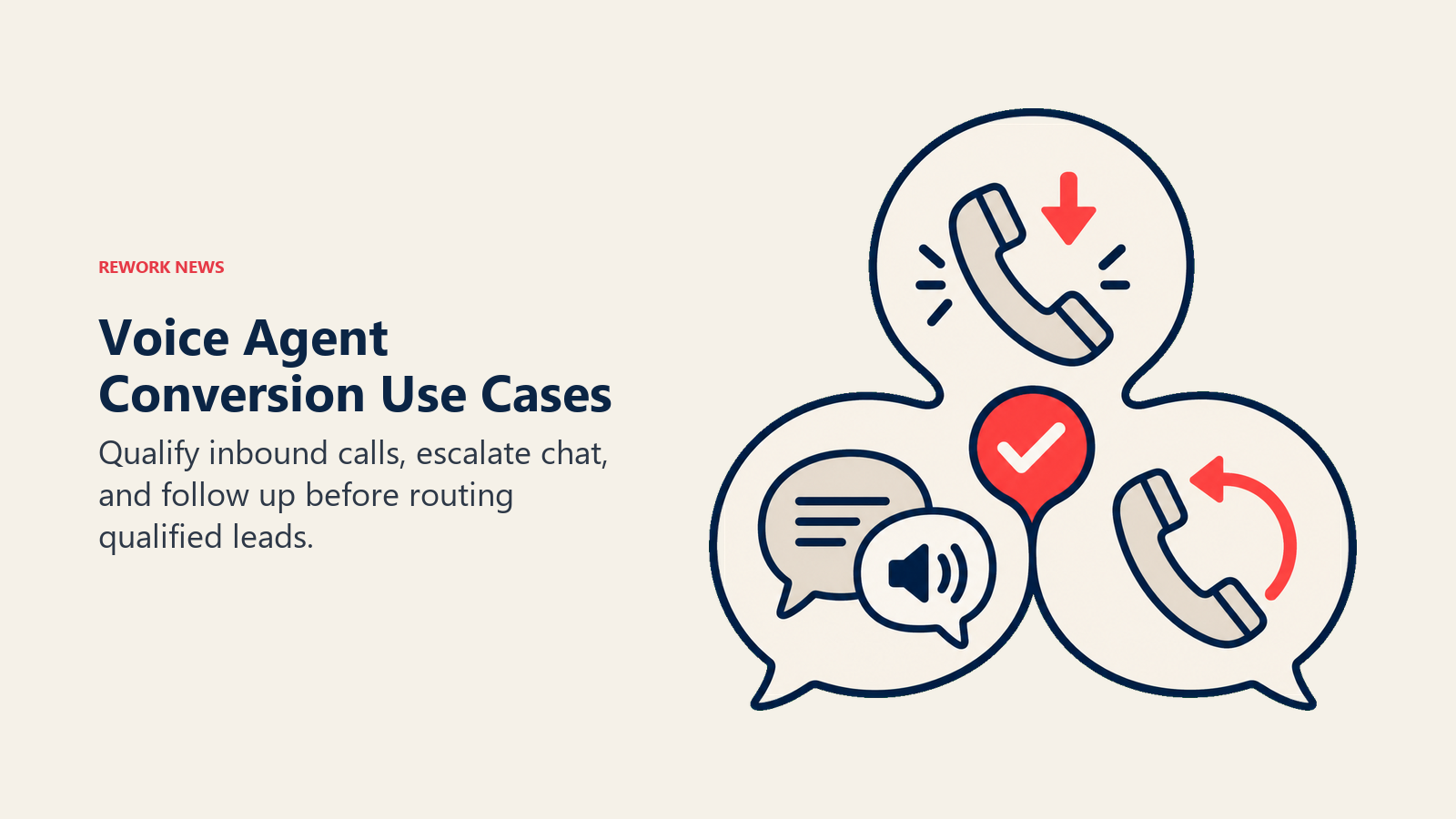
Chat escalation to voice within WhatsApp. Some conversations start as text and need to go to voice. Either because the lead prefers it, or because the topic is complex enough that chat is the wrong medium. With voice AI in the stack, that escalation can happen within the same platform rather than falling into a phone tag loop. The conversation stays intact, the context transfers, and the lead doesn't have to re-explain their situation to a human rep.
Follow-up call automation. Most inbound leads don't convert on the first touchpoint. The traditional follow-up sequence is either email drip (open rates declining) or human SDR outreach (high cost, inconsistent execution). A voice agent can run a first follow-up call at a fraction of the cost of a human dial, surface interest signals back to the CRM, and only escalate to human reps when the signal crosses a threshold.
The $2.1B VC Wave as a Validation Signal
Growth leads are constantly evaluating which experiments to prioritize. The argument for bumping voice AI up the Q2 or Q3 experimentation list isn't ideological. It's structural.
When $2.1B goes into a category in a single year and the category leader closes $500M from Sequoia, the vendor ecosystem gets built out fast. SDKs improve. Integrations multiply. Pricing normalizes. The experimental period for voice AI is closing rapidly, and the growth leads who run pilots now build institutional knowledge before the technology becomes table stakes.
The window for meaningful competitive advantage from early voice AI adoption is probably 12-18 months. After that, every team will have access to the same tools at competitive prices, and the differentiation will come from how well you've built the workflow, not from being early.
A Four-Step Voice Agent Pilot Framework
If you're scoping a Q2 or Q3 pilot, the framework is straightforward. The detail is in the setup.
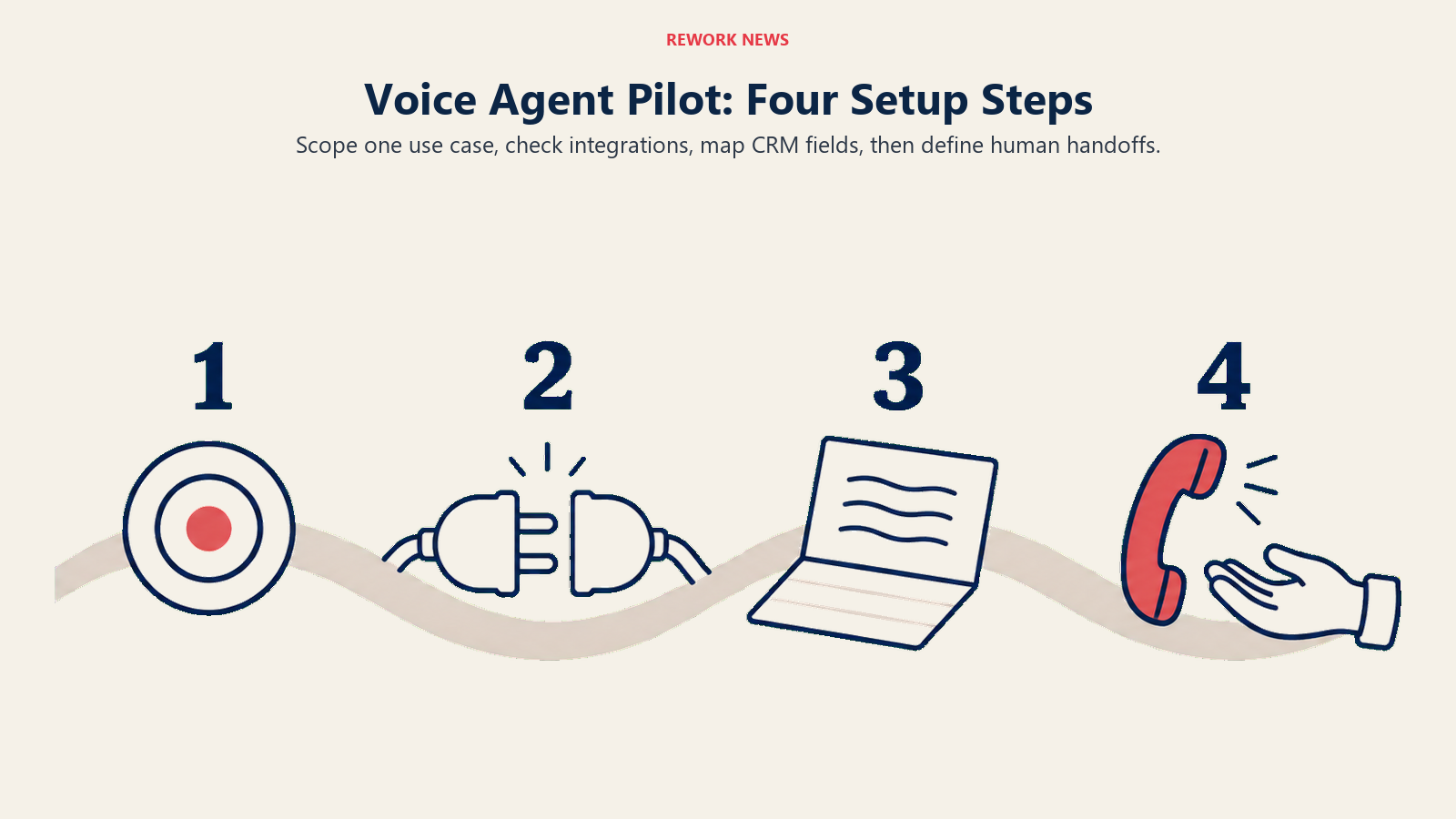
Step 1: Define scope precisely. Pick one use case and one entry point. Don't start with "voice for all inbound leads." Start with "voice for WhatsApp chat escalations from our highest-intent ad campaigns." Constrained scope means faster learning cycles and cleaner attribution.
Step 2: Select a vendor based on integration depth, not feature set. The feature comparison among ElevenLabs, PolyAI, Bland AI, and competitors is largely converging. What differentiates them for your use case is how well they integrate with your existing CRM, your WhatsApp Business API provider, and your existing chat automation. A voice agent that doesn't write structured data back to your CRM is a dead end.
Step 3: Map the CRM integration before the first call fires. Every voice interaction needs to produce a defined data output: lead name, qualification status, call summary, next action, escalation flag. Define the schema before the pilot starts. If you can't describe what a "successful" voice agent call looks like in CRM terms, the pilot won't produce useful data.
Step 4: Set human handoff rules explicitly. Voice agents should not handle edge cases, angry leads, or complex objections that require human judgment. Build clear escalation triggers: specific keywords, sentiment signals, deal size thresholds, or explicit lead requests for a human. The handoff should be instant and seamless. The lead shouldn't experience a gap in service quality when the conversation moves from AI to human.
What to Add to Your Q2 Experimentation Backlog
The practical question for growth leads isn't whether voice AI will matter. It already does at the scale of the companies reporting results. The question is timing.
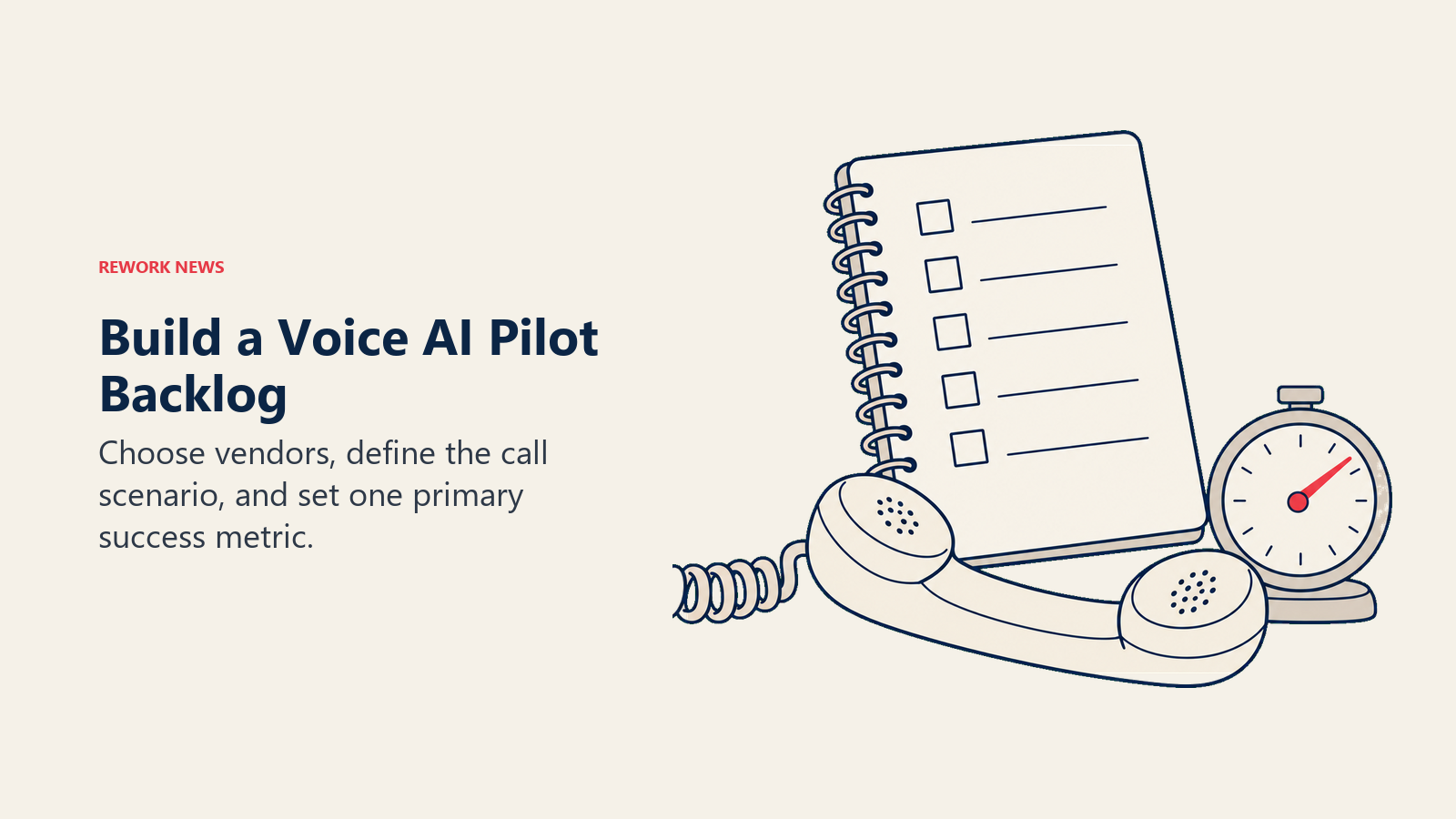
Here's what belongs on the Q2 backlog:
- Vendor shortlist. Identify 2-3 voice AI vendors with native integrations to your CRM and WhatsApp Business API provider. Most will offer pilot programs.
- Use case definition. Write one paragraph describing the specific inbound scenario you want to test: where the lead comes from, what the agent is supposed to do, what success looks like.
- CRM schema. Define the fields the voice agent will populate. Confirm with your ops team that those fields exist or can be created.
- Escalation protocol. Document the rules for human handoff before a single call goes live.
- Success metrics. Define what you're measuring: call-to-meeting conversion rate, cost-per-qualification, SDR time saved. One primary metric per pilot.
The growth leads who run a focused pilot in Q2 will have real data by Q3, when budget planning for 2027 starts. That's the actual reason to move now.
Voice AI at $2.1B in VC investment and $330M ARR for the category leader isn't a signal to panic. But it's definitely a signal to put it on the backlog and stop treating it as something to evaluate in another six months. For context on where conversational AI fits the broader revenue motion, ad-to-chat funnel conversion frameworks and WhatsApp in B2B sales are worth reading before your Q2 planning.
Learn More
- Voice AI Just Crossed $11B: What CROs Need to Decide Before Competitors Do: The CRO-level evaluation framework for the same ElevenLabs raise and voice AI category signal
- WhatsApp Calls and Chats Are Now in One Platform: How unified calling and chat on Respond.io connects to voice AI integration
- Chat Funnel Setup Guide: Building the conversion architecture that voice agents feed into and hand off from
- Lead Capture Automation: Configuring lead capture systems to receive and route voice-qualified prospects
