Best Snov.io Alternatives in 2026: 13 Tools Compared on Data Accuracy, Phone Numbers and Compliance

Turn this article into takeaways for your work.


Each assistant summarizes the article only for you and suggests best practices for your work.
The right Snov.io alternative depends on why you're leaving. If you want phone numbers and a people database, look at Apollo, Lusha, RocketReach or Kaspr. If you want fewer bounces, Findymail, Prospeo and FullEnrich bill only for verified results. If your security team wants certifications, Apollo, Lusha, RocketReach and FullEnrich publish SOC 2 or ISO claims that Snov.io doesn't. And if sending is the real job, a dedicated sequencer such as Instantly does it with more headroom, paired with a cleaner data source.
Snov.io is a sensible product, and plenty of teams should stay on it. It finds emails, verifies them and runs drip campaigns on one flat bill with unlimited seats. This page is for the teams that outgrew that bundle: credits that expire after 30 days, a database whose size claims don't line up, no certification to hand procurement, or a sequencer that feels thin next to the specialists. Each tool below is judged on the three things that decide whether prospecting data pays for itself: how accurate and verified it is, how the credit meter works, and what compliance you take on when you use it.
This isn't the category roundup. For a ranked look at every finder, see the best email finder tools page, and for the wider market of buyer data, intent and enrichment start with the best sales intelligence tools hub. If you're comparing Snov.io with its closest rival head to head, read Hunter vs Snov.io. Here the anchor is narrower: you use Snov.io today, and you want to know what to move to.
Key Facts
- Reps spend 40% of the workweek selling and 60% on everything else, and almost one full day a week on prospecting, per Salesforce's State of Sales report (4,050 sales professionals, 22 countries).
- 46% of sales pros with agents say data quality issues hurt their sales, and manual errors and duplicate data lead the report's list of causes.
- Gmail requires senders of more than 5,000 messages a day to keep spam rates below 0.30%, with DMARC and one-click unsubscribe, in effect since 1 February 2024.
- Median tenure with a current employer was 4.1 years in January 2026, per the US Bureau of Labor Statistics, so any contact list starts aging the day you pull it.
- France's regulator fined a LinkedIn-based contact finder EUR 240,000 in December 2024 for how it collected contacts, the clearest signal that sourcing is now a compliance question for buyers too.
Quick Comparison Table
| Tool | Best For | Starting Price | Key Strength | Key Limitation |
|---|---|---|---|---|
| Hunter | Domain search with a flat account price | Free (50 credits/mo); Starter $49/mo monthly or $34/mo billed annually | Unlimited users, credits upfront on annual | No SOC 2 or ISO claim, no phone numbers in the plan meter |
| Apollo.io | Database, finder, dialer and sequencer | Free; Basic $49/seat/mo billed annually ($65 monthly) | Search by title, SOC 2 Type II and ISO 27001 | Phone costs 8 credits, pooled credits never roll over |
| Prospeo | Verified emails and mobiles at a low entry cost | Free (100 credits/mo); Starter $49/mo per user | Largest free finder tier here | Credits don't roll over |
| Findymail | Paying only for verified emails | Individual $99/mo (1 seat) | Bounce guarantee claim, SOC 2 Type 2, EU hosting | No annual price published |
| FullEnrich | Waterfall coverage across 25+ sources | Pro from $29/mo for 500 credits | Pay only when found and verified, 12-month rollover on annual | Mobiles cost 10 credits |
| Lusha | Browser-based prospecting with phones | Free (40 credits/mo); Starter $37.45/mo billed annually | Flat plan price, SOC 2 Type II and ISO 27701 | Phone costs 5 credits, annual credits reset at year end |
| RocketReach | Mixed email and phone lookups | Essentials $49/mo monthly; from $399/yr (US list) | Charged only when a verified contact is found | Separate lookup and export meters |
| Kaspr | European B2B contacts with phone | Starter EUR 45/user/mo billed annually | Unlimited B2B email (fair use), rollover on paid plans | CNIL fine on record, Cognism-owned |
| UpLead | Small teams that want email and mobile per contact | Essentials $99/mo monthly or $74/mo billed annually | One credit unlocks email plus mobile | Single-user accounts on most plans |
| Lead411 | Cheap exports with intent on annual | Spark $49/mo or $490/yr | Rollover on every plan, human-checked data claim | No database size published |
| Clay | Multi-source enrichment and workflows | Free; Launch $185/mo monthly or $167/mo billed annually | 150+ data providers, unlimited seats | Two meters (data credits and actions) |
| Seamless.AI | Real-time search with bulk credits | Pricing on request | Credit refunded on an invalid email, SOC 2 Type II | No published price |
| Instantly | A dedicated cold email sequencer | Growth $47/mo monthly or $37.60/mo billed annually | Unlimited email accounts on Growth | Data is a separate meter you still have to buy |
How We Picked These 13 Tools
We started with the question Snov.io users ask, which is "what do I move to?", and kept tools that fix one of four problems: better data accuracy, phone numbers, a stronger compliance posture, or a stronger sender. Eleven of the thirteen are data tools. Clay sits in between, because it assembles data from other providers. Instantly is the one sequencer, included because for many teams the honest answer is to split data and sending across two tools.
Each tool is judged on the same checklist: what its pricing page says about credits and billing, what it claims about accuracy (attributed to the vendor, never to us), how it handles unknown and catch-all results, and what it says about GDPR, CCPA and phone data. Where a figure is a vendor claim, we say so. Where a vendor publishes no price, we write "pricing on request."
Why Teams Look Past Snov.io
Start with what Snov.io does well, because that's the bar. It finds emails by domain or name, verifies them, runs drip campaigns and adds LinkedIn tools. Pricing is flat per account with unlimited team seats, and one credit equals one prospect, one email search or one verification. That single meter keeps budgeting simple.

Snov.io's current pricing
| Plan | Monthly billing | Annual billing (per month) | Credits | Recipients | Enrichment tokens |
|---|---|---|---|---|---|
| Trial (free, renews monthly) | $0 | n/a | 50 | 100 | 25 |
| Starter | $39 | $29.25 | 1,000 | 5,000 | 75 |
| Pro S | $99 | $74.25 | 5,000 | 25,000 | 150 |
| Pro M | $189 | $141.75 | 20,000 | n/a | 300 |
| Pro L | $369 | $276.75 | 50,000 | n/a | 500 |
| Ultra | $738 | $553.50 | 100,000 | n/a | 750 |
| Custom Ultra | Contact sales | Contact sales | From 200,000, with rollover | n/a | n/a |
Source: Snov.io pricing. Billing options are monthly, every three months (5% off) and annual (25% off). The free trial has no bulk, export, API or integrations. LinkedIn automation is extra at $69/mo per slot. Unused credits expire after 30 days but roll over on annual billing or with plan renewal enabled. Recipients don't roll over.
The reasons people actually switch
| Reason | What's behind it | Who feels it most | What to look for instead |
|---|---|---|---|
| Credits expire after 30 days | Unused credits lapse unless you're on annual billing or have renewal enabled, so a quiet month wastes budget | Seasonal and bursty outbound teams | Rollover: Findymail (up to 2x), FullEnrich (3 or 12 months), Lead411, Kaspr, Lusha monthly plans |
| No phone numbers in the plan | Snov.io's credit meter prices prospects, searches and verifications, not mobile lookups | Teams that call as well as email | Apollo, Lusha, RocketReach, Kaspr, Prospeo, FullEnrich, UpLead |
| Data you can't size | The vendor cites 500M+ verified contacts on one page and over 50 million leads in the FAQ of another | Buyers who have to defend a number to finance | Vendors with a consistent, sourced figure and a free trial you can test |
| Procurement wants a certification | Snov.io states GDPR, CCPA and "LOA certified" audits on its security center, and no SOC 2 or ISO claim | Mid-market and enterprise buyers | Apollo, Lusha, RocketReach, FullEnrich, Findymail |
| A thin sequencer | Drip campaigns are one feature among many, with recipient caps on each plan | Teams sending at volume or from many inboxes | Instantly or another dedicated sender, fed by a stronger data source |
| Search by title across accounts | Finding emails by domain or name is not the same as filtering a people database by role | SDR teams building lists from scratch | Apollo, Prospeo, RocketReach, Lusha |
None of these is a flaw so much as a boundary. Snov.io does the small-team all-in-one job cleanly. If that's your whole workflow, stay. If two or more rows in that table describe you, a move will pay back.
What "find rate" means before you compare
Every vendor quotes accuracy. Almost none quotes find rate, which is the share of your target list that comes back with an address at all. Accuracy tells you how many returned addresses work. Find rate tells you how many contacts you reach. A finder with 98% accuracy and a 40% find rate leaves most of your list empty. We don't quote find rates because no neutral source publishes them, so run the bounce test later on this page against your own list.
1. Hunter: the closest like-for-like swap
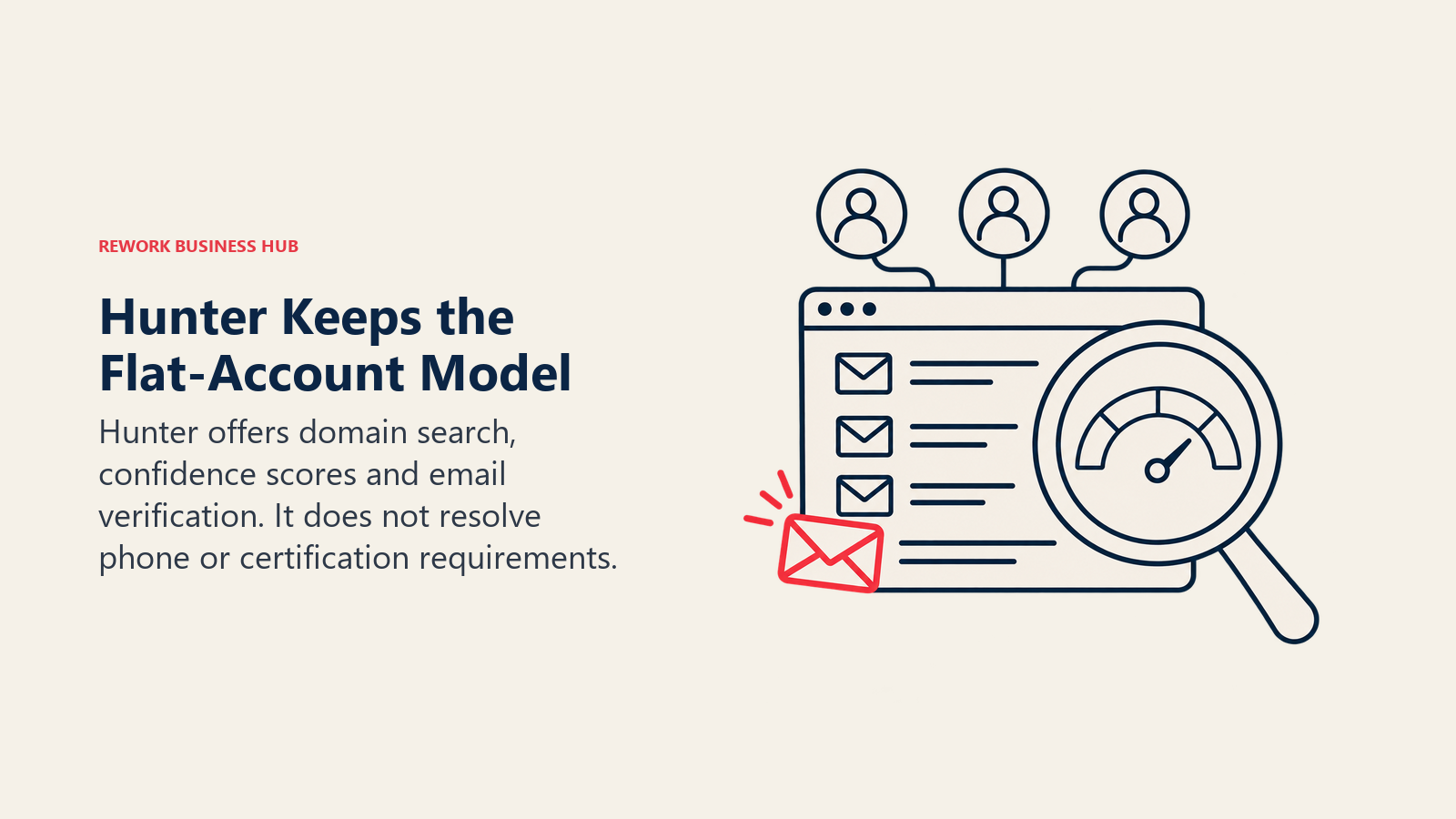
Hunter is the nearest comparison for a reason. It's a domain-search tool: enter a company domain and it shows the addresses it has found on the public web, each with a confidence score, plus a finder for one person, a verifier and cold email sequences. Pricing is flat per account with unlimited users, which matches how Snov.io bills. For a direct head-to-head, see Hunter vs Snov.io, and for Hunter's own competitors read the Hunter alternatives page.
| Plan | Monthly billing | Annual billing | Credits | Connected email accounts |
|---|---|---|---|---|
| Free | $0 | n/a | 50/month | 1 (500 recipients per sequence) |
| Starter | $49/mo | $34/mo billed $408/yr | 2,000/mo (24,000/yr upfront) | 3 |
| Growth | $149/mo | $104/mo billed $1,248/yr | 10,000/mo (120,000/yr) | 10 |
| Scale | $299/mo | $209/mo billed $2,508/yr | 25,000/mo (300,000/yr) | 20 |
| Enterprise | Custom | Custom | Custom | Custom |
Source: Hunter pricing. A found email costs 1 credit and a verification costs 0.5 credit. Monthly credits reset with no rollover, and annual plans receive the full year's credits upfront.
Hunter says it indexes 150 million professional email addresses from 650 million public sources (vendor claim) and states GDPR and CCPA compliance, with hosting in Belgium on Google Cloud. Like Snov.io, it makes no SOC 2 or ISO claim, so it won't fix a certification gap.
| Pros | Cons |
|---|---|
| Same flat, unlimited-user pricing model | No certification claim, same as Snov.io |
| Annual plans load the full year of credits upfront | Monthly credits reset, no rollover |
| Domain search is quick for known targets | Not a people database you filter by title |
Best for: teams that like Snov.io's shape but prefer Hunter's domain search and confidence scores.
Not ideal for: teams leaving Snov.io over certifications, phone numbers or credit expiry, since Hunter has the same gaps.
2. Apollo.io: database, finder, dialer and sequencer
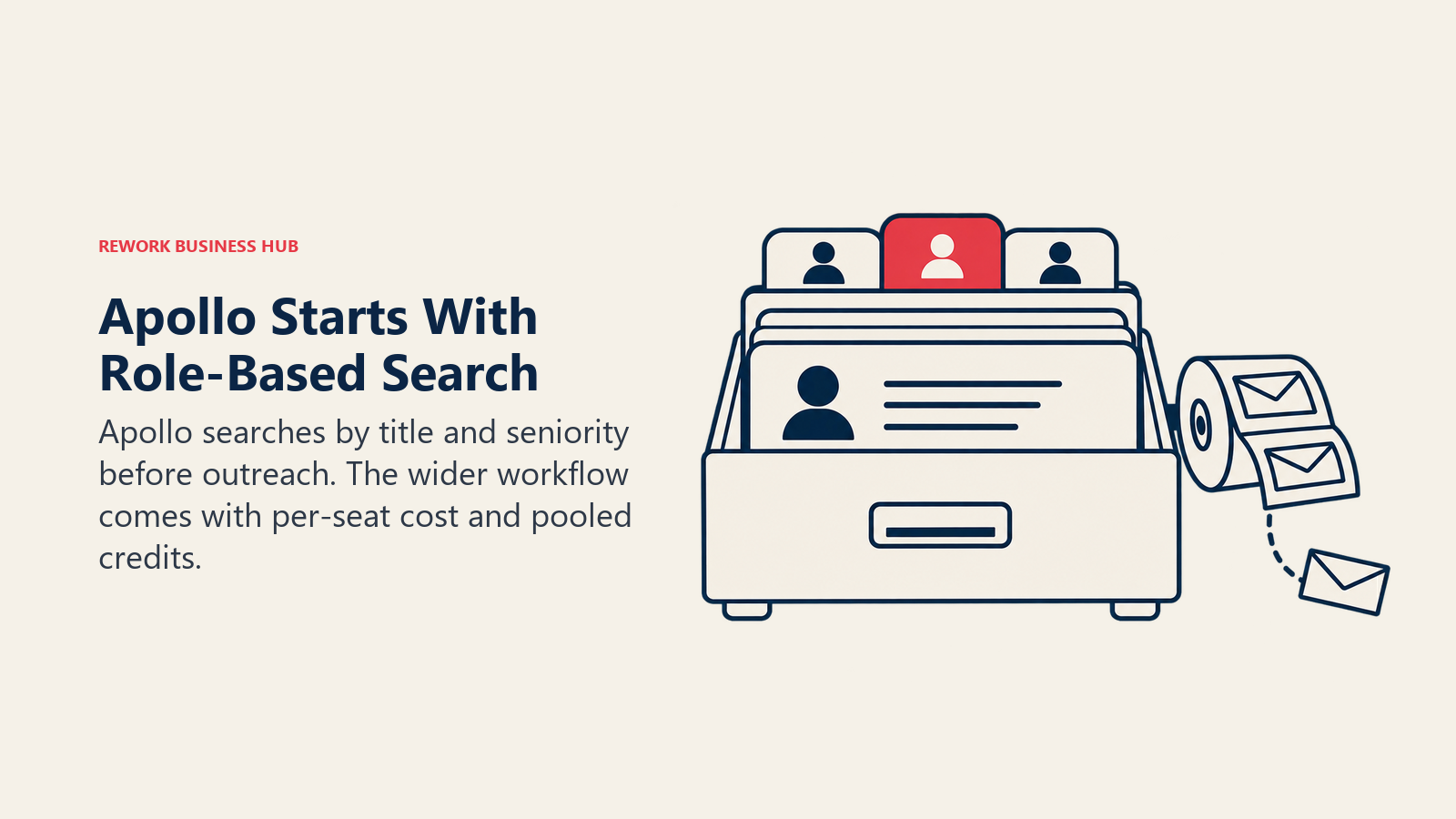
Apollo isn't a pure finder. It's a contact database with search filters, an email finder, a dialer and sequences. If your problem with Snov.io is that you start from a company list and still have to work out who to contact, Apollo lets you search by title and seniority first. For more on the platform, see our Apollo alternatives page.
| Plan | Annual billing (per seat/mo) | Monthly billing (per seat/mo) | Credits |
|---|---|---|---|
| Free | $0 | $0 | 900/seat/yr, granted monthly (75/mo) |
| Basic | $49 | $65 | 30,000/seat/yr upfront, or 2,500/seat/mo |
| Professional | $79 | $99 | 48,000/seat/yr, or 4,000/seat/mo |
| Organization | $119 (min 3 seats) | Annual only | 72,000/seat/yr, or 6,000/seat/mo |
Source: Apollo pricing. Annual billing saves 24%. An email costs 1 credit and a phone number 8. Credits are pooled across the team with no rollover, including add-on credits, and "unlimited" features sit under a fair use policy with no published numeric cap. The free plan includes a Gmail-only mailbox, 2 sequences and 100 CRM enrichments a month.
Apollo says it holds 240M+ contacts and 30M+ companies with 98% email accuracy (vendor claim). It lists SOC 2 Type II and ISO 27001 and describes its GDPR basis as legitimate interest. That page makes no CCPA or do-not-call statement, so ask if either matters to you.
| Pros | Cons |
|---|---|
| Search by title, seniority and company | Phone costs 8 credits against 1 for email |
| SOC 2 Type II and ISO 27001 listed | Per-seat pricing grows with the team |
| Finder, dialer and sequences in one | Pooled credits never roll over |
Best for: SDR teams that need to build lists by role and want a certification to show procurement.
Not ideal for: a single user who wants one flat account price with unlimited seats.
3. Prospeo: the biggest free finder tier
Prospeo gives you 100 credits a month for free, and its paid plans sit close to Snov.io's entry pricing. A verified email is 1 credit and a mobile is 10. It's both a finder and a people-search tool, so you can build lists by role as well as look up domains.
| Plan | Monthly billing | Annual billing | Credits |
|---|---|---|---|
| Free | $0 | n/a | 100/mo |
| Starter | $49 | $441/yr ($37/mo) | 2,000/mo or 24,000/yr |
| Growth | $99 | $888/yr ($74/mo) | 5,000/mo or 60,000/yr |
| Pro | $249 | $2,241/yr ($187/mo) | 15,000/mo or 180,000/yr |
Source: Prospeo pricing. Plans are per user and annual billing saves 25%. Credits do not roll over. Add-ons start at 1,000 credits for $10.
Prospeo claims 300M+ profiles, 125M+ verified mobiles and 98% accuracy, with intent leads refreshed weekly and the full dataset about every 30 days (vendor claims). Its pricing page shows a GDPR compliance badge.
| Pros | Cons |
|---|---|
| 100 free credits a month | Per-user pricing, unlike Snov.io's unlimited seats |
| Mobiles in the same credit pool | No rollover on any plan |
| Annual plans load credits upfront | No sequencer, so you still need a sender |
Best for: founders and small teams who want a usable free plan and a path to mobiles.
Not ideal for: teams that want finding and sending under one account.
4. Findymail: verified-only billing with a bounce guarantee
Findymail's pitch is that you pay only for results it has verified. A found email is 1 credit, a phone number is 10, and unverified results cost nothing. For teams burned by paying for guesses, that's the draw, and it speaks directly to the accuracy complaint that sends people away from bundled tools.

| Plan | Price | Seats | Notes |
|---|---|---|---|
| Free | $0 | 1 | 10 credits, no card |
| Individual | $99/mo | 1 | Usage-based prospecting plan |
| Team | $399/mo | 5 | Usage-based |
| Scale | $999/mo | 20 | Usage-based |
| Enterprise | Custom | Custom | n/a |
Source: Findymail pricing. The credit plan Starter is $99/mo billed monthly for 5,000 Finder plus 5,000 Verifier credits. The yearly option advertises "2 months free" without a printed annual price, so confirm annual terms with the vendor. Credits roll over up to 2x the monthly allowance. Datacare CRM enrichment starts at $500/mo billed annually.
Findymail says its bounce rate is "guaranteed" under 5%, with credits refunded if exceeded (vendor claim). It states SOC 2 Type 2, GDPR compliance and EU hosting. Its mobile finder covers non-EU numbers only, which matters if you sell in Europe.
| Pros | Cons |
|---|---|
| Charged only for verified results | Entry plan costs more than Snov.io's Starter |
| Bounce guarantee with credit refund | No annual price published |
| SOC 2 Type 2 and EU hosting stated | Mobile finder excludes EU numbers |
Best for: teams that care more about bounce rate than cost per credit.
Not ideal for: low-volume users, or anyone who wants sequences in the same tool.
5. FullEnrich: waterfall across 25+ sources
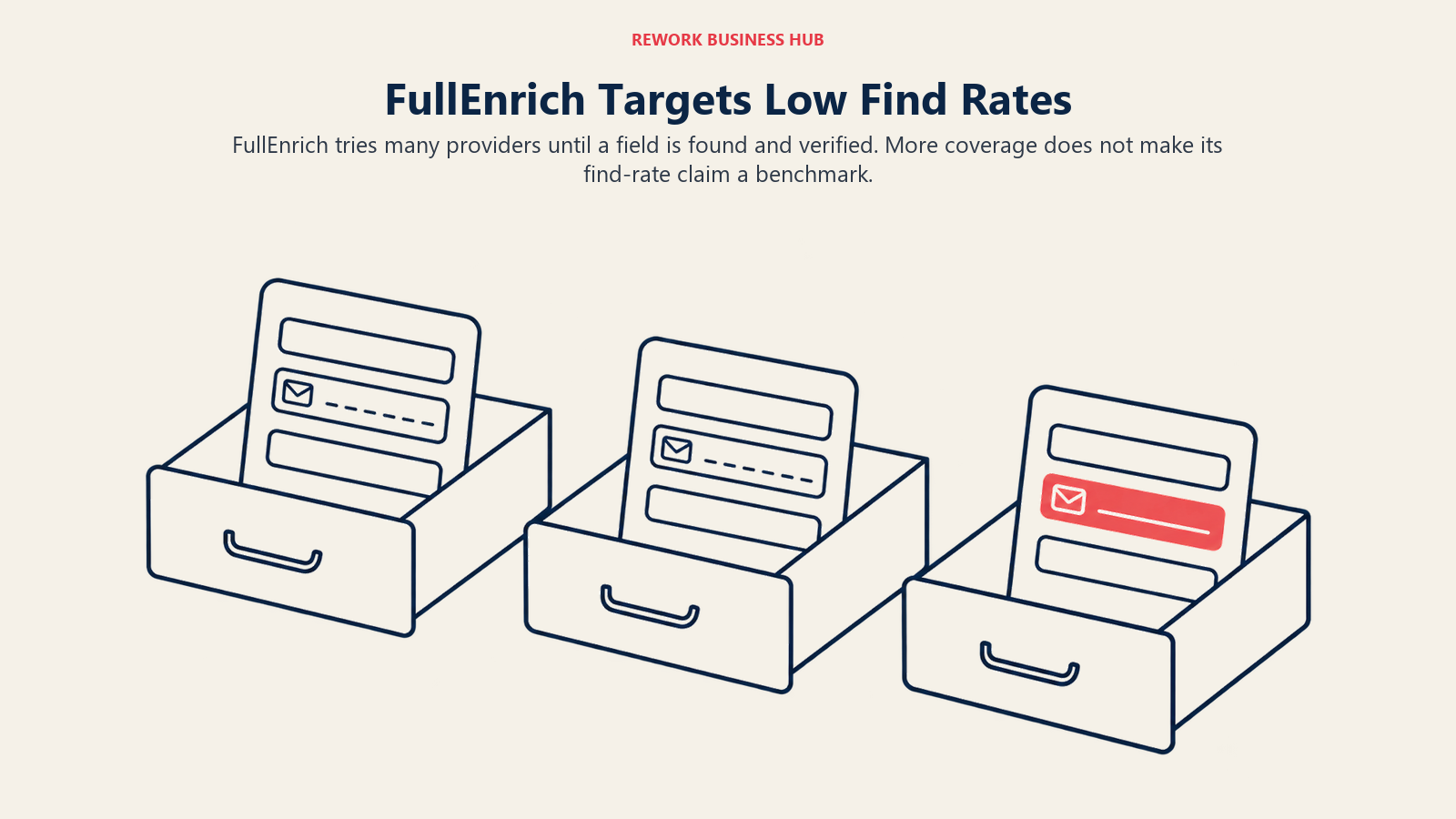
FullEnrich queries 25+ data sources in sequence and charges only when it finds and verifies a result. That's the clearest answer to a thin Snov.io result: if the first source misses, the next one tries. For more on the waterfall approach, see our Clay alternatives page.
| Plan | Monthly billing | Annual billing |
|---|---|---|
| Free trial | $0 for 50 credits, no card | n/a |
| Pro 500 credits | $29 | n/a |
| Pro 1,000 credits | $55 | n/a |
| Pro 5,000 credits | $255 | n/a |
| Pro 10,000 credits | $499 | n/a |
| Pro 6,000 credits/yr | n/a | $26/mo ($312/yr) |
| Pro 12,000 credits/yr | n/a | $49/mo ($588/yr) |
| Enterprise | Custom | Custom |
Source: FullEnrich pricing. Credits cost 1 for a work email, 3 for a personal email, 10 for a mobile and 1 for a reverse lookup, charged only if the result is found and verified. Landlines are free. Credits roll over for 3 months on monthly plans and 12 months on annual. Users are unlimited on every plan.
FullEnrich claims an average find rate of about 80%, 25+ sources and about 30% of raw data removed by verification (vendor claims). It says it stores no contact database of its own and states GDPR, CCPA and SOC 2 Type II.
| Pros | Cons |
|---|---|
| Waterfall across 25+ sources | Mobiles cost 10 credits |
| Rollover up to 12 months on annual | Personal emails cost 3 credits |
| SOC 2 Type II and unlimited users | Find-rate claim is the vendor's own |
Best for: teams whose find rate is too low and who can accept a higher cost per find.
Not ideal for: budget users with simple domain lookups, or teams that need a sender too.
6. Lusha: flat plan prices with certifications
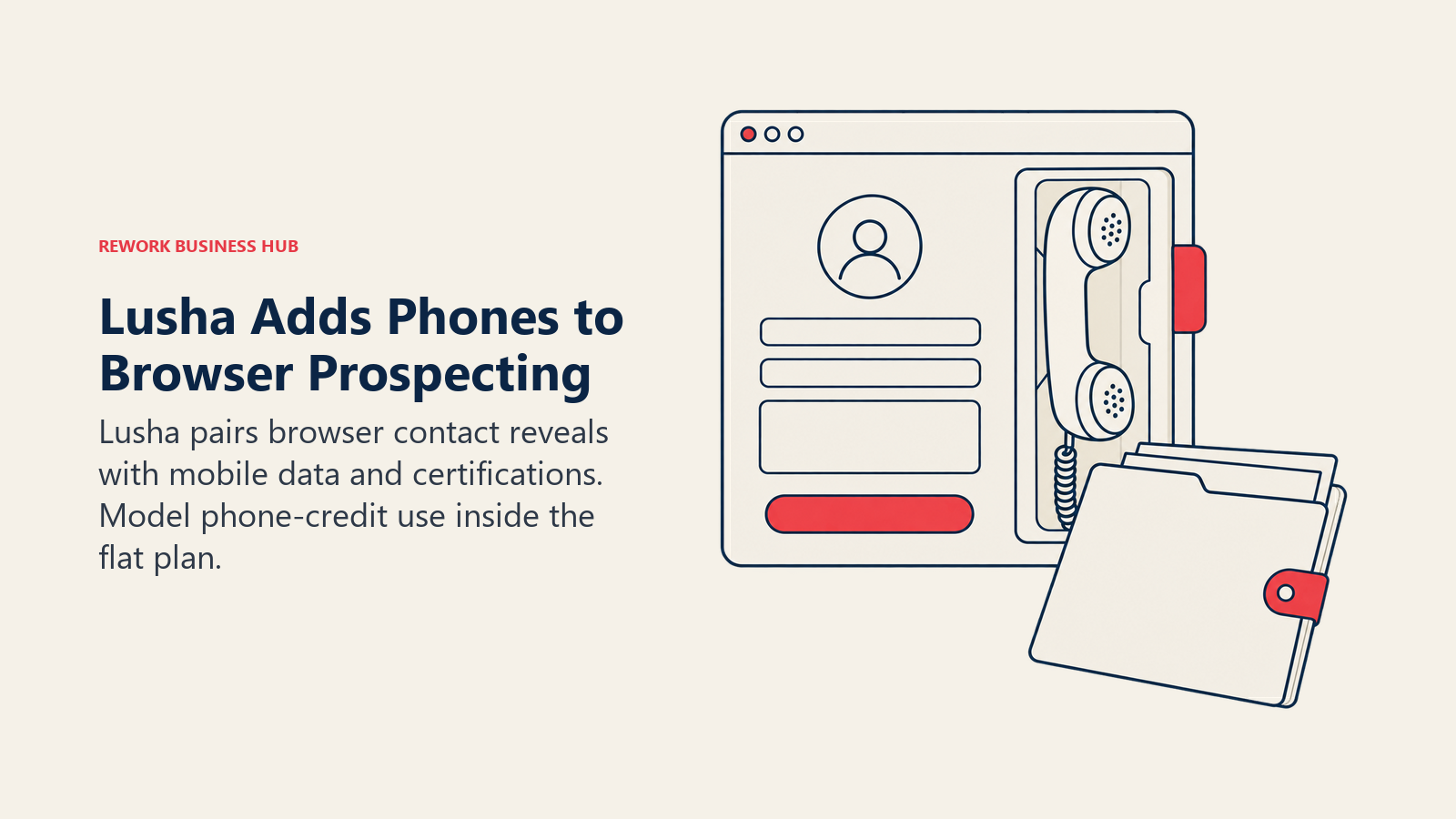
Lusha is a browser-extension tool for finding emails and phones on LinkedIn and company sites. Prices are per plan, not per user, with seats bundled in, so it keeps the flat-bill feel Snov.io users like. For deeper coverage, see our Lusha alternatives page, and for a head-to-head against a database competitor read Lusha vs Apollo.
| Plan | Monthly billing | Annual billing (per month) | Credits | Seats |
|---|---|---|---|---|
| Free | $0 | n/a | 40/mo | 1 |
| Starter | $49.90 | $37.45 ($449.10/yr) | 400/mo or 4,800/yr | 1 |
| Pro | $69.90 | $52.45 ($629.10/yr) | 600/mo or 7,200/yr | 2 |
| Premium | $399.90 | $299.95 ($3,599.10/yr) | 3,400/mo or 40,800/yr | 5 |
| Scale | Custom | Custom | Custom | Custom |
Source: Lusha pricing. Annual billing is 25% off. An email costs 1 credit and a phone 5. Monthly plans roll credits over up to 2x the monthly cap, while annual credits are issued upfront and reset at year end. More than 5 users goes to sales.
Lusha claims 515M+ verified contacts, 98% email accuracy, and 85% US and 86% global phone accuracy (vendor claims). It states GDPR (ePrivacyseal) and CCPA (TrustArc), SOC 2 Type II, ISO 27701 and ISO 42001, and its plan comparison includes a do-not-call list row, which is the clearest phone-compliance signal among the browser-extension tools.
| Pros | Cons |
|---|---|
| Phone numbers with a published accuracy claim | Phone costs 5 credits |
| SOC 2 Type II, ISO 27701 and a do-not-call row | Annual credits reset at year end |
| Seats bundled into flat plan prices | Starter's 400 monthly credits go fast |
Best for: reps who work in the browser and need both emails and mobile numbers with a compliance story.
Not ideal for: high-volume domain searches or teams that need a sequencer.
7. RocketReach: pay only when a verified contact is found
RocketReach covers both emails and phones and charges a lookup only if it finds a verified email or phone, otherwise it refunds it. Pricing is per seat. For more, see our RocketReach alternatives page, or RocketReach vs Lusha for a direct comparison.
| Plan | Monthly billing | Annual billing (US list) | Monthly lookups |
|---|---|---|---|
| Essentials | $49/mo | From $399/yr | 100 |
| Pro | $99/mo | $899/yr | 250 |
| Ultimate | $209/mo | $1,699/yr | 1,000 |
Source: RocketReach pricing. Annual prices vary by region, so the figures above are the US list. Annual plans carry "unlimited" lookups with a fair use cap of 10,000 lookups a month. Essentials is email only, and Pro and Ultimate include phone. API lookups, bulk lookups, CSV, list upload and CRM pushes all consume exports, not lookups, at 1,200, 3,600 and 20,000 exports a year across the three plans. Team plans start at $6K annually. A free account includes 5 lookups.
RocketReach claims 700 million professionals and 60 million companies with 98% accuracy (vendor claim). It lists SOC 2 Type II and ISO 27001 on its security page and publishes CCPA request metrics in its privacy policy.
| Pros | Cons |
|---|---|
| Emails and phones in one tool | Separate lookup and export meters |
| Charged only when a verified contact is found | Monthly plans capped at 100, 250 and 1,000 lookups |
| SOC 2 Type II and ISO 27001 listed | Annual price varies by region |
Best for: recruiters and sales teams that need mixed email and phone lookups with a certification.
Not ideal for: heavy API or bulk workflows, which draw on the smaller export meter.
8. Kaspr: unlimited B2B email, European focus, regulatory history
Kaspr is a LinkedIn-based contact finder with strong European coverage. One disclosure: Kaspr is owned by Cognism, which bought it in 2022. If you're also evaluating Cognism, see our Kaspr alternatives and Cognism alternatives pages.
| Plan | Annual billing (per user/mo) | Monthly billing (per user/mo) | Phone credits | Notes |
|---|---|---|---|---|
| Free | EUR 0 | EUR 0 | 5/mo | About 15 B2B email credits, no rollover |
| Starter | EUR 45 | EUR 59 | 100/mo | Unlimited B2B email (fair use) |
| Business | EUR 79 | EUR 99 | 200/mo | Adds 200 direct email credits, Recruiter Lite |
| Organization | Annual only | n/a | 24,000/yr | Minimum 5 users |
Source: Kaspr pricing. GBP and USD prices are also shown (Starter $49 annual or $65 monthly, Business $79 or $99). "Unlimited" credits are capped at 10,000 per account per month. Credits roll over on paid plans.
Kaspr says it covers 200 million+ European B2B contacts and re-validates emails every two months (vendor claim). On compliance, the French regulator fined Kaspr EUR 240,000 for collecting the contact details of LinkedIn members who had restricted their visibility, citing transparency and access failures too. If compliance is why you're leaving Snov.io, weigh that history.
| Pros | Cons |
|---|---|
| Strong European B2B coverage | CNIL fine for scraping LinkedIn contacts |
| Rollover on paid plans | Owned by Cognism |
| Unlimited B2B email (fair use) | Phone credits capped per plan |
Best for: European sales teams that want phone data and accept the regulatory history.
Not ideal for: compliance-sensitive buyers who want the cleanest sourcing story.
9. UpLead: one credit unlocks email and mobile
UpLead sells credits by contact: one credit unlocks a person's email and mobile direct dial together, which makes the cost of a complete record easy to see. It targets small teams that want a searchable database with a verification claim, not a bundle that also sends mail.
| Plan | Monthly billing | Annual billing | Credits | Extra credits |
|---|---|---|---|---|
| Free trial | $0 for 7 days | n/a | 5 | n/a |
| Essentials | $99/mo | $74/mo billed annually | 170/mo or 2,040/yr | $0.60 |
| Plus | $199/mo | $149/mo billed annually | 400/mo or 4,800/yr | $0.50 |
| Professional | Custom | Custom, annual only | Custom | Team seat management |
Source: UpLead pricing. Free, Essentials and Plus are single-user accounts. The page claims a "data accuracy rate of 95%" on email verification (vendor claim). Confirm rollover and GDPR and CCPA terms with the vendor before you buy.
| Pros | Cons |
|---|---|
| Email plus mobile for one credit | Single-user accounts below Professional |
| Searchable database with filters | Entry plan is $99/mo monthly |
| Extra credits available by the unit | Confirm rollover and compliance terms with the vendor |
Best for: a solo seller or small team that wants complete contact records without a sequencer.
Not ideal for: multi-seat teams on a flat bill, or buyers who need published compliance documentation up front.
10. Lead411: rollover on every plan
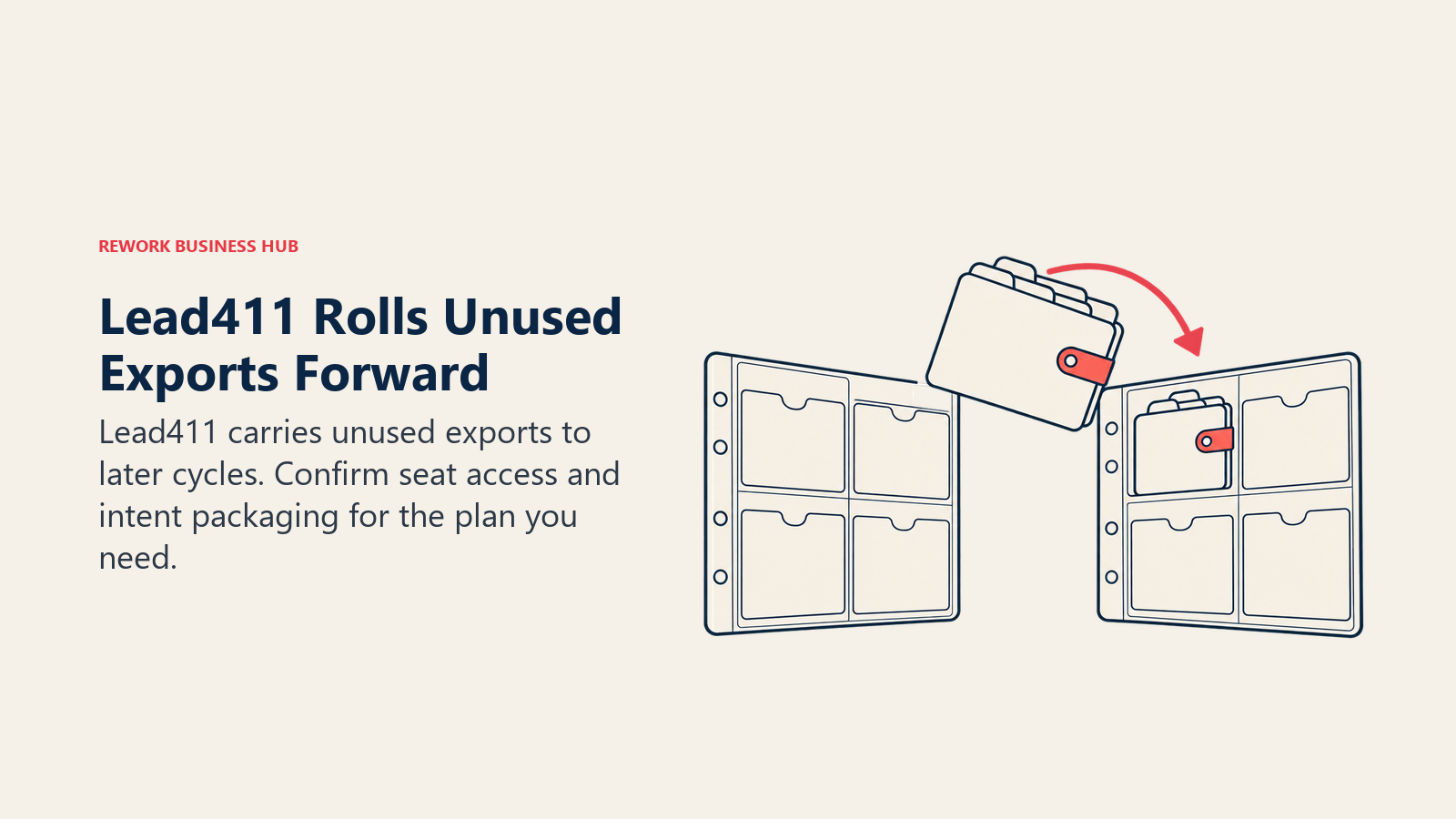
Lead411 prices by export, not by credit, and unused exports roll over to the next billing cycle on every plan. That's the direct fix for Snov.io's 30-day expiry. Spark's annual plan also includes buyer intent.
| Plan | Monthly billing | Annual billing | Exports |
|---|---|---|---|
| Pilot Light trial | $0 for 7 days | n/a | 50, with direct dials and Chrome extension |
| Spark | $49/mo | $490/yr | 1,000/mo or 12,000/yr |
| Ignite | From $150/mo | $1,500/yr | 1,000+/mo, API |
| Blaze | Pricing on request | Pricing on request | Unlimited exports a year |
Source: Lead411 pricing. Ignite and Blaze support multiple users, and Spark seats aren't stated. On Ignite, intent is an add-on.
Lead411 describes its emails as "Triple Verified" (SMTP, human and open validation, re-verified every 3 to 6 months) and its direct dials as "Double Verified" (vendor claims). It is a registered data broker in Texas and carries CCPA and Do Not Sell links. It publishes no database size figure.
| Pros | Cons |
|---|---|
| Rollover on all plans | No database size published |
| Verification process described step by step | Confirm the Spark seat count with the vendor |
| Direct dials included | Intent is an add-on on Ignite |
Best for: small teams that want exports that don't expire and a clear verification description.
Not ideal for: teams that need a sequencer or an unlimited-seat flat bill.
11. Clay: build the data stack instead of renting one
Clay isn't a finder in the Snov.io sense. It's a workspace that pulls from 150+ data providers, runs enrichment in sequence and pushes results to your CRM or sender. If your problem is coverage, Clay lets you chain sources until a field is filled. See our Clay alternatives page for the full picture.
In March 2026 Clay split its single credit into two meters: Data Credits for third-party data (from $0.05 each) and Actions for platform work (under $0.01 each), as announced in its pricing post.
| Plan | Monthly billing | Annual billing | Data credits | Actions |
|---|---|---|---|---|
| Free | $0 | n/a | 100/mo | 500/mo |
| Launch | $185/mo | $167/mo | 2,500/mo or 30,000/yr | 15,000/mo or 180,000/yr |
| Growth | $495/mo | $446/mo | 6,000/mo or 72,000/yr | 40,000/mo or 480,000/yr |
| Enterprise | Custom | Custom | 100,000+ | 200,000+/mo |
Source: Clay pricing. Seats are unlimited on every plan. Annual billing saves 10%. You aren't charged when enrichment returns no result. Actions never roll over, and Launch and Growth data credits bank up to 2x the monthly amount. The Free plan has no phone enrichment. Clay lists SOC 2 Type II and GDPR on its pricing page.
| Pros | Cons |
|---|---|
| 150+ providers behind one workspace | Two meters to budget |
| Unlimited seats, SOC 2 Type II | Entry price is well above Snov.io's |
| Charged nothing on empty results | A learning curve for non-technical users |
Best for: RevOps teams that want to design their own enrichment logic.
Not ideal for: small teams that want a finder and a sender in one click.
12. Seamless.AI: real-time search and a credit back on bad emails
Seamless.AI positions itself as a real-time search engine, not a database. Pricing is on request through a quote form based on contacts per month, with unlimited users, bulk credits and volume discounts in the pitch. A switch-from-competitor credit of up to 50% is advertised. See our Seamless.AI alternatives page for more.
| Item | What the vendor states |
|---|---|
| Price | Pricing on request |
| Free | Up to 50 credits |
| Users | Unlimited, per the pricing page pitch |
| Credit back | An invalid email refunds the credit automatically |
| Compliance | GDPR, CCPA, SOC 2 Type II and ISO |
| Database size | No figure published |
Sources: Seamless.AI pricing and homepage. Tiers listed on Vendr are Free, Pro with daily credit refresh, and Enterprise, with no published price.
| Pros | Cons |
|---|---|
| Automatic credit back for invalid emails | No published price |
| SOC 2 Type II listed | No database size figure |
| Unlimited users in the pitch | Quote-only, so comparison shopping takes a call |
Best for: teams that want a certification and volume pricing and are happy to go through a quote.
Not ideal for: buyers who need to see a price before talking to sales.
13. Instantly: a dedicated sequencer for the sending half
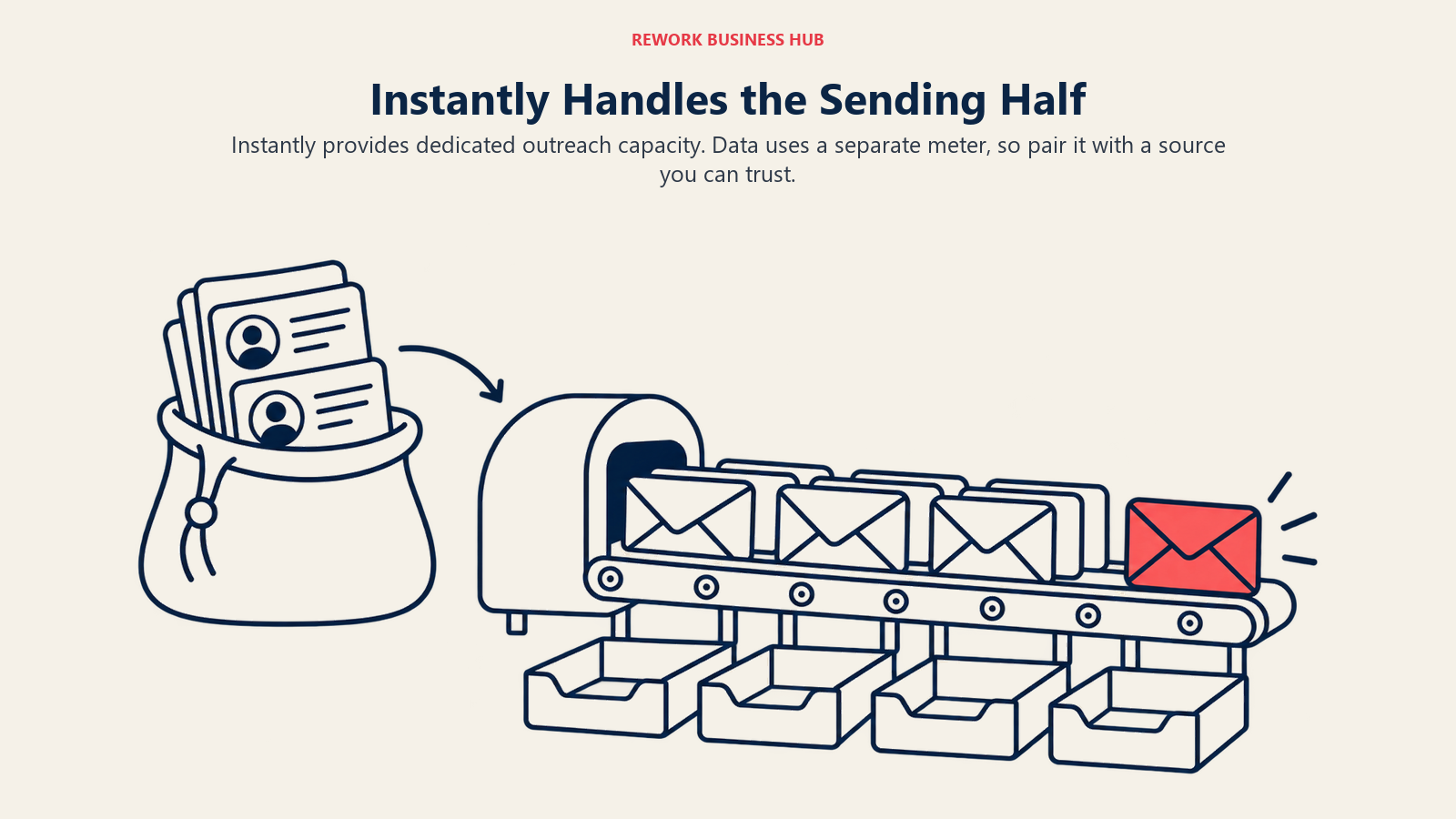
If sending is why you're unhappy, Instantly is the common move. It's a cold email platform built around unlimited email accounts, warmup and volume, and it sells its lead database as a separate credits meter. Splitting the jobs means you can put a stronger data tool, such as Apollo or Findymail, in front of it. For a three-way view, see Instantly vs Lemlist vs Smartlead and our Instantly alternatives page.
| Plan | Monthly billing | Annual billing (per month) | What it covers |
|---|---|---|---|
| Growth (Outreach) | $47 | $37.60 | 5,000 emails/mo, 1,000 uploaded contacts, unlimited email accounts |
| Hypergrowth (Outreach) | $97 | $77.60 | 125,000 emails/mo, 25,000 uploaded contacts, unlimited email accounts |
| Growth Credits | $47 | $37.60 | 1,500 to 2,000 lead credits/mo, lead database included |
| Supersonic (Credits) | $97 | $87.30 | 5,000 to 7,500 lead credits/mo, lead database included |
| Starter bundle | $94 | $85 | 5,000 emails/mo, 1,000 uploaded contacts, 1,500 lead credits/mo |
Source: Instantly pricing. Annual billing saves 10%. Instantly also sells larger Outreach, Credits and Agency plans and a custom Enterprise tier.
Instantly cites a 450M+ B2B lead database on its pricing page (vendor claim). Because it sends mail on your behalf, the Gmail rules matter: keep spam rates below 0.30% and authenticate your domains.
| Pros | Cons |
|---|---|
| Unlimited email accounts on the entry Outreach plan | Data is a separate meter or a second tool |
| Far higher sending limits than a bundled drip tool | Not a verification-first product |
| Bundles combine sending and lead credits | Two meters (emails and lead credits) to budget |
Best for: teams whose volume has outgrown Snov.io's recipient limits.
Not ideal for: teams leaving Snov.io mainly over data accuracy, since the data half is still on you.
Credit Cost Comparison: What a Find and a Check Actually Cost
Credits aren't comparable until you line up the unit. Here's what each meter charges for, using each vendor's own terms. We don't convert these to dollars per find, because plan sizes and billing terms differ.
| Tool | Email credit unit | Phone cost | Rollover |
|---|---|---|---|
| Snov.io | 1 per prospect, search or verification | Confirm with vendor | Expire after 30 days unless annual or renewal |
| Hunter | 1 per found email, 0.5 per verification | Not priced in plan credits | None monthly, full year upfront on annual |
| Apollo | 1 per email | 8 credits | None (pooled) |
| Prospeo | 1 per verified email | 10 credits | None |
| Findymail | 1, verified results only | 10 credits | Up to 2x monthly allowance |
| FullEnrich | 1 work, 3 personal | 10 credits | 3 months monthly, 12 months annual |
| Lusha | 1 | 5 credits | Monthly up to 2x cap, annual resets |
| RocketReach | Charged only if a verified contact is found | Included on Pro and Ultimate | Monthly capped, annual fair use 10,000/mo |
| Kaspr | Unlimited B2B email (fair use 10,000/mo) | 100/mo Starter, 200/mo Business | Paid plans |
| UpLead | 1 credit per contact (email plus mobile) | Included in the same credit | Confirm with vendor |
| Lead411 | Export-based | Direct dials included | Rolls over every plan |
| Clay | Data Credits plus Actions | Confirm with vendor, none on Free | Data credits up to 2x, actions none |
| Seamless.AI | Credit-based, refunded on an invalid email | Confirm with vendor | Confirm with vendor |
| Instantly | Separate lead credits | Confirm with vendor | Confirm with vendor |
Free Tier Comparison
| Tool | What you get free | Limits worth knowing |
|---|---|---|
| Snov.io | 50 credits, 100 recipients, 25 enrichment tokens | No bulk, export, API or integrations; renews monthly |
| Hunter | 50 credits/month | 1 connected email account |
| Apollo | 900 credits/seat/year, granted monthly | Gmail-only mailbox, 2 sequences |
| Prospeo | 100 credits/month | Credits don't roll over |
| Findymail | 10 credits | No card needed |
| FullEnrich | 50 credits, more by inviting teammates | Full Pro feature set |
| Lusha | 40 credits/month | 1 seat |
| RocketReach | 5 lookups | Free account, no card |
| Kaspr | About 15 B2B email and 5 phone credits/month | No rollover |
| UpLead | 5 credits for 7 days | Single user |
| Lead411 | 50 exports for 7 days | Includes direct dials and extension |
| Clay | 100 data credits and 500 actions/month | 200 rows per table, no phone enrichment |
| Seamless.AI | Up to 50 credits | Confirm limits with the vendor |
| Instantly | Confirm free options with the vendor | Pricing page leads with paid plans |
Accuracy, Verification and Catch-All Handling
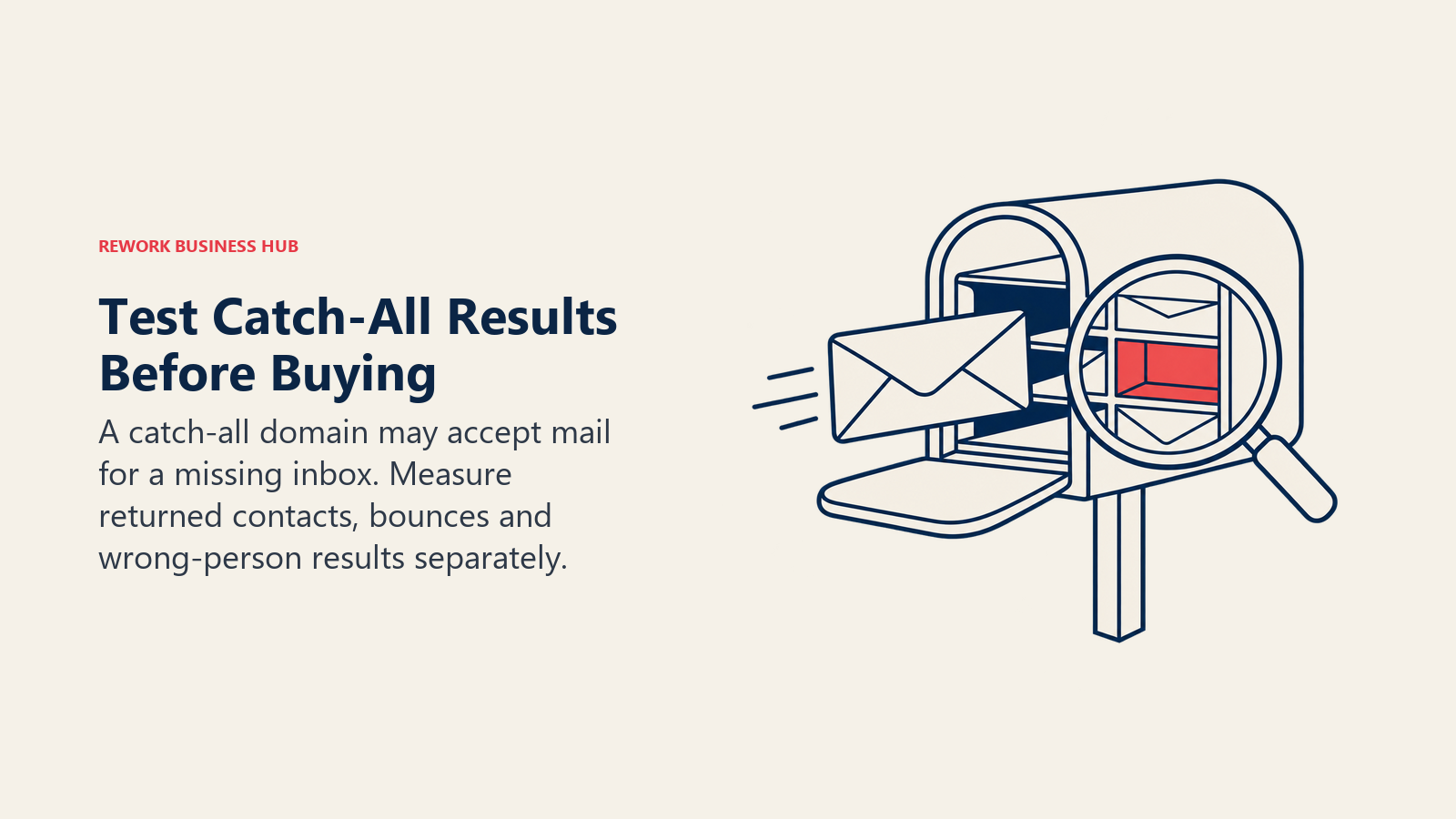
Catch-all domains accept mail for any address, so a verifier can't tell whether a given mailbox exists. That's where most bounce risk hides, and it's where tools differ.
| Tool | What the vendor says | What to ask |
|---|---|---|
| Snov.io | 98% accuracy claim for its email verifier | Is the figure measured on catch-all domains? |
| Hunter | Confidence scores and 0.5-credit verification | How are catch-all results labeled and billed? |
| Apollo | 98% email accuracy claim | What counts as verified in the 98%? |
| Findymail | Charged only for verified results, bounce under 5% guaranteed | What counts toward the 5%, and how is a refund claimed? |
| Prospeo | 98% accuracy claim | How often is each record refreshed in practice? |
| FullEnrich | About 30% of raw data removed by verification | What share of returned emails is still risky? |
| UpLead | 95% data accuracy claim on email verification | Does the claim cover mobile numbers? |
| Lead411 | Triple verified emails, re-verified every 3 to 6 months | What does "human" validation mean at scale? |
| Seamless.AI | Credit refunded automatically on an invalid email | How quickly is a bounce credited? |
How to run a bounce test before you buy
- Pull 300 to 500 contacts from your real target list, split across company sizes.
- Run the same list through your shortlisted tools using each free tier or trial.
- Compare the share of contacts returned, then send a small batch from a warmed secondary domain, not your main one.
- Track bounces and spam complaints separately. A tool can return a deliverable address for the wrong person.
- Decide on cost per deliverable contact, not cost per credit.
Deliverability is the stake. Gmail wants spam rates under 0.30% for bulk senders and recommends staying under 0.10%, so one sloppy list can damage the domain you rely on. For process and copy advice once your list is clean, see our cold email strategy guide.
Compliance: GDPR, PDPA, CCPA and Phone Rules
Finding an address is the start of a data-protection obligation, not the end of one. This section describes the rules in plain terms. It isn't legal advice, so have counsel review your own process.
| Region | What applies | What it means for finders |
|---|---|---|
| EU and UK | GDPR and ePrivacy rules | You need a lawful basis (often legitimate interest) and must give notice. Personal addresses need extra care. |
| Southeast Asia | Personal data protection acts such as Singapore's, Malaysia's and Thailand's PDPAs | Consent and notice rules vary by country. Singapore's PDPC is a starting point. |
| US (California) | CCPA | Consumers can ask to know, delete and opt out of sale or sharing. Vendors list CCPA compliance, but your handling of requests is yours. |
| US telephone | TCPA, Telemarketing Sales Rule, National Do Not Call Registry | Applies to calls and texts, not email. |
| UK telephone | TPS and CTPS | Covers calls to businesses as well as consumers. |
Three practical points:
- How contacts were gathered matters, not just how you use them. The CNIL's decision against Kaspr, as published by the EDPB, cited Articles 5, 6, 12, 14 and 15 of the GDPR. Ask any data vendor how it sources contacts and handles opt-outs.
- Phone data is a different regime. The FTC says do-not-call violations carry civil penalties of up to $53,088 per violation, though the registry doesn't apply to business-to-business calls. A TCPA private action can recover $500 per violation, and the UK's ICO fined a company £160,000 for over 700,000 unsolicited calls to TPS and CTPS numbers, including businesses.
- A vendor's badge isn't your compliance. A GDPR or CCPA badge means the vendor has a process. It doesn't make your use of the data lawful.
What each vendor states about certification
| Tool | Certifications and compliance statements |
|---|---|
| Snov.io | GDPR, CCPA, "LOA certified" and regular audits. No SOC 2 or ISO claim |
| Hunter | GDPR and CCPA, hosted in Belgium. No SOC 2 or ISO claim found |
| Apollo | SOC 2 Type II, ISO 27001, GDPR (legitimate interest) |
| Findymail | SOC 2 Type 2, GDPR, EU hosting |
| FullEnrich | GDPR, CCPA, SOC 2 Type II |
| Lusha | GDPR (ePrivacyseal), CCPA (TrustArc), SOC 2 Type II, ISO 27701, ISO 42001, do-not-call row |
| RocketReach | SOC 2 Type II, ISO 27001, CCPA metrics in privacy policy |
| Clay | SOC 2 Type II, GDPR |
| Seamless.AI | GDPR, CCPA, SOC 2 Type II, ISO |
| Lead411 | Registered Texas data broker, CCPA and Do Not Sell links |
| Kaspr | GDPR and CCPA aligned, CNIL fine of EUR 240,000 on record |
| Question for the vendor | Why it matters |
|---|---|
| Where does your contact data come from? | Public web, user contributions, licensed lists and scraped profiles carry different risks |
| Do you screen against do-not-call lists? | Matters if you also use phone numbers |
| Will you sign a data processing agreement? | Needed under GDPR when the vendor processes data for you |
| How do you handle deletion and opt-out requests? | You'll receive them too |
| Where is data hosted? | EU hosting matters for some buyers (Hunter and Findymail both state European hosting) |
Stage-Fit Matrix
| Stage | Situation | Strong fits | Why |
|---|---|---|---|
| Testing outbound | One person, a few hundred prospects | Prospeo, Hunter Free, Snov.io Trial | Free tiers and low entry prices |
| Early team | 2 to 5 reps, steady cadence | Snov.io, Apollo, Instantly plus a finder | Seat flexibility, sequences, volume headroom |
| Scaling outbound | List quality is the bottleneck | Findymail, FullEnrich, Clay | Verified-only billing, waterfalls |
| Phone-led selling | Calls matter as much as email | Lusha, RocketReach, Kaspr, Apollo | Mobile data in the plan |
| Regulated or security-reviewed | Procurement and DPOs involved | Apollo, Lusha, RocketReach, Findymail | Published certifications |
| Recruiting | Candidates, not buyers | RocketReach, Kaspr | LinkedIn-centered workflow |
Sizing and Persona Table
| Team size | Typical persona | Likely pick | Watch for |
|---|---|---|---|
| 1 to 10 | Founder or first SDR | Prospeo, Hunter, Snov.io | Credit expiry and monthly resets |
| 10 to 50 | SDR manager | Apollo, Lusha, Instantly plus a finder | Per-seat cost growth |
| 50 to 200 | RevOps lead | Apollo, FullEnrich, Clay | Security review and data processing agreements |
| 200+ | Head of sales ops | RocketReach teams, Lead411 Blaze, enterprise platforms | Contract minimums and seat limits |
| Agency | Founder or account lead | Instantly, Snov.io, Clay | Unlimited seats and per-client credit use |
How to Choose: Decision Framework
| If you need... | Pick | Why |
|---|---|---|
| The same flat, unlimited-seat shape | Hunter | Closest match to Snov.io's model |
| Phone numbers with a compliance row | Lusha | Mobile data plus do-not-call row and certifications |
| Fewer bounces over lower cost | Findymail | Charges only for verified results |
| A higher find rate on hard domains | FullEnrich or Clay | Waterfall across many sources |
| Search by title and seniority | Apollo or Prospeo | Database with filters |
| Credits that don't expire | Lead411, Findymail or FullEnrich | Rollover terms |
| A certification for procurement | Apollo, RocketReach or FullEnrich | SOC 2 or ISO listed |
| Much higher sending volume | Instantly plus a data tool | Dedicated sender with unlimited accounts |
| A European data source | Kaspr, with eyes open on the fine | European coverage and phone data |
Where Prospecting Data Sits in the Stack
A finder is one layer. Most teams pair it with enrichment to keep records current, a sender, and a CRM to track results. If you're deciding how much of that to buy as one platform, see the data enrichment tools roundup and our guide to choosing sales intelligence software. For LinkedIn-based workflows, the LinkedIn contact finder roundup compares those tools in depth, and the B2B data providers page covers the larger databases.
Frequently Asked Questions about Snov.io Alternatives
What is the best Snov.io alternative?
It depends on what you're fixing. Hunter is the closest flat-priced swap, Apollo and Lusha add phone numbers and published certifications, Findymail and FullEnrich bill only for verified results, and Instantly is the pick if sending volume is the limit. Run the same 300-contact sample through two or three before you commit.
Why do Snov.io credits expire?
Snov.io's unused credits expire after 30 days, but they roll over on annual billing or with plan renewal enabled. Recipients don't roll over at all. If you have uneven months, Findymail, FullEnrich, Lead411 and Kaspr all offer rollover on their terms.
Does Snov.io have SOC 2 or ISO certification?
Snov.io states GDPR and CCPA compliance and "LOA certified" audits on its security center, and it makes no SOC 2 or ISO claim. If your procurement team requires one, Apollo, Lusha, RocketReach, FullEnrich and Findymail list SOC 2 or ISO statements. Confirm current reports directly with any vendor.
Which Snov.io alternative gives phone numbers?
Apollo (8 credits per phone), Lusha (5 credits), RocketReach (Pro and Ultimate), Kaspr, UpLead, Prospeo and FullEnrich (10 credits each) all include mobile lookups. Phone data carries separate rules, including the US Do Not Call registry and UK TPS and CTPS, so read the compliance section before you call.
Is Snov.io's database really 500 million contacts?
Snov.io cites 500M+ verified contacts in one place and over 50 million leads in the FAQ of its B2B database page. Treat the number as marketing and test coverage on your own list instead. Vendors with a consistent, sourced figure are easier to defend to finance.
Is it legal to use an email finder for cold outreach?
It depends on where your contacts are and how the data was gathered. The EU and UK need a lawful basis and notice under GDPR, Southeast Asian PDPAs vary by country, and California's CCPA gives people rights to opt out. This page describes the rules and isn't legal advice, so have counsel review your process.
Should I replace Snov.io with a finder and a separate sequencer?
If sending is your bottleneck, yes, pairing a stronger data tool with a sender such as Instantly gives you more headroom on each half. If you're a small team happy with one flat bill, the bundle is simpler to run and cheaper to administer.
What to Do Next
Pick your top two from the decision table, pull 300 to 500 contacts from your real target list, and run them through both on free plans or trials. Send a small batch from a secondary domain and measure bounces, replies and spam complaints. Choose on cost per deliverable contact, then confirm the data processing agreement and any certification reports before you commit. For the wider market, return to the best email finder tools roundup, the Hunter alternatives page or the sales intelligence hub.

Principal CRM Strategist
On this page
- Key Facts
- Quick Comparison Table
- How We Picked These 13 Tools
- Why Teams Look Past Snov.io
- Snov.io's current pricing
- The reasons people actually switch
- What "find rate" means before you compare
- 1. Hunter: the closest like-for-like swap
- 2. Apollo.io: database, finder, dialer and sequencer
- 3. Prospeo: the biggest free finder tier
- 4. Findymail: verified-only billing with a bounce guarantee
- 5. FullEnrich: waterfall across 25+ sources
- 6. Lusha: flat plan prices with certifications
- 7. RocketReach: pay only when a verified contact is found
- 8. Kaspr: unlimited B2B email, European focus, regulatory history
- 9. UpLead: one credit unlocks email and mobile
- 10. Lead411: rollover on every plan
- 11. Clay: build the data stack instead of renting one
- 12. Seamless.AI: real-time search and a credit back on bad emails
- 13. Instantly: a dedicated sequencer for the sending half
- Credit Cost Comparison: What a Find and a Check Actually Cost
- Free Tier Comparison
- Accuracy, Verification and Catch-All Handling
- How to run a bounce test before you buy
- Compliance: GDPR, PDPA, CCPA and Phone Rules
- What each vendor states about certification
- Stage-Fit Matrix
- Sizing and Persona Table
- How to Choose: Decision Framework
- Where Prospecting Data Sits in the Stack
- What to Do Next