Awesome Supply Chain Management
Turn this article into takeaways for your work.


Each assistant summarizes the article only for you and suggests best practices for your work.
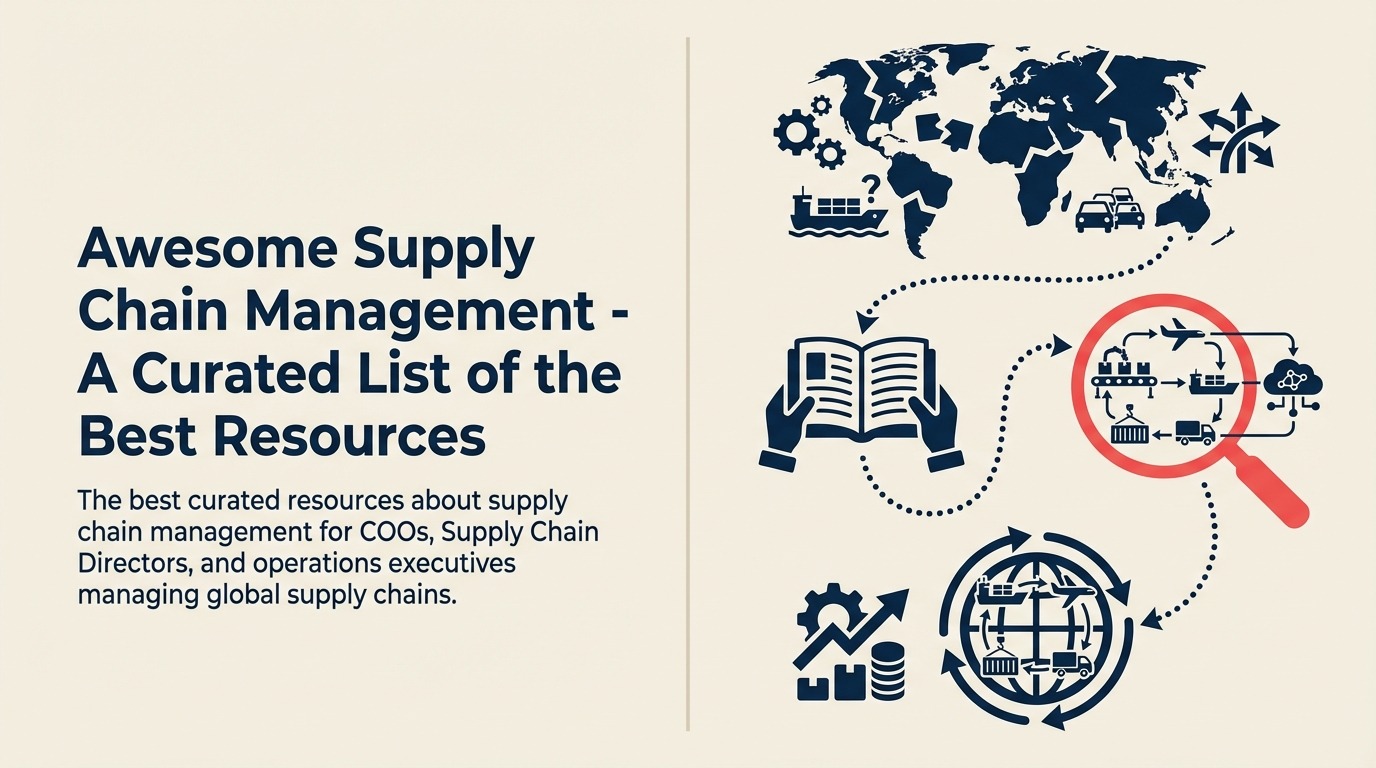
A curated list of the best resources about supply chain management, resilience, demand planning, and supply chain technology for operations executives managing global supply chains.
Inspired by awesome lists. Maintained by Rework.
Contents
- Articles
- Books
- Videos & Talks
- Tools & Software
- Templates & Frameworks
- Case Studies & Real-World Examples
- Communities & Newsletters
- Rework Resources
Articles
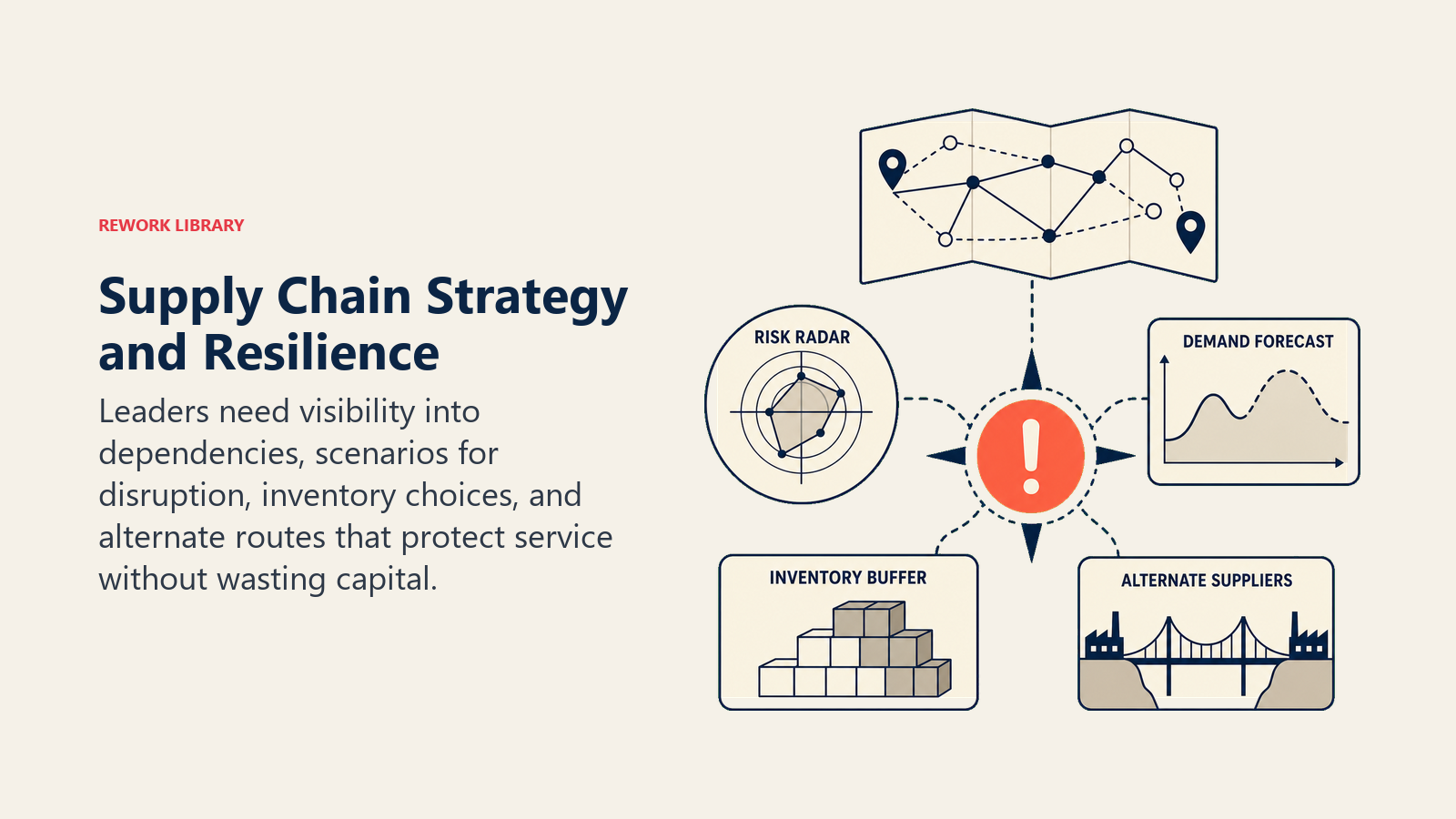
The past five years permanently changed how operations leaders think about supply chains. Efficiency is still important - but resilience, visibility, and the ability to respond to disruption are now equally weighted priorities. These resources reflect that shift.
- Gartner Supply Chain Top 25: 2025 Best Global Supply Chains by Gartner - The annual ranking of the world's superior supply chains, now in its 21st year, with profiles of what leaders do differently.
- Inside the Gartner Top 25: How Supply Chains Are Embracing the Future at Supply Chain Management Review - A deep-dive into how top-ranked supply chains use AI, network flexibility, and sustainability as competitive advantages.
- Gartner Identifies Top Trends in Supply Chain Technology for 2024 - AI-driven forecasting, control towers, and network design automation as the defining tech trends.
- How AI Is Shifting Supply Chains from Reactive to Predictive at Supply Chain Management Review - What predictive orchestration looks like in practice and which companies are leading it.
- Gartner Supply Chain Planning Trends from Top 25 Companies - How the world's best supply chains approach demand planning differently from average performers.
- Supply Chain Wanes in 2025, But Resilience Remains Key at TechTarget - An honest assessment of where supply chain investment is going in 2025-2026 and why resilience isn't going away.
- McKinsey: Supply Chain Resilience After COVID - The structural changes organizations made after pandemic disruptions revealed the cost of efficiency-only optimization.
- Honoring the Gartner Top 25 at Supply Chain Management Review - What Schneider Electric's three-year streak at #1 reveals about the practices that matter most.
- The SCOR Model Explained by ASCM - A plain-English explanation of the Supply Chain Operations Reference model used for benchmarking and improvement.
- Nearshoring and Supply Chain Redesign by McKinsey - The data on which companies are redesigning their supply networks and how nearshoring decisions are being made.
Books
- The Goal by Eliyahu Goldratt - A foundational text on bottleneck theory and throughput optimization that applies directly to supply chain design.
- Supply Chain Management: Strategy, Planning, and Operation by Sunil Chopra & Peter Meindl - The academic standard for supply chain strategy, now in its seventh edition, used in MBA programs worldwide.
- Logistics and Supply Chain Management by Martin Christopher - A practitioner's guide to end-to-end supply chain design, from demand sensing to last-mile delivery.
- The New Supply Chain Agenda by Reuben Slone, J. Paul Dittmann, and John Mentzer - Why supply chain is a board-level strategic priority and what CEOs need to understand about it.
- Resilient: Building a Supply Chain That Won't Crack - A post-pandemic framework for building supply networks that can absorb shocks without breaking.
Videos & Talks
- MIT Supply Chain MicroMasters: Introduction - A preview of MIT's online supply chain certificate covering demand forecasting, logistics, and analytics.
- Gartner Supply Chain Conference Keynote 2024 - The opening keynote from Gartner's annual supply chain event on the trends reshaping global operations.
- McKinsey: Redesigning Global Supply Chains - McKinsey partners on the strategic decisions involved in moving from efficiency-optimized to resilience-optimized networks.
- How Amazon Manages Its Supply Chain - A walkthrough of Amazon's fulfillment and logistics network as a case study in demand-driven supply chain design.
- CSCMP EDGE Conference: AI in Supply Chain - Practitioners from CSCMP's annual conference on deploying AI in demand planning and supplier risk management.
Tools & Software
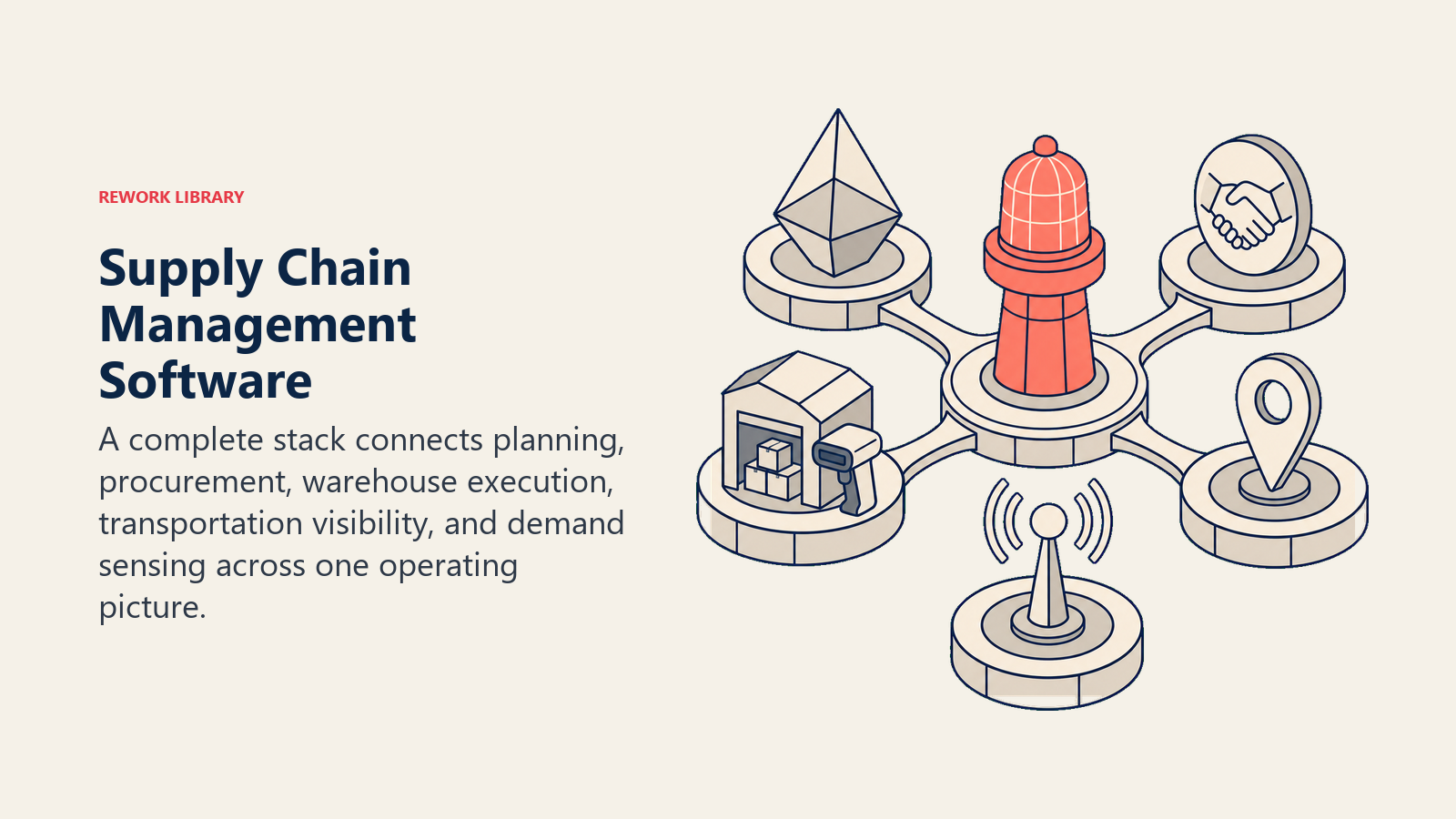
Supply chain technology spans planning, execution, and visibility. These platforms represent the most widely deployed solutions across mid-market and enterprise supply chains.
Planning and Optimization
- Kinaxis - Supply chain planning platform known for concurrent planning across demand, supply, and inventory.
- Blue Yonder - AI-powered supply chain planning and execution platform used by large retailers and manufacturers.
- SAP SCM - Integrated supply chain management within the SAP ecosystem for enterprises running SAP ERP.
Procurement and Supplier Management
- Coupa - Business spend management platform for procurement, invoicing, and supplier relationship management.
- Oracle SCM Cloud - End-to-end cloud SCM from Oracle covering planning, procurement, manufacturing, and logistics.
Visibility and Logistics
- Flexport - Digital freight forwarding with real-time shipment visibility across ocean, air, and ground.
- project44 - Supply chain visibility platform providing real-time tracking across multimodal freight networks.
Demand Planning and Forecasting
- o9 Solutions - AI-powered integrated business planning platform used for demand sensing and supply network optimization.
Templates & Frameworks
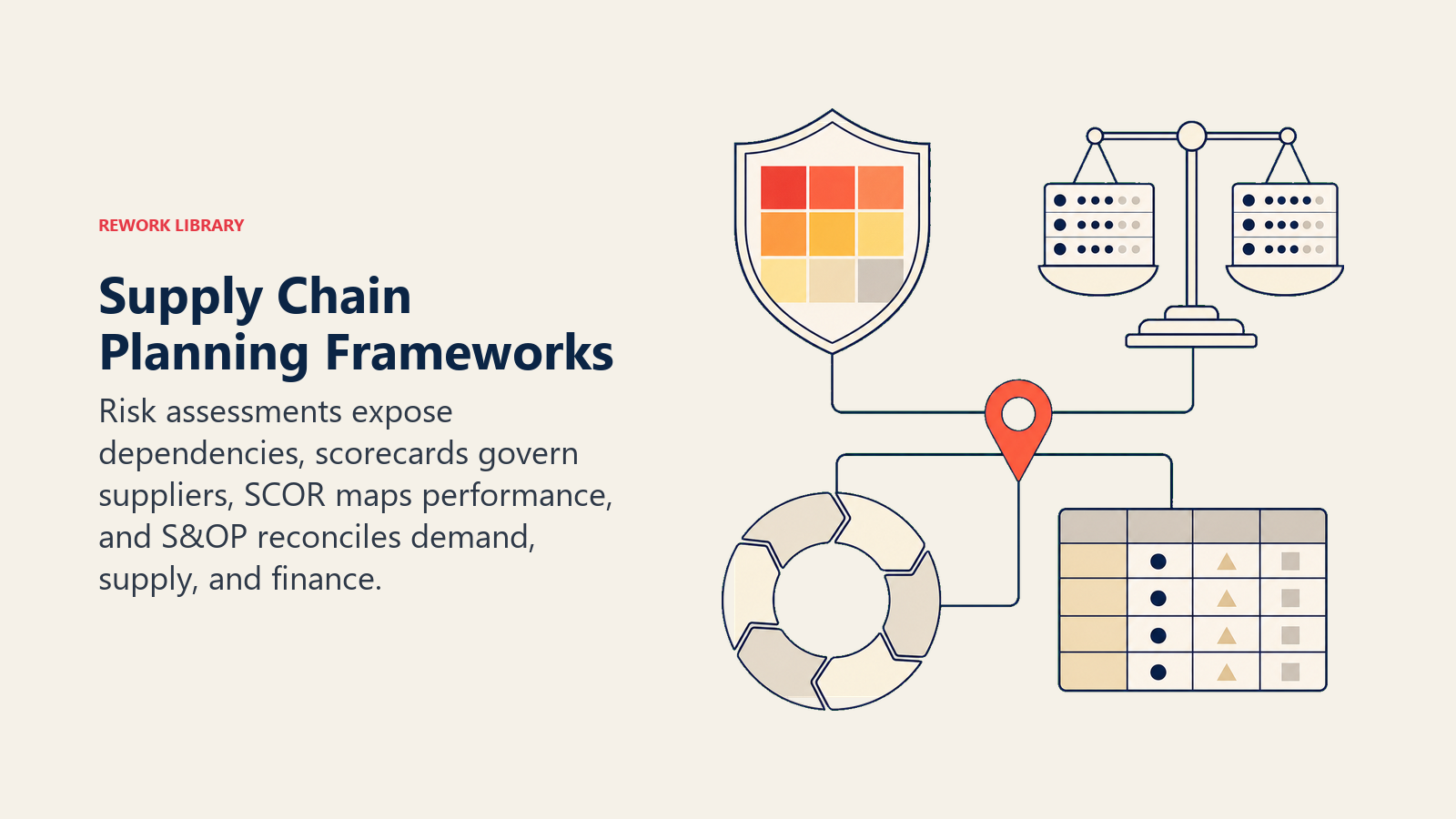
Risk assessments expose dependencies, scorecards govern suppliers, SCOR maps performance, and S&OP reconciles demand, supply, and finance.
- Supplier Scorecard Template by Coupa - A ready-to-use framework for evaluating suppliers on quality, delivery, cost, and responsiveness.
- SCOR Framework Overview by ASCM - The Supply Chain Operations Reference model for benchmarking and designing end-to-end supply chains.
- S&OP Planning Template by Gartner - A sales and operations planning template for aligning demand, supply, and financial plans monthly.
- Supply Chain Optimization via Rework - Practical strategies for reducing lead times, improving supplier visibility, and building redundancy into critical paths - grounded in the same resilience-first thinking the Gartner Top 25 applies.
Case Studies & Real-World Examples
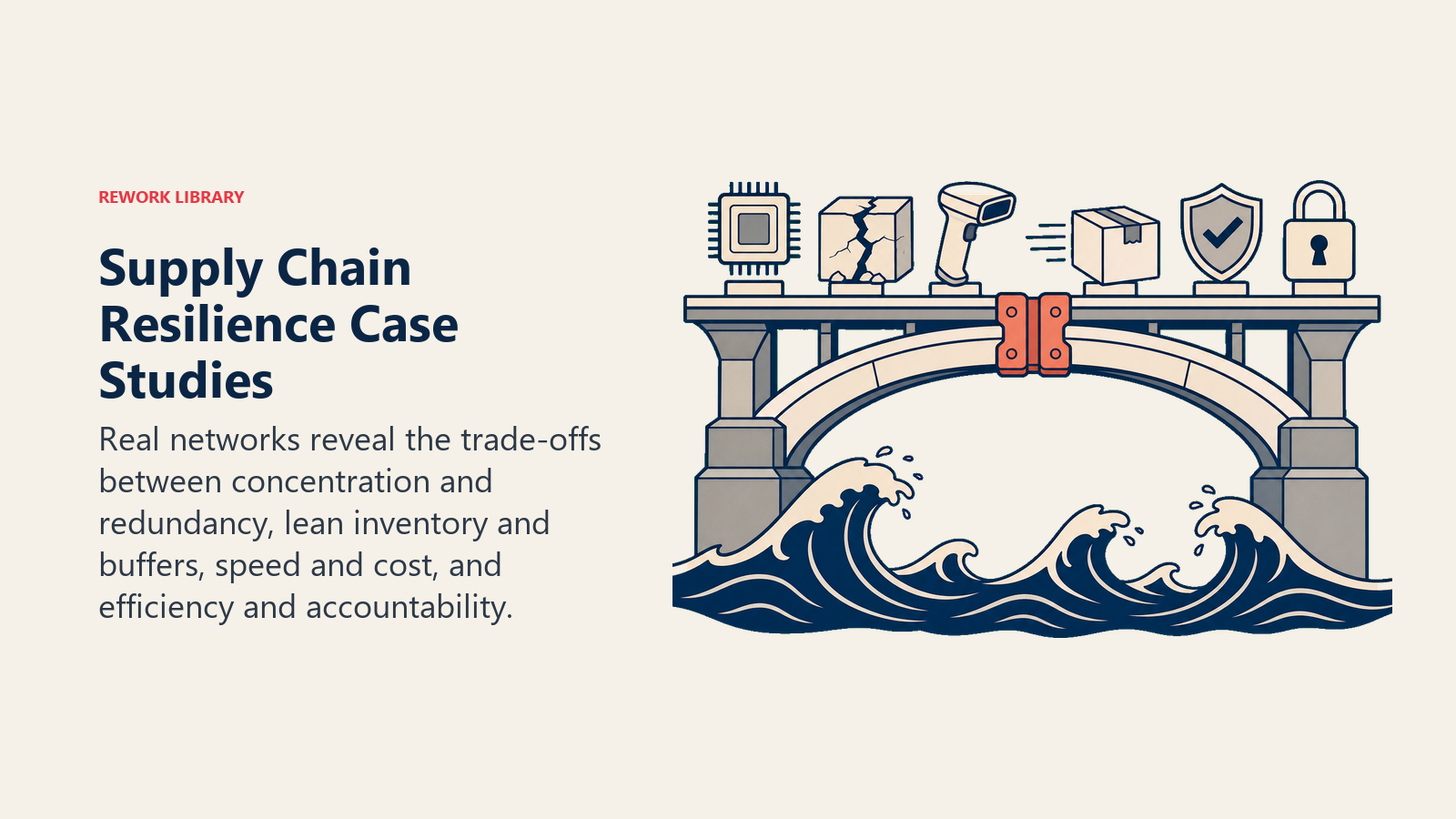
Supply chain decisions that look smart in normal conditions often reveal their weaknesses during disruption. These cases span the spectrum from best-in-class resilience to high-profile failures - giving operations executives the context to evaluate their own network design choices.
Apple - Runs what Gartner has repeatedly ranked as one of the world's top supply chains, built on three principles: single-supplier dominance for critical components (to drive volume discounts and quality control), deep visibility into Tier 2 and Tier 3 suppliers, and multi-year supply agreements that lock in capacity. During the 2020-2021 chip shortage that devastated competitors, Apple managed better than most because it had long-term agreements with TSMC for chip allocation. The tradeoff is concentration risk - Apple's dependency on Taiwan-based manufacturing became a boardroom conversation during US-China tensions in 2022-2023. Source
Toyota's response to the 2011 Japan earthquake - A 9.0-magnitude earthquake and tsunami in March 2011 shut down Toyota's domestic production for over two months, disrupting a supply chain built on just-in-time principles with minimal inventory buffers. The event exposed the fragility of pure JIT when single-source suppliers are in a disaster zone. Toyota's response was to map its full supply network to the n-th tier for the first time - they discovered that 500 of their parts came from a single supplier in the affected region. They spent the following two years building buffer inventory for critical components and qualifying backup suppliers. Source
Amazon's fulfillment network - Amazon built its supply chain not around warehouse efficiency but around delivery speed as the customer value proposition. Every supply chain investment - from same-day delivery hubs to robotics in fulfillment centers to the Amazon Air cargo fleet - was justified by the question "does this make delivery faster?" rather than "does this reduce per-unit cost?" The result is a network that is expensive to operate but has redefined customer expectations across all of e-commerce. Amazon's operations margin has been notoriously thin precisely because they reinvest supply chain efficiency gains into speed improvements. Source
Maersk and the NotPetya cyberattack (2017) - The world's largest shipping company lost approximately $300 million in revenue when the NotPetya malware attack took down its entire IT infrastructure - including its port terminal booking systems - in June 2017. Maersk had to reinstall 45,000 PCs and 4,000 servers in 10 days. The attack revealed that supply chain resilience isn't only about physical disruption; digital infrastructure is now a critical dependency in every major logistics network. Maersk subsequently became one of the most vocal corporate advocates for supply chain cybersecurity investment. Source
Communities & Newsletters
- CSCMP - Council of Supply Chain Management Professionals - The leading professional association for supply chain management, with research, events, and a global chapter network.
- Supply Chain Management Review - The industry's oldest trade publication, covering strategy, technology, and leadership in global supply chains.
- Supply Chain Dive - Daily news and analysis on supply chain disruptions, technology, and executive decisions for busy operations leaders.
Rework Resources
- Supply Chain Optimization - Practical strategies for reducing lead times, improving visibility, and building supplier relationships that withstand disruption.
- Lean Manufacturing Principles - How Lean thinking applies to supply chain design and the reduction of waste across the full value stream.
Contributing
Know a great resource that belongs on this list? Let us know.
Links verified. Addresses post-pandemic supply chain lessons and the shift from efficiency-only to resilience-first network design.