Awesome Customer Retention
Turn this article into takeaways for your work.


Each assistant summarizes the article only for you and suggests best practices for your work.
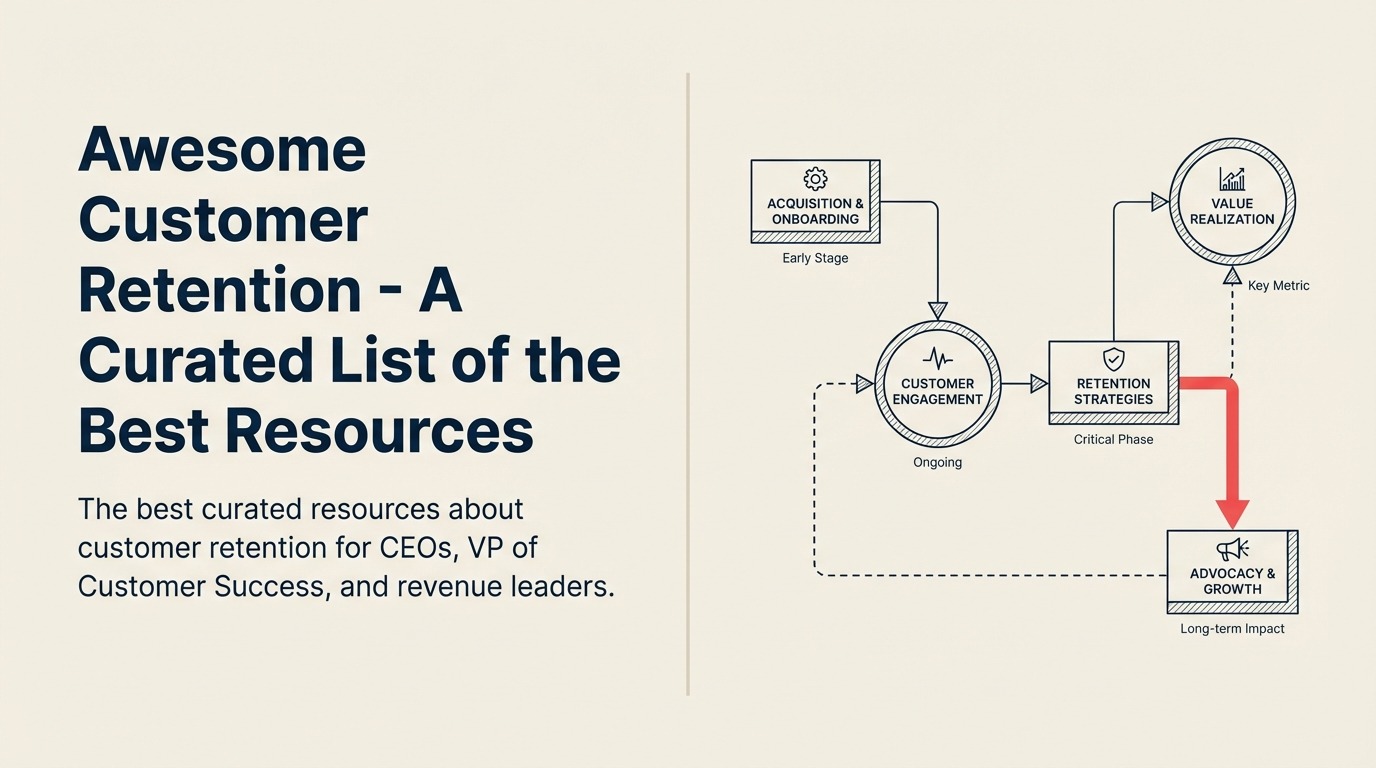
A curated list of the best resources about customer retention, churn reduction, and lifetime value optimization for SaaS, subscription, and e-commerce businesses.
Inspired by awesome lists. Maintained by Rework.
Contents
- Articles
- Books
- Videos & Talks
- Tools & Software
- Templates & Frameworks
- Case Studies & Real-World Examples
- Communities & Newsletters
- Rework Resources
Articles
The difference between a business that compounds and one that grinds is usually retention. These articles cover why customers leave, how to predict churn before it happens, and what the data shows about winning them back.
- 2024 SaaS Retention Benchmarks: How Does Your Company Compare? by ChurnZero - Benchmark data from 1,000+ CS leaders on net revenue retention across SaaS segments.
- Top 9 Customer Success Metrics for 2024 by ChurnZero - The metrics that actually predict churn before it shows up in your MRR.
- 2024 Customer Success Leadership Study by ChurnZero - The largest annual survey of CS leaders, showing retention and expansion as the top two priorities.
- B2B SaaS Churn Rate Benchmarks by Vitally - What healthy churn rates look like across different business models and ARR bands.
- Churn Prediction: How to Retain Customers and Boost Revenue by UserGuiding - A practical guide to using behavioral signals as early warning systems for at-risk accounts.
- How to Calculate SaaS Churn Rate by Hubifi - Formula breakdowns with real examples for logo churn, revenue churn, and net revenue retention.
- The Loyalty Leaders Research by Bain & Company - Foundational research on the economics of loyalty and why increasing retention 5% can double profits.
- How Superhuman Built an Engine to Find Product-Market Fit at First Round Review - The PMF survey used to identify and focus on users most likely to stay and refer.
- The Best Churn Management Software Platforms by Churnkey - An honest comparison of tools for managing voluntary and involuntary churn.
- SaaS Churn Rate Benchmarks Across 30+ Categories - Data from 2,847 SaaS companies and $23.7B ARR on what churn looks like by industry.
Books
These are the books that have shaped how CS leaders, retention marketers, and subscription businesses think about keeping customers.
- The Effortless Experience by Matthew Dixon - Research-backed finding that reducing customer effort drives loyalty more than delight does.
- Customer Success by Mehta, Steinman & Murphy - The operating model for building a CS function that reduces churn and drives expansion revenue.
- Never Lose a Customer Again by Joey Coleman - A 100-day framework for onboarding new customers so well they become lifelong advocates.
- The Automatic Customer by John Warrillow - How to build subscription models that create predictable, recurring revenue across any industry.
- Subscribed by Tien Tzuo - The Zuora CEO's case for the subscription economy and what retention means in a recurring revenue world.
Videos & Talks
- Patrick Campbell on the Science of Churn - ProfitWell's founder breaks down voluntary vs. involuntary churn and what data says about fixing each.
- SaaStr: Benchmarks for Great NRR - What top-quartile net revenue retention looks like and how to build toward it.
- Gainsight Pulse: The Future of Customer Success - Keynotes from Gainsight's annual conference on where CS is heading as a discipline.
- Why Customers Churn: A Data-Driven Framework - A walkthrough of churn root-cause analysis using cohort data and health scores.
- How to Design a Cancellation Flow That Saves Revenue - Tactical video on building pause, downgrade, and save offer flows that reduce voluntary churn.
Tools & Software
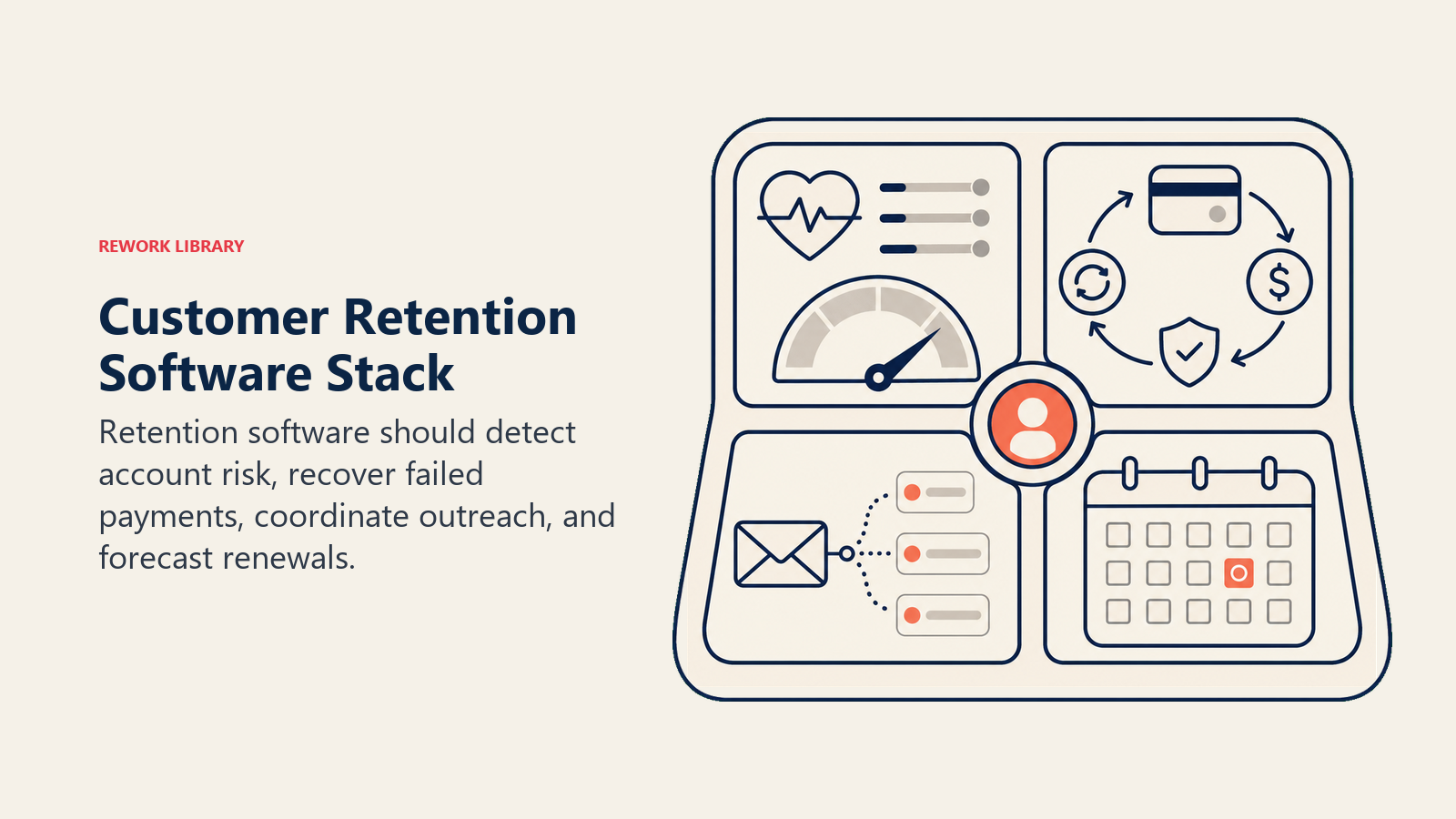
The right retention stack depends on your business model. SaaS teams need health scoring and CS automation. Subscription e-commerce teams need dunning management and lifecycle email.
- Gainsight - Enterprise customer success platform with health scoring, playbooks, and renewal forecasting.
- ChurnZero - Real-time customer success software built for subscription businesses tracking churn risk by segment.
- Chargebee - Subscription billing with built-in dunning management for recovering failed payments.
- Recurly - Subscription management with smart dunning, flexible pricing models, and retention analytics.
- Recharge - The leading subscription platform for e-commerce brands, with churn prediction and cancellation flows.
- Klaviyo - Email and SMS automation platform widely used for win-back campaigns and loyalty flows in e-commerce.
- Baremetrics - Stripe-native subscription analytics showing MRR, churn, LTV, and cohort retention trends.
- Churnkey - Cancellation flow optimization tool with save offers, pause options, and churn analytics.
Templates & Frameworks
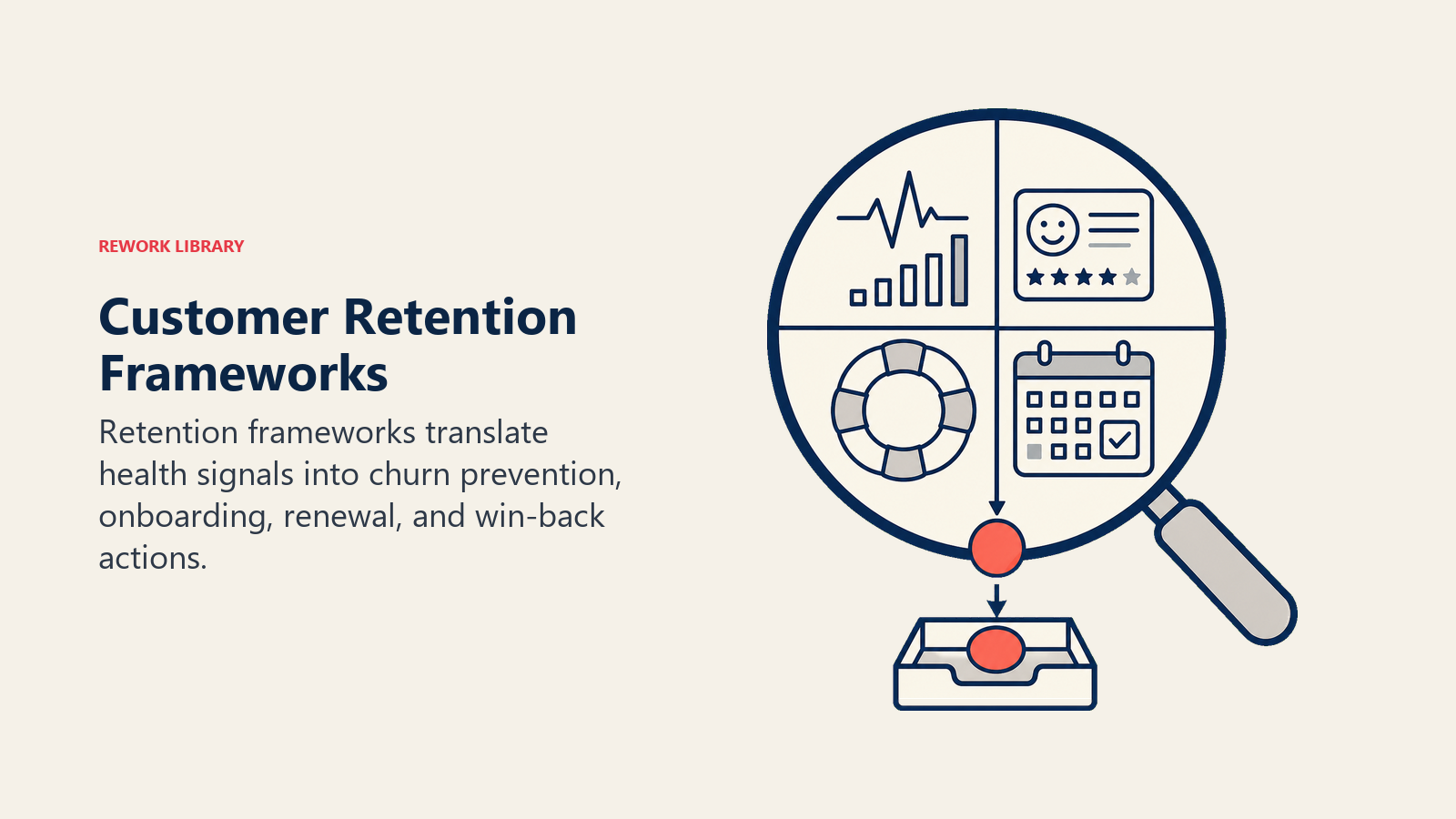
Retention frameworks are most useful when they convert product activity, sentiment, support history, and commercial signals into a specific intervention.
- Cancellation Save Offer Framework by Churnkey - How to design pause, downgrade, and discount offers that match the churn reason.
- Retention Metrics Dashboard Template by Baremetrics - The key metrics every subscription business needs to track weekly to stay ahead of churn.
- Cancellation Flow Optimization via Rework - A practical guide to designing cancellation experiences that save 10-30% of churning customers without damaging the relationship - including pause offers, downgrade paths, and save timing logic.
Case Studies & Real-World Examples
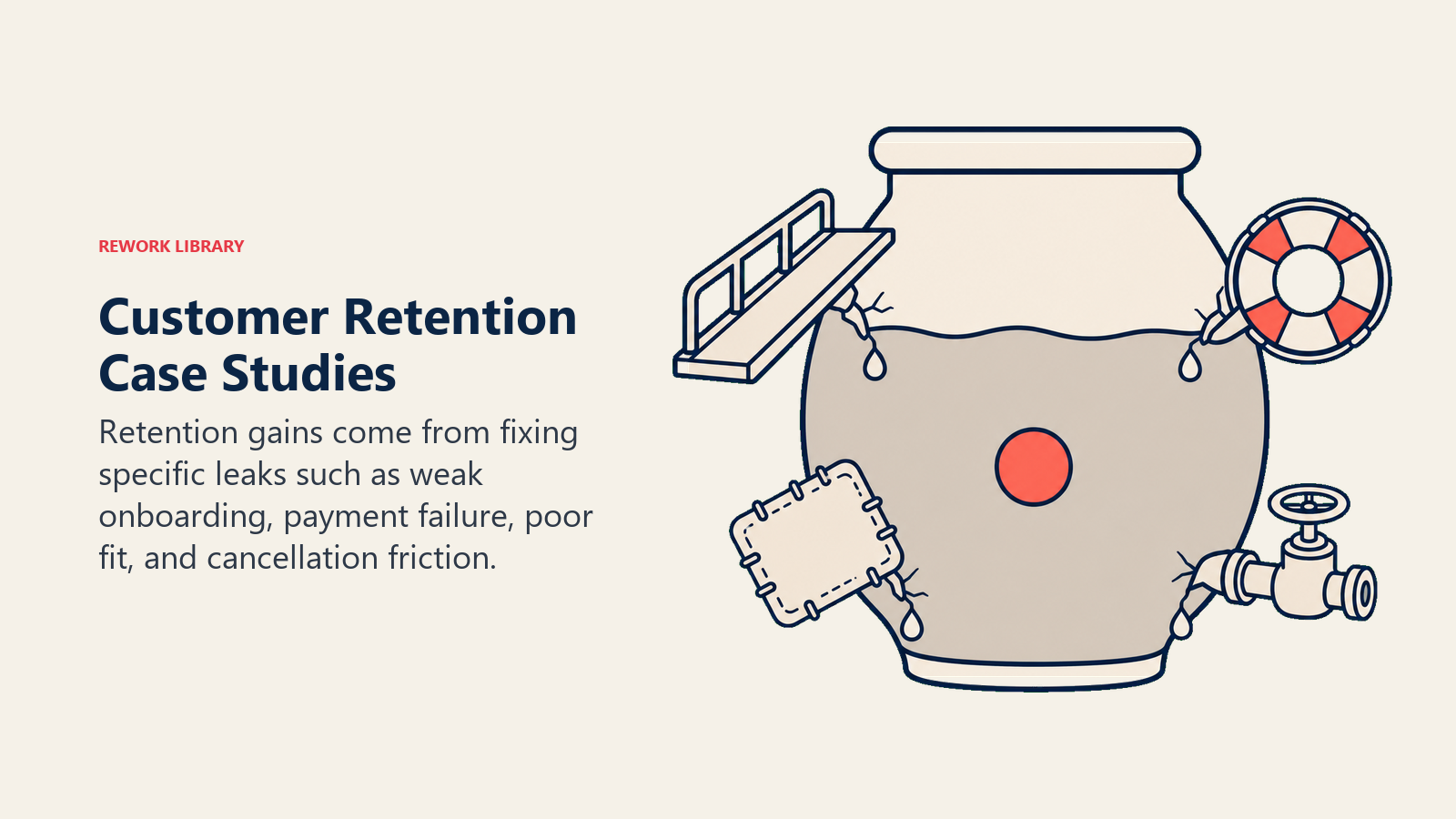
Retention improvements often look small on a percentage basis but translate into dramatic revenue differences at scale. These cases show how leading companies diagnosed their churn problem and what they changed.
Amazon Prime - Built retention through value stacking rather than lock-in. Prime members spend on average $1,400 per year vs. $600 for non-Prime members, and churn at a fraction of the rate. The key insight was that adding free shipping alone wasn't enough - adding video, music, and photos made the cancellation decision feel like losing multiple services simultaneously. This multi-benefit bundling is the reason Prime retention exceeds 90% year-over-year. Source
Recurly research - Analyzed 1,500+ subscription businesses and found that smart dunning logic - retrying failed payments at optimized intervals rather than immediately - recovered an average of 7% of otherwise-lost revenue. For a $10M ARR business, that's $700K per year recovered without any product or pricing changes. The study shows that involuntary churn (failed payments) is often larger than voluntary churn and is purely an operational fix. Source
Communities & Newsletters
- Gainsight Community - A peer network of customer success professionals sharing playbooks, benchmarks, and career resources.
- Subscription Insider - News, research, and best practices for executives running subscription and membership businesses.
- ProfitWell Blog - Data-driven articles on subscription metrics, pricing, and retention from the Paddle/ProfitWell team.
Rework Resources
Explore more content on the Rework blog:
- Account Tiering Strategy - How to segment your customer base and allocate CS resources to protect your highest-value accounts.
- Adoption Barriers Identification - Finding and fixing the friction points that prevent customers from reaching full product value.
- Cancellation Flow Optimization - Designing cancellation experiences that save revenue without damaging the customer relationship.
Contributing
Know a great resource that belongs on this list? Let us know.
Links verified. Covers both SaaS subscription churn and e-commerce repeat-purchase retention contexts.