Awesome Business Scaling
Turn this article into takeaways for your work.


Each assistant summarizes the article only for you and suggests best practices for your work.
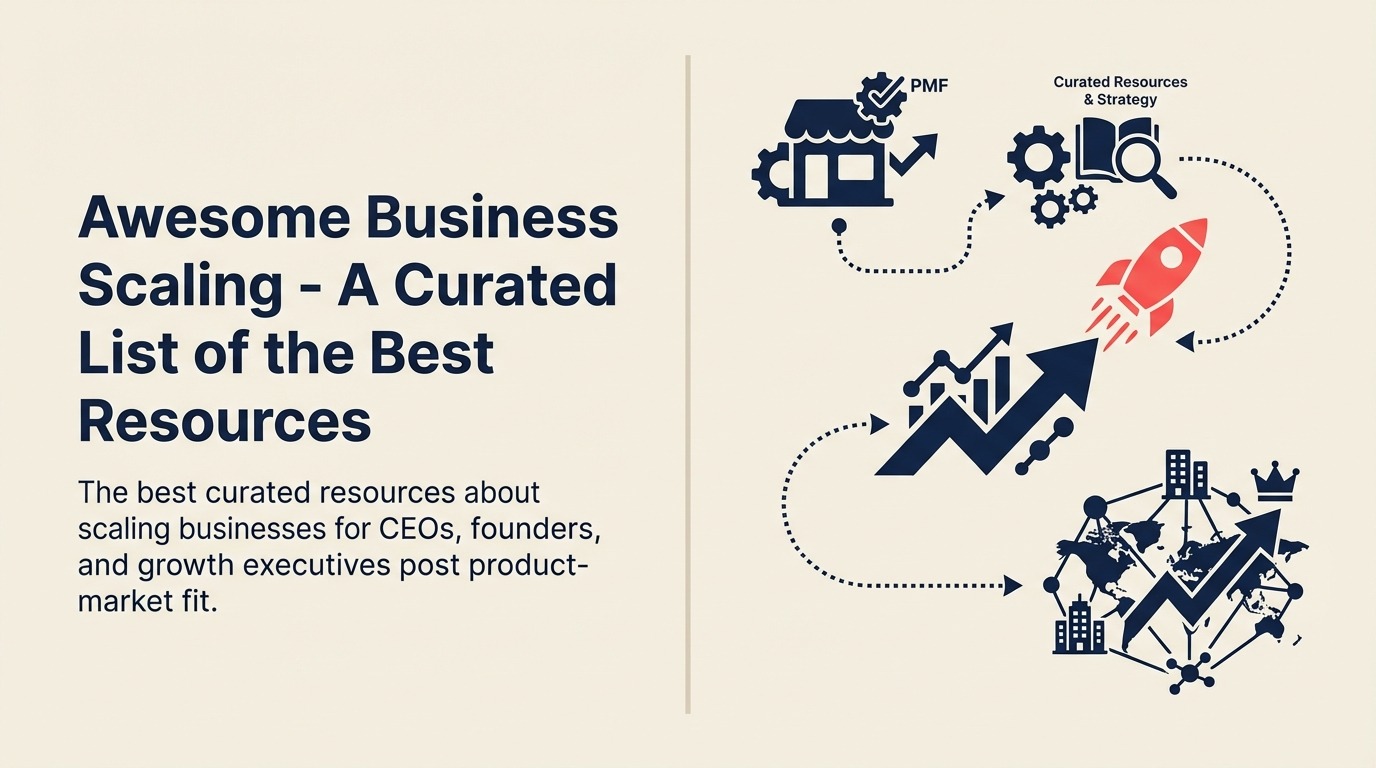
A curated list of the best resources about scaling businesses - from $1M to $10M, $10M to $100M, and beyond - for founders and growth executives who have achieved product-market fit.
Inspired by awesome lists. Maintained by Rework.
Contents
- Articles
- Books
- Videos & Talks
- Tools & Software
- Templates & Frameworks
- Case Studies & Real-World Examples
- Communities & Newsletters
- Rework Resources
Articles
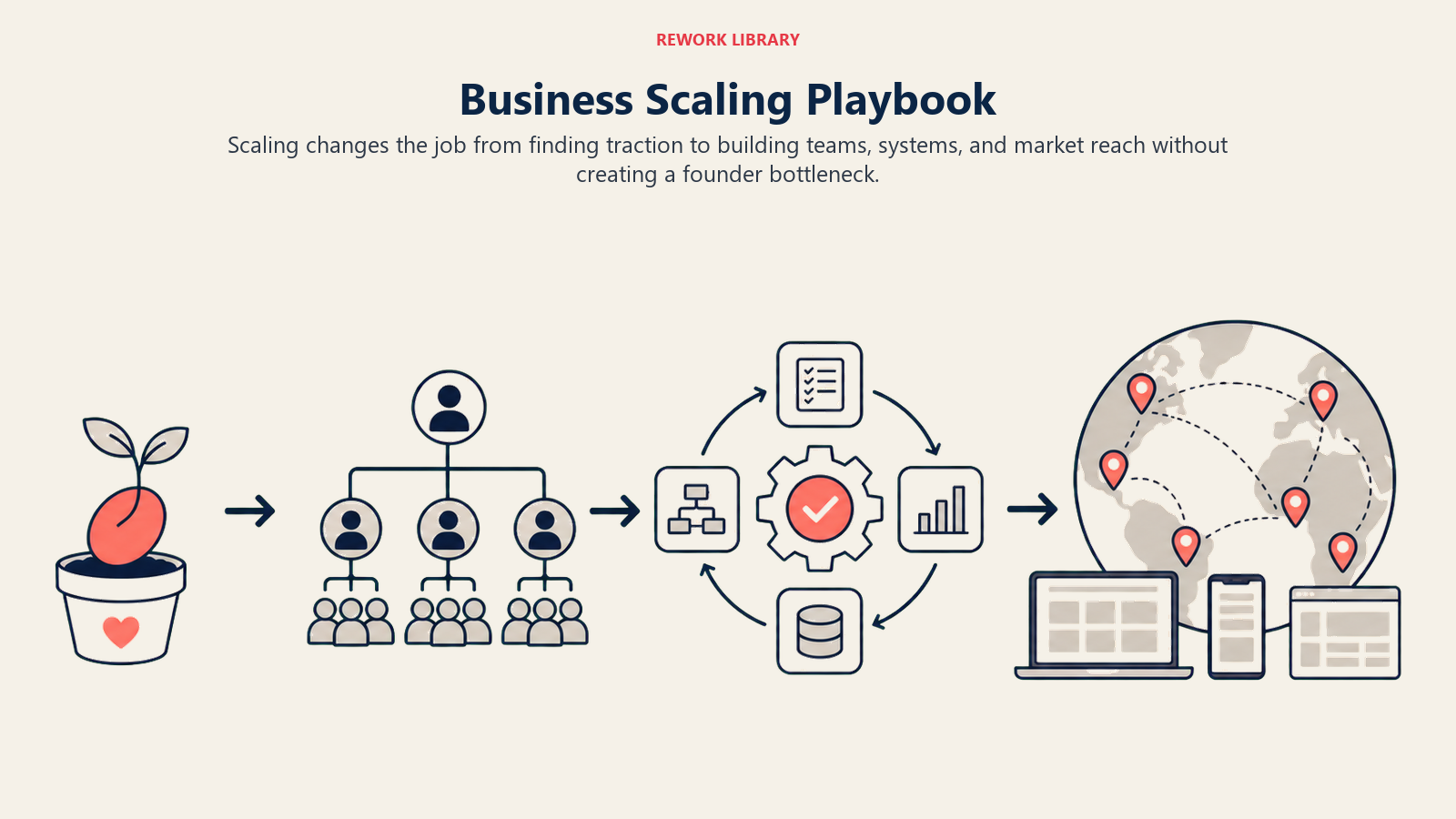
Scaling is a different problem than starting. These resources address what changes when you move from founder-led everything to building an organization that can grow without you being the bottleneck.
- Blitzscaling: The Lightning-Fast Path to Building Massively Valuable Companies at Harvard Business Review - Reid Hoffman's framework for prioritizing speed over efficiency when market dynamics demand it.
- From 0 to $1B: Scaling Slack's Team at First Round Review - Stewart Butterfield on the organizational decisions made during Slack's fastest growth period.
- Sequoia's Arc: What We Look for in Startups - How top investors evaluate scaling readiness beyond revenue growth.
- Led by a16z: Active Investors in 2024 via Crunchbase - Market context on where capital is flowing and which scaling companies are attracting it.
- McKinsey on Scaling Operations - A framework for scaling operational capacity without proportional headcount growth.
Books
- Blitzscaling by Reid Hoffman & Chris Yeh - The case for scaling faster than is comfortable when network effects and market windows demand it.
- Scaling Up by Verne Harnish - Practical tools for scaling people, strategy, execution, and cash using the Rockefeller Habits 2.0 framework.
- High Growth Handbook by Elad Gil - An operational guide for scaling from 10 to 10,000 employees, covering hiring, M&A, and board dynamics.
- No Rules Rules by Reed Hastings & Erin Meyer - How Netflix built a culture that scales by giving people freedom and accountability simultaneously.
- The Hard Thing About Hard Things by Ben Horowitz - Unfiltered lessons on the decisions that don't have clean answers when you're in hypergrowth.
Videos & Talks
- Reid Hoffman at Stanford: Blitzscaling - The full Stanford lecture series on when and why to prioritize speed over efficiency in scaling.
- SaaStr: How to Scale from $10M to $100M ARR - Practical SaaS scaling tactics from founders who have crossed the $100M mark.
- Y Combinator: Scaling a Startup - YC partners on the specific scaling challenges that derail companies after initial traction.
- a16z Summit: Building Organizations That Scale - Executive panelists on the org design decisions that determine scaling outcomes.
- Patrick Collison on Scaling Stripe - The Stripe CEO on infrastructure, culture, and hiring decisions made during rapid global expansion.
Tools & Software
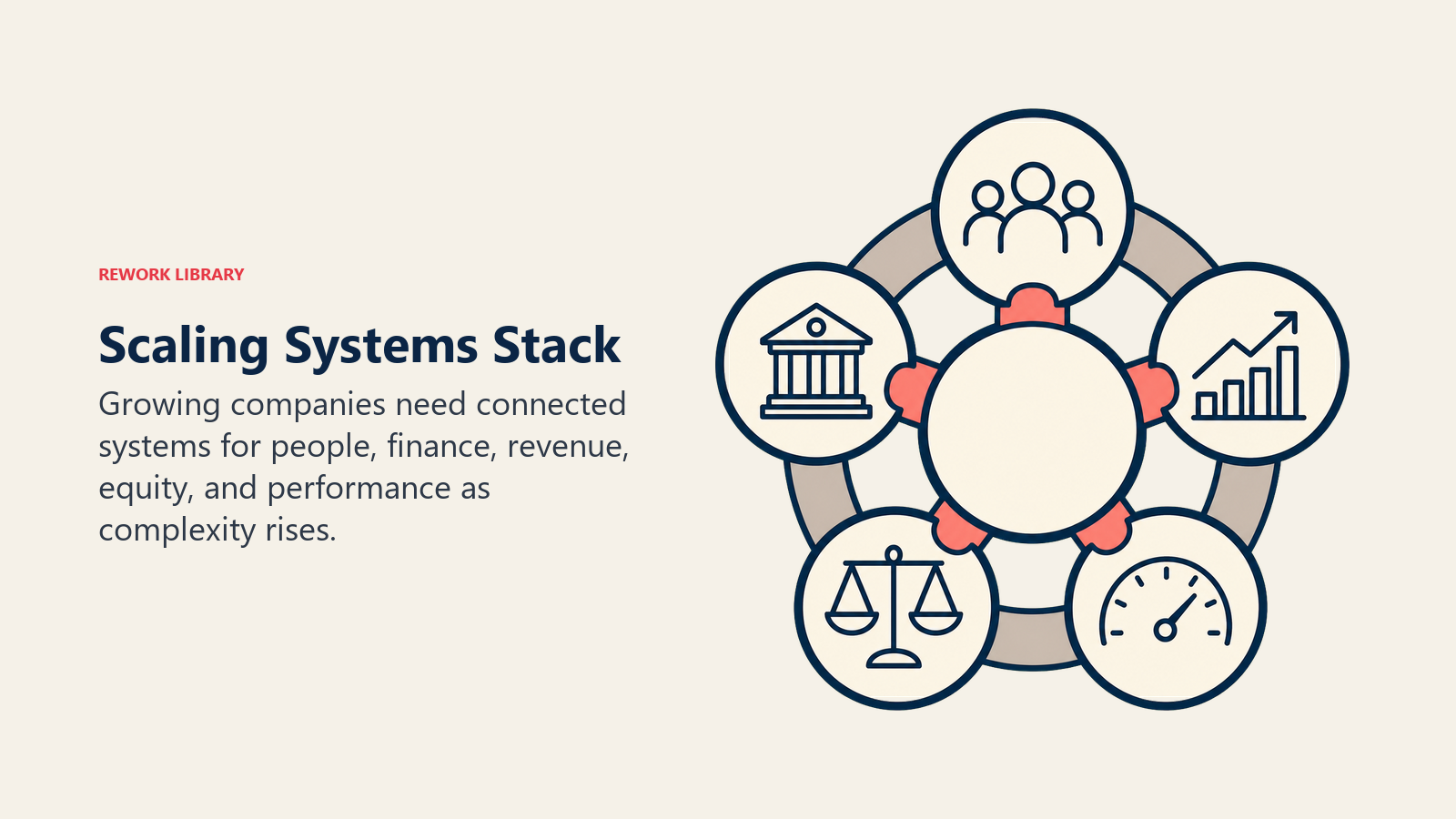
Scaling requires systems. These are the platforms that growing companies use to manage people, money, equity, and operations as headcount and revenue climb.
- Rippling - HR and IT infrastructure that scales from 10 to 10,000 employees without rebuilding your stack.
- Workday - Enterprise HR, finance, and planning platform for companies scaling into mid-market and enterprise.
- NetSuite - Cloud ERP for financial operations, replacing spreadsheets and point solutions as complexity grows.
- Salesforce - CRM and revenue operations platform that scales with your go-to-market complexity.
- Carta - Equity management for cap table tracking, 409A valuations, and managing option pools during fundraising.
- Lattice - People management platform for performance reviews, OKRs, and engagement at scale.
- Pave - Compensation benchmarking and planning for companies standardizing pay practices as they grow.
Templates & Frameworks
- Operating Cadence Template for Scaling Teams via Notion - A weekly, monthly, and quarterly rhythm for leadership teams managing rapid growth.
- OKR-to-Team Alignment Framework by What Matters (John Doerr) - How to cascade company-level OKRs into team and individual goals without bureaucracy.
- ARR Forecasting via Rework - How to build accurate annual recurring revenue forecasts that hold up under investor scrutiny - covering bottom-up modeling, cohort assumptions, and the most common forecasting errors that show up during due diligence.
Case Studies & Real-World Examples
Scaling decisions made under pressure - hiring speed, org structure, market expansion sequencing - often determine whether a company reaches its potential or implodes before it gets there. These examples show what the decisions looked like in practice.
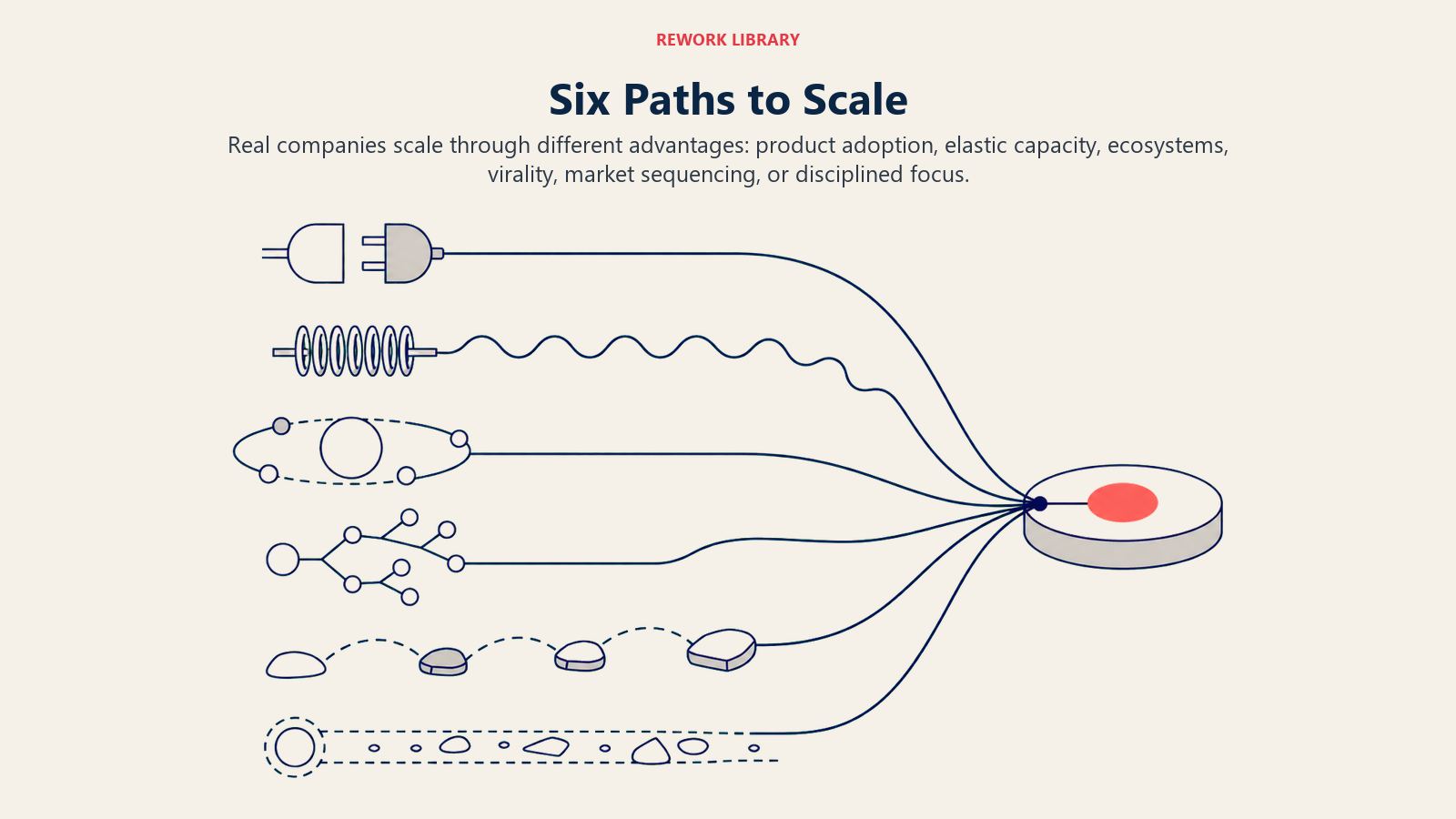
Zoom - Scaled from 10 million daily meeting participants in December 2019 to 300 million in April 2020 - a 30x growth in 4 months during the pandemic - without the infrastructure collapsing. The reason was a cloud architecture built for elastic scaling combined with a freemium model that had already stress-tested their systems at smaller scale. It's one of the cleanest examples of engineering investment in scalability paying off when external demand spikes. Source
Netflix - Scaled internationally from a US-only service to 190 countries in a single 2016 announcement, after years of gradual international testing in Canada, UK, and Latin America. The sequenced approach - test in similar markets first, build local content relationships, then expand - prevented the overextension that killed competitors who expanded globally before their unit economics were ready. Source
Basecamp (37signals) - Chose not to scale in the traditional VC-backed sense and remained profitable with a small team by deliberately limiting the number of products and refusing outside investment. By 2020 the company was generating $100M ARR with around 60 employees. The case is worth including because it challenges the default assumption that "scaling" always means growing headcount and raising capital. Source
Communities & Newsletters
- Pavilion - A private executive community for VPs and C-suite leaders at scaling companies, with peer groups and learning tracks.
- a16z Newsletter - Essays, research, and market insights from the Andreessen Horowitz team on technology and company building.
- SaaStr Community - The largest community for SaaS founders and executives, with annual events and a high-quality content archive.
Rework Resources
Explore more content on the Rework blog:
- B2B SaaS Growth Model - A framework for understanding the levers that drive compounding revenue growth in B2B SaaS.
- ARR Forecasting - How to build accurate annual recurring revenue forecasts that hold up under investor scrutiny.
- Growth Strategy Frameworks - A practical overview of the frameworks used by high-growth companies to prioritize and sequence growth moves.
Contributing
Know a great resource that belongs on this list? Let us know.
Links verified. Covers scaling at different revenue milestones from $1M ARR through enterprise.