More in
AI Workforce Transformation
Does AI Make Distributed Teams Easier or Harder to Lead?
Oct 11, 2026
Where AI Productivity Monitoring Turns Into Surveillance
Oct 11, 2026
Why Your Most Experienced People Resist AI Hardest (and Why You Need Them Most)
Oct 11, 2026
Is AI Making Teams Less Collaborative?
Oct 11, 2026
Should CEOs Use AI Themselves? Why Executive Fluency Sets the Adoption Ceiling
Oct 11, 2026
Does AI Favor Generalists or Specialists? What It Means for Who You Hire
Oct 10, 2026
Is Experience Still Worth Paying For When AI Narrows the Skill Gap?
Oct 10, 2026
When Every Candidate Uses AI, What Is a Resume Still Worth?
Oct 10, 2026
Should AI Screen Your Job Candidates? Where Automated Hiring Helps and Where It Backfires
Oct 10, 2026
Should Candidates Be Allowed to Use AI in Interviews?
Oct 10, 2026
What AI-Native New Hires Actually Expect (And Why Most Companies Aren't Ready)
Turn this article into takeaways for your work.


Each assistant summarizes the article only for you and suggests best practices for your work.
The compensation offer closed. They accepted. You posted the announcement on LinkedIn. Six months later, they're gone.
This is playing out at mid-market companies across every sector right now. Companies that successfully recruited AI-fluent talent are losing them inside a year, not because of compensation, but because of culture. The job looked AI-forward in the interview. The reality was something different.
Understanding what AI-native candidates actually expect before they join, and during their first six months, is no longer optional for companies competing for this talent pool. The expectations gap is real, and it's expensive.
Who Counts as AI-Native
"AI-native" doesn't mean someone who studied machine learning or worked at an AI startup. For the purposes of mid-market hiring in 2026, it means someone who has genuinely integrated AI into their daily workflows for at least 18 to 24 months. They use AI to draft, analyze, structure, and execute work as a default. They're not "trying AI out." It's how they operate.
These candidates don't need to be trained on what AI can do. They already know. What they're evaluating during your interview process is whether your company will let them work the way they know how. And they're better at reading that signal than most hiring managers realize.
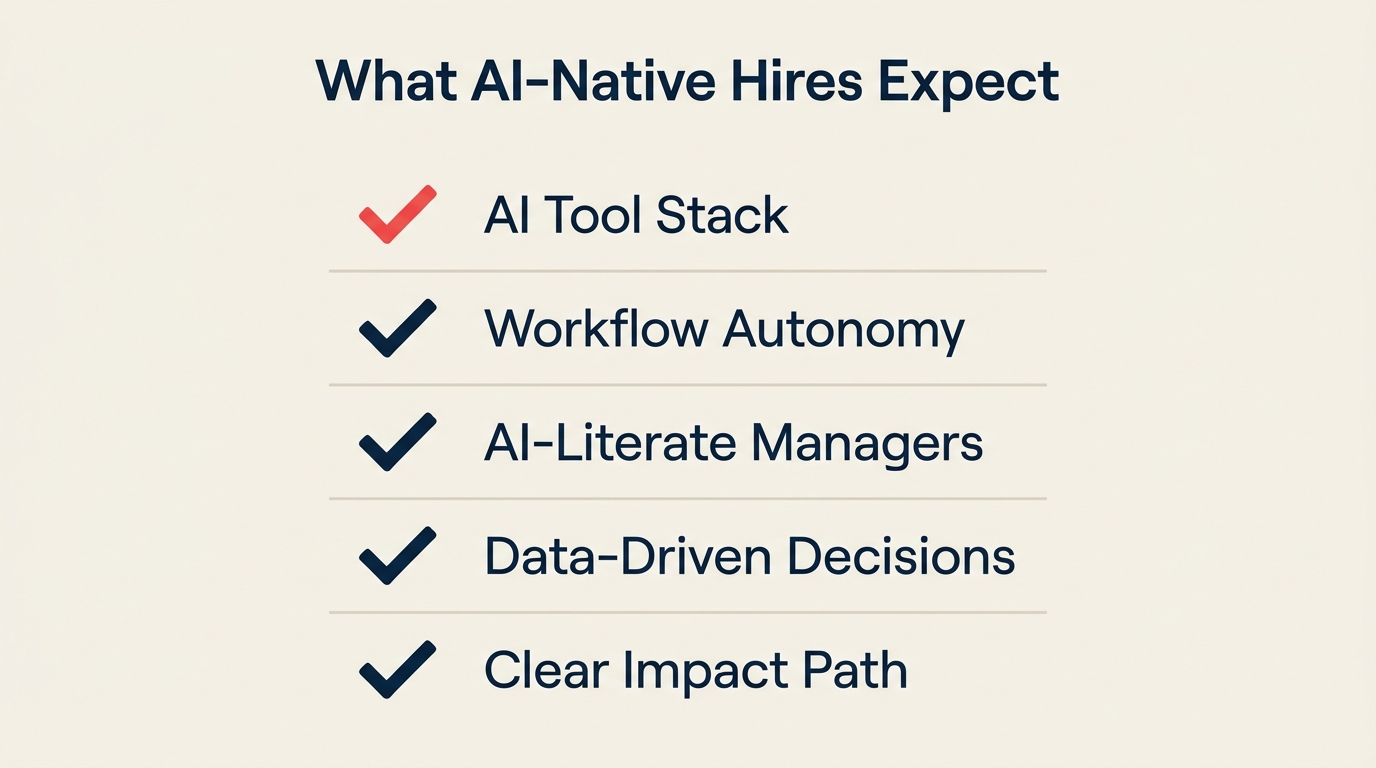
Expectation 1: Tools That Match How They Work
AI-native candidates walk in with tool opinions. They've used Notion AI, Rework, Gong, Clay, Perplexity, or similar platforms for real work and have views on what works and what doesn't. They want to know: what's the current AI tool stack, who owns it, and how easy is it to suggest changes?
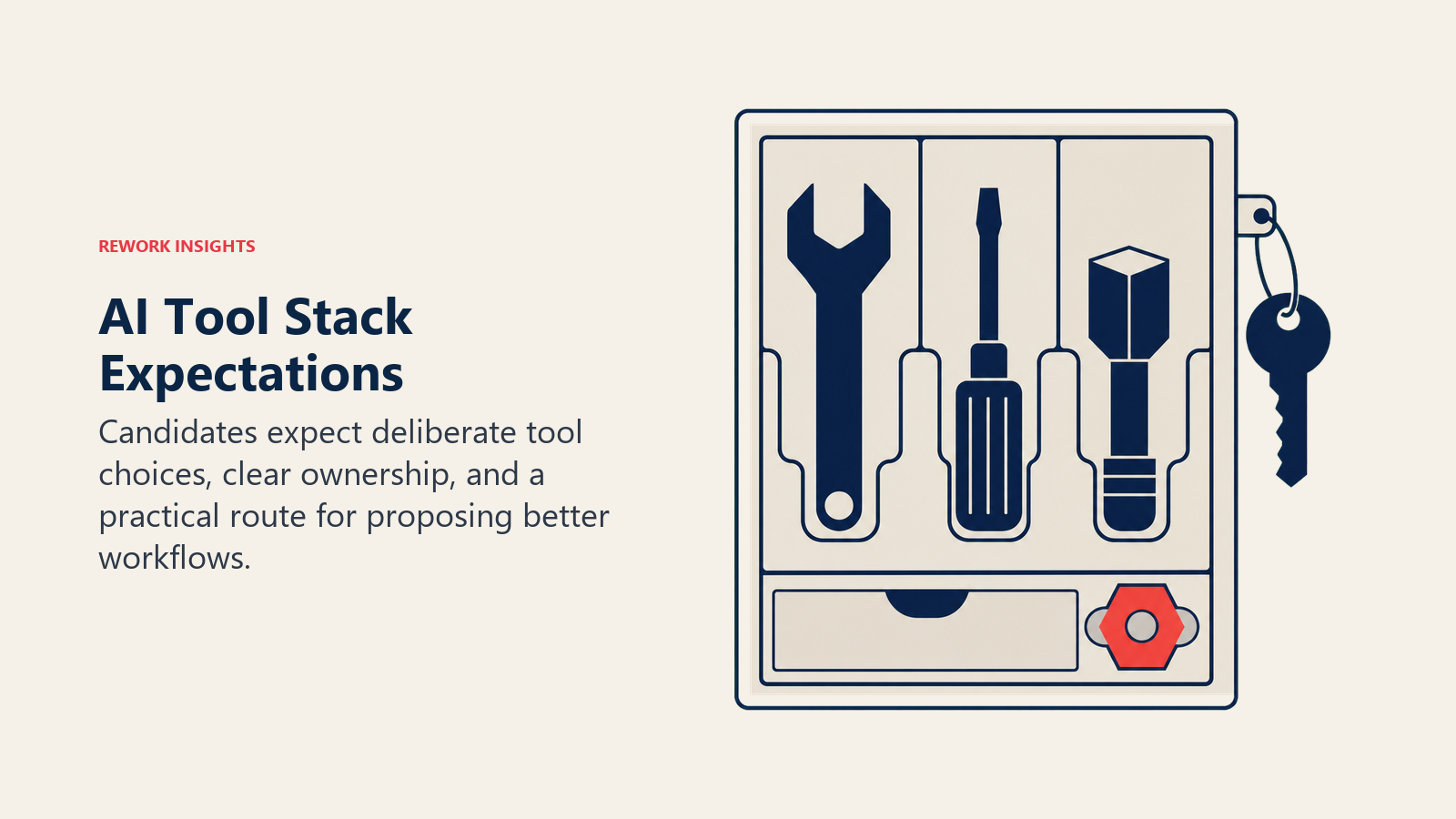
If your answer is "we're still evaluating," that's a yellow flag. If your answer is "we use Salesforce and Excel," that's a red one.
The minimum expectation isn't a fully automated AI operation. It's a company that has made deliberate AI tool decisions and can explain the reasoning. Candidates who ask "what's your AI stack?" and get a blank look from the hiring manager will assume the culture hasn't caught up, regardless of what the job description says.
The AI tools stack mid-market companies are using is a useful baseline for understanding what AI-fluent candidates will already be familiar with. Knowing your stack relative to that benchmark is table stakes for these conversations.
Expectation 2: Autonomy to Use AI in Their Workflows
This is the expectation that catches most companies off guard. AI-native hires don't want to use AI in the ways their manager approves. They want to use AI in the ways that make their work better, which may look very different from how the rest of the team operates.
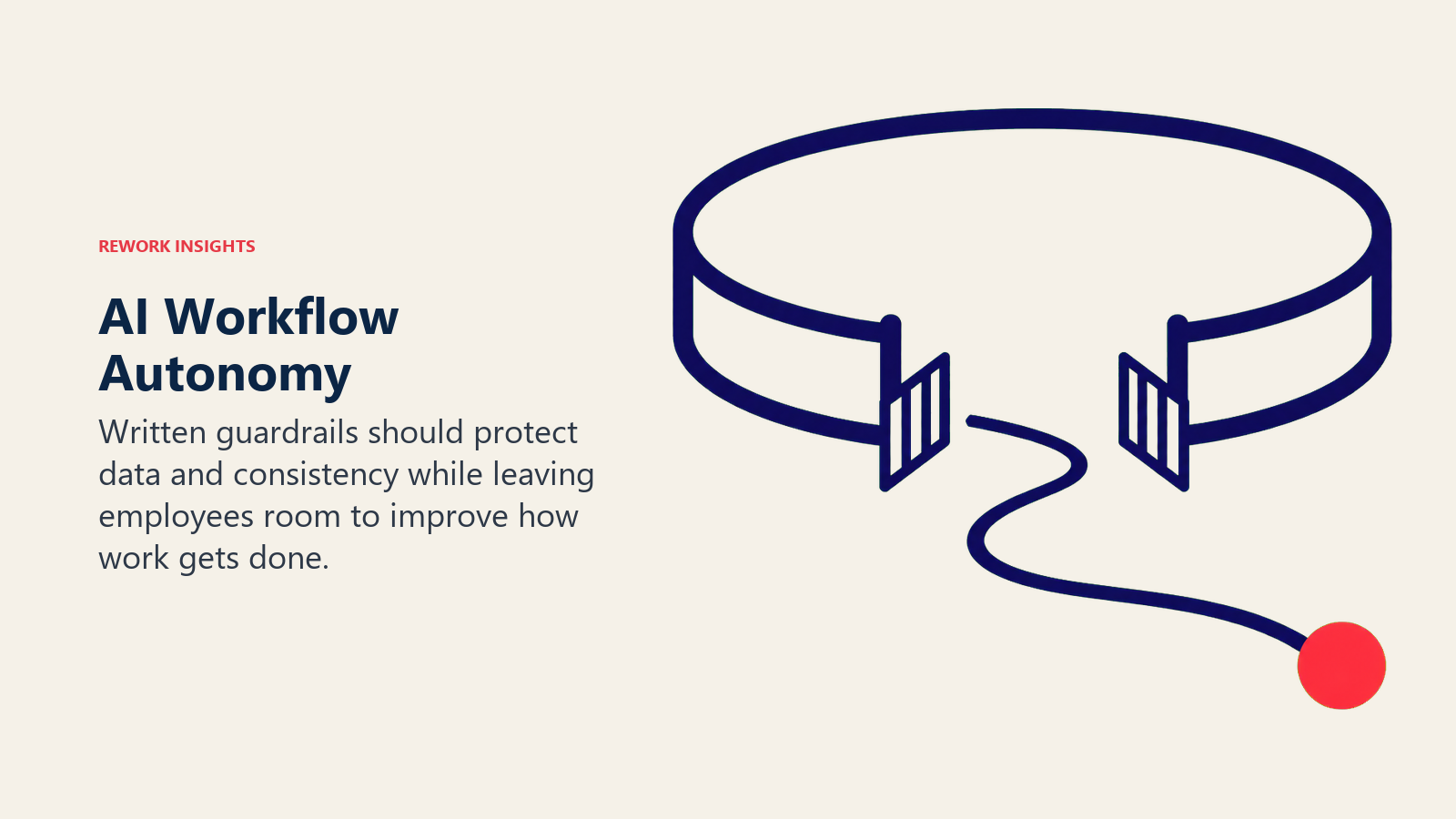
That autonomy has limits, and reasonable candidates understand that. Governance policies, data classification rules, and approval gates for new tools are fair expectations. But they want those rules to be written down, consistently enforced, and designed to enable rather than block.
Companies that haven't thought through AI governance policy by department will struggle here. Ad-hoc restrictions that vary by manager, unwritten rules about which tools are "allowed," and approval processes that slow down basic workflow decisions will drive AI-native hires to look elsewhere within the first quarter.
Expectation 3: Managers Who Understand the Work
This one's uncomfortable, but it's real. AI-native hires expect their managers to have at least a working understanding of how AI-assisted work gets done. Not deep technical knowledge. But enough to review AI-generated outputs critically, have conversations about prompt quality and workflow design, and not dismiss AI suggestions reflexively.
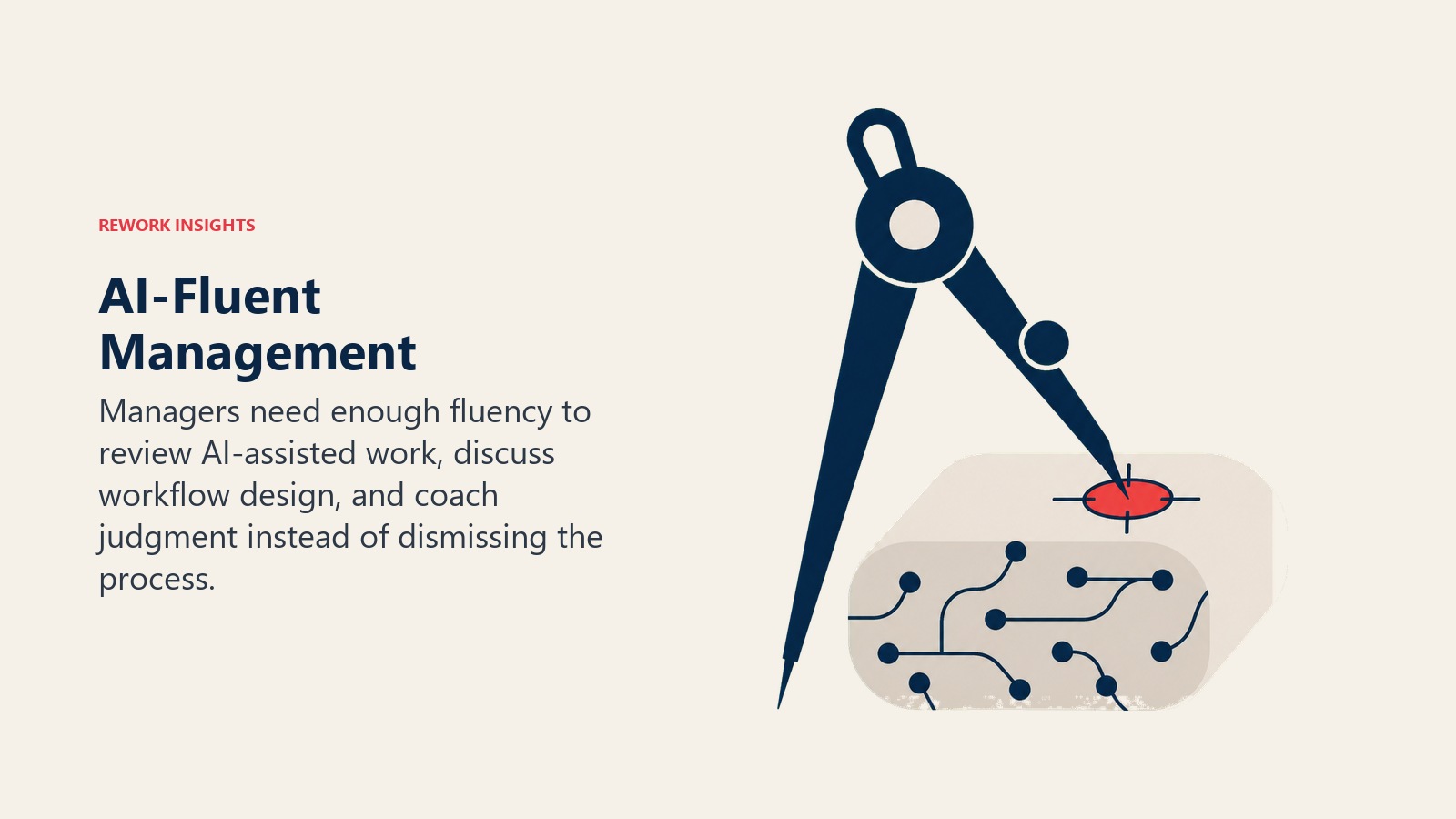
A manager who consistently overrides AI-assisted analysis with gut instinct, or who doesn't understand why a task that used to take a day now takes two hours, creates friction fast. AI-native employees don't expect perfection. They expect engagement. "I don't know this tool yet, teach me" is fine. "I don't trust anything AI produces" is not.
Companies building AI champions programs have a structural answer to this: embed AI-fluent individuals in each team who can bridge between AI-native hires and managers still developing fluency. But the more direct investment is in manager upskilling. If the hiring manager doesn't understand how their new AI-fluent report is doing their best work, supervision and performance review become disconnected from reality.
Expectation 4: Decision-Making That Uses Data
AI-native candidates have spent their careers in environments where data informs decisions. They generate more data than average employees, more readily, and they expect that data to be used. When decisions get made by gut feel or hierarchy override rather than evidence, it's disorienting.
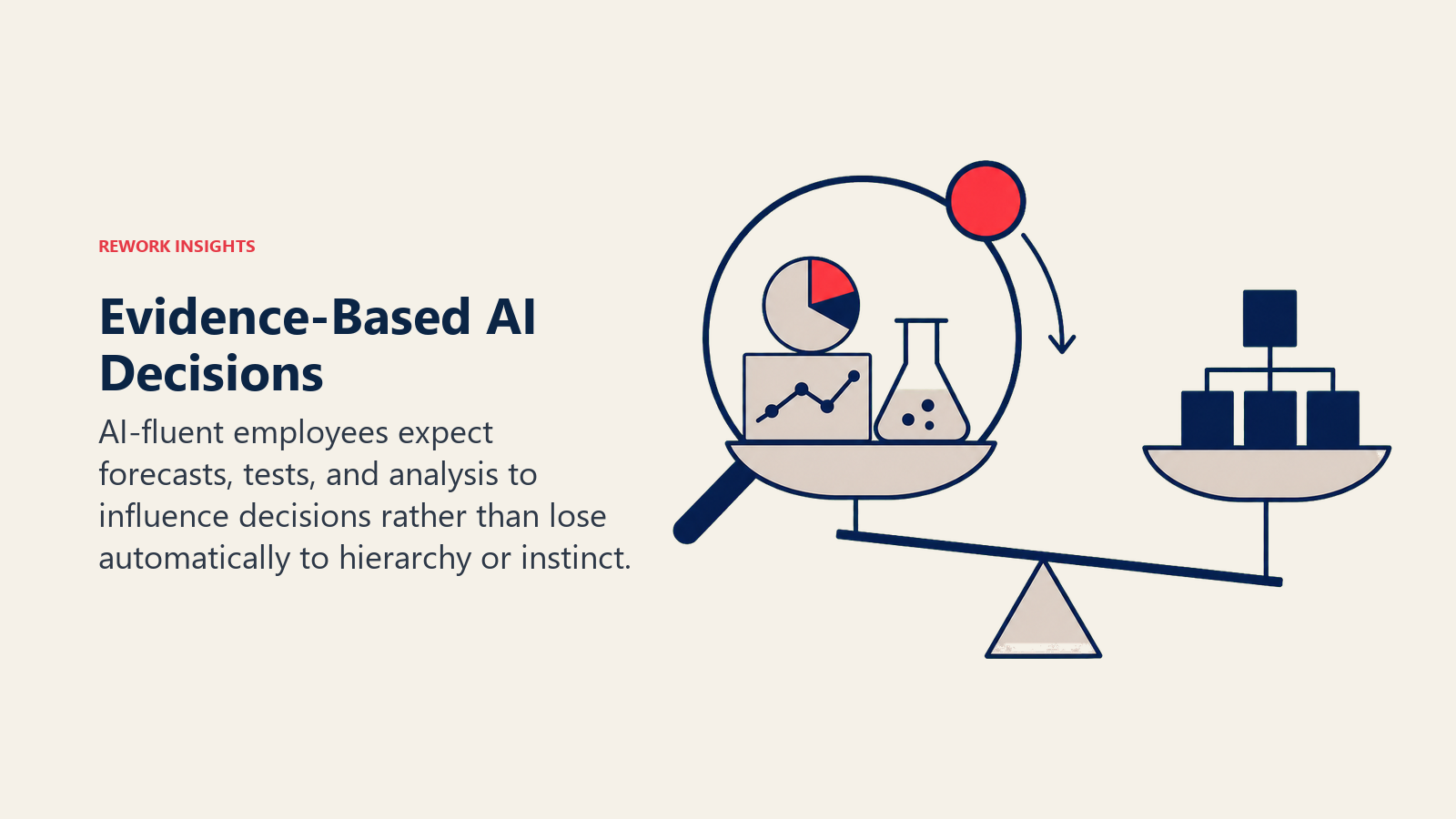
This shows up in small ways. A VP of Sales who says "I don't trust the pipeline AI" and overrides AI-generated forecasts with their own gut number. A marketing director who ignores A/B test results because they like the original version better. A CEO who asks for an AI-generated market analysis and then doesn't read it.
These moments are signals to AI-native employees. If data doesn't actually drive decisions here, what are they doing? Their AI fluency is technically impressive but functionally unused.
This expectation is harder to meet than buying the right software. It requires that the leadership team genuinely commits to evidence-based decision-making, which is a cultural change, not a tool purchase.
Expectation 5: A Clear Path for Impact
AI-native candidates aren't just looking for a job where they can use AI. They're looking for a place where their AI fluency creates visible impact on results. They want to know: where does my ability to use AI well translate into measurable outcomes for this company?
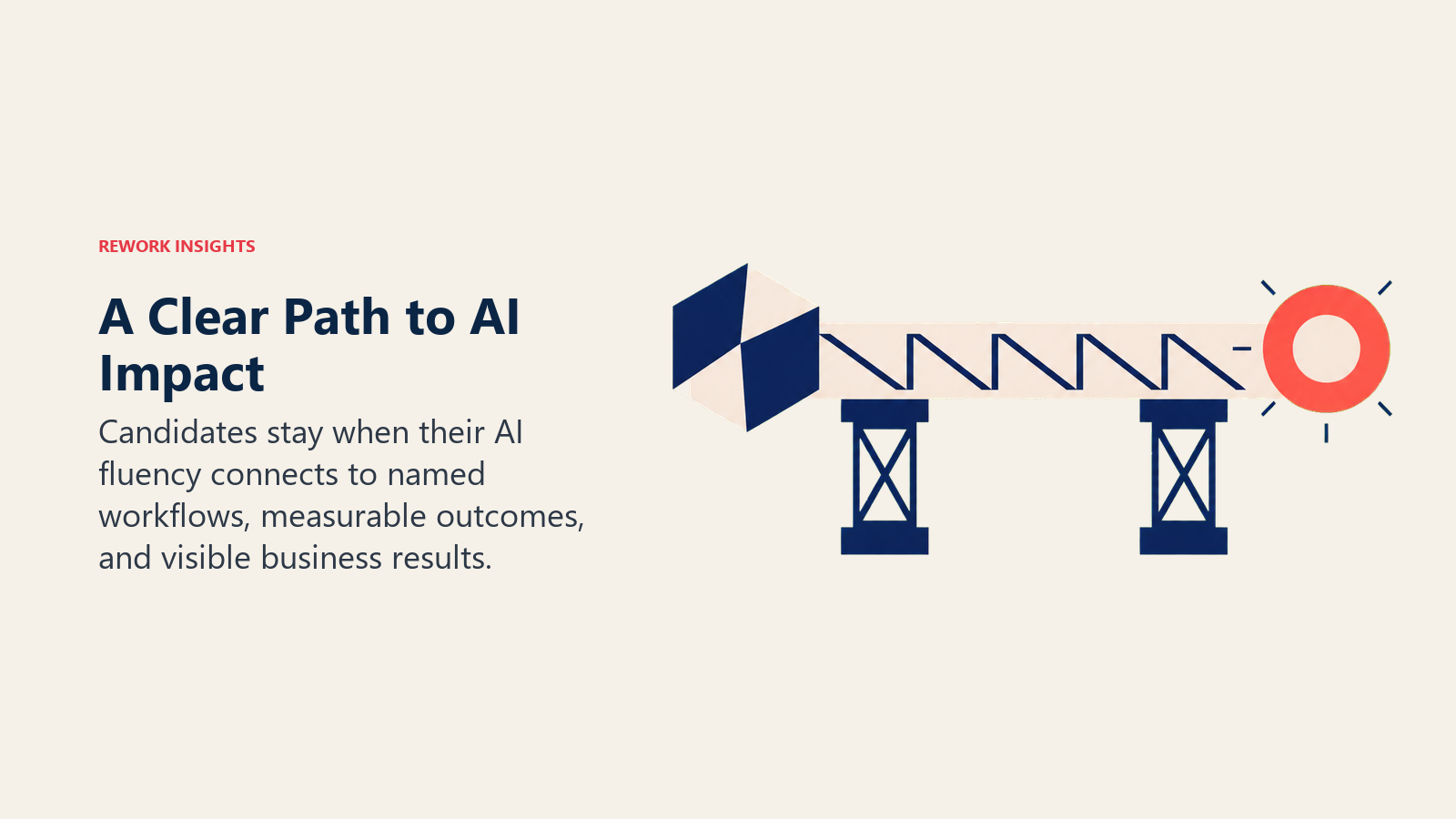
If you can't answer that question during the interview, the candidates who would thrive long-term often self-select out. The ones who stay despite a vague answer tend to be the ones who'll leave when they can't find the impact path on their own.
Being able to point to specific workflows where AI-assisted approaches have already changed results, or specific metrics where you expect an AI-fluent hire to move the needle, signals that the company has thought seriously about what this role is for.
The Six-Month Retention Pattern
Companies that fail to retain AI-native hires typically see the same sequence. Month one goes well: the hire is enthusiastic, adapting, building relationships. Months two and three surface friction: tool limitations, governance gaps, decisions that don't use data. Months four and five show performance divergence: the hire is doing excellent individual work but hitting walls when they try to scale it across the team. Month six is the decision point.
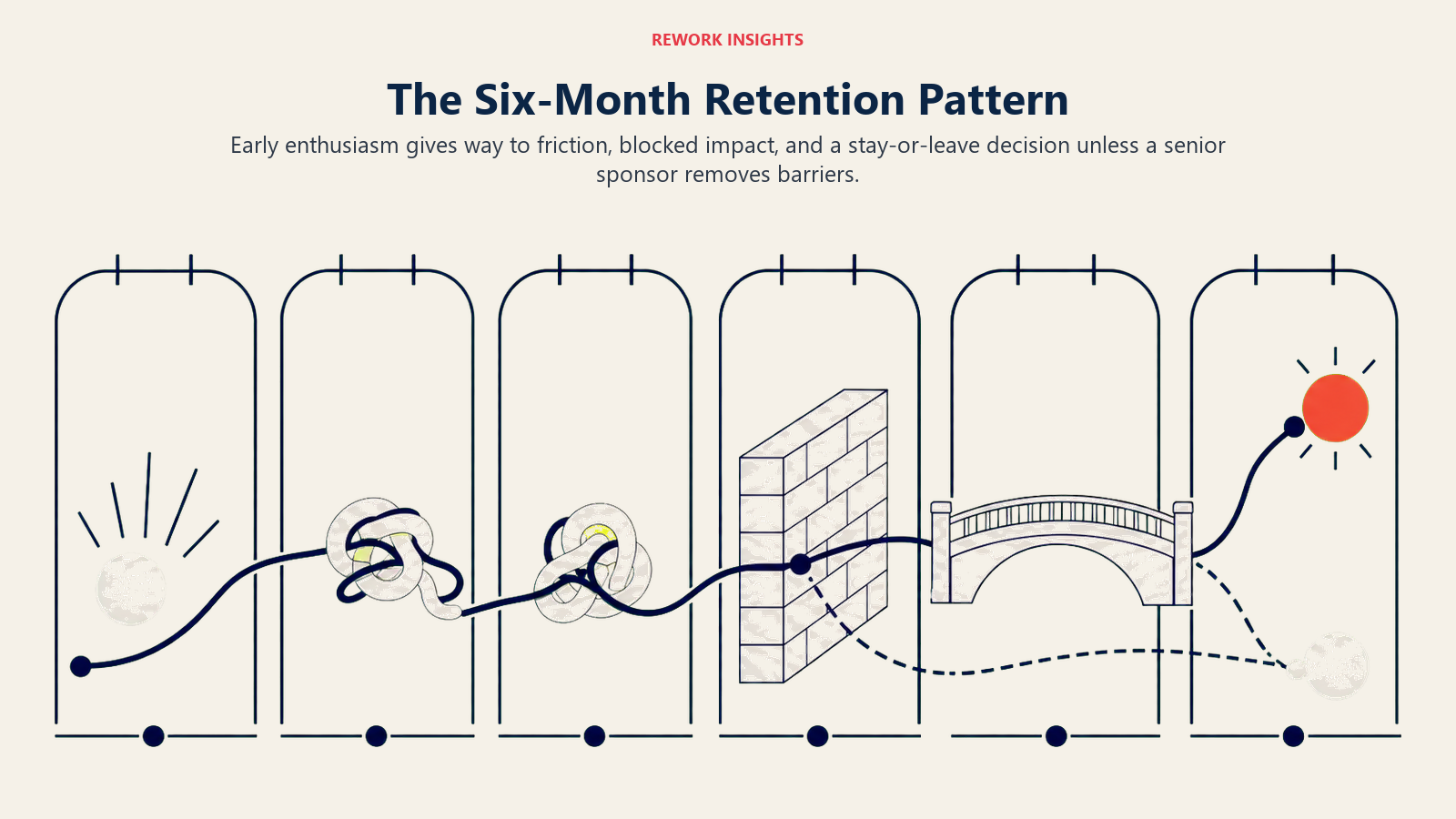
The hires who stay past month six have usually found a sponsor, someone senior who understands their value and shields them from friction while they build credibility. The ones who leave by month six typically never found that person.
That's not a talent problem. It's a management design problem.
What to Do Before You Hire
Before posting a role that targets AI-native candidates, answer these questions honestly:
What is the current AI tool stack, and who owns it? If no one owns it, the hire will be frustrated by tool chaos on day one.
What governance rules apply to AI use, and are they written down? If the answer is "it depends on the manager," that's a gap to close before the hire arrives.
Which manager will this person report to, and how AI-fluent is that manager? If the manager is skeptical of AI or doesn't understand AI-assisted workflows, the hire will be mismanaged.
Where specifically is this person expected to create impact, and how will that be measured? If the answer is vague, the hire will have no path to visibility.
Running an AI onboarding checklist against your current process before making an AI-fluent hire reveals the gaps. It's a faster and cheaper diagnostic than discovering them through attrition.
The Expectations Gap Is Expensive
The cost of an AI-native hire who leaves inside a year typically runs 1.5 to 2x annual salary. For a mid-market revenue ops or GTM role at $110K, that's $165K to $220K in recruitment, onboarding, and productivity loss. That erases the productivity premium you were paying for in the first place.
Most of these departures are preventable. Not with higher compensation. With culture readiness. Companies that invest in getting their AI infrastructure, governance, and management culture right before they recruit for AI-fluent talent have materially better retention outcomes than companies that hire first and figure it out later.
The signal AI-native candidates are reading is not your job description. It's how you answer their questions during the interview. And whether what they find in month two matches what they heard in month one.
Learn More
- Upskill or Hire AI-Native: The ROI Case
- Which Roles AI Is Eliminating and Creating in Mid-Market
- Why Every Sales and Marketing Hire in 2026 Needs AI Fluency
- Executive Decision Framework for AI Workforce Strategy
- AI Skills Matrix for Evaluating Candidates
- AI Fluency Salary Premium 2026
- AI Replace vs Augment Workforce Data

Co-Founder, Rework.com
On this page
- Who Counts as AI-Native
- Expectation 1: Tools That Match How They Work
- Expectation 2: Autonomy to Use AI in Their Workflows
- Expectation 3: Managers Who Understand the Work
- Expectation 4: Decision-Making That Uses Data
- Expectation 5: A Clear Path for Impact
- The Six-Month Retention Pattern
- What to Do Before You Hire
- The Expectations Gap Is Expensive
- Learn More