More in
AI Jobs & Skills News
Finance Keeps Shedding Jobs as the Economy Hires: The White-Collar Warning
Jun 6, 2026
AI Skills Just Became the Hardest Hire in the World. You Won't Recruit Your Way Out
Jun 6, 2026
Is AI Actually Killing Jobs? May's Hiring Numbers Say Not So Fast
Jun 5, 2026
You Put Your AI Agents on the Org Chart. Accountability Quietly Dropped
Jun 5, 2026
Everyone Blames AI for the Gen Z Job Crisis. The Fed Points at Remote Work
Jun 5, 2026
AI's Net Job Drag Fell to 11,000 a Month. Construction Is Hiding the Truth
Jun 4, 2026
AI Blamed for a Record 40% of May's US Layoffs, the Third Month Running
Jun 4, 2026
Four Futures for Jobs by 2030: The Mid-2026 Checkpoint for CEOs
Jun 3, 2026
Can Federal AI Apprenticeships Fix Your Skills Gap Cheaper Than Hiring?
Jun 3, 2026
AI Engineer Pay Split Into Two Markets. Only the Top Is a Bubble
Jun 3, 2026
The Replace vs. Augment Debate: What the Workforce Data Actually Shows After Two Years of AI Deployment
Turn this article into takeaways for your work.


Each assistant summarizes the article only for you and suggests best practices for your work.
Two years ago, companies began deploying AI at meaningful scale. Now the data is in, and it doesn't cleanly support either the pessimists or the optimists.
According to a 2025 Oxford Economics analysis tracking 1,200 enterprises across 14 industries, companies that deployed AI tools at scale saw net headcount increase by an average of 4.2% over two years, compared to 1.1% growth at non-adopters. But that aggregate number hides a sharper story underneath: specific role categories shrank measurably while others expanded far faster than overall business growth would explain.
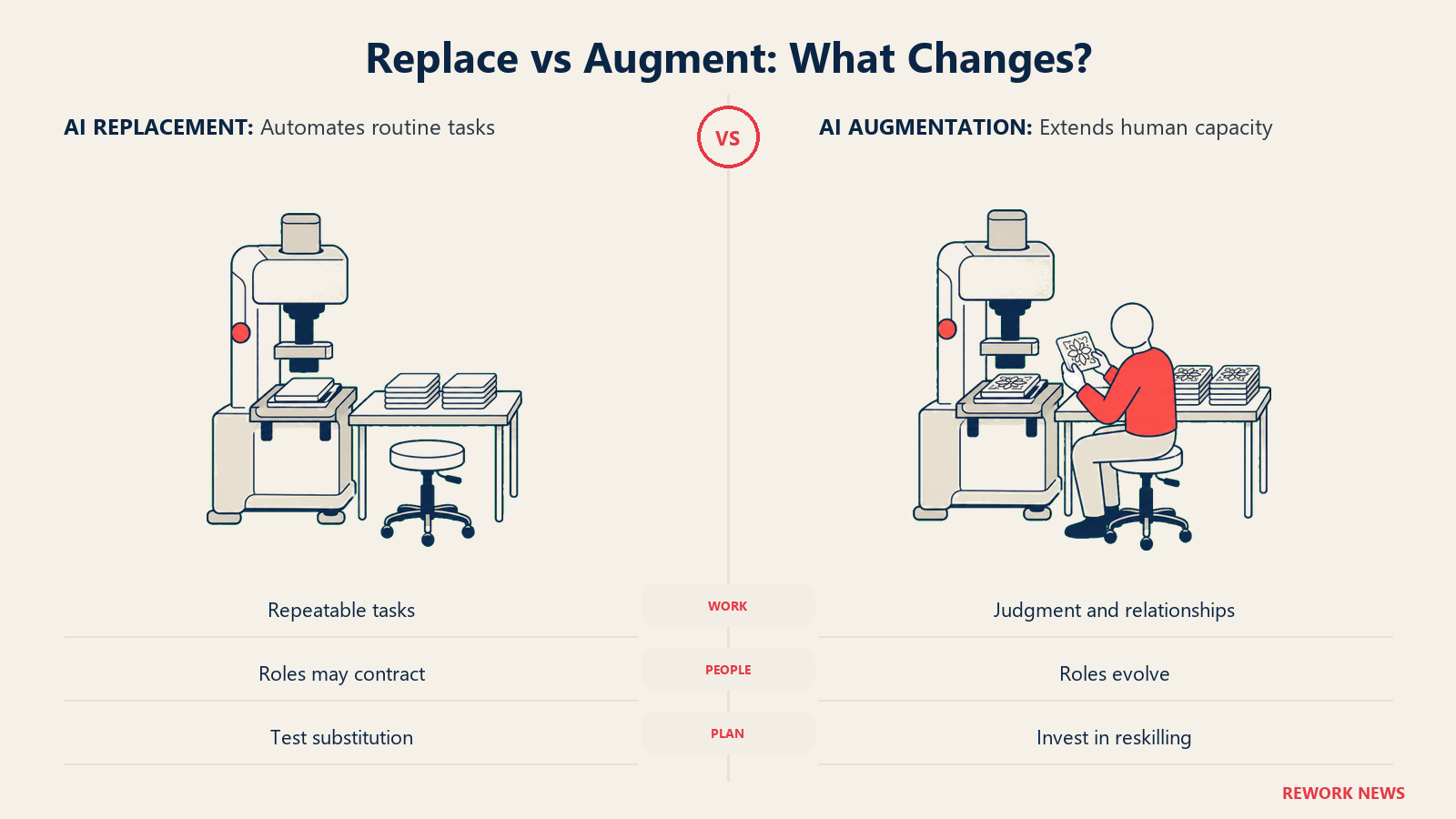
The replace vs. augment framing was always a false binary. The real story is role transformation, and the data shows both displacement and augmentation happening simultaneously, just in different functions.
What Happened: Two Years of Deployment Outcomes
McKinsey's 2025 State of AI in the Enterprise report tracked workforce composition changes at 400 companies with two or more years of sustained AI deployment. Key findings:
Roles with measurable displacement (10%+ headcount reduction at median):
- Data entry and document processing specialists: down 23%
- Basic financial analysis and reporting roles: down 18%
- Tier-1 customer support agents: down 14%
- Junior-level market research analysts: down 11%
Roles with measurable augmentation and headcount growth:
- Sales account executives with AI-assist tooling: up 19%
- Data scientists and ML engineers: up 41%
- AI operations and prompt engineers: up 67% (from a small base)
- Customer success managers handling complex escalations: up 12%
The pattern is consistent: AI is compressing the pipeline of repeatable, structured cognitive work while expanding demand for roles that require judgment, relationship management, or AI oversight.
MIT's Work of the Future Lab put it this way in their February 2026 update: "AI is not eliminating jobs at scale. It is eliminating tasks at scale, and the jobs that survive are those where the displaced tasks weren't the core value."
Why It Matters for CEOs
Every board meeting now includes a version of the same question: are we ahead or behind on AI workforce strategy? The data gives CEOs three things they need.
First, a calibrated answer to investor and employee concerns. Net headcount growth at AI-adopting companies is a useful data point that replaces vague reassurances. It doesn't mean no one gets displaced. Some roles clearly do contract. But it reframes the conversation from existential threat to structural shift.
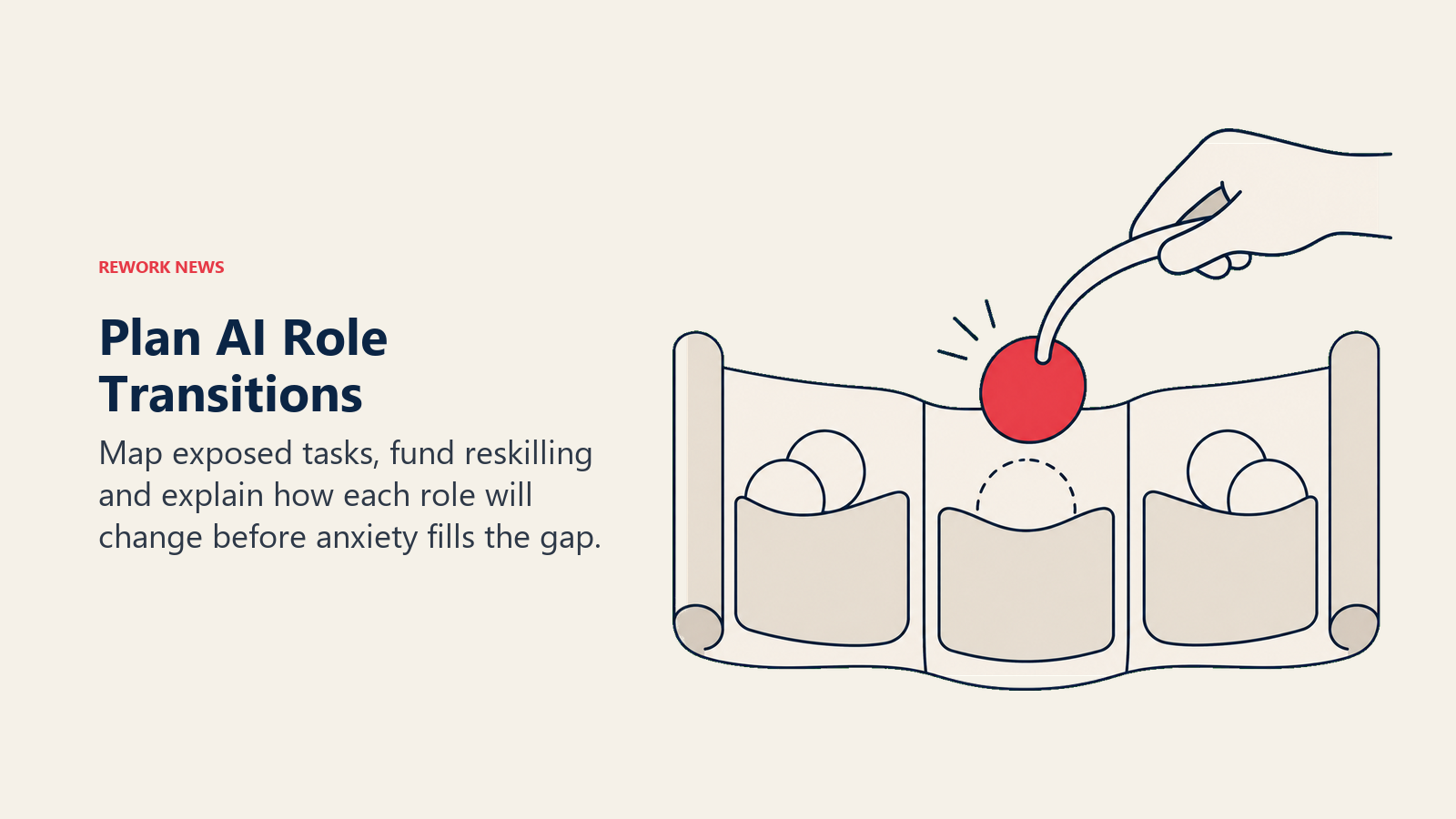
Second, a planning framework. The displacement and growth pattern is predictable enough to map against your own org chart. If your headcount is concentrated in the role categories above (data entry, basic analysis, Tier-1 support) you have a two-to-three year window to either retrain those employees into higher-value functions or plan for natural attrition.
Third, a retention narrative. Employees who understand the data are less anxious than employees absorbing media coverage. Companies that communicate candidly about which roles are evolving, and invest visibly in reskilling, consistently outperform on engagement scores. Gallup's 2025 AI and the Workplace survey found a 31-point gap in employee trust between organizations that communicated AI plans transparently versus those that didn't.
The Numbers: What the Data Actually Shows
| Metric | AI Adopters (2+ years) | Non-Adopters |
|---|---|---|
| Net headcount change, 2023–2025 | +4.2% | +1.1% |
| Revenue per FTE change | +17% | +4% |
| Roles eliminated (% of workforce) | 6.3% | 1.1% |
| New roles created (% of workforce) | 10.5% | 2.2% |
| Employee retention rate | 84% | 79% |
Source: Oxford Economics, McKinsey Global Institute, MIT Work of the Future Lab, 2025.
The productivity per FTE number is striking. Revenue per FTE at AI-adopting companies rose 17% over two years, more than four times the rate at non-adopters. That output expansion is what's driving net headcount growth: companies are generating enough incremental revenue to hire even as they shed lower-complexity roles.
New job titles that didn't exist three years ago are being filled at high velocity. LinkedIn's workforce data shows "AI workflow specialist," "prompt operations manager," and "AI quality reviewer" collectively added over 180,000 active job postings in Q1 2026, up from near zero in Q1 2023. These aren't niche research roles. They're operational positions sitting inside sales, customer success, finance, and HR teams.
Real Company Outcomes
Siemens deployed generative AI across its project documentation and compliance review workflows in 2023. By early 2025, the company had reduced its document processing headcount by roughly 200 FTE while hiring 340 AI operations coordinators to manage quality, exceptions, and model oversight. Net positive. And the new roles command salaries 28% higher than the ones they replaced.
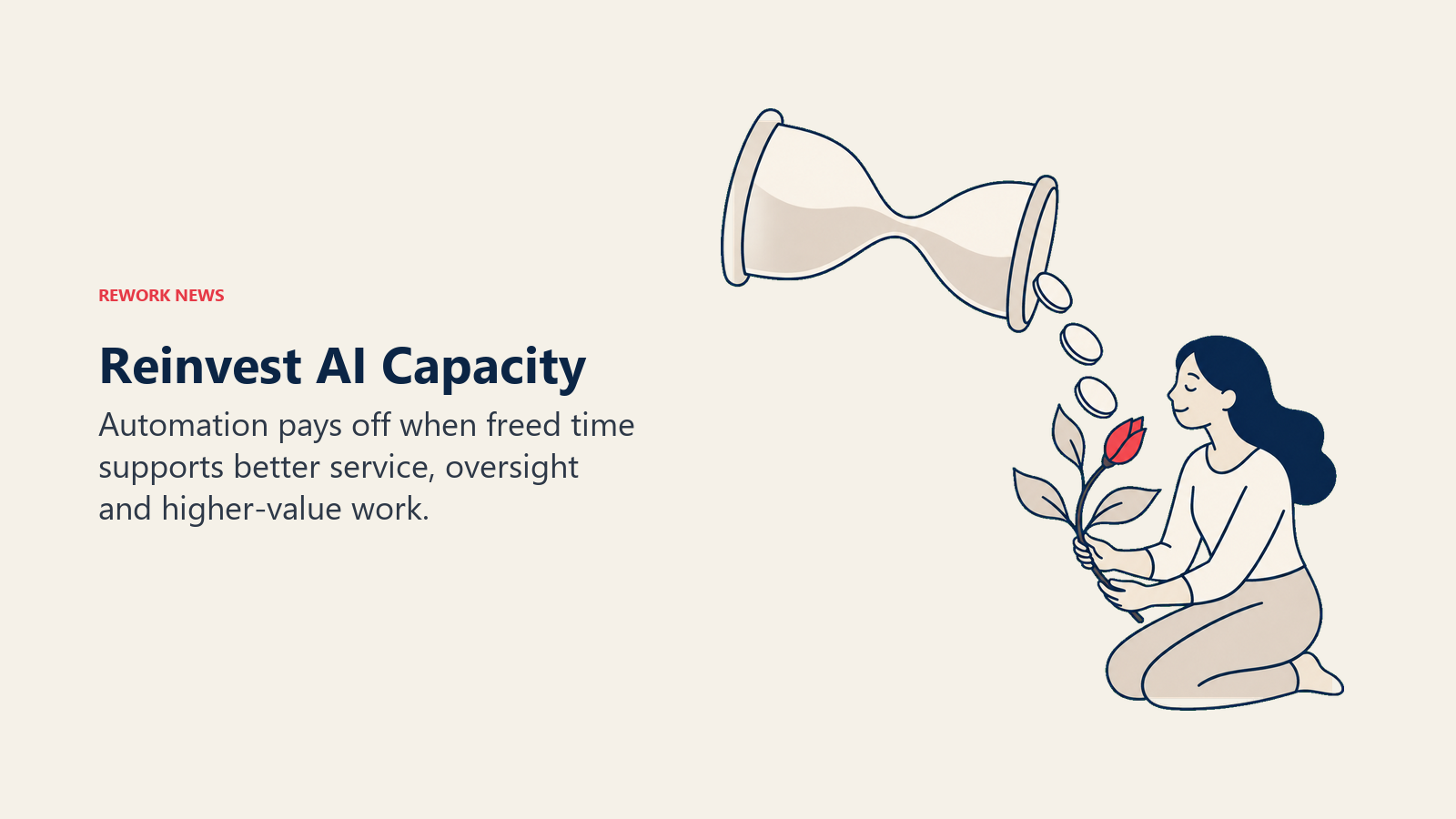
JPMorgan Chase has been public about its AI deployment outcomes. The bank used AI to automate approximately 360,000 hours annually of routine contract review work. It did not lay off its legal operations team. Instead, it redirected those attorneys to higher-complexity work, and legal headcount grew 9% in the following two years as the business expanded faster.
A mid-size regional insurer (unnamed in the Oxford Economics study) offers a cautionary counterexample. The company deployed AI in its claims processing unit, reduced headcount by 18%, and did not reinvest savings into new capabilities or roles. Within 18 months it had lost three major accounts to competitors who had used AI to improve speed and accuracy while maintaining service relationships. Net headcount reduction became a competitive liability.
What Smart Leaders Are Doing
The companies with the best outcomes are framing AI as a capacity multiplier, not a headcount reduction tool. That framing isn't just optics. It drives fundamentally different implementation decisions.
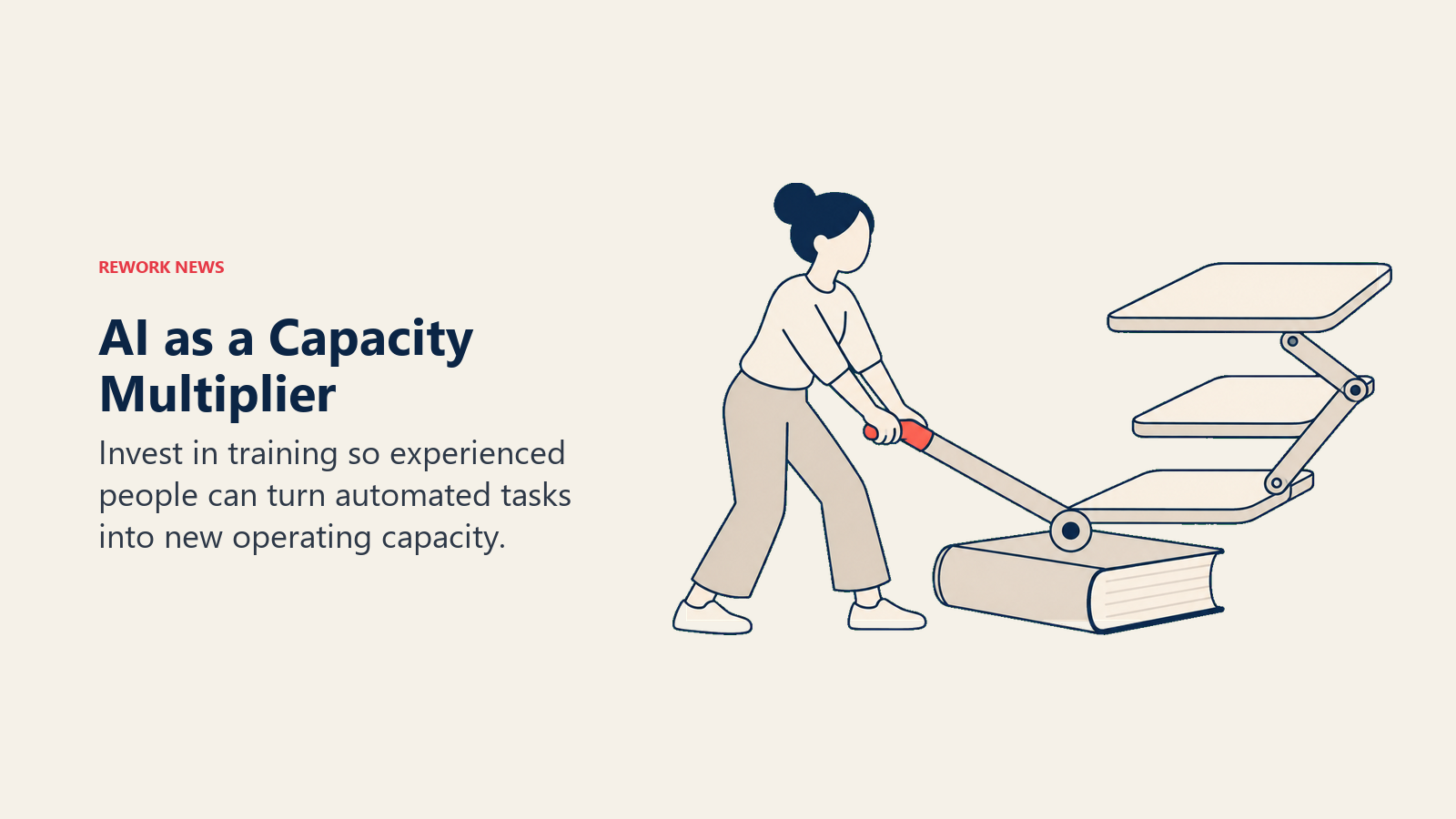
When AI is positioned as capacity expansion, teams ask: what can we now do that we couldn't before? That question leads to new product lines, faster service cycles, and market expansion. When AI is positioned as cost reduction, teams ask: who can we cut? That question leads to short-term margin improvement and medium-term capability erosion. There's a framing trap on the augmentation side too: research shows that treating an AI agent like an employee on the org chart quietly lowers human accountability without lifting adoption.
The practical difference shows up in reskilling investment. Companies in the "capacity multiplier" camp are spending an average of $2,100 per employee on AI training programs in 2025, according to Mercer's workforce analytics data. Companies in the "cost reduction" camp are spending $380. The gap in employee retention rates (84% vs. 72% at 24 months) tracks closely with that investment difference. The 12-month AI workforce roadmap for a 200-person company illustrates what the capacity multiplier approach looks like as a sequenced plan rather than a philosophy.
And/but retention matters more now than it did pre-AI. The employees who adapt to AI-augmented workflows become significantly more productive than replacements who need to learn both the job and the tools simultaneously.
What to Watch Next
The displacement wave documented above hit structured, repeatable cognitive tasks first. The next wave is moving into higher-complexity analysis.
AI systems capable of multi-step reasoning, document synthesis, and probabilistic judgment are now entering procurement, financial modeling, and mid-level consulting work. McKinsey estimates that roles requiring "judgment under structured uncertainty," currently considered safe from automation, face 30-40% task displacement by 2028 as reasoning model capabilities scale.
That doesn't mean those jobs disappear. It means they transform faster than many organizations are planning for. CEOs who read the current data as "we're fine because net headcount is up" are missing the more important question: which of our current roles will look unrecognizable in three years?
The replace-vs-augment debate was always the wrong question. The right one is: what's the transformation timeline for each function, and are we ahead of it or behind it?
Learn More
