Bahasa Indonesia
Gaya Kepemimpinan Bob Iger: Empat Akuisisi, Satu Pengembalian, dan Seni Membeli Storytelling dalam Skala
Turn this article into takeaways for your work.


Each assistant summarizes the article only for you and suggests best practices for your work.
Fakta Kunci: Bob Iger melayani sebagai CEO Disney dari 2005 hingga 2020, kemudian kembali pada November 2022 setelah dewan memberhentikan penggantinya Bob Chapek. Dia mengakuisisi Pixar seharga $7,4 miliar (2006), Marvel seharga $4 miliar (2009), Lucasfilm seharga $4 miliar (2012), dan 21st Century Fox seharga $71 miliar (2019). Memoarnya pada 2019 The Ride of a Lifetime menjadi salah satu buku CEO paling banyak dikutip dari dekade itu.
Pada 2005, Bob Iger mewarisi Disney yang secara kreatif rusak. Studio animasi — identitas dan mesin perusahaan — telah menghasilkan serangkaian film yang kurang berkinerja. Pixar, perusahaan yang benar-benar tahu cara membuat film animasi yang disukai audiens, mengancam tidak memperbaharui perjanjian distribusinya. Hubungan Disney dengan partner kreatif paling pentingnya runtuh.
Solusi Iger bukan memperbaiki animasi Disney dari dalam. Itu adalah menelepon Steve Jobs secara langsung, sebelum dia menjadi CEO selama 90 hari, dan menegosiasikan akuisisi yang akhirnya akan menyelamatkan studio. Deal Pixar sebesar $7,4 miliar pada 2006 adalah yang pertama dari empat akuisisi transformatif: Marvel seharga $4 miliar pada 2009, Lucasfilm seharga $4 miliar pada 2012, dan 21st Century Fox seharga $71 miliar pada 2019. Bersama-sama, keempat deal itu mengubah perusahaan entertainment yang bergejolak menjadi mesin IP paling kuat di dunia.
Kemudian dia pensiun. Menyaksikan penerus yang dia pilih sendiri gagal. Dan kembali pada November 2022 untuk membersihkannya.
Untuk operator yang membangun melalui akuisisi, playbook Iger penting. Untuk siapa pun yang berpikir tentang suksesi, blind spot-nya di sana sama informatif. Perbandingan yang berguna adalah era operator Meg Whitman di eBay dan HP — gaya yang berbeda, skala konsekuensi serupa.
Playbook M&A Disney
Playbook M&A Disney adalah model akuisisi empat-langkah di mana acquirer membeli perusahaan kreatif untuk kemampuan menghasilkan IP-nya, merancang deal untuk melindungi budaya target dan kepemimpinan kreatif, menginvestasikan modal hubungan CEO level personal sebelum term sheet, dan kemudian menolak mengekstrak sinergi yang akan merusak kondisi menghasilkan nilai. Ini memperlakukan keunggulan kreatif sebagai non-dapat ditransfer: Anda tidak menyerapnya, Anda melindunginya.
Perangkap Suksesi
Perangkap Suksesi adalah pola dimana CEO dengan kredibilitas tinggi membangun organisasi yang begitu bergantung pada hubungan personal dan selera mereka sehingga tidak ada penerus yang bisa mewariskan otoritas hanya dengan gelar. Setiap perpanjangan masa jabatan CEO memperdalam ketergantungan. Pengembalian Iger pada 2022 menyelesaikan krisis jangka pendek tetapi memperlebar perangkap — semakin lama dia tinggal, semakin sulit penyerahan akhirnya menjadi.
Rincian Gaya Kepemimpinan
| Gaya | Bobot | Cara Ditampilkan |
|---|---|---|
| Pengakuisisi Strategis | 60% | Iger mengidentifikasi lebih awal bahwa moat kompetitif Disney adalah IP, bukan distribusi. Dia membuat empat akuisisi dalam 15 tahun yang menambahkan Pixar, Marvel, Star Wars, The Simpsons, Avatar, dan puluhan franchise lainnya ke portfolio Disney. Dia mengevaluasi target berdasarkan satu pertanyaan: apakah perusahaan ini memiliki storytelling yang akan diikuti audiens selama puluhan tahun? Ketika jawabannya ya, dia bergerak cepat dan membayar harga premium dengan keyakinan. |
| Pemimpin Hubungan | 40% | Setiap deal besar yang Iger buat bergantung pada kepercayaan personal sebelum bergantung pada istilah finansial. Dia memanggil Steve Jobs secara langsung. Dia menumbuhkan George Lucas secara personal selama bertahun-tahun sebelum Lucasfilm dijual. Dia mendeskripsikan pendekatan kepemimpinannya sebagai fundamentalnya tentang membaca orang, memberi mereka ruang, dan membangun hubungan yang dapat menyerap percakapan sulit. Itu bukan soft skill — itu infrastruktur M&A. |
Pembagian 60/40 berarti dampak Iger majemuk. Keterampilan hubungan memungkinkan akuisisi. Akuisisi memerlukan hubungan untuk bertahan post-close, karena membeli perusahaan kreatif berarti menjaga kreator. John Lasseter Pixar dan Ed Catmull bergabung dengan kepemimpinan Disney setelah akuisisi. Integrasi itu hanya bekerja karena Iger telah membangun kepercayaan cukup dengan Jobs untuk merancang deal dengan cara yang diterima kepemimpinan Pixar.
Ciri-Ciri Kepemimpinan Utama
| Ciri | Rating | Apa artinya dalam praktik |
|---|---|---|
| Visi M&A | Luar Biasa | Iger memahami IP sebagai kelas aset majemuk sebelum kebanyakan eksekutif media lakukan. Dia membeli Pixar ketika animasi Disney gagal. Dia membeli Marvel ketika karakter terbaik-nya (Spider-Man, X-Men) dilisensikan ke studio lain dan katalog tersisa terlihat tipis. Dia membeli Lucasfilm ketika Lucas sendiri ambigu tentang masa depan franchise. Dalam setiap kasus, pasar skeptis dan dia benar. Itu bukan keberuntungan — itu adalah teori koheren tentang tempat nilai hiburan terakumulasi. |
| Pengelolaan Brand Kreatif | Sangat Tinggi | Catatan post-akuisisi Iger tentang kualitas kreatif kuat. Pixar mempertahankan identitas dan budaya studio-nya di dalam Disney. Marvel Studios, di bawah Kevin Feige, membangun salah satu sistem franchise paling sukses dalam sejarah film. Dia memahami bahwa Anda tidak bisa mengakuisisi keunggulan kreatif dan kemudian mengelolanya seperti supply chain. Anda harus melindungi kondisi yang menghasilkannya. Kebanyakan acquirer tidak tahu cara melakukan ini. Dia melakukannya. |
| Pembangunan Hubungan Eksekutif | Tinggi | Iger telah menulis secara ekstensif tentang hubungan personal langsung yang dia tanam dengan Jobs, Lucas, dan Rupert Murdoch sebagai fondasi untuk setiap deal. Ini bukan transaksi yang dinegosiasikan oleh banker. Itu adalah percakapan yang digerakkan hubungan di mana kepercayaan dibangun selama berbulan-bulan atau bertahun-tahun sebelum angka dibicarakan. Pendekatan itu memerlukan waktu dan perhatian personal. Deal yang memungkinkannya biasanya lebih baik terstruktur dan lebih tahan lama daripada M&A arms-length. |
| Perencanaan Suksesi | Sedang | Ini adalah kegagalan paling jelas Iger. Dia menunda pensiun dirinya sendiri berkali-kali, mempromosikan Bob Chapek sebagai penerus pada 2020, menonton Chapek mengasingkan komunitas kreatif dan salah menangani momen perang budaya publik di Florida, dan memberhentikannya 3 tahun kemudian sebelum kembali sendiri pada akhir 2022. Episode Chapek mencerminkan kegagalan membangun kedalaman kepemimpinan yang bisa berfungsi tanpa kredibilitas personal dan selera Iger. Dia masih bekerja untuk menyelesaikannya. |
3 Keputusan Yang Mendefinisikan Bob Iger sebagai Pemimpin
1. Menelepon Steve Jobs untuk Menegosiasikan Akuisisi Pixar
Ketika Iger menjadi CEO pada Oktober 2005, hubungan Disney-Pixar memburuk cepat. Deal distribusi yang ada berakhir. Pixar di bawah Steve Jobs menginginkan istilah yang lebih baik. Disney di bawah Michael Eisner telah membiarkan hubungan menjadi adversarial. Pendahulu Iger dan Jobs telah berhenti berbicara secara produktif.
Langkah pertama besar Iger adalah menelepon Jobs secara langsung, sebelum dewan menyetujui strategi akuisisi apa pun, sebelum banker terlibat, dan sebelum proses resmi dimulai. Walt Disney sendiri telah membangun insting serupa — warisan founder Disney menunjukkan bagaimana obsesi storytelling asli menjadi DNA perusahaan jauh sebelum Iger tiba. Argumennya bukan finansial. Itu strategis: Disney membutuhkan budaya kreatif Pixar, bukan hanya film-film berikutnya. Akuisisi, dirancang untuk melindungi kemandirian Pixar, lebih baik untuk kedua perusahaan daripada deal distribusi apa pun bisa.
Jobs awalnya skeptis. Keduanya menghabiskan berbulan-bulan membangun kepercayaan personal cukup untuk percakapan bergeser dari istilah distribusi ke istilah akuisisi. Iger membuat jelas bahwa Pixar akan tetap mempertahankan identitasnya, bahwa Lasseter dan Catmull akan menjalankan animasi Disney — bukan hanya Pixar — dan bahwa insting desain Jobs tentang struktur deal akan dihormati.
Deal ditutup pada Januari 2006 seharga $7,4 miliar dalam saham Disney. Jobs menjadi pemegang saham individu terbesar Disney. Setahun setelah akuisisi, Cars adalah film paling menguntungkan pada 2006. Ratatouille dan WALL-E menyusul. Animasi Disney, sekarang di bawah pengaruh Lasseter, menghasilkan Tangled, Frozen, dan Zootopia dalam tahun-tahun setelah.
Untuk operator: langkah paling penting dalam akuisisi atau partnership besar apa pun bukan term sheet. Itu hubungan personal yang membuat term sheet mungkin. Iger memahami bahwa Jobs tidak akan menjual kepada seseorang yang dia tidak percayai, terlepas dari harga. Dia menginvestasikan kepercayaan terlebih dahulu.
2. Menyetujui Deal Marvel $4 Miliar Ketika Wall Street Skeptis
Pada 2009, ketika Iger menyetujui akuisisi Marvel seharga $4 miliar, tesis investasi tidak jelas. Karakter paling berharga secara komersial Marvel — Spider-Man (Sony), X-Men (Fox), dan Fantastic Four (Fox) — dilisensikan ke studio lain. Apa yang tersisa dalam kontrol langsung Marvel adalah karakter tingkat kedua: Iron Man, Thor, Captain America, Hulk.
Analis Wall Street mempertanyakan apakah IP yang tersisa membenarkan harganya. Banyak orang dalam industri media pikir film superhero adalah genre yang matang dengan pengembalian menurun. Iron Man pertama, dirilis pada 2008, telah berkinerja baik. Tetapi tidak ada yang menunjukkan bahwa shared cinematic universe — multiple karakter dan storyline yang terhubung di seluruh film — secara komersial dapat diandalkan dalam skala.
Iger mendukung visi kreatif Kevin Feige untuk Marvel Cinematic Universe dan memberinya sumber daya dan otonomi untuk mengeksekusinya. MCU kemudian menghasilkan lebih dari $30 miliar dalam pendapatan teater di 30+ film selama 15 tahun. Avengers: Endgame (2019) meraup $2,8 miliar global, box office kedua tertinggi sepanjang waktu.
Prinsip kepemimpinan yang bekerja di sini adalah yang sama yang Iger terapkan pada Pixar: bertaruh pada kepemimpinan kreatif dan beri ruang. Dia membeli franchise untuk IP-nya, tetapi pengembalian dibangun oleh kemampuan Feige mengelola sistem storytelling long-arc. Iger tidak melakukan micromanage itu. Dia melindunginya.
3. Kembali Sebagai CEO pada November 2022
Pada Februari 2020, Iger mempromosikan Bob Chapek menjadi CEO dan masuk ke peran executive chairman, berniat pensiun penuh pada akhir 2021. Dalam 18 bulan, Chapek telah membuat serangkaian keputusan yang mengasingkan komunitas kreatif Disney, salah menangani pernyataan publik tentang legislasi "Don't Say Gay" Florida, dan memimpin kerugian streaming signifikan sementara Disney+ telah dengan cepat onboard subscribers.
Pada November 2022, dewan Disney memberhentikan Chapek dan meminta Iger kembali. Dia setuju untuk istilah dua tahun. Kemudian dia perpanjang itu.
Agenda pengembaliannya telah jelas: potong kerugian streaming, rasionalisasi budget konten, pulihkan hubungan kreatif, dan putuskan apa yang harus dilakukan dengan ESPN ketika linear TV menurun. Akuisisi 21st Century Fox pada $71 miliar tetap menjadi tantangan integrasi paling konsekuensial dari masa jabatannya. Dia telah membuat kemajuan pada beberapa. Disney+ bergerak menuju profitabilitas pada 2024. Bisnis parks dan experiences telah mempertahankan margin kuat. Tetapi integrasi Fox $71 miliar tetap rumit, masa depan ESPN benar-benar tidak pasti, dan pertanyaan suksesi — siapa memimpin Disney setelah Iger — tetap tidak terselesaikan.
Pembacaan kepemimpinan jujur pada pengembalian: Iger benar-benar baik di pekerjaan itu. Dia juga telah membuatnya secara struktural lebih sulit untuk siapa pun untuk melakukannya dengan kembali. Setiap bulan dia terus sebagai CEO adalah bulan lain di mana organisasi berorientasi di sekitar penilaiannya daripada penerus. Di beberapa titik perusahaan harus berfungsi tanpanya. Semakin lama itu ditunda, semakin mengganggu transisi akhirnya menjadi.
Apa Yang Akan Dilakukan Bob Iger di Peran Anda
Jika Anda adalah CEO menjalankan perusahaan 50-500 orang, pelajaran M&A Iger adalah tentang kejelasan tesis akuisisi sebelum aktivitas akuisisi. Dia bukan mencoba membeli market share atau menghilangkan kompetitor. Dia membeli kemampuan kreatif spesifik yang Disney tidak bisa bangun secara internal dalam waktu. Sebelum percakapan akuisisi apa pun, jawab ini: apa yang perusahaan ini lakukan yang tidak bisa kami bangun sendiri dalam tiga sampai lima tahun ke depan? Jika jawabannya samar, tesis deal samar.
Jika Anda adalah COO atau pemimpin operasi, pelajaran post-akuisisi integrasi adalah yang harus dipelajari. Catatan Iger bekerja karena dia melindungi kondisi kreatif yang membuat setiap akuisisi berharga. Dia tidak melakukan restructure Pixar ke dalam birokrasi Disney. Dia tidak memotong kepemimpinan kreatif Marvel untuk memenuhi target sinergi. Disiplin biaya yang dia pertahankan dalam integrasi adalah: jangan mengoptimalkan jauh hal yang Anda beli. Kebanyakan kegagalan integrasi melakukan persis itu.
Jika Anda adalah pemimpin produk, kasus Marvel adalah framework Anda untuk franchise thinking. Feige membangun product roadmap yang mencakup 30+ film dengan storyline yang saling terhubung, karakter arc, dan payoff audiens yang majemuk selama bertahun-tahun. Suite produk Anda mungkin tidak bekerja dalam skala itu, tetapi prinsip yang mendasar berlaku: apa storyline yang majemuk di seluruh product line Anda yang memberi reward kepada pelanggan jangka panjang dan ciptakan switching cost dari waktu ke waktu?
Jika Anda adalah pemimpin sales atau marketing, pendekatan hubungan-pertama Iger untuk deal berisiko tinggi berlaku langsung pada enterprise sales dan partnership kunci. Dia tidak mengirim banker untuk bertemu Steve Jobs. Dia pergi sendiri, membangun kepercayaan selama berbulan-bulan, dan merancang deal di sekitar apa Jobs perlu terasa baik tentang hasilnya. Dalam sale apa pun yang bergantung hubungan, orang yang mengontrol hubungan mengontrol istilah.
Bagaimana Rework Mendukung Integrasi M&A dan Perencanaan Suksesi
Playbook Iger mengekspos dua masalah operasional yang melampaui pengumuman deal: integrasi cross-team post-akuisisi, dan membangun kedalaman kepemimpinan yang tidak bergantung pada hubungan satu orang. Rework dibangun untuk keduanya. Ketika Anda mengakuisisi perusahaan, friction bukan di term sheet — itu di menyelaraskan pipeline tim akuisisi, account, dan struktur reporting-nya dengan milik Anda tanpa membongkar apa yang membuat mereka berharga. CRM dan Sales Ops (dari $12/user/bulan) Rework memungkinkan Anda menjalankan dua go-to-market motion pada satu platform selama integrasi, jadi tim akuisisi tetap mempertahankan proses-nya sambil kepemimpinan melihat tampilan pipeline tunggal. Untuk suksesi, Work Ops (dari $6/user/bulan) Rework menangkap keputusan, workflow, dan hubungan klien yang biasanya tinggal di kepala satu eksekutif — mengubah pengetahuan kepemimpinan tacit menjadi proses terdokumentasi, dapat ditransfer. Perangkap Iger adalah institusional; perbaikannya adalah institutional memory.
Kutipan Terkenal dan Pelajaran Melampaui Ruang Rapat
Buku Iger, The Ride of a Lifetime, diterbitkan pada 2019, mungkin memoar CEO paling praktis berguna dari dekade terakhir. Anda bisa membaca akun yang lebih lengkap dari catatan akuisinya di profil Wikipedia-nya. Itu spesifik di mana kebanyakan buku kepemimpinan samar. Dia menggambarkan dinamika persis setiap percakapan akuisisi, kesalahan yang dia buat dengan budaya era Eisner Disney, dan momen di mana dia hampir tidak bertindak ketika dia seharusnya.
Pesannya yang paling konsisten adalah tentang hubungan antara optimisme dan kredibilitas. "Pesimisme mengarah ke tidak ada tempat," dia telah menulis. Tetapi dia hati-hati membedakan optimisme berguna dari denial: Anda harus mengakui realitas sulit sambil mempertahankan keyakinan bahwa Anda bisa mengatasinya. Dalam pengembalian 2022-nya, dia langsung tentang betapa buruk masa jabatan Chapek telah berlangsung. Dia tidak melindungi reputasi CEO keluar atas biaya kejelasan-nya sendiri.
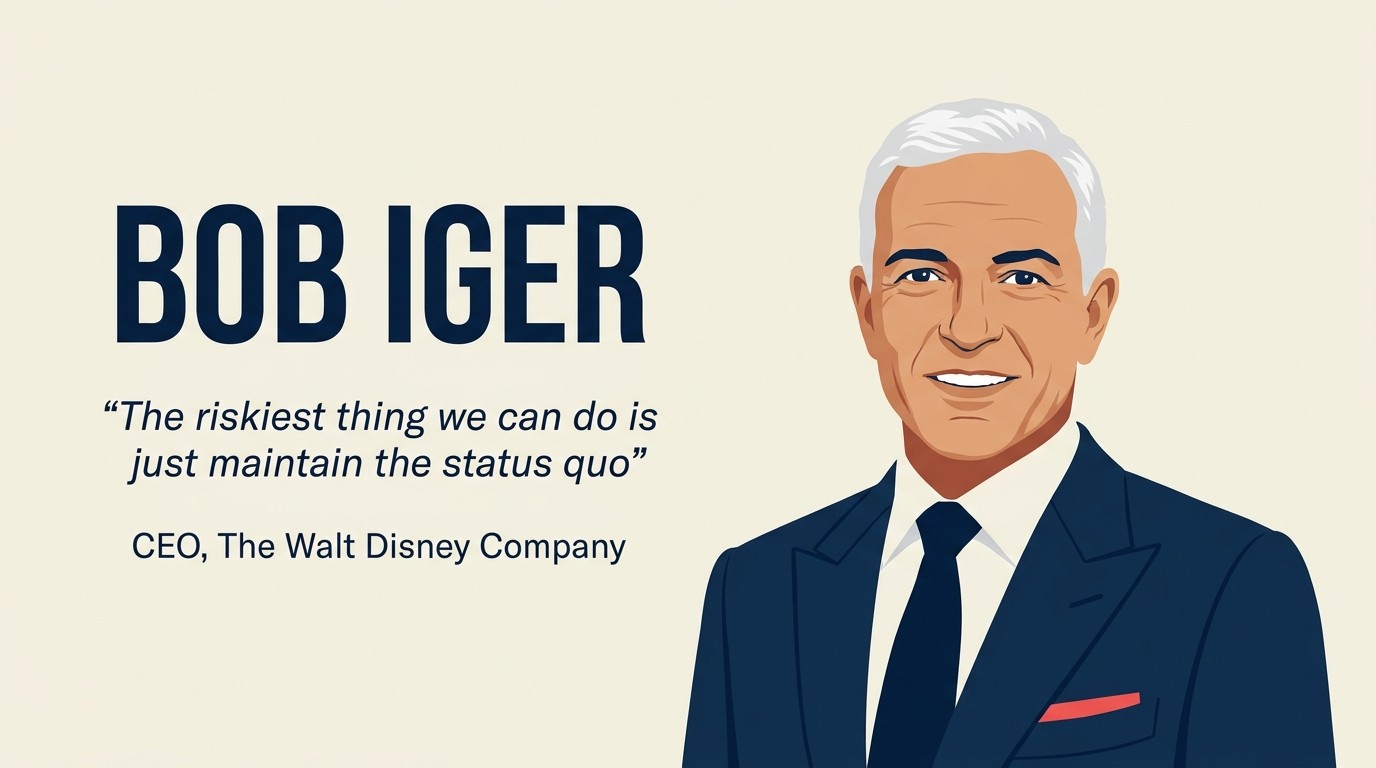
"Hal paling berisiko yang bisa kami lakukan adalah mempertahankan status quo" adalah garis yang dia kembali di seluruh multiple interviews. Untuk Iger, berdiri diam dalam bisnis konten — di mana perhatian audiens terbatas dan IP menua — selalu lebih berbahaya daripada overpay untuk aset kreatif yang benar.
Di Mana Gaya Ini Rusak
Pendekatan akuisitif Iger memiliki dua failure modes yang operator harus catat. Yang pertama adalah integration debt. Akuisisi Fox pada $71 miliar membawa konten signifikan, distribusi internasional, dan jaringan FX. Itu juga membawa kompleksitas Hulu, komplikasi regulasi, dan struktur biaya yang telah mengambil tahun untuk rasionalisasi. Membeli dalam skala berarti mengintegrasikan dalam skala, dan integrasi Fox tidak pernah seselesai Pixar atau Marvel.
Yang kedua dan lebih besar kegagalan adalah suksesi. Gaya Iger mendalam personal. Akuisisinya bekerja karena hubungan spesifik dan kredibilitas-nya dengan Jobs, Lucas, dan Murdoch. Hubungan-hubungan itu tidak dapat ditransfer. Perusahaan yang dia bangun diatur di sekitar selera dan penilaian-nya dengan cara yang penerus tidak bisa wariskan hanya dengan gelar. Itu adalah risiko strategis nyata Disney hadapi. Bukan kerugian streaming atau penurunan ESPN — itu adalah masalah operasional yang dapat diselesaikan. Masalah yang tidak dapat diselesaikan adalah membangun institusi yang tidak bergantung pada hubungan satu orang untuk membuat keputusan paling pentingnya. Iger, meskipun kebrillian deal-making-nya, belum menyelesaikan itu. Untuk kasus kontras, lihat bagaimana transisi Andy Jassy di Amazon mengelola penyerahan dari CEO era founder tanpa organisasi kehilangan prinsip operasionalnya.
Pertanyaan yang Sering Diajukan tentang Kepemimpinan Bob Iger
Siapa Bob Iger?
Bob Iger adalah CEO The Walt Disney Company, peran yang dia pegang dari 2005 hingga 2020 dan kemudian lagi dari November 2022 hingga sekarang. Dia paling terkenal karena mentransformasi Disney melalui empat akuisisi besar — Pixar, Marvel, Lucasfilm, dan 21st Century Fox — dan untuk menulis memoar 2019 The Ride of a Lifetime.
Bagaimana Iger mentransformasi Disney melalui akuisisi?
Iger melaksanakan empat deal yang mendefinisikan franchise: Pixar seharga $7,4 miliar pada 2006, Marvel seharga $4 miliar pada 2009, Lucasfilm seharga $4 miliar pada 2012, dan 21st Century Fox seharga $71 miliar pada 2019. Setiap akuisisi menargetkan IP kreatif yang Disney tidak bisa bangun secara internal, dan Iger merancang deal untuk melindungi budaya perusahaan akuisisi dan kepemimpinan kreatif daripada menyerapnya ke dalam birokrasi Disney.
Mengapa Bob Iger kembali sebagai CEO Disney pada 2022?
Iger kembali pada November 2022 setelah dewan Disney memberhentikan penerus yang dia pilih sendiri Bob Chapek. Chapek telah mengasingkan komunitas kreatif Disney, salah menangani pernyataan publik tentang legislasi "Don't Say Gay" Florida, dan memimpin kerugian streaming signifikan. Dewan meminta Iger kembali untuk menstabilkan perusahaan; dia setuju untuk istilah dua tahun dan kemudian memperluasnya.
Apa pendekatan Iger terhadap risiko kreatif?
Iger bertaruh pada kepemimpinan kreatif dan memberikan otonomi. Dia mendukung visi Kevin Feige untuk Marvel Cinematic Universe sebelum shared-universe filmmaking terbukti, dan dia membiarkan John Lasseter dan Ed Catmull menjalankan animasi Disney post-akuisisi Pixar. Prinsipnya adalah bahwa Anda tidak bisa mengakuisisi keunggulan kreatif dan kemudian mengelolanya seperti supply chain — Anda harus melindungi kondisi yang menghasilkannya.
Apa yang dibahas *The Ride of a Lifetime*?
The Ride of a Lifetime, diterbitkan pada 2019, adalah memoar Iger yang mencakup kenaikannya dari ABC ke CEO Disney dan empat akuisisi yang mendefinisikan masa jabatannya. Itu spesifik di mana kebanyakan buku kepemimpinan samar, merinci dinamika persis percakapannya dengan Steve Jobs, George Lucas, dan Rupert Murdoch, serta kesalahan yang dia buat menavigasi budaya era Eisner Disney.
Apa yang bisa dipelajari CEO dari Bob Iger?
Tiga pelajaran menonjol. Pertama, kejelasan tesis akuisisi lebih penting daripada aktivitas akuisisi — ketahui persis apa kemampuan yang Anda beli. Kedua, integrasi harus melindungi apa yang membuat target berharga, bukan mengoptimalkannya. Ketiga, suksesi bukan transfer gelar; jika organisasi Anda bergantung pada hubungan personal dan penilaian Anda, tidak ada penerus yang bisa wariskan itu hanya dengan dekrit.
Pelajari Lebih Lanjut
- Kepemimpinan M&A: Bagaimana Membangun Perusahaan Melalui Akuisisi Tanpa Merusak Apa Yang Anda Beli
- Perencanaan Suksesi: Mengapa Kebanyakan CEO Salah Paham dan Bagaimana Melakukannya dengan Benar
- Kepemimpinan Kreatif: Bagaimana Mengelola Tim Kreatif Tanpa Membunuh Apa Yang Membuat Mereka Baik
- Strategi IP: Mengapa Memiliki Aset Storytelling Adalah Model Bisnis Majemuk

On this page
- Playbook M&A Disney
- Perangkap Suksesi
- Rincian Gaya Kepemimpinan
- Ciri-Ciri Kepemimpinan Utama
- 3 Keputusan Yang Mendefinisikan Bob Iger sebagai Pemimpin
- 1. Menelepon Steve Jobs untuk Menegosiasikan Akuisisi Pixar
- 2. Menyetujui Deal Marvel $4 Miliar Ketika Wall Street Skeptis
- 3. Kembali Sebagai CEO pada November 2022
- Apa Yang Akan Dilakukan Bob Iger di Peran Anda
- Bagaimana Rework Mendukung Integrasi M&A dan Perencanaan Suksesi
- Kutipan Terkenal dan Pelajaran Melampaui Ruang Rapat
- Di Mana Gaya Ini Rusak
- Pelajari Lebih Lanjut