Bahasa Indonesia
Gaya Kepemimpinan Al Ries: Miliki Satu Kata, Menang di Pasar
Turn this article into takeaways for your work.


Each assistant summarizes the article only for you and suggests best practices for your work.
Fakta Utama
- Al Ries (1926–2022), strategi pemasaran Amerika dan konsultan merek
- Mendirikan bersama Ries & Ries (1994) dengan putrinya Laura setelah kemitraan Trout & Ries berakhir
- Menulis bersama Positioning: The Battle for Your Mind (1981) dengan Jack Trout — buku yang memperkenalkan "positioning" ke kosakata pemasaran
- Menulis bersama The 22 Immutable Laws of Marketing (1993), Marketing Warfare (1986), dan Focus: The Future of Your Company Depends on It (1996)
- Karir selama 60+ tahun di periklanan dan strategi pemasaran, dari penulis GE pada 1950an hingga tokoh konsultan pada 2020an
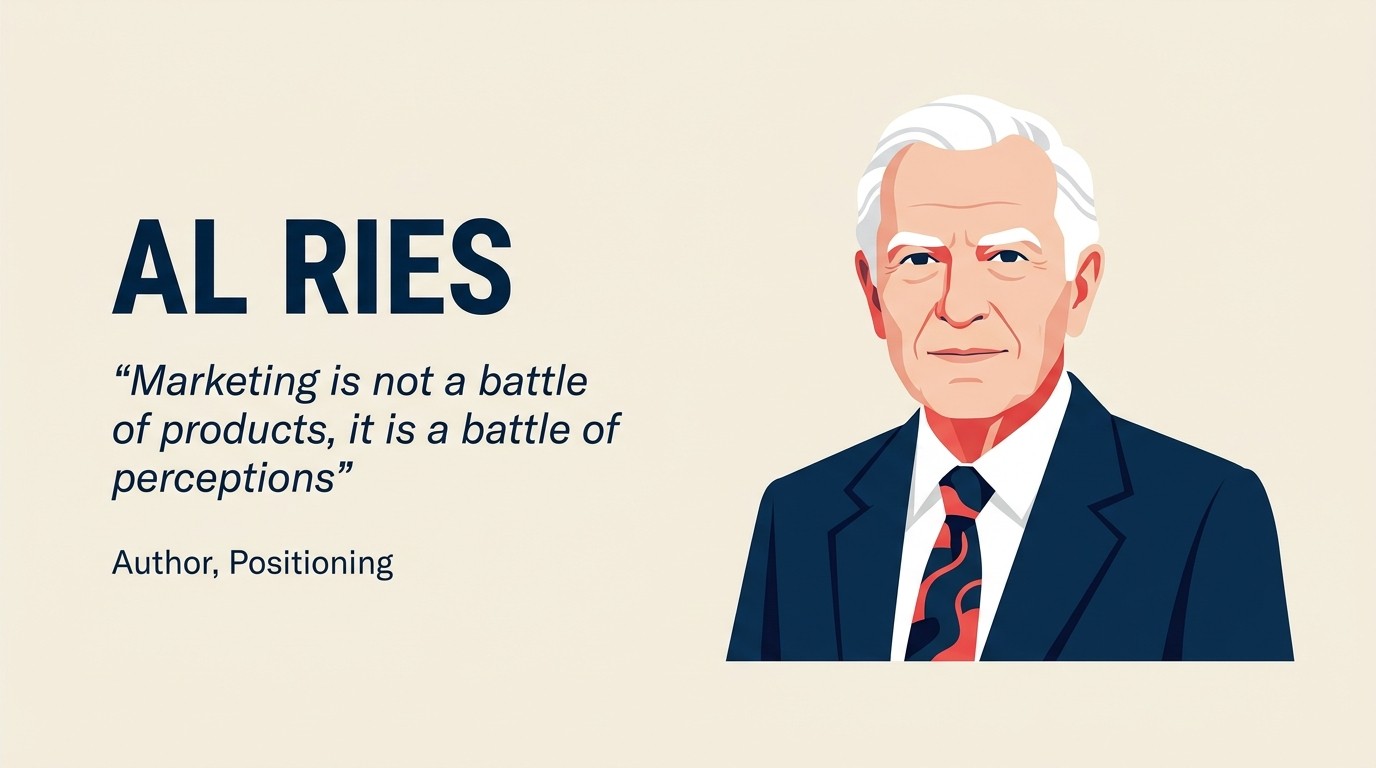
Al Ries menulis bersama Positioning: The Battle for Your Mind pada 1981 dengan Jack Trout, dan argumen yang mereka buat — bahwa pemasaran adalah pertempuran persepsi, bukan produk — sekarang begitu tertanam dalam cara kita membicarakan merek sehingga kebanyakan orang tidak tahu dari mana asalnya.
Ries meninggal pada Oktober 2022 berusia 95 tahun, setelah menghabiskan enam dekade melihat perusahaan mengabaikan saran intinya. Framework positioning Ries berada di persimpangan intelektual antara keahlian periklanan era keemasan David Ogilvy dan teori pemasaran akademis Philip Kotler — Ries mengambil insting praktisi yang Ogilvy kodifikasi dan scaffolding teoretis yang Kotler bangun dan memampatkannya menjadi doktrin yang lebih tajam: miliki satu kata atau jangan miliki apapun. Dan sementara Claude Hopkins berpendapat bahwa pengukuran direct-response adalah disiplin yang dibutuhkan periklanan, Ries berpendapat hal yang sama berlaku untuk fokus merek — kedua pria menghabiskan karir menamai pola yang rekan-rekan mereka terlalu nyaman untuk diakui. Sarannya adalah ini: pilih satu hal, katakan dengan keras, dan tolak biarkan bisnis berkembang melampaui itu sampai satu hal itu adalah kata yang Anda miliki dalam benak pelanggan Anda. Volvo memiliki "keselamatan." FedEx memiliki "semalam." BMW memiliki "mengemudi." Kampanye-kampanye itu telah berjalan, dalam berbagai bentuk, selama 40 tahun. Bukan karena perusahaan kehabisan ide tetapi karena ide itu benar sejak awal.
Sebagian besar CEO membenci saran itu. Ini menghilangkan perluasan produk, pasar yang berdekatan, pivoting. Tetapi merek-merek yang mengikutinya telah bertahan lebih lama dari pesaing yang mencoba menjadi segalanya untuk semua orang. Ries menghabiskan empat dekade mendokumentasikan pola, menamakan hukum-hukumnya, dan melihat perusahaan melanggarnya dalam perjalanan menuju penurunan pangsa pasar.
Ringkasan Gaya Kepemimpinan
| Gaya | Bobot | Cara ditampilkan |
|---|---|---|
| Absolutis Positioning | 60% | Ries bukanlah orang nuansa strategis. Dia percaya prinsip positioning berlaku untuk setiap merek di setiap kategori di setiap skala, dan dia mengatakan ini berulang kali selama enam dekade buku, kolom, dan pekerjaan konsultasi. Dia menamai Volvo, FedEx, dan Domino's sebagai teladan. Dia menamai Xerox, Miller Beer, dan American Express sebagai kisah peringatan. Doktrin positioning Ries tidak memiliki pengecualian untuk bisnis platform atau perusahaan teknologi. Dia pikir mereka salah dan mengatakan demikian, dan sejarah terbukti dia benar cukup sering untuk mempertahankan argumen bahkan ketika contoh tandingan tertentu muncul. |
| Strategi Kontrarasi | 40% | Ries membangun karir konsultasi dengan memberitahu klien kebalikan dari apa yang insting mereka katakan. Insting di sebagian besar ruang rapat adalah memperluas: tambahkan produk, perluas merek, masuki kategori berdekatan. Setiap keputusan perluasan individual terlihat wajar. Efek kumulatifnya adalah merek yang tidak memiliki apapun dalam benak siapa pun. Ries mendiagnosis pola itu lebih awal, menamainya "hukum perluasan lini" dalam The 22 Immutable Laws of Marketing (1993), dan melihatnya menjadi hukum yang paling dikutip dan paling dilanggar dalam buku. Kontrariannya bukan hanya retoris — itu didukung oleh framework analitik yang konsisten yang dia terapkan pada kasus-kasus baru seiring kemunculannya. |
Kombinasi itu menghasilkan seseorang yang berguna justru karena dia bersedia memberitahu klien apa yang mereka tidak ingin dengar, dengan framework teoritis yang terperinci cukup untuk dipertahankan di ruang rapat.
Prinsip Fokus Ries
Prinsip Fokus Ries menyatakan bahwa nilai pertahanan merek berbanding terbalik dengan jumlah hal yang dicoba untuk dipertahankan. Miliki satu kata, dan pikiran memberikan Anda kepemimpinan kategori. Miliki tiga, dan pikiran tidak memberikan Anda apapun. Ekspansi strategis hampir selalu erosi ekuitas yang menyamar sebagai pertumbuhan.
Sifat Kepemimpinan Utama
| Sifat | Penilaian | Apa artinya dalam praktik |
|---|---|---|
| Penyederhanaan pesan merek yang kejam | Luar Biasa | Ries percaya bahwa pikiran manusia menolak kompleksitas dan menerima kesederhanaan. Ketika merek mencoba berdiri untuk beberapa hal secara bersamaan, pikiran mengabaikan semuanya dan merek menjadi kebisingan latar belakang. Proses editorial dalam pekerjaan konsultasi adalah tentang pengurangan: ambil semuanya yang ingin dikatakan klien tentang diri mereka sendiri dan potong sampai hanya klaim paling pertahanan yang tersisa. Itu adalah proses menyakitkan untuk perusahaan yang telah berinvestasi dalam lini produk berganda dan ingin semuanya direpresentasikan dalam positioning. Ries tidak berempati dengan rasa sakit itu. Dia pikir itu investasi yang salah. |
| Keinginan untuk menamai apa yang dilakukan pesaing salah | Sangat Tinggi | Ries secara teratur menggunakan studi kasus langsung kegagalan merek sebagai bukti paling menarik untuk frameworknya. Dia menamai proliferasi lini General Motors sebagai kisah penurunan. Dia menamai upaya Xerox untuk memasuki komputasi dengan merek yang berarti "mesin fotokopi" sebagai kegagalan positioning. Dia menamai upaya Levi's untuk perluasan ke celana formal. Setiap kasus bukanlah teori abstrak — itu adalah perusahaan spesifik yang membuat keputusan spesifik yang dia prediksi akan gagal, dan biasanya gagal. Keinginan untuk mengkritik perusahaan terkenal secara publik memberikan frameworknya kredibilitas yang tidak dimiliki saran strategi merek generik. |
| Kesabaran merek jangka panjang (dekade, bukan kuartal) | Tinggi | Doktrin positioning secara fundamental tidak kompatibel dengan pemikiran kuartalan. Memiliki satu kata dalam benak pelanggan Anda memerlukan pesan yang konsisten selama bertahun-tahun, kadang-kadang dekade. Itu sulit untuk perusahaan publik yang mengelola ekspektasi analis dan untuk startup di bawah tekanan VC. Ries mengakui ketegangan tetapi tidak menyesuaikan sarannya. Dia pikir biaya jangka panjang repositioning — meninggalkan satu kata yang Anda bangun ekuitas di dalamnya — hampir selalu lebih tinggi daripada biaya jangka pendek tetap konsisten bahkan ketika pasar bergeser. |
| Doktrin fokus (spesialisasi mengalahkan diversifikasi, selalu) | Tinggi | Focus Ries (1996) adalah ekspresi paling langsung dari kepercayaan intinya: perusahaan yang mempersempit cakupan kompetitif mereka menang, dan perusahaan yang memperluas cakupan mereka kalah. Dia mendokumentasikan ini di seluruh kategori dan ukuran. Argumennya bukan hanya tentang kejelasan merek — itu tentang fokus operasional. Ketika Anda mengkhususkan diri, Anda mengembangkan keahlian lebih dalam, operasi lebih efisien, dan hubungan pelanggan lebih kuat dalam domain yang dipersempit. Ketika Anda mendiversifikasi, Anda menyebarkan perhatian di lebih banyak permukaan daripada yang bisa dipertahankan dengan baik. Ries pikir ini adalah hukum bisnis, bukan preferensi. |
3 Framework Yang Menentukan Al Ries
1. Positioning: The Battle for Your Mind
Wawasan inti Positioning adalah bahwa pemasaran tidak terjadi di pasar. Itu terjadi dalam benak prospek. Produk dengan fitur terbaik tidak menang. Merek yang menempati posisi paling jelas dalam peta mental pelanggan menang.
Ries dan Trout berdebat ini pada 1972 dalam serangkaian artikel di Advertising Age, jauh sebelum buku. Premis berakar pada ilmu kognitif yang muncul pada waktu itu: pikiran manusia menyederhanakan dengan mengkategorisasi. Ketika Anda menyebutkan "pengiriman semalam," merek spesifik menyala. Ketika Anda mengatakan "mesin mengemudi ultimate," merek spesifik menyala. Ketika Anda mengatakan "mobil keselamatan," Volvo menyala. Asosiasi itu dibangun melalui pesan yang konsisten selama dekade. Mereka tidak bisa dibangun dengan cepat, dan mereka tidak bisa dipertahankan jika merek mulai mengatakan hal-hal yang berbeda.
Implikasi strategis tidak nyaman untuk sebagian besar CEO: Anda tidak bisa memiliki dua kata secara bersamaan. Jika Anda mencoba, Anda tidak memiliki keduanya. Hallmark mencoba memperluas ke produk hadiah premium di luar kartu ucapan. Heinz mencoba memperluas di luar kecap tomat. Keduanya mengencerkan daripada memperluas ekuitas mereka. Ries mendokumentasikan kasus-kasus ini bukan untuk bersifat hukuman tetapi untuk menetapkan bahwa polanya konsisten cukup untuk dapat diprediksi.
Untuk operator, framework positioning paling berguna sebagai filter untuk keputusan daripada latihan branding. Sebelum meluncurkan lini produk baru, memasuki kategori baru, atau mengubah pesan Anda, pertanyaan Ries adalah: kata apa yang saat ini Anda miliki, dan apakah keputusan ini memperkuat atau mengencernya? Sebagian besar perusahaan melewati pertanyaan itu dan membingkai inisiatif baru sebagai penambahan murni. Ries akan mengatakan penambahan selalu mengorbankan posisi yang sudah Anda miliki.
2. The 22 Immutable Laws of Marketing
The 22 Immutable Laws of Marketing (1993) adalah buku paling spesifik Ries dan Trout. Setiap bab menyatakan aturan, menjelaskannya, dan mendemonstrasikannya melalui studi kasus. Hukum-hukum bertahan dengan konsistensi yang luar biasa karena mereka bukan tentang taktik, mereka tentang dinamika struktural yang tidak berubah dengan teknologi atau budaya.
Hukum Kepemimpinan menyatakan bahwa lebih baik menjadi yang pertama daripada lebih baik. Merek pertama dalam kategori memiliki keunggulan bawaan yang tidak bisa diatasi oleh kualitas saja. Amazon adalah pengecer online utama pertama. Google adalah mesin pencari pertama yang mencapai dominasi dalam skala. Menjadi yang pertama tidak cukup, tetapi itu berlipat ganda dalam cara yang kedua yang berkualitas tidak.
Hukum Kategori menawarkan koreksi: jika Anda tidak bisa menjadi yang pertama dalam kategori yang ada, buat kategori baru yang bisa Anda menjadi yang pertama. Dell bukan yang pertama dalam komputer pribadi, tetapi itu adalah yang pertama dalam penjualan PC langsung-ke-konsumen. Red Bull bukan yang pertama dalam minuman ringan, tetapi itu adalah yang pertama dalam minuman energi. Gerakan pembuatan kategori memberikan pendatang baru keuntungan psikologis kepemimpinan tanpa harus menggantikan pemenang yang mapan.
Hukum Perluasan Lini adalah yang paling Ries anggap penting dan paling diabaikan. Itu menyatakan bahwa perluasan merek, menambahkan produk baru di bawah nama merek yang mapan, hampir selalu mengencerkan merek induk daripada memperluas nilainya. Coors Light tidak membantu Coors. Miller Lite tidak membantu Miller. Celana formal Levi tidak merusak Levi. Setiap keputusan perluasan individual terlihat seperti kesempatan untuk menggali ekuitas merek yang ada. Efek agregat adalah bahwa merek induk berarti lebih sedikit karena itu terlampir pada lebih banyak.
Untuk operator, hukum-hukum immutable berfungsi sebagai alat diagnostik. Ketika inisiatif strategis kinerja rendah, hukum-hukum sering menunjukkan akar penyebab: Anda mencoba perluasan lini pada merek yang fokus, atau Anda memasuki kategori sebagai pengikut tanpa menemukan cara menjadi yang pertama dalam subkategori, atau Anda positioning ulang jauh dari kata yang Anda miliki tanpa menggantinya dengan alternatif yang jelas.
3. Focus: The Power of Specialization
Focus (1996) memperluas argumen positioning dari strategi merek ke strategi perusahaan. Tesisnya adalah perusahaan yang mempersempit cakupan kompetitif mereka secara konsisten mengungguli perusahaan yang terdiversifikasi. Bukan karena diversifikasi secara inheren salah, tetapi karena manfaat spesialisasi, keahlian lebih dalam, hubungan pelanggan lebih kuat, efisiensi operasional dalam domain yang sempit, berlipat ganda lebih cepat daripada manfaat diversifikasi didistribusikan.
Ries membuat argumen ini menentang konsensus diversifikasi 1980an dan awal 1990an, ketika konglomerat masih fashion dan model studi kasus MBA sering merayakan perusahaan yang "memperluas portofolio mereka." Dia pikir diversifier yang dirayakan hampir selalu menang terlepas dari diversifikasi mereka, bukan karena itu, dan bahwa diversifikasi secara diam-diam menghancurkan ekuitas merek bahkan ketika metrik keuangan belum menunjukkan itu.
Contoh yang dia gunakan sangat spesifik: Heinz memiliki kecap tomat dan menghabiskan dekade mencoba membuat "Heinz" berdiri untuk bumbu lainnya. Tidak pernah berhasil. Starbucks memiliki "kedai kopi" dan menolak memperluas ke sandwich, merchandise, dan musik cukup lama untuk membangun kepemilikan kategori yang genuine, dan kemudian akhirnya berkembang, dengan kebingungan merek yang Ries akan diprediksi.
Untuk pemimpin produk, doktrin fokus adalah filter strategis yang lebih sulit diterapkan daripada terdengar. Seth Godin tiba pada kesimpulan serupa dari sudut pemasaran izin — argumen "audiens terendah layak yang dapat dilayani"-nya pada dasarnya adalah hukum spesialisasi Ries diterapkan pada komunitas daripada merek. Setiap lini produk baru memiliki kasus bisnis. Biaya pemulihan pengenceran merek tidak muncul di spreadsheet pada saat keputusan. Itu muncul 3 tahun kemudian ketika pelanggan tidak jelas tentang apa yang Anda lakukan, kepemilikan kategori Anda telah melemah, dan spesialis telah mengambil posisi yang Anda tinggalkan dengan mencoba menjadi lebih besar.
Yang Akan Dilakukan Al Ries dalam Peran Anda
Jika Anda seorang CEO, pertanyaan pertama Ries adalah tentang satu kata yang dimiliki perusahaan Anda dalam benak pelanggan. Bukan pernyataan misi Anda. Bukan nilai-nilai merek Anda. Satu kata yang terlintas dalam pikiran ketika pelanggan terbaik Anda memikirkan Anda dibandingkan dengan kategori Anda. Jika kata itu tidak jelas, generik, atau dipersaingkan oleh pesaing, Anda tidak memiliki positioning. Anda memiliki serangkaian deskriptor. Ries akan menghabiskan bulan pertama dari keterlibatan konsultasi apa pun mencoba menemukan kata itu, dan setiap rekomendasi berikutnya akan tentang melindungi atau memperkuatnya.
Jika Anda seorang COO, framework Ries memiliki implikasi spesifik untuk alokasi sumber daya. Sebagian besar perusahaan mengalokasikan anggaran secara proporsional di seluruh lini produk atau unit bisnis. Ries akan mendorong Anda untuk mengidentifikasi posisi paling fokus dan paling dapat pertahan Anda dan over-invest dalam mempertahankannya sebelum mendanai perluasan. Logika operasional adalah bahwa posisi yang kuat dalam ruang yang sempit menghasilkan unit ekonomi yang lebih baik daripada posisi yang lemah dalam ruang yang luas, dan sebagian besar perusahaan menghabiskan anggaran untuk ruang yang luas dengan mengorbankan yang sempit.
Jika Anda seorang pemimpin produk, hukum perluasan lini adalah konsep Ries paling langsung berlaku untuk keputusan roadmap Anda. Sebelum menambahkan lini produk baru di bawah merek yang ada, tanyakan kata apa yang saat ini dimiliki merek induk dan apakah produk baru konsisten dengannya. Perusahaan yang memiliki "kesederhanaan" tidak bisa meluncurkan produk yang memerlukan panduan implementasi 30 halaman tanpa membayar biaya positioning. Perusahaan yang memiliki "keamanan enterprise" tidak bisa meluncurkan produk konsumen freemium tanpa membingungkan kedua audiens. Keputusan produk dan keputusan merek adalah keputusan yang sama.
Jika Anda dalam penjualan atau pemasaran, insting paling berguna Ries adalah desakan pada positioning kompetitif melalui kontras daripada perbandingan. Jangan coba menang pada atribut yang sama seperti pemimpin pasar, Anda berdebat dalam hal mereka. Sebaliknya, identifikasi dimensi di mana Anda bisa menjadi yang pertama dalam subkategori. Budget CRM versus CRM enterprise. Otomasi tanpa kode versus otomasi developer. Spesialis regional versus generalis global. Gerakan positioning yang menciptakan subkategori baru lebih tahan lama daripada gerakan positioning yang mengklaim lebih baik dalam hal seseorang sudah dikenal.
Analisis Rework: Positioning dan Fokus untuk Tim SaaS Modern
Framework Ries sangat relevan untuk desain kategori SaaS, di mana real estat mental dimenangkan atau hilang dalam satu kalimat di halaman pricing. Sebagian besar produk SaaS horizontal mengencerkan diri dengan mendaftar 14 kemampuan dan mempercayai prospek untuk merakit makna. Yang fokus — Calendlys, Lovables, Notions awal 2016 — membangun kepemilikan kategori dengan menolak untuk mendeskripsikan apa yang juga bisa mereka lakukan.
Positioning Rework mencerminkan disiplin ini secara langsung. Daripada bersaing secara langsung dengan "enterprise CRM" Salesforce atau "work OS" Monday, Rework memiliki subkategori integrated CRM + Work Ops untuk tim lean yang membutuhkan keduanya tanpa menjalankan dua vendor. Itu adalah kata yang lebih sempit daripada "CRM" dan lebih sulit ditiru daripada "work management," karena integrasi adalah moat. Hukum Ries tentang kategori berlaku: jika Anda tidak bisa menjadi yang pertama dalam perlombaan yang ada, ciptakan subkategori di mana yang pertama masih tersedia. Untuk CMO modern, latihan identik dengan apa yang Ries resepkan pada 1981 — temukan katanya, pertahankan selama satu dekade, dan tolak setiap perluasan yang tidak memperkuatnya.
Kutipan Terkenal dan Pelajaran Melampaui Ruang Rapat
Dari Positioning: "Pikiran, sebagai pertahanan terhadap volume komunikasi hari ini, layar dan menolak banyak informasi yang ditawarkan. Secara umum, pikiran hanya menerima apa yang cocok dengan pengetahuan atau pengalaman sebelumnya." Itu ditulis pada 1981 dan mendeskripsikan apa yang sekarang kita pahami tentang beban kognitif, bias konfirmasi, dan ekonomi perhatian dengan presisi ilmiah yang penulis asli capai melalui observasi pemasaran daripada neurosains.
Dari The 22 Immutable Laws: "Pemasaran bukan pertempuran produk, itu adalah pertempuran persepsi." Implikasi penuh kalimat itu membutuhkan bertahun-tahun untuk diapresiasi dalam praktik. Itu berarti produk Anda bisa secara objektif lebih baik dan masih kalah jika pemenang saat ini telah membangun kepemilikan perseptual kategori yang lebih kuat. Itu berarti peningkatan produk perlu tetapi tidak cukup untuk kepemimpinan pasar. Dan itu berarti pertanyaan strategis yang paling penting bukanlah "bagaimana cara membuat ini lebih baik?" tetapi "bagaimana cara dianggap sebagai yang terbaik sebelum pesaing mendapatkan itu?"
Ries mendirikan Ries & Ries dengan putrinya Laura pada 1994 setelah kemitraan Trout berakhir. Laura telah melanjutkan pekerjaan firma sejak kematiannya pada 2022 dan telah menulis beberapa buku sendiri, termasuk The 22 Immutable Laws of Branding (1998). Fakta bahwa firma melanjutkan praktik selama 30 tahun setelah perpecahan kemitraan, di bawah doktrin positioning yang hampir sama, adalah argumennya sendiri untuk konsistensi.
Di Mana Gaya Ini Rusak
Doktrin positioning satu kata Al Ries hampir tidak mungkin untuk dieksekusi dalam bisnis platform di mana produk melakukan 12 hal berbeda untuk 12 segmen pelanggan berbeda. Sikap anti-perluasan Ries akan membuat Apple keluar dari musik, telepon, dan jam tangan, dan eksekusi perluasan Apple pada skala masif adalah contoh tandingan paling dikutip terhadap hukum perluasan lini. Hukum juga telah dilanggar dengan sukses oleh Amazon, Google, dan Microsoft dalam skala yang tidak pernah sepenuhnya dia perhitungkan. Frameworknya dirancang untuk era media massal ketika Anda bisa memiliki kata melalui pengulangan di TV dan cetak. Dalam lingkungan digital yang terfragmentasi di mana perhatian terbagi di 50 saluran, strategi satu kata lebih sulit untuk dieksekusi tanpa anggaran media yang sesuai dengan fragmentasi. Prinsipnya masih benar. Model eksekusi membutuhkan pembaruan.
Pertanyaan yang Sering Diajukan tentang Filosofi Positioning Al Ries
Siapa Al Ries?
Al Ries (1926–2022) adalah strategi pemasaran Amerika dan konsultan merek yang menulis bersama Positioning: The Battle for Your Mind pada 1981 dengan Jack Trout. Dia menghabiskan 60+ tahun berdebat bahwa merek menang dengan memiliki satu kata dalam benak pelanggan, dan dia mendirikan Ries & Ries dengan putrinya Laura pada 1994 setelah kemitraan Trout berakhir.
Apa konsep Positioning?
Positioning adalah ide bahwa pemasaran adalah pertempuran yang dilakukan dalam benak pelanggan, bukan di pasar. Ries dan Trout berdebat bahwa merek yang menempati posisi paling jelas dan paling sederhana dalam kategori menang — Volvo memiliki "keselamatan," FedEx memiliki "semalam," BMW memiliki "mengemudi." Tujuannya adalah mengklaim satu kata dan mempertahankannya selama dekade.
Apa itu The 22 Immutable Laws of Marketing?
Ini adalah buku 1993 Ries dan Trout yang mengkodifikasi 22 aturan struktural strategi pemasaran, termasuk Hukum Kepemimpinan (lebih baik menjadi yang pertama daripada lebih baik), Hukum Kategori (ciptakan kategori baru jika Anda tidak bisa memimpin yang ada), dan Hukum Perluasan Lini (perluasan merek mengencerkan lebih dari yang mereka perpanjang). Hukum-hukum dibingkai sebagai prediktif daripada preskriptif.
Apa yang Al Ries katakan tentang fokus?
Dalam buku 1996-nya Focus, Ries berdebat bahwa perusahaan yang mempersempit cakupan kompetitif mereka secara konsisten mengungguli perusahaan yang terdiversifikasi. Spesialisasi menghasilkan keahlian lebih dalam, efisiensi operasional, dan kepemilikan kategori yang lebih kuat yang berlipat ganda lebih cepat daripada manfaat diversifikasi didistribusikan. Dia menganggap fokus sebagai hukum bisnis, bukan preferensi.
Apa yang bisa dipelajari CMO modern dari Al Ries?
Pelajaran inti adalah bahwa positioning adalah disiplin satu dekade, bukan kampanye. CMO modern harus mengaudit satu kata yang dimiliki perusahaan mereka dalam benak pembeli, dengan kejam menolak perluasan yang mengencernya, dan menggunakan pembuatan kategori untuk menghindari melawan pemimpin mapan dalam hal mereka sendiri. Dalam era digital yang terfragmentasi, fokus penting lebih — bukan lebih sedikit — karena perhatian lebih langka.
Buku apa yang ditulis Al Ries?
Ries menulis bersama Positioning: The Battle for Your Mind (1981), Marketing Warfare (1986), Bottom-Up Marketing (1989), dan The 22 Immutable Laws of Marketing (1993) dengan Jack Trout. Setelah mendirikan Ries & Ries, dia menulis Focus (1996), The 22 Immutable Laws of Branding (1998) dengan Laura Ries, The Fall of Advertising and the Rise of PR (2002), dan The Origin of Brands (2004).
Untuk bacaan terkait, lihat Gaya Kepemimpinan David Ogilvy, Gaya Kepemimpinan Philip Kotler, Gaya Kepemimpinan Brian Halligan, Gaya Kepemimpinan Claude Hopkins, dan Gaya Kepemimpinan Seth Godin.

On this page
- Ringkasan Gaya Kepemimpinan
- Prinsip Fokus Ries
- Sifat Kepemimpinan Utama
- 3 Framework Yang Menentukan Al Ries
- 1. Positioning: The Battle for Your Mind
- 2. The 22 Immutable Laws of Marketing
- 3. Focus: The Power of Specialization
- Yang Akan Dilakukan Al Ries dalam Peran Anda
- Analisis Rework: Positioning dan Fokus untuk Tim SaaS Modern
- Kutipan Terkenal dan Pelajaran Melampaui Ruang Rapat
- Di Mana Gaya Ini Rusak