Bahasa Indonesia
Gaya Kepemimpinan Linus Torvalds: Benevolent Dictator Yang Meluncurkan pada Skala
Turn this article into takeaways for your work.


Each assistant summarizes the article only for you and suggests best practices for your work.
Fakta Kunci: Linus Torvalds (lahir 28 Desember 1969, Helsinki) menciptakan Linux kernel pada 1991 sebagai mahasiswa University dari Helsinki dan melepasnya di bawah GPL v2. Dia membuat Git pada April 2005 setelah Linux community kehilangan akses BitKeeper, menulis core-nya dalam 10 hari. Linux sekarang menjalankan lebih dari 80% dari public cloud servers, 97% dari top supercomputers dunia, dan Android devices pada roughly 3 miliar handsets. Torvalds adalah BDFL (Benevolent Dictator For Life) dari Linux kernel dan Linux Foundation fellow. Dalam September 2018 dia issued public apology untuk hostile communication pada Linux Kernel Mailing List, took short sabbatical, dan returned dengan Code dari Conduct adopted project-wide.
Doktrin BDFL (Model Torvalds Ships-at-Scale)
BDFL Doktrin adalah leadership structure di mana single technically credible founder memegang final merge authority atas codebase sambil mendelegasikan virtually semua day-to-day review ke trusted subsystem maintainers. Itu works ketika dictator's standards itu visibly consistent, transparently applied, dan exercised sparingly — delegation sebagai default, central authority sebagai exception — jadi ribuan contributors dengan no employment relationship masih bisa produce coherent product pada skala.
Pada 25 Agustus 1991, 21-tahun-old student pada University dari Helsinki posted message ke comp.os.minix newsgroup: "I'm doing a (free) operating system (just a hobby, won't be big dan professional seperti gnu) untuk 386(486) AT clones." Dia sign-nya Linus Torvalds.
Tiga puluh lima tahun kemudian, hobby OS itu menjalankan 97% dari world's top supercomputers. Itu power majority dari cloud servers worldwide. Android, yang menjalankan pada roughly 3 miliar active devices, dibangun pada modified Linux kernel. Infrastructure di bawah Google, Amazon, Meta, dan virtually setiap major technology company menjalankan code yang trace kembali ke 1991 Usenet post itu.
Linus Torvalds tidak lead project ini dengan org-chart authority, equity incentives, atau formal management structure. Dia lead itu melalui technical credibility, license yang kept project structurally open, dan willingness untuk make final decisions ketika others tidak bisa reach consensus — semua sementara holding full-time job dan maintaining no real commercial interest dalam outcome.
Understanding bagaimana itu bekerja, dan di mana itu breaks, adalah useful untuk any engineering leader yang trying untuk build sesuatu yang outlast people yang started itu.
Rincian Gaya Kepemimpinan
| Gaya | Bobot | Cara Ditampilkan |
|---|---|---|
| Benevolent Dictator | 55% | Torvalds memegang no formal authority atas Linux contributors. Dia tidak bisa fire anyone. Dia tidak control salaries mereka. Tetapi dia control apa yang goes ke dalam kernel, dan final merge authority itu adalah bagaimana project maintain coherence lintas ribuan contributors dari ratusan organizations. Dia gunakan itu sparingly — kebanyakan decisions itu delegated ke trusted subsystem maintainers — tetapi ketika ada conflict tentang technical direction yang community tidak bisa resolve, dia decide. Willingness-nya untuk make hard calls tanpa consensus, dan untuk explain reasoning-nya publicly, adalah apa yang make BDFL model function daripada stall. |
| Technical Meritocrat | 45% | Torvalds punya no patience untuk code yang tidak meet standards-nya, regardless dari siapa yang wrote itu. Dia rejected patches dari senior contributors, major corporations, dan longtime community members ketika code tidak right. Konsistensi itu — standard apply ke semua orang equally — adalah apa yang give authority-nya legitimacy dalam community yang punya no employment relationship untuk fall back pada. Meritokrasi dalam context ini bukanlah value statement. Itu operating mechanism. Tanpa itu, BDFL model collapse karena dictator's decisions terlihat arbitrary daripada principled. |
Pembagian 55/45 bukanlah stable dalam semua contexts. Ketika community trust meritokrasi, benevolent dictator role recede dan subsystem maintainers handle kebanyakan decisions. Ketika sesuatu controversial datang up, balance shift dan Torvalds step in. Dynamic itu — delegation sebagai default, central authority sebagai exception — adalah apa yang allow project untuk scale tanpa Torvalds review setiap change.
Ciri-Ciri Kepemimpinan Utama
| Ciri | Rating | Apa artinya dalam praktik |
|---|---|---|
| Uncompromising code standards | Luar Biasa | Torvalds willing untuk reject any contribution yang tidak meet technical bar, dan untuk explain exactly kenapa dalam public. Linux Kernel Mailing List (LKML) host beberapa extraordinarily direct rejections atas decades, termasuk several yang became widely cited examples dari bagaimana tidak untuk write kernel code. Standard bukanlah hanya tentang technical correctness — itu tentang maintainability pada skala. Code yang hard untuk understand, yang break abstractions, atau yang optimize thing yang salah get rejected bahkan jika itu works. Ini produce codebase dengan 27 million lines yang masih build dan ship pada ribuan hardware configurations. |
| Radical transparency dalam feedback | Sangat Tinggi | Semuanya terjadi dalam public pada mailing list. Patch reviews, design debates, architecture disagreements, dan personal criticisms semua visible untuk anyone yang subscribe. Transparency itu punya dua effects: itu distribute knowledge (Anda learn dengan reading other people's reviews) dan itu enforce accountability (semua orang bisa see ketika someone ship bad work). Downside adalah bahwa itu create high-friction environment bahwa banyak contributors, especially junior ones, find unwelcoming. 2018 Code dari Conduct adoption adalah direct response ke feedback bahwa transparency itu sedang used untuk intimidate daripada educate. |
| Long-term maintainability atas speed | Tinggi | Torvalds punya consistently prioritized code bahwa akan correct dan maintainable lima tahun dari sekarang atas code yang solve immediate problem lebih cepat. Ini means accepting technical debt slowly ke kernel, revisiting design decisions bahwa turn out punya been wrong, dan refusing patches bahwa work today tetapi akan cause problems pada skala. Kernel's stability — ability untuk run pada everything dari Raspberry Pi ke supercomputer tanpa rewriting core — adalah direct result dari prioritization itu. Itu juga means Linux move lebih lambat dalam beberapa areas daripada commercially-driven operating systems. |
| Controlled delegation via trusted lieutenants | Tinggi | Torvalds tidak review setiap patch. Dia review apa subsystem maintainers-nya pull dari domains mereka. Maintainer tree adalah informal hierarchy dari technical trust: someone yang telah contributing good code ke networking subsystem selama bertahun-tahun become networking maintainer, siapa kemudian review contributions dalam area itu dan decide apa untuk pass up chain. Ini membiarkan Torvalds focus pada architecture dan cross-cutting decisions tanpa menjadi bottleneck. Tetapi itu juga means project adalah dependent pada maintainer relationships itu — ketika key maintainer burn out atau pergi, entire subsystems bisa stall. |
3 Keputusan Yang Mendefinisikan Linus Torvalds
1. 1991 Usenet Post That Seed Community
Torvalds bisa bangun Linux quietly dan release itu ketika itu done. Sebagai gantinya, dia posted ke newsgroup sebelum itu ready, jelaskan itu accurately sebagai hobby project, dan ask untuk feedback. Keputusan itu — untuk release early dan ask untuk collaboration daripada polish first dan present finished work — set model untuk open-source development yang sekarang punya name dan industry.
Early community bukanlah large. Tetapi itu include people yang technically capable dan interested dalam problems yang Torvalds sedang working pada. Dalam months, contributions dari people yang dia tidak pernah meet itu improving code lebih cepat daripada dia bisa improve itu seorang diri. Project bukanlah hanya growing — itu getting lebih baik dari inputs dia tidak bisa produce sendiri.
Ini adalah apa yang kebanyakan orang miss tentang Torvalds sebagai leader: primary leverage point-nya bukanlah code-nya sendiri. Itu adalah creating context di mana other people's code bisa improve project-nya. Dia set standards, maintain final authority, dan made itu possible untuk ribuan people untuk contribute usefully tanpa coordinating directly dengan satu sama lain. Network architecture dari Linux development model — distributed contribution, clear standards, central final authority — adalah organizational design decision bahwa made semuanya else possible.
Untuk operators today, pertanyaan adalah apakah engineering culture Anda dirancang untuk multiply contribution atau untuk concentrate itu. Kebanyakan engineering organizations add headcount untuk add capacity. Torvalds bangun model di mana marginal contributor tidak require management overhead proportional ke contribution mereka. Jeff Dean achieve sesuatu serupa di Google — bukan melalui open-source community dynamics tetapi melalui setting technical standards begitu tinggi bahwa other engineers aligned work mereka upward terhadap bar-nya daripada requiring direct management. Itu strukturally unusual dan worth studying.
2. Choosing GPL v2: Keeping Linux Free Forever
Pada 1991, Torvalds released Linux di bawah GNU General Public License version 2. Linux Foundation, established pada 2000, kemudian menjadi steward dari ecosystem bahwa dia bangun. Keputusan itu, lebih dari any technical choice, determined shape dari semuanya yang followed.
GPL v2 require bahwa anyone yang distribute software derived dari GPL-licensed code harus release modifications mereka di bawah same license. Anda bisa use Linux dalam commercial product. Anda bisa modify itu. Tetapi Anda tidak bisa take modifications itu proprietary. Ini adalah apa bahwa prevented any single company dari forking Linux, improving itu untuk own purposes mereka, dan refusing untuk share improvements itu dengan community.
Tanpa GPL v2, IBM, Red Hat, Google, dan Amazon bisa punya each taken Linux, added proprietary improvements, dan created incompatible versions. Kernel itu bisa punya fragmented. Community investment dalam single codebase itu bisa punya been lost. Deming-style cumulative improvement dari ribuan contributors building pada shared foundation itu bisa punya stopped.
Torvalds punya been explicit bahwa ini adalah deliberate choice. Dia juga been explicit bahwa itu tidak apply way yang Free Software Foundation sometimes argue itu should — dia maintained bahwa kernel-space dan user-space punya clear boundary, dan bahwa user-space programs yang running pada Linux tidak derived works. Praktis interpretation itu telah allowed enormous commercial ecosystems untuk build on top dari Linux tanpa triggering GPL's requirements pada own code mereka.
Lesson kepemimpinan bukanlah tentang open source licensing specifically. Itu tentang structural decisions yang either create atau foreclose long-run options. Torvalds buat decision pada 1991 bahwa constrained setiap subsequent choice — tetapi constraint itu adalah dalam exactly direction bahwa made Linux lebih valuable atas time, bukan less.
3. Membuat Git dalam 10 Hari Setelah BitKeeper Collapsed
Pada April 2005, Linux kernel development community lost access ke BitKeeper, proprietary version control system mereka telah been using. License itu revoked setelah dispute dengan BitKeeper's owner. Torvalds punya 48 hours dari warning sebelum project itu would be tanpa version control.
Dia bisa evaluated existing solutions — CVS, Subversion, whatever itu available. Dia chose sebagai gantinya untuk write new version control system dari scratch bahwa was specifically designed untuk way Linux kernel development sebenarnya worked: distributed, dengan no central server, cepat cukup untuk handle ribuan patches dari ratusan contributors, dan correct dalam handling dari merge histories.
Core dari Git itu written dalam 10 days. Itu sekarang hosted dan maintained di bawah kernel.org infrastructure di samping Linux kernel itu sendiri. First Linux kernel commit using Git terjadi pada 16 April 2005. Release 1.0 datang pada Desember 2005.
Git sekarang adalah dominant version control system dalam software development. GitHub, yang dibangun pada Git, punya atas 100 juta developers dan lebih dari 420 juta repositories sebagai dari 2025. Workflow model Torvalds designed untuk Linux kernel development — distributed repositories, local commits, explicit merges — menjadi standard untuk virtually semua professional software development.
Proses decision-making di sini adalah worth examining. Torvalds punya concrete problem, hard deadline, specific set dari requirements bahwa existing tools tidak meet, dan choice antara adapting sesuatu existing atau building sesuatu right. Dia bangun sesuatu right, quickly, dan itu outlasted problem bahwa motivated itu oleh decades. Itu bukanlah style dari decision-making available untuk semua orang — itu require specific capability untuk recognize ketika new solution adalah worth lebih daripada adaptation dari existing one, dan kemudian untuk execute pada itu lebih cepat daripada deadline allow untuk deliberation.
Apa Yang Akan Dilakukan Torvalds dalam Peran Anda
Jika Anda adalah CEO, model Torvalds suggest asking apakah architecture organisasi Anda enable distributed contribution atau concentrate itu. Kebanyakan perusahaan bangun decision-making bahwa bottleneck pada executive layer — semuanya penting require sign-off dari small number dari people. Torvalds bangun system di mana ribuan people make independent decisions setiap hari, dan central authority hanya engage pada decisions bahwa require cross-cutting judgment. Itu require investing heavily dalam standards dan norms bahwa make distributed decision-making safe. Tetapi leverage itu enormous: Anda get lebih banyak decisions made correctly tanpa adding untuk executive bottleneck.
Jika Anda adalah COO, Git's origin story adalah worth applying ke infrastructure dan tooling decisions Anda. Ketika critical dependency fail, reflex adalah untuk find nearest replacement dan keep moving. Torvalds tanyai harder question: apa bahwa system itu yang designed untuk workflow aktual kami terlihat seperti? Pertanyaan itu adalah lebih lambat ke answer tetapi produce tools bahwa fit daripada tools bahwa fit close enough. Identify dua atau tiga places di mana tim Anda telah built workarounds atas tools bahwa tidak itu designed untuk context Anda. Itu adalah di mana Git-style redesign question adalah worth asking.
Jika Anda adalah product leader, maintainability-over-speed principle apply directly ke technical debt decisions. Torvalds consistently reject patches bahwa solve immediate problem tetapi create future complexity. Kebanyakan product teams make opposite trade: ship fast, clean up later. Itu sering correct call dalam early stages. Tetapi pada skala, accumulated complexity dari "ship fast" decisions menjadi constraint pada future velocity. Tanyai team Anda apa percentage dari current sprint capacity itu going ke work bahwa tidak would exist jika Anda punya maintained stricter standards enam bulan ago. Jawaban itu tell Anda apakah Anda dalam position untuk start applying Torvalds standard.
Jika Anda dalam sales atau marketing, open-source community model punya direct analogy dalam partner dan ecosystem development. Torvalds bangun project di mana people contribute karena mereka get value dari contributing — improvements mereka ke Linux juga improve systems mereka depend pada. Jika Anda building partner ecosystem, tanyai apakah partners Anda contributing karena relationship genuinely make product mereka lebih baik, atau karena Anda punya created cukup transaction incentives untuk compensate untuk friction. First kind dari ecosystem compound. Second kind require constant maintenance.
Bagaimana Rework Fit Model Torvalds
Model Torvalds berjalan pada dua things tim engineering Anda probably kurang visibility ke: meritocratic code review dan shipping discipline. Pada kernel, setiap patch itu visible, setiap rejection itu public, dan setiap maintainer's throughput itu measurable terhadap same bar. Kebanyakan software orgs coba replicate ini dengan Jira tickets dan standups — artifacts yang track activity tetapi hide apakah review standard sebenarnya consistent lintas reviewers, atau apakah shipping pace itu concentrated dalam few contributors. Rework kasih engineering leaders process visibility lintas actual workflow: PR-to-ship cycle time per maintainer, review-load distribution, dan di mana patches stall sebelum merge. Poin bukanlah untuk micromanage review; itu untuk see apakah team's meritokrasi Anda adalah real atau apakah few senior engineers silently carry standard. Torvalds made Linux mailing list system dari record jadi community bisa self-correct. Rework play bahwa role untuk internal engineering teams tanpa forcing LKML's friction itu kepada people yang tidak punya opted ke dalamnya.
Kutipan Terkenal & Pelajaran Beyond the Boardroom
Torvalds said dalam 2012 TED talk: "Saya adalah very lazy person yang likes untuk take credit untuk things bahwa other people sebenarnya do." Itu bukanlah false modesty — itu adalah accurate description dari leverage model. Dia punya spent 35 tahun building systems dan standards yang allow other people untuk do actual development work, dengan himself sebagai final filter dan credit receiver. Itu adalah influence pada skala: vision Anda adalah implemented oleh ribuan people yang punya mereka own motivations untuk participating.
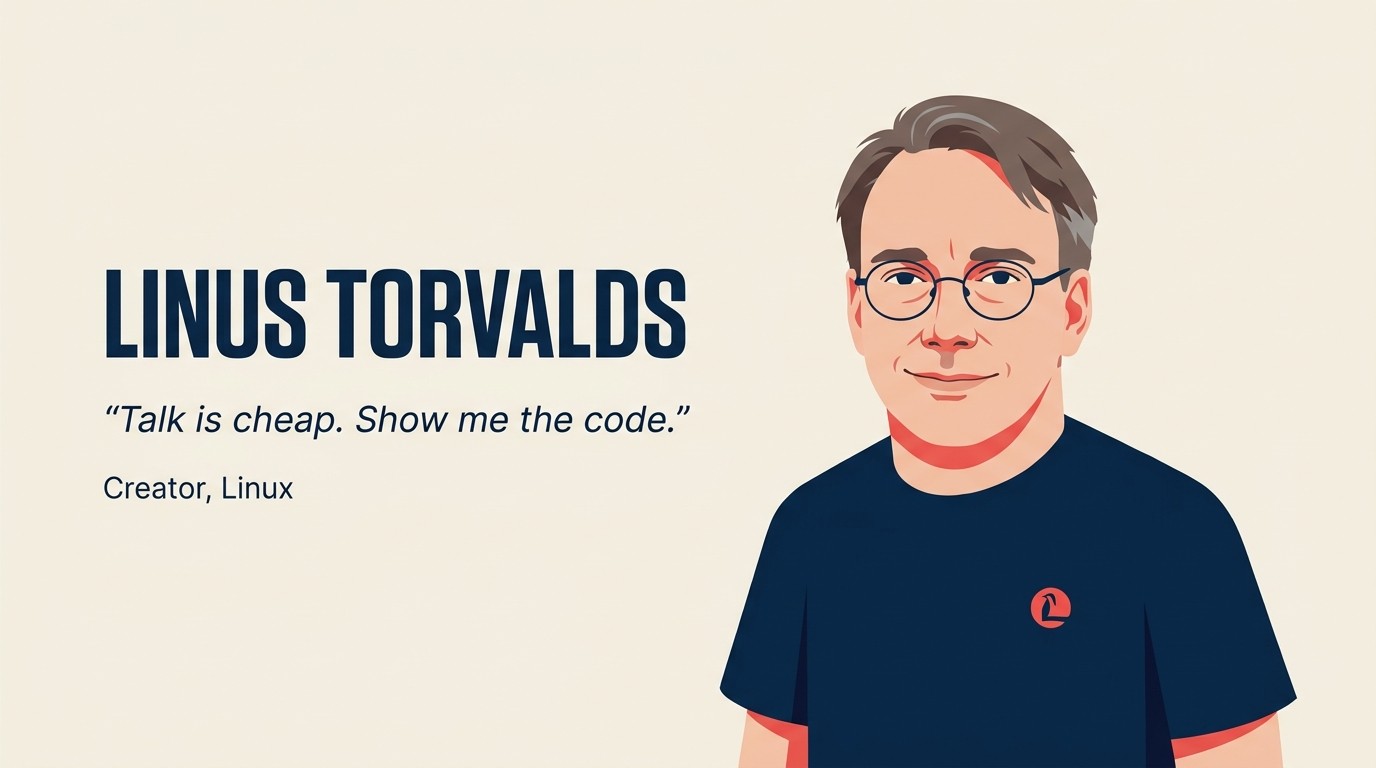
Pada LKML dalam berbagai forms atas tahun, dia punya been explicit tentang kenapa dia reject code: bukan karena author adalah wrong, tetapi karena code itu akan be maintained oleh Linux community selama decades dan needs untuk be understandable untuk someone yang tidak dalam original conversation. "Talk adalah cheap. Show saya code." Itu bukanlah dismissal dari planning — itu adalah statement bahwa code yang works dalam production adalah only evidence bahwa sebenarnya matters. Ideas bahwa terlihat right tetapi tidak survive implementation adalah common. Code bahwa run pada 97% dari world's supercomputers adalah much narrower category.
2018 public apology-nya, ketika dia took month away dari kernel dan returned dengan Code dari Conduct dalam place, itu juga revealing: "Saya butuh untuk change beberapa dari behavior saya, dan saya ingin untuk apologize ke people bahwa personal behavior saya hurt dan possibly drove away dari kernel development." Dia tidak defend past behavior-nya. Dia acknowledged itu harmful dan changed itu. Willingness itu untuk publicly revise conduct, bukan hanya policy, adalah apa bahwa let dia return untuk leading project tanpa losing credibility.
Di Mana Gaya Ini Breaks
Mailing-list flame culture bahwa Torvalds practice selama decades itu effective pada filtering weak code dan weak thinking. Itu juga effective pada filtering out contributors bahwa tidak were prepared untuk have work mereka publicly shredded oleh project's creator. 2018 Code dari Conduct adoption datang setelah years dari criticism bahwa kernel community itu hostile untuk newcomers, women, dan anyone yang tidak fit specific technical archetype. Torvalds acknowledged ini adalah real problem, bukan complaint dari people bahwa tidak bisa take criticism.
BDFL model juga tidak transfer ke organizations dengan P&L pressure dan employment relationships. Torvalds bisa make decisions bahwa disappoint major contributors karena contributors itu punya no power atas dia. Elon Musk apply similarly blunt technical authority dalam companies dia control, tetapi dengan employment leverage di baliknya — yang produce lebih cepat short-term compliance dan jauh lebih banyak institutional fragility daripada Torvalds's model, di mana contributors bisa simply stop contributing. Dalam company, equivalent situation — CTO overriding VP engineering decisions repeatedly — create retention problems dan destroy trust bahwa make delegation work.
Dan specific combination-nya — unmatched technical credibility plus clear final authority plus decades dari consistent public behavior — adalah nearly impossible untuk replicate. Anda bisa adopt structural elements (distributed contribution, meritocratic standards, central final authority) tanpa punya same legitimacy base. Itu change bagaimana model perform.
Pertanyaan yang Sering Diajukan tentang Kepemimpinan Linus Torvalds
Siapa Linus Torvalds?
Linus Torvalds adalah Finnish-American software engineer lahir 28 Desember 1969 dalam Helsinki. Dia menciptakan Linux kernel pada 1991 sebagai University dari Helsinki student dan invented Git pada 2005. Dia tetap BDFL dari Linux kernel dan adalah Linux Foundation fellow.
Apa model BDFL?
BDFL stands untuk Benevolent Dictator For Life. Itu describe governance model di mana satu technically credible founder memegang final authority atas project tetapi delegate day-to-day decisions ke trusted maintainers. Dictator engage hanya pada cross-cutting atau contested calls, yang membiarkan project untuk scale tanpa bottlenecking pada satu person.
Bagaimana Torvalds run komunitas Linux kernel?
Melalui informal hierarchy dari subsystem maintainers yang review patches dalam domains mereka dan pass worthwhile changes up chain. Torvalds review apa maintainers-nya send dia, bukan individual patches. Semua discussion terjadi transparently pada Linux Kernel Mailing List (LKML), jadi standards dan rejections itu visible untuk semua orang.
Kenapa Torvalds take sabbatical dalam 2018?
Dalam September 2018 Torvalds publicly apologize untuk tahun dari hostile communication pada LKML, step away dari kernel untuk roughly one month, dan return dengan Code dari Conduct adopted project-wide. Dia acknowledged behavior-nya punya driven contributors away dan committed untuk changing itu — bukan hanya policy di sekitar itu.
Apa Git invention story?
Pada April 2005 Linux kernel development community lost access ke BitKeeper, proprietary version control system itu punya used sejak 2002. Dengan 48 hours dari warning, Torvalds chose untuk build new distributed VCS daripada adopt existing one. Dia wrote Git's core dalam 10 days; first kernel commit using Git landed 16 April 2005, dan Git 1.0 shipped bahwa Desember. Git adalah sekarang dominant VCS dalam software development.
Apa yang open-source leaders bisa pelajari dari Torvalds?
Tiga things. First, release early dan biarkan contributors improve project lebih cepat daripada Anda bisa seorang diri. Second, pick structural constraints (seperti GPL v2) bahwa compound value atas time daripada foreclose itu. Third, keep standards visibly dan consistently applied — meritokrasi hanya work sebagai legitimacy ketika same bar apply ke junior contributor dan ke IBM.
Untuk related reading tentang engineering leadership, lihat Gaya Kepemimpinan Werner Vogels, Gaya Kepemimpinan Martin Fowler, dan Gaya Kepemimpinan Andy Grove.

On this page
- Doktrin BDFL (Model Torvalds Ships-at-Scale)
- Rincian Gaya Kepemimpinan
- Ciri-Ciri Kepemimpinan Utama
- 3 Keputusan Yang Mendefinisikan Linus Torvalds
- 1. 1991 Usenet Post That Seed Community
- 2. Choosing GPL v2: Keeping Linux Free Forever
- 3. Membuat Git dalam 10 Hari Setelah BitKeeper Collapsed
- Apa Yang Akan Dilakukan Torvalds dalam Peran Anda
- Bagaimana Rework Fit Model Torvalds
- Kutipan Terkenal & Pelajaran Beyond the Boardroom
- Di Mana Gaya Ini Breaks