Bahasa Indonesia
Gaya Kepemimpinan Alexandr Wang: Skala AI, Pelabelan Data Dengan Kecepatan Perang, dan Taruhan Pro-Pemerintah-Kontrak Yang Membuatnya Menjadi Billionaire pada 25
Turn this article into takeaways for your work.


Each assistant summarizes the article only for you and suggests best practices for your work.
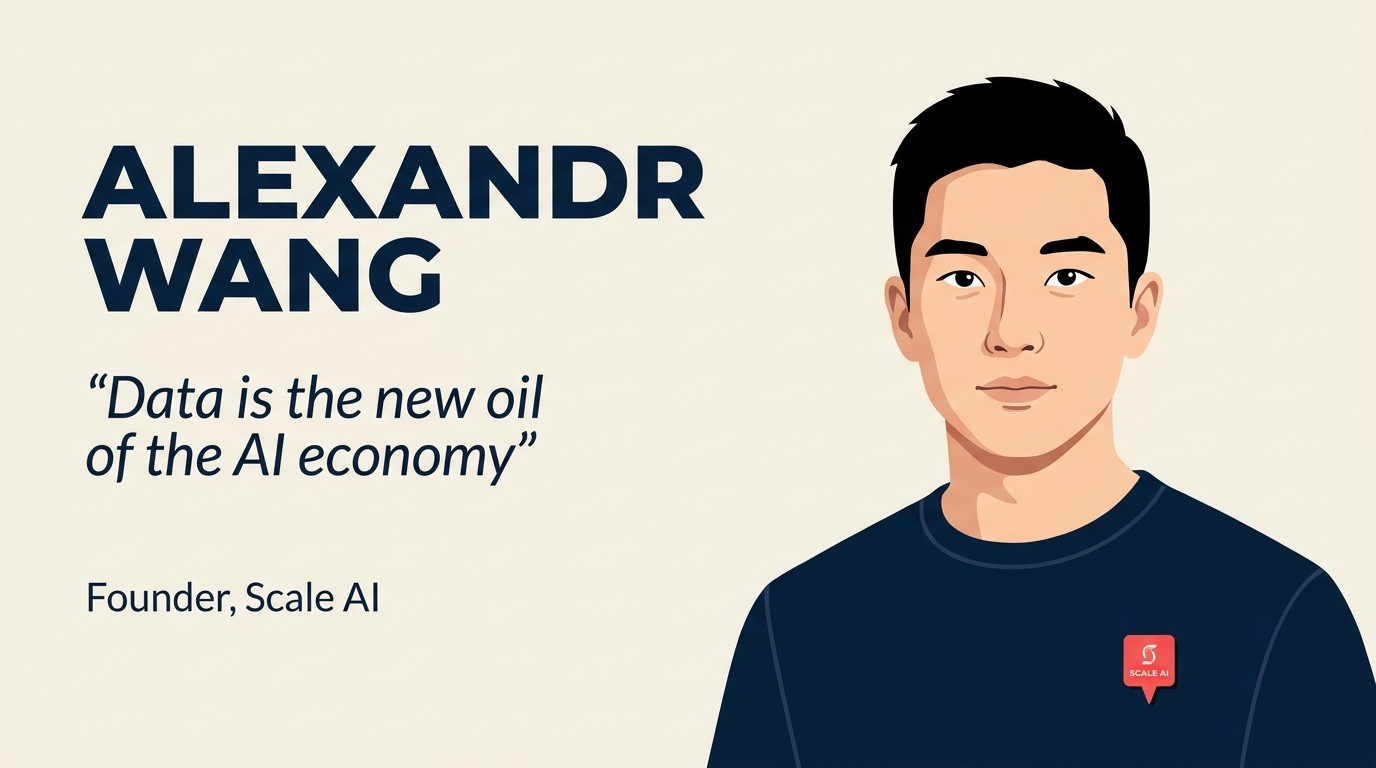
Alexandr Wang berhenti dari MIT pada 19. Dia tidak berhenti untuk membangun jaringan sosial atau aplikasi konsumen. Dia berhenti untuk menyelesaikan pelabelan data — hambatan intensif kerja, kurang glamor yang setiap sistem AI bergantung padanya dan bahwa tidak ada yang di Silicon Valley ingin bicarakan.
Scale AI, perusahaan yang dia dirikan bersama Lucy Guo pada 2016, membangun pasar data yang dianotasi yang menjadi ketergantungan hulu untuk kendaraan otonom, pelatihan LLM, dan akhirnya Departemen Pertahanan AS. Pada 2022, Wang senilai sekitar $2 miliar, membuatnya billionaire swasta termuda dalam sejarah menurut Forbes. Pada Mei 2024, Scale AI mengumpulkan dana pada valuasi $13,8 miliar. Meta menginvestasikan $14,3 miliar untuk saham 49% kemudian tahun itu — membuat Mark Zuckerberg menjadi salah satu pemegang saham Scale AI paling berpengaruh — dan Wang bergabung dengan Meta Superintelligence Labs. Sam Altman di OpenAI dan Dario Amodei di Anthropic adalah di antara pelanggan data berlabel Scale AI terbesar, yang berarti bisnis infrastruktur Wang secara bersamaan telah melayani pesaing dalam perlombaan model frontier. Dan Demis Hassabis di Google DeepMind mengejar tesis yang sebanding tentang memiliki lapisan penelitian ilmiah — kedua Wang dan Hassabis mempertaruhkan bahwa infrastruktur di bawah produk yang terlihat adalah di mana nilai yang tahan lama terakumulasi.
Apa yang membuat ceritanya relevan untuk operator bukan kekayaan. Ini adalah pola keputusan: dia secara berulang memilih pertahanan daripada fashion, kurang glamor daripada viral, dan kontrak pemerintah daripada kesejukan konsumen pada waktu ketika kelompok sebayanya melakukan sebaliknya. Orang tuanya berdua adalah fisikawan nuklir. Dia besar di Los Alamos, Meksiko Baru, memenangkan beberapa olimpiad matematika dan pemrograman, dan kemudian mendaftar di MIT sebelum memutuskan masalah AI paling penting tidak sedang diselesaikan di lab. Jika Anda membangun sesuatu yang memerlukan moat kompetitif daripada efek jaringan, tesisnya layak dipelajari.
Alexandr Wang — Fakta Kunci
| Lahir | 1997, Los Alamos, Meksiko Baru (orang tua adalah fisikawan nuklir) |
| Pendidikan | MIT (berhenti pada 19 untuk membangun Scale AI) |
| Perusahaan didirikan | Scale AI, didirikan bersama Lucy Guo pada 2016 |
| Puncak Judul | CEO, Scale AI (2016–2025) |
| Klaim fame | Billionaire swasta termuda dalam sejarah (2022, usia ~25, Forbes) |
| Milestone Valuasi | Scale AI mencapai valuasi $13,8B (Mei 2024); Meta menginvestasikan $14,3B untuk saham 49% |
| Peran Saat Ini | Meta Superintelligence Labs (bergabung 2025 melalui transaksi Meta–Scale) |
| Bisnis Inti | Infrastruktur pelabelan data yang mengtenagai OpenAI, Anthropic, Google DeepMind, dan Departemen Pertahanan AS |
| Sikap Terkenal | Pro-pemerintah-kontrak; Kesaksian Kongresi tentang kompetisi AI AS-China |
| Gerakan Signature | Memilih infrastruktur data kurang glamor daripada AI lapisan model konsumen |
Doktrin Kecepatan Skala
Miliki lapisan ketergantungan sebelum pasar memahami itu adalah ketergantungan — kemudian operasikan dengan standar kualitas cukup tinggi sehingga pelanggan paling sulit memaksa Anda membangun moat yang tidak bisa direplikasi sisa pasar. Lapisan model mengkommoditas; pipeline data di bawahnya berlipat ganda. Pertaruhkan infrastruktur membosankan yang setiap pesaing butuh, dan layani pelanggan yang standarnya paling menghukum.
Ringkasan Gaya Kepemimpinan
| Gaya | Bobot | Cara ditampilkan |
|---|---|---|
| Pembangun Infrastruktur Kontrarasi | 65% | Wawasan utama Wang adalah bahwa lapisan terlihat dari tumpukan AI — modelnya — akan mengkommoditas lebih cepat daripada lapisan data di bawahnya. Sementara investor bersaing mendanai model bahasa berikutnya, Wang membangun infrastruktur yang semuanya membutuhkannya untuk melatih model-model itu. Dia mengambil posisi defensif secara struktural dalam rantai nilai AI: miliki hambatan yang setiap pesaing bergantung padanya, bukan lapisan produk di mana persaingan paling intens. Itu memerlukan keyakinan berkelanjutan bahwa lapisan membosankan lebih penting daripada yang menarik. |
| Operator Didorong Misi | 35% | Tesis kontrak pemerintah bukan murni komersial. Wang telah konsisten, secara publik dan dalam kesaksian Kongresi, bahwa daya saing AI AS relatif terhadap China adalah kekhawatiran keamanan nasional yang genuine — dan bahwa keengganan budaya Silicon Valley untuk bekerja pertahanan adalah kesalahan strategis. Itu adalah posisi nyata dengan konsekuensi nyata, bukan klaim pemasaran. Itu membuatnya kontroversial di bagian dari industrinya sendiri. Tetapi itu juga memberikan Scale AI segmen pelanggan dan moat kompetitif yang tidak ada orang lain dalam infrastruktur AI mengejar. |
Pemisahan itu menjelaskan mengapa positioning Scale AI begitu sulit untuk direplikasi. Fokus infrastruktur adalah tesis bisnis. Sikap kontrak pemerintah adalah keyakinan. Dan kombinasi menciptakan perusahaan yang secara defensif diposisikan dalam rantai pasokan AI dan tertanam dalam lembaga yang paling pesaing menolak untuk terlibat.
Sifat Kepemimpinan Utama
| Sifat | Penilaian | Apa artinya dalam praktik |
|---|---|---|
| Keyakinan Kontrarasi tentang Peluang Kurang Glamor | Luar Biasa | Pelabelan data bukan ide pitch startup yang menarik minat siapa pun. Pada 2016, percakapan dalam AI tentang arsitektur jaringan saraf, timeline AGI, dan lab mana yang akan membangun model pertama yang tujuan umum. Wang melihat percakapan itu dan mengidentifikasi ketergantungan di bawahnya: tidak ada model-model itu bekerja tanpa data pelatihan beranotasi berkualitas tinggi, dan tidak ada yang membangun infrastruktur menghasilkannya dalam skala. Keinginan untuk membangun sesuatu yang terdengar membosankan untuk mengontrol sesuatu yang secara struktural penting adalah inti sifat ini. |
| Kesabaran Strategis dengan Taruhan Infrastruktur | Sangat Tinggi | Pelanggan awal Scale AI adalah perusahaan kendaraan otonom — Lyft, General Motors, Toyota — yang memerlukan data sensor berlabel untuk pipeline pelatihan mereka. Itu adalah basis pelanggan yang sempit, kurang glamor, dan secara operasional kompleks. Wang menghabiskan bertahun-tahun membangun kualitas data dan sistem operasional yang diperlukan untuk melayani pelanggan-pelanggan itu sebelum gelombang LLM membuat Scale AI relevan untuk pasar yang jauh lebih besar. Kesabaran untuk membangun dalam segmen yang sempit sebelum segmen menjadi penting adalah disiplin strategis spesifik. |
| Keinginan Mengambil Posisi Yang Mengasingkan Rekan Pengaruh | Sangat Tinggi | Sikap pro-pemerintah-kontrak Wang menempatkan dia secara langsung pada odds dengan bagian signifikan dari konsensus budaya Silicon Valley, yang memperlakukan hubungan pertahanan sebagai mahal reputasi dan terganggu etis. Dia bersaksi sebelum Kongres tentang AI dan keamanan nasional dengan cara yang membuatnya menjadi figur kontroversial dalam ekosistem yang sama dia mengumpulkan modal dari. Menahan posisi itu secara publik dan konsisten, sambil juga memerlukan goodwill investor dan talenta dalam ekosistem itu, memerlukan toleransi risiko genuine di luar kontrarianisme startup tipikal. |
| Disiplin Operasional dalam Bisnis Kualitas Data | Tinggi | Pelabelan data secara operasional kompleks dengan cara yang bisnis perangkat lunak tidak. Anda mengelola angkatan kerja terdistribusi, sistem kontrol kualitas, panduan anotasi spesifik domain, dan persyaratan penanganan data sisi klien secara bersamaan. Wang membangun infrastruktur operasional untuk memberikan data berlabel pada standar kualitas yang perusahaan kendaraan otonom dan, kemudian, tim pelatihan LLM akan membayar harga premium untuk. Itu bukan kemampuan glamor, tetapi itu nyata — dan itu alasan Scale AI bisa mempertahankan harga bahkan karena pesaing lebih murah memasuki pasar. |
3 Keputusan Yang Menentukan Alexandr Wang sebagai Pemimpin
Berhenti dari MIT untuk Membangun Infrastruktur Pelabelan Data
Tesis inti Wang pada 19 adalah bahwa lapisan membosankan dari tumpukan AI lebih dapat pertahan daripada lapisan model. Kohortnya membangun model. Wang membangun hal yang membuat model bekerja.
Pelabelan data pada 2016 adalah industri manual, terfragmentasi. Paling banyak tim AI menanganinya secara internal dengan pipeline kontraktor yang mahal untuk dibangun dan tidak dapat diandalkan dalam kualitas. Tidak ada platform dominan, tidak ada standar kualitas, dan tidak ada infrastruktur yang diskalakan di berbagai persyaratan anotasi aplikasi AI berbeda. Wang mengidentifikasi celah itu dan membangun untuk itu sebelum pasar memahami itu memerlukan solusi.
Keputusan kunci bukan hanya dropout — itu adalah pilihan masalah. Dia bisa membangun sesuatu dengan pitch konsumen yang lebih bersih. Pasar pelabelan data bukan cerita menarik dalam hari demo YC. Tetapi Wang sudah melakukan matematika tempat rantai pasokan AI akan patah, dan dia membangun untuk patah itu daripada untuk narasi yang paling dapat didanai.
Tarik awal dengan perusahaan kendaraan otonom memvalidasi tesis. Lyft, GM, dan Toyota memerlukan data sensor berlabel, umpan kamera, pindaian LIDAR, sinyal radar, dianotasi dengan tepat untuk melatih model yang akan mengemudi mobil dengan aman. Itu adalah kasus penggunaan berisiko tinggi dan spesifisitas tinggi di mana kegagalan kualitas data memiliki konsekuensi fisik. Scale AI membangun keakuratan operasional untuk memenuhi bar itu, dan keakuratan itu menjadi fondasi untuk semua yang diikuti.
Mengambil Kontrak Pemerintah dan Militer AS
Keputusan Wang untuk secara aktif mengejar Departemen Pertahanan AS dan kontrak komunitas intelijen pada waktu ketika paling banyak rekan Silicon Valley secara eksplisit menghindari mereka adalah keputusan yang paling menentukan dan paling kontroversial dari karir kepemimpinannya sejauh ini.
Konteks penting. Kontroversi Project Maven Google pada 2018, di mana protes karyawan memaksa perusahaan untuk menolak kontrak AI Pentagon, telah membuat pekerjaan AI pemerintah mahal reputasi di Valley. Paling banyak perusahaan AI menyerap sinyal itu dan menghindari hubungan militer. Wang mencapai kesimpulan sebaliknya: bahwa kebutuhan pemerintah AS untuk kemampuan AI nyata, bahwa risiko China membangun AI militer superior sementara perusahaan teknologi AS menolak untuk berpartisipasi adalah ancaman genuine, dan bahwa Scale AI diposisikan dengan baik untuk melayani segmen pelanggan itu justru karena persaingan telah memilih keluar.
Dia membuat argumen ini secara publik dan konsisten, termasuk dalam kesaksian Kongresi tentang AI dan keamanan nasional. Dia berdebat bahwa penolakan budaya industri teknologi AS untuk bekerja pertahanan adalah kesalahan strategis yang melemahkan posisi kompetitif Amerika. Itu adalah posisi nyata, bukan kinerja, dia mempertahankannya di bawah pushback dari mantan rekan, karyawan, dan bagian komunitas investor.
Hasil bisnis signifikan. Kontrak pemerintah Scale AI memberikan perusahaan segmen pelanggan dengan anggaran dalam, jangka kontrak panjang, dan persyaratan kualitas data serius. Hubungan DoD juga menciptakan efek jaringan: perusahaan AI dengan clearance pemerintah dan kinerja terbukti dalam konteks diklasifikasi memiliki referensi pelanggan yang pesaing tidak bisa mencocokkan. Dan basis pelanggan pemerintah adalah countercyclical terhadap pasar AI komersial, itu tidak melambat ketika investasi AI startup melambat.
Pivoting Scale AI Dari Data Kendaraan Otonom ke Data Pelatihan LLM
Ketika ChatGPT diluncurkan pada November 2022, hambatan pelabelan data dalam AI bergeser. Tantangan pelatihan data paling penting bukan lagi anotasi sensor untuk kendaraan self-driving. Ini adalah RLHF, Reinforcement Learning from Human Feedback, untuk model bahasa besar. Itu berarti penganotasi manusia mengevaluasi output model, menilai kualitas, menandai respons berbahaya, dan membantu model belajar selaras dengan preferensi manusia.
Wang mengakui bahwa infrastruktur operasional Scale AI telah dibangun untuk pelabelan AV, manajemen angkatan kerja terdistribusi, kontrol kualitas dalam skala, panduan anotasi spesifik domain, secara langsung dapat diterapkan pada hambatan baru. Tetapi mengeksekusi pivot memerlukan melatih ulang anotator, membangun ulang alur kerja klien, dan meyakinkan lab model bahasa besar bahwa standar kualitas Scale AI sesuai untuk pelatihan LLM.
Scale AI mengeksekusi pivot itu lebih cepat daripada pasar telah menghargai peluang baru. Pada 2023, perusahaan adalah pemasok data pelatihan utama untuk paling banyak pengembang LLM utama, termasuk beberapa lab yang sebelumnya telah membangun pipeline anotasi mereka secara internal. Pivot bekerja karena kemampuan dasar, keunggulan operasional dalam alur kerja AI dalam-the-loop manusia, secara genuine dapat ditransfer, bukan hanya analog.
Pelajaran lebih dalam adalah tentang membaca transisi pasar di lapisan infrastruktur. Paling banyak operator menonton lapisan produk berubah dan mencoba menyesuaikan produk mereka sesuai. Wang menonton lapisan ketergantungan di bawah lapisan produk dan memindahkan infrastruktur sebelum perusahaan produk telah sepenuhnya menghargai pergeseran.
Yang Akan Dilakukan Alexandr Wang dalam Peran Anda
Jika Anda seorang CEO, pertanyaan paling berguna Wang adalah tentang lapisan ketergantungan dalam kategori Anda. Apa yang produk Anda atau produk pesaing Anda bergantung padanya yang tidak sedang dilayani dengan baik? Taruhan infrastruktur kurang kompetitif daripada taruhan produk karena pasar lebih kecil dan narasi lebih sulit untuk didanai. Tetapi mereka juga lebih dapat pertahan sekali dibangun. Sebelum Anda bersaing untuk lapisan produk yang semua orang membangun untuk, tanya apakah ada lapisan ketergantungan di mana Anda akan memiliki lapangan untuk diri Anda.
Jika Anda seorang COO, pelajaran operasional adalah tentang membangun infrastruktur kualitas data sebelum Anda membutuhkannya dalam skala. Moat kompetitif Scale AI bukan algoritma yang merutekan tugas anotasi, itu adalah sistem kontrol kualitas, program pelatihan anotator, panduan spesifik domain, dan alur kerja integrasi klien yang dibangun selama bertahun-tahun kasus penggunaan berisiko tinggi. Itu bukan hal yang bisa Anda skalakan dalam semalam. Jika bisnis Anda bergantung pada proses dalam-the-loop manusia, waktu untuk membangun infrastruktur kualitas adalah sebelum volume tiba, bukan sesudah.
Jika Anda seorang pemimpin produk, argumen sekuensing Wang berlaku untuk pengembangan produk juga. Dia mengidentifikasi hambatan data pelatihan AI sebelum pasar memahami ada hambatan. Pertanyaan roadmap produk adalah: apa yang sistem AI pelanggan Anda akan butuhkan untuk berfungsi dalam dua tahun yang tidak sedang dibangun dengan baik hari ini? Waktu infrastruktur berbeda dari waktu produk. Anda perlu menjadi awal di lapisan infrastruktur karena biaya switching tinggi dan jendela kompetitif ditutup sekali penyedia default muncul.
Jika Anda dalam penjualan atau pemasaran, wawasan Wang paling dapat diterapkan adalah tentang pemilihan pelanggan sebagai strategi. Dia tidak mengejar pelanggan paling mudah, dia mengejar pelanggan dengan persyaratan kualitas tertinggi (perusahaan kendaraan otonom, DoD) karena standar pelanggan itu akan memaksa Scale AI membangun keakuratan operasional yang akan berlipat ganda menjadi moat kompetitif. Pelanggan paling sulit membuat Anda lebih baik. Jika strategi pertumbuhan Anda mengoptimalkan untuk jalan resistansi paling sedikit, Anda membangun perusahaan yang hanya bisa melayani segmen itu.
Paralel Rework: Intensitas Founder Bertemu Operasi First-Data
Keunggulan Wang bukan dek strategi — itu adalah tempo operasional harian yang dia tuntut dari angkatan kerja anotasi terdistribusi dan disiplin kualitas dia bangun ke dalam setiap alur kerja klien. Itu adalah intensitas founder menikah dengan ops first-data, dan itu persis kombinasi yang paling tim B2B scaling kurang. Anda bisa memiliki tesis tajam, tetapi jika data pipeline Anda berantakan, aktivitas rep Anda tidak terlihat, dan operasi Anda berjalan pada screenshot ditempel di Slack, Anda akan membakar tesis mencoba mengeksekusinya.
Rework dibangun untuk tim yang menginginkan disiplin Wang-style tanpa membangun infrastruktur dari awal. Rework CRM memberikan pemimpin penjualan data pipeline dan aktivitas bersih yang membuat coaching dimungkinkan — tidak ada menebak rep mana yang terjebak, tidak ada pembersihan data akhir kuartal. Rework Work Ops memungkinkan RevOps dan COO untuk menjahit bersama alur kerja lintas fungsi (penjualan, CS, dukungan, pengiriman) yang menjaga kualitas tinggi karena headcount tumbuh. Intensitas founder hanya diskalakan jika sistem operasional di bawahnya. Wang membangun miliknya. Milik Anda dapat dikonfigurasi dalam seminggu.
Kutipan dan Pelajaran Terkenal Melampaui Ruang Rapat
Wang telah langsung dalam kesaksian Kongresnya: "AI adalah salah satu teknologi paling kuat yang pernah dibuat kemanusiaan. Pertanyaannya bukan apakah Amerika Serikat akan menggunakan AI, itu apakah AI Amerika akan menjadi yang terbaik di dunia atau apakah itu akan menjadi AI China." Argumen publiknya tentang AI dan keamanan nasional mencerminkan kekhawatiran Fortune telah mendokumentasi tentang taruhan geopolitik pengembangan AI frontier. Itu adalah argumen spesifik tentang persaingan geopolitik, bukan hanya pitch kontraktor pertahanan. Dia telah mempertaruhkan identitas publiknya pada proposisi bahwa perusahaan teknologi AS harus terlibat dengan AI pemerintah daripada memilih keluar.
Dia juga telah jujur tentang kritik dari mantan rekan: "Saya pikir orang-orang yang tidak akan bekerja dengan pemerintah membuat kesalahan. Mereka salah paham tentang apa yang pemerintah lakukan dengan alat-alat ini, atau mereka membuat pilihan budaya yang menempatkan kenyamanan pribadi mereka di depan kepentingan nasional." Apakah Anda setuju dengan posisi itu atau tidak, itu adalah artikulasi nyata dari keyakinan genuine, dinyatakan dalam kondisi di mana jalan lebih mudah adalah keheningan diplomatik.
Busur karir yang patut diperhatikan: Wang mendirikan Scale AI pada 19, menjadi billionaire swasta termuda dalam sejarah sekitar 25, dan kemudian membuat keputusan bahwa paling banyak billionaire tidak membuat, dia bergabung dengan perusahaan (Meta Superintelligence Labs) daripada tetap menjadi founder independen. Itu adalah sinyal tentang apa yang dia benar-benar ingin bangun, yang merupakan pengaruh atas sistem AI paling mampu, bukan independensi pribadi atau exit bersih. Taruhan Meta $14,3 miliar dalam Scale AI mengubah profil independensi perusahaan secara signifikan, tetapi Wang tampak telah memutuskan bahwa kedekatan dengan frontier penting lebih daripada otonomi.
Di Mana Gaya Ini Rusak
Tesis infrastruktur dan pemerintah Wang bekerja dalam dunia di mana persaingan geopolitik terus mempercepat investasi AI dan di mana kualitas data tetap menjadi konstrain yang mengikat kinerja model. Jika pembuatan data sintetis dewasa, kemungkinan nyata mengingat kemajuan penelitian baru-baru ini, nilai pipeline data berlabel manusia berkurang secara signifikan. Konsentrasi kontrak pemerintahnya juga menciptakan pelanggan dan risiko reputasi: pergeseran kebijakan, kegagalan DoD profil tinggi, atau perubahan lingkungan politik di sekitar AI dan pertahanan dapat mempengaruhi valuasi Scale AI dan akses talenta secara bersamaan. Dan taruhan Meta berarti Scale AI tidak lagi platform infrastruktur independen, itu sekarang sebagian aset strategis salah satu lab AI terbesar di dunia, yang mengubah kalkulus netralitas untuk klien potensial yang bersaing dengan Meta. Sikap kontrariannya telah benar sejauh ini, tetapi risikonya tidak kecil dan beberapa mempercepat.
Pertanyaan yang Sering Diajukan tentang Kepemimpinan Alexandr Wang
Siapa Alexandr Wang?
Alexandr Wang adalah co-founder Scale AI, lahir pada 1997 di Los Alamos, Meksiko Baru untuk dua fisikawan nuklir. Dia berhenti dari MIT pada 19 untuk memulai Scale AI pada 2016 dengan Lucy Guo, dan pada 2022 Forbes telah menamakannya billionaire swasta termuda dalam sejarah. Pada 2025 dia bergabung dengan Meta Superintelligence Labs setelah Meta menginvestasikan $14,3B untuk saham 49% dalam Scale AI.
Bagaimana Scale AI menjadi penting untuk industri AI?
Scale AI membangun infrastruktur pelabelan data yang setiap model AI frontier bergantung padanya. Pelanggan awal adalah perusahaan kendaraan otonom seperti Lyft, GM, dan Toyota yang membutuhkan data sensor beranotasi. Setelah ChatGPT diluncurkan pada akhir 2022, Scale pivot ke RLHF (Reinforcement Learning from Human Feedback) untuk model bahasa besar, dan pada 2023 adalah pemasok data pelatihan utama untuk OpenAI, Anthropic, Google, dan sebagian besar lab utama lainnya — ditambah Departemen Pertahanan AS.
Mengapa Wang meninggalkan Scale AI untuk Meta?
Pada 2025, Meta menginvestasikan $14,3 miliar untuk saham 49% dalam Scale AI, dan Wang bergabung dengan Meta Superintelligence Labs sebagai bagian dari transaksi. Paling banyak founder billionaire tidak bergabung dengan perusahaan yang lebih besar — gerakan Wang menandakan bahwa dia menghargai kedekatan dengan pengembangan AI frontier di atas independensi, dan bahwa Meta menganggap akses ke pipeline data Scale sebagai keputusan strategis untuk roadmap AI-nya.
Apa filosofi kepemimpinan Wang?
Filosofi Wang adalah untuk memiliki lapisan ketergantungan kurang glamor daripada bersaing di lapisan produk terlihat. Dia mempertaruhkan awal bahwa infrastruktur data akan berlipat ganda dalam nilai sementara model itu sendiri mengkommoditas, dan dia secara aktif mengejar pelanggan dengan bar kualitas tertinggi (kendaraan otonom, DoD) karena standar mereka akan memaksa keakuratan operasional pesaing tidak bisa direplikasi.
Apa yang bisa dipelajari founder dari Alexandr Wang?
Tiga pelajaran: pilih masalah yang defensible secara struktural daripada menarik secara naratif, layani pelanggan yang standarnya memaksa Anda membangun moat, dan pertahankan posisi kontroversial secara publik jika Anda percaya mereka benar. Sikap pro-kontrak-pemerintah Wang mengasingkan bagian dari Silicon Valley tetapi memberikan Scale AI segmen pelanggan dengan anggaran dalam, jangka kontrak panjang, dan tidak ada persaingan nyata.
Apa kesalahan terbesar Wang?
Trade-off paling diperdebatkan Wang adalah taruhan Meta itu sendiri. Dengan menerima investasi $14,3B Meta dan bergabung dengan Superintelligence Labs, Scale AI tidak lagi platform infrastruktur netral — itu sebagian aset strategis salah satu lab AI terbesar. Itu mengubah kalkulus untuk klien seperti OpenAI, Anthropic, dan Google yang bersaing dengan Meta. Apakah itu terbukti menjadi kesalahan atau konsolidasi strategis tergantung pada bagaimana basis pelanggan AI bereaksi selama dua hingga tiga tahun ke depan.
Untuk bacaan terkait, lihat Gaya Kepemimpinan Sam Altman, Gaya Kepemimpinan Clement Delangue, Gaya Kepemimpinan Jensen Huang, Gaya Kepemimpinan Peter Thiel, dan Gaya Kepemimpinan Marc Andreessen.

On this page
- Alexandr Wang — Fakta Kunci
- Doktrin Kecepatan Skala
- Ringkasan Gaya Kepemimpinan
- Sifat Kepemimpinan Utama
- 3 Keputusan Yang Menentukan Alexandr Wang sebagai Pemimpin
- Berhenti dari MIT untuk Membangun Infrastruktur Pelabelan Data
- Mengambil Kontrak Pemerintah dan Militer AS
- Pivoting Scale AI Dari Data Kendaraan Otonom ke Data Pelatihan LLM
- Yang Akan Dilakukan Alexandr Wang dalam Peran Anda
- Paralel Rework: Intensitas Founder Bertemu Operasi First-Data
- Kutipan dan Pelajaran Terkenal Melampaui Ruang Rapat
- Di Mana Gaya Ini Rusak