Bahasa Indonesia
Gaya Kepemimpinan Ray Kroc: Obsesi Sistem dan Mesin Franchise
Turn this article into takeaways for your work.


Each assistant summarizes the article only for you and suggests best practices for your work.
Fakta Kunci: Ray Kroc (1902-1984) membeli McDonald's dari saudara McDonald pada 1961 seharga $2,7 juta, menskalanya dari single California drive-in menjadi jaringan global 38.000+ restoran hari ini. Dia menjadi pelopor operasi franchise modern dan mendirikan Hamburger University pada 1961 untuk menegakkan doktrin "Kualitas, Layanan, Kebersihan, Nilai" (QSC&V)-nya. Ceritanya didramatisir dalam The Founder (2016), dan pada efisiensi puncak McDonald's rata-rata 77 hari untuk meluncurkan lokasi baru di bawah sistemnya.
Sebagian besar orang mendengar "pendiri McDonald's" dan membayangkan entrepreneur muda dengan ide besar. Ray Kroc adalah seorang penjual mesin mixer milkshake berusia 52 tahun ketika dia pertama kali berjalan ke drive-in saudara McDonald pada 1954. Dia tidak mencari warisan. Dia penasaran mengapa satu kedai burger membutuhkan delapan mesin Multimixer-nya.
Apa yang dia temukan bukan restoran. Itu adalah lini produksi yang menyamar sebagai dapur: hamburger 15-sen dirakit dengan cara yang sama setiap kali, pesanan keluar dalam 30 detik, tanpa carhop, tanpa piring. Sistem Layanan Speedee — yang dikembangkan oleh Dick dan Mac McDonald — sudah dibangun. Kroc hanya melihat apa yang bisa menjadi itu pada 30.000 lokasi daripada satu.
Perbedaan itu penting untuk Anda. Genius Kroc bukan penemuan. Itu adalah replikasi. Dia tidak membangun sistem; dia menskalanya, menegakkannya, dan mengubahnya menjadi arsitektur finansial yang membuat McDonald's salah satu model bisnis yang paling banyak dipelajari dalam sejarah.
Rincian Gaya Kepemimpinan
| Gaya | Bobot | Cara Ditampilkan |
|---|---|---|
| Operasional | 70% | Mendefinisikan dan menegakkan setiap elemen pengalaman pelanggan — patty daging sapi pada persis 1,6 oz, kentang goreng dimasak pada suhu tertentu, lobi dibersihkan pada rotasi tetap. Dibangun Hamburger University pada 1961 untuk mengajarkan sistem ini kepada operator sebelum mereka membuka satu lokasi pun. |
| Transaksional | 30% | Menetapkan harapan kinerja yang jelas untuk franchisee dan pemasok. Loyalitas itu nyata tetapi bersyarat: pemasok yang tidak dapat memegang standar kualitas Kroc diganti; franchisee yang menyimpang mendapat peringatan sebelum kehilangan lisensi mereka. |
Pembagian 70/30 itu disengaja. Kroc bukan visioner dalam arti Jobs. Dia tidak menghabiskan kategori baru. Dia melihat model operasional yang bisa bekerja di mana saja dan menghabiskan 20 tahun memastikan itu. Lapisan transaksional melindungi operasional — Anda tidak dapat memegang 30.000 lokasi ke standar yang sama tanpa gigi dalam perjanjian Anda.
Ciri-Ciri Kepemimpinan Utama
| Ciri | Rating | Apa artinya dalam praktik |
|---|---|---|
| Pemikiran Sistem | Luar Biasa | Kroc tidak hanya mendokumentasikan cara membuat hamburger. Dia merancang seluruh rantai pasokan, spesifikasi peralatan, protokol pelatihan, dan strategi real estat sebagai sistem bersatu. Franchisee tidak mendapat resep; mereka mendapat agama operasi. |
| Ketekunan | Luar Biasa | Tujuh belas tahun menjual cangkir kertas dan mixer milkshake sebelum McDonald's. Sebagian besar orang membaca "pendatang usia tua" sebagai keluhuran. Itu bukan. Kroc memiliki 17 tahun mengamati apa yang benar-benar dibutuhkan operator dan apa yang rusak pada volume. Pengetahuan itu mendanai semua yang dia bangun. |
| Disiplin | Sangat Tinggi | QSCV — Kualitas, Layanan, Kebersihan, Nilai — bukan slogan. Kroc mengunjungi restoran secara pribadi, memeriksa tempat sampah, menguji suhu kentang goreng. Ketika dia menemukan franchisee telah menambahkan udang ke menu tanpa persetujuan, itu bukan saran. Standar tidak dapat dinegosiasikan. |
| Agresi Negosiasi | Tinggi | Kroc membeli saudara McDonald pada 1961 seharga $2,7 juta dan janji jabat tangan royalti. Dia tidak pernah membayar royalti. Dia memblokir mereka dari menggunakan nama McDonald pada restoran asli mereka. Model finansialnya — Franchise Realty Corp, menyewakan tanah kepada franchisee dan mengambil margin real estat di atas biaya franchise — datang dari kesediaan mereka untuk menulis ulang kesepakatan ketika dia melihat struktur yang lebih baik. |
Doktrin QSC&V
Doktrin QSC&V — Kualitas, Layanan, Kebersihan, Nilai — adalah kerangka kerja operasi Kroc yang menerjemahkan janji merek abstrak menjadi standar harian yang dapat diukur dan dapat ditegakkan di setiap lokasi franchise. Itu mendefinisikan setiap pilar dalam istilah spesifik yang dapat diperiksa (berat patty, waktu layanan dalam detik, jadwal pembersihan, rasio harga-penyajian) sehingga varians di antara lokasi dapat dideteksi dan dikoreksi. Dalam praktik, itu membuat merek itu sendiri menjadi sistem yang dapat direplikasi daripada reputasi yang bergantung pada penilaian operator individual.
3 Keputusan yang Menentukan Ray Kroc sebagai Pemimpin
1. Membeli Keluar Saudara McDonald pada 1961
Kroc telah menjadi waralaba nama McDonald sejak 1955 di bawah pengaturan yang memberikan saudara 0,5% dari penjualan kotor. Itu tidak cukup. Saudara ingin menyimpan satu restoran asli di San Bernardino — Kroc setuju secara lisan, kemudian, setelah kesepakatan ditutup, menggunakan setiap sarana hukum untuk meremehkannya. Mereka akhirnya mengganti namanya menjadi "The Big M." Kroc membuka McDonald di seberang jalan. Itu ditutup dalam beberapa tahun.
Pembelian $2,7 juta itu murah. McDonald sudah menjual 18 juta hamburger pada 15 sen masing-masing pada 1959. Kroc tahu model bisnis bekerja. Apa yang dia butuhkan adalah kontrol penuh atas standar, dan dia tidak akan mendapatkan itu dengan pendiri yang memperlakukan penyimpangan sebagai opsi bisnis keluarga. Insting yang sama menuju kepemilikan sistem total menunjukkan pada pendekatan Walt Disney ke Disneyland — contoh era-lain dari seorang operator yang menolak untuk waralaba kontrol kreatif.
Ini adalah keputusan yang mengungkapkan filosofi operasi Kroc: sistem memerlukan kepemilikan. Anda tidak bisa menjadi waralaba merek yang Anda setengah-miliki. Kekerasan pembelian itu nyata, dan saudara McDonald benar-benar dirugikan. Tetapi keputusan itu juga menjelaskan mengapa McDonald terskalakan ke 100 negara ketika pesaing yang mencoba perjanjian franchise yang lebih longgar tidak.
2. Menciptakan Hamburger University
Kroc membuka Hamburger University di basement McDonald di Elk Grove Village, Illinois pada 1961. Terdengar seperti tipuan PR. Itu tidak. Itu adalah universitas pelatihan korporat pertama dalam sejarah bisnis Amerika — mendahului McDonald sebelum satu dekade sebagai standar industri. Peter Drucker telah menulis tentang manajemen sebagai disiplin sejak tahun 1950-an, dan kerangka kerja akuntabilitas manajemen Drucker memberikan latar belakang intelektual terhadap mana model pendidikan operator Kroc menonjol sebagai genuinely baru.
Tesis itu sederhana: jika setiap franchisee belajar sistem dari kurikulum yang sama, diajarkan oleh instruktur yang sama, menggunakan peralatan yang sama, Anda akan mendapatkan varians yang lebih kecil. Varians adalah musuh Kroc. Pengalaman buruk di satu McDonald merusak merek di setiap lokasi lainnya. Pelanggan di Phoenix tidak memisahkan "franchise ini" dari "McDonald." Mereka hanya berhenti pergi.
Lulusan Hamburger University harus lulus ujian tertulis dan praktis sebelum membuka. Pada 2000, itu telah melatih lebih dari 70.000 operator. Hari ini, McDonald menyebutnya salah satu investasi paling penting dalam sejarah operasi. Keputusan untuk berinvestasi dalam pendidikan operator sebelum itu diperlukan — di era ketika sebagian besar franchisor menyerahkan manual dan berharap keberuntungan — adalah mengapa kualitas sistem McDonald tetap bertahan saat pesaing tidak.
3. Permainan Real Estat Franchise Realty Corp
Pada akhir tahun 1950-an, McDonald berkembang tetapi tidak sangat menguntungkan. Biaya franchise itu sederhana. Penasihat Kroc Harry Sonneborn menunjukkan leverage yang sebenarnya dalam model: McDonald bisa membeli atau menyewa tanah, kemudian menyewakan kembali kepada franchisee dengan markup. Biaya franchise bukan bisnis. Real estat adalah.
Kroc membentuk Franchise Realty Corporation pada 1956. McDonald mulai membeli tanah dan menyewakannya kepada operator, yang memberikan perusahaan dua aliran pendapatan: biaya dan sewa. Lebih penting lagi, itu memberikan McDonald leverage operasional — franchisee yang melanggar standar dapat kehilangan lisensi dan sewa mereka. Ancaman itu cukup nyata sehingga sebagian besar tidak mengujinya.
Ini layak dipahami untuk operator apa pun yang menjalankan bisnis multi-lokasi atau dependen-mitra. Kroc tidak hanya menjadi waralaba merek. Dia membuat McDonald menjadi tuan tanah, pemberi pinjaman, dan pemberi lisensi secara bersamaan. Posisi struktural itu membuat sistem dapat ditegakkan dengan cara perjanjian franchise jabat tangan tidak pernah bisa.
Apa yang Ray Kroc Lakukan dalam Peran Anda
Jika Anda seorang CEO menjalankan perusahaan 50-500 orang, ide paling dapat dipindahkan Kroc adalah bahwa produk Anda mungkin bukan apa yang Anda pikirkan itu adalah. McDonald adalah bisnis real estat dan pelatihan yang kebetulan menjual makanan. Apa yang setara untuk Anda? Jika Anda perusahaan SaaS, produk nyata Anda mungkin onboarding dan infrastruktur retensi, bukan fitur. Kroc akan mulai di sana — temukan bagian dari model Anda yang sebenarnya menciptakan margin tahan lama, kemudian bangun seluruh sistem di sekitar melindunginya.
Jika Anda seorang COO, wawasan Hamburger University berlaku langsung kepada Anda. Sebelum perusahaan Anda membuka kantor baru, diluncurkan di pasar baru, atau mengarahkan klien enterprise baru, seperti apa pendidikan operator Anda? Bukan PDF 40-halaman. Kurikulum terstruktur dengan tes. Kroc tidak bisa ada di setiap restoran. Program pelatihannya adalah. Anda tidak bisa berada di setiap kesepakatan atau setiap penyebaran baik. Program pelatihan Anda adalah apa yang menyimpan varians turun ketika Anda tidak berada di ruangan.
Jika Anda seorang pemimpin produk, pelajari QSCV sebagai disiplin operasi, bukan slogan pemasaran. Kroc mendefinisikan Kualitas, Layanan, Kebersihan, dan Nilai dalam istilah yang dapat diukur: berat hamburger spesifik, waktu layanan dalam detik, daftar periksa inspeksi dengan kriteria lulus/gagal. Ketika tim Anda berbicara tentang "kualitas" atau "pengalaman pelanggan," apakah Anda memiliki angka yang terpasang? Atau apakah Anda mengandalkan panggilan penilaian yang bervariasi menurut anggota tim? Kroc akan membuat Anda mendefinisikannya.
Jika Anda seorang pemimpin penjualan atau pemasaran, pelajaran dari model franchisee Kroc adalah tentang kepemilikan versus kemitraan. Kroc membawa franchisee ke dalam sistem di mana mereka menginvestasikan uang nyata, bekerja lantai, dan memiliki kulit bermakna dalam permainan. Dia tidak menginginkan pemegang lisensi pasif; dia menginginkan operator. Ketika Anda membangun saluran, jaringan reseller, atau program mitra, pertanyaan yang sama berlaku: apakah mitra Anda berinvestasi cukup untuk bertindak seperti pemilik? Jika tidak, standar tidak akan bertahan.
Bagaimana Rework Mengoperasionalisasi Model Kroc
Wawasan Kroc — bahwa skala berasal dari replikasi tingkat sistem, bukan kinerja individu heroik — memetakan langsung ke cara operasi multi-lokasi dan multi-tim modern berjalan. Doktrin QSC&V hanya bekerja ketika setiap lokasi mengeksekusi standar yang sama dengan visibilitas yang sama ke dalam penyimpangan. Untuk operator menjalankan berbagai cabang, franchise, atau tim terdistribusi, masalah replikasi itu persis apa yang platform Work Operations Rework menyelesaikan: SOP standar, alur kerja berbasis templat, dan dasbor rollup yang menunjukkan lokasi atau tim mana yang bergeser dari playbook. Di mana Kroc menggunakan inspektur lapangan dan Hamburger University, Rework menggunakan daftar periksa digital, audit tugas real-time, dan visibilitas lintas tim. Pelajaran dari Kroc bukan menjadi franchise; itu adalah bahwa konsistensi pada skala adalah masalah infrastruktur, bukan masalah budaya. Berikan operator Anda sistem, ukur penyimpangan, dan merek tetap — apakah Anda menjalankan 5 kantor atau 5.000.
Kutipan Terkenal dan Pelajaran Melampaui Ruang Rapat
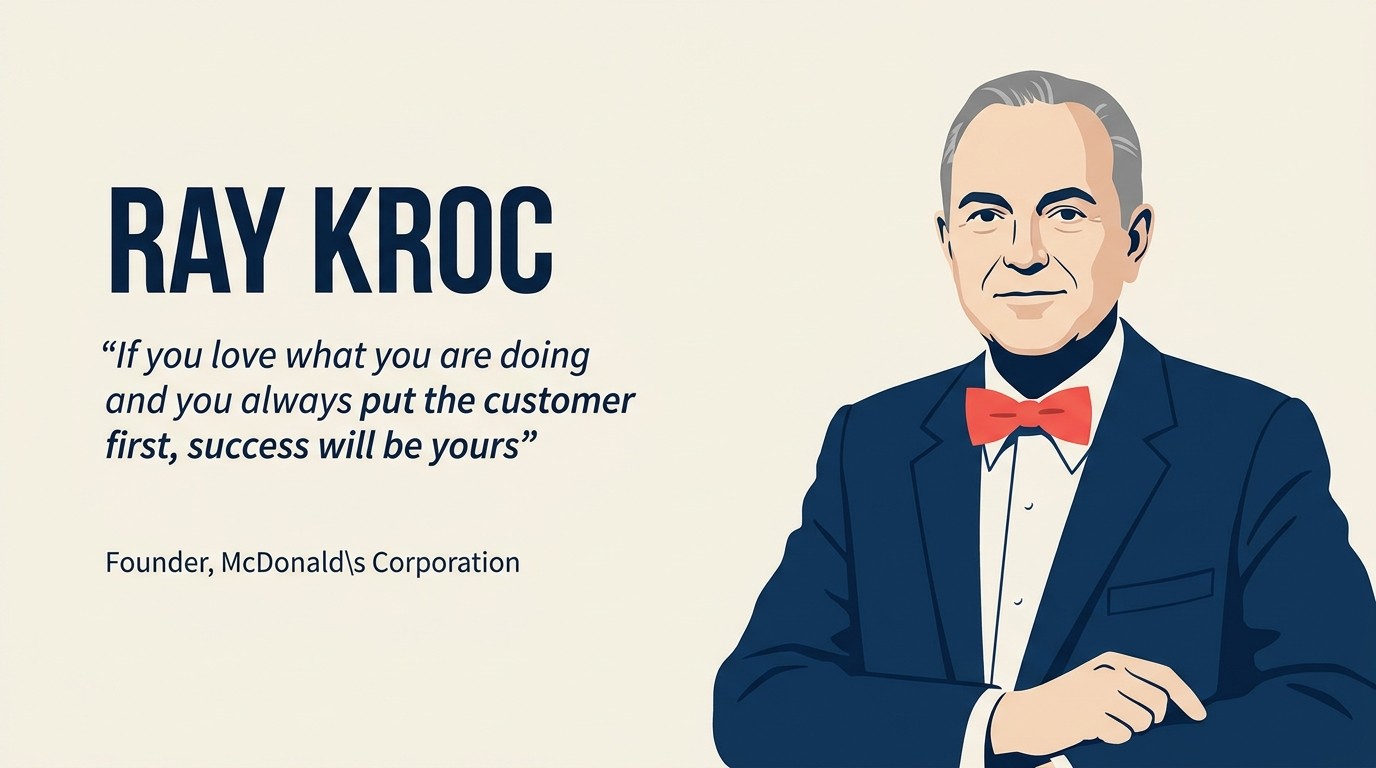
"Jika Anda bekerja hanya untuk uang, Anda tidak akan pernah berhasil. Tetapi jika Anda mencintai apa yang Anda lakukan dan selalu memprioritaskan pelanggan, kesuksesan akan menjadi milik Anda."
Kroc mengatakan ini, dan itu telah diulang cukup sering hingga terdengar dipoles. Apa yang lebih mengungkapkan adalah bagaimana dia benar-benar beroperasi: dia membayar pemasok di bawah suku bunga pasar, beralih dari Coca-Cola ke Pepsi sebentar untuk mengekstrak istilah yang lebih baik (kemudian beralih kembali), dan memperlakukan janji jabat tangan saudara McDonald sebagai opsional. Dia mencintai sistem. Dia kurang sentimen tentang orang di dalamnya.
Kutipan yang lebih jujur: "Keberuntungan adalah dividen keringat. Semakin banyak Anda berkeringat, semakin beruntung Anda." Kroc berusia 52 ketika dia menemukan McDonald. Dia telah menghabiskan 17 tahun dalam penjualan, yang berarti 17 tahun penolakan, kuartal lambat, dan kesepakatan yang tidak tutup. Latar belakang itu membuat dia metodis dengan cara yang pendiri muda sering tidak. Dia telah melihat cukup kegagalan untuk memahami bahwa volume dan konsistensi mengalahkan inspirasi.
Pelajaran yang tidak dikutip: Kroc adalah workaholic yang melewati dua pernikahan sebelum menemukan stabilitas pada ketiga. Dia minum berat selama sebagian besar karirnya. Obsesifitas yang sama yang membuat McDonald menjadi apa itu juga membuat dia orang yang sulit untuk dekat. Profil kepemimpinan cenderung melewatkan bagian ini. Mereka tidak seharusnya. Kualitas yang mendorong kesuksesan profesionalnya adalah kualitas yang sama yang menciptakan kewajaran pribadi. Itu tidak biasa — tetapi layak untuk dinamai dengan jujur.
Di Mana Gaya Ini Rusak
Model pertama-sistem Kroc memiliki langit-langit nyata. Ketika sistem benar, itu berskala dengan indah. Ketika itu salah, itu salah pada 30.000 lokasi secara bersamaan. Howard Schultz berlari ke versi ini di Starbucks — ekspansi retail sistematis Schultz mencapai dinding ketika pengalaman merek menyimpang dari sistem, memaksa retrenchment yang menyakitkan yang mencerminkan apa yang dihadapi McDonald di tahun 2000-an. McDonald menghabiskan puluhan tahun membela standar gizi-nya karena konsistensi yang sama yang menjaga kualitas pada 1965 menjadi kewajiban pada 2005 ketika pelanggan mulai peduli tentang bahan-bahan.
Disiplin pemasok dan franchisee-nya juga menciptakan kerapuhan. Hubungan dibangun murni pada ambang kinerja tidak menghasilkan semacam loyalitas yang membantu Anda menavigasi krisis yang genuinely. Ketika McDonald perlu bergerak cepat pada hal-hal seperti pemesanan digital dan pengiriman pada tahun 2010-an, struktur franchise — dirancang untuk keseragaman, bukan ketangkasan — melambatkannya.
Dan pelajaran saudara McDonald adalah yang nyata: jika pertumbuhan Anda bergantung pada mitra, istilah yang Anda tetapkan di awal mengikuti Anda selama puluhan tahun. Kesediaan Kroc untuk memecahkan semangat kesepakatan asli itu memberinya apa yang dia butuhkan. Tetapi itu juga menjadi cerita orang ceritakan ketika mereka ingin menjelaskan mengapa Anda tidak pernah harus mempercayai mitra korporat tanpa kontrak yang ditandatangani.
Pelajari Lebih Lanjut
- Model Bisnis Franchise: Bagaimana Membangun untuk Replikasi
- Cara Membangun Prosedur Operasi Standar yang Benar-Benar Diikuti
- Negosiasi Rantai Pasokan: Pelajaran dari Operator yang Membangun pada Skala

On this page
- Rincian Gaya Kepemimpinan
- Ciri-Ciri Kepemimpinan Utama
- Doktrin QSC&V
- 3 Keputusan yang Menentukan Ray Kroc sebagai Pemimpin
- 1. Membeli Keluar Saudara McDonald pada 1961
- 2. Menciptakan Hamburger University
- 3. Permainan Real Estat Franchise Realty Corp
- Apa yang Ray Kroc Lakukan dalam Peran Anda
- Bagaimana Rework Mengoperasionalisasi Model Kroc
- Kutipan Terkenal dan Pelajaran Melampaui Ruang Rapat
- Di Mana Gaya Ini Rusak
- Pelajari Lebih Lanjut