¿Qué es la inferencia de AI? Ejecutar modelos de IA en producción
Turn this article into takeaways for your work.


Each assistant summarizes the article only for you and suggests best practices for your work.
Un minorista entrena un modelo de pronóstico de demanda durante seis meses. Los científicos de datos lo validan. La dirección lo aprueba. El modelo está listo. Luego entra en producción y tiene que responder miles de consultas por día, cada una en menos de 200 milisegundos, durante meses o años. Eso es inferencia: el proceso en vivo y continuo de ejecutar un modelo entrenado sobre datos reales para generar resultados reales.
El entrenamiento acapara la mayor parte de la atención en la cobertura de AI. La inferencia es donde reside realmente el valor empresarial, y en 2026 también es donde reside la mayor parte del presupuesto de IA. Los precios de inferencia por token han caído en órdenes de magnitud desde 2022, y el uso ha crecido aún más rápido, de modo que el gasto total en inferencia sigue aumentando aunque el costo unitario siga disminuyendo.
Entrenamiento vs. Inferencia: la distinción fundamental
Entender la inferencia requiere entender lo que no es. El entrenamiento es el proceso de enseñarle a un modelo exponiéndolo a grandes cantidades de datos y ajustando sus parámetros hasta que produzca resultados precisos. El entrenamiento es computacionalmente intensivo, costoso y se realiza con relativa poca frecuencia.
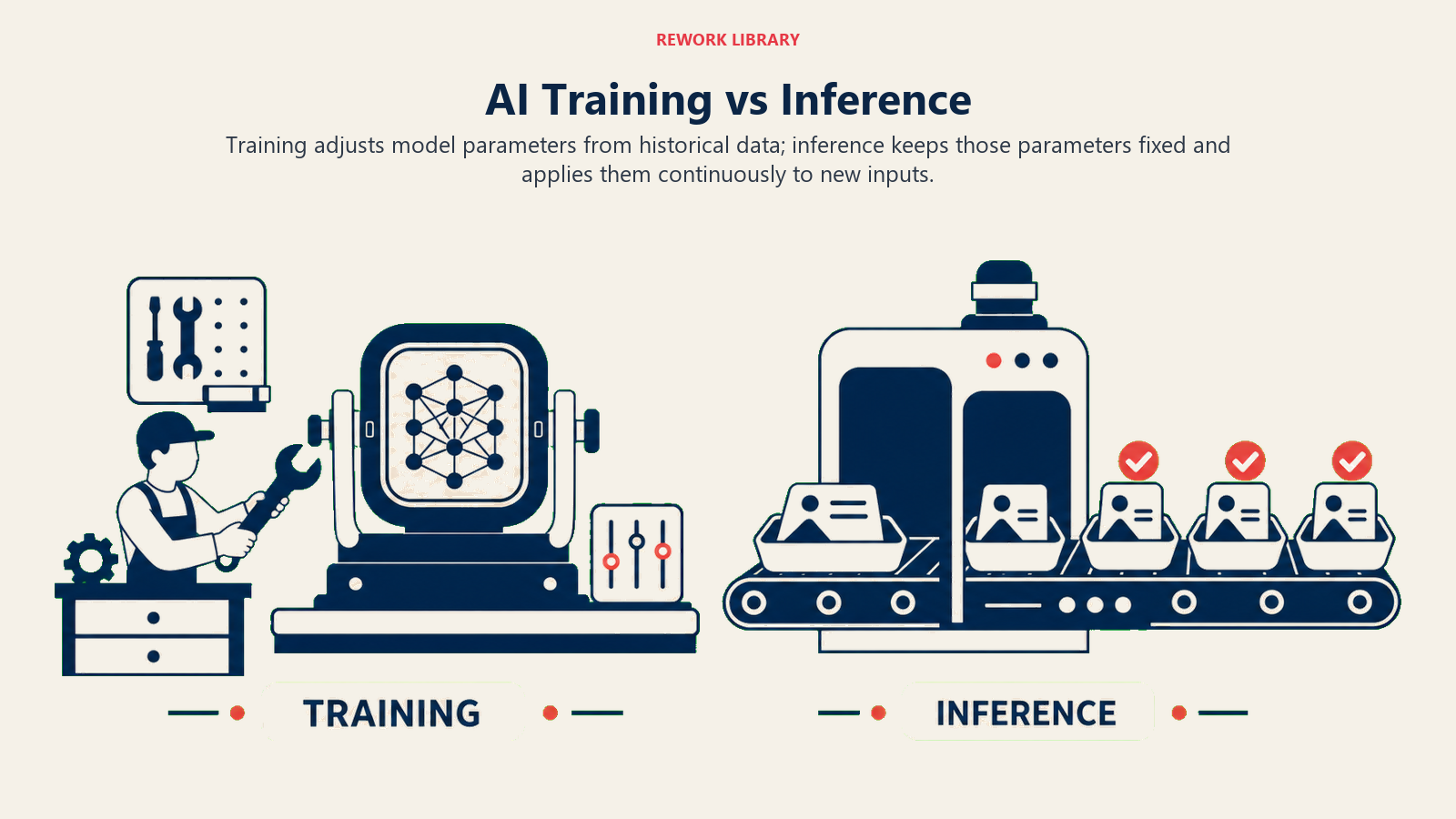
La inferencia es lo opuesto en los tres aspectos. Es el proceso de tomar un modelo cuyos parámetros ya están fijados y ejecutarlo sobre nuevas entradas para generar predicciones. La inferencia ocurre cuando:
- Un cliente escribe una pregunta en un chatbot y obtiene una respuesta
- Un sistema de detección de fraude evalúa una transacción en tiempo real
- Un pipeline de procesamiento de documentos extrae datos de una factura cargada
- Un motor de recomendaciones decide qué mostrarle a un usuario a continuación
El entrenamiento ocurre una vez (o periódicamente). La inferencia ocurre de forma continua, al volumen que demande el sistema de producción. Para la mayoría de las empresas, la inferencia es donde proviene casi todo el costo de cómputo de la IA en producción.
| Dimensión | Entrenamiento | Inferencia |
|---|---|---|
| Propósito | Enseñar al modelo ajustando parámetros con datos históricos | Aplicar los parámetros fijos del modelo a una entrada nueva e inédita |
| Frecuencia | Ocurre una vez y luego periódicamente para reentrenamiento o fine-tuning | Ocurre de forma continua, cada vez que un usuario o sistema consulta el modelo |
| Patrón de cómputo | Cómputo sostenido, a gran escala y en paralelo durante días o semanas | Ráfagas cortas por solicitud, repetidas de miles a miles de millones de veces |
| Forma del costo | Gasto grande, concentrado al inicio, tipo proyecto | Gasto continuo basado en el uso, que crece con la adopción |
Un modelo barato de entrenar pero costoso de ejecutar a escala puede seguir siendo una mala decisión de negocio. Un modelo costoso de entrenar pero barato de ejecutar a alto volumen puede amortizarse muchas veces. La economía de la inferencia, y no los benchmarks de entrenamiento, suele decidir qué modelo termina saliendo a producción.
Cómo funciona la inferencia
Durante la inferencia, el modelo entrenado recibe una entrada, ya sea texto, una imagen, datos estructurados o audio, y la ejecuta a través de sus parámetros aprendidos para producir una salida. Para un large language model, esto significa que la entrada se convierte en tokens, el modelo procesa esos tokens a través de su arquitectura transformer usando sus mecanismos de atención aprendidos, y los tokens de salida se generan secuencialmente hasta que la respuesta está completa. Por eso las respuestas más largas tardan más en producirse: cada token de salida requiere otro paso completo por el modelo.
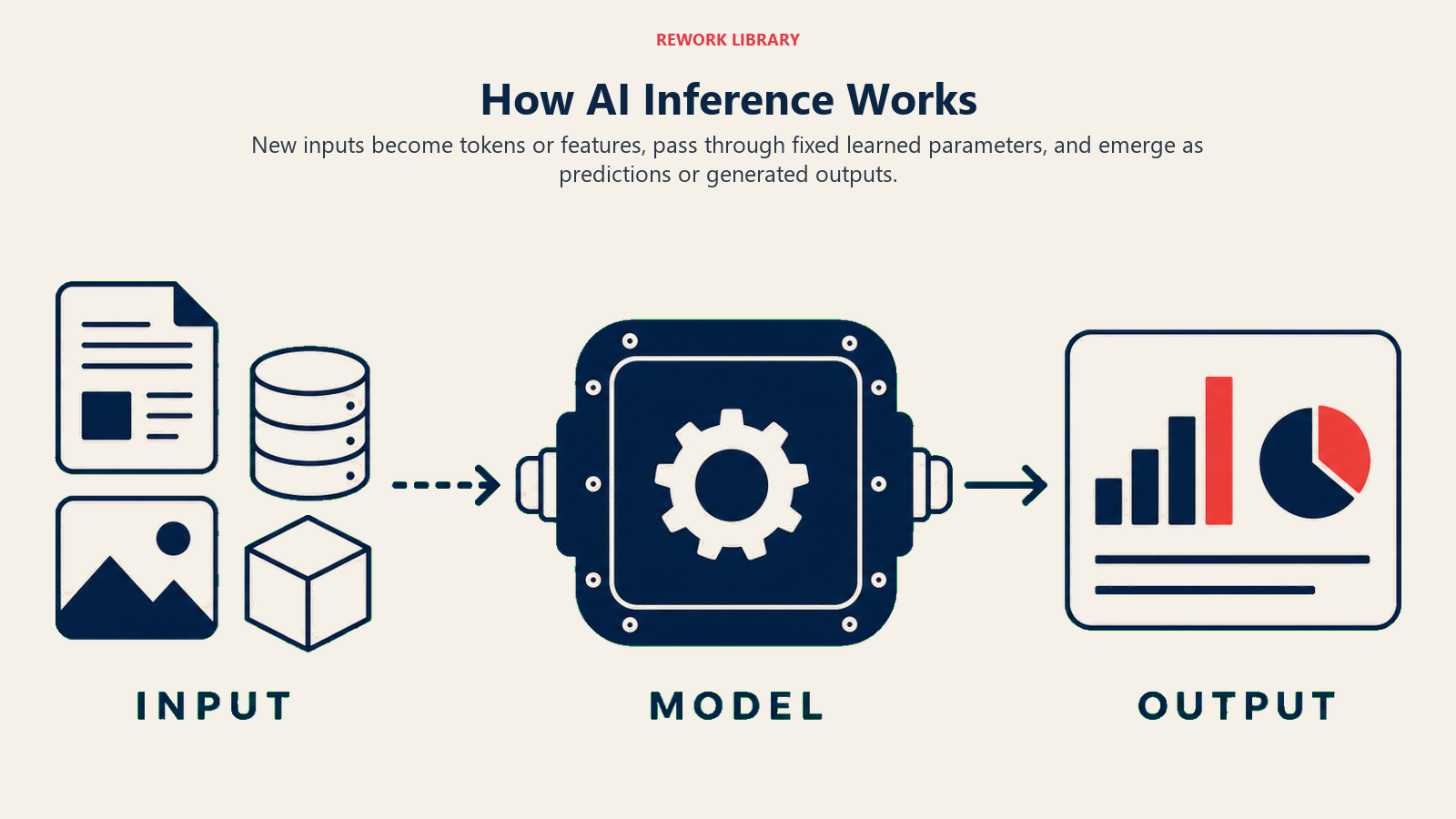
Los parámetros del modelo no cambian durante la inferencia. El modelo no está aprendiendo de la consulta; está aplicando lo que ya aprendió a la nueva entrada. Esta distinción importa en la práctica: significa que el mismo modelo puede atender a miles de usuarios simultáneos sin que ninguno afecte a los demás.
El costo de la inferencia proviene del cómputo requerido para procesar entradas a través de un modelo que puede tener miles de millones o cientos de miles de millones de parámetros. Más parámetros generalmente significa más capacidad y más cómputo por llamada de inferencia.
Las dos dimensiones clave del rendimiento
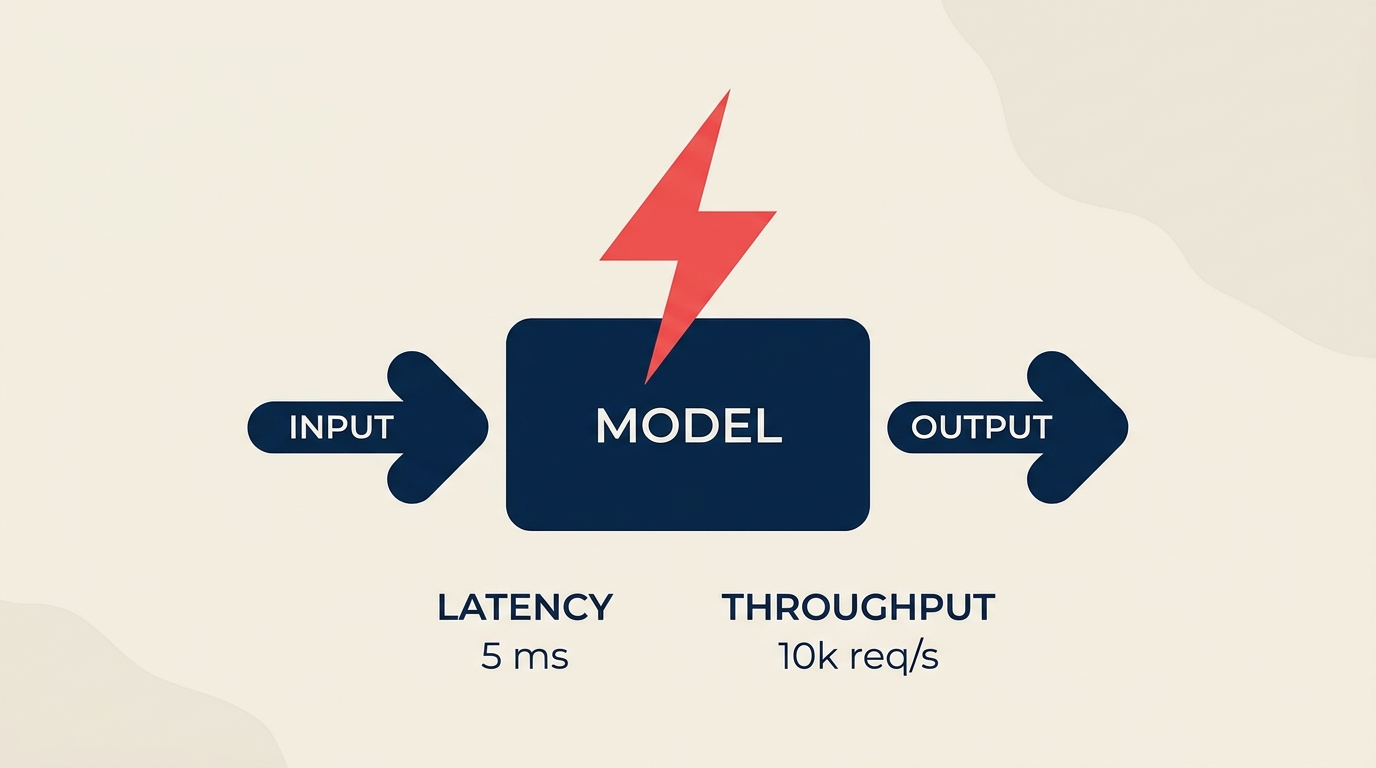
La latencia es cuánto tarda una sola llamada de inferencia de entrada a salida. Los usuarios que esperan una respuesta de un chatbot están experimentando latencia. La AI de imágenes médicas necesita baja latencia cuando un radiólogo espera una lectura. El procesamiento de documentos que ocurre de noche en lotes puede tolerar mayor latencia.
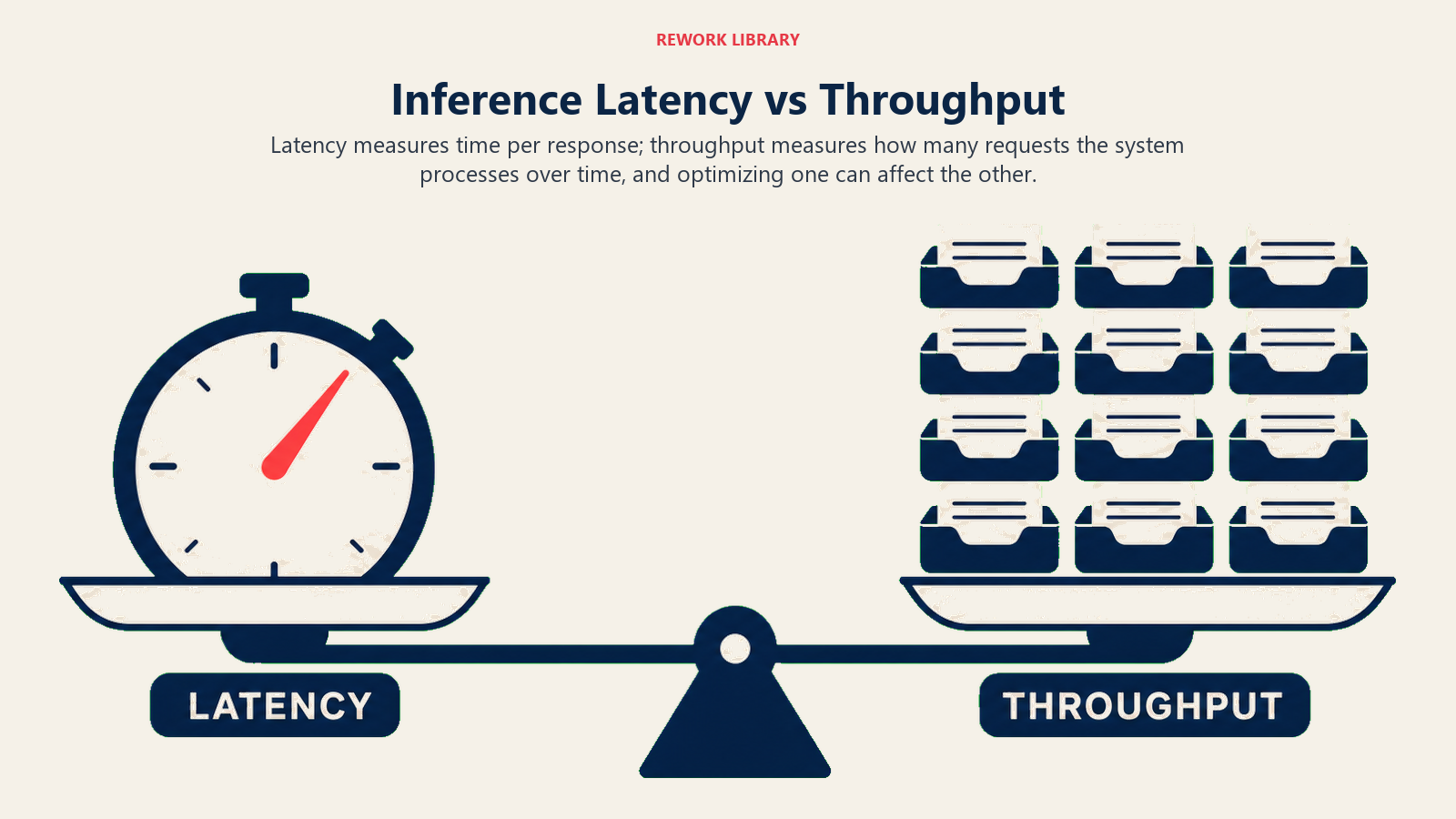
El throughput es cuántas llamadas de inferencia puede manejar un sistema por unidad de tiempo. Un motor de recomendaciones de e-commerce que atiende a millones de compradores necesita alto throughput. Una herramienta de análisis de documentos legales usada por un equipo de 20 analistas tiene requisitos de throughput mucho menores.
Estas dos dimensiones a menudo generan compensaciones entre sí. Agrupar varias solicitudes de inferencia juntas, por ejemplo, aumenta el throughput, ya que el hardware procesa muchas entradas en paralelo, pero aumenta la latencia para cualquier solicitud individual ya que espera a que se llene el lote. El balance correcto depende del caso de uso.
La optimización de inferencia es el campo técnico dedicado a mejorar ambas dimensiones, haciendo que los modelos sean más rápidos y económicos sin sacrificar calidad.
Dónde se ejecuta la inferencia: nube, edge y en el dispositivo
La inferencia se ubica en la cima del stack de AI. Los modelos de fundación son entrenados una vez por laboratorios de AI usando clústeres de cómputo masivos. Las empresas o bien llaman a estos modelos vía API o despliegan modelos localmente en su propio hardware o instancias en la nube, y dónde se ejecuta realmente esa inferencia es una decisión de arquitectura de verdad, no un detalle que se pueda dejar al equipo de infraestructura.
Inferencia en la nube. El modelo se ejecuta en los servidores de un proveedor, normalmente a través de una API. Es la opción por defecto para la mayoría de las empresas que usan modelos de fundación de los grandes laboratorios. Es sencilla de iniciar, escala automáticamente con la demanda y mantiene el costo ligado directamente al uso. Las contrapartidas son el precio continuo por llamada, la dependencia del tiempo de actividad y de las decisiones de precios del proveedor, y la latencia de red entre la solicitud y el centro de datos.
Inferencia autoalojada. La empresa ejecuta el modelo en su propia infraestructura de GPU, en una cuenta de nube privada o en sus instalaciones. Esto da más control sobre la privacidad de los datos, puede ser más económico que los precios de la API a volúmenes muy altos y constantes, y permite una personalización más profunda mediante fine-tuning. También implica asumir la carga operativa: aprovisionar GPUs, gestionar el tiempo de actividad y absorber los picos de demanda sin la elasticidad de un proveedor.
Inferencia en el edge y en el dispositivo. El modelo se ejecuta localmente, en un teléfono, un navegador, un quiosco de venta o un sensor industrial, sin ningún viaje de red. Es la opción de menor latencia y evita que los datos salgan del dispositivo, lo que importa en casos de uso sensibles a la privacidad. La contrapartida es la capacidad: los dispositivos edge tienen memoria y cómputo limitados, por lo que el despliegue en el edge normalmente implica un modelo más pequeño y comprimido en lugar de uno de escala frontier.
Ninguna de estas opciones es correcta para todos los casos. Un chatbot de atención al cliente podría usar inferencia en la nube por la calidad. Una app de inspección en campo con conectividad poco fiable podría necesitar inferencia en el edge para funcionar siquiera. Un flujo de trabajo de salud regulado podría exigir inferencia autoalojada únicamente por razones de residencia de datos.
Las prácticas de MLOps gobiernan cómo se gestiona la inferencia en producción: cómo se versionan y despliegan los modelos, cómo se monitorea el rendimiento, cómo revertir cuando un modelo se comporta inesperadamente y cuándo reentrenar. El monitoreo de modelos es la práctica continua de observar las salidas de inferencia y las métricas de rendimiento para detectar degradación antes de que cause impacto empresarial.
Qué cambió en 2026
Durante años, la conversación sobre la IA estuvo dominada por el entrenamiento: modelos más grandes, ejecuciones de entrenamiento más grandes, titulares más grandes. Ya no es ahí donde están el dinero ni el riesgo. La inferencia se ha convertido en el centro de gravedad operativo y financiero de la IA en producción, por tres razones conectadas.
El uso sigue creciendo más rápido de lo que cae el costo por llamada. Los precios de inferencia han bajado de forma drástica desde finales de 2022, pero la adopción ha crecido aún más rápido, así que el gasto total en inferencia sigue subiendo aunque los costos unitarios se reduzcan.
La inferencia es recurrente; el entrenamiento no. Una ejecución de entrenamiento es un proyecto con inicio y fin. La inferencia se ejecuta durante toda la vida de una funcionalidad desplegada, que en un producto exitoso pueden ser años. Un costo que parece pequeño por llamada se vuelve material cuando se multiplica por millones de solicitudes diarias que se ejecutan indefinidamente.
Los proveedores de infraestructura ya se están reconstruyendo en torno a ella. Los analistas proyectan ahora que las cargas de inferencia superarán al entrenamiento como la demanda dominante en los centros de datos de IA en los próximos años, y los hyperscalers están cambiando cómo y dónde construyen capacidad como resultado directo: los clústeres de entrenamiento van a sitios remotos con gran densidad de energía, mientras que la capacidad de inferencia se acerca cada vez más a donde realmente están los usuarios, para reducir la latencia de red.
La consecuencia práctica para cualquier líder que patrocine trabajo de IA: el modelo que gana el benchmark de entrenamiento no es automáticamente el modelo que debe salir a producción. El modelo cuya economía de inferencia funciona a su volumen real de producción es el que determina si una funcionalidad de IA es un producto sostenible o un piloto costoso.
Datos clave
- El costo de consultar un modelo con rendimiento de nivel GPT-3.5 cayó de $20.00 a $0.07 por millón de tokens entre noviembre de 2022 y octubre de 2024, una caída de más de 280 veces en unos 18 meses, según el informe Stanford AI Index 2025.
- Los precios de inferencia de LLM a un nivel de rendimiento fijo han caído a una tasa mediana de aproximadamente 50x por año, acelerándose a cerca de 200x por año en los datos desde enero de 2024, según el análisis de Epoch AI sobre las tendencias de precios de inferencia.
- Se proyecta que la inferencia superará al entrenamiento como la carga de cómputo de IA dominante hacia 2030, con más de la mitad de todo el cómputo de IA y entre el 30 y el 40 por ciento de la demanda total de los centros de datos, según el análisis de McKinsey sobre los cambios en las cargas de trabajo de IA.
- El 49 por ciento de las grandes empresas reportó que la mayor parte o casi todo su cómputo es impulsado por inferencia en 2025, frente al 29 por ciento del año anterior, según la actualización de mitad de año 2025 del mercado de LLM de Menlo Ventures.
- El gasto de Anthropic en 2025 incluyó aproximadamente $2.7 billion en cómputo de inferencia y $4.1 billion en cómputo de I+D (entrenamiento), de un total de $9.7 billion en gastos, según el análisis de Epoch AI sobre el gasto de las empresas de IA, basado en reportes de The Information.
- Se proyecta que el mercado global de inferencia de IA crecerá de $106.15 billion en 2025 a $254.98 billion en 2030, superando al entrenamiento como la categoría de gasto dominante en la IA empresarial, según una investigación de MarketsandMarkets citada por Forbes.
El costo empresarial de la inferencia
Para las organizaciones que utilizan AI a escala, el costo de inferencia es una línea presupuestaria material. Los impulsores de costo incluyen:
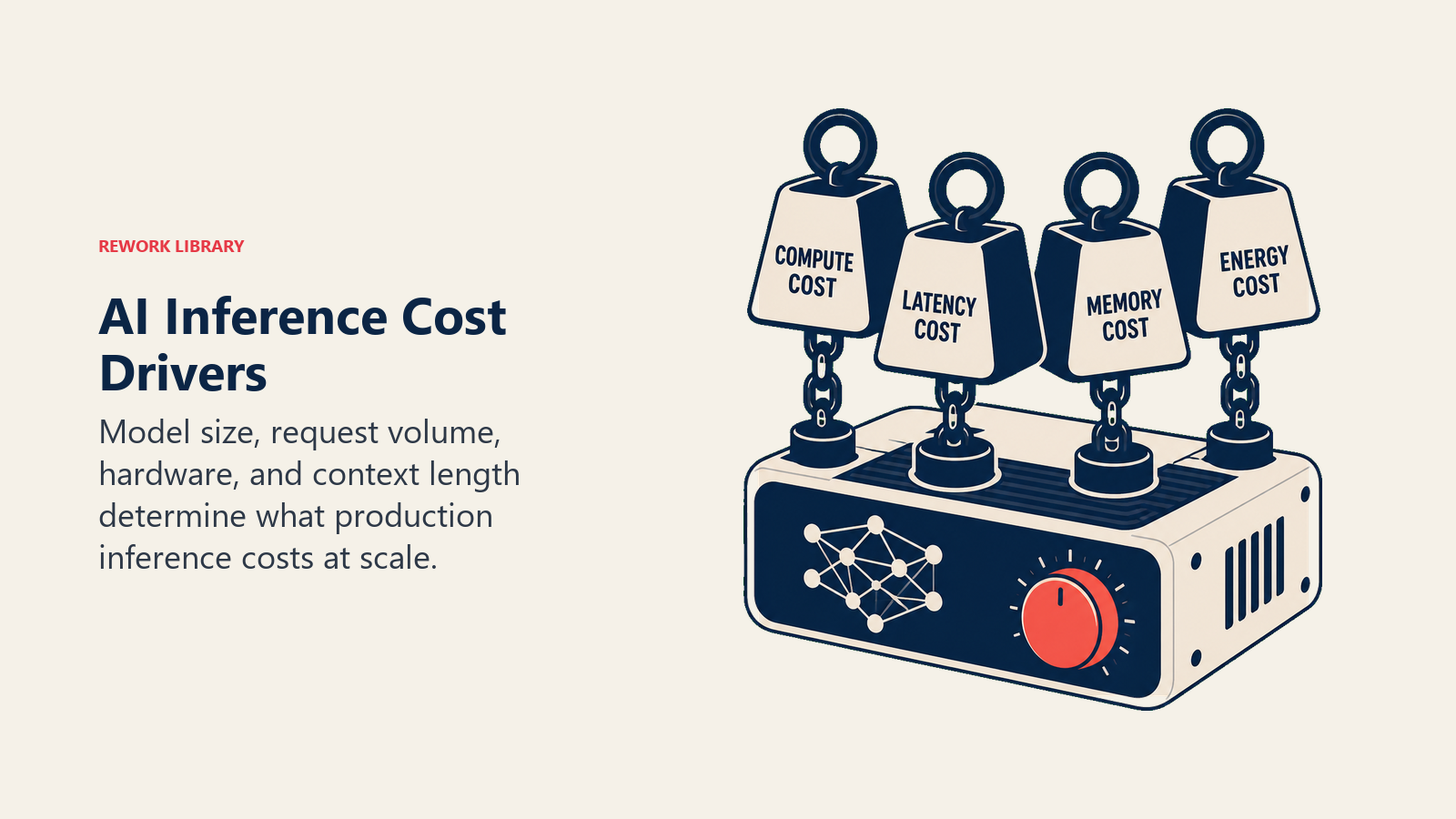
El tamaño del modelo. Los modelos más grandes requieren más cómputo por llamada de inferencia. Un modelo de 70 mil millones de parámetros cuesta aproximadamente 10 veces más ejecutar que un modelo de 7 mil millones, aunque las diferencias de calidad pueden justificar el costo para algunos casos de uso.
El volumen de solicitudes. Los costos de inferencia escalan con el uso. Un sistema que maneja 10 millones de llamadas de inferencia diarias cuesta proporcionalmente más ejecutar que uno que maneja 10.000.
El hardware. La inferencia en GPU es más rápida pero más costosa que la inferencia en CPU. Los chips especializados de inferencia (como los TPUs de Google o AWS Inferentia) pueden mejorar la eficiencia de costos para cargas de trabajo específicas.
El tamaño de la ventana de contexto. Para los modelos de lenguaje, las entradas más largas cuestan más procesar porque el costo de inferencia escala con el conteo de tokens. Los sistemas que pasan grandes cantidades de contexto en cada llamada enfrentan costos proporcionalmente más altos.
Como el costo de inferencia escala directamente con el uso, es el lugar de mayor apalancamiento para recortar el gasto en IA sin tocar el alcance del producto. Las técnicas principales de optimización son:
Cuantización. Reducir la precisión numérica de los pesos del modelo, por ejemplo de punto flotante de 32 bits a enteros de 8 o 4 bits, reduce la huella de memoria del modelo y acelera el cómputo, normalmente con una pequeña pérdida de precisión. Consulte Cuantización para ver la mecánica.
Destilación. Entrenar un modelo "alumno" más pequeño para imitar los resultados de un modelo "maestro" más grande. El resultado se ejecuta más rápido y a menor costo, conservando la mayor parte de la capacidad del maestro en las tareas para las que fue destilado.
Agrupamiento (batching). Agrupar varias solicitudes de inferencia para que el hardware las procese en paralelo en lugar de una a una. Esto eleva el throughput de forma sustancial, a costa de algo de latencia adicional para cada solicitud, ya que cada una espera a que se llene el lote.
Caché. Almacenar los resultados de consultas comunes o repetidas para que el modelo no tenga que procesar dos veces la misma entrada. En aplicaciones con mucho tráfico repetido, la caché puede eliminar de raíz una gran parte de las llamadas de inferencia.
Decodificación especulativa. Un modelo "borrador" pequeño y rápido predice varios tokens por adelantado, y el modelo más grande los verifica en una sola pasada en lugar de generar cada token uno a uno por su cuenta. Cuando las conjeturas del modelo borrador son buenas, esto reduce el número de pasadas completas y costosas del modelo necesarias para producir una respuesta.
La mayoría de los sistemas de producción combinan varias de estas técnicas a la vez. Ninguna exige cambiar a un modelo fundamentalmente distinto o de menor calidad; cambian la eficiencia con la que se sirve un modelo existente. Las organizaciones que las aplican de forma sistemática suelen reportar reducciones de costo del 50 al 90 por ciento frente a un despliegue sin optimizar.
Inferencia en tiempo real vs. Inferencia por lotes
No toda la inferencia ocurre en tiempo real. Muchas aplicaciones de AI valiosas operan en un horario de lotes en lugar de responder a solicitudes en vivo.
La inferencia en tiempo real maneja solicitudes a medida que llegan, con latencia de milisegundos a segundos. Los chatbots, la detección de fraude, la personalización en tiempo real y los asistentes de voz requieren este modo.
La inferencia por lotes procesa grandes conjuntos de datos en un horario, a menudo de noche o bajo demanda. El enriquecimiento de CRM que se ejecuta cada noche para puntuar todos los leads, el procesamiento de documentos que trabaja a través de una cola de archivos cargados, o las cargas de trabajo de análisis que generan reportes semanales, todos encajan en el patrón de lotes. La inferencia por lotes es generalmente más económica por llamada de inferencia porque puede aprovechar estrategias de agrupamiento eficientes sin la restricción de los requisitos de latencia orientados al usuario.
La elección entre modos es una decisión de producto y arquitectura, no puramente técnica. Muchos casos de uso que inicialmente parecen requerir inferencia en tiempo real pueden rediseñarse como casi-en-tiempo-real o por lotes sin una pérdida significativa de valor empresarial, a un costo significativamente menor.
Lo que los líderes empresariales necesitan entender
Los términos de AI que reciben más atención, datos de entrenamiento, arquitectura del modelo, puntuaciones de benchmark, todos se relacionan con el potencial de un modelo. La inferencia es donde ese potencial se traduce en resultados empresariales o no lo hace. Tres consecuencias prácticas se derivan directamente de cómo funciona la inferencia, y las tres pertenecen a la lista de verificación de un líder antes de aprobar un despliegue de IA, no después.
El costo escala con el éxito, lo que corta en ambos sentidos. El costo de entrenamiento es aproximadamente fijo una vez terminado el proyecto. El costo de inferencia sube directamente con la adopción: cuanto más útil es una funcionalidad, más se usa y más cuesta ejecutarla. Una funcionalidad que parece asequible en un piloto con 50 usuarios puede convertirse en una partida presupuestaria real con 50,000 usuarios.
La latencia determina si las personas realmente usan la funcionalidad. Los usuarios adaptan su comportamiento a la rapidez con la que responde una funcionalidad de IA. Las herramientas interactivas que tardan más de unos segundos suelen ver caer su adopción, y una vez que los usuarios aprenden a esquivar una funcionalidad lenta, a menudo no regresan aunque se corrija.
Dónde se ejecuta la inferencia afecta quién puede ver sus datos. La inferencia en la nube a través de una API de terceros significa que las solicitudes, y todo el contexto que contienen, salen de su entorno. Para cargas de trabajo reguladas o sensibles, a veces eso es inaceptable, y por eso existe la inferencia autoalojada o en el edge como alternativa, incluso con un mayor costo operativo.
Al evaluar proveedores de AI o opciones de construcción, pregunte sobre el costo de inferencia por llamada a su volumen esperado, la latencia bajo carga real de producción, cómo escala el costo de inferencia con el uso y adónde van realmente sus datos cuando se ejecuta el modelo. Esos son los números que determinan si los casos de uso de AI son económicamente sostenibles.
Conceptos de AI relacionados
- Optimización de Inferencia - Técnicas para hacer la inferencia más rápida y económica
- MLOps - Gestionar el despliegue de modelos y los pipelines de inferencia
- AI en el Edge - Ejecutar inferencia en hardware local en lugar de la nube
- Monitoreo de Modelos - Rastrear el rendimiento de la inferencia a lo largo del tiempo
- Latencia - Por qué el tiempo de respuesta determina si las funcionalidades de IA se adoptan en producción
- Ventana de Contexto - Impulsor clave del costo de inferencia para modelos de lenguaje
- Arquitectura Transformer - Cómo la mayoría de los modelos modernos computan la inferencia
- Cuantización - Reducir el tamaño del modelo para bajar el costo de inferencia
- Large Language Models - La categoría de modelos en torno a la cual gira la mayor parte de la discusión sobre inferencia
- Modelos de Fundación - Los modelos base contra los que las empresas ejecutan inferencia vía API o autoalojamiento
Recursos externos
- NVIDIA Inference Platform - Infraestructura estándar de la industria para inferencia de modelos a gran escala
- Hugging Face Inference Endpoints - Guía para el serving de modelos en producción y los compromisos de inferencia
- Google AI Inference Best Practices - Guía práctica para la arquitectura y optimización de inferencia
Preguntas frecuentes sobre la inferencia de AI
¿Qué es la inferencia de AI?
La inferencia de AI es el proceso de ejecutar un modelo de machine learning entrenado sobre nuevas entradas para generar predicciones o resultados. Es la fase de producción de la AI, donde un modelo entrenado con datos históricos se aplica a datos en vivo para crear valor: respondiendo consultas de clientes, puntuando leads, detectando fraude o generando documentos.
¿Cuál es la diferencia entre entrenamiento e inferencia?
El entrenamiento es el proceso de enseñarle a un modelo exponiéndolo a grandes conjuntos de datos y ajustando sus parámetros. La inferencia es ejecutar el modelo entrenado sobre nuevas entradas sin cambiar esos parámetros. El entrenamiento ocurre con poca frecuencia y requiere cómputo masivo. La inferencia ocurre continuamente al volumen de producción, que es donde proviene la mayor parte del costo continuo de infraestructura de AI.
¿Por qué la inferencia se ha vuelto más costosa de gestionar que el entrenamiento para muchas empresas?
El entrenamiento es un costo de proyecto puntual u ocasional. La inferencia es un costo recurrente que escala directamente con cuántas personas usan una funcionalidad y con qué frecuencia. A medida que crece la adopción, crece el gasto en inferencia, aunque el costo por llamada individual siga cayendo. Varios informes de la industria de 2025 encontraron que la inferencia representa ahora la mayor parte del gasto continuo en cómputo de IA, tanto en grandes empresas como en startups nativas de IA.
¿Por qué importa la latencia de inferencia para las empresas?
La latencia determina qué tan responsiva se siente una experiencia impulsada por AI para los usuarios. Las aplicaciones orientadas al cliente, como chatbots, recomendaciones en tiempo real y asistentes de voz, necesitan baja latencia para evitar frustrar a los usuarios. Las herramientas internas utilizadas por empleados típicamente tienen mayor tolerancia a la latencia. Definir correctamente el requisito de latencia es una parte importante de las decisiones de arquitectura de inferencia.
¿Debe ejecutarse la inferencia en la nube o en el dispositivo?
Depende de las necesidades de latencia, la sensibilidad de los datos y el volumen. La inferencia en la nube es la más sencilla de desplegar y escala automáticamente, lo que se adapta a la mayoría de las aplicaciones empresariales. La inferencia en el dispositivo o en el edge elimina por completo la latencia de red y mantiene los datos en local, lo que importa para casos de uso sensibles a la privacidad o con conectividad limitada, pero normalmente requiere un modelo más pequeño y menos capaz.
¿Es la inferencia de AI siempre en tiempo real?
No. La inferencia en tiempo real responde a las solicitudes a medida que llegan, que es lo que necesitan los chatbots, la detección de fraude y la personalización en vivo. La inferencia por lotes procesa grandes volúmenes de datos en un horario, a menudo de noche, y suele ser más económica por llamada porque no tiene que cumplir un requisito de latencia en vivo. Muchas cargas de trabajo que parecen necesitar tiempo real pueden ejecutarse por lotes o casi en tiempo real sin una pérdida real de valor empresarial.
¿Cómo pueden las organizaciones reducir los costos de inferencia?
Las principales palancas son usar modelos más pequeños donde la calidad lo permita, aplicar cuantización para reducir el tamaño del modelo, destilar un modelo más pequeño a partir de uno más grande, agrupar solicitudes donde las restricciones de latencia lo permitan, cachear respuestas comunes y usar decodificación especulativa en modelos de lenguaje. La optimización de inferencia es una disciplina técnica completa; muchas organizaciones ven reducciones de costo del 50-90% mediante optimización sistemática sin cambiar el modelo subyacente.

Co-Founder, Rework.com
On this page
- Entrenamiento vs. Inferencia: la distinción fundamental
- Cómo funciona la inferencia
- Las dos dimensiones clave del rendimiento
- Dónde se ejecuta la inferencia: nube, edge y en el dispositivo
- Qué cambió en 2026
- Datos clave
- El costo empresarial de la inferencia
- Inferencia en tiempo real vs. Inferencia por lotes
- Lo que los líderes empresariales necesitan entender
- Conceptos de AI relacionados
- Recursos externos