Was ist KI-Personalisierung? Individuelle Erlebnisse im großen Maßstab
Turn this article into takeaways for your work.


Each assistant summarizes the article only for you and suggests best practices for your work.
Netflix schätzt, dass seine Personalisierungs-Engine durch gebundene Abonnements jährlich über 1 Milliarde Dollar wert ist. Amazon führt etwa 35% seines Umsatzes auf seine Empfehlungssysteme zurück. Das sind Zahlen im Verbrauchermaßstab, aber die zugrunde liegende Fähigkeit, mithilfe von KI anzupassen, was jede Person sieht, liest und erlebt, basierend darauf, wer sie sind und was sie getan haben, ist nun für mittelgroße Unternehmen über Plattformen und APIs zugänglich, die kein ML-Team für den Betrieb benötigen.
Für Führungskräfte ist KI-Personalisierung primär kein technisches Thema. Es ist die Frage, wo individuelle Anpassung genug Wert schafft, um die erforderliche Investition in Daten, Werkzeuge und Governance zu rechtfertigen.
Was KI-Personalisierung ist
KI-Personalisierung ist der Einsatz von Machine-Learning-Modellen, um Inhalte, Produktempfehlungen, Preisgestaltung, Nachrichten oder Nutzererlebnisse basierend auf ihrem Verhalten, ihren Eigenschaften oder ihrem Kontext automatisch an einzelne Nutzer anzupassen.
Das Schlüsselwort ist „automatisch". Manuelle Segmentierung (alle Kunden in Segment A sehen Version X) ist keine Personalisierung im KI-Sinne. KI-Personalisierung generiert zur Laufzeit unterschiedliche Erlebnisse für jeden Einzelnen, basierend auf Modellen, die aus akkumulierten Verhaltensdaten lernen.
Die Eingaben variieren je nach Anwendung: Kaufhistorie, Browsermuster, Suchanfragen, Content-Engagement, demografische Merkmale, Echtzeit-Kontext (Standort, Gerät, Tageszeit) oder angegebene Präferenzen. Die Ausgaben variieren ebenfalls: priorisierte Produktlisten, maßgeschneiderte Content-Feeds, individuelle Preisgestaltung, angepasste E-Mail-Texte, Gesprächston oder Feature-Prominenz.
Für Führungskräfte: KI-Personalisierung verwandelt „wir haben 10.000 Kunden" in „wir haben 10.000 verschiedene Beziehungen, die jeweils darauf abgestimmt sind, worauf diese spezifische Person reagiert."
Die drei Ebenen der KI-Personalisierung
Personalisierung liegt auf einem Spektrum der Raffinesse. Zu verstehen, wo sich Ihr aktueller Zustand und Ihr Zielzustand befinden, hilft dabei, den tatsächlich erforderlichen Investitionsbedarf abzugrenzen.
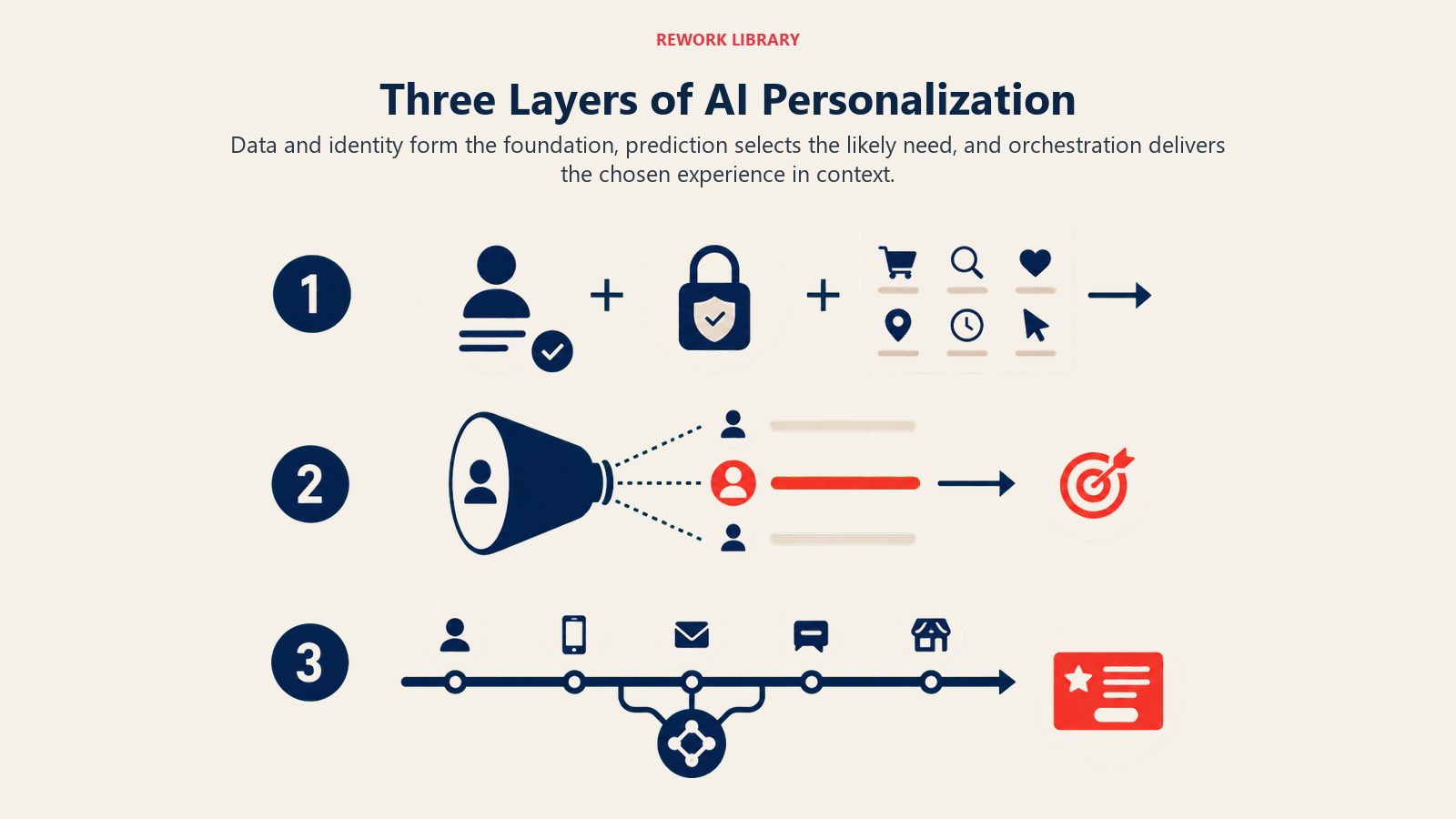
Ebene 1: Kollaboratives Filtern (Verhaltensabgleich). Empfehle Artikel, mit denen Nutzer „wie Sie" ebenfalls interagiert haben. Dies ist das Netflix/Amazon-Modell in seinem Kern: Nutzer, die X gesehen haben, haben auch Y gesehen. Es funktioniert gut, wenn Sie große Verhaltensdaten haben (Tausende von Nutzern, viele Interaktionen). Es versagt bei neuen Nutzern (das „Cold-Start-Problem") und bei seltenen Artikeln.
Ebene 2: Inhaltsbasiertes Filtern (Attributabgleich). Empfehle Artikel, die dem ähneln, womit dieser spezifische Nutzer bereits interagiert hat, basierend auf Artikelattributen. Wenn ein Nutzer drei Artikel über Enterprise-Sicherheit liest, zeig ihm mehr Enterprise-Sicherheitsinhalte. Das funktioniert auch mit begrenzten Verhaltensdaten, erfordert aber strukturierte Inhaltsattribute.
Ebene 3: KI-gesteuerte Personalisierung (multimodal, in Echtzeit). Verwende Machine-Learning-Modelle, die Verhaltenssignale, Inhaltsattribute, kontextuelle Merkmale und Echtzeit-Signale (was der Nutzer gerade getan hat) kombinieren, um bei der Abfrage individualisierte Vorhersagen zu erstellen. Dies beinhaltet das Generieren personalisierter Inhalte mit Generativer KI, nicht nur die Auswahl aus vorhandenen Inhalten. Diese Ebene erfordert eine bedeutende ML-Infrastruktur und Datenpipelines.
Die meisten mittelgroßen Unternehmen beginnen auf Ebene 1 oder 2 mit plattformintegrierten Personalisierungstools und erreichen Ebene 3 erst, wenn der Business Case für benutzerdefinierte ML-Investitionen klar ist.
Wo messbarer ROI erzielt wird
Personalisierung hat in bestimmten Kontexten nachgewiesene Auswirkungen. Die klarsten ROI-Fälle:
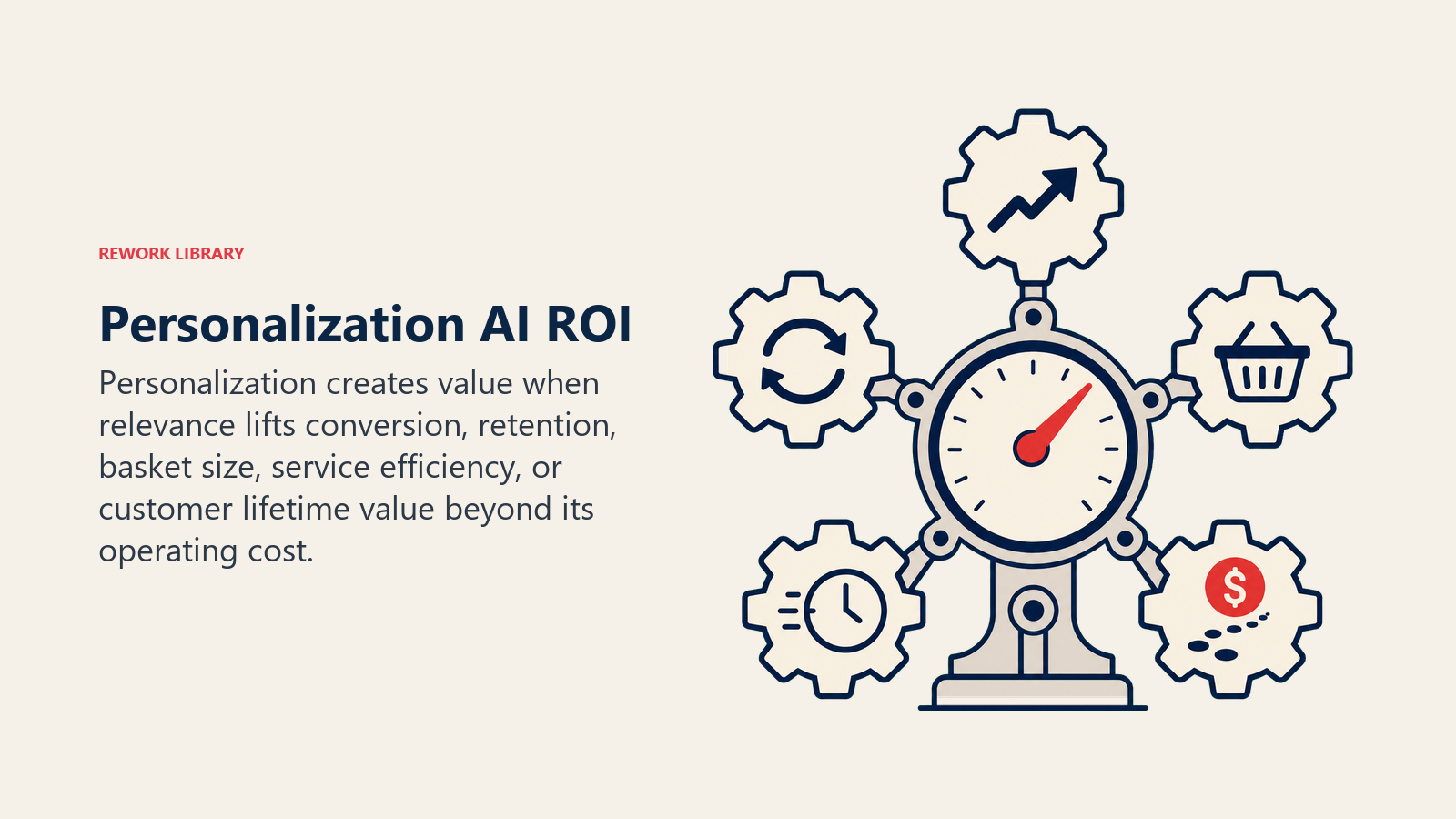
E-Commerce-Produktempfehlungen. Personalisiertes Produkt-Ranking und Cross-Sell-Empfehlungen treiben konsistent einen Conversion-Lift von 10-30% gegenüber statischen oder nach Popularität sortierten Darstellungen. Dies ist der ausgereifteste und am besten dokumentierte Personalisierungsanwendungsfall.
E-Mail- und Marketing-Inhalte. Personalisierte Betreffzeilen, Inhaltsauswahl und Sendezeitoptimierung erhöhen die Öffnungsraten durchschnittlich um 15-25%. Bei hohen Listen-Volumina summiert sich das erheblich.
Suche und Content-Discovery. Die Personalisierung des Suchergebnis-Rankings (nicht nur Keyword-Matching, sondern Sortierung nach vorhergesagter Relevanz für diesen Nutzer) reduziert die Zeit bis zum Fund und verbessert das Engagement. Enterprise-Wissensdatenbank-Tools wenden dies zunehmend an.
Customer Success und Kundenbindung. Der Einsatz von Predictive Analytics zur Identifizierung gefährdeter Kunden und zur Personalisierung von Timing und Messaging der Ansprache hat nachweislich den Churn in B2B-Kontexten des Mittelstands um 5-15% reduziert.
Sales Enablement. Die Personalisierung der Inhalte, die ein Vertriebsmitarbeiter einem Interessenten präsentiert (basierend auf Unternehmensgröße, Branche, Deal-Stage und Engagement-Verlauf), verbessert die Abschlussraten und verkürzt Verkaufszyklen.
Das Muster über diese Fälle hinweg: Personalisierung funktioniert am besten, wenn ein ausreichendes Verhaltenssignal vorhanden ist, wenn der Auswahlraum groß genug ist, sodass generisches Ranking eine wesentliche Verbesserungsmöglichkeit darstellt, und wenn die individuelle Variation in den Präferenzen groß ist.
Die zugrunde liegenden Technologien
Sie müssen die Mathematik nicht verstehen, aber das Kennen des Technologievokabulars hilft bei Anbieterbeurteilungen und technischen Gesprächen.
Embeddings. Die Grundlage der meisten modernen Empfehlungssysteme. Nutzer und Artikel werden als Vektoren in einem gemeinsamen mathematischen Raum dargestellt, wo ähnliche Nutzer oder Artikel nah beieinander liegen. Personalisierte Empfehlungen sind im Wesentlichen „finde Artikel, die am nächsten am Vektor dieses Nutzers sind."
Predictive-Analytics-Modelle. Klassifizierungs- und Regressionsmodelle, die individuelle Ergebnisse vorhersagen (Kaufwahrscheinlichkeit, Churn-Wahrscheinlichkeit, erwarteter Lifetime-Value). Diese steuern Personalisierungsentscheidungen („zeige diesem Nutzer das Upgrade-Angebot, weil er eine 73%ige Wahrscheinlichkeit zur Konversion hat").
Generative KI für Content-Anpassung. Large Language Models können dynamisch personalisierte Inhalte generieren (angepasste E-Mail-Texte, individualisierte Erklärungen, maßgeschneiderte Produktbeschreibungen), anstatt nur aus einem festen Bestand auszuwählen. Dies ermöglicht Personalisierung in textlastigen Kontexten, wo Auswahlansätze aus dem Katalog nicht funktionieren.
Echtzeit-Feature-Pipelines. Personalisierung, die auf das reagiert, was ein Nutzer gerade getan hat (Echtzeit-Verhaltenssignal), erfordert Dateninfrastruktur, die Nutzerprofile in Millisekunden aktualisieren kann. Dies ist oft der technisch anspruchsvollste Aspekt fortgeschrittener Personalisierung.
Die zu managenden Risiken
Personalisierung birgt nicht unerhebliche Risiken, die Führungskräfte verantworten und nicht vollständig an technische Teams delegieren sollten.
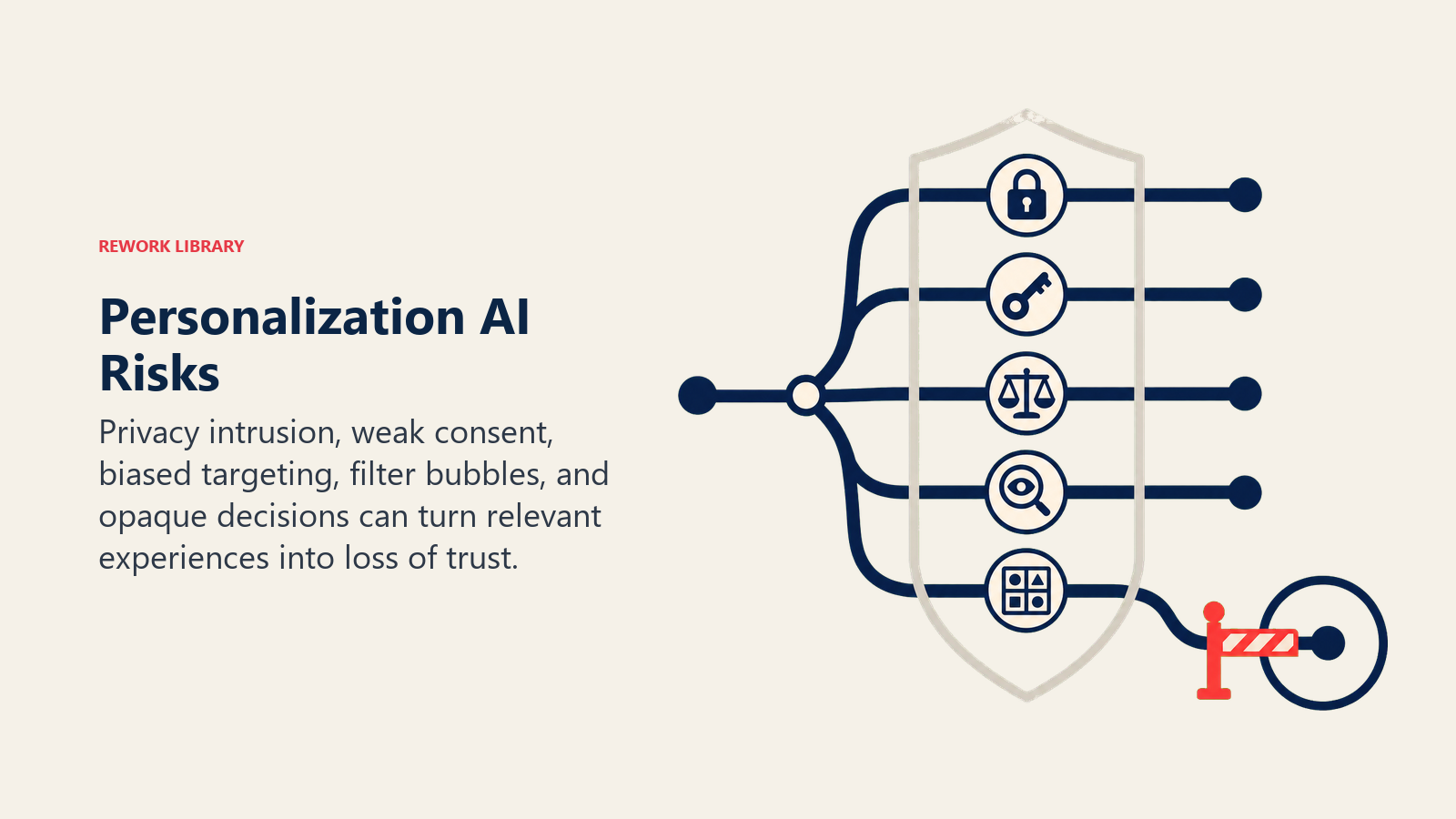
Filterblasen. Wenn Nutzern nur gezeigt wird, womit sie voraussichtlich interagieren werden, können bestehende Überzeugungen verstärkt, die Exposition gegenüber neuen Ideen reduziert und enge Informationsumgebungen geschaffen werden. Bei B2B-Content-Plattformen und Wissenswerkzeugen kann das bedeuten, dass Mitarbeiter aufhören, auf Ideen außerhalb ihres aktuellen Rahmens zu stoßen. Explizite Diversitätsinjektion (gelegentliches Einblenden nicht-vorhergesagter Inhalte) ist die Standardabmilderung.
Datenschutz und Compliance. Personalisierung erfordert die Erhebung von Verhaltensdaten. Unter DSGVO, CCPA und ähnlichen Vorschriften haben Nutzer das Recht zu wissen, welche Daten erhoben werden, darauf zuzugreifen und sich abzumelden. Die rechtliche Grundlage für die Nutzung von Verhaltensdaten muss vor der Implementierung der Personalisierung festgelegt werden, nicht danach.
Bias in KI. Auf historischem Verhalten trainierte Empfehlungsmodelle übernehmen historische Vorurteile. Eine Einstellungsplattform, die personalisiert, welche Kandidaten angezeigt werden, kann vergangene Muster der Unterrepräsentation verstärken, wenn die Trainingsdaten diese widerspiegeln. Fairness-Audits sind eine notwendige Governance-Schicht für jedes Personalisierungssystem in folgenreichen Bereichen.
Transparenzerwartungen. Wenn ein Nutzer einen Preis, eine Produktempfehlung oder einen Inhalt erhält, der sich von dem unterscheidet, was sein Kollege sieht, kann er es bemerken. Mangelnde Transparenz bei der Personalisierung kann das Vertrauen schädigen, wenn sie entdeckt wird. Die Offenlegung, dass Erlebnisse personalisiert sind (und die Bereitstellung von Kontrollen zur Anpassung oder Abmeldung), ist zunehmend eine regulatorische Erwartung und unabhängig von der Regulierung eine gute Praxis.
Governance-Fragen für Führungskräfte
Vor der Implementierung von KI-Personalisierung sind dies die Fragen, die es wert sind, durchgearbeitet zu werden:
Welche Daten erheben wir auf welcher rechtlichen Grundlage? Die Erhebung von Verhaltensdaten erfordert in den meisten Rechtsordnungen eine dokumentierte rechtliche Grundlage.
Was ist der Umfang der Personalisierung? Die Anpassung von Content-Empfehlungen unterscheidet sich von der Personalisierung von Preisgestaltung oder Personalentscheidungen. Verschiedene Umfänge haben verschiedene ethische und rechtliche Implikationen.
Haben wir einen Bias-Audit-Prozess? Wer ist dafür verantwortlich, ihn durchzuführen, und in welchem Rhythmus?
Welche Kontrollen haben die Nutzer? Können sie sehen, warum sie personalisierte Inhalte erhalten? Können sie sich abmelden?
Wer besitzt das Personalisierungssystem? Wenn das System eine folgenreiche Entscheidung trifft (ein Kreditangebot, eine Job-Empfehlung, eine Eskalationsweiterleitung eines Kunden), wer ist dafür verantwortlich?
Wichtige Fakten
- KI-Personalisierung nutzt Machine Learning, um Erlebnisse zur Laufzeit an Einzelpersonen anzupassen, im Unterschied zur manuellen Segmentierung.
- Die drei Ebenen der Personalisierung sind kollaboratives Filtern, inhaltsbasiertes Filtern und KI-gesteuerte multimodale Personalisierung.
- Stärkste ROI-Fälle: E-Commerce-Empfehlungen, E-Mail-Personalisierung, Such-Ranking, Churn-Vorhersage und Sales Enablement.
- Kerntechnologien: Embeddings, Predictive-Modelle, Generative KI für Inhalte, Echtzeit-Feature-Pipelines.
- Aktiv zu managende Hauptrisiken: Filterblasen, Datenschutz-Compliance, Bias und Transparenzerwartungen.
Häufige Fragen
Benötigen wir ein Data-Science-Team, um KI-Personalisierung zu implementieren?
Nicht notwendigerweise, und nicht am Anfang. Viele Plattformen (Salesforce, HubSpot, Klaviyo, Optimizely, Segment) umfassen Personalisierungsfunktionen, die Konfiguration, kein benutzerdefiniertes ML-Engineering erfordern. Die Entwicklung benutzerdefinierter Modelle macht Sinn, wenn Ihr Anwendungsfall so eigenständig ist, dass vorgefertigte Personalisierung ihn nicht abbildet, oder wenn Sie die Datenmenge haben, um Modelle zu trainieren, die generische Plattformmodelle übertreffen.
Wie viele Daten benötigen wir, damit Personalisierung funktioniert?
Der Schwellenwert hängt vom Personalisierungstyp ab. Kollaboratives Filtern benötigt viele Nutzer und viele Interaktionen pro Nutzer (typischerweise jeweils Tausende), um zuverlässige Empfehlungen zu generieren. Inhaltsbasiertes Filtern funktioniert mit viel weniger. Für generative Personalisierung (KI-angepasste Texte) benötigen Sie null historische Daten, weil das Modell auf allgemeiner Sprache trainiert ist, nicht auf Ihren Nutzern. Beginnen Sie mit der Ebene, die Ihre aktuellen Daten unterstützen.
Kann Personalisierung sowohl in B2B als auch in B2C eingesetzt werden?
Ja, und die B2B-Anwendungen wachsen. B2B-Personalisierung konzentriert sich typischerweise auf Account-Level-Signale (Unternehmensgröße, Branche, Stage, Produktnutzung) ebenso wie auf individuelle Signale, und sie ist tendenziell wichtiger in Vertriebs- und Customer-Success-Workflows als in B2C-Empfehlungsszenarien mit hohem Volumen.
Was ist der Unterschied zwischen Personalisierung und Targeting?
Targeting stellt dieselbe Botschaft einer ausgewählten Gruppe vor (Nutzer, die diese Kriterien erfüllen, sehen diese Anzeige). Personalisierung passt die Botschaft oder das Erlebnis an jeden Einzelnen an. Beides ergänzt sich: Sie könnten ein Segment mit einer Kampagne targeten und dann die Kreativität darin personalisieren.
