Build, Borrow, or Buy: Como Escolher um Caminho de Crescimento
Turn this article into takeaways for your work.


Each assistant summarizes the article only for you and suggests best practices for your work.
Toda empresa chega, em algum momento, a uma lacuna de capacidade. A decisão build, borrow, or buy é como você a fecha. Você desenvolve a nova capacidade internamente, faz parceria com quem já a possui ou adquire essa empresa? Acertar essa escolha molda sua posição competitiva por anos. Errar queima orçamento, perde janelas de oportunidade e, às vezes, destrói bons negócios.
Este guia percorre cada caminho, os trade-offs, um processo de decisão real e os erros mais comuns que os executivos cometem.
O que é o framework build, borrow, or buy?
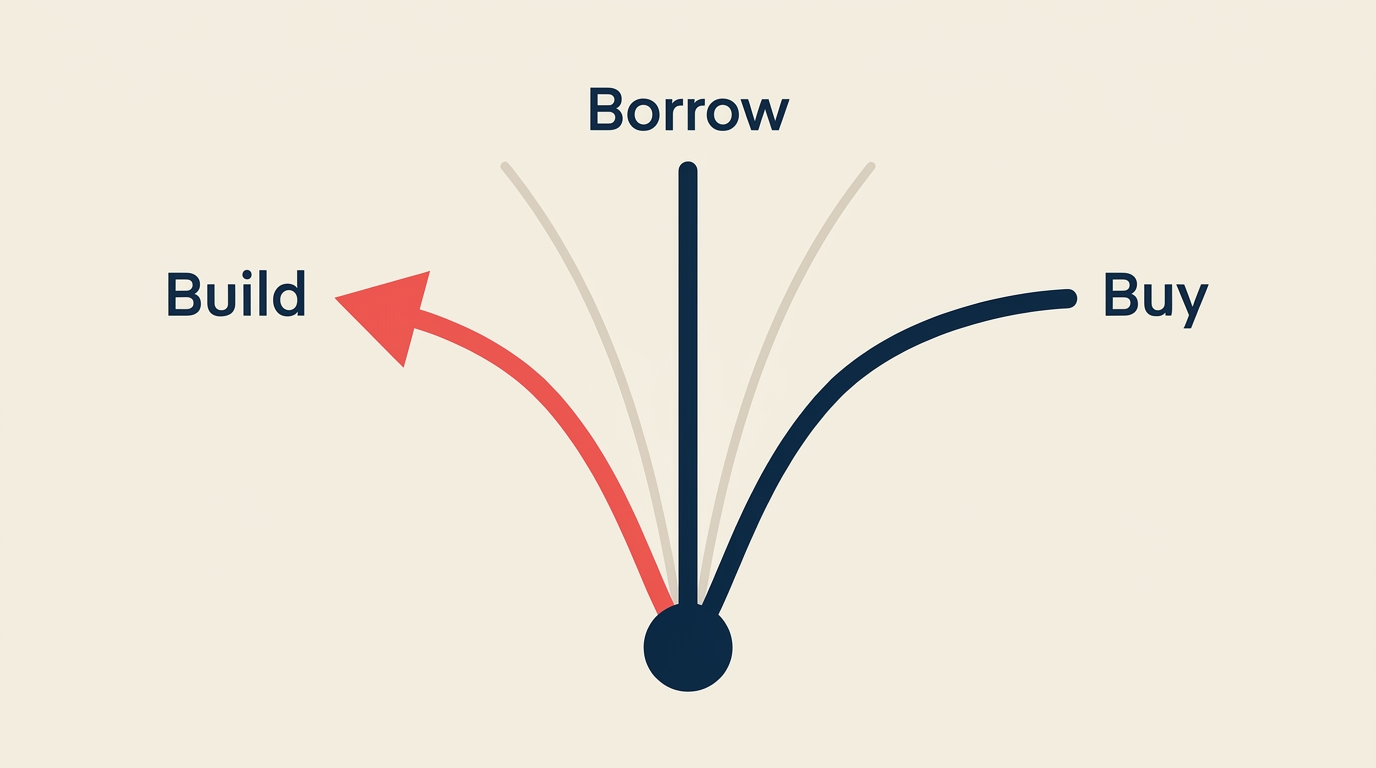
O framework build, borrow, or buy é uma forma estruturada de avaliar três caminhos para adquirir uma nova capacidade ou recurso que sua organização precisa:
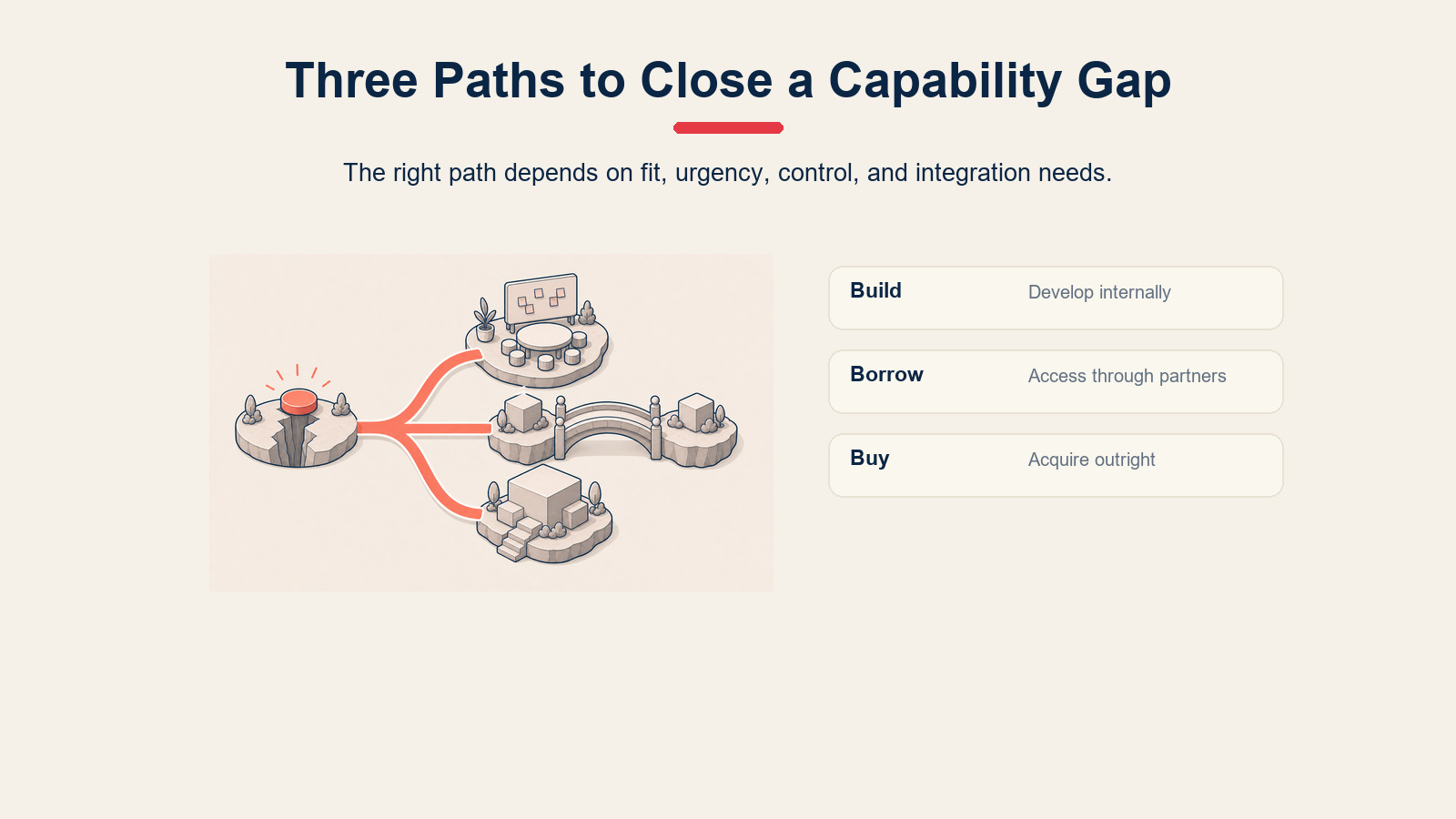
- Build significa desenvolver a capacidade internamente por meio de investimento orgânico, tipicamente pesquisa e desenvolvimento (P&D), contratações e equipes internas de produto.
- Borrow significa acessar a capacidade externamente sem possuí-la, por meio de contratos de licenciamento, joint ventures, alianças estratégicas ou parcerias.
- Buy significa adquirir a capacidade diretamente por meio de fusões e aquisições (M&A), comprando uma empresa que já tem o que você precisa.
O framework, formalizado pelos pesquisadores de estratégia Laurence Capron e Will Mitchell, reformula a construção de capacidades como uma decisão de aquisição de recursos, e não um exercício de visão estratégica pura. A resposta certa depende do que você já tem, da urgência com que precisa da nova capacidade e de quão bem você consegue integrar ou gerenciar relacionamentos externos.
Enquadramento essencial: Build, borrow, or buy não é sobre ambição. É sobre o alinhamento entre o recurso que você precisa e o caminho mais adequado para entregá-lo de forma confiável.
Fatos Principais
- Entre 70% e 90% das aquisições não criam o valor para o acionista para o qual foram desenhadas (McKinsey & Company, 2023). A maioria das falhas se deve ao alinhamento estratégico fraco e a erros de integração, não à mecânica do negócio.
- Empresas que dependem exclusivamente do crescimento orgânico (build) têm desempenho consistentemente abaixo de pares que combinam as estratégias build, borrow e buy ao longo de um horizonte de 10 anos (Harvard Business Review, pesquisa de Capron e Mitchell, 2012).
- Joint ventures e alianças têm uma taxa de falha de cerca de 50% em 5 anos, em grande parte devido a incentivos desalinhados e termos de saída indefinidos (MIT Sloan Management Review, 2021).
Build vs borrow vs buy: uma tabela de decisão real
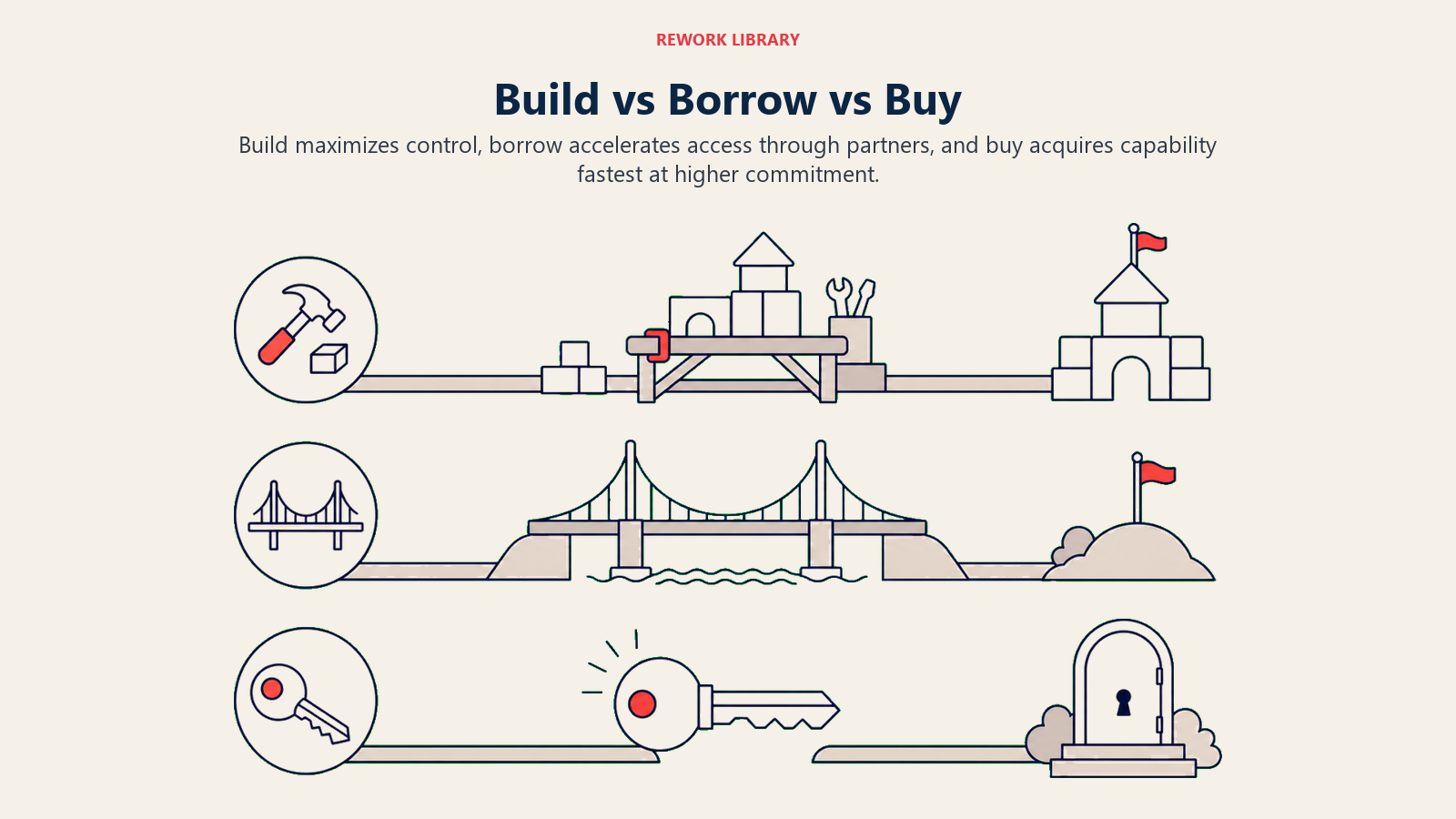
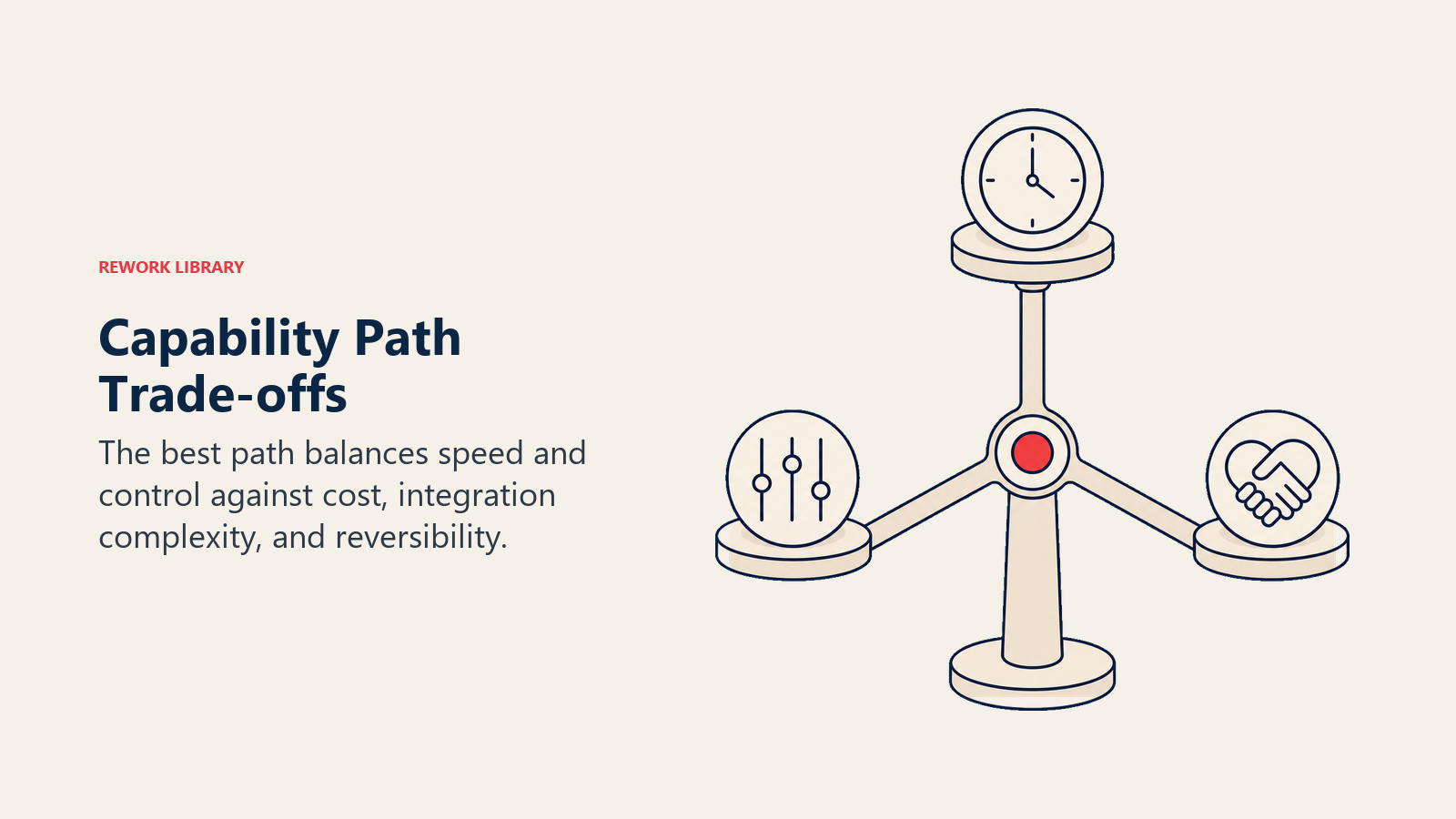
Cada caminho tem um perfil distinto de risco e retorno. Nenhum é intrinsecamente melhor. O contexto decide.
| Dimensão | Build | Borrow | Buy |
|---|---|---|---|
| Velocidade para obter a capacidade | Lenta (tipicamente 12 a 36 meses) | Média (3 a 12 meses) | Rápida (excluindo a integração pós-fechamento) |
| Custo inicial | Baixo a médio (diluído ao longo do tempo) | Baixo a médio (taxas de licenciamento, configuração de JV) | Alto (prêmio de aquisição + integração) |
| Custo contínuo | Alto (P&D, quadro de pessoal, infraestrutura) | Médio (gestão de parceiros, royalties) | Médio (integração, retenção) |
| Controle sobre a capacidade | Total | Parcial (depende do acordo) | Total (após a integração) |
| Perfil de risco | Risco de execução, risco de tempo de entrada no mercado | Risco do parceiro, risco de vazamento de IP | Risco de pagamento excessivo, risco de integração |
| Melhor quando... | Você tem tempo, talento interno e a capacidade é essencial para a diferenciação | A velocidade importa, a capacidade é periférica ou você precisa testar antes de se comprometer | Você precisa de propriedade total, o alvo é escasso ou a construção orgânica levaria tempo demais |
Duas perguntas cortam a maior parte do ruído. Primeiro: qual é a conexão desta capacidade com suas competências centrais? Segundo: quanto tempo você tem?
Se a capacidade é central para a sua diferenciação e você tem 18 meses, construa. Se é periférica e um parceiro confiável pode entregá-la em 90 dias, tome emprestado. Se a capacidade é escassa, a janela está se fechando e o alvo se encaixa na sua estratégia corporativa, compre.
O framework de caminhos de recursos
A pesquisa de Capron e Mitchell identificou uma lógica de decisão que vai além da simples matriz custo-velocidade acima. Eles analisaram quatro fatores que preveem qual caminho entrega o melhor resultado:
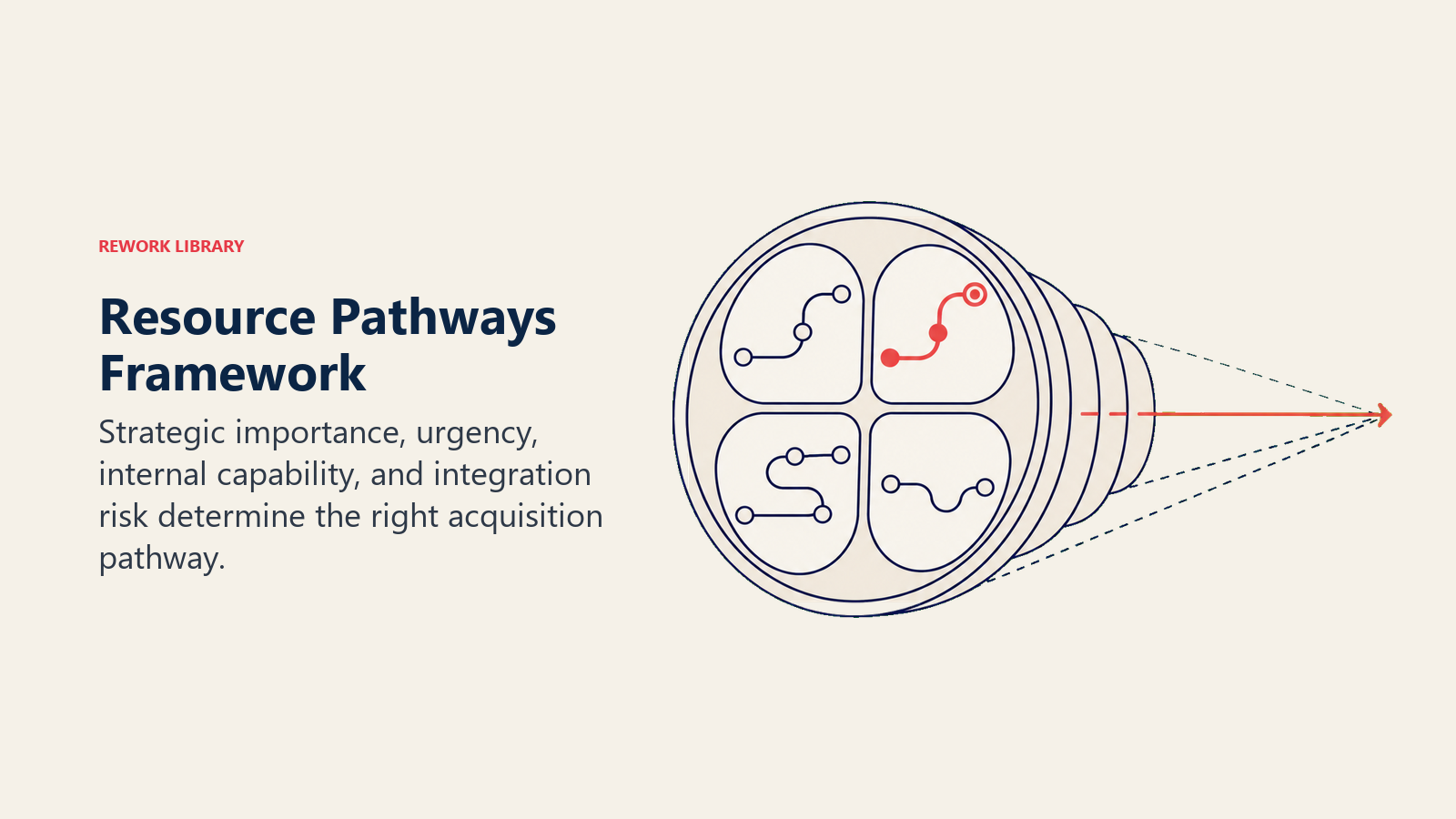
1. Relevância dos recursos internos existentes Se sua organização já tem capacidades próximas do que você precisa, construir costuma ser mais rápido e mais confiável do que aparenta. A lacuna é incremental. Mas se você está começando do zero em um território desconhecido, os caminhos externos são mais seguros.
2. Confiabilidade e acessibilidade dos parceiros O borrow funciona quando você encontra um parceiro com a capacidade certa que está disposto a compartilhá-la em condições aceitáveis. Em mercados fragmentados, bons parceiros existem. Em mercados concentrados, as únicas empresas com a capacidade que você precisa podem ser concorrentes diretos que nunca concederiam uma licença.
3. Requisitos de integração Algumas capacidades só funcionam quando estão profundamente integradas às suas operações, cultura e sistemas. Decisões de integração vertical frequentemente se enquadram aqui. Se a profundidade de integração é alta, o borrow (que mantém a capacidade à distância) terá desempenho inferior. Build ou buy.
4. Necessidades de escalabilidade e exclusividade Se você precisa que a capacidade escale junto com o negócio e não pode permitir que um concorrente acesse o mesmo recurso, o licenciamento raramente funciona no longo prazo. A aquisição ou a construção interna preservam a exclusividade.
Uma árvore de decisão simplificada:
- Conseguimos construir com o talento existente no prazo necessário? Se sim, incline para build.
- É central para a diferenciação e precisa ser exclusivo? Se sim, elimine o borrow.
- Existe um parceiro confiável que não se tornará um concorrente? Se não, elimine o borrow.
- Podemos arcar com o prêmio de aquisição e integrar bem? Se sim, buy. Se não, construa mesmo que seja mais lento.
Vantagens e trade-offs de cada caminho
Build
O caminho build mantém o controle estratégico em suas mãos. Você define a capacidade do zero, adaptada às suas necessidades. Mas é mais lento do que a maioria das equipes projeta e mais caro quando se considera o custo real de talento, sobrecarga de gestão e experimentos malsucedidos.
Build faz mais sentido quando você está aprofundando uma vantagem competitiva que já está funcionando. Se sua vantagem está na experiência do cliente, construir uma camada de análise proprietária reforça o que você já faz melhor do que ninguém.
O risco é o custo de oportunidade. Um concorrente que compra ou licencia uma capacidade comparável em seis meses enquanto você passa dois anos construindo pode conquistar o mercado antes de você chegar.
Borrow
O borrow (por meio de alianças, licenças, joint ventures ou parcerias) é o caminho mais rápido que não exige propriedade intensiva em capital. As alianças estratégicas em particular permitem acessar capacidades de empresas que passaram anos as construindo.
A desvantagem é a dependência. Você fica exposto ao risco do parceiro, a mudanças de preços e, em alguns casos, ao parceiro decidir entrar no seu mercado diretamente. O vazamento de propriedade intelectual (IP) é uma preocupação real ao compartilhar detalhes operacionais com partes externas.
O borrow funciona bem quando você precisa testar se uma capacidade gera valor antes de se comprometer plenamente. Se o experimento funcionar, você pode decidir construir ou comprar posteriormente com dados muito melhores.
Buy
As aquisições entregam velocidade e propriedade juntas. Mas os desafios de execução são severos. A maioria dos fracassos em M&A não são erros estratégicos na fase de decisão. São falhas de integração: choques culturais, perda de talentos, incompatibilidade tecnológica e a dificuldade de combinar duas organizações com formas diferentes de trabalhar.
Aquisições de integração horizontal (comprar um concorrente) tendem a ser mais fáceis de integrar do que aquisições de diversificação (entrar em um novo mercado). Quanto mais distante a empresa adquirida estiver das suas operações existentes, mais difícil se torna a integração.
Erros comuns
Escolher build por parecer "mais seguro" Build parece controle. Mas o desenvolvimento interno lento em um mercado de movimentação rápida não é seguro. É uma escolha de ceder terreno a concorrentes que se movem mais rápido.
Fazer uma aquisição porque o negócio estava disponível, não porque a estratégia exigia Negócios acontecem quando os alvos ficam disponíveis e o capital está barato. Boa disciplina significa abandonar aquisições que não se encaixam na lacuna de capacidade que você está realmente tentando fechar.
Subestimar o custo e o tempo de integração A maioria dos executivos modela a integração em 90 dias. Integrações reais para aquisições de médio porte normalmente levam de 12 a 24 meses até que a capacidade esteja verdadeiramente incorporada. Qualquer avaliação estratégica deve incluir o custo de integração como variável de primeira ordem.
Usar borrow quando a exclusividade importa Se uma capacidade licenciada é também licenciada para três concorrentes, você não ganhou uma vantagem duradoura. Você adicionou custo.
Pular a auditoria de recursos As equipes costumam avaliar build vs buy sem antes avaliar honestamente os recursos internos que possuem. O framework VRIO existe precisamente para forçar essa auditoria. Pulá-la fará com que você superestime as capacidades internas (levando a construções lentas e malsucedidas) ou as subestime (levando a aquisições desnecessárias).
Como escolher: um guia de decisão passo a passo
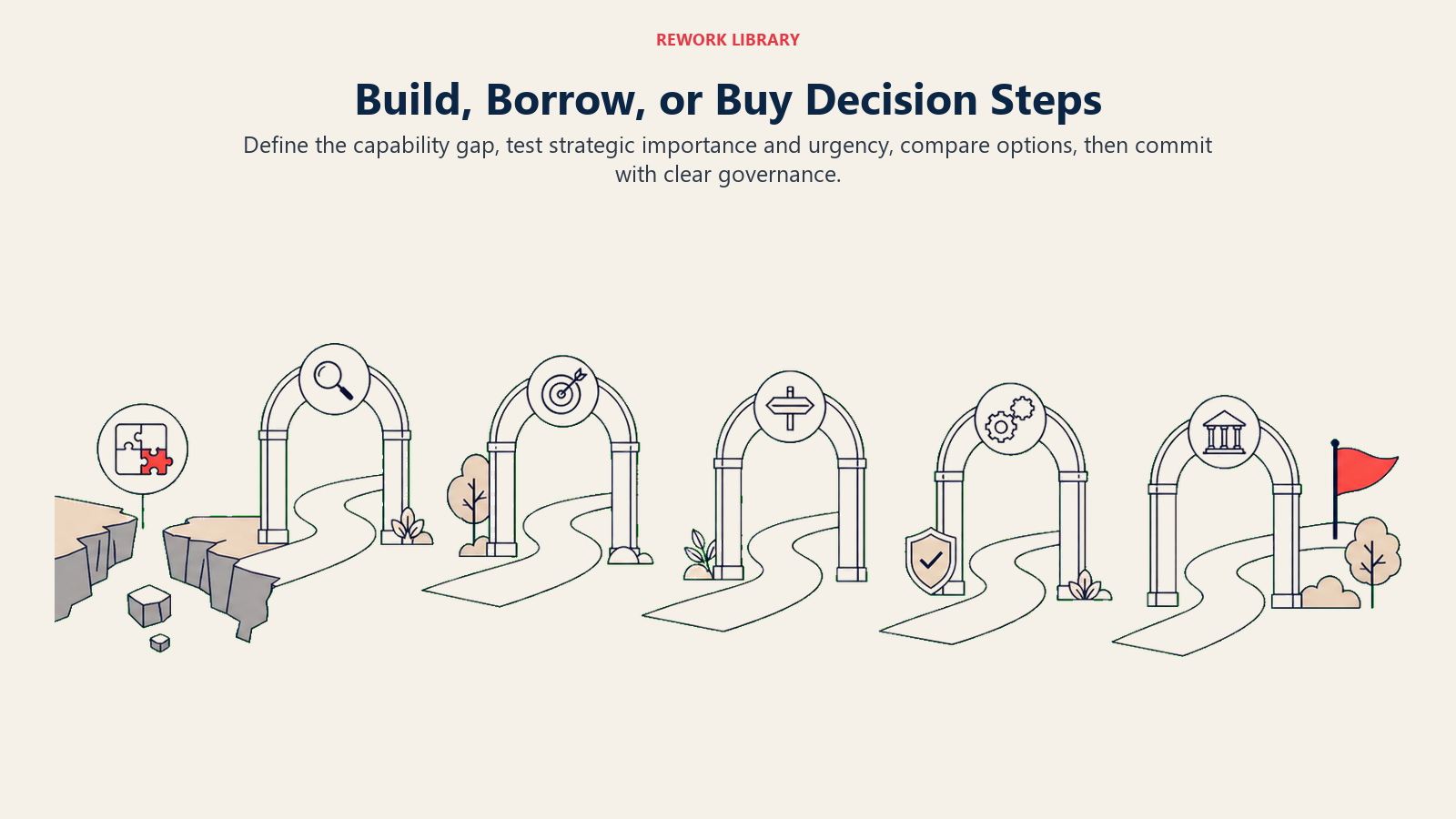
Passo 1: Defina a lacuna de capacidade com precisão
Não comece com um caminho. Comece com uma declaração de capacidade. O que especificamente você precisa ser capaz de fazer e não consegue fazer agora? "Precisamos entrar no segmento PME" não é uma capacidade. "Precisamos de um processo de vendas digital de baixo toque com um ciclo de vendas de 14 dias" é uma capacidade. A especificidade determina quais caminhos são viáveis.
Passo 2: Faça uma auditoria dos recursos internos
Usando o framework VRIO, avalie se seus ativos, pessoas e processos atuais estão próximos do que é necessário. Se você tem 70% da capacidade e precisa de 100%, o build pode ser realista. Se você está começando do zero, o prazo necessário para construir pode eliminar essa opção.
Passo 3: Mapeie as opções externas com honestidade
Para o borrow, identifique parceiros potenciais reais: quem tem essa capacidade, estaria disposto a licenciar ou fazer parceria e quais são os termos realistas? Para o buy, identifique alvos realistas: quem é adquirível a um preço que cria valor e você consegue integrá-los?
Não construa opções externas hipotéticas. Mapeie as reais. Muitas equipes de liderança decidem construir por padrão porque não fizeram a busca externa com rigor suficiente.
Passo 4: Avalie cada caminho em relação às suas restrições
Use a tabela de decisão apresentada anteriormente neste artigo. Avalie cada caminho em velocidade, custo, controle, risco e alinhamento com sua estratégia corporativa. Pondere os fatores pelo que realmente importa mais. Se o tempo é a restrição determinante, dê peso alto à velocidade. Se o capital é escasso, dê peso ao custo.
A Ansoff Matrix é útil aqui: mercados existentes e produtos existentes favorecem o build; mercados novos e produtos novos aumentam significativamente o perfil de risco do build e empurram em direção ao borrow ou buy.
Passo 5: Teste o pior cenário, não apenas o melhor
Pergunte o que acontece se esse caminho falhar. Um build fracassado é tipicamente um descarte em quadro de pessoal e P&D, doloroso, mas recuperável. Uma aquisição malsucedida com prêmio significativo é um prejuízo no balanço e, frequentemente, uma crise de credibilidade da liderança. Uma aliança fracassada pode deixá-lo em posição pior do que quando começou, com IP competitivo em risco. Pondere o pior cenário explicitamente antes de se comprometer com um caminho.
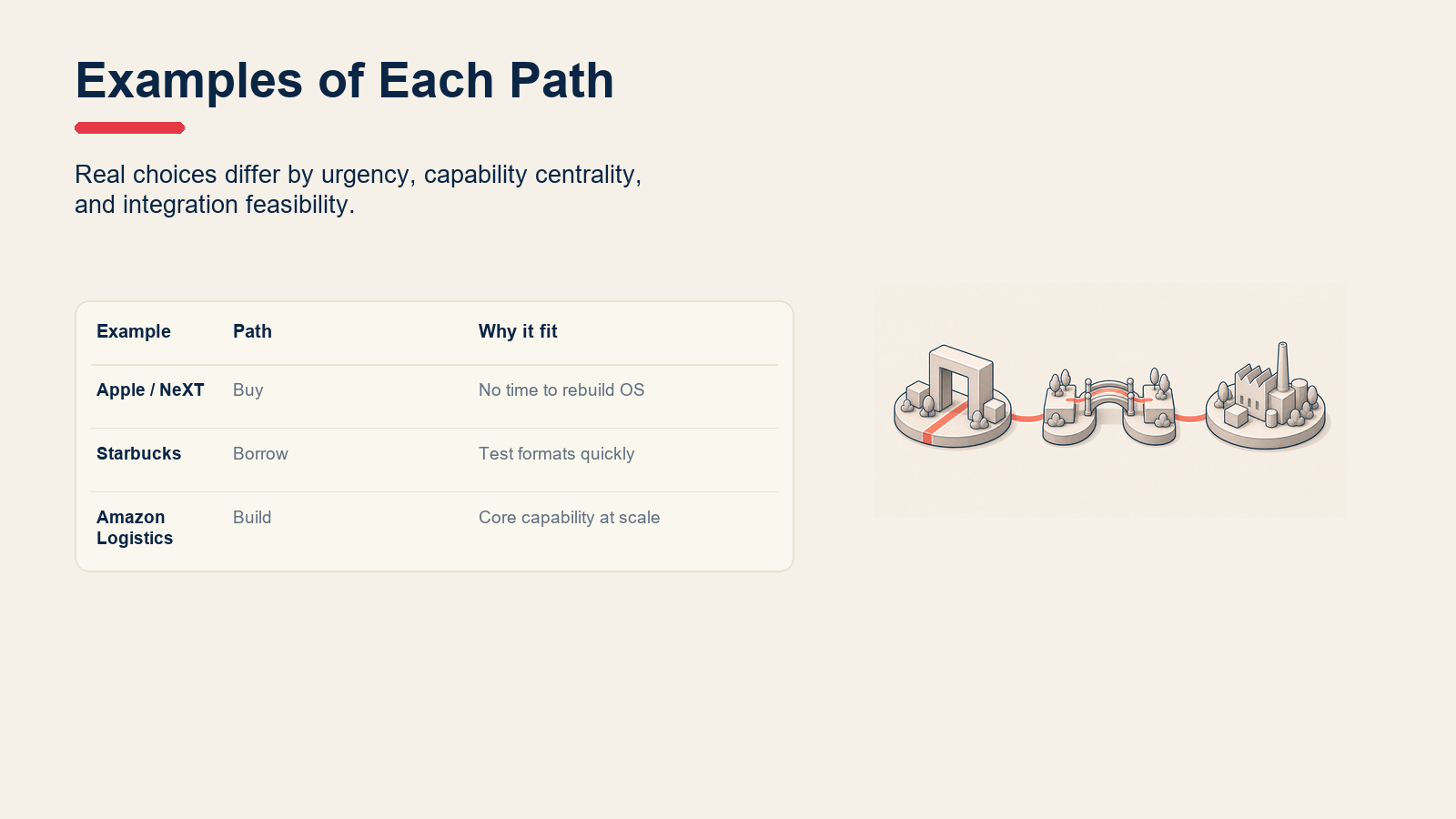
Exemplos de build, borrow, or buy
| Empresa | Situação | Caminho escolhido | Resultado |
|---|---|---|---|
| Apple (anos 1990) | Precisava de um sistema operacional moderno após o desenvolvimento interno ter estagnado | Buy: adquiriu a NeXT por US$ 429 milhões em 1997 | O NeXTSTEP se tornou macOS e iOS; a aquisição é amplamente creditada pela recuperação da Apple |
| Starbucks (tecnologia de café) | Precisava de capacidade rápida de cold brew e Nitro sem frear a expansão | Borrow/parceria: licenciou tecnologia e buscou parceiros enquanto testava os formatos | Permitiu testes de mercado em centenas de lojas antes do investimento em desenvolvimento interno |
| Amazon (logística) | Precisava de controle da última milha que FedEx e UPS não conseguiam fornecer de forma confiável em escala | Build: Amazon Logistics desenvolvida ao longo de uma década | Hoje gerencia a maioria das próprias entregas; levou 10 anos e bilhões em infraestrutura |
Esses exemplos mostram o framework em prática. A Apple não tinha tempo para reconstruir; buy era o correto. A Amazon tinha tempo, a capacidade era central para sua diferenciação e nenhum alvo de aquisição poderia fornecer escala; build era o correto. A Starbucks precisava de velocidade e flexibilidade; o borrow ofereceu as duas coisas.
Melhores Práticas
Faça:
- Realize uma auditoria formal de capacidades antes de abrir qualquer discussão sobre escolha de caminho.
- Defina os critérios de decisão (velocidade, custo, controle, risco, exclusividade) explicitamente e pondere-os antes de avaliar as opções.
- Envolva as equipes de integração cedo nas avaliações de aquisição, não após o fechamento do negócio.
- Use o borrow como uma fase deliberada de teste antes de se comprometer com build ou buy.
- Revisite a decisão à medida que as condições de mercado mudam. O caminho certo em 2020 pode ser errado em 2026.
Não faça:
- Deixar a disponibilidade do negócio guiar as decisões de aquisição. A estratégia deve guiar a busca por negócios, não o contrário.
- Assumir que build é o padrão por "manter as coisas dentro de casa". Em mercados rápidos, o desenvolvimento interno lento é um risco real.
- Negociar termos de aliança sem cláusulas claras de saída. Parcerias difíceis de encerrar se tornam passivos.
- Subestimar o alinhamento cultural nas aquisições. A integração técnica é gerenciável; a integração cultural é a parte difícil.
- Pensar sobre horizontes de crescimento de forma isolada. Build tende a se encaixar no aprofundamento do Horizonte 1; borrow se encaixa em movimentos adjacentes do Horizonte 2; buy frequentemente acelera entradas nos Horizontes 2 e 3.
Leitura Relacionada
- Alianças Estratégicas cobre como estruturar relações de borrow para uma vantagem duradoura.
- McKinsey Growth Pyramid enquadra os três níveis de iniciativas de crescimento e onde cada caminho tende a se aplicar.
- Hoshin Kanri mostra como a intenção estratégica se desdobra em planos operacionais, o que determina a viabilidade do build.
- Porter's Diamond Model examina como fatores nacionais e setoriais moldam quais caminhos de construção de capacidade estão disponíveis para empresas em determinado contexto.
- Technology Investment Strategy aplica o raciocínio build-borrow-buy especificamente às decisões de investimento em tecnologia no nível de mercado médio.
A decisão build, borrow, or buy é uma das escolhas mais consequentes que as equipes de liderança tomam. Ela determina não apenas se você fecha uma lacuna de capacidade, mas se o faz de uma forma que fortalece sua posição competitiva ou cria novas vulnerabilidades. As empresas que acertam isso não são sempre as que têm mais capital ou a melhor tecnologia. São as que fazem as perguntas certas sobre alinhamento, timing e integração antes de se comprometer com um caminho.

Co-Founder & COO
On this page
- O que é o framework build, borrow, or buy?
- Build vs borrow vs buy: uma tabela de decisão real
- O framework de caminhos de recursos
- Vantagens e trade-offs de cada caminho
- Build
- Borrow
- Buy
- Erros comuns
- Como escolher: um guia de decisão passo a passo
- Passo 1: Defina a lacuna de capacidade com precisão
- Passo 2: Faça uma auditoria dos recursos internos
- Passo 3: Mapeie as opções externas com honestidade
- Passo 4: Avalie cada caminho em relação às suas restrições
- Passo 5: Teste o pior cenário, não apenas o melhor
- Exemplos de build, borrow, or buy
- Melhores Práticas
- Leitura Relacionada