Efeito Flywheel: Como o Momentum Impulsiona o Crescimento dos Negócios
Turn this article into takeaways for your work.


Each assistant summarizes the article only for you and suggests best practices for your work.
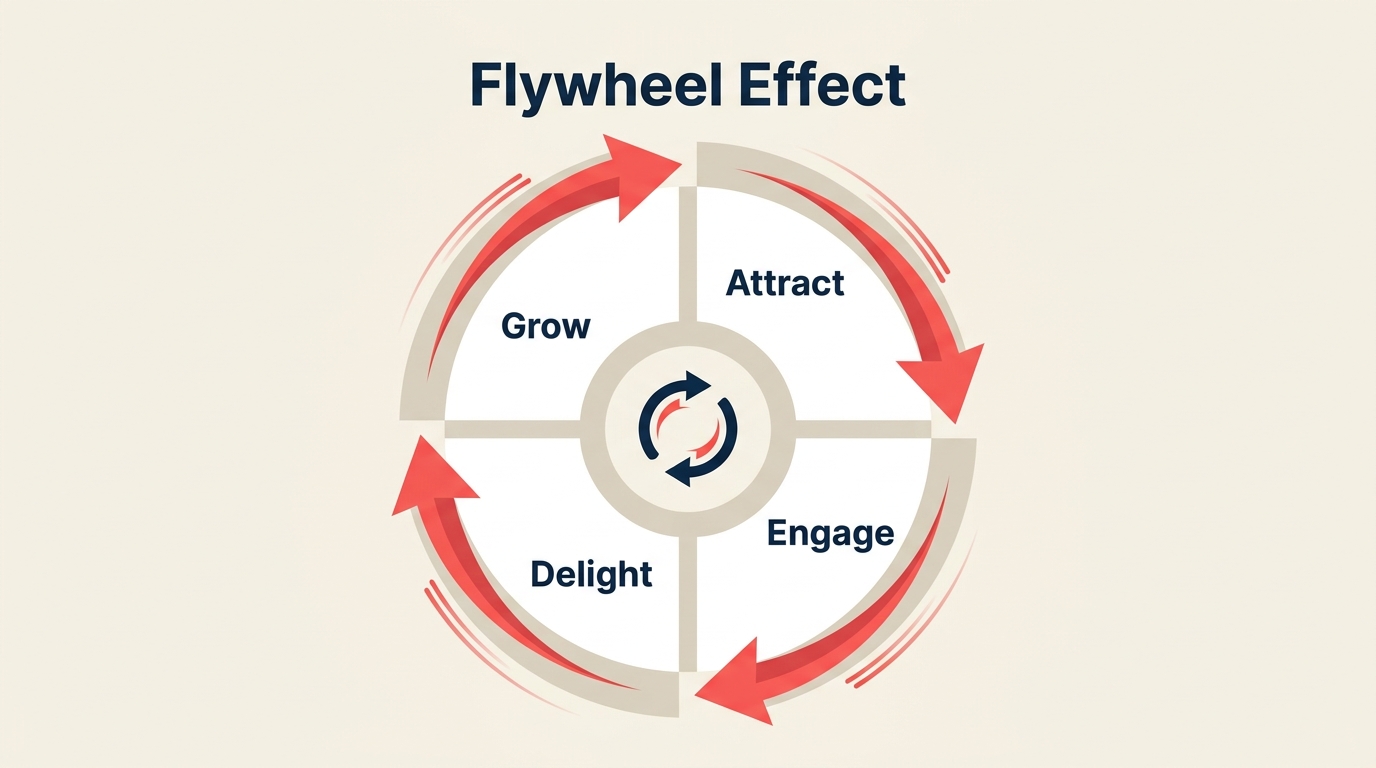
O efeito flywheel descreve o que acontece quando um esforço consistente e disciplinado em uma mesma direção acumula momentum suficiente para que o crescimento comece a se sustentar por conta própria. Não é uma campanha nem um lançamento. É um sistema que continua girando porque cada rotação alimenta a próxima.
A maioria das equipes de liderança persegue crescimento por meio de funis: gerar leads, fechar negócios, repetir. O modelo flywheel desafia essa visão. Em vez de conversão linear, ele mapeia como cada parte do seu negócio reforça todas as outras. Acerte o loop e o conjunto todo acelera pelo seu próprio peso.
O Que É o Efeito Flywheel?
O efeito flywheel é o princípio de que um esforço sustentado e focado em uma direção consistente cria momentum acumulativo ao longo do tempo. Cada impulso se soma ao anterior e, eventualmente, o sistema gera sua própria força.
Jim Collins introduziu o conceito em Good to Great (2001), baseando-se na imagem de um enorme flywheel industrial. Gire-o uma vez e ele mal se move. Empurre-o dez mil vezes na mesma direção e ele acumula energia rotacional que se torna quase impossível de parar.
Em termos de negócios, o flywheel substitui uma mentalidade de campanha por uma mentalidade de sistemas acumulativos. Você para de perguntar "qual é nossa próxima grande iniciativa?" e começa a perguntar "qual é o loop que nos torna melhores a cada giro?"
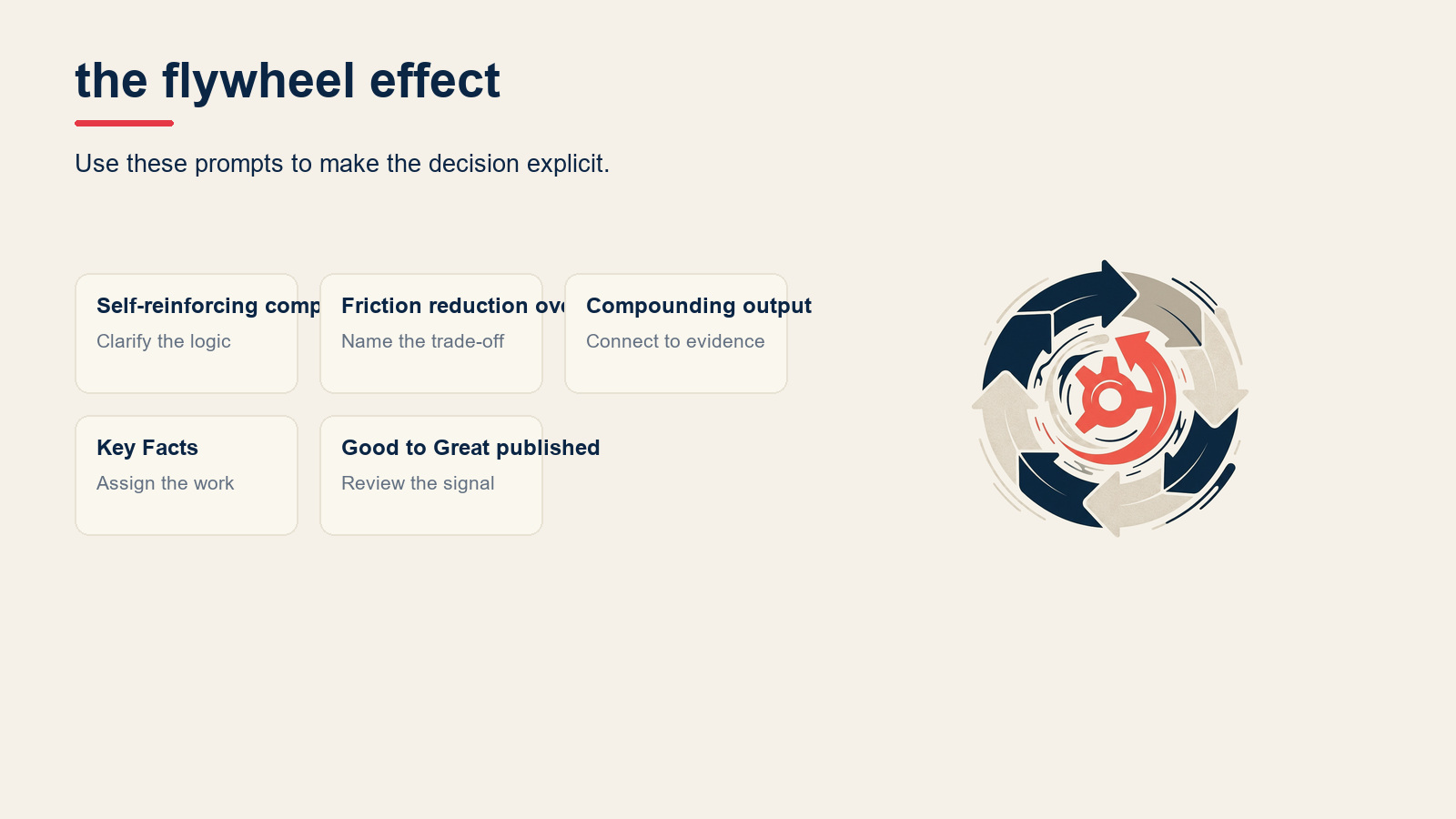
Três condições definem um flywheel genuíno:
- Componentes autorreforçadores: cada estágio alimenta o próximo sem uma força externa
- Redução de atrito ao longo do tempo: quanto mais giros, mais suave fica cada rotação
- Resultado acumulativo: os resultados crescem mais rápido do que os insumos que os impulsionam
Fatos Essenciais
Good to Great publicado em 2001 (Collins, 2001): A pesquisa de Jim Collins abrangeu 28 empresas ao longo de 30 anos e descobriu que todas as empresas que fizeram a transição de "boas para excelentes" tinham um flywheel claramente identificável no centro de sua virada.
O flywheel da Amazon, esboçado originalmente em um guardanapo por volta de 2001 (Stone, The Everything Store, 2013): Jeff Bezos desenhou um loop conectando preços menores, mais clientes, mais vendedores e estrutura de custo menor de volta a preços menores. Esse único diagrama guiou bilhões em decisões de reinvestimento.
Efeito de crescimento acumulativo: O relatório State of Inbound de 2022 da HubSpot descobriu que empresas com loops fortes de indicações de clientes (um output-chave do flywheel) geravam um Custo de Aquisição de Clientes (CAC) 40% a 60% menor do que as que dependiam principalmente de aquisição paga.
Flywheel vs. Loop de Destruição
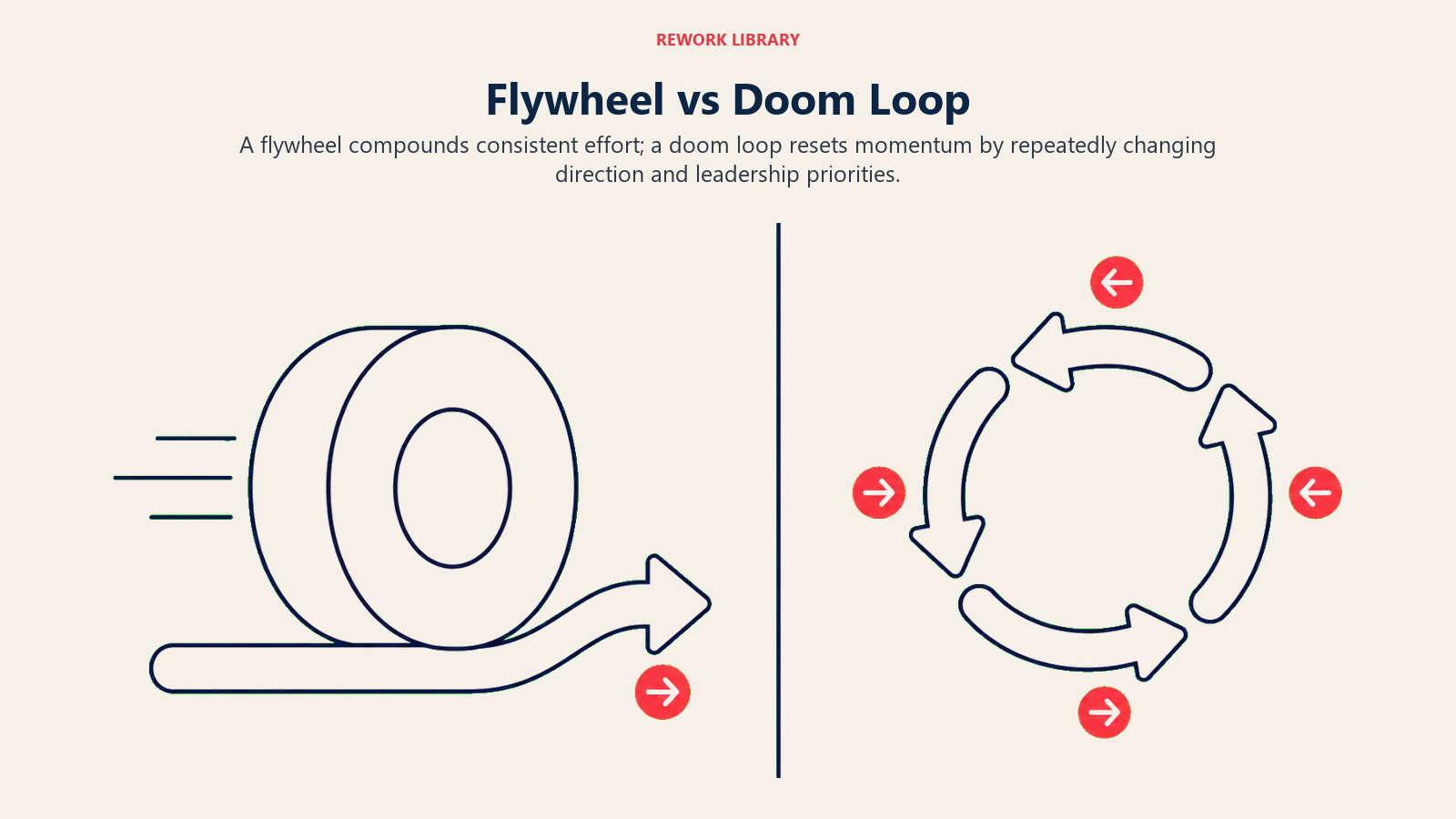
Collins contrastou o flywheel com o que chamou de "doom loop": empresas que nunca constroem momentum sustentado porque ficam alternando entre estratégias sempre que os resultados estacionam.
| Dimensão | Flywheel | Loop de Destruição |
|---|---|---|
| Resposta a retrocessos | Empurrar mais na mesma direção | Mudar de estratégia completamente |
| Framework de decisão | Lógica acumulativa de longo prazo | Pressão de desempenho de curto prazo |
| Estilo de liderança | Consistência disciplinada | Heroísmo reativo |
| Experiência dos funcionários | Constrói confiança e clareza | Cria fadiga e confusão |
| Comunicação com investidores | Narrativa paciente de acumulação | Pivôs frequentes, novas histórias |
| Resultado | Retornos acelerados | Retornos decrescentes apesar do alto esforço |
O loop de destruição é caro. Cada reinicialização estratégica queima o capital organizacional construído no ciclo anterior. Equipes que nunca se fixam em uma direção não conseguem acumular nada. O flywheel só funciona se você permanecer nele tempo suficiente para o momentum se construir.
O Efeito Flywheel vs. Um Funil de Vendas/Marketing
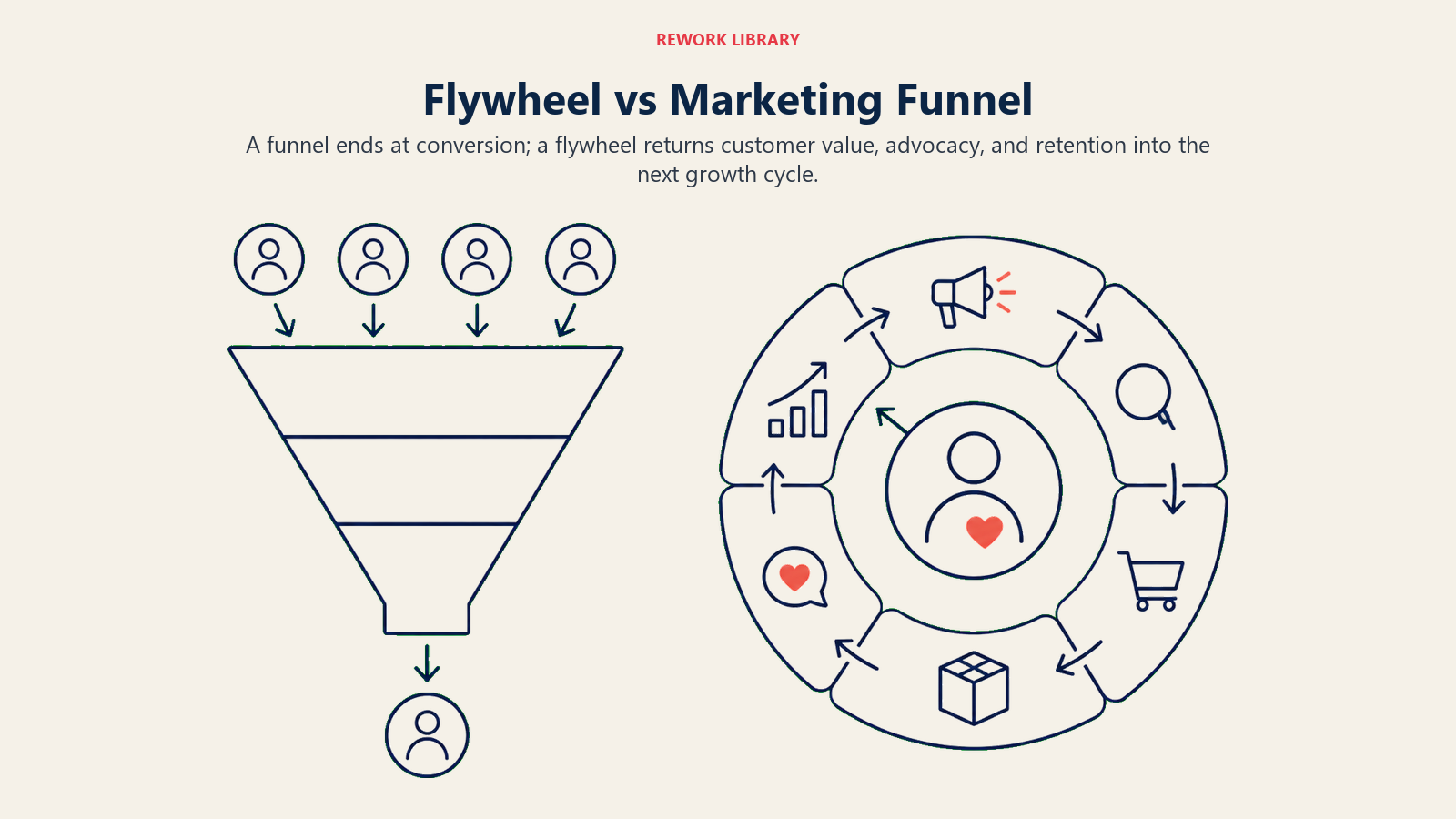
Um funil e um flywheel resolvem problemas diferentes. O funil otimiza um fluxo unidirecional do desconhecido ao cliente. O flywheel trata os clientes como insumos para o próximo ciclo de crescimento, não apenas como outputs do último.
| Dimensão | Funil de Vendas/Marketing | Flywheel |
|---|---|---|
| Formato do fluxo | Linear: da consciência ao fechamento | Circular: clientes alimentam novos clientes |
| Papel do cliente | Ponto final do processo | Fonte de energia para o próximo giro |
| Lógica de retenção | Movimento pós-venda separado | Incorporada ao design do loop |
| Motor de crescimento | Gastar mais para encher o topo | Reduzir atrito e deixar o momentum crescer |
| Escalabilidade | Ligada ao gasto de aquisição | Acumula com a base de clientes existente |
| Ponto fraco | Vazamento em cada estágio do funil | Encontrar o design certo do loop inicial |
| Melhor para | Vendas transacionais ou orientadas por campanhas | Modelos de crescimento PLG, orientados por comunidade ou com muitas indicações |
Funis e flywheels não são mutuamente exclusivos. Muitas empresas usam um funil para adquirir os clientes iniciais e depois dependem de um flywheel para crescer a partir dessa base instalada. Mas se o seu modelo de crescimento depende inteiramente de encher o topo do funil, você não está acumulando.
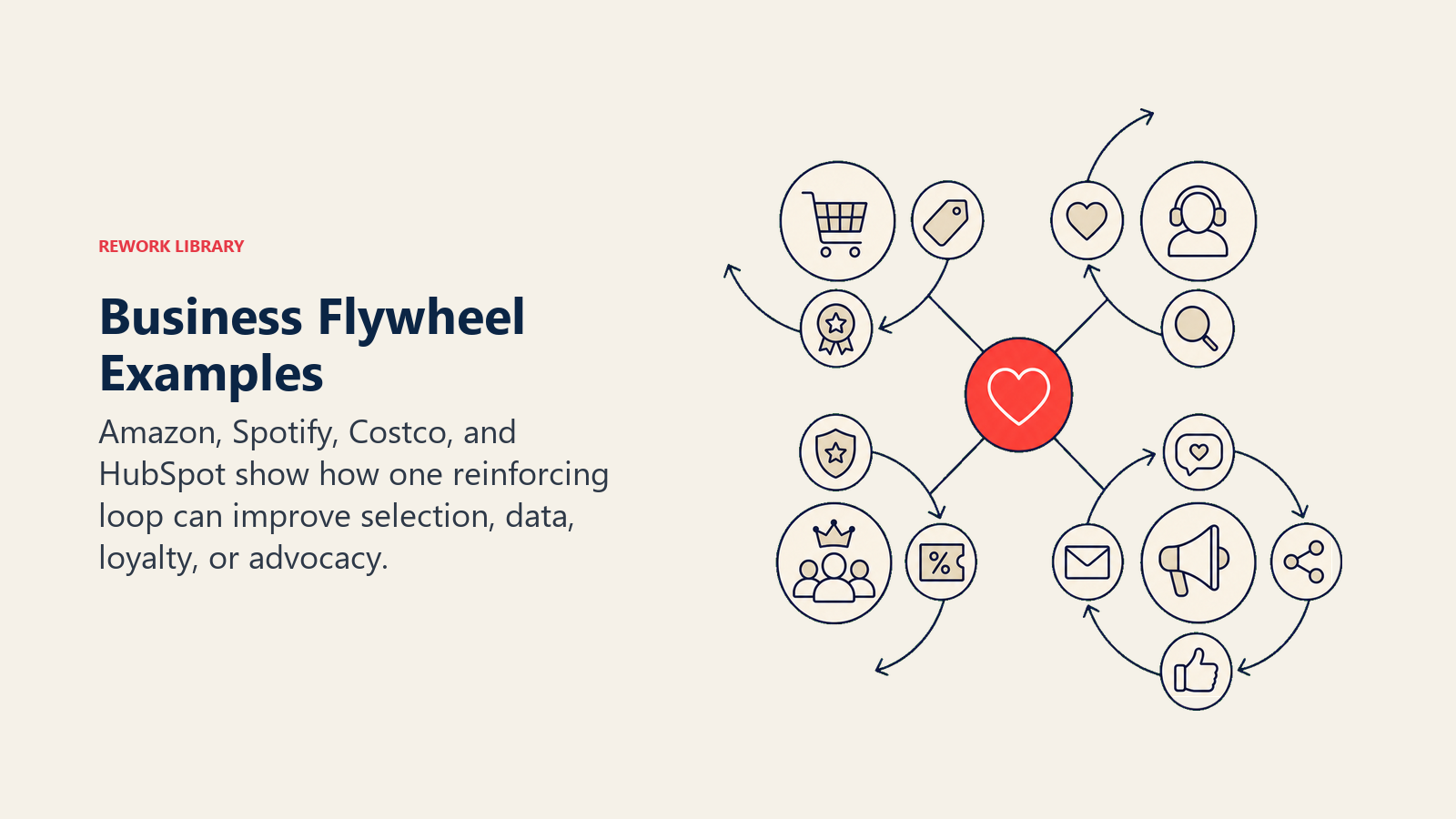
Exemplos Famosos de Flywheel
| Empresa | Loop do Flywheel | Insight-Chave |
|---|---|---|
| Amazon | Preços menores atraem clientes. Mais clientes atraem vendedores terceiros. Mais vendedores ampliam a seleção. Maior escala reduz a estrutura de custos. Custos menores permitem preços menores. | O loop começou com preço e logística, não com produto ou marca. |
| Spotify | Mais ouvintes atraem artistas. Mais artistas constroem profundidade de catálogo. Catálogo melhor atrai mais ouvintes. Dados de escuta melhoram as recomendações. Recomendações melhores aumentam o tempo de sessão e a retenção. | Os dados são um ativo acumulativo neste loop, não apenas uma ferramenta de medição. |
| HubSpot | Ferramentas gratuitas atraem profissionais de marketing. Esses profissionais compartilham conteúdo e indicam colegas. Os colegas se inscrevem em produtos pagos. Clientes pagantes produzem estudos de caso e avaliações. As avaliações atraem mais profissionais para as ferramentas gratuitas. | O produto freemium é o combustível do loop de indicações, não apenas uma etapa de conversão. |
| Flywheel de Conteúdo/SEO | Conteúdo de qualidade ranqueia nas buscas. Os rankings geram tráfego orgânico. O tráfego gera crescimento de assinantes e clientes. O crescimento financia mais produção de conteúdo. Mais conteúdo cria mais autoridade temática. | Cada peça de conteúdo acumula a autoridade de todas as outras. |
O fio condutor é a redução de atrito. Todos esses loops aceleram conforme a empresa investe em remover o gargalo em cada estágio. A Amazon investiu em automação de armazéns. O Spotify investiu em seu mecanismo de recomendação. A HubSpot investiu em sua comunidade e academia.
Como Construir um Flywheel para o Seu Negócio
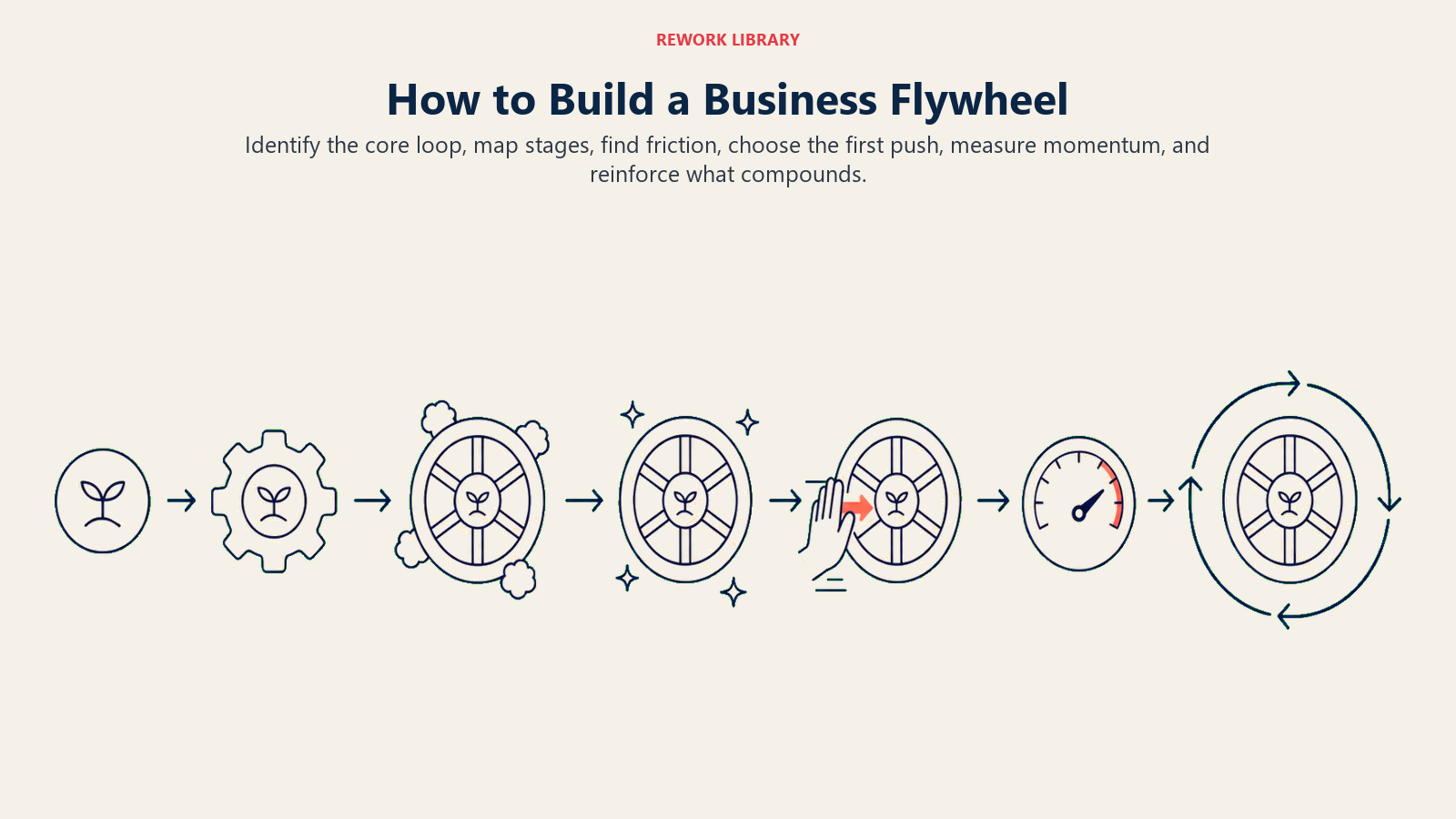
Construir um flywheel é mais uma questão de clareza do que de criatividade. O loop quase sempre já existe no seu negócio. Seu trabalho é encontrá-lo, nomeá-lo e reduzir sistematicamente o atrito em cada estágio.
Etapa 1: Identifique seu loop central de crescimento
Mapeie de onde vêm seus melhores clientes hoje. Procure momentos em que um cliente satisfeito cria um novo cliente potencial: indicações, avaliações, prova social, efeitos de rede profissional. Esse é o embrião do seu flywheel.
Pergunte: "Se tivéssemos 10 vezes mais clientes do que temos agora, o que cresceria automaticamente como resultado?" A resposta geralmente aponta para o loop. Para mais informações sobre como mapear vantagens competitivas sistêmicas, veja vantagem competitiva e efeitos de rede.
Etapa 2: Mapeie os componentes que se alimentam mutuamente
Nomeie os três a cinco estágios do loop. Cada estágio deve ser ao mesmo tempo um resultado do estágio anterior e uma causa do próximo. Se um estágio apenas recebe, sem produzir nada para o loop, ele não faz parte do flywheel.
Desenhe como um círculo, não como uma cadeia. Se ele só fizer sentido como uma cadeia com início e fim, você ainda tem um funil.
Etapa 3: Remova o atrito em cada giro
Seu flywheel gira apenas tão rápido quanto seu estágio mais lento e com mais atrito. Pontos de atrito comuns incluem: longos ciclos de vendas, onboarding ruim, baixas taxas de indicação, baixa descobribilidade do conteúdo ou processos manuais que deveriam ser automatizados. Para contexto sobre como a redução de atrito funciona em um pipeline, veja velocidade do pipeline.
Priorize a redução de atrito em vez de adicionar novos estágios. Um loop de três estágios totalmente sem atrito supera um loop complexo de seis estágios com três gargalos.
Etapa 4: Escolha uma métrica para acumular
Todo flywheel deve ter uma única métrica norte-estrela que captura se o loop está acelerando ou estagnando. Pode ser usuários ativos mensais, Net Promoter Score, tráfego orgânico ou receita por cliente. Deve ser algo que todo o negócio possa entender e se orientar. Para orientação sobre como selecionar essa métrica, veja métrica norte-estrela.
Etapa 5: Empurre de forma consistente, não heroica
O flywheel não recompensa sprints. Recompensa esforço sustentado e direcional. Reinicializações trimestrais, reorganizações e pivôs estratégicos drenam o momentum. É por isso que a pesquisa de Collins descobriu que a excelência sempre foi produto de longa acumulação disciplinada, e não de um único momento transformacional.
Vincule seus esforços a uma cadência de planejamento clara. O framework OKR é uma escolha natural aqui: os objetivos trimestrais se mapeiam para os estágios do loop, e os key results acompanham as métricas de atrito em cada estágio.
Etapa 6: Meça o momentum, não apenas o output
O sinal de que seu flywheel está funcionando não é atingir seu número trimestral. É que o custo de adquirir o próximo cliente é menor do que o anterior. É que as indicações boca a boca estão crescendo como proporção de novos negócios. É que o valor vitalício do cliente está aumentando sem um aumento de preço.
Acompanhe a proporção entre insumos e resultados ao longo do tempo. O crescimento acumulativo aparece nessa proporção antes de aparecer nos números de receita absolutos.
Benefícios e Limitações
Benefícios
Crescimento autorreforçador. Uma vez que o loop está girando, cada coorte de clientes torna a próxima coorte mais fácil de adquirir. Você obtém mais do mesmo investimento ao longo do tempo.
Defensabilidade. Flywheels são difíceis de replicar porque o momentum depende do tempo. Um concorrente que copiar seu produto não consegue copiar dois anos de confiança acumulada, indicações e densidade de rede. Isso se conecta diretamente a custos de troca e economias de escala.
Foco organizacional. Um modelo de flywheel claro alinha todas as equipes em torno da mesma lógica de crescimento. Vendas, produto, marketing e customer success entendem como seu trabalho alimenta o loop.
Resiliência. Um negócio impulsionado por flywheel pode absorver disrupções de curto prazo melhor porque seu crescimento não depende de nenhum canal ou campanha isolada. Para contraste, veja a estratégia do oceano azul, que se concentra em criar espaço de mercado sem concorrência em vez de acumular dentro de categorias existentes.
Limitações
Lento para começar. Os estágios iniciais de construção do flywheel parecem dolorosamente lentos. Equipes e conselhos condicionados a métricas de crescimento trimestral frequentemente perdem a paciência antes que o momentum se construa. É aqui que a tentação do loop de destruição é mais forte.
Um design errado do loop é custoso. Se você construir um loop em torno do driver errado, acumula a coisa errada. Um loop construído sobre táticas de vendas agressivas, por exemplo, pode acumular churn em vez de retenção. Valide o design do loop cedo com experimentos pequenos antes de escalá-lo.
Requer profundo conhecimento do cliente. Você não pode projetar um flywheel sem saber exatamente o que motiva os clientes a retornar, indicar e expandir. É por isso que o trabalho com o canvas de proposta de valor e a estratégia de geração de leads inbound são insumos fundamentais para qualquer design de flywheel.
Não adequado para todos os modelos de negócio. Negócios de transação única sem dinâmica de recompra ou indicação lutam para encontrar um loop natural de flywheel. Nesses casos, outras estratégias acumulativas como os três horizontes de crescimento ou a redesenho do Business Model Canvas podem ser mais adequados.
Perguntas Frequentes
Quem criou o conceito de efeito flywheel?
Jim Collins introduziu o flywheel como conceito de negócios em Good to Great, publicado em 2001. Ele o desenvolveu a partir de sua pesquisa sobre empresas que fizeram um salto sustentado de desempenho médio para excepcional. Collins escreveu posteriormente um monógrafo independente chamado Turning the Flywheel (2019), que aplicou o conceito especificamente à construção de modelos de flywheel para sua própria organização.
Qual é a diferença entre um flywheel e um funil de vendas?
Um funil é linear e unidirecional: move um prospect da consciência para a compra. Um flywheel é circular: os clientes que saem do funil devolvem energia ao loop gerando indicações, avaliações e boca a boca que atraem novos clientes. O funil é útil para otimizar a conversão; o flywheel é útil para acumular crescimento.
Quanto tempo leva para um flywheel criar momentum?
Depende do modelo de negócio e da agressividade com que você reduz o atrito. Na pesquisa de Collins, as grandes empresas tipicamente levaram anos de execução consistente antes que o flywheel se tornasse autossustentável. Em um contexto de SaaS orientado por produto, uma aceleração significativa do loop pode aparecer em 12 a 18 meses. O sinal-chave não é o tempo decorrido, mas se o seu custo para adquirir novos clientes está caindo em relação ao valor vitalício deles.
Uma pequena empresa pode usar o efeito flywheel?
Sim. Uma consultoria local que ganha indicações de clientes satisfeitos, usa essas indicações para construir uma biblioteca pública de estudos de caso e usa essa biblioteca para atrair novas consultas já está rodando um flywheel simples. O tamanho do loop importa menos do que se cada componente alimenta o próximo de forma confiável.
O que quebra um flywheel?
O atrito em um estágio crítico desacelera ou para o loop. Mas o maior risco é a inconsistência estratégica: mudar de direção a cada trimestre, reorganizar equipes ou pivotar para novos mercados drena o momentum acumulado. Collins descobriu que o loop de destruição começa não com execução ruim, mas com a perda de confiança na direção atual antes que ela tenha tempo de se acumular.
O efeito flywheel é um dos frameworks mais duráveis na estratégia de negócios porque captura algo que a maioria dos modelos de crescimento perde: o momentum é um ativo estratégico que pode ser construído deliberadamente. As empresas que acumulam mais rápido raramente são as mais criativas ou as mais agressivas. São as que encontraram seu loop, permaneceram nele e continuaram reduzindo o atrito até que ele se movesse sozinho.
Se você está construindo sua estratégia em torno de flywheels, use o Wardley Mapping para ver onde cada componente do seu loop está na curva de evolução. Componentes que ainda são feitos sob medida criam mais atrito do que componentes que já se comoditizaram. É frequentemente onde vem a próxima virada decisiva.

Co-Founder & COO
On this page
- O Que É o Efeito Flywheel?
- Flywheel vs. Loop de Destruição
- O Efeito Flywheel vs. Um Funil de Vendas/Marketing
- Exemplos Famosos de Flywheel
- Como Construir um Flywheel para o Seu Negócio
- Etapa 1: Identifique seu loop central de crescimento
- Etapa 2: Mapeie os componentes que se alimentam mutuamente
- Etapa 3: Remova o atrito em cada giro
- Etapa 4: Escolha uma métrica para acumular
- Etapa 5: Empurre de forma consistente, não heroica
- Etapa 6: Meça o momentum, não apenas o output
- Benefícios e Limitações
- Benefícios
- Limitações