Estratégia vs Táticas: Qual a Diferença?
Turn this article into takeaways for your work.


Each assistant summarizes the article only for you and suggests best practices for your work.
Estratégia vs táticas é uma das distinções mais mal compreendidas no mundo dos negócios. Equipes chamam suas listas de tarefas trimestrais de "estratégia", e executivos falam em "vencer taticamente" mercados para os quais nunca definiram uma direção clara. Essa confusão não é trivial: quando estratégia e táticas se misturam, as organizações acabam correndo rápido na direção errada.
Sun Tzu foi direto: "Estratégia sem táticas é o caminho mais lento para a vitória. Táticas sem estratégia são o ruído antes da derrota." Os dois conceitos são inseparáveis, mas operam em altitudes diferentes. Acertar essa separação torna tudo mais claro, do planejamento anual à priorização diária do sprint.
Qual é a diferença entre estratégia e táticas?
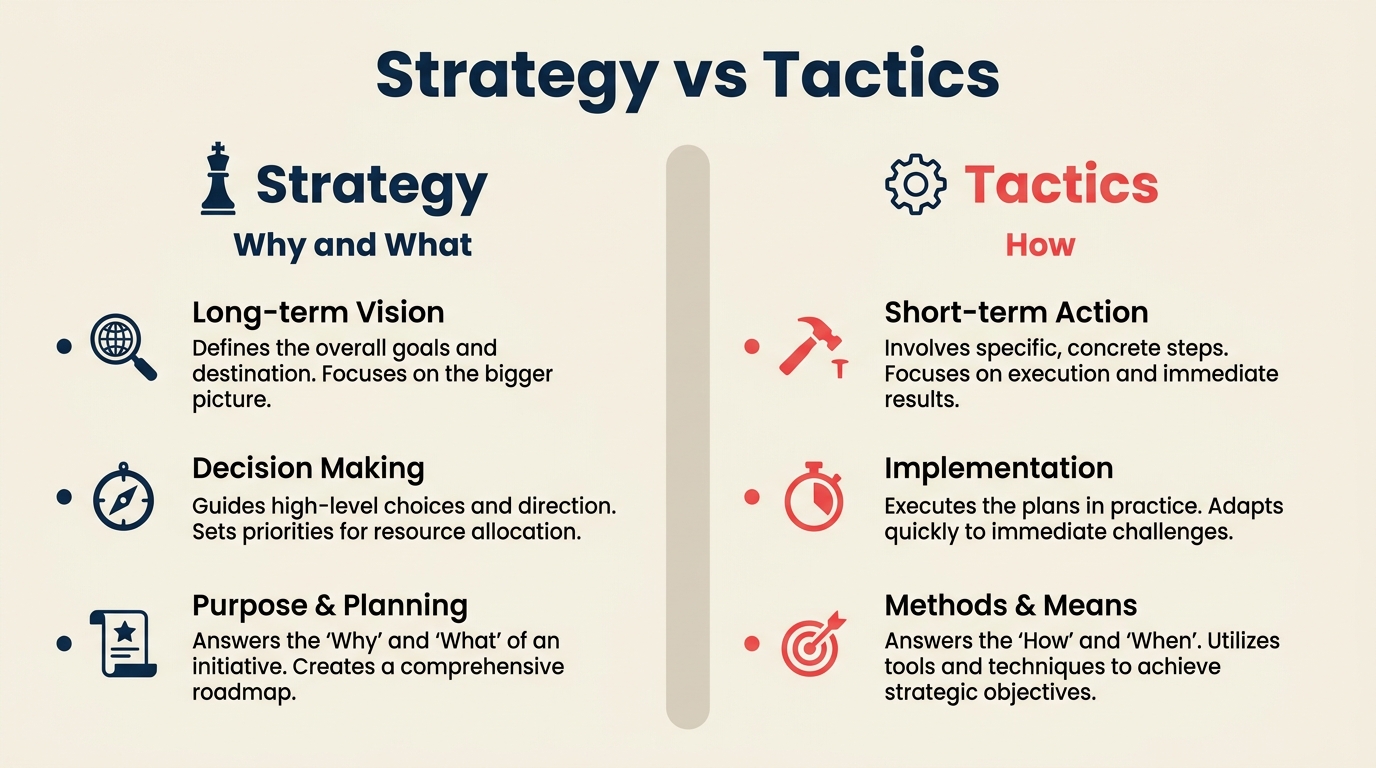
Estratégia é a direção de longo prazo que uma organização escolhe para atingir uma meta específica. Ela responde às perguntas "Por que estamos fazendo isso?" e "O que queremos alcançar?" A estratégia define prioridades, determina onde você compete e faz escolhas deliberadas sobre o que você não fará.
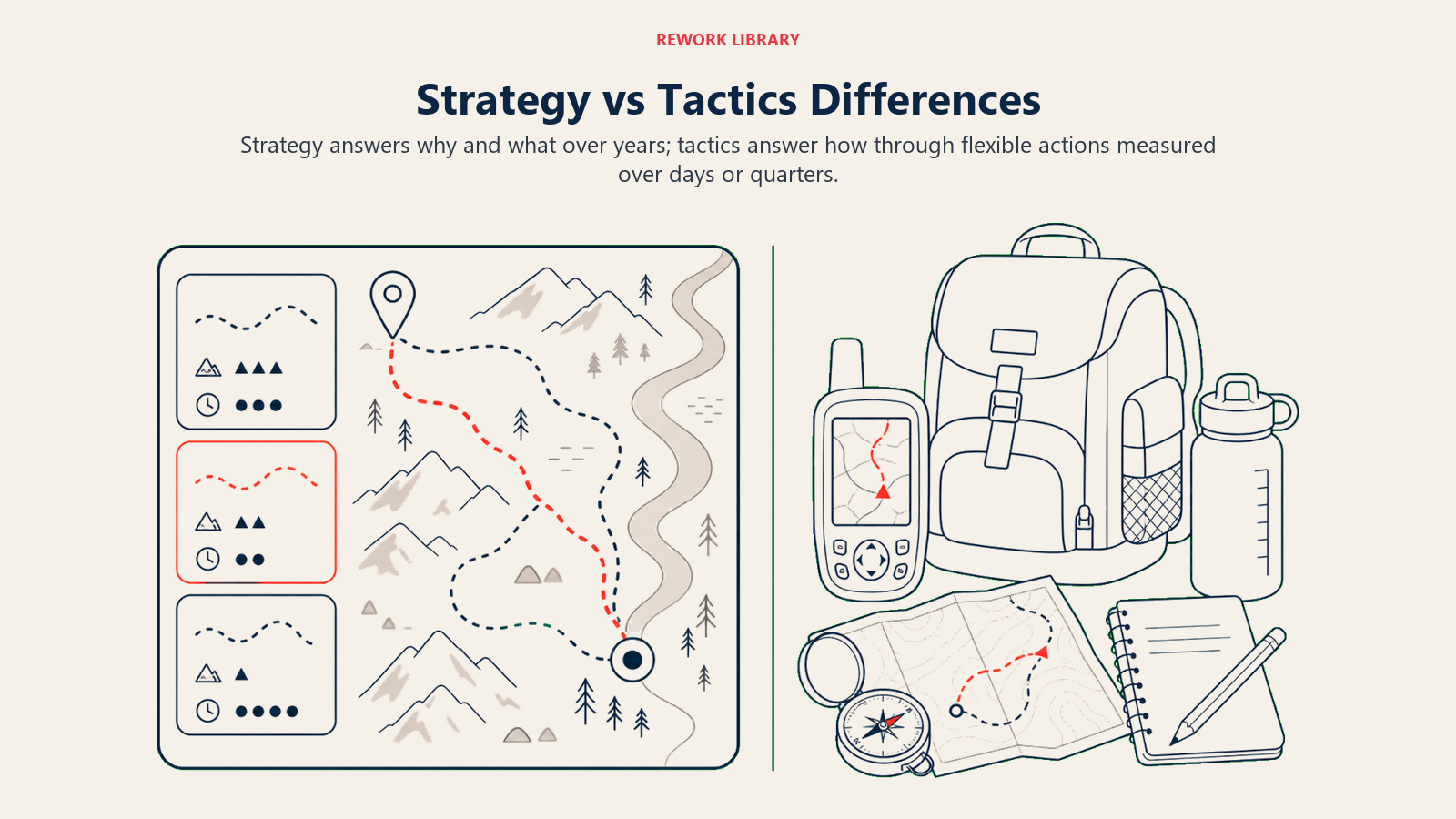
Táticas são as ações específicas e de curto prazo tomadas para executar uma estratégia. Elas respondem "Como chegamos lá?" As táticas são concretas: uma campanha, um lançamento de funcionalidade, um teste de preço, uma ligação de parceria. Podem mudar com frequência conforme as circunstâncias mudam, enquanto a estratégia que servem permanece fixada.
A forma mais clara de sentir a diferença: a estratégia é a decisão de se tornar o líder de baixo custo no espaço de CRM para o mercado médio. As táticas são os cortes específicos de produto, movimentos de preço e escolhas de canal que concretizam essa decisão.
Dados-chave: Estratégia vs Táticas
- Pesquisa da McKinsey constatou que empresas com estratégias claramente comunicadas têm 1,9x mais probabilidade de alcançar rentabilidade acima da média do que aquelas sem estratégia clara (McKinsey & Company, "The Mindsets and Practices of Excellent CEOs," 2019).
- Um estudo da Harvard Business Review descobriu que aproximadamente 67% das estratégias bem formuladas falham devido à execução inadequada no nível tático (HBR, "Turning Great Strategy into Great Performance," 2005).
- "A Arte da Guerra" de Sun Tzu (por volta de 500 a.C.) continua sendo o texto mais citado sobre a divisão entre estratégia e táticas, com "estratégia sem táticas é o caminho mais lento para a vitória" sendo citado em escolas de negócios em todo o mundo.
Estratégia vs Táticas: Comparação Lado a Lado
| Dimensão | Estratégia | Táticas |
|---|---|---|
| Horizonte temporal | Longo prazo (1 a 5 anos) | Curto prazo (dias a trimestres) |
| Escopo | Organização inteira ou unidade principal | Equipe, campanha ou projeto específico |
| Quem é responsável | C-level, liderança sênior | Gestores, líderes de equipe, colaboradores individuais |
| Capacidade de mudança | Estável; muda quando o mercado sofre uma mudança fundamental | Flexível; se ajusta com frequência com base nos resultados |
| Pergunta que responde | Por que e o quê | Como |
| Exemplo | Tornar-se líder de mercado em gestão de projetos para PMEs | Lançar um trial gratuito, reduzir o onboarding de 7 dias para 2, veicular uma campanha no LinkedIn direcionada a gestores de operações |
Por que as pessoas as confundem
A confusão é estrutural. A maioria das conversas de negócios acontece no nível tático porque as táticas são visíveis e imediatas. Uma reunião semanal de acompanhamento mostra quais tarefas foram concluídas. Uma revisão mensal conta os leads gerados ou a receita fechada. A estratégia, por outro lado, vive em documentos, retiros e longas conversas que parecem distantes do trabalho cotidiano.
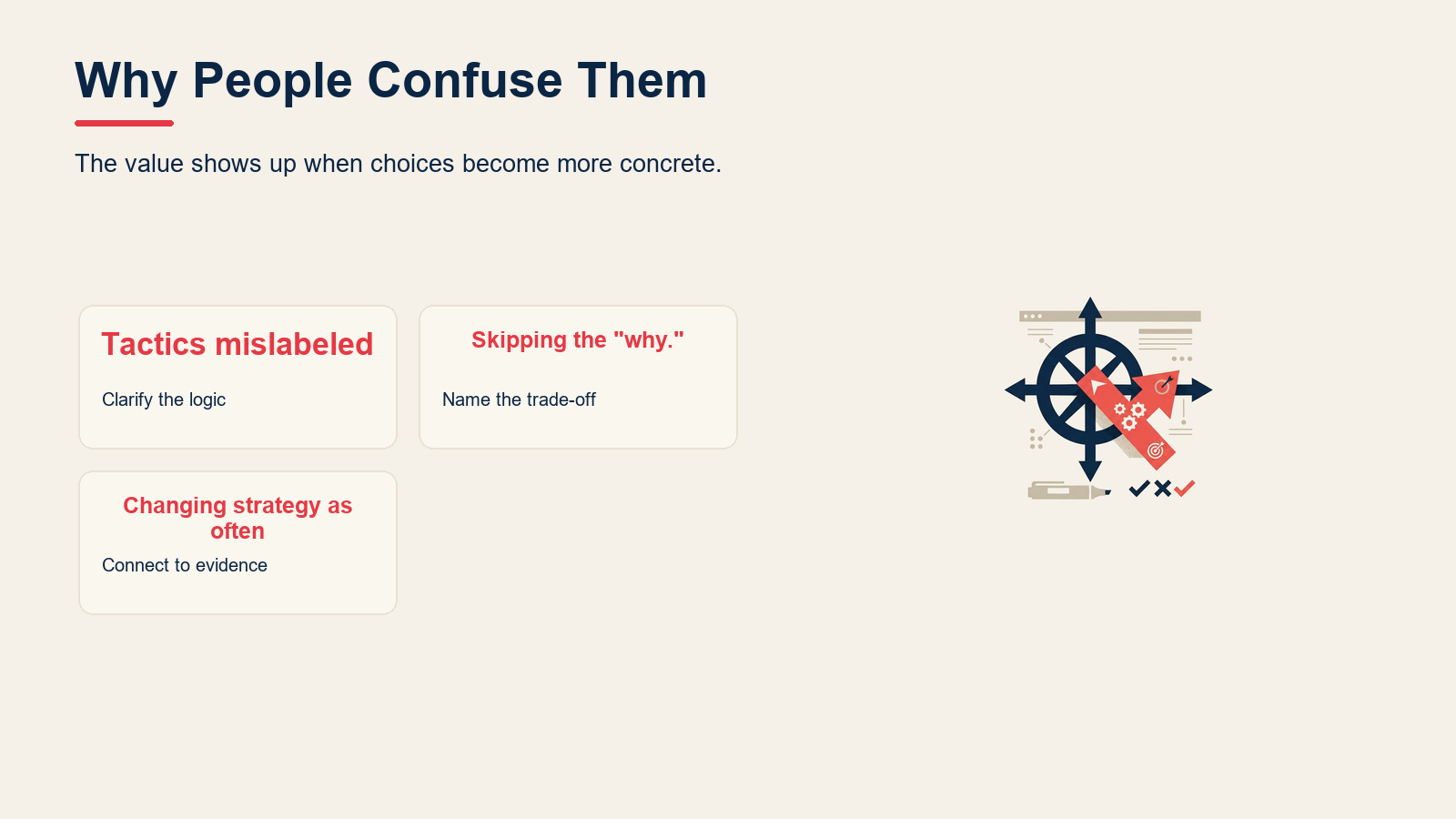
Três padrões geram a confusão com mais frequência.
Rotular táticas como estratégia. "Nossa estratégia é aumentar o engajamento nas redes sociais" não é uma estratégia. É uma tática. A estratégia pode ser "aumentar o reconhecimento da marca entre CFOs do mercado médio para reduzir a dependência de aquisição paga." O engajamento em redes sociais é uma tática que pode servir a essa estratégia.
Pular o "porquê". Equipes pulam para as táticas porque decidir um curso de ação parece produtivo. Mas um conjunto de táticas bem executadas sem lógica estratégica unificadora é apenas atividade. Cada trimestre produz movimentação; nenhuma delas se acumula.
Mudar de estratégia com a mesma frequência das táticas. Uma boa estratégia se sustenta por anos. Se a liderança muda a direção da empresa a cada seis meses em resposta a movimentos de concorrentes ou metas trimestrais perdidas, ela está fazendo pensamento tático na altitude errada. As táticas devem absorver a variabilidade de curto prazo; a estratégia não deve.
Como estratégia e táticas funcionam juntas
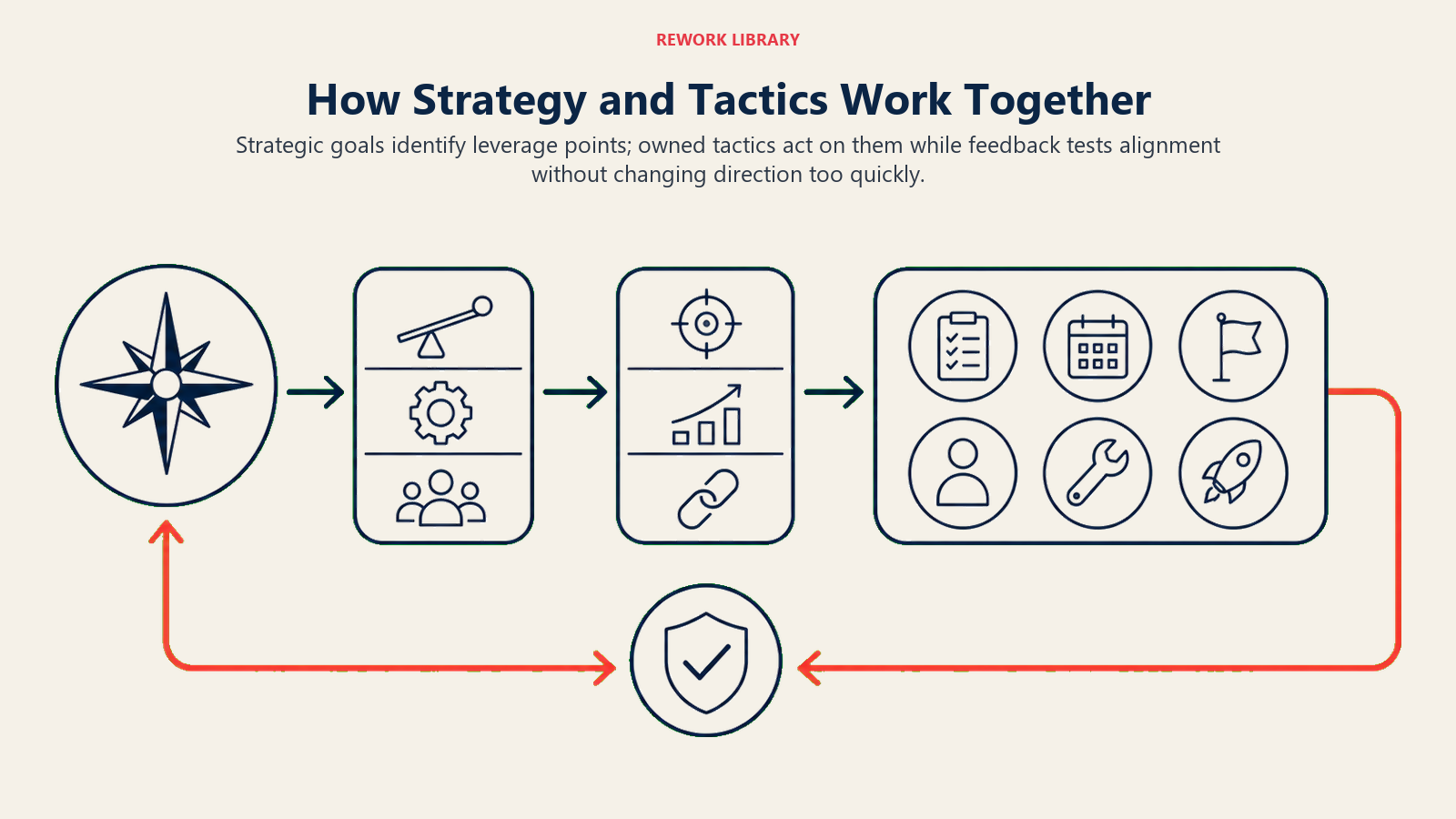
Estratégia sem táticas é uma apresentação de slides. Táticas sem estratégia são uma lista de tarefas. A conexão entre elas é onde a execução de fato acontece.
Passo 1: Defina o objetivo estratégico com clareza
Comece com um resultado específico e com prazo definido no nível organizacional. "Aumentar a receita recorrente anual em 40% em 24 meses, avançando para contas enterprise" é uma estratégia. Ela nomeia uma direção, uma métrica, um prazo e uma escolha de mercado. Para uma abordagem estruturada, os OKRs e o Balanced Scorecard oferecem frameworks para traduzir a intenção estratégica em resultados mensuráveis.
Passo 2: Identifique os pontos de alavancagem
O que precisa ser verdadeiro para que a estratégia funcione? Para uma migração para enterprise, você pode precisar de: uma certificação de segurança para enterprise, uma equipe de vendas com experiência em enterprise, uma função de customer success que lide com implementações complexas e um preço que reflita o valor enterprise. Esses ainda não são táticas. São requisitos estratégicos.
Passo 3: Gere táticas para cada alavanca
Agora você pode atribuir táticas. Para "certificação de segurança para enterprise": contratar um responsável por compliance, engajar um auditor externo, concluir SOC 2 Tipo II até o terceiro trimestre. Cada tarefa é concreta, tem responsável e prazo. É uma tática a serviço explícito de um requisito estratégico.
Passo 4: Verifique o alinhamento constantemente
Conforme as táticas produzem resultados (ou não), pergunte se os resultados estão servindo à estratégia. Uma campanha de anúncio nas redes sociais que gera milhares de inscrições de trial de PMEs é um sucesso tático. Mas se a estratégia é avançar para o mercado enterprise, esse resultado é um sinal de alerta, não uma vitória.
Passo 5: Proteja a estratégia do ruído tático
Táticas falham. Concorrentes reagem. Mercados mudam. Nada disso exige automaticamente uma mudança de estratégia. A disciplina de manter a estratégia firme enquanto se itera nas táticas é o que separa organizações que se acumulam ao longo do tempo daquelas que seguem cada sinal de curto prazo. A literatura sobre vantagem competitiva é consistente nesse ponto: a vantagem duradoura vem da direção estratégica sustentada, não da habilidade tática.
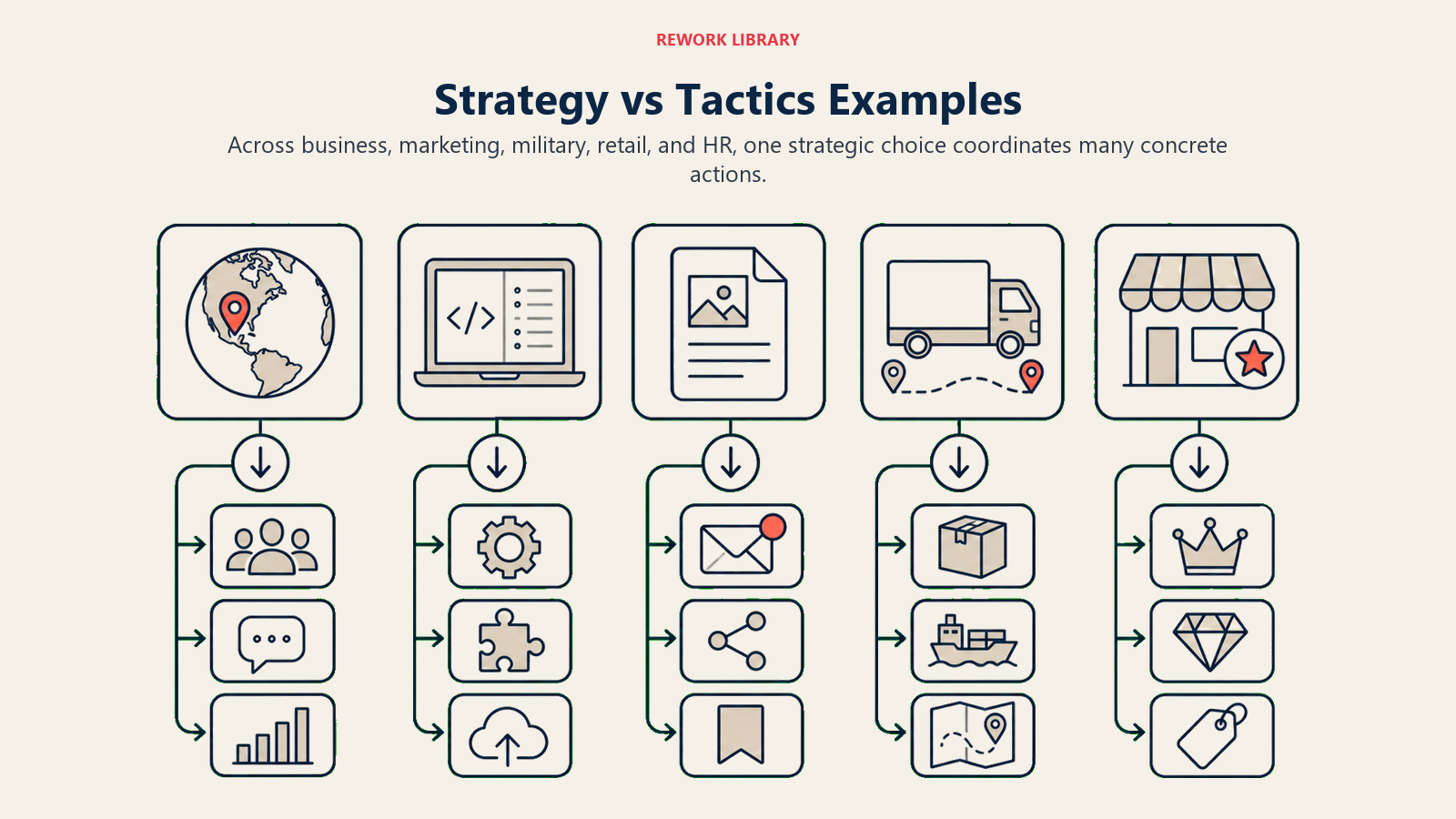
Exemplos de Estratégia vs Táticas
| Contexto | Estratégia | Táticas |
|---|---|---|
| Negócios (SaaS) | Conquistar o mercado médio sendo o CRM mais fácil de adotar sem suporte de TI | Construir um assistente de onboarding sem código, oferecer configuração personalizada para contratos acima de R$ 50 mil, publicar páginas de comparação direcionadas a buscas por "CRM fácil" |
| Marketing | Tornar-se a referência reconhecida em revenue operations B2B para reduzir o CAC pago | Publicar guias detalhados semanais sobre temas de revenue ops, realizar um LinkedIn live mensal, criar uma calculadora de ROI gratuita |
| Militar | Cortar as linhas de suprimento do inimigo para forçar uma negociação de cessar-fogo | Realizar ataques aéreos direcionados em três cruzamentos de pontes estratégicos, implantar unidades de resposta rápida para interceptar comboios |
| Varejo | Capturar o segmento premium por meio de posicionamento em artesanato e procedência | Redesenhar a embalagem com a história de origem, treinar a equipe de piso em sourcing de materiais, fazer parcerias com veículos editoriais para colocações de produtos |
| RH / People Ops | Reduzir o turnover indesejado em 30% em 18 meses melhorando a qualidade dos gestores | Lançar uma pesquisa mensal de feedback de gestores, criar um programa de treinamento de gestores com seis sessões, incluir a eficácia dos gestores nas avaliações de desempenho |
A coluna militar é instrutiva. "Vencer a guerra" é uma ambição, não uma estratégia. Uma estratégia nomeia um caminho específico para esse resultado (cortar linhas de suprimento). As táticas são as operações concretas que executam esse caminho. Esse pensamento em três níveis se mapeia diretamente nos níveis de estratégia corporativa, empresarial e funcional.
Boas Práticas
Faça: escreva sua estratégia em uma frase. Se você não consegue enunciar a direção estratégica em uma única frase clara, ela ainda não é uma estratégia. "Nos tornaremos a escolha padrão para equipes de operações em empresas de 200 a 1.000 funcionários, construindo a plataforma mais flexível em termos de fluxo de trabalho do mercado" é uma estratégia. "Queremos crescer e melhorar" não é.
Faça: defina uma data de validade para a estratégia. Concorde antecipadamente que a estratégia atual vale por 18 ou 24 meses, salvo mudança fundamental de mercado. Isso protege contra o ruído tático que desencadeia mudanças prematuras de direção.
Não faça: deixar as táticas conduzirem a estratégia. Uma tática que funciona brilhantemente (uma campanha viral, uma parceria surpresa) não é em si uma estratégia. Reconheça a vitória e pergunte: essa tática serve à estratégia existente, ou seu sucesso revela algo sobre uma estratégia melhor que deveríamos perseguir?
Faça: use a análise SWOT e as Estratégias Genéricas de Porter na fase de formulação da estratégia. Essas ferramentas são feitas para o nível do "por que e o quê". Executar um SWOT para decidir qual anúncio veicular na próxima semana é usar a ferramenta errada na altitude errada.
Não faça: confundir "prioridade estratégica" com "iniciativa estratégica". Uma prioridade é uma escolha sobre o que mais importa. Uma iniciativa é um programa tático. Ambos têm valor; confundi-los resulta em listas de prioridades que parecem backlogs de projetos.
Faça: documente a conexão. Toda iniciativa tática deve se vincular explicitamente ao objetivo estratégico que serve. Se uma equipe não consegue nomear a justificativa estratégica do seu trabalho, ou a tática não pertence ou a estratégia não foi comunicada. Objetivos de negócios SMART claros ajudam a conectar os dois níveis, fornecendo às táticas âncoras mensuráveis.
Faça: diferencie estratégia corporativa de execução tática no seu calendário de planejamento. Revisões anuais de estratégia e verificações trimestrais de OKR devem ser rituais separados. Misturá-los tende a arrastar conversas estratégicas para a resolução de problemas táticos.
A distinção entre estratégia e táticas não é acadêmica. Ela determina se o esforço da sua equipe se acumula em uma posição duradoura ou apenas produz atividade. Defina a direção com clareza e construa táticas que a sirvam, em vez de substituí-la.
Para frameworks relacionados que operam no nível da estratégia, veja Matriz Ansoff, vantagem competitiva e framework OKR.
Leitura Relacionada

Senior Operations & Growth Strategist
On this page
- Qual é a diferença entre estratégia e táticas?
- Estratégia vs Táticas: Comparação Lado a Lado
- Por que as pessoas as confundem
- Como estratégia e táticas funcionam juntas
- Passo 1: Defina o objetivo estratégico com clareza
- Passo 2: Identifique os pontos de alavancagem
- Passo 3: Gere táticas para cada alavanca
- Passo 4: Verifique o alinhamento constantemente
- Passo 5: Proteja a estratégia do ruído tático
- Exemplos de Estratégia vs Táticas
- Boas Práticas
- Leitura Relacionada