Ciclo de Vida do Produto: As 5 Etapas e Como Gerenciar Cada Uma
Turn this article into takeaways for your work.


Each assistant summarizes the article only for you and suggests best practices for your work.
O ciclo de vida do produto (CVP) é um dos frameworks mais práticos que um estrategista pode ter à mão. Ele indica onde seu produto está no mercado neste momento e, mais importante, o que você deve fazer em relação a isso.
O que é o ciclo de vida do produto?
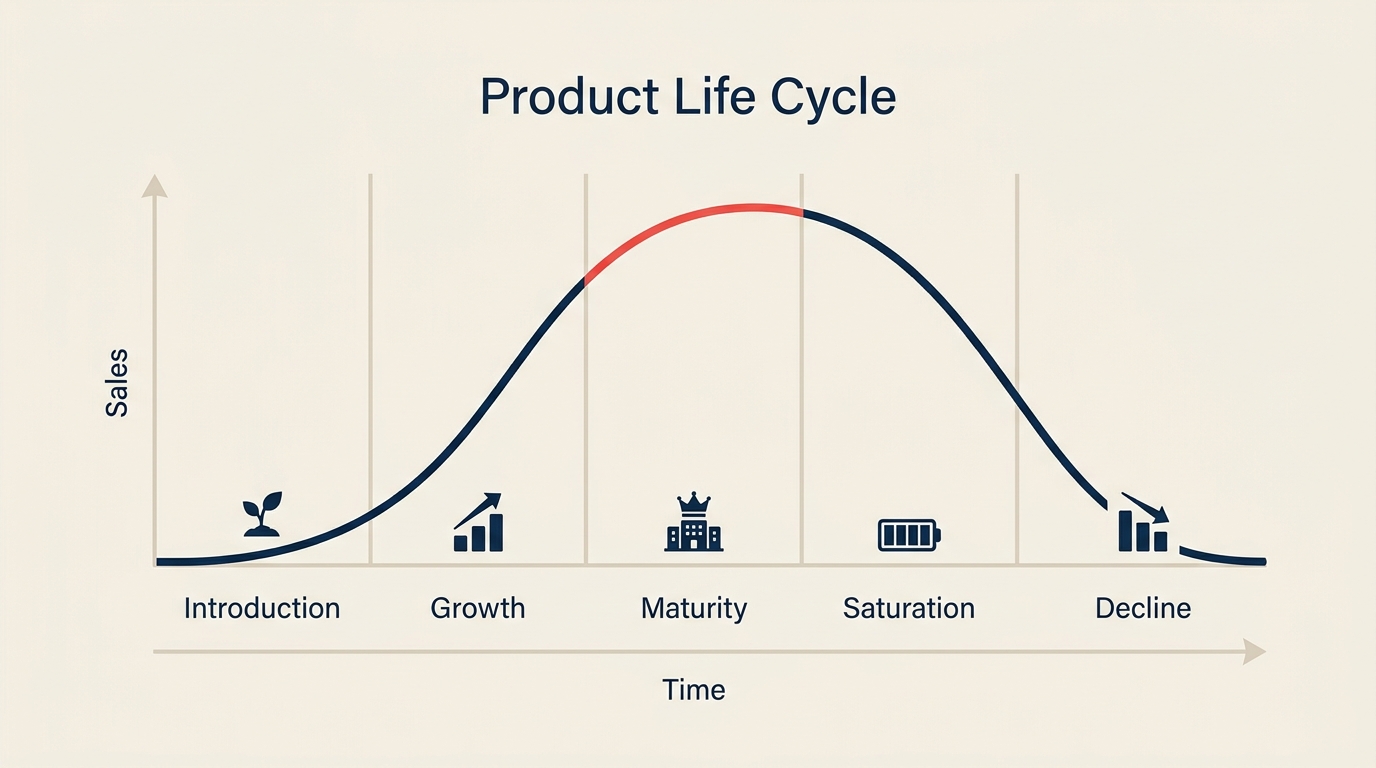
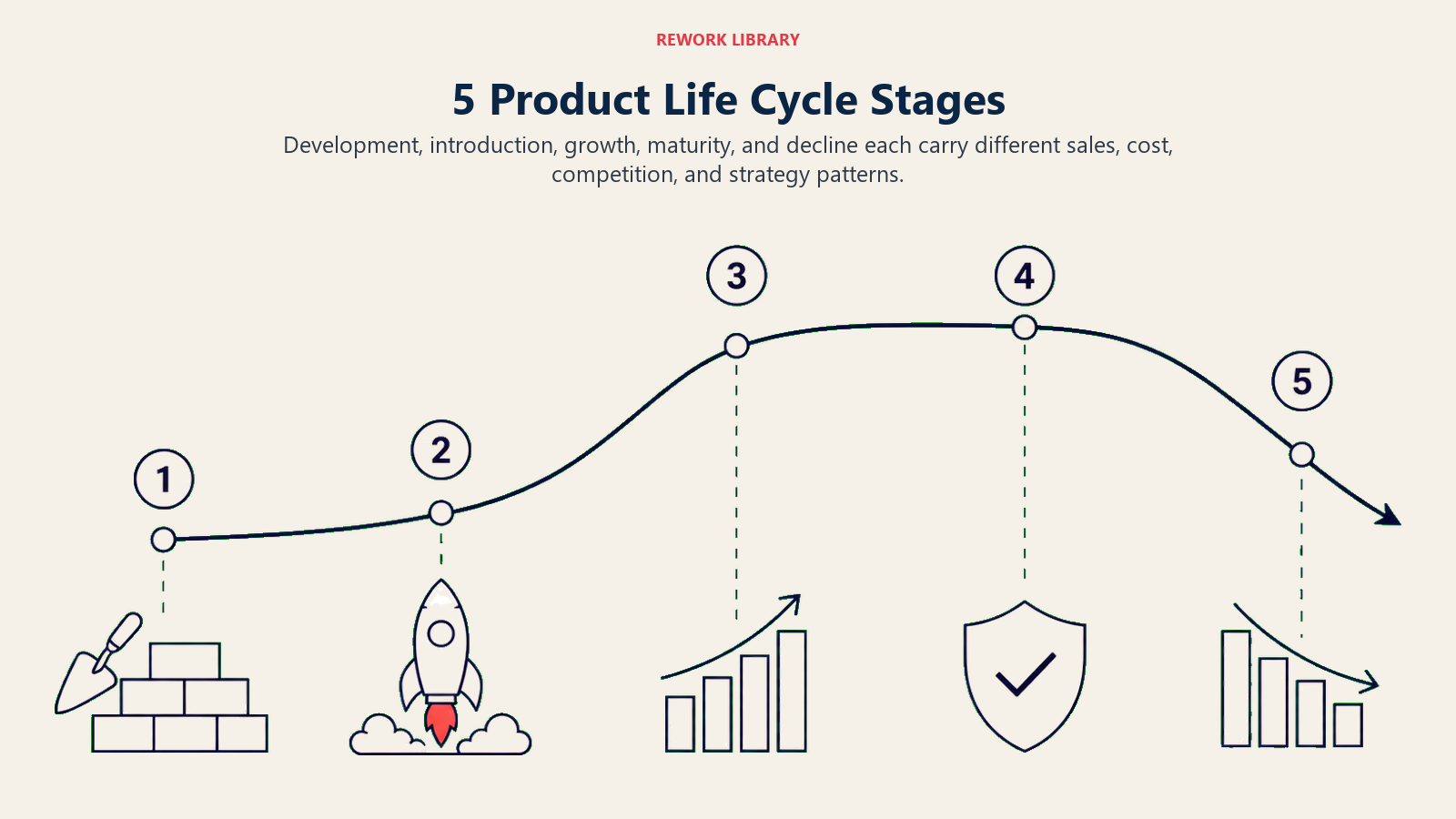
O ciclo de vida do produto é a sequência de etapas pelas quais um produto passa, desde seu desenvolvimento inicial até sua retirada do mercado: desenvolvimento, introdução, crescimento, maturidade e declínio. Cada etapa tem um perfil de receita, estrutura de custos, intensidade competitiva e estratégia ideal distintos. Gerenciar bem um produto significa reconhecer em qual etapa ele se encontra e ajustar sua abordagem antes que o mercado o faça por você.
Theodore Levitt introduziu o conceito em um artigo de 1965 na Harvard Business Review, argumentando que todo produto segue um arco previsível. A forma específica e a duração variam por setor e categoria, mas a lógica subjacente se aplica a bens de consumo, software, equipamentos industriais e serviços.
Dados-Chave
- Um estudo da Gartner constatou que gestores de produto que acompanham ativamente a etapa do ciclo de vida superam os demais tanto na retenção de receita quanto na gestão de margens, com o PLM estruturado associado a ganhos de rentabilidade mensuráveis em portfólios de produtos (Gartner Product Management Research, 2023).
- O ciclo médio de substituição de smartphones para consumidores encurtou de aproximadamente 33 meses em 2019 para cerca de 30 meses em 2024, ilustrando como categorias de tecnologia podem comprimir as fases de crescimento e maturidade (Statista, 2024).
- Pesquisa da Harvard Business Review mostra que empresas com estratégias de produto adaptáveis, que ajustam explicitamente suas táticas conforme a etapa do ciclo de vida muda, relatam retorno sobre investimento aproximadamente 20% maior em comparação com aquelas que utilizam planos estáticos (HBR, 2022).
As 5 etapas do ciclo de vida do produto
Desenvolvimento
O desenvolvimento é a fase pré-lançamento. O produto existe em forma de P&D, protótipo ou versão beta. A receita é zero, os custos são elevados e a equipe está investindo para construir algo que espera que o mercado queira.
Esta etapa é onde você valida suposições. Entrevistas de descoberta com clientes, testes de protótipo e programas piloto iniciais pertencem a este momento. O objetivo não é aperfeiçoar o produto, mas encontrar sinais suficientes para justificar o investimento no lançamento, e moldar a estratégia go-to-market que vai conduzir o produto até sua etapa de introdução.
Decisões de precificação ainda não existem no nível do consumidor, mas as decisões internas de investimento, sim. As equipes precisam decidir quanto gastar e como priorizar funcionalidades, o que molda diretamente a estrutura de custos do produto no lançamento.
Introdução
O produto chega ao mercado. As vendas são baixas, o crescimento é lento e os custos permanecem altos porque você está construindo distribuição, educando compradores e absorvendo ineficiências iniciais de produção. Os lucros são tipicamente negativos ou mínimos.
O foco de marketing nesta etapa é quase inteiramente em conscientização e experimentação. Seu primeiro trabalho é fazer com que as pessoas certas saibam que o produto existe e, em seguida, convencê-las de que vale a pena experimentar. Publicidade para o mercado de massa raramente compensa aqui. Abordagens direcionadas a early adopters funcionam melhor.
A precificação tende a seguir um de dois caminhos. A precificação de skimming define um preço inicial alto para recuperar rapidamente os custos de P&D junto a compradores dispostos a pagar um prêmio pela novidade. A precificação de penetração define um preço baixo para maximizar a velocidade de adoção. A escolha certa depende de quão rapidamente você precisa construir a base de clientes e de quanta flexibilidade de precificação você terá mais adiante.
Crescimento
As vendas se aceleram. A informação se espalha, a distribuição se expande e os custos unitários caem à medida que a produção escala. Esta é a etapa que cria urgência competitiva: se seu produto está crescendo, os concorrentes percebem e começam a entrar na categoria.
O marketing migra de pura conscientização para diferenciação. Não basta mais explicar o que o produto faz. Você precisa explicar por que o seu é a melhor escolha à medida que surgem alternativas. O investimento em marca começa a se acumular aqui.
A precificação pode permanecer agressiva para manter a participação de mercado contra os novos entrantes, ou começar a subir à medida que o produto conquista reputação. A maioria das empresas mantém o preço enquanto investe pesadamente em distribuição e melhorias de produto para se manter à frente dos fast followers.
Maturidade
O crescimento desacelera. O mercado está amplamente penetrado. A maioria dos compradores potenciais já tem o produto ou escolheu conscientemente um concorrente. Esta é a etapa mais longa para a maioria dos produtos bem-sucedidos e aquela em que as margens de lucro, no seu pico, começam a se comprimir sob pressão competitiva.
O desafio estratégico na maturidade é duplo. Primeiro, você precisa defender sua posição contra rivais que disputam os mesmos clientes. Segundo, você precisa decidir se vai colher lucros do produto existente ou investir na extensão do ciclo de vida por meio de melhorias, novos segmentos ou expansão geográfica.
O marketing se torna focado em retenção. Programas de fidelidade, trilhas de upsell e agrupamento de funcionalidades pertencem a esta etapa. A publicidade tende a migrar de educação sobre o produto para reforço de marca.
A precificação é tipicamente a mais competitiva aqui. As margens se comprimem à medida que os rivais igualam funcionalidades e os compradores ganham poder de barganha pela abundância de opções.
Declínio
As vendas caem. A própria categoria pode estar encolhendo, ou seu produto específico foi substituído por uma abordagem mais recente. Os custos podem começar a parecer elevados em relação à receita à medida que o volume diminui.
Nem todo produto em declínio deve ser salvo. Alguns merecem uma saída estruturada: reduza os gastos com marketing, racionalize o portfólio de SKUs, colha o fluxo de caixa restante e, eventualmente, descontinue. Outros podem ser revitalizados por meio de reposicionamento, um novo segmento-alvo ou uma atualização significativa do produto.
A decisão-chave é se o declínio é estrutural (a categoria está genuinamente desaparecendo, como aconteceu com as câmeras de filme) ou cíclico e endereçável (uma queda temporária que um esforço focado pode reverter). Errar nessa análise é custoso nos dois sentidos: investir em uma categoria em extinção queima capital, enquanto abandonar prematuramente um produto recuperável entrega participação de mercado aos concorrentes.
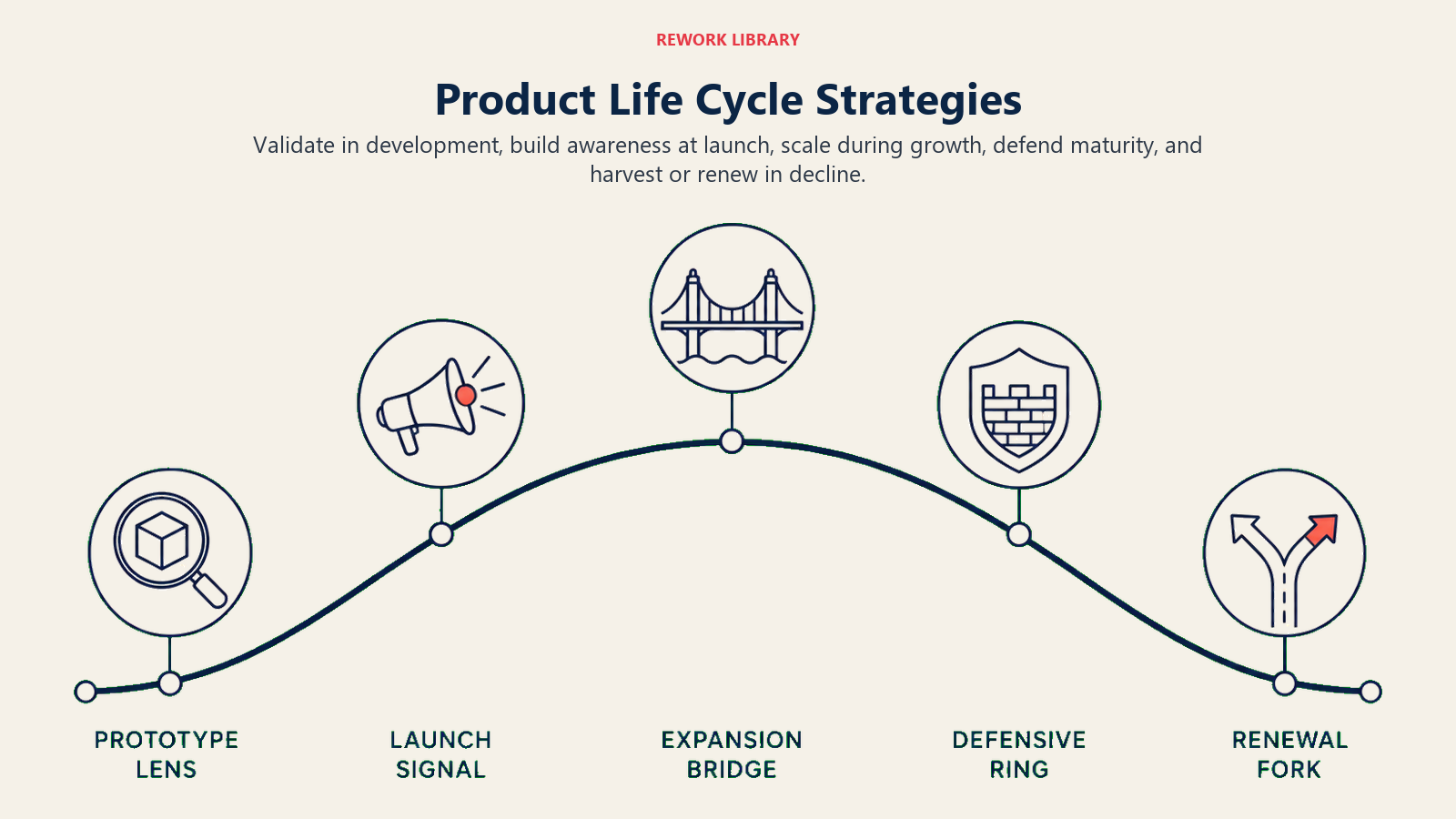
Estratégias do ciclo de vida do produto por etapa
Valide no desenvolvimento, construa conscientização no lançamento, escale durante o crescimento, defenda a maturidade e colha ou renove no declínio.
| Etapa | Tendência de vendas | Perfil de custos | Lucro típico | Estratégia central |
|---|---|---|---|---|
| Desenvolvimento | Nenhuma | Muito alto (P&D) | Negativo (investimento) | Validar o conceito, minimizar desperdício de construção |
| Introdução | Baixa, crescimento lento | Alto (gastos de lançamento) | Negativo a breakeven | Construir conscientização, fidelizar early adopters |
| Crescimento | Aumento rápido | Caindo por unidade | Positivo e crescente | Diferenciar, expandir distribuição, defender participação |
| Maturidade | Platô, declínio lento | Baixo a moderado | Pico, depois comprimindo | Defender, estender ou colher seletivamente |
| Declínio | Caindo | Aumentando em relação à receita | Encolhendo a zero | Sair, reposicionar ou encontrar um nicho para manter |
Exemplos do ciclo de vida do produto
| Produto | Setor | Etapa atual | Observações |
|---|---|---|---|
| iPhone (como categoria) | Eletrônicos de consumo | Maturidade avançada | O crescimento desacelerou; a concorrência é intensa; a Apple estende o ciclo com upgrades de câmera, agrupamento de serviços e programas de troca |
| Netflix streaming (2013-2018) | Mídia | Crescimento | A base de assinantes se expandiu rapidamente com o aumento das alternativas ao cabo |
| Locação física de DVDs | Mídia / varejo | Declínio | Substituído pelo streaming; Blockbuster saiu; operadores remanescentes atendem compradores de nicho |
| Software CRM em nuvem | B2B SaaS | Maturidade | A categoria é bem estabelecida; a concorrência se concentra em integrações, preço e especialização vertical |
| Assistentes de escrita com IA | Software | Crescimento | Ainda em expansão rápida à medida que a adoção migra de early adopters para usuários corporativos mainstream |
| Máquinas de fax | Equipamentos de escritório | Declínio | O uso diminui a cada ano; sobrevive em setores regulados (saúde, jurídico) sem saída próxima |
Como gerenciar cada etapa
Etapa 1: Diagnostique com precisão a etapa atual
Observe três sinais: tendência de vendas (acelerando, estável ou caindo), densidade competitiva (poucos rivais, saturada ou diminuindo) e direção das margens (expandindo ou comprimindo). Em conjunto, esses indicadores dizem mais do que qualquer métrica isolada. Não confie apenas na data de lançamento; alguns produtos passam anos na introdução, enquanto outros percorrem o crescimento em meses.
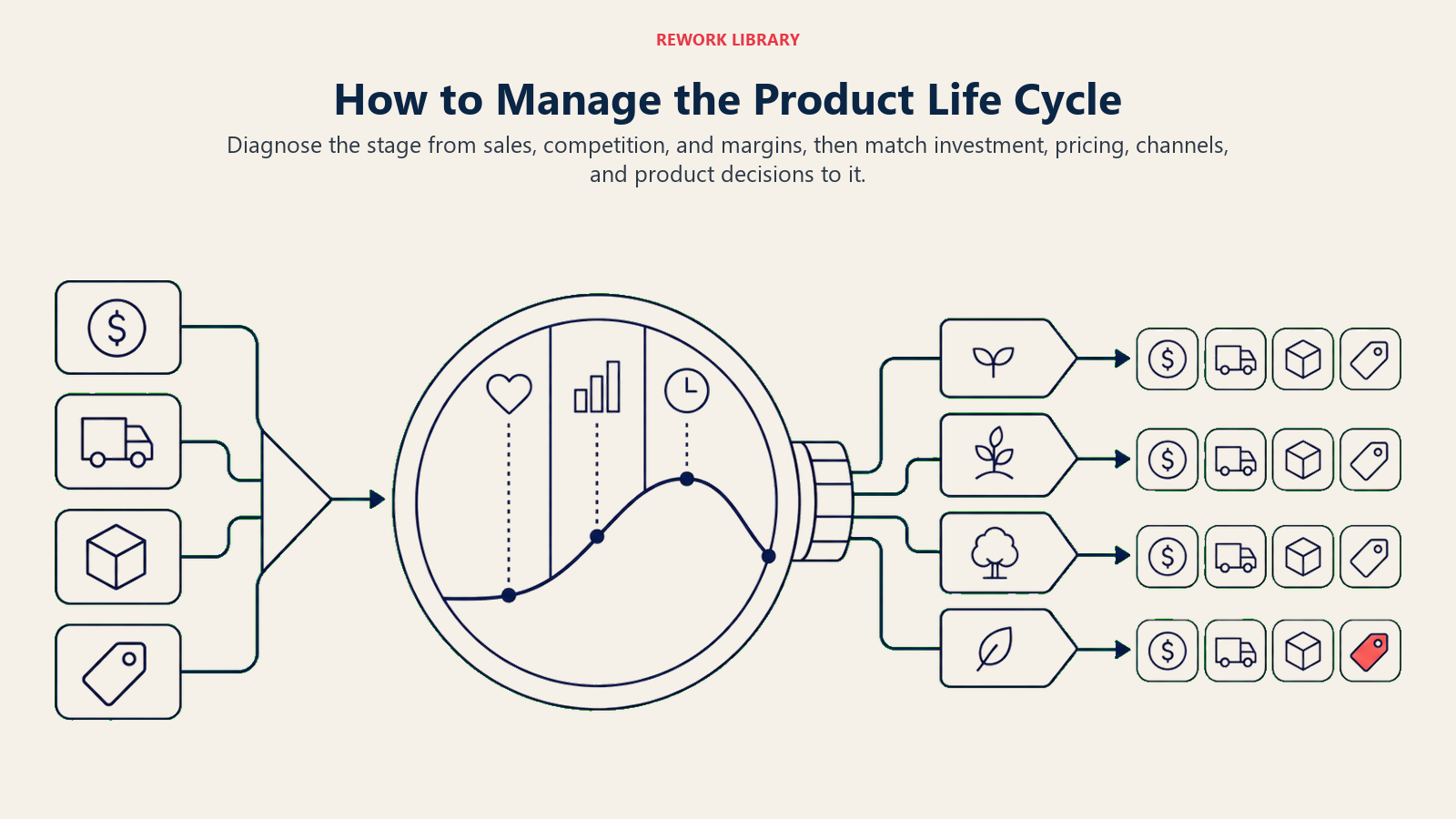
Etapa 2: Alinhe o investimento ao que a etapa realmente exige
A introdução requer gastos com marketing e distribuição mesmo quando o P&L parece doloroso. A maturidade requer controle rigoroso de custos e investimento em retenção. O declínio exige clareza sobre se você está colhendo ou reinvestindo, e essa decisão deve ser tomada explicitamente, não por omissão. Investimento desalinhado é uma das causas mais comuns de declínio prematuro.
Etapa 3: Antecipe as transições antes que apareçam nos números
Quando a desaceleração do crescimento de vendas fica visível, muitas vezes você já perdeu a janela para agir. Observe indicadores antecedentes: tendências de custo de aquisição de clientes, net promoter score por coorte e lançamentos de produtos concorrentes. Esses sinais tendem a indicar transições de etapa de 6 a 12 meses antes que a receita o faça.
Etapa 4: Construa seu portfólio em múltiplas etapas do ciclo de vida
Um portfólio de produtos todos na maturidade é um negócio sem motor de crescimento. Um portfólio todo na introdução não tem fluxo de caixa para financiar o desenvolvimento. A BCG matrix foi criada especificamente para ajudar executivos a visualizar e equilibrar um portfólio nessas etapas. Combine-a com a Ansoff's growth matrix ao planejar como estender ou substituir produtos maduros.
Etapa 5: Planeje a extensão antes de precisar dela
Produtos no pico da maturidade têm o fluxo de caixa e a presença de mercado para financiar extensões. Espere até que o declínio seja óbvio e você terá perdido ambos. Estratégias de extensão comuns: entrar em novos mercados geográficos, direcionar para um novo segmento de clientes, reposicionar em torno de um benefício diferente ou lançar uma melhoria significativa do produto. O framework das três horizontes de crescimento ajuda a estruturar esse pensamento ao longo de linhas de tempo de curto, médio e longo prazo.
Etapa 6: Gerencie o declínio de forma deliberada
Se a saída é a decisão certa, faça-a de forma organizada: reduza os SKUs, migre o suporte para canais de baixo custo, interrompa o marketing discricionário e defina uma data clara de fim de vida para os principais clientes. Se o reposicionamento é o caminho, comprometa-se com ele. Meias-medidas no declínio tendem a prolongar as perdas sem reverter a trajetória.
Limitações do modelo de ciclo de vida do produto
O CVP é um modelo mental útil, não uma lei preditiva. Vários dinamismos do mundo real não se encaixam na curva limpa:
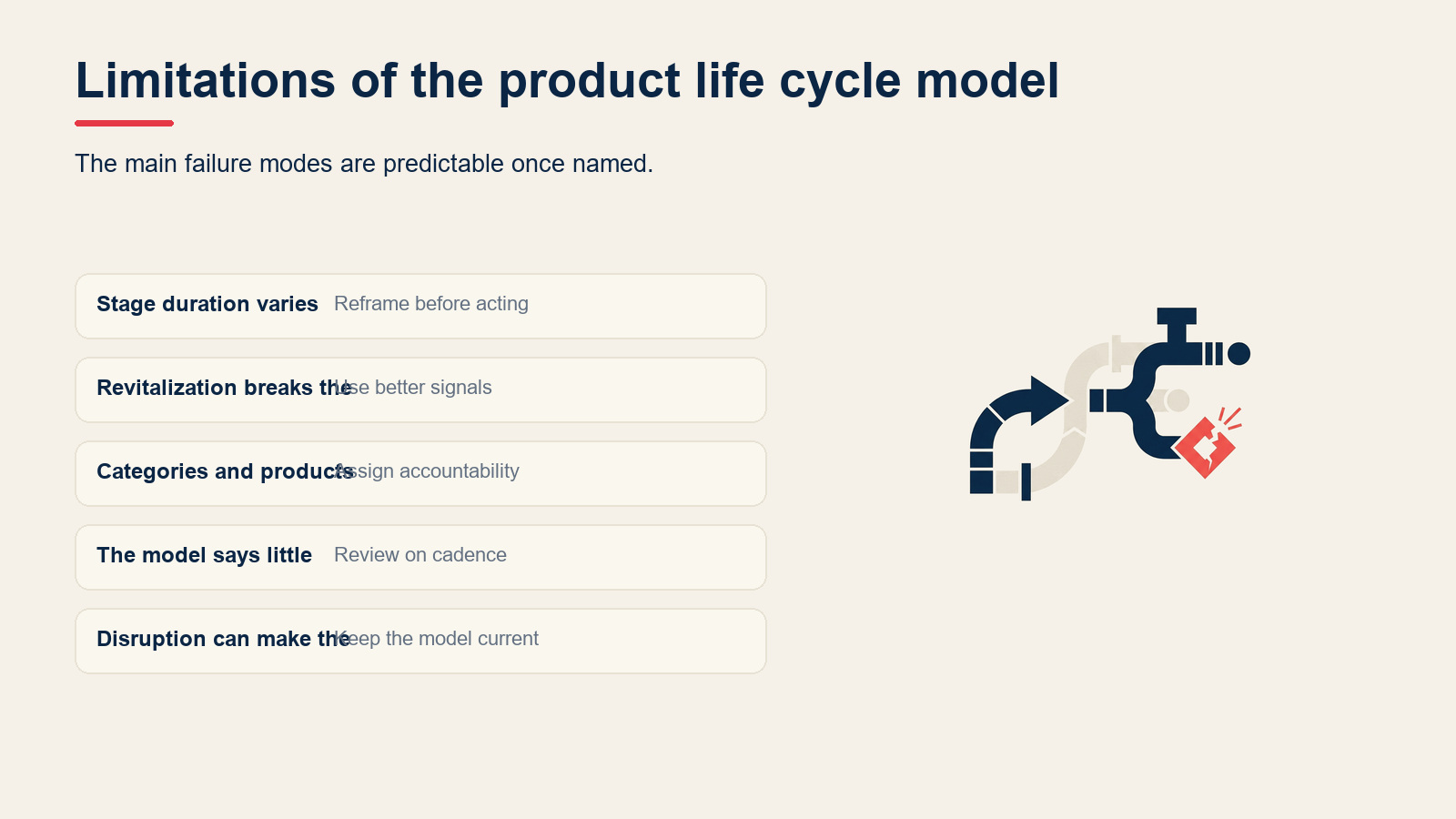
A duração de cada etapa varia enormemente. Alguns produtos passam décadas na maturidade (a fórmula original da Coca-Cola). Outros percorrem a introdução em meses. O modelo fornece uma forma, não uma linha do tempo.
A revitalização quebra a curva. O retorno à lucratividade da Apple no final dos anos 1990 foi uma reversão clássica do declínio. O mesmo ocorreu com a reinvenção da Nintendo com o Wii após anos perdendo participação de mercado. A intervenção estratégica pode reiniciar um ciclo de vida, o que o modelo não prevê explicitamente.
Categorias e produtos nem sempre se movem juntos. Uma marca específica pode declinar enquanto sua categoria cresce (Blackberry durante o início do boom dos smartphones). E uma marca pode crescer enquanto sua categoria declina (gravadoras de vinil premium na era do streaming).
O modelo diz pouco sobre o que fazer. Ele descreve bem as etapas, mas oferece orientação prescritiva limitada sobre como executar dentro de cada uma. É aí que ferramentas como a blue ocean strategy (para criar nova demanda no declínio ou maturidade avançada) e a value chain analysis (para identificar onde cortar ou investir) preenchem a lacuna.
A disrupção pode tornar a curva irrelevante. Um produto que parecia estar com segurança na maturidade pode saltar diretamente para o declínio quando um novo entrante redefine a categoria. Veja disruptive innovation para o mecanismo subjacente, e jobs to be done para identificar necessidades não atendidas antes que um disruptor o faça.
Melhores práticas
Esta visão separa as principais partes das melhores práticas para que os detalhes abaixo sejam mais fáceis de comparar.
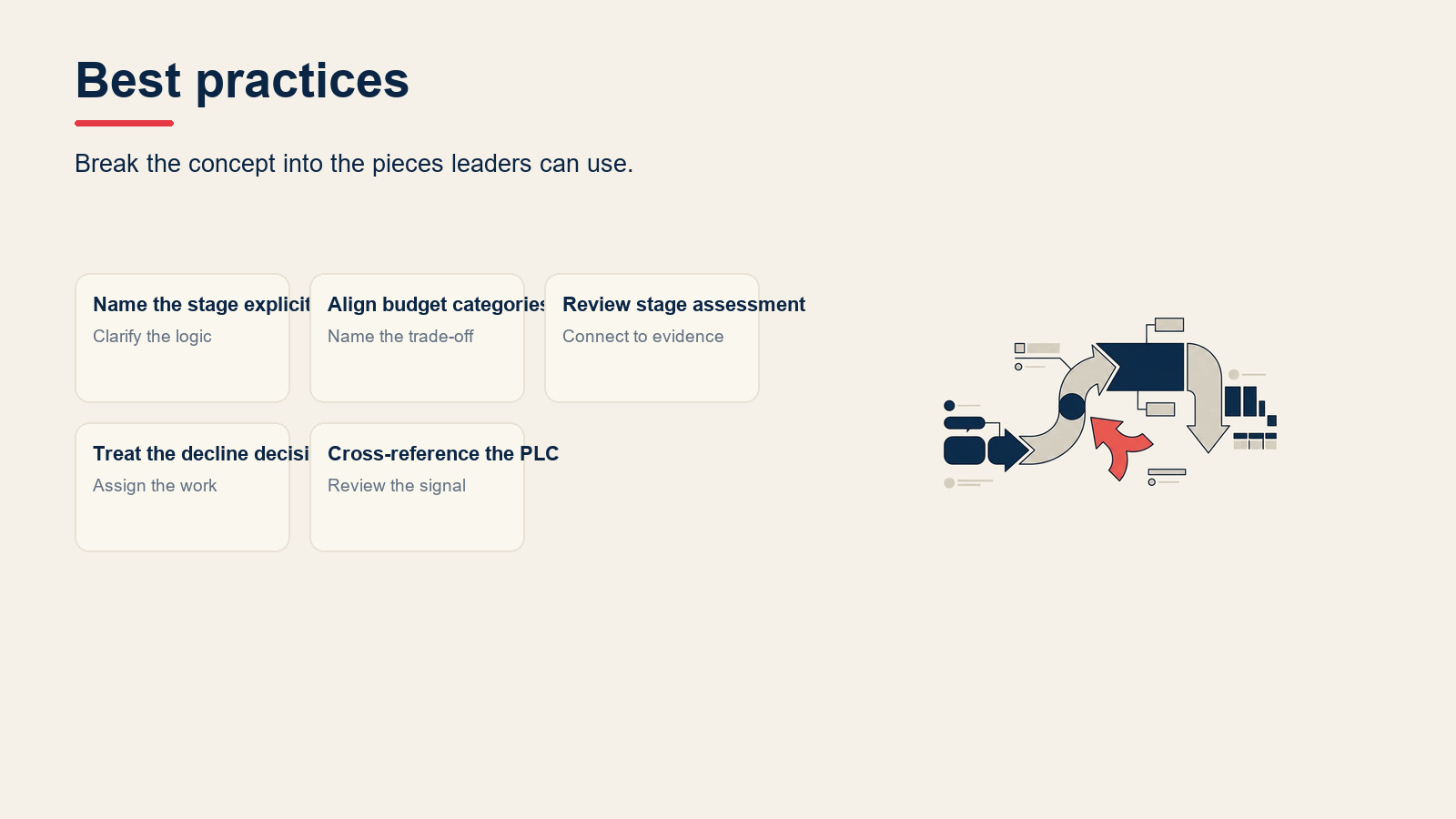
- Nomeie explicitamente a etapa nos documentos de planejamento. Se o plano do seu produto não indica em qual etapa do ciclo de vida ele está, cada membro da equipe fará uma suposição diferente.
- Alinhe as categorias de orçamento à etapa. Produtos na etapa de introdução devem ter uma proporção de gastos muito diferente (mais marketing, mais desenvolvimento de produto) do que produtos na maturidade (mais retenção, mais eficiência).
- Revise a avaliação de etapa trimestralmente. As transições de etapa ocorrem mais rápido do que os ciclos de planejamento anual. Crie uma revisão trimestral que analise os três sinais diagnósticos: tendência de vendas, densidade competitiva e direção das margens.
- Trate a decisão de declínio como uma escolha estratégica, não como um padrão. Empresas que deixam produtos derivar no declínio sem uma decisão deliberada tipicamente subinvestem na saída (mantendo custos nos livros por tempo excessivo) ou sobinvestem em resgate (desperdiçando dinheiro em uma batalha estruturalmente impossível de vencer).
- Correlacione o CVP com sua visão de portfólio. A BCG matrix se mapeia diretamente na lógica do ciclo de vida: Stars estão no crescimento, Cash Cows na maturidade, Question Marks na introdução e Dogs no declínio. Usar os dois frameworks em conjunto oferece diagnóstico de etapa e orientação de alocação de recursos em uma única conversa.
Perguntas Frequentes sobre Ciclo de Vida do Produto
Quais são as 5 etapas do ciclo de vida do produto?
As cinco etapas são: desenvolvimento (P&D pré-lançamento e validação), introdução (primeira entrada no mercado, baixas vendas, alto custo), crescimento (rápida aceleração de vendas e entrada de concorrentes), maturidade (vendas no pico, crescimento desacelerando, compressão de margens) e declínio (queda de vendas à medida que o mercado avança ou a categoria encolhe).
Quanto tempo dura cada etapa do ciclo de vida do produto?
A duração varia enormemente por produto e setor. Produtos de eletrônicos de consumo podem percorrer todas as cinco etapas em dois a três anos. Produtos de commodities ou itens básicos de categoria podem permanecer na maturidade por décadas. Não existe uma linha do tempo universal; a etapa é definida pela forma da curva de vendas e pelo ambiente competitivo, não pelo calendário.
Qual é a diferença entre o ciclo de vida do produto e o gerenciamento do ciclo de vida do produto (PLM)?
O ciclo de vida do produto (CVP) é um framework estratégico que descreve as etapas pelas quais um produto passa no mercado. O gerenciamento do ciclo de vida do produto (PLM) é o conjunto mais amplo de processos de negócios e ferramentas de software utilizados para gerenciar um produto desde o conceito inicial até a fabricação, serviço e fim de vida. O CVP é um modelo estratégico; o PLM é uma disciplina operacional.
Um produto pode pular etapas ou reiniciar seu ciclo de vida?
Sim. Alguns produtos passam diretamente da introdução para a maturidade se entram em uma categoria bem estabelecida com uma melhoria incremental. Outros revertem do declínio de volta para o crescimento por meio de reposicionamento, novos segmentos ou reinvenção significativa. Um relançamento de produto em um novo mercado pode efetivamente reiniciar a etapa de introdução mesmo para um produto maduro.
O que uma empresa deve fazer quando seu principal produto atinge o declínio?
Primeiro, determine se o declínio é estrutural (a categoria está desaparecendo) ou endereçável (um problema de produto ou posicionamento que pode ser corrigido). Se estrutural, gerencie uma saída controlada: reduza custos, atenda os clientes fiéis restantes com eficiência e redirecione recursos para produtos em fase de crescimento. Se endereçável, comprometa-se com um plano claro de reposicionamento ou melhoria com um orçamento de investimento definido e um ponto de decisão para reavaliação em 12 meses. Todo produto eventualmente percorre essas etapas. Mas o ritmo, a forma e o resultado em cada transição são aspectos que a liderança pode influenciar. Saber onde você está é o primeiro passo para fazer uma escolha deliberada em vez de reagir a uma tendência que você não viu chegar.

Senior Operations & Growth Strategist
On this page
- O que é o ciclo de vida do produto?
- As 5 etapas do ciclo de vida do produto
- Desenvolvimento
- Introdução
- Crescimento
- Maturidade
- Declínio
- Estratégias do ciclo de vida do produto por etapa
- Exemplos do ciclo de vida do produto
- Como gerenciar cada etapa
- Etapa 1: Diagnostique com precisão a etapa atual
- Etapa 2: Alinhe o investimento ao que a etapa realmente exige
- Etapa 3: Antecipe as transições antes que apareçam nos números
- Etapa 4: Construa seu portfólio em múltiplas etapas do ciclo de vida
- Etapa 5: Planeje a extensão antes de precisar dela
- Etapa 6: Gerencie o declínio de forma deliberada
- Limitações do modelo de ciclo de vida do produto
- Melhores práticas