Execução da Estratégia: Por Que as Estratégias Falham e Como Entregá-las
Turn this article into takeaways for your work.


Each assistant summarizes the article only for you and suggests best practices for your work.
A execução da estratégia é a disciplina de transformar um plano estratégico em resultados mensuráveis. E é onde a maioria das organizações silenciosamente desmorona.
Um plano pode ser brilhante no papel. A análise de mercado é minuciosa, as prioridades estão claras e a liderança está alinhada ao sair do retiro. Depois, os meses passam. As iniciativas que pareciam urgentes na apresentação de planejamento competem com as operações do dia a dia, os recursos mudam, a responsabilidade se dilui e no T3 a estratégia vive em uma apresentação que ninguém mais abre.
Este artigo explica por que isso acontece, como é uma boa execução e como construir um processo de entrega que se sustente.
O que é execução da estratégia?
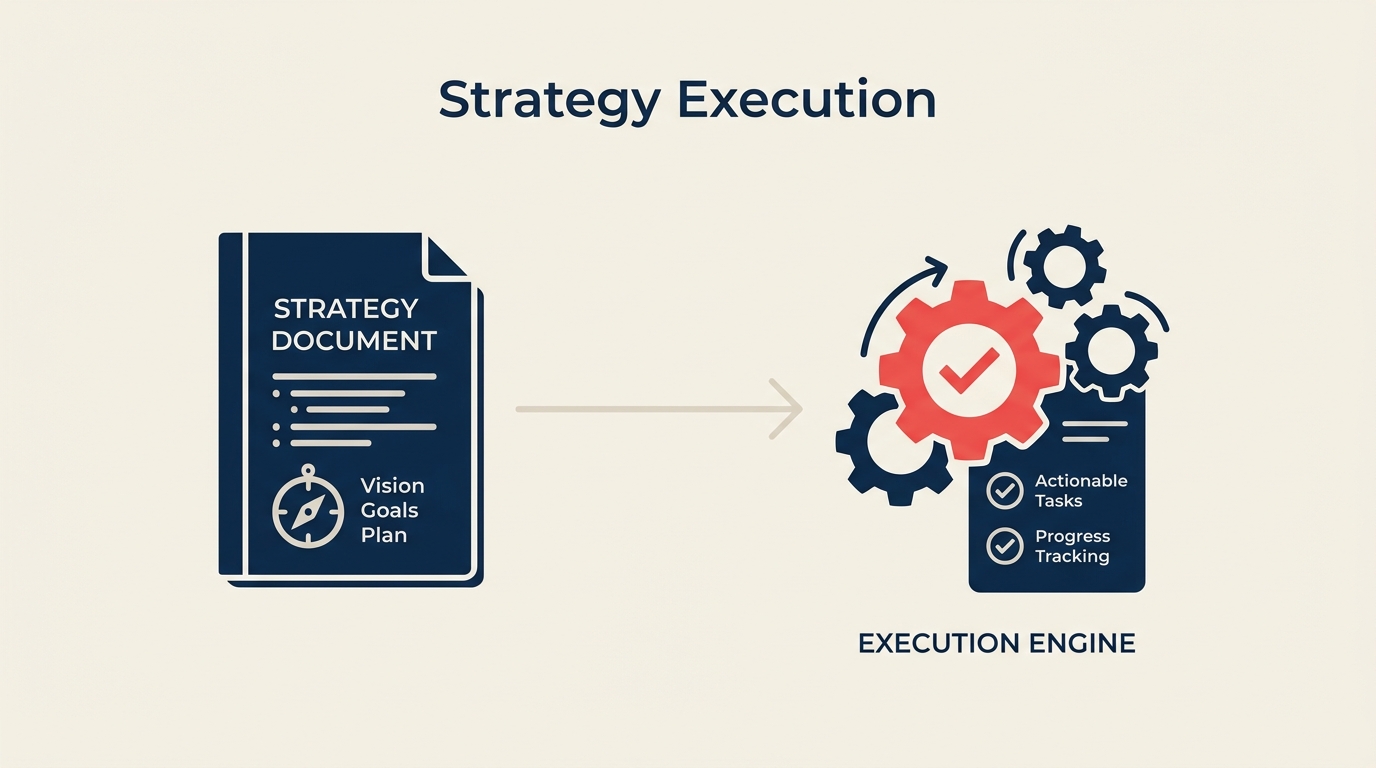
Execução da estratégia é o processo estruturado de traduzir objetivos estratégicos em ações operacionais, atribuir responsabilidade, alocar recursos e acompanhar o progresso até que os resultados sejam entregues.
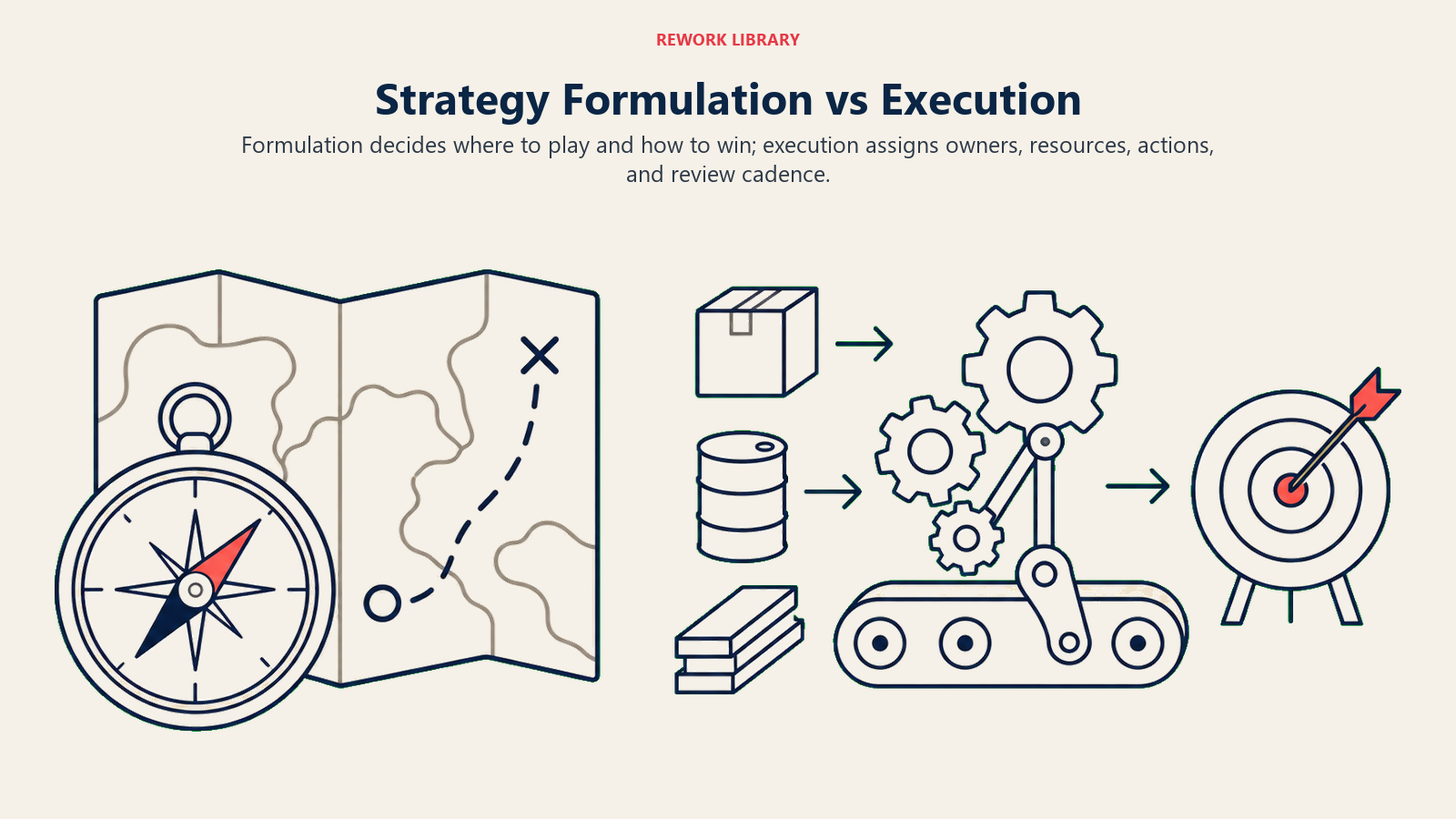
Não é o mesmo que ter uma estratégia. A formulação é o pensamento. A execução é a ação. A divisão espelha a diferença entre estratégia como um plano deliberado e estratégia como o padrão que realmente emerge, uma distinção no cerne dos 5 Ps da estratégia de Mintzberg. A maioria das organizações investe muito em formulação, por meio de retiros de planejamento, contratação de consultores e pesquisa de mercado, e depois entrega o documento resultante a gestores que nunca fizeram parte da conversa e se espera que descubram o resto.
A lacuna entre o que foi planejado e o que foi entregue às vezes é chamada de lacuna estratégia-execução. É um dos problemas mais consistentemente documentados na pesquisa de gestão, e afeta organizações de todos os tamanhos e setores.
Fatos-Chave
- A principal barreira para a reinvenção estratégica, citada por mais executivos do que qualquer outro fator (35%), é a desconexão entre planejamento e execução, segundo pesquisa do Project Management Institute (PMI, 2025).
- Estima-se que as organizações tenham apenas 50% de taxa de sucesso nos projetos que financiam sua estratégia, segundo o mesmo estudo do PMI com 5.800 profissionais de projetos globalmente.
- Apenas 5% dos colaboradores tipicamente entendem a estratégia de sua empresa bem o suficiente para agir de acordo, um número citado consistentemente em pesquisas da Harvard Business Review sobre alinhamento estratégico.
Formulação da estratégia vs. execução da estratégia
Essas duas atividades estão relacionadas, mas exigem habilidades, estruturas e ritmos completamente diferentes. Confundi-las é uma das razões mais comuns pelas quais uma boa estratégia nunca sai do lugar.
| Dimensão | Formulação da Estratégia | Execução da Estratégia |
|---|---|---|
| Pergunta que responde | Para onde vamos e por quê? | Como chegamos lá, até quando e quem é responsável pelo quê? |
| Responsável principal | Alta liderança, C-suite | Gestão intermediária, equipes interfuncionais |
| Horizonte temporal | 3 a 5 anos | Trimestres, sprints, revisões mensais |
| Entradas principais | Dados de mercado, análise competitiva, modelagem financeira | Planos de recursos, marcos, estruturas de responsabilidade |
| Resultado | Plano estratégico, declaração de visão, iniciativas prioritárias | Cadência operacional, OKRs mensuráveis, dashboards de progresso |
| Risco de falha | Direção errada | Direção certa, entrega errada |
Uma empresa que se destaca em formulação, mas negligencia a execução, continuará produzindo estratégias que parecem certas e não chegam a lugar algum. Uma empresa que executa sem uma estratégia clara se moverá rápido na direção errada. Ambas são custosas. A disciplina está em manter as duas juntas.
Veja níveis de estratégia para entender como formulação e execução se distribuem entre as camadas corporativa, de unidade de negócios e funcional.
Por que a execução da estratégia falha
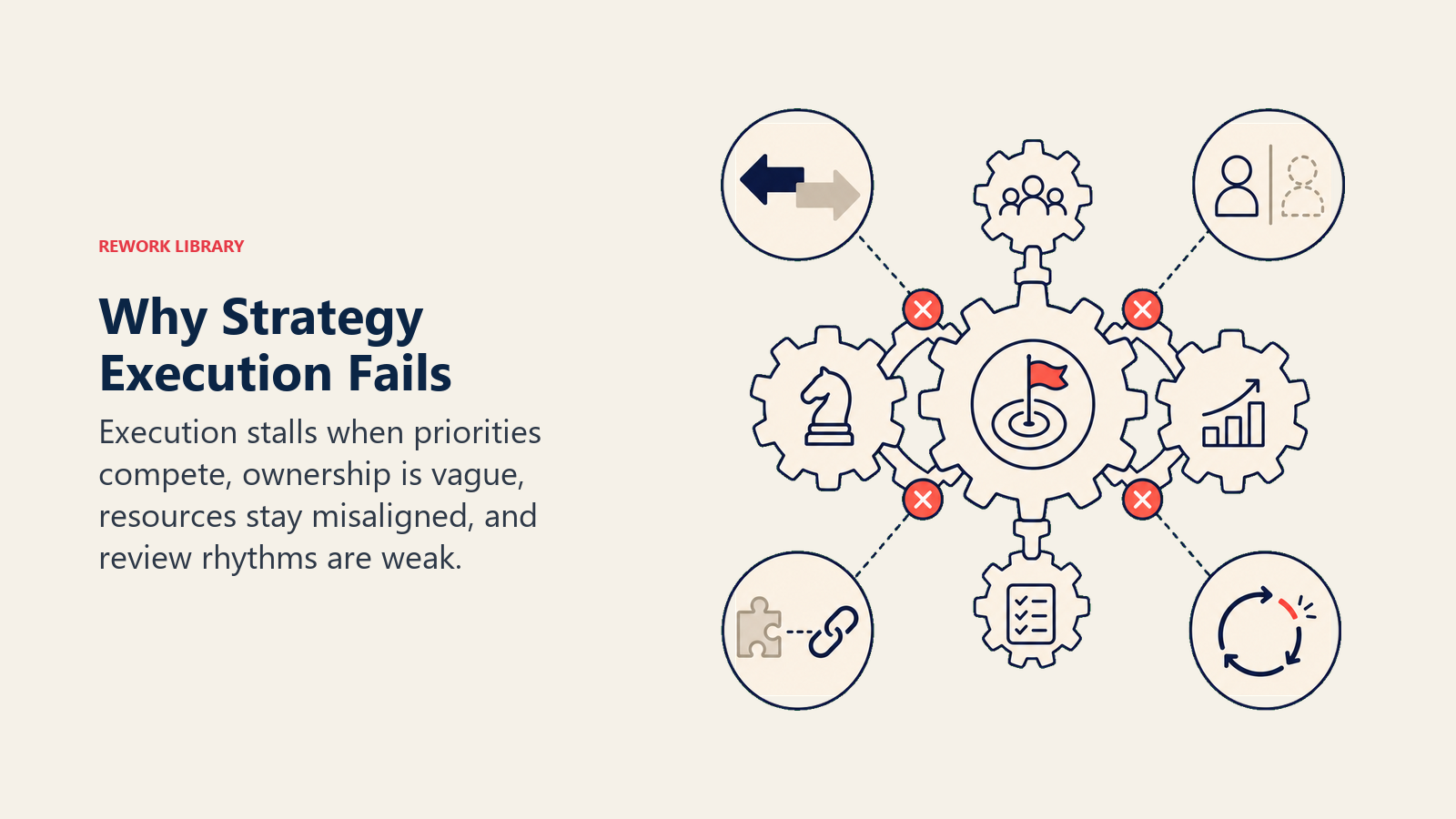
As razões pelas quais as estratégias estancam raramente são mistério. Elas seguem padrões previsíveis que aparecem repetidamente em todos os setores.
| Modo de falha | Como se manifesta | Causa raiz |
|---|---|---|
| Sem responsabilidade clara | Todos acham que outra pessoa é responsável | Responsabilidade não atribuída no nível da iniciativa |
| Estratégia presa em apresentações | As equipes não conseguem explicar as prioridades | Sem tradução da estratégia para o trabalho diário |
| Desalinhamento de recursos | Orçamento e headcount não correspondem às prioridades declaradas | Decisões de alocação tomadas antes de a estratégia ser finalizada |
| Apenas indicadores defasados | As equipes sabem que perderam as metas depois do fato | Nenhum indicador antecedente acompanhado durante a execução |
| Cadência de revisão anual | Quando os problemas surgem, já é tarde para corrigi-los | Ritmo de revisão muito lento para o ritmo de execução |
| Desvio da gestão intermediária | As equipes de linha de frente não sabem o que fazer diferente | Líderes sênior comunicam a estratégia entre si, não pela organização |
| Prioridades demais | As equipes trabalham em tudo, avançam em nada | Estratégia não forçada por um exercício real de escolhas |
A pesquisa do PMI de 2025 aponta especificamente a responsabilidade fragmentada e a tomada de decisão excessivamente centralizada como barreiras estruturais. Esses não são problemas culturais que se resolvem sozinhos. Eles exigem escolhas deliberadas de design: estruturas RACI mais claras, direitos de decisão mais ágeis e um ritmo de revisão que corresponda à velocidade real do trabalho.
Como executar a estratégia
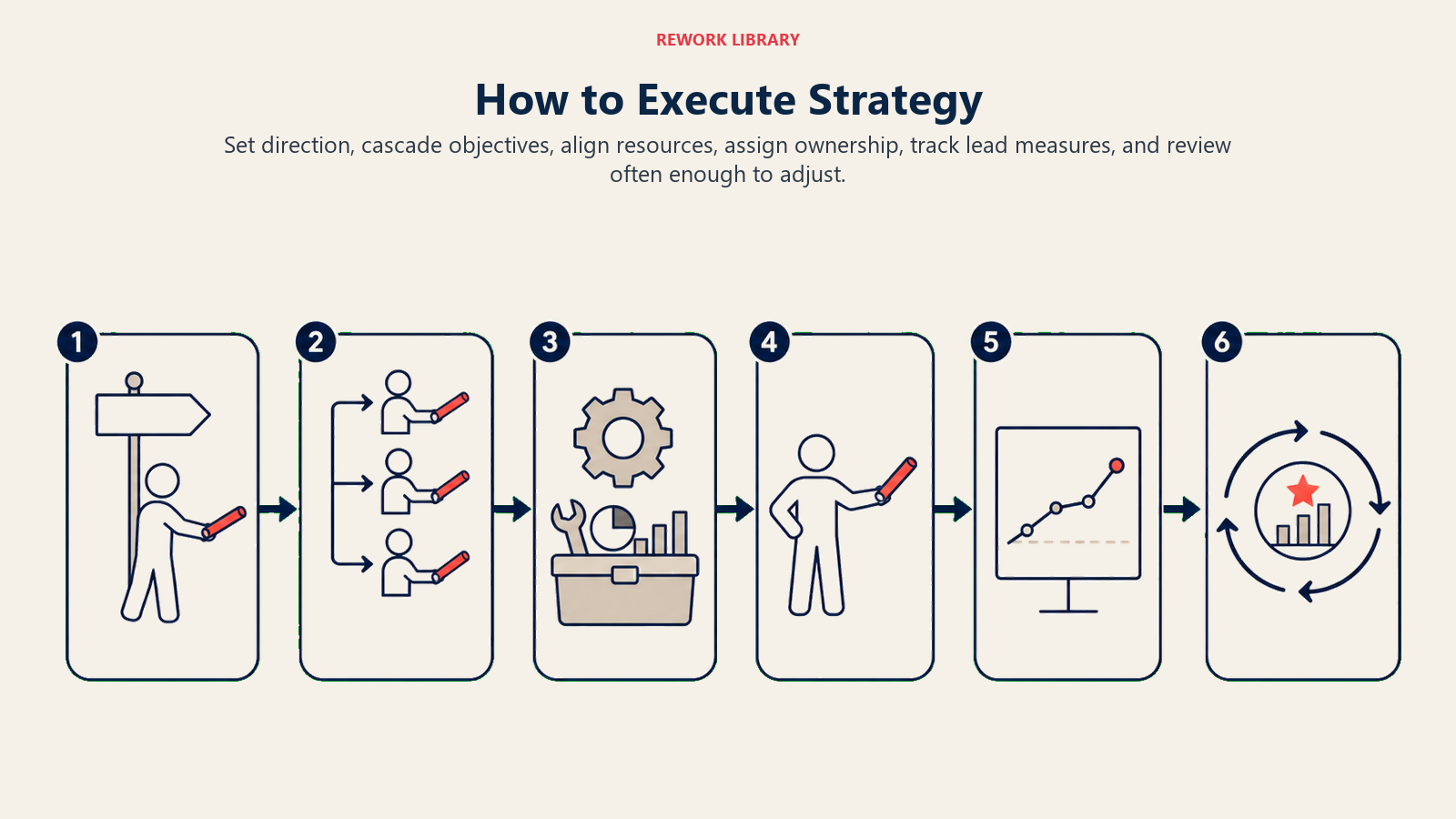
Uma boa execução não acontece por acaso. Ela segue uma sequência: estabeleça a direção, desdobre os objetivos, alinhe os recursos, atribua responsabilidade, acompanhe indicadores antecedentes e revise com frequência suficiente para corrigir o rumo. Veja essa sequência dividida em etapas acionáveis.
Etapa 1: Traduza os objetivos estratégicos em metas no nível das equipes
Cada iniciativa no plano estratégico precisa de um equivalente no nível da equipe. "Expandir para o segmento corporativo" é um objetivo estratégico. Mas não diz a um gestor de vendas o que fazer na segunda-feira. A etapa de tradução converte as ambições organizacionais em metas específicas e mensuráveis que estão dentro do plano trimestral de alguém.
O framework OKR é uma das ferramentas mais utilizadas para essa tradução. Os Objetivos e Resultados-Chave (OKRs) forçam uma conversa sobre como é o sucesso em uma janela de tempo específica, não apenas em abstrato. Os objetivos de negócios SMART servem à mesma função, especialmente em organizações que preferem o planejamento baseado em marcos ao formato OKR.
Etapa 2: Alinhe a alocação de recursos às prioridades estratégicas
Esta etapa é onde a maioria dos processos de planejamento falha silenciosamente. As organizações completam a estratégia e depois executam o processo orçamentário como um exercício separado. O orçamento reflete as alocações do ano anterior com ajustes incrementais. As prioridades estratégicas não aparecem automaticamente como iniciativas financiadas.
Para fechar essa lacuna, realize um exercício de mapeamento direto: para cada prioridade estratégica, identifique as pessoas, o dinheiro e as ferramentas atualmente alocados a ela. Se a alocação não corresponde à prioridade declarada, ou o orçamento precisa mudar ou a estratégia precisa ser honesta sobre o que pode realisticamente perseguir.
Etapa 3: Atribua responsabilidade explícita no nível da iniciativa
Cada iniciativa precisa de um responsável. Não uma equipe patrocinadora, não um comitê e não uma responsabilidade compartilhada entre duas funções. Uma pessoa responsável pelo resultado, com autoridade para tomar decisões e com expectativa de relatar o progresso.
Responsabilidade compartilhada geralmente significa ausência de responsabilidade. Quando duas pessoas são conjuntamente responsáveis por um resultado, cada uma assume que a outra está cuidando do assunto. É aqui que o McKinsey 7S Framework é útil: ele leva os líderes a verificar se estrutura, equipe e habilidades realmente sustentam a estratégia declarada ou se a responsabilidade está se perdendo no design organizacional.
Etapa 4: Identifique e acompanhe indicadores antecedentes
A maioria das organizações acompanha resultados. Receita, lucro, número de clientes, participação de mercado. Esses são indicadores defasados. Eles dizem o que aconteceu. Não dizem o que está prestes a acontecer.
A execução exige indicadores antecedentes: os sinais precoces que dizem se o trabalho está no rumo antes que o resultado seja definido. Se a estratégia prevê melhorar a retenção de clientes, um indicador antecedente pode ser o número de revisões trimestrais de negócios concluídas com contas em risco. Se a estratégia prevê expansão de mercado, um indicador antecedente pode ser o pipeline no novo segmento, não a receita fechada.
Defina dois ou três indicadores antecedentes para cada iniciativa principal. Revise-os na mesma frequência do seu ritmo de execução.
Etapa 5: Construa um ritmo de revisão que corresponda à velocidade de execução
Revisões estratégicas anuais produzem insights anuais. Quando uma equipe percebe que a abordagem não está funcionando, nove meses de margem já foram perdidos.
A execução eficaz exige um ritmo de revisão em camadas: verificações operacionais semanais sobre o progresso em relação aos marcos, revisões mensais de iniciativas para avaliar se os indicadores antecedentes estão se movendo e revisões estratégicas trimestrais para avaliar se as prioridades originais ainda fazem sentido dado como o ambiente mudou.
O balanced scorecard é especificamente projetado para esse tipo de revisão estruturada. Ele vincula resultados financeiros a drivers operacionais, métricas de clientes e indicadores de aprendizado e crescimento em uma única visão, dando à liderança uma forma de acompanhar se a organização está executando em direção a uma estratégia coerente ou à deriva.
Etapa 6: Comunique a estratégia por toda a organização, não apenas para o topo
Esta etapa é a mais frequentemente pulada. Os líderes sênior discutem a estratégia entre si, chegam ao alinhamento e assumem que a mensagem descerá pela organização por meio dos gestores. Geralmente não chega intacta.
Para comunicar a estratégia com eficácia, traduza-a em uma narrativa de uma página que qualquer membro da equipe possa ler e entender. Depois, incorpore-a à forma como os gestores conduzem suas equipes: em stand-ups semanais, no planejamento trimestral, no onboarding. O processo de planejamento estratégico só está completo quando as pessoas que executam o trabalho sabem o que estão executando e por quê.
Frameworks de execução da estratégia
Vários frameworks bem estabelecidos existem para apoiar a execução. Cada um tem uma ênfase diferente. A escolha certa depende do tamanho, da cultura e da natureza das prioridades estratégicas da sua organização.
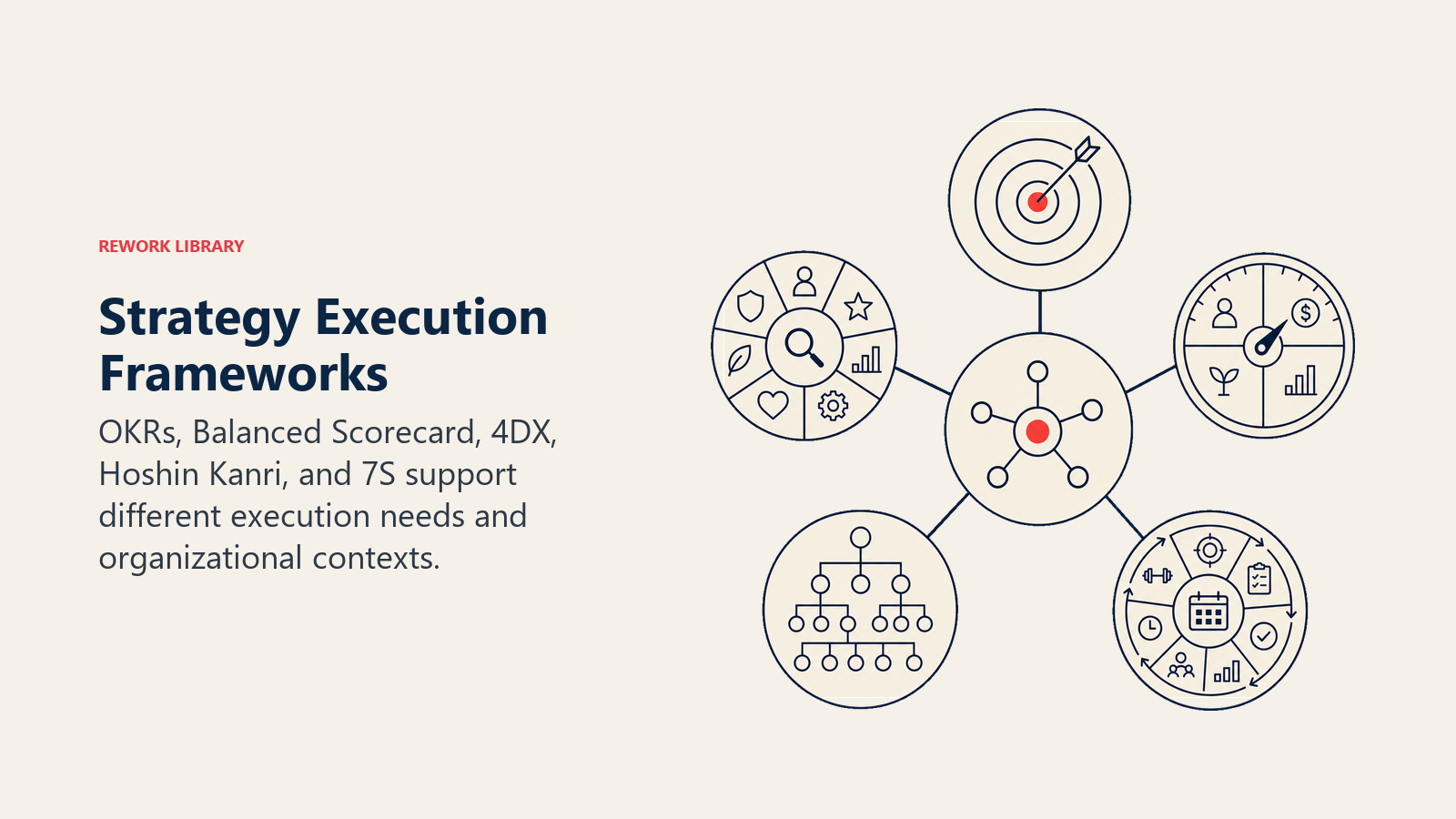
| Framework | Ideia central | Ideal para |
|---|---|---|
| Balanced Scorecard | Traduz a estratégia em quatro perspectivas: financeira, clientes, processos internos, aprendizado e crescimento | Grandes organizações que precisam de um sistema estruturado de medição de desempenho |
| OKRs (Objetivos e Resultados-Chave) | Define objetivos ambiciosos com resultados-chave mensuráveis em cadência trimestral | Equipes ágeis que precisam de alinhamento sem processos pesados |
| Hoshin Kanri | Desdobra a direção estratégica por meio do desdobramento anual de políticas, com vínculos explícitos entre metas executivas e ações da linha de frente | Organizações com foco em manufatura e operações |
| 4 Disciplinas de Execução (4DX) | Foca em uma "meta extremamente importante," medidas antecedentes, um placar e uma cadência de responsabilidade | Organizações que lutam para executar em meio às demandas operacionais diárias |
Nenhum desses frameworks executa a estratégia por você. Eles estruturam a conversa e criam responsabilidade. Uma equipe usando OKRs ainda precisa fazer o trabalho subjacente de definir metas honestas, revisar o progresso e ajustar quando a realidade diverge do plano.
Exemplos de execução da estratégia
Empresa de tecnologia implementando um movimento de vendas corporativas. A estratégia corporativa prevê subir no mercado. A estratégia de vendas define contas corporativas como empresas com 500 ou mais colaboradores, mira dois setores e estabelece uma meta de 15 novos clientes em 12 meses. No nível funcional, o marketing executa campanhas de ABM direcionadas a esses setores, o sales ops redesenha o plano de remuneração para recompensar o tamanho de negócios corporativos e o RH cria um plano de contratação para três executivos de contas corporativas. Cada função tem um indicador antecedente para acompanhar semanalmente. A revisão trimestral verifica se o pipeline corresponde à meta de receita, não apenas se as ligações foram feitas.
Organização de saúde melhorando a experiência do paciente. Os objetivos estratégicos estabelecem uma meta de mover as pontuações de satisfação do paciente do 60º para o 80º percentil em 18 meses. Esse objetivo se desdobra para a equipe de operações (reduzir o tempo médio de espera em 20%), para a equipe clínica (introduzir protocolos estruturados de comunicação para alta hospitalar) e para a equipe de RH (reformular o programa de onboarding para colaboradores que atendem pacientes). Cada equipe tem uma meta mensurável vinculada ao objetivo principal, com revisão mensal para confirmar que os indicadores antecedentes estão se movendo.
Ambos os exemplos compartilham a mesma lógica de execução: um objetivo claro, uma meta traduzida no nível da equipe, um responsável, um indicador antecedente e um ritmo de revisão. O setor não muda o modelo.
Boas práticas
- Force escolhas antes de finalizar as prioridades. Uma lista de 12 prioridades estratégicas não é uma estratégia. A execução real exige escolher o que você NÃO vai fazer.
- Atribua um único responsável a cada iniciativa. Responsabilidade conjunta cria deriva. Uma pessoa, um resultado.
- Acompanhe medidas antecedentes, não apenas resultados. Os resultados dizem o que aconteceu. As medidas antecedentes dizem o que ajustar antes que a janela se feche.
- Combine seu ritmo de revisão à sua velocidade de execução. Se suas equipes se movem trimestralmente, uma revisão trimestral é lenta demais para identificar problemas.
- Use o modelo de mudança em 8 etapas de Kotter quando a execução exigir mudança de comportamento em toda a organização. O modelo de mudança em 8 etapas de Kotter é especialmente útil quando uma nova estratégia pede que as pessoas trabalhem de forma diferente, não apenas com mais afinco.
- Torne a estratégia visível em todos os níveis. Se um colaborador de linha de frente não consegue descrever o que a empresa está tentando alcançar este ano, a comunicação falhou.
Perguntas Frequentes sobre Execução da Estratégia
Qual é a diferença entre formulação e execução da estratégia?
A formulação da estratégia é o processo de decidir onde competir e como vencer. Ela produz um plano. A execução da estratégia é o processo de transformar esse plano em resultados por meio de ações específicas, estruturas de responsabilidade, alocação de recursos e ritmos de revisão. A formulação responde "o quê" e "por quê". A execução responde "como," "até quando" e "quem."
Por que tantas estratégias falham na execução?
As causas mais comuns são a ausência de responsabilidade no nível da iniciativa, uma estratégia que não se traduz em metas no nível das equipes, alocação de recursos que não reflete as prioridades declaradas e um ritmo de revisão lento demais para identificar desvios antes que se tornem falhas. A pesquisa do PMI (2025) identificou a desconexão entre planejamento e execução como a principal barreira citada por executivos sênior.
O que é um framework de execução da estratégia?
Um framework de execução da estratégia é um método estruturado para traduzir prioridades estratégicas em ação operacional. Frameworks comuns incluem o balanced scorecard, os Objetivos e Resultados-Chave (OKRs), o Hoshin Kanri e as 4 Disciplinas de Execução. Cada um fornece ferramentas para definição de metas, responsabilidade e revisão de desempenho.
Como medir a execução da estratégia?
Meça a execução por meio de uma combinação de indicadores antecedentes (sinais precoces de se o trabalho está no rumo) e indicadores defasados (resultados finais). Os indicadores antecedentes são específicos de cada iniciativa: número de prospects corporativos no pipeline, percentual de contas de clientes em risco revisadas ou conclusões de treinamento de novas capacidades. Os indicadores defasados são os resultados que você finalmente quer: receita, retenção, participação de mercado.
Com que frequência a execução da estratégia deve ser revisada?
A maioria das organizações focadas em execução usa uma cadência em camadas: verificações operacionais semanais, revisões mensais de iniciativas e revisões estratégicas trimestrais. Revisões anuais sozinhas não são suficientes para identificar e corrigir desvios de execução. O balanced scorecard é uma ferramenta amplamente utilizada para organizar essas revisões em múltiplas dimensões de desempenho. A execução da estratégia não é um problema de gestão de projetos nem um problema de cultura. É um problema de design. Quando a estrutura está certa, a responsabilidade é clara, os recursos correspondem às prioridades e os ritmos de revisão correspondem à velocidade de execução, a estratégia deixa de ser uma apresentação e se torna o trabalho real.

Senior Operations & Growth Strategist
On this page
- O que é execução da estratégia?
- Formulação da estratégia vs. execução da estratégia
- Por que a execução da estratégia falha
- Como executar a estratégia
- Etapa 1: Traduza os objetivos estratégicos em metas no nível das equipes
- Etapa 2: Alinhe a alocação de recursos às prioridades estratégicas
- Etapa 3: Atribua responsabilidade explícita no nível da iniciativa
- Etapa 4: Identifique e acompanhe indicadores antecedentes
- Etapa 5: Construa um ritmo de revisão que corresponda à velocidade de execução
- Etapa 6: Comunique a estratégia por toda a organização, não apenas para o topo
- Frameworks de execução da estratégia
- Exemplos de execução da estratégia
- Boas práticas