Densidade de Talentos e Candura: Construindo Culturas de Alta Performance
 Vale a pena distinguir dois conceitos de desempenho de equipe que frequentemente se confundem.
Turn this article into takeaways for your work.


Each assistant summarizes the article only for you and suggests best practices for your work.
O primeiro é a segurança psicológica: a crença compartilhada dentro de uma equipe de que as pessoas podem se manifestar, assumir riscos e admitir erros sem medo de punição ou humilhação. Essa é uma propriedade de nível de equipe, amplamente documentada na pesquisa organizacional, que prevê aprendizado, adaptação e inovação.
O segundo é a densidade de talentos: a prática de manter uma equipe composta inteiramente por pessoas genuinamente excelentes em suas funções, e construir a honestidade cultural para avaliar e manter esse padrão de forma contínua.
Esses conceitos são relacionados, mas distintos. A segurança psicológica é principalmente sobre eliminar o medo. A densidade de talentos é principalmente sobre manter a excelência. E o mecanismo cultural que os conecta é a candura: comunicação direta e honesta sobre desempenho e adequação, entregue a serviço do crescimento, não do julgamento.
Este artigo trata da densidade de talentos e da candura. Para o embasamento de pesquisa sobre segurança psicológica, veja o artigo Segurança Psicológica nesta biblioteca.
O Conceito de Densidade de Talentos
A densidade de talentos afirma que o desempenho de uma equipe é determinado de forma desproporcional pela composição do time, não apenas pela qualidade absoluta de cada membro individualmente.
A observação de base: na maioria dos contextos organizacionais, uma equipe de oito pessoas genuinamente excelentes vai superar dramaticamente uma equipe de seis pessoas excelentes e duas pessoas "adequadas". Isso parece contraintuitivo se você pensa no desempenho como algo aditivo. Mas quando o trabalho envolve interdependência significativa, coordenação e julgamento coletivo, o elo mais fraco cria atrito que afeta o resultado de toda a equipe.
Vários mecanismos explicam esse efeito:
Custos de coordenação. Profissionais de alto desempenho se calibram rapidamente aos estilos de trabalho, julgamento e capacidades uns dos outros. Integrar pessoas de desempenho inferior exige mais comunicação explícita, mais verificações e mais correções, consumindo o tempo e a atenção dos profissionais de alto nível ao redor.
Padrões e normas. As equipes constroem normas compartilhadas sobre o que significa qualidade, quanto esforço é adequado e quão honesto deve ser o feedback interno. Quando a equipe tem padrões uniformemente altos, essas normas se reforçam mutuamente. Quando os padrões são mistos, tendem a regredir para a mediocridade: ou os profissionais de alto desempenho diminuem seus próprios padrões ao longo do tempo, ou saem.
Qualidade das decisões. Muitas decisões importantes de equipe são tomadas por meio de discussão e consenso, e a qualidade dessas decisões depende da qualidade do raciocínio contribuído pelos participantes. Uma equipe em que todos os membros são pensadores analíticos fortes toma decisões coletivas melhores do que aquela em que vários membros não contribuem de forma eficaz.
Efeitos sobre a retenção. Profissionais de alto desempenho tendem a permanecer em ambientes onde estão cercados de outros profissionais de alto desempenho. Eles saem de ambientes onde sentem que seu trabalho está sendo prejudicado por colegas que não performam bem. Alta densidade de talentos atrai e retém exatamente as pessoas que mais valorizam esse ambiente.
O Que a Densidade de Talentos Exige Organizacionalmente
Manter alta densidade de talentos não é um evento de contratação. É uma disciplina de gestão contínua.

Padrões de contratação sem ambiguidade
Alta densidade de talentos começa na contratação. Isso significa ser específico sobre o que a excelência genuína significa em cada função, usar um processo de avaliação consistente e rigoroso, e estar disposto a recomeçar uma busca em vez de aceitar um candidato que é bom mas não ideal para a função e o contexto específicos.
A tentação de ceder nos padrões de contratação é maior quando uma posição está aberta há muito tempo, quando a equipe está com falta de pessoal e qualquer capacidade adicional parece bem-vinda, ou quando um candidato é pessoalmente agradável mesmo que suas capacidades não sejam exatamente o que a função exige. Organizações que resistem a essa tentação consistentemente constroem equipes mais fortes ao longo do tempo.
Avaliação de desempenho honesta e contínua
É aqui que a maioria das organizações falha em sua aspiração de manter a densidade de talentos. Os padrões de contratação costumam ser altos; a avaliação de desempenho contínua costuma ser vaga, atrasada e desconfortável.
As pressões organizacionais que produzem feedback de desempenho vago são bem documentadas: gestores preferem evitar conversas difíceis, ciclos de avaliação anuais criam atrasos entre o desempenho e o feedback, a inflação de avaliações é recompensada pelas normas sociais, e os processos de RH criados para proteger a organização de riscos legais frequentemente desencorajam avaliações francas.
A manutenção genuína da densidade de talentos exige uma cultura de gestão em que a avaliação honesta de desempenho seja uma parte normal e contínua do relacionamento gestor-colaborador, não um evento anual de alto risco. Isso não significa crítica constante. Significa feedback frequente e específico entregue em tempo real, com o objetivo explícito de ajudar as pessoas a performar no seu melhor.
Agir com base no que você encontra
Avaliação sem ação não é avaliação. É documentação. A densidade de talentos exige disposição para fazer mudanças quando alguém genuinamente não está adequado à sua função atual, seja por meio de mudança de função, suporte e coaching adicionais, ou desligamento.
O caso mais difícil não é o dos que têm desempenho ruim, que geralmente são óbvios. São as pessoas que fazem um trabalho aceitável, mas que genuinamente não são as certas para sua função dado às necessidades atuais da equipe. Essas situações exigem mais coragem gerencial porque não há uma crise óbvia forçando uma decisão, a pessoa geralmente já está na organização há bastante tempo, e o custo emocional de uma conversa é alto.
Líderes que levam a densidade de talentos a sério desenvolvem o julgamento para distinguir "não está desempenhando bem a função atual" de "não é a pessoa certa para a função atual" e agem nos dois casos.
A Candura como Fundação Cultural
A densidade de talentos não é alcançável sem uma cultura de candura: comunicação direta e honesta que serve a quem a recebe, não a quem está evitando o desconforto.
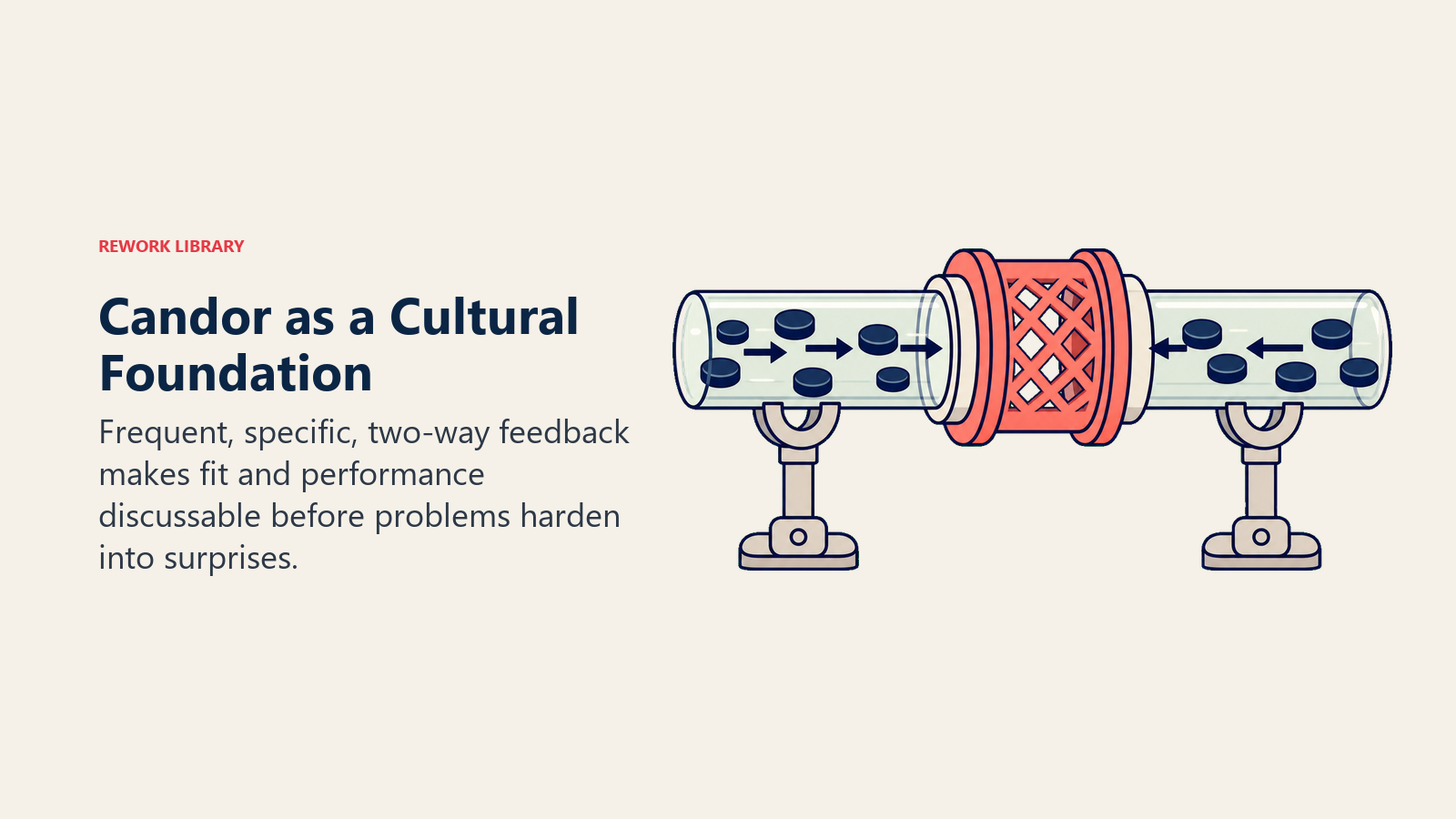
Candura neste contexto não significa dureza. Significa ser honesto o suficiente, específico o suficiente e oportuno o suficiente para realmente ajudar as pessoas a entender como estão performando e o que precisam mudar. (Para um tratamento mais aprofundado da candura como estrutura de feedback, veja Radical Candor Feedback.)
A cultura de candura necessária para a densidade de talentos tem diversas características distintas:
A candura flui em todas as direções. O feedback ascendente, em que os colaboradores dizem a verdade para os gestores sobre problemas, falhas de processo e lacunas de liderança, é tão importante quanto o feedback descendente. Organizações onde a candura flui apenas para baixo criam assimetrias de informação que prejudicam a tomada de decisão sênior.
A candura se distingue da crítica. O feedback crítico é entregue a serviço de quem o recebe, com o objetivo de ajudá-lo a melhorar ou tomar melhores decisões sobre sua função. A crítica pelo bem da crítica, pensada para estabelecer dominância ou explicar falhas, não é candura. Líderes constroem culturas de candura modelando um feedback que está claramente no interesse de quem o recebe.
O desacordo é expresso antes das decisões, não depois. Culturas de candura recompensam as pessoas por trazerem preocupações e desacordos quando uma decisão está sendo tomada, não por reclamar depois que a decisão já foi implementada. Isso é o oposto da maioria das culturas organizacionais, onde levantar preocupações é visto como algo perturbador e a crítica após o fato é mais socialmente aceitável.
O contexto é fornecido, não presumido. A comunicação honesta requer contexto suficiente para que o destinatário possa entender não apenas a avaliação, mas o raciocínio por trás dela. "Sua apresentação não atingiu o objetivo" não é candura. "Sua apresentação presumiu que a audiência compartilhava seu background técnico, mas esse público precisa que as implicações de negócio sejam explicitadas antes dos detalhes técnicos" é candura.
A Tensão com a Segurança Psicológica
Uma preocupação frequente com culturas de densidade de talentos e candura é que elas criam um ambiente de alto risco que é psicologicamente inseguro.
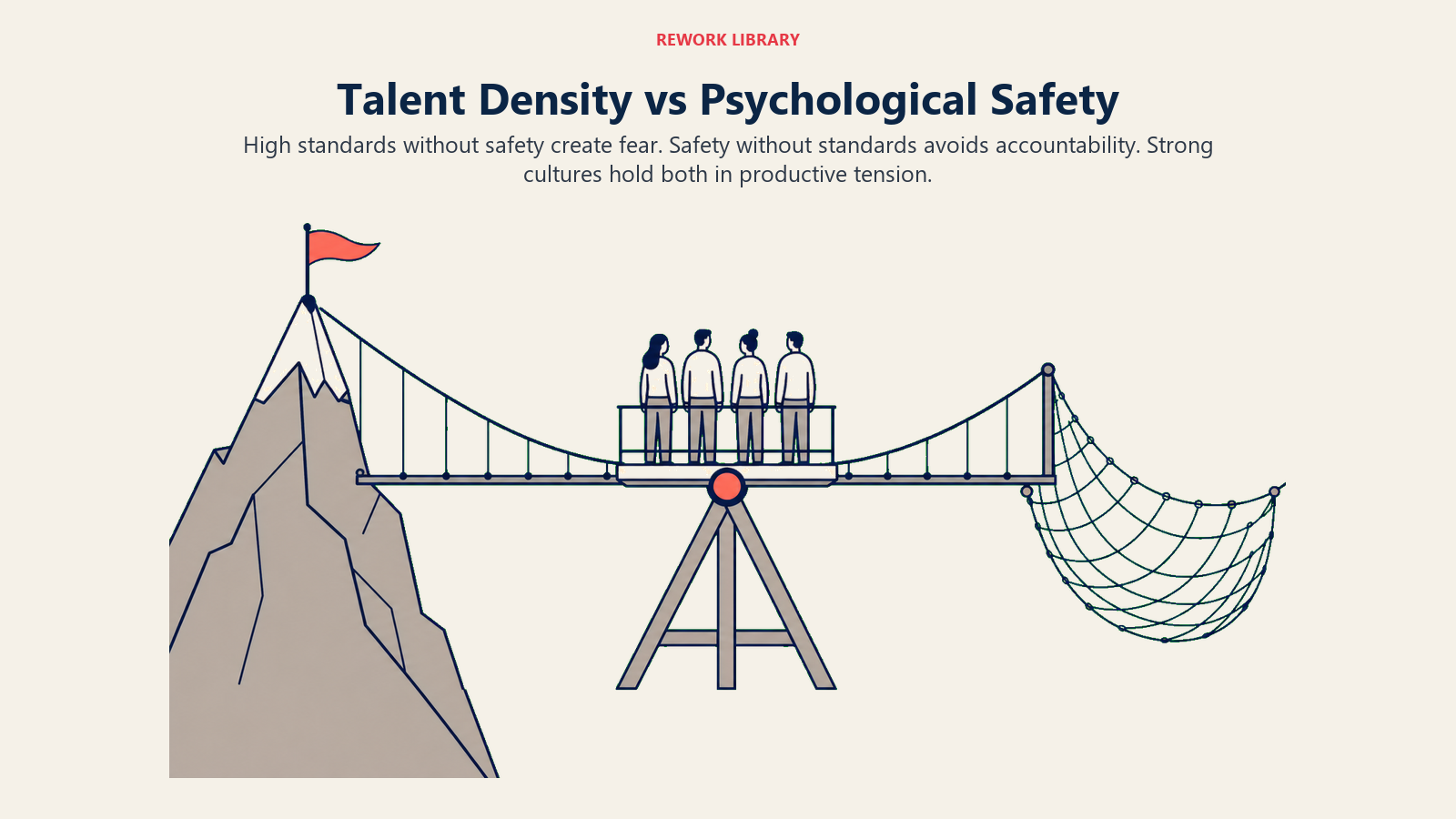
Essa preocupação vale ser levada a sério, e é em parte justificada. Existe uma versão de "cultura de alta performance" que usa a linguagem de densidade de talentos e candura como cobertura para um ambiente baseado no medo, onde as pessoas têm receio de admitir erros, fazer perguntas ou expressar incerteza, porque qualquer uma dessas coisas pode ser interpretada como evidência de inadequação ao ambiente.
Isso não é uma cultura de candura. É uma cultura de culpa, e produz exatamente o comportamento que a pesquisa sobre segurança psicológica documenta como prejudicial: as pessoas ficam em silêncio, escondem problemas e evitam riscos.
A distinção é importante. Uma cultura genuína de candura não é aquela onde as pessoas performam uma confiança que não têm. É aquela onde as pessoas podem ser honestas sobre a incerteza, trazendo-a à tona porque a cultura trata a incerteza honesta como mais útil do que a certeza encenada. Alguém que diz "eu não sei como resolver isso e preciso de ajuda" em uma cultura de candura é valorizado pela honestidade. Em uma cultura baseada no medo, a mesma pessoa performa confiança e esconde o problema.
A conexão com a segurança psicológica é esta: alta densidade de talentos e candura genuína são sustentáveis apenas em uma cultura onde as pessoas se sentem seguras o suficiente para serem honestas. Se a honestidade carrega risco existencial de carreira, você obtém teatro de desempenho, não desempenho. O objetivo cultural é um ambiente que seja simultaneamente exigente e honesto, onde os padrões sejam altos e onde admitir lacunas seja o caminho para a melhoria, não um risco de carreira.
Construindo Essa Cultura na Prática
Organizações que construíram culturas eficazes de densidade de talentos e candura tendem a compartilhar diversas práticas.
Elas tornam a cultura explícita. As normas são documentadas e comunicadas, não apenas modeladas por líderes seniores. Os novos contratados entendem o que a cultura exige antes de entrar. Não há lacuna entre os valores declarados e a realidade vivida.
Elas criam oportunidades estruturadas de candura. Em vez de depender de indivíduos para oferecer feedback difícil voluntariamente, elas o incorporam em processos regulares: check-ins de desempenho que são frequentes e específicos em vez de anuais e vagos, retrospectivas de equipe que trazem à tona questões de processo e interpessoais, e feedback 360 graus que dá às pessoas uma visão de como são percebidas por pares e subordinados diretos, além dos gestores.
Elas desenvolvem a capacidade gerencial. Culturas de candura exigem gestores que possam entregar feedback difícil com habilidade. Essa é uma capacidade que pode ser aprendida, mas requer treinamento, prática e coaching. Organizações que desejam uma cultura de candura mas não investem no desenvolvimento das habilidades de feedback de seus gestores acabam com uma cultura onde a candura é esperada, mas poucos sabem como fazê-la bem.
Elas lidam com saídas com dignidade. A forma como uma organização trata as pessoas que não são retidas envia um sinal poderoso para todos que permanecem. Organizações que lidam com transições com transparência, justiça e respeito genuíno pela experiência da pessoa criam condições em que os demais podem ser honestos sobre suas próprias lacunas de desempenho sem temer que uma admissão honesta leve a um tratamento desumano.
Fatos-Chave
- A densidade de talentos não é constante. Uma composição de equipe adequada ao estágio e aos desafios atuais da empresa pode não ser adequada no próximo estágio. As habilidades necessárias para construir um produto do zero são diferentes das necessárias para escalá-lo. Gerenciar a densidade de talentos requer perguntar continuamente se a equipe atual é a certa para o desafio atual, não apenas se cada pessoa era a certa quando foi contratada.
- O impacto de desempenho de funções inadequadas é assimétrico. Uma única pessoa significativamente inadequada em uma função-chave pode reduzir o desempenho de uma equipe de outra forma forte em mais do que sua contribuição individual sugeriria. É por isso que gerenciar proativamente a adequação à função, mesmo quando alguém está com desempenho aceitável, importa mais do que a maioria das organizações reconhece.
- A candura se constrói pela consistência. Uma conversa honesta não cria uma cultura de candura. A cultura se constrói por meio de centenas de interações consistentes ao longo do tempo, em que as pessoas observam que a comunicação honesta produz respostas construtivas, não retaliação.
Perguntas Frequentes
Como a densidade de talentos difere de contratar apenas os melhores?
A abordagem de "contratar apenas os melhores" trata o talento como uma propriedade inerente de uma pessoa, em vez de um encaixe entre a pessoa e a função. A densidade de talentos consiste em garantir que as pessoas certas estejam nas funções certas para o contexto atual. Um profissional excepcional na função errada não está contribuindo para a densidade de talentos. Uma pessoa ideal para sua função específica está. O foco no encaixe e no contexto é o que distingue a densidade de talentos do conselho genérico de "contratar as melhores pessoas".
A densidade de talentos exige ansiedade constante sobre desempenho?
Não se a cultura for construída corretamente. Altos padrões e feedback franco contínuo podem coexistir com um ambiente de trabalho seguro e estável. A ansiedade que algumas culturas de alta performance produzem vem da imprevisibilidade e da falta de transparência, não dos altos padrões em si. Quando as pessoas sabem o que se espera delas, recebem feedback consistente e confiam que as avaliações são justas e honestas, os altos padrões parecem uma condição do trabalho excelente, não uma ameaça constante.
Como isso se aplica em contextos com colaboradores de longa data?
Com cuidado e diretamente. O tempo de empresa não elimina a responsabilidade de avaliar a adequação à função ou de ser honesto sobre o desempenho. Mas cria obrigações em relação ao relacionamento e ao histórico do indivíduo com a organização. Conversas honestas sobre se a função de um colaborador de longa data evoluiu além de suas capacidades atuais precisam incluir um esforço genuíno para encontrar uma função alternativa onde sua experiência ainda seja valiosa, e devem ser conduzidas com o respeito que seu tempo de empresa merece.
Qual é o risco de enfatizar demais a densidade de talentos?
O principal risco é tratá-la como uma licença para a ansiedade organizacional ou para tratar as pessoas como descartáveis. Culturas de alta densidade de talentos que lidam mal com a rotatividade, que fazem as pessoas sentirem que seu emprego está permanentemente condicionado a performar no topo de sua capacidade, ou que usam a candura como cobertura para a crueldade, perderão exatamente as pessoas que mais querem manter. Os melhores profissionais têm mais opções. Eles ficam onde são tratados com respeito e onde estão crescendo, não apenas onde os padrões são altos.
Leitura Relacionada

Co-Founder, Rework.com
On this page
- O Conceito de Densidade de Talentos
- O Que a Densidade de Talentos Exige Organizacionalmente
- Padrões de contratação sem ambiguidade
- Avaliação de desempenho honesta e contínua
- Agir com base no que você encontra
- A Candura como Fundação Cultural
- A Tensão com a Segurança Psicológica
- Construindo Essa Cultura na Prática
- Fatos-Chave
- Leitura Relacionada