Teoria X e Teoria Y: Os Estilos de Gestão de McGregor
Turn this article into takeaways for your work.


Each assistant summarizes the article only for you and suggests best practices for your work.
A Teoria X e a Teoria Y representam dois conjuntos opostos de premissas sobre por que as pessoas trabalham, e a sua resposta molda cada decisão de gestão que você toma. Douglas McGregor introduziu esse framework em 1960, e ele é um dos diagnósticos mais úteis em gestão porque revela crenças que a maioria dos gestores jamais examina.
O Que São a Teoria X e a Teoria Y?
A Teoria X e a Teoria Y são dois conjuntos contrastantes de premissas sobre a motivação dos trabalhadores, propostos por Douglas McGregor em seu livro de 1960 The Human Side of Enterprise. McGregor, professor da MIT Sloan School of Management, argumentou que o comportamento de um gestor não é determinado pela personalidade, mas pelas premissas subjacentes que esse gestor tem sobre a natureza humana.
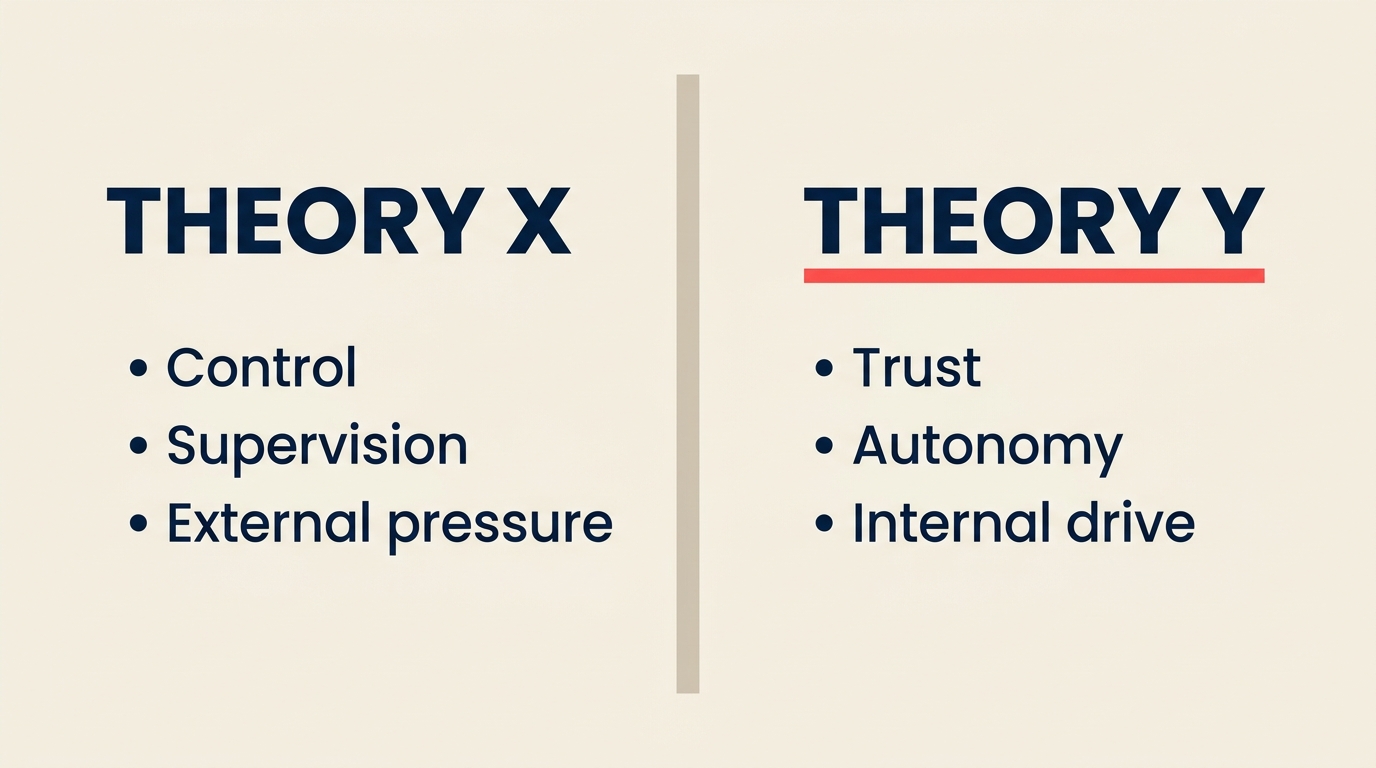
A Teoria X pressupõe que a maioria das pessoas não gosta de trabalhar, evita responsabilidades quando pode e precisa ser supervisionada e controlada de perto para ter um bom desempenho. Sob essa perspectiva, pressão externa, regras e sistemas de recompensas e punições são as ferramentas da gestão.
A Teoria Y pressupõe que trabalhar é tão natural quanto descansar ou brincar, que as pessoas buscam responsabilidade quando as condições são favoráveis e que a capacidade de resolução criativa de problemas está amplamente distribuída. Sob essa perspectiva, o papel do gestor é criar as condições certas e depois deixar a equipe agir.
McGregor não estava dizendo que uma é boa e a outra é ruim. Ele estava apontando que as premissas que você sustenta determinam o sistema que você constrói, e que a maioria dos gestores mantém essas premissas sem nunca examiná-las.
Fatos Relevantes
Douglas McGregor publicou The Human Side of Enterprise em 1960. Ele atuou como professor na MIT Sloan School of Management e brevemente como presidente do Antioch College. Uma pesquisa da Gallup de 2023 constatou que 59% dos colaboradores no mundo inteiro estão em "quiet quitting" (psicologicamente desengajados, mas ainda presentes), um padrão que McGregor teria reconhecido como o resultado previsível da gestão baseada na Teoria X aplicada a pessoas intrinsecamente capazes de muito mais.
Teoria X versus Teoria Y
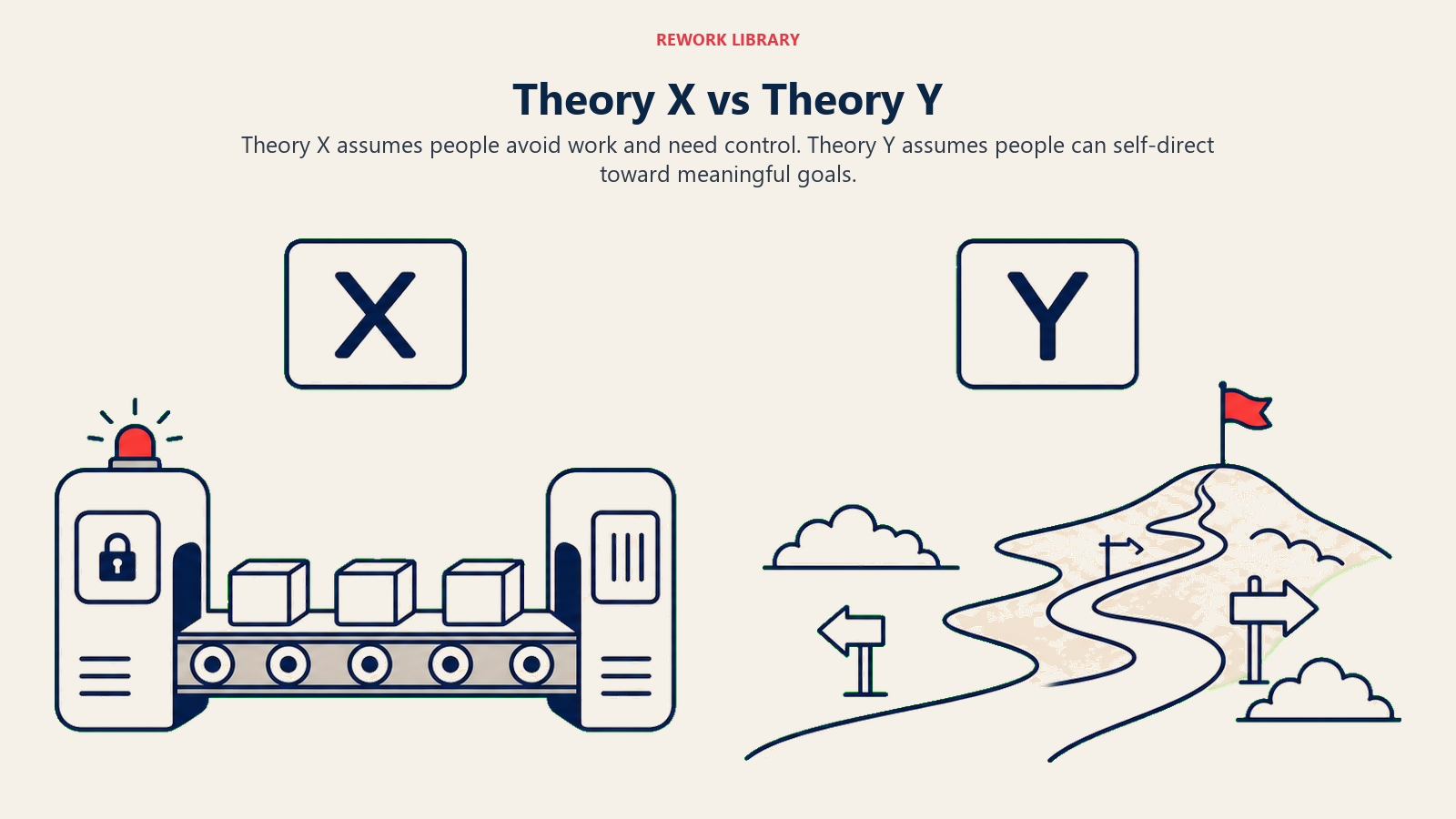
O contraste entre a Teoria X e a Teoria Y mostra como as premissas sobre motivação se transformam em sistemas de gestão.
| Dimensão | Teoria X | Teoria Y |
|---|---|---|
| Visão sobre os colaboradores | As pessoas são preguiçosas e não gostam intrinsecamente de trabalhar | As pessoas acham o trabalho natural e podem aproveitá-lo |
| Fonte de motivação | Externa: salário, ameaças, punições | Interna: propósito, crescimento, realização |
| Estilo de liderança | Diretivo, controlador, hierárquico | Participativo, solidário, colaborativo |
| Grau de controle | Supervisão próxima é necessária | Autodireção é possível com as condições certas |
| Comportamento típico | Monitorar horas, regras rígidas, microgerenciamento | Delegar projetos, solicitar contribuições, definir metas conjuntamente |
| Resposta do colaborador | Conformidade, iniciativa mínima, ressentimento | Engajamento, criatividade, senso de responsabilidade |
A distância entre essas duas colunas não é apenas filosófica. Ela determina diretamente se a sua equipe faz o mínimo para evitar repreensões ou vai além das atribuições para resolver problemas que você nem sabia que existiam.
A Teoria X Explicada
Um gestor com mentalidade Teoria X parte da crença de que os colaboradores são essencialmente passivos. Deixadas por conta própria, as pessoas escolheriam o lazer em vez do trabalho e resistiriam a mudanças a menos que fossem obrigadas. A resposta lógica de gestão é um sistema de controles: regras claras, supervisão, métricas de desempenho vinculadas a consequências e autoridade concentrada no topo.
Isso produz uma estrutura organizacional previsível: hierárquica, repleta de processos, com cadeias de aprovação rígidas e pouca tolerância a desvios. É possível observar isso em centros de atendimento onde cada minuto é registrado, em fábricas com turnos fixos e em qualquer organização onde "siga o procedimento" é a resposta para a maioria das perguntas.
Quando a Teoria X se aplica: Alguns ambientes realmente requerem adesão rigorosa a processos. Setores de missão crítica para a segurança, por exemplo, se beneficiam de procedimentos padronizados que não podem ser improvisados. Novos contratados sem contexto geralmente precisam de orientação mais próxima no início. Situações de curto prazo e alto risco, onde a velocidade importa mais do que a criatividade, podem exigir gestão diretiva temporariamente.
A desvantagem: As premissas se tornam autorrealizáveis. Se você trata as pessoas como se não pudessem ser confiadas, elas param de tentar. Colaboradores talentosos que têm opções vão embora. Os que ficam aprendem a trabalhar o sistema em vez de resolver problemas. McGregor alertou que a gestão baseada na Teoria X aplicada a adultos capazes produz exatamente o desengajamento que os gestores depois usam para justificar os controles. É um ciclo.
A Teoria Y Explicada
Um gestor com mentalidade Teoria Y parte da crença oposta: as pessoas querem fazer um bom trabalho. Os motivos pelos quais isso não acontece, na maioria dos casos, não são preguiça. São organizacionais: metas pouco claras, ausência de autonomia, trabalho desconectado de qualquer propósito significativo ou uma cultura onde tomar iniciativa resulta em culpa quando as coisas dão errado.
O papel do gestor com mentalidade Teoria Y é, portanto, criar as condições para que as pessoas direcionem seu próprio esforço. Isso significa metas claras com autonomia suficiente para decidir como alcançá-las, acesso às informações de que as pessoas precisam para tomar boas decisões e ciclos de feedback que ajudem as pessoas a melhorar em vez de apenas medi-las em relação a uma meta.
Isso produz uma estrutura organizacional diferente: mais horizontalizada, mais colaborativa, com maior tolerância a experimentação e fluxo de informação mais ágil. É possível observar isso em empresas de serviços profissionais, empresas de software e em qualquer lugar onde o produto principal é o julgamento, não a repetição.
Benefícios: Maior motivação intrínseca, melhor resolução de problemas, maior retenção, aprendizado mais rápido. Quando as pessoas se sentem confiadas e recebem trabalho com significado, dedicam um esforço discricionário que nenhum sistema de supervisão é capaz de extrair.
Os riscos: A Teoria Y não é uma licença para se manter distante. Metas claras ainda importam. Responsabilização ainda importa. E a gestão baseada na Teoria Y em um contexto em que as pessoas realmente não têm as habilidades ou informações para se autodirigir produz confusão, não empoderamento. O julgamento do gestor sobre quando orientar mais de perto e quando dar espaço é o que separa a liderança eficaz da Teoria Y da permissividade ingênua.
A Teoria X e a Teoria Y na Liderança Moderna
O framework de McGregor não encerrou o debate. Ele o iniciou.
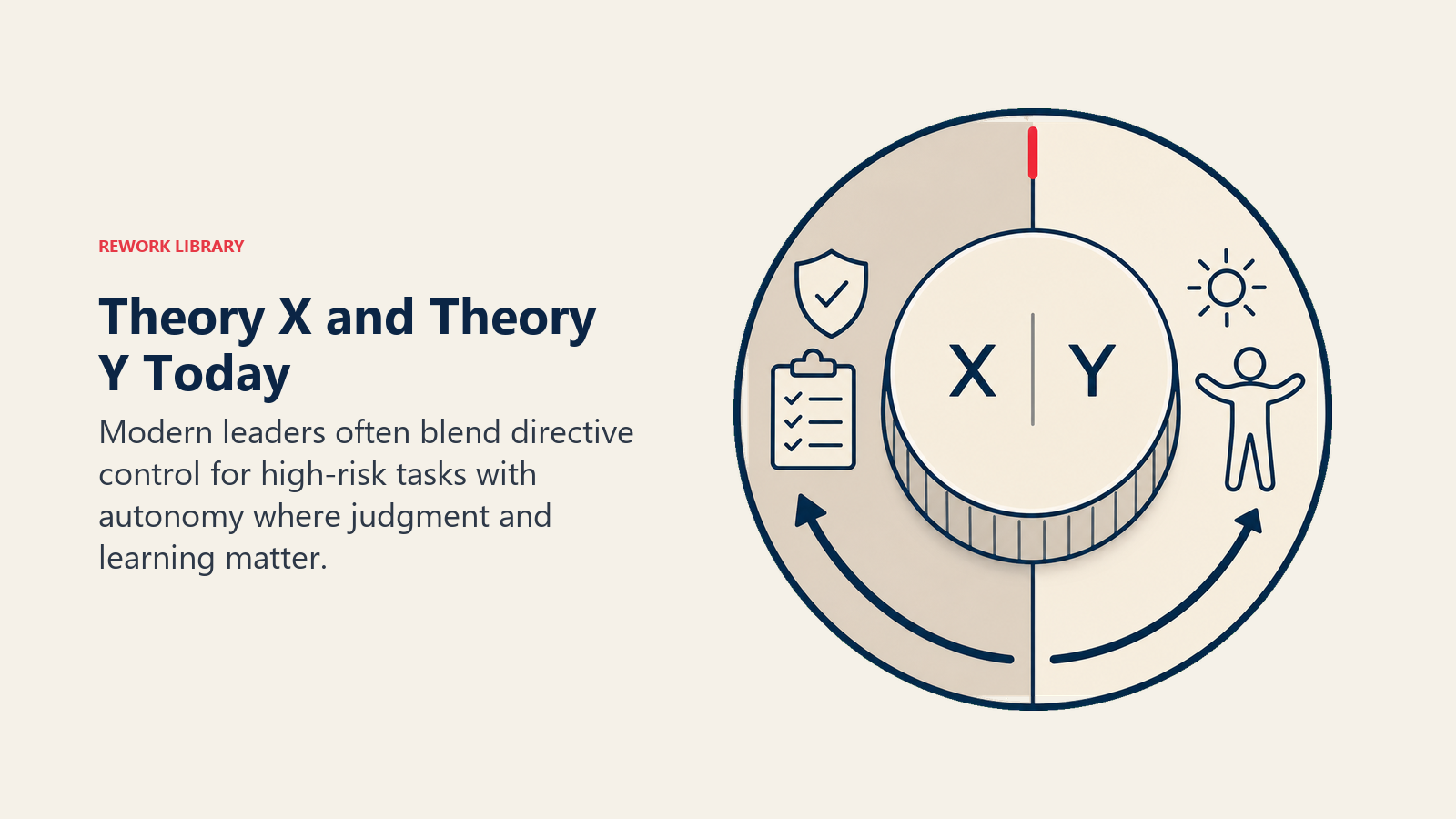
A liderança transformacional amplia a lógica da Teoria Y: se as pessoas são capazes de autodireção, então o papel de um líder é conectar o propósito individual a uma missão compartilhada e inspirar as pessoas rumo a metas que vão além da descrição do cargo. Enquanto a Teoria Y é uma ferramenta de diagnóstico, a liderança transformacional é um sistema operacional construído sobre premissas semelhantes.
A liderança participativa é a Teoria Y em prática no nível das decisões. Envolver os membros da equipe nas decisões não é apenas cortesia. Aproveita a inteligência distribuída, constrói comprometimento com o resultado e desenvolve o julgamento das pessoas envolvidas.
O Blake-Mouton Managerial Grid posiciona os gestores em dois eixos, preocupação com a produção e preocupação com as pessoas, o que se alinha claramente ao espectro Teoria X/Y. Alta preocupação com ambos representa o ideal de "gestão de equipe", que é essencialmente a Teoria Y aplicada.
Teoria Z: Em 1981, o teórico organizacional William Ouchi introduziu a Teoria Z como resposta a McGregor. Enquanto a Teoria Y foca na autonomia individual, a Teoria Z baseia-se nas práticas de gestão japonesas para argumentar que lealdade, tomada de decisão coletiva e relações de emprego de longo prazo produzem o desempenho organizacional mais elevado. É uma extensão do pensamento da Teoria Y para a cultura e a estrutura institucional.
Como Aplicar a Teoria Y no Trabalho
A Teoria Y é uma mentalidade, mas produz comportamentos de gestão específicos e concretos. Veja como desenvolvê-los.
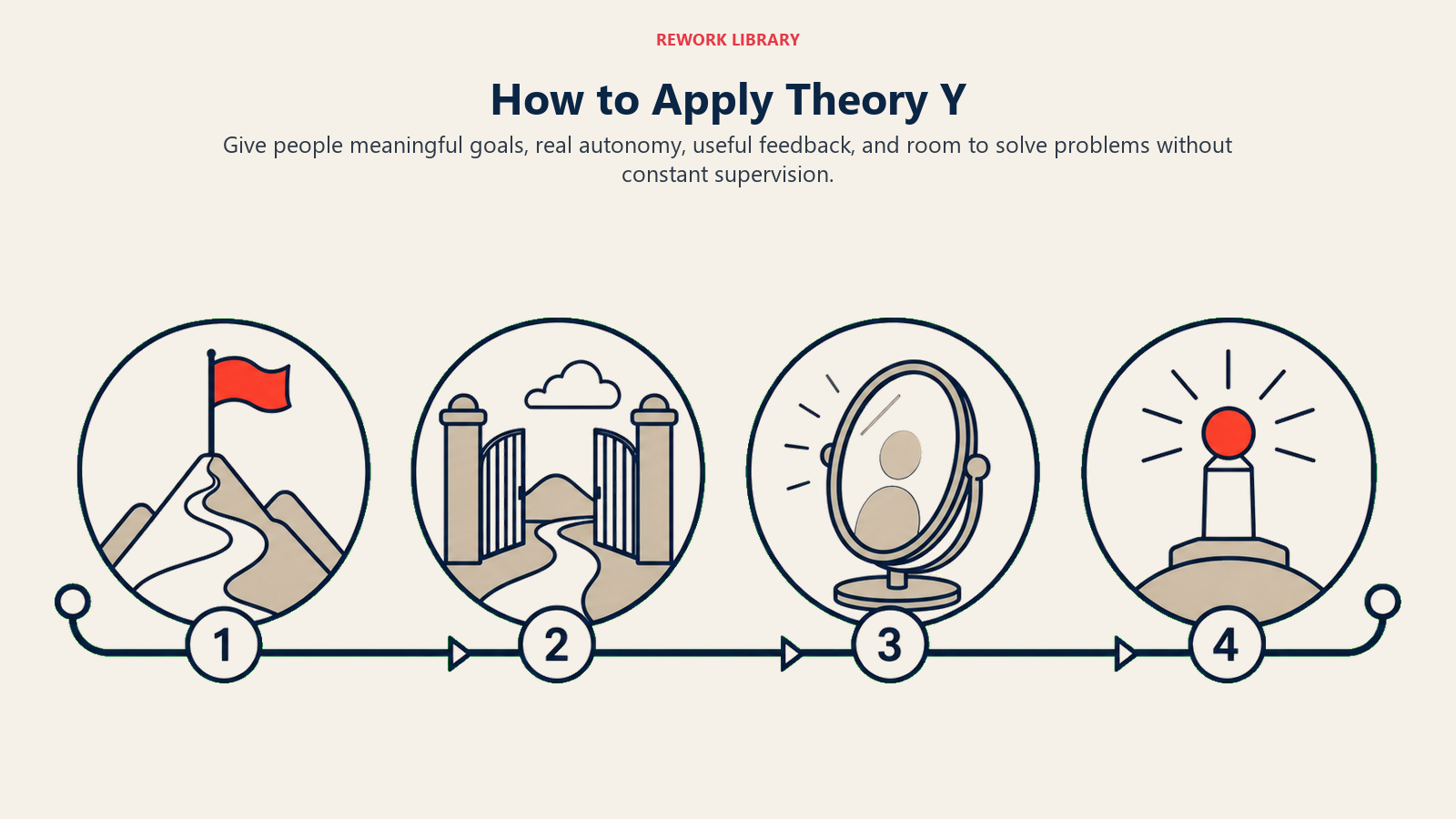
Passo 1: Audite suas premissas atuais
Antes de mudar qualquer coisa, observe o que você acredita. Quando um membro da equipe perde um prazo, seu primeiro instinto é "ele precisa de mais supervisão" ou "algo está bloqueando o trabalho"? Quando alguém toma uma decisão incomum, você sente a necessidade de corrigi-la ou de perguntar o que motivou a escolha? Suas respostas espontâneas revelam onde suas premissas realmente se situam.
Passo 2: Defina metas, não tarefas
Defina como é o sucesso e deixe as pessoas descobrirem como chegar lá. Em vez de "ligue para 20 clientes potenciais por dia", tente "feche três novas contas neste trimestre". A primeira métrica controla o comportamento. A segunda cria um problema para uma pessoa capaz resolver. Você obterá abordagens mais criativas, e as pessoas que encontrarem métodos melhores ensinarão as que não encontrarem.
Passo 3: Compartilhe informações amplamente
Gestores com mentalidade Teoria X retêm informações porque a autoridade deriva do que somente eles sabem. Gestores com mentalidade Teoria Y compartilham o contexto do negócio, as informações financeiras quando possível, o feedback dos clientes, o panorama competitivo. Quando as pessoas entendem por que seu trabalho importa e como ele se encaixa no todo, tomam decisões melhores sem precisar ser instruídas.
Passo 4: Crie ciclos de feedback reais
Não avaliações de desempenho uma vez por ano. Feedback frequente e específico sobre o trabalho real. "Aquela proposta estava clara e a lógica de precificação era fácil de acompanhar" é útil. "Bom trabalho" não é. E peça feedback sobre o seu próprio comportamento de gestão. A disposição para ser avaliado pelas pessoas que você gerencia é um dos sinais mais claros de que você está praticando a Teoria Y.
Passo 5: Reconheça a iniciativa, não apenas os resultados
As organizações com mentalidade Teoria Y reconhecem pessoas que assumiram um risco inteligente que não funcionou, não apenas as que tiveram sucesso. Se apenas a iniciativa bem-sucedida for recompensada, as pessoas param de tomar iniciativa. Configure o sistema de reconhecimento para que tentativas bem pensadas e fundamentadas contem, mesmo quando o resultado não foi o esperado.
Passo 6: Crie segurança psicológica genuína
As pessoas não se autodirigem em ambientes onde erros são punidos. O estilo de liderança de coaching constrói isso ao longo do tempo: tratar erros como dados, perguntar "o que você aprendeu" em vez de "quem é o responsável" e modelar a disposição para admitir seus próprios erros. Segurança não é fraqueza. É a pré-condição para a comunicação honesta da qual equipes de alto desempenho dependem.
Exemplos por Cenário de Trabalho
| Situação | Resposta Teoria X | Resposta Teoria Y |
|---|---|---|
| Colaborador perde um prazo | "Ele precisa ser monitorado com mais frequência." | "O que impediu? O que ele precisa?" |
| Novo projeto atribuído | O gestor divide em tarefas e atribui cada uma | O gestor define a meta e pergunta como a pessoa quer abordá-la |
| Desempenho abaixo da meta | Supervisão adicional, avisos, plano de desempenho | Conversa sobre o que mudou e que suporte está faltando |
| Colaborador propõe uma nova abordagem | "Não é assim que fazemos as coisas aqui." | "Me explique seu raciocínio. Vamos tentar." |
| Equipe com baixo desempenho | Aumentar controles, elevar a frequência de relatórios | Examinar a definição de metas, o acesso a informações e o sistema de reconhecimento |
| Alto desempenho quer mais autonomia | "Não é assim que as coisas funcionam aqui." | Criar uma tarefa desafiadora com escopo mais amplo |
| Conflito na equipe surge | O gestor intervém e determina uma solução | O gestor pede que cada parte explique sua posição e facilita a resolução |
A coisa mais útil que McGregor fez não foi inventar dois estilos de gestão. Ele mostrou que o estilo que você usa é um sintoma das crenças que você sustenta, e que essas crenças costumam ser invisíveis. A maioria dos gestores que opera a partir da Teoria X não se considera controladora. Acredita que está sendo realista. A maioria dos gestores que opera a partir da Teoria Y não se considera permissiva. Acredita que está tratando as pessoas como adultos capazes. A diferença aparece no que eles constroem, no que toleram e em quem permanece.
Se você quer entender onde seu estilo de liderança realmente se situa, não olhe para as suas intenções. Olhe para os sistemas que você criou e para os comportamentos que eles recompensam.

Senior Operations & Growth Strategist
On this page
- O Que São a Teoria X e a Teoria Y?
- Fatos Relevantes
- Teoria X versus Teoria Y
- A Teoria X Explicada
- A Teoria Y Explicada
- A Teoria X e a Teoria Y na Liderança Moderna
- Como Aplicar a Teoria Y no Trabalho
- Passo 1: Audite suas premissas atuais
- Passo 2: Defina metas, não tarefas
- Passo 3: Compartilhe informações amplamente
- Passo 4: Crie ciclos de feedback reais
- Passo 5: Reconheça a iniciativa, não apenas os resultados
- Passo 6: Crie segurança psicológica genuína
- Exemplos por Cenário de Trabalho