Liderança Visionária: Características e Exemplos

Turn this article into takeaways for your work.


Each assistant summarizes the article only for you and suggests best practices for your work.
A liderança visionária é uma das abordagens mais estudadas na gestão moderna, e com boas razões. Equipes lideradas por líderes visionários tendem a ter um senso mais forte de propósito, a avançar mais rapidamente em meio à ambiguidade e a se manter unidas quando as coisas ficam difíceis.
Mas o que exatamente torna alguém um líder visionário? E como você desenvolve essa habilidade se não nasceu com um discurso dramático de "eu tenho um sonho" dentro de si?
O Que é Liderança Visionária?
A liderança visionária é a capacidade de articular uma direção de longo prazo convincente e inspirar outros a se comprometerem com essa jornada. É um dos seis estilos de liderança emocional de Daniel Goleman, descrito em seu marcante artigo do Harvard Business Review "Leadership That Gets Results" (2000). Goleman também o chama de estilo autoritativo: o líder que diz "venha comigo" em vez de "faça porque eu mandei".
A distinção essencial: líderes visionários não apenas definem um destino. Eles fazem as pessoas quererem chegar lá.
Fatos-chave: liderança visionária
- O estilo de liderança responde por aproximadamente 30% da lucratividade final de uma empresa, de acordo com a pesquisa de Goleman com mais de 3.000 executivos (Harvard Business Review, 2000)
- Os gestores influenciam 70% da variância no engajamento da equipe, o que significa que a forma como um líder se apresenta molda diretamente se uma equipe está energizada ou desengajada (Gallup, 2025)
- O engajamento global dos colaboradores caiu para 21% em 2025, a queda mais acentuada desde a COVID-19, ressaltando o quanto uma liderança forte e orientada por propósito é necessária agora (Gallup State of the Global Workplace, 2025)
Características dos Líderes Visionários
Nem todo líder visionário tem a mesma aparência. Alguns são quietos. Outros são expansivos. Mas a maioria compartilha um conjunto reconhecível de qualidades:

- Visão de longo prazo clara. Eles conseguem descrever para onde a organização está indo em termos que ficam na memória. Não apenas uma declaração de missão, mas um quadro que as pessoas conseguem realmente visualizar.
- Comunicação inspiradora. Eles conectam o trabalho do dia a dia a algo maior. Quando um líder visionário explica por que algo importa, as pessoas sentem isso.
- Empatia. Líderes visionários prestam atenção ao que suas equipes realmente valorizam e falam às motivações de cada um. Esta é uma competência central da inteligência emocional.
- Confiança sem arrogância. Eles sustentam sua convicção com firmeza suficiente para que outros acreditem na direção, mas estão abertos a ajustar o curso quando novas informações chegam.
- Disposição para assumir riscos calculados. Visões grandes exigem avançar antes de ter todos os dados. Líderes visionários estão confortáveis com essa incerteza e ajudam suas equipes a também ficarem.
Liderança Visionária vs Carismática vs Transformacional
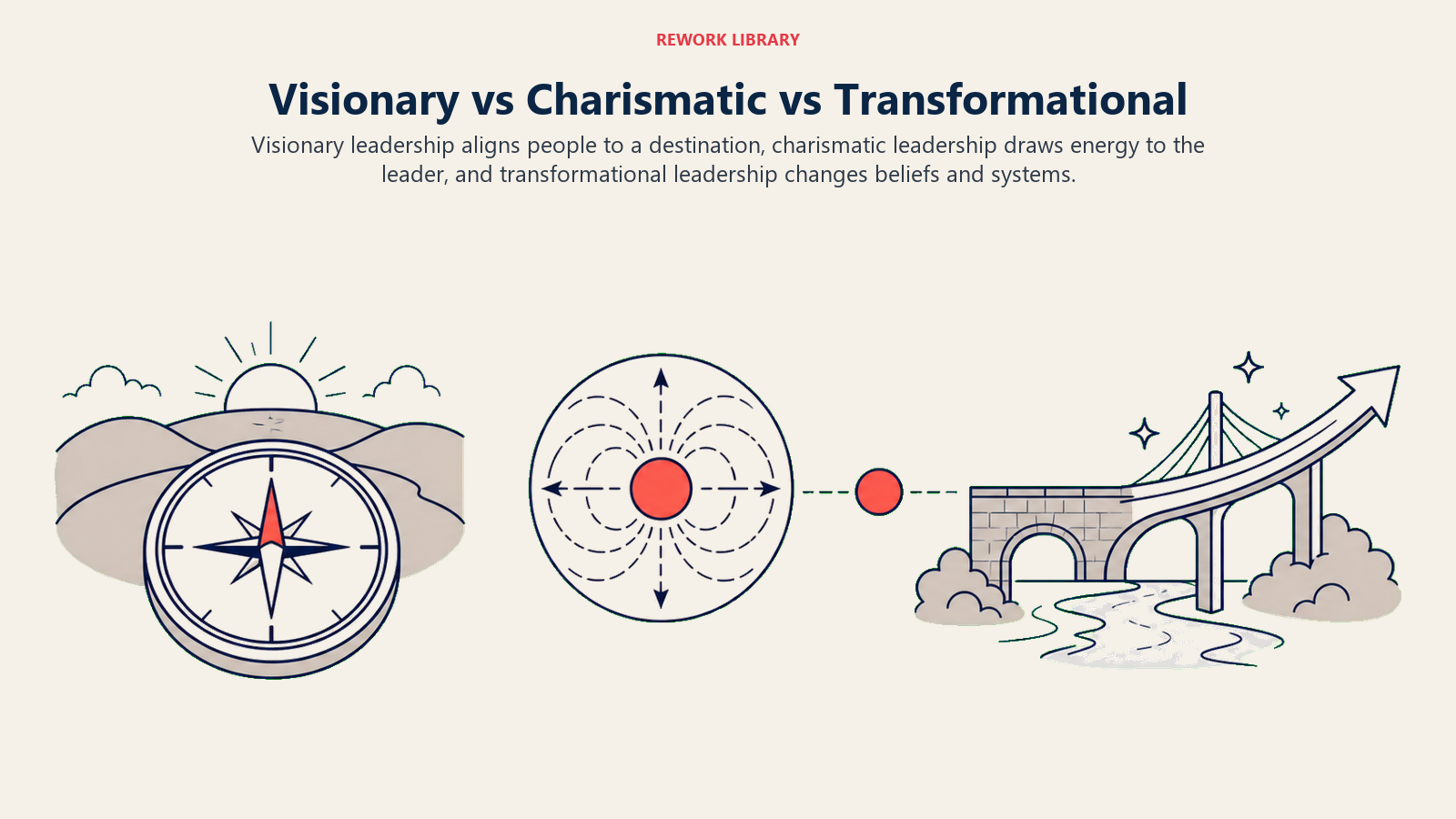
Esses três estilos se confundem frequentemente. Estão relacionados, mas não são a mesma coisa.
| Estilo | Foco central | Como motiva | Risco principal |
|---|---|---|---|
| Visionária | Direção de longo prazo compartilhada | "É para aqui que vamos e por que isso importa" | Pode falhar se a visão for pouco clara ou o líder não tiver credibilidade |
| Carismática | Magnetismo pessoal do líder | "Me sigam por causa de quem sou" | O desempenho da equipe pode entrar em colapso se o líder sair |
| Transformacional | Mudança organizacional fundamental | "Vamos nos tornar algo novo juntos" | Fadiga de mudança; pode sobrecarregar equipes que não estão prontas para a disrupção |
A liderança visionária e a liderança transformacional frequentemente se sobrepõem, mas a liderança visionária é especificamente sobre criar e comunicar um estado futuro. A liderança transformacional é mais ampla: também abrange como o líder desafia o pensamento, faz coaching para o crescimento e reformula a cultura. A liderança carismática reside mais na personalidade do líder do que na clareza da visão em si.
Benefícios da Liderança Visionária e Quando Ela Funciona Melhor
A pesquisa de Goleman é bastante clara ao mostrar que o estilo autoritativo (visionário) produz alguns dos efeitos positivos mais fortes no clima organizacional entre todos os seis estilos. Eis o porquê:
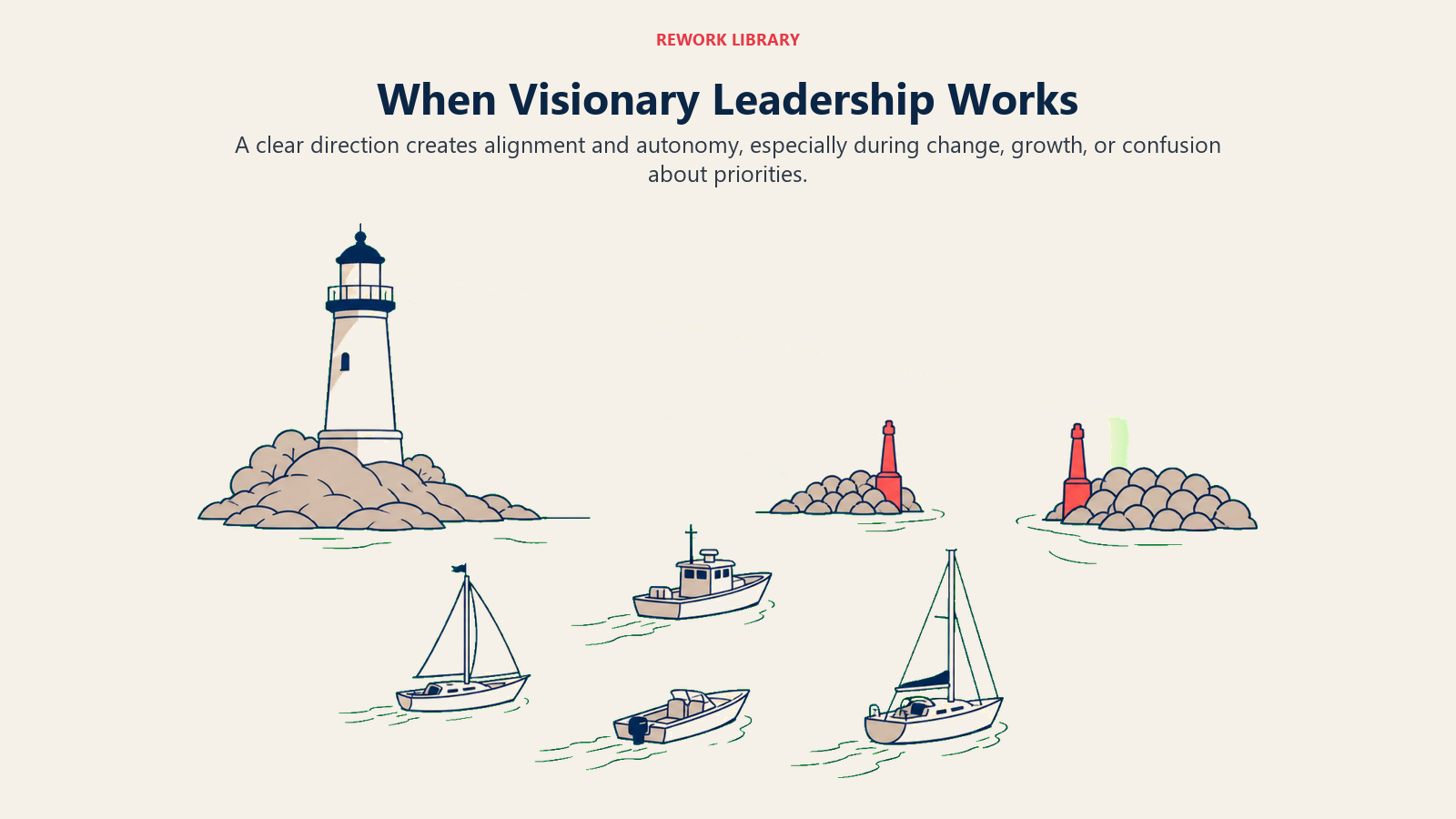
- Alinhamento sem microgestão. Quando as pessoas entendem a visão, conseguem tomar decisões que avançam em direção a ela sem precisar verificar constantemente. Isso libera a capacidade de liderança e acelera a execução.
- Resiliência diante de mudanças. Equipes com um propósito compartilhado claro se mantêm unidas quando as prioridades mudam ou os recursos diminuem. O "porquê" funciona como uma âncora.
- Atração de talentos. As pessoas querem trabalhar em algo significativo. Uma visão bem articulada facilita o recrutamento e a retenção, especialmente de profissionais de alto desempenho que têm opções.
Este estilo funciona melhor em situações onde uma nova direção é necessária: um turnaround, uma startup, um setor enfrentando disrupção, ou uma equipe que se perdeu e perdeu seu senso de propósito. Também é altamente eficaz quando as pessoas têm a habilidade para fazer seu trabalho, mas lhes falta motivação ou clareza para fazê-lo com convicção.
É menos eficaz quando o líder é novo em uma equipe e ainda não construiu confiança. Uma visão de alguém em quem a equipe ainda não acredita não produz o mesmo efeito.
Limitações e Quando Pode Falhar
A liderança visionária é poderosa, mas não é uma solução universal. Alguns cenários em que ela falha:
O líder não tem credibilidade. Se a equipe não confia no julgamento ou no histórico do líder, a visão soa como pensamento wishful. A credibilidade precisa vir antes da visão.
A equipe tem mais expertise do que o líder. Em domínios altamente técnicos, um líder que está pintando o quadro grande mas não consegue se engajar com os detalhes pode frustrar especialistas que sabem o que realmente precisa acontecer. Aqui, um estilo de liderança de coaching ou uma abordagem de liderança democrática frequentemente funciona melhor.
A visão é abstrata demais. "Ser o melhor do mundo" não é uma visão. É um adesivo de para-choque. Visões que não se traduzem em direção concreta de curto prazo deixam as equipes girando em falso.
Dependência excessiva deste único estilo. A pesquisa de Goleman descobriu que os melhores líderes usam múltiplos estilos com fluidez. Uma dieta exclusiva de liderança visionária, sem o calor relacional da liderança afiliativa ou a urgência da liderança marcadora de ritmo, pode deixar as equipes se sentindo inspiradas, mas sem suporte ou desafio.
Como Desenvolver a Liderança Visionária
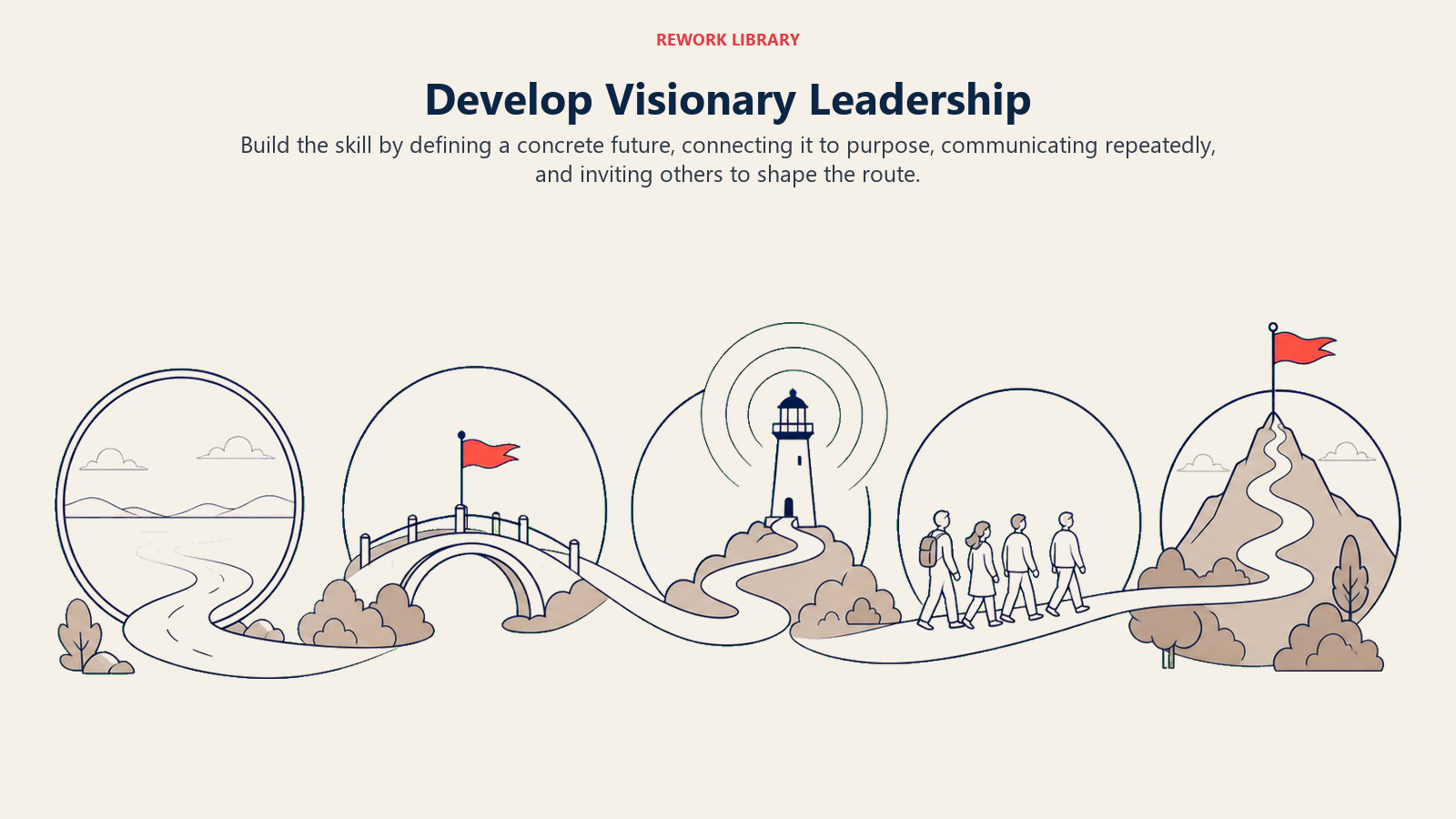
Você não precisa ser Steve Jobs para liderar com visão. Estes passos ajudam qualquer gestor a desenvolver essa habilidade de forma deliberada.
Passo 1: Construa uma visão clara
Comece com uma imagem concreta de como é o sucesso em 3 a 5 anos. Seja específico o suficiente para que alguém consiga descrevê-la sem você na sala. Escreva-a. Teste-a com pessoas que dirão honestamente se está vaga.
Passo 2: Comunique o "porquê"
A maioria dos líderes explica excessivamente o "o quê" e explica de menos o "porquê". As pessoas não querem apenas saber para onde estão indo. Elas querem saber por que isso importa. Conecte a visão a algo pelo qual sua equipe realmente se importa: impacto nos clientes, excelência no trabalho, legado, crescimento.
Passo 3: Conecte o trabalho diário ao propósito maior
O abismo entre "OKRs trimestrais" e "por que esta empresa existe" é onde o engajamento morre. Crie o hábito de conectar explicitamente os projetos da equipe à visão maior em 1:1s, standups e revisões de equipe.
Passo 4: Empodere a autonomia
Diga às pessoas para onde vão, dê-lhes o contexto de que precisam e depois deixe que descubram como chegar lá. Microgerenciar o caminho enquanto se diz ser um líder visionário é uma contradição. Confie à equipe a execução.
Passo 5: Modele a visão você mesmo
Se você prega inovação mas pune cada experimento que falha, a visão perde credibilidade rapidamente. Líderes que querem que suas equipes abracem um estado futuro precisam demonstrá-lo em suas próprias escolhas e comportamentos toda semana.
Exemplos de Liderança Visionária
Líderes visionários de verdade nem sempre aparecem como fundadores carismáticos. O padrão aparece em todos os níveis de uma organização.
| Líder | Contexto | O que tornou visionário |
|---|---|---|
| Satya Nadella na Microsoft | Ingressou em 2014 quando a Microsoft era vista como um gigante em declínio | Articulou uma mudança de "empresa de Windows" para "empresa de nuvem e IA", conectando o trabalho de cada equipe a essa nova identidade |
| Indra Nooyi na PepsiCo | CEO de 2006 a 2018 | Propôs "Performance with Purpose", uma visão que vinculava o sucesso nos negócios à saúde e sustentabilidade antes que essas fossem prioridades mainstream |
| Um gerente de produto em uma empresa SaaS de médio porte | Liderando uma equipe interfuncional sem autoridade direta | Compartilhou uma visão clara de 18 meses de produto em uma apresentação de kickoff, explicou como o domínio de cada pessoa se conectava a ela e a revisitou mensalmente |
O terceiro exemplo importa. A liderança visionária não é reservada para CEOs. Qualquer gestor que consiga articular claramente para onde a equipe está indo e por que, e que conquiste a crença da equipe nessa direção, está exercendo liderança visionária.
Para mais sobre como diferentes estilos se encaixam em diferentes situações, veja a visão geral dos estilos de liderança emocional de Goleman ou o framework dos 5 níveis de liderança.
Boas Práticas
Faça:
- Declare a visão em linguagem simples. Se você precisa de três slides para explicá-la, ainda não está clara.
- Revisitá-la regularmente para que ela permaneça viva: revisões trimestrais, retiros da equipe, onboarding de novos contratados.
- Reconheça o progresso em direção à visão abertamente. Celebre marcos que se conectam ao quadro maior.
- Pergunte à sua equipe como o trabalho dela se conecta à visão. Se não conseguirem responder, é um sinal para comunicar mais.

Não faça:
- Use a visão como forma de sobrepor preocupações legítimas. "Mas a visão diz..." não é substituto para uma boa tomada de decisão.
- Presuma que a visão motiva a todos igualmente. Pessoas diferentes são energizadas por coisas diferentes. Complemente a visão com conversas individuais sobre o que importa para cada pessoa.
- Abandone a visão ao primeiro sinal de dificuldade. Alguns dos momentos mais eficazes de liderança visionária acontecem quando um líder mantém a direção firme em tempos difíceis.
- Negligencie a execução. Visão sem follow-through corrói a confiança mais rápido do que quase qualquer outra coisa.
Perguntas Frequentes sobre Liderança Visionária
A liderança visionária é a mesma coisa que liderança autoritativa?
No framework de Goleman, sim. Os termos são usados de forma intercambiável em "Leadership That Gets Results". Alguns escritores posteriores os separaram ligeiramente, usando "autoritativo" para o estilo de Goleman e "visionário" para líderes focados especificamente em direção estratégica de longo prazo, mas na prática os dois conceitos se sobrepõem quase inteiramente.
A liderança visionária pode ser aprendida, ou é inata?
Pode ser aprendida. As competências centrais (articular uma direção clara, comunicar com propósito, conectar o trabalho ao significado) são todas habilidades que melhoram com a prática. O que mais ajuda é a reflexão intencional: perguntar-se regularmente se a sua equipe sabe para onde está indo e por quê.
Quando você deve abandonar a liderança visionária?
Quando a equipe precisa de desenvolvimento prático de habilidades (mude para coaching), quando o moral está frágil e os relacionamentos precisam de reparo (mude para afiliativa), ou quando uma crise exige conformidade clara de curto prazo (mude para uma abordagem mais diretiva). A pesquisa de Goleman mostra consistentemente que os melhores líderes flexibilizam entre estilos com base na situação.
Como a liderança visionária difere da liderança estratégica?
A liderança estratégica foca no trabalho analítico de definir direções (análise de mercado, alocação de recursos, posicionamento competitivo). A liderança visionária é sobre o lado humano dessa direção: fazer as pessoas acreditarem nela e se comprometerem com ela. Líderes seniores fortes fazem as duas coisas, mas são conjuntos de habilidades distintos.
Qual é o maior erro que líderes visionários cometem?
Confundir inspiração com execução. Uma visão convincente cria energia, mas essa energia precisa ser canalizada em planos concretos, propriedade clara e follow-through consistente. Os líderes que fazem isso melhor veem a visão como o ponto de partida, não a linha de chegada.
Bem executada, a liderança visionária muda o que parece possível para uma equipe. Mas exige reforço consistente: como você se comunica, como toma decisões e como aparece semana após semana. A visão precisa viver no seu comportamento, não apenas nos seus slides.

On this page
- O Que é Liderança Visionária?
- Características dos Líderes Visionários
- Liderança Visionária vs Carismática vs Transformacional
- Benefícios da Liderança Visionária e Quando Ela Funciona Melhor
- Limitações e Quando Pode Falhar
- Como Desenvolver a Liderança Visionária
- Passo 1: Construa uma visão clara
- Passo 2: Comunique o "porquê"
- Passo 3: Conecte o trabalho diário ao propósito maior
- Passo 4: Empodere a autonomia
- Passo 5: Modele a visão você mesmo
- Exemplos de Liderança Visionária
- Boas Práticas