More in
AI Jobs & Skills News
Finance Keeps Shedding Jobs as the Economy Hires: The White-Collar Warning
Jun 6, 2026
AI Skills Just Became the Hardest Hire in the World. You Won't Recruit Your Way Out
Jun 6, 2026
Is AI Actually Killing Jobs? May's Hiring Numbers Say Not So Fast
Jun 5, 2026
You Put Your AI Agents on the Org Chart. Accountability Quietly Dropped
Jun 5, 2026
Everyone Blames AI for the Gen Z Job Crisis. The Fed Points at Remote Work
Jun 5, 2026
AI's Net Job Drag Fell to 11,000 a Month. Construction Is Hiding the Truth
Jun 4, 2026
AI Blamed for a Record 40% of May's US Layoffs, the Third Month Running
Jun 4, 2026
Four Futures for Jobs by 2030: The Mid-2026 Checkpoint for CEOs
Jun 3, 2026
Can Federal AI Apprenticeships Fix Your Skills Gap Cheaper Than Hiring?
Jun 3, 2026
AI Engineer Pay Split Into Two Markets. Only the Top Is a Bubble
Jun 3, 2026
LinkedIn Data Shows AI Skills Demand Surged 142% in 12 Months: Here's Which Roles Are Driving It
Turn this article into takeaways for your work.


Each assistant summarizes the article only for you and suggests best practices for your work.
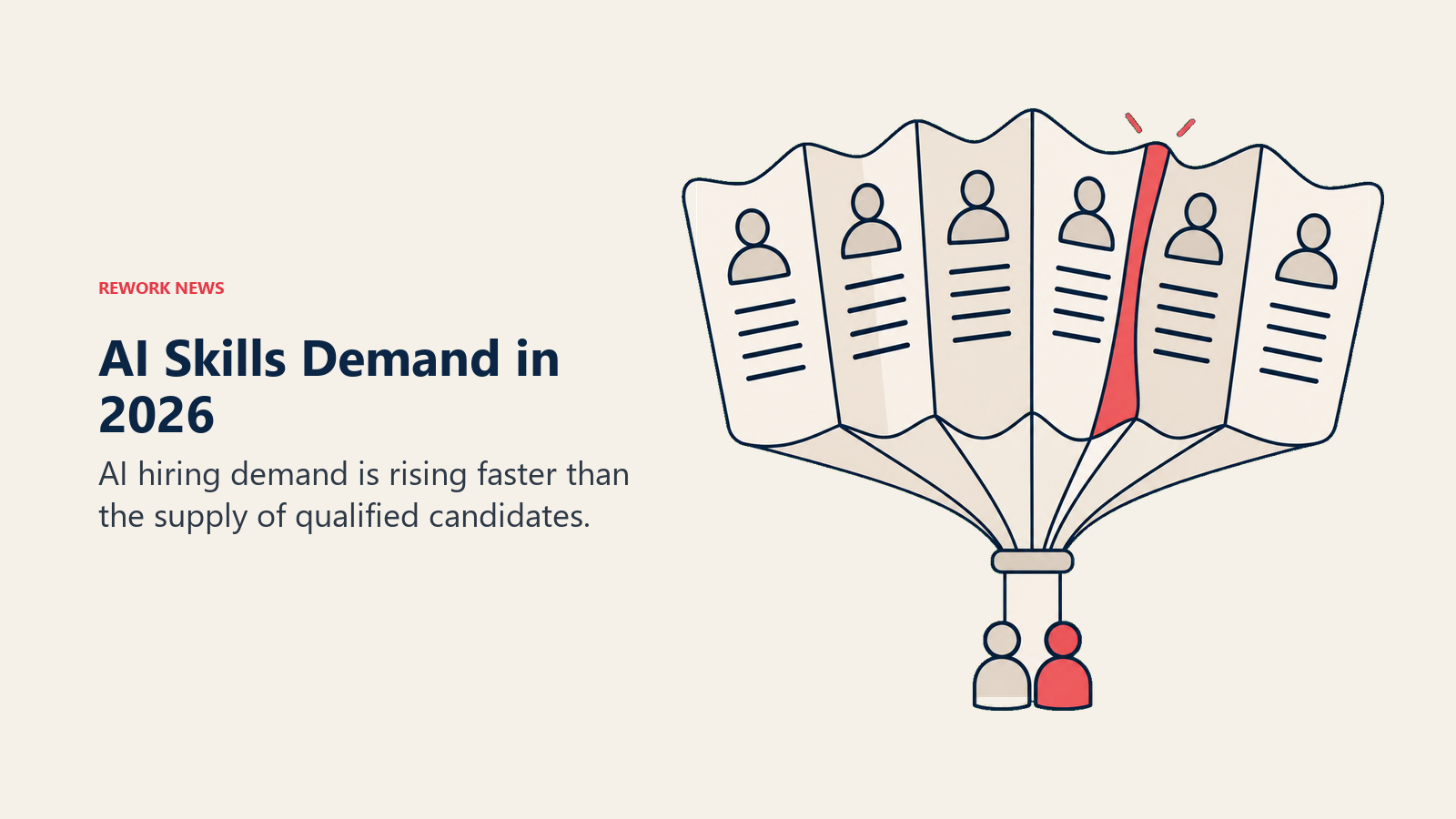
A 142% jump in AI skills demand over a single year isn't a trend. It's a signal that the market has already moved.
LinkedIn's 2026 Workforce Insights report, pulling from over 950 million professional profiles and more than 60 million job postings globally, documents what most hiring managers already sense on the ground: companies aren't just adding AI roles. They're rewriting job requirements across every level and function. The demand surge is accelerating. Supply isn't keeping up.
For CEOs still treating AI talent strategy as a next-quarter agenda item, the data suggests that window has closed.
What LinkedIn's Data Actually Covers
Demand for AI skills jobs rose 142% in the 12 months through Q1 2026, according to LinkedIn, roughly double the 68% growth seen the year before. Five role clusters (machine learning engineer, AI product manager, prompt engineer, AI analyst, and AI operations specialist) drive over 70% of the increase, while supply sits at just 2.3 qualified candidates per 10 open roles.
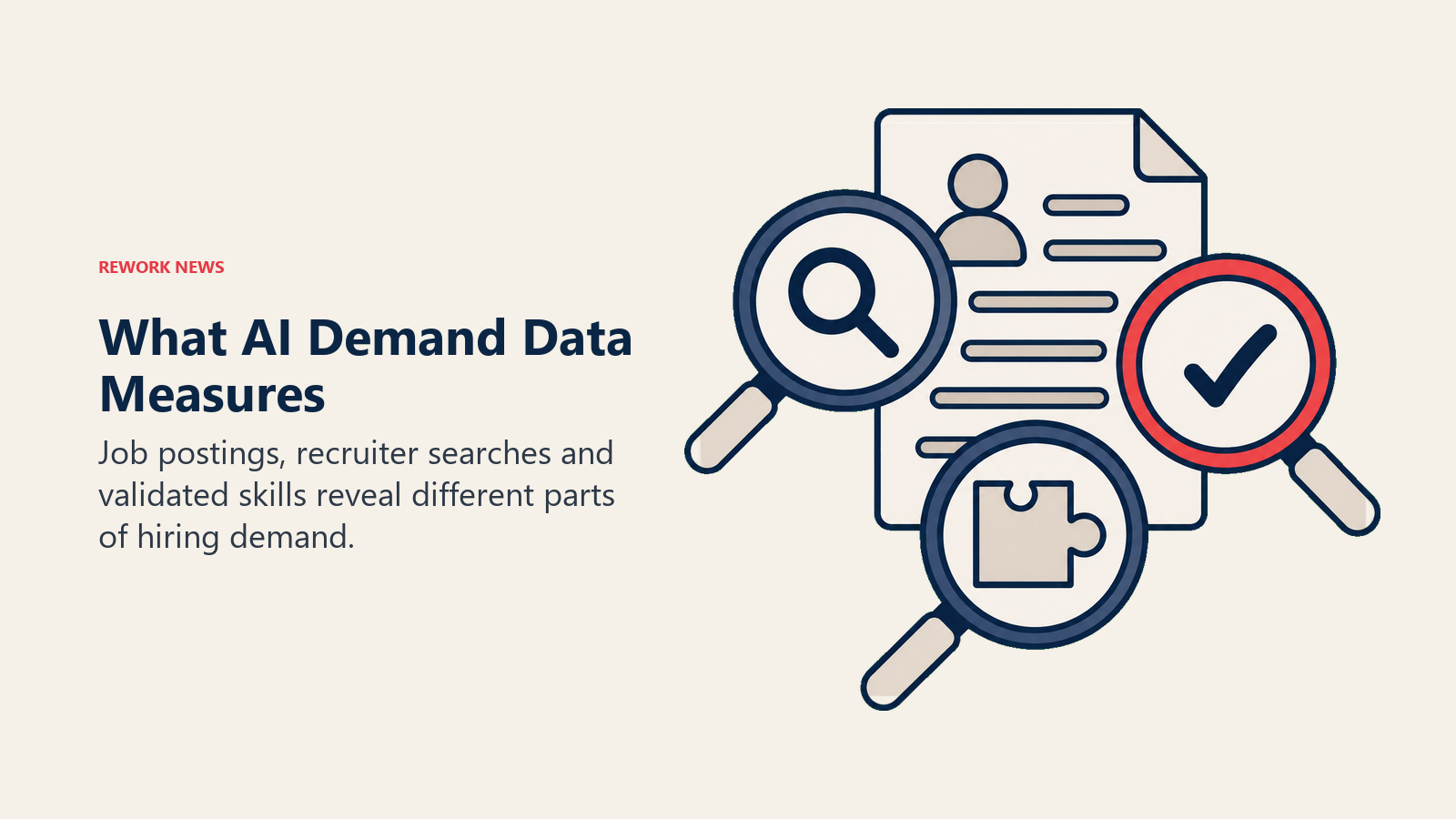
Before leaning on the 142% figure, it's worth understanding what LinkedIn is measuring. Their Workforce Insights platform tracks job postings that explicitly list AI-related skills, ranging from core technical competencies like machine learning and LLM fine-tuning down to applied skills like AI-assisted workflow design and prompt engineering. The 12-month window covers Q1 2025 through Q1 2026.
The methodology matters because critics sometimes argue AI skills demand is inflated by keyword stuffing in job posts. LinkedIn's approach cross-validates against actual profile endorsements and recruiter search activity, which makes the 142% figure more defensible. It's not just what companies are asking for in job ads. It's what recruiters are actually searching for and what candidates are getting validated on.
Year-over-year, 2024 showed a 68% increase in the same metric. So the pace of demand growth roughly doubled in the 2025–2026 window. That acceleration is the real story.
The Five Role Categories Driving the Surge
Not all AI roles are growing equally. LinkedIn's data breaks demand into role clusters, and five categories account for over 70% of the total increase:
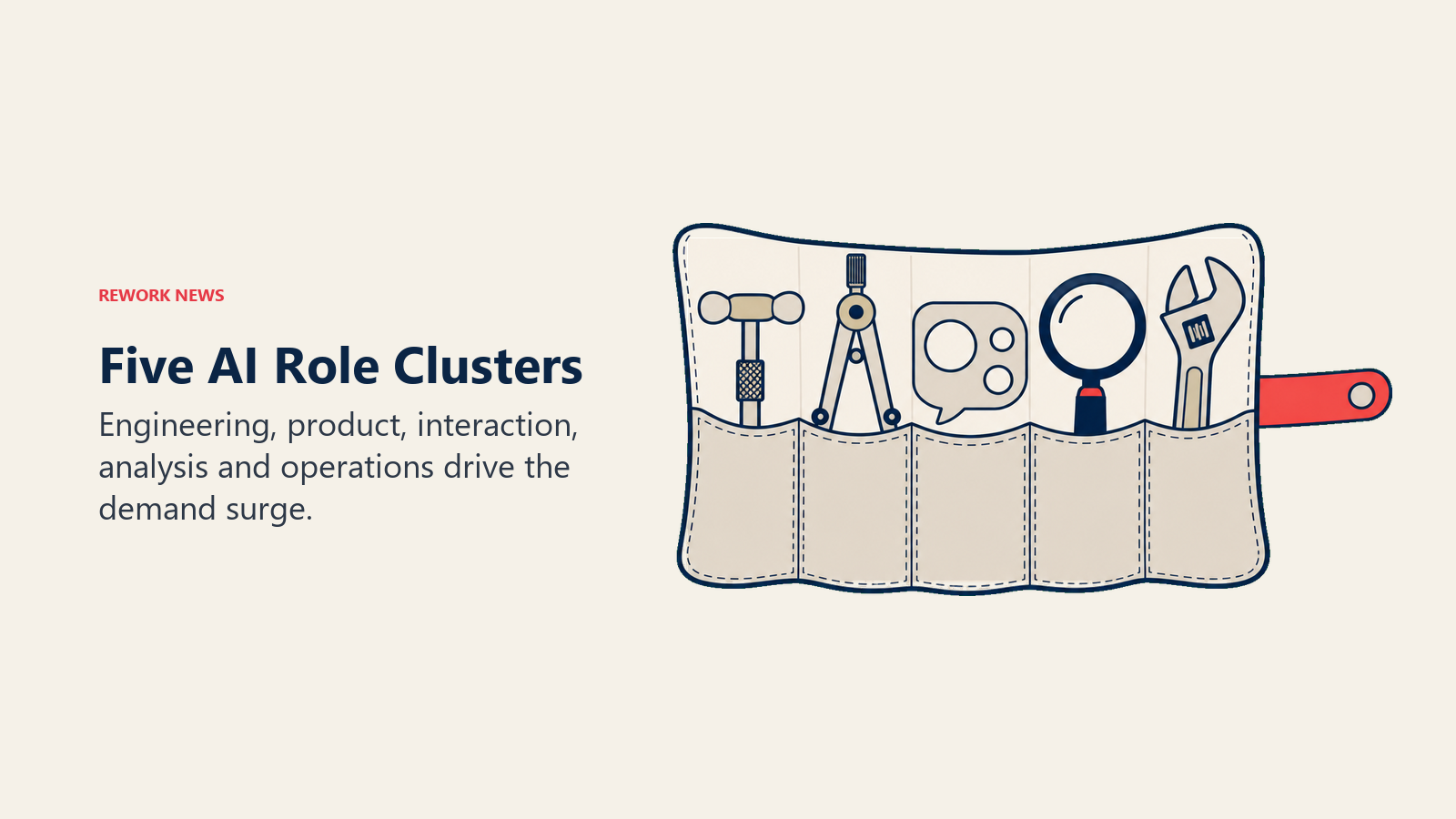
Machine Learning Engineer remains the highest-volume category, with a 178% year-over-year increase in postings. These are the engineers who build, fine-tune, and productionize models: the operational backbone of any serious AI capability.
AI Product Manager postings grew 161%. As AI moves from R&D to product lines, companies need PMs who can define what an AI feature should do and work across engineering, legal, and commercial teams to ship it.
Prompt Engineer / AI Interaction Designer grew 194%, the fastest-growing category in the data. This was barely a recognized job title 18 months ago. It's now a hiring priority at companies running large language model deployments.
AI Analyst postings rose 138%. These are the roles translating AI outputs into business decisions, closer to the business analyst profile than a traditional data science role.
AI Operations Specialist grew 122%. As AI tools proliferate across departments, someone has to manage the infrastructure, monitor model performance, handle vendor relationships, and troubleshoot failures at scale. This role is still underhired relative to demand.
The Supply-Demand Gap Is Widening, Not Narrowing
The uncomfortable math for executives: LinkedIn estimates there are currently 2.3 qualified candidates for every 10 open AI roles globally. That's a gap that has widened from 3.1 per 10 a year prior.
The gap isn't uniform. In North America, the ratio sits at roughly 2.8 candidates per 10 openings. In Europe, it's tighter at 1.9. In Southeast Asia, where AI hiring is growing fast against a smaller talent pool, it's closer to 1.4. Companies with global operations are facing a more severe shortage than their North America hiring data alone suggests.
The supply constraint is partly structural. University pipelines for ML engineers and AI specialists are growing, but the gap between graduation rates and hiring velocity is still widening on a 3-to-5 year horizon. Reskilling programs can close some of the gap for adjacent roles (AI Analyst, AI Operations, Prompt Engineer) faster than academic pipelines.
Time-to-Fill Is Getting Worse
Another signal worth tracking: average time-to-fill for AI roles has increased to 68 days in Q1 2026, up from 52 days a year prior. Compare that to 38 days for non-AI technical roles in the same period.
For companies running lean hiring teams, a 68-day fill window translates directly to delayed product timelines, missed revenue targets, and projects that sit in planning limbo waiting for headcount. The compounding effect is that longer fill times push companies toward contractor arrangements that cost more and build less institutional AI capability over time.
What Smart Leaders Are Doing
Companies closing the gap faster aren't necessarily outspending competitors on salaries. They're front-loading the pipeline. Organizations like Capital One, Siemens, and T-Mobile have built internal AI academies that identify and reskill high-potential employees into adjacent AI roles, reducing time-to-productivity from 6 months to under 10 weeks for roles like AI Analyst and AI Operations. The upskill vs. hire decision has a clear ROI answer for most applied AI roles. External hires take months to reach the productivity level an internal reskill can hit in weeks.
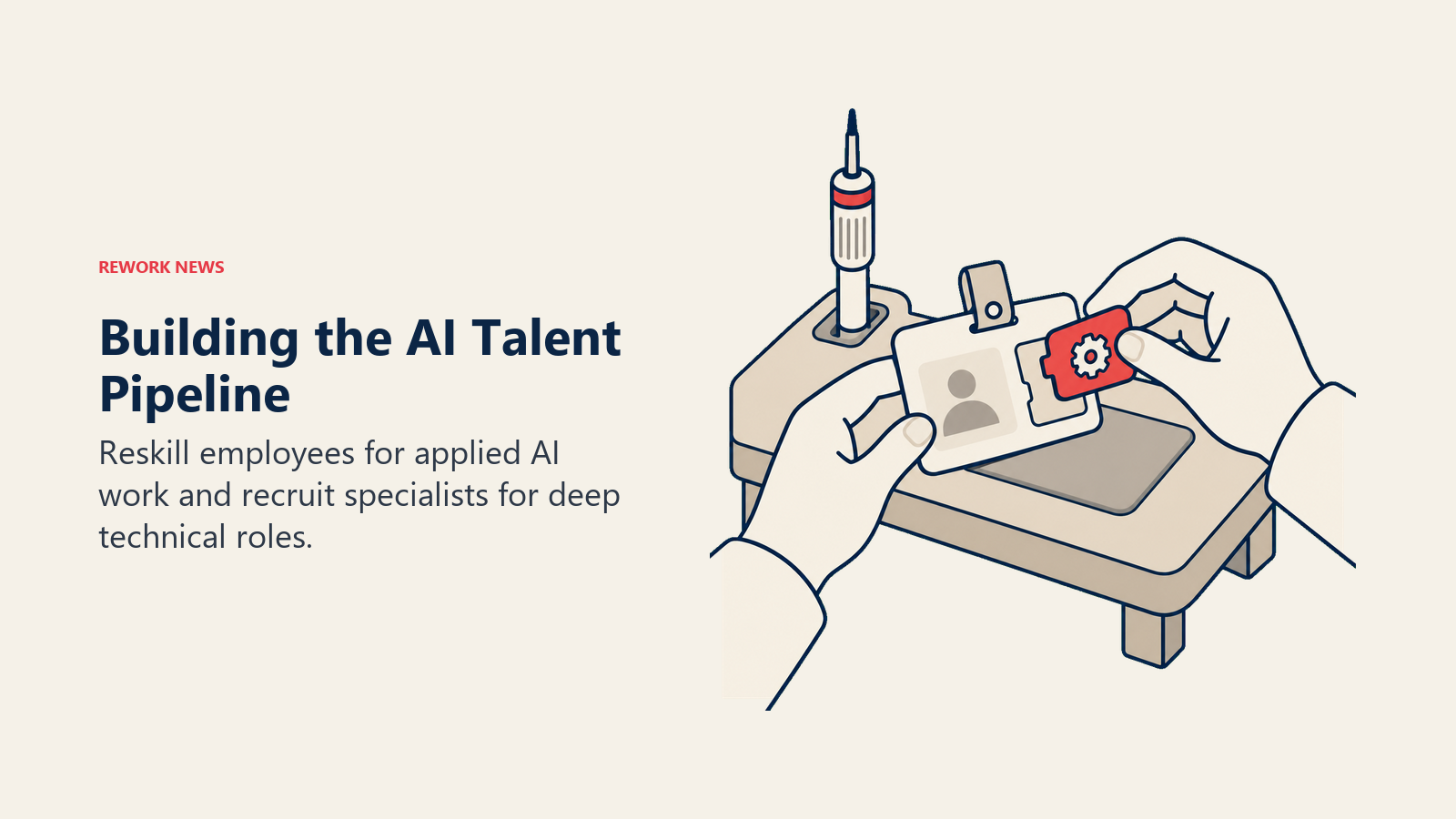
The reskilling play works best for non-engineering AI roles. For ML Engineering and AI Product Management, the technical depth required means external hiring remains the primary path. Companies that treat these two tracks separately (reskilling for applied AI roles, external hiring for core AI engineering) are filling roles faster than those trying to grow all AI capability internally. A practical AI skills matrix can map which roles in your org fall into which track before you commit recruiting budget.
Specialized AI recruiting firms have also seen a surge in demand. Firms that focus exclusively on AI and ML talent now account for roughly 18% of senior AI placements, up from 9% two years ago. The tradeoff is cost: these placements carry fees 20-30% higher than generalist recruiters. But for companies where a 68-day fill window has real revenue impact, that premium often calculates favorably.
The Salary Reality
Compensation is part of what's driving slow fills. The 142% increase in demand hasn't been matched by 142% more AI talent willingness to accept standard comp ranges. Median base salaries for ML Engineers crossed $185,000 in Q1 2026 for US-based roles. AI Product Managers are averaging $172,000. Prompt Engineers, still a nascent category, are ranging widely: from $95,000 to $155,000 depending on context and industry.
Workers with AI fluency are now commanding a 27% salary premium across job categories, which means the demand surge isn't just limited to pure AI roles. Finance analysts, marketing managers, and operations leads who can work with AI tooling are also seeing compensation lift. CEOs who aren't updating comp bands for AI-adjacent roles are seeing attrition to competitors who have.
What to Watch in H2 2026
Two scenarios are worth monitoring. The first: demand growth normalizes as initial AI deployment waves complete and companies shift from build to maintain. Some analysts project that Prompt Engineer demand in particular could plateau as AI tooling matures and reduces the need for manual prompt engineering at scale.
The second scenario (more likely based on current signals) is that demand accelerates further as industries that are still hiring AI talent relatively slowly reach the pressure point and begin hiring aggressively. Healthcare, legal, and government sectors are all significantly behind financial services and retail in AI talent density. When those sectors reach their own inflection points, they'll be competing for the same pool of talent that's already undersupplied.
The third signal to watch is whether non-tech job postings continue to incorporate AI skill requirements at the current pace. AI skill requirements are now showing up in non-tech job postings at a rate that would have seemed implausible 18 months ago. If that trend accelerates, the effective talent pool required to support an AI-literate workforce expands significantly beyond the current AI role categories.
The CEO Lens
The 142% figure is an input to a decision, not a headline to note and file. The practical question for CEOs is whether their current AI hiring velocity benchmarks favorably against a market where demand grew twice as fast in 2025 as it did in 2024.
If the answer is uncertain, the underlying data (time-to-fill, comp benchmarks, role category growth rates) gives enough specificity to pressure-test the hiring plan against what the market actually looks like in Q2 2026. Waiting for the next planning cycle to address AI talent strategy isn't a neutral choice. It's a choice to fall further behind a curve that's already moved.
Frequently Asked Questions
How much did AI skills jobs grow in the past year? LinkedIn data shows demand for AI skills jobs rose 142% in the 12 months through Q1 2026, up from 68% growth the year prior. The pace of demand growth roughly doubled, which is the more important signal than the headline number.
Which AI roles are in highest demand? Five categories drive over 70% of the increase: machine learning engineer (up 178%), AI product manager (161%), prompt engineer or AI interaction designer (194%, the fastest), AI analyst (138%), and AI operations specialist (122%).
Is the AI talent supply gap getting better or worse? Worse. LinkedIn estimates 2.3 qualified candidates per 10 open AI roles globally, down from 3.1 a year earlier. Europe (1.9) and Southeast Asia (1.4) are tighter than North America (2.8).
Should companies hire AI talent externally or reskill internally? Both, split by role. Reskilling works fastest for applied roles like AI analyst and AI operations, cutting time-to-productivity to under 10 weeks. ML engineering and AI product management still favor external hiring because of the technical depth required.
What are AI roles paying in 2026? Median US base salaries reached about $185,000 for ML engineers and $172,000 for AI product managers. Prompt engineers range from $95,000 to $155,000. Workers with AI fluency command roughly a 27% pay premium across job categories.
Learn More

Co-Founder, Rework.com