Apakah Penjajaran Jualan-CS: Bagaimana Pasukan AE dan CSM Menang Bersama dalam Pengekalan dan Pertumbuhan
Turn this article into takeaways for your work.


Each assistant summarizes the article only for you and suggests best practices for your work.
Emoji champagne muncul di Slack. Semua orang merayakan. AE mencapai kuota. Komisen diproses.
Tiga bulan kemudian, pelanggan baharu kecewa. CSM mereka menjawab semula soalan yang wakil jualan sudah tangani semasa penemuan. Integrasi yang "pasti boleh dilakukan" kini enam minggu lagi. Champion yang menandatangani kontrak baru sahaja berpindah ke syarikat lain. Sembilan bulan selepas penutupan, akaun itu churn.
Kedua-dua VP Jualan dan VP Kejayaan Pelanggan saling memandang, tertanya-tanya masalah siapakah ini.
Tiada siapa yang berbohong. Tiada siapa yang gagal dalam kerja mereka. Tetapi syarikat baru sahaja membayar kos pemerolehan pelanggan penuh untuk membeli pelanggan yang tidak dapat dikekalkan. Jurang itu (antara detik closed-won dan hasil pelanggan yang berjaya) adalah tepat di mana penjajaran Jualan-CS hidup. Dan itulah tempat kebanyakan perniagaan SaaS pasaran pertengahan secara senyap kehilangan NRR setiap suku.
Apakah Penjajaran Jualan-CS?
Penjajaran Jualan-CS ialah perjanjian operasi tentang pemilikan, konteks, dan kesinambungan pelanggan selepas kontrak ditandatangani.
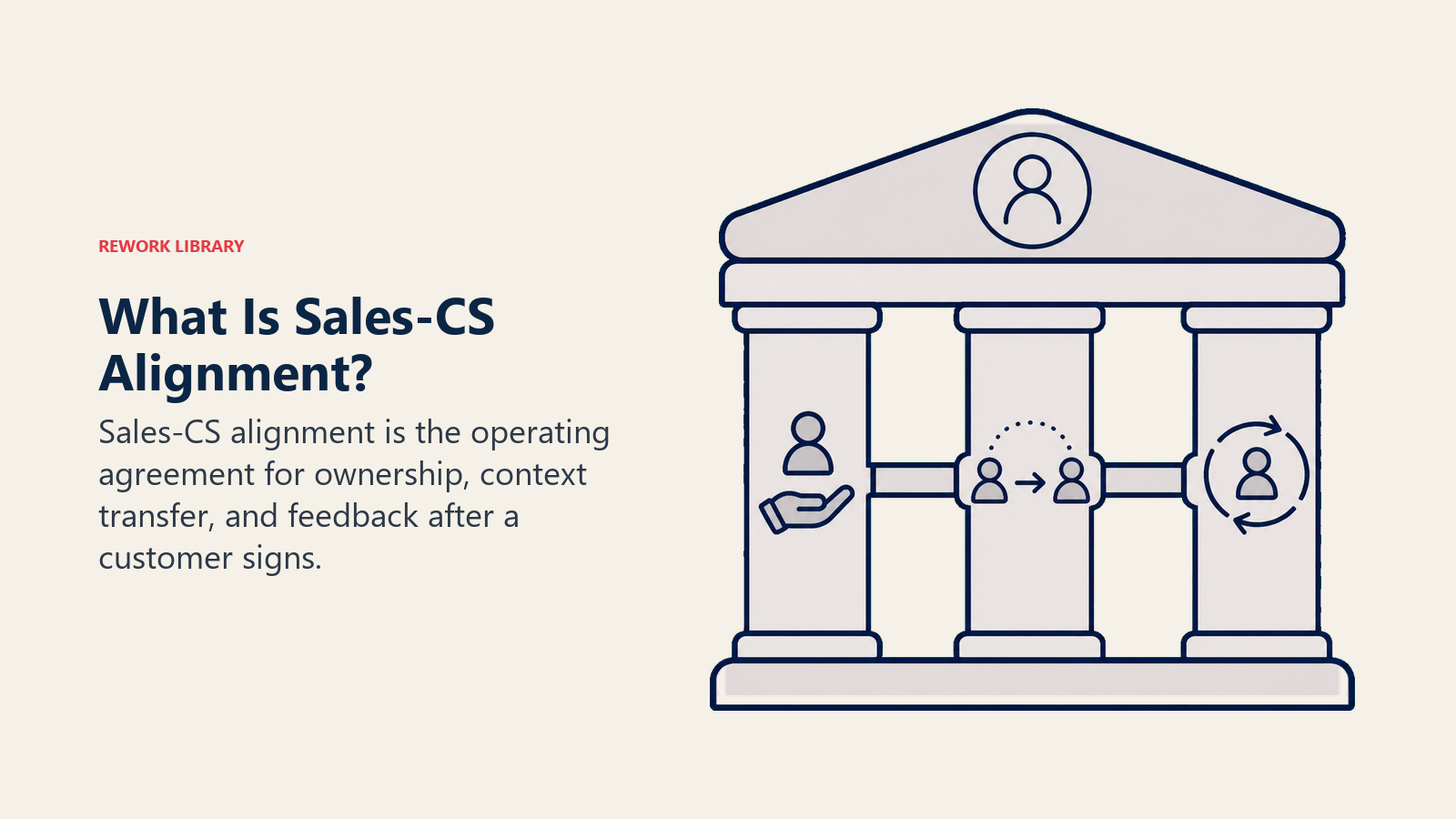 Penjajaran Jualan-CS bukan inisiatif kerja berpasukan. Ia adalah model operasi yang dibina atas perjanjian eksplisit tentang siapa yang memiliki apa pada setiap peringkat kitaran hayat pelanggan, dari detik urusan ditutup hingga perbualan pembaharuan dua belas bulan kemudian.
Ia menentukan bila konteks dipindahkan, bagaimana janji didokumentasikan, siapa yang menjalankan gerakan pengembangan, dan apa yang berlaku apabila akaun mula menunjukkan isyarat risiko.
Singkirkan istilah buzzword dan tiga perkara konkrit diperlukan:
1. Pemilikan yang ditakrifkan pada setiap peringkat kitaran hayat. Kedua-dua pasukan tahu dengan tepat siapa yang memiliki hubungan pelanggan semasa onboarding, pada semakan 90-hari, pada pendekatan pembaharuan, dan pada perbualan pengembangan. Pemilikan tidak diandaikan. Ia ditulis dan dipersetujui.
2. Pemindahan konteks yang sebenarnya memindahkan konteks. Serah tugas closed-won bukan e-mel pengenalan. Ia adalah pemindahan berstruktur segala yang diperlukan CSM untuk bermula dengan kukuh: motivasi pembelian, janji teknikal, keutamaan champion, pihak berkepentingan dalaman yang skeptikal, dan komitmen garis masa yang dibuat semasa rundingan.
3. Gelung maklum balas yang menutup. Apabila akaun churn atau diperbaharui dengan diskaun, maklumat itu mengalir kembali ke jualan secara berstruktur, bukan sebagai tuduhan, tetapi sebagai isyarat ICP. Apabila jualan mengenal pasti peluang pengembangan semasa panggilan semakan, itu mengalir ke CS dengan konteks tentang apa yang dicadangkan dan mengapa.
Tiga perjanjian ini adalah model operasi. Carta organisasi, alatan, kadens mesyuarat: semua itu menyokong perjanjian ini. Tanpa perjanjian itu, selebihnya hanyalah bunyi bising. Akaun churn seterusnya sudah pun tiga bulan dalam onboarding.
Fakta Utama: Kes NRR untuk Penjajaran Jualan-CS
- Syarikat dengan NRR terbaik (120%+) mengaitkan sebahagian besar hasil pengembangan mereka kepada serah tugas AE-CSM yang diselaraskan dan gerakan pembaharuan bersama, menurut penanda aras SaaS Capital.
- CSM menghabiskan purata 23% masa mereka dalam pemadaman kebakaran yang boleh dielakkan: isu yang berasal daripada jangkaan yang tidak sejajar yang ditetapkan semasa proses jualan, menurut penyelidikan TSIA.
- Menurut Bain & Company, peningkatan 5% dalam pengekalan pelanggan menghasilkan peningkatan keuntungan 25% hingga 95%.
Apa yang Ini Bukan
Tiga had skop yang patut dinyatakan secara eksplisit, kerana banyak kekeliruan berlaku di tepi-tepinya.
Ini bukan pelaksanaan selepas jualan. Mekanik onboarding, taktik penerimaan, format QBR, model pemarkahan kesihatan: semua itu tergolong dalam disiplin pengurusan selepas jualan. Koleksi ini memberi tumpuan kepada sempadan antara jualan dan CS, bukan cara CS melaksanakan sebaik sahaja mereka memiliki akaun.
Ini bukan mekanik penutupan. Taktik rundingan, kelayakan urusan, kebersihan ramalan, metodologi Pipeline: yang tersebut tergolong dalam rangka kerja penutupan urusan. Koleksi ini bermula pada detik urusan ditutup dan bertanya apa yang berlaku seterusnya.
Ini bukan serah tugas pemasaran-ke-jualan. Sempadan hulu itu (ICP dikongsi, takrifan MQL, pemarkahan Lead, atribusi kempen-ke-Pipeline) diliputi dalam koleksi penjajaran pemasaran-jualan. Konsep-konsepnya serupa dari segi struktur, tetapi kandungan di sempadan jualan-CS cukup berbeza untuk memerlukan model operasi tersendiri.
Sempadan jualan-CS adalah berbeza kerana pertaruhannya berbeza. Pada serah tugas pemasaran-ke-jualan, kelayakan yang gagal menelan kos satu Lead buruk dan sedikit masa yang terbuang. Pada serah tugas jualan-ke-CS, pemindahan yang gagal menelan kos pelanggan yang sudah anda bayar untuk memperoleh, ditambah dua belas bulan masa CS, ditambah ARR pengembangan yang tidak akan pernah anda lihat.
Rangka Kerja Tiga Detik Kitaran Hayat
Rangka kerja detik kitaran hayat memfokuskan perhatian pada peralihan di mana kepercayaan pelanggan dan hasil pendapatan paling rapuh.
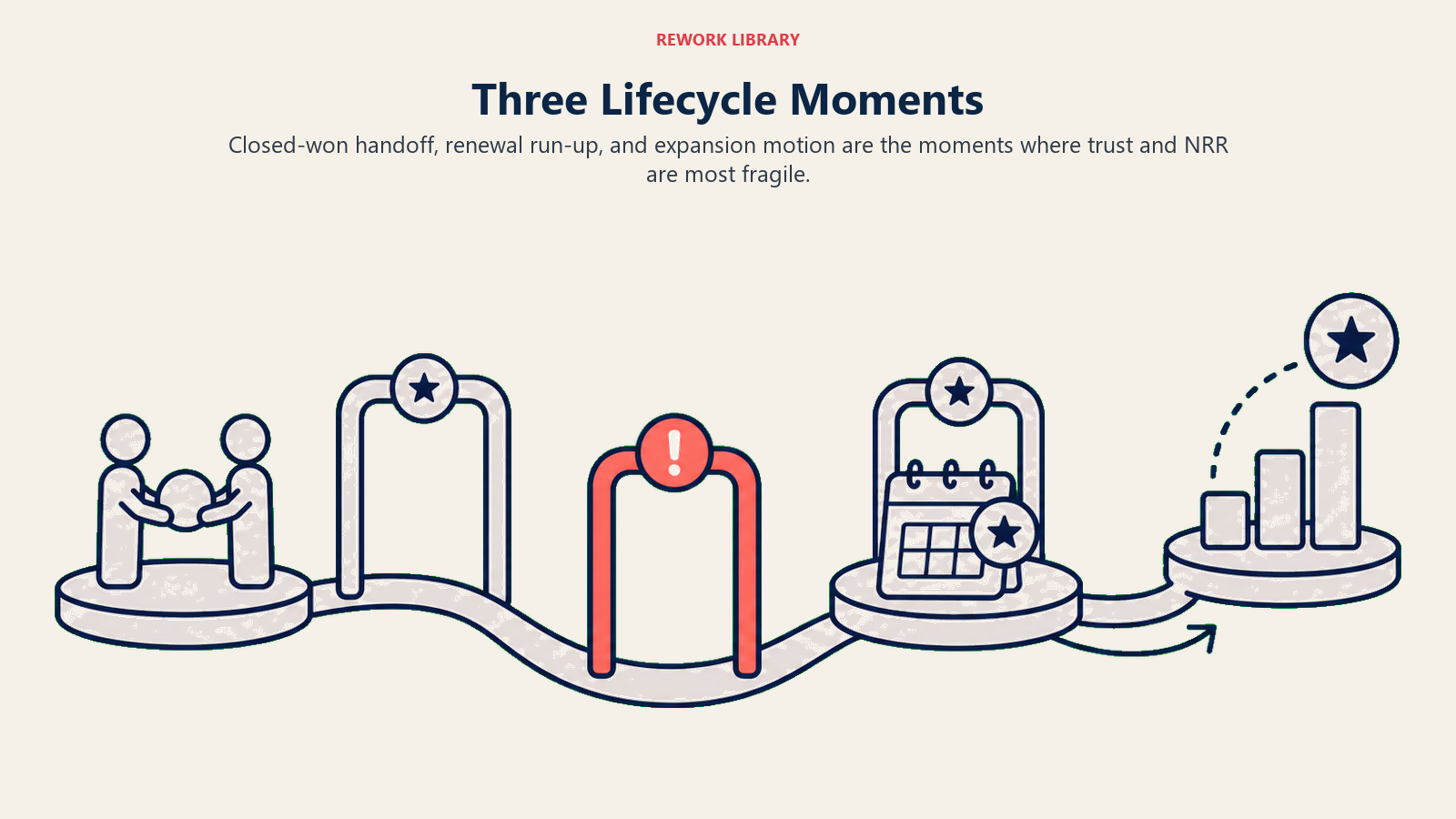 Kebanyakan kerosakan dalam organisasi yang tidak sejajar dapat dikesan kembali kepada tiga detik kitaran hayat tertentu. Mendapatkan setiap satu dengan betul adalah teras maksud penjajaran dalam amalan.
Analisis Rework: Setelah meneliti corak merentas syarikat SaaS B2B dari $3 juta hingga $30 juta ARR, kegagalan penjajaran tertumpu pada tiga detik kitaran hayat yang boleh diramal: serah tugas closed-won, pendekatan pembaharuan, dan gerakan pengembangan. Setiap detik dipetakan kepada baris yang berbeza dalam formula NRR: churn, penguncupan, dan kekurangan pengembangan masing-masing. Membetulkan ketiga-tiganya serentak jarang boleh dilaksanakan. Mengenal pasti detik mana yang paling banyak bocor dan menanganinya dahulu menghasilkan peningkatan NRR yang boleh diukur paling pantas, biasanya kelihatan dalam kohort yang memperbaharui 9-12 bulan selepas pembetulan.
Detik 1: Serah Tugas Closed-Won
Ini adalah detik dengan leverage tertinggi. Ia juga yang paling kerap dikendalikan dengan buruk.
Serah tugas reaktif kelihatan seperti ini: AE menghantar e-mel pengenalan kepada pelanggan baharu, CC kepada CSM yang ditugaskan, dan menganggap akaun itu telah dipindahkan. CSM menjadualkan panggilan kickoff. Dalam panggilan itu, mereka meminta pelanggan menerangkan semula matlamat mereka, persekitaran teknikal mereka, dan jangkaan garis masa mereka. Semua perkara yang AE sudah dokumentasi di suatu tempat dalam CRM. Pelanggan, yang baru sahaja menandatangani kontrak dan cuba mendapatkan nilai dengan cepat, kini kecewa dalam dua minggu pertama.
Serah tugas yang sejajar kelihatan berbeza: sebelum panggilan kickoff, AE melengkapkan ringkasan konteks berstruktur. Ia merakam kriteria keputusan, komitmen teknikal, peta pihak berkepentingan, keutamaan yang dinyatakan oleh champion, dan sebarang kebimbangan yang dibangkitkan semasa proses jualan. CSM menyemaknya sebelum mereka menjawab telefon. Panggilan kickoff adalah tentang pecutan, bukan penemuan semula. Lihat proses closed-won ke onboarded untuk format ringkasan khusus yang berfungsi dalam amalan.
Jurang antara pelanggan yang kecewa pada minggu kedua dan pelanggan yang berasa bahawa syarikat mengenali mereka meramalkan hasil pembaharuan bulan kesepuluh dengan lebih tepat berbanding mana-mana skor kesihatan yang akan anda bina kemudian.
Detik 2: Pendekatan Pembaharuan
Pembaharuan yang dirundingkan di bawah tekanan masa mendapat diskaun atau hilang. Tetapi dalam organisasi yang tidak sejajar, pendekatan pembaharuan biasanya dimiliki sepenuhnya oleh CS sehingga sembilan puluh hari lagi. Pada ketika itu jualan dimasukkan secara tiba-tiba, sering tanpa konteks akaun yang diperlukan untuk merundingkan dengan berkesan.
Penjajaran pada pembaharuan bermakna AE dan CSM mempunyai keterlihatan ke atas tarikh pembaharuan jauh lebih awal, pemahaman dikongsi tentang kesihatan akaun, dan peranan yang ditakrifkan dengan jelas. CSM tidak menyerahkan semula pembaharuan kepada jualan pada saat akhir. Dan AE tidak memperlakukan pembaharuan seperti panggilan sejuk tanpa sejarah hubungan.
Dalam syarikat yang melakukan ini dengan betul, pendekatan pembaharuan bermula pada 120 hari, kedua-dua fungsi mempunyai papan pemuka pembaharuan dikongsi, dan perbualan tentang harga, skop, dan akses pihak berkepentingan berlaku dalam minggu bukan hari.
Detik 3: Gerakan Pengembangan
Pengembangan adalah tempat kes kewangan untuk penjajaran menjadi tidak dapat dinafikan. Dan ia adalah tempat ketidakselarasan paling mahal.
Dua mod kegagalan adalah imej cermin antara satu sama lain. Dalam yang pertama, CSM melihat isyarat pengembangan yang jelas tetapi tidak mempunyai proses untuk membawa AE masuk ke dalam perbualan. Isyarat itu menjadi lapuk. Pengembangan tidak pernah dicadangkan.
Dalam yang kedua, AE mengenal pasti peluang pengembangan dari luar dan mengemukakannya tanpa terlebih dahulu menyemak dengan CSM. Akaun sebenarnya tidak sihat (tiket sokongan terbuka, penerimaan ketinggalan) dan penyampaian pengembangan mendarat pada waktu yang salah. Pelanggan menafsirkannya sebagai syarikat yang tidak tahu apa yang sedang berlaku.
Pengembangan yang sejajar bermakna kriteria pencetus ditakrifkan, pemilikan jelas, dan tiada fungsi yang bertindak secara bersendirian. Artikel pemilikan pengembangan dan gerakan upsell memetakan urutan penuh dari pencetus hingga penutupan.
Mengapa NRR Menjadikan Ini Masalah Kewangan, Bukan Masalah Budaya?
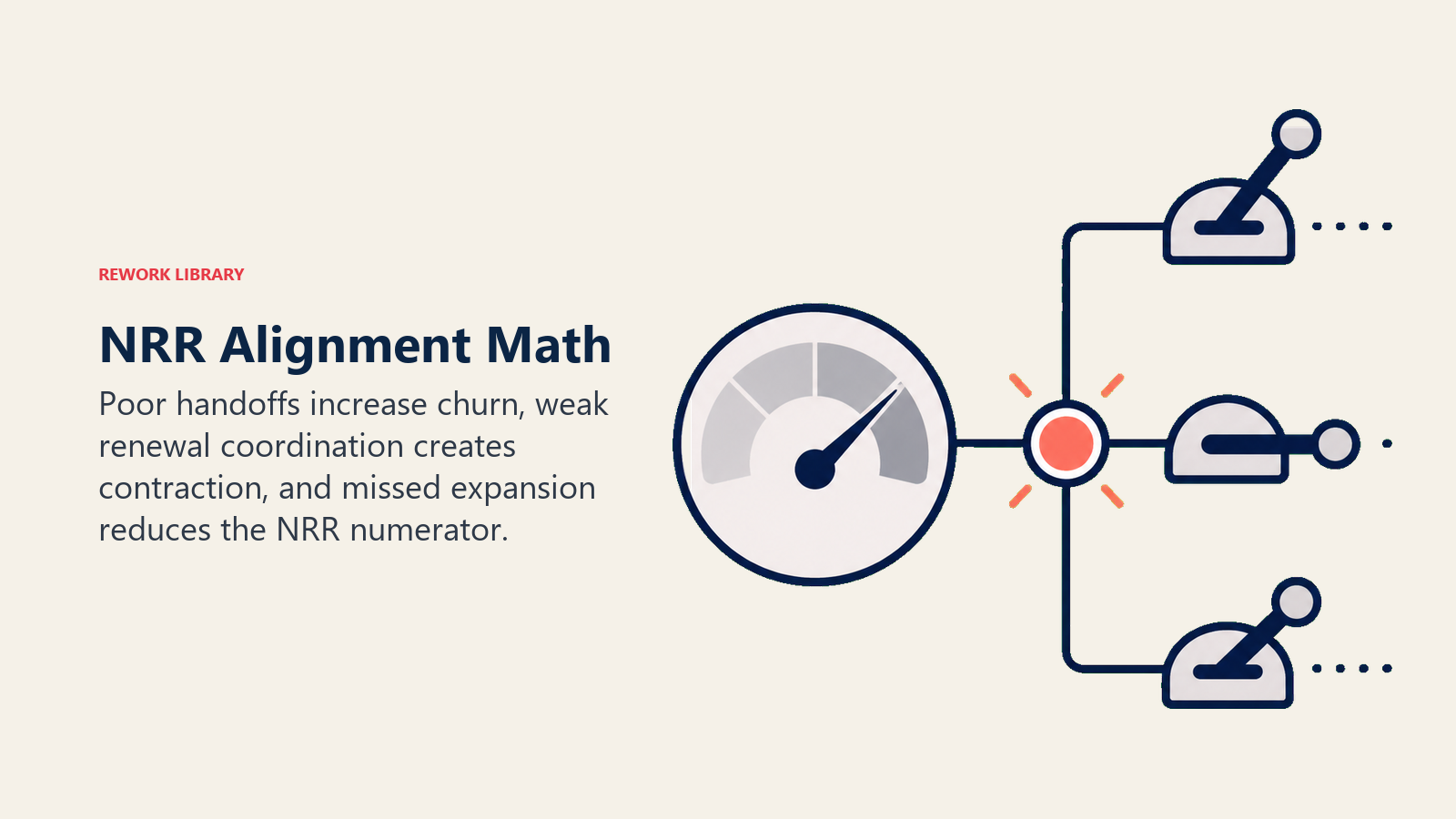
NRR membingkai semula penjajaran Jualan-CS sebagai sistem hasil, kerana serah tugas yang buruk muncul dalam churn, penguncupan, dan pengembangan yang terlepas.
 NRR ialah nombor yang merakam sama ada pangkalan pelanggan sedia ada anda berkembang, mendatar, atau menyusut. Formulanya:
NRR = (ARR Permulaan + Pengembangan − Penguncupan − Churn) / ARR Permulaan × 100
Pada NRR 100%, anda mengekalkan setiap ringgit. Pada 110%, pelanggan sedia ada anda mengembangkan hasil anda tanpa sebarang pemerolehan baharu. Pada 90%, anda kehilangan momentum walaupun jualan mendatangkan logo baharu.
Hubungan dengan penjajaran Jualan-CS adalah langsung. Setiap satu daripada tiga detik yang diterangkan di atas (serah tugas, pembaharuan, pengembangan) menyumbang kepada baris yang berbeza dalam formula NRR. Kualiti serah tugas yang buruk meningkatkan churn. Pengurusan pembaharuan yang buruk meningkatkan penguncupan. Gerakan pengembangan yang buruk mengurangkan pengangka pengembangan. Ketiga-tiga kaki NRR merosot bersama apabila penjajaran rosak.
Dan matematik pengkompaunan adalah kejam. Syarikat pada NRR 85% yang menutup $5 juta ARR baharu tahun ini perlu menutup $750,000 lagi tahun depan hanya untuk menggantikan apa yang hilang, sebelum ia boleh berkembang. Artikel kos serah tugas yang rosak menerangkan empat item baris berbeza di sebalik matematik itu.
Boleh Dipetik: "Peningkatan 5% dalam pengekalan pelanggan menghasilkan peningkatan keuntungan 25% hingga 95%, menjadikan penambahbaikan pengekalan salah satu tuas leverage tertinggi yang ada kepada syarikat SaaS B2B.", Bain & Company
Inilah sebab penjajaran Jualan-CS adalah perbualan CFO, bukan perbualan budaya. Ia bukan tentang sama ada AE dan CSM serasi. Ia tentang sama ada model operasi antara mereka menghasilkan pengekalan dan pengembangan pada kadar yang menjadikan perniagaan itu mampan dari segi kewangan. Penyelidikan penanda aras SaaS Capital menunjukkan syarikat dengan NRR melebihi 110% mengembangkan pangkalan mereka pada kadar yang secara asasnya mengatasi rakan sebaya pada pengekalan lebih rendah.
Tetapi mengetahui matematik tidak sama dengan mengetahui di mana model operasi anda rosak. Di situlah taksonomi mod kegagalan masuk.
Apakah Mod Kegagalan Ketidakselarasan Jualan-CS yang Paling Biasa?
Ketidakselarasan tidak kelihatan sama di mana-mana. Empat mod kegagalan paling kerap muncul dalam syarikat SaaS SMB dan pasaran pertengahan.
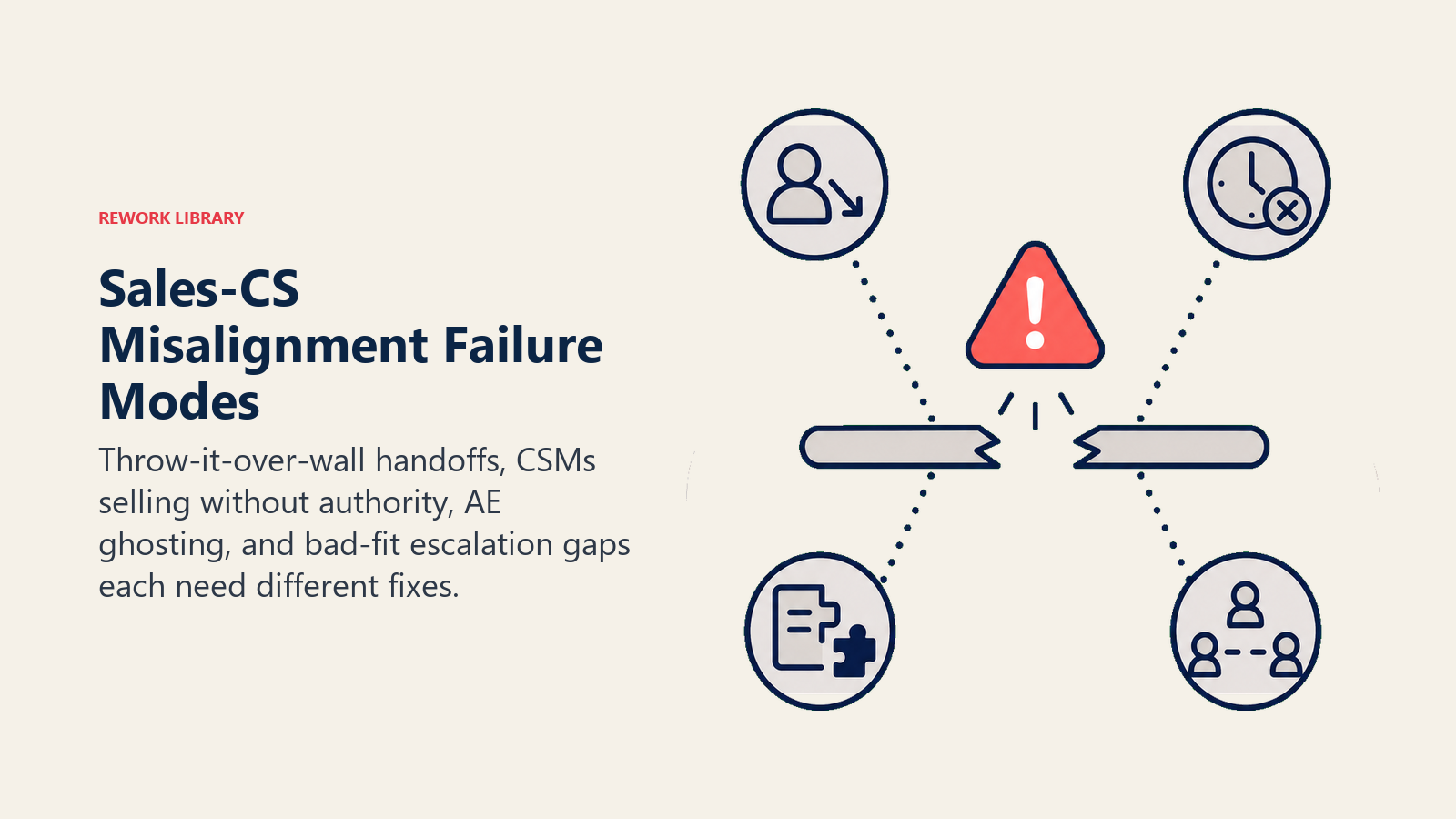
Serah tugas lempar-ke-dinding. Urusan ditutup. AE menghantar e-mel tahniah, memperkenalkan CSM, dan beralih ke urusan seterusnya. CSM mendapat konteks minimum. Pelanggan mendapat panggilan kickoff yang terasa seperti bermula semula. Ini adalah ketidakselarasan Peringkat 1, corak paling biasa, terutamanya dalam persekitaran SMB kelajuan tinggi di mana nisbah AE:CSM tinggi dan dokumen serah tugas adalah renungan kemudian.
CSM menjual tanpa kuasa. Ini muncul apabila syarikat berkembang. CS menemui peluang pengembangan dalam akaun yang mereka miliki: tempat duduk tambahan, kes penggunaan baharu, pasukan bersebelahan. Tetapi tanpa proses yang ditakrifkan untuk membawa semula AE, CSM cuba menutup perbualan komersial yang mereka tidak dilatih atau diberi pampasan untuk lakukan. Kadangkala ia berjaya. Lebih kerap ia terhenti atau merosakkan hubungan.
AE yang hilang selepas penutupan. Champion mempunyai hubungan kukuh dengan AE semasa jualan. Selepas penutupan, AE tidak responsif. Apabila soalan strategik timbul (proses perolehan, perbualan lembaga tentang penyatuan vendor, semakan kompetitif) tiada hubungan jualan senior untuk diaktifkan.
Pasukan CS yang tidak dapat mengeskalasikan akaun tidak sesuai kembali kepada jualan. Akaun itu tidak seharusnya ditutup. ICP diregangkan semasa tekanan kuota. Tetapi kini CS memiliki akaun yang sedang churn dan tiada mekanisme formal untuk menyalurkan isyarat itu kembali kepada jualan untuk generasi urusan seterusnya. Kesilapan yang sama berulang pada suku berikutnya.
Setiap mod kegagalan mempunyai pembetulan tertentu. Tetapi tiada pembetulan yang berfungsi sehingga terdapat diagnosis dikongsi bahawa corak itu wujud.
Rupa Kejayaan: Pasukan Akaun yang Sejajar dalam Amalan
Inilah rupa penjajaran apabila ia berfungsi, dari segi operasi:
Rekod pelanggan tunggal yang kedua-dua pasukan percaya. Nota AE, nota CSM, sejarah sokongan, penggunaan produk, kemaskini pihak berkepentingan: semuanya di satu tempat, terkini, dan boleh diakses oleh kedua-duanya. Tiada pasukan yang bekerja berdasarkan ingatan lapuk atau hamparan peribadi.
Pemilikan yang ditakrifkan pada setiap peringkat kitaran hayat. Terdapat jalur renang yang didokumentasikan untuk onboarding (CS memiliki), untuk semakan 90-hari (CS memimpin, AE tersedia), untuk pendekatan pembaharuan (bersama), untuk pengembangan (CS menandakan, AE memimpin komersial), untuk ulasan perniagaan eksekutif (bersama atau dipimpin AE bergantung kepada peringkat). Tiada siapa yang perlu bertanya siapa yang sepatutnya melakukan apa.
Pampasan yang tidak meletakkan pasukan-pasukan bertentangan antara satu sama lain. Struktur komisen AE merangkumi elemen pengekalan, sama ada melalui clawback pada churn awal atau bahagian pengembangan. Pampasan CSM merangkumi komponen pengembangan. Insentif tiada pasukan adalah untuk melempar kerja ke dinding dan membiarkan pasukan lain menangani akibatnya. Artikel pampasan yang diselaraskan pada NRR memperincikan struktur khusus yang membolehkan ini berfungsi tanpa mewujudkan perang pampasan.
Kadens semakan bersama yang tetap. Sama ada ia adalah segerak akaun mingguan, semakan eskalasi bulanan, atau sesi maklum balas ICP suku tahunan: kedua-dua fungsi duduk dalam bilik yang sama cukup kerap supaya isu muncul sebelum ia menjadi krisis.
Tiada satu pun daripada ini adalah pencapaian budaya. Ia adalah struktur operasi. Ia terhasil daripada keputusan kepimpinan yang dibuat dengan sengaja. Dan jika anda tidak pasti struktur mana yang perlu dibina dahulu, model kematangan memberitahu anda di mana untuk bermula.
Siapa yang Harus Membaca Koleksi Ini
Koleksi ini ditulis untuk dibaca oleh kepimpinan AE dan kepimpinan CSM bersama: sebaik-baiknya VP Jualan dan VP Kejayaan Pelanggan, atau CRO dan Ketua CS, duduk bersama artikel yang sama dan menggunakannya untuk mengadakan perbualan yang tidak cukup kerap berlaku dalam ulasan Pipeline.
Setiap artikel memberi tumpuan kepada satu mekanisme tertentu dalam model operasi penjajaran Jualan-CS. Koleksi ini bercabang mengikut bidang fungsional (mekanik serah tugas, pemilikan pembaharuan, gerakan pengembangan, maklum balas ICP) supaya anda boleh mendalami mana-mana bidang yang paling rosak di syarikat anda.
Urutan permulaan yang dicadangkan: artikel ini dahulu (model asas), kemudian kos serah tugas yang rosak untuk meletakkan pertaruhan kewangan pada masalah, kemudian 8 tanda amaran untuk mendiagnosis posisi anda, kemudian model kematangan untuk mengenal pasti peringkat mana anda berada dan apa yang diperlukan peringkat berikutnya.
Matlamatnya bukan untuk membaca semua. Ia untuk mencari perjanjian tertentu yang hilang, membaikinya, dan bergerak maju.
Pratonton Kematangan
Perjalanan dari tidak sejajar kepada sejajar bukan projek tunggal. Ia adalah perkembangan melalui peringkat yang boleh diperhatikan: dari serah tugas reaktif (e-mel pengenalan AE) kepada serah tugas yang didokumentasikan, kepada pemilikan yang ditakrifkan, kepada akauntabiliti bersama, kepada perkongsian hasil penuh di mana kedua-dua pasukan berkongsi nombor NRR dan pengembangan dimiliki bersama.
Kebanyakan syarikat di bawah $5 juta ARR berada di Peringkat 1 atau 2. Kebanyakan syarikat yang telah melepasi $10 juta ARR dan masih mempunyai NRR di bawah 90% tersekat di Peringkat 2 atau 3 dengan jurang tertentu. Laluan ke Peringkat 4 dan 5 adalah peta yang jelas. Ia memerlukan metrik dikongsi, semakan bersama berstruktur, dan pampasan yang menyelaraskan insentif. Tetapi kebanyakan pasukan cuba melangkau peringkat dan kemudian tertanya-tanya mengapa pembetulan itu tidak bertahan.
Mulakan dengan takrifan dikongsi tentang maksud "sejajar". Kemudian kenal pasti mana satu daripada tiga detik (serah tugas, pembaharuan, atau pengembangan) yang paling banyak bocor. Baiki yang pertama itu dahulu. Semua yang lain mengikuti.
Soalan Lazim mengenai Apakah Penjajaran Jualan-CS
Apakah penjajaran Jualan-CS?
Penjajaran Jualan-CS adalah model operasi dikongsi antara AE dan CSM yang mentakrifkan pemilikan, pemindahan konteks, dan gelung maklum balas merentasi keseluruhan kitaran hayat pelanggan, dari closed-won melalui onboarding, pembaharuan, dan pengembangan. Ia adalah disiplin operasi, bukan inisiatif budaya.
Mengapa penjajaran Jualan-CS penting untuk NRR?
NRR adalah hasil tiga pembolehubah: pengekalan kasar, pengembangan, dan pengelakan penguncupan. Ketiga-tiga kaki dipengaruhi secara langsung oleh kualiti model operasi Jualan-CS. Kualiti serah tugas yang buruk meningkatkan churn. Koordinasi pembaharuan yang buruk meningkatkan penguncupan. Gerakan pengembangan yang buruk mengurangkan ARR pengembangan. Penjajaran menangani ketiga-tiganya secara serentak.
Apakah perbezaan antara penjajaran Jualan-CS dan pengurusan selepas jualan?
Pengurusan selepas jualan merangkumi cara CS melaksanakan selepas mereka memiliki akaun: taktik onboarding, program penerimaan, pemarkahan kesihatan, format QBR. Penjajaran Jualan-CS merangkumi sempadan antara dua fungsi: mekanik serah tugas, pemilikan pembaharuan, pencetus pengembangan, dan gelung maklum balas ICP. Koleksi ini memberi tumpuan kepada sempadan, bukan pelaksanaan.
Siapa yang memiliki penjajaran Jualan-CS?
Pemilikan bersama antara VP Jualan dan VP Kejayaan Pelanggan, dengan CRO bertanggungjawab atas model operasi. Tiada fungsi yang boleh memaksakan penjajaran secara unilateral. Dalam organisasi yang berkembang, fungsi RevOps sering menyelenggara infrastruktur dikongsi (CRM, papan pemuka, kadens bersama) yang menjadikan penjajaran tahan lama.
Berapa lama masa yang diperlukan untuk mencapai penjajaran yang bermakna?
Kebanyakan pasukan pasaran pertengahan boleh berpindah dari Peringkat 1 (serah tugas reaktif) ke Peringkat 3 (pemilikan yang ditakrifkan) dalam satu hingga dua suku jika kedua-dua ketua fungsi mengutamakannya. Langkah yang paling memakan masa ialah sesi pemetaan pemilikan awal: mendapatkan kedua-dua pasukan bersetuju secara bertulis tentang siapa yang memiliki apa pada setiap peringkat kitaran hayat. Selepas itu, templat serah tugas dan kadens mesyuarat biasanya stabil dalam masa enam minggu.
Bagaimanakah penjajaran Jualan-CS berbeza daripada penjajaran pemasaran-ke-jualan?
Sempadan hulu (pemasaran-ke-jualan) berkaitan takrifan ICP dikongsi, ambang MQL, pemarkahan Lead, dan atribusi Pipeline. Sempadan jualan-CS berkaitan mekanik serah tugas closed-won, pemilikan pembaharuan, pencetus pengembangan, dan gelung maklum balas ICP dari selepas jualan kembali kepada jualan. Kedua-dua sempadan mengikut logik struktur yang sama (perjanjian eksplisit, pemindahan konteks, gelung maklum balas) tetapi kandungan dan pertaruhannya berbeza. MQL yang gagal menelan kos masa yang terbuang; serah tugas jualan-ke-CS yang gagal menelan kos pelanggan yang sudah anda bayar untuk memperoleh.
Apakah metrik terpenting untuk mengukur penjajaran Jualan-CS?
Net Revenue Retention ialah satu nombor yang merakam sama ada model operasi Jualan-CS berfungsi. NRR melebihi 100% bermakna pelanggan sedia ada mengembangkan hasil anda tanpa pemerolehan baharu. NRR di bawah 100% bermakna anda mesti mengatasi penyusutan dengan logo baharu: model pertumbuhan yang asasnya lebih sukar dan mahal. Syarikat SaaS dengan NRR melebihi 110% mengembangkan pangkalan mereka pada kadar yang secara struktur mengatasi rakan sebaya pada pengekalan lebih rendah, mengkompaun setiap suku ke hadapan.
Ketahui Lebih Lanjut
- Kos Serah Tugas Jualan-ke-CS yang Rosak: Kesannya kepada NRR Anda
- Model Kematangan Penjajaran Jualan-CS
- 8 Tanda Amaran Pasukan Jualan dan CS Anda Tidak Sejajar
- Proses Serah Tugas Closed-Won kepada Onboarded
- Pemilikan Pembaharuan: AE vs AM vs CSM
- Serah Tugas Kitaran Hayat AE-ke-CSM
- Apakah Pengurusan Selepas Jualan
- Pemilikan Pengembangan dan Gerakan Upsell
- Glosari Penjajaran Jualan-CS

Principal Solution Architect
On this page
- Apakah Penjajaran Jualan-CS?
- Apa yang Ini Bukan
- Rangka Kerja Tiga Detik Kitaran Hayat
- Detik 1: Serah Tugas Closed-Won
- Detik 2: Pendekatan Pembaharuan
- Detik 3: Gerakan Pengembangan
- Mengapa NRR Menjadikan Ini Masalah Kewangan, Bukan Masalah Budaya?
- Apakah Mod Kegagalan Ketidakselarasan Jualan-CS yang Paling Biasa?
- Rupa Kejayaan: Pasukan Akaun yang Sejajar dalam Amalan
- Siapa yang Harus Membaca Koleksi Ini
- Pratonton Kematangan
- Ketahui Lebih Lanjut