Closed-Won hingga Onboarded: Proses Handoff Jualan-ke-CS Langkah demi Langkah
Turn this article into takeaways for your work.


Each assistant summarizes the article only for you and suggests best practices for your work.
Kontrak telah ditandatangani. AE mengemas kini peringkat peluang, menghantar mesej Slack kepada pengurus mereka, dan mula memikirkan tawaran seterusnya. Di sebelah lain kontrak itu, pelanggan tertanya-tanya apa yang berlaku sekarang. Mereka baru sahaja berkomitmen kepada vendor, menyokong pembelian secara dalaman, dan memberitahu pasukan mereka bahawa pelaksanaan bermula minggu depan. Mereka menunggu untuk mendengar sesuatu.
Dalam kebanyakan syarikat SaaS B2B, apa yang mereka dengar adalah kesunyian selama 24 jam hingga seminggu.
Jurang itu, antara tandatangan dan hubungan CS bermakna pertama, adalah tempat keyakinan pelanggan mula merosot. Ia tidak dramatik. Pelanggan tidak segera menyesal pembelian. Tetapi mereka mula membentuk tanggapan: adakah vendor ini teratur? Adakah mereka benar-benar mengambil berat tentang kejayaan saya, atau adakah perhatian itu berakhir apabila kontrak ditandatangani? Tanggapan tersebut bergabung. Ia aktif pada tanda NPS 30 hari. Ia aktif pada perbualan pembaharuan. Dan ia mula terbentuk dalam 72 jam selepas Closed Won. Penyelidikan Forrester tentang peralihan akaun sales-ke-CS menyatakan hujah ini secara langsung: syarikat yang menyelaraskan jualan dan CS pada rangka kerja peralihan bersama meningkatkan peluang pelanggan mereka memperoleh nilai, kekal setia, dan membeli lebih banyak. Rangka kerja handoff jualan-ke-pasca-jualan daripada operasi pasca-jualan meliputi tetingkap yang sama dari pihak penerima.
Proses Handoff yang diterangkan di sini direka untuk menutup jurang tersebut dengan aliran kerja empat peringkat yang berulang yang boleh dimiliki oleh kedua-dua pemimpin AE dan CSM.
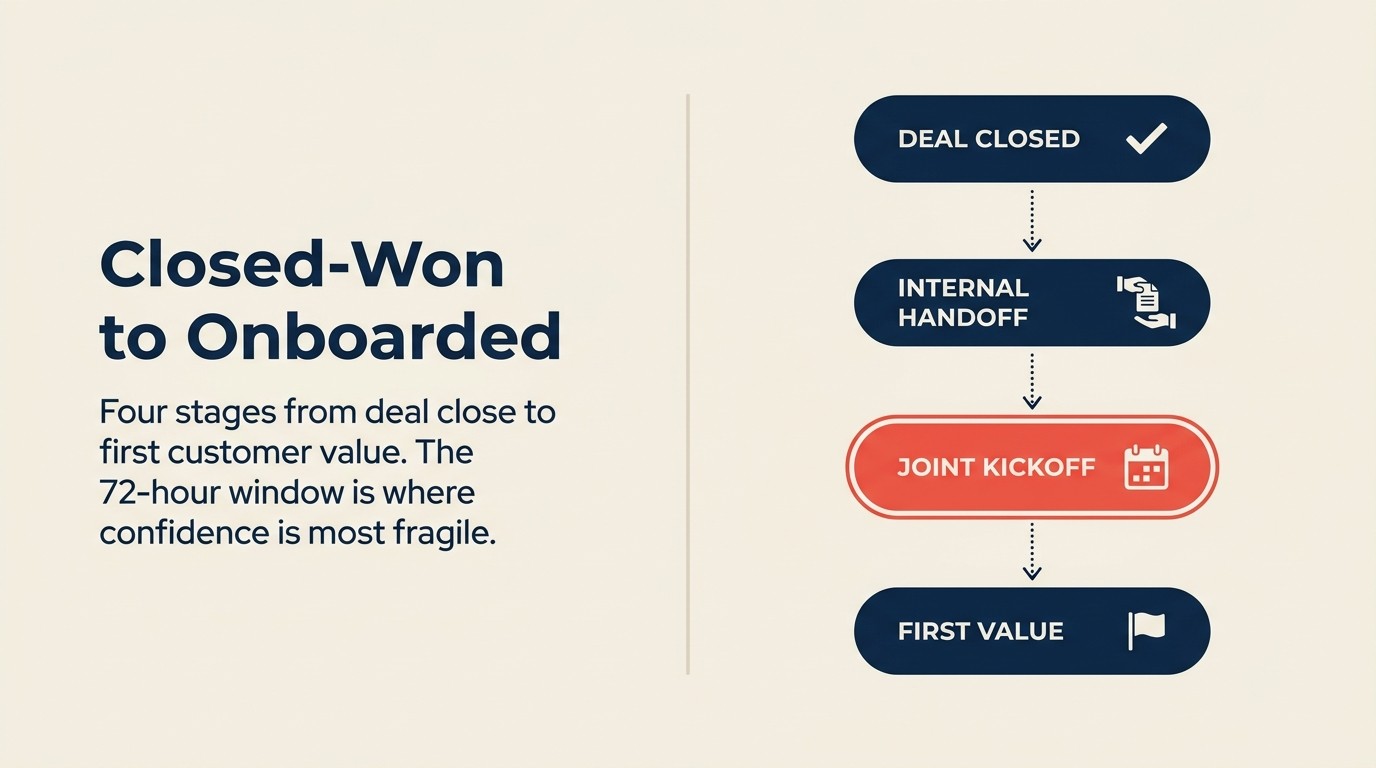
Proses 4 Peringkat Closed-Won-ke-Onboarded ialah rangka kerja yang dioperasikan oleh artikel ini. Peringkat 1 ialah persediaan pra-penutupan (AE merakam peta champion, kriteria kejayaan, bendera merah sebelum kontrak ditandatangani). Peringkat 2 ialah pemindahan tawaran (rekod Handoff dilengkapkan dan panggilan dalaman dijadualkan dalam 24 jam dari penutupan). Peringkat 3 ialah pengenalan pelanggan (AE menulis e-mel pengenalan peribadi dalam 48 jam). Peringkat 4 ialah pemindahan pemilikan kickoff (CSM memimpin panggilan bersama dalam 5 hari perniagaan; AE menyokong dan kemudian keluar secara rasmi). Prinsip penentu rangka kerja ini: tawaran tidak selesai sehingga CS mempunyai apa yang mereka perlukan dan pelanggan telah diperkenalkan.
Mengapa "Closed Won" adalah Garisan Penamat yang Salah
Masalah Handoff bermula apabila syarikat melayan pencapaian jualan sebagai titik permulaan customer success dan bukannya peralihan bersama.
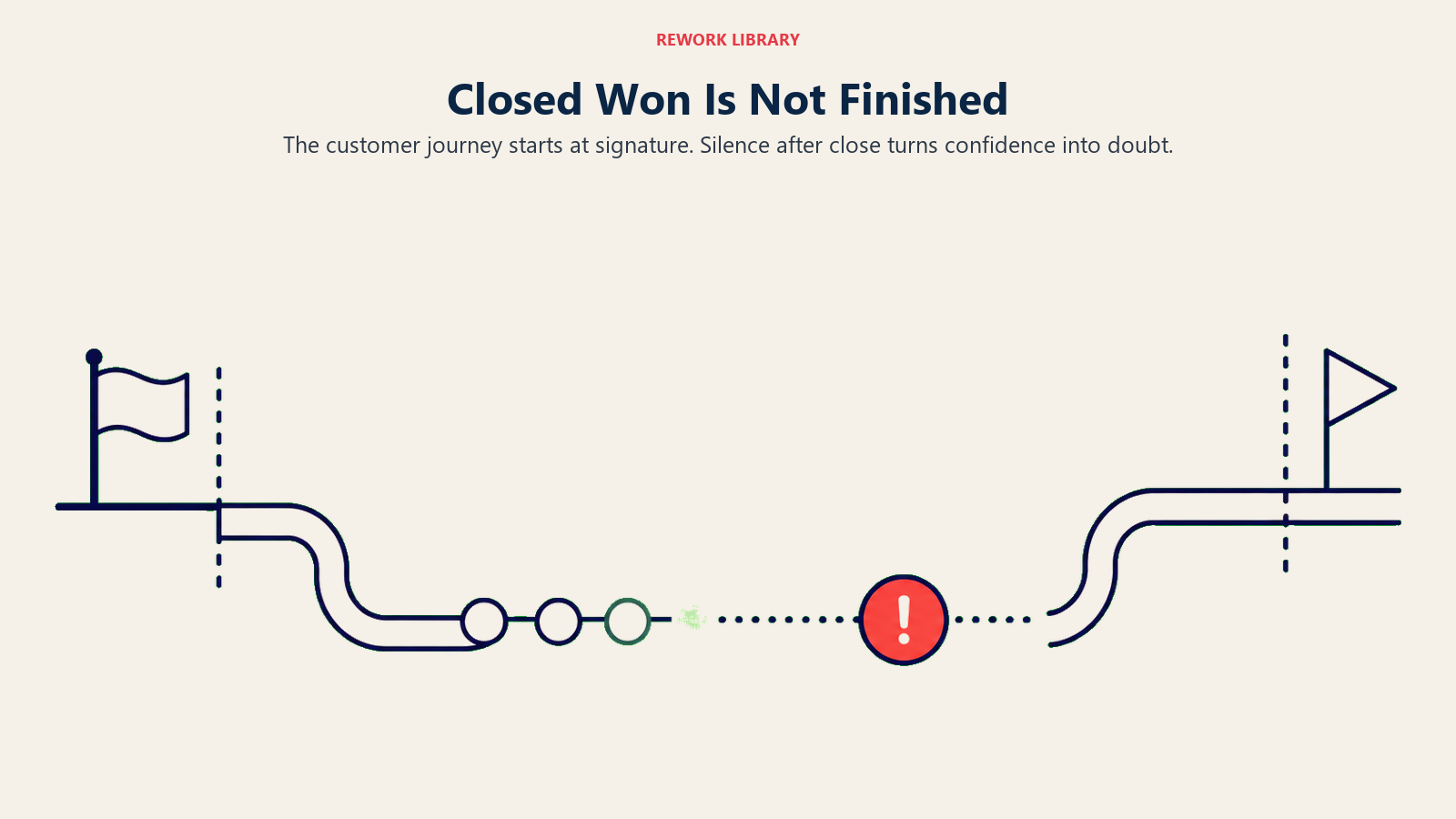
Setiap struktur insentif dalam jualan menunjuk kepada Closed Won sebagai titik akhir. Itulah apabila komisyen diperoleh, kuota dikreditkan, dan tawaran diumumkan di Slack dengan emoji parti. Perhatian AE sudah beralih ke peluang seterusnya dalam Pipeline. Analisis McKinsey tentang NRR dalam teknologi B2B menunjukkan bahawa syarikat SaaS kuartil teratas melayan tempoh pasca-penutupan sebagai titik perubahan nilai yang kritikal, bukan formaliti pentadbiran.
Tetapi dari perspektif pelanggan, Closed Won adalah permulaan. Mereka telah menghabiskan minggu atau bulan menilai, membina konsensus dalaman, berunding. Kini kerja yang mereka beli produk untuk capai masih perlu berlaku. Dan vendor yang mereka pilih, AE yang mereka bina hubungan dengannya, sedang bergerak maju.
Ini bukan tuduhan tentang cara AE bekerja. Ia adalah masalah struktural. Model pampasan mencipta garisan penamat pada tandatangan. Perjalanan nilai pelanggan bermula pada tandatangan. Dua realiti itu berada dalam ketegangan, dan ketegangan itu muncul sebagai kegagalan Handoff.
Organisasi jualan terbaik menangani ini dengan meluaskan definisi "selesai" AE. Bukan dengan memerlukan AE melakukan kerja CS, tetapi dengan memerlukan AE memiliki Handoff yang bersih dan tepat masa sebagai hasil akhir setiap tawaran. Handoff bukan tugas pentadbiran yang berlaku selepas kerja sebenar selesai. Ia adalah tindakan terakhir gerakan jualan. Handoff kitaran hayat AE-ke-CSM memetakan rantaian tanggungjawab penuh yang menghubungkan kedua-dua peranan ini. Jadi, bagaimanakah rupa Handoff yang direka dengan baik?
Fakta Utama: Kos dan Peluang Tetingkap Handoff
- Syarikat dengan proses Handoff pasca-penutupan yang berstruktur melihat pengekalan pelanggan 23% lebih tinggi dalam 90 hari pertama berbanding peralihan tidak berstruktur, menurut laporan penandaarasan CS Gainsight.
- Pelanggan SaaS B2B biasa menunggu 4.3 hari perniagaan untuk hubungan pertama dari CS selepas penutupan tawaran, jurang yang berkorelasi dengan risiko churn awal 19% lebih tinggi (Totango, 2024).
- 58% churn pelanggan yang berlaku dalam 12 bulan pertama boleh dikesan kepada jangkaan yang ditetapkan semasa proses jualan tidak dipenuhi semasa Onboarding (Bain & Company).
Rangka Kerja Handoff Empat Peringkat
Rangka kerja empat peringkat menjadikan pemindahan itu eksplisit sebelum pelanggan menyedari jurang antara janji jualan dan realiti Onboarding.
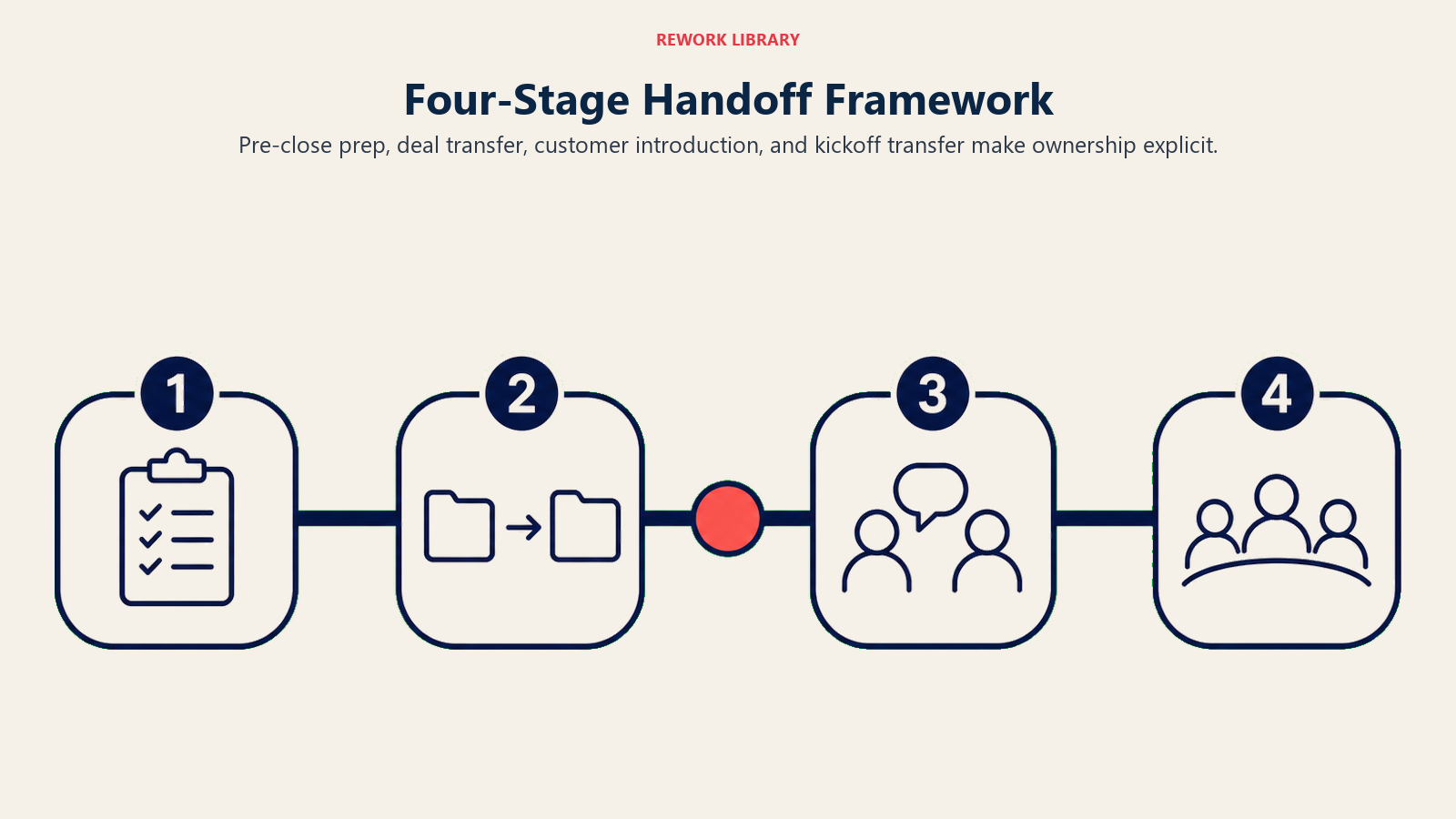
| Peringkat | Pemilik | Hasil Utama | SLA |
|---|---|---|---|
| Peringkat 1: Persediaan pra-penutupan | AE | Peta champion, kriteria kejayaan, ringkasan bendera merah | Lengkap sebelum tandatangan kontrak |
| Peringkat 2: Pemindahan tawaran | AE → CSM | Rekod Handoff dilengkapkan, panggilan dalaman dijadualkan | 24 jam dari Closed Won |
| Peringkat 3: Pengenalan pelanggan | AE (menulis), CSM (menerima) | E-mel pengenalan mesra dihantar kepada pelanggan | 48 jam dari Closed Won |
| Peringkat 4: Pemindahan pemilikan kickoff | CSM (memimpin), AE (menyokong) | Panggilan kickoff bersama selesai, CS memiliki akaun | Dalam 5 hari perniagaan dari penutupan |
Peringkat 1: Persediaan Pra-Penutupan
"Pelanggan SaaS B2B biasa menunggu 4.3 hari perniagaan untuk hubungan pertama dari CS selepas penutupan tawaran, jurang yang berkorelasi dengan risiko churn awal 19% lebih tinggi. Untuk portfolio 500 akaun dengan churn awal 20%, menutup jurang itu kepada di bawah 48 jam mewakili kohort yang boleh dipulihkan yang bergabung merentasi berbilang kitaran pembaharuan." (Totango, 2024)
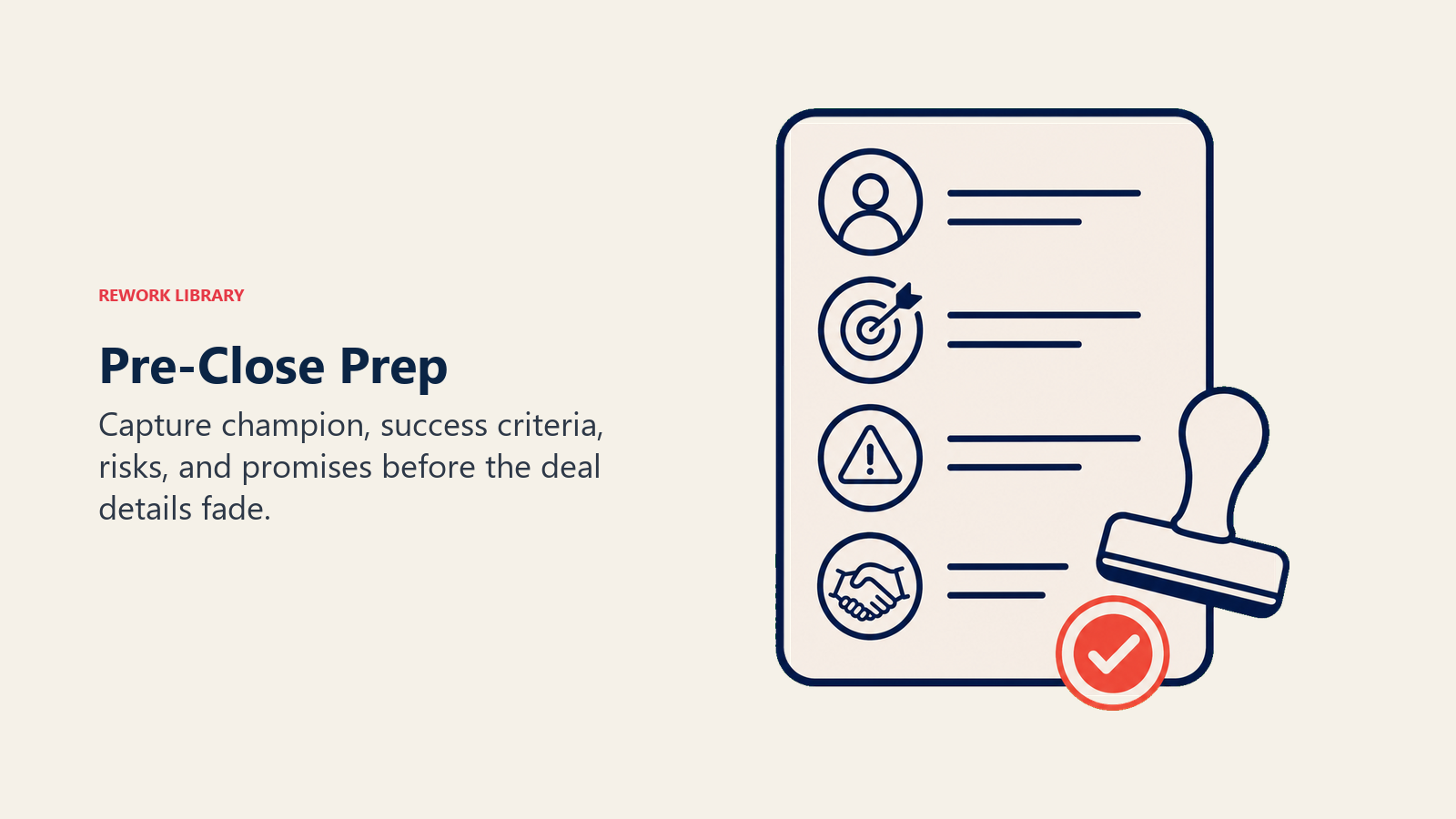
Masa terburuk untuk memaklumkan CSM tentang akaun adalah selepas kontrak ditandatangani. Pada masa itu, AE sedang bergerak maju, butiran mula kabur, dan CSM sudah ketinggalan jadual untuk menguasai sebelum panggilan kickoff.
Persediaan pra-penutupan bermakna AE mula merakam maklumat Handoff sebelum tawaran ditutup, idealnya dalam minggu terakhir kitaran jualan, apabila semua masih segar.
Apa yang AE lengkapkan sebelum penutupan:
- Peta champion: Siapa yang mendorong keputusan pembelian dalaman? Siapa yang akan memiliki kejayaan pelaksanaan? Siapa yang skeptikal dan mengapa? Ini adalah konteks hubungan, bukan data carta organisasi.
- Kriteria kejayaan: Bagaimana pelanggan akan tahu jika produk berfungsi? Apakah hasil khusus yang mereka beli untuk capai? Ini perlu ditulis, bukan diandaikan, kerana CSM perlu merujuknya pada kickoff.
- Bendera merah: Apakah bantahan yang timbul dalam kitaran jualan yang diatasi tetapi tidak diselesaikan? Apakah risiko yang wujud dalam pelaksanaan yang CS perlu tahu?
- Komitmen: Apa yang AE katakan semasa proses jualan yang CS mesti hormat? Apa-apa yang dijanjikan, dihintkan, atau diimplikasikan.
Bila untuk melibatkan CS: Untuk tawaran lebih daripada $30K ACV atau sebarang tawaran dengan keperluan Onboarding yang kompleks, CS sepatutnya diperkenalkan kepada akaun sebelum penutupan, sekurang-kurangnya dalam panggilan penerangan antara AE dan CSM, idealnya dalam pengenalan pihak berkepentingan pra-penutupan. Untuk tawaran SMB di bawah $15K, ini tidak wajar secara ekonomi; bergantung pada rekod Handoff.
Tabiat AE yang paling teruk dalam proses Handoff adalah menutup dan menghilang pada hari yang sama. AE menghantar DocuSign, mendapat kontrak yang telah ditandatangani balik, dan menjadi gelap. Pelanggan menjangkakan perbualan "apa yang berlaku seterusnya." CSM menjangkakan penerangan. Tidak satu pun berlaku. Handoff bermula seminggu lewat, dalam keadaan terdesak.
Peringkat 2: Pemindahan Tawaran
Dalam 24 jam dari Closed Won, dua perkara mesti berlaku: rekod Handoff dilengkapkan, dan panggilan penerangan dalaman AE-ke-CSM dijadualkan (atau dilengkapkan secara tidak segerak jika tawaran cukup kecil untuk memwajarkannya).
Rekod Handoff adalah dokumen berstruktur, sama ada dalam CRM atau dalam dokumen yang dikongsi yang dipautkan dari CRM, yang merakam semua yang CS perlukan untuk memulakan hubungan. Ia tidak pilihan. Ia bukan "isi apabila ada masa." Ia adalah gerbang sebelum tugasan CSM.
Medan minimum yang diperlukan:
- Nama, jawatan champion, dan apa yang mereka pertaruhkan secara peribadi dalam pelaksanaan
- Kriteria kejayaan utama (bagaimana pelanggan akan mengukur nilai dalam 90 hari pertama)
- Bendera merah atau risiko yang diketahui yang CS sepatutnya tahu
- Sebarang janji atau komitmen yang dibuat semasa kitaran jualan
- Pihak berkepentingan utama di luar champion (siapa pembeli ekonomi, siapa yang skeptikal)
- Gaya komunikasi dan kadar keutamaan (cara champion suka dihubungi)
- Apa-apa yang hampir membunuh tawaran: bantahan tersebut sering muncul semula dalam Onboarding
Panggilan Handoff dalaman meliputi apa yang rekod tidak dapat. Rekod bertulis merakam fakta. Panggilan merakam nada, penekanan, dan konteks "anda benar-benar perlu tahu ini" yang tidak muat dalam medan. Kekalkan 30 minit. AE bercakap; CSM bertanya soalan. CSM sepatutnya meninggalkan panggilan berasa seperti mereka telah diberitakhabar oleh rakan sekerja, bukan diserahkan fail.
Untuk perincian lengkap tentang apa yang masuk ke dalam rekod Handoff, artikel pemindahan konteks tawaran melalui setiap medan dengan contoh yang dikerjakan.
Peringkat 3: Pengenalan Pelanggan
Pelanggan tidak sepatutnya menerima e-mel sejuk dari ahli pasukan CS yang tidak pernah mereka dengar. E-mel itu, "Hai, saya CSM anda, mari kita mulakan," menandakan perkara yang salah tepat: bahawa hubungan yang mereka bina dengan AE adalah transaksional, dan kini mereka diserahkan kepada fungsi pentadbiran.
AE menulis e-mel pengenalan. Bukan templat, bukan mesej yang diteruskan, bukan pemberitahuan sistem. E-mel sebenar dari AE kepada champion yang memperkenalkan CSM sebagai orang yang khusus, dengan konteks tentang mengapa CSM itu sesuai dan apa yang pelanggan boleh jangkakan seterusnya.
E-mel pengenalan yang baik:
- Merujuk sesuatu yang khusus dari perbualan jualan (bukan pujian generik)
- Menyebut nama CSM dan menyatakan sesuatu yang nyata tentang mereka, bukan hanya jawatan mereka
- Menetapkan jangkaan tentang apa yang CS akan lakukan dan apa yang panggilan kickoff akan liputi
- Menjemput pelanggan untuk bertindak balas dengan soalan atau keutamaan pemasaan
- Panjangnya 80 hingga 120 patah perkataan, cukup panjang untuk menjadi peribadi, cukup pendek untuk dibaca
E-mel sepatutnya dihantar dalam 48 jam dari penutupan. Setiap hari yang berlalu antara tandatangan dan pengenalan adalah hari pelanggan tertanya-tanya apa yang berlaku seterusnya.
Mengendalikan pelanggan yang ingin terus bekerja dengan AE: Ini berlaku. Champion telah membina hubungan nyata dengan AE selama berbulan-bulan. Mereka mungkin secara eksplisit meminta untuk kekal berhubung. Respons yang betul adalah: "Saya akan boleh dihubungi untuk anda sepanjang masa. Inilah e-mel saya jika anda memerlukan saya. Tetapi [nama CSM] akan menjadi sumber utama anda dan mereka luar biasa dalam apa yang mereka lakukan." Jangan buat champion berasa mereka ditinggalkan. Tetapi jangan biarkan AE kekal sebagai kenalan utama. Ia menjejaskan autoriti CS dari hari pertama.
Peringkat 4: Pemindahan Pemilikan Kickoff
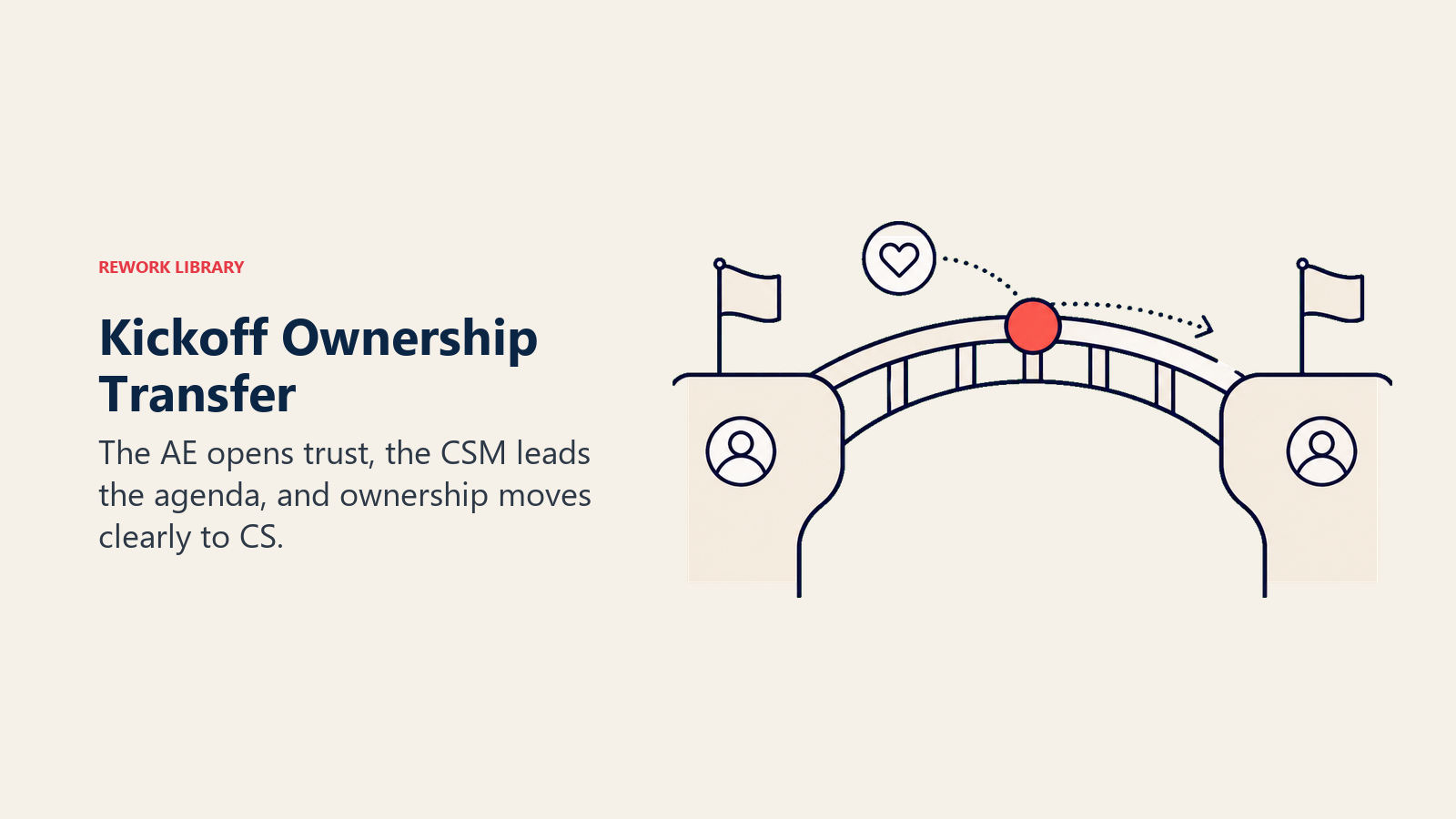
Kickoff adalah tempat kepercayaan berpindah daripada hubungan AE kepada hubungan CSM, jadi pemilikan mesti direka dengan sengaja.
"Pelanggan yang menerima pengenalan mesra yang ditulis AE kepada CS, bukannya pemberitahuan automatik generik, mempunyai penglibatan 34% lebih tinggi dengan bahan Onboarding dalam 30 hari pertama. Mekanismenya ialah pemindahan kepercayaan: hubungan sedia ada pelanggan dengan AE menjadi mata wang kredibiliti awal untuk CSM." (ChurnZero, 2024)
"AE yang melengkapkan rekod Handoff berstruktur sebelum tugasan CS mengurangkan masa-untuk-produktiviti CSM purata sebanyak 8 jam setiap akaun. Itulah masa yang CSM akan habiskan untuk membina semula konteks melalui perbualan pelanggan, membaca semula rangkaian e-mel, dan bertanya soalan yang sudah dijawab dalam kitaran jualan." (Winning by Design, 2024)
Panggilan kickoff adalah tempat CS secara rasmi mengambil alih pimpinan. Untuk tawaran pasaran pertengahan, ini biasanya panggilan bersama 60 minit dengan AE, CSM, dan champion (dan mungkin satu atau dua pihak berkepentingan lain). AE membuka, memperkenalkan CSM, dan kemudian kebanyakannya berundur.
Kickoff bersama vs. kickoff CS sahaja:
- Kickoff bersama: Sebarang tawaran lebih daripada $30K ACV, sebarang Onboarding yang kompleks, sebarang tawaran di mana hubungan AE-champion adalah kukuh dan pelanggan mungkin merasakan peralihan itu secara akut.
- Kickoff CS sahaja: SMB bervolum tinggi, model CS berkumpul, produk transaksional dengan Onboarding yang diarahkan sendiri.
Peraturan: CS memimpin kickoff, AE menyokong. Bukan sebaliknya. Apabila AE menjalankan panggilan kickoff, dua masalah muncul. Pertama, CS tidak dapat mewujudkan autoriti dengan pelanggan. Kedua, titik rujukan utama pelanggan untuk "apa yang dijanjikan" kekal dengan AE, yang mengekalkan AE dalam peranan penyelenggaraan hubungan pasca-jualan yang mereka tidak sepatutnya berada.
Cara AE menyertai tanpa menjejaskan autoriti CS:
- Membuka panggilan, membuat pengenalan, menyatakan sesuatu yang ikhlas tentang CSM
- Memperkukuhkan satu atau dua kriteria kejayaan utama yang dibincangkan dalam proses jualan
- Kekal tersedia untuk soalan komersial tanpa menyisipkan diri dalam perbincangan pelaksanaan
- Menutup dengan: "Saya akan ada di latar belakang. [nama CSM] dan pasukan mereka adalah orang yang anda tuju dari sini"
Pelepasan bersih: Penglibatan formal AE berakhir apabila kickoff selesai dan pelanggan telah mengesahkan pelan kejayaan 90 hari mereka dengan CS. AE sepatutnya melakukan satu pemeriksaan 30 hari dengan champion, mesej peribadi ringkas dan bukan perbualan upsell, dan kemudian beralih kepada ketersediaan tulen. Handoff selesai.
Agenda panggilan kickoff bersama mempunyai templat agenda 60 minit penuh dengan panduan setiap blok untuk kedua-dua AE dan CSM.
Mengukur Kualiti Handoff
Kualiti Handoff patut diukur lebih awal, sementara masih ada masa untuk membetulkan risiko Onboarding sebelum ia menjadi risiko churn.
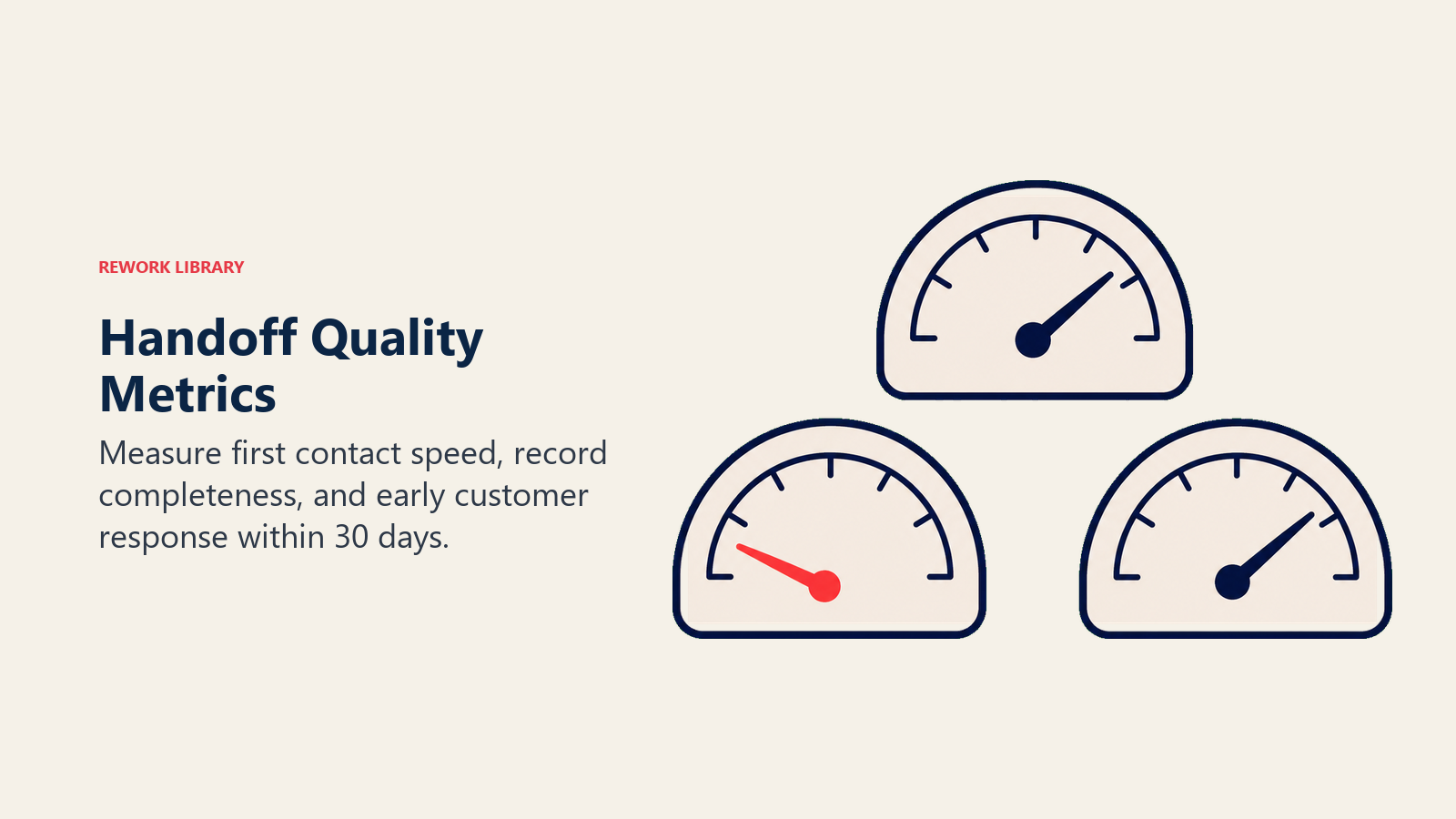
Tiga petunjuk utama meramalkan kejayaan Onboarding, dan semuanya boleh diukur dalam 30 hari dari penutupan. Untuk konteks tentang apa maksud "berjaya di-onboard" pada garisan penamat, artikel kriteria berjaya di-onboard mentakrifkan ambang yang CS dan Jualan patut persetujui terlebih dahulu.
1. Masa dari Closed Won ke hubungan CSM pertama (sasaran: di bawah 48 jam) Bukan panggilan kickoff pertama. Hubungan bermakna pertama. E-mel pengenalan dikira. Nota "menantikan untuk berhubung" dikira. Kesunyian selama empat hari tidak dikira. Jejak metrik ini setiap AE. Corak penting: AE yang secara konsisten melepasi tetingkap 48 jam sama ada tidak melengkapkan Peringkat 2 tepat masa atau tidak menulis e-mel pengenalan Peringkat 3.
2. Skor kelengkapan rekod Handoff (sasaran: 90%+ medan yang diperlukan) Kebanyakan CRM boleh menjana skor kelengkapan untuk set medan tersuai. Wajibkan kelengkapan 90% sebagai gerbang sebelum tugasan CSM. Ini mencipta insentif yang betul: CSM tidak boleh ditugaskan sehingga AE melengkapkan rekod. Sesetengah pasukan mengikat peratusan kecil penahanan komisyen kepada audit kelengkapan 60 hari.
3. NPS pelanggan pada 30 hari selepas penutupan (sasaran: 40+ untuk pasaran pertengahan) Ini adalah keputusan awal pelanggan tentang peralihan. NPS 30 hari di bawah 30 adalah isyarat bahawa Handoff gagal: sama ada pelanggan berasa ditinggalkan, menghadapi jangkaan yang rosak, atau memasuki Onboarding tanpa kriteria kejayaan yang jelas. Kajian Bain tentang memecahkan churn pelanggan mengenal pasti pengalaman awal pasca-jualan sebagai tetingkap pengaruh tertinggi untuk pencegahan churn. Membetulkan masalah dalam tempoh ini menelan kos jauh lebih rendah berbanding memulihkan pelanggan yang tidak terlibat pada bulan keenam. Segmen NPS mengikut AE untuk mengenal pasti tawaran mana yang menghasilkan skor awal yang rendah dan mengapa. Artikel kos handoff yang rosak menterjemahkan jurang NPS awal ini kepada impak NRR untuk pemimpin hasil yang perlu membuat kes untuk melabur dalam kualiti Handoff.
Kerosakan Biasa dan Penyelesaiannya
Kerosakan 1: AE melengkapkan tawaran dan menghilang selama seminggu. CSM ditugaskan tetapi tidak mempunyai konteks. Pelanggan tidak mendengar dari sesiapa. Penyelesaian: kuatkuasakan SLA rekod Handoff 24 jam. Jadikan tugasan CSM bersyarat kepada kelengkapan.
Kerosakan 2: CS menghantar e-mel Onboarding generik tanpa pengenalan AE yang peribadi. Pelanggan berasa ditinggalkan pada peringkat hubungan. Penyelesaian: wajibkan AE menulis e-mel pengenalan sebelum CS membuat hubungan pertama. Templatkan formatnya; kandungannya mesti peribadi.
Kerosakan 3: AE menyertai panggilan kickoff dan secara tidak sengaja menjalankannya. CS tidak dapat mewujudkan autoriti kerana pelanggan terus mengarahkan soalan kepada AE. Penyelesaian: pramaklumkan AE tentang peranan mereka sebelum panggilan. AE membuka dan menutup; CS menjalankan agenda.
Kerosakan 4: Rekod Handoff dilengkapkan tetapi tidak pernah dibaca oleh CSM sebelum kickoff. CSM menanya soalan pelanggan yang sudah mereka jawab dalam proses jualan. Pelanggan tertanya-tanya mengapa tangan kiri vendor tidak tahu apa yang tangan kanan lakukan. Penyelesaian: semakan CSM rekod Handoff adalah keperluan pra-panggilan, tidak pilihan. Bina ia ke dalam senarai semak persediaan kickoff.
Kerosakan 5: Kriteria kejayaan dalam rekod Handoff tidak sepadan dengan apa yang pelanggan ingat dijanjikan. Ini muncul pada tanda 60 hari apabila pelanggan menjangkakan kemampuan yang produk tidak miliki. Penyelesaian: semakan kriteria kejayaan berlaku dalam Peringkat 1, bukan selepas penutupan. AE dan CSM selaras tentang apa yang dikomitkan sebelum pelanggan hadir untuk kickoff. Templat kad skor Handoff membantu mengeluarkan jurang ini secara sistematik.
Handoff sebagai Proses
Bahasa yang pasukan gunakan penting. "Closed Won" membingkaikan kerja AE sebagai berakhir pada tandatangan. Pembingkaian yang lebih baik adalah "ditutup dan diserahkan": tawaran tidak selesai sehingga CS mempunyai apa yang mereka perlukan dan pelanggan telah diperkenalkan.
Pasukan yang membina pembingkaian ini ke dalam budaya mereka, di mana pengurus AE bertanya "bagaimana keadaan Handoff?" bukan hanya "bila anda menutup?", melihat hasil Onboarding yang lebih baik, churn awal yang lebih rendah, dan CSM yang benar-benar ingin bekerja bersama Jualan kerana konteks yang mereka terima adalah berguna.
Empat peringkat mengambil masa. Peringkat 2 menambah 30 minit kepada setiap penutupan. Peringkat 3 menambah 15 minit. Peringkat 4 adalah masa yang AE mungkin sudah habiskan pada panggilan kickoff juga. Untuk tawaran $50K, pelaburan itu tidak pilihan. Di situlah NRR diputuskan.
Bagi pelanggan yang keluar dari sisi lain, proses Handoff adalah yang memberitahu mereka sama ada hubungan yang mereka laburkan semasa kitaran jualan adalah nyata. Lakukan dengan betul dan champion adalah penyokong dari hari pertama. Lakukan dengan salah dan anda memulakan Onboarding dalam keadaan defisit.
Analisis Rework: Kerosakan paling biasa yang kami perhatikan bukan kegagalan mana-mana satu peringkat. Ia adalah Peringkat 1 yang dilangkau kerana AE melayan persediaan pra-penutupan sebagai pilihan. Apabila AE menunggu sehingga selepas kontrak ditandatangani untuk merakam konteks champion, bendera merah, dan komitmen, dua perkara berlaku: pertama, butiran sudah mula kabur; kedua, 48 jam pertama CSM dihabiskan mengejar ketinggalan dan bukannya membina hubungan. Pasukan yang menguatkuasakan persediaan pra-penutupan sebagai gerbang peringkat (walaupun yang ringan, 15 minit setiap tawaran) melihat peningkatan yang boleh diukur di hilir: ramp CSM yang lebih pantas bagi setiap akaun, lebih sedikit kejutan kickoff, dan NPS 30 hari yang lebih tinggi. Penyelesaian struktur ialah menjadikan tugasan CSM bersyarat kepada kelengkapan rekod Handoff. Satu gerbang itu mencipta insentif yang betul tanpa menambah program latihan atau mesyuarat baru.
Ketahui Lebih Lanjut

Principal Solution Architect
On this page
- Mengapa "Closed Won" adalah Garisan Penamat yang Salah
- Rangka Kerja Handoff Empat Peringkat
- Peringkat 1: Persediaan Pra-Penutupan
- Peringkat 2: Pemindahan Tawaran
- Peringkat 3: Pengenalan Pelanggan
- Peringkat 4: Pemindahan Pemilikan Kickoff
- Mengukur Kualiti Handoff
- Kerosakan Biasa dan Penyelesaiannya
- Handoff sebagai Proses
- Ketahui Lebih Lanjut