Semakan Akaun Berisiko Bersama: Mesyuarat yang AE dan CSM Jalankan Sebelum Pelanggan Hilang
Turn this article into takeaways for your work.


Each assistant summarizes the article only for you and suggests best practices for your work.
E-mel pembatalan tiba pada pukul 4:47 petang hari Khamis. CSM tidak mendengar daripada champion sejak tiga minggu lalu. AE tahu pesaing telah membuat tawaran selama dua bulan. Tiada sesiapa pun yang mengadakan semakan bersama. Dan kini kedua-dua pasukan berada dalam mod kawalan kerosakan, bukan mod pemulihan.
Matematik pengekalan adalah tidak seimbang. Mendapatkan pelanggan baharu memerlukan kos jauh lebih tinggi daripada mengekalkan yang sedia ada. Namun kebanyakan perbualan akaun berisiko bermula terlalu lewat: selepas kerosakan berlaku, dengan hanya post-mortem yang tinggal di atas meja.
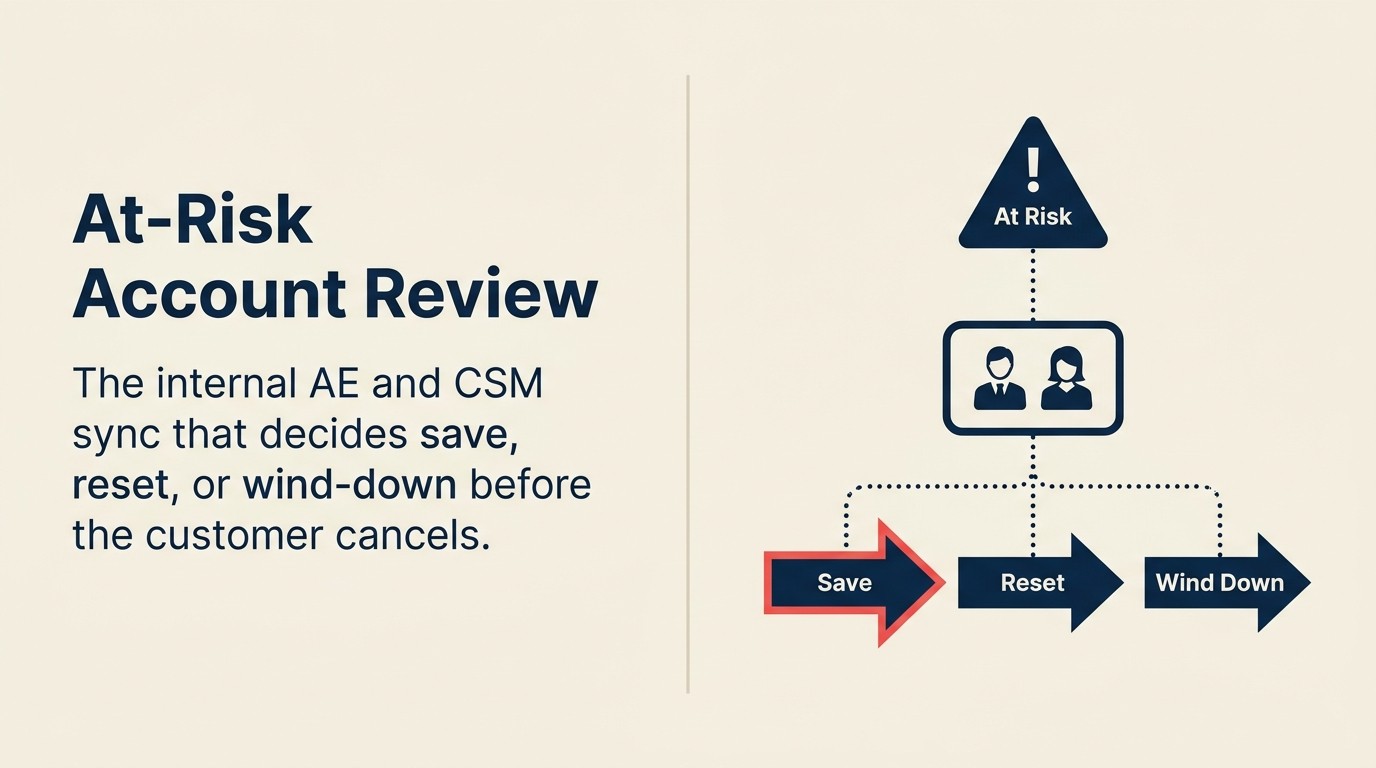
Semakan akaun berisiko bersama adalah penawarnya. Bukan mesyuarat krisis. Bukan sesi salah menyalah. Satu sesi kerja berstruktur dan proaktif antara AE dan CSM yang dijalankan sebelum pelanggan hilang. Masih ada isyarat untuk ditindaklanjuti, masih ada tuas komersial yang boleh ditarik, dan masih ada peluang gerakan pemulihan yang tulen.
Artikel ini mentakrifkan dengan tepat cara menjalankannya.
Perangkap Reaktif
Analisis Rework: Pasukan B2B SaaS yang menjalankan semakan berisiko bersama AE + CSM sekurang-kurangnya 90 hari sebelum pembaharuan secara konsisten mengatasi pasukan reaktif dalam kadar kemenangan gerakan penyelamatan. Sebab strukturalnya: tempoh 90 hari membolehkan gerakan pemulihan dijalankan hingga selesai sebelum pelanggan membuat keputusan akhir. Dengan tempoh 30 hari atau kurang, pelanggan sudah mula menilai vendor, dan kadar pemulihan jatuh di bawah 15% walau apa pun gerakan yang digunakan. Semakan Berisiko Bersama 4 Bahagian direka khusus untuk menangkap tempoh 90 hari itu.
Terdapat corak yang boleh diramalkan. CSM menyedari penurunan penglibatan. Mereka menghantar e-mel semak. Tiada respons. Mereka cuba lagi. Masih tiada apa-apa. Mereka eskalasi secara dalaman. Tetapi pada ketika itu, pelanggan sudah membuat keputusan. AE dimasukkan sebagai penutup, bukan sebagai rakan kongsi. Gerakan penyelamatan berjalan dalam tempoh yang singkat terhadap pelanggan yang sudah bergerak ke hadapan secara mental.
Versi reaktif semakan ini sebenarnya bukan semakan. Ia adalah kecoh. Penyelidikan HBR menunjukkan bahawa meningkatkan pengekalan pelanggan hanya sebanyak 5% boleh meningkatkan keuntungan sebanyak 25-95%, yang menjadikan kes untuk proses proaktif jauh lebih kukuh daripada gerak hati semata-mata.
Semakan akaun berisiko bersama membingkai semula perkara ini sepenuhnya. Ia adalah instrumen proaktif: dicetuskan oleh isyarat awal, dijalankan dengan masa yang cukup untuk membuat keputusan sebenar, dan direka untuk keluar dengan pemilikan jelas dan laluan pemulihan yang realistik. Matlamatnya adalah menjalankannya apabila pemulihan masih mungkin, bukan apabila pelanggan sudah akan pergi.
Fakta Utama: Pengurusan Akaun Berisiko
- Syarikat yang mengenal pasti akaun berisiko secara proaktif dan menjalankan gerakan pemulihan berstruktur mengekalkan 30-40% lebih banyak ARR berisiko berbanding yang bertindak balas terhadap permintaan pembatalan, menurut data penanda aras Gainsight.
- 67% Churn boleh dicegah jika dikenal pasti sekurang-kurangnya 90 hari sebelum pembaharuan, tetapi hanya 14% syarikat SaaS mempunyai proses semakan berisiko formal yang mencetus seawal itu (Bain & Company, 2024).
- Organisasi dengan protokol berisiko bersama AE + CSM melihat kadar kemenangan gerakan penyelamatan 23% lebih tinggi berbanding percubaan penyelamatan oleh CS sahaja, menurut penanda aras kejayaan pelanggan Totango 2024.
Apa yang Menjadikan Akaun "Berisiko" di Sambungan
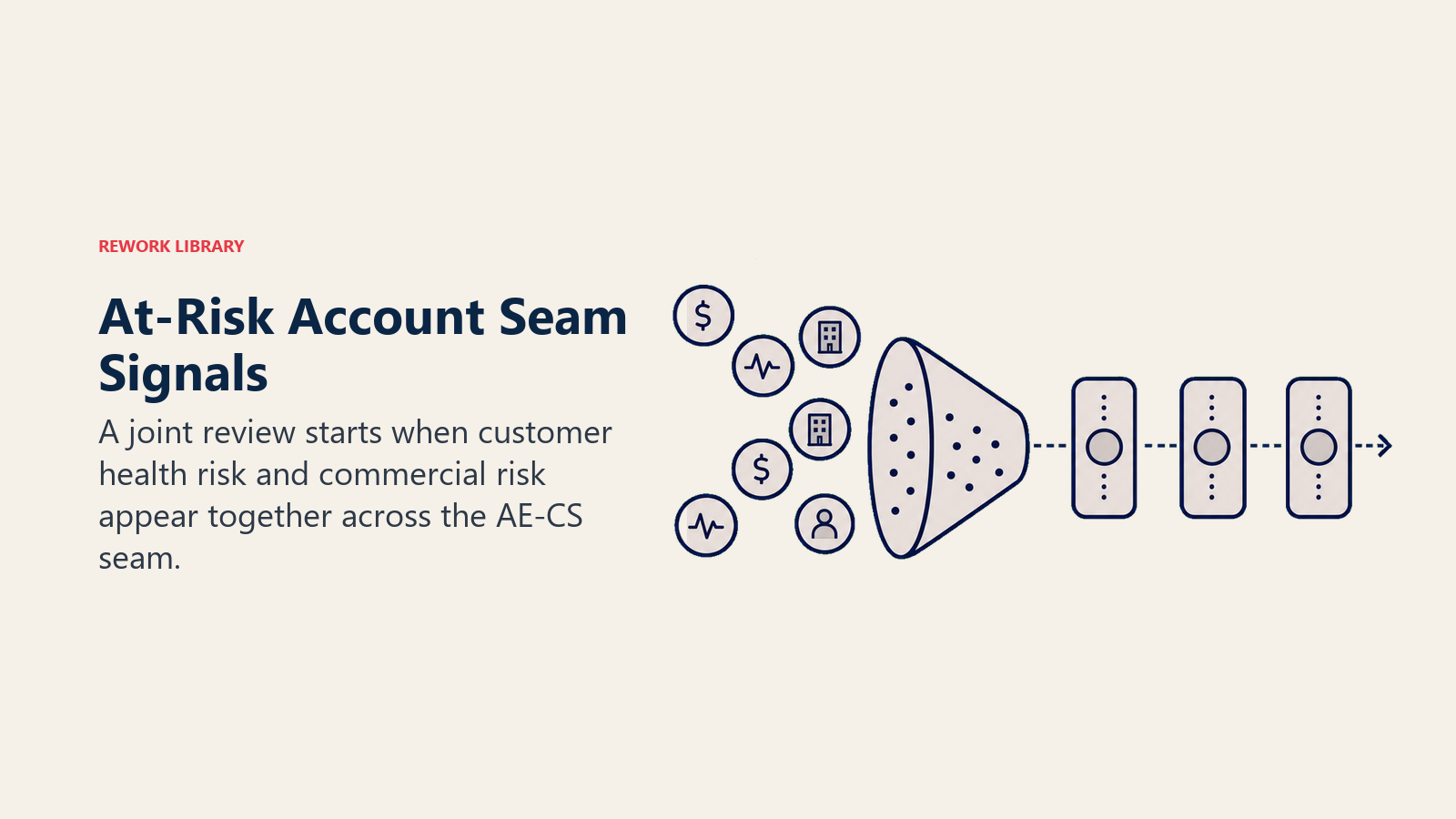
Tidak setiap akaun yang tidak sihat memerlukan semakan bersama. Masalah isyarat tunggal (penerimaan pakai rendah, eskalasi sokongan, QBR yang terlepas) lazimnya berada dalam CS sehingga ambang dilintasi. Semakan bersama dicetuskan apabila isyarat dari kedua-dua belah sambungan hadir.
Isyarat pihak CS:
- Penggunaan atau penerimaan pakai menurun selama 30+ hari
- Champion telah senyap atau menukar peranan
- QBR ditangguhkan dua kali atau lebih
- Tiket sokongan meningkat dalam jumlah atau nada
- Skor kesihatan di bawah ambang selama 30+ hari
Isyarat pihak Jualan:
- Pesaing sedang aktif berbual dengan akaun
- Tawaran asal dijanjikan berlebihan berbanding kemampuan produk
- Akaun adalah kesesuaian ICP yang longgar semasa tutup
- Perbualan Expansion terhenti atau ditolak
- AE belum mengadakan perbualan bermakna dengan penaja eksekutif selama 90+ hari
Apabila kedua-dua pihak mempunyai isyarat, itulah semakan bersama. Mana-mana satu pihak sahaja adalah eskalasi CS atau Jualan. Kedua-duanya bersama adalah masalah sambungan, dan masalah sambungan memerlukan orang yang duduk di kedua-dua belahnya.
Siapa yang Hadir dan Mengapa
Pastikan ia kecil. Semakan bersama adalah sesi kerja, bukan mesyuarat teater status.
Diperlukan:
- AE: sejarah tawaran, hubungan champion, faktor kemenangan asal, tuas komersial. AE tahu apa yang dijanjikan, kepada siapa dijual, dan seperti apa landskap persaingan. Tanpa AE, separuh diagnosis tiada.
- CSM: hubungan selepas tutup, data kesihatan, corak penggunaan produk, sejarah sokongan. CSM mempunyai pandangan peringkat bawah tentang apa yang pelanggan sebenarnya alami. Tanpa CSM, framing komersial tidak mempunyai asas operasi.
Pilihan mengikut situasi:
- RevOps: jika pengeluaran data bersih diperlukan sebelum sesi (metrik kesihatan, data penggunaan, ARR pembaharuan yang dipertaruhkan)
- VP CS atau VP Jualan: jika semakan kemungkinan memerlukan keputusan eskalasi (risiko kontrak berbilang tahun, kehilangan akaun strategik, atau pilihan pemulihan yang memerlukan autoriti eksekutif untuk ditawarkan)
- CRO: jarang, dan hanya jika akaun cukup besar sehingga keputusan pemulihan memerlukan kelulusan CRO
Pelanggan tidak hadir dalam mesyuarat ini. Ini adalah sesi penjajaran dalaman yang menentukan seperti apa panggilan pelanggan, siapa yang menjalankannya, dan apa yang dikatakan.
Agenda Semakan Bersama 60 Minit: Semakan Berisiko Bersama 4 Bahagian
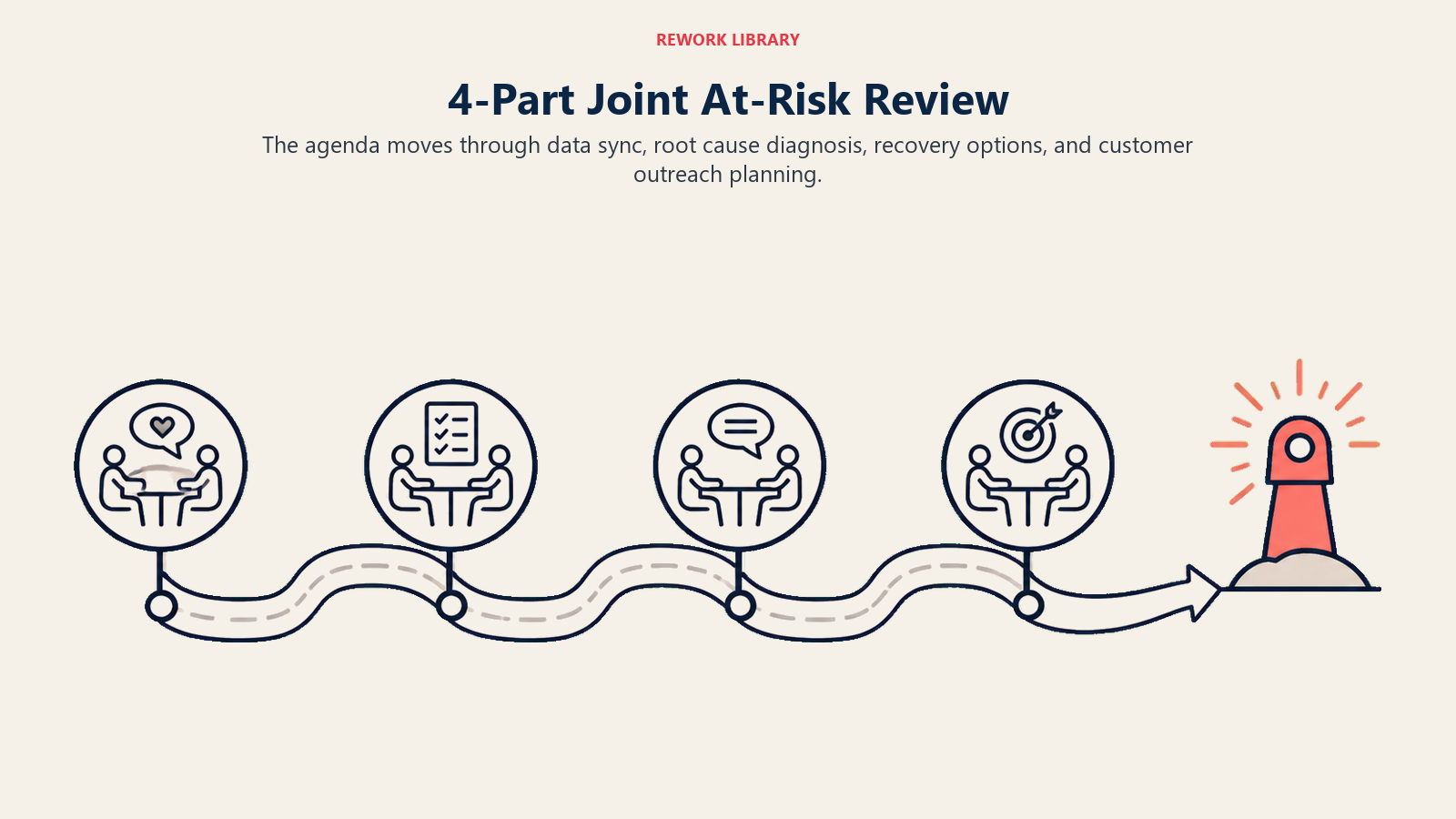
Rangka Kerja Dinamakan: Semakan Berisiko Bersama 4 Bahagian Sesi bersama 60 minit yang berstruktur kepada empat bahagian kerja: (1) Sinkronisasi Data, (2) Diagnosis Punca Akar, (3) Pilihan Pemulihan, dan (4) Rancangan Jangkauan Pelanggan. Mesyuarat berakhir dengan tiga perkara: pemilik, tindakan, dan tarikh. Tiada pengecualian. Setiap bahagian dipetakan kepada jurang akauntabiliti tertentu: kebanyakan perbualan berisiko reaktif gagal kerana melangkau bahagian 1 dan 2 dan bermula pada bahagian 3, merundingkan gerakan penyelamatan sebelum mendiagnosis punca sebenar.
Bahagian 1: Sinkronisasi Data (15 minit)
Kedua-dua pihak membawa data mereka dan berkongsinya tanpa membuat tafsiran. CS menerangkan: skor kesihatan semasa, trend penggunaan sepanjang 90 hari, kenalan pelanggan terakhir, tiket sokongan terbuka, status QBR. AE menerangkan: ARR pembaharuan yang dipertaruhkan, perisikan persaingan, kenalan eksekutif terakhir, percubaan perbualan Expansion. RevOps (jika hadir) membawa rekod bersama.
Tujuan bahagian ini bukan untuk membina kes untuk kedudukan satu pasukan. Ia adalah untuk mendapatkan kedua-dua pasukan melihat gambaran yang sama sebelum sebarang diagnosis bermula.
Bahagian 2: Diagnosis Punca Akar (20 minit)
Ini adalah bahagian yang paling sukar, dan yang paling penting. Menggunakan rangka kerja lima kategori di bawah, pasukan bekerja untuk mengenal pasti pemacu utama risiko. Bukan simptom. Punca akar. Logik diagnostik yang sama terpakai pada cara anda mengenal pasti punca akar Churn dan menyalurkannya kembali kepada Jualan selepas kejadian.
Godaan adalah untuk melangkau diagnosis dan terus ke pilihan pemulihan. Rintangi godaan itu. Isu kesihatan memerlukan gerakan pemulihan dipimpin CS. Ancaman persaingan memerlukan respons dipimpin AE. Masalah kesesuaian memerlukan perbualan jujur, bukan pitching penyelamatan. Mendapatkan diagnosis yang salah membazirkan masa berlari dengan gerakan yang salah.
Bahagian 3: Pilihan Pemulihan (15 minit)
Berdasarkan diagnosis, apakah pilihan yang realistik? Siapa yang memiliki setiap pilihan? Apakah jadual dan kriteria kejayaan?
Bahagian ini mesti berakhir dengan keputusan, bukan senarai kemungkinan. Pemulihan, penetapan semula skop, atau penutupan terurus: satu laluan, dimiliki oleh orang yang dinamakan, dengan tarikh.
Bahagian 4: Rancangan Jangkauan Pelanggan (10 minit)
Siapa yang menghubungi pelanggan terlebih dahulu? Apa yang mereka katakan? Apa yang tidak mereka katakan? Dalam urutan apa AE dan CSM membuat hubungan? Apakah permintaannya, dan apakah autoriti yang dimiliki orang yang membuat panggilan?
Jika kedua-dua AE dan CSM akhirnya menghubungi pelanggan secara bebas dengan mesej yang tidak konsisten, semakan bersama memperburukkan keadaan. Rancangan jangkauan mencegah perkara itu.
Rangka Kerja Diagnosis Punca Akar
Setiap daripada lima kategori ini membawa diagnosis yang berbeza dan gerakan pemulihan yang berbeza. Matlamatnya adalah mengenal pasti pemacu utama. Kebanyakan akaun berisiko mempunyai satu punca dominan dengan penyumbang sekunder.
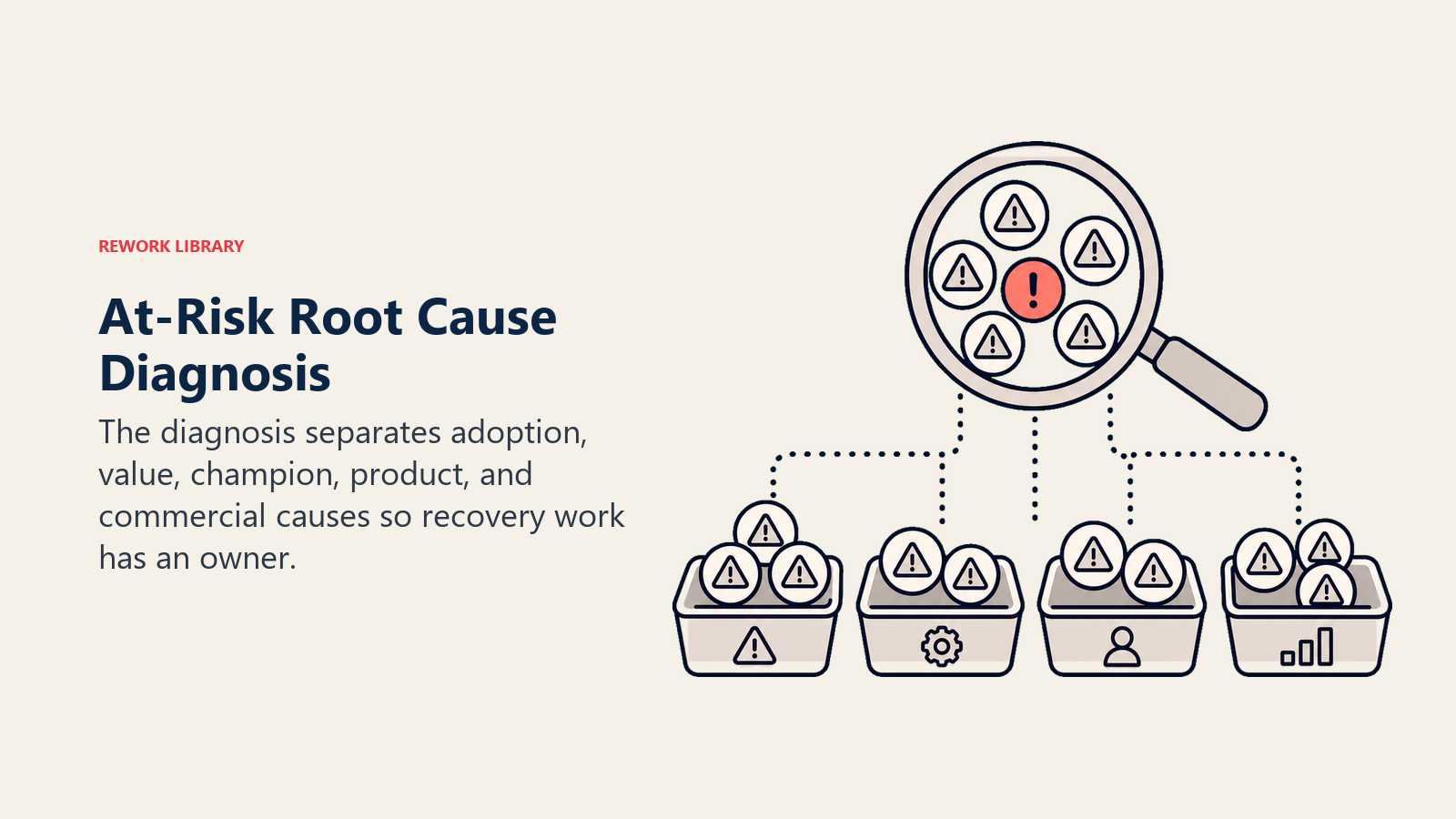
| Punca Akar | Siapa yang Memimpin Pemulihan | Gerakan Pemulihan |
|---|---|---|
| Jurang penerimaan pakai / nilai | Dipimpin CSM, AE dalam sokongan | Rancangan kejayaan berstruktur, pencapaian penggunaan, penglibatan semula penaja eksekutif |
| Kehilangan champion | Jangkauan rakan sebaya AE + CSM | AE membina semula hubungan eksekutif; CSM membina hubungan peringkat kerja dengan pasukan baharu |
| Dijanjikan berlebihan / kurang disampaikan | Bersama (perbualan penetapan semula yang jujur) | Akui jurang, tawarkan penjajaran semula skop, bina semula kepercayaan dengan komitmen khusus |
| Pesaing sedang aktif membuat tawaran | AE memimpin respons persaingan | Perisikan persaingan, perbualan pembezaan, tuas komersial jika sesuai |
| ICP salah / ketidakpadanan pasaran produk | Bersama (perbualan jujur) | Terokai pengecilan saiz, keluar pada nilai penuh, atau komitmen peta hala tuju jika jurang produk boleh ditutup |
Jurang penerimaan pakai / nilai: Produk berfungsi, tetapi pelanggan tidak mendapat nilai kerana penerimaan pakai tidak pernah berlaku pada kedalaman yang diperlukan. CS memiliki gerakan pemulihan: rancangan kejayaan berstruktur 60 hari dengan pencapaian khusus. Peranan AE adalah untuk melibatkan semula penaja eksekutif dan menyediakan konteks komersial (apa yang dijanjikan, ROI apa yang diunjurkan, seperti apa laluan ke hadapan). Ini bukan masalah komersial; ia adalah masalah penggunaan dan pengurusan perubahan.
Kehilangan champion: Orang yang membeli produk telah pergi atau menukar peranan. Kenalan baharu tidak mempunyai hubungan dengan mana-mana pasukan dan mungkin sedang menilai alternatif secara aktif. Ini memerlukan jangkauan dua jalur: AE membina semula di peringkat eksekutif, CSM membina hubungan kerja baharu dengan pasukan baharu. Bergerak cepat adalah penting. Champion yang berpindah syarikat sering membawa pasukan baharu mereka kepada vendor yang sama jika hubungan kukuh. Proses peralihan champion daripada AE kepada CSM penting di sini juga: peralihan yang didokumenkan dengan baik mengurangkan tahap pendedahan anda apabila champion berpindah.
Dijanjikan berlebihan / kurang disampaikan: Tawaran dijual dengan janji yang produk belum tepati. Ini tidak selesa kerana ia melibatkan AE mengakui jurang dalam apa yang diwakili. Tetapi perbualan penetapan semula yang jujur ("ini yang dijanjikan, ini di mana kami terlepas, ini yang kami boleh komitkan") adalah satu-satunya laluan kepada pemulihan yang berkekalan. Janji palsu yang digandakan dengan pitching penyelamatan yang membuat janji baharu menghasilkan pelanggan yang mengalami Churn yang pergi dengan marah dan bukannya diam.
Pesaing sedang aktif membuat tawaran: Pesaing mempunyai perbualan langsung di akaun ini. AE memimpin respons persaingan. Ini adalah wilayah jualan, dan CS tidak sepatutnya mengendalikannya bersendirian. Semakan bersama mengenal pasti perisikan yang diperlukan, pembezaan yang relevan, dan sama ada tuas komersial tersedia untuk digunakan.
ICP salah / ketidakpadanan pasaran produk: Akaun tidak pernah sesuai dan produk benar-benar tidak melayani kes penggunaan mereka. Ini adalah perbualan yang paling sukar untuk dilakukan dengan jujur, dan yang paling penting untuk dilakukan dengan jelas. Memaksa pembaharuan pada pelanggan yang tidak sesuai menghasilkan Churn 12 bulan kemudian, rujukan negatif, dan beban sokongan di antara. Kadang-kadang gerakan pemulihan yang betul adalah perbualan jujur tentang pengecilan saiz, kontrak dikurangkan yang melayani apa yang pelanggan sebenarnya perlukan, atau keluar berstruktur pada nilai penuh. Tidak setiap diagnosis membawa kepada gerakan penyelamatan, dan mengetahui akaun mana yang perlu dieskalasikan mengubah keseluruhan perbualan pemulihan.
Matriks Keputusan Eskalasi
Tidak semua akaun berisiko diselesaikan di peringkat AE/CSM. Sesetengah memerlukan penglibatan VP atau CRO.
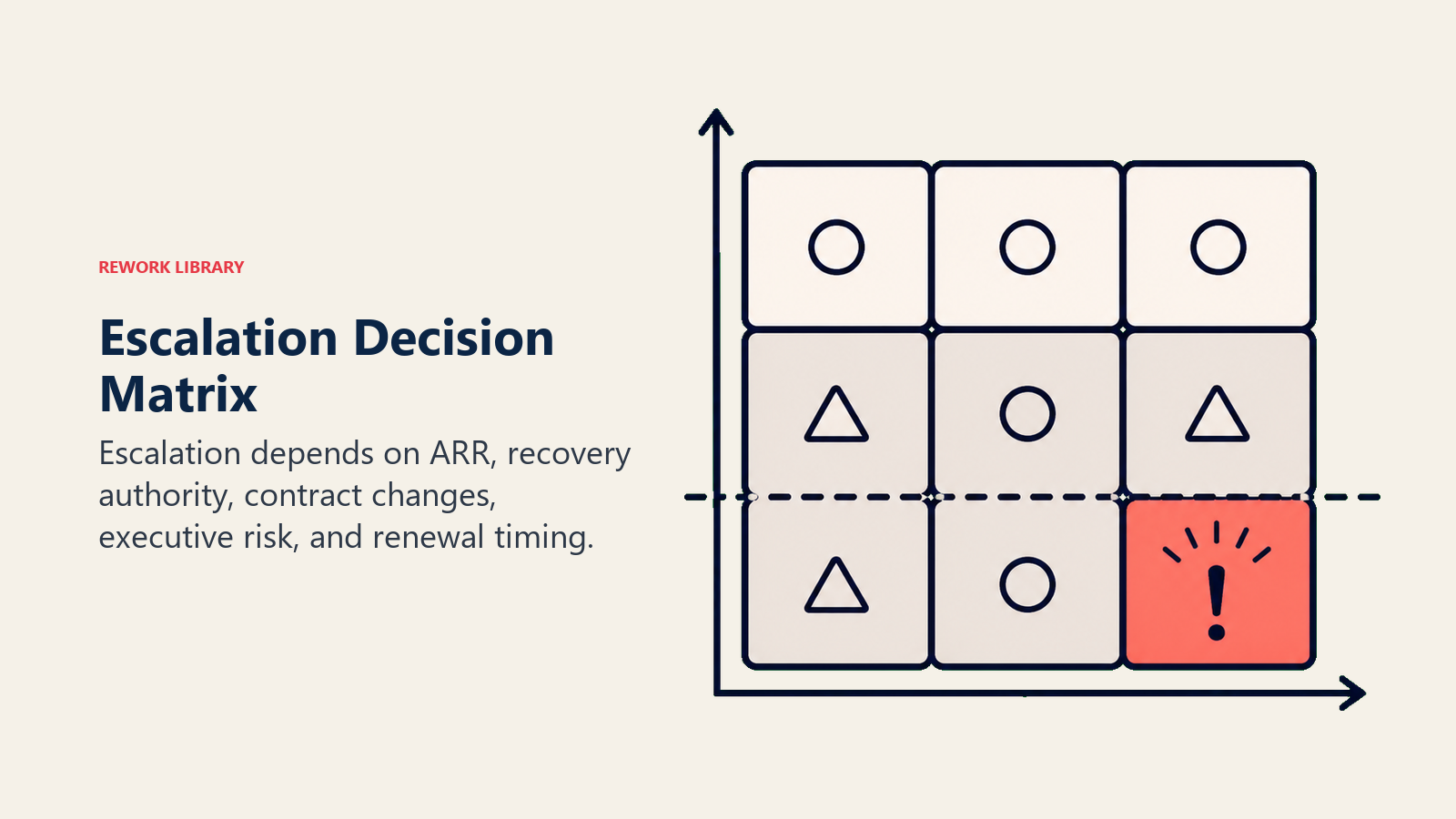
Selesaikan di peringkat AE/CSM apabila:
- ARR akaun berada dalam autoriti pembaharuan standard
- Pilihan pemulihan tidak memerlukan pengecualian harga atau pengubahsuaian kontrak melebihi terma standard
- Tiada VP CS mahupun VP Jualan mempunyai hubungan eksekutif sedia ada yang menambah nilai
- Jadual tidak singkat (90+ hari menuju pembaharuan)
Eskalasi kepada VP CS / VP Jualan apabila:
- ARR akaun melebihi ambang autoriti standard anda (tetapkan ini terlebih dahulu)
- Pilihan pemulihan memerlukan pengecualian harga atau penyusunan semula kontrak
- Kehilangan champion telah mencapai peringkat C-suite dan AE/CSM tidak mempunyai akses eksekutif
- Gerakan pemulihan sudah gagal sekali di peringkat AE/CSM
Untuk akaun yang hubungan penaja eksekutifnya sudah dingin, pendekatan penglibatan eksekutif daripada playbook penutupan tawaran boleh memberikan eskalasi itu kekananan yang diperlukan.
Eskalasi kepada CRO apabila:
- Akaun strategik: kehilangan akan mewakili lebih daripada ambang ARR yang ditetapkan atau pelanggan rujukan utama
- Pemulihan memerlukan tawaran komersial yang hanya CRO boleh benarkan
- Pelanggan sedang eskalasi melebihi hubungan AE/CSM dan menuntut penglibatan eksekutif
Takrifkan ambang ini terlebih dahulu. Kekaburan tentang bila hendak eskalasi bermakna setiap AE dan CSM mencipta standard mereka sendiri, dan eskalasi berlaku sama ada terlalu lewat atau untuk akaun yang salah.
Apa yang Didokumentasikan
Semakan bersama hanya berguna jika apa yang diputuskan kekal selepas mesyuarat.
Tulis rancangan pemulihan ke dalam rekod pelanggan bersama sebelum mesyuarat berakhir. Ini tidak boleh dirunding. Pengetahuan suku dalam kepala AE atau nota CSM adalah sama dengan tiada dokumentasi.
Senarai semak dokumentasi untuk rekod pelanggan bersama:
- Tahap risiko: merah / kuning (dikemas kini daripada status sebelum mesyuarat jika diperlukan)
- Kategori punca akar (daripada rangka kerja lima kategori)
- Laluan pemulihan yang dipilih: gerakan penyelamatan / penetapan semula skop / penutupan terurus
- Pemilik tindakan seterusnya (orang yang dinamakan, bukan pasukan)
- Tindakan seterusnya yang khusus dan tarikh akhir
- Rancangan jangkauan pelanggan: siapa yang menghubungi terlebih dahulu, apakah mesejnya, apa yang tidak dikatakan
- Status eskalasi: di peringkat AE/CSM / dieskalasikan kepada VP / dieskalasikan kepada CRO
- Tarikh semakan bersama seterusnya jika akaun kekal dalam senarai berisiko
Ops berasaskan akaun dan papan pemuka peringkat 1 memberi kedua-dua pasukan keterlihatan terhadap dokumentasi ini tanpa memerlukan lapisan pelaporan berasingan.
Selepas Semakan: Penyelarasan Jangkauan Pelanggan
Semakan bersama berakhir dengan rancangan jangkauan yang dipersetujui. Sebelum sesiapa pun mengangkat telefon:
- Putuskan siapa yang membuat hubungan pertama dan apakah tujuan panggilan tersebut
- Bersetuju tentang pemesejan: apa yang pelanggan diberitahu tentang situasi, apa yang ditawarkan, apa yang tidak boleh
- Tetapkan urutan: jika CSM menghubungi terlebih dahulu, AE mengikuti di peringkat eksekutif; jika AE membuka, CSM menyokong dengan perbualan produk
- Sahkan bahawa tiada mana-mana pihak akan membuat janji yang memerlukan kelulusan dalaman sehingga kelulusan tersebut diperoleh
Apabila Jualan ditarik ke dalam akaun berisiko selepas hubungan sudah merosot, penyelarasan pemesejan menjadi lebih kritikal lagi. Pelanggan memerhatikan sebarang tanda bahawa kedua-dua pasukan tidak bersatu.
Kesilapan nombor satu dalam jangkauan berisiko ialah dua orang dari syarikat yang sama menghubungi pelanggan yang sama dengan mesej yang tidak konsisten. Ia memberi isyarat ketidakaturan dalaman kepada pelanggan yang sudah skeptikal, dan mengesahkan bahawa syarikat tidak teratur. Semakan bersama mencegah perkara ini, tetapi hanya jika rancangan jangkauan benar-benar diikuti.
Membina Semakan ke dalam Kadens Anda
Semakan akaun berisiko bersama tidak sepatutnya menjadi mesyuarat krisis. Ia sepatutnya menjadi kadens tetap yang berstruktur untuk setiap akaun dalam senarai berisiko.
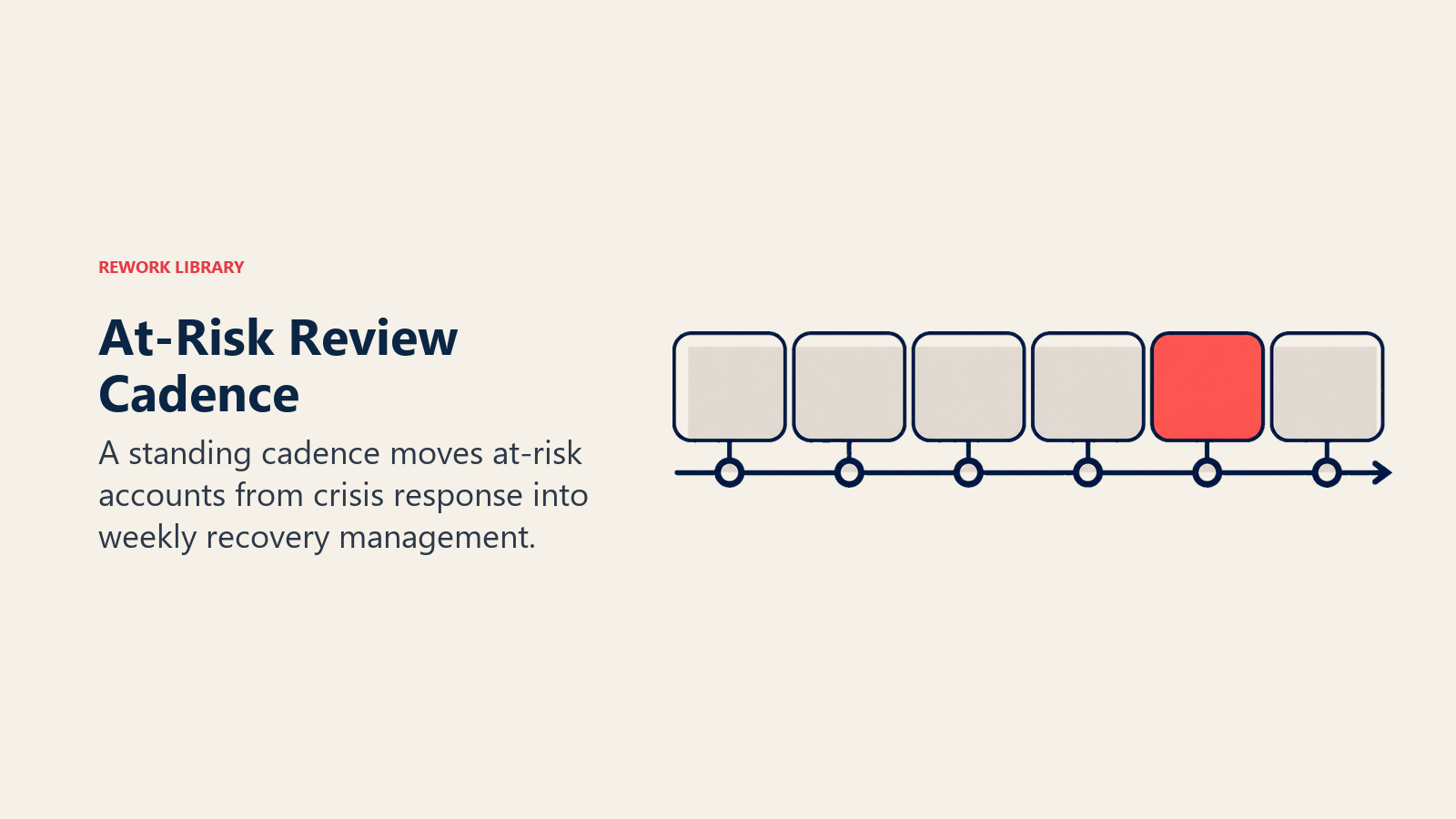
Untuk akaun peringkat 1 dengan tanda berisiko aktif: Semakan bersama mingguan 30 minit dengan AE dan CSM, menumpukan pada kemajuan gerakan pemulihan dan kemas kini rancangan jangkauan. Bergerak cepat dengan akaun-akaun ini.
Untuk akaun yang telah melintasi ambang kesihatan CS tetapi belum mempunyai isyarat bersama: Semakan kesihatan mingguan milik CSM, AE dimaklumkan secara async. Jika isyarat bersama muncul, ia dipindahkan ke semakan mingguan dengan segera.
Untuk akaun strategik dengan ARR yang tinggi: Semakan tetap bulanan dengan VP CS dan VP Jualan. Bukan hanya akaun berisiko. Semua akaun strategik, supaya tiada satu pasukan pun terkejut apabila isyarat kesihatan tiba. Semakan pipeline bersama yang berstruktur dengan pasukan pendapatan yang lebih luas boleh mengesan isyarat akaun lebih awal lagi dalam suku.
Kuncinya adalah menjadikan semakan bersama cukup rutin sehingga mencetuskannya tidak membawa stigma. Prestasi NRR kuartil teratas secara sistematik melabur dalam proses akaun selepas jualan dan bukannya menganggap pengekalan sebagai fungsi reaktif. Jika menjalankan semakan akaun berisiko bersama dianggap sebagai eskalasi itu sendiri, pasukan akan melengahkan pemanggilannya sehingga akaun sudah dalam krisis. Jadikannya normal. Jadikannya awal.
Boleh Dipetik: Syarikat SaaS di mana pertukaran champion mencetuskan semakan berisiko bersama AE + CSM secara automatik, bukan sekadar semak CS, menutup gerakan penyelamatan pada kadar dua kali ganda berbanding syarikat yang menganggap pertukaran champion sebagai peristiwa CS sahaja (penanda aras Gainsight, 2024).
Soalan Lazim tentang Semakan Akaun Berisiko Bersama
Apakah Semakan Berisiko Bersama 4 Bahagian?
Semakan Berisiko Bersama 4 Bahagian ialah sesi kerja berstruktur 60 minit antara AE dan CSM yang dijalankan sebelum akaun yang bergelut hilang. Empat bahagiannya ialah: Sinkronisasi Data (15 min), Diagnosis Punca Akar (20 min), Pilihan Pemulihan (15 min), dan Rancangan Jangkauan Pelanggan (10 min). Mesyuarat berakhir dengan satu pemilik, satu tindakan, dan satu tarikh. Tiada pengecualian.
Berapa kerap semakan akaun berisiko bersama harus dijalankan?
Untuk akaun peringkat 1 dengan tanda berisiko aktif, jalankan semakan bersama 30 minit setiap minggu, menumpukan pada kemajuan gerakan pemulihan. Untuk semua akaun dalam senarai berisiko, semakan tetap bersama bulanan harus disepadukan ke dalam kadens pasukan pendapatan, bukan dicetuskan hanya ketika krisis. Untuk akaun strategik di atas ambang ARR yang ditetapkan, semakan tetap bulanan dengan VP CS dan VP Jualan ialah kadens yang disyorkan tanpa mengira status kesihatan.
Siapa yang harus menghadiri semakan akaun berisiko bersama?
Peserta yang diperlukan ialah AE (untuk sejarah tawaran, perisikan persaingan, dan tuas komersial) dan CSM (untuk data kesihatan, penggunaan produk, dan hubungan selepas tutup). RevOps menyertai apabila pengeluaran data bersih diperlukan sebelum sesi. VP CS atau VP Jualan menyertai apabila pilihan pemulihan memerlukan autoriti melebihi peringkat AE/CSM. CRO menyertai hanya untuk akaun strategik di mana pemulihan memerlukan autoriti komersial peringkat CRO.
Apakah pencetus eskalasi yang memerlukan penglibatan VP atau CRO?
Eskalasi ke peringkat VP apabila ARR akaun melebihi ambang autoriti yang anda tetapkan, apabila pemulihan memerlukan pengecualian harga atau penyusunan semula kontrak, apabila kehilangan champion telah mencapai peringkat C-suite dan tiada AE mahupun CSM mempunyai akses eksekutif, atau apabila gerakan penyelamatan terdahulu di peringkat AE/CSM sudah gagal. Eskalasi kepada CRO apabila akaun mewakili lebih daripada ambang ARR yang ditetapkan, apabila pelanggan menuntut penglibatan eksekutif, atau apabila tawaran pemulihan memerlukan kebenaran komersial khusus CRO.
Apakah perbezaan antara panggilan berisiko reaktif dengan semakan berisiko bersama?
Panggilan berisiko reaktif dicetuskan oleh e-mel pembatalan atau isyarat Churn langsung daripada pelanggan. Semakan berisiko bersama dicetuskan oleh isyarat awal pihak CS dan pihak Jualan, sebelum pelanggan membuat keputusan. Perbezaan praktikalnya: panggilan reaktif mempunyai tempoh 30 hari atau kurang, dan kadar kemenangan gerakan penyelamatan di bawah 15%. Semakan bersama yang dicetuskan pada 90+ hari sebelum pembaharuan memberi masa kepada gerakan pemulihan untuk berjaya, menghasilkan kadar kemenangan 23 mata peratusan lebih tinggi berbanding percubaan penyelamatan oleh CS sahaja (Totango, 2024).
Apakah yang didokumentasikan selepas semakan akaun berisiko bersama?
Rekod pelanggan bersama mesti merakamkan: tahap risiko yang dikemas kini (merah/kuning), kategori punca akar daripada diagnostik lima kategori, laluan pemulihan yang dipilih (gerakan penyelamatan, penetapan semula skop, atau penutupan terurus), pemilik tindakan seterusnya yang dinamakan dengan tarikh akhir khusus, rancangan jangkauan pelanggan termasuk siapa yang menghubungi terlebih dahulu dan pemesejan yang dipersetujui, status eskalasi, dan tarikh semakan bersama seterusnya jika akaun kekal dalam senarai berisiko.
Apakah lima kategori punca akar dalam rangka kerja diagnostik?
Lima kategori punca akar ialah: (1) Jurang penerimaan pakai/nilai: produk tidak digunakan dengan cukup mendalam; (2) Kehilangan champion: pihak berkepentingan yang membeli telah pergi atau menukar peranan; (3) Dijanjikan berlebihan/kurang disampaikan: tawaran dijual dengan komitmen yang produk belum tepati; (4) Pesaing sedang aktif membuat tawaran: penilaian persaingan langsung sedang berlangsung; (5) ICP salah/ketidakpadanan pasaran produk: akaun tidak pernah sesuai dan produk tidak melayani kes penggunaan terasnya. Setiap kategori dipetakan kepada gerakan pemulihan yang berbeza dan pemilik utama yang berbeza.
Ketahui Lebih Lanjut

Principal Solution Architect
On this page
- Perangkap Reaktif
- Apa yang Menjadikan Akaun "Berisiko" di Sambungan
- Siapa yang Hadir dan Mengapa
- Agenda Semakan Bersama 60 Minit: Semakan Berisiko Bersama 4 Bahagian
- Rangka Kerja Diagnosis Punca Akar
- Matriks Keputusan Eskalasi
- Apa yang Didokumentasikan
- Selepas Semakan: Penyelarasan Jangkauan Pelanggan
- Membina Semakan ke dalam Kadens Anda
- Ketahui Lebih Lanjut