Mentoring: Cara Menjadi Mentor yang Berkesan

Turn this article into takeaways for your work.


Each assistant summarizes the article only for you and suggests best practices for your work.
Kemahiran mentoring jarang muncul dalam kebanyakan deskripsi kerja, tetapi secara senyap ia adalah antara perkara paling bernilai yang boleh dikembangkan oleh seorang pemimpin. Keupayaan untuk membimbing pertumbuhan orang lain, mempercepatkan keyakinan mereka, dan membantu mereka mengemudi kerjaya, itulah yang membezakan pengurus yang diingati daripada mereka yang dilupakan.
Apakah Mentoring?
Mentoring ialah hubungan pembangunan berstruktur di mana seseorang yang lebih berpengalaman (mentor) berkongsi pengetahuan, perspektif, dan bimbingan untuk membantu seseorang yang kurang berpengalaman (mentee) berkembang secara profesional dan peribadi. Tidak seperti program latihan formal, mentoring dibina atas kepercayaan, perbualan, dan komitmen jangka panjang berbanding kurikulum yang ditetapkan.
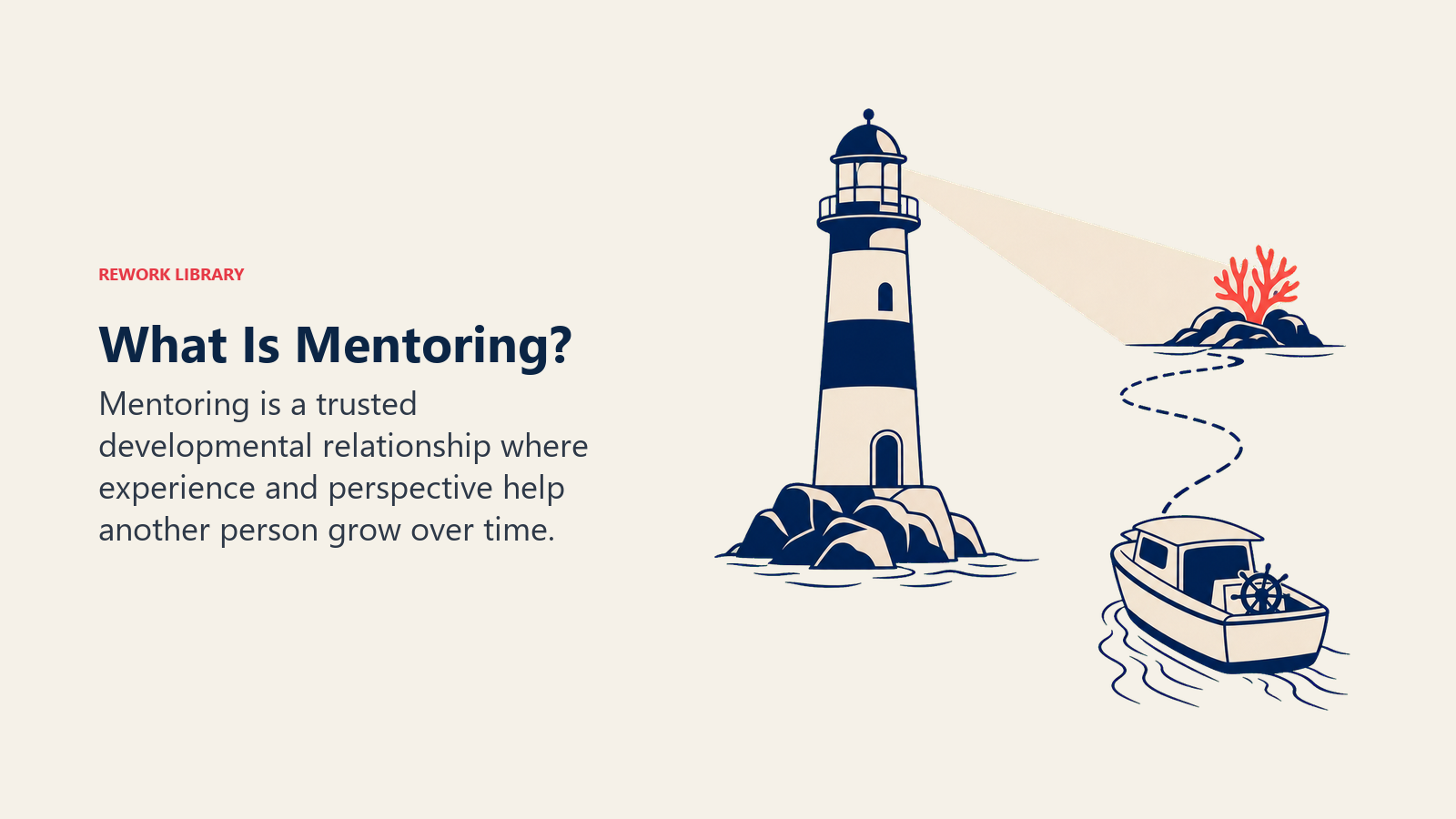
Idea terasnya adalah pemindahan pengetahuan ditambah perspektif. Seorang mentor membantu mentee memahami situasi, bukan sekadar menyiapkan tugasan.
Fakta Utama: Mentoring
- Pekerja yang mempunyai mentor dipromosikan lima kali lebih kerap berbanding mereka yang tidak mempunyainya. (Kajian Sun Microsystems, yang banyak dipetik oleh CNBC / Forbes)
- 87% mentor dan mentee melaporkan perasaan lebih diberi kuasa hasil daripada hubungan mentoring mereka. (Olivet Nazarene University, 2019)
- Syarikat yang mempunyai program mentoring yang kukuh melihat pengekalan pekerja 20% lebih tinggi berbanding yang tidak mempunyainya. (Association for Talent Development, 2022)
Mentoring lwn Coaching lwn Menaja
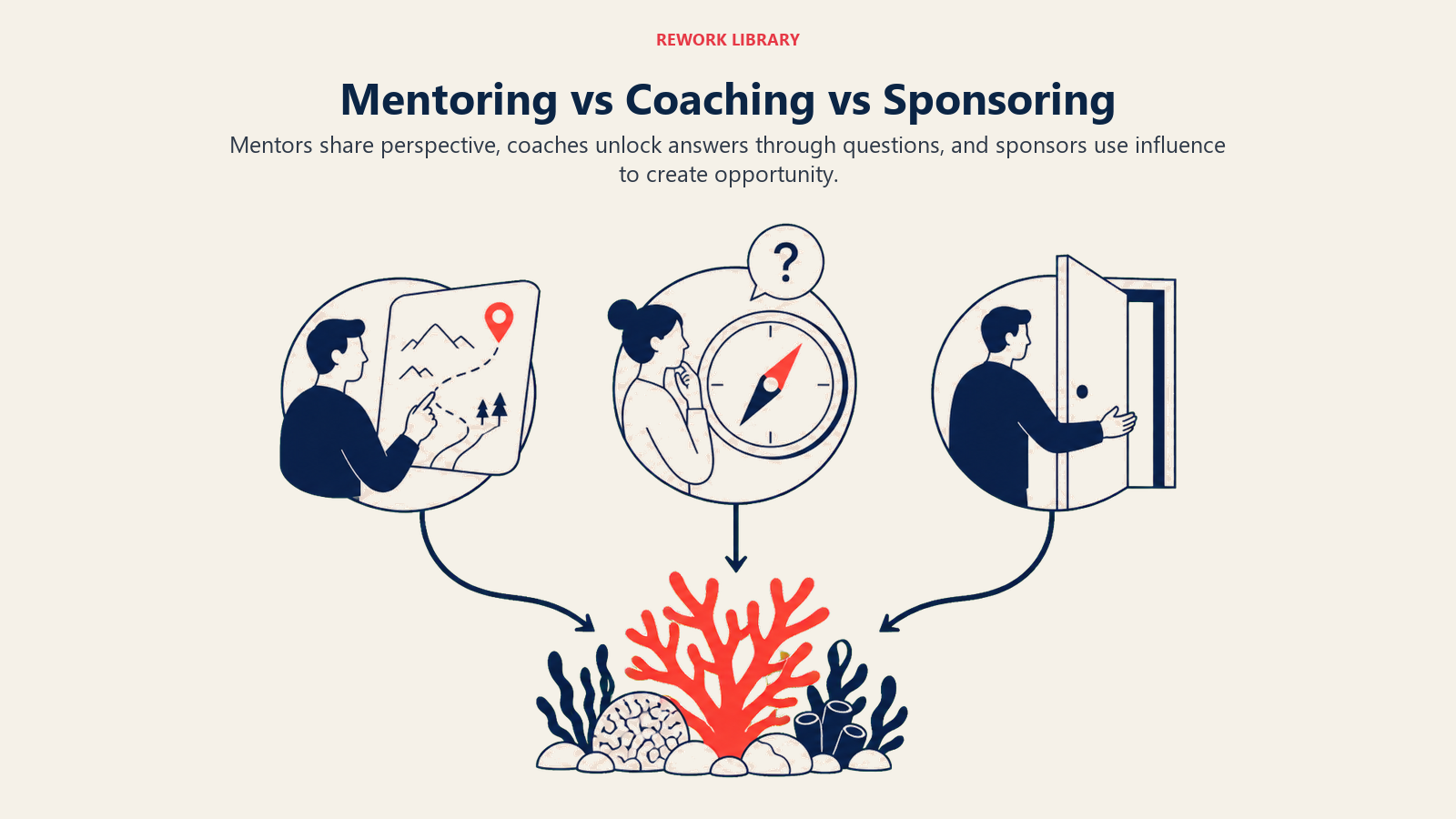
Ketiga-tiga istilah ini sering dicampurkan. Ia berkaitan tetapi berbeza. Mengetahui perbezaannya membantu anda memilih pendekatan yang betul, dan mengelak rasa kecewa pada mentee dengan bertindak dalam peranan yang salah.
| Mentoring | Coaching | Menaja | |
|---|---|---|---|
| Siapa yang memimpin | Mentor berkongsi pengalaman | Coach mengajukan soalan | Penaja menggunakan modal sosial mereka |
| Jenis hubungan | Bimbingan berterusan, tidak formal | Terikat matlamat, berstruktur | Berasaskan advokasi |
| Tempoh masa | Bulan hingga tahun | Minggu hingga bulan | Sepanjang kerjaya, secara episodik |
| Matlamat utama | Meluaskan perspektif, pertumbuhan kerjaya | Meningkatkan kemahiran atau tingkah laku tertentu | Membuka pintu, meningkatkan keterlihatan |
| Terbaik digunakan apabila | Mentee memerlukan arah tuju atau konteks | Mentee mempunyai jurang prestasi yang jelas | Mentee bersedia untuk peringkat seterusnya |
| Contoh | "Inilah cara saya mengemudi peralihan ke peringkat VP" | "Mari kita kerjakan kehadiran eksekutif anda selama 8 sesi" | "Saya memberitahu pengurus pengambilan tentang anda secara terus" |
Coaching lebih berstruktur dan berfokus pada kemahiran. Menaja adalah tentang menggunakan modal sosial untuk membuka peluang. Mentoring adalah permainan jangka panjang, dibina atas kepercayaan dan perbualan yang jujur.
Mengapa Kemahiran Mentoring Penting
Kes perniagaan untuk mentoring adalah jelas. Tetapi kes peribadinya sama kuatnya.
Bagi organisasi, mentoring mendorong pemindahan pengetahuan, terutamanya apabila pekerja berpengalaman menyimpan pengetahuan institusi yang tidak dapat didokumentasikan dalam wiki. Ia mempercepatkan onboarding, menutup jurang kemahiran lebih cepat daripada latihan formal sahaja, dan meningkatkan pengekalan kerana orang kekal di tempat mereka merasakan pelabur diambil berat.
Bagi mentor sendiri, pengajaran mendalami pemahaman. Apabila anda menjelaskan mengapa sesuatu berfungsi, anda sering menemui jurang dalam penaakulan anda sendiri. Ramai pemimpin kanan menyatakan bahawa mentoring rakan sekerja junior menjadikan mereka lebih tajam. Ia juga membina reputasi anda sebagai seseorang yang membangunkan bakat, yang penting apabila anda dipertimbangkan untuk peranan kepimpinan yang lebih besar.
Bagi mentee, keuntungannya adalah konkrit. Akses kepada rangkaian orang kanan, jalan pintas melewati ranjau politik, maklum balas jujur yang sering terlalu berhati-hati diberikan oleh pengurus, dan hubungan sebenar dengan seseorang yang menyokong kejayaan mereka.
Tangkapannya: mentoring hanya memberikan hasil ini apabila mentor mempunyai kemahiran mentoring yang sebenar. Niat yang baik tidak mencukupi. Mentor yang bermaksud baik tetapi mendominasi setiap perbualan, terus memberi nasihat, atau tidak menepati komitmen mendatangkan lebih banyak mudarat daripada kebaikan.
Kesilapan Biasa dalam Mentoring
Malah pemimpin yang berpengalaman pun jatuh ke dalam perangkap ini.

Menjadikan setiap sesi sebagai monolog. Mentor bercakap. Mentee mendengar. Itu bukan mentoring, itu siaran podcast. Mentoring yang berkesan melibatkan mengajukan soalan sekurang-kurangnya sebanyak berkongsi jawapan.
Menyelesaikan masalah berbanding mengembangkan potensi. Apabila mentee membawa masalah, naluri adalah untuk menyelesaikannya. Tetapi jika anda sentiasa memberikan jawapan, mentee belajar untuk membawa masalah kepada anda selama-lamanya. Bantu mereka memikirkannya sebagai ganti.
Melangkau perbualan penetapan matlamat. Hubungan mentoring tanpa matlamat yang jelas akan hanyut. Kedua-dua pihak akhirnya tidak pasti sama ada sesi itu bermanfaat. Pada peringkat awal, bersetuju tentang apa yang ingin dicapai oleh mentee dan bagaimana anda akan tahu apabila mereka telah mencapainya. Ini berkait langsung dengan kemahiran penetapan matlamat yang dicontohi oleh setiap mentor yang kukuh.
Membiarkannya menjadi tidak menentu. Mentoring tidak boleh bertahan dengan hubungan yang tidak tetap. Apabila bulan berlalu antara perbualan, hubungan itu kehilangan momentum. Jika anda tidak boleh komited kepada irama yang tetap, lebih baik katakan begitu dari awal berbanding membiarkan seseorang tergantung.
Mengandaikan kerjaya mentee kelihatan seperti kerjaya anda. Laluan anda berjaya untuk zaman anda, industri anda, keperibadian anda. Mentee dalam peranan atau generasi yang berbeza mungkin memerlukan strategi yang berbeza sepenuhnya. Kekal ingin tahu tentang konteks mereka sebelum memetakan pengalaman anda ke atas mereka.
Hanya memberi maklum balas positif. Ini biasa berlaku dengan mentor yang lebih baharu yang ingin disukai. Tetapi maklum balas yang jujur dan spesifik, termasuk yang sukar, adalah antara perkara paling berharga yang boleh ditawarkan oleh mentor. Terdapat kemahiran sebenar dalam memberi maklum balas yang perlu dikembangkan secara aktif oleh mentor.
Cara Menjadi Mentor yang Berkesan
Mentoring yang berkesan bukan ilmu sihir. Ia adalah amalan dengan corak yang boleh dikenal pasti. Berikut adalah rangka kerja lima langkah.
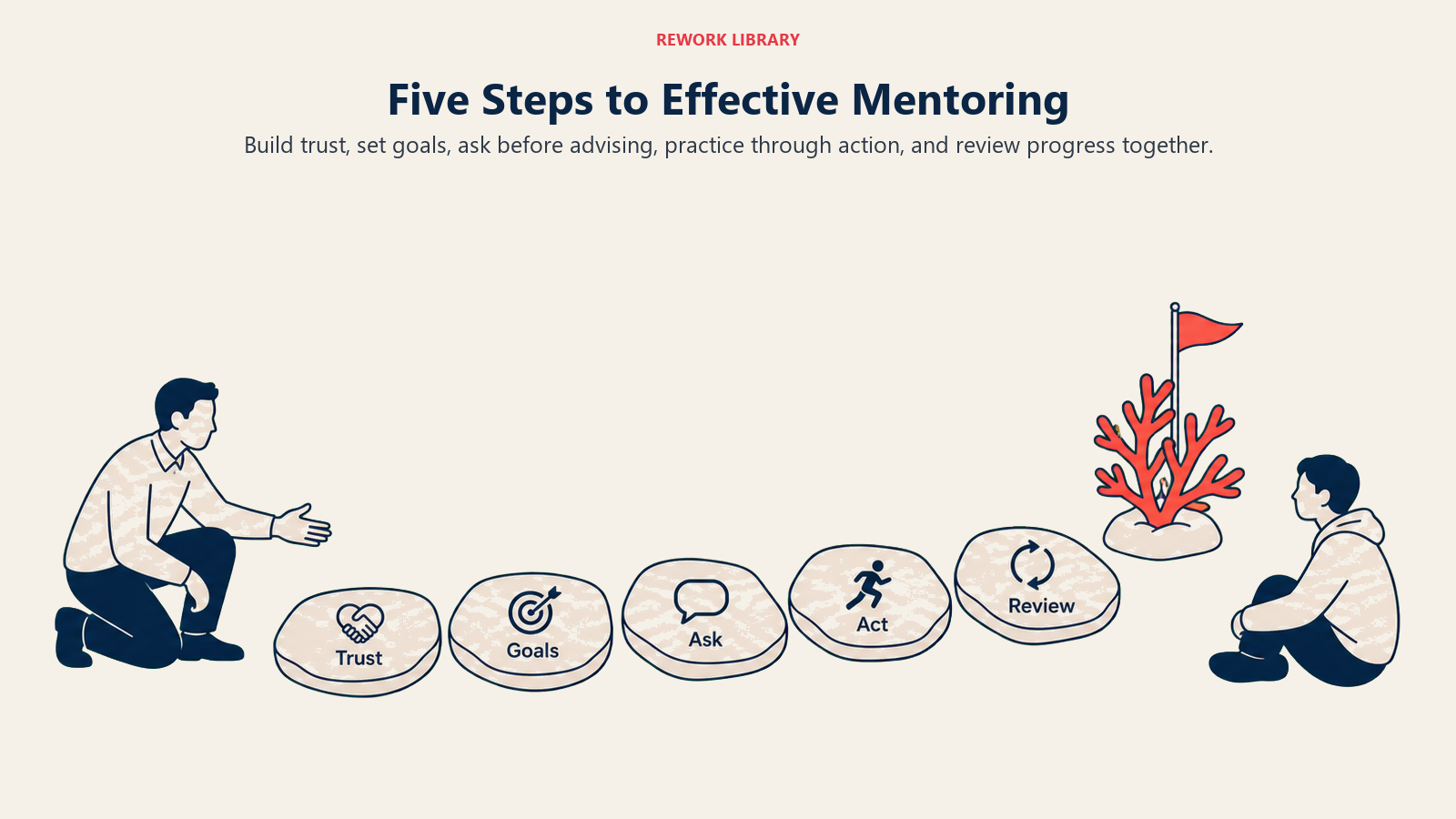
Langkah 1: Bina Kemesraan dan Wujudkan Kepercayaan
Tiada apa yang lain berfungsi tanpa ini. Dalam beberapa sesi pertama, fokus pada memahami latar belakang, motivasi, ketakutan, dan konteks mentee anda. Ajukan soalan terbuka. Kongsi bahagian cerita anda sendiri yang relevan, termasuk kegagalan. Matlamatnya adalah untuk mewujudkan hubungan di mana mentee berasa selamat untuk berkata "Saya tidak tahu" atau "Saya telah melakukan kesilapan."
Mendengar secara aktif adalah alat utama anda di sini. Tahan diri daripada mengisi kesunyian dengan segera. Biarkan mentee menjelaskan situasi mereka sepenuhnya sebelum anda bertindak balas.
Langkah 2: Tetapkan Matlamat dan Jangkaan Bersama dengan Jelas
Selepas dua atau tiga perbualan, duduk bersama dan cipta matlamat mentoring secara bersama. Apa yang ingin dicapai oleh mentee dalam tempoh 6-12 bulan akan datang? Kemahiran atau pengalaman apa yang mereka cuba bina? Bagaimana rupa kejayaan?
Tuliskan ini. Semak setiap beberapa bulan. Ini memberikan kedua-dua pihak titik rujukan bersama dan memudahkan untuk menyedari kemajuan sebenar.
Langkah 3: Gunakan Model GROW untuk Menstrukturkan Perbualan
Model GROW (Goal, Reality, Options, Way forward) adalah rangka kerja mudah yang dipinjam daripada coaching eksekutif yang berfungsi dengan indah dalam perbualan mentoring. Ia menghalang sesi daripada menjadi sembang yang kabur.
- Goal (Matlamat): Apa yang kita ingin fokuskan dalam perbualan ini?
- Reality (Realiti): Bagaimana situasi semasa? Apa yang sebenarnya berlaku?
- Options (Pilihan): Apakah pendekatan atau laluan yang mungkin?
- Way forward (Jalan ke hadapan): Apa yang akan dilakukan oleh mentee sebelum kali seterusnya?
Anda tidak perlu mengumumkan "kita kini melakukan GROW." Hanya hayati alirannya. Kebanyakan perbualan mentoring yang baik mengikuti arka ini secara semula jadi.
Di sinilah prinsip gaya kepimpinan coaching bertindih dengan mentoring. Banyak rangka kerja soalan boleh dipindahkan secara terus.
Langkah 4: Berikan Maklum Balas yang Jujur dan Spesifik
Maklum balas positif adalah mudah. Kerja yang lebih sukar adalah menunjukkan corak yang menghalang seseorang, dan melakukannya dengan cara yang mereka sebenarnya boleh dengar. Maklum balas yang berkesan dalam mentoring adalah spesifik ("Dalam cerita itu, anda terus mengelak sebelum membuat poin utama anda, adakah anda menyedarinya?"), bukan umum ("Anda perlu lebih yakin").
Ia juga berpandangan ke hadapan. Soalannya bukan hanya "apa yang salah" tetapi "apa yang akan anda lakukan secara berbeza?"
Mentor yang hebat menjadi contoh gaya komunikasi yang terus terang tanpa menjadi kasar. Dari masa ke masa, mentee menghayati standard ini tentang bagaimana rupa maklum balas yang sewajarnya.
Langkah 5: Galakkan Kemandirian, Bukan Kebergantungan
Ukuran muktamad kejayaan mentoring bukan betapa banyak mentee bergantung pada anda. Ia betapa sedikitnya. Mentor yang kukuh meraikan apabila mentee mereka mula menyelesaikan masalah yang pernah mereka bawa kepada mentor. Mereka secara aktif mendorong mentee ke arah pembelajaran berterusan dan pembangunan arah kendiri, bukan bimbingan yang berterusan.
Isyarat yang baik: apabila mentee mula membimbing orang lain. Itulah saat anda tahu hubungan itu telah melakukan tugasnya.
Contoh Mentoring
Mentoring kelihatan berbeza bergantung kepada konteks. Berikut adalah empat format dunia sebenar.
| Konteks | Rupa bentuknya | Cabaran utama |
|---|---|---|
| Mentoring onboarding pekerja baru | Pekerja kanan membimbing pekerja baru melalui budaya, peraturan tidak bertulis, projek pertama | Kelajuan lwn kedalaman: terlalu cepat dan ia membebankan |
| Mentoring kerjaya | Hubungan jangka panjang membantu seseorang mengemudi kenaikan pangkat, peralihan, atau kepimpinan kanan | Kekal relevan apabila konteks mentee berkembang |
| Mentoring terbalik | Pekerja junior membimbing orang kanan tentang teknologi, budaya, atau perspektif generasi baharu | Ego orang kanan: kesediaan untuk menjadi pelajar |
| Mentoring sesama rakan | Rakan sekerja pada peringkat yang serupa bertukar kemahiran dan maklum balas | Akauntabiliti: tiada hierarki formal untuk mempertahankannya |
Mentoring onboarding pekerja baru mungkin adalah varian dengan ROI tertinggi dalam kebanyakan organisasi. Seorang jurutera atau analis baru yang berhubung dengan mentor yang kukuh pada bulan pertama berkembang dua kali lebih cepat berbanding mereka yang dibiarkan memikirkan budaya berseorangan. Mentor tidak perlu menjadi pengurus langsung, malah sering lebih baik jika bukan.
Mentoring terbalik kurang digunakan. Seorang pengurus produk berusia 28 tahun mengetahui perkara tentang cara Gen Z berkomunikasi, cara alat AI digunakan di peringkat lapangan, dan apa yang dijangkakan oleh bakat daripada kerja yang seorang VP berusia 52 tahun benar-benar tidak tahu. Organisasi yang menubuhkan program mentoring terbalik formal menjadi lebih bijak dengan lebih cepat. Triknya adalah membantu pemimpin kanan melepaskan identiti "sentiasa menjadi pakar."
Mentoring sesama rakan berfungsi dengan baik dalam organisasi yang rata atau apabila hierarki formal mewujudkan masalah akses. Dua rakan sekerja boleh mengisi blind spot satu sama lain dengan cara yang tidak dapat dilakukan oleh mentoring atas-bawah. Ia memerlukan struktur yang eksplisit, kerana tanpa akauntabiliti, hubungan itu cenderung larut menjadi sembang mesra yang tidak ke mana-mana.
Amalan Terbaik dalam Mentoring
Beberapa prinsip yang berlaku merentasi semua format mentoring.
Berjumpa mengikut jadual mentee. Mereka lebih berkemungkinan datang bersedia dan terlibat apabila irama sesuai dengan kehidupan mereka, bukan hanya kehidupan anda.
Bertanya lebih banyak daripada memberitahu. Sasaran kasar: mentor harus mengajukan soalan 50-60% masa dalam mana-mana sesi yang diberikan. Jika anda mendapati diri anda bercakap lebih banyak daripada mentee, ada yang tidak kena.
Tepati setiap komitmen. Jika anda berkata anda akan membuat perkenalan atau menyemak kerja mereka, lakukan. Setiap janji yang dilanggar menghakis kepercayaan.
Tahu bila untuk merujuk ke tempat lain. Anda tidak boleh menjadi segalanya bagi pembangunan seseorang. Jika mentee memerlukan coaching tentang kemahiran tertentu yang tidak anda miliki, atau terapi untuk sesuatu yang di luar skop anda, katakan begitu. Menunjukkan mereka ke sumber yang betul adalah juga mentoring yang baik.
Semak semula hubungan secara berkala. Tanya secara langsung: adakah ini berfungsi untuk anda? Apa yang akan menjadikan sesi ini lebih berguna? Kebanyakan mentor tidak pernah bertanya ini, dan membuang berbulan-bulan pada sesi yang telah berhenti memberikan nilai.
Gunakan prinsip delegasi untuk mencabar mentee anda. Daripada sekadar memberi nasihat, cipta peluang sebenar: minta mereka memimpin inisiatif kecil, semak pembentangan mereka sebelum dibentangkan kepada kepimpinan, atau libatkan mereka dalam mesyuarat di atas peringkat biasa mereka. Pengalaman sebenar, dengan perbincangan tindak balas, mengatasi perbualan semata-mata.
Bina growth mindset dalam hubungan itu. Bingkai kemunduran sebagai data, bukan kegagalan. Hubungan mentor-mentee yang menganggap kesilapan sebagai maklumat menghasilkan profesional yang lebih berani dan belajar lebih cepat.
Bacaan Berkaitan

On this page
- Apakah Mentoring?
- Mentoring lwn Coaching lwn Menaja
- Mengapa Kemahiran Mentoring Penting
- Kesilapan Biasa dalam Mentoring
- Cara Menjadi Mentor yang Berkesan
- Langkah 1: Bina Kemesraan dan Wujudkan Kepercayaan
- Langkah 2: Tetapkan Matlamat dan Jangkaan Bersama dengan Jelas
- Langkah 3: Gunakan Model GROW untuk Menstrukturkan Perbualan
- Langkah 4: Berikan Maklum Balas yang Jujur dan Spesifik
- Langkah 5: Galakkan Kemandirian, Bukan Kebergantungan
- Contoh Mentoring
- Amalan Terbaik dalam Mentoring
- Bacaan Berkaitan