Penetapan Matlamat: Rangka Kerja dan Cara Melakukannya
Turn this article into takeaways for your work.


Each assistant summarizes the article only for you and suggests best practices for your work.
Penetapan matlamat adalah kemahiran yang membezakan orang yang membuat kemajuan dengan orang yang sentiasa sibuk tetapi tidak ke mana-mana. Kuasainya dan anda akan dapat merapatkan lebih banyak jurang antara di mana anda berada dan di mana anda ingin berada. Abaikannya dan anda akan terus menggantikan usaha dengan arah tuju.
Apakah Penetapan Matlamat?
Penetapan matlamat ialah proses mengenal pasti hasil tertentu yang ingin anda capai dan mewujudkan pelan yang disengajakan untuk mencapainya. Ia mengubah cita-cita yang kabur menjadi komitmen berstruktur dengan titik akhir yang boleh diukur.
Penyelidikan asas di sini ialah teori penetapan matlamat Locke dan Latham (1990), yang menunjukkan bahawa matlamat yang spesifik dan mencabar secara konsisten menghasilkan prestasi yang lebih tinggi berbanding yang kabur atau mudah. Kajian mereka menetapkan apa yang telah disahkan oleh para pengamal sejak itu: kejelasan dan komitmen memacu keputusan.
Fakta Utama: Penetapan Matlamat
- Pekerja yang menetapkan matlamat yang spesifik dan mencabar berprestasi 90% lebih baik secara purata berbanding mereka yang mempunyai matlamat kabur atau tiada matlamat langsung. (Locke dan Latham, "A Theory of Goal Setting and Task Performance," 1990)
- Orang yang menulis matlamat mereka 42% lebih berkemungkinan untuk mencapainya berbanding mereka yang hanya memikirkannya. (Dr. Gail Matthews, Dominican University, 2015)
- Hanya 14% pekerja sangat bersetuju bahawa prestasi mereka diuruskan dengan cara yang memotivasikan mereka untuk melakukan kerja yang cemerlang. (Gallup State of the American Workplace, 2023)
Perbandingan Rangka Kerja Penetapan Matlamat
Tiada satu rangka kerja yang betul. Yang sesuai bergantung kepada konteks anda, kematangan pasukan anda, dan garis masa yang terlibat.
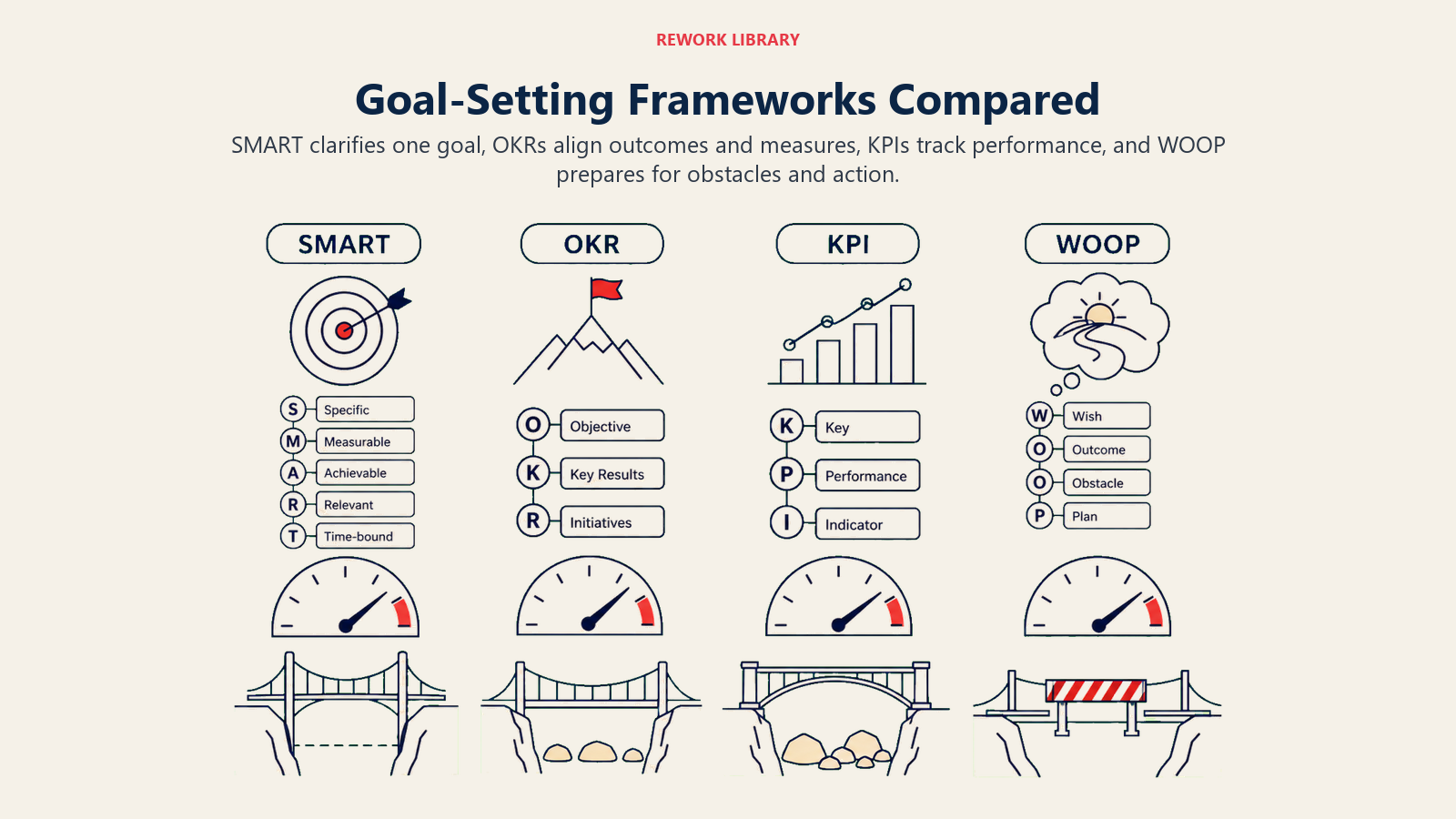
| Rangka Kerja | Apakah Ia | Terbaik Untuk | Perlu Diawasi |
|---|---|---|---|
| SMART goals | Matlamat yang Spesifik, Boleh Diukur, Boleh Dicapai, Relevan, dan Terikat Masa | Penilaian prestasi individu, pencapaian projek | Boleh mengecilkan pemikiran mencabar jika "Boleh Dicapai" ditafsirkan terlalu sempit |
| OKR | Objektif (matlamat kualitatif yang bercita-cita tinggi) dipasangkan dengan Keputusan Utama (hasil yang boleh diukur) | Penjajaran peringkat pasukan dan syarikat, organisasi bergerak pantas | Memerlukan sokongan budaya; gagal apabila digunakan sebagai senarai semak dari atas ke bawah dan bukannya dialog |
| WOOP | Wish (Harapan), Outcome (Hasil), Obstacle (Halangan), Plan (Pelan), satu pendekatan kontras mental | Perubahan tingkah laku, matlamat pembangunan peribadi | Kurang sesuai untuk objektif perniagaan berbilang orang |
| BHAG | Big Hairy Audacious Goal, bintang utara 10-25 tahun | Pembinaan visi dan budaya di peringkat organisasi | Terlalu jauh untuk pelaksanaan harian; memerlukan sub-matlamat untuk boleh diambil tindakan |
| MBO | Management by Objectives, matlamat yang dipersetujui antara pengurus dan pekerja | Kitaran prestasi tahunan, hierarki berstruktur | Beban pentadbiran yang berat; boleh menjadi birokrasi apabila terlalu banyak objektif |
Bagi penyumbang individu, SMART goals memberikan struktur yang baik. Pasukan dan jabatan sering mendapat lebih manfaat daripada OKR, terutamanya apabila penjajaran merentasi fungsi penting. WOOP kurang digunakan tetapi patut diketahui untuk tabiat peribadi di mana motivasi cenderung terhakis.
Mengapa Penetapan Matlamat Penting
Matlamat yang lebih jelas menghasilkan keputusan yang lebih baik. Itu bukan sekadar gerak rasa, ia adalah salah satu penemuan yang paling banyak direplikasikan dalam psikologi organisasi. Tetapi manfaatnya melangkaui prestasi mentah.
Fokus dan keutamaan. Apabila anda mempunyai matlamat yang dinyatakan, anda mempunyai penapis. Setiap permintaan, gangguan, atau projek baru dinilai berdasarkannya. Tanpa matlamat, semuanya kelihatan sama pentingnya. Dengan matlamat, pertimbangan nilai menjadi lebih mudah.
Motivasi. Cita-cita yang kabur tidak mendorong tingkah laku. Sasaran yang spesifik mendorongnya. Terdapat sesuatu yang berbeza secara psikologi antara "tingkatkan hasil" dan "tutup 12 akaun baru menjelang 30 September." Versi kedua mewujudkan rasa mendesak dan gambaran mental tentang kejayaan.
Akauntabiliti. Matlamat bertulis yang anda kongsi dengan orang lain mewujudkan komitmen sosial. Jauh lebih sukar untuk meninggalkan matlamat secara senyap yang diketahui oleh pengurus atau pasukan anda. Rasa tidak selesa yang ringan itu adalah ciri, bukan pepijat.
Pembelajaran. Matlamat memberikan sesuatu untuk diukur. Apabila anda terlepas, anda boleh bertanya mengapa. Apabila anda mencapainya, anda boleh bertanya apa yang berjaya. Tanpa matlamat, anda hanya mengumpulkan aktiviti tanpa wawasan.
Pemikiran strategik. Bagi pengurus dan eksekutif, penetapan matlamat adalah di mana strategi menjadi operasi. Ia memaksa soalan: apa yang cukup penting untuk dilabur masa dan sumber? Disiplin itu membina keupayaan untuk perancangan jangka lebih panjang.
Kesilapan Biasa dalam Penetapan Matlamat
Kebanyakan kegagalan penetapan matlamat boleh dikesan kepada satu set kesilapan berulang yang kecil.
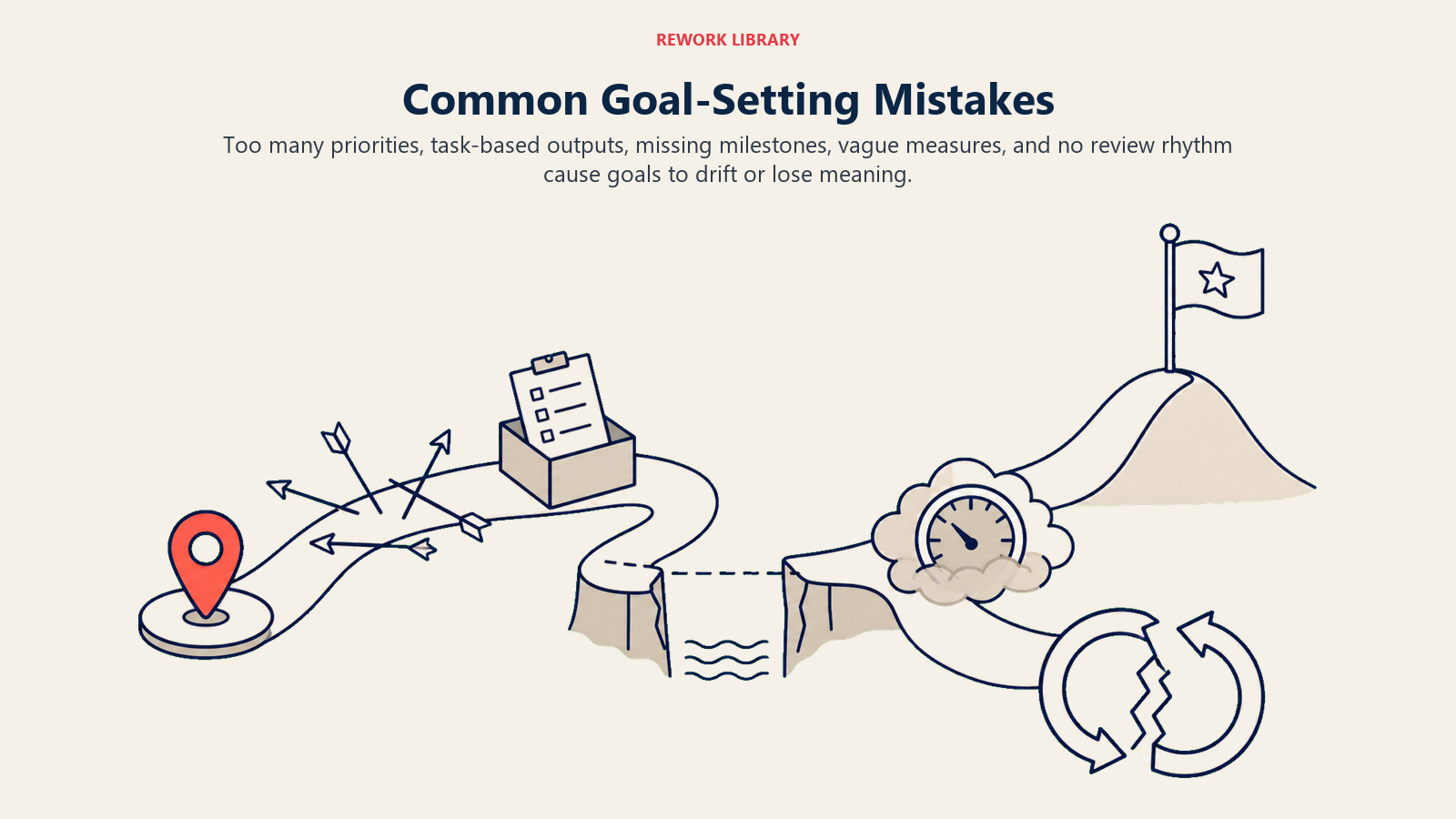
Menetapkan terlalu banyak matlamat. Jika semuanya adalah keutamaan, tiada apa yang menjadi keutamaan. Penyelidikan tentang perhatian dan daya tahan secara konsisten menunjukkan bahawa menyebarkan fokus merentasi banyak matlamat mengurangkan prestasi pada semua matlamat itu. Tiga hingga lima matlamat aktif adalah had yang munasabah bagi kebanyakan orang.
Matlamat yang merupakan output, bukan hasil. "Lancarkan proses onboarding baru" adalah output. "Kurangkan masa-ke-produktiviti bagi pekerja baharu sebanyak 30% dalam Q3" adalah hasil. Matlamat output adalah tugas yang disamarkan sebagai matlamat. Ia tidak memberitahu anda sama ada apa yang anda lakukan sebenarnya penting.
Tiada pencapaian perantaraan. Matlamat dengan tempoh enam bulan dan tiada pemeriksaan perantaraan adalah resipi untuk hanyut. Tanpa pencapaian, tarikh akhir terasa abstrak sehingga tiba-tiba sudah hampir. Ketika itu, pembetulan arah adalah mahal.
Melupakan "sebab." Matlamat yang ditetapkan daripada tekanan luar berbanding kejelasan dalaman cenderung kehilangan momentum. Apabila anda tidak dapat menghubungkan matlamat dengan sesuatu yang anda benar-benar peduli, hasil pasukan, hala tuju kerjaya, masalah pelanggan yang patut diselesaikan, motivasi menjadi rapuh.
Menetapkan matlamat secara berasingan. Matlamat individu yang bercanggah dengan matlamat pasukan mewujudkan geseran. Matlamat pasukan yang tidak sejajar dengan matlamat syarikat menghasilkan usaha yang tidak ke mana-mana. Penetapan matlamat paling berkuasa apabila ia merupakan perbualan menegak dan mendatar, bukan latihan berseorangan.
Menganggap matlamat sebagai tetap. Keadaan berubah. Matlamat yang ditetapkan pada bulan Januari mungkin tidak relevan pada bulan April. Kemelekatan yang tegar kepada matlamat asal apabila konteks telah berubah adalah satu jenis mod kegagalan yang berbeza daripada tidak menetapkan matlamat langsung.
Cara Menetapkan Matlamat
Langkah 1: Jelaskan Hasilnya
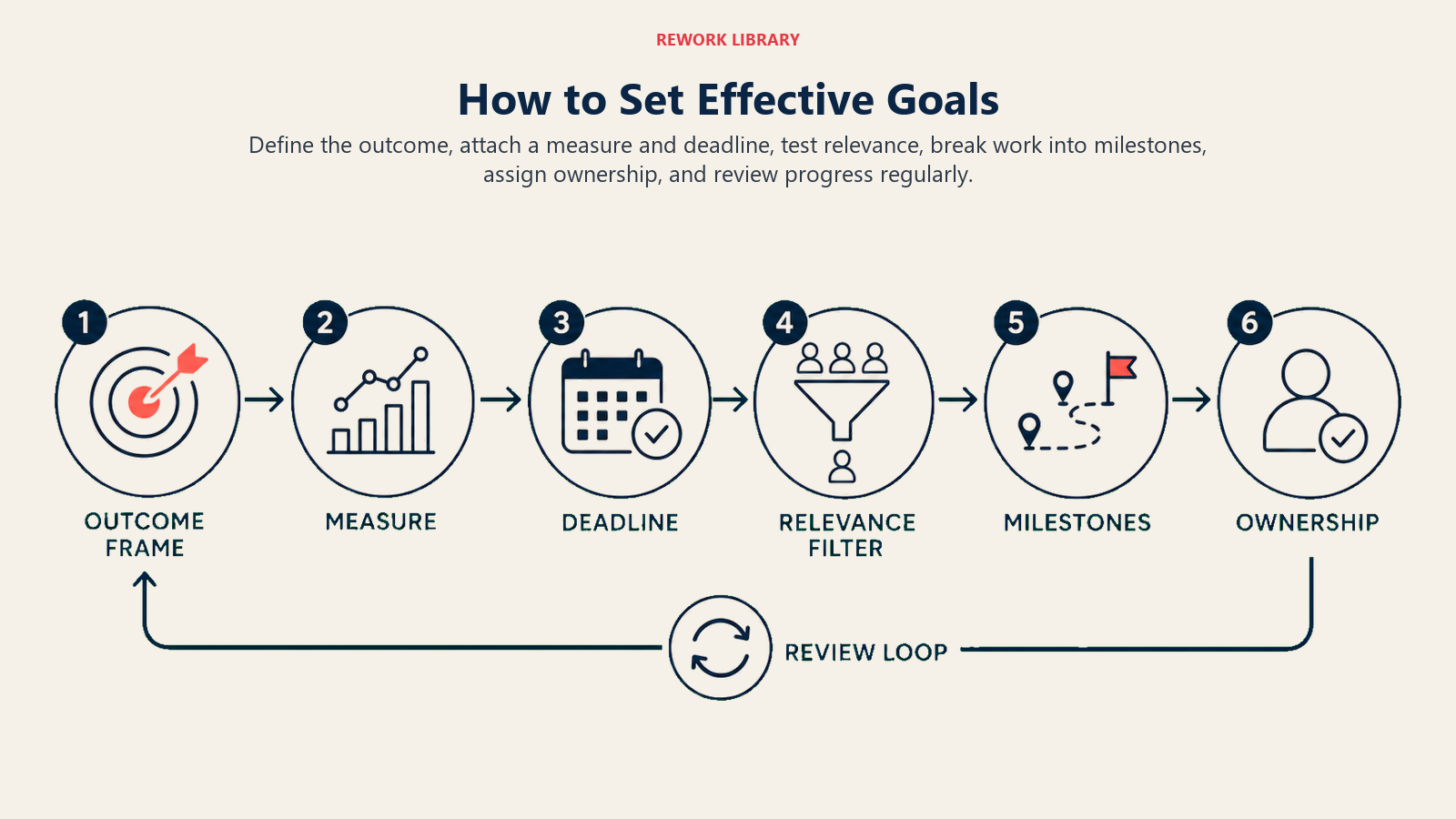
Sebelum apa-apa pun, dapatkan ketepatan tentang rupa "selesai" itu. Bukan "tingkatkan kepuasan pelanggan" tetapi "capai NPS 45 menjelang akhir Q2." Kekhususan itu memaksa anda untuk memikirkan apa maksud kejayaan sebenarnya dan mendedahkan andaian awal.
Tanya: Apa yang akan berubah apabila matlamat ini dicapai? Siapa yang akan menyedarinya? Bagaimana kita akan mengukurnya?
Langkah 2: Jadikannya SMART
Jalankan hasil anda melalui penapis SMART goals. Adakah ia cukup spesifik sehingga orang yang tidak mengenali anda boleh menilainya? Adakah terdapat metrik yang dilampirkan? Adakah garis masanya jelas? Adakah ia benar-benar berhubung dengan sesuatu yang penting bagi pasukan atau organisasi anda?
Langkah ini bukan tentang membuat matlamat menjadi kecil. Ia tentang menjadikannya cukup konkrit untuk diambil tindakan. Matlamat SMART masih boleh menjadi matlamat yang bercita-cita tinggi.
Langkah 3: Pecahkan kepada Pencapaian Perantaraan
Bahagikan matlamat kepada 3-5 titik pemeriksaan. Pencapaian perantaraan mempunyai dua tujuan: ia menjadikan kemajuan kelihatan, dan ia memberi amaran awal apabila anda berada di luar landasan. Matlamat jualan sebanyak 12 akaun baru menjelang Q3 menjadi lebih mudah diuruskan dengan pencapaian 4 menjelang akhir bulan pertama.
Pasangkan setiap pencapaian dengan penunjuk utama jika boleh. "4 akaun ditutup" adalah ukuran ketinggalan. "20 demo yang berkelayakan selesai" adalah ukuran pendahuluan. Menjejaki kedua-duanya memberikan anda lebih kawalan.
Langkah 4: Jejak Kemajuan Secara Konsisten
Pilih irama penjejakan yang sepadan dengan garis masa matlamat. Semakan mingguan berfungsi untuk kebanyakan matlamat individu dan pasukan. Semakan bulanan berfungsi untuk objektif yang mempunyai jangka masa lebih panjang. Intinya adalah keaturan, bukan kekerapan.
Pastikan penjejakan mudah. Dokumen bersama, penjejak projek, atau nota stand-up mingguan yang ringkas sudah mencukupi. Tabiat pengurusan masa penting di sini: jika penjejakan mengambil masa 30 minit, ia tidak akan berlaku. Jika ia mengambil masa 5 minit, ia akan berlaku.
Langkah 5: Semak dan Sesuaikan
Pada setiap pencapaian perantaraan, tanya dua soalan: Adakah kita masih mengejar matlamat yang betul? Dan adakah taktik semasa kita berfungsi?
Soalan pertama lebih sukar untuk dijawab dengan jujur. Tetapi matlamat yang masuk akal tiga bulan lalu mungkin telah diatasi oleh keutamaan yang berubah. Menyesuaikan diri bukanlah kegagalan, ia adalah pertimbangan yang baik. Kesedaran diri dan refleksi yang jujur menjadikan langkah ini mungkin dilakukan.
Contoh Penetapan Matlamat
Matlamat sebenar kelihatan berbeza bergantung kepada konteks. Berikut adalah contoh konkrit merentasi situasi biasa.

| Konteks | Matlamat yang kabur | Matlamat yang dirangka dengan baik |
|---|---|---|
| Prestasi individu | "Jadi lebih baik dalam pembentangan" | "Sampaikan 3 pembentangan dalaman menjelang akhir Q2; kumpul maklum balas rakan selepas setiap satu dan skor 4+/5 dalam kejelasan menjelang yang ketiga" |
| Pasukan | "Tingkatkan masa respons" | "Kurangkan purata masa respons pertama sokongan pelanggan daripada 18 jam kepada 6 jam menjelang 1 Ogos" |
| Jualan | "Capai kuota" | "Tutup $480K dalam ARR baharu suku ini, dengan 40% daripada segmen pasaran pertengahan dan sekurang-kurangnya 8 logo baru bersih" |
| Pembangunan peribadi | "Baca lebih banyak" | "Baca 12 buku perniagaan tahun ini, satu sebulan, dan tulis refleksi 200 patah perkataan untuk setiap satu" |
Perhatikan bahawa versi yang dirangka dengan baik semuanya berkongsi corak yang sama: nombor yang spesifik, tarikh akhir yang jelas, dan konteks yang cukup untuk mengetahui rupa kejayaan.
Bagi pengurus yang menyemak subordinat langsung, soalan yang betul bukan "apa yang anda ingin capai?" Ia adalah "apa yang akan berubah secara nyata dalam tempoh enam bulan dari sekarang jika ini berjalan dengan baik?" Pembingkaian itu menggali hasil konkrit berbanding cita-cita semata-mata.
Amalan Terbaik
Lakukan ini:
- Tulis matlamat anda. Ini kelihatan jelas tetapi kebanyakan orang tidak berbuat demikian. Matlamat bertulis mewujudkan komitmen, artifak yang boleh dikongsi, dan rekod untuk disemak.
- Kongsi matlamat dengan sekurang-kurangnya satu orang lain, pengurus, rakan sekerja, atau ahli pasukan. Komitmen sosial adalah pemacu prestasi yang tulen.
- Bezakan antara matlamat mencabar (di mana anda membidik tinggi dan mungkin terlepas) dan matlamat komitmen (di mana terlepas mempunyai akibat sebenar). Layani kedua-duanya secara berbeza.
- Hubungkan matlamat individu kepada matlamat pasukan atau organisasi secara eksplisit. "Matlamat ini penting kerana ia menyumbang kepada X" mengukuhkan motivasi dan penjajaran.
- Jadualkan tarikh semakan apabila anda menetapkan matlamat, bukan kemudian. Jika ia tidak ada dalam kalendar, ia tidak akan berlaku.
Elakkan ini:
- Menetapkan matlamat di bawah tekanan dan kemudian melupakannya sehingga musim penilaian tiba. Penetapan matlamat tanpa tindakan susulan adalah lebih buruk daripada tiada penetapan matlamat, ia menghakis kepercayaan dan kredibiliti.
- Menjadikan matlamat terlalu bercita-cita tinggi sehingga menjadi demotivasi. Cabaran adalah baik. Mustahil adalah melumpuhkan.
- Menyimpan matlamat secara peribadi sepenuhnya. Akauntabiliti senyap adalah akauntabiliti yang lemah.
- Mencampurkan matlamat aktiviti (hadiri 10 sesi latihan) dengan matlamat hasil (tunjukkan kemahiran dalam tiga projek sebenar). Aktiviti tanpa hasil hanyalah gerakan semata-mata.
Soalan Lazim
Bagaimana penetapan matlamat berbeza daripada perancangan?
Perancangan adalah peta jalan. Penetapan matlamat adalah memutuskan destinasi. Anda boleh merancang secara terperinci untuk matlamat yang anda pilih dengan buruk, dan tiba di suatu tempat yang tidak penting. Penetapan matlamat datang dahulu; perancangan datang selepas itu. Anggap matlamat sebagai "apa" dan perancangan sebagai "bagaimana."
Berapa banyak matlamat yang patut saya miliki sekaligus?
Kebanyakan pengamal dan penyelidik mencadangkan 3-5 matlamat aktif untuk individu, dan tidak lebih daripada 3-4 keputusan utama bagi setiap objektif jika anda menggunakan OKR. Lebih daripada itu dan anda mencairkan fokus. Lebih sedikit juga boleh berfungsi, satu matlamat yang dipilih dengan baik dan dilaksanakan dengan baik lebih baik daripada lima matlamat yang dikejar separuh hati.
Apa perbezaan antara matlamat dan KPI?
KPI (Key Performance Indicator) adalah metrik yang anda jejak secara berterusan. Matlamat mempunyai titik akhir, suatu perubahan spesifik yang anda cuba capai pada masa tertentu. KPI memberitahu anda bagaimana sesuatu proses berjalan. Matlamat memberitahu anda ke mana anda cuba pergi. Kedua-duanya berfungsi bersama: sebuah matlamat mungkin adalah untuk menolak KPI dari satu ambang kepada yang lain.
Bagaimana jika keadaan saya berubah di tengah-tengah matlamat?
Sesuaikan matlamat. Keadaan berubah, keutamaan perniagaan beralih, pasaran bergerak, struktur pasukan berubah. Tujuan penetapan matlamat adalah untuk berkhidmat kepada hasil anda, bukan untuk mengunci anda dalam komitmen yang dibuat dengan maklumat semalam. Dokumentasikan perubahan dan sebabnya. Tabiat itu membina pembelajaran institusi dari masa ke masa.
Bagaimana saya menetapkan matlamat yang benar-benar memotivasikan saya, bukan sekadar matlamat yang saya rasa patut ada?
Gali lebih dalam pada "sebab." Tanya diri anda apa yang anda peduli dalam peranan ini, jenis profesional apa yang anda ingin jadi dalam tempoh 12 bulan, dan masalah apa yang anda dapati benar-benar menarik. Matlamat yang berhubung dengan motivasi intrinsik, pertumbuhan, penguasaan, sumbangan, autonomi, cenderung bertahan melalui halangan pertama. Matlamat yang ditetapkan daripada kewajipan cenderung tidak bertahan.
Penetapan matlamat bukanlah ritual setahun sekali atau borang yang perlu diisi sebelum penilaian anda. Ia adalah amalan harian untuk memutuskan apa yang penting dan mengarahkan tenaga anda ke sana. Dapatkannya dengan betul dan segalanya yang lain, pelaksanaan, kerjasama, pemikiran strategik, menjadi lebih mudah. Mulakan dengan mudah: pilih satu hasil yang bermakna, tuliskannya bersama tarikh akhir, dan kongsi dengan seseorang. Selebihnya mengikut dari situ.
Bacaan Berkaitan
- Akauntabiliti: Mengambil Tanggungjawab untuk Keputusan
- Pengurusan Masa: Kemahiran dan Teknik
- Pemikiran Strategik: Cara Berfikir Lebih Besar
- Kesedaran Diri: Mengenali Diri Anda di Tempat Kerja
- Rangka Kerja OKR: Objektif dan Keputusan Utama
- Mentoring: Cara Menjadi Mentor yang Berkesan
- Memberi Maklum Balas: Model dan Contoh

On this page
- Apakah Penetapan Matlamat?
- Perbandingan Rangka Kerja Penetapan Matlamat
- Mengapa Penetapan Matlamat Penting
- Kesilapan Biasa dalam Penetapan Matlamat
- Cara Menetapkan Matlamat
- Langkah 1: Jelaskan Hasilnya
- Langkah 2: Jadikannya SMART
- Langkah 3: Pecahkan kepada Pencapaian Perantaraan
- Langkah 4: Jejak Kemajuan Secara Konsisten
- Langkah 5: Semak dan Sesuaikan
- Contoh Penetapan Matlamat
- Amalan Terbaik
- Bacaan Berkaitan