Disiplin Diri: Cara Membinanya di Tempat Kerja
Turn this article into takeaways for your work.


Each assistant summarizes the article only for you and suggests best practices for your work.
Disiplin diri adalah apa yang memastikan anda terus memberikan hasil apabila tiada suasana hati, tarikh akhir, atau pengurus yang mendorong anda. Ia berada di teras setiap profesional berprestasi tinggi: bukan kerana mereka berasa ingin bekerja, tetapi kerana mereka telah membina sistem yang menjadikan kerja sebagai laluan yang paling mudah.
Apakah Disiplin Diri?
Disiplin diri adalah keupayaan untuk mengawal dorongan, emosi, dan tingkah laku anda supaya anda mengambil tindakan yang konsisten ke arah matlamat anda, tanpa mengira perasaan anda pada saat itu. Ia bukan tentang memaksa diri melalui kekuatan mental semata-mata setiap pagi. Ia tentang mereka bentuk persekitaran, tabiat, dan peraturan anda supaya tindakan yang betul adalah yang paling mudah.
Seorang profesional yang berdisiplin diri menyiapkan kerja tepat pada masanya walaupun projek itu membosankan. Mereka kekal fokus semasa blok kerja mendalam walaupun gangguan tersedia. Dan mereka terus hadir pada tahap kualiti yang sama pada Isnin pagi dan Jumaat petang.
Fakta Utama: Disiplin Diri
- Kajian yang diterbitkan dalam Psychological Science mendapati bahawa orang yang mempunyai kawalan diri yang tinggi menggunakan lebih sedikit usaha untuk menentang godaan kerana mereka menstrukturkan kehidupan mereka untuk menghadapi lebih sedikit situasi yang menggoda.
- Penyelidikan oleh Wilhelm Hofmann dan rakan-rakan, yang diterbitkan dalam Journal of Personality, mendapati bahawa individu yang melaporkan kawalan diri trait yang lebih tinggi lebih berpuas hati dengan kehidupan mereka dan mengalami kurang tekanan di tempat kerja, sebahagian besarnya kerana mereka bergantung pada tabiat berbanding keputusan semasa.
- Penyelidikan tabiat Charles Duhigg, yang disintesiskan dalam The Power of Habit, mendokumentasikan bahawa rutin berasaskan tabiat boleh mengurangkan beban kognitif keputusan berulang sehingga 40%, membebaskan tenaga mental untuk penyelesaian masalah yang kompleks.
Disiplin Diri berbanding Motivasi berbanding Kekuatan Kehendak
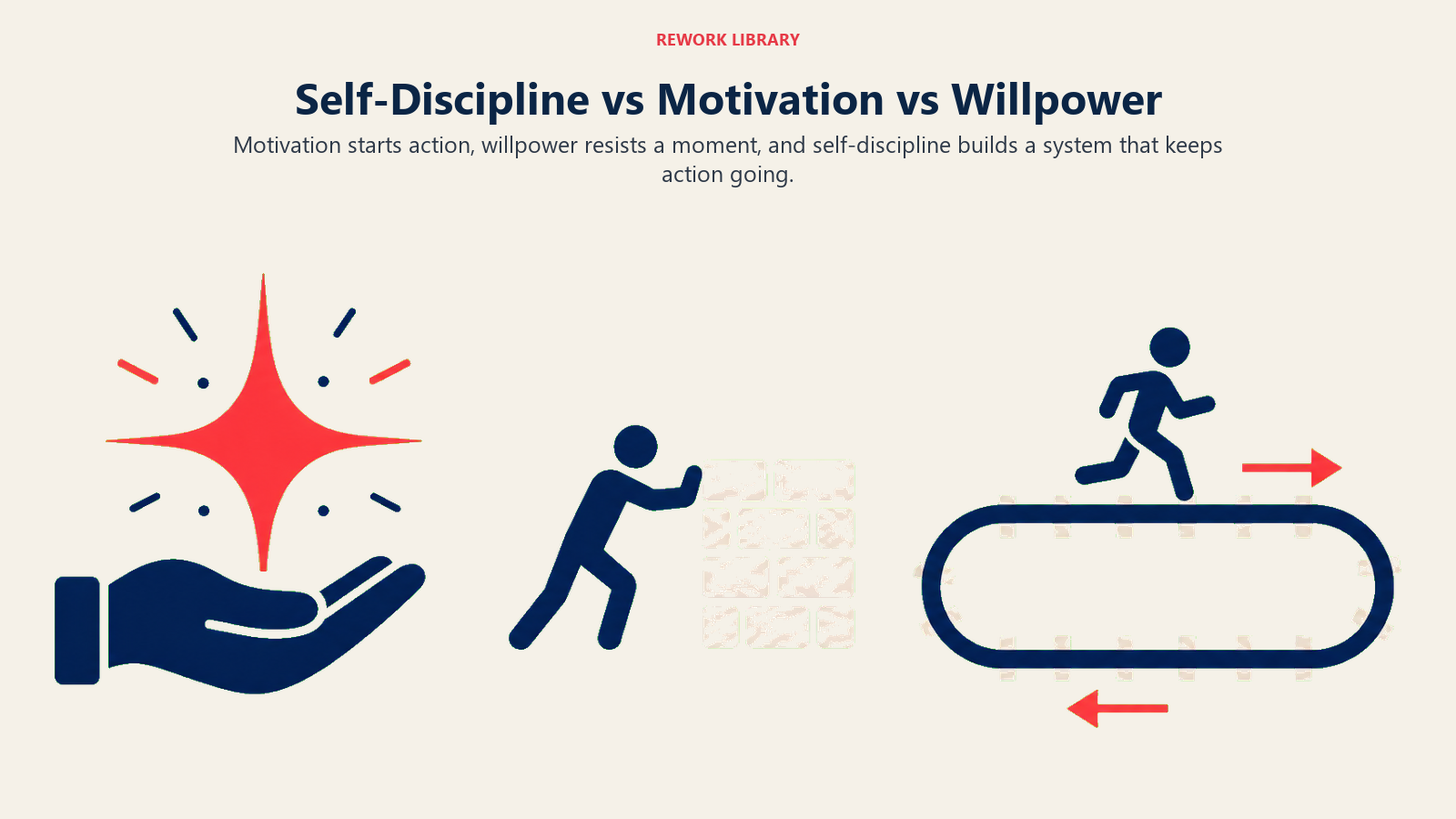
Ketiga-tiga istilah ini sering digunakan secara bergantian, tetapi cara kerjanya sangat berbeza. Mengelirukan ketiganya adalah salah satu sebab kenapa begitu banyak usaha peningkatan diri terhenti.
| Konsep | Apakah ia | Boleh dipercayai? | Dibina atas |
|---|---|---|---|
| Motivasi | Keinginan atau dorongan emosi untuk memulakan atau meneruskan tugas | Tidak, turun naik setiap hari | Suasana hati, persekitaran, kelaziman |
| Kekuatan kehendak | Tenaga mental yang digunakan untuk mengatasi dorongan atau menentang godaan | Tidak, habis apabila digunakan | Sumber kognitif yang terhad |
| Disiplin diri | Sistem dan tabiat yang menghasilkan tindakan tanpa mengira perasaan anda | Ya, berkembang dengan amalan | Struktur, rutin, reka bentuk |
Pengajaran praktikal: motivasi memulakan anda, kekuatan kehendak mungkin membawa anda melalui fasa yang sukar, tetapi disiplin diri adalah satu-satunya yang boleh diperluaskan. Anda tidak boleh bergantung pada rasa bermotivasi, dan anda tidak boleh menghabiskan kekuatan kehendak tanpa henti. Tetapi anda boleh membina sistem yang berjalan sama ada anda berasa suka atau tidak.
Inilah sebabnya mengapa motivasi diri dan disiplin diri adalah kompetensi yang berkaitan tetapi berbeza. Motivasi adalah bahan bakar. Disiplin adalah enjin. Anda memerlukan kedua-duanya, tetapi disiplinlah yang tidak habis.
Mengapa Disiplin Diri Penting di Tempat Kerja
Prestasi yang konsisten adalah jarang. Kebanyakan profesional berayun: output cemerlang pada satu minggu, bersepah dan reaktif pada minggu berikutnya. Disiplin diri adalah apa yang menutup jurang itu.
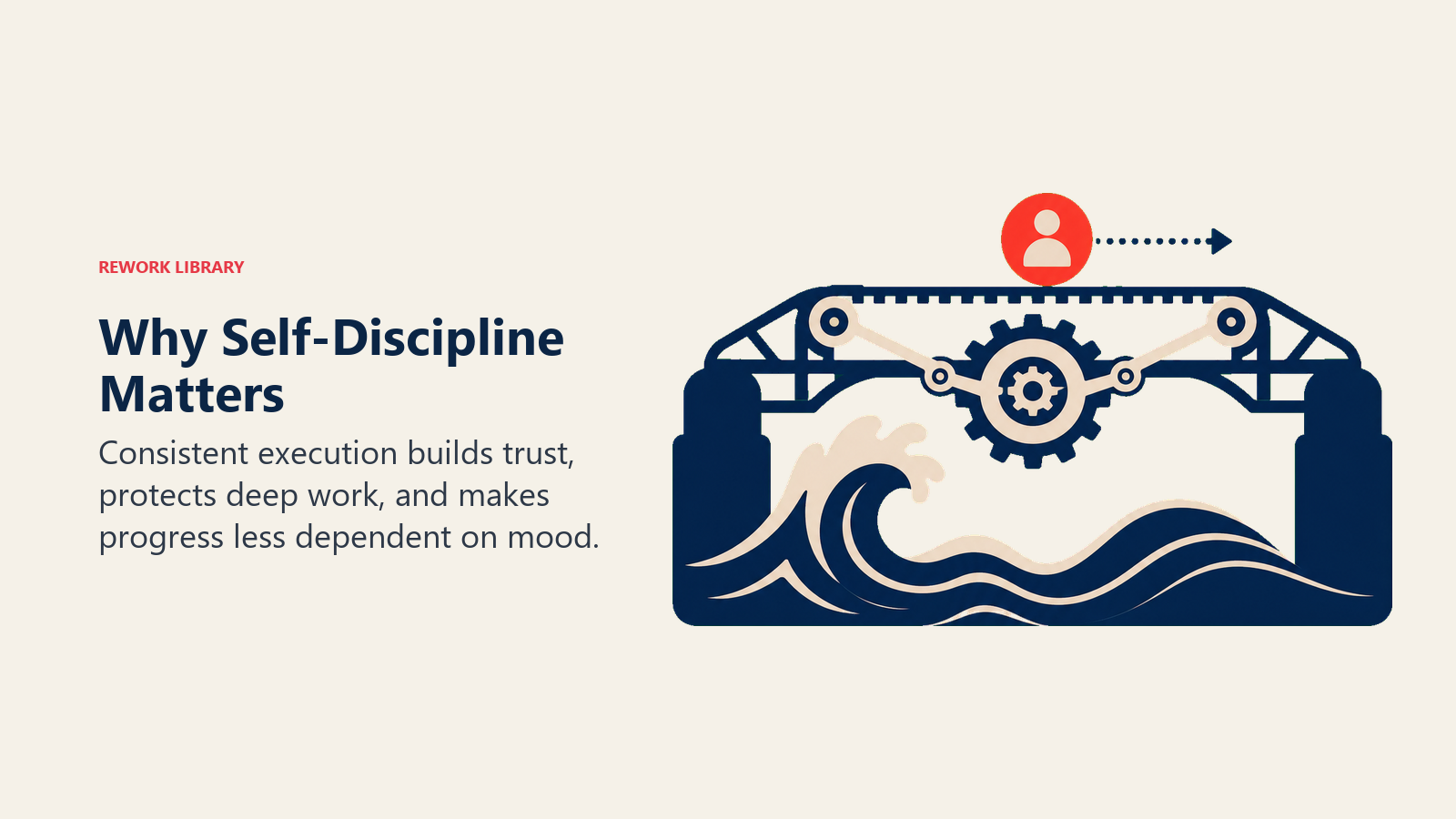
Bagi individu, disiplin diri membina salah satu aset kerjaya yang paling berharga: reputasi kebolehpercayaan. Apabila pengurus anda tahu anda akan menyelesaikan apa yang anda mulakan, menyampaikan sekatan lebih awal, dan mengekalkan kualiti tanpa peringatan, anda adalah orang yang mendapat autonomi, projek menarik, dan peluang kemajuan. Etika kerja dan disiplin diri saling memperkukuh secara langsung.
Bagi pasukan, budaya disiplin diri mengurangkan beban penyeliaan dengan ketara. Lebih sedikit mesyuarat status. Lebih sedikit e-mel susulan. Lebih banyak kepercayaan, lebih banyak pendelegasian, dan pelaksanaan yang lebih pantas pada kerja yang kompleks. Itu bukan kebetulan. Ia adalah hasil semula jadi orang-orang yang mengurus diri mereka sendiri.
Disiplin diri juga terserlah dalam cara orang menangani tekanan. Profesional yang mempunyai disiplin diri yang kukuh tidak menghapuskan tekanan, tetapi mereka bertindak balas terhadapnya dengan struktur berbanding reaktiviti. Itulah sebabnya ia berkait rapat dengan pengurusan tekanan: apabila anda mempunyai rutin lalai yang ada, minggu yang tertekan tidak memesongkan output anda dengan mudah.
Dan dari perspektif akauntabiliti, disiplin diri adalah apa yang menjadikan pemilikan itu nyata. Sesiapa sahaja boleh berkata mereka memiliki sesuatu hasil. Orang yang berdisiplin diri benar-benar menepatinya.
Ciri-ciri Orang yang Berdisiplin Diri
Disiplin diri terserlah dalam corak yang boleh dikenali. Ini adalah ciri-ciri yang anda akan lihat pada orang yang melaksanakan tugas secara konsisten dari masa ke masa.

| Ciri | Apa yang kelihatan dalam praktik |
|---|---|
| Fokus | Bekerja dalam blok yang berterusan tanpa multitasking yang berpecah. Menutup tab. Memperlahankan pemberitahuan semasa kerja mendalam. |
| Didorong tabiat | Tidak bergantung pada inspirasi untuk memulakan. Mempunyai rutin lalai untuk kerja berulang. Persediaan pagi, penutupan hujung hari, sesi perancangan. |
| Menangguhkan kepuasan | Menyelesaikan perkara yang susah sebelum yang mudah. Tidak memeriksa e-mel sebelum menyelesaikan kerja berkeutamaan. |
| Menepati janji | Menyiapkan tugas yang dimulakan. Tidak meninggalkan jejak projek separuh siap sepanjang suku tahun. |
| Standard yang konsisten | Memberikan perhatian yang sama pada tugas Selasa petang seperti pada hasil kerja yang mendapat perhatian tinggi. Kualiti tidak berubah mengikut seberapa menariknya kerja itu. |
| Reka bentuk persekitaran | Secara aktif mengurangkan geseran untuk tingkah laku yang betul. Menstrukturkan ruang kerja, jadual, dan alatan untuk menjadikan fokus sebagai pilihan lalai. |
Cara Membina Disiplin Diri
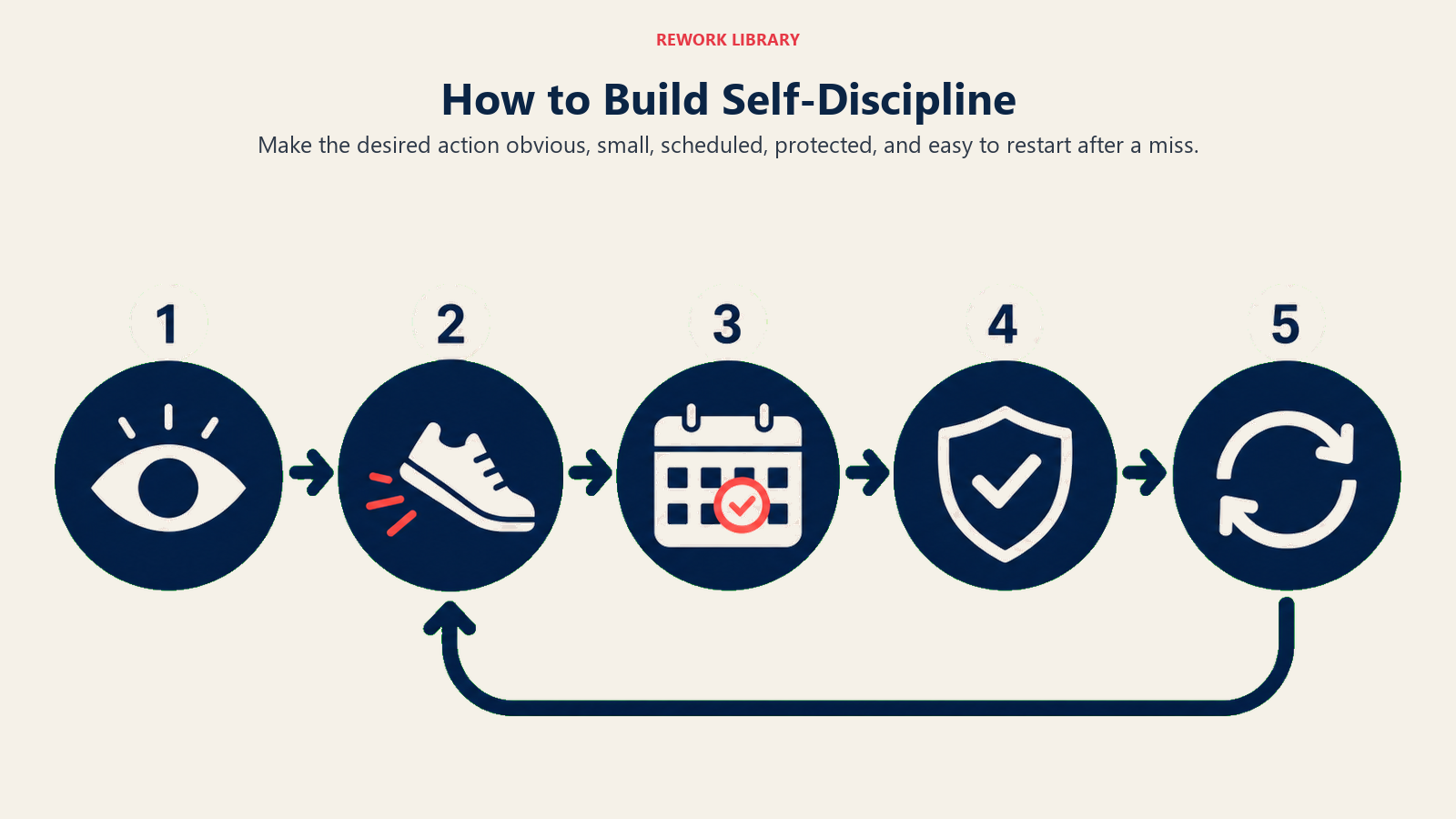
Membina disiplin diri bukan soal memutuskan untuk berusaha lebih keras. Ia soal membina struktur yang betul. Berikut adalah urutan yang berkesan.
Langkah 1: Tetapkan Peraturan Peribadi yang Jelas
Kekaburan adalah musuh disiplin. "Saya akan mengerjakan laporan apabila ada masa" tidak menghasilkan apa-apa. "Saya mengerjakan laporan dari 9:00 hingga 10:30 setiap pagi sebelum memeriksa e-mel" menghasilkan keputusan. Peraturan yang jelas dan spesifik menghapuskan rundingan harian dengan diri sendiri tentang masa untuk memulakan.
Padankan ini dengan rangka kerja pengurusan masa yang menyekat kalendar anda terlebih dahulu.
Langkah 2: Reka Bentuk Persekitaran Anda
Profesional yang paling berdisiplin tidak berjuang menentang godaan. Mereka menyingkirkannya. Telefon di dalam laci semasa kerja mendalam. Sambungan pelayar yang menyekat laman web yang mengganggu semasa waktu kerja. Meja yang bersih sebelum sesi fokus. Persekitaran anda membentuk tingkah laku anda lebih daripada niat anda.
Langkah 3: Bina Tabiat dan Rutin
Tabiat memindah tugasan membuat keputusan kepada sesuatu yang automatik. Apabila anda mempunyai rutin pagi yang konsisten, anda tidak menghabiskan tenaga untuk memutuskan cara memulakan hari. Anda hanya melaksanakan. Mulakan dengan satu tabiat sauh: masa mula yang tetap, ritual perancangan harian, atau ulasan hujung hari yang konsisten. Tambah lapisan dari situ.
Langkah 4: Gunakan Pengeblokan Masa
Peruntukkan setiap kategori kerja kepada tetingkap tertentu dalam kalendar anda. Kerja mendalam pada waktu pagi. Mesyuarat pada waktu petang. Tugas pentadbiran dalam slot fokus yang singkat. Pengeblokan masa mengubah niat yang kabur kepada komitmen yang konkrit. Ia juga mendedahkan apabila jadual anda terlalu penuh, memaksa pertukaran yang jujur.
Langkah 5: Singkirkan Godaan daripada Persekitaran
Jika anda memeriksa telefon secara kompulsif, tinggalkan ia di bilik lain. Jika anda melayari internet apabila tersekat, gunakan pemblok laman. Jika anda makan snek apabila bosan, jangan simpan snek dalam jangkauan di meja anda. Setiap godaan yang anda singkirkan adalah satu tempat kurang di mana kekuatan kehendak dihabiskan.
Langkah 6: Jejaki dan Beri Ganjaran
Gelung maklum balas yang singkat membina disiplin lebih cepat daripada yang panjang. Jejak pelaksanaan harian anda berbanding rancangan anda. Senarai semak yang ringkas sudah cukup. Apabila anda menyelesaikan rancangan anda, akui pencapaian itu. Ganjaran tidak perlu rumit. Ia hanya perlu cukup segera untuk mengukuhkan tingkah laku.
Teknik Disiplin Diri yang Berkesan
Di luar langkah-langkah asas, teknik-teknik khusus ini mempunyai bukti yang kukuh di belakangnya dan mudah dilaksanakan dengan segera.
Penggabungan godaan. Padankan sesuatu yang anda ingin lakukan dengan sesuatu yang perlu anda lakukan. Dengar podcast kegemaran anda hanya semasa sesi fokus mendalam. Bekerja dari kedai kopi yang anda suka apabila menangani hasil kerja yang sukar. Ganjaran itu bersama-sama dengan tingkah laku.
Peraturan 2 minit. Jika sesuatu tugas mengambil masa kurang daripada dua minit, lakukan sekarang. Jika ia mengambil masa lebih lama, jadualkan dengan slot masa yang spesifik. Ini mengelakkan tugas-tugas kecil daripada bertimbun menjadi tunggakan kognitif yang menguras tenaga tanpa menghasilkan output.
Niat pelaksanaan. Gantikan matlamat yang kabur dengan komitmen "apabila-maka" yang spesifik: "Apabila saya duduk di meja pada pukul 8:45, maka saya akan membuka fail projek sebelum melakukan apa-apa yang lain." Penyelidikan oleh Peter Gollwitzer menunjukkan bahawa niat pelaksanaan lebih daripada menggandakan kadar penepatan berbanding penetapan matlamat sahaja.
Peraturan 5 saat. Apabila anda merasai dorongan untuk mengelakkan memulakan sesuatu tugas, kira mundur dari 5 dan bergerak secara fizikal ke arah memulakannya. Kiraan mundur itu memutuskan corak penghindaran sebelum ia menjadi inersia. Kedengaran mudah. Ia berjaya kerana memulakan hampir selalu merupakan bahagian yang paling sukar.
Perangkap Biasa
Walaupun orang yang komited untuk membina disiplin diri menghadapi halangan yang sama.
Bergantung semata-mata pada kekuatan kehendak. Kekuatan kehendak adalah sumber yang terhad. Strategi yang bergantung sepenuhnya padanya, "Saya akan memaksa diri untuk melakukannya," cenderung berjaya pada awal hari dan gagal menjelang pukul 3 petang. Bina sistem yang berfungsi tanpa memerlukan usaha mental yang berterusan.
Pemikiran semua atau tiada. Terlepas satu hari, satu rutin, atau satu blok bukan bermakna sistem itu rosak. Orang yang mempunyai disiplin diri yang kukuh terlepas sesi. Perbezaannya ialah mereka tidak membiarkan satu kegagalan menjadi corak. Mereka kembali kepada sistem pada hari berikutnya tanpa berputar asa.
Menetapkan jangkaan yang tidak realistik di awal. Memulakan dengan blok kerja mendalam 5 jam apabila garis dasar semasa anda adalah 45 minit mencipta jurang yang melemahkan semangat. Binalah secara beransur-ansur. Disiplin yang berterusan tumbuh daripada kemenangan kecil yang berulang, bukan sprint yang heroik.
Mengabaikan pemulihan. Disiplin diri bukan sama dengan bekerja 14 jam sehari. Rehat dan ruang adalah keperluan struktur untuk prestasi yang berterusan, bukan ganjaran kerana selesai. Binakan ia ke dalam sistem anda secara sengaja.
Soalan Lazim
Adakah disiplin diri satu kemahiran atau ciri personaliti?
Ia adalah kemahiran. Penyelidikan secara konsisten menunjukkan bahawa disiplin diri boleh dikembangkan melalui amalan yang disengajakan, reka bentuk tabiat, dan perubahan persekitaran. Ia mempunyai komponen genetik seperti kebanyakan ciri, tetapi komponen itu tidak menentukan had anda. Orang secara nyata meningkatkan disiplin diri mereka dari masa ke masa.
Bagaimana disiplin diri berbeza daripada motivasi?
Motivasi adalah keinginan untuk melakukan sesuatu. Disiplin diri adalah sistem yang membuatkan anda melakukannya sama ada keinginan itu ada atau tidak. Motivasi turun naik berdasarkan suasana hati, tenaga, kelaziman, dan keadaan. Disiplin diri direka bentuk untuk beroperasi apabila motivasi tiada. Lihat jadual perbandingan dalam bahagian di atas.
Bolehkah anda mempunyai terlalu banyak disiplin diri?
Ya. Ketegaran, kesempurnaan, dan ketidakupayaan untuk menyesuaikan diri adalah tanda-tanda bahawa disiplin telah menjadi tidak produktif. Disiplin diri yang sihat termasuk mengetahui bila untuk menyimpang daripada rancangan, berehat, atau menukar arah. Matlamatnya adalah prestasi yang berterusan dan konsisten, bukan ketaatan yang robotik kepada jadual tanpa mengira keadaan.
Berapa lama masa yang diperlukan untuk membina disiplin diri?
Penyelidikan tabiat mencadangkan bahawa rutin baharu mengambil masa antara 18 hingga 254 hari untuk menjadi automatik, dengan median sekitar 66 hari. Tetapi anda tidak memerlukan tabiat yang sepenuhnya automatik untuk melihat manfaatnya. Malah rutin yang disengajakan dan memerlukan usaha yang diamalkan selama beberapa minggu menghasilkan penepatan yang ketara lebih baik berbanding bergantung pada kekuatan kehendak atau motivasi sahaja.
Adakah disiplin diri sama dengan kawalan diri?
Keduanya berkait rapat tetapi tidak sama. Kawalan diri adalah keupayaan semasa untuk mengatasi dorongan. Disiplin diri adalah sistem tabiat, peraturan, dan reka bentuk persekitaran yang lebih luas yang mengurangkan keperluan untuk kawalan diri. Orang yang mempunyai disiplin diri yang tinggi bukan bermakna mereka menang dalam lebih banyak pertempuran melawan godaan. Mereka mengatur kehidupan mereka supaya lebih sedikit pertempuran seperti itu berlaku. Disiplin diri adalah kemahiran yang anda bina melalui reka bentuk, bukan ciri yang anda ada atau tidak ada. Mulakan dengan satu peraturan yang jelas, satu blok masa yang dilindungi, dan satu gangguan yang disingkirkan. Jalankan sistem itu selama sebulan. Anda akan mempunyai asas yang bernilai untuk dibangunkan.
Bacaan Berkaitan

On this page
- Apakah Disiplin Diri?
- Disiplin Diri berbanding Motivasi berbanding Kekuatan Kehendak
- Mengapa Disiplin Diri Penting di Tempat Kerja
- Ciri-ciri Orang yang Berdisiplin Diri
- Cara Membina Disiplin Diri
- Langkah 1: Tetapkan Peraturan Peribadi yang Jelas
- Langkah 2: Reka Bentuk Persekitaran Anda
- Langkah 3: Bina Tabiat dan Rutin
- Langkah 4: Gunakan Pengeblokan Masa
- Langkah 5: Singkirkan Godaan daripada Persekitaran
- Langkah 6: Jejaki dan Beri Ganjaran
- Teknik Disiplin Diri yang Berkesan
- Perangkap Biasa
- Bacaan Berkaitan