Fit vs. Intentスコアリング:実際にWonディールを予測するシグナルはどちらか
Turn this article into takeaways for your work.


Each assistant summarizes the article only for you and suggests best practices for your work.
キューに2つのLeadがあります。
Lead A:200人規模のソフトウェア会社のVP Operations。業種、規模、テックスタック、役職のすべてにおいてICPに一致します。あなたのメールリストに8ヶ月います。価格ページは訪問したことがありません。製品ページもありません。先四半期にメールを2通開封しました。
Lead B:40人規模のサービス会社のMarketing Manager。理想より小規模です。主要業種ではありません。しかし昨日Demoをリクエストしました。今週価格ページを3回訪問しました。G2であなたのカテゴリを検索し、プロファイルをクリックしました。
スコアリングモデルによると、Lead Aは78ポイントです。Lead Bは61ポイントです。
どちらに最初に電話しますか?
今まさに積極的な購買ウィンドウにいるからLead Bだという直感があれば、おそらく正しいです。そしてスコアリングモデルがLead Aをより高く評価する場合、静かにPipelineを傷つけているキャリブレーションの問題があります。
これがFit vs. Intentの問題です。どちらの方向に間違えても収益を失います。これはまた、合同Leadスコアリングの会話における中心的な緊張でもあります。FitシグナルとIntentシグナルへの重み付けは、連携が成立するか崩れるかが決まる場所です。
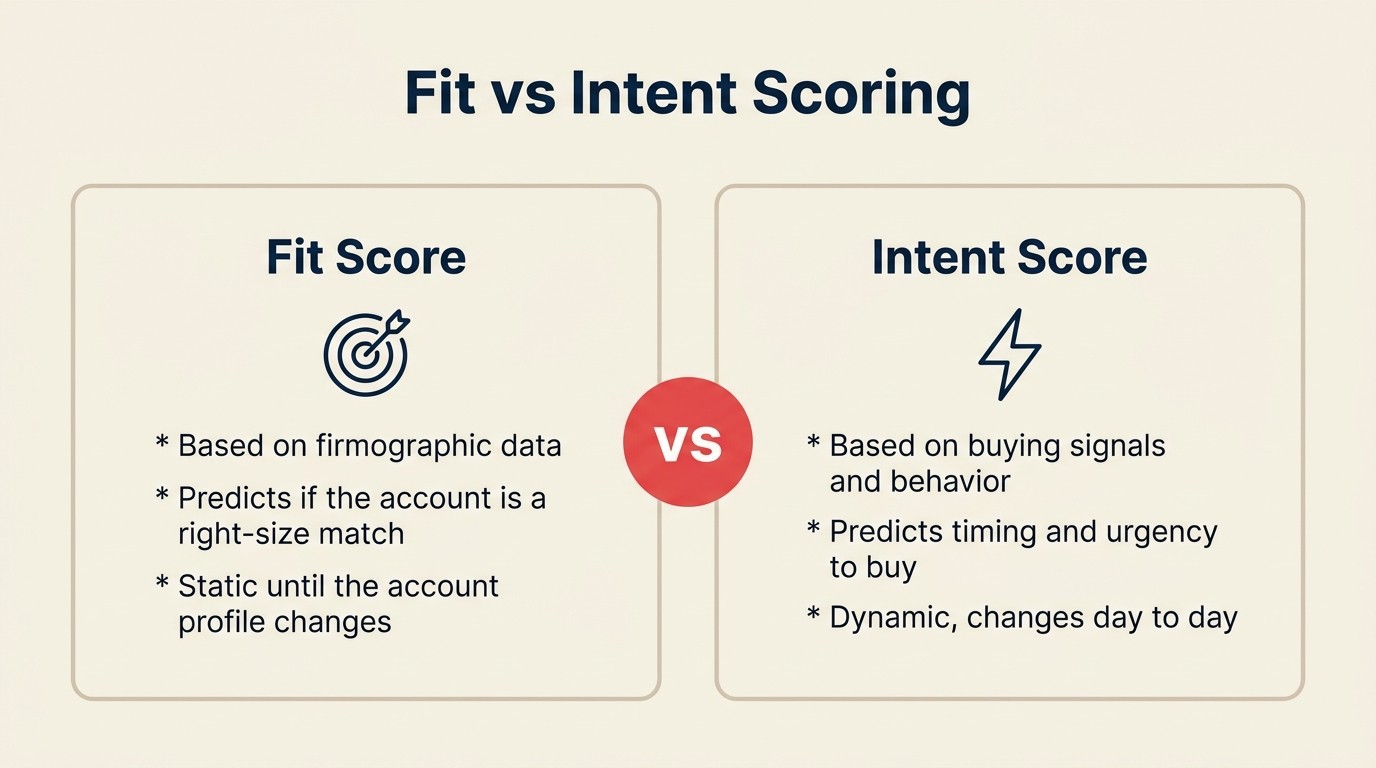
Fitスコアリングの定義
Fitスコアは、Leadがあなたが販売している種類の会社に属し、あなたから購買する種類の役職を持っているかどうかを測定します。
Fitがキャプチャするもの:
- 会社規模(従業員数、収益)
- 業種または業界
- 地域(特定の市場にサービスを提供する場合)
- テックスタック(製品と統合するまたは置き換えるツール)
- 役職、機能、シニオリティ
- ビジネスのステージ(スタートアップ vs 成長期 vs エンタープライズ)
Fitがキャプチャしないもの:
- 今まさに解決策を積極的に探しているかどうか
- 今四半期に利用可能な予算があるかどうか
- アクティブなプロジェクトや調達サイクルが進行中かどうか
Fitは主に静的です。会社の規模は月ごとに変わりません。業種は変わりません。連絡先の役職はゆっくりとしか変わりません。この安定性は強みでもあり限界でもあります。
強み: Fitスコアは急速には減衰しません。6ヶ月前の高FitのLeadは今日も高FitのLeadです。
限界: Fitはいつを教えてくれません。完璧にFitした会社でも次の18ヶ月は全く緊急性がない場合があります。
Fitデータの出所:
- フォームフィールド(自己申告の会社規模、役職、業種)
- CRMエンリッチメントツール(Clearbit、ZoomInfo、Apollo)
- サードパーティのファームグラフィックデータベース
- LinkedInデータ(役職とシニオリティのため)
フォームデータは自己申告であり不正確なことが多いです(人々は会社規模を過小申告し、役職を誇張します)。エンリッチメントデータはより信頼できますが、小規模企業についてはカバレッジにギャップがあります。特にSMBターゲットの場合、不完全または不正確なFitデータを持つLeadのある割合を想定してください。共有ICPフレームワークはFitの基準が存在する場所です。スコアリングの重みはその両チームが合意したものを反映するべきです。
重要データ:FitとIntentシグナルのパフォーマンス
- Intentシグナルの高いLeadは、Bombora・SiriusDecisionsのIntent採用調査によると、Fitスコアだけが高いLeadと比べて3〜5倍の確率でOpportunityにコンバートします。
- ForresterのB2B購買行動調査によると、B2B購買ジャーニーの70%はバイヤーがベンダーに連絡する前に行われます。つまり、IntentシグナルはLeadがCRMに入る前に現れることが多いです。
- Demand Gen ReportのスコアリングD精度データによると、Leadスコアリングでのエンゲージメント行動(メール開封、ページビュー)の過剰な重み付けはPipelineの品質を改善せずにMQL数を平均40%膨らませます。
Intentスコアリングの定義
Intentスコアは、Leadが今まさにあなたのカテゴリの解決策を積極的に調べているかどうかを測定します。GartnerのB2B Intentデータガイドは、IntentシグナルをLeadがあなたのカテゴリのソフトウェアを積極的に評価しているという行動的な証拠と定義しています。これはモデルが実際に何を測定すべきかを決定するための有用な操作的定義です。
Intentがキャプチャするもの:
- 今購買ウィンドウにいるか?
- 今まさにあなたのカテゴリのオプションを評価しているか?
- 教育的な好奇心ではなく、商業的な関心を示しているか?
ファーストパーティのIntentシグナルはあなた自身のプロパティから来ます。これらは最も強力なIntentシグナルです。行動を直接観察しているからです。
| シグナル | Intentの強さ | 理由 |
|---|---|---|
| Demoリクエスト | 非常に高い | 購買評価の明示的なリクエスト |
| 価格ページ(3回以上) | 高い | 積極的な商業評価 |
| ROIカリキュレーター使用 | 高い | 商業的な計算が進行中 |
| 競合比較ページ | 高い | ベンダー評価モード |
| 無料トライアル開始 | 高い | 製品評価進行中 |
| 価格ページ(1回) | 中程度 | 調査の好奇心、必ずしも評価ではない |
| 機能ページの深い閲覧 | 中程度 | 製品の理解、評価中かもしれない |
| ブログコンテンツ(教育) | 低い | 調査だが商業的Intentではない |
サードパーティのIntentシグナルは、複数のウェブサイト、レビュープラットフォーム、コンテンツネットワーク全体の調査行動を集計するデータプロバイダーから来ます。ForresterのB2Bセルフサービス購買の分析によると、B2Bバイヤーの68%はベンダーとエンゲージする前に自分で調査することを好みます。つまり、サードパーティのIntentシグナルはあなた自身のAnalyticsには現れない積極的な評価をキャプチャします。
| ソース | 追跡するもの | 信頼性 |
|---|---|---|
| Bombora | トピックサージ(特定カテゴリを調査している企業) | エンタープライズでは高い、SMBでは低い |
| G2 Buyer Intent | G2での競合プロファイルとカテゴリビュー | 高い;これらは積極的な評価 |
| TechTarget | TechTargetプロパティでのダウンロードと調査 | カテゴリ固有、テックバイヤーに適している |
| LinkedIn Lead Gen | LinkedInでのフォーム送信 | 役職ターゲットキャンペーンに強いIntent |
サードパーティのIntentデータはスコアリングの精度を大幅に向上させますが、予算(Bomboraは月1,500ドル以上から)とMAPの統合作業が必要です。まだIntentデータプロバイダーの予算がない場合は、ファーストパーティデータだけからプロキシシグナルを構築できます。
それぞれが異なるアウトカムをどのように予測するか
Fit/Intent レスポンスマトリクス
Fit/Intentレスポンスマトリクスは、2つの独立した軸(ICPのFit(どんな人か)と購買Intent(今積極的に評価しているか))に基づいてLeadを4つの象限にマッピングします。各象限には独自のレスポンスPlaybookが必要です。マトリクスは意思決定ツールです。スコアリングモデルはLeadを正しいセルに配置するインプットにすぎません。
低Intent 高Intent 高Fit タイミングのためのナーチャー:構造的、忍耐強く、Intentトリガーを待つ すぐに電話:最良のLead、スピードが変数 低Fit 抑制または優先度を下げる:低投資のナーチャーのみ 慎重に扱う:素早く資格確認、シニアAEには回さない マトリクスは、1つの複合スコアが隠しているものを明示します:85のスコアは高Fit/低Intent(将来のPipeline)または低Fit/高Intent(脆弱なOpportunity)である可能性があります。正しいアクションはまったく異なります。
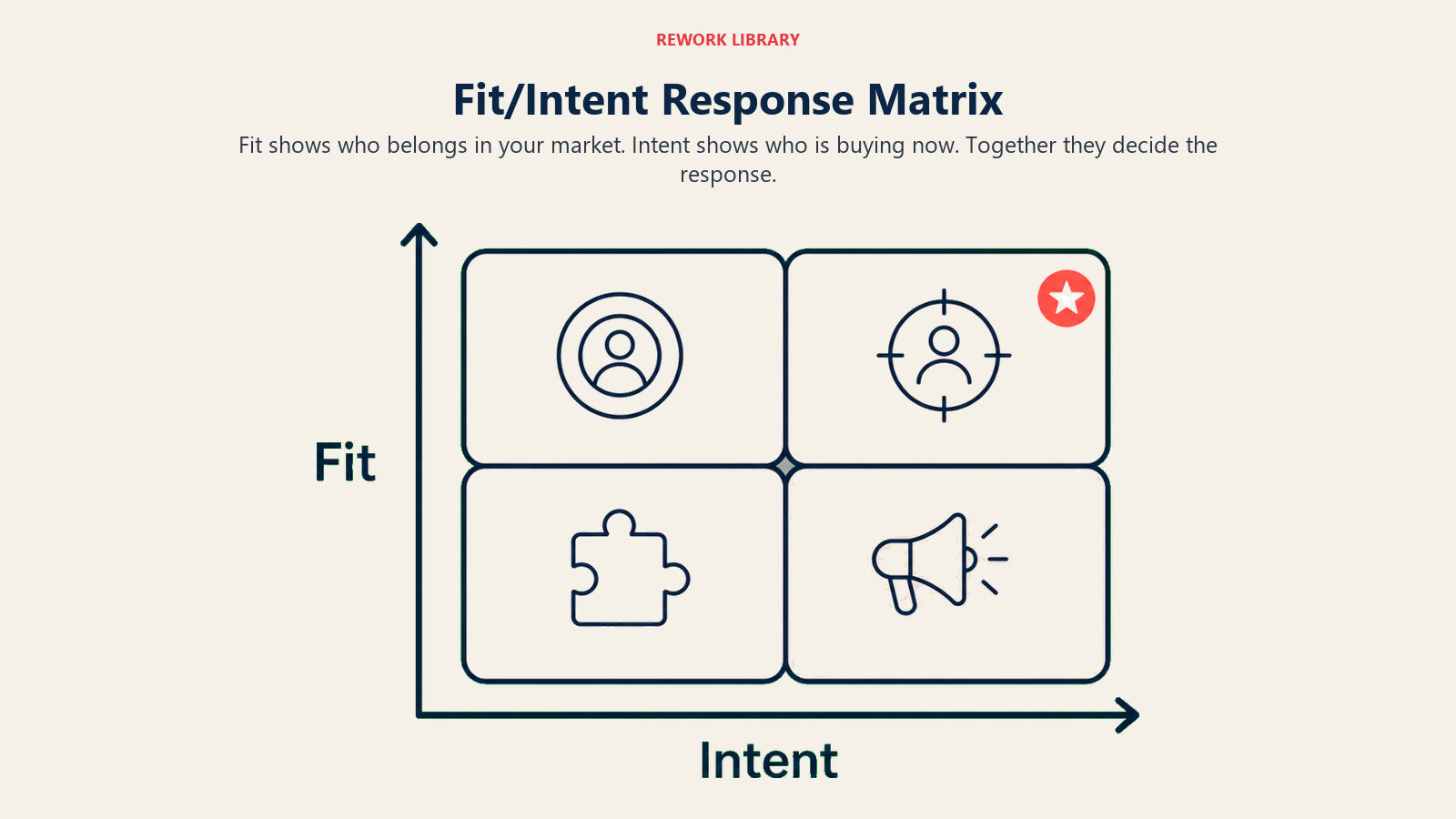 Fit/Intentマトリクスの4つの象限はそれぞれ異なるレスポンスを必要とします。
                    高 INTENT
                         |
    タイミングのナーチャー |   すぐに電話
    高Fit、低Intent      |   高Fit、高Intent
                         |
    ─────────────────────┼─────────────────────
                         |
    抑制/優先度低下       |   慎重に扱う
    低Fit、低Intent      |   低Fit、高Intent
                         |
                    低 INTENT
         低 FIT               高 FIT
高Fit+高Intent:すぐに電話する。 これはあなたの最良のLeadです。ICPに一致しており積極的に探しています。セールスチームが1時間以内に電話すべき相手です。このLeadが浮上したとき、他のすべての作業は止まります。
スピードが優先です。データは、高Fit/高IntentのLeadを最初の1時間以内に連絡すると、24時間後に連絡した場合と比べてコンバージョン率が劇的に高くなることを一貫して示しています。購買ウィンドウは今開いています。そこにいることがあなたの仕事です。インバウンドのDemoリクエストに対する5分間レスポンスSLAはこの象限のために特別に構築されています。
高Fit+低Intent:タイミングのためにナーチャーする。 これは休眠ウィンドウにある価値あるLeadです。いずれあなたが売るものを必要とするでしょうが、おそらく今日ではありません。このLeadをセールスに押しつけると無駄なコールが生じ、スコアリングモデルへの信頼が損なわれます。このリードを構造化されたナーチャーに保ちます:四半期ごとのチェックインコンテンツ、関連する業界アップデート、その状況に合ったCase Study。Intent スコアが上昇したとき(価格ページの訪問、Demoリクエスト)、それがセールスに移行するトリガーです。
この象限にはMQLデータベースのほとんどが存在します。現在のPipelineではなく将来のPipelineとして扱います。Leadライフサイクルステージのフレームワークは、SQLのHandoffの準備ができる前にこれらの休眠しているが適合した連絡先がどのようにナーチャープログラムを流れるべきかを示しています。
低Fit+高Intent:慎重に扱う。 このLeadは積極的に調査していますが、ICPに一致していません。このパターンを生み出すシナリオがいくつかあり、それぞれ異なる扱いをします:
シナリオA:データが示すより速く成長している会社である。 エンリッチメントデータは6〜12ヶ月古い場合があります。6ヶ月前に小さすぎて見えた会社が今は80人の従業員になっているかもしれません。却下する前にエンリッチメントの更新を素早く実行します。
シナリオB:本当にICPの外にいる。 解決策が必要ですが、あなたにとって適切なFitではありません。素早い資格確認コールまたはインバウンドSDRに回します。AEチームには回しません。これらのLeadは時々Closeしますが低い確率でChurnが高くなることが多いです。Churnを生み出すパターンにPipelineを構築しないでください。
シナリオC:Fitデータが間違っている。 役職が実際の役割を反映していない(「コーディネーター」が実際には大きなプロジェクトの予算を管理している)。却下する前に資格確認の際に直接確認します。
低Fit+低Intent:抑制または優先度を下げる。 これをセールスに渡さないでください。重いナーチャーに投資しないでください。このLeadがリストにいれば、いずれコンバートするかもしれませんが、コンバージョン率はそれほど低く、集中するための機会コストは高いです。シンプルなナーチャーシーケンス(月次ニュースレター)が適切です。アクティブなスコアリングから削除します。
引用: CEBの(現Gartner)B2B購買サイクル長の調査によると、Intentシグナルのない高FitのB2BリードはIntentシグナルと高Fitの両方があるLeadよりも平均6〜9ヶ月長くCloseまでかかります。つまり、Fitのみのリードをセールスに回すことは非効率なだけでなく、積極的にPipelineベロシティの予測を歪めます。
スコアリングの罠:行動の過剰な重み付け
最も一般的なスコアリングの間違いは、Intentのように感じるが実際はそうではない行動エンゲージメントシグナルに過剰な重みを与えることです。ForresterのIntentデータの間違いに関する調査は、エンゲージメントと購買意図を混同することをチームが犯す最大のエラーの1つとして挙げています。Pipelineの品質を改善せずにMQL数を膨らませます。
 メール開封。読んだブログ投稿。Webinar登録。ソーシャルクリック。これらのシグナルは、誰かがコンテンツにエンゲージしていることを示しますが、エンゲージメントはIntentではありません。
「エンゲージしているが決して買わない」ペルソナはすべてのB2Bコンテンツライブラリに実在します。彼らはすべてを消費します。すべてのメールを開封します。すべてのWebinarに参加します。決して買いません。多くの場合、教育やアイデア生成のためにコンテンツを使用している実務者ですが、予算の決定権がないか、アクティブなプロジェクトにいないか、顧客になれる会社にいないかです。
モデルがメール開封ごとに5ポイント、ブログ訪問ごとに10ポイントを与える場合、このペルソナは極めて高いスコアを得ます。価格を一度だけ訪問した完璧なFitのLeadよりも高いスコアになる可能性があります。これはモデルの誤動作です。
行動の重みの問題を修正する方法:
- 行動シグナルカテゴリが貢献できるポイントの合計を制限する(例:何通メールを開封しても行動スコアは合計30ポイントまで)
- エンゲージメントシグナルに積極的な減衰を適用する(メール開封に14日間の半減期、ブログ訪問に30日間):Leadスコアリングモデルの劣化の記事でメカニズムをカバーしています
- 行動スコアに関係なく、LeadがMQLステータスに達する前に少なくとも1つの最小閾値を超えるIntentシグナルを必要とする
- 最高スコアの「行動のみ」のLeadが実際にコンバートするかどうかを確認することで検証する。ほとんどはしないでしょう
セールスモーション別の相対的な重み付けの設定
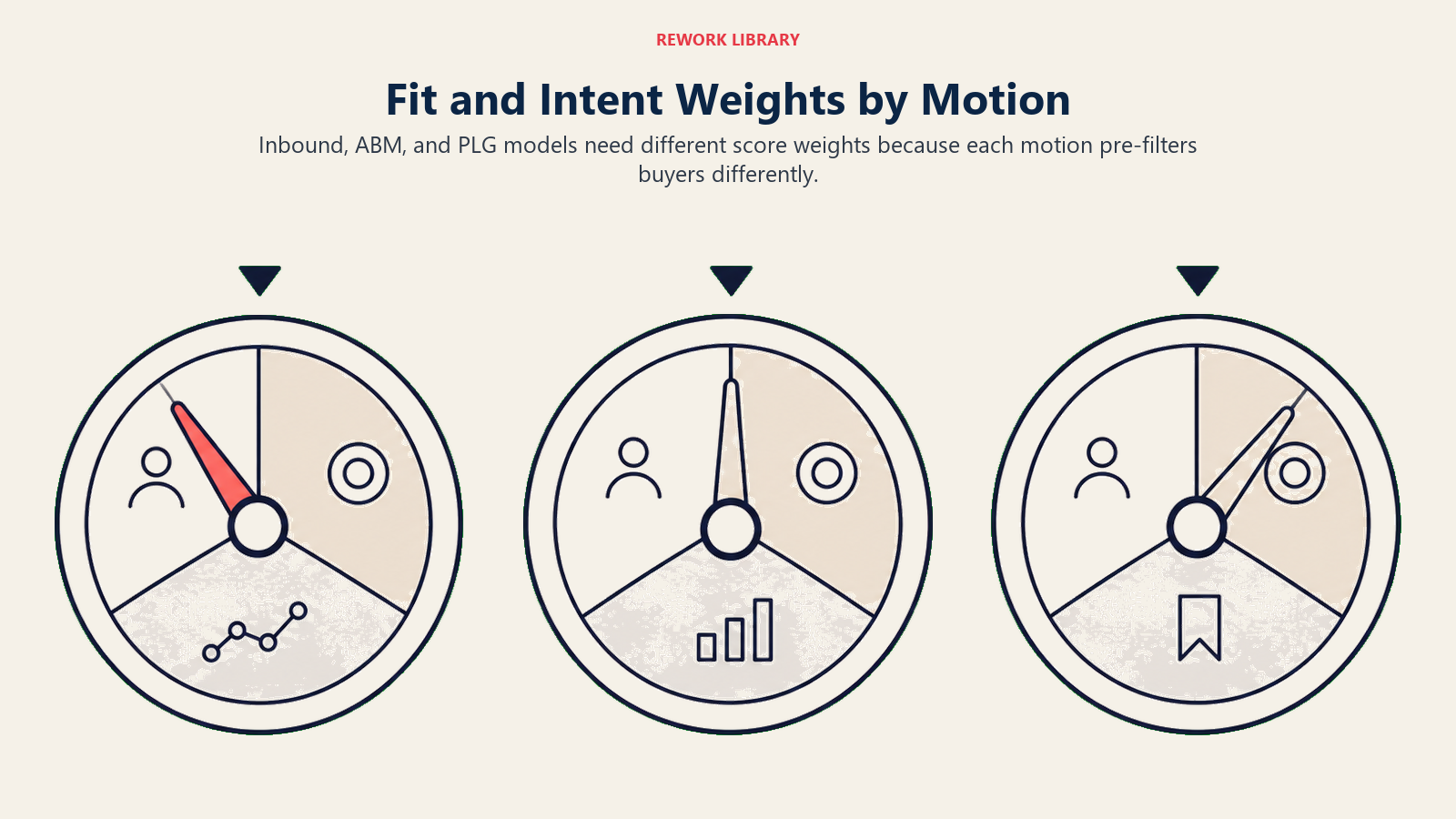
FitとIntentの適切なバランスは、顧客をどのように獲得するかによって異なります。
 インバウント主導のモーション:
ほとんどのLeadがコンテンツとインバウンド検索から来る場合、あなたはすでにIntentをフィルタリングしています:あなたを探してきた人です。Fitは、ICPに適合したインバウンドLeadのみをセールスに回すため、主な差別化要因になります。重み付け:Fit 50%、Intent 35%、行動 15%。このモーションのMQLからSQLへのスコア閾値はそのFit重視の重み付けを反映します。
インバウント主導のモーション:
ほとんどのLeadがコンテンツとインバウンド検索から来る場合、あなたはすでにIntentをフィルタリングしています:あなたを探してきた人です。Fitは、ICPに適合したインバウンドLeadのみをセールスに回すため、主な差別化要因になります。重み付け:Fit 50%、Intent 35%、行動 15%。このモーションのMQLからSQLへのスコア閾値はそのFit重視の重み付けを反映します。
ABMモーション: 特定のアカウントを積極的にターゲットにしている場合、Fitはすでに固定されています(アカウントを選んだからです)。Intentはトリガーシグナルになります:ターゲットアカウントがいつ積極的な購買ウィンドウにいるか?重み付け:Fit 25%(すでにスクリーニング済み)、Intent 60%、行動 15%。
PLG(プロダクトレッドグロース)モーション: 製品行動が最も強力なシグナルです:トライアルの使用状況、機能の採用、使用量。Fitは重要ですが、製品エンゲージメントは伝統的なIntentやFitよりもコンバージョンをよく予測することが多いです。重み付け:Fit 25%、Intent 25%、製品行動 50%。
アウトバウンド支援のモーション: セールスはインバウンドシグナルに関係なくアカウントへのアウトリーチを推進しています。Fitはターゲティングを決定します。Intentシグナルはシーケンスのどのアカウントを優先するかを伝えます。重み付け:Fit 60%、Intent 40%、行動 0%(コールドでアウトリーチしているため行動は最小限)。
高額なツールを使わない実際の実装
サードパーティのIntentデータプロバイダーはスコアリングの精度を大幅に向上させます。しかし機能するFit/Intentモデルを構築するためにそれらは必要ありません。
Intentデータベンダーがない場合のIntentのプロキシシグナル:
| 実際のIntentシグナル | 構築できるプロキシ |
|---|---|
| Bomboraのトピックサージ | コンテンツエンゲージメントのスパイク:30日間で4回以上の高価値ページビュー |
| G2カテゴリ調査 | 比較または代替ページへの直接トラフィック |
| 競合他社の調査 | 「[競合他社] vs [自社]」コンテンツへの訪問 |
| アクティブな調達サイクル | フォームフィールド:「いつ導入を検討していますか?」 |
| 利用可能な予算 | フォームフィールド:「おおよその予算範囲は?」 |
最も弱いプロキシはフォームフィールドです。人々は嘘をつき、スキップし、または理想的な回答をするからです。最も強いプロキシはあなた自身のプロパティからの実際の行動シグナルです:価格ページの訪問、比較ページの訪問、ROIカリキュレーターの入力。
サードパーティデータがなくても、FitとIntentを分離し、MQLステータスに達する前に両方を必要とするモデルは、1次元のモデルを凌駕します。両方のシグナルが揃ったら、本当の問題はそれぞれにどれだけの重みを与えるかです。
引用: Demand Gen ReportのB2Bマーケティングチームのスコアリング精度データによると、Leadスコアリングでのエンゲージメント行動(メール開封、ページビュー、ニュースレタークリック)の過剰な重み付けはPipelineの品質を改善せずにMQL数を平均40%膨らませます。
Rework分析: Fit/Intentレスポンスマトリクスは、チームが犯す最もコストのかかるスコアリングの間違いを明確にします:高Intent/低FitのLeadをシニアAEに回すことです。これらのLeadは時々Closeしますが、Closeまでの時間が長く、Churnが速く、不釣り合いなセールスの時間を消費します。マトリクスは複合スコアの閾値だけでなく、象限ごとに明示的なルーティング決定を強制します。Leadが複合数字だけでなくどのセルに当てはまるかを担当者が見ることができるよう、象限のロジックをCRMビューに組み込みます。
Closed-Wonデータに対する重み付けのキャリブレーション
重みを設定する最良の方法は、実際にWonディールを予測したものを振り返ることです。PipelineとForecastのデータは、どのLeadの特性が一貫してCloseしたディールを生み出し、どのLeadがストールしたかを示します。
分析:
- 過去90〜180日のClosed-WonのOpportunityを抽出します
- 各々について、LeadレコードをSQL時点でチェックします:FitスコアとIntentスコアはいくつでしたか?
- Closed-Lostについても同じデータセットを構築します
- WonとLostの間のFitとIntentスコアの分布を比較します
Closed-Wonのディールが高Fitかつ高Intentで集まる場合、モデルはおおよそ正しいです。Closed-Wonのディールが高Fitだが中Intentで集まる場合、Intentを過剰に重み付けしています。Closed-Wonのセットに低Fit/高Intentのディールのクラスターが見える場合、モデルが想定するよりも広いICPを持っているかもしれません。
この分析にデータサイエンティストは必要ありません。過去50のWonと50のLostディールについての2列(SQL時点でのFitスコアとIntentスコア)のスプレッドシートでパターンがわかります。
このキャリブレーションを6ヶ月ごとに実施します。市場は変化します。バイヤーの行動は変わります。18ヶ月前に正確だったモデルは誰も気づかないまま今は外れているかもしれません。
Intentシグナルが減衰するとき
IntentはFitとは異なり時間的な感受性があります。3ヶ月前にあなたのカテゴリを調査していた会社が競合他社を購入したか、プロジェクトを一時停止したか、完全に優先順位を下げたかもしれません。前四半期からの高いIntentスコアは今日の高いIntentスコアと同じではありません。
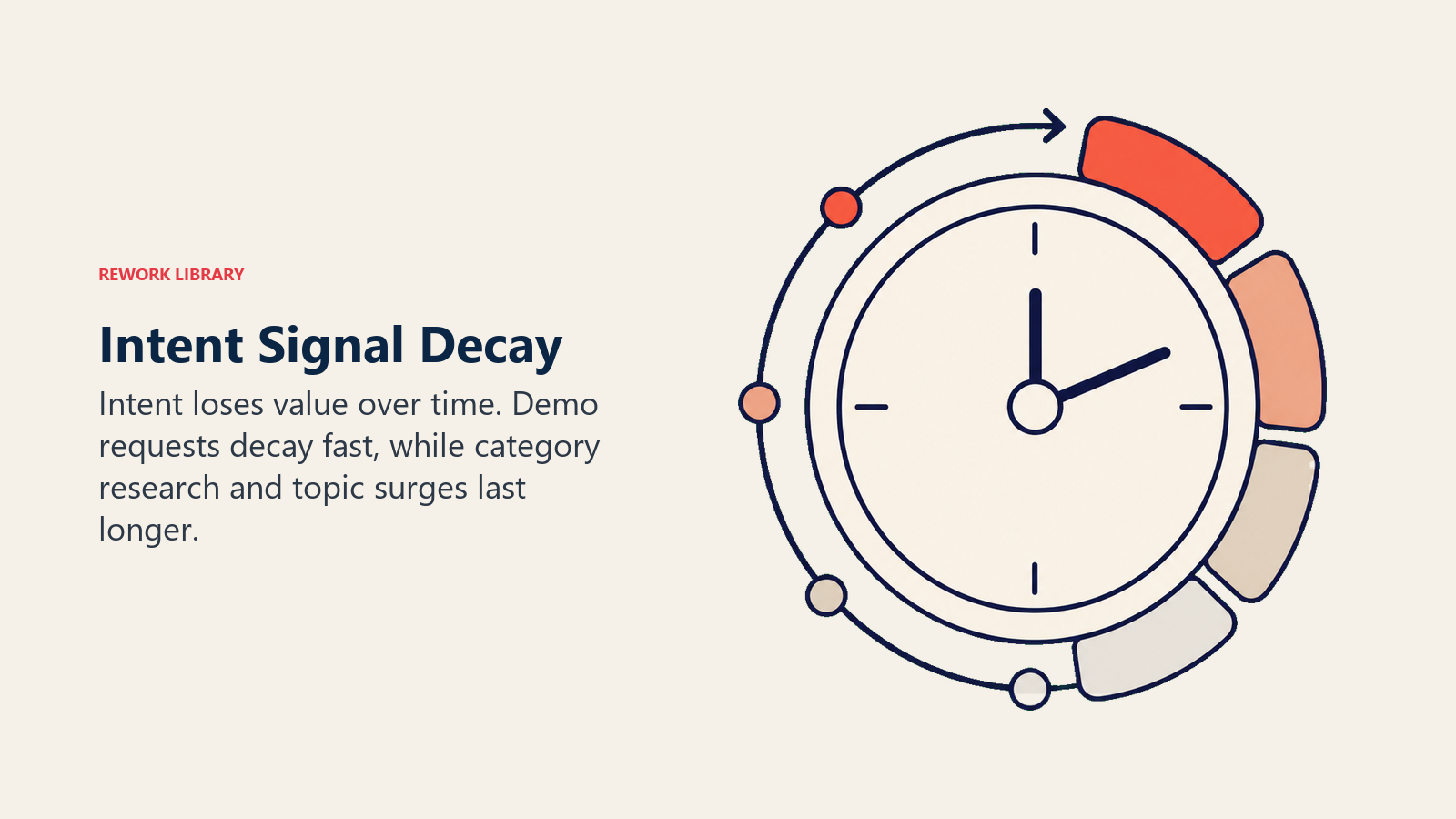 シグナルの半減期の目安:
| シグナル | 半減期 | ロジック |
|---|---|---|
| Demoリクエスト | 48〜72時間 | 積極的な評価ウィンドウは急速に閉まる |
| 価格ページ(3回以上) | 7〜10日 | 商業評価は緊急 |
| G2プロファイルビュー | 2〜3週間 | カテゴリ調査ウィンドウ |
| 競合比較 | 3〜4週間 | 評価プロセスが進行中 |
| トピックサージ(Bombora) | 3〜4週間 | 企業の調査サイクル |
| ROIカリキュレーター | 7〜10日 | アクティブなプロジェクトでの商業的計算 |
| Webinar参加 | 30〜60日 | 関心シグナル、緊急シグナルではない |
| ブログコンテンツ | 60〜90日 | 教育的、非商業的 |
Demoリクエストなどの緊急性の高いIntentシグナルは、バッチ処理ではなくセールスへの即時ルーティングをトリガーするべきです。火曜日に発火したシグナルを週次のバッチで確認しているのであれば、Intentスコアは意味をなさなくなります。Leadルーティングルールはこれを考慮する必要があります。ホットなIntentシグナルは通常の週次MQLバッチとは別の専用の高速パスを持つべきです。
2〜4週間の半減期を持つシグナルには、スコアが自動的に再計算されるようにMAP オートメーションで減衰を構築します。2ヶ月前に価格ページを3回訪問して以来戻っていないLeadは、現在購買ウィンドウにいません。
Leadスコアリングモデルの劣化の記事では減衰ルールの技術的な実装を詳しくカバーしています。
まとめ
Intentなき高Fitは忍耐です。適切な種類の会社ですが、今は購買する準備ができていません。ナーチャーに保ち、Intentが上昇したときのモデルトリガーを待ちます。
Fitなき高Intentはノイズです。誰かがあなたのカテゴリを積極的に調査していますが、あなたが実際に勝てる会社ではありません。慎重に扱います:素早く資格確認し、シニアAEには回さず、コンバージョンの確率について正直でいます。
両方揃うとPipelineになります。高Fit+高IntentはあなたのベストLeadであり、それらのLeadへのレスポンスのスピードはほぼ他のどの運用上の変数よりも重要です。
このバランスを正しく取り、実際のClosed-Wonデータに対してキャリブレーションを維持するモデルが、Leadスコアを信頼する収益チームと、セールスがその数字を無視して自分のリストで作業するチームを分けるものです。
最初に精度のために構築します。次に共同所有権のために。そして実際にCloseしたものに対して検証します。
よくあるご質問:Fit vs. Intentスコアリング
Fitスコアリングと Intentスコアリングの違いは何ですか?
Fitスコアリングは、Leadがあなたが販売している種類の会社に属し、あなたから購買する種類の役職を持っているかどうかを測定します。これは主に静的なファームグラフィックと役割シグナルに基づいています。Intentスコアリングは、Leadが今まさにあなたのカテゴリの解決策を積極的に調べているかどうかを測定します。これは時間的に敏感で数日から数週間で減衰する行動シグナル(価格訪問、Demoリクエスト、G2カテゴリ調査)に基づいています。
どちらがより重要か:FitかIntentか?
セールスモーションによりますが、両方が存在する場合、高Intent/高FitのLeadはほぼ常にあなたのベストOpportunityです。1つを優先しなければならない場合:インバウンド主導のモーションでは、インバウンドがすでにある程度のIntentをフィルタリングしているためFitが差別化します。ABMモーションでは、FitでスクリーニングしたためIntentがトリガーします。どちらのシグナルも単独では信頼できません。Intentなき高Fitは忍耐であり、Fitなき高Intentはノイズです。
Fitはいつ最も重要か?
ABMとアウトバウンド支援のモーションで、アカウントをプロアクティブにターゲットにしている場合にFitが最も重要です。それらのモーションでは、Fitはすでにスクリーニング済み(アカウントを選んだから)であり、ゲートであってトリガーではありません。また、高いインバウンドボリュームがある場合にも、Intent分析に投資する前にICPリードと非ICPリードを最も速く分離するフィルターとして最も重要です。
IntentシグナルはあるがFitが一致しない場合は?
低Fit/高IntentのリードはシニアAEではなく慎重に扱うべきです。これらのLeadは積極的に調査していますが、ICPに一致していません。間違ったサイズ、間違った業種、間違った役割かもしれません。素早い資格確認コールまたはインバウンドSDRに回します。セールスリソースを大量投資しないでください。これらのLeadは時々Closeしますが通常低い確率で高いChurnを示します。
Intentシグナルはどのくらい有効ですか?
Intentシグナルは時間的に敏感で急速に減衰します。Demoリクエスト:48〜72時間。価格ページ訪問(3回以上):7〜10日。G2プロファイルビュー:2〜3週間。競合比較訪問:3〜4週間。Bomboraのトピックサージ:3〜4週間。先月の高いIntentスコアは今日の高いIntentスコアと同じではありません。適用された減衰でスコアを再計算するMAPオートメーションを構築してください。バッチ処理の間隔だけでなく。
最も一般的なLeadスコアリングの間違いは何ですか?
購買Intentを示すかのように行動エンゲージメントシグナル(メール開封、ブログ訪問、Webinar登録)に過剰な重みをかけることです。それらは示しません。コンテンツへの関心を示すだけです。「エンゲージしているが決して買わない」ペルソナは行動において極めて高いスコアを得ますが、ほとんどコンバートしません。修正:Leadの複合スコアへの行動の合計貢献を制限し、エンゲージメントシグナルに積極的な減衰を適用し、行動スコアに関係なくMQLステータスに達する前に少なくとも1つの真のIntentシグナルを必要とします。
参考リンク