Marketing-Sales SLAテンプレート:収益チームのための完全なService Level Agreement
Turn this article into takeaways for your work.


Each assistant summarizes the article only for you and suggests best practices for your work.
「Marketing-Salesの Misalignmentは、B2B企業の収益の約10%のコストを毎年、Pipelineの損失、Lead の無駄、重複した作業という形でかけています。双方向SLAはそのコストを測定可能なシステムに変える構造的な修正です。」(IDC調査)
すべての収益チームには、何らかのバージョンのこの合意があります:マーケティングは一定数のMQLを送り、セールスは迅速にフォローアップし、両チームは定期的に話し合います。それは誰かのスライドデッキの中に存在します。四半期が外れたときのQBRで参照されます。そして文書化されたことはありません。
紳士協定はハネムーン期間、誰もが新しく楽観的な最初の数か月の間は機能します。四半期がうまくいかない瞬間に崩壊します。Pipelineがダウンして両チームがプレッシャー下にあるとき、皆が違う形で覚えていた合意は今や資産ではなく負債です。
正式なSLAはダイナミクスを変えます。懲罰的ではありません。診断的です。何かが壊れたとき、両チームには合意した文書があり、どのコミットメントが守られなかったか、解決プロセスがどのように見えるかを正確に教えてくれます。会話は「誰が悪いのか」から「システムのどの部分が失敗し、どのように修正するか」に移行します。
この記事は完全な双方向テンプレートを提供します。マーケティングのセールスへのコミットメント、セールスのマーケティングへのコミットメント、共有レポート、レビューケイデンス。コピーして、数値を入力し、両リーダーの承認を得るために持参してください。
Marketing-Sales SLAがカバーするもの(そしてなぜ双方向でなければならないか)
ほとんどのSLAの会話は、マーケティングがLead量と品質にコミットすることから始まります。セールスは頷きます。そして6か月後、セールスはレスポンスSLAを守れておらず、SLAが一方的だったためマーケティングには手が打てません。
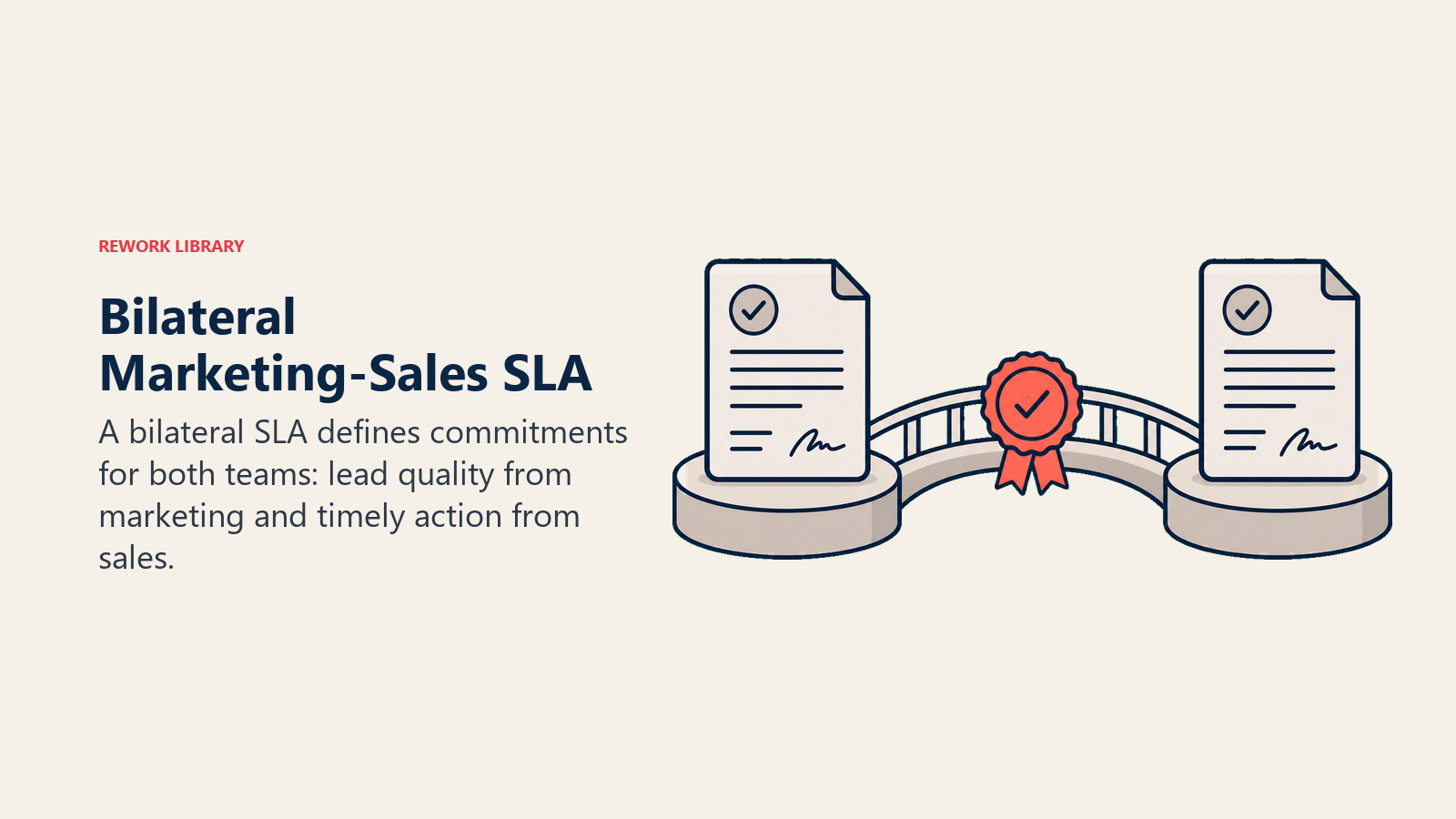
本物のSLAは双方向です。マーケティングは届けるものにコミットします。セールスはマーケティングが届けるものに対して何をするかにコミットします。両サイドに測定可能な義務があります。両サイドに説明責任のメカニズムがあります。Lead RejectionとRecyclingプロセスは、その双方向の説明責任が具体的になる場所の一つです。
一方的なSLAは恨みを生みます。マーケティングに詳細なコミットメント文書があり、セールスにはない場合、暗黙のメッセージはマーケティングが裁判にかけられ、セールスが裁判官だということです。そのダイナミクスはSLAが生み出すはずだったAlignmentを台無しにします。
SLAはまたMQL/SQL合意書とは別物です。MQL/SQL合意書は引き継ぎ準備ができたLeadとして何が適格かを定義します。SLAはいくつ、どのくらい速く、そして次に何が起きるかを定義します。これらは補完的な文書です。両方が必要です。
主要データ:SLAと収益のAlignment
- 正式なMarketing-Sales SLAを持つ企業は、持たない企業と比較してインバウンドマーケティングからのROIが34%高いです(HubSpotのState of Inbound調査より)。
- Leadに5分以内に対応することで、30分待つ場合と比較してLeadを資格判定できる確率が21倍高くなります(15,000件以上のLeadを対象としたMIT/InsideSales.comの研究)。
- 78%の買い手が、価格に関係なく最初に問い合わせに応答した企業を選択します(Vendasta)。
Reworkの分析: 高パフォーマンスの収益チームの決定的な特徴は、より速いレスポンスタイムやより高いMQL量ではありません。両チームが同じ書面による期待から運営されることです。HubSpotのState of Inbound調査は、正式なMarketing-Sales SLAを持つ企業がインバウンドマーケティングからROIが34%高いことを示し、Aberdeen Groupの組織Alignment研究はMisalignedなチームの4%減少と比較して20%の年間収益成長を記録しています。メカニズムは説明責任の対称性です:双方向SLAは両サイドに測定可能な義務を作成し、インセンティブ構造を「相手チームの失敗を証明する」から「両チームが失敗したシステムを修正する」に変えます。Reworkの収益チームの設定は一貫して、SLAの違反レビュープロセス(セクション4.2)が実際のAlignment価値が生み出される場所であることを示しています。署名された文書自体ではなく、違反が強制する診断的な会話においてです。
テンプレート:Marketing-Sales SLA
以下のセクションをコピーしてください。括弧内の値はプレースホルダーです:組織のターゲットを入力してください。このテンプレートは3〜25名の担当者、定義されたICP、CRM + MAPスタックを持つSMBおよびミッドマーケットB2B SaaSチーム向けに設計されています。
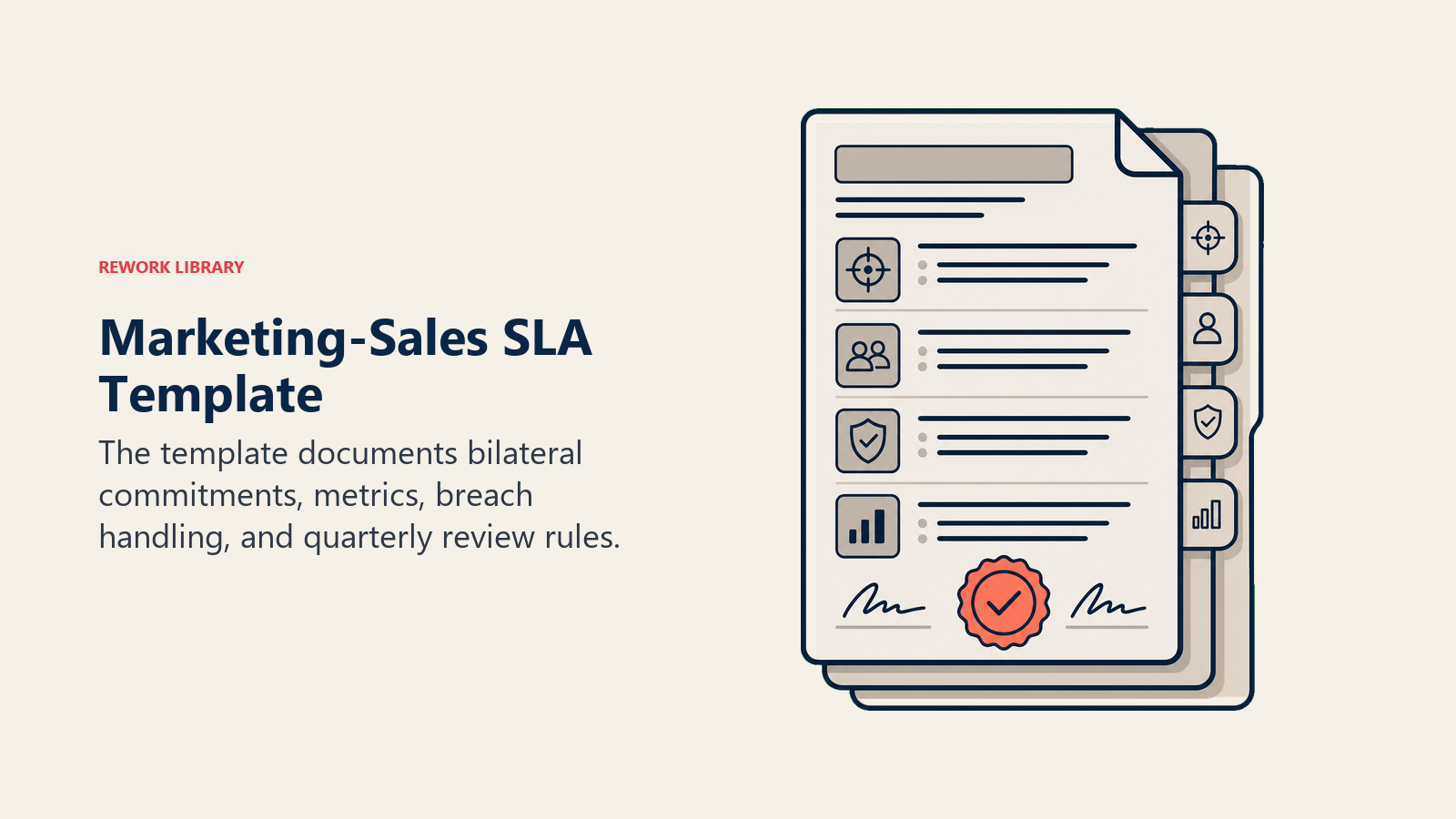
マーケティング・セールス間のサービスレベル契約(SLA)
組織: [会社名] 合意タイトル: Marketing-Sales双方向SLA 発効日: [日付] バージョン: 1.0 レビューケイデンス: 四半期ごと(次回レビュー:[日付 + 90日]) 文書オーナー: [RevOpsリードまたはVP Revenue] 保存場所: [Wikiリンク / 共有ドライブリンク]
ヘッダー:当事者
本合意書は以下の当事者間で締結されます:
- マーケティング、[CMO / VP Marketing / Demand Genディレクター名]が代表する
- セールス、[CRO / VP Sales / セールスマネージャー名]が代表する
- Revenue Operations、プロセスオーナーおよびメディエーターとして、[RevOpsリード名]が代表する
両当事者は、このSLAが相互のコミットメントであり、四半期ごとにレビューされることに同意します。いかなるコミットメントの違反も、懲戒処置ではなく診断レビューをトリガーします。
PART 1:マーケティングのセールスへのコミットメント
1.1 Lead量
| 指標 | ターゲット | 測定期間 |
|---|---|---|
| 月次MQL量 | [例:150] MQL | 月次 |
| Pipeline目標に対するMQLの割合 | [例:3x] Pipelineカバレッジ | 四半期 |
| Tier 1 MQL(Demo依頼、高インテント) | 総MQL量の[例:20%] | 月次 |
| 担当者あたりMQL(均等配分) | 担当者間の[例:±15%]の差 | 月次 |
不足プロセス: マーケティングが[例:20%]を超える月次不足を見込む場合、根本原因と回復計画とともに月[例:15日]までにセールスリーダーシップとRevOpsに通知します。
超過プロセス: MQL量がターゲットを[例:30%]以上超過する場合、可能な場合は[例:5]営業日前に担当者のキャパシティ計画のためにセールスリーダーシップとRevOpsに通知します。
1.2 Lead品質
| 基準 | コミットメント |
|---|---|
| ICPフィット最小値 | すべてのMQLがMQL/SQL合意書セクションB.1で定義されたフィット基準を満たす |
| 引き継ぎ時の必要フィールド | ルーティング前にHandoff DocumentationチェックリストのすべてのField14項目が入力されている |
| MQLスコア閾値 | 最低スコア[例:65];RevOpsの承認なしに閾値以下の例外なし |
| メール到達性 | [例:95%]以上のMQLメールがルーティング前に到達性チェックを通過する |
| 拒否率ターゲット | MQL拒否率全体が[例:25%]以下;Tier 1が[例:15%]以下 |
品質違反の定義: 月次拒否率が2か月連続で[例:30%]を超えた場合、マーケティングは[例:10]営業日以内にスコアリングモデル監査を実施し、RevOpsに所見を提示します。
1.3 引き継ぎ速度
| イベント | コミットメント |
|---|---|
| MQLトリガーからCRMルーティング | [例:15]分以内(自動化) |
| 時間外Lead(営業時間外に受信) | 翌営業日の現地時間[例:午前8時]までにルーティング |
| Tier 1緊急ルーティング(自動化外のDemo依頼) | 営業時間中[例:30]分以内の手動オーバーライド |
営業時間の定義: [例:午前8時〜午後6時、月〜金、Leadの現地タイムゾーン]。
1.4 コンテンツとSales Enablement
| 成果物 | ケイデンス | オーナー |
|---|---|---|
| バトルカード(競合インテルで更新) | 四半期ごとに確認;重要な競合変更から[例:5]営業日以内に更新 | Product Marketing |
| ペルソナガイド(Pain Pointを含むICPプロファイル) | 年次レビュー;ICP定義が変更されたときに更新 | Demand Gen / PMM |
| 新キャンペーンブリーフ(ローンチ前にセールスと共有) | キャンペーン開始の[例:5]営業日前 | キャンペーンマネージャー |
| Win/Lossのテーマサマリー(クローズ取引からマーケティングが聞いていること) | 月次、[例:5]営業日目まで | Marketing Ops |
| 現在のキャンペーンに合わせたメールシーケンス | [例:四半期ごと]にレビュー・更新 | マーケティング + Sales Enablement |
PART 2:セールスのマーケティングへのコミットメント
2.1 レスポンス速度
| LeadTier | 定義 | 最初の試みSLA |
|---|---|---|
| Tier 1 | Demo依頼、価格ページ訪問(2回以上)、直接インバウンド、イベント登録 | 営業時間中[例:15]分以内 |
| Tier 2 | 高スコアインバウンド、コンテンツインテントシグナル、Webinar参加者 | [例:2]営業時間以内 |
| Tier 3 | コンテンツダウンロード、ニュースレタークリック、低スコアインバウンド | [例:1]営業日以内 |
時間外Tier 1 Lead: 翌営業日の現地時間[例:午前9時]までに最初の試み。
レスポンスSLAの測定: CRMルーティングタイムスタンプから最初に記録されたコンタクト試みまでを測定します。自動メール確認は「コンタクト試み」としてカウントされません。
2.2 コンタクトの持続性
Leadを「応答なし」としてマークする前に、セールスはすべての以下を完了する必要があります:
| 試みの種類 | 最小回数 | 期間 |
|---|---|---|
| 合計コンタクト試み | [例:6] | [例:10]営業日以上 |
| 電話試み | [例:2] | 少なくとも[例:2]つの別々の日 |
| メール試み | [例:3] | 異なる時間帯で(すべて同日ではない) |
| LinkedInメッセージ/InMail | [例:1] | ミッドマーケットおよびエンタープライズLeadに対して |
| 1日の最大試み | [例:2] | スパム行動を避けるため |
試みは少なくとも[例:3]つの異なる営業日にわたる必要があります。すべての試みを1日に集中させることは持続性の要件を満たしません。
2.3 Lead処理
すべてのMQLは、ルーティング通知を受け取ってから[例:4]営業時間以内に受け入れまたは拒否としてログに記録される必要があります。
| イベント | 要件 |
|---|---|
| 受け入れ | [CRM名]でLeadステータスを「SQL:受け入れ済み」に変更 |
| 拒否 | Leadステータスを「拒否済み:レビュー保留中」に変更;理由コードを選択(必須フィールド) |
| 完全な持続性後に応答なし | ステータスを「SQL:応答なし」に変更;マーケティングが所有権を取得 |
| サイレント拒否なし | Leadを無視することはできません。すべてのMQLは[例:4]営業時間以内に処理を受ける必要があります |
有効な拒否理由コード: ICPフィットなし | 予算シグナルなし | 間違ったコンタクト | タイミングが悪い | データ品質の問題 | 既存顧客 / オープンOpportunity
2.4 マーケティングへのフィードバック
| コミットメント | ターゲット | ケイデンス |
|---|---|---|
| 週次Lead品質コールへの参加 | チームごとに[例:1名の担当者またはマネージャー] | 週次 |
| Win/Lossノートの提出 | 担当者1人あたり月[例:2]件 | 月次 |
| スコアリング異常のフラグ(高スコアだが資格判定で失敗するLead) | [例:3]営業日以内にRevOpsにフラグ | 必要に応じて |
| キャンペーンフィードバック(どのキャンペーンが会話を生み出し、どれが行き詰まるか) | 月次レビュー時に提供 | 月次 |
| ICP更新(Discoveryで観察された新しい企業プロファイル、新しいユースケース) | パターン観察から[例:5]営業日以内にマーケティングと共有 | 必要に応じて |
PART 3:共有レポート
3.1 共有Dashboard
両チームは共有Dashboardで少なくとも以下の指標をレビューします:
| 指標 | オーナー | レビューケイデンス |
|---|---|---|
| ソースとキャンペーン別MQL量 | マーケティング | 週次 |
| MQL-SQL転換率 | RevOps | 週次 |
| MQL拒否率(理由コード別) | RevOps | 週次 |
| Tier 1レスポンスタイム(平均 + SLA内の割合) | RevOps | 週次 |
| コンタクト持続性コンプライアンス率 | セールスリーダーシップ | 週次 |
| SQL-Opportunity転換率 | セールス | 月次 |
| Pipelineカバレッジ率(MQL貢献) | RevOps | 月次 |
| Recycle-MQL転換率 | Marketing Ops | 月次 |
Dashboardオーナー: [RevOpsリード] Dashboardの場所: [CRMまたはBIツールのDashboardへのリンク]
3.2 ミーティングケイデンス
| ミーティング | 参加者 | 頻度 | オーナー |
|---|---|---|---|
| 週次Lead品質コール | Demand Genリード + セールスマネージャー + RevOps | 週次、[曜日 時間] | RevOps |
| 月次Alignmentレビュー | VP Marketing + VP Sales + RevOps | 月次、第1週 | RevOps |
| 四半期SLAレビュー | CMO + CRO + RevOps | 四半期 | RevOps |
PART 4:違反レビューと修正
4.1 違反の定義
SLAのコミットメントは以下の場合に違反とみなされます:
- レスポンス率がSLAターゲットを[例:2]週連続で下回る
- MQL拒否率が[例:2]か月連続で[例:30%]を超える
- 引き継ぎルーティング時間が特定の月に[例:20%]以上のMQLでターゲットを超える
- Lead処理率が[例:90%]を下回る([例:4]時間以上ステータスなしのLead)
4.2 違反レビュープロセス
違反は即時のエスカレーションではなく、診断レビューをトリガーします:
- RevOpsが月末レポートの[例:3]営業日以内に違反を特定する
- RevOpsがデータサマリーとともに両当事者に通知する
- 責任チームが[例:5]営業日以内に根本原因の説明を提供する
- 是正措置計画が文書化され、両当事者と共有される
- 是正計画が次の週次Lead品質コールで追跡される
同じコミットメントが是正計画なしに[例:3]か月連続で守られない場合を除き、違反は懲罰的ではありません。
4.3 修正プロセス
いずれかの当事者が支持するデータとともに書面によるRevOpsへの要請を提出することで修正を提案できます。両署名者が書面で確認したときに修正は承認されます。
システムとプロセスの更新を可能にするため、すべての修正は批准から[例:30]日後に発効します。
4.4 バージョンログ
| バージョン | 日付 | 変更のサマリー | 承認者 |
|---|---|---|---|
| 1.0 | [日付] | 初回合意 | [名前] |
署名
| 役割 | 名前 | 署名 | 日付 |
|---|---|---|---|
| CMO / VP Marketing | [名前] | ||
| CRO / VP Sales | [名前] | ||
| RevOpsリード(プロセスオーナー) | [名前] |
「正式なAlignmentプロセスを持つ組織はMisalignedな組織の収益4%減少と比較して年間収益成長20%を達成しています。SLAはAlignmentを原則から測定可能なコミットメントに変える説明責任のメカニズムです。」(Aberdeen Group)
数値の設定方法
このテンプレートのプレースホルダー値は出発点であり、業界標準ではありません。チームに合わせて調整する方法を以下に示します:
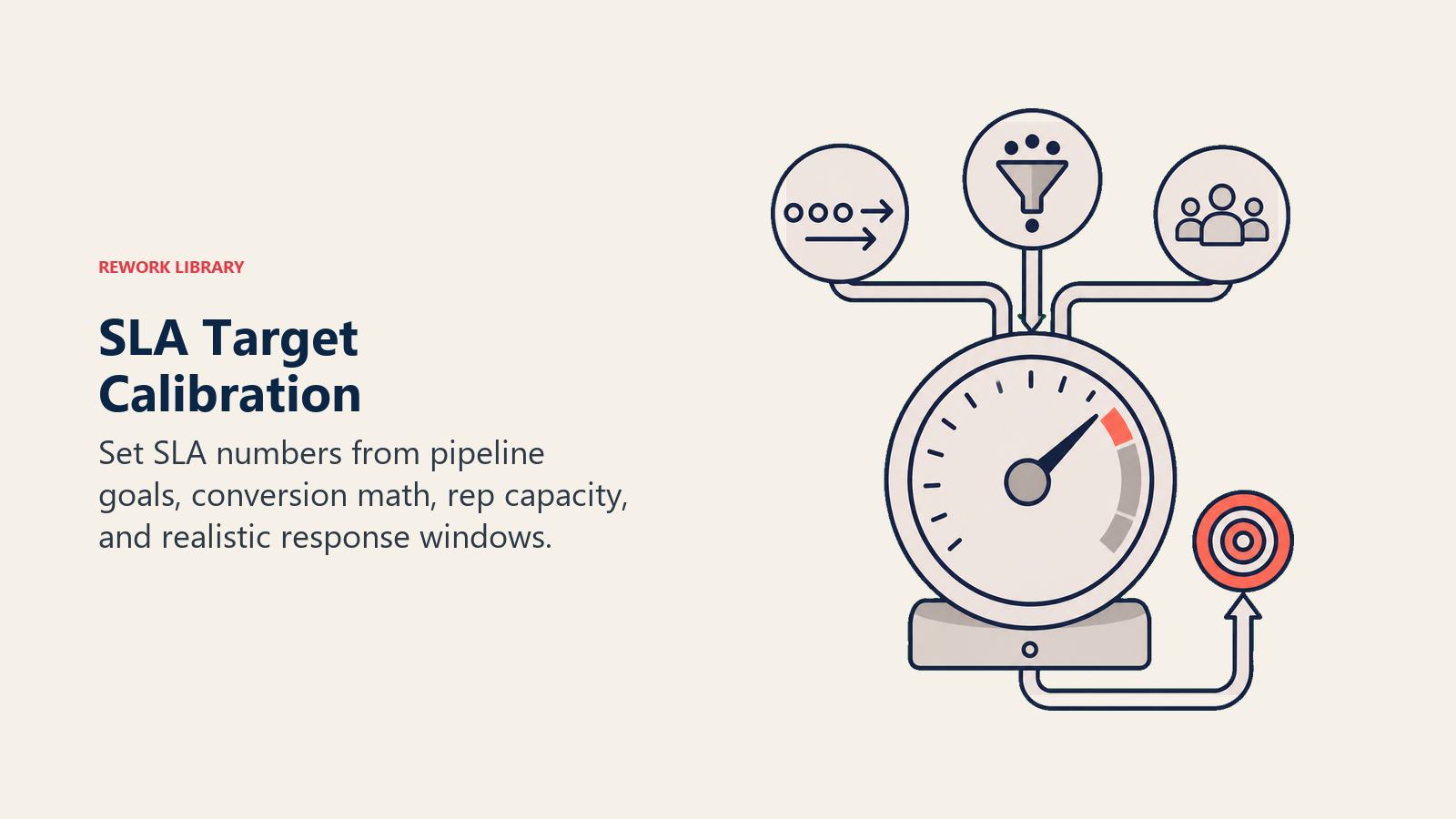
MQL量ターゲット(Part 1.1): Pipeline目標から始めます。四半期に200万ドルの新規Pipelineが必要で、平均Opportunity規模が4万ドルであれば、50件のOpportunityが必要です。MQL-to-Opportunity率が25%なら、四半期に200件のMQL、つまり月約67件が必要です。実際のFunnel指標から構築してください。合意されたFunnelモデルが共有のベースラインを提供します。量ターゲットを真空の中で設定しないでください。ForresterのB2B Revenue Waterfallフレームワークは、過去のMQLカウントから推測するのではなく、Pipelineステージに対してターゲット量を調整するための有用な構造を提供します。
スコア閾値(Part 1.2): 過去90日間のClosed-won取引をプルし、MQL引き継ぎ時の元のLeadスコアまで遡ります。転換率が平均よりも意味のある高さを示すスコア帯を見つけます。それが閾値のアンカーです。十分なデータがない場合は60から始め、拒否率フィードバックに基づいて調整します。
レスポンスSLA(Part 2.1): Tier 1 SLAは常に営業時間中15分以内であるべきです。Lead対応の劣化に関する調査は明確です。HBRの2,241社を対象とした調査は、Leadを資格判定できる確率が提出から最初の1時間で10倍低下することを示しています。Tier 2とTier 3はより柔軟であり、無視される非現実的なターゲットを作ることなく、チームの実際のキャパシティを考慮する必要があります。
拒否率ターゲット(Part 1.2): 拒否率20〜25%は、成熟したMQL定義を持つチームにとって典型的です。10%未満は基準が緩すぎる可能性があります(すべてが適格とみなされる)。35%超は通常スコアリングモデルの問題またはICPのMisalignmentを示します。現在の率から四半期内に現実的に期待される改善を引いたものに基づいて初期ターゲットを設定します。
SLAの展開
ステップ1:まずMQL/SQL合意書を整合させる。 SLAはMQL/SQL合意書の定義を参照します。ない場合は、そこから始めます。SLAは定義レイヤーの上の運用レイヤーです。また、SLAを展開する前にHandoff Documentationチェックリストが入力されていることを確認してください。品質セクションはそれを直接参照します。
ステップ2:キックオフセッションを実施する。 両リーダーとRevOpsとの90分のワーキングセッション。各セクションを通じて、プレースホルダーを一緒に入力し、メールではなくその場で不一致を表面化させます。
ステップ3:90日間のパイロットから始める。 最初のバージョンをパイロットとして組み立てます。実際のデータに基づいて両チームが数字を調整できる90日間のレビューにコミットします。これにより署名への心理的障壁が下がります。誰も永遠にロックインされているとは感じません。
ステップ4:既存のミーティングに結びつける。 週次Lead品質コールと月次レビューでSLAアジェンダを参照します。文書がエスカレーションの時だけ引き出されるなら、何かがうまくいかないときにそれをチェックする反射的な習慣は構築されません。
SLAが違反されたときの対処法
リーダーシップに即座にエスカレーションしないでください。セクション4.2の違反レビュープロセスは診断的な会話を作るように設計されており、責任の割り当てではありません。ほとんどの違反にはシステムまたはキャパシティの説明があり、両チームが一緒に解決できます。
尋ねるべき質問は:これは一度限りのイベント(予想の3倍のMQL量を生み出したキャンペーン)か、繰り返しのパターンか?人の問題、プロセスの問題、またはツールの問題か?再発を防ぐシステムへの最小限の変更は何か?
是正計画なしに3か月間違反が繰り返される場合、エスカレーションが適切です。それ以前は、調整の問題であり、調整はSLAレビュープロセスが何のためにあるかです。以下の四半期チェックリストは、そのレビューを事後対応ではなく体系的なものにします。
四半期SLAレビューチェックリスト
すべての四半期レビューでこれを使用してください:
- SLAターゲットに対してPart 3.1のすべての指標をレビュー
- 2か月以上連続して守られなかったコミットメントを特定
- 理由コード別の拒否率をレビュー:30%以上の拒否率があるセグメントは?
- Tier 1レスポンスタイムのコンプライアンスをレビュー:15分のターゲットはチームのキャパシティを考慮して現実的か?
- MQL量とPipeline目標をレビュー:カバレッジ率は軌道に乗っているか?
- 拒否データに基づくスコアリングモデルの調整を提案
- 市場、チーム、またはICPが変更された場合はプレースホルダー値を更新
- 両リーダーがまだ文書を支持しているか確認;条件が大幅に変更された場合は再署名
- 現在のバージョンをアーカイブ;変更サマリーとともにバージョンログを更新
このSLAとMQL/SQL合意書の違い
これら2つの文書は補完的であり、両方が必要です。その間の線を以下に示します:
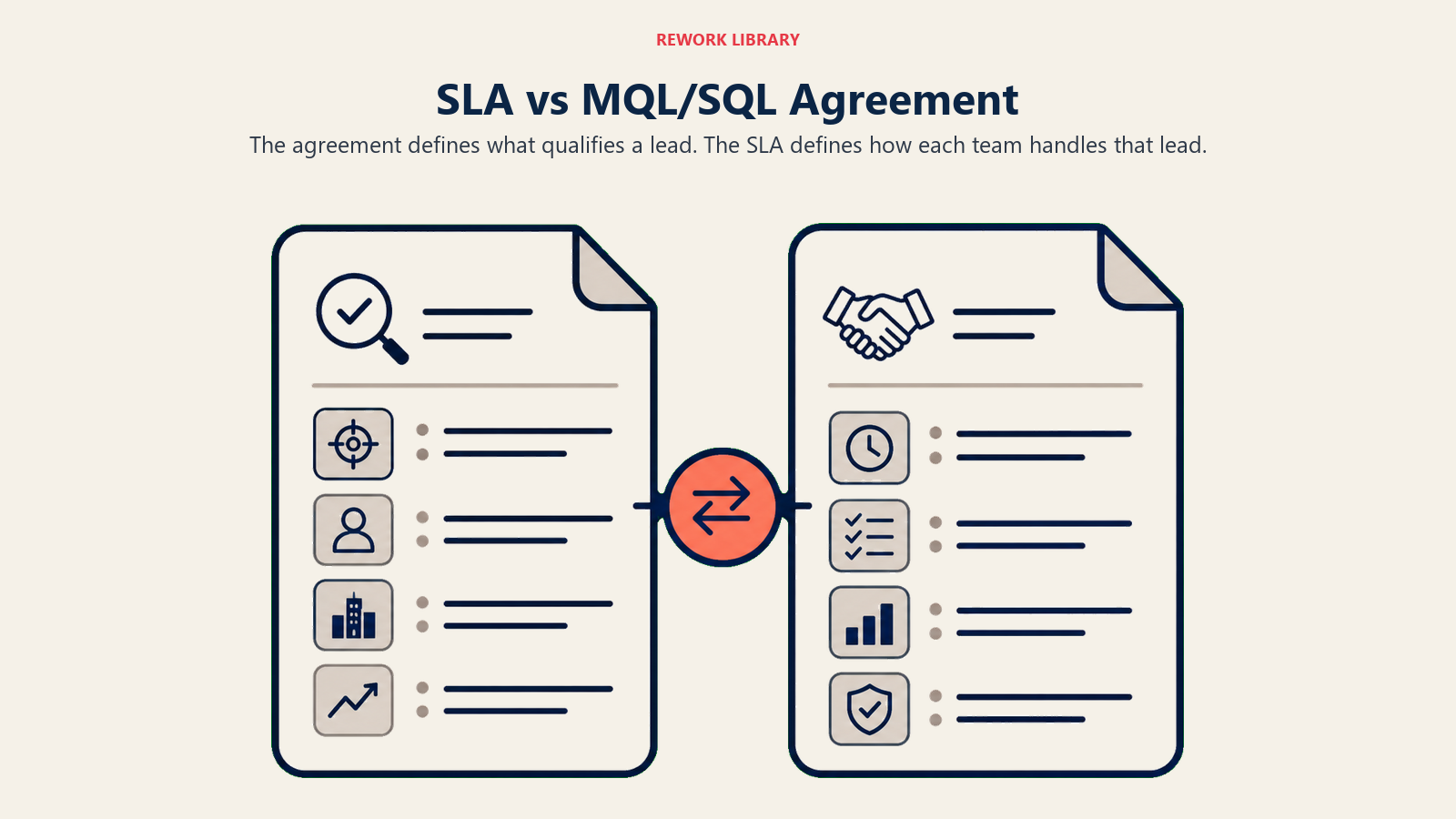
MQL/SQL合意書は答えます:適格なLeadとは何か?LeadがMQLとしてカウントされるためにマーケティングは何を届ける必要があるか?セールスはそれをSQLとして受け入れるために何を確認する必要があるか? 共有の語彙と共有の基準を定義します。
Marketing-Sales SLAは答えます:いくつ、どのくらい速く、どのくらい頻繁に、そして何かが失敗したときは何が起きるか? MQL/SQL合意書を規模で機能させる運用コミットメントを定義します。
両方が必要です。SLAのないMQL/SQL合意書は、共有定義は与えますがパフォーマンスの説明責任はありません。MQL/SQL合意書のないSLAは、パフォーマンスターゲットは与えますが測定する共有定義はありません。
合わせて、両チームが同じ期待のセットから運営し、外れた四半期が責任を負わせるセッションではなく、調整の会話を生み出す収益組織のためのインフラです。RoutingルールがSLAのレスポンスタイムコミットメントを実現可能にするLead Distribution戦略は、あなたが実装するものです。
Marketing-Sales SLAテンプレートに関するよくある質問
過去のデータが限られている場合のMQL量ターゲット(Part 1.1)の設定方法は?
過去のMQLカウントからではなく、Pipeline目標から構築します。収益ターゲットから始め、平均取引規模で割って必要なOpportunityを得て、次にMQL-to-Opportunity転換率で割って必要なMQL量を得ます。信頼できる転換率がまだない場合は、保守的な出発点として20〜25%を使用し、最初の90日間のレビュー後に調整します。MQLターゲットを真空の中で設定しないでください。Pipelineの数式から切り離されたVolume commitmentは、資格のないLeadを送る人工的なプレッシャーか、達成が簡単すぎるターゲットを生み出します。
マーケティングとセールスの間にSDRレイヤーがある場合のSLAはどうなりますか?
SDRレイヤーは双方向構造のPart 1とPart 2の間に位置します。マーケティングはSDRキューへのMQL配信にコミットします。SDRはAEに渡す前のレスポンス速度とコンタクト持続性にコミットします。AEは受け入れウィンドウとフィードバックにコミットします。各引き継ぎポイントには独自のSLA条件が必要です。SDRのレスポンス速度はAEのレスポンス速度とは異なり、コンタクト持続性の要件はLeadTierによって異なります。SDRのマーケティングへのコミットメント(レスポンス速度、処理率)とSDRのAEへのコミットメント(資格判定の基準、引き継ぎ時に提供されるコンテキスト)のためにPart 2Aを追加します。
関係を傷つけずにSLAの違反をどのように処理しますか?
セクション4.2の違反レビュープロセスは、責任の会話を診断の会話に置き換えるように設計されています。質問は「誰がターゲットを外したか」ではなく「システムのどの部分がミスを生み出したか」です。セールスチームからのレスポンスタイムの違反は、しばしばキャパシティの問題(短期間に多すぎるMQL)またはRoutingの問題(正しい担当者がLeadを受け取っていない)です。マーケティングからの品質の違反は、しばしばスコアリングモデルのずれまたはキャンペーンのターゲティングの変更です。人ではなくシステムを診断します。5日間の根本原因ウィンドウと30分の是正計画レビューは、エスカレーションする前に違反を解決するための構造化された方法を両チームに提供します。
SLAの数値はどのくらいの頻度で変更すべきですか?
四半期レビューが通常です。しかし変更のために数値を変更しないでください。データが改訂を支持する場合にのみ更新します。スコア閾値は、Closed-wonデータが異なる転換変曲点を示したときに更新すべきです。レスポンスタイムは担当者のキャパシティ分析がそれが達成可能であることを確認したときのみ短縮すべきです。Volume targetはPipelineの数式が変わったときに調整すべきです。数値を頻繁に変更しすぎると不安定性を示します。変更が少なすぎるとターゲットが現実から乖離します。良いルール:2か月連続して守られなかった指標はおそらく再調整が必要であり、翌四半期にまた外れるだけでは不十分です。
このSLAとMQL/SQL合意書の違いは何ですか?
MQL/SQL合意書は何が適格かを定義します:LeadがMQLになるために満たす必要がある基準、担当者がそれをSQLとして受け入れるために確認する必要があること、どの拒否コードが有効か。「何」に答えます。Marketing-Sales SLAは運用コミットメントを定義します:いくつ、どのくらい速く、どのくらい頻繁に、そして何かが失敗したときは何が起きるか。「いくつ、どのくらい速く、そして次は何か」に答えます。両方が必要です。SLAのないMQL/SQL合意書は、共有定義は与えますがパフォーマンスの説明責任はありません。MQL/SQL合意書のないSLAは、未定義の基準に対して測定されたVolume targetを与えます。
関連記事

Principal Solution Architect