マーケティング・セールス連携成熟度診断:5つのレベルにわたるチームのスコアリング
Turn this article into takeaways for your work.


Each assistant summarizes the article only for you and suggests best practices for your work.
ほとんどの連携イニシアチブが同じ理由で失敗します。チームが段階1に実際に存在する問題に対して段階4に属する解決策を適用するのです。MQLが何であるかについてまだ合意していないのに、収益インテリジェンスソフトウェアを購入します。CRMがまだ不正確なのに、共同計画セッションを実施します。単一の共有ダッシュボードを確立する前にRevOpsのリードを採用します。
ここでの5ティアの構造は成熟度モデルのロジックに基づいています。これは、組織のプロセスがどの程度確実に意図した結果を生み出すかを説明するために、エンジニアリングと運営全体で使用される確立されたフレームワークです。
処方箋の前に診断を。これがこの記事の前提です。
以下の診断は約10分かかります。マーケティング責任者とセールス責任者が独立して、そして同時に完了するよう設計されています。同じ質問のスコアが異なる場合、そのギャップ(スコア自体ではなく)が部屋で最も重要なものです。
SiriusDecisionsとHubSpotの調査は、強い連携が大幅に速い収益成長と相関することを一貫して示していますが、チームが本当に連携していると説明する企業はごく一部にすぎません。願望と現実の間のそのギャップが、この診断が測定するよう設計されている問題です。
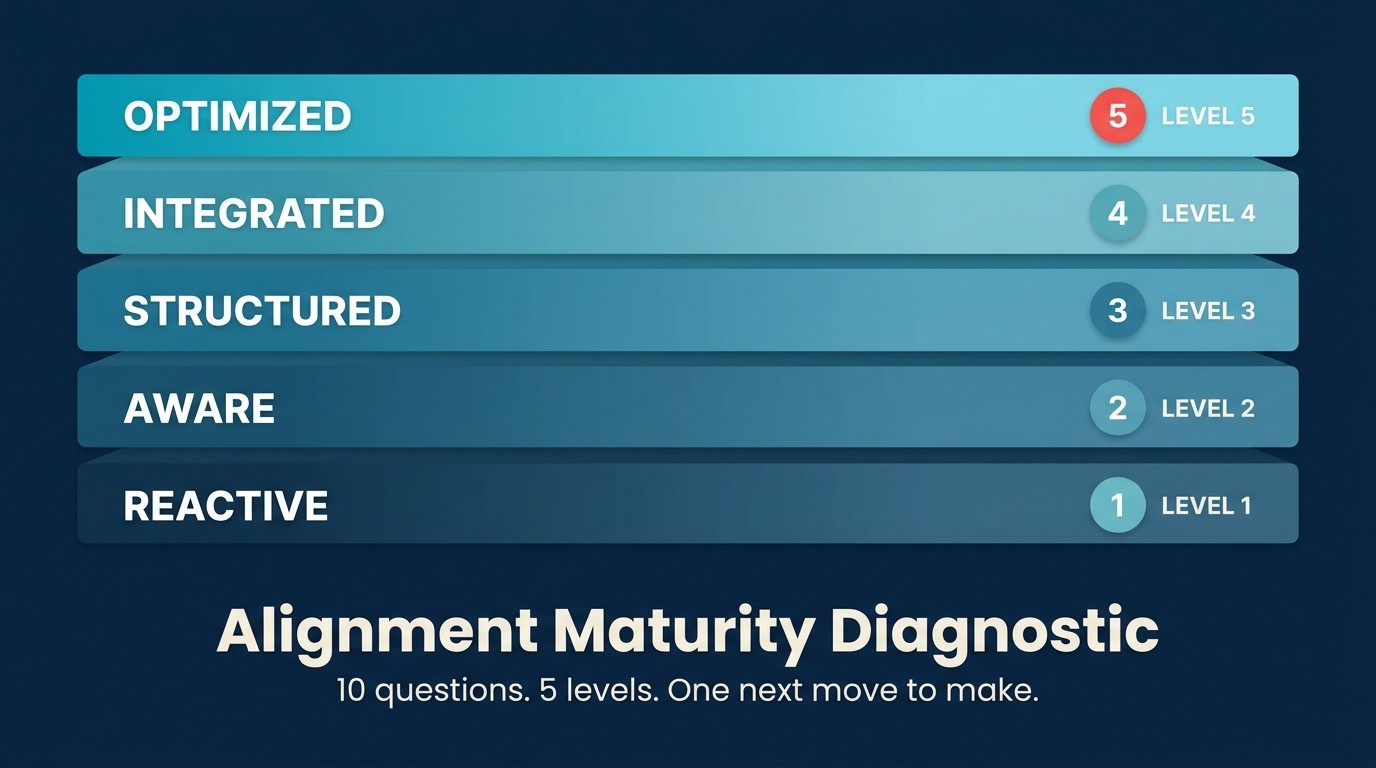
マーケティング・セールス連携成熟度診断は、収益チームを5つの成熟度ティア(サイロ化、リアクティブ、機能的、統合、予測)のいずれかに位置付け、単一の最も効果的な次の一手を特定する、10問20ポイントの自己採点ツールです。 一般的な連携調査とは異なり、この診断はマーケティングとセールスの責任者が同時に独立して完了するよう設計されています。同じ質問での回答の差異は、総合スコアよりも確実に構造的な乖離を明らかにします。
名前付きフレームワーク:マーケティング・セールス連携成熟度診断
この診断はマーケティング・セールス連携成熟度診断をフォーマル化します。収益チームの連携が耐久性があるか個人依存かを決定する10の構造的プロセス領域にわたる5ティアのスコアリングモデルです。5つのティア(サイロ化→リアクティブ→機能的→統合→予測)は文化的な印象ではなく、測定可能な収益の結果にマッピングされます。この診断は認識された連携と運営上の連携の間のギャップを表面化させるよう設計されています。Forresterはこれを大多数の連携イニシアチブが1四半期を超えて継続しない主要な理由として特定しています。
10の質問は3つの根本原因カテゴリにマッピングされます:共有定義(Q1、Q5)、プロセスインフラ(Q2、Q3、Q6)、フィードバックループ(Q4、Q7、Q8、Q9、Q10)。単一のカテゴリ全体でのゼロのパターンが最初に取り組む必要がある構造的なレイヤーを明らかにします。
主要データ:乖離のコスト
- SiriusDecisionsの調査によると、マーケティング・セールスが強く連携しているB2B企業は3年間で24%速い収益成長と27%速い3年間の利益成長を達成します。
- HubSpotのマーケティング状況レポートによると、マーケティングとセールスチームが緊密に連携していると説明する企業はわずか**8%**です。
- Forresterによると、マーケティングとセールスの両方がICPに合意している場合、MQLからクローズドウォンまでのコンバージョン率は**最大45%**改善します。
この診断の使い方
誰が完了すべきか: マーケティング責任者とセールス責任者が独立して同時に。RevOpsのリードがいる場合、彼らはオブザーバーとして3部目を完了します。各当事者が完了する前にスコアを共有しないでください。
スコアリングスケール: 各質問は0、1、または2のスコアで評価されます。
- 0 = 整備されていない;これは欠如しているか、インフォーマルにのみ存在する
- 1 = 部分的または不一致;書面には存在するが実行は信頼できない
- 2 = 完全に整備されており機能している;両チームがこれは真実だと同意する
合計: 10問 × 2ポイント = 最大20ポイント。
比較ステップが重要です。 両当事者が完了したら、合計スコアではなく質問ごとにスコアを公開してください。Q別の比較を使って特定の意見の相違を表面化させてください。マーケティングとセールスが2ポイント差のある質問はすべて、認識の問題に見せかけた構造的なギャップです。それらが最初に議論する質問です。合意して弱い質問よりも。
リズム: 四半期ごとに実施してください。ティア間の進展はチームが期待するよりも遅い傾向があります。ティア2からティア3への移行は通常、2回の全社セッションではなく、60〜90日間の一貫した実行が必要です。B2B連携に関するForresterの調査は、多くのリーダーが自分たちは連携していると信じているがチームはそうではないと発見しました。認識と現実の間の診断的なギャップがまさにこの演習が表面化させるものです。
10の診断質問
上記のスケールを使用して各質問に0、1、または2のスコアを付けてください。
Q1. マーケティングとセールスは、過去6ヶ月以内にレビューされた書面による合意済みのMQLとSQLの定義を共有していますか?
スコア2の条件:文書が存在し、両チームが承認し、過去6ヶ月以内にレビュー(必要に応じて更新)された。 スコア1の条件:定義は存在するが6ヶ月以上見直されていない、または一方のチームには定義があり他方のチームが完全に支持しない。 スコア0の条件:書面による定義が存在しない、または各チームが異なるインフォーマルな理解から運営している。
参照:MQLの共同定義プロセスおよびSQLの受理基準。
Q2. インバウンドMQLに対する5分以内の対応ウィンドウなど、両チームが承認した文書化された引き渡しSLAがありますか?
スコア2の条件:SLAが書面にあり、両チームが合意し、対応時間が共有ダッシュボードで追跡されている。 スコア1の条件:SLAは口頭または一方のチームのプロセスドキュメントに存在するが、監視または強制されていない。 スコア0の条件:SLAが存在しない;対応時間は最初にキューを確認した人に依存している。
参照:5分対応SLAの設計。
Q3. CRMはPipelineデータの単一信頼できる情報源として機能していますか?スプレッドシートやサイロ化されたダッシュボードではなく。
スコア2の条件:すべてのPipelineレポートがCRMから来ている;どちらのチームもそれと矛盾する影のスプレッドシートを維持していない。 スコア1の条件:CRMが主要なソースだが、一部のチームメンバーが常に一致しない独自の数字を計算している。 スコア0の条件:マーケティングとセールスが異なるソースからPipelineデータを引き出し、定期的に異なる数字に到達する。
Q4. マーケティングとセールスは、単に状態を報告するだけでなく、Leadの質とPipelineをレビューするために週次(または少なくとも隔週)でミーティングしていますか?
スコア2の条件:MQLの質、コンバージョン率、Pipelineの健全性をカバーする構造化されたアジェンダを持つ定期的なミーティングが存在し、めったにキャンセルされない。 スコア1の条件:ミーティングは存在するが、しばしばスキップされ、状況レポートに置き換えられ、または意思決定ではなく報告が中心になっている。 スコア0の条件:このトピックをカバーする定期的な共同ミーティングが存在しない。
参照:共同PipelineレビューのRhythmおよび週次Lead品質コール。
Q5. 営業担当者がそれを調べなくても説明できる共有ICP定義がありますか?
スコア2の条件:ファームグラフィック、行動、状況の基準を持つ書面によるICPが存在する。3人のAEに理想的な顧客を説明するよう頼んだ場合、彼らの答えは実質的に重なる。 スコア1の条件:ICP文書は存在するがAEがそれを資格確認に使っていない;マーケティングは1つのセグメントをターゲットにし、セールスは別のセグメントに引き寄せられている。 スコア0の条件:書面によるICPが存在しない、またはICPはVP Salesのメンタルモデルにのみ存在する。
参照:共有ICPフレームワーク。
Q6. 両チームが一貫して従う文書化されたLead却下とリサイクルのワークフローがありますか?
スコア2の条件:営業担当者がMQLを却下する時、定義されたプロセスが起動する:CRMの却下理由コード、マーケティングへのリサイクルパス、そしてマーケティングがスコアリングを調整するために使用するフィードバックループ。 スコア1の条件:プロセスは書面には存在するが却下理由コードがめったに入力されない、または却下されたLeadがリサイクルされずに消える。 スコア0の条件:フォーマルなプロセスなし;却下されたLeadはフォローアップなしにCRMに座っているだけ。
参照:Lead却下とリサイクルのワークフローおよびMQL却下フィードバックループ。
Q7. 両チームが正確だと合意する方法で、マーケティングソース対マーケティング影響Pipelineを報告できますか?
スコア2の条件:両方の数字がCRMに存在し、両チームがそれらを計算するために使用される定義に合意しており、Pipeline レビュー中に方法論について争わない。 スコア1の条件:1つまたは両方の数字は存在するが、それらがどのように計算されているかまたは何が含まれているかについて継続的な意見の相違がある。 スコア0の条件:アトリビューションが争われている;マーケティングとセールスは定期的にリーダーシップに対してPipelineへの貢献について相反する数字を提示する。
Q8. マーケティングは少なくとも月次でセールスから構造化されたフィードバック(受注・失注のテーマ、反論のパターン、または競合インテル)を受け取っていますか?
スコア2の条件:フォーマルなフィードバックのメカニズム(月次コール、共有ドキュメント、CRMフィールド)が存在し、マーケティングがそれを積極的にメッセージングとコンテンツの更新に使用している。 スコア1の条件:フィードバックはアドホックに発生するか、各チームの特定の人々の間の個人的な関係に依存している。 スコア0の条件:マーケティングは何かがうまくいかない時だけセールスが考えていることを知る;構造化されたフィードバックチャネルがない。
Q9. セールスがトピックを指名し、マーケティングがアセットを作成し、現場での使用がレビューされる共同コンテンツプロセスがありますか?
スコア2の条件:マーケティングはセールスからのトピックリクエストを収集するための文書化されたプロセスを持ち、作成されたアセットが実際に案件で使用されているかどうかを追跡するメカニズムがある。 スコア1の条件:マーケティングは時々セールスが必要なものを尋ねるが、プロセスはインフォーマルでコンテンツが使用されているかどうかを知る方法がない。 スコア0の条件:マーケティングは自分たちの判断に基づいてコンテンツを作成する;セールスはマーケティングのアウトプットが現場のニーズに合わないため独自の素材を作成する。
Q10. リーダーシップは、少なくとも月次で別々のマーケティングとセールスのスコアカードではなく、共有収益ダッシュボードをレビューしていますか?
スコア2の条件:CMOとCRO(またはその同等の人)が共同でレビューする1つの収益ダッシュボードがあり、マーケティングのPipeline貢献、コンバージョン率、セールスのパフォーマンスを単一ビューでカバーする。 スコア1の条件:リーダーシップは時々統合データを見るが、標準的なレポートリズムは各チームの別々のスコアカードを使用している。 スコア0の条件:マーケティングとセールスはそれぞれ独自のスコアカードをリーダーシップに提示する;共有ビューが存在しない。
スコアリング基準
| 合計スコア | 成熟度ティア |
|---|---|
| 0〜6 | ティア1:サイロ化 |
| 7〜10 | ティア2:リアクティブ |
| 11〜14 | ティア3:機能的 |
| 15〜17 | ティア4:統合 |
| 18〜20 | ティア5:予測 |
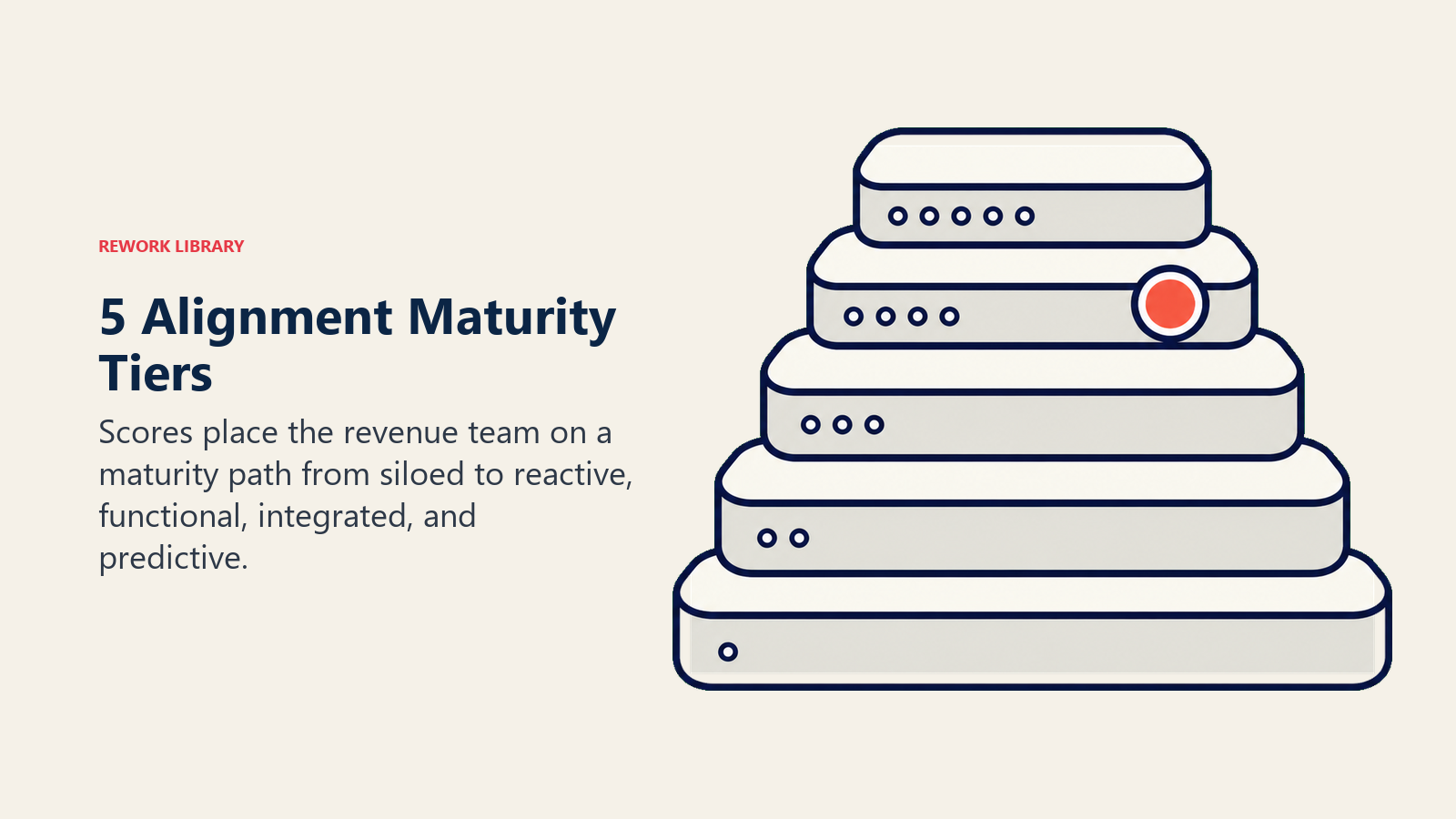
5つの成熟度ティアの定義
各ティアの詳細な説明(どのように見えるか、その中で働く感覚、典型的な収益への影響)については、連携成熟度モデルを参照してください。このセクションは行動するのに十分な情報を提供し、その記事は完全な全体像を提供します。
ティア1:サイロ化(スコア0〜6)
マーケティングとセールスは、たまたま同じ会社を共有しているだけの別々のビジネスとして運営しています。共有定義なし、定期的な共同のリズムなし、合意されたアトリビューションモデルなし。Pipeline の失敗が起きた時、デフォルトの反応は相手チームを責めることです。MQL数量がマーケティングの主要指標であり、クォータ達成がセールスの唯一の指標です。どちらも相手に繋がっていません。
ティア1組織の典型的な言葉:セールスから「あのLeadはゴミだ」、マーケティングから「彼らはフォローアップしない」、どちらも毎四半期繰り返されます。
ティア2:リアクティブ(スコア7〜10)
一部の共有プロセスは存在しますが、それらは個人的な関係によって支えられています。CMOとCROが良い関係にあるため、連携はうまくいっています。そのうちの一人が去るまでは。MQLとSQLの定義はある時点で書かれましたが見直されていません。共同ミーティングは散発的に起き、通常は悪い月の後。アトリビューションは争われますが正式に解決されることはありません。
ティア2チームは対人化学が構造的なギャップを隠すため、実際よりも連携していると感じることが多いです。
ティア3:機能的(スコア11〜14)
10の診断領域のほとんどにわたって文書化されたプロセスが存在します。ミーティングが一貫して実施されます。MQLの定義が合意されており書面にあります。しかし実行は不均一です。ある週は引き渡しSLAが守られ、ある週は守られません。アトリビューションは原則として合意されていますが実際には争われています。CRMデータの質は「十分に良い」ものの信頼できるレベルではありません。
ティア3はほとんどの中堅市場の収益チームが位置するところです。プロセスはあります。それらを維持する規律はまだ完全に定着していません。
ティア4:統合(スコア15〜17)
CRMが真に信頼できる情報源です。アトリビューションが合意されており、どちらのチームもPipeline レビュー中に数字について争いません。引き渡しSLAが追跡され両チームに見えています。受注・失注フィードバックがセールスからマーケティングへ月次で流れ、マーケティングがそれを使っています。共同Pipeline レビューが収益組織のリズムであり、単発のイベントではありません。
ティア4のギャップは知られています。リーダーシップがそれらを名指しでき、回避するのではなく積極的に対処しています。
ティア5:予測(スコア18〜20)
連携は個人依存ではなく構造的です。収益インテリジェンスツールが会話データをマーケティング計画に提供します。インテントシグナルがアウトバウンドシーケンスとキャンペーンターゲティングの両方に情報を提供します。マーケティングとセールスが別々のスライドではなく共同で予測します。フィールドアクティビティとコンテンツ制作の間のフィードバックループが四半期ではなく数日で閉じます。
中堅市場の企業でティア5にあるものは非常に少ないです。そうした企業は通常、強いRevOps機能と、連携を文化的価値としてではなく運営システムとして扱うリーダーシップを持っています。Gartnerは予測しています、最も高成長の企業の75%がRevOpsモデルを採用するでしょう。これがスケールでティア5を達成可能にする構造的な基盤です。
あなたのスコア:次にすべきこと
ティア1〜2:ツールではなく定義から始める
ソフトウェアを購入しないでください。2日間のオフサイトを実施しないでください。3つのことから始めてください:(1) MQLとSQLの定義を書くための共同セッション、(2) 共有ICP文書、(3) 1回の定期的な週次ミーティング。これら3つの動きはどんなツール購入よりも多くをもたらします。
診断からの最も高い効果の質問:Q1(MQL/SQL)、Q5(ICP)、Q4(共同ミーティング)。
参照:MQL定義フレームワークおよび共有ICPフレームワーク。
ティア2〜3:引き渡しをフォーマル化しループを閉じる
定義はあります。今は引き渡しを信頼できるものにしてください。インバウンドMQLのための5分SLAを構築してください。CRMに却下理由コードを追加してください。両チームが見ることができるクローズドループレポートを構築してください。これらの仕組みが個人依存のプロセスを構造的なものに変えます。
最も高い効果の質問:Q2(SLA)、Q6(却下ワークフロー)、Q3(信頼できる情報源としてのCRM)。
参照:クローズドループレポートの説明。
ティア3〜4:アトリビューションを修正し、受注・失注プログラムを開始する
プロセスは動いています。しかしデータの信頼がまだギャップです。ここで共同アトリビューションの作業が効果を発揮します。ソースと影響の定義について合意してください。共有の月曜ダッシュボードを構築してください。マーケティングが現場から一貫して聞くための構造化された受注・失注プログラムを開始してください。このティアはまたコンバージョン率分析が両チームに信頼できるデータを生み出し始める場所です。
最も高い効果の質問:Q7(アトリビューション)、Q8(構造化されたフィードバック)、Q10(共有ダッシュボード)。
ティア4〜5:収益インテリジェンスを重ねる
ティア4では、プロセスが堅固です。次のステップはデータをより速く流すことです。収益インテリジェンスプラットフォームはマーケティングに案件の会話へのアクセスを与えます。インテントデータは両チームが手を挙げる前にインマーケットのアカウントを特定することを可能にします。共同予測セッションが別々の計画サイクルを置き換えます。
最も高い効果の質問:Q7、Q9、Q10。それらが存在するかどうかではなく、それらのプロセスの質に焦点を当ててください。
最大のギャップを明らかにする質問
すべての質問が等しくはありません。10のうち3つが構造的な前提条件です。それらが0のスコアの場合、他の改善は持続しません。
Q3(信頼できる情報源としてのCRM)が0のスコアの場合: これより前に立ち止まって修正してください。他のすべての連携イニシアチブは共有データに依存しています。異なる数字から作業している2つのチームは、永遠に互いに過ぎ去って議論し続けます。信頼できる単一のソースなしではPipeline カバレッジ分析は意味をなしません。
Q1(MQL/SQL)とQ5(ICP)の両方が0のスコアの場合: 連携の作業は意味のある形で始まることができません。共有入力のないプロセスを最適化しようとしています。これらの定義が基盤です。
Q7(アトリビューション)が0のスコアだがQ10(共有ダッシュボード)が2のスコアの場合: レポートの問題に見せかけたデータ信頼の問題があります。ダッシュボードは存在しますが、一方のチームはその上の数字を信じていません。アトリビューションの連携が修正です。
チームの演習として診断を実施する
ステップバイステップの完全なプロトコル:
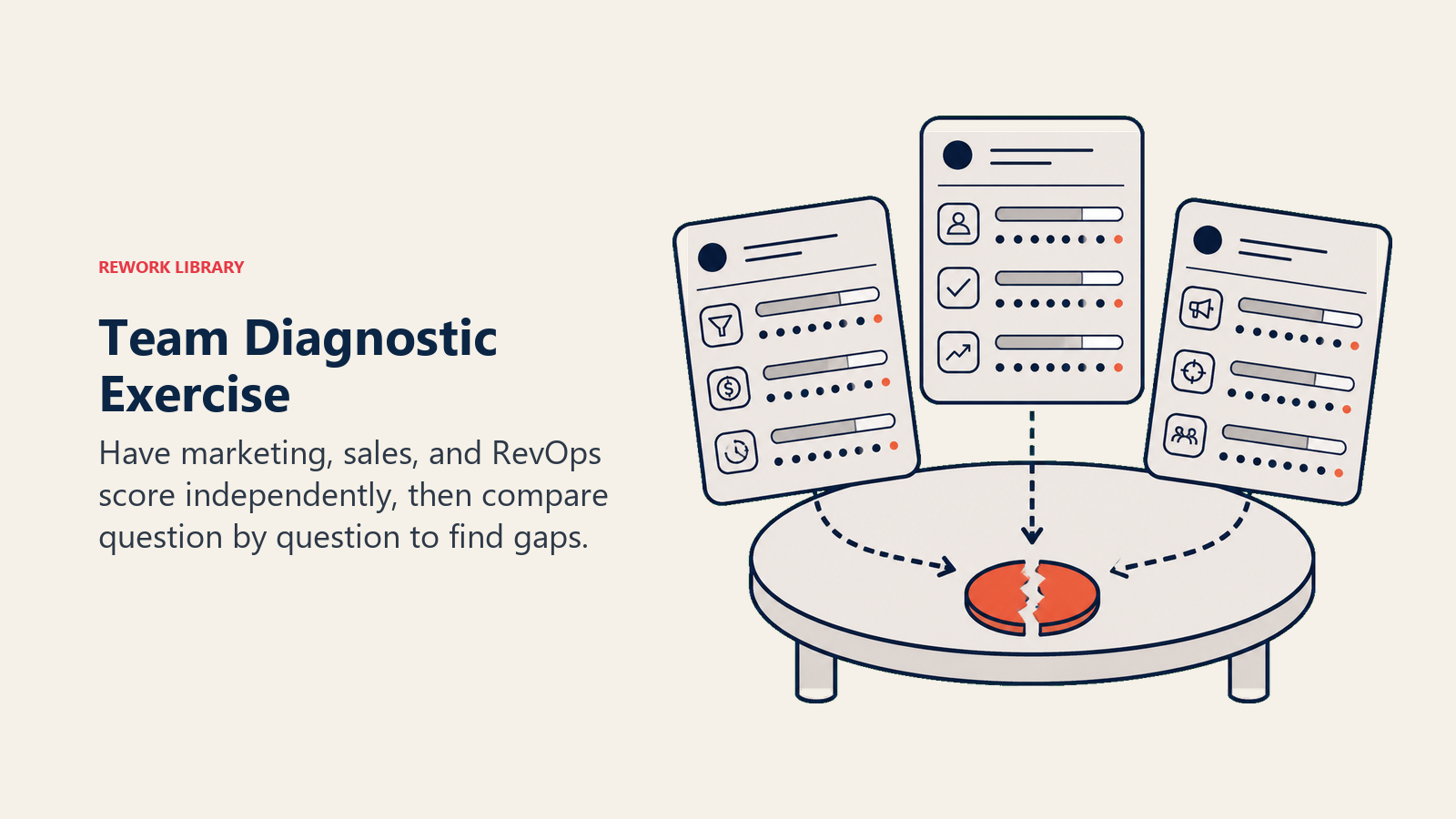
- マーケティング責任者とセールス責任者の両方が最初にスコアを議論せずに独立して診断を完了します。RevOpsのリードがいる場合、彼らは3部目をオブザーバーとして完了します。
- 合計スコアではなく質問ごとにスコアを公開してください。Q別の比較を使って特定の意見の相違を表面化させてください。
- スコアが2ポイント差のある各質問:ここに時間を使ってください。これは採点エラーではなく、構造的な乖離です。
- まだ対処されていない最低の合計スコアの上位3つの質問に合意してください。
- 上位3つのそれぞれに名前付きの担当者と30日間のアクションを割り当ててください。
- 90日後に診断を再実施するカレンダーリマインダーを設定してください。
すべきでないこと: スコアを合計して単一の数字に平均化して先に進まないでください。視点の間のギャップが要点です。マーケティングがQ8に2(構造化されたフィードバックが存在する)と採点し、セールスが0(フィードバックを与えることはない)と採点した場合、それは採点の誤りではなく壊れたプロセスです。
質問から記事へのマッピング
このテーブルを使用して、各診断ギャップをこのライブラリの適切なディープダイブリソースにルーティングしてください。
| 質問 | トピック領域 | おすすめ記事 |
|---|---|---|
| Q1:MQL/SQL定義 | 共有定義 | MQL定義フレームワーク |
| Q2:引き渡しSLA | 対応時間 | 5分対応SLA |
| Q3:信頼できる情報源としてのCRM | データインフラ | CRMを単一の信頼できる情報源として |
| Q4:共同ミーティングのリズム | 運営リズム | 共同PipelineレビューのRhythm |
| Q5:共有ICP | ターゲティング | 共有ICPフレームワーク |
| Q6:Lead却下/リサイクル | 引き渡しプロセス | Lead却下とリサイクル |
| Q7:アトリビューション合意 | 測定 | 両チームが信頼するアトリビューションモデル |
| Q8:セールスからマーケティングへのフィードバック | フィードバックループ | マーケティングへの受注・失注フィードバック |
| Q9:共同コンテンツプロセス | イネーブルメント | セールスイネーブルメントコンテンツ対現場のニーズ |
| Q10:共有ダッシュボード | 可視性 | 収益チームの8つの共有ダッシュボード |
Rework分析: 中堅市場の収益チームにおいて、最も一般的な失敗パターンは診断でティア3のスコアを取りながら実際にはティア1の行動をすることです。チームはMQLの定義を文書化し、共同ミーティングを実施し、CRMベースのダッシュボードを構築しています。しかし実行が十分に不一致なため、結果はティア1のように見えます。診断のギャップでQ3(信頼できる情報源としてのCRM)とQ7(アトリビューション合意)の間のものがこのパターンの最も信頼できる指標です。Q3が2でQ7が0の場合、データは存在するが信頼されていません。つまり、すべての下流の決定は争われた証拠で行われています。修正は次のPipeline レビューではなく、次の四半期が始まる前の共同アトリビューションワーキングセッションです。
最も重要な1つの質問
診断は意思決定を促す場合にのみ有用です。これを完了した後、部屋を出る前に、一緒に1つの質問に答えてください:
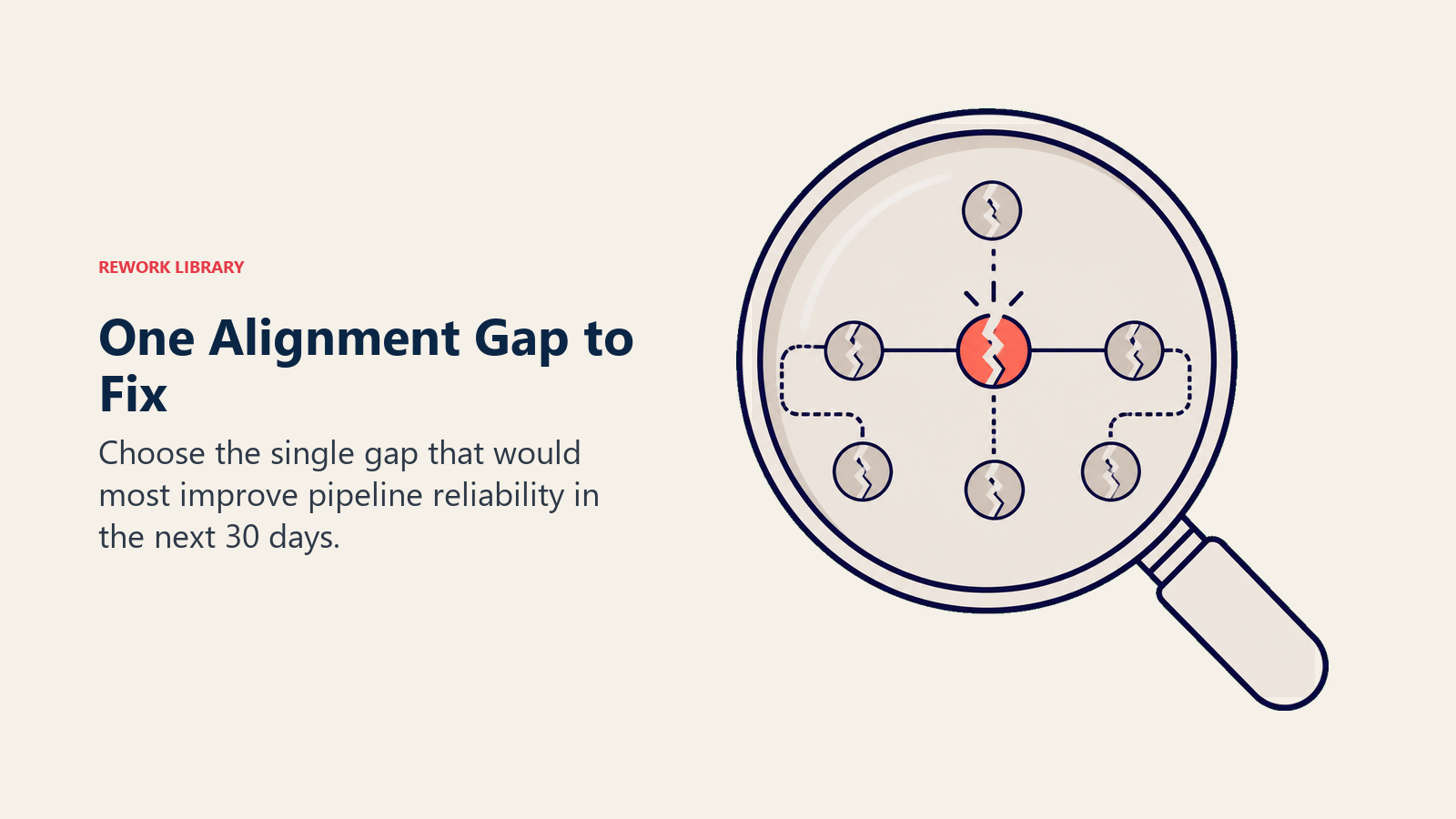
次の30日以内に修正された場合、Pipelineの信頼性を不確かから予測可能に最も改善するのはどの単一のギャップですか?
最も修正しやすいギャップではありません。マーケティングをよく見せる、またはセールスをよく見せるものでもありません。解決した場合にPipelineの信頼性を不確かから予測可能に変えるものです。
それが始まるところです。
修正にもかかわらず繰り返し現れるパターンについては、よくある連携の失敗と修正を参照してください。収益ベンチマークを持つ完全な5ティアモデルについては、連携成熟度モデルを参照してください。ティア4〜5の優先事項が予測精度の場合、予測の基礎は共同予測を可能にする仕組みを扱っています。
よくある質問:マーケティング・セールス連携成熟度診断
マーケティングとセールスが異なる回答を出した場合、診断をどのようにスコアリングしますか?
それぞれ別々にスコアリングしてください。それが目的です。マーケティングが質問に2を付け、セールスが0を付けた場合、採点エラーではなく構造的な乖離を特定しました。スコアを平均化しないでください。2ポイント差のある各質問でワーキングセッションを開催してください。視点の間のギャップが演習の最も行動可能な成果です。
誰がこの診断を受けるべきですか?
マーケティング責任者とセールス責任者が独立して同時に完了します。RevOpsのリードがいる場合、彼らはオブザーバーとして3部目を完了します。両当事者が完了するまで答えを共有しないでください。正式なマーケティングリーダーがいない企業では、デマンドジェネレーションを担当している人が最良のマーケティングの代理人となります。同じ人が両側を完了する場合、演習はその価値のほとんどを失います。
この診断をどのくらいの頻度で実施すべきですか?
四半期ごとが推奨されるリズムです。ティア間の移動には60〜90日間の一貫した実行が必要なため、四半期ごとの実施は、チームが頻繁すぎるスコアリングを求められることなく意味のある進展を示します。現在のセッションを閉じるのと同時にQ+1の日程を予約してください。カレンダーに次回日程がない連携イニシアチブはめったに実施されません。
ほとんどの質問でスコアが大きく異なる場合はどうすればいいですか?
3つ以上の質問でマーケティングとセールスの間に2ポイントのギャップがある場合、個々のスコアに関わらずティア1または低ティア2組織のシグナルです。意見の相違が最も大きく、合計スコアが最も低い3つの質問を優先してください。それらが最もPipelineリスクを生み出しているプロセスのギャップです。すべてを同時に修正しようとしないでください。1つを選んで次の30日以内に構造的に対処してください。
新しいCMOまたはCROとともにこの診断を使用できますか?
はい、特に新しい収益リーダーのOnboardingに有用です。最初の30日以内に診断を実施することで、どちらのチームからの逸話的な印象に頼るのではなく、連携がどこにあるかの構造化されたマップを新しいCMOまたはCROに提供します。質問ごとの比較は、前任者のチームがプロセスが機能していると信じていた場所と実際にどうだったかを表面化させます。
ティア1チームの最小限の最初のステップは何ですか?
3つのこと、順番に:書面によるMQL/SQL定義に合意する(Q1)、共有ICPを書く(Q5)、週次の共同Pipeline ミーティングをスケジュールする(Q4)。これら3つの動きは時間以外何もコストがかからず、これら3つが少なくとも60日間一貫して動いてから導入するまで、どんなソフトウェア購入よりも連携に多くをもたらします。
診断が責任転嫁のセッションにならないようにするにはどうすればいいですか?
セッションが始まる前に明示的に枠組みしてください:目標は一方のチームが他方よりもよくパフォーマンスしていることを証明することではなく、構造的なギャップを見つけることです。マーケティングとセールスのリーダーの両方が独立してスコアリングし、質問ごとにスコアを同時に公開します。RevOps(または進行役)は比較をパフォーマンスデータではなくプロセスデータとして提示します。2ポイントのギャップを示す質問は名前付きの担当者と30日間のアクションを持つ「修正リスト」に入ります。誰が失敗したかについての回顧録にはなりません。
さらに詳しく

Principal Solution Architect
On this page
- 名前付きフレームワーク:マーケティング・セールス連携成熟度診断
- この診断の使い方
- 10の診断質問
- スコアリング基準
- 5つの成熟度ティアの定義
- ティア1:サイロ化(スコア0〜6)
- ティア2:リアクティブ(スコア7〜10)
- ティア3:機能的(スコア11〜14)
- ティア4:統合(スコア15〜17)
- ティア5:予測(スコア18〜20)
- あなたのスコア:次にすべきこと
- ティア1〜2:ツールではなく定義から始める
- ティア2〜3:引き渡しをフォーマル化しループを閉じる
- ティア3〜4:アトリビューションを修正し、受注・失注プログラムを開始する
- ティア4〜5:収益インテリジェンスを重ねる
- 最大のギャップを明らかにする質問
- チームの演習として診断を実施する
- 質問から記事へのマッピング
- 最も重要な1つの質問
- さらに詳しく