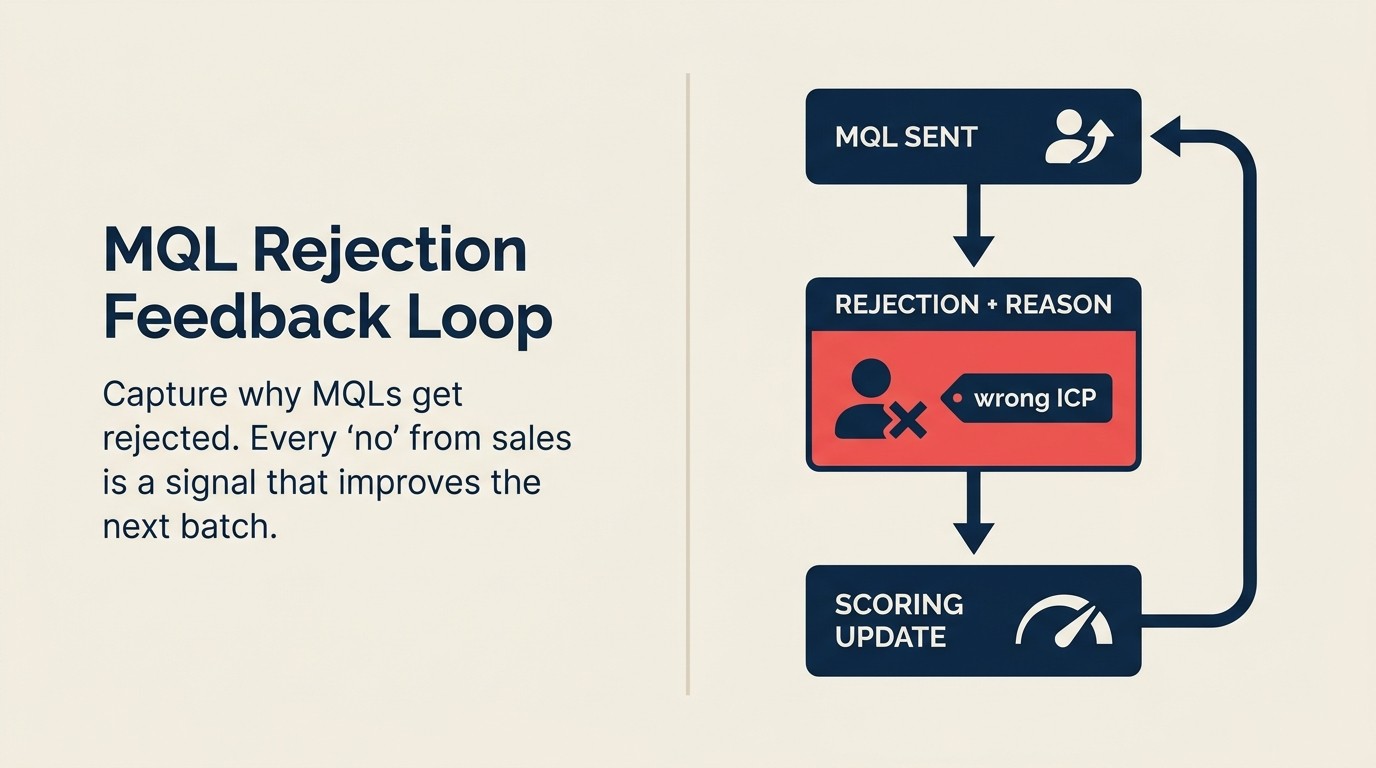
MQL Rejection Feedback Loop:セールスの拒否をマーケティングインテリジェンスに変える
Turn this article into takeaways for your work.


Each assistant summarizes the article only for you and suggests best practices for your work.
ほとんどの企業はMQL量を追跡しています。マーケティングがセールスに渡したLeadの数を数え、ターゲットと比較し、次に進みます。MQLが拒否される理由を追跡しているのはほぼゼロです。
そのギャップがAlignmentの崩壊する場所です。
担当者が理由を記録せずにMQLを拒否すると、その拒否は見えません。マーケティングはフィットの問題、タイミングの問題、またはデータの問題かどうかを知りません。見えないものは修正できません。そのため、同じLeadを生み出し続け、セールスはその一部を拒否し続け、両チームが四半期の不足に対してお互いを責め続けます。
MQL Rejection Feedback Loopは、すべての「No」をデータポイントに変え、そのデータポイントを実際に必要なアクションにルーティングすることでこれを修正します。GartnerのMQLの定義は、MQLをマーケティングチームがセールス準備完了だとレビューして判断したLeadとして定義しています。拒否はそのレビュー閾値での崩壊を示すものであり、ランダムな失敗ではありません。
なぜ拒否が最良のLead品質シグナルなのか
承認は何が機能しているかを確認します。拒否は何が壊れているかを明らかにします。
担当者がMQLを受け入れるとき、マーケティングに伝えています:「これは基準を満たしている。」それは有用な確認です。しかしそれは彼らが評価している品質の次元を教えてくれず、戻している35%のLeadを改善するのに役立ちません。
拒否こそがインテリジェンスが存在する場所です。分類された理由のない35%の拒否率は単なるノイズです:両チームを気分悪くさせますが、どちらのチームも何をすべきかは教えません。分類された理由を持つ同じ35%の率は、ロードマップです。
拒否の60%が「ICPに合わない」なら、マーケティングにはオーディエンスターゲティングの問題があります。キャンペーンのセグメンテーションを修正してください。共有ICPフレームワークが「ICP」が両チームにとって実際に何を意味するかの参照点です。
拒否の40%が「低インテント」なら、マーケティングにはスコアリングの問題があります。モデルが購買行動を示す前にLeadを促進しています。
拒否の25%が「悪いデータ」なら、マーケティングにはデータ品質の問題、またはフォームの問題があります。有効な電話番号がないか、企業名が「テスト」だからという理由で担当者がLeadを跳ね返しています。
これらは全く異なる問題であり、全く異なる修正があります。分類された拒否理由なしでは、それらを「Lead品質の問題」という区別のない1つとして扱い、実際の根本原因と一致しないかもしれない解決策を推測します。次の問いは、実際の根本原因は何か、そしてあなたの場合はどれか、ということです。
主要データ:MQL RejectionとLead品質
- Marketing SherpaのB2Bベンチマークレポートによると、平均B2B MQL拒否率は**44%**であり、セールスに渡されたLeadのほぼ半分が戻されています。
- Demand Gen Reportによると、わずか23%の企業がCRMでMQL拒否理由を系統的に捕捉・分類しており、大多数はLeadが失敗する理由の実行可能なデータなしのままです。
- SiriusDecisionsの調査に基づくと、拒否理由が分類されてアクションに移された場合、企業は構造化されたFeedback Loopを実装してから2四半期以内に拒否率を平均31%削減しています。
MQL Rejectionの3つの根本原因
すべてのMQL拒否は3つの根本原因の1つに遡ります。それらを混同することが両チームの時間を最も速く無駄にする方法です。
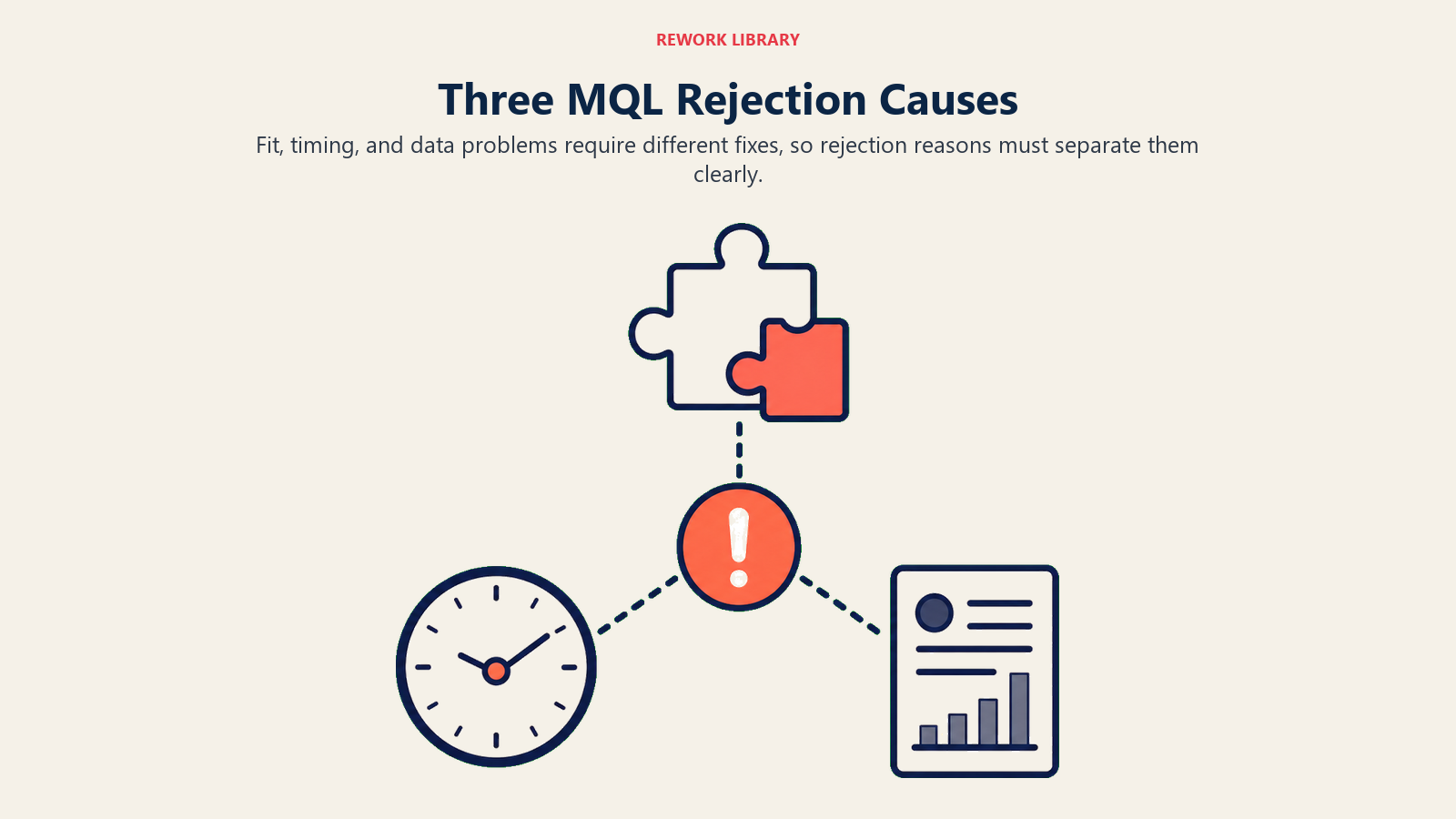
根本原因1:間違ったフィット。 LeadはICPと一致しない属性を持っています:間違った企業規模、間違った業種、間違った役職、間違った地域。マーケティングのAttribution調査は、フィットの失敗がAttributionデータを歪めることを明らかにしています。間違ったフィットのLeadがClosed-wonのプールに混在していると、すべてのチャネルが実際よりも効果的に見えます。Leadは本物の企業の本物の人で、真剣に興味を持っているかもしれません。しかし彼らは企業が収益を上げて提供できる買い手ではありません。フィットの拒否はオーディエンスターゲティング、コンテンツチャネルの選択、またはICP定義自体の問題を示します。
根本原因2:間違ったタイミング。 Leadは正しい属性を持っていますが、間違った行動シグナルがあります。彼らは早期の調査モードにある本物のICPのマッチで、解決策を積極的に評価しているわけではありません。または6か月前にWhitepaperをダウンロードして、再エンゲージする前にNurtureシーケンスが彼らを促進しました。タイミングの拒否はスコアリングモデルの閾値、Leadの劣化ルール、またはNurtureシーケンスが早期促進をトリガーする問題を示します。
根本原因3:間違ったデータ。 Leadレコードが不完全または不正確です。電話番号なし。企業名が「N/A」と入力されています。役職フィールドが「asdf」と表示されています。個人メールアドレスで企業との関連付けなし。LeadはICPに実際に合っていて真の購買インテントを持っているかもしれません。しかしレコードが壊れているため判断できません。データの拒否はフォームのバリデーション、データエンリッチメントの設定、またはCRMの衛生上の問題を示します。
各根本原因には異なる修正が必要です。フィットの問題にはキャンペーンの変更が必要です。タイミングの問題にはスコアリングモデルの変更が必要です。データの問題にはエンリッチメントとフォームフィールドの変更が必要です。これら3つの原因のまわりに拒否の分類体系を構築することが、Feedback Loopを装飾的でなく運用可能にするものです。つまり、分類体系の設計そのものが、ほとんどのチームが認識しているよりも重要です。
拒否分類体系の構築
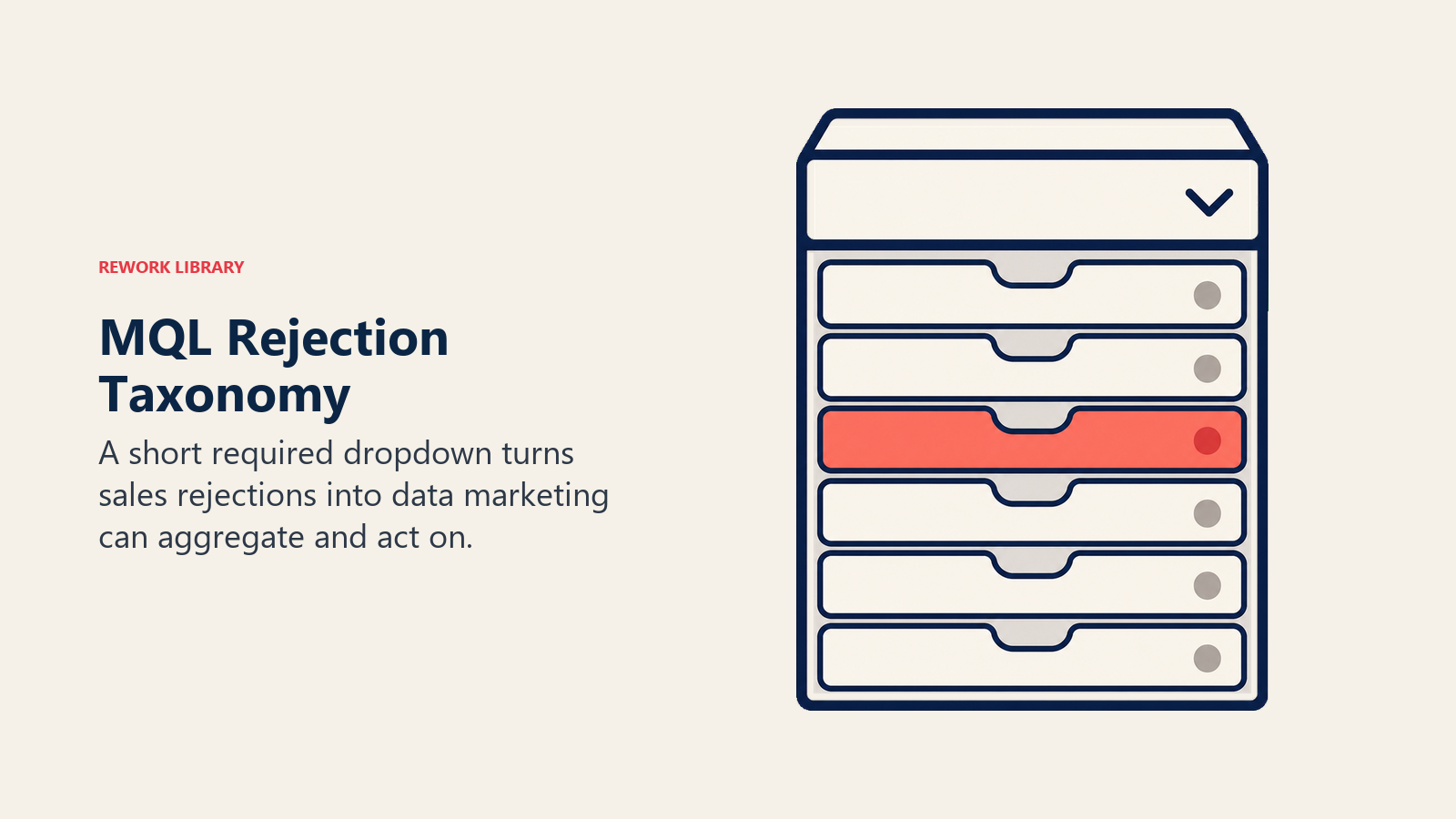
拒否分類体系とは、CRMのドロップダウンです:5〜7のオプションで、担当者がMQLを拒否する理由の90%をカバーします。自明であるほど短く、実行可能であるほど具体的である必要があります。
| カテゴリ | 根本原因 | 示すもの |
|---|---|---|
| ICPに合わない:属性の不一致 | 間違ったフィット | ターゲティング、セグメンテーション、またはICP定義の問題 |
| 低インテント:購買シグナルなし | 間違ったタイミング | スコアの重み付け、行動閾値、またはLead劣化 |
| コンタクト情報なし / 悪いデータ | 間違ったデータ | フォームバリデーション、エンリッチメント、またはCRM衛生 |
| 重複 / すでにPipelineにある | 間違ったデータ | CRM重複排除またはRoutingロジック |
| 早すぎる:Nurtureの候補 | 間違ったタイミング | 早期促進、Nurtureシーケンスのタイミング |
| 遅すぎる:すでに競合他社を評価した | 間違ったタイミング | Lead劣化または再エンゲージメントのタイミング |
| その他 | (なし) | 控えめに使用;四半期レビューでフラグを立てる |
「その他」のルールは厳格です:拒否の10%を超えてここに入ってはいけません。「その他」が一貫して10%を超えている場合、分類体系がカテゴリを見落としているか、担当者が怠惰なデフォルトとして使用しています。四半期ごとにレビューし、無料テキストのノートにパターンが現れている場合はカテゴリを追加します。
無料テキストの拒否理由は主要フィールドとして許可されていません。1か月に50件の拒否では、無料テキストは分析可能です。500件では、誰も集計できないユニークな文の管理不能な山になります。ドロップダウンは、規模でスケールする必要があるFeedback Loopには必須です。
Rejection-to-Intelligenceループ:4ステップのフレームワーク
Rejection-to-Intelligenceループは、Raw MQL拒否データを3種類の実行可能なマーケティングインテリジェンスに変換する運用フレームワークです:オーディエンスターゲティングの調整、スコアリングモデルの調整、データ品質の修正。4つのステップは各拒否されたLeadに対して順番に実行され、集計分析は週次と月次の間隔で行われます。
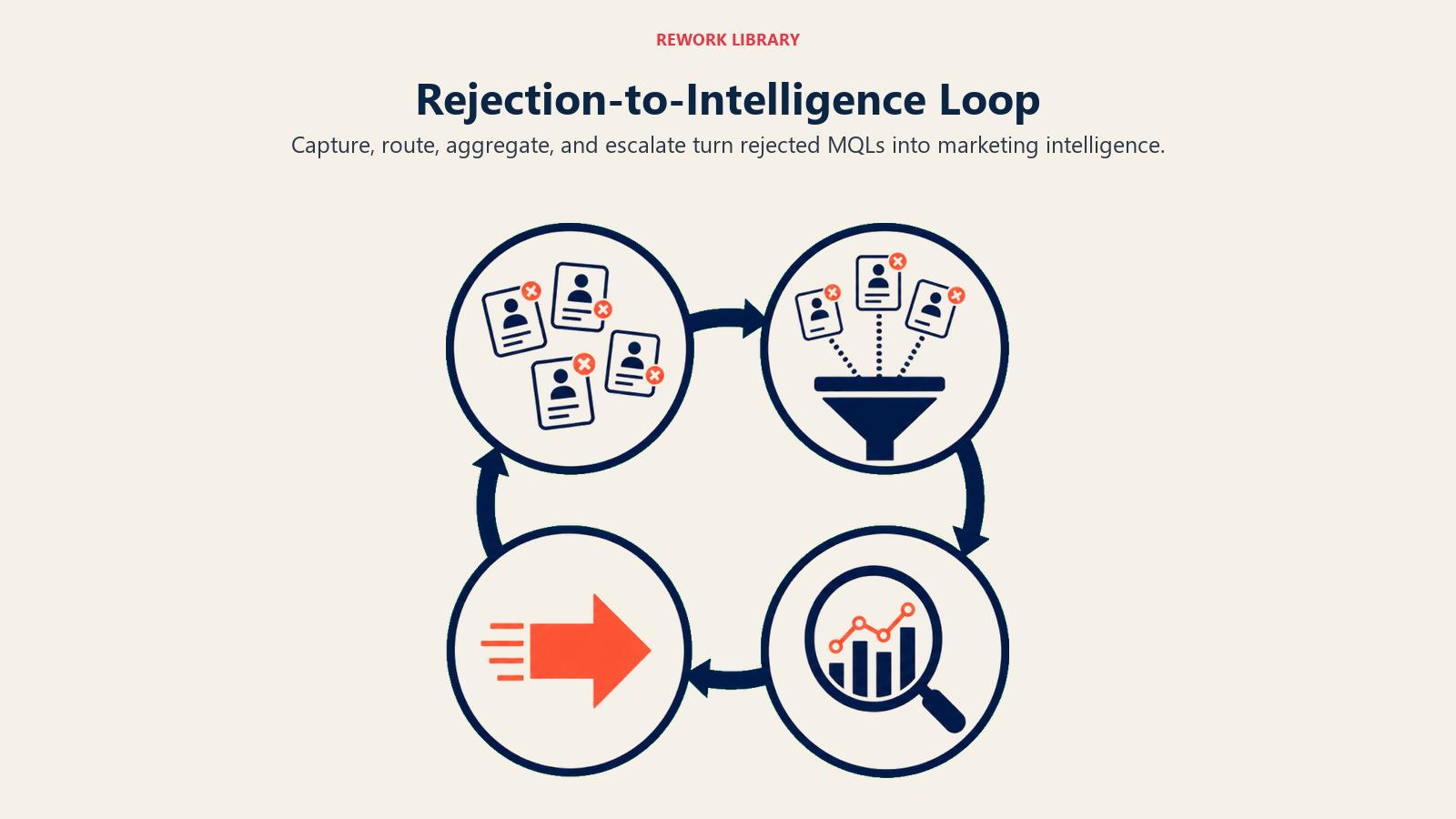
ステップ1:分類体系で捕捉する。 担当者はLeadを拒否とマークするときに、5〜7の必須拒否理由コードの1つを選択します。自由テキストを主要入力として使用しません:ドロップダウンのみ。これにより、数百または数千の拒否にわたって集計可能な一貫した分類が適用されます。
ステップ2:根本原因別にルーティングする。 各拒否カテゴリは事前定義された次のアクションにマッピングされます:間違ったフィットのLeadは不適格とされ、間違ったタイミングのLeadはカテゴリ固有のシーケンスでNurtureに再参入し、悪いデータのLeadはデータエンリッチメントキューに入ります。ルーティングは理由コードによって自動化されます。個々のLeadの処理に人間の判断は必要ありません。
ステップ3:週次ケイデンスで集計する。 週次Lead品質コールで、Demand Genはその週の拒否カテゴリの内訳を確認し、数値的に支配的なパターンを特定します。先週と同じカテゴリか?上昇傾向にあるか?特定のキャンペーンまたはソースが特定の拒否タイプの過大な割合を生み出しましたか?パターンの可視化が個々のデータポイントをシステムシグナルに変えます。
ステップ4:閾値が違反されたときにエスカレートする。 各拒否カテゴリには事前定義された閾値があります:「ICPに合わない」が4週連続で総拒否の20%を超えた場合、ICP定義レビューが自動的にトリガーされます。閾値は「いつ懸念すべきか?」という曖昧な質問を、判断の余地を取り除く事前合意された答えに置き換えます。
Reworkの分析: Lead品質を改善するRejection Feedback Loopとそうでないものの違いは、ステップ2にあります:ルーティングが理由コードによって自動化されているか、それとも手動で処理されているかです。手動ルーティングはラグを導入し(拒否されたLeadが数日間アクションなしで放置される)、不一致(異なる人が同じ理由コードに対して異なるルーティングの決定をする)、そしてVolume failureを引き起こします(月に200件以上の拒否では手動ルーティングが完全に壊れます)。分類カテゴリによる自動ルーティングがループをスケーラブルにするものです。分類体系の決定、具体的にはどの5〜7の理由コードを使うかは、どのツールの選択よりも重要です。
実際のFeedback Loop
ループには4つのステップがあり、それぞれ順番に実行されます。
ステップ1:担当者が拒否理由を選択する。 担当者がCRMでMQLを拒否とマークするとき、拒否理由のドロップダウンが必須です。10秒、1クリック。要件はフィールドバリデーションとして適用されます:拒否理由コードなしでLeadステータスを「拒否済み」に移動することはできません。これは任意ではありません。任意のフィールドは30〜40%の割合で記入されます。必須フィールドは95%以上の割合で記入されます。
ステップ2:拒否されたLeadが正しい次のアクションに自動ルーティングされる。 各拒否カテゴリは異なるWorkflowをトリガーします。「ICPに合わない」はLeadを不適格キューにルーティングします(アクティブなPipelineから退出しますが、データベースには残ります)。「早すぎる」はLeadを90日間の再エンゲージメントシーケンスを持つ適切なNurtureトラックにルーティングします。「コンタクト情報なし」はエンリッチメントツールに対する自動パスのためにデータエンリッチメントキューにルーティングします。ルーティングは自動化されています。各拒否されたLeadをどこに送るかを手動で決定する必要はありません。理由コードが決定を行います。
ステップ3:マーケティングが週次で拒否理由をレビューする。 週次Lead品質コールで、Demand Genはその週の拒否のカテゴリ別内訳をプルします。どのカテゴリが最も大きかったか?前の4週間と比較して上昇または下降していますか?特定のキャンペーンまたはソースが特定の拒否タイプの過大な割合を生み出しましたか?このレビューが分類体系データを会話に変換するものです。
ステップ4:月次ロールアップがカテゴリが閾値を超えたときにスコアリングまたはICPレビューをトリガーする。 週次レビューは戦術的な問題を捕捉します。月次ロールアップは構造的なずれを捕捉します。ForresterのRevenue Operations調査は、Lead品質の系統的な測定(拒否パターンを含む)を、高成長B2B企業とその他を分ける核心的な実践の1つとして特定しています。拒否カテゴリが4週間以上高い状態が続いているとき、それは悪いバッチではありません。プロセスレベルの変更が必要な壊れたシステムであり、キャンペーンの微調整ではありません。その時点で、MQL定義フレームワークを再開して再交渉する必要があります。
アクションをトリガーする閾値
閾値はFeedback Loopに牙を与えます。それなしでは、拒否データが蓄積されますが、「追跡して観察する」から「何かを変える」にいつエスカレートするかを誰も知りません。
| 拒否カテゴリ | アクション閾値 | トリガーされるアクション |
|---|---|---|
| ICPに合わない:属性の不一致 | 4週間以上にわたって総拒否の>20% | ICP定義またはキャンペーンターゲティングを再検討 |
| 低インテント:購買シグナルなし | 総拒否の>30% | 行動シグナルのスコアの重み付けをレビュー |
| コンタクト情報なし / 悪いデータ | 総拒否の>10% | データエンリッチメント監査またはフォームフィールドバリデーション |
| 重複 / すでにPipelineにある | 総拒否の>5% | CRM重複排除ルールまたはRoutingロジックのレビュー |
| 早すぎる:Nurtureの候補 | 総拒否の>25% | Lead scoringの劣化ルールまたはNurture促進基準 |
これらは開始時の閾値です。60日間のデータの後にビジネスに合わせて調整します。90日間のセールスサイクルを持つ企業は、14日間のサイクルを持つ企業とは異なるベースラインのタイミング拒否率を持ちます。絶対的な数値よりも傾向と相対的な構成が重要です。
「トリガーされるアクション」の列は閾値と同様に重要です。定義されたアクションなしでは、閾値を超えることは何かをすべきかどうかについての会話を生み出すだけです。事前定義されたアクションはその曖昧さを取り除きます:「ICPに合わない」カテゴリが20%に達したとき、マーケティングチームがその会話をする準備ができていると感じるかどうかに関係なく、ICP定義レビューがトリガーされます。
拒否されたLeadに何が起きるか
拒否されたLeadは消えません。拒否理由に基づいて3つのパスの1つにルーティングされます。
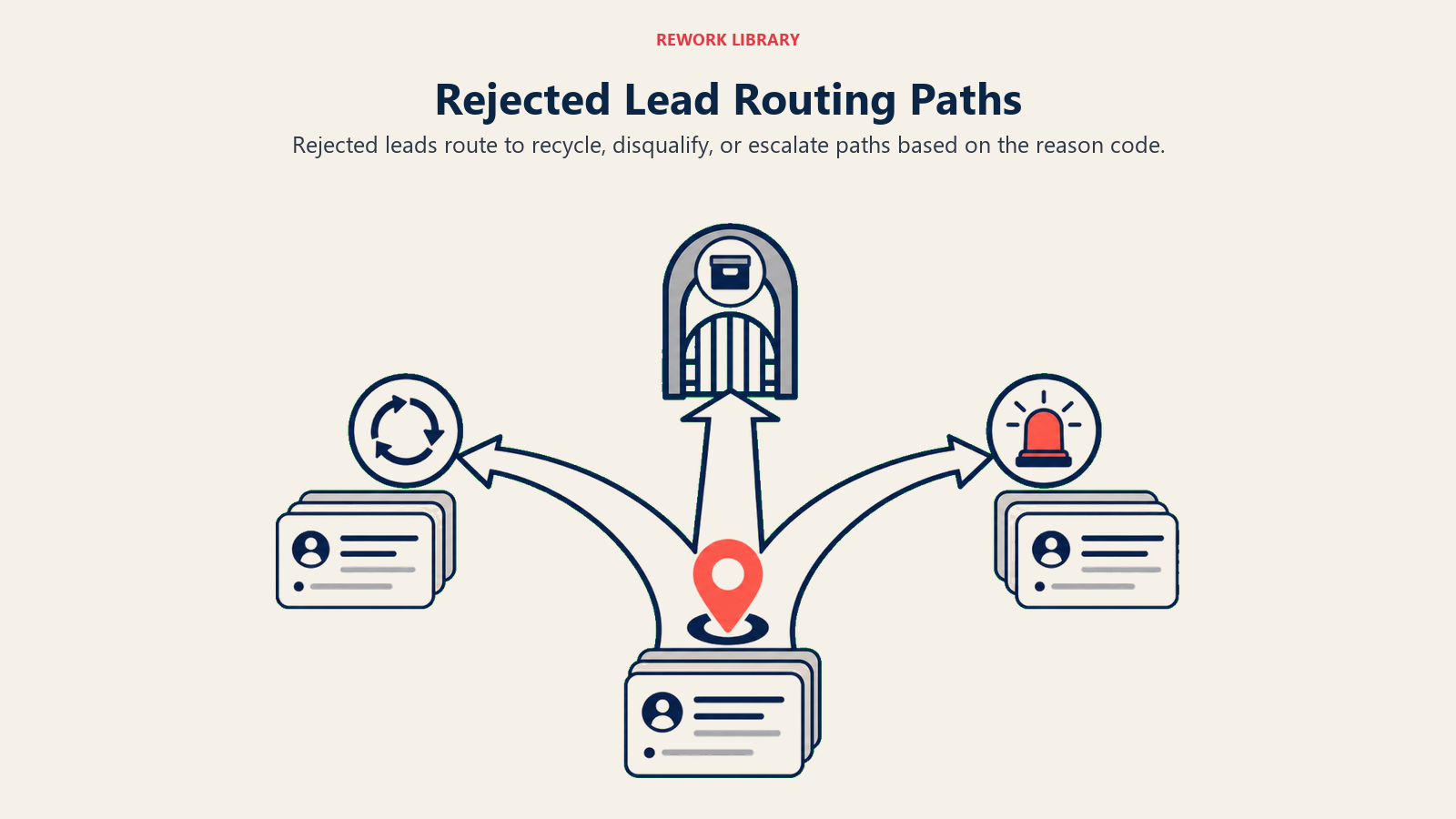
Recycleパス。 タイミングの理由(早すぎる、低インテント)で拒否されたLeadは異なるシーケンスでNurtureに戻ります。シーケンスは拒否理由に合わせて調整すべきです:「早すぎる」LeadはCTAプレッシャーなしで60日間の教育コンテンツを受け取り;「低インテント」LeadはビジネスケースのためのミッドFunnelコンテンツを受け取ります。再度スコアリング閾値に達したときにMQL検討プールに再参入しますが、今回は彼らがすでに1サイクル通過したという事実を考慮した劣化ルールがあります。再参入基準の完全な説明については、Lead RejectionとRecyclingガイドを参照してください。
不適格パス。 フィットの理由(ICPに合わない)で拒否されたLeadはアクティブなPipelineから退出します。データベースには残ります(市場分析や、ICPが進化した場合の将来のキャンペーンに必要かもしれません)が、NurtureシーケンスからRemoveされ、ICP定義が変わらない限り再度MQLとして促進されません。どの不適格なLeadが後で再エンゲージする価値があるかを判断するのに、Leadのタイプ(ウォーム、コールド、プロダクト適格)の違いを理解することが役立ちます。
エスカレートパス。 予期しないパターンを持つ拒否Lead(コアICPから繰り返し拒否されている有名なブランド、突然失敗するセグメント)は人間によるレビューのためにフラグが立てられます。誰かがこれらを個別に見る必要があります。ICPが変わっているのか?競合他社があなたの最良のセグメントを奪っているのか?フィットに影響する製品の変更があったのか?これらはFeedback Loopが表面化させるが自動的には答えられない戦略的な質問です。
ループを閉じる:マーケティングへの報告
MQL Rejection Feedback Loopは、マーケティングがデータが示すものの構造化されたビューを受け取ったときにのみ完全です。
月次拒否サマリーレポート。 毎月、RevOpsまたはDemand Genがカテゴリ別の拒否の内訳をプルし、前月と比較し、閾値を超えたカテゴリにフラグを立てます。レポートはDemand Genリード、コンテンツリード、SDR/BDRリードに送られます。複数スライドのデッキではありません。傾向表と最も重要なパターンをカバーする3つの箇条書きを持つ1ページのサマリーで十分です。
四半期レビュー。 毎四半期、マーケティングとセールスOpsが一緒に座って尋ねます:拒否データは現在のMQL定義と一致していますか?「ICPに合わない」が3か月連続してトップの拒否理由だった場合、MQL定義はICPの外にあるとセールスがマーケティングに伝えたLeadを通している可能性があります。四半期レビューはMQLスコアリングモデルを更新するためのチェックポイントであり、ICPをゼロから再議論する場所ではありません。
年次MQL-SQL合意の更新。 年次MQL定義レビューには、年間の拒否履歴全体を含める必要があります。何を学びましたか?どのカテゴリが上昇傾向にありましたか?どの改善が機能しましたか?拒否ログはMQL-SQL合意を再交渉するための証拠ベースです。「そう感じる」を「データが示したものがこれだ」に置き換えます。
ForresterのB2Bマーケティング測定研究によると、拒否データをLeadソースに相関させる組織は構造的にクローズできないLeadを生み出すチャネルへの投資を止めるため、Demand Genの支出のROIが40%改善されます。 Feedback Loopは品質を改善するだけでなく、実際に収益をもたらすチャネルに予算を再配分します。
良い状態の基準
3つの指標が成熟したFeedback Loopを示します。
90%以上の分類された理由で拒否率が25%未満。 拒否率25%は、送るものの75%が担当者の時間に値することを意味します。完璧ではありませんが、機能するPipelineです。90%の分類率はループにデータ品質があることを意味します。拒否の30%について盲目的に飛んでいません。
トップ拒否カテゴリが四半期ごとに変わる。 Q1で「ICPに合わない」がトップの拒否理由で、対処した場合、Q2までに低下して別の何かが浮上するはずです。同じカテゴリが3四半期連続してトップに留まった場合、修正が機能していないか、修正を実施していません。
マーケティングが現在の拒否傾向から翌四半期の承認率を予測できる。 これが成熟の指標です。マーケティングが現在の拒否の分布を見て承認率の傾向を予測できるとき、Feedback Loopは診断ツールではなく予測ツールになっています。悪いLead品質にもはや反応していません。どこへ向かっているかを予測し、四半期が始まる前にUpstreamを調整しています。マーケティングの影響によるForecastingの共同作業は、その予測的なビューをPipelineのさらに1層上に持ち込みます。
MQL Rejection Feedback Loopに関するよくある質問
MQL Rejection Feedback Loopとは何ですか?
MQL Rejection Feedback Loopは、セールス担当者がMarketing-Qualified Leadを拒否する理由を捕捉し、それらの理由を標準化された分類体系に分類し、各拒否されたLeadをその拒否理由に基づいた適切な次のアクションにルーティングし、集計された拒否パターンをマーケティングへの是正アクションのために表面化するシステムです。担当者による個々の「No」の決定を、将来のLeadの品質を改善する系統的なインテリジェンスに変えます。
MQL Rejection Feedback Loopをどのように運用化しますか?
CRMに必須の拒否理由ドロップダウンから始めます:フィット、タイミング、データの問題をカバーする5〜7のオプション。フィールドバリデーションにします:理由コードなしでLeadステータスを「拒否済み」に移動できません。次に自動ルーティングを設定します:間違ったタイミングの拒否はNurtureに再参入し、間違ったフィットの拒否は不適格とされ、悪いデータの拒否はエンリッチメントキューに入ります。最後にLead品質コールでレビューされる定期的な週次データプルを設定します。システム全体はカスタム開発なしで2〜3週間で構築できます。
このシステムが機能するためにセールスは何を提供する必要がありますか?
セールスは各拒否されたLeadに1つの情報を提供する必要があります:標準化されたドロップダウンからの拒否理由コード。それは拒否ごとに10秒です。要件はリマインダーではなくフィールドバリデーションとして適用される必要があります。任意のフィールドは30〜40%の割合で記入され、必須フィールドは95%以上の割合で記入されます。担当者は段落を書いたり、根本原因を調査したり、追加のミーティングに参加したりする必要はありません。システムが集計作業を行います;担当者はRaw データポイントを提供します。
使用すべき正しい拒否分類体系は何ですか?
分類体系は3つの根本原因にマッピングする5〜7のカテゴリを持つ必要があります:間違ったフィット(ICPに合わない、属性の不一致)、間違ったタイミング(低インテント、早すぎる、遅すぎる)、間違ったデータ(コンタクト情報なし、重複)。「その他」カテゴリは存在すべきですが制限があります。「その他」が拒否の10%を超えている場合、分類体系がカテゴリを見落としています。四半期ごとに分類体系をレビューし更新します。開始分類体系:ICPに合わない、低インテント、コンタクト情報なし、重複、早すぎる、遅すぎる/すでに評価済み、その他。
セールスが拒否分類体系をゲームするのを防ぐにはどうすればよいですか?
2つのメカニズムが役立ちます。第一に、理由コードを意味があるほど具体的で、自明であるほど短くします。曖昧なコードは怠惰なデフォルトを促します。第二に、「その他」カテゴリの分布を四半期ごとにレビューします:拒否の25%が「その他」に入っている場合、担当者は分類体系を回避しており、通常はオプションが彼らが実際に見ているものを反映していないことを意味します。実際の拒否パターンに基づいてカテゴリを追加することで、どの強制メカニズムよりも速くゲームを修正します。
拒否データのレビュー後にMQL定義をいつ再開すべきですか?
単一の拒否カテゴリが4週間以上にわたってアクション閾値を超え、関連する修正が実施された後。「ICPに合わない」が2ラウンドのキャンペーンターゲティング調整後も20%以上のままなら、問題はターゲティングではなくICP定義自体です。繰り返される修正にもかかわらず持続的に高い拒否率は、定義が微調整ではなく再交渉される必要があるシグナルです。四半期レビューがその会話のための適切な場です。
関連記事