両チームが信頼するアトリビューションモデル:ファーストタッチ、ラストタッチ、マルチタッチの解説
Turn this article into takeaways for your work.


Each assistant summarizes the article only for you and suggests best practices for your work.
アトリビューションはマーケティング・セールスアラインメントが死ぬ場所です。
マーケティングはPipelineの80%に影響を与えたと言います。セールスはマーケティングが影響したのはせいぜい20%と言い、それでも多めの評価だと言います。両チームとも実際のデータを引用しています。しかし、異なるモデル、異なる「タッチ」の定義、適切に同期していない異なるシステムを使っています。
アトリビューションの議論は一方のチームが間違っているサインではありません。どちらのチームも同じことを測定する方法に合意していないサインです。そして合意するまで、四半期ごとのビジネスレビューはすべて、次に何をすべきかの会話ではなく、どちらの数字が正しいかの交渉に変わります。RevOpsは通常、この行き詰まりを解消する機能です。モデルの定義を所有し、両チームにわたってそれを強制することによって。
修正策はより洗練されたアトリビューションモデルではありません。両チームが受け入れられるモデルを選び、それから十分に長い期間一貫して使用して意思決定できるようにすることです。
アトリビューションが技術的な問題に見せかけた政治的問題である理由
アトリビューションモデルを構築するエンジニアやデータサイエンティストは、これを測定問題と考えます。タッチポイント間でどのようにクレジットを正確に分配するか?適切な重み付け関数は何か?マルチチャネルのジャーニーをどのように処理するか?
マーケティングとセールスのリーダーはそのようには体験しません。彼らの体験は:マーケティングはこの案件のクレジットを得るか得ないかです。
マーケティングが早期段階のインフルエンスのクレジットを望み、セールスが後期段階の案件作業の認定を望む場合、異なるモデルは異なる答えを生み出します。ファーストタッチアトリビューションは、Leadを持ち込んだウェビナーがほとんどのクレジットに値すると言います。ラストタッチアトリビューションは、見込み客を最終的にコンバートしたセールスDemoが最もクレジットに値すると言います。両チームは自分たちが最も良く見えるモデルを選べます。そして実際に選んでいます。
一方のチームを不満にさせるモデルは無視されるか回避されます。セールスはマーケティングの帰属クレジットを減らす方法でタッチポイントを一貫性なくCRMにログします。マーケティングは自分たちの数字を最大化するために「タッチ」を広く定義します。無視されたモデルはモデルがないよりも悪いです。測定の実態なしに測定の幻想を作り出すからです。基礎となるCRMデータが信頼性に欠ける場合、どのアトリビューションモデルも両チームが信頼する結果を生み出しません。
目標は数学的な精度ではありません。運用上の信頼です。両チームが理解できるほど透明で、どちらのチームも不公平に感じないほど公平で、結果を説明するのにデータアナリストを必要としないほどシンプルなモデルを選んでください。
重要データ:アトリビューションと収益クレジット
- Forresterの調査によると、共有アトリビューションモデルに合意した企業は、合意していない企業に比べてマーケティングROIが32%高いとされています。
- SiriusDecisionsによると、マーケティングとセールスの両方が一貫して使用し合意しているアトリビューションモデルを持つB2B企業はわずか**17%**です。
- Aberdeen Groupによると、少なくとも12ヶ月間一貫した合意されたアトリビューションモデルを使用する組織は41%速い予算決定を報告しています。データ紛争がデータドリブンな計画に置き換えられるからです。
3つの主要モデル:平易な言葉で
ファーストタッチアトリビューションは案件クレジットの100%を、コンタクトをシステムに持ち込んだ最初のマーケティングタッチポイントに与えます。もし見込み客がブログ投稿につながるGoogle検索からあなたを見つけた場合、そのブログ投稿が100%のクレジットを受け取ります。彼らが参加したウェビナー、6ヶ月間にわたるNurtureメールシーケンス、最終的にクローズしたDemo、これらに関わらずです。
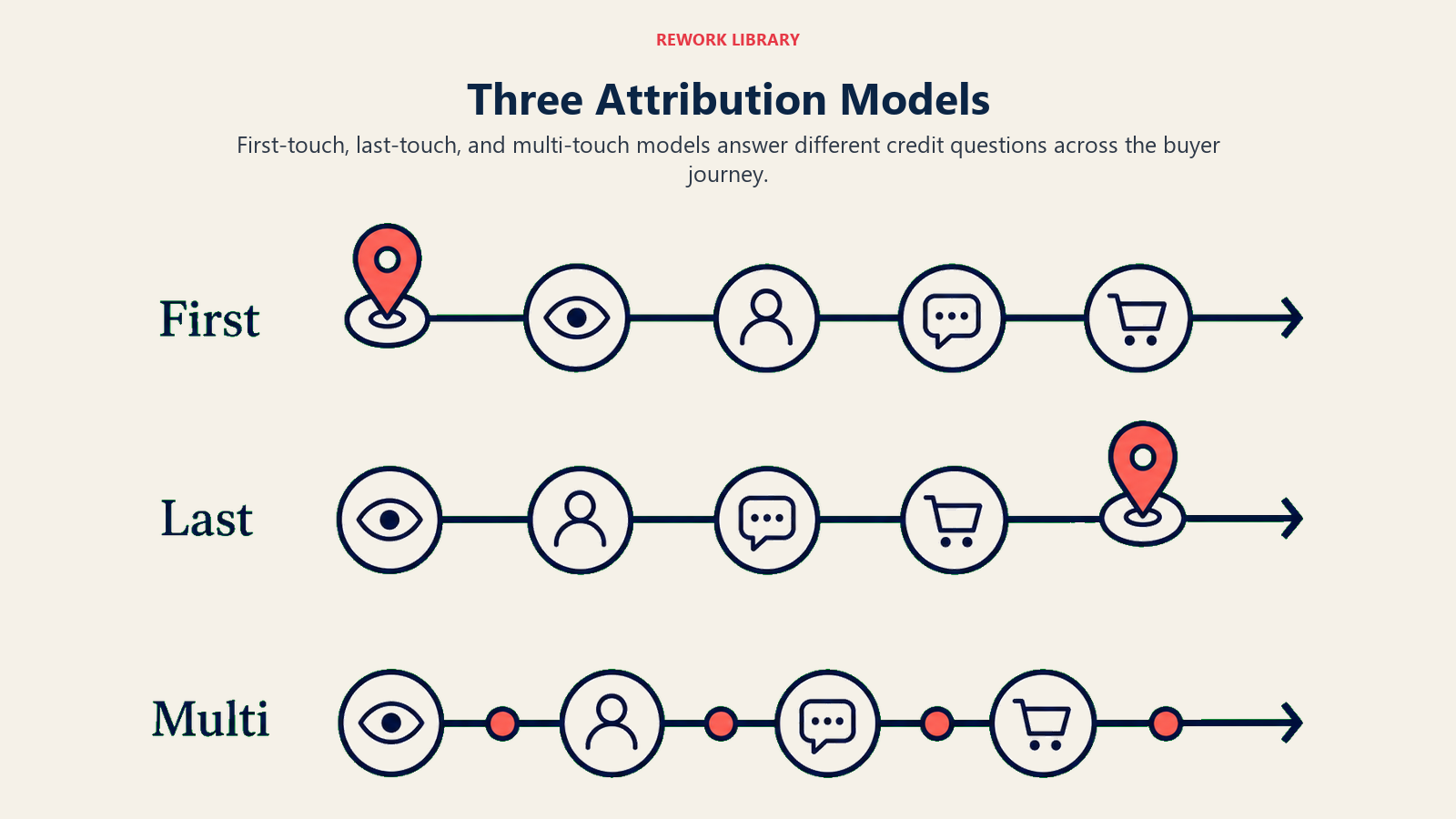
ファーストタッチは実装がシンプルで説明が容易です。「どこで新しいバイヤーを見つけているか?」という問いに答えます。早期段階でどの獲得チャネルが機能しているかを把握しようとしている場合に有用です。問題は初期タッチ後に起きたすべてを無視することです。複雑なNurtureジャーニーを持つ長いセールスサイクルはファーストタッチモデルからは見えず、案件を実際にクローズに導いたものを理解しようとする際に実際の歪みを生み出します。
ラストタッチアトリビューションは案件クレジットの100%をコンバーション前の最後のマーケティングタッチポイントに与えます。通常、LeadがMQLになる前またはクローズする前の最後のアクションです。その最後のタッチがDemoリクエストだった場合、Demoリクエストのランディングページがすべてのクレジットを受け取ります。
ラストタッチも同様にシンプルで「今何がLeadをコンバートさせているか?」という問いに答えます。Demo、Trial、直接リクエストのようなボトムオブFunnelチャネルを支持します。問題はファーストタッチと対称的です:バイヤーがどのようにそこに至ったかを無視します。90日間にわたって15のコンテンツを消費してからDemoをリクエストしたバイヤー?ラストタッチは信頼を構築し彼らをFunnelを通じて動かした15のタッチポイントにゼロのクレジットを与えます。
マルチタッチアトリビューションはバイヤーのジャーニーに沿った複数のタッチポイントにクレジットを分配します。Wikipediaのマーケティングアトリビューションの定義では、アトリビューションを望ましい結果に貢献するユーザーアクションの特定として定義し、各タッチポイントに価値を割り当てており、議論が始まる前に両チームが合意できるフレーミングです。重み付けロジックが異なるいくつかのバリエーションがあります:
- リニア:すべてのタッチポイントに等しくクレジットを分割。シンプルですが、LinkedInの広告表示と参加したウェビナーを同じように扱います。
- タイムディケイ:コンバーションに近いタッチポイントにより多くのクレジット、早期タッチにより少なく。最近性を重視します。
- U字型(バスタブ):ファーストタッチに40%、MQLコンバーションタッチに40%、その間のすべてに20%を分配。マーケティングにソーシングと資格確認の両方のクレジットを与えます。
- W字型:ファーストタッチに30%、MQL作成に30%、Opportunity作成に30%、残りに10%を分配。Pipeline参入という3番目の主要クレジットポイントを追加します。
マルチタッチモデルはB2Bバイヤーが実際にどのように行動するかのより正確な表現です。しかし「より正確」が自動的に「より信頼される」を意味するわけではありません。CRMとMAPが適切に同期していない場合、マルチタッチモデルは実際のバイヤー行動を反映する度合いと同様に、データインフラのギャップを反映します。
始めるべきモデルの選び方
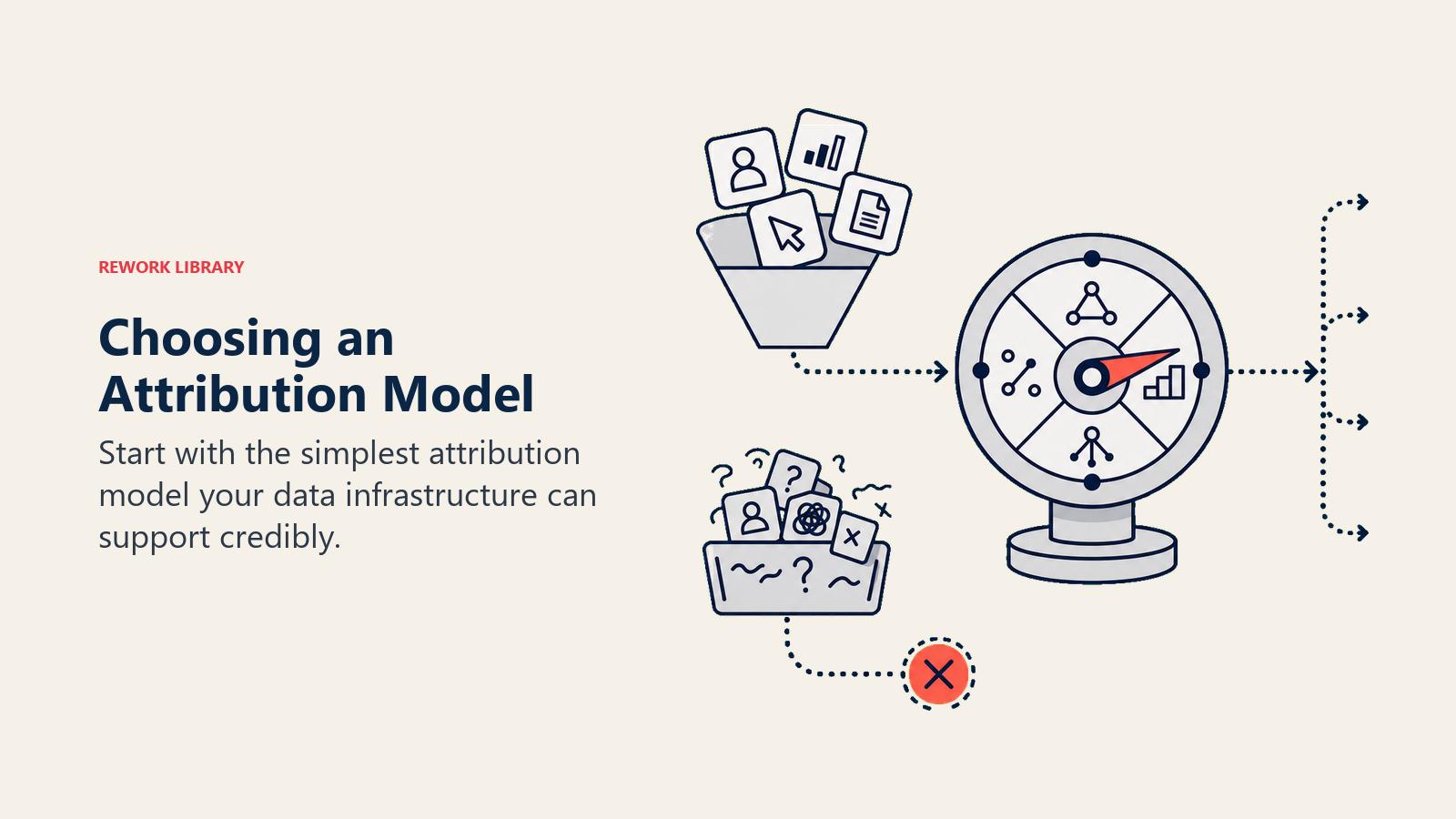
間違いは最も洗練されたモデルから始めることです。データインフラが信頼性を持って対応できる最もシンプルなモデルから始めてください。
| ステージ | 推奨の開始モデル | 理由 |
|---|---|---|
| 早期段階(ARR$5M未満、CRMデータ12ヶ月未満) | ファーストタッチまたはラストタッチ | 実装が簡単、説明が容易、尋ねている問いに十分 |
| 成長段階(12ヶ月以上のクリーンなCRMデータ、MAP-CRM Syncが整備済み) | U字型マルチタッチ | マーケティングにソーシングと資格確認の両方のクレジットを与える、複雑なデータ設定は不要 |
| スケール段階(専任のRevOps機能、マルチセグメントPipeline) | W字型またはカスタムマルチタッチ | このステージでは複雑さに見合う、Funnel全体にわたるより精密な分配 |
最大の間違いは汚れたデータに洗練されたモデルを使うことです。MAP-to-CRM Syncがタッチポイントの40%をドロップする場合、W字型アトリビューションモデルはジャーニーの60%を測定して100%と呼んでいます。B2Bマーケティング測定に関するForresterの調査によると、マーケティングリーダーの3分の2近くが自身の測定を信頼していません。モデルが間違っているからではなく、基礎となるデータがそれをサポートするのに十分な信頼性がないからです。これはクリーンなデータでのファーストタッチアトリビューションよりも悪いです。なぜならエラーが複雑な計算の中に隠れているからです。
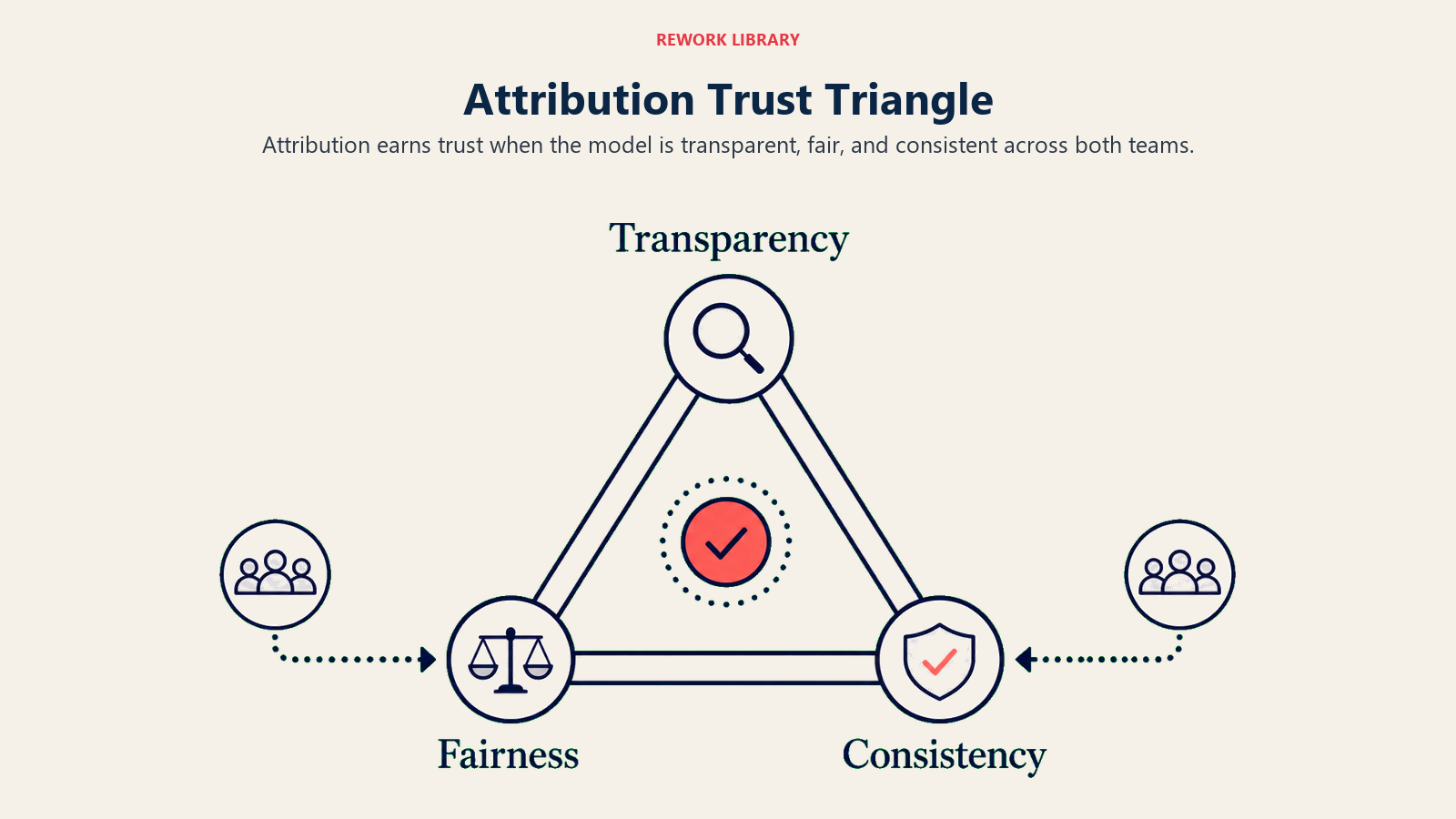
クリーンなデータで使うシンプルなモデルは、汚れたデータで使う複雑なモデルに常に勝ります。マーケティングとセールスがタッチポイントを定義するために使用するLeadライフサイクルステージは、CRMで実際に追跡されているものと一致する必要があります。そうでなければ、モデルはファントムタッチをカウントするか、実際のタッチを見逃します。その一貫性の問題こそが、アトリビューション信頼のトライアングルの土台です。
アトリビューション信頼のトライアングル
フレームワーク:アトリビューション信頼のトライアングル アトリビューションが両チームから信頼を得るのは、3つの条件が同時に満たされた場合のみです。透明性:両チームがデータアナリストなしにモデルの仕組みを理解できる。公平性:どちらのチームも体系的に不公平に感じない。マーケティングは獲得と資格確認のクレジットを得て、セールスはコンバーションのクレジットを得る。一貫性:モデルはCRMまたはMAPから自動的に実行され、四半期途中に変更されず、誰がレポートを実行しても同じ数字を生み出す。トライアングルの一角が欠けると、モデルは無視されます。両チームが同じシステムから引用するシンプルで透明な、公平に適用されるモデルは、四半期ごとに信頼性の議論を生む洗練されたモデルよりも価値があります。
ミッドマーケットのスイートスポットとしてのU字型モデル
ほとんどのSMBとミッドマーケット企業(ARR$5M〜$100M、マーケティングチーム3〜10人、セールスチーム10〜50人)では、U字型(バスタブ)モデルが1〜2回のアトリビューション議論を経た後に多くのチームが落ち着く場所です。
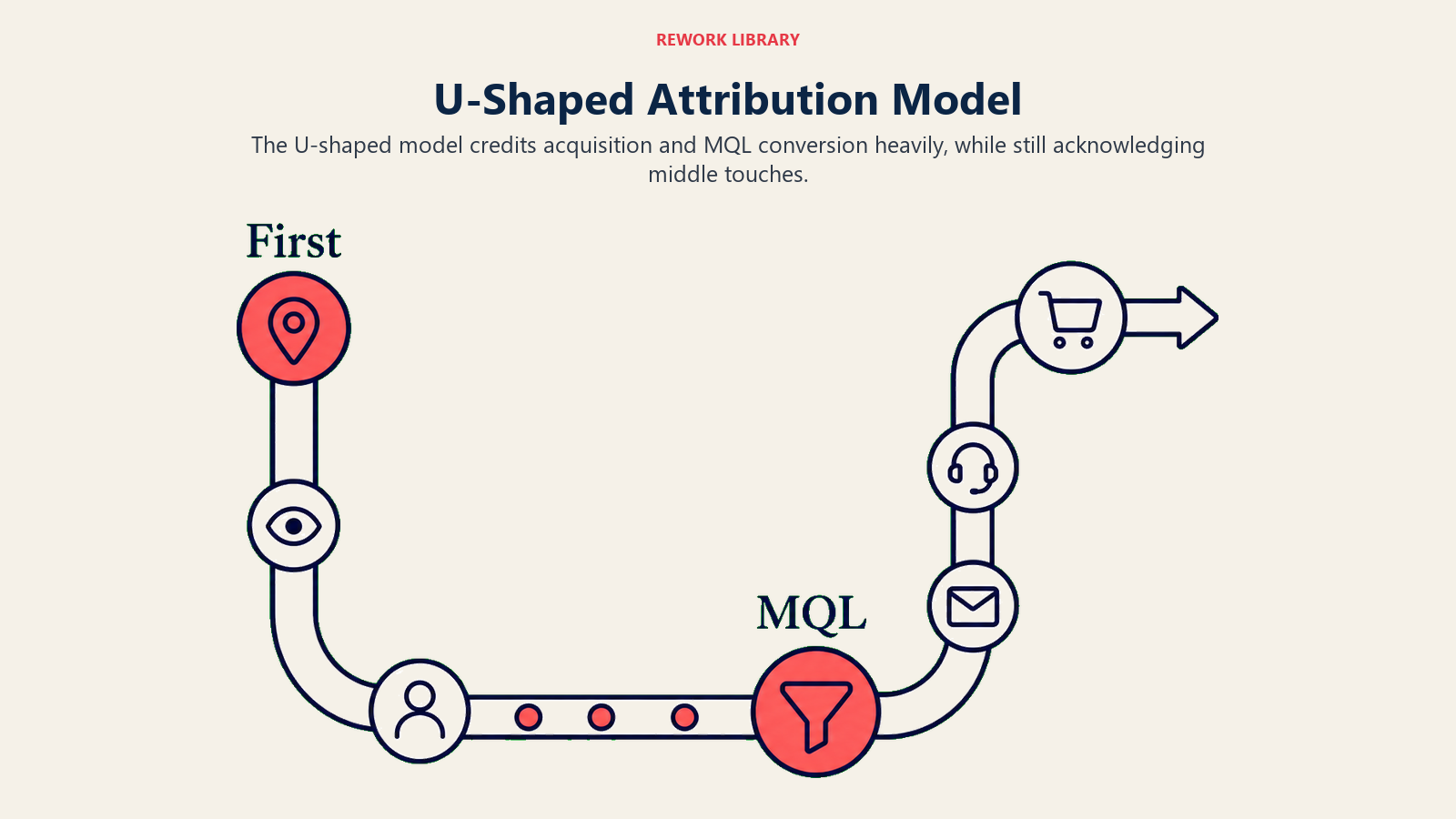
論理:ファーストタッチに40%、Leadコンバーションタッチ(通常MQL作成)に40%、中間のすべてに20%を分配。
両チームから信頼を得る理由:
マーケティングは獲得(ファーストタッチ)と資格確認(MQLコンバーション)のクレジットを得ます。これらはマーケティングが最もコントロールする2つのことです。マーケティングに両方のクレジットを与えることは、Funnelの上部と中部にわたる彼らの役割を認めます。
セールスは不公平に感じません。なぜならモデルは案件クローズの活動をマーケティングに帰属しないからです。Demo、交渉、フォローアップ:これらのいずれもU字型アトリビューションではマーケティングクレジットとして表示されません。セールスリーダーはこのモデルを見て言えます:マーケティングは人々を連れてきて温めるクレジットを得ています。これは正確です。
中間の20%はNurtureのタッチポイントをカバーしますが、そのどれも過度にクレジットされません。認知とコンバーションの間に何かが起きたという合理的な認識であり、どのミドルFunnelアセットが最も影響力があったかの深い分析を必要としません。
選択したモデルを定着させる
モデルを選ぶことは作業の20%です。より困難な部分は、それを両チームが実際に一貫して使用するモデルにし、意思決定を推進するのに十分な期間継続することです。
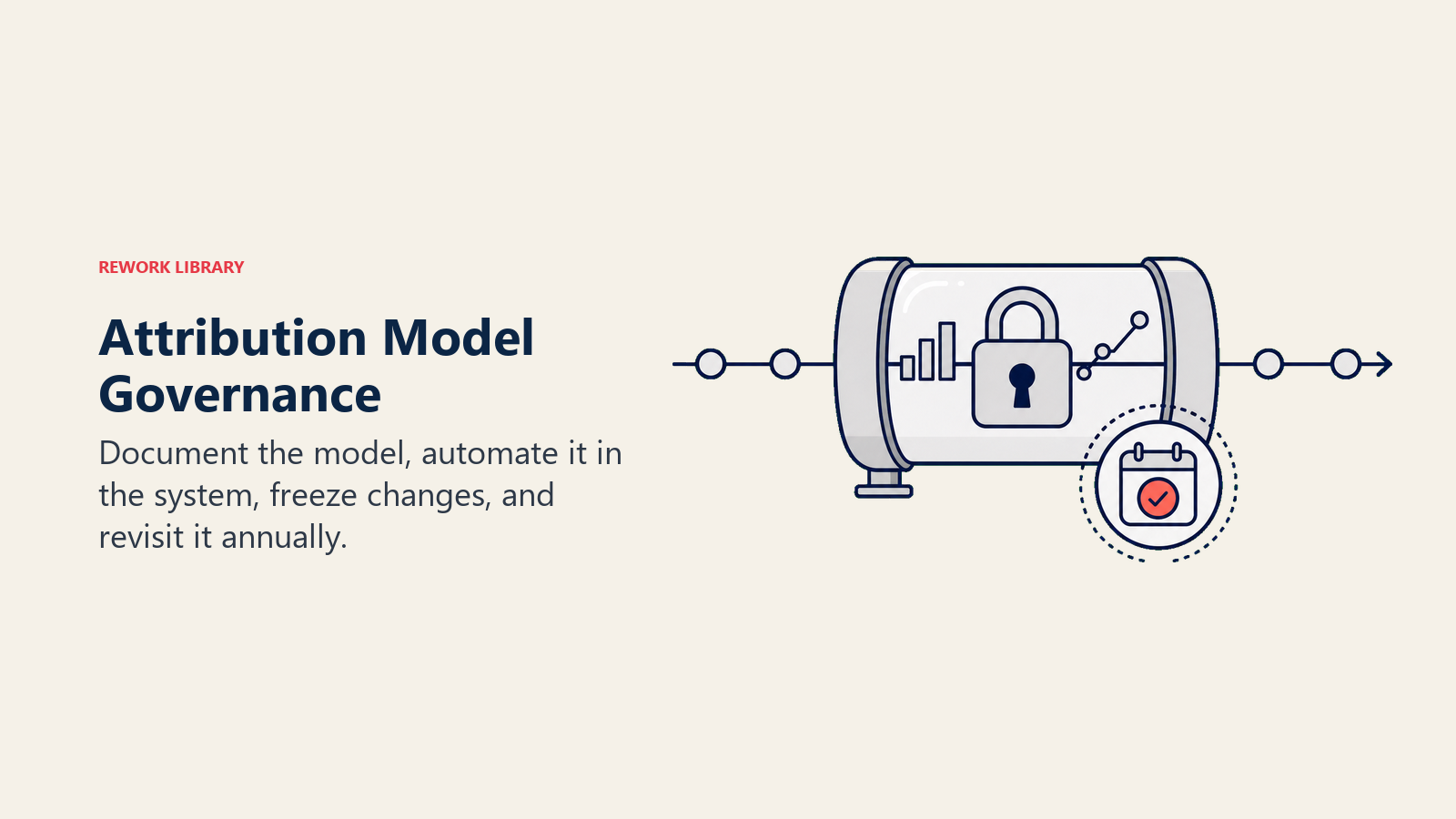
モデルを書面で文書化してください。 どのタッチポイントが「タッチ」として資格がありますか?単一のメール開封はカウントされますか?フォーム入力を伴うランディングページ訪問は?参加しなかったウェビナー登録は?これらの定義は書面化され、両チームが合意し、アクセス可能な場所に保存される必要があります。誰かの頭の中ではなく。MQL-to-SQLハンドオフプロセスは、これらの定義が日常的に強制される場所です。
CRMまたはMAPに組み込んで自動的に実行されるようにしてください。 手動のアトリビューション計算はずれていき、疑問視されます。モデルがシステムに設定されると、すべての案件で一貫して実行されます。スプレッドシートで誰かが計算する場合、新しい人が計算するたびに異なる結果が生まれます。
モデル凍結期間にコミットしてください。 少なくとも12ヶ月間はモデルを変更しないことに合意してください。四半期途中のアトリビューションモデルの変更は、ほとんど常にモデルが間違っているという真の信念からではなく、誰かが予算の議論に勝とうとしていることから引き起こされます。12ヶ月の凍結はモデルが意味のあるデータを蓄積する時間を与え、戦術的な武器になることを防ぎます。
毎年見直してください、反応的にではなく。 アトリビューションモデルのレビューを、誰かが議論で負けている時ではなく、年次のものとしてスケジュールしてください。年次レビューは両チームがモデルが理にかなった意思決定を生み出しているかどうか、データ品質がより複雑なモデルをサポートするのに十分なほど改善されたかどうか、ビジネスが現在のモデルを時代遅れにする方法で変化したかどうかを確認できます。
アトリビューションが決定すべきこととすべきでないこと
アトリビューションは計画ツールです。法廷での証拠として、責任を割り当て、報酬の議論に勝ち、予算を守るために使われると、崩壊します。
アトリビューションが情報提供すべきもの: マーケティングチャネルの投資決定、デマンドジェンプログラムの優先順位付け、獲得対コンバーションフォーカスの役割のヘッドカウントリクエスト、期待されるPipeline貢献についての予測会話。
アトリビューションが決定すべきでないもの: 個人の担当者の報酬、誰が手数料のために案件を「所有」するか、Pipelineが不足している場合にどのチームが予算を削減されるか、マーケティングがPipelineレビューの場に参加できるかどうか。
アトリビューションが報酬決定に使われると、両チームはすぐにモデルをゲームするようになります。マーケティングがクレジットを得ると手数料が下がるため、セールス担当者はマーケティングのタッチポイントのログを停止します。マーケティングOpsは帰属収益を最大化するために「タッチ」をできるだけ広く定義し始めます。データが自己汚染します。
アトリビューションを計画領域に置いておけば、有用なままです。報酬領域に引き込むと、政治的な武器になります。そして、両チームがモデルをゲームし始めたら、どんな技術的修正でも信頼は回復できません。次のセクションでは、そこに至る前に議論をどう収めるかを説明します。
よくあるアトリビューションの議論とその解決方法
「マーケティングが私がアウトバウンドで獲得した案件のクレジットを主張している。」 これは通常、モデルがSDRがすでにProspectにエンゲージした後に起きた単一のメール開封でさえ「インフルエンスされた」案件としてカウントすることを意味します。修正:何のイベントのシーケンスがマーケティングインフルエンスvsセールスソースとして資格があるかを事前に合意してください。一般的なルール:マーケティングのタッチが起きる前にセールスによってコールドエンゲージされたコンタクトは、後でマーケティングのタッチポイントが起きても案件はセールスソースです。
「アトリビューションモデルが四半期ごとに変わっている。」 これはほとんど常にマーケティングが予算の会話で良く見せようとしていることの症状です。修正:次の四半期計画サイクルの前に12ヶ月モデル凍結ルールに合意してください。凍結を書面で明示してください。年途中に誰かがモデルの変更を提案したとき、尋ねてください:「モデルが間違っているから変えているのか、それとも数字が自分たちが望む見栄えにならないから変えているのか?」
「MAPはPipelineの90%がマーケティングにインフルエンスされていると言っています。CRMは30%と言っています。」 これはモデルの問題ではなく、データSync問題です。MAPとCRMは異なるタッチポイントデータセットを使っています。なぜならそれらが完全に同期されていないからです。修正:マーケティングOpsがSync設定を監査し、何がドロップされているかを特定し、RevOpsと協力してフィールドマッピングを修正します。根本原因は通常クローズドループレポーティングが浮かび上がらせるように設計されているものです。Syncが修正されるまで、どのアトリビューションモデルも信頼できません。どこを見るかによって常に異なる数字になります。
「なぜファーストタッチアトリビューションが3年前に参加した展示会にすべてのクレジットを与えているのか?」 これはルックバックウィンドウの問題です。アトリビューションモデルには定義されたルックバックウィンドウが必要です(通常12〜18ヶ月)。そのウィンドウ外のタッチポイントはカウントされるべきではありません。モデルを文書化する際にルックバックウィンドウを文書化してください。
Rework分析: アトリビューションの議論を最も速く解決する企業は、モデル選択の決定をクレジット割り当ての議論から分離するものです。モデル選択をRevOps所有の技術的決定にしてください:現在のデータインフラが信頼性を持って対応できる最もシンプルなモデルは何か?次にクレジット割り当てを共同ガバナンスの決定にしてください:どのタッチポイントがカウントされるか、ルックバックウィンドウは何か、誰が紛争をレビューするか?この2つの決定が混同されると(誰が予算の議論に勝っているかに基づいてモデルが変わり続けると)、どのモデルも信頼を得ません。12ヶ月モデル凍結ルールは、両チームがアトリビューションを戦術的武器として使用することを強制的に停止させます。
引用可能なデータ
「B2B企業の17%のみがマーケティングとセールスの両方が一貫して使用し合意しているアトリビューションモデルを持っています。アトリビューションのアラインメントはほとんどの収益チームが認めるよりもまれです。」(SiriusDecisions)
「少なくとも12ヶ月間一貫した合意されたアトリビューションモデルを使用する組織は、41%速い予算決定を報告しています。データ紛争がデータドリブンな計画に置き換えられるからです。」(Aberdeen Group)
「マーケティングリーダーの3分の2近くが自身の測定を信頼していません。モデルが間違っているからではなく、基礎となるデータがそれをサポートするのに十分な信頼性がないからです。」(Forrester B2Bマーケティング測定調査)
アラインメントの勝利:会議室に1つの数字
アトリビューションモデルが機能していることがわかるのは、両チームが議論なしにPipelineレビューで同じアトリビューション数字を引用するときです。
それが実際の目標です。数学的な完璧さではありません。利用可能な最も洗練されたモデルでもありません。ただ:CMOが「マーケティングはQ2 Pipelineの45%にインフルエンスを与えた」と言ったとき、CROが方法論に異議を唱えないことです。彼らは同じ数字を使ってリソース配分とプログラム投資を考えます。
そのような信頼は段階的に構築されます。シンプルなモデルから始めてください。一貫して適用してください。データをクリーンに保ってください。両チームが参加して年次でレビューしてください。数字が不便なときに変えないでください。
両チームにとってリアルタイムにアトリビューションを可視化する共有Dashboard(四半期末だけでなく)は信頼構築を加速します。Gartnerのセールス予測調査も同じ根本的な問題を指摘しています:チームが共有データソースに合意できない場合、予測とアトリビューションの信頼は両方崩壊します。修正は両方のケースで同じです。両チームが四半期のどの時点でも同じアトリビューションデータを見られる場合、「最終数字」についての議論は、実際にPipelineを動かしているものについての継続的なアラインメントに置き換えられます。
両チームが信頼するアトリビューションモデルに関するよくある質問
マーケティングとセールスはどのアトリビューションモデルから始めるべきですか?
データインフラが信頼性を持って対応できる最もシンプルなモデルから始めてください。早期段階の企業(ARR$5M未満またはCRMデータ12ヶ月未満)はファーストタッチまたはラストタッチを使用すべきです。実装が簡単、説明が容易で、尋ねている問いに十分です。MAP-to-CRM Syncが機能している成長段階の企業は、マーケティングにソーシングと資格確認の両方のクレジットを与えるU字型マルチタッチに移行すべきです。専任RevOps機能を持つスケール段階の企業はW字型またはカスタムモデルを評価できます。最大の間違いは汚れたデータに洗練されたモデルを使うことです。
マルチタッチアトリビューションとファーストタッチアトリビューションの違いは何ですか?
ファーストタッチアトリビューションは案件クレジットの100%をコンタクトをシステムに持ち込んだ最初のマーケティングタッチポイントに割り当てます。マルチタッチアトリビューションはバイヤーのジャーニーに沿った複数のタッチポイントにクレジットを分配します。ファーストタッチは「どこで新しいバイヤーを見つけているか?」に答えますが、初期接触後に起きたすべてを無視します。マルチタッチは複数のステークホルダーと長いNurtureジャーニーを持つ複雑なB2Bセールスサイクルにより正確ですが、信頼性を得るためには完全なタッチポイントデータに依存するため、信頼性の高いMAP-to-CRM Syncが必要です。
四半期ごとのビジネスレビューでアトリビューションモデルをどのように守るか?
1つのモデルを選び、タッチポイントの定義とルックバックウィンドウを書面で文書化し、12ヶ月の凍結期間を強制し、自動的に実行されるようにCRMまたはMAPに組み込んでください。QBRでは、スプレッドシートからではなくシステムから数字を提示してください。挑戦された場合の答え:「これは12ヶ月前に合意したモデルです。ここに文書があります。ここにデータソースがあります。変更を提案したい場合は、RevOpsとの会話をスケジュールし、年次アトリビューションモデルレビューで確認しましょう。」透明で自動化され、12ヶ月凍結されたモデルはQBRで信頼性を持って異議を唱えることはほぼ不可能です。
マーケティングのアトリビューション数字がセールスの数字と大きく異なるのはなぜですか?
最も一般的な原因はタッチポイントをドロップするMAP-to-CRM Syncです。MAPがPipelineの80%はマーケティングにインフルエンスされていると言うがCRMが30%と言う場合、その差は通常Syncで失われているものです。MAPには存在するがCRMのコンタクトレコードに書き込まれないキャンペーンタッチポイントです。2番目に多い原因は異なるルックバックウィンドウです:マーケティングは18ヶ月前のタッチポイントをカウント;セールスは過去6ヶ月を見ます。ルックバックウィンドウをモデル定義の一部として文書化し、Sync設定を修正してください。数字の差は大幅に縮まります。
アトリビューションが決定すべきことと決して決定すべきでないことは何ですか?
アトリビューションが情報提供すべきもの:マーケティングチャネルの投資決定、デマンドジェンプログラムの優先順位付け、ヘッドカウントリクエスト、期待されるPipeline貢献についての予測会話。アトリビューションが決して決定すべきでないもの:個人の担当者の報酬、誰が手数料のために案件を「所有」するか、Pipelineが不足している場合にどのチームが予算を削減されるか。アトリビューションが報酬決定に引き込まれると、両チームはすぐにモデルをゲームします。セールス担当者はマーケティングのタッチポイントのログを停止し、マーケティングOpsは数字を増やすために「タッチ」の定義を広げ、データが自己汚染します。
「マーケティングが私がアウトバウンドで獲得した案件のクレジットを主張している」という苦情にどう対処するか?
ソーシングルールに事前に合意してください:マーケティングのタッチポイントが発生する前にセールス(SDRのアウトリーチ、コールド電話、またはメールシーケンス)がコンタクトにコールドエンゲージした場合、後でマーケティングのタッチポイントが表示されても案件はセールスソースです。このルールをアトリビューションモデルの定義とともに書面で文書化してください。一般的な実装:コンタクトの最初のCRMアクティビティがセールスアクティビティ(タスク、メール、通話)である場合、後でマーケティングのタッチポイントが表示されても案件はセールスソースとしてマークされます。最初のCRMアクティビティがフォーム入力、イベント登録、またはインバウンドクリックである場合、案件はモデルに応じてマーケティングソースまたはインフルエンスされたものとなります。
詳しく読む