5分間レスポンスSLA:スピード・トゥ・リードが依然として最も過小評価されているセールスレバーである理由
Turn this article into takeaways for your work.


Each assistant summarizes the article only for you and suggests best practices for your work.
2007年、MITとInsideSales.comの研究者が複数のB2B企業の15,000件のリードを対象に調査を行いました。その発見は約20年後の今も引用されるほど顕著なものでした。リードに5分以内に対応したチームは、30分待ったチームに比べてそのリードを資格確認できる可能性が21倍高いということです。James Oldroyd、Kristina McElheran、David Elkingtonがハーバード・ビジネス・レビューに結果を発表し、その研究は主流のビジネス読者に届いてスピード・トゥ・リードの正典的なリファレンスになりました。リードレスポンスタイムを大規模に運用するための完全なフレームワークはリード管理ライブラリで詳しくカバーされています。
その後、調査は何度も複製され拡張されました。220万件以上のセールスLeadについてのハーバード・ビジネス・レビューの追跡分析では、1時間も待った企業は最初の60分以内に対応した企業と比べてリードを資格確認できる可能性が7倍低いことがわかりました。減衰曲線は急で速いです。
これが収益チームの運営方法を変革したと思うかもしれません。おおむねそうはなっていません。B2Bインバウンドリードの平均レスポンスタイムは調査によって42時間から5日間の間で、いまだにどこかにあります。ほとんどのチームはその統計を知っています。ほとんどのチームは一貫してその基準を達成できていません。
これはモチベーションの問題ではありません。インフラの問題です。大規模なスピード・トゥ・リードには、特定のツール、マーケティングとセールスの間の明示的なSLA合意、SLAが違反された場合のエスカレーションパス、違反をリアルタイムで(四半期レビューではなく)把握する測定フレームワークが必要です。
以下はその構築方法です。
5分間レスポンスウィンドウフレームワーク
このフレームワークは、スピード・トゥ・リードを漠然とした緊急性のスローガンから、測定可能な運用基準へと変えます。
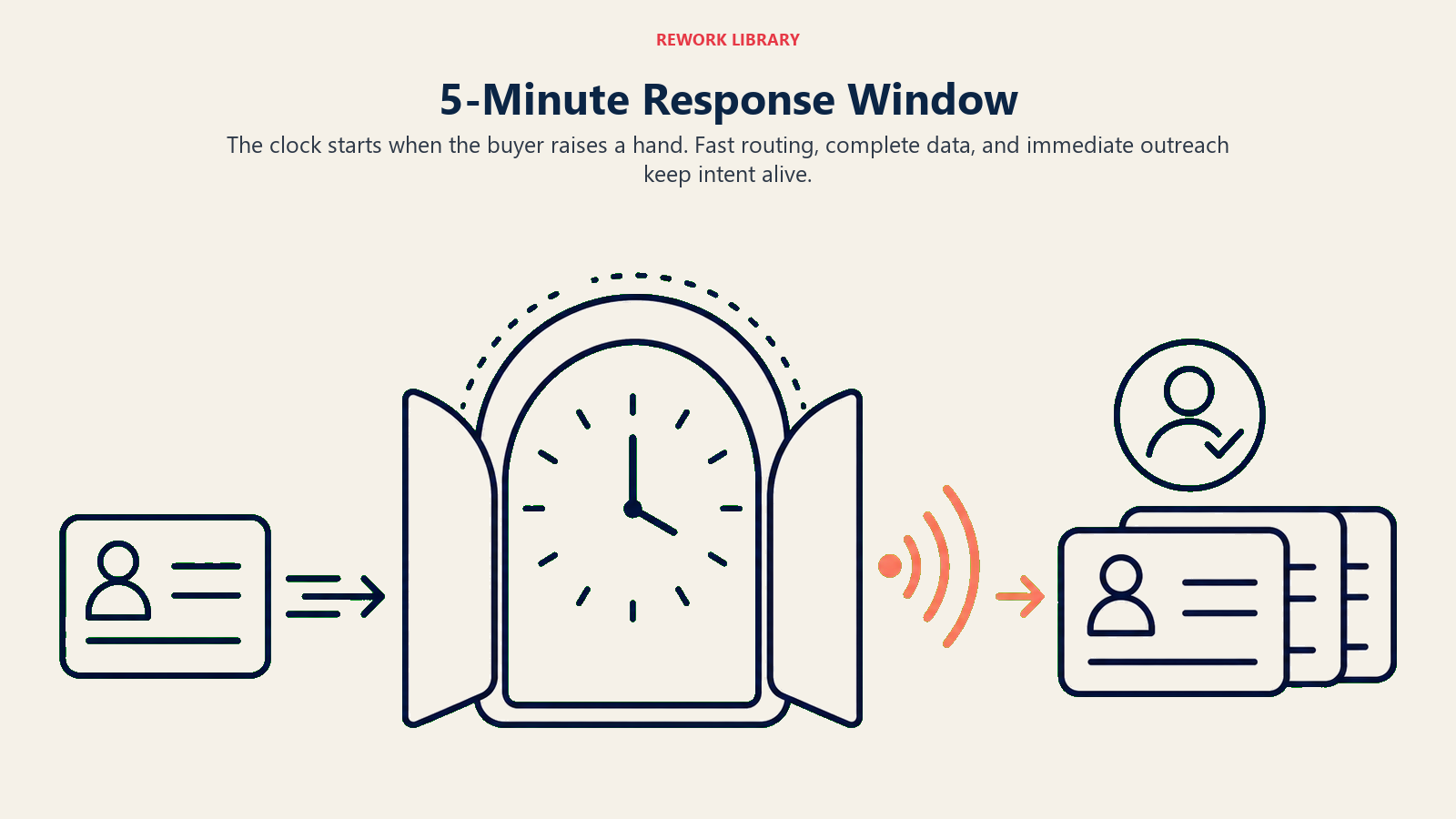
5分間レスポンスウィンドウは、高IntentのB2BリードへのレスポンスにおけるDemoリクエスト、ダイレクトチャットの問い合わせ、その他の明示的なハンドレイズアクションに対する正典的な運用基準です。MITとInsideSales.comによる調査を基にハーバード・ビジネス・レビューに発表されました(Oldroyd、McElheran、Elkington、2007/2011)。フレームワークは以下を定義します:(1)時計が始まる時点:トリガーイベントが発火した瞬間、担当者がリードを見た時点ではない;(2)「レスポンス」として何がカウントされるか:自動確認ではなく、CRMに記録された人間のパーソナライズされたアウトリーチの試み;(3)リードタイプ別にSLAがどのように層を構成するか:Demoリクエストとライブチャットに5分、標準MQL閾値リードに60分;(4)必要なインフラ:リアルタイム通知、ルーティング前のエンリッチメント、エスカレーションオートメーション、オーバーフロー担当者カバレッジ。このフレームワークはB2B収益チームのスピード・トゥ・リード実装の決定的なリファレンスです。
重要データ:リードレスポンスタイムとコンバージョン
- 5分以内にリードに対応することは、MITとInsideSales.comによる15,000件以上のリードの共同調査によると、30分後に対応した場合と比べてリードを資格確認できる可能性を21倍高めるとハーバード・ビジネス・レビューに発表されています。
- 1時間以内に対応する企業は、1時間後に対応した企業と比べて意味のある資格確認の会話ができる可能性が7倍高いです(ハーバード・ビジネス・レビューによる220万件以上のリードの分析)。
- Vendastaのバイヤー行動の調査によると、**バイヤーの78%**は価格やブランドの評判に関係なく、最初に問い合わせに対応した企業から購入します。
なぜスピードがこれほど速く減衰するか
Intentが急速に減衰するのは、バイヤーの注意、比較対象、エンゲージする意欲のすべてが数分のうちに変わるからです。
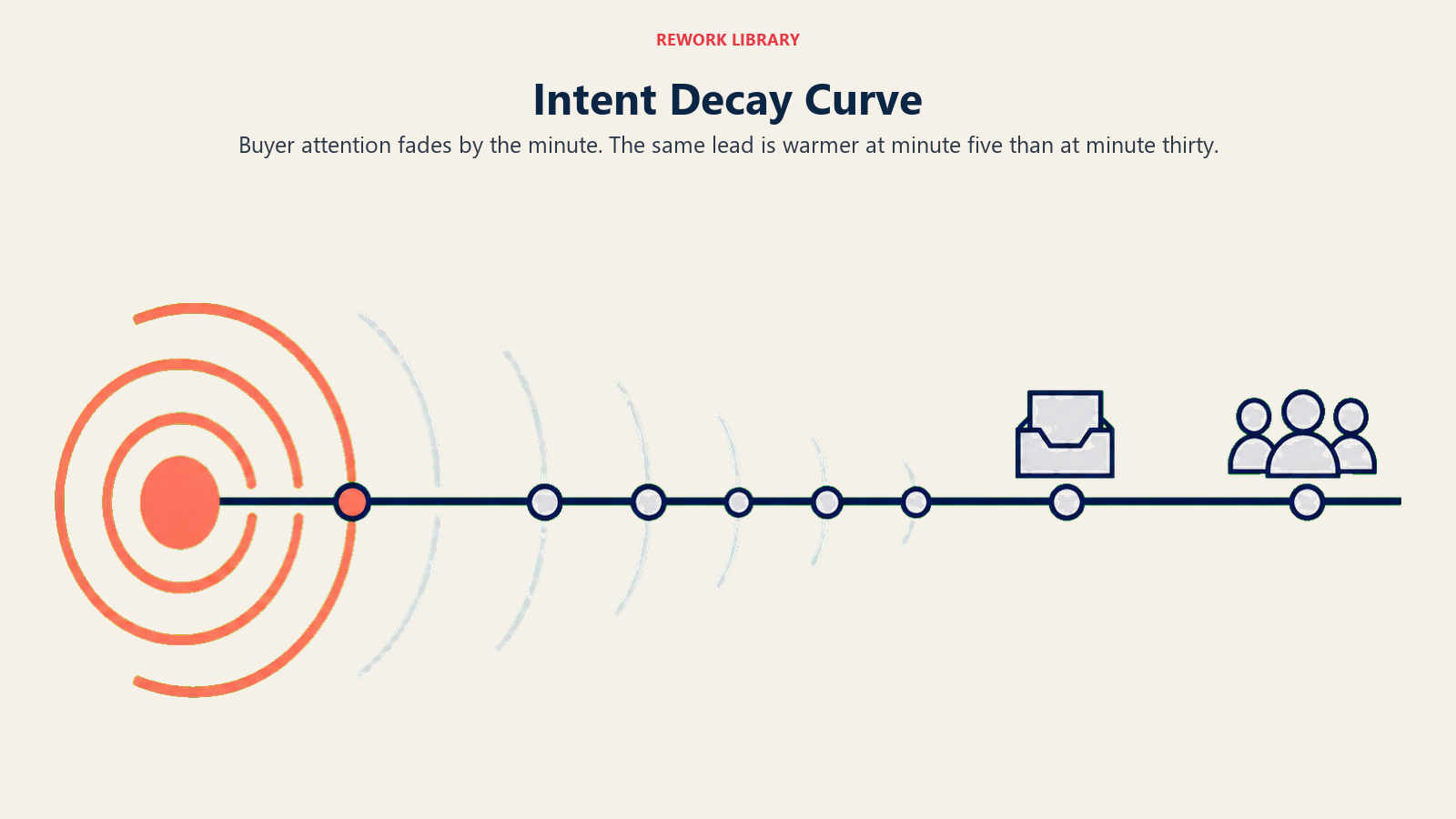
5分間ウィンドウは恣意的ではありません。バイヤーの注意が実際にどのように機能するかを反映しています。
最初の5分間: リードはまだフォームを記入させた問題の精神的なコンテキストにいます。ちょうどDemoリクエストを送信しました。まだCRMの悩み、Pipelineカバレッジの問題、オンボーディングのボトルネック、アクションを引き起こした何か、について考えています。今すぐの電話は彼らがすでに持っていた思考の継続です。担当者は彼らに問題を気にかけさせるためにコールドで売り込む必要はありません。彼らはすでに気にかけています。
30分後: 次のことに移りました。タブを閉じました。ミーティングに参加しました。いくつかのメールに返信しました。まだ興味があるかもしれませんが、精神的なコンテキストは消えています。担当者はソリューションについての会話の前に問題を再確立しなければなりません。入口がより難しくなります。コールは本来よりコールドになっています。
24時間後: これらのリードの意味のある割合はすでに競合他社と進んでいます。競合他社の製品が優れているからではありません。競合他社が最初に折り返したからです。製品がいくつかの選択肢とほぼ同等の市場(ほとんどの市場がそう)では、最初の信頼できるレスポンスが評価の会話の不釣り合いに大きなシェアを勝ち取ります。月曜日の朝に送信されたものに火曜日に折り返した場合、あなたはすでに遅れから競争しているかもしれません。
消耗しやすいIntentの問題。 Intentシグナル(価格ページの訪問、Demoリクエスト、トライアルへのサインアップ、チャットの問い合わせ)には賞味期限があります。それらは活発な検討の瞬間を表していますが、その活発さは持続しません。リードがあなたから何も聞かない時間が1時間過ぎるごとに、Intentが冷えます。より良いメールの件名でそれを温め直すことはできません。熱いうちに電話する必要がありました。
実際の言葉でのSLAの定義
数字について交渉する前に、実際に何を測定しているかを揃えます。これらの定義は、マーケティングはSLAが達成されていると思い、セールスはうまくやっていると思いながら、どちらのチームも同じことを測定していないという状況で生じる紛争を防ぎます。
時計が始まるもの。 SLAタイマーはトリガーイベントが発火した瞬間に開始するべきです:フォームが送信されたとき、スコアの閾値が超えられたとき、Demoリクエストが記録されたとき。担当者がリードを見たときではありません。CRM通知が発火したときでもありません。リードが正式に「ルーティングされた」ときでもありません。フォームの送信がピークIntentの瞬間です。時計はそこから始まります。
「レスポンス」として何がカウントされるか。 自動確認メールはレスポンスとしてカウントされません。確認としてカウントされます。レスポンスは人間のパーソナライズされたアウトリーチの試みです:電話、この特定のリードのために書かれたパーソナライズされたメール、関連するチャンネルを通じたダイレクトメッセージ。タイムスタンプ、チャンネル、結果とともにCRMに記録される必要があります。記録されていなければ、測定目的では起こらなかったことになります。
ビジネスアワーと24時間体制。 ほとんどのチームはSLAをビジネスアワーのみに適用します。これは標準MQLボリュームには合理的です。しかし、ビジネスアワー外に来るDemoリクエストとダイレクトチャットの問い合わせは選択を提示します:時間外リードに対する劣化したレスポンスタイムを受け入れる、オンコールローテーションを構築する、または担当者が利用可能でなくてもLeadが即座に自分でスケジュールできるようにする予約ツール(Calendly、Chili Piper)を使用する。自動スケジューラーは24時間体制のスタッフを配備できないSMBと中堅企業の現実的な解決策であることが多いです。
リードタイプ別の現実的なSLAの設定
SLAの設計は、すべてのマーケティング接点に同じ緊急性の基準を当てはめるのではなく、バイヤーのIntentに合わせるべきです。
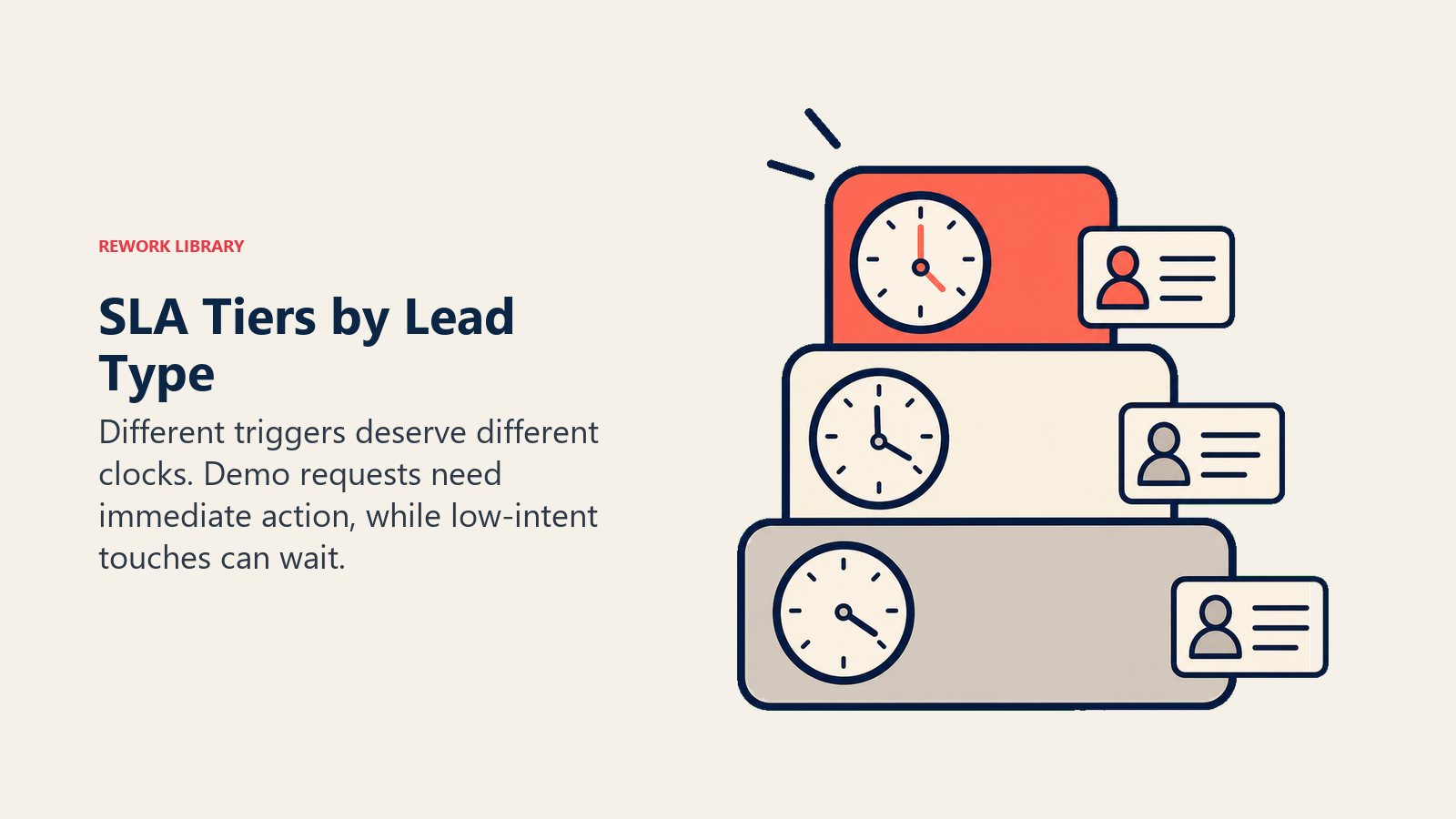
すべてのリードが同じ緊急性を持つわけではありません。SLAはトリガーしたアクションのIntent レベルを反映するべきです。
| リードタイプ | トリガーアクション | SLA目標 | 根拠 |
|---|---|---|---|
| Demoリクエスト | 直接のDemoフォーム送信 | 5分(ビジネスアワー) | 明示的な高Intent:リードがミーティングをリクエストした |
| ダイレクトチャットの問い合わせ | 特定の質問があるチャットセッション | 5分 | リアルタイムエンゲージメント、リードは今サイトにいる |
| MQL閾値ヒット | スコアが合意した閾値を超える | 60分 | 推測されたIntent:行動シグナル、明示的なリクエストではない |
| イベント / Webinarリード | カンファレンスまたはWebinar参加 | 同ビジネスデイ中 | 温かいが、リアルタイムのIntentではない |
| コンテンツダウンロード | ホワイトペーパー、ガイド、チェックリスト | 4ビジネスアワー | 低〜中程度のIntent、初期調査の可能性あり |
| 再活性化されたリサイクルリード | ナーチャーシーケンスから再エンゲージ | 24時間 | Intentは弱い;多くの場合オートメーションメールによってトリガーされる |
これらの目標はビジネスアワーのスタッフィングモデルを想定しています。Demoリクエストが金曜日の午後11時に来た場合、24時間体制のカバレッジなしに「5分」は達成できません。代替案:即座の予約を提供する自動スケジューラー、翌朝ミーティング前の担当者確認コール。リードはレスポンスを受け取り、担当者はオンコールでなくて済みます。
SLAのマーケティング側の役割
スピード・トゥ・リードはセールスの説明責任指標としてフレーミングされます。しかしマーケティングはSLAが達成可能かどうかについて重大な責任を担っています。
時計が始まる前にデータを完全にする。 個人のGmailアドレスと企業情報なしでリードを受け取った担当者は、意味ある最初の連絡を取れません。マーケティングはルーティング前のエンリッチメントの完全性に責任があります。Handoff前のチェックリストは不完全なレコードを持つリードのルーティングをブロックするべきです。SLAを開始しないためではなく、連絡の試みがデータなしでは成功できないからです。
正しいルーティング。 間違った担当者にルーティングされたリードは待機時間を増加させます。それを受け取った担当者はエラーを認識し、再ルーティングし、新しい担当者は遅れて時計を開始します。ルーティングルールのエラー(テリトリーが更新されていない、担当者のキャパシティが考慮されていない、オーバーフローキューが無人)はセールスの問題ではなく、マーケティングとオペレーションの問題です。ルーティングが間違っている場合、担当者のレスポンスタイムを責める前にロジックを修正します。マーケティングとセールスオペレーション間の確固たるリード割り当てSLAは、ルーティング決定を誰がいつまでに所有するかを正確に定義します。
確認済みの連絡先情報なしにHandoffしない。 直通電話番号は最初の連絡成功率を劇的に向上させます。フォームが電話番号をキャプチャせず、エンリッチメントツールがそれを補完しない場合、5分間ウィンドウはメールに限定されます。メールは電話よりも会話を生み出す可能性が大幅に低くなります。マーケティングはSLAが成功裏に達成できるかどうかを決定するデータ品質インフラを所有しています。
SLAのセールス側の役割
リードが完全なデータとともに正しくルーティングされると、セールスが時計を所有します。
誰がキューを監視するか。 誰もリードを見ていなければSLAは失敗します。最低限、ビジネスアワー中の専任のキューオーナーが必要です。新しいリードが到着したことに気づき、ウィンドウ内に確認することがその人の仕事です。ボリュームが多い場合は、受信リードとキューの経過時間を示すリアルタイムDashboardを持つ専任のSDRチームになります。
担当者がウィンドウを逃した場合のエスカレーション。 担当者がSLAウィンドウ内にリードを確認しない場合、エスカレーションパスは自動的に発火するべきです。これは罰ではありません。可視性を意味します。リードはセールスマネージャーまたは次に利用可能な担当者にフラグ立てられます。担当者はリードが経過していることを通知されます。エスカレーションは責任のインシデントを作るためではなく、リードを回収するために設計されるべきです。
オーバーフロー用の担当者ローテーション。 ボリュームが急増するとき(ライブキャンペーン、カンファレンス、大きなコンテンツプッシュ)、通常の担当者キューはSLA準拠のスピードですべてを吸収できません。オーバーフローローテーションを構築します:プライマリキューが飽和しているときにリードを処理できる担当者のリスト。Revenue Opsは平均キューの経過時間をリアルタイムで監視し、それが15分を超えた場合にオーバーフローローテーションをアクティブにするべきです。
CRMでこれを計測する方法
SLAは測定可能である場合にのみ執行できます。これが可視化するフィールドとオートメーションです。
必要なCRMフィールド:
mql_trigger_timestamp:MQLイベントが発火した時刻lead_routed_timestamp:リードが担当者に割り当てられた時刻first_contact_attempt_timestamp:最初の記録されたアウトリーチが行われた時刻first_contact_channel:電話、メール、チャットfirst_contact_outcome:つながった、留守電、不在着信、自動返信sla_breach_flag:最初の連絡がSLAウィンドウを超えた場合に自動設定されるブール値
構築するオートメーション:
SLAカウントダウンアラート: Demoリクエストに対してT+3分、標準MQLリードに対してT+45分で、割り当てられた担当者に自動通知を送ります:「新しい[リードタイプ]があります。SLAウィンドウは[X]分で閉まります。」
エスカレーショントリガー: Demoリクエストに対してT+5分、標準MQLリードに対してT+60分で、first_contact_attempt_timestampが存在しない場合、リードにフラグを立ててセールスマネージャーに通知します。自動的に再割り当てしないでください。まず担当者がフラグに対応する機会を与えます。
SLA違反ログ: SLAウィンドウが記録された連絡の試みなしに閉まった場合、自動的にsla_breach_flag = trueを設定し、週次SLAレポートで違反を記録します。
再ルーティングロジック: リードがSLAウィンドウの2倍(Demoリクエストに10分、標準MQLに2時間)アクティビティなしにキューにある場合、ローテーションの次に利用可能な担当者に再ルーティングします。
SLA未達の結果:診断的、懲罰的でない
SLA違反に対する正しいフレーミングは「プロセスで何が間違ったか」であり、「誰が問題か」ではありません。SLAレポーティングへの懲罰的なアプローチは2つの悪い行動を引き起こします:担当者がフラグを避けるために偽のアウトリーチ試行を記録する、そして担当者がSLAに準拠している速いレスポンスのリードのみを選んで他のリードを説明責任なく経過させる。
SLA違反のパターンが見えるとき、次の順序でこれらの原因を調査します:
ルーティングエラー。 リードは正しい担当者にルーティングされましたか?担当者は利用可能でしたか?不在、連続ミーティング、キューカバレッジなしの出張中でしたか?
データの問題。 連絡先情報はアウトリーチを試みるのに十分に完全でしたか?電話番号なしでロール用メール(info@company.com)のリードを受け取った担当者は文字通り5分以内にその人に電話できません。その電話はどこにもつながらないからです。
ボリュームのスパイク。 キャンペーンが同時に大量のバッチを起動しましたか?チームがSLA準拠のスピードで吸収できる以上のリードがありましたか?そうであれば、プロセスには担当者の説明責任ではなくオーバーフローキャパシティが必要です。
キュー監視のギャップ。 その時間帯に誰か新しいリードキューを監視していましたか?答えがノーなら、それはオペレーションの設計の失敗です。
担当者の優先順位付けのエラー。 担当者は存在していて利用可能だったが、まず他のタスクに取り組むことを選んだか?これが最後に調査するものです。最初ではありません。上記のすべてに問題がなく、担当者が単に新しいリードに対応していなかった場合、それはトレーニングまたはコーチングの会話です。
チーム間のSLA交渉
Demoリクエストに対して5分SLAへのセールスの同意を得ることは、コンバージョンデータを示せば簡単です。抵抗は通常2つの形で来ます。
「スタッフを配備できない。」 これは言い訳ではなく現実のキャパシティの問題です。チームに3人の担当者がいて、Demoのボリュームが予測不能に急増する場合、オーバーフローカバレッジまたは自動スケジュールツールなしには一律の5分SLAは達成できません。現在のスタッフィングモデルに現実的なSLAを交渉し、暫定的な解決策として自動スケジューラーを構築します。確認メールの予約リンクはリードが担当者の利用可能性を必要とせず即座に自分でスケジュールできるようにし、即座のエンゲージメントの意図を達成します。
「5分は意味のある準備をするには速すぎる。」 これはクオリティの問題です:担当者は事前に会社を調査せずに冷たくリードに電話したくありません。答えは最初の連絡が完全に準備されたディスカバリーコールである必要はないということです。2分の確認コールでよいです:「Demoをリクエストされたのを見ました。すぐに関心を確認するためにご連絡しました。解決しようとしていることを少し聞かせていただけますか?2分いただけますか?」そのコールはウィンドウ内の接続の目標を達成し、実際のミーティングの前に準備する時間を担当者に与えます。
合意されたSLAをMQLの定義とHandoffプロセスの基準と並べてマーケティングとセールスのSLAテンプレートに文書化します。書かれていないSLAはアスピレーションです。書かれてサインされたSLAは運用上の合意です。
レポーティングとレビューケイデンス
スコアカードは、レスポンス速度を営業だけの不満ではなく、共有の収益指標として可視化し続けます。
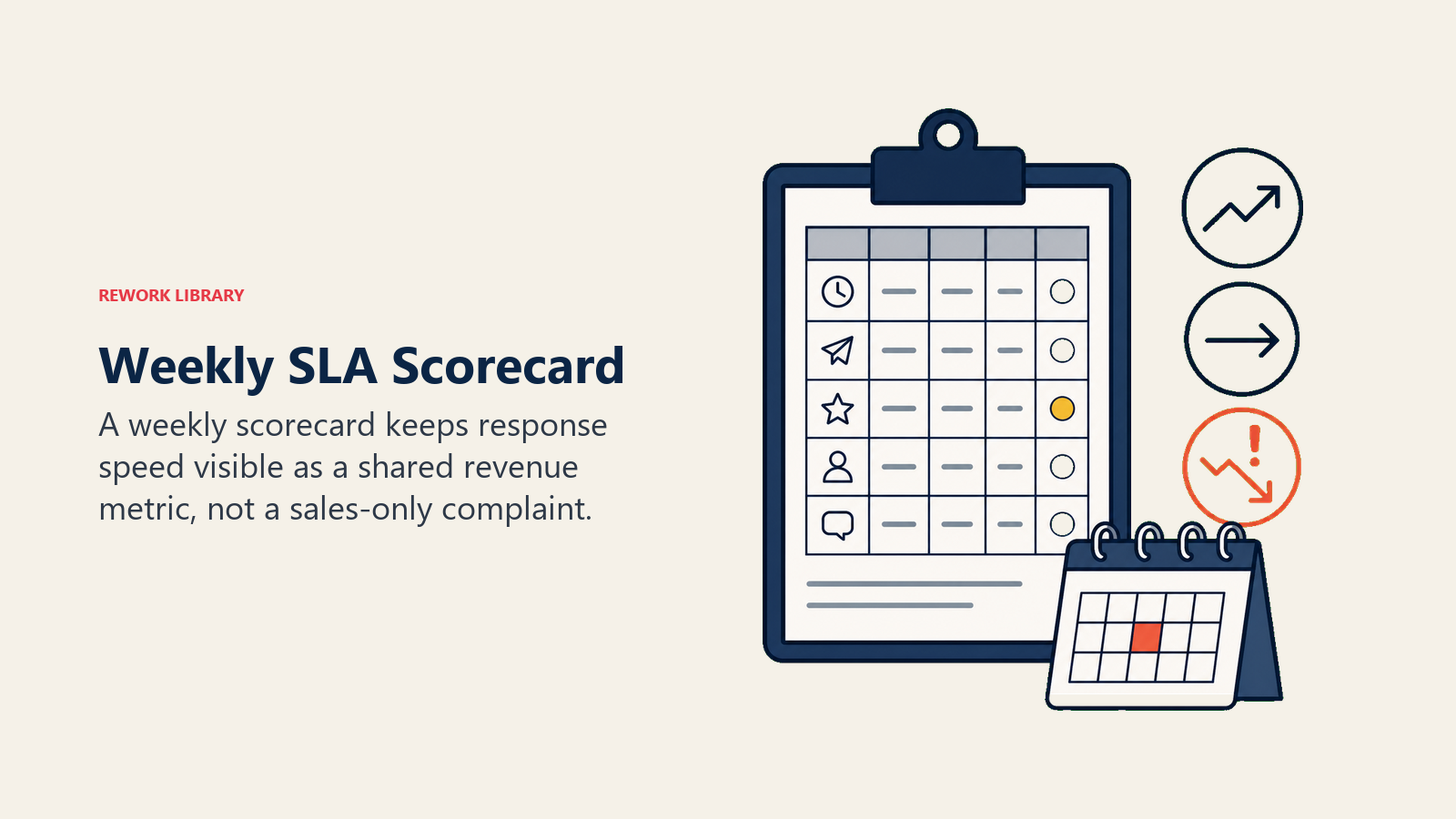
SLAパフォーマンスは週次リード品質コールのアジェンダに含まれます。非難としてではなく。共有の運用指標として。
週次SLAスコアカード:表示するもの:
| 指標 | 今週 | 前週 | 目標 |
|---|---|---|---|
| 受信したDemoリクエストリード数 | X | X | N/A |
| 5分以内に対応した割合 | X% | X% | >85% |
| 最初の連絡までの中央値時間(Demo) | X分 | X分 | <5分 |
| 受信した標準MQLリード数 | X | X | N/A |
| 60分以内に対応した割合 | X% | X% | >80% |
| 最初の連絡までの中央値時間(MQL) | X分 | X分 | <60分 |
| 今週の合計SLA違反数 | X | X | リードの5%未満 |
| 違反の根本原因(上位3つ) | ルーティング / データ / キャパシティ | N/A | N/A |
このスコアカードのレビューには約10分かかります。両チームにHandoffインフラが機能しているかどうかと、どこに改善の焦点を当てるかを伝えます。マーケティングはエンリッチメントが素早いレスポンスを可能にしているかどうかを見ます。セールスはキュー監視と担当者の行動が基準を満たしているかどうかを見ます。
違反が多い場合、根本原因を一緒に診断します。パフォーマンスが強い場合、それを認め、Pipeline内の次の制約を探します。レスポンスタイムがもはやボトルネックでなければ、何か別のものがそうです。それを見つけることは収益チームの共有の仕事です。
運用チェックリスト:5分が実際に何を必要とするか
Demoリクエストに対して5分SLAを目指して構築しているチームにとって、運用上に整っている必要があるものを示します:
- 担当者へのリアルタイムのリード通知(Slackアラート、CRMモバイルプッシュ、または専用のキュービュー、メールだけでなく)
- 準備を必要としない事前構築された最初のコールオープナー(どんなリードにも合う標準のオープナーで担当者がすぐに電話できる)
- 担当者に届く前に実行されるエンリッチメント(電話番号が利用可能、会社名が入力済み)
- 3分以内にアクションがない場合に発火するエスカレーションオートメーション(担当者が利用できない場合に備えて)
- 大量キャンペーンウィンドウ中のスタンバイのオーバーフロー担当者
- 時間外リードへのフォールバックとしての自動スケジューラー(フォーム確認メールの予約リンク)
- 担当者がオンボーディング時にSLAウィンドウを確認し四半期ごとにレビューする
これら6つすべてが整っていなければ、5分の目標はアスピレーションです。チェックリストはそれを運用可能にします。
Rework分析: 5分間レスポンスウィンドウフレームワークとInsideSales.comのベンチマークデータに基づくと、Demoリクエストに対してリアルタイムCRM通知、事前構築されたコールオープナー、エスカレーションオートメーションを通じて5分未満のレスポンスを運用化するチームは、実装後60日以内に業界平均レスポンスタイムの42時間から15分未満に移行するのが一般的です。インフラ投資は中程度です:通知ルーティング、キュー監視プロトコル、オーバーフロー担当者の指定。見返り(最高IntentのリードでLeadを資格確認できる可能性が21倍向上)は、リードのボリュームや予算を変えることなく利用可能な最も高いコンバージョンレバレッジポイントです。ReworkのCRMにはリアルタイムのLeadルーティング、SLAカウントダウンアラート、ファーストコンタクトログが組み込まれており、収益チームがカスタム開発なしに5分間レスポンスウィンドウの基準を達成するために必要なインフラを提供しています。詳細はrework.com/pricingをご覧ください。
スピード・トゥ・リードはほとんどの収益チームに利用可能な最も安価なコンバージョン改善です。新しいコンテンツ、新しいキャンペーン、予算増加を必要としません。インフラ、合意、説明責任を必要とします。そして見返り(高IntentリードでLeadを資格確認できる可能性が21倍向上)は収益のPlaybookのほぼ他の何かに比べて達成が難しいです。McKinseyのB2Bセールス成長調査は、高度なLeadの優先順位付けとより速いフォローアップを適用する企業がコンバージョン率で15〜20%改善を見ることを確認しており、レスポンスのスピードは基盤的なイネーブラーとして機能します。
よくあるご質問:5分間レスポンスSLA
5分間レスポンスウィンドウがLeadコンバージョンにとって非常に重要な理由は?
5分以内にLeadに対応することは、B2BのセールスチームがLeadを資格確認できる可能性を30分後に対応した場合と比べて21倍高めます。MITとInsideSales.comによる15,000件以上のリードを対象とした調査がハーバード・ビジネス・レビューに発表されました(Oldroyd、McElheran、Elkington)。理由はバイヤーの注意です:Demoリクエストを送信してから最初の5分間、リードはそのアクションを引き起こした問題の精神的なコンテキストにいます。30分後、彼らは他のタスクに移っており、担当者はソリューションについての会話ができる前に問題を再確立しなければなりません。5分間ウィンドウはIntentが最も熱く、会話が最も簡単なときです。
チームが一貫して5分SLAを達成できない場合は?
最も影響の大きい2つのインフラ修正から始めます:リアルタイムのリード通知(割り当てられた担当者へのSlackアラートまたはCRMモバイルプッシュ、メールだけでなく)と、フォーム確認メールの自動スケジューラー(Calendly、Chili Piper、または類似)。自動スケジューラーはリードが担当者の利用可能性を必要とせずすぐにミーティングを自分で予約できるようにします。リードはレスポンスを受け取り、担当者はオンコールでなくて済みます。通知とスケジューリングが整ったら、エスカレーションオートメーションを追加します:Demoリクエストから3分以内に記録された連絡の試みがない場合、セールスマネージャーと次に利用可能なオーバーフロー担当者に自動的に通知します。
5分SLAを適用すべきリードのタイプは?
5分基準は特に高Intentのトリガーアクションに適用されます:Demoリクエスト、特定の質問のあるダイレクトチャットの問い合わせ、連絡先情報が送信された価格ページの問い合わせ。明示的なハンドレイズではなく蓄積された行動スコアに基づいてコンバージョンする標準MQL閾値リードは60分SLAを持つべきです。イベントとWebinarリードは同ビジネスデイ中のフォローアップが適切です。コンテンツダウンロードと初期段階のナーチャーリードは通常4ビジネスアワー待てます。SLAの段階はそれをトリガーしたアクションのIntentレベルを反映するべきです。
5分SLAを達成しているかどうかをどのように測定しますか?
CRMに4つのフィールドで計測します:mql_trigger_timestamp(フォームが送信されたまたは閾値が超えられた時刻)、lead_routed_timestamp(担当者が割り当てられた時刻)、first_contact_attempt_timestamp(最初の記録されたアウトリーチが行われた時刻)、sla_breach_flag(最初の連絡がSLAウィンドウを超えた場合に自動設定されるブール値)。毎週報告します:5分以内に対応したDemoリクエストリードの割合(目標85%以上)、Demoリクエストの最初の連絡までの中央値時間、違反の根本原因(ルーティングエラー、データの問題、ボリュームスパイク、またはキュー監視のギャップ)。
5分間ウィンドウを逃した場合のビジネスコストは?
直接コストはLeadを資格確認できる可能性の急激な低下です:5分のレスポンスから30分のレスポンスに行くと、MITとInsideSales.comによる調査によると資格確認の可能性が21倍低下します。間接コストは競争上のものです:Vendastaの調査によると、バイヤーの78%は価格や製品機能に関係なく、問い合わせに最初に対応した企業から購入します。製品がいくつかの選択肢とほぼ同等の市場では、最初の信頼できるレスポンスが評価の会話の不釣り合いに大きなシェアを勝ち取ります。最初の1時間以内に聞かないリードは最初の60分以内に連絡された場合と比べて関与する可能性が7倍低くなります(220万件以上のリードのハーバード・ビジネス・レビュー分析)。
5分SLAは時間外リードに適用されますか?
ライブコールの要件としては適用されません。ほとんどのチームはSLAをビジネスアワーのみに適用します。これは合理的です。時間外リードに対する実際的な代替案は自動スケジューラーです:フォーム確認メールの予約リンクがリードに即座にミーティングを自分でスケジュールさせます。リードはレスポンスを受け取り、担当者はオンコールでなくて済み、ミーティングはリードがタブを閉じる前にカレンダーに入っています。ビジネスが時間外に時間的に敏感なリードを扱う場合(エンタープライズDemoや国際市場など)、オンコールローテーションまたは24時間のSDRカバレッジモデルが適切かもしれません。
5分間レスポンスSLAはMQLのHandoffプロセスとどのようにつながりますか?
5分SLAは5段階Handoffプロセスの第5段階です(トリガー、エンリッチメント、ルーティング、担当者の受け入れに続く最初の連絡義務)。しかしSLAは前の段階が正しく実行された場合にのみ達成できます。エンリッチメントパスが不完全な場合(電話番号なし、会社名なし)、担当者は5分間で意味のある電話をかけられません。ルーティングが間違っている場合(リードが間違った担当者または担当者のいないキューに行く)、正しい担当者がリードを見る前に時計が進みます。スピード・トゥ・リードは担当者の行動の問題と同じくらいシステムの問題です。最初の連絡段階に先行するマーケティングとオペレーションのインフラが、SLAが達成可能かどうかを決定します。
参考リンク