ABMとABSの共同Playbook:マーケティングとセールスが一体でAccount-Basedプログラムを運営する方法
Turn this article into takeaways for your work.


Each assistant summarizes the article only for you and suggests best practices for your work.
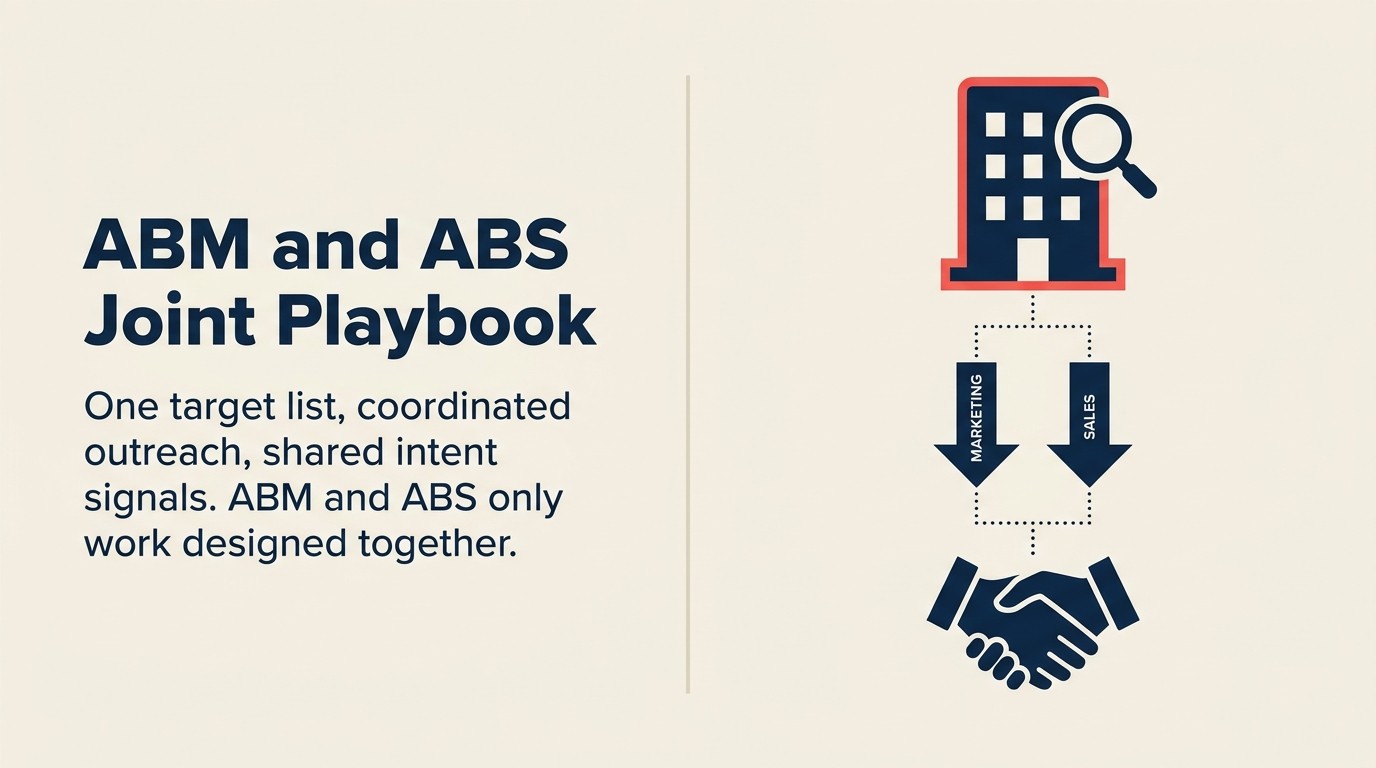
多くの企業は、ABMとABSを並行したプログラムとして運営しています。マーケティングはターゲットアカウントリストを作成し、広告、イベント、パーソナライズされたコンテンツを展開します。セールスは独自のターゲットアカウントリストを作成し、アカウント内でのマルチスレッディングと経営層へのアウトリーチを実施します。それらのリストが重なることもありますが、重ならないことも少なくありません。
結果として、両チームはAccount-Basedプログラムに実際の費用をかけながら、それを機能させるための連携を欠いています。マーケティングはセールスが優先しないアカウントをウォームアップします。セールスはマーケティングが6週間かけて育ててきたアカウントにコールドコンタクトします。なぜ「ターゲットアカウント」のウィンレートが他のアカウントと変わらないのか、誰にもわかりません。
この記事は、ABMとABSを一つのプログラムとして運営するためのPlaybookです。一つの共有ターゲットリスト、タイミングの連携、両チームが共同で所有する指標。これを単一の連携プログラムとして運営する企業は、各モーションを独立して運営する企業と比べて、ターゲットアカウントから48%多くのPipelineを生み出しています。
用語を明確に定義する
実行の詳細に入る前に、各用語が実際に何を意味し、共同の部分が何を必要とするかを明確にしておくと役立ちます。
Account-Based Marketing (ABM) はマーケティングの実行戦略です。マーケティングは定義されたターゲットアカウントのリストを特定し、広く全員に向けてではなく、それらの特定のアカウントに向けてリソース(有料広告、パーソナライズされたコンテンツ、ダイレクトメール、イベント招待、経営層向けブリーフィング)を集中させます。ITSMAは2003年にこの用語を作り、ABMプログラムの類型学の正典的な情報源であり続けています。
Account-Based Selling (ABS) はセールスの実行戦略です。営業担当者は同じ定義されたアカウントリストを中心にテリトリーとアウトリーチを整理します。それらのアカウント内の複数の連絡先へのマルチスレッディング、チャンピオンとの関係構築、経営層の紹介の調整。WikipediaのABMの概要は、キーアカウントマネジメントから現代のABM/ABSプログラムまでのAccount-Based手法の完全な進化を扱っています。
共同の部分: ターゲットリストは共有され、マーケティングプログラムと営業のアウトリーチのタイミングは連携し、両方のモーションからのデータがアカウントエンゲージメントの単一ビューに集約されます。どちらのチームも相手が知らない独立したプログラムを運営していません。
最後の文章がほとんどの企業が失敗するところです。
主要データ:ABMとABSプログラムのパフォーマンス
- 連携したABMプログラムを運営している企業は、Marketoのベンチマーク調査によると、非ABMアプローチと比較してマーケティング努力に帰属する収益が208%多いと報告しています。
- DemandbaseのABM状況報告2024によると、ABM/ABSの連携プログラムを運営しているアカウントの商談サイクルは、標準的なPipelineと比較して通常20〜30%短いです。
- マーケティングとセールスの間で共有ターゲットアカウントリストを使用している組織は、ターゲット外のアカウントと比較してそれらのアカウントから48%多くのPipelineを生み出しています(SiriusDecisions/Forrester)。
ABM+ABS共同モーションフレームワーク
ほとんどのAccount-Basedプログラムが失敗するのは、それらが1つではなく2つのプログラムだからです。ABM+ABS共同モーションは、単一の共有アカウントリストに対してマーケティングとセールスの実行を融合させる3フェーズの運営モデルです。3つのコア要素があります:
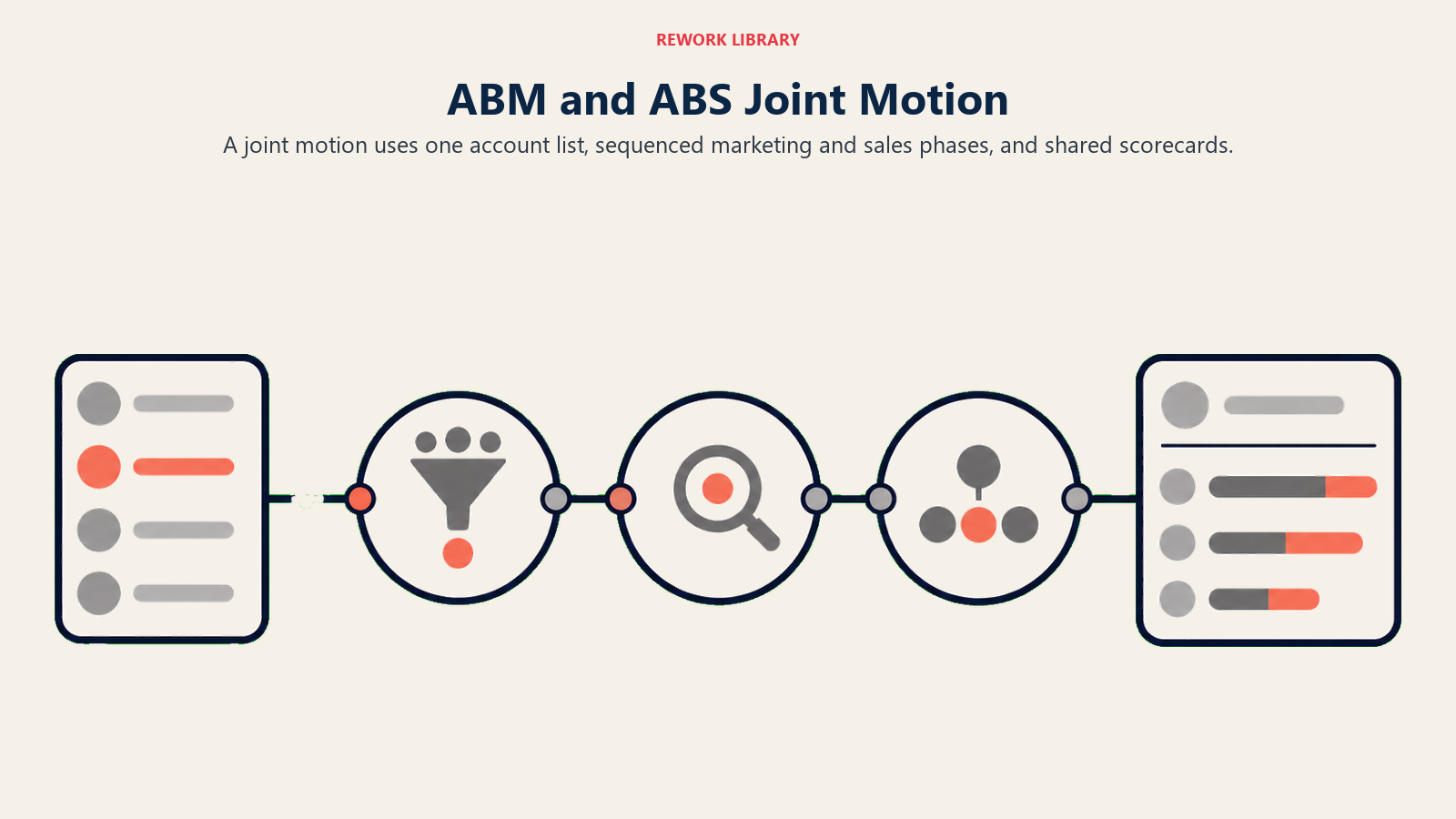
- 一つのリスト、共同で構築:マーケティングはICPとインテントデータを提供し、セールスは現場の情報と関係のコンテキストを提供します。どちらのチームも別のリストを作成しません。
- 順序立てたフェーズ、並行ではなく:マーケティングはSDRのアウトリーチが始まる前に認知を実行します。この順序はカレンダーではなく、インテントシグナルの閾値によって実施されます。
- 共有スコアカード、別々のレポートではなく:両チームは同じダッシュボードでアカウントエンゲージメント率、ターゲットアカウントごとのPipeline、ウィンレートの向上に対して報告します。
共同モーションは、ティアリング、アウトリーチの順序、コンテンツ制作、測定など、以下のすべての組織原則となります。
ターゲットアカウントリスト:ABM/ABSの共同作業の出発点
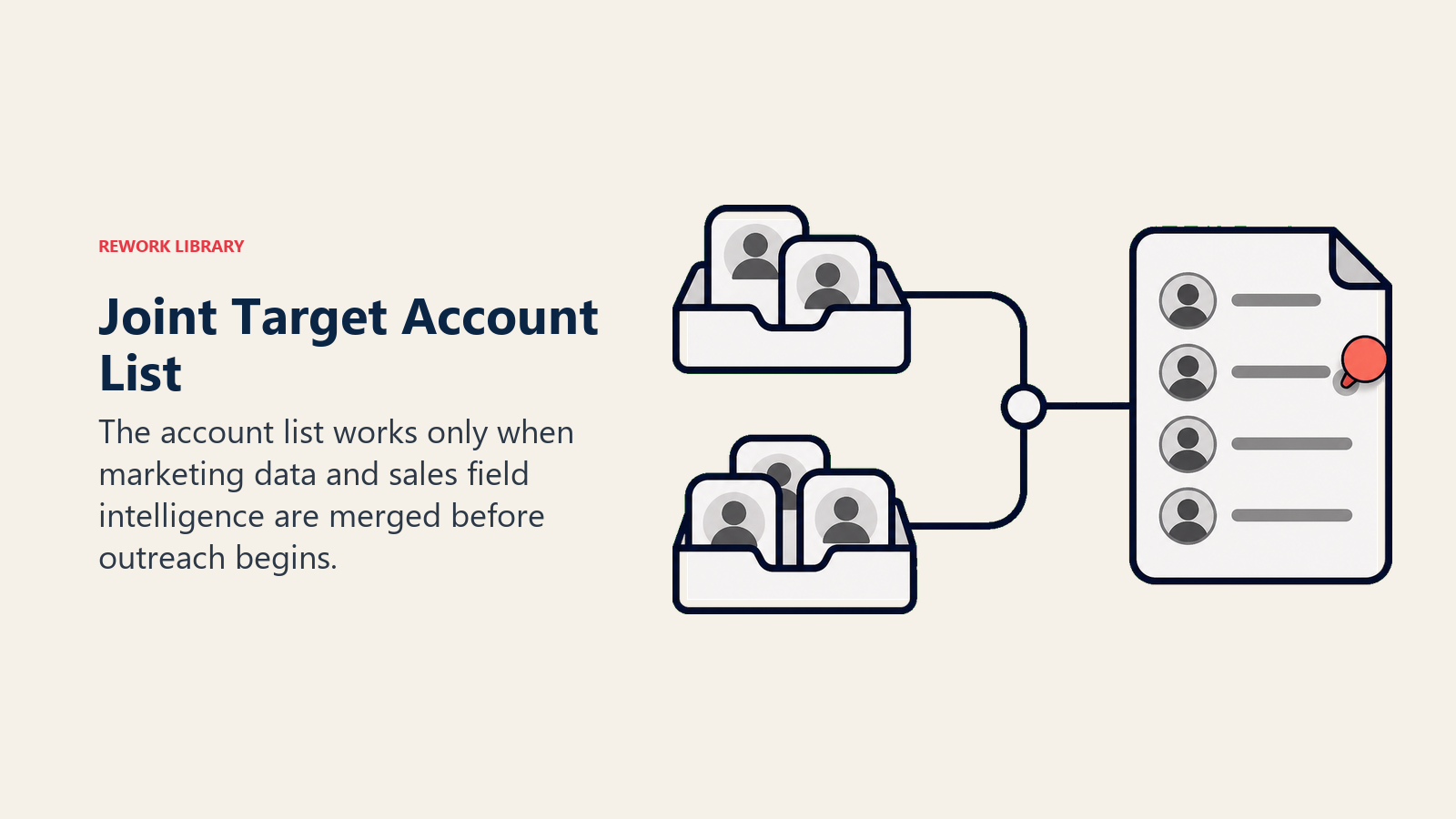
ターゲットアカウントリストが基盤です。そして、それは共同で構築されなければなりません。そうでなければ、両プログラムは最初から危うくなります。
リストを構築するのは誰か
マーケティングはICP分析を持参します。ファームグラフィックの適合性、サードパーティソースからのインテントデータ、セグメント別の過去の受注パターン。セールスは現場の情報を持参します。これまで取り組んできたアカウント、アクティブなチャンピオンがいるアカウント、戦略的なテリトリー。両方の情報がリストに必要です。共有ICPフレームワークは、両チームが構築の基準となる共通の定義を提供します。
マーケティングのみのリストはICP的に正確ですが現場感覚に欠ける傾向があります。セールスがすでに足がかりを持っているアカウントを除外してしまう可能性があります。セールスのみのリストは関係性に基づく傾向がありますが、現在バイイングモーションにあるアカウントを発見するための市場インテリジェンスが不足しています。
2時間のワーキングセッションで、四半期ごとに一緒に構築してください。
3ティアのアカウントモデル
すべてのターゲットアカウントが同じレベルの投資を受けるわけではありません。ティアモデルは、コンバージョンの可能性が最も高いところにリソースを集中させます。
ティア1(フルプログラム、ハイタッチ): 収益チームあたり25〜50アカウント。これらはすべてを受けます。ターゲット広告、パーソナライズされたコンテンツ、ダイレクトメール、経営層へのアウトリーチ、専任のアカウントチーム。AEとマーケティングは両方がこれらのアカウントを同時にアクティブに担当します。経験則として:SDRあたり1つのティア1アカウント、AEあたり1つ、それ以上ではありません。
ティア2(スケールされたパーソナライゼーション、ミディアムタッチ): 100〜200アカウント。これらはセグメント固有のコンテンツと広告(アカウント固有ではない)、およびインテントシグナルによってトリガーされるSDRのアウトリーチを受けます。ティア1よりカスタマイズは少ないですが、一般的なPipelineよりも依然としてターゲットされています。
ティア3(プログラマティック、ローエンドタッチ): ICPに合致するが積極的に追っていない残りのアカウント。マーケティングオートメーションとナーチャーシーケンス。ティア3のアカウントが強いインバウンドシグナルを出した場合のみセールスが関与します。
四半期ごとに、エンゲージメントデータ、インテントシグナル、関係のステータスに基づいてアカウントはティア間を移動します。このレビューは一度限りの決定ではなく、定期的な共同ミーティングです。リストを正しく作ることは最低条件です。次の問いは、アウトリーチを実際にどう順序立てるかです。
連携したアウトリーチモデル
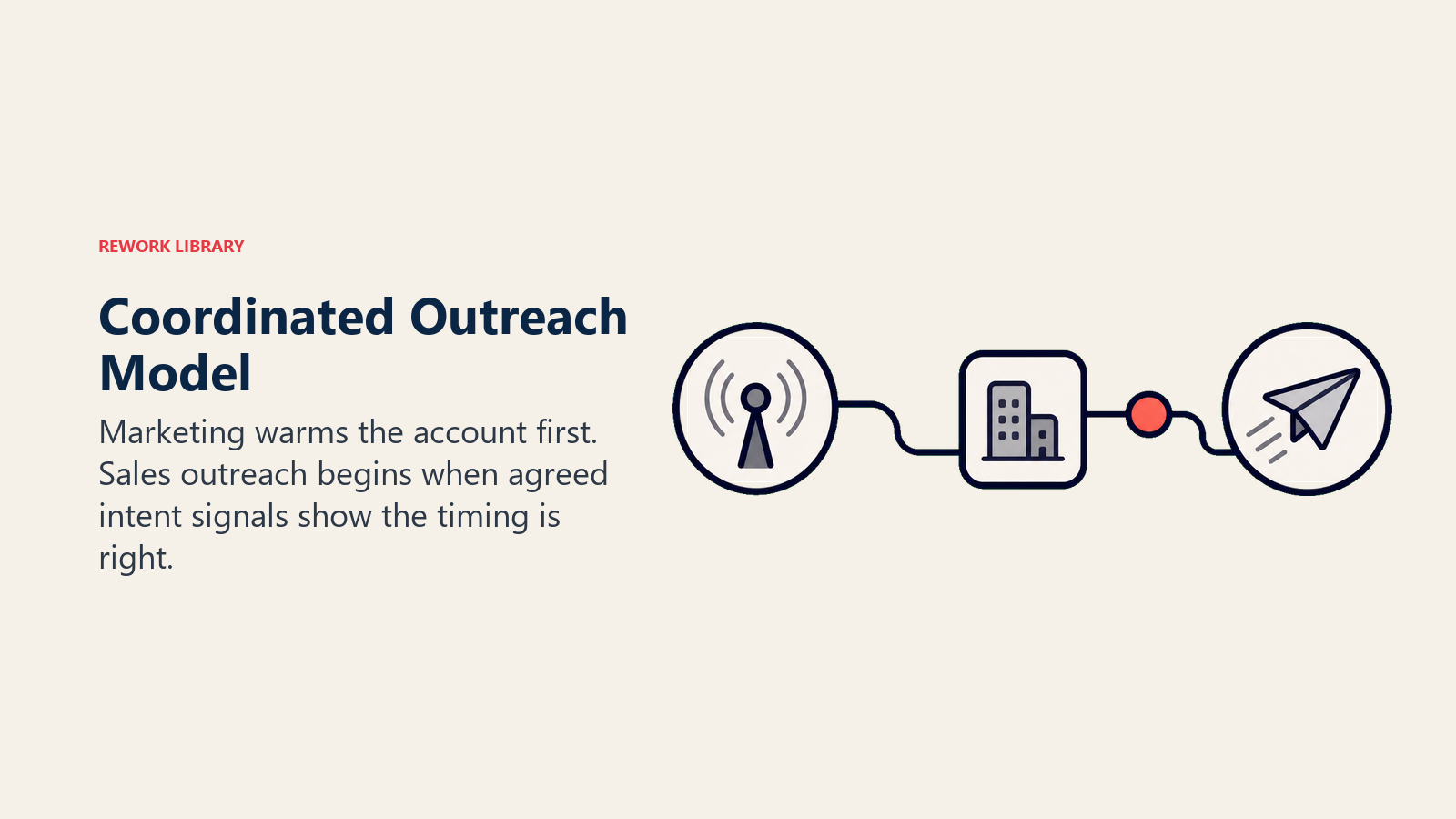
戦術と同じくらい順序が重要です。マーケティングとセールスが連携して動くと、全体は部分の合計を超えます。独立して動くと、互いの効果を損ないます。
フェーズ1:認知(マーケティングがリード)
セールスがティア1のアカウントにコンタクトする前に、マーケティングはターゲットを絞った認知プログラムを実行します。デジタル広告、オーガニックコンテンツの増幅、ソートリーダーシップ、経営層向けラウンドテーブルへの招待。目標はLeadを生み出すことではありません。SDRがアウトリーチをした時にそれが完全にコールドにならないよう、アカウント内にブランドの存在感を確立することです。
期間: 以前にブランド認知がない新しいティア1アカウントには4〜6週間。すでにある程度の認知があるアカウントにはより短い期間。
フェーズ1でのセールスの役割: なし(ただし、このアカウントに関連する課題は何か、広告ターゲティングで優先する連絡先は誰かというコンテキストをマーケティングに提供することを除く)。
フェーズ2:エンゲージメント(SDRのアウトリーチ開始)
マーケティングがアカウントから2つ以上のインテントシグナルを記録した後(1つではなく、2つの異なるシグナル)、SDRがアウトリーチを開始します。マーケティングの認知プログラムは並行して実行し続けます。
SDRはアウトリーチの中でマーケティングのコンテキストを意図的に参照します。「[アカウント名]が最近[トピック]を評価していることに気づきました」は一般的なコールドオープナーよりも効果的です。マーケティングデータがアウトリーチのタイミングに情報を提供したからこそ、これが可能なのです。
フェーズ3:アクティブ(AEが引き継ぎ、マーケティングはシフト)
SDRがアカウントを質的に確認してミーティングを予約すると、AEが主要な関係者となります。マーケティングの役割は認知からディールサポートにシフトします。ティア1向けのアカウント固有のランディングページ、競合バトルカード、エグゼクティブブリーフィングデッキ、アカウントの業界に合わせたケーススタディ。
AEとマーケティングはアクティブなティア1アカウントについてSalesforceのフィールドだけでなく、直接コミュニケーションすべきです。上位25アカウント向けの共有Slackチャンネルは、週次レポートよりも効果的に機能します。
フェーズ4:クローズ/エクスパンド(CSが引き継ぎ、マーケティングは再びシフト)
クローズ後、マーケティングはリテンションと拡大コンテンツに移行します。顧客ケーススタディプログラム、製品アップデートのコミュニケーション、拡大オファーシーケンス。これらはすべて、AEが引き渡したばかりの顧客関係に貢献します。
重要なルール: セールスはマーケティングがまだ認知プログラムを実施していないティア1アカウントにコールドコンタクトすべきではありません。そして、マーケティングはセールスがすでにクローズした、非資格化した、または「準備ができていない」とフラグを立てたアカウントに予算を使うべきではありません。両方向が重要です。
SDRへの引き渡しをトリガーするインテントシグナル
フェーズ1からフェーズ2へ(マーケティングの認知からSDRのアウトリーチへ)の引き渡しは、直感や月次ミーティングではなく、定義されたシグナルによってトリガーされるべきです。
SDRのアウトリーチをトリガーするシグナル:
- ウェブサイト: 14日間以内に同じアカウントドメインから3回以上の訪問、特に価格または製品ページへのもの
- コンテンツ: アカウントの連絡先がFunnelの下部アセット(ケーススタディ、競合比較、ROI計算ツール)をダウンロードした
- イベント: アカウントの連絡先がウェビナー、フィールドイベント、経営層向けラウンドテーブルに参加した
- サードパーティインテント: Bombora、G2などのインテントデータソースで、製品カテゴリに直接関連するトピックに対してアカウントが出現した
- アウトバウンドの反応: アカウントの連絡先がマーケティングのアウトリーチ(メールの返信、ゲーテッドコンテンツへの広告クリック)に肯定的に反応した
これらのシグナルをプログラムが開始される前に書面で定義し、両チームに同意してもらってください。すべてのクリックが該当するわけではありません。単一のブログ訪問は該当しません。同じアカウントの異なる連絡先からの2つのウェビナー登録は該当します。
マーケティングがABMのために作るもの、セールスがABSでどう使うか
Account-Basedプログラムには、一般的なデマンドジェネレーションとは異なるコンテンツが必要です。より具体的で、より速く使用でき、営業の会話に近いものです。
アカウント固有のランディングページまたはマイクロサイト(ティア1のみ): アカウントの業界、ユースケース、あるいは社名を参照するページ。大規模には実用的ではありませんが、50万ドルのターゲットアカウントには会話が変わります。セールスはアウトリーチの中でリンクを直接送ります。
業界縦断的ケーススタディ: 一般的な推薦文ではありません。ティア1およびティア2リストの特定のセグメントに合わせた事例研究。ヘルスケアがターゲットリストの40%を占める場合、少なくとも2つの強力なヘルスケアケーススタディが必要です。
エグゼクティブブリーフィングデッキ: 共同作成。マーケティングが構造とビジュアル言語を設計し、セールスが各アカウントのコンテンツをカスタマイズします。AEはゼロからデッキを構築すべきではなく、マーケティングは現場のコンテキストなしにデッキを送るべきではありません。
四半期ごとに更新される競合バトルカード: 鮮度によって生死が決まります。18ヶ月前のバトルカードは、バトルカードがないよりも悪い場合があります。AEは案件の中でそれに頼り、すでに解決されている競合の反論を受けて驚かされます。イネーブルメントコンテンツフィードバックループがバトルカードを最新の状態に保つ仕組みです。
ダイレクトメールとギフトキャンペーン: タイミングを合わせた場合、ティア1には依然として効果的です。タイミングを合わせて、ギフトが個人的なフォローアップの1〜2日以内に届くようにし、3週間後にならないようにしてください。
ABM/ABSプログラムの共有指標
Account-Basedプログラムの最大の失敗モードは、別々のスコアカードを運営することです。マーケティングがアカウントエンゲージメント率を報告し、セールスがPipelineを報告し、誰もそれらを繋げません。
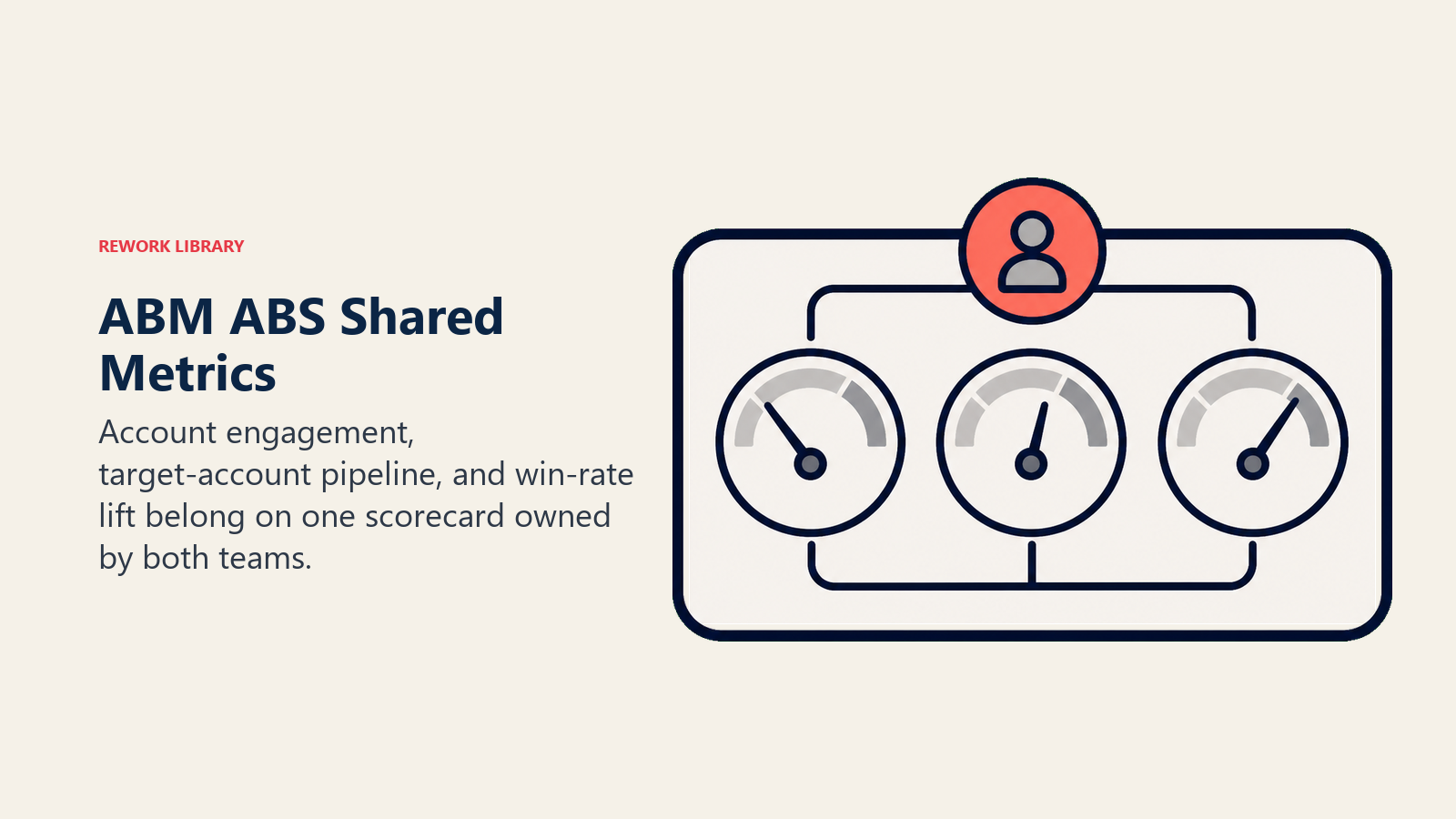 両チームが共同で所有する指標:
アカウントエンゲージメント率(ティア1): 四半期中にマーケティングのタッチとセールスのタッチの両方を受けたティア1ターゲットアカウントの割合。目標:ティア1アカウントの80%以上。この数字が50%を下回る場合、プログラムは動いていません。単なるリストです。
ターゲットアカウントリストから生み出されたPipeline対非ターゲット: Account-Basedプログラムの前提全体は、より高品質なPipelineを生み出すことです。2四半期後にターゲットアカウントが非ターゲットアカウントよりも意味のある高いウィンレートまたは案件規模を示さない場合、リストまたは実行に何か問題があります。
平均案件規模:ターゲットアカウント対標準アカウント: これがROIの数字です。ABM/ABSプログラムは一般的なデマンドジェネレーションよりもアカウントあたりのコストがかかります。その見返りは案件の経済性として現れなければなりません。
商談サイクル期間:ターゲットアカウント対非ターゲット: 連携したウォームアップはサイクルを短縮します。なぜなら、バイヤーはより多くのコンテキストを持って到着するからです。これが見られない場合、セールスがアウトリーチする前にマーケティングのウォームアップが効いていません。
ウィンレート:ターゲットアカウント対非ターゲット: 最重要指標。ティア1アカウントのウィンレートが全体のウィンレートよりも意味のある高さであれば、プログラムは機能しています。そうでなければ、ティア1に間違ったアカウントが入っているか、連携が起きていないかです。ForresterのABM状況調査は、連携したAccount-Basedプログラムからのウィンレート向上をベンチマークしている主要チームを追跡しています。
これらの指標は四半期ごとに共同でレビューしてください。別々のレポートではなく、同じ部屋で。共同Pipeline レビューのリズムがこれらの数字の定期的な場所です。
Rework分析: B2B収益チームのベンチマークに基づくと、共同ターゲットリストと定義されたインテントシグナルの引き渡し閾値を使用するAccount-Basedプログラムは、測定可能に短い商談サイクルを生み出します。通常、同じICPをターゲットにした標準的なアウトバウンドシーケンスと比較して、最初のタッチから質の高いミーティングまでの進行が20〜30%速くなります。理由は魔法ではありません。マーケティングのウォームアップが、SDRのアウトリーチが単独で克服しなければならない「あなたは誰ですか?」というコールドな抵抗を軽減するからです。私たちが観察する最もパフォーマンスの高いプログラムは、AEあたり200以上ではなく、25〜50アカウントのティア1リストを使用しています。集中こそが幅を超えます。
ABM/ABSの一般的な失敗パターン
これらはAccount-Basedプログラムが成果を出す前に終わらせるパターンです。
更新されないリスト: 1月に設定されたターゲットアカウントリストは7月には半分が間違っていることが多いです。アカウントは競合他社と取引を閉め、買収され、優先事項を変え、または育ててきたチャンピオンを失います。四半期レビューのリズムがこれを修正しますが、実際に行われなければなりません。
セールスが知らないリストへのABM実施: これは不合理に聞こえますが、常に起きています。マーケティングはターゲットリストを構築し、一四半期のプログラムを実施し、それらのアカウントを担当しているAEはまったく知りません。セールスはすべてのウォームシグナルを見逃します。
マーケティングの認知が届く前にセールスがアウトリーチ: AEが1週目に、6週間の認知プログラムが実施される前にティア1アカウントにコールドアウトリーチを送ります。アカウントはブランドエクイティが確立される前に一般的なコールドアウトリーチを見て、最初の印象を形成します。持っている中で最も価値ある不動産を無駄にしました。
インテントシグナルの引き渡しプロトコルなし: マーケティングはアカウントが競合比較をダウンロードしたことを記録します。セールスは知りません。アカウントは現在アクティブな評価を行っており、誰も電話しません。これは定義されたシグナルからアウトリーチへのトリガーと明確な通知パスなしに起きます。Leadルーティングルールは、この引き渡しを手動ではなく自動にする機械的なレイヤーです。
別々に追跡された指標: マーケティングがアカウントエンゲージメント指標を祝います。セールスはアカウントが実際にコンバージョンしていなかったためクォータを達成できません。プログラムは一方のチームのスコアカードでは成功に見え、もう一方では失敗しています。共有指標は必須です。
90日間のABM/ABSパイロット
連携したプログラムを運営したことがない場合、スケールする前にモデルを証明するのに十分な小さな規模から始めてください。
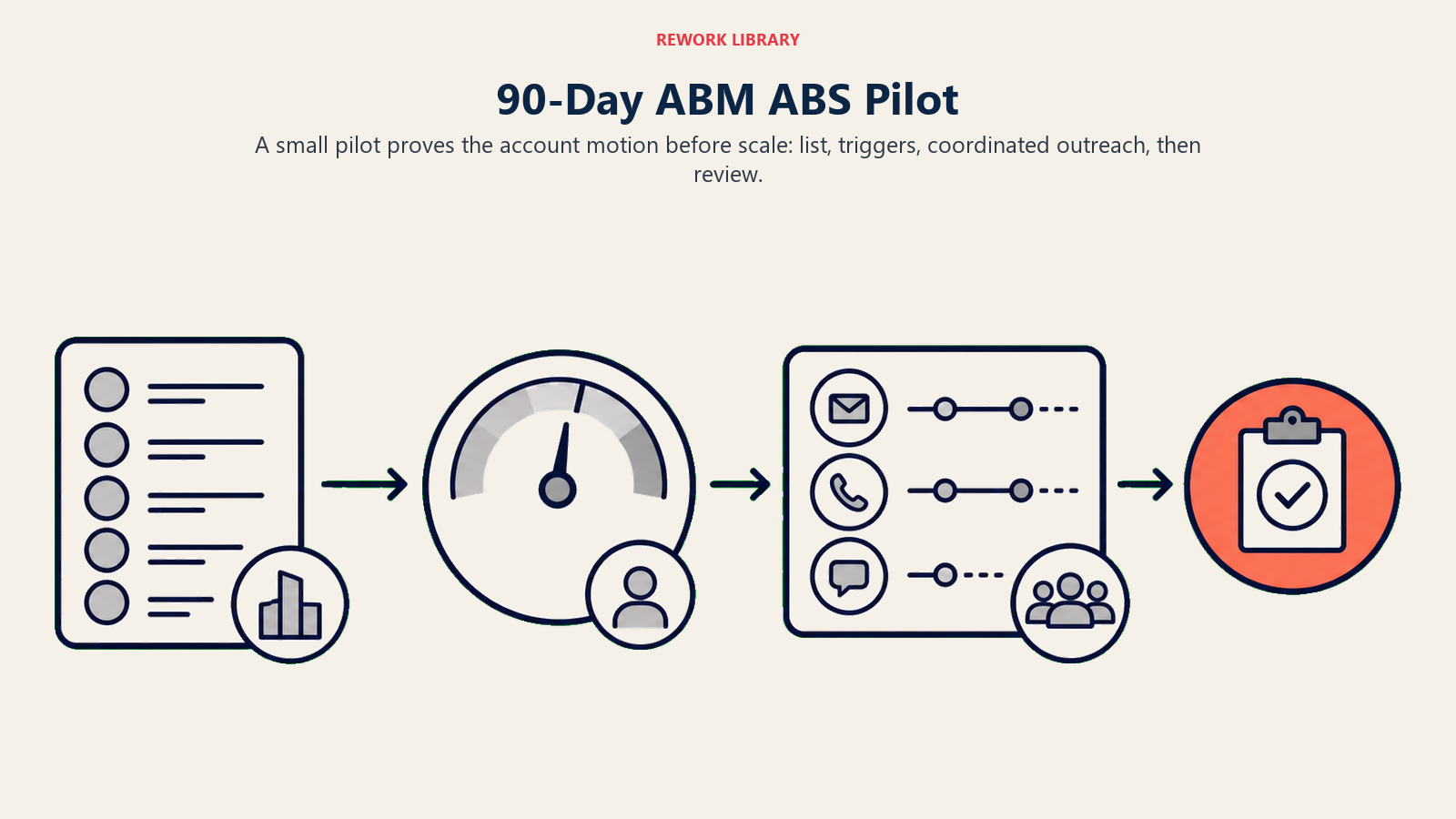 月1: 共同で構築された25〜50アカウントのティア1リストに合意します。SDRのアウトリーチをトリガーするインテントシグナルを書面で定義してください。AEのアカウントオーナーを割り当てます。マーケティングの認知プログラムが実施できる状態にあることを確認してください。マルチチャネルのLead獲得が、チャンネル全体でエンゲージメントを追跡するために必要なインテントシグナルのレイヤーに情報を提供します。
月2: ティア1リストのマーケティング認知プログラムを開始します。SDRはインテントシグナルの閾値に達したアカウントへのアウトリーチを開始します。マーケティングのタッチとセールスのタッチの両方があるアカウントを追跡します。AEとマーケティングはアクティブなティア1アカウントについて週次で同期します。
月3: パイロットリストから生み出されたPipelineをプログラムに参加していない同様のアカウントの対照グループと比較してレビューします。プログラムによって影響を受けた案件のウィンレート、案件規模、商談サイクルをレビューします。決断:プログラムを拡大する、シグナルの閾値を調整する、アカウントのミックスを変える、またはICPを再検討する。
90日間のパイロットはまだ収益についてではありません。連携モデルが機能することを証明することです。マーケティングとセールスが誰をターゲットにするか、いつアウトリーチするか、どのシグナルに行動するかで連携が取れていれば、Pipelineは後からついてきます。受注/失注プログラムを並行して実施し、コンバージョンしないターゲットアカウントがなぜ脱落するかを理解してください。
よくある質問:ABMとABSの共同Playbook
ABMとABSの違いは何ですか?
Account-Based Marketing (ABM)はマーケティングの実行戦略で、マーケティングが広く展開するのではなく、定義されたターゲットアカウントのリストに予算とプログラムを集中させます。Account-Based Selling (ABS)はセールスの実行戦略で、AEとSDRが同じアカウントリストを中心にアウトリーチを整理します。主な違い:ABMはブランドの存在感とウォームアップを生み出し、ABSは会話とPipelineを生み出します。互いなしではどちらもうまく機能しません。
共有ABM/ABSターゲットアカウントリストはどのように構築しますか?
共同ターゲットアカウントリストは、マーケティングがICP分析とサードパーティインテントデータを持参し、セールスが関係ステータスとテリトリーの優先事項に関する現場の情報を持参する2時間のワーキングセッションで構築されます。組み合わされた成果はティア分けされます。ティア1(AEあたり25〜50のハイタッチアカウント)、ティア2(100〜200のスケールアカウント)、ティア3(プログラマティックなICP適合アカウント)。リストは四半期ごとにレビューおよび更新されます。一方のチームが他方の入力なしに構築したリストは常に部分的に間違っています。
ABMのアカウントティアリングにおけるティア1、ティア2、ティア3とは何ですか?
ティア1アカウントはフルプログラムへの投資を受けます。ターゲット広告、パーソナライズされたコンテンツ、ダイレクトメール、経営層へのアウトリーチ、専任のAE+マーケティングの連携。これらは最も高いコンバージョンの可能性と最高の価値を持つアカウントで、通常収益チームあたり25〜50。ティア2アカウントはセグメント固有のプログラムとインテントシグナルによってトリガーされるSDRのアウトリーチを受けますが、カスタマイズは少ない。ティア3アカウントは、強いインバウンドシグナルが出た場合を除いてアクティブな営業のエンゲージメントなしにマーケティングオートメーションを通じて追跡されるICP適合企業です。
ABMプログラムでSDRのアウトリーチをトリガーするインテントシグナルは何ですか?
単一のクリックではなく、同じアカウントからの2つ以上の異なるシグナルがSDRのアウトリーチをトリガーすべきです。強いシグナルには次のものが含まれます。14日以内に同じアカウントドメインから3回以上の訪問(特に価格または製品ページへのもの)、連絡先がFunnelの下部アセット(ケーススタディ、ROI計算ツール)をダウンロードした、イベント参加、製品カテゴリに対するサードパーティインテントデータ(Bombora、G2)、マーケティングのアウトリーチへの肯定的な反応。SDRのアウトリーチ開始前に2つのシグナルを必要とすることで、誤検知のアクティベーションを減らし、マーケティングのウォームアップフェーズが構築した信頼を保護します。
ABM/ABSの共同プログラムの成功をどのように測定しますか?
両チームが共同で所有すべき5つの指標:(1) ティア1のアカウントエンゲージメント率(目標:四半期ごとにマーケティングのタッチとセールスのタッチの両方があるティア1アカウントの80%以上)、(2) ターゲットアカウント対非ターゲットアカウントから生み出されたPipeline、(3) ターゲットアカウント対標準アカウントの平均案件規模、(4) ターゲットアカウント対非ターゲットの商談サイクル期間、(5) ティア1アカウント対全体のウィンレート。2四半期後にティア1アカウントのウィンレートが意味のある高さでなければ、リストが間違っているか連携が起きていないかです。
ABMの認知フェーズはSDRのアウトリーチが始まる前にどのくらい実施すべきですか?
以前にブランド認知がない新しいティア1アカウントには4〜6週間。すでにブランドの認知がある場合は短め(2〜3週間)。認知フェーズは、SDRがアウトリーチで直面するコールドな抵抗を軽減するために存在します。SDRの最初のメッセージがゼロからではなくコンテキストを持って届くだけのブランドの存在感を構築します。認知フェーズが実施される前にSDRのアウトリーチを開始することは、最も一般的なABMの失敗パターンの一つです。マーケティングがアカウントをウォームアップする時間を持つ前に、セールスがコールドな第一印象を作ってしまいます。
90日間のABM/ABSパイロットとは何で、どのように評価しますか?
90日間のパイロットはスケールする前に連携モデルをテストします。月1:25〜50アカウントのティア1リストに共同で合意し、インテントシグナルの閾値を書面で定義し、マーケティング認知プログラムが開始できる状態にあることを確認します。月2:マーケティング認知プログラムを実施し、シグナルの閾値に達したアカウントへのSDRのアウトリーチを開始し、マーケティングとセールスの両方のタッチがあるアカウントを追跡します。月3:パイロットリストからのPipelineとウィンレートをプログラムに参加していない同様のアカウントの対照グループと比較します。パイロットの目的は大きな収益を生み出すことではありません。連携が機能することを証明し、スケールに投資する前にシグナルの閾値を調整することです。

Principal Solution Architect
On this page
- 用語を明確に定義する
- ABM+ABS共同モーションフレームワーク
- ターゲットアカウントリスト:ABM/ABSの共同作業の出発点
- リストを構築するのは誰か
- 3ティアのアカウントモデル
- 連携したアウトリーチモデル
- フェーズ1:認知(マーケティングがリード)
- フェーズ2:エンゲージメント(SDRのアウトリーチ開始)
- フェーズ3:アクティブ(AEが引き継ぎ、マーケティングはシフト)
- フェーズ4:クローズ/エクスパンド(CSが引き継ぎ、マーケティングは再びシフト)
- SDRへの引き渡しをトリガーするインテントシグナル
- マーケティングがABMのために作るもの、セールスがABSでどう使うか
- ABM/ABSプログラムの共有指標
- ABM/ABSの一般的な失敗パターン
- 90日間のABM/ABSパイロット