Plantilla de Descripción del Puesto de Training Manager - Guía 2026

Turn this article into takeaways for your work.


Each assistant summarizes the article only for you and suggests best practices for your work.
Lo que obtendrá de esta guía
- Una descripción del puesto de training manager lista para copiar, que puede publicar hoy mismo
- Datos reales de salarios y empleo para el puesto, obtenidos del Bureau of Labor Statistics
- Un desglose en lenguaje claro de dónde termina el Training Manager y dónde empieza el Learning and Development Manager, con una tabla comparativa
- Orientación sobre la responsabilidad de la formación de cumplimiento, el registro de finalizaciones y por qué eso convierte el puesto en un trabajo de auditoría
- Variaciones por contexto para entornos corporativos, de alto crecimiento, regulados o críticos para la seguridad, y de fuerza laboral distribuida o de primera línea
- Requisitos específicos por industria en seis sectores, además de una matriz de progresión por nivel de experiencia anclada en datos reales del BLS en cada peldaño
- 18 preguntas de entrevista con guía de evaluación, consejos de sourcing y señales de alerta a vigilar
Un training manager gestiona el calendario de capacitación: qué se enseña, quién lo imparte, si las personas lo terminan y si los registros lo demuestran cuando un auditor pregunta. Es un puesto más acotado y más operativo que "Learning and Development Manager", un título que comparte el mismo código federal de ocupación y que, en muchas ofertas, se usa para exactamente el mismo trabajo. No debería. Quien decide qué capacidad necesitará el negocio dentro de tres años hace un trabajo distinto de quien se asegura de que cuatrocientos empleados terminen a tiempo un curso obligatorio, y una oferta que desdibuja ambos contrata a la persona equivocada. Esta guía traza esa línea y luego le da una oferta lista para copiar, construida en torno a la versión operativa y centrada en la ejecución del puesto. Combínela con nuestra guía de mejores prácticas para descripciones de puestos para redactar una oferta que filtre bien.
Aspectos Clave
- Una ocupación federal, dos puestos reales: el BLS registra a los Training and Development Managers (11-3131) como una sola categoría, que abarca las ofertas de "Training Manager" y de "Learning and Development Manager", por lo que los datos salariales siguientes aplican a ambos títulos.
- Buen salario, crecimiento superior al promedio: el salario mediano nacional fue de $133,000 al año ($63.94 por hora) a mayo de 2025, y el BLS proyecta un crecimiento de 6 por ciento de 2025 a 2035, más rápido que el promedio.
- Un campo de buen tamaño: el BLS contó unas 50,200 personas en esta ocupación en 2025, con aproximadamente 4,100 vacantes proyectadas cada año.
- Una barrera de entrada inusualmente específica: la educación típica de nivel de entrada es una licenciatura más 5 años o más de experiencia relacionada, un umbral más alto que el de la mayoría de las ofertas de HR de nivel gerencial, y no un punto de entrada razonable a HR.
- Finalizar no es lo mismo que dominar, y los presupuestos se recortan cuando la dirección no distingue la diferencia: la capacitación es un primer objetivo habitual cuando se aprietan las finanzas, porque un porcentaje de finalización en un dashboard no responde la pregunta que realmente hace un CFO.
- Reporta a la alta dirección de HR o a una función dedicada de L&D: la mayoría de los training managers reportan a un HR Director, a un VP of Human Resources o, en empresas más grandes, a un Learning and Development Manager.
Por Qué Este Puesto Importa
Toda empresa imparte alguna capacitación: onboarding, un módulo de cumplimiento, el despliegue de un nuevo sistema, un taller de liderazgo que alguien de Finanzas insistió en hacer. Alguien tiene que ser responsable del calendario, dotarlo de personal, perseguir a quienes no lo han terminado y llevar un registro que sobreviva a una auditoría. Ese es el trabajo del training manager, y es fácil subestimarlo porque parece logística. No lo es. Una fuerza laboral distribuida con fechas de ingreso escalonadas y un sistema de registros en el que nadie confía es un problema operativo genuinamente difícil, y quien lo resuelve bien es la razón por la que la empresa puede afirmar, con toda seriedad, que todos terminaron la capacitación obligatoria a tiempo.
La Frontera del Título: Training Manager vs Learning and Development Manager
El BLS no distingue entre "Training Manager" y "Learning and Development Manager". Ambos, junto con "Learning Manager", están dentro del mismo código de ocupación de Training and Development Managers, por lo que los datos salariales de esta guía son idénticos a los de nuestra guía de Learning and Development Manager. Muchas empresas usan los títulos de forma intercambiable, y muchos candidatos se postulan a ambos sin pensar en la diferencia.
El trabajo en sí no es intercambiable. Una oferta de Training Manager honesta sobre su alcance se inclina hacia la ejecución y las operaciones: el calendario, los facilitadores, la capacitación obligatoria y de cumplimiento, la plataforma de aprendizaje gestionada como un sistema y no como una estrategia. La medida del éxito es la finalización, la competencia y el time-to-productivity. Una oferta de Learning and Development Manager honesta sobre su alcance se inclina hacia la estrategia de capacidades: análisis de necesidades, diseño de programas, planes de carrera y el caso de medición que defiende el presupuesto del próximo año. Si el puesto que está contratando corresponde sobre todo a la segunda descripción, lea nuestra guía de L&D Manager. Publicar un título para el trabajo del otro monta un proceso de entrevistas sobre una descripción que no coincide con el trabajo, un desajuste costoso para ambas partes.
| Dimensión | Training Manager | L&D Manager | Instructional Designer | HR Manager |
|---|---|---|---|---|
| Enfoque central | El calendario: ejecución, facilitadores, finalización, registros | Estrategia de capacidades: análisis de necesidades, diseño de programas, medición | Un curso o currículo, bien construido, sin responsabilidad sobre el calendario | Todo el ciclo de vida del empleado, la capacitación es una parte |
| Reporta a | HR Director, VP HR, o un L&D Manager/Director | HR Director, VP HR, o Chief People Officer | Training Manager o L&D Manager | HR Director, VP HR, o Chief People Officer |
| Métrica de éxito | Tasa de finalización, time-to-productivity, preparación para auditorías | Cambio de comportamiento, resultados de negocio, cobertura de habilidades | Calidad del curso, plazo de construcción, feedback de los participantes | Rotación, time-to-fill, carga de casos de relaciones laborales |
| Reportes directos | Facilitadores, coordinadores, administrador de LMS | Instructional designers, coordinadores | Normalmente ninguno, un puesto de construcción como contribuidor individual | Generalistas, coordinadores, reclutadores |
| Publique este título cuando | El calendario existe y necesita un operador disciplinado | Alguien debe decidir qué construir a continuación y demostrar que funcionó | Un puesto dedicado a construir contenido, no un manager | La capacitación es una parte de un puesto generalista más amplio |
El BLS registra a los Training and Development Managers bajo el código 11-3131, con la mediana de $133,000 citada arriba. Un instructional designer dentro de un equipo corporativo de L&D suele caer en la ocupación más amplia de Training and Development Specialists (13-1151), con una mediana de $69,280 a mayo de 2025, una categoría de contribuidores individuales. Un HR Manager pertenece a Human Resources Managers (11-3121), con una mediana de $149,280. Tres puestos distintos, tres categorías salariales federales, una de ellas compartida por dos títulos que las empresas usan casi como sinónimos.
La Capa de Cumplimiento que Nadie Escribe en la Oferta
La mayoría de las ofertas incluye "gestionar la capacitación de cumplimiento" como una viñeta entre una docena. Eso la subestima. Que el puesto sea responsable de la capacitación regulatoria u obligatoria cambia por completo la contratación, y convierte el trabajo en uno de registros y auditoría con una fecha límite. Muchas normas de la OSHA exigen explícitamente que los empleadores capaciten a los empleados en los aspectos de seguridad y salud de sus puestos, y varios estados exigen por separado capacitación periódica en categorías como la prevención del acoso para los empleadores comprendidos. La frecuencia y el tamaño del empleador comprendido varían según el estado y cambian con el tiempo, así que confirme la regla vigente con su propia agencia estatal antes de poner un número en una carta de oferta, en lugar de repetir lo que dice un artículo de blog.
| Categoría de Cumplimiento | Detonante Típico | Quién Verifica la Regla |
|---|---|---|
| Seguridad en el trabajo | Equipos peligrosos, químicos, trabajo físico | OSHA y equivalentes estatales |
| Prevención del acoso | Umbrales de plantilla en varios estados | Agencia estatal de trabajo o derechos civiles |
| Horas de licenciamiento por industria | Profesiones reguladas (finanzas, salud) | El organismo de licenciamiento correspondiente |
| Privacidad y seguridad de datos | Manejo de datos regulados de clientes | Legal o Compliance |
Un candidato que realmente ha dirigido un programa de cumplimiento preguntará qué categoría le corresponde al puesto. Una respuesta vaga es, en sí misma, una señal.
El Problema de la Medición
Los presupuestos de capacitación se recortan primero en una recesión porque el retorno es más difícil de señalar que el de una nueva contratación de ventas. Ese riesgo recae sobre el training manager más de lo que parece, porque la tasa de finalización, la métrica que este puesto está hecho para cumplir, es un número rezagado y fácil de manipular que no responde lo que la dirección realmente quiere saber: ¿cambió algo esto? Según los hallazgos del State of the Industry 2026 de la Association for Talent Development, las horas de aprendizaje formal por empleado subieron a 16.7 en 2025, desde 13.7 el año anterior, incluso cuando el costo por hora de aprendizaje bajó en más de $400. Es una función a la que se le pide impartir más capacitación con menos dinero, justo cuando "98 por ciento completó" deja de ser una respuesta suficiente.
El problema se agrava cuando los managers se desentienden del proceso. El Workplace Learning Report 2025 de LinkedIn encontró que solo 15 por ciento de los empleados dice que su manager los ayudó a construir un plan de carrera en los últimos seis meses, una caída de cinco puntos porcentuales respecto de 2024. Un training manager que es responsable de la ejecución pero no tiene una palanca para involucrar a los managers en el proceso se queda reportando asistencia, no impacto. Los candidatos más sólidos describen, con especificidad, cómo fueron más allá de un porcentaje de finalización: una puntuación de evaluación previa y posterior, la aprobación de un manager o un vínculo con una métrica posterior como el tiempo de rampa.
Plantilla Principal de Descripción del Puesto
Sobre el Puesto
Buscamos a un training manager que sea responsable de la operación diaria de nuestra función de capacitación: qué se enseña, quién lo imparte, si las personas lo completan a tiempo y si nuestros registros resistirían una auditoría. Dirigirá el calendario de principio a fin, incluidos el onboarding, la capacitación de cumplimiento obligatoria y los programas de habilidades específicos por puesto, y será responsable de que nuestros datos de finalización sean precisos en cualquier momento.
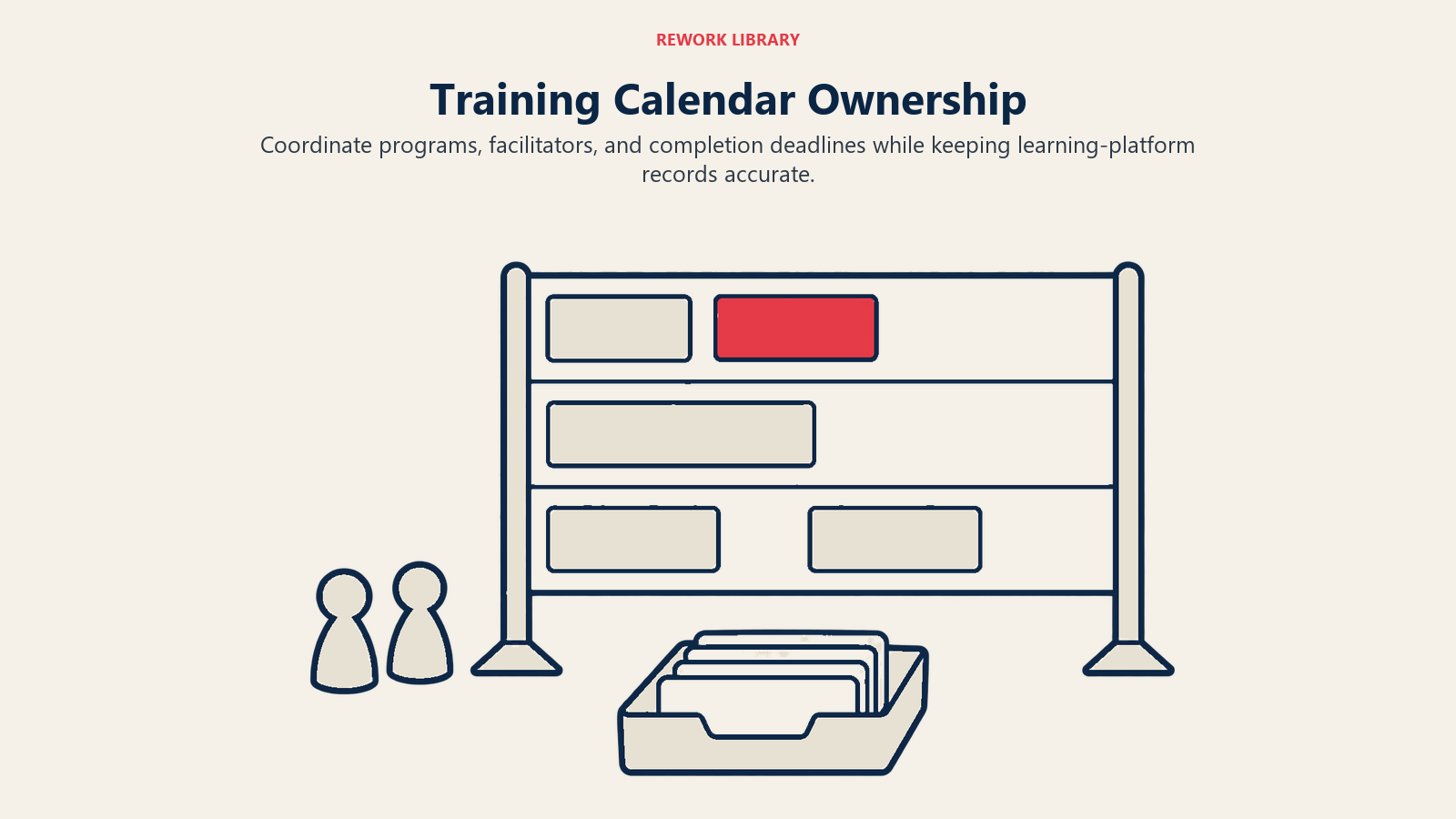
Dirigirá o guiará a los facilitadores que imparten la capacitación, y será responsable de nuestra plataforma de aprendizaje como un sistema operativo, no como un proyecto secundario. Trabajará con los jefes de departamento sobre lo que necesitan sus equipos, con Legal o Compliance sobre las obligaciones de capacitación obligatoria, con Talent Acquisition sobre el momento del onboarding de las cohortes de nuevos empleados, y con TI sobre la plataforma misma.
El candidato ideal ha dirigido un calendario de capacitación para una organización real, no solo impartido sesiones, ha gestionado el seguimiento de finalización de cumplimiento bajo un escrutinio real (una auditoría, un regulador, una revisión de seguridad de un cliente) y habla del valor de la capacitación en términos de finalización y time-to-productivity, no solo de puntuaciones de satisfacción. Normalmente reportará a un HR Director, un VP of Human Resources o un Learning and Development Manager, con entre uno y cinco reportes directos según el tamaño de la empresa.
Responsabilidades Clave
- Responsabilidad del Calendario de Capacitación: Construir, programar y ejecutar el calendario completo de onboarding, cumplimiento y programas específicos por puesto
- Administración de la Capacitación de Cumplimiento: Ser responsable de la capacitación obligatoria y regulatoria de principio a fin, incluido el seguimiento de finalización y un registro listo para auditoría
- Gestión de Facilitadores: Dirigir o guiar a las personas que imparten la capacitación, entrenadores dedicados o expertos en la materia, y mantener la consistencia de la ejecución entre ellos
- Currículo de Onboarding: Ser responsable del contenido y la cadencia de la capacitación de nuevos empleados, y dar seguimiento a cómo afecta el time-to-productivity
- Administración del LMS: Gestionar la plataforma de aprendizaje día a día: vigencia del contenido, acceso de usuarios y reportes de finalización
- Adquisición de Proveedores y Contenido: Evaluar y gestionar bibliotecas de contenido, facilitadores externos y proveedores de capacitación
- Integridad de los Datos de Finalización: Mantener registros precisos que resistan una auditoría interna o externa
- Programación Interfuncional: Coordinar la logística de capacitación entre departamentos, turnos o zonas horarias sin interrumpir las operaciones
- Administración del Presupuesto: Gestionar el presupuesto de operaciones de capacitación, incluidos los contratos con proveedores y los costos de facilitadores
- Reporte de Efectividad de la Capacitación: Reportar la finalización y el tiempo hasta completar y, cuando sea posible, medidas posteriores como el tiempo de rampa, no solo puntuaciones de satisfacción
- Gestión de Escalaciones y Excepciones: Gestionar fechas de ingreso escalonadas, ausencias por licencia y diferencias de cumplimiento entre ubicaciones sin dejar que el calendario se retrase
Requisitos
Cualificaciones Imprescindibles:
- Licenciatura en Recursos Humanos, Desarrollo Organizacional, Educación o un campo relacionado, más 5 o más años de experiencia progresiva en capacitación o L&D
- Experiencia práctica dirigiendo un calendario de capacitación con varios programas a la vez, no solo impartiendo sesiones individuales
- Experiencia directa gestionando el seguimiento de la finalización de la capacitación de cumplimiento u obligatoria, con un registro que haya resistido una auditoría o revisión
- Experiencia administrando un sistema de gestión del aprendizaje, incluidos reportes y resolución de problemas
- Experiencia dirigiendo o guiando a facilitadores, reportes directos o expertos en la materia
- Conocimiento práctico de los principios de aprendizaje de adultos y de diseño instruccional básico, suficiente para evaluar la calidad del contenido sin construirlo desde cero
- Sólidas habilidades de gestión de proyectos, ya que este puesto dirige varios programas paralelos con plazos estrictos
Cualificaciones Deseables:
- Certified Professional in Talent Development (CPTD) o Associate Professional in Talent Development (APTD) de la Association for Talent Development
- Experiencia en una industria regulada o crítica para la seguridad con obligaciones de capacitación de cumplimiento obligatorias
- Experiencia capacitando a una fuerza laboral distribuida o de primera línea en varias ubicaciones o turnos
- Experiencia previa trabajando directamente con Legal o Compliance en obligaciones de capacitación obligatoria
- Experiencia con una plataforma específica de LMS o LXP relevante para el stack de su empresa
Certificaciones que Conviene Conocer
Ninguna de estas es legalmente obligatoria. Verifique la elegibilidad actual y las condiciones de renovación en el sitio del emisor antes de exigir una en una oferta.
| Credencial | Entidad Emisora | Lo Que Declara el Emisor | Mejor Para |
|---|---|---|---|
| CPTD | Association for Talent Development | La credencial senior del campo, dirigida a profesionales con experiencia; verifique en ATD los requisitos actuales de experiencia, desarrollo profesional y recertificación antes de incluirla en una oferta | Candidatos que se posicionan para manager senior o director |
| APTD | Association for Talent Development | La credencial para etapas tempranas de la carrera; verifique en ATD los requisitos actuales de experiencia y desarrollo profesional antes de exigirla | Coordinadores y especialistas que avanzan hacia un primer puesto de manager |
| SHRM-CP / SHRM-SCP | Society for Human Resource Management | Recertificación cada tres años, mediante 60 créditos de desarrollo profesional o repitiendo el examen | Candidatos de una ruta de HR generalista que también son responsables de la capacitación |
| PHR | HR Certification Institute | La elegibilidad va desde un año de experiencia en HR más una maestría hasta cuatro años de experiencia en HR solamente; la recertificación requiere 60 créditos en tres años | Candidatos con una base amplia de HR, no una especialidad en TD |
Lo Que Ofrecemos
- Salario Base Competitivo: Alineado con el rango de mercado, comparado anualmente con datos de encuestas vigentes
- Bono de Desempeño: Un bono anual vinculado al desempeño individual y de la empresa
- Beneficios Integrales: Salud, dental, visión, jubilación con aporte del empleador y licencia remunerada
- Desarrollo Profesional: Apoyo para la certificación de la Association for Talent Development y la asistencia a conferencias
- Plan de Crecimiento: Una ruta definida hacia Senior Training Manager, L&D Manager o Director of Talent Development
- Responsabilidad Real: Plena responsabilidad sobre el calendario y sus registros, no un puesto solo de programación
Variaciones por Contexto
Entorno Corporativo
En una organización más grande, el training manager suele ser responsable de la ejecución dentro de una función más amplia de desarrollo de talento que también incluye instructional designers y un L&D Manager que define la estrategia. Espere una gobernanza formal: un calendario anual sincronizado con la planificación de la fuerza laboral y registros que Compliance o Legal revisa periódicamente.

Entorno de Alto Crecimiento
En una empresa de rápido crecimiento, el training manager suele construir el calendario mientras la plantilla todavía se duplica, por lo que el volumen de onboarding supera todo lo demás de la lista. Quien tiene éxito aquí trata el onboarding como el programa de mayor palanca, ya que un proceso roto con 50 nuevos empleados por trimestre se acumula en un lastre real para el time-to-productivity de toda la empresa. Espere una gobernanza menos formal y más presión para montar un proceso repetible casi desde cero.
Entorno Regulado o Crítico para la Seguridad
Aquí, la capacitación de cumplimiento no es una partida más, es la mayor parte del trabajo. Las normas de la OSHA con frecuencia exigen que los empleadores capaciten a los empleados en los aspectos de seguridad y salud de su trabajo, y las industrias con requisitos de licenciamiento, entre ellas salud, servicios financieros y manufactura, añaden sus propias obligaciones periódicas. El training manager aquí es responsable de un sistema de registros que un auditor externo pueda inspeccionar con poco aviso, da seguimiento a plazos escalonados por empleado y no por cohorte, y trata un plazo de finalización incumplido como una brecha real, no como una molestia.
Entorno de Fuerza Laboral Distribuida o de Primera Línea
Capacitar a una fuerza laboral repartida entre ubicaciones o turnos cambia más la forma de ejecutar que lo que se enseña. Las sesiones en vivo son más difíciles de programar, y el personal de primera línea, en comercio minorista, almacén o servicio de campo, a menudo no puede ausentarse para una sesión larga, lo que empuja el contenido hacia módulos cortos y repetibles y la entrega asíncrona. Esta contratación necesita una plataforma que funcione en un dispositivo compartido o en el teléfono, y comodidad para dar seguimiento a la finalización entre patrones de turnos y no en una sola cohorte.
Consideraciones por Industria
La regulación, la composición de la fuerza laboral y las restricciones de ejecución modifican el trabajo diario del training manager según la industria.

| Industria | Requisitos Clave | Consideraciones Únicas |
|---|---|---|
| Tecnología | Capacitación técnica y de plataformas de ciclo rápido, actualización frecuente | El contenido se vuelve obsoleto rápido, por lo que la cadencia del proveedor importa más que el diseño original |
| Salud | Validación de competencias clínicas, capacitación en seguridad del paciente | Los registros de finalización se vinculan directamente con el licenciamiento y la acreditación, lo que eleva lo que está en juego en las auditorías |
| Servicios Financieros | Capacitación regulatoria y de ética con una cadencia definida | El registro debe sobrevivir a la revisión de un regulador, no solo a una auditoría interna |
| Manufactura | Capacitación en seguridad, certificación de equipos, capacitación en SOP | Las brechas de capacitación conllevan un riesgo directo para la seguridad laboral bajo la OSHA, y se inspeccionan |
| Comercio Minorista y Hostelería | Onboarding de alto volumen y alta rotación, aumento estacional | El currículo debe adaptarse a personal de corta permanencia con horario por turnos: módulos breves y repetibles |
| Servicios Profesionales | Capacitación en habilidades de cara al cliente, programas de escalera de carrera | La capacitación compite directamente con el trabajo facturable por el tiempo de las personas |
Guía de Compensación
Cómo Se Relacionan los Datos Federales con Este Título
Según el Occupational Outlook Handbook del Bureau of Labor Statistics para Training and Development Managers, el puesto ganó un salario mediano de $133,000 al año ($63.94 por hora) a mayo de 2025. El BLS contó unas 50,200 personas en esta ocupación en 2025 y proyecta un crecimiento de 6 por ciento hasta 2035, más rápido que el promedio, con unas 4,100 vacantes al año. El 10 por ciento más bajo ganó menos de $79,550 y el 10 por ciento más alto, más de $233,600. La educación típica de nivel de entrada es una licenciatura más 5 años o más de experiencia relacionada. Es el mismo código de ocupación y las mismas cifras que usa nuestra guía de L&D Manager, ya que el BLS no separa ambos títulos.
El nivel de contribuidores individuales que está debajo cuenta su propia historia. Los Training and Development Specialists, la categoría del BLS que abarca a coordinadores, especialistas y a la mayoría de los instructional designers corporativos, ganaron una mediana de $69,280 al año ($33.31 por hora) a mayo de 2025, en 472,500 empleos, con un crecimiento proyectado de 11 por ciento. Pasar de ese nivel a un puesto de training manager supone aproximadamente un salto de 92 por ciento en el salario mediano, junto con una barrera de entrada materialmente más alta.
Bandas de Mercado por Alcance
Las bandas siguientes son rangos ilustrativos fijados por el empleador, no cifras publicadas por un proveedor de encuestas con nombre. Tómelas como punto de partida y valídelas con sus propios datos de encuestas de compensación antes de cerrar una oferta.
| Alcance | Rango Base Ilustrativo | Alcance Típico |
|---|---|---|
| Manager de Nivel Inicial (5-7 años) | $75,000 - $98,000 | Responsabilidad del calendario de una sola ubicación, 0-1 reportes directos, sin obligaciones de cumplimiento pesadas |
| Manager de Nivel Medio (7-10 años) | $95,000 - $125,000 | Calendario de capacitación completo con responsabilidad de cumplimiento, 1-4 reportes directos, administración del LMS |
| Manager Senior (10-14 años) | $118,000 - $148,000 | Calendario de varias sedes o varios turnos, liderazgo del equipo de facilitadores, registros orientados a auditorías |
| Prima por Industria Regulada | Sumar $10,000 - $25,000 | Responsabilidad de cumplimiento en salud, servicios financieros o manufactura en cualquiera de los alcances anteriores |
Guía de Ajuste por Área Metropolitana
La ubicación mueve estas bandas, y los puestos remotos se fijan cada vez más según el mercado propio del empleado. Trate los niveles como orientativos.
| Nivel de Área Metropolitana | Mercados de Ejemplo | Ajuste vs. Base Nacional |
|---|---|---|
| Tier 1 (Mayor Costo) | SF Bay Area, NYC, Seattle | +18% a +30% |
| Tier 2 (Costo Alto) | Boston, DC, LA, San Diego | +8% a +18% |
| Tier 3 (Costo Moderado) | Austin, Denver, Chicago, Atlanta | Aproximadamente la base nacional |
| Tier 4 (Menor Costo) o Remoto | Metros más pequeñas y la mayoría de las contrataciones remotas | -5% a -15%, varía según la política |
Esta es una guía general de compensación, no un sustituto de sus propios datos de encuestas de mercado ni de asesoría legal. Valide los rangos con datos actuales y específicos de la ubicación antes de publicar un puesto o hacer una oferta.
Matriz de Requisitos por Nivel de Experiencia
| Nivel | Años de Experiencia | Alcance Típico | Títulos Comunes |
|---|---|---|---|
| Coordinator | 1-3 años | Logística de capacitación, captura de datos en el LMS, apoyo de programación (nivel Training and Development Specialists del BLS, mediana $69,280) | Training Coordinator, LMS Coordinator |
| Specialist | 3-5 años | Impartición independiente de sesiones, mantenimiento de contenido, apoyo al seguimiento de cumplimiento | Training Specialist, Compliance Training Specialist |
| Manager | 5-10 años | Responsabilidad completa del calendario de una unidad de negocio, gestión de facilitadores, registros listos para auditoría | Training Manager, Training and Development Manager |
| Senior Manager | 10-14 años | Calendario de varias sedes o varios turnos, equipo de facilitadores más grande, responsabilidad en industrias reguladas | Senior Training Manager |
| Director+ | 14+ años | Operaciones de capacitación de toda la empresa, responsabilidad presupuestaria entre programas y ubicaciones | Director of Training, Director of Talent Development |
Preguntas de Entrevista
Preguntas Técnicas/Funcionales
- Responsabilidad del Calendario: "Explíqueme cómo construye y gestiona un calendario de capacitación con más de cinco programas en marcha a la vez. ¿Cómo decide qué tiene prioridad cuando dos cosas entran en conflicto?"
- Seguimiento de Cumplimiento: "Describa cómo ha dado seguimiento a la finalización de la capacitación obligatoria en una fuerza laboral con fechas de ingreso escalonadas. ¿Cómo manejó a alguien que se rezagó?"
- Preparación para Auditorías: "Cuénteme sobre una ocasión en que sus registros de capacitación fueron revisados, internamente o por un tercero. ¿Qué resistió y qué no?"
- Administración del LMS: "¿Qué plataformas ha administrado? Describa un problema de reportes que tuvo que resolver dentro de la propia herramienta."
- Gestión de Facilitadores: "¿Cómo mantiene la calidad de la ejecución consistente entre varios facilitadores, sobre todo entre expertos en la materia que no capacitan a tiempo completo?"
- Diseño del Onboarding: "Explíqueme un programa de onboarding del que haya sido responsable. ¿Cómo midió si acortó el time-to-productivity?"
- Evaluación de Proveedores: "¿Cómo evalúa si comprar una biblioteca de contenido, construir internamente o contratar a un facilitador externo para un programa determinado?"
- Medición Más Allá de la Finalización: "La tasa de finalización es fácil de reportar y fácil de manipular. ¿Qué mide en su lugar, o además?"
Preguntas Conductuales
- Plazo Bajo Presión: "Cuénteme sobre un plazo de cumplimiento que estuvo en riesgo real de incumplirse. ¿Qué hizo?"
- Facilitador Difícil: "Describa una ocasión en que un experto en la materia que impartía capacitación no cumplía el estándar. ¿Cómo lo manejó?"
- Falla de Registros: "Cuénteme sobre una ocasión en que sus datos de finalización resultaron ser erróneos. ¿Qué lo causó y qué cambió?"
- Prioridades en Competencia: "Describa una semana en que dos jefes de departamento necesitaban que se desplegara primero su capacitación. ¿Cómo decidió?"
- Escalar Rápido: "Cuénteme sobre la gestión del onboarding durante un período de rápido crecimiento de la plantilla. ¿Qué falló primero y qué arregló?"
- Defensa del Presupuesto: "Describa cómo defendió el presupuesto de operaciones de capacitación cuando la dirección cuestionó el gasto."
Preguntas de Encaje Cultural
- Atención al Detalle: "¿Cuál es su proceso para detectar un error de registros antes que un auditor?"
- Trabajar Bajo Restricciones: "¿Cómo mantiene la calidad de la capacitación cuando el calendario está lleno y el presupuesto no crece?"
- Presión de los Stakeholders: "Cuénteme sobre un jefe de departamento que quiso saltarse un paso obligatorio de un programa de cumplimiento. ¿Qué hizo?"
- Disposición al Cambio: "¿Qué tan cómodo se siente retirando un programa o una relación con un proveedor que no funciona, aunque la gente esté acostumbrada?"
Consejos de Evaluación: Escuche a los candidatos que describen su trabajo en términos de finalización, registros y time-to-productivity, no solo de cómo se sintió una sesión. Los candidatos sólidos explican con detalle específico un sistema real de seguimiento de cumplimiento, incluido lo que ocurre cuando alguien se rezaga. Tenga cuidado con los candidatos que hablan solo de facilitación y contenido, ya que este puesto dedica tanto tiempo a las operaciones y los registros como a estar frente a un grupo.
Consejos de Contratación
Estas tácticas funcionan mejor junto con los fundamentos generales de contratación; consulte nuestra guía de mejores prácticas para descripciones de puestos para redactar ofertas que atraigan a mejores postulantes.
Guía Rápida de Sourcing
| Canal | Mejor Para | Notas |
|---|---|---|
| LinkedIn Recruiter | Sourcing directo | Busque "Training Manager", "Training and Development Manager" o "Learning Manager" |
| Association for Talent Development | Candidatos con credenciales | La bolsa de empleo y el directorio de certificaciones muestran a quienes tienen CPTD/APTD |
| SHRM Job Network | Candidatos del entorno de HR | Sólido para generalistas o un HR Business Partner que pasa a capacitación |
| Movilidad Interna | Talento con fuerte perfil de facilitación | Un buen Sales Enablement Manager o Revenue Enablement Manager listo para ampliarse a operaciones de toda la empresa |
| Puestos Adyacentes de HR | Empresas pequeñas | Un People Operations Manager o HR Generalist que ya dirige la capacitación de manera informal |
Señales de Alerta a Evitar
| Señal de Alerta | Por Qué Importa |
|---|---|
| Facilitación sin operaciones | Los candidatos que solo describen sesiones, nunca registros ni programación, tienen dificultades con el núcleo operativo |
| Sin dominio del cumplimiento | Quien no puede describir cómo da seguimiento a la finalización obligatoria generará riesgo de auditoría rápidamente |
| Experiencia vaga con proveedores o LMS | No puede nombrar plataformas o proveedores específicos, ni explicar un problema real resuelto en alguno |
| Confunde este puesto con trabajo de estrategia | Este trabajo dirige bien un calendario existente, no rediseña la estrategia de capacidades |
| Sin historia de gestión de facilitadores | Solo ha impartido capacitación, nunca ha dirigido a las personas que la imparten |
| Trata la tasa de finalización como la meta final | No puede describir ninguna medición más allá de "porcentaje completado" |

Senior Customer Retention Strategist
On this page
- Aspectos Clave
- Por Qué Este Puesto Importa
- La Frontera del Título: Training Manager vs Learning and Development Manager
- La Capa de Cumplimiento que Nadie Escribe en la Oferta
- El Problema de la Medición
- Plantilla Principal de Descripción del Puesto
- Sobre el Puesto
- Responsabilidades Clave
- Requisitos
- Certificaciones que Conviene Conocer
- Lo Que Ofrecemos
- Variaciones por Contexto
- Entorno Corporativo
- Entorno de Alto Crecimiento
- Entorno Regulado o Crítico para la Seguridad
- Entorno de Fuerza Laboral Distribuida o de Primera Línea
- Consideraciones por Industria
- Guía de Compensación
- Cómo Se Relacionan los Datos Federales con Este Título
- Bandas de Mercado por Alcance
- Guía de Ajuste por Área Metropolitana
- Matriz de Requisitos por Nivel de Experiencia
- Preguntas de Entrevista
- Preguntas Técnicas/Funcionales
- Preguntas Conductuales
- Preguntas de Encaje Cultural
- Consejos de Contratación
- Guía Rápida de Sourcing
- Señales de Alerta a Evitar