Descripción del Puesto de Animador (2026): Habilidades de la Era de la IA, Responsabilidades y Guía de Contratación
Turn this article into takeaways for your work.


Each assistant summarizes the article only for you and suggests best practices for your work.
Lo que obtendrá de esta guía
- Plantilla completa de descripción del puesto para posiciones profesionales de animador
- Variaciones específicas por industria en entretenimiento, publicidad y sectores corporativos
- Referencias salariales completas para las principales áreas metropolitanas
- Preguntas de entrevista técnicas y conductuales con marcos de evaluación
- Variaciones por contexto para entornos corporativos, de agencia y de estudio de entretenimiento
- Pautas de evaluación de portafolio y señales de alerta a evitar
- Estrategias de sourcing dirigidas a profesionales de la animación
- Trayectorias de progresión profesional y factores de compensación
Un Animador da vida a historias, personajes e ideas a través del arte del movimiento y la narrativa visual. Este puesto combina experiencia técnica con visión creativa para crear contenido animado convincente en diversas plataformas de medios, desde la animación 2D tradicional hasta producciones 3D de vanguardia.
Aspectos Clave
- Crear secuencias animadas atractivas utilizando software y técnicas estándar de la industria
- Colaborar con directores, artistas de storyboard y equipos de producción para lograr la visión creativa
- Trabajar en múltiples estilos de animación, incluyendo 2D, 3D, stop-motion y motion graphics
- Cumplir con los plazos de producción manteniendo altos estándares de calidad
- Adaptar las técnicas de animación para ajustarse a los requisitos del proyecto y la dirección artística
- Contribuir a todo el pipeline de animación, desde el concepto hasta el render final
Por Qué Este Puesto Importa en 2026
Los animadores son la columna vertebral creativa de las industrias de entretenimiento, publicidad, videojuegos y contenido educativo. Transforman conceptos estáticos en experiencias visuales dinámicas que cautivan a las audiencias y comunican ideas complejas a través del movimiento y el timing.
¿Qué cambia cuando la IA se encarga de los pasos repetitivos del pipeline? El papel del animador se vuelve MÁS valioso, no menos. La IA puede generar frames de referencia, sugerir intercalados para tomas mecánicas y ejecutar alineación de lip-sync por lotes. Pero la actuación del personaje, el subtexto emocional y la dirección artística no se pueden automatizar. El animador que juzga qué resultado de la IA vale la pena conservar, que redirige una herramienta que se desvió del tono, y que aporta una observación humana genuina al movimiento de un personaje, es la diferencia entre un contenido que conecta y uno que parece técnicamente correcto pero se siente vacío.
Los animadores cualificados en 2026 trabajan en estudios tradicionales, plataformas de streaming, redes sociales y computación espacial (AR/VR). El cambio no es que haya menos trabajo de animación, sino que el trabajo se ha desplazado hacia arriba en la escala del oficio, hacia la actuación, la dirección y el criterio creativo.
Habilidades y herramientas de IA para Animadores en 2026
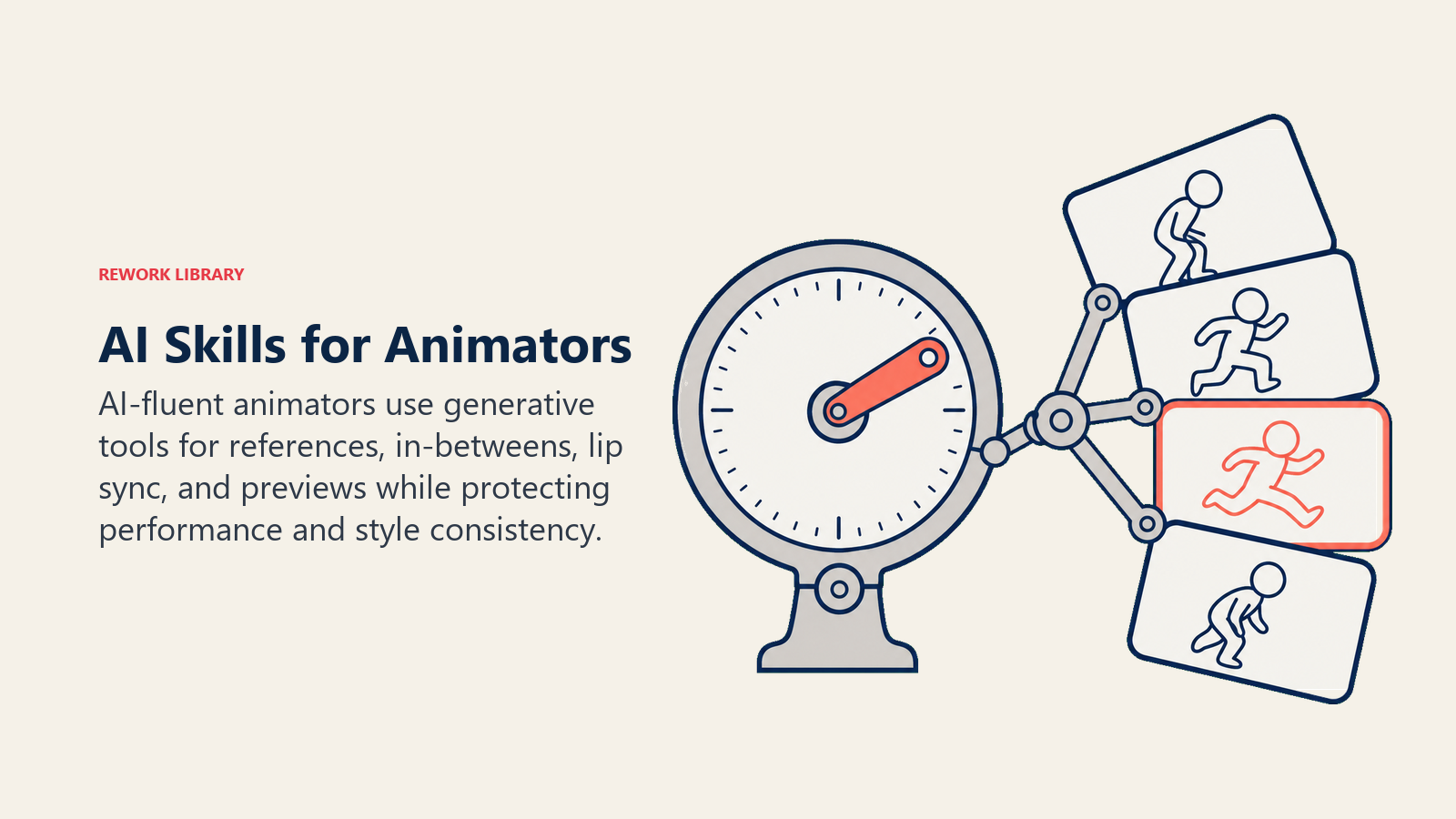
Los animadores con dominio de la IA utilizan herramientas generativas para referencias, intercalados, lip sync y previsualizaciones, mientras protegen la actuación y la consistencia de estilo.
- Runway ML para generación de movimiento y referencias de consistencia temporal; Adobe Firefly para arte conceptual e ideación de frames de referencia
- EbSynth y herramientas de transferencia de estilo para mantener la consistencia visual en secuencias largas
- Kling AI, Sora y plataformas de generación de video para la previsualización y la generación de referencias de storyboard
- Eleven Labs y HeyGen para pases de referencia de lip-sync con IA antes de comprometerse con la animación final por keyframes
- Dominio del prompt: escribir descriptores de movimiento precisos ("ease-in anticipation, 12-frame snap, secondary overlap on fabric") para obtener resultados de referencia útiles de la IA
- Construir bibliotecas de prompts reutilizables para tipos de personajes recurrentes, comportamientos de rig y categorías de tomas
- Expectativa en 2026: los animadores con dominio de la IA manejan aproximadamente el doble del volumen de tomas al usar la IA para la generación de referencias, lo que deja más tiempo para el trabajo de alto oficio en la actuación del personaje
- Contexto de mercado: la demanda de habilidades de IA en puestos de producción creativa ha aumentado aproximadamente un 144% interanual; los estudios incluyen cada vez más el dominio de herramientas de IA junto con Maya y After Effects en los requisitos del puesto
Trabajando Junto a Agentes de IA
Los agentes se encargan de los pases repetitivos del pipeline. Los animadores dirigen la emoción, aprueban la actuación y deciden qué movimiento pertenece a la toma final.
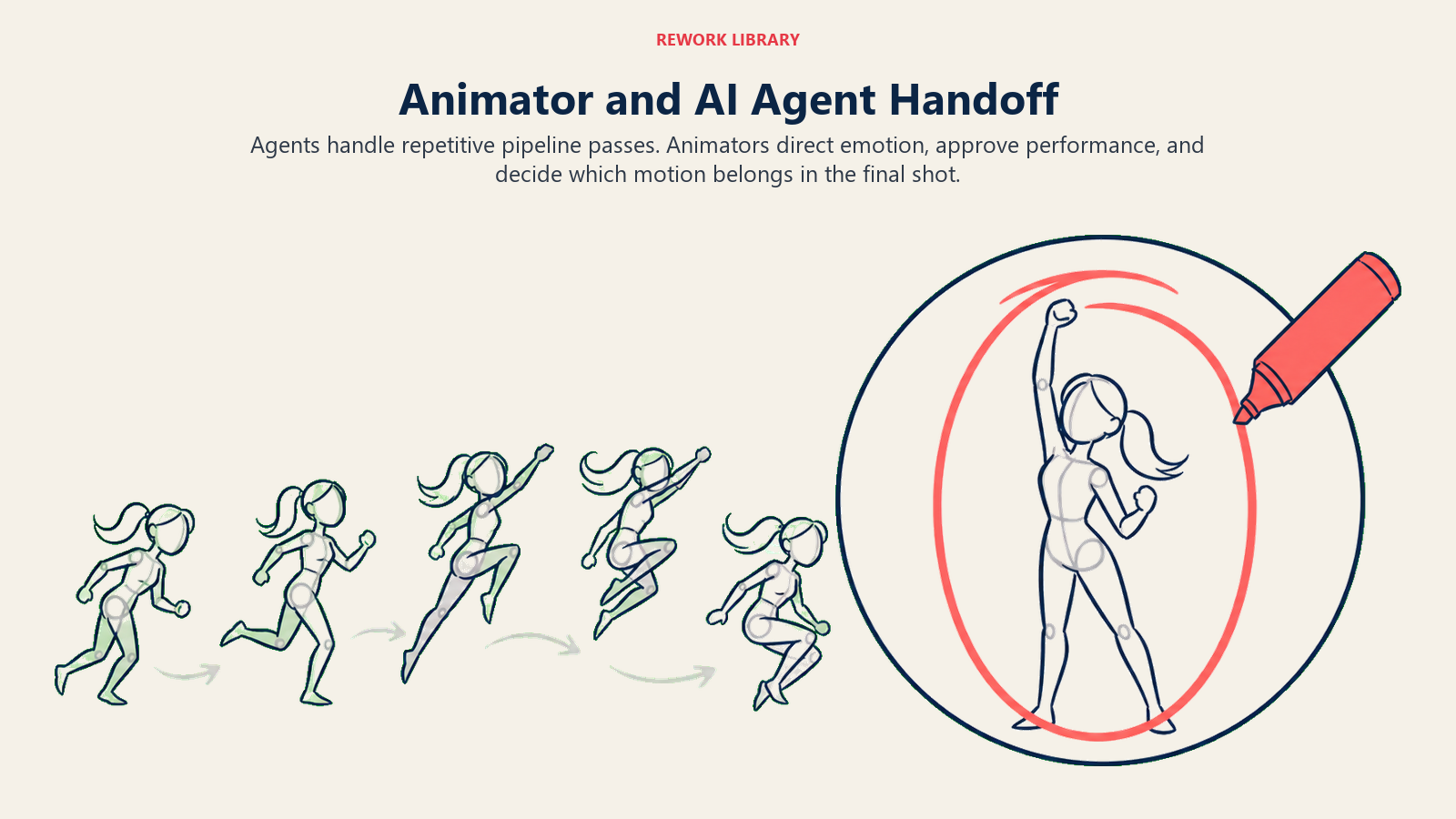
- Lo que maneja el agente de IA: generación de frames de referencia, pases de sugerencia de pesos de rigging, optimización de la cola de render, generación básica de intercalados para tomas de baja complejidad, y la primera pasada de alineación de lip-sync
- Lo que posee el animador humano: la actuación del personaje y la verdad emocional, las decisiones de dirección artística y estilo, la aprobación final de los frames, la traducción de la visión creativa del cliente, y cualquier toma donde el subtexto o el matiz impulsen el movimiento
- La línea de transferencia: la IA genera material en bruto y se encarga de los pasos repetitivos del pipeline; el animador es el director de la actuación, decidiendo qué se conserva, qué se vuelve a animar (rekey) y qué está sintiendo realmente el personaje
- Los animadores que aprenden a dar instrucciones a las herramientas de IA como un director instruye a un artista junior (intención clara, restricciones específicas, ciclos de feedback rápidos) superarán significativamente a quienes tratan la IA como una caja negra
Plantilla Principal de Descripción del Puesto
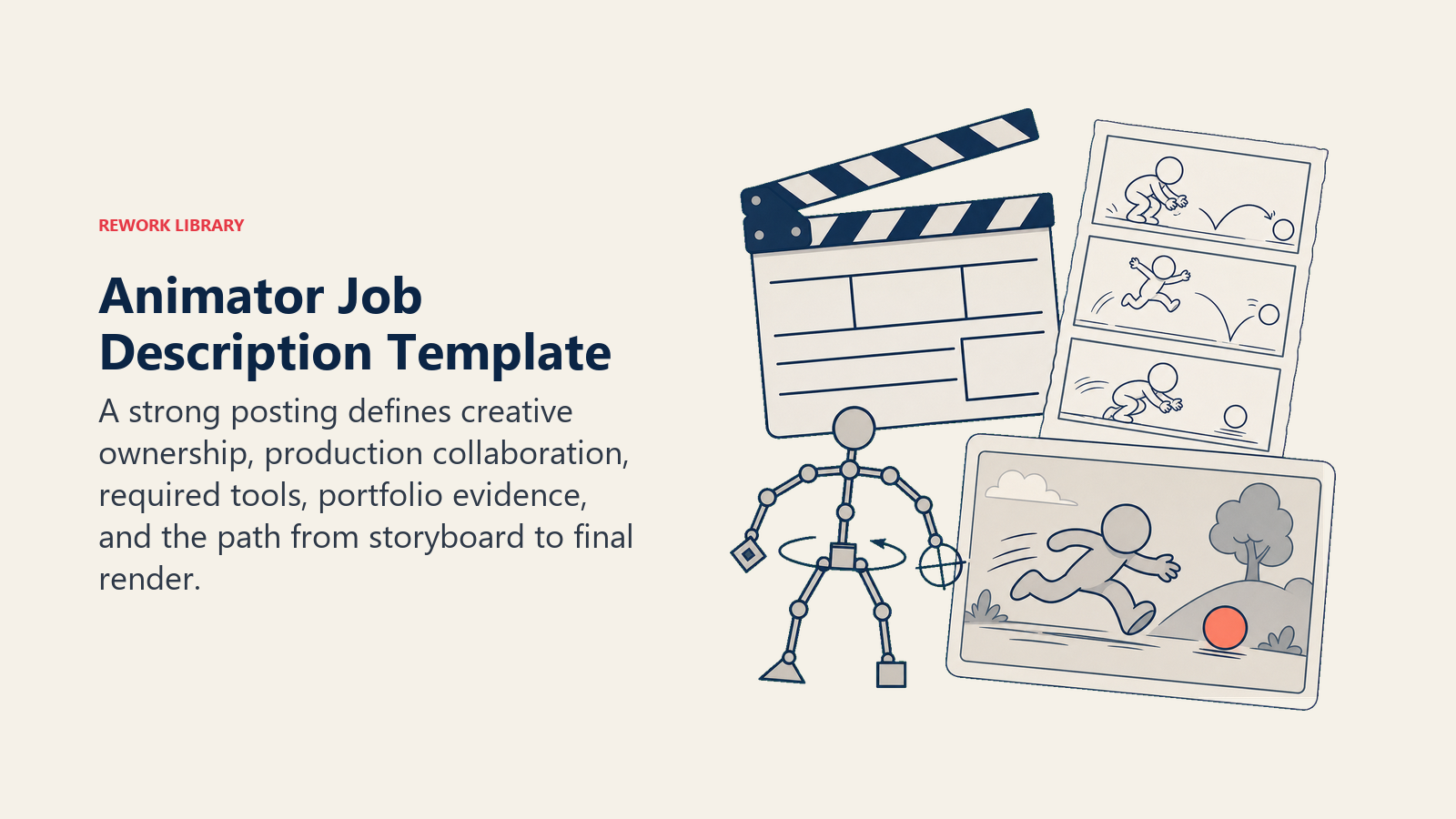
Una publicación sólida define la propiedad creativa, la colaboración en producción, las herramientas requeridas, la evidencia de portafolio y el camino desde el storyboard hasta el render final.
Sobre el Puesto
Buscamos un Animador con talento para unirse a nuestro equipo creativo y contribuir a proyectos interesantes en diversas plataformas de medios. Será responsable de crear contenido animado de alta calidad que dé vida a personajes, historias y conceptos mediante un timing experto, movimiento y técnicas de narrativa visual.
En este puesto, trabajará estrechamente con directores, directores de arte y otros artistas para asegurar que el trabajo de animación se alinee con la visión del proyecto y mantenga la consistencia durante toda la producción. Tendrá la oportunidad de trabajar en proyectos diversos, desde animación de personajes hasta motion graphics, aportando su experiencia creativa a cada etapa del proceso de animación.
El candidato ideal demostrará sólidas habilidades artísticas, dominio técnico del software de animación y la capacidad de colaborar eficazmente en un entorno creativo acelerado, cumpliendo de manera constante con los plazos de producción y los estándares de calidad.
Responsabilidades Clave
- Crear animaciones 2D y/o 3D utilizando software estándar de la industria como Maya, Adobe After Effects, Toon Boom Harmony o Cinema 4D
- Desarrollar animaciones de personajes que demuestren personalidad, emoción y patrones de movimiento creíbles
- Colaborar con artistas de storyboard y directores para traducir tableros estáticos en secuencias animadas dinámicas
- Mantener la consistencia en el diseño, el movimiento y el estilo del personaje durante toda la duración del proyecto
- Optimizar archivos y activos de animación para diversos formatos de salida y requisitos de plataforma
- Participar en dailies, revisiones y sesiones de feedback creativo para refinar la calidad de la animación
- Trabajar dentro de los cronogramas de producción establecidos y comunicar actualizaciones de progreso a los supervisores
- Aplicar los principios de animación, incluyendo timing, spacing, squash and stretch y anticipation
- Crear transiciones suaves y loops continuos para medios interactivos y contenido basado en la web
- Resolver problemas técnicos y colaborar con artistas técnicos cuando sea necesario
Requisitos
Cualificaciones Imprescindibles:
- Licenciatura en Animación, Bellas Artes o campo relacionado, o experiencia profesional equivalente
- 2-4 años de experiencia profesional en animación en un entorno de estudio o agencia
- Dominio de al menos dos de los principales paquetes de software de animación (Maya, After Effects, Toon Boom, etc.)
- Sólida comprensión de los principios tradicionales de animación y el timing
- Portafolio que demuestre variedad de estilos de animación y trabajo de personajes
- Excelente atención al detalle y capacidad para trabajar bajo plazos ajustados
- Sólidas habilidades de comunicación y capacidad para recibir e implementar feedback creativo
- Conocimiento de la gestión de archivos, convenciones de nomenclatura y flujos de trabajo del pipeline de producción
Cualificaciones Deseables:
- Experiencia en la limpieza de datos de motion capture y animación por keyframes
- Conocimiento de los fundamentos de rigging y configuración de personajes
- Familiaridad con motores de videojuegos como Unity o Unreal Engine
- Comprensión de técnicas de edición de video y compositing
- Experiencia con lenguajes de scripting (Python, MEL) para la optimización del flujo de trabajo de animación
Lo Que Ofrecemos
- Rango salarial competitivo: $50,000 - $85,000 anuales (varía según experiencia y ubicación)
- Cobertura completa de seguro médico, dental y de visión
- Modalidades de trabajo flexibles, incluyendo opciones híbridas remotas/presenciales
- Oportunidades de desarrollo profesional, incluyendo asistencia a conferencias y presupuestos de capacitación
- Libertad creativa para aportar ideas e influir en la dirección del proyecto
- Software y hardware de animación de última generación proporcionados por la empresa
- Entorno de trabajo colaborativo con artistas y narradores talentosos
Variaciones por Contexto
Entorno Corporativo: Enfoque en la consistencia de marca y los objetivos de marketing. Los proyectos suelen involucrar demostraciones de producto, comunicaciones corporativas y materiales de capacitación. Énfasis en una estética limpia y profesional y en mensajes claros. Las presentaciones y revisiones periódicas con clientes son habituales.
Estudio de Entretenimiento: Entorno de alta presión con trabajo complejo de personajes y contenido impulsado por la narrativa. Colaboración con equipos grandes que incluyen actores de doblaje, diseñadores de sonido y artistas de VFX. Los proyectos van desde series de televisión hasta largometrajes, con cronogramas de producción y estándares de calidad variables.
Agencia de Publicidad: Entorno acelerado con clientes diversos y proyectos de entrega rápida. El trabajo de animación abarca desde clips de 15 segundos para redes sociales hasta comerciales de 60 segundos. Fuerte énfasis en el cumplimiento de las guías de marca y en las métricas de efectividad de campaña.
Consideraciones por Industria
| Industria | Requisitos Clave | Aspectos Únicos |
|---|---|---|
| Cine y Televisión | Animación de personajes de alta gama, lip-sync, simulación de multitudes | Ciclos de producción largos, integración compleja del pipeline, estándares de calidad de la industria |
| Gaming | Animación en tiempo real, integración con motores de videojuegos, sistemas interactivos | Optimización de frame rate, consideraciones de interacción del jugador, requisitos específicos de la plataforma |
| Publicidad | Cumplimiento de las guías de marca, entrega rápida, salida en múltiples formatos | Ciclos de feedback del cliente, plazos de campaña, requisitos de entrega multiplataforma |
| Contenido Educativo | Comunicación visual clara, diseño apropiado para la edad, cumplimiento de accesibilidad | Consideraciones pedagógicas, necesidades diversas de audiencia, requisitos de compatibilidad de plataforma |
| Plataformas de Streaming | Creación de contenido apto para maratones, consistencia episódica, atractivo global | Sensibilidad cultural, requisitos de localización, especificaciones técnicas específicas de la plataforma |
| Redes Sociales | Contenido que detiene el scroll, optimización móvil, potencial viral | Comprensión del algoritmo, métricas de engagement, relaciones de aspecto y límites de duración específicos de la plataforma |
Guía de Compensación
La remuneración del Animador varía según la experiencia, la ubicación, el medio de producción, la solidez del portafolio y las habilidades técnicas especializadas.

Información Salarial
Según los datos de mercado de 2026, los salarios de Animador suelen oscilar entre $45,000 y $95,000 anuales, con variaciones según el nivel de experiencia, la ubicación y la especialización de la industria.
| Área Metropolitana | Nivel Inicial | Nivel Medio | Nivel Senior |
|---|---|---|---|
| Los Angeles, CA | $52,000 - $65,000 | $68,000 - $85,000 | $88,000 - $120,000 |
| New York, NY | $50,000 - $62,000 | $65,000 - $82,000 | $85,000 - $115,000 |
| San Francisco, CA | $55,000 - $68,000 | $70,000 - $88,000 | $90,000 - $125,000 |
| Atlanta, GA | $45,000 - $58,000 | $60,000 - $75,000 | $78,000 - $100,000 |
| Austin, TX | $47,000 - $60,000 | $62,000 - $78,000 | $80,000 - $105,000 |
| Chicago, IL | $48,000 - $61,000 | $63,000 - $79,000 | $82,000 - $108,000 |
| Posiciones Remotas | $43,000 - $56,000 | $58,000 - $73,000 | $75,000 - $98,000 |
Fluidez en IA por Nivel de Experiencia
| Nivel | Expectativa de IA |
|---|---|
| Nivel Inicial | Usa herramientas de IA a diario (Runway ML, Firefly, EbSynth) para referencia e investigación; experimenta con generación basada en prompts |
| Nivel Medio | Construye bibliotecas de prompts reutilizables y plantillas de flujo de trabajo; integra pases de referencia de IA en el pipeline de producción |
| Nivel Senior | Diseña flujos de trabajo de estudio potenciados por IA; establece estándares de equipo para el uso de herramientas de IA; supervisa el trabajo por lotes asistido por IA y las puertas de calidad |
Factores que Afectan la Compensación:
- Especialización: los animadores de personajes y especialistas en VFX suelen ganar entre un 15% y un 25% más que los generalistas
- Industria: las industrias de entretenimiento y gaming generalmente ofrecen una compensación más alta que los sectores corporativo o educativo
- Calidad del Portafolio: los demo reels sólidos pueden influir significativamente en las negociaciones salariales y las oportunidades de avance
Los rangos salariales son referencias indicativas. Los animadores con dominio de la IA y competencia demostrada en herramientas de producción suelen obtener una prima por encima de estos rangos.
Preguntas de Entrevista
Las entrevistas efectivas evalúan el proceso de animación, las decisiones de actuación, la resolución de problemas técnicos, la consistencia y la colaboración ante el feedback.
Preguntas Técnicas/Funcionales
Explíqueme su proceso de animación desde la recepción de un storyboard hasta el render final. Evaluar: comprensión del proceso, flujo de trabajo técnico, atención al detalle
¿Cómo aborda la animación de una transición emocional de un personaje, como pasar de la alegría a la tristeza? Evaluar: comprensión de los principios de actuación, timing y narrativa emocional
Describa un problema de animación desafiante que haya resuelto. ¿Cuál fue su enfoque? Evaluar: habilidades de resolución de problemas, conocimiento técnico, creatividad bajo restricciones
¿Cómo asegura la consistencia al animar múltiples tomas del mismo personaje? Evaluar: habilidades de organización, atención al detalle, conciencia de producción
¿Cuál es su experiencia con diferentes software de animación, y cómo elige qué herramienta usar para tareas específicas? Evaluar: versatilidad técnica, conocimiento de herramientas, toma de decisiones adecuada al proyecto
¿Cómo maneja el feedback y las revisiones durante el proceso de animación? Evaluar: habilidades de colaboración, adaptabilidad, comunicación profesional
Explique cómo animaría una secuencia de acción compleja con múltiples elementos en movimiento. Evaluar: planificación de escena, coordinación de timing, ejecución técnica
¿Qué técnicas utiliza para optimizar su flujo de trabajo de animación y cumplir con plazos ajustados? Evaluar: eficiencia, gestión del tiempo, estrategias de productividad
Preguntas Conductuales
Describa una ocasión en la que tuvo que aprender rápidamente una nueva técnica o software de animación. ¿Cómo lo abordó? Evaluar: agilidad de aprendizaje, adaptabilidad, automotivación
Cuénteme sobre un proyecto en el que su animación inicial no cumplió con las expectativas. ¿Cómo manejó la situación? Evaluar: resiliencia, resolución de problemas, capacidad para manejar críticas
Dé un ejemplo de cómo ha colaborado con otros miembros del equipo para mejorar la calidad general de un proyecto. Evaluar: trabajo en equipo, comunicación, resolución colaborativa de problemas
Describa una situación en la que tuvo que equilibrar la visión creativa con las limitaciones técnicas. Evaluar: pensamiento práctico, habilidades de negociación, resolución creativa de problemas
Cuénteme sobre una ocasión en la que tuvo que trabajar bajo una presión extrema de plazos. ¿Cuál fue su estrategia? Evaluar: manejo del estrés, priorización, gestión del tiempo
Comparta una experiencia en la que aportó una idea que mejoró significativamente un proyecto. Evaluar: iniciativa, pensamiento creativo, conciencia del impacto
Preguntas de Encaje Cultural
¿Qué tipo de proyectos de animación le generan más entusiasmo, y por qué? Evaluar: pasión, alineación con los proyectos de la empresa, motivación
¿Cómo se mantiene actualizado sobre las tendencias y técnicas de animación? Evaluar: compromiso con el desarrollo profesional, conocimiento de la industria
¿Qué papel cree que jugará la animación en el futuro de los medios digitales? Evaluar: visión de la industria, pensamiento prospectivo, comprensión estratégica
Describa su entorno de trabajo creativo ideal. Evaluar: encaje cultural, preferencias de estilo de trabajo, dinámica de equipo
Consejos de Contratación
Guía Rápida de Sourcing
Principales Plataformas para la Contratación de Animadores:
- ArtStation: plataforma de portafolio líder con perfiles de animadores de alta calidad y bolsa de empleo
- Animation World Network (AWN): bolsa de empleo específica de la industria con alcance global
- LinkedIn: red profesional con grupos enfocados en animación y búsquedas dirigidas
- Behance: plataforma de portafolio creativo ideal para descubrir talento emergente
Comunidades y Asociaciones Profesionales:
- Society for Animation Studies (SAS): comunidad académica y profesional de investigación en animación
- Animation Guild (TAG): organización laboral que ofrece conexiones y estándares de la industria
- Women in Animation (WIA): organización de desarrollo profesional y networking que promueve la diversidad
Consejos de Optimización de la Publicación:
- Incluir requisitos específicos de software y especificaciones técnicas en las descripciones del puesto
- Mostrar ejemplos del portafolio/reel de la empresa para atraer talento alineado
- Mencionar la flexibilidad de trabajo remoto, ya que la animación es cada vez más independiente de la ubicación
- Destacar la libertad creativa y la variedad de proyectos para atraer a profesionales artísticos
Señales de Alerta a Evitar
Evaluación de Portafolio y Habilidades:
- Rango limitado en el demo reel: los candidatos que muestran un solo estilo de animación pueden carecer de versatilidad
- Timing y spacing deficientes: los principios fundamentales de animación deben demostrarse claramente
- Conocimiento de software desactualizado: falta de disposición para aprender las herramientas actuales estándar de la industria
- Habilidades fundamentales débiles: falta de comprensión de los principios y técnicas básicas de animación
Aspectos Profesionales y de Comunicación:
- Incapacidad para explicar decisiones creativas: dificultad para articular el razonamiento detrás de las decisiones de animación
- Resistencia al feedback: respuestas defensivas al discutir posibles mejoras en su trabajo
Preguntas Frecuentes para Empleadores
¿Cuál es la diferencia entre contratar a un animador 2D y a un animador 3D?
Los animadores 2D se enfocan en animación dibujada a mano o basada en vectores, con sólidas habilidades de ilustración, mientras que los animadores 3D trabajan con modelado, rigging y entornos generados por computadora. Considere las necesidades de su proyecto, ya que muchos animadores modernos tienen habilidades en ambas áreas.
¿Qué tan importante es un título formal en animación frente a un portafolio sólido?
Si bien la educación formal proporciona conocimientos fundamentales, un portafolio sólido que demuestre habilidades técnicas y capacidad creativa suele ser más valioso. Muchos animadores exitosos son autodidactas o provienen de campos relacionados como el diseño gráfico o las bellas artes.
¿Debemos contratar especialistas o generalistas para nuestro equipo de animación?
Esto depende del alcance del proyecto y del tamaño del equipo. Los equipos más pequeños se benefician de generalistas versátiles que pueden manejar múltiples tareas, mientras que las producciones más grandes pueden requerir especialistas en animación de personajes, efectos o animación técnica.
¿Cuál es un cronograma razonable para la producción de animación al planificar proyectos?
La animación profesional suele producir de 5 a 10 segundos de animación terminada por semana por animador, dependiendo de la complejidad y los requisitos de calidad. Tenga en cuenta los ciclos de revisión y los procesos de aprobación al establecer plazos.
¿Cómo evaluamos la calidad de la animación durante el proceso de contratación?
Busque fundamentos sólidos en timing, spacing y weight. La animación de personajes debe mostrar personalidad y emoción. Las habilidades técnicas deben ser evidentes a través de curvas de animación limpias y eficientes, y una organización de archivos adecuada.
Preguntas Frecuentes para Candidatos
¿Qué software debería priorizar aprender para ser competitivo en el mercado laboral de la animación?
Maya y After Effects son los estándares de la industria para animación 3D y 2D respectivamente. Otras habilidades valiosas incluyen Cinema 4D para motion graphics, Toon Boom para animación tradicional, y Blender como una opción versátil de código abierto.
¿Cuánto debería durar mi demo reel de animación?
Mantenga los demo reels entre 60 y 90 segundos, mostrando primero su mejor trabajo. La calidad sobre la cantidad es crucial: 10 segundos de animación excelente son mejores que 2 minutos de trabajo mediocre.
¿Es mejor especializarse en un área de la animación o seguir siendo generalista?
Al inicio de su carrera, desarrollar habilidades amplias es valioso para las oportunidades laborales. A medida que avanza, especializarse en áreas como animación de personajes, efectos o animación técnica puede llevar a puestos más especializados y mejor remunerados.
¿Cuál es la trayectoria profesional típica para los animadores?
La progresión común incluye Animador Junior → Animador → Animador Senior → Animador Líder → Director de Animación. Algunos animadores también transicionan hacia roles de supervisión, dirección o roles técnicos como rigging o desarrollo de pipeline.
¿Qué tan importante es el networking en la industria de la animación?
El networking es crucial en la animación, ya que muchas oportunidades surgen a través de referencias y relaciones profesionales. Asista a eventos de la industria, participe en comunidades en línea y mantenga conexiones con colegas y mentores.
¿Debería trabajar como freelancer o buscar puestos de estudio a tiempo completo?
Ambos caminos tienen ventajas. Los puestos de estudio ofrecen estabilidad, beneficios y oportunidades de aprendizaje colaborativo. El trabajo freelance ofrece flexibilidad y experiencia diversa en proyectos. Muchos animadores combinan ambos a lo largo de sus carreras.

Senior Customer Retention Strategist
On this page
- Aspectos Clave
- Por Qué Este Puesto Importa en 2026
- Habilidades y herramientas de IA para Animadores en 2026
- Trabajando Junto a Agentes de IA
- Plantilla Principal de Descripción del Puesto
- Sobre el Puesto
- Responsabilidades Clave
- Requisitos
- Lo Que Ofrecemos
- Variaciones por Contexto
- Consideraciones por Industria
- Guía de Compensación
- Fluidez en IA por Nivel de Experiencia
- Preguntas de Entrevista
- Preguntas Técnicas/Funcionales
- Preguntas Conductuales
- Preguntas de Encaje Cultural
- Consejos de Contratación
- Guía Rápida de Sourcing
- Señales de Alerta a Evitar