Plantilla de Descripción del Puesto de Diseñador Gráfico Junior - Guía 2026
Turn this article into takeaways for your work.


Each assistant summarizes the article only for you and suggests best practices for your work.
¿Busca contratar a un Diseñador Gráfico Junior talentoso que pueda crecer con su equipo? Esta guía completa le brinda todo lo que necesita para atraer, evaluar y contratar talento de diseño de nivel inicial que aportará perspectivas frescas mientras desarrolla habilidades esenciales.
Lo que obtendrá de esta guía
- Plantillas de descripción del puesto de Diseñador Gráfico Junior listas para usar
- Puntos de referencia salarial de nivel inicial en los principales mercados ($35,000-$62,000)
- Más de 20 preguntas de entrevista específicas para evaluar el potencial de diseño
- Marco de evaluación de portafolio para detectar talento emergente
- Plan de desarrollo de 90 días para una incorporación y crecimiento exitosos
- Estrategias de reclutamiento para encontrar diseñadores junior apasionados
Por Qué los Diseñadores Gráficos Junior Son Importantes en 2026
Los Diseñadores Gráficos Junior representan el futuro de la comunicación visual y aportan una energía fresca invaluable a los equipos creativos. Combinan una educación de diseño fundamental con una comprensión intuitiva de las plataformas digitales actuales, las tendencias de redes sociales y las herramientas de diseño impulsadas por IA emergentes.
Mientras desarrollan su experiencia técnica, los diseñadores junior suelen destacar en conectar con audiencias más jóvenes y comprender los momentos culturales contemporáneos que impulsan un compromiso de marca exitoso. Su entusiasmo por aprender y adaptarse los hace ideales para entornos digitales en rápida evolución, donde los enfoques tradicionales e innovadores deben combinarse sin fisuras.
En el panorama de diseño actual, el talento junior ofrece el equilibrio ideal entre el pensamiento de diseño estructurado y la fluidez digital nativa que las marcas modernas necesitan para mantenerse relevantes y atractivas en todos los puntos de contacto.
Plantilla Principal de Descripción del Puesto
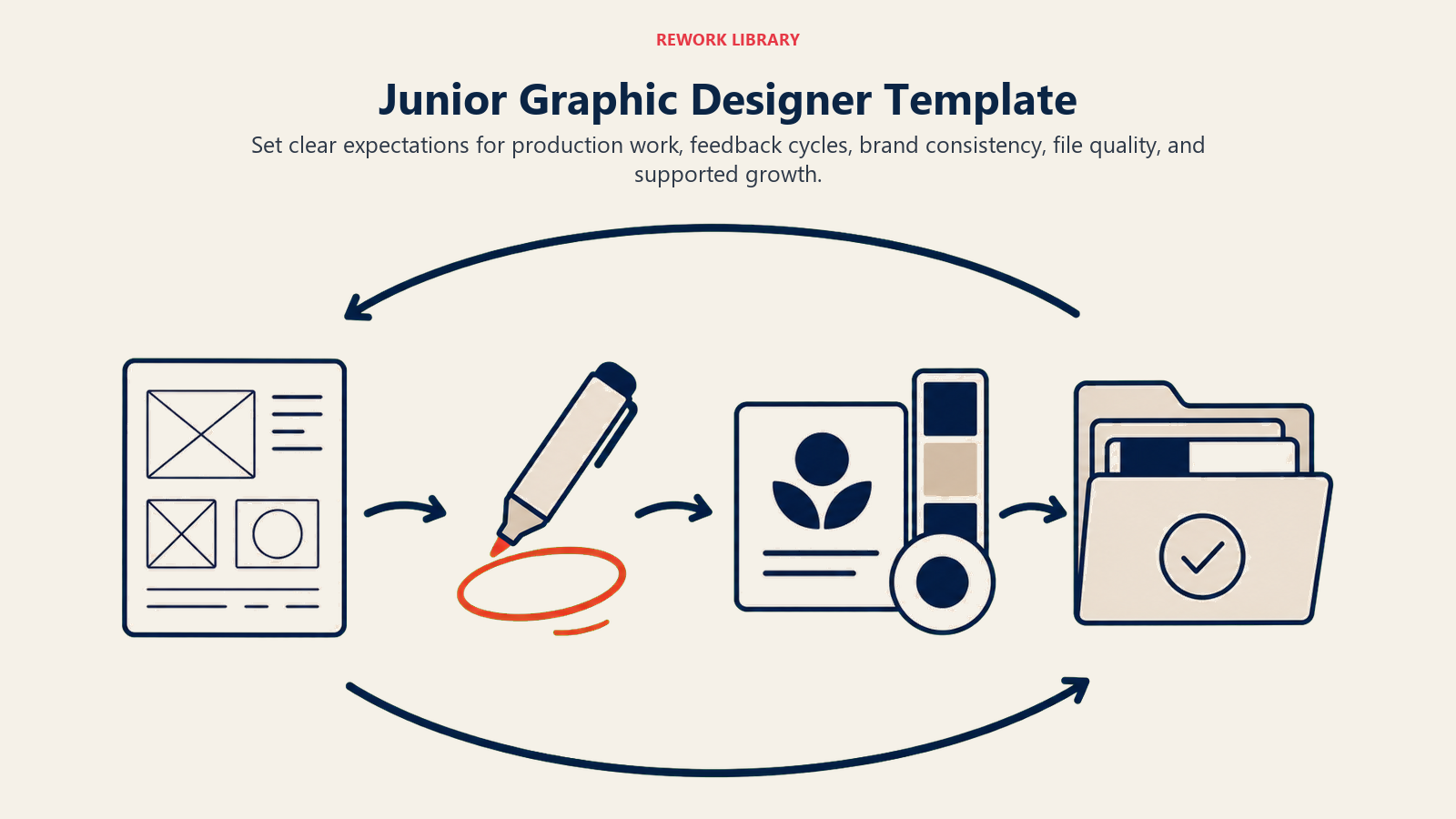
Establezca expectativas claras sobre el trabajo de producción, los ciclos de retroalimentación, la consistencia de marca, la calidad de los archivos y el crecimiento respaldado.
Diseñador Gráfico Junior
Sobre el Puesto
Buscamos un Diseñador Gráfico Junior creativo y motivado para unirse a nuestro dinámico equipo de diseño. Trabajará de forma colaborativa con diseñadores senior y directores creativos para desarrollar contenido visual convincente en plataformas digitales e impresas. Este puesto ofrece oportunidades excepcionales de crecimiento en un entorno de apoyo donde aportará perspectivas frescas mientras desarrolla experiencia profesional bajo la mentoría de profesionales con experiencia.
Como nuestro Diseñador Gráfico Junior, apoyará las iniciativas de marca, ejecutará conceptos creativos y ayudará a mantener nuestra identidad visual en todos los puntos de contacto. Obtendrá exposición a proyectos diversos, desde campañas de marketing hasta comunicaciones internas, desarrollando un conjunto de habilidades integral que lo preparará para el avance profesional.
Este puesto reporta directamente a nuestro Diseñador Gráfico Senior o Director de Arte y ofrece la combinación perfecta de guía estructurada e independencia creativa. Participará en sesiones de lluvia de ideas, presentaciones a clientes y proyectos colaborativos que muestran su experiencia en crecimiento mientras contribuye de manera significativa al éxito de nuestro equipo.
Responsabilidades Clave
- Ejecutar conceptos de diseño visual para materiales de marketing, presentaciones y activos digitales
- Crear gráficos atractivos para redes sociales, plantillas de correo electrónico y contenido web siguiendo las pautas de marca
- Ayudar con la preparación de producción de impresión, incluida la configuración de archivos, corrección de color y control de calidad
- Apoyar la edición de fotos, el retoque y la optimización de imágenes para diversos formatos de medios
- Desarrollar diseños de layout para folletos, informes, presentaciones y materiales promocionales
- Mantener y organizar bibliotecas de activos digitales con el nombramiento de archivos adecuado y control de versiones
- Participar activamente en sesiones de lluvia de ideas creativas y reuniones de equipo
- Colaborar con los equipos de marketing, ventas y producto en necesidades de comunicación visual
- Aprender y aplicar retroalimentación para mejorar continuamente las habilidades de diseño y el desarrollo profesional
- Apoyar a diseñadores senior en proyectos complejos que requieran recursos creativos adicionales
Requisitos
- Título universitario en Diseño Gráfico, Comunicación Visual o campo relacionado, o experiencia equivalente
- 0-2 años de experiencia profesional en diseño (se consideran prácticas profesionales y proyectos freelance)
- Sólido dominio de Adobe Creative Suite (Photoshop, Illustrator, InDesign)
- Comprensión sólida de los fundamentos del diseño, incluidos tipografía, teoría del color y composición
- Portafolio que demuestre potencial creativo, proceso de pensamiento de diseño y variedad de trabajos
- Excelente atención al detalle con capacidad para mantener la calidad bajo plazos ajustados
- Sólidas habilidades de comunicación escrita y verbal
- Apertura a la retroalimentación constructiva y entusiasmo por aprender y crecer profesionalmente
- Comprensión básica de los procesos de producción de impresión y los requisitos de archivos digitales
- Habilidades de gestión del tiempo y capacidad para priorizar múltiples proyectos de manera efectiva
Deseable
- Experiencia con Figma, Sketch u otras plataformas de diseño colaborativo
- Conocimiento básico de HTML/CSS y principios de diseño web
- Habilidades e interés en fotografía o ilustración
- Experiencia en creación de contenido para redes sociales
- Interés y habilidades en motion graphics o animación
- Prácticas previas en una agencia creativa o en un equipo de diseño interno
Lo Que Ofrecemos
- Rango salarial competitivo: $35,000-$48,000 (según experiencia y ubicación)
- Seguro de salud, dental y de visión integral
- Presupuesto de desarrollo profesional para cursos, conferencias y desarrollo de habilidades
- Opciones de modalidad de trabajo flexible, incluido el trabajo remoto híbrido
- Programa de mentoría que lo emparejará con profesionales creativos senior
- Licencias de software creativo y las últimas herramientas y tecnología de diseño
- Entorno de trabajo colaborativo orientado al crecimiento con oportunidades de avance profesional
Variaciones por Contexto
Entorno Corporativo
Adaptaciones Clave: Enfatice la consistencia de marca, la colaboración con las partes interesadas internas y el desarrollo profesional a largo plazo. Los puestos corporativos suelen ofrecer programas de mentoría más estructurados y trayectorias de avance claras, lo que los hace ideales para diseñadores que buscan entornos de crecimiento estables con paquetes de beneficios integrales.
Entorno de Startup
Adaptaciones Clave: Destaque la versatilidad, la capacidad de iteración rápida y la comodidad con asumir múltiples roles. Los puestos en startups requieren adaptabilidad y autodirección, a la vez que ofrecen una exposición más amplia a las operaciones comerciales y un impacto directo en el crecimiento de la empresa y el desarrollo de marca.
Entorno de Agencia
Adaptaciones Clave: Concéntrese en la orientación al servicio al cliente, la experiencia diversa en proyectos y la capacidad de trabajar bajo plazos ajustados. Los puestos en agencias brindan exposición a múltiples industrias y desafíos creativos mientras desarrollan una sólida diversidad de portafolio y redes profesionales.
Consideraciones por Industria
| Industria | Requisitos Clave | Notas de Cumplimiento | Potencial de Crecimiento |
|---|---|---|---|
| Tecnología/SaaS | Dominio de Figma, fundamentos de UI, visualización de datos | Conocimiento de estándares de accesibilidad | Excelente - Ruta profesional en diseño de producto |
| Salud | Conocimiento de cumplimiento normativo, diseño accesible | Consideraciones de HIPAA para materiales de pacientes | Estable - Habilidades especializadas en diseño médico |
| Servicios Financieros | Consistencia de marca, cumplimiento normativo | Requisitos de divulgación de la SEC para materiales | Bueno - Oportunidades de avance corporativo |
| Comercio Electrónico/Retail | Fotografía de producto, campañas estacionales | Requisitos de divulgación publicitaria de la FTC | Bueno - Especialización en marketing digital |
| Sin Fines de Lucro | Diseño orientado a la misión, materiales para subvenciones | Cumplimiento de caridad para materiales de recaudación de fondos | Limitado - Enfoque en proyectos de impacto social |
| Entretenimiento/Medios | Enfoque en redes sociales, materiales para eventos | Consideraciones de derechos de autor y marca registrada | Variable - Patrones de crecimiento basados en proyectos |
Guía de Compensación
El salario refleja el mercado, la solidez del portafolio, el rango de producción, el dominio del software y la calidad de la mentoría ofrecida.
Información Salarial
Rango Promedio Nacional: $35,000 - $48,000 anuales
Los salarios de Diseñador Gráfico Junior varían significativamente según la ubicación, la educación, la calidad del portafolio y el tamaño de la empresa. Los puestos de nivel inicial suelen enfatizar las oportunidades de aprendizaje y el desarrollo profesional junto con una compensación competitiva.
Salario por Principales Áreas Metropolitanas
| Ubicación | Rango Salarial | Compensación Total | Notas |
|---|---|---|---|
| San Francisco, CA | $50,000 - $62,000 | $65,000 - $80,000 | Prima de centro tecnológico, costo de vida alto |
| Nueva York, NY | $46,000 - $58,000 | $60,000 - $75,000 | Centro de la industria creativa |
| Los Ángeles, CA | $42,000 - $54,000 | $55,000 - $68,000 | Enfoque en entretenimiento |
| Austin, TX | $38,000 - $48,000 | $48,000 - $58,000 | Escena tecnológica en crecimiento |
| Chicago, IL | $36,000 - $46,000 | $46,000 - $56,000 | Oportunidades corporativas |
| Denver, CO | $36,000 - $45,000 | $45,000 - $54,000 | Equilibrio de estilo de vida |
| Atlanta, GA | $34,000 - $43,000 | $42,000 - $51,000 | Centro regional |
| Phoenix, AZ | $33,000 - $42,000 | $40,000 - $49,000 | Ajuste por menor costo de vida |
Factores que Afectan la Compensación
Formación Educativa: Quienes tienen un título universitario suelen ganar entre $2,000 y $5,000 más que los candidatos que solo cuentan con portafolio Calidad del Portafolio: Los portafolios sólidos pueden obtener primas salariales del 10-20% independientemente de la experiencia Habilidades Técnicas: El dominio de Figma y las habilidades web básicas pueden aumentar las ofertas entre $3,000 y $6,000
Datos salariales recopilados de Glassdoor, PayScale, Indeed y Bureau of Labor Statistics (agosto de 2026)
Preguntas de Entrevista
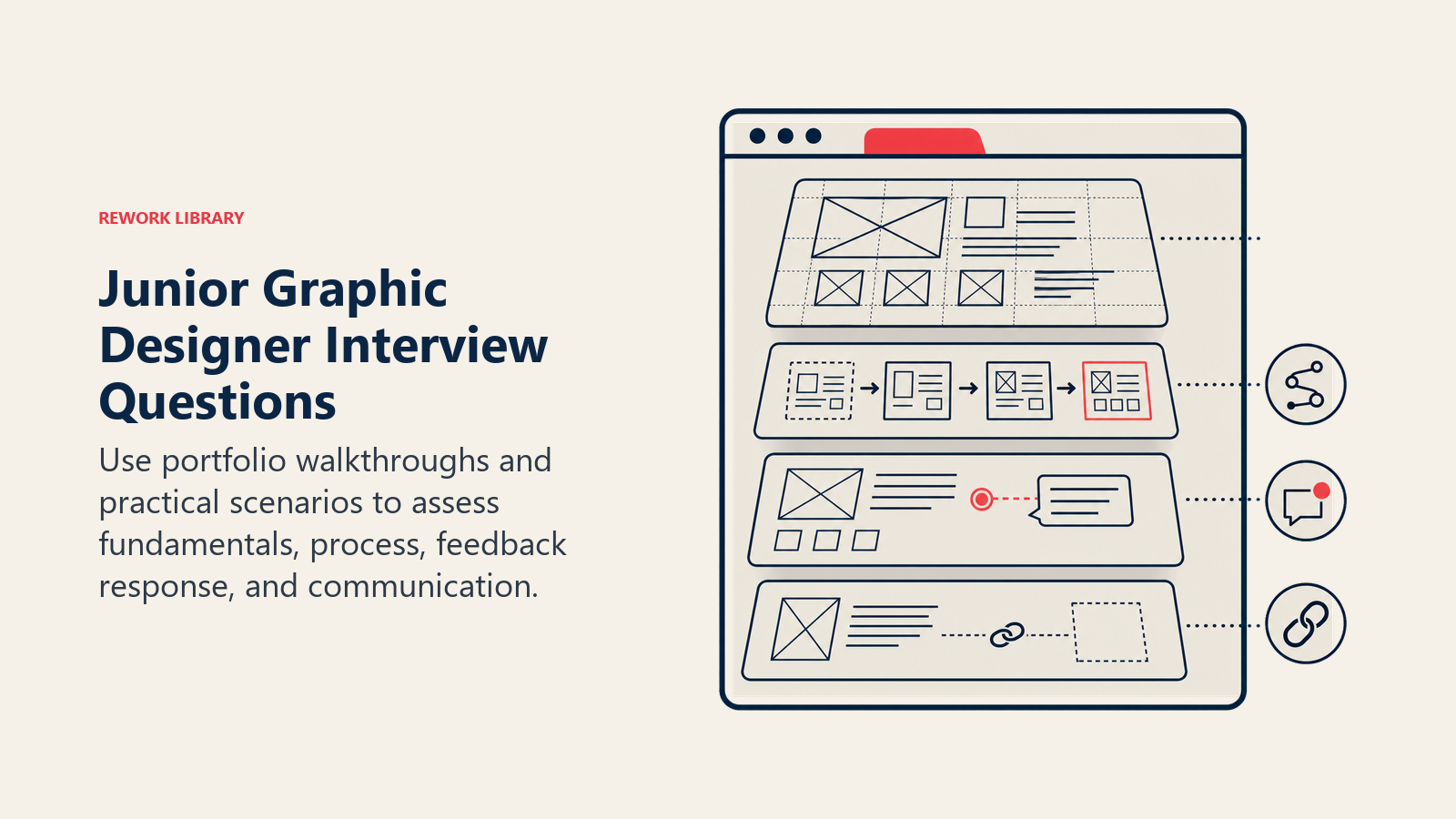
Utilice recorridos por el portafolio y escenarios prácticos para evaluar los fundamentos, el proceso, la respuesta a la retroalimentación y la comunicación.
Preguntas Técnicas/Funcionales
"Explíqueme su proceso de diseño para este proyecto del portafolio." Busque pensamiento estructurado, enfoque de investigación, mentalidad iterativa y capacidad para explicar decisiones creativas.
"¿Cuál es la diferencia entre RGB y CMYK, y cuándo usaría cada uno?" Evalúe el conocimiento técnico básico de los espacios de color y las aplicaciones de impresión frente a digital.
"¿Cómo elige la tipografía para un proyecto?" Evalúe la comprensión de la legibilidad, la alineación con la marca, la jerarquía y los fundamentos tipográficos.
"Explique su sistema de organización y nomenclatura de archivos." Verifique los hábitos de flujo de trabajo profesional y la preparación para la colaboración.
"¿Qué hace que el diseño de un logotipo sea efectivo?" Escuche conceptos de escalabilidad, simplicidad, memorabilidad y representación de marca.
"¿Cómo se asegura de que sus diseños funcionen en diferentes plataformas?" Evalúe la comprensión del diseño responsivo, los requisitos de formato y el pensamiento multicanal.
"Describa un desafío de diseño que haya enfrentado y cómo lo resolvió." Evalúe el enfoque de resolución de problemas, los recursos utilizados y el aprendizaje obtenido de las dificultades.
"¿Qué software de diseño prefiere y por qué?" Comprenda el dominio de las herramientas y el razonamiento detrás de las elecciones de software.
Preguntas Conductuales
"Cuénteme sobre una vez que recibió retroalimentación difícil sobre su trabajo." Busque apertura a la crítica, profesionalismo y mentalidad de crecimiento.
"Describa un proyecto de equipo en el que contribuyó al proceso creativo." Evalúe habilidades de colaboración, capacidades de comunicación y dinámica de equipo.
"¿Cómo se mantiene al día con las tendencias de diseño y los desarrollos de la industria?" Verifique la curiosidad, los recursos de aprendizaje y el compromiso con el desarrollo profesional.
"Dé un ejemplo de cuándo tuvo que cumplir con un plazo ajustado." Evalúe la gestión del tiempo, la priorización y el desempeño bajo presión.
"Describa un diseño que lo haya inspirado recientemente y explique por qué." Comprenda la apreciación del diseño, el pensamiento analítico y las influencias.
"¿Cómo manejaría una situación en la que un cliente no le guste su concepto de diseño?" Evalúe la comunicación profesional, la flexibilidad y la orientación al servicio al cliente.
Preguntas de Encaje Cultural
"¿Qué tipo de proyectos de diseño le energizan más?" Comprenda los intereses, las áreas de pasión y la alineación con los requisitos del puesto.
"¿Por qué eligió el diseño gráfico como carrera profesional?" Busque interés genuino, compromiso profesional y alineación de valores.
"¿Qué esperaría aprender en sus primeros seis meses aquí?" Evalúe la ambición, la autoconciencia y la planificación de crecimiento.
"¿Cómo maneja los bloqueos creativos o la falta de inspiración?" Verifique la resiliencia, los recursos y las estrategias de resolución de problemas.
Consejo de evaluación: Concéntrese en el potencial, la actitud de aprendizaje y los fundamentos de diseño en lugar del pulido o el nivel de experiencia.
Consejos de Contratación
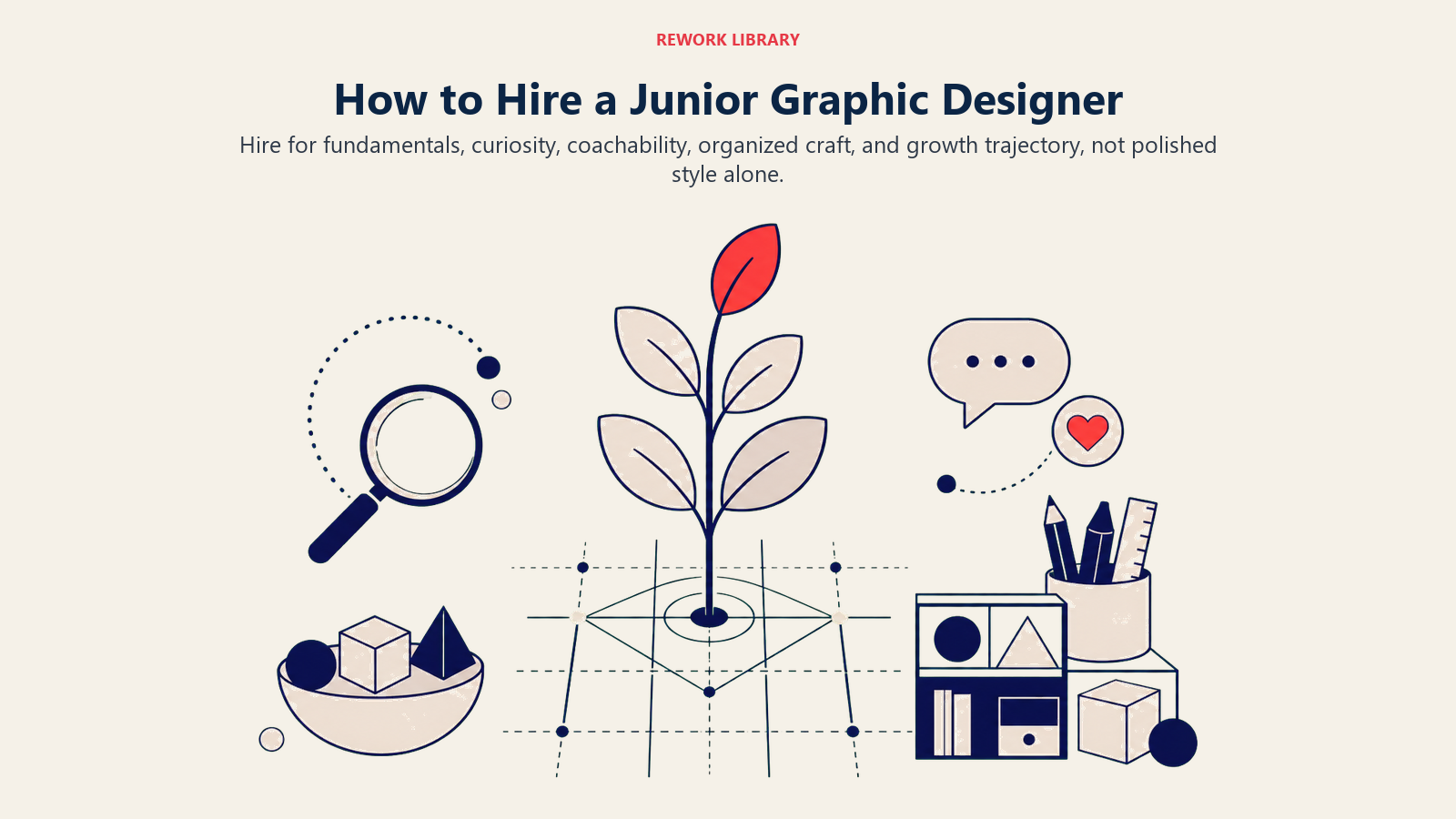
Contrate por fundamentos, curiosidad, capacidad de recibir mentoría, oficio organizado y trayectoria de crecimiento, no solo por estilo pulido.
Guía Rápida de Sourcing
Mejores Plataformas para Diseñadores Junior:
- Centros de carrera y bolsas de trabajo de escuelas de diseño
- Plataformas de portafolio Behance y Dribbble
- LinkedIn con filtros de educación y nivel inicial
- Hashtags y comunidades de diseño en Instagram
Comunidades Profesionales:
- Capítulos estudiantiles de AIGA (American Institute of Graphic Arts)
- Encuentros creativos locales y eventos de diseño
- Redes de exalumnos de bootcamps de diseño
- Alianzas con programas universitarios de diseño
Consejos de Optimización de la Publicación:
- Enfatice las oportunidades de aprendizaje y los programas de mentoría
- Incluya requisitos específicos de software, pero permita el desarrollo de habilidades
- Destaque la cultura de la empresa y el entorno creativo
- Mencione las trayectorias de avance profesional y el desarrollo profesional
Señales de Alerta a Evitar
- Presentaciones de portafolio inflexibles - incapacidad para explicar las decisiones de diseño o adaptar conceptos
- Falta de documentación del proceso - muestra solo los diseños finales sin evidenciar el pensamiento creativo
- Resistencia a la retroalimentación - respuestas defensivas durante las críticas de portafolio o discusiones de diseño
- Fundamentos de diseño limitados - elecciones tipográficas deficientes, problemas de composición, lagunas en teoría del color
- Expectativas salariales poco realistas - exige compensación de nivel senior sin la experiencia correspondiente
- Habilidades de comunicación deficientes - dificultad para articular ideas o colaborar de manera efectiva
Para Empleadores que Contratan Diseñadores Junior
¿Cómo evaluamos el potencial en los candidatos a diseñador junior?
Concéntrese en los fundamentos de diseño, la agilidad de aprendizaje y la trayectoria de crecimiento en lugar del pulido. Busque un sentido sólido de composición, disposición a iterar y capacidad para articular decisiones de diseño. El crecimiento del portafolio a lo largo del tiempo es más importante que la perfección.
¿Cuál es la mejor manera de estructurar un puesto de diseñador junior?
Proporcione parámetros claros de proyecto con libertad creativa, mentoría regular, exposición variada a proyectos y responsabilidad creciente con el tiempo. Equilibre las oportunidades de aprendizaje con la contribución productiva a los objetivos del equipo.
¿Cuánto tiempo debería tardar un diseñador junior en volverse productivo?
Espere de 3 a 6 meses para alcanzar la productividad básica y de 6 a 12 meses para la gestión independiente de proyectos. El plazo varía según la experiencia previa, la calidad de la mentoría y la complejidad del proyecto.
¿Deberíamos contratar según las habilidades de software o el potencial creativo?
Priorice el potencial creativo y los fundamentos de diseño por encima del dominio del software. Las habilidades técnicas se pueden enseñar, pero el sentido del diseño y el pensamiento creativo son más difíciles de desarrollar. Busque agilidad de aprendizaje e intuición de diseño.
¿Qué salario deberíamos ofrecer a los diseñadores junior?
El rango de nivel inicial va de $35,000 a $48,000 a nivel nacional, con ajustes significativos según la ubicación. Considere la compensación total, incluidos los beneficios, las oportunidades de desarrollo y el valor de la mentoría al competir por el talento.
¿Cómo identificamos a los candidatos que crecerán rápidamente?
Busque evidencia de aprendizaje autodirigido, documentación de la evolución del portafolio, capacidad para incorporar retroalimentación y curiosidad genuina por las tendencias de diseño. Los comunicadores fuertes que hacen preguntas reflexivas tienden a avanzar más rápido.
Para Candidatos que Ingresan al Diseño Gráfico
¿Qué debería incluirse en el portafolio de un diseñador junior?
Incluya de 8 a 12 proyectos diversos que muestren su proceso de diseño, crecimiento a lo largo del tiempo y variedad de habilidades. Los proyectos académicos están bien, pero agregue trabajo personal para mostrar iniciativa. Documente su proceso creativo y esté preparado para explicar sus decisiones.
¿Qué tan importante es un título de diseño para puestos junior?
Si bien muchos puestos prefieren títulos formales, un portafolio sólido puede compensar la falta de educación formal. Los diseñadores autodidactas, los graduados de bootcamps y quienes cambian de carrera pueden tener éxito con habilidades demostradas y compromiso de aprendizaje.
¿Qué habilidades de software son esenciales para los diseñadores junior?
Se suele requerir dominio de Adobe Creative Suite (Photoshop, Illustrator, InDesign). El conocimiento de Figma es cada vez más valioso para los puestos digitales. Concéntrese en dominar los fundamentos en lugar de todas las herramientas disponibles.
¿Cómo puedo ganar experiencia sin historial de trabajo profesional?
Cree proyectos personales, sea voluntario en organizaciones sin fines de lucro, participe en retos de diseño, desarrolle trabajos ficticios para marcas imaginarias, y busque prácticas profesionales o aprendizajes. Documente su proceso de aprendizaje y crecimiento.
¿Qué preguntas debería hacer en las entrevistas?
Pregunte sobre oportunidades de mentoría, apoyo al desarrollo profesional, tipos de proyectos habituales, estructura del equipo, trayectorias de crecimiento profesional y la cultura de diseño de la empresa. Muestre interés en el aprendizaje y el crecimiento a largo plazo.
¿Cómo negocio el salario como diseñador junior?
Investigue las tarifas del mercado local, considere el paquete de compensación total, enfatice su potencial de aprendizaje y su perspectiva fresca, y sea flexible mientras defiende una compensación justa. Concéntrese en las oportunidades de crecimiento además del salario.
¿Cuál es la diferencia entre trabajar en una agencia, internamente o como freelance para un junior?
Las agencias ofrecen exposición diversa a clientes, pero entornos de ritmo acelerado. Los puestos internos brindan enfoque en la consistencia de marca y mentoría estructurada. El trabajo freelance requiere habilidades de negocio pero ofrece flexibilidad. Elija según sus objetivos de aprendizaje.
Última actualización: 6 de agosto de 2026
Fuentes de Datos Salariales:
- Glassdoor.com (EE. UU.) - Último acceso: agosto de 2026
- PayScale.com (EE. UU.) - Último acceso: agosto de 2026
- Indeed.com (EE. UU.) - Último acceso: agosto de 2026
- Bureau of Labor Statistics - Último acceso: agosto de 2026
- AIGA Design Survey - Último acceso: agosto de 2026

Senior Customer Retention Strategist
On this page
- Por Qué los Diseñadores Gráficos Junior Son Importantes en 2026
- Plantilla Principal de Descripción del Puesto
- Diseñador Gráfico Junior
- Variaciones por Contexto
- Entorno Corporativo
- Entorno de Startup
- Entorno de Agencia
- Consideraciones por Industria
- Guía de Compensación
- Información Salarial
- Salario por Principales Áreas Metropolitanas
- Factores que Afectan la Compensación
- Preguntas de Entrevista
- Preguntas Técnicas/Funcionales
- Preguntas Conductuales
- Preguntas de Encaje Cultural
- Consejos de Contratación
- Guía Rápida de Sourcing
- Señales de Alerta a Evitar