Plantilla de Descripción del Puesto de Director of Talent Acquisition - Guía 2026

Turn this article into takeaways for your work.


Each assistant summarizes the article only for you and suggests best practices for your work.
Lo que obtendrá de esta guía
- Plantilla completa de descripción del puesto para el rol de Director of Talent Acquisition
- Responsabilidades de liderazgo estratégico en reclutamiento y requisitos de nivel ejecutivo
- Marcos de gestión de equipos y supervisión presupuestaria
- Directrices de colaboración con la alta dirección (C-suite) y transformación organizacional
- Componentes de estrategia de marca empleadora y marketing de talento
- Análisis de rendimiento y métricas de adquisición de talento
- Preguntas de entrevista y herramientas de evaluación de competencias
- Puntos de referencia salariales e información sobre compensación para 2026
Un Director of Talent Acquisition lidera la estrategia y las operaciones de reclutamiento a nivel de toda la empresa, impulsando el crecimiento organizacional mediante iniciativas estratégicas de talento. Este puesto de nivel ejecutivo combina un liderazgo visionario con la excelencia operativa para construir capacidades de adquisición de talento de primer nivel, alineadas con los objetivos de negocio y el posicionamiento competitivo en el mercado.
Aspectos Clave
- Puesto de liderazgo en adquisición de talento de nivel ejecutivo, con impacto en toda la empresa e influencia estratégica
- Desarrolla y ejecuta estrategias integrales de talento que respaldan el crecimiento y la transformación organizacional
- Gestiona las operaciones de adquisición de talento, incluyendo equipos, presupuestos e inversiones tecnológicas de $1M a $10M+ anuales
- Colabora con ejecutivos de la alta dirección (C-suite) y miembros de la junta directiva en la planificación de la fuerza laboral y la estrategia de talento
- Impulsa la cultura organizacional, la marca empleadora y la excelencia en la experiencia del candidato
- Impulsa la toma de decisiones basada en datos y la innovación en las prácticas de adquisición de talento
Por Qué Este Puesto Importa
El Director of Talent Acquisition actúa como un habilitador crítico del negocio, garantizando que la organización atraiga, involucre y asegure talento de primer nivel en todas las funciones y niveles. Este puesto influye directamente en la competitividad organizacional, la trayectoria de crecimiento y el posicionamiento en el mercado a través de iniciativas estratégicas de talento y una ejecución excepcional. A medida que el talento se vuelve cada vez más escaso y competitivo, este puesto de nivel directivo se vuelve esencial para el éxito empresarial sostenible y el liderazgo de mercado.
Este puesto representa la intersección entre la estrategia de negocio y la estrategia de talento, y requiere tanto liderazgo visionario como capacidades de ejecución práctica. La influencia del rol se extiende a la cultura organizacional, el compromiso de los empleados, las estrategias de retención y el desarrollo a largo plazo del pipeline de talento, lo que lo convierte en un elemento fundamental para el éxito del negocio.
Sobre el Puesto
Buscamos un Director of Talent Acquisition estratégico para liderar la estrategia de talento de nuestra empresa y construir capacidades de reclutamiento de primer nivel. Usted será responsable de desarrollar y ejecutar estrategias integrales de adquisición de talento que impulsen el crecimiento organizacional, al mismo tiempo que posicionan a nuestra empresa como un empleador de elección en mercados competitivos.
Como nuestro Director of Talent Acquisition, supervisará todas las operaciones de adquisición de talento, desde la planificación estratégica de la fuerza laboral hasta la excelencia operativa en múltiples unidades de negocio. Liderará equipos de alto rendimiento, gestionará presupuestos significativos y relaciones con proveedores, y colaborará directamente con la alta dirección para garantizar que las estrategias de talento estén alineadas con las prioridades del negocio y los valores organizacionales.
El candidato ideal aporta experiencia comprobada en la escalabilidad de funciones de adquisición de talento en organizaciones complejas, con experiencia demostrada en planificación estratégica, liderazgo ejecutivo y transformación basada en datos. Usted desempeñará un papel fundamental en la construcción del futuro de nuestra organización, garantizando que atraigamos y aseguremos el talento necesario para alcanzar objetivos de crecimiento ambiciosos.
Responsabilidades Clave
El puesto conecta la planificación de la fuerza laboral, las operaciones de reclutamiento, la marca empleadora, la colaboración ejecutiva y resultados de contratación medibles.

Liderazgo Estratégico y Visión: Desarrollar y ejecutar estrategias de adquisición de talento a nivel de toda la empresa, incluyendo la planificación plurianual de la fuerza laboral, el desarrollo de capacidades organizacionales e iniciativas de posicionamiento competitivo
Gestión Ejecutiva de Equipos: Liderar y desarrollar equipos de liderazgo de adquisición de talento de 10 a 50+ profesionales en múltiples funciones, incluyendo especialistas en reclutamiento, sourcing, marca empleadora y operaciones de talento
Colaboración con la Alta Dirección (C-Suite): Colaborar con la alta dirección, los miembros de la junta directiva y los líderes de unidades de negocio para comprender las necesidades estratégicas de talento, proporcionar inteligencia de mercado y garantizar la alineación entre las estrategias de talento y los objetivos de negocio
Transformación Organizacional: Diseñar e implementar iniciativas de transformación de la adquisición de talento, incluyendo la optimización de procesos, la implementación de tecnología y la gestión del cambio cultural para impulsar la excelencia en el desempeño
Estrategia de Marca Empleadora: Supervisar estrategias integrales de marca empleadora y marketing de talento, incluyendo la presencia digital, el diseño de la experiencia del candidato y la gestión de la reputación en todos los puntos de contacto
Desempeño y Analítica: Establecer y monitorear métricas de adquisición de talento a nivel empresarial, realizar análisis avanzados y proporcionar informes estratégicos a la alta dirección sobre las tendencias del mercado de talento y el desempeño organizacional
Excelencia en Diversidad e Inclusión: Impulsar iniciativas de diversidad, equidad e inclusión a nivel de toda la empresa dentro de la adquisición de talento, garantizando prácticas equitativas y mejoras medibles en la representación en todos los niveles
Gestión Estratégica de Proveedores: Supervisar las relaciones con firmas de búsqueda de ejecutivos, socios tecnológicos y proveedores de servicios, incluyendo la negociación de contratos, la gestión del desempeño y el desarrollo de alianzas estratégicas
Gestión de Presupuesto y Recursos: Desarrollar y gestionar los presupuestos de adquisición de talento de la empresa, incluyendo costos de personal, inversiones tecnológicas e iniciativas estratégicas, garantizando una asignación óptima de recursos y el ROI
Innovación y Liderazgo de Mercado: Impulsar la innovación en las prácticas de adquisición de talento, anticipándose a las tendencias del mercado e implementando tecnologías y metodologías de vanguardia para mantener una ventaja competitiva
Requisitos
Los candidatos sólidos combinan una profunda experiencia en reclutamiento empresarial, liderazgo de equipos senior, criterio financiero y una influencia ejecutiva creíble.

Cualificaciones Imprescindibles
- Maestría en Recursos Humanos, Administración de Empresas, Psicología Organizacional o campo relacionado; se prefiere MBA
- 12+ años de experiencia progresiva en adquisición de talento, con un mínimo de 6 años en puestos de liderazgo senior
- Trayectoria comprobada en la construcción y escalabilidad de funciones de adquisición de talento en organizaciones con 1,000+ empleados
- Profunda experiencia en reclutamiento ejecutivo, adquisición de talento técnico y contratación de alto volumen en múltiples unidades de negocio
- Amplia experiencia con plataformas ATS empresariales, tecnologías de reclutamiento e integración de HRIS
- Éxito demostrado en el desarrollo y la ejecución de iniciativas estratégicas de transformación de la adquisición de talento
- Experiencia en la gestión de presupuestos de adquisición de talento de $1M+ anuales, con optimización demostrada del ROI
- Habilidades analíticas avanzadas con experiencia en analítica de talento, modelado predictivo e informes estratégicos
Cualificaciones Deseables
- Certificación de nivel ejecutivo en adquisición de talento (CTA, CTAP) o liderazgo estratégico de HR (SHRM-SCP, SPHR)
- Experiencia en empresas tecnológicas de alto crecimiento, empresas Fortune 500 o entornos de consultoría de gestión
- Trayectoria en adquisición de talento global, con experiencia en la gestión de operaciones de reclutamiento internacionales
- Experiencia en la integración de talento en fusiones y adquisiciones, y en iniciativas de reestructuración organizacional
- Conocimiento de la legislación laboral, las regulaciones de cumplimiento y las prácticas globales de HR
Habilidades Técnicas y Competencias
- Dominio de plataformas ATS empresariales (Workday, SuccessFactors, Oracle HCM, Greenhouse Enterprise)
- Dominio avanzado de herramientas de analítica de talento, plataformas de inteligencia de negocio y modelado predictivo
- Comprensión profunda de la marca empleadora, el marketing de reclutamiento y las estrategias digitales de adquisición de talento
- Experiencia con plataformas de mercado de talento, herramientas de reclutamiento impulsadas por AI y tecnologías emergentes
- Sólido conocimiento del reclutamiento en redes sociales, el networking profesional y las estrategias digitales de sourcing
Habilidades de Liderazgo y Ejecutivas
- Presencia ejecutiva excepcional y capacidades de liderazgo, con experiencia en la gestión de equipos de liderazgo senior
- Excelentes habilidades de comunicación y presentación para la interacción con la junta directiva y la alta dirección (C-suite)
- Perspicacia empresarial estratégica con capacidad para alinear las estrategias de talento con objetivos organizacionales complejos
- Capacidad comprobada para influir y liderar el cambio en todos los niveles y funciones organizacionales
- Pensamiento estratégico avanzado combinado con una ejecución excepcional y capacidades de gestión de programas
Lo Que Ofrecemos
Paquete de Compensación Ejecutiva
- Salario base ejecutivo competitivo: $180,000 - $280,000 anuales (varía según la ubicación y el tamaño de la empresa)
- Oportunidad de bono ejecutivo basado en el desempeño: 25-40% del salario base
- Participación accionaria con un potencial de crecimiento significativo en el éxito y crecimiento de la empresa
- Beneficios ejecutivos integrales, incluyendo salud, dental, visión y programas de chequeos médicos ejecutivos
Desarrollo Ejecutivo y Beneficios Adicionales
- Presupuesto de desarrollo ejecutivo para programas de liderazgo, conferencias y educación estratégica
- Coaching ejecutivo y programas de desarrollo de liderazgo con proveedores de primer nivel
- Acceso a redes ejecutivas, asociaciones de la industria y oportunidades de participación en juntas directivas
- Oportunidades de mentoría con ejecutivos de nivel C y líderes de la industria
Entorno de Trabajo y Beneficios Ejecutivos
- Modalidades de trabajo ejecutivo flexibles, incluyendo opciones remotas e híbridas
- Tiempo libre ejecutivo generoso, incluyendo oportunidades de año sabático y participación en retiros ejecutivos
- Programas ejecutivos de salud y bienestar, incluyendo apoyo en salud mental y manejo del estrés
- Asignación tecnológica y herramientas de nivel ejecutivo para una productividad y efectividad óptimas
Variaciones por Contexto
Adaptación al Entorno Corporativo Empresarial
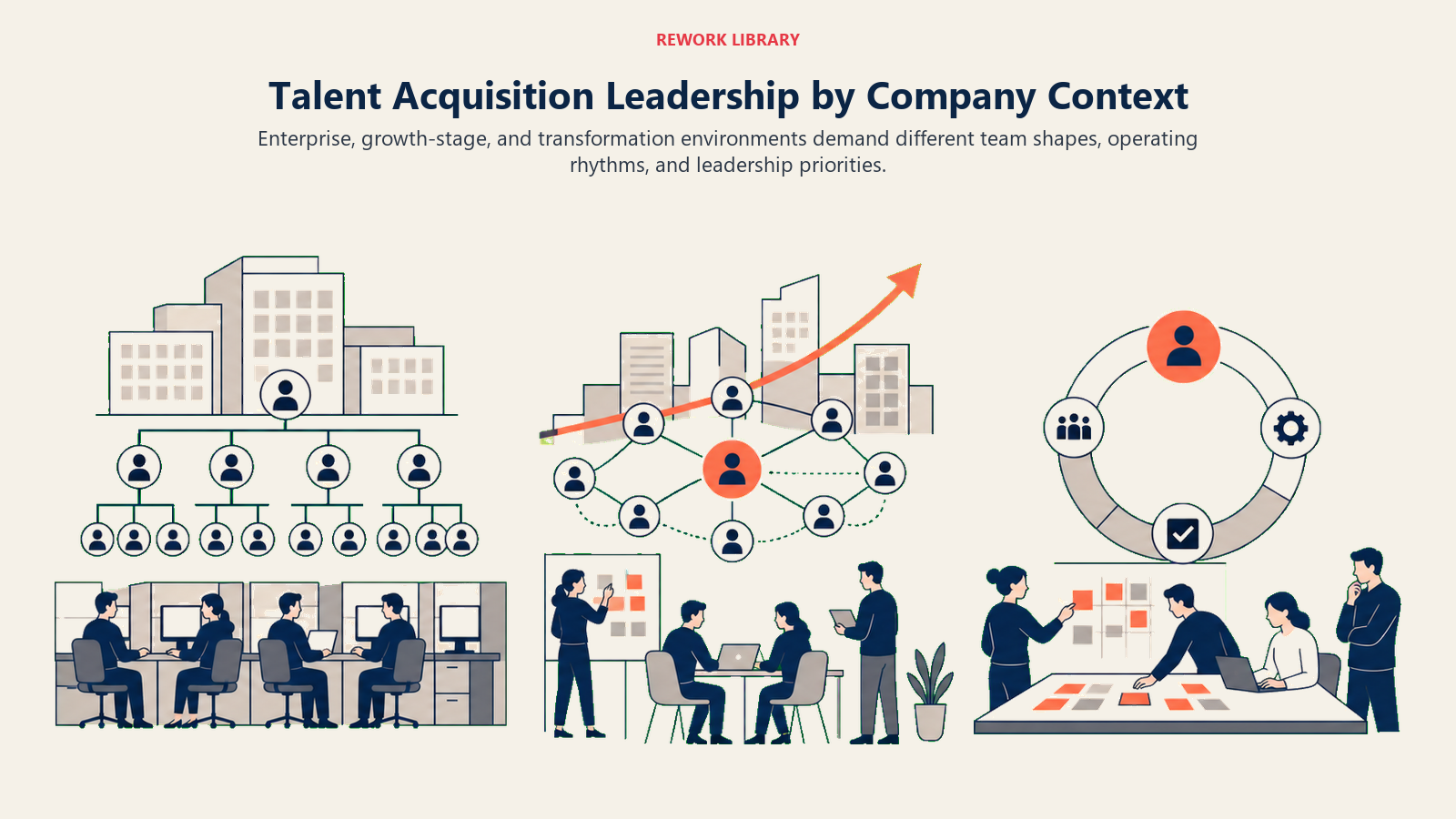
En entornos de grandes empresas, el Director of Talent Acquisition generalmente gestiona matrices organizacionales complejas con 30-100+ miembros de equipo en múltiples unidades de negocio y regiones geográficas. El puesto enfatiza la estandarización, la coordinación global, la gestión del cumplimiento normativo y la integración con sistemas de HR y estructuras de gobernanza a nivel de toda la empresa.
Adaptación al Entorno Tecnológico de Alto Crecimiento
En empresas tecnológicas de alto crecimiento, este puesto requiere capacidades de escalabilidad rápida, gestionando un crecimiento explosivo en la contratación mientras se construyen procesos y capacidades de equipo sostenibles. El enfoque se traslada hacia la adquisición de talento técnico, la navegación en mercados competitivos y la construcción de una infraestructura de adquisición de talento capaz de sostener tasas de crecimiento anual del 100%+.
Adaptación Global/Multinacional
Para organizaciones globales, el Director of Talent Acquisition debe destacar en el liderazgo intercultural, saber navegar regulaciones laborales internacionales complejas y desarrollar estrategias para la movilidad del talento y la optimización de la fuerza laboral global. Cobra especial importancia el énfasis en el liderazgo de equipos virtuales, la marca empleadora global y el cumplimiento normativo internacional.
Consideraciones por Industria
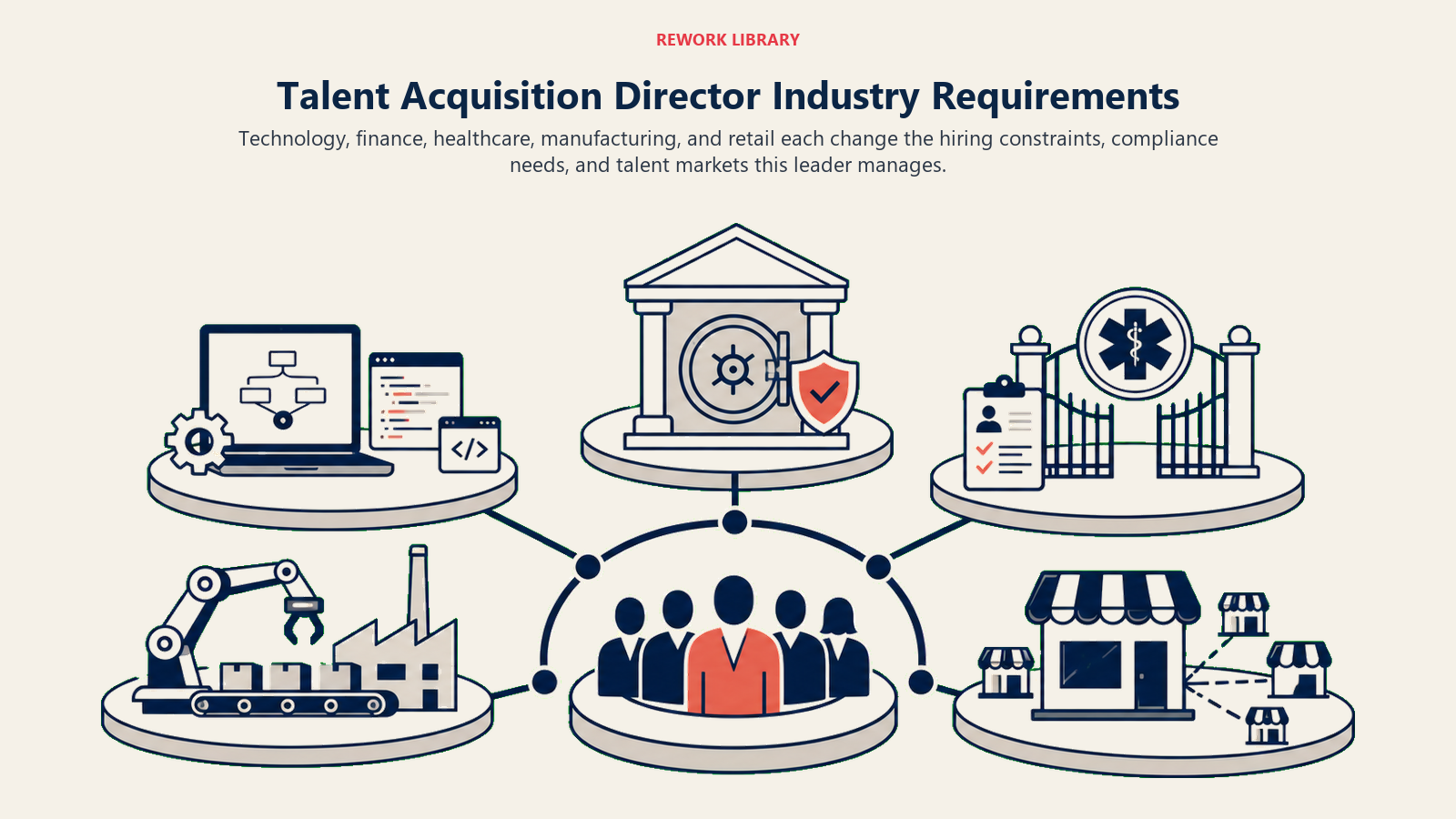
La tecnología, las finanzas, la salud, la manufactura y el retail modifican, cada una a su manera, las restricciones de contratación, las necesidades de cumplimiento normativo y los mercados de talento que este líder gestiona.
| Industria | Requisitos Clave | Consideraciones Únicas |
|---|---|---|
| Tecnología/Software | Experiencia en reclutamiento técnico, experiencia en startups/escalamiento, navegación en mercados competitivos | Contratación de crecimiento rápido, capacidades de evaluación técnica, estrategias de compensación accionaria |
| Servicios Financieros | Conocimiento del cumplimiento normativo, conciencia de gestión de riesgos, comprensión de las autorizaciones de seguridad | Experiencia en verificación de antecedentes, puestos regulatorios, prácticas de contratación enfocadas en el cumplimiento |
| Salud/Farmacéutica | Comprensión de roles clínicos, cumplimiento normativo, estándares de seguridad del paciente | Requisitos de licencias, experiencia en ensayos clínicos, consideraciones de cumplimiento de la FDA |
| Manufactura/Industrial | Contratación enfocada en seguridad, reclutamiento industrial, relaciones sindicales | Certificaciones de seguridad, cumplimiento normativo, modalidades de trabajo por turnos, negociaciones sindicales |
| Consultoría/Servicios Profesionales | Experiencia de cara al cliente, contratación basada en proyectos, gestión de utilización | Requisitos de viaje, habilidades de interacción con clientes, optimización de horas facturables |
| Retail/Bienes de Consumo | Contratación de alto volumen, planificación estacional, enfoque en servicio al cliente | Contratación basada en ubicación, gestión de fuerza laboral estacional, prioridades de experiencia del cliente |
Guía de Compensación
Rangos Salariales Nacionales
Según datos de mercado de 2026, los salarios de Director of Talent Acquisition generalmente oscilan entre $180,000 y $280,000 anuales, con una compensación total (incluyendo bonos y participación accionaria) que alcanza entre $240,000 y $400,000+ en los principales mercados y grandes empresas.

Variaciones Regionales
| Ubicación | Rango de Salario Base | Compensación Total |
|---|---|---|
| San Francisco Bay Area | $220,000 - $300,000 | $300,000 - $450,000 |
| New York City | $210,000 - $290,000 | $280,000 - $420,000 |
| Seattle | $195,000 - $270,000 | $260,000 - $380,000 |
| Los Angeles | $190,000 - $265,000 | $250,000 - $370,000 |
| Austin | $180,000 - $250,000 | $240,000 - $350,000 |
| Chicago | $175,000 - $245,000 | $230,000 - $340,000 |
| Atlanta | $170,000 - $235,000 | $220,000 - $320,000 |
| Denver | $175,000 - $240,000 | $225,000 - $330,000 |
Factores que Afectan la Compensación
- Tamaño y complejidad de la empresa: Las grandes empresas (5,000+ empleados) generalmente ofrecen una compensación 20-30% más alta que las empresas medianas
- Prima por industria: La tecnología y los servicios financieros ofrecen una prima del 15-25% sobre las industrias tradicionales
- Tamaño del equipo y presupuesto: Los directores que gestionan 25+ personas y presupuestos de $5M+ obtienen una compensación de primer nivel
- Alcance geográfico: Las responsabilidades globales o multirregionales añaden una prima del 10-20% a la compensación base
Datos salariales recopilados de Radford, Mercer y Korn Ferry 2026 Executive Compensation Survey
Preguntas de Entrevista
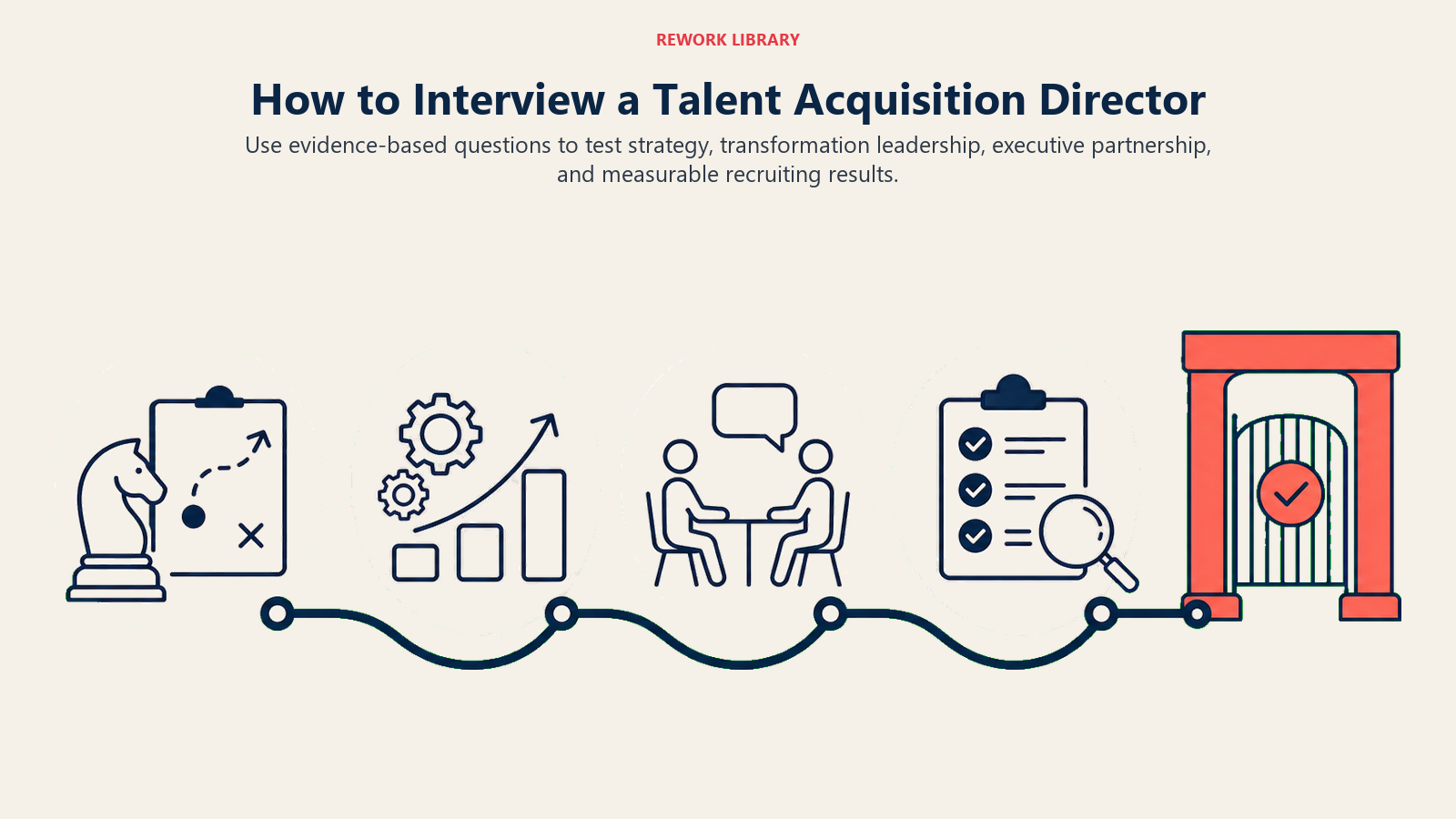
Utilice preguntas basadas en evidencia para evaluar la estrategia, el liderazgo de transformación, la colaboración ejecutiva y los resultados medibles de reclutamiento.
Preguntas de Visión Estratégica y Liderazgo
"Explíqueme cómo desarrollaría una estrategia integral de adquisición de talento para nuestra organización durante los próximos 3-5 años." Evalúa el pensamiento estratégico, la planificación a largo plazo y las capacidades de alineación con el negocio
"Describa una ocasión en la que tuvo que transformar una función de adquisición de talento con bajo desempeño. ¿Cuál fue su enfoque y cuáles fueron los resultados medibles?" Evalúa el liderazgo del cambio, la gestión de la transformación y la orientación a resultados
"¿Cómo alinea la estrategia de adquisición de talento con la estrategia general del negocio? Deme un ejemplo específico de su experiencia." Evalúa la perspicacia empresarial, la colaboración estratégica y las habilidades de alineación organizacional
"Cuénteme sobre una situación en la que tuvo que presentar un caso de inversión significativo para recursos de adquisición de talento. ¿Cómo construyó y presentó su caso de negocio?" Evalúa la perspicacia financiera, las habilidades de influencia y la comunicación ejecutiva
Preguntas de Liderazgo Ejecutivo y Desarrollo de Equipos
"Describa su filosofía de liderazgo y cómo desarrolla equipos de adquisición de talento de alto rendimiento a gran escala." Evalúa el estilo de liderazgo, el enfoque de desarrollo de equipos y el pensamiento orientado a la escalabilidad
"¿Cómo maneja la planificación de sucesión y el desarrollo de liderazgo dentro de su organización de adquisición de talento?" Evalúa el desarrollo organizacional y la gestión del pipeline de talento
"Cuénteme sobre una ocasión en la que tuvo que liderar a su equipo a través de un cambio organizacional o una crisis significativa. ¿Cuál fue su enfoque?" Evalúa el liderazgo en crisis, la gestión del cambio y la resiliencia del equipo
Preguntas de Innovación y Tecnología
"¿Cómo evalúa e implementa tecnologías emergentes en la adquisición de talento? Explíqueme un ejemplo reciente." Evalúa la mentalidad de innovación, la adopción de tecnología y la implementación del cambio
"¿Cuál es su enfoque para aprovechar la inteligencia artificial y la automatización en la adquisición de talento sin perder el elemento humano?" Evalúa la visión tecnológica, el equilibrio entre eficiencia y experiencia, y el pensamiento orientado al futuro
"Describa cómo utiliza la analítica predictiva y la ciencia de datos para mejorar los resultados de la adquisición de talento." Evalúa la sofisticación analítica y la toma de decisiones basada en datos
Preguntas de Gestión de Partes Interesadas y Colaboración
"¿Cómo colabora con la alta dirección (C-suite) y la junta directiva en iniciativas relacionadas con el talento? Deme un ejemplo específico." Evalúa la presencia ejecutiva, la gestión de partes interesadas y la comunicación estratégica
"Describa una situación en la que tuvo que influir en la alta dirección para cambiar su enfoque hacia la adquisición de talento. ¿Cómo lo manejó?" Evalúa las habilidades de influencia, el coraje profesional y el liderazgo del cambio
"¿Cómo gestiona prioridades y demandas en competencia de múltiples unidades de negocio, manteniendo el enfoque estratégico?" Evalúa la priorización, la gestión de partes interesadas y el enfoque estratégico
Preguntas de Liderazgo de Mercado y Estrategia Competitiva
"¿Cómo posiciona a su organización como un empleador de elección en mercados de talento altamente competitivos?" Evalúa la estrategia de marca empleadora, el posicionamiento competitivo y el conocimiento del mercado
"Cuénteme sobre una ocasión en la que tuvo que reclutar en un mercado de talento extremadamente ajustado. ¿Qué estrategias innovadoras empleó?" Evalúa la resolución creativa de problemas, la adaptación al mercado y la innovación estratégica
"¿Cómo se mantiene a la vanguardia de las tendencias del mercado de talento y garantiza que su organización esté preparada para los desafíos futuros de talento?" Evalúa la inteligencia de mercado, la planificación estratégica y el pensamiento orientado al futuro
Preguntas de Diversidad, Equidad e Inclusión
"Describa su enfoque para construir y mantener pipelines de talento diverso en todos los niveles de la organización." Evalúa el compromiso con DEI, el enfoque sistemático y los resultados medibles
"¿Cómo garantiza prácticas equitativas de adquisición de talento sin comprometer la calidad y la velocidad de contratación?" Evalúa el equilibrio entre prioridades en competencia y el enfoque sistemático hacia la equidad
Preguntas de Excelencia Financiera y Operativa
"¿Cómo aborda el desarrollo del presupuesto y la asignación de recursos para la adquisición de talento a nivel empresarial?" Evalúa la perspicacia financiera, la optimización de recursos y el pensamiento de inversión estratégica
"Describa cómo mide y mejora el ROI de las inversiones e iniciativas de adquisición de talento." Evalúa la responsabilidad financiera, la sofisticación en la medición y la mejora continua
Consejos de Evaluación:
- Preguntas Estratégicas: Busque evidencia de pensamiento a largo plazo, medición del impacto en el negocio y alineación con la visión organizacional
- Preguntas de Liderazgo: Evalúe ejemplos auténticos de liderazgo ejecutivo, desarrollo organizacional y creación de equipos inspiradora
- Preguntas de Innovación: Evalúe el pensamiento orientado al futuro, la adopción de tecnología y la capacidad de equilibrar la innovación con la implementación práctica
Consejos de Contratación
Guía Rápida de Sourcing
- Firmas de Búsqueda de Ejecutivos: Reclutadores especializados enfocados en puestos de liderazgo de HR y adquisición de talento a nivel C y director
- LinkedIn Premium/Recruiter: Plataforma principal para identificar líderes senior de adquisición de talento con experiencia ejecutiva y redes sólidas
- Asociaciones Profesionales: Society for Human Resource Management (SHRM) Executive Network, Talent Acquisition Professional Association (TAPA) y HR Executive Network
- Conferencias de la Industria: ERE Executive Exchange, Talent Management Exchange y sesiones ejecutivas de SourceCon para el networking y la identificación de candidatos
Consejos de Optimización de la Publicación
- Enfatice el impacto estratégico en el negocio y los aspectos de colaboración ejecutiva para atraer candidatos preparados para el nivel C
- Destaque el alcance empresarial, la responsabilidad presupuestaria y la influencia organizacional para transmitir la jerarquía de nivel ejecutivo
- Incluya tecnologías específicas, metodologías y experiencia en transformación para atraer candidatos con experiencia relevante
- Mencione la interacción con la junta directiva, las relaciones con inversionistas y la planificación estratégica para atraer a profesionales con mentalidad ejecutiva
Señales de Alerta a Evitar
- Falta de Presencia Ejecutiva: Candidatos que no pueden articular una visión estratégica ni demostrar comodidad en interacciones de nivel C
- Experiencia Limitada en Transformación: Incapacidad para dar ejemplos de cambio organizacional a gran escala o liderazgo de transformación
- Perspicacia Financiera Débil: No puede hablar sobre la gestión presupuestaria, la optimización del ROI o el impacto financiero de las inversiones en adquisición de talento
- Perspectiva Tecnológica Desactualizada: Comprensión limitada de las tecnologías emergentes, las aplicaciones de AI o la transformación digital en la adquisición de talento
- Experiencia Limitada en la Industria: Incapacidad para trasladar la experiencia entre industrias o adaptarse a diferentes contextos organizacionales
- Liderazgo del Cambio Deficiente: Dificultad para describir cómo ha liderado organizaciones a través de cambios significativos o situaciones de crisis
Para la Alta Dirección y Equipos Ejecutivos
¿Cuál es la diferencia entre un Director of Talent Acquisition y un VP of Talent Acquisition?
Un Director of Talent Acquisition generalmente gestiona funciones de talento a nivel de toda la empresa, con una responsabilidad presupuestaria y de equipo significativa, mientras que un VP of Talent Acquisition suele tener un alcance organizacional más amplio, que incluye el desarrollo de talento, la planificación de sucesión, y puede supervisar a varios directores. Los directores se enfocan principalmente en la excelencia en la adquisición de talento, mientras que los VP tienen responsabilidades más amplias de gestión de talento.
¿Cuánto debería durar el proceso de búsqueda para este puesto de nivel ejecutivo?
Planifique entre 8 y 12 semanas para una búsqueda ejecutiva integral de nivel director, que incluya evaluación ejecutiva, múltiples entrevistas con partes interesadas, verificación de referencias y posible interacción con la junta directiva. Los puestos ejecutivos de adquisición de talento requieren una evaluación exhaustiva debido a su importancia estratégica e impacto organizacional.
¿Debería este puesto reportar al CHRO, al CEO o al presidente?
Esto depende de la estructura organizacional y de la importancia estratégica. En las grandes empresas, generalmente reporta al CHRO o al Chief People Officer. En empresas de alto crecimiento u organizaciones donde el talento es una prioridad estratégica crítica, puede reportar directamente al CEO o al presidente. La relación de reporte debe reflejar la importancia estratégica de la adquisición de talento para el éxito del negocio.
¿Qué presupuesto y tamaño de equipo debería esperar para este puesto?
Los Directors of Talent Acquisition generalmente gestionan presupuestos que van de $1M a $10M+ anuales, y equipos de 10 a 50+ profesionales, dependiendo del tamaño y la complejidad de la organización. El presupuesto incluye costos de personal, inversiones tecnológicas, alianzas con agencias e iniciativas estratégicas.
¿Cómo evalúo la preparación ejecutiva y el encaje cultural para este puesto estratégico?
Enfóquese en la presencia ejecutiva, la capacidad de pensamiento estratégico y la alineación de la filosofía de liderazgo. Utilice entrevistas conductuales, herramientas de evaluación ejecutiva y verificaciones de referencias estructuradas con contactos de nivel C. Evalúe la capacidad de operar a nivel de junta directiva e impulsar la transformación organizacional.
Para Profesionales Senior de Adquisición de Talento
¿Qué progresión profesional suele conducir a un puesto de Director of Talent Acquisition?
La mayoría de los directores avanzan a través del liderazgo senior en adquisición de talento: Senior Manager → Associate Director → Director, o hacen la transición desde puestos de nivel VP en organizaciones más pequeñas. Algunos provienen de la consultoría de gestión, la búsqueda de ejecutivos u otros puestos de liderazgo estratégico de HR. Generalmente requiere 12+ años de experiencia, con 6+ años en puestos de liderazgo senior.
¿Qué certificaciones ejecutivas y qué formación académica son más valiosas para este puesto?
Las certificaciones avanzadas como CTAP (Certified Talent Acquisition Professional) a nivel senior, SHRM-SCP o SPHR son muy valoradas. Se prefiere un MBA o un título avanzado en HR, Negocios o Psicología Organizacional. La educación ejecutiva en estrategia, finanzas o desarrollo de liderazgo añade un valor significativo.
¿Qué tan importante es la experiencia en la industria frente a la experiencia funcional en este nivel?
A nivel de director, el pensamiento estratégico y las capacidades de liderazgo suelen tener más peso que la experiencia específica en la industria, aunque la experiencia funcional profunda es esencial. Los líderes sólidos pueden hacer la transición entre industrias con éxito si cuentan con experiencia comprobada en transformación y escalabilidad. Sin embargo, las industrias altamente reguladas pueden requerir conocimientos específicos de cumplimiento normativo.
¿Cuál es la estructura de reporte y la composición de equipo típicas que gestionaría?
Las estructuras de equipo varían, pero generalmente incluyen gerentes senior para diferentes funciones (reclutamiento técnico, búsqueda de ejecutivos, marca empleadora, operaciones), con un total de 10 a 50+ miembros de equipo. Puede incluir subordinados directos que gestionan unidades de negocio, geografías o áreas funcionales específicas.
¿Cómo puedo demostrar preparación ejecutiva e impacto estratégico en este nivel?
Enfóquese en ejemplos de transformación organizacional, experiencias de colaboración de nivel C, éxito en la gestión presupuestaria e impacto medible en el negocio. Demuestre pensamiento estratégico a través de la planificación de la fuerza laboral, el análisis de mercado e iniciativas de posicionamiento competitivo. Muestre evidencia de liderazgo de pensamiento y reconocimiento en la industria.

Senior Customer Retention Strategist
On this page
- Aspectos Clave
- Por Qué Este Puesto Importa
- Sobre el Puesto
- Responsabilidades Clave
- Requisitos
- Cualificaciones Imprescindibles
- Cualificaciones Deseables
- Habilidades Técnicas y Competencias
- Habilidades de Liderazgo y Ejecutivas
- Lo Que Ofrecemos
- Paquete de Compensación Ejecutiva
- Desarrollo Ejecutivo y Beneficios Adicionales
- Entorno de Trabajo y Beneficios Ejecutivos
- Variaciones por Contexto
- Adaptación al Entorno Corporativo Empresarial
- Adaptación al Entorno Tecnológico de Alto Crecimiento
- Adaptación Global/Multinacional
- Consideraciones por Industria
- Guía de Compensación
- Rangos Salariales Nacionales
- Variaciones Regionales
- Factores que Afectan la Compensación
- Preguntas de Entrevista
- Preguntas de Visión Estratégica y Liderazgo
- Preguntas de Liderazgo Ejecutivo y Desarrollo de Equipos
- Preguntas de Innovación y Tecnología
- Preguntas de Gestión de Partes Interesadas y Colaboración
- Preguntas de Liderazgo de Mercado y Estrategia Competitiva
- Preguntas de Diversidad, Equidad e Inclusión
- Preguntas de Excelencia Financiera y Operativa
- Consejos de Contratación
- Guía Rápida de Sourcing
- Consejos de Optimización de la Publicación
- Señales de Alerta a Evitar