Plantilla de Descripción del Puesto de Desarrollador Backend Python - Guía 2026
Turn this article into takeaways for your work.


Each assistant summarizes the article only for you and suggests best practices for your work.
Qué Encontrará en Esta Guía
- Plantilla completa de descripción del puesto de desarrollador backend Python con frameworks modernos
- Requisitos técnicos detallados desde el nivel junior hasta el senior
- Variaciones específicas por sector para fintech, salud, e-commerce y SaaS
- Datos salariales integrales en las principales áreas metropolitanas y puestos remotos
- Preguntas de entrevista técnica sobre APIs, bases de datos y diseño de sistemas
- Consejos de contratación y señales de alerta para evitar errores comunes de reclutamiento
- Trayectorias de desarrollo profesional y orientación sobre progresión de carrera
- Secciones de preguntas frecuentes que abordan las preocupaciones de empleadores y candidatos
Un desarrollador backend Python diseña, construye y mantiene la lógica del lado del servidor, las APIs y las bases de datos que dan vida a una aplicación. En el día a día, el puesto gira en torno a los frameworks web de Python (Django, FastAPI o Flask), bases de datos SQL y NoSQL, y la escritura de servicios seguros, bien probados y escalables. Para un desarrollador con 3 a 5 años de experiencia, el rango salarial nacional ronda los $95.000-$145.000. Utilice la plantilla a continuación para definir el puesto, establecer los requisitos y llevar a cabo una entrevista estructurada.
Los Frameworks de un Vistazo
La mayoría de las descripciones de puesto de backend Python se anclan en un framework principal. Esto determina las habilidades que se evalúan:
| Framework | Mejor para | Qué evaluar |
|---|---|---|
| Django | Desarrollo rápido de producto con funcionalidades completas | Profundidad en ORM, admin integrado, patrones batteries-included |
| FastAPI | Servicios API-first y con alto uso de async | async/await, modelos Pydantic, tipado OpenAPI |
| Flask | Servicios ligeros o muy personalizados | Selección de extensiones, estructura explícita de la app, diseño de blueprints |
Descripción General del Puesto
Buscamos un Desarrollador Backend Python cualificado para unirse a nuestro equipo de ingeniería y construir aplicaciones robustas y escalables en el lado del servidor. Diseñará e implementará APIs, gestionará bases de datos y garantizará sistemas backend de alto rendimiento que dan vida a nuestras aplicaciones. Este puesto ofrece la oportunidad de trabajar con tecnologías Python de vanguardia, colaborar con equipos multifuncionales y contribuir a sistemas críticos que dan servicio a miles de usuarios.
Aspectos Clave del Puesto
- Trabajo con frameworks Python modernos y tecnologías cloud
- Construcción de APIs escalables y arquitectura de microservicios
- Colaboración con desarrolladores frontend y equipos de DevOps
- Paquete de compensación competitivo con oportunidades de crecimiento
- Modalidades de trabajo flexible y apoyo continuo al aprendizaje
- Impacto directo en la arquitectura del sistema y la optimización del rendimiento
Por Qué Este Puesto es Relevante
Los Desarrolladores Backend Python son la base de nuestra infraestructura técnica, transformando los requisitos empresariales en soluciones del lado del servidor eficientes y mantenibles. Será fundamental en la construcción de las APIs que dan vida a nuestras aplicaciones, la optimización del rendimiento de las bases de datos y la garantía de la fiabilidad del sistema. Este puesto ofrece importantes desafíos técnicos, influencia arquitectónica y la oportunidad de dar forma a nuestras prácticas de desarrollo backend.
Sobre el Puesto
Como Desarrollador Backend Python, será responsable de diseñar, desarrollar y mantener aplicaciones del lado del servidor utilizando Python y tecnologías relacionadas. Trabajará estrechamente con desarrolladores frontend, product managers e ingenieros de DevOps para ofrecer servicios backend de alta calidad que cumplan tanto los requisitos de rendimiento como los empresariales.
Este puesto requiere sólida experiencia en programación Python, diseño de bases de datos, desarrollo de APIs y sistemas distribuidos. Contribuirá a las decisiones arquitectónicas, implementará las mejores prácticas para la calidad del código y la seguridad, y ayudará a establecer patrones escalables para el desarrollo backend.
Valoramos a los desarrolladores apasionados por el código limpio, la optimización del rendimiento y el desarrollo colaborativo. Tendrá oportunidades de trabajar en proyectos diversos, desde APIs RESTful hasta sistemas en tiempo real y pipelines de procesamiento de datos.
Responsabilidades Principales
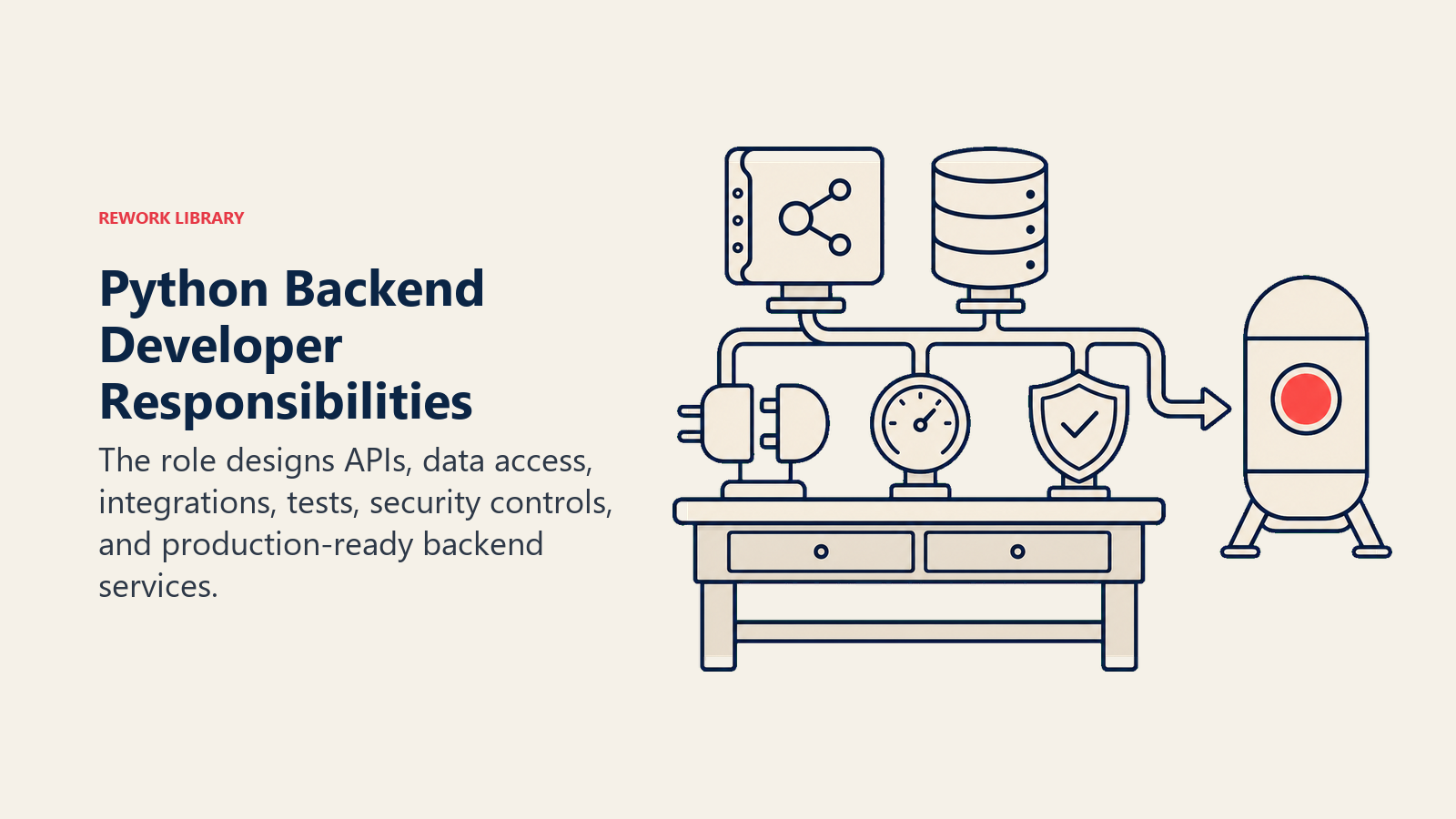
El puesto abarca el diseño de APIs, el acceso a datos, las integraciones, las pruebas, los controles de seguridad y los servicios backend listos para producción.
Desarrollo e Implementación Backend
- Diseñar, desarrollar y mantener aplicaciones backend Python escalables utilizando frameworks como Django, FastAPI o Flask
- Construir APIs RESTful y endpoints GraphQL robustos que sirvan a aplicaciones frontend e integraciones de terceros
- Implementar sistemas de autenticación y autorización seguros mediante JWT, OAuth u otras tecnologías similares
- Desarrollar y optimizar esquemas de bases de datos, consultas y capas de acceso a datos para PostgreSQL, MySQL o MongoDB
Arquitectura del Sistema y Rendimiento
- Diseñar e implementar patrones de arquitectura de microservicios para sistemas distribuidos escalables
- Optimizar el rendimiento de las aplicaciones mediante estrategias de caché, indexación de bases de datos y optimización de consultas
- Implementar procesamiento asíncrono con Celery, Redis u otros sistemas de colas de tareas similares
- Monitorizar y solucionar problemas en sistemas de producción utilizando herramientas de logging, métricas y monitorización del rendimiento de aplicaciones
Integración y Gestión de APIs
- Integrarse con APIs y servicios de terceros, gestionando la limitación de velocidad, el manejo de errores y la transformación de datos
- Diseñar e implementar sistemas de webhooks para la sincronización de datos en tiempo real
- Construir pipelines de procesamiento de datos para operaciones ETL y requisitos de inteligencia empresarial
- Implementar versiones de API y documentación utilizando herramientas como Swagger/OpenAPI
Calidad y Seguridad
- Escribir pruebas unitarias, de integración y de extremo a extremo integrales utilizando pytest y frameworks de prueba relacionados
- Implementar las mejores prácticas de seguridad, incluyendo validación de entradas, prevención de inyección SQL y manejo seguro de datos
- Participar en revisiones de código y mantener altos estándares de calidad del código y documentación
- Implementar pipelines de CI/CD y procesos de despliegue automatizados
Cualificaciones Requeridas
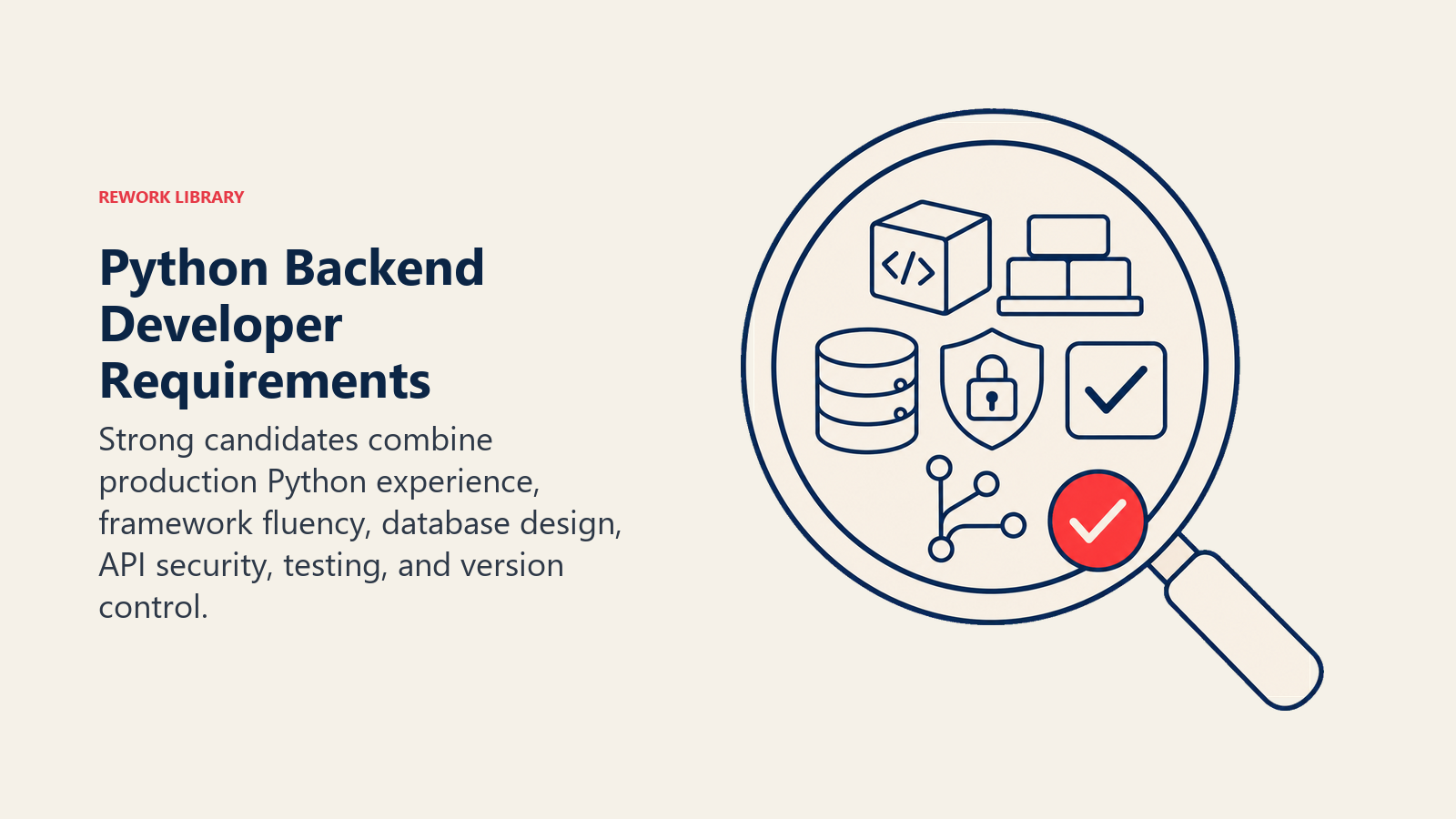
Los candidatos sólidos combinan experiencia en Python de producción, dominio de frameworks, diseño de bases de datos, seguridad de APIs, pruebas y control de versiones.
Formación y Experiencia
- Licenciatura en Ciencias de la Computación, Ingeniería de Software o campo técnico relacionado
- 3-5 años de experiencia profesional en desarrollo Python con enfoque en sistemas backend
- Historial probado de construcción y despliegue de aplicaciones web de calidad en producción
- Experiencia en el ciclo completo de desarrollo de software, desde los requisitos hasta el despliegue en producción
Habilidades Técnicas Principales
- Competencia a nivel experto en Python 3.8+ con profundo conocimiento de las características del lenguaje y las mejores prácticas
- Sólida experiencia con frameworks web Python (Django, FastAPI, Flask) y su ecosistema
- Conocimiento sólido de bases de datos SQL (PostgreSQL, MySQL) y principios de diseño de bases de datos
- Experiencia con bases de datos NoSQL (MongoDB, Redis) para casos de uso específicos
- Dominio de sistemas de control de versiones (Git) y flujos de trabajo de desarrollo colaborativo
Experiencia en Desarrollo Backend
- Sólida comprensión de los principios de diseño de APIs RESTful y el protocolo HTTP
- Experiencia con métodos de autenticación de APIs (JWT, OAuth 2.0, claves API)
- Conocimiento de estrategias y tecnologías de caché (Redis, Memcached)
- Comprensión de colas de mensajes y procesamiento asíncrono (Celery, RQ, Apache Kafka)
DevOps e Infraestructura
- Experiencia con tecnologías de contenedorización (Docker, Docker Compose)
- Familiaridad con plataformas cloud (AWS, Google Cloud, Azure) y sus SDK de Python
- Comprensión de pipelines de CI/CD y prácticas de despliegue automatizado
- Conocimiento de herramientas de monitorización y logging para sistemas de producción
Cualificaciones Preferidas
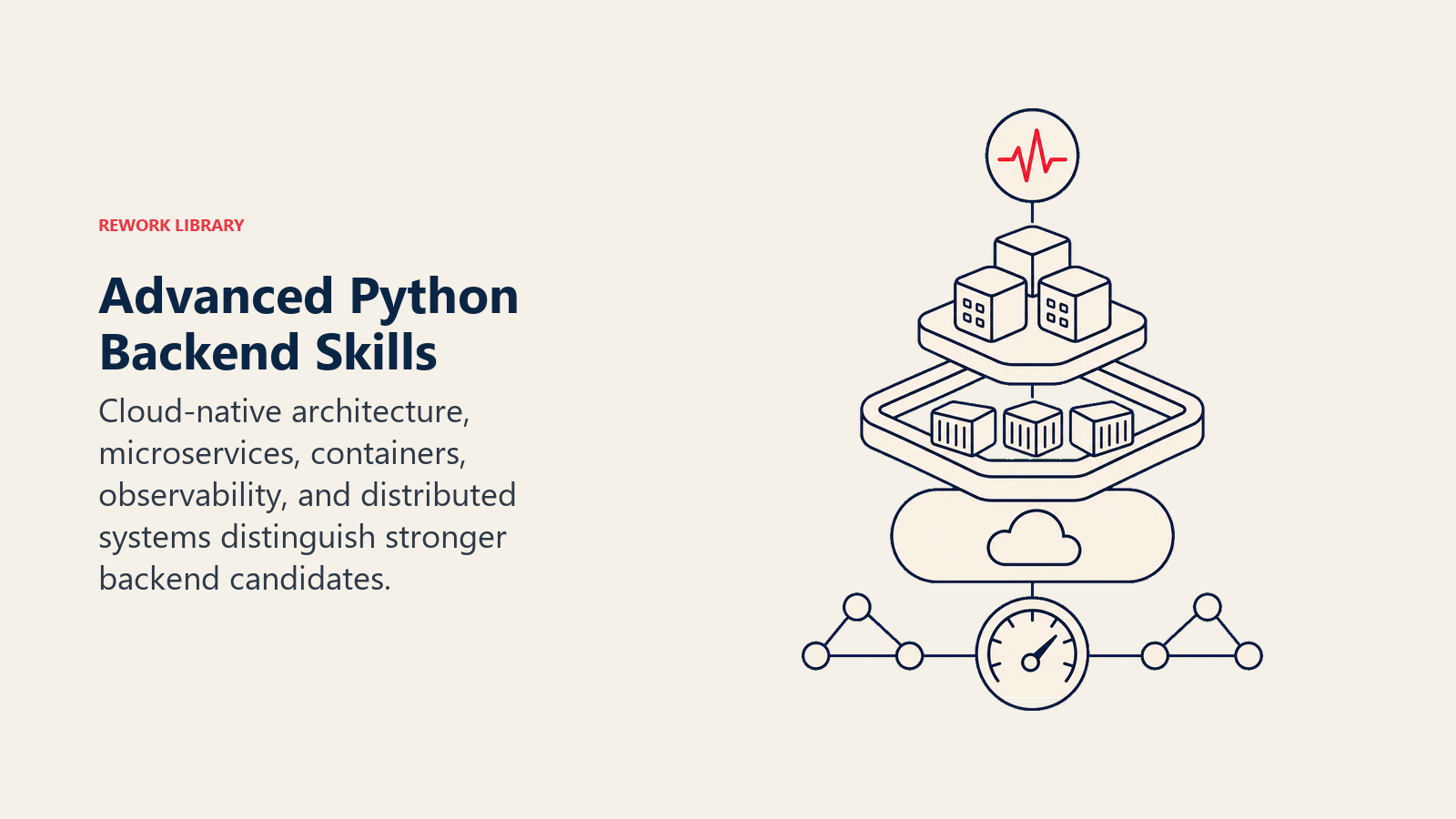
La arquitectura cloud-native, los microservicios, los contenedores, la observabilidad y los sistemas distribuidos distinguen a los candidatos backend más sólidos.
Habilidades Técnicas Avanzadas
- Experiencia con arquitecturas cloud-native y computación serverless (AWS Lambda, Google Cloud Functions)
- Conocimiento de patrones de microservicios y diseño de sistemas distribuidos
- Familiaridad con plataformas de orquestación de contenedores (Kubernetes, Docker Swarm)
- Experiencia con frameworks de procesamiento de datos (Apache Spark, Apache Airflow)
- Comprensión de arquitecturas basadas en eventos y sistemas de mensajería
Experiencia Especializada
- Experiencia con frameworks de machine learning (TensorFlow, PyTorch, scikit-learn) para aplicaciones impulsadas por ML
- Conocimiento de tecnologías de búsqueda (Elasticsearch, Apache Solr) para implementaciones de búsqueda de texto completo
- Familiaridad con sistemas en tiempo real e implementaciones WebSocket
- Experiencia con GraphQL y patrones modernos de desarrollo de APIs
- Formación en ingeniería de datos y procesamiento de big data
Desarrollo Profesional
- Contribuciones a proyectos Python de código abierto o proyectos personales que demuestren experiencia técnica
- Experiencia mentorizando a desarrolladores junior y realizando entrevistas técnicas
- Conocimiento de metodologías de desarrollo Agile y colaboración en equipos multifuncionales
- Comprensión de patrones de arquitectura de software y principios de diseño de sistemas
Qué Ofrecemos
Compensación y Beneficios
- Rango salarial competitivo: $95.000-$145.000 anuales (varía según ubicación y experiencia)
- Bonificaciones por desempeño y revisiones salariales anuales
- Cobertura integral de seguro médico, dental y de visión
- Plan de jubilación 401(k) con aportación de la empresa de hasta el 6%
- Política de PTO flexible y días festivos remunerados
Crecimiento Profesional
- Presupuesto anual de desarrollo profesional para cursos, conferencias y certificaciones
- Oportunidades de trabajar con tecnologías y frameworks Python de vanguardia
- Programas de mentoría y trayectorias de avance profesional
- Asistencia a conferencias y oportunidades de ponencias
- Charlas técnicas internas y sesiones de intercambio de conocimiento
Entorno de Trabajo
- Modelo de trabajo híbrido flexible con opciones de trabajo remoto
- Herramientas de desarrollo modernas y hardware proporcionado
- Entorno de equipo colaborativo con ingenieros experimentados
- Hackathons regulares y tiempo de innovación para proyectos personales
- Programa integral de incorporación para nuevos miembros del equipo
Variaciones según el Contexto
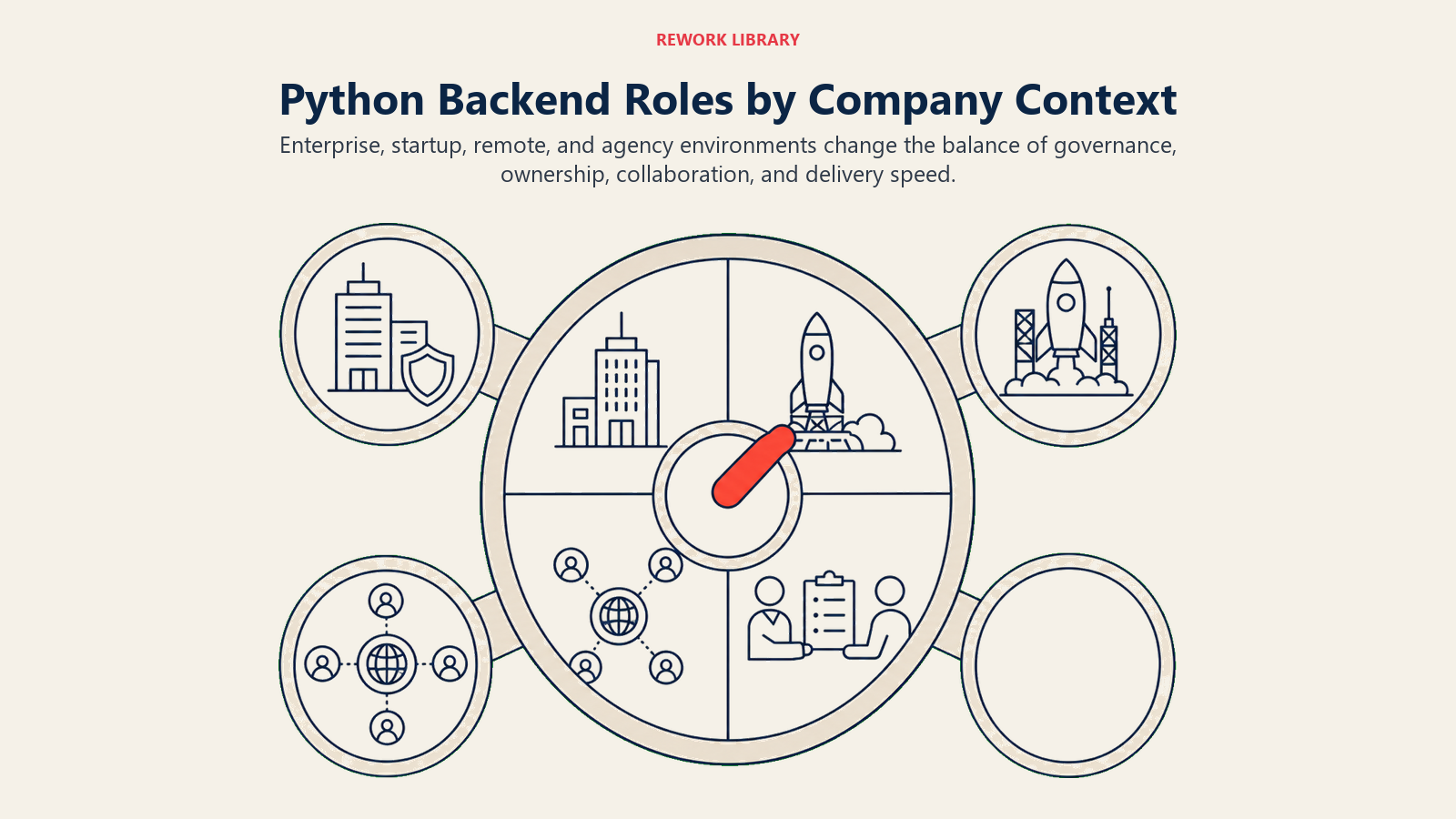
Los entornos de empresa, startup, trabajo remoto y agencia cambian el equilibrio entre gobernanza, autonomía, colaboración y velocidad de entrega.
Entorno Corporativo
Este puesto en un entorno corporativo pone énfasis en las soluciones de grado empresarial, los requisitos de cumplimiento y la integración con los sistemas heredados existentes. Trabajará con procesos establecidos, procedimientos formales de revisión de código y estándares de seguridad empresariales. El énfasis recae en la escalabilidad, la fiabilidad y el mantenimiento de la compatibilidad hacia atrás mientras se implementan prácticas modernas de desarrollo Python.
Entorno de Startup
En un contexto de startup, este puesto requiere versatilidad y la capacidad de asumir múltiples funciones. Tendrá más autonomía en las decisiones tecnológicas, ciclos de iteración más rápidos e impacto directo en la dirección del producto. El énfasis está en el prototipado rápido, el desarrollo de MVP y la construcción de sistemas que puedan escalar con el crecimiento de la empresa. También puede contribuir a las decisiones de infraestructura y prácticas de DevOps.
Trabajo Remoto/Híbrido
Para puestos remotos o híbridos, las sólidas habilidades de comunicación escrita y la autodirección son esenciales. Necesitará experiencia en colaboración con equipos distribuidos, herramientas de comunicación asíncrona y técnicas de depuración remota. Las videollamadas regulares para revisiones de código, debates sobre arquitectura y sincronización del equipo son práctica habitual.
Consideraciones por Sector
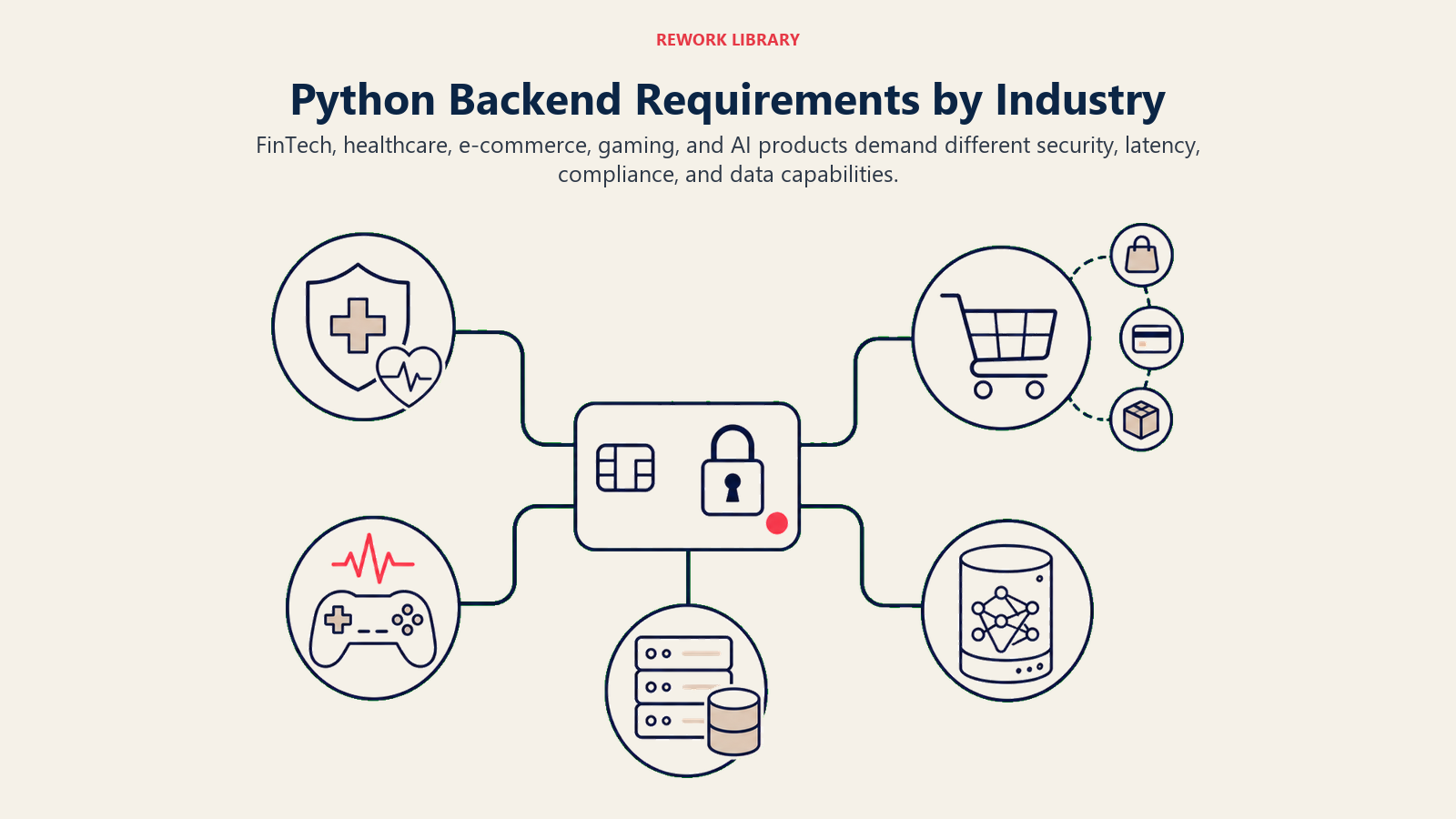
FinTech, salud, e-commerce, gaming y productos de AI exigen distintas capacidades de seguridad, latencia, cumplimiento y datos.
| Sector | Requisitos Específicos | Tecnologías Clave |
|---|---|---|
| FinTech | Cumplimiento PCI y regulaciones financieras, procesamiento de transacciones de alta frecuencia, sistemas de detección de fraude en tiempo real | Django, FastAPI, PostgreSQL, Redis, Kafka |
| E-commerce | Integraciones con pasarelas de pago, sistemas de gestión de inventario, escalado estacional para alto tráfico | Flask, Django, MongoDB, Elasticsearch, AWS |
| Salud | Cumplimiento HIPAA y privacidad de datos, integraciones con registros electrónicos de salud, procesamiento de datos de dispositivos médicos | Django, PostgreSQL, Docker, APIs seguras |
| SaaS/Cloud | Arquitectura multitenant, limitación de velocidad de API y seguimiento de uso, desarrollo de plataforma de integración | FastAPI, PostgreSQL, Redis, Kubernetes |
| Medios/Entretenimiento | Sistemas de entrega de contenido, soporte de streaming en tiempo real, procesamiento de datos a gran escala | Django, MongoDB, Redis, integración CDN |
| IoT/Hardware | Plataformas de gestión de dispositivos, procesamiento de datos de series temporales, sistemas de monitorización en tiempo real | FastAPI, InfluxDB, MQTT, edge computing |
Guía de Compensación
Información Salarial
Rango Promedio Nacional: $95.000-$145.000 anuales para Desarrolladores Backend Python con 3-5 años de experiencia.
Variaciones Salariales Geográficas:
| Ubicación | Rango Salarial | Factor de Coste de Vida |
|---|---|---|
| San Francisco, CA | $125.000-$180.000 | Mercado premium |
| Nueva York, NY | $115.000-$165.000 | Alto coste de vida |
| Seattle, WA | $110.000-$160.000 | Prima de hub tecnológico |
| Austin, TX | $95.000-$140.000 | Mercado tecnológico en crecimiento |
| Denver, CO | $90.000-$135.000 | Hub tecnológico emergente |
| Chicago, IL | $85.000-$130.000 | Gran área metropolitana |
| Remoto (EE.UU.) | $90.000-$145.000 | Ajustado por ubicación |
| Atlanta, GA | $80.000-$125.000 | Mercado regional competitivo |
Factores que Afectan a la Compensación:
- Experiencia en Frameworks: Django y FastAPI tienen mayor demanda salarial que la experiencia exclusiva en Flask
- Certificaciones Cloud: Las certificaciones de AWS, GCP o Azure pueden añadir $5.000-$15.000 al salario base
- Especialización Sectorial: FinTech y salud suelen ofrecer una prima del 10-20% sobre la media
- Etapa de la Empresa: Las empresas consolidadas suelen ofrecer salarios base más altos, mientras que las startups ofrecen más participación accionaria
Datos salariales compilados de Glassdoor, PayScale y encuestas del sector a enero de 2026
Preguntas de Entrevista
Preguntas Técnicas/Funcionales
Fundamentos de Python: "Explique la diferencia entre las comprensiones de listas y las expresiones generadoras. ¿Cuándo usaría cada una?"
Diseño de Bases de Datos: "Diseñe un esquema de base de datos para una plataforma de redes sociales. ¿Cómo gestionaría las relaciones, la indexación y la consistencia de datos?"
Arquitectura de APIs: "¿Cómo diseñaría una API RESTful para una aplicación SaaS multitenant? Considere la autenticación, la limitación de velocidad y el aislamiento de datos."
Optimización del Rendimiento: "Un endpoint de API de Django tarda 3 segundos en responder. Explíqueme su proceso de depuración y optimización."
Procesamiento Asíncrono: "Explique cómo implementaría un sistema para procesar miles de imágenes subidas por usuarios. Considere la escalabilidad y el manejo de fallos."
Diseño de Sistemas: "Diseñe un servicio de acortamiento de URLs como bit.ly. Considere el diseño de la base de datos, la estrategia de caché y los endpoints de la API."
Implementación de Seguridad: "¿Cómo aseguraría una API Python contra vulnerabilidades comunes como la inyección SQL, XSS y el acceso no autorizado?"
Microservicios: "Describa cómo descompondría una aplicación de e-commerce monolítica en microservicios usando Python."
Preguntas Conductuales
Resolución de Problemas: "Cuénteme sobre un problema backend complejo que resolvió. ¿Cuál fue su enfoque y cuál fue el resultado?"
Calidad del Código: "Describa una ocasión en que tuvo que refactorizar código mal escrito. ¿Cómo lo abordó manteniendo la funcionalidad?"
Colaboración: "Dé un ejemplo de cuando tuvo que trabajar estrechamente con desarrolladores frontend para resolver un problema de integración."
Aprendizaje: "Cuénteme sobre un nuevo framework o tecnología de Python que aprendió recientemente. ¿Cómo lo abordó para dominarlo?"
Rendimiento bajo Presión: "Describa una situación en que un sistema de producción estaba caído y tuvo que identificar y solucionar el problema rápidamente."
Liderazgo Técnico: "Cuénteme sobre una ocasión en que tuvo que convencer a su equipo de adoptar una nueva tecnología o enfoque. ¿Cómo presentó su caso?"
Preguntas de Encaje Cultural
Mejora Continua: "¿Cómo se mantiene al día de las tendencias y mejores prácticas en el desarrollo Python?"
Filosofía de Revisión de Código: "¿Qué busca al revisar el código de otro desarrollador? ¿Cómo proporciona retroalimentación constructiva?"
Estilo de Trabajo: "¿Cómo equilibra la escritura de código limpio y mantenible con el cumplimiento de plazos ajustados?"
Innovación: "Cuénteme sobre una ocasión en que identificó e implementó una mejora significativa en un sistema backend."
Consejos de Evaluación: Busque candidatos que demuestren un profundo conocimiento de Python, sólido pensamiento sobre el diseño de sistemas y comunicación clara de conceptos técnicos. Preste atención a su enfoque para la depuración, las pruebas y la calidad del código. Los candidatos sólidos harán preguntas de aclaración y considerarán los casos límite en sus soluciones.
Consejos para la Contratación
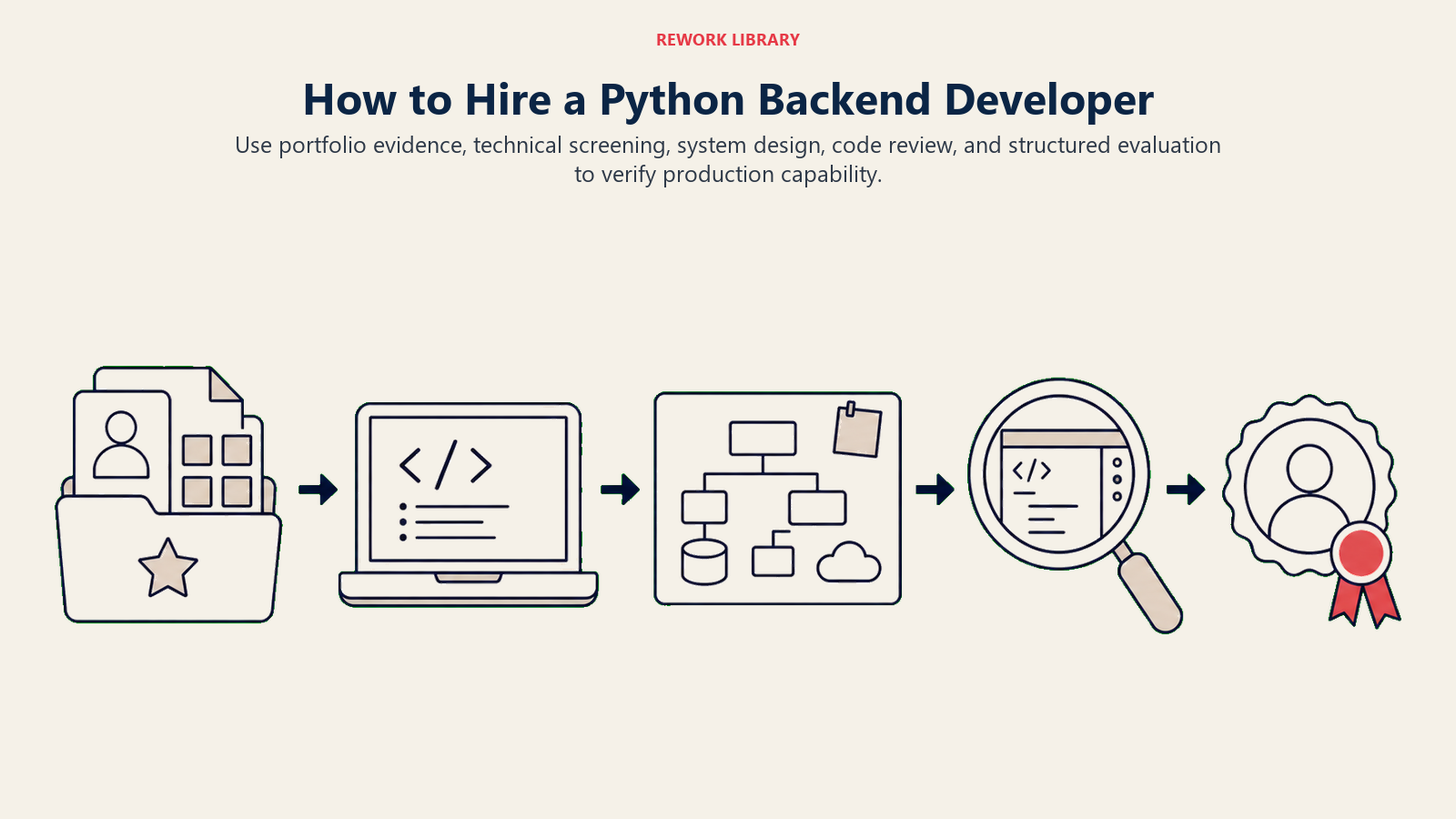
Use evidencia de portfolio, evaluación técnica, diseño de sistemas, revisión de código y evaluación estructurada para verificar la capacidad de producción.
Guía Rápida de Sourcing
Principales Plataformas para Desarrolladores Backend Python:
- GitHub: Revise los repositorios Python, el historial de contribuciones y la calidad del código
- Stack Overflow: Busque colaboradores activos con etiquetas de Python y tecnología backend
- LinkedIn: Red profesional con experiencia en Python y desarrollo backend
- PyPI: Verifique los paquetes Python publicados que indiquen una profunda implicación con el ecosistema
Comunidades Profesionales:
- Meetups locales de Python y conferencias PyCon: Contacte con desarrolladores Python apasionados
- Grupos de usuarios de Django/FastAPI: Encuentre desarrolladores con experiencia en frameworks específicos
- Eventos de la Python Software Foundation: Conéctese con líderes y colaboradores de la comunidad
Consejos para Optimizar la Oferta:
- Incluya frameworks y versiones específicas de Python en las descripciones de puesto
- Mencione los desafíos técnicos interesantes y las decisiones arquitectónicas
- Destaque las oportunidades de trabajar con herramientas y prácticas modernas de Python
- Enfatice las oportunidades de aprendizaje y crecimiento en el desarrollo backend
Señales de Alerta a Evitar
Errores Comunes de Contratación:
- Obsesión con el framework: Rechazar a desarrolladores Python sólidos que no hayan usado su framework exacto
- Énfasis excesivo en Django: Pasar por alto a excelentes desarrolladores FastAPI o Flask que pueden adaptarse rápidamente
- Ignorar las habilidades blandas: Centrarse solo en las habilidades técnicas sin considerar las capacidades de colaboración
- Expectativas poco realistas de full-stack: Esperar que los desarrolladores backend sean también expertos en frontend
- Entrevistas centradas en algoritmos: Evaluar la teoría de ciencias de la computación en lugar de las habilidades prácticas de backend
- Inflación de la experiencia: Exigir experiencia de nivel senior para tareas estándar de desarrollo backend
Preguntas frecuentes sobre la contratación de desarrolladores backend Python
¿Cómo elijo entre los requisitos de experiencia en Django, FastAPI y Flask?
Django es ideal para el desarrollo rápido y las funcionalidades integradas; FastAPI destaca para las aplicaciones API-first y los patrones async modernos, mientras que Flask ofrece la máxima flexibilidad. Los desarrolladores Python sólidos suelen aprender cualquier framework con rapidez.
¿Es necesario un título en ciencias de la computación para los desarrolladores backend Python?
Aunque es valioso, muchos excelentes desarrolladores Python son autodidactas o han completado bootcamps. Céntrese en las habilidades demostrables en Python, la capacidad de resolución de problemas y la comprensión de los conceptos backend en lugar de los requisitos de formación formal.
¿Cuán importante es el conocimiento de DevOps para los desarrolladores backend?
Los desarrolladores backend modernos deben entender la contenedorización, CI/CD y el despliegue en cloud. Sin embargo, no espere una experiencia completa en DevOps a menos que esté contratando para un puesto enfocado en DevOps. El conocimiento básico con disposición para aprender suele ser suficiente.
¿Debería exigir experiencia con bases de datos específicas?
Comprender los principios de bases de datos es más importante que la experiencia en bases de datos específicas. Los desarrolladores sólidos pueden adaptarse entre PostgreSQL, MySQL y MongoDB según los requisitos del proyecto. Céntrese en el conocimiento de SQL y los principios de diseño de bases de datos.
¿Cómo evalúo la calidad del código Python durante las entrevistas?
Busque código limpio y legible, uso apropiado de los modismos de Python, comprensión de los estándares PEP 8 y capacidad para explicar las decisiones de diseño. Las revisiones de código y las sesiones de programación en pareja son más valiosas que la codificación en pizarra.
¿Cuál es la diferencia entre las expectativas de un desarrollador backend Python junior y senior?
Los desarrolladores senior deben demostrar habilidades de diseño de sistemas, capacidades de mentoría, pensamiento independiente del framework y capacidad para tomar decisiones arquitectónicas. Los desarrolladores junior se centran más en implementar funcionalidades y aprender las mejores prácticas.
¿Cómo evalúo las habilidades de diseño de APIs?
Pida a los candidatos que diseñen APIs para escenarios del mundo real, considerando el versionado, la autenticación, el manejo de errores y la documentación. Busque comprensión de los principios REST, los códigos de estado HTTP y las mejores prácticas de seguridad de APIs.
¿Debería priorizar la experiencia con async/await en Python?
Para aplicaciones de alto rendimiento, el conocimiento de Python asíncrono es valioso, pero no siempre necesario. Muchas aplicaciones funcionan perfectamente con Python síncrono. Evalúe en función de sus requisitos de rendimiento específicos.
¿Cuán importante es la experiencia en pruebas para los desarrolladores backend?
Muy importante. Busque experiencia con pytest, comprensión de los tipos de pruebas (unitarias, de integración, de extremo a extremo) y capacidad para escribir código testeable. Las pruebas deben ser una competencia básica, no un añadido.
Preguntas frecuentes sobre la carrera de desarrollador backend Python
¿Qué trayectorias de desarrollo profesional existen para los desarrolladores backend Python?
Las trayectorias comunes incluyen Desarrollador Backend Senior, Lead Developer, Arquitecto de Soluciones, Engineering Manager, o especialización en áreas como Ingeniería de Datos, DevOps o Ingeniería de Machine Learning.
¿Cómo puedo mejorar mis posibilidades de ser contratado como desarrollador backend Python?
Construya un sólido portfolio en GitHub con proyectos Python, contribuya al código abierto, aprenda múltiples frameworks, comprenda el diseño de bases de datos y manténgase al día de los desarrollos del ecosistema Python.
¿En qué frameworks de Python debería centrarme para aprender?
Comience con Django para el desarrollo rápido, luego aprenda FastAPI para APIs async modernas, y Flask para entender los fundamentos. Elija según el sector objetivo y las preferencias de la empresa.
¿Es necesario aprender tecnologías frontend como desarrollador backend?
Aunque no es obligatorio, la comprensión básica de JavaScript, HTML y cómo las aplicaciones frontend consumen APIs es valiosa para la colaboración y la construcción de mejores servicios backend.
¿Cuán importantes son las plataformas cloud para las carreras de backend Python?
Muy importantes en el desarrollo moderno. Céntrese en una plataforma principal (AWS, GCP o Azure) y aprenda sus SDK de Python, las ofertas serverless y los servicios de bases de datos gestionados.
¿Debería especializarme en sectores específicos como desarrollador Python?
La especialización puede ser valiosa para una mayor compensación y el desarrollo de la experiencia. Los sectores de FinTech, salud y con alto uso de datos suelen ofrecer salarios premium por la experiencia en Python.
¿Qué progresión salarial puedo esperar como desarrollador backend Python?
Nivel inicial: $70k-$90k; Nivel intermedio: $95k-$145k; Senior: $130k-$180k; Lead/Principal: $150k-$220k+. La ubicación, el tamaño de la empresa y la especialización influyen significativamente en estos rangos.
¿Cómo hago la transición desde otros lenguajes de programación al desarrollo backend con Python?
Céntrese en los modismos y las mejores prácticas específicas de Python, aprenda el ecosistema (pip, entornos virtuales, frameworks de prueba) y construya proyectos de portfolio que muestren habilidades de backend Python.
Esta plantilla de descripción del puesto está diseñada para atraer a candidatos cualificados de Desarrollador Backend Python mientras comunica claramente las expectativas del puesto y los requisitos técnicos. Personalice los frameworks específicos, las tecnologías y la compensación para que se ajusten a las necesidades de su organización y su posición en el mercado.
Plantillas de Descripción de Puesto Relacionadas
¿Está contratando para todo un equipo de ingeniería? Estas plantillas relacionadas le ayudan a delimitar los puestos adyacentes y superpuestos:
- Backend Developer - la versión independiente del lenguaje de este puesto.
- Python Developer - puesto Python más amplio que abarca backend, scripting y datos.
- Django Developer - variante específica del framework para stacks con mucho Django.
- Full Stack Developer - para ingenieros que son responsables tanto del frontend como del backend.
- API Developer - centrado en el diseño de APIs, el versionado y las integraciones.
- DevOps Engineer - el puesto complementario para despliegue, CI/CD e infraestructura.

Senior Customer Retention Strategist
On this page
- Los Frameworks de un Vistazo
- Descripción General del Puesto
- Aspectos Clave del Puesto
- Por Qué Este Puesto es Relevante
- Sobre el Puesto
- Responsabilidades Principales
- Desarrollo e Implementación Backend
- Arquitectura del Sistema y Rendimiento
- Integración y Gestión de APIs
- Calidad y Seguridad
- Cualificaciones Requeridas
- Formación y Experiencia
- Habilidades Técnicas Principales
- Experiencia en Desarrollo Backend
- DevOps e Infraestructura
- Cualificaciones Preferidas
- Habilidades Técnicas Avanzadas
- Experiencia Especializada
- Desarrollo Profesional
- Qué Ofrecemos
- Compensación y Beneficios
- Crecimiento Profesional
- Entorno de Trabajo
- Variaciones según el Contexto
- Entorno Corporativo
- Entorno de Startup
- Trabajo Remoto/Híbrido
- Consideraciones por Sector
- Guía de Compensación
- Información Salarial
- Preguntas de Entrevista
- Preguntas Técnicas/Funcionales
- Preguntas Conductuales
- Preguntas de Encaje Cultural
- Consejos para la Contratación
- Guía Rápida de Sourcing
- Señales de Alerta a Evitar
- Plantillas de Descripción de Puesto Relacionadas