Descripción del Puesto de Business Operations Analyst (2026): Habilidades de la Era de la IA, Responsabilidades y Guía de Contratación
Turn this article into takeaways for your work.


Each assistant summarizes the article only for you and suggests best practices for your work.
Lo que obtendrá de esta guía
- Plantilla completa de descripción del puesto para posiciones analíticas de nivel medio con responsabilidades claras
- Rangos salariales de $60,000 a $140,000 según la ubicación y el nivel de experiencia
- Preguntas de entrevista técnicas y conductuales centradas en el análisis de datos y la mejora de procesos
- Consideraciones por industria para tecnología, salud, servicios financieros y manufactura
- Marco de competencias y métricas de desempeño para evaluar candidatos
- Estrategias de sourcing y señales de alerta a evitar al contratar talento analítico
Resumen
Un Business Operations Analyst actúa como la columna vertebral de la eficiencia organizacional, transformando datos en bruto en información accionable que impulsa la toma de decisiones estratégicas. Este puesto combina experiencia analítica con visión de negocio para identificar oportunidades, optimizar procesos y apoyar iniciativas de crecimiento basadas en datos en todos los departamentos.
Aspectos Clave
- Rango Salarial Promedio: $65,000 - $95,000 anuales
- Nivel de Experiencia: Puesto de nivel medio que requiere de 2 a 4 años de experiencia analítica
- Potencial de Crecimiento: Camino claro hacia Analista Senior, Operations Manager o puestos de Business Intelligence
- Habilidades Clave: Análisis de datos, mejora de procesos, gestión de partes interesadas y pensamiento estratégico
- Demanda de la Industria: Alta demanda en los sectores de tecnología, finanzas, salud y consultoría
- Compatible con Trabajo Remoto: El 85% de los puestos ofrecen opciones híbridas o remotas
Por Qué Este Puesto Importa
Los Business Operations Analysts son esenciales para las organizaciones modernas que buscan optimizar el desempeño y mantener una ventaja competitiva. Cierran la brecha entre el análisis técnico de datos y las decisiones estratégicas de negocio, garantizando que las empresas puedan adaptarse rápidamente a los cambios del mercado y a los desafíos internos. Y en 2026, también son quienes ayudan a la empresa a decidir qué procesos operativos delegar a la automatización con IA y cuáles siguen requiriendo el criterio humano.
Habilidades y Herramientas de IA para Business Operations Analyst en 2026
Las herramientas de IA han ampliado lo que los analistas de operaciones pueden hacer con los datos. La demanda de analistas con fluidez en IA ha crecido aproximadamente un 144% interanual, y los equipos que usan IA en su trabajo de análisis de operaciones generan información más rápido e identifican oportunidades de mejora que los enfoques manuales pasan por alto.
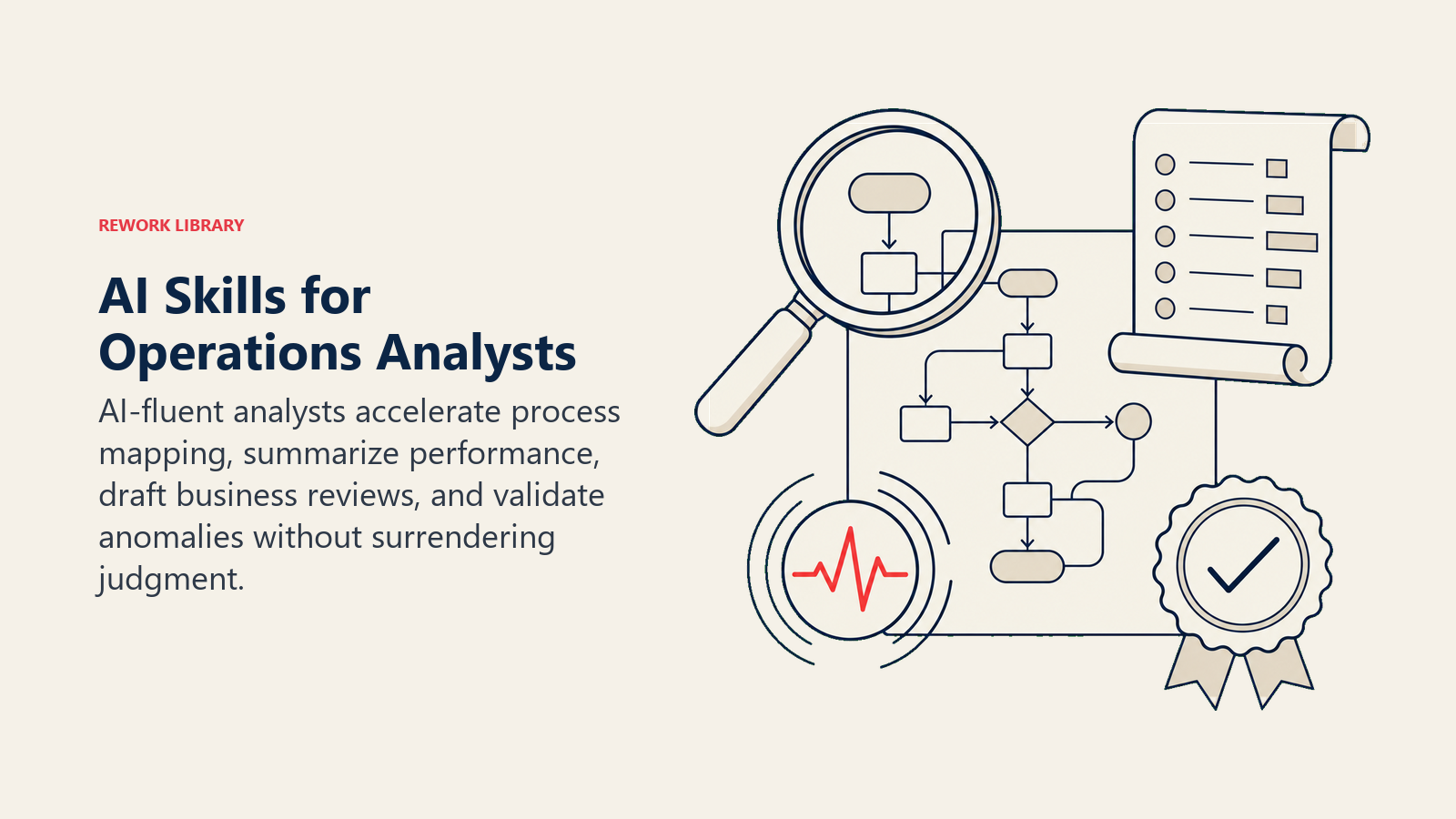
Para el Business Operations Analyst, esto significa:
- Usar ChatGPT o Claude para acelerar la documentación de revisiones de negocio, la redacción de narrativas de procesos y los resúmenes de desempeño dirigidos a las partes interesadas
- Aprovechar herramientas de análisis con IA (Power BI Copilot, Tableau Pulse, Looker con IA) para generar detección de anomalías y detectar tendencias sin iterar consultas manualmente
- Crear marcos de prompts reutilizables para tareas operativas recurrentes: resúmenes de revisión de KPI, listas de verificación de auditoría de procesos, marcos de análisis de causa raíz y narrativas de estado de proyectos
- Usar IA para modelar escenarios operativos: planificación de capacidad, modelado del impacto de la reducción de costos y análisis de tipo "qué pasaría si" que antes requerían una cantidad significativa de tiempo del analista
- Definir y delimitar candidatos a la automatización con IA dentro de las operaciones: identificar qué tareas repetitivas de generación de reportes, enrutamiento de aprobaciones e ingreso de datos son buenos objetivos para la IA frente a cuáles requieren decisiones de criterio
Los candidatos de nivel medio deben usar herramientas de IA a diario en sus flujos de trabajo de reportes y análisis. Los candidatos senior deben liderar la delimitación de mejoras de procesos con IA, construir infraestructura de reportes asistida por IA y asesorar a las unidades de negocio sobre la priorización de la automatización.
Trabajando Junto a Agentes de IA en las Operaciones de Negocio
Los agentes de IA están cada vez más integrados en los flujos de trabajo de operaciones: monitoreo automatizado de KPI con activadores de alertas, resúmenes semanales de desempeño generados por IA, minería de procesos que mapea los patrones reales de flujo de trabajo a partir de los registros del sistema, y detección de anomalías en los datos operativos. El trabajo del Business Operations Analyst es diseñar qué monitorean esos agentes, validar sus resultados y traducir sus hallazgos en decisiones.
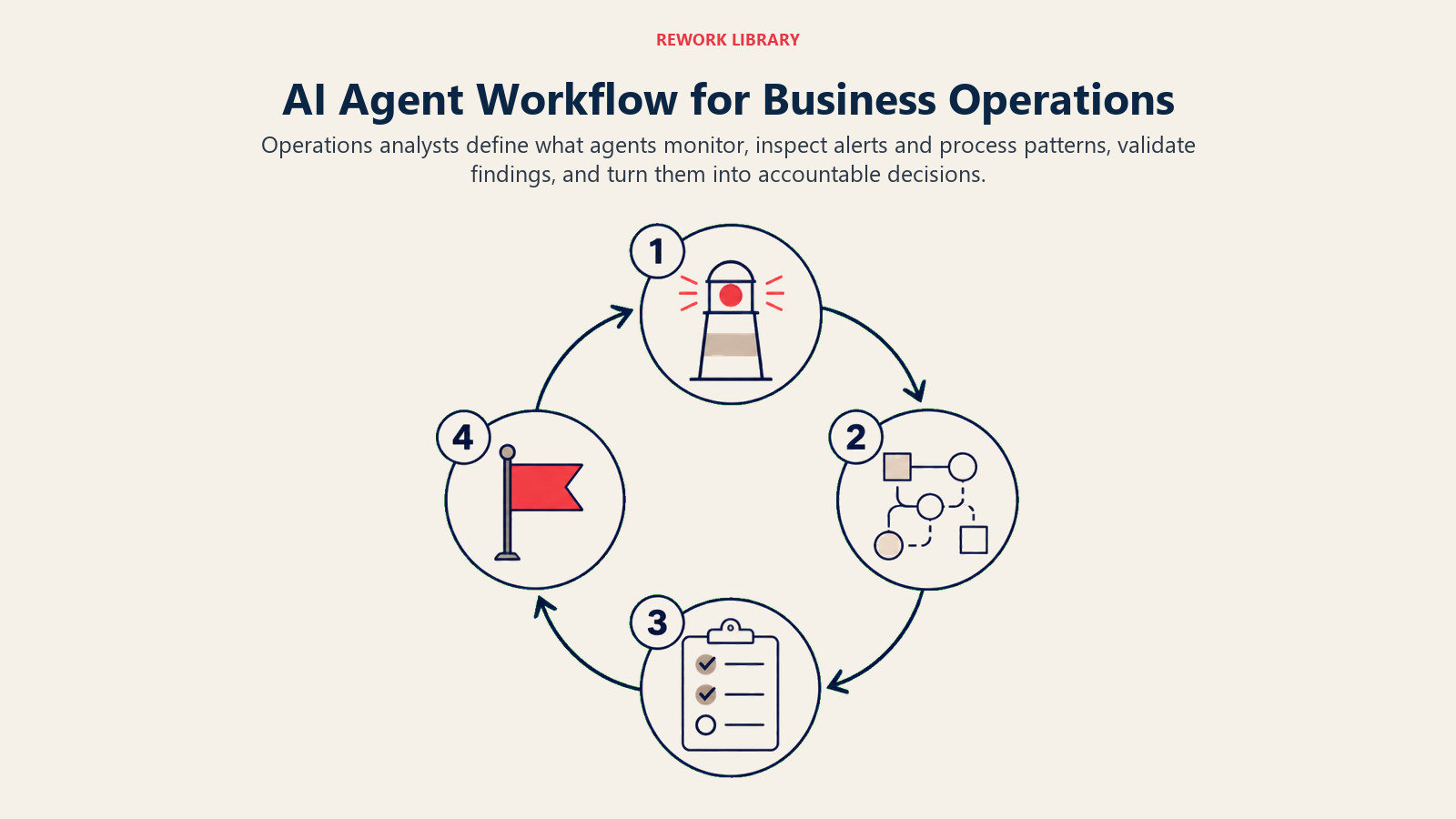
En la práctica, esto se ve así:
- Lo que maneja el agente: la agregación automatizada de datos y la actualización de dashboards, la señalización de anomalías en las métricas operativas, el mapeo del flujo de procesos a partir de datos de registro, la generación recurrente de reportes para las partes interesadas y las hipótesis preliminares de causa raíz a partir de datos estructurados
- Lo que le corresponde al humano: el contexto de negocio que le da sentido a una anomalía, las relaciones con las partes interesadas que determinan cómo se actúa sobre un hallazgo, el criterio para evaluar si una información generada por IA refleja un problema operativo real, y la recomendación que convierte los datos en una decisión
- La línea de transferencia: cuando el trabajo implica procesar datos operativos estructurados, el agente lo acelera. Cuando el trabajo implica explicar qué significa una tendencia para el negocio, gestionar el cambio entre funciones, o decidir la prioridad entre iniciativas de mejora en competencia, ese es el trabajo del analista
Los Business Operations Analysts que usan herramientas de IA de forma eficaz en 2026 cubren más terreno analítico por proyecto sin sacrificar el criterio de negocio que hace que sus recomendaciones den en el blanco.
Plantilla Principal de Descripción del Puesto
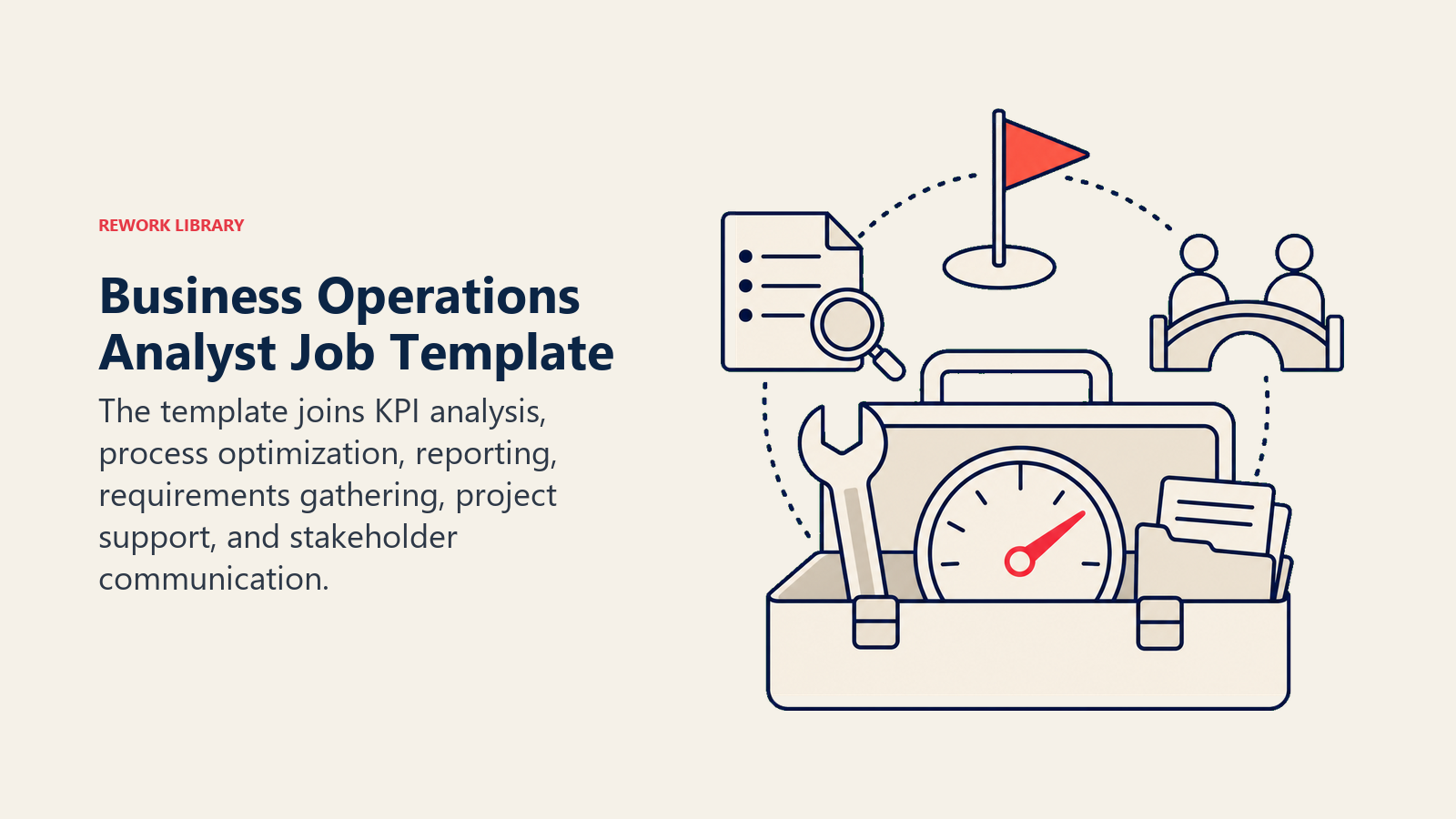
La plantilla combina el análisis de KPI, la optimización de procesos, la generación de reportes, el levantamiento de requisitos, el apoyo a proyectos y la comunicación con las partes interesadas.
Sobre el Puesto
Buscamos un Business Operations Analyst orientado al detalle para unirse a nuestro equipo e impulsar la excelencia operativa a través de información basada en datos y la optimización de procesos. Usted trabajará de cerca con equipos multifuncionales para analizar el desempeño del negocio, identificar oportunidades de mejora e implementar soluciones que mejoren la eficiencia y la rentabilidad.
En este puesto, usted actuará como enlace clave entre varios departamentos, traduciendo datos complejos en recomendaciones claras y accionables para el liderazgo. Será responsable de monitorear los indicadores clave de desempeño, realizar revisiones de negocio periódicas y apoyar iniciativas estratégicas alineadas con los objetivos de crecimiento de nuestra empresa.
El candidato ideal se desenvolverá bien en un entorno de ritmo acelerado donde el rigor analítico se encuentra con la estrategia de negocio, contribuyendo directamente al éxito organizacional mediante un análisis reflexivo y la resolución práctica de problemas.
Responsabilidades Clave
- Análisis de Desempeño y Reportes: Desarrollar y mantener dashboards y reportes integrales para hacer seguimiento de las métricas clave del negocio, analizar tendencias y proporcionar información de desempeño periódica a las partes interesadas
- Iniciativas de Mejora de Procesos: Identificar ineficiencias en los procesos de negocio actuales, diseñar soluciones y liderar los esfuerzos de implementación para optimizar las operaciones y reducir costos
- Colaboración Multifuncional: Asociarse con los equipos de ventas, marketing, finanzas y operaciones para reunir requisitos, analizar el desempeño departamental y apoyar la toma de decisiones basada en datos
- Apoyo a Proyectos Estratégicos: Asistir en la planificación y ejecución de iniciativas estratégicas mediante la realización de investigaciones de mercado, análisis competitivo y estudios de viabilidad
- Gestión de Datos y Aseguramiento de Calidad: Garantizar la integridad de los datos en todos los sistemas, implementar procesos de validación de datos y mantener bases de datos precisas para fines analíticos
- Análisis Financiero y Pronósticos: Apoyar los procesos de presupuestación y pronóstico mediante el análisis del desempeño histórico, la identificación de impulsores de costos y el modelado de escenarios futuros
- Comunicación con las Partes Interesadas: Presentar hallazgos y recomendaciones al liderazgo mediante visualizaciones claras, resúmenes ejecutivos y presentaciones formales
- Evaluación de Riesgos Operativos: Monitorear las operaciones del negocio en busca de riesgos potenciales, desarrollar estrategias de mitigación e implementar controles para garantizar el cumplimiento y la continuidad
- Integración de Sistemas y Automatización: Trabajar con los equipos de TI para mejorar los flujos de datos, automatizar procesos rutinarios y potenciar las capacidades analíticas mediante soluciones tecnológicas
- Benchmarking y Mejores Prácticas: Investigar los estándares de la industria, analizar el desempeño de la competencia y recomendar mejores prácticas para mantener el posicionamiento competitivo
Requisitos
Cualificaciones Imprescindibles:
- Licenciatura en Administración de Empresas, Economía, Finanzas, Estadística o un campo analítico relacionado
- 2 a 4 años de experiencia en análisis de negocio, operaciones, consultoría o un puesto analítico similar
- Dominio avanzado de Microsoft Excel, incluyendo tablas dinámicas, VLOOKUP y fórmulas complejas
- Experiencia con herramientas de visualización de datos (Tableau, Power BI u otras plataformas similares)
- Sólidas habilidades de SQL para consultar bases de datos y extraer datos
- Trayectoria comprobada en mejora de procesos y gestión de proyectos
- Excelentes habilidades de comunicación escrita y verbal, con capacidad para presentar ante el liderazgo senior
- Sólidas capacidades analíticas y de resolución de problemas, con atención al detalle
Cualificaciones Deseables:
- Maestría en Administración de Empresas (MBA) o un campo relacionado
- Experiencia con lenguajes de programación (Python, R) para análisis avanzado
- Conocimiento de sistemas ERP (SAP, Oracle, NetSuite) y plataformas CRM
- Certificación en gestión de proyectos (PMP, Agile, Six Sigma)
- Experiencia en un sector de la industria específico relevante para la empresa
Lo Que Ofrecemos
- Salario Competitivo: Salario base de $70,000 a $85,000 con bonos basados en el desempeño
- Beneficios Integrales: Seguro médico, dental y de visión, con contribución de la empresa a las primas
- Desarrollo Profesional: Presupuesto anual de $2,000 para cursos, conferencias y certificaciones
- Entorno de Trabajo Flexible: Modelo de trabajo híbrido con 3 días en la oficina y 2 días remotos
- Oportunidades de Crecimiento: Ruta clara de progresión profesional con programas de mentoría y desarrollo de liderazgo
- Tecnología y Herramientas: Software de análisis de última generación, laptop de gama alta y estipendio para la oficina en casa
Variaciones por Contexto
Entorno Corporativo
Las grandes corporaciones suelen requerir que los Business Operations Analysts trabajen con sistemas de nivel empresarial y gestionen proyectos complejos que abarcan varios departamentos. Espere estructuras de reporte más formales, procesos establecidos y oportunidades para especializarse en funciones de negocio específicas. El puesto a menudo implica gestionar conjuntos de datos más grandes y trabajar con ejecutivos senior en iniciativas estratégicas.
Entorno de Startup
En entornos de startup, los Business Operations Analysts asumen múltiples funciones y trabajan directamente con los fundadores y ejecutivos de nivel C. El puesto implica una resolución de problemas más práctica, iteración rápida y la construcción de procesos desde cero. Los analistas en este entorno suelen tener mayor influencia en la dirección de la empresa y experimentan un crecimiento profesional más rápido gracias al aumento de responsabilidades.
Trabajo Remoto/Híbrido
Los Business Operations Analysts remotos deben destacar en la colaboración virtual y la gestión independiente del trabajo. Las habilidades de comunicación sólidas se vuelven aún más críticas para presentar hallazgos y mantener las relaciones con las partes interesadas. Las empresas suelen ofrecer estipendios tecnológicos adicionales y centrarse en métricas de desempeño orientadas a resultados en lugar de las horas trabajadas.
Consideraciones por Industria
| Industria | Áreas de Enfoque Clave | Requisitos Únicos |
|---|---|---|
| Tecnología | Métricas de producto, análisis de usuarios, optimización del crecimiento | Experiencia con métricas de SaaS, pruebas A/B, análisis de datos de API |
| Salud | Resultados de pacientes, cumplimiento normativo, gestión de costos | Conocimiento de HIPAA, flujos de trabajo clínicos, métricas de calidad |
| Servicios Financieros | Evaluación de riesgos, reportes regulatorios, análisis de portafolios | Comprensión de las regulaciones financieras, procesos de auditoría |
| Manufactura | Optimización de la cadena de suministro, control de calidad, eficiencia operativa | Conocimiento de manufactura esbelta (lean), sistemas de gestión de inventarios |
| Retail/Comercio Electrónico | Análisis del comportamiento del cliente, optimización de inventarios, pronóstico de ventas | Experiencia con sistemas POS, análisis del recorrido del cliente |
| Consultoría | Análisis de proyectos de clientes, optimización de recursos, eficiencia de facturación | Sólidas habilidades de presentación, gestión de proyectos multi-cliente |
Guía de Compensación
Información Salarial
Rango Promedio Nacional: $65,000 - $95,000 anuales
| Área Metropolitana | Rango de Salario Base | Compensación Total |
|---|---|---|
| San Francisco, CA | $85,000 - $120,000 | $95,000 - $140,000 |
| Nueva York, NY | $75,000 - $105,000 | $85,000 - $125,000 |
| Seattle, WA | $70,000 - $100,000 | $80,000 - $115,000 |
| Chicago, IL | $65,000 - $90,000 | $72,000 - $105,000 |
| Austin, TX | $62,000 - $88,000 | $70,000 - $100,000 |
| Denver, CO | $60,000 - $85,000 | $68,000 - $95,000 |
| Atlanta, GA | $58,000 - $82,000 | $65,000 - $92,000 |
| Puestos Remotos | $60,000 - $90,000 | $68,000 - $102,000 |
Factores que Afectan la Compensación:
- Sector de la Industria: La tecnología y los servicios financieros suelen ofrecer una prima del 15-25% sobre otras industrias
- Tamaño de la Empresa: Las grandes corporaciones suelen ofrecer salarios base más altos y mejores paquetes de beneficios
- Certificaciones Avanzadas: Las certificaciones en Six Sigma, PMP o análisis pueden aumentar la compensación entre un 10-15%
Datos salariales recopilados a partir de reportes de la industria, ofertas de empleo y encuestas de compensación a partir de 2026.
Preguntas de Entrevista
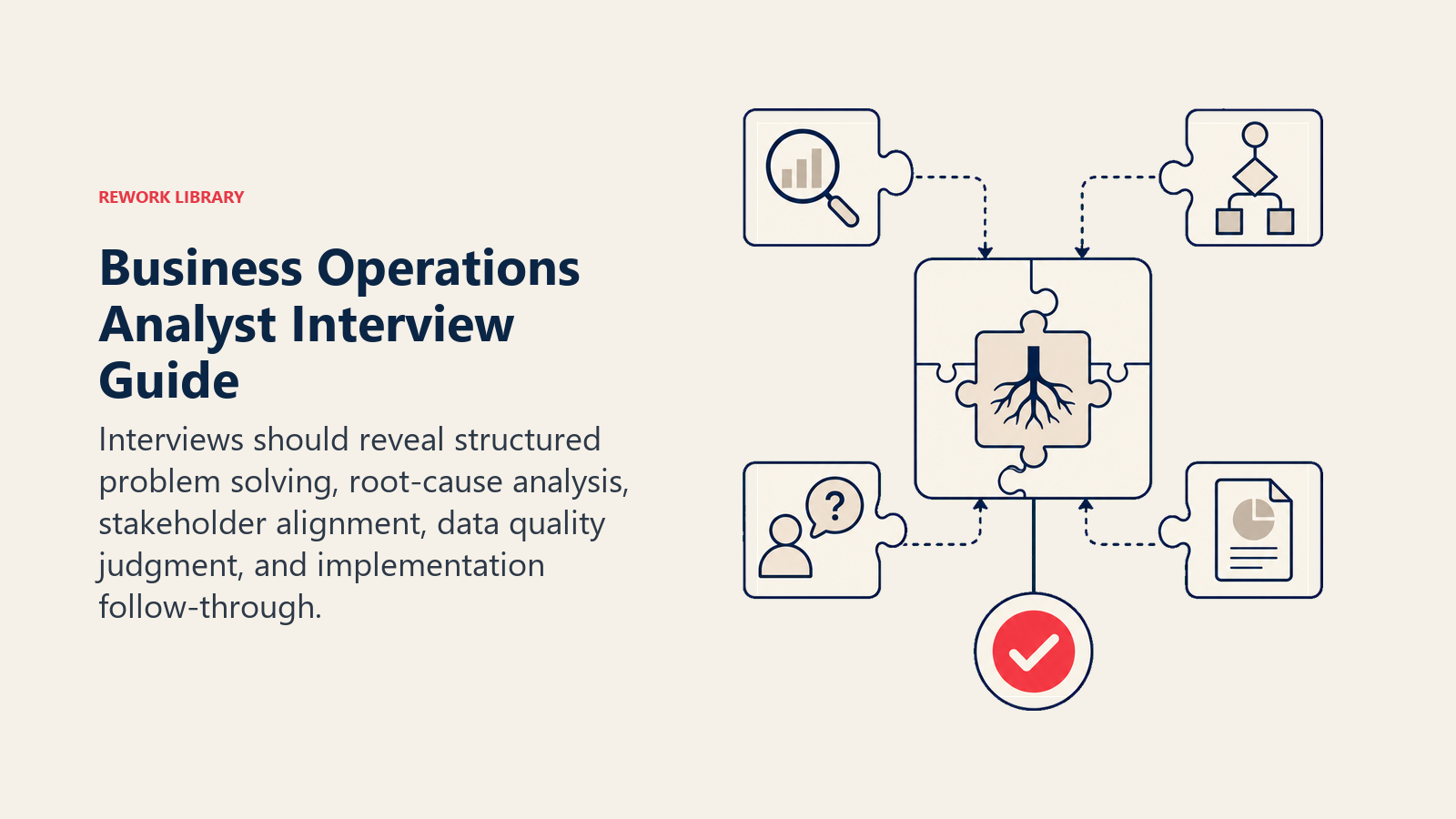
Las entrevistas deben revelar resolución estructurada de problemas, análisis de causa raíz, alineación con las partes interesadas, criterio sobre la calidad de los datos y seguimiento en la implementación.
Preguntas Técnicas/Funcionales
Explíqueme su proceso para analizar un problema de negocio de principio a fin. Busque pensamiento analítico estructurado, involucramiento de las partes interesadas y un enfoque orientado a soluciones.
¿Cómo identificaría la causa raíz de un desempeño de ventas en declive? Evalúe la metodología analítica, la consideración de fuentes de datos y la resolución sistemática de problemas.
Describa una ocasión en la que tuvo que trabajar con datos incompletos o desordenados. ¿Cómo lo manejó? Evalúe la conciencia sobre la calidad de los datos, la resolución creativa de problemas y la experiencia práctica.
¿Cómo prioriza múltiples solicitudes analíticas de diferentes partes interesadas? Busque habilidades de gestión de partes interesadas, evaluación del impacto en el negocio y gestión del tiempo.
Explique cómo construiría un dashboard para hacer seguimiento de la eficiencia operativa. Evalúe el conocimiento técnico, el pensamiento centrado en la experiencia del usuario y la capacidad de selección de métricas.
¿Qué indicadores clave de desempeño recomendaría para medir el customer success? Evalúe la visión de negocio, el conocimiento de métricas y el pensamiento estratégico.
¿Cómo abordaría un proyecto de mejora de procesos en un departamento que no conoce? Busque métodos de investigación, involucramiento de las partes interesadas y un enfoque sistemático para el aprendizaje.
Describa su experiencia con pronósticos y los métodos que ha utilizado. Evalúe las habilidades técnicas, el conocimiento estadístico y la experiencia de aplicación práctica.
Preguntas Conductuales
Cuénteme sobre una ocasión en la que su análisis condujo a una decisión de negocio importante. ¿Cuál fue el resultado? Busque impacto en el negocio, habilidades de comunicación y orientación a resultados.
Describa una situación en la que las partes interesadas estuvieron en desacuerdo con sus recomendaciones. ¿Cómo lo manejó? Evalúe las habilidades de comunicación, la influencia sin autoridad formal y la resolución de conflictos.
Dé un ejemplo de cuando tuvo que aprender una nueva herramienta o sistema rápidamente para completar un proyecto. Evalúe la adaptabilidad, la agilidad de aprendizaje y la automotivación.
Cuénteme sobre un proyecto en el que tuvo que colaborar con múltiples departamentos. Busque habilidades de colaboración multifuncional y capacidades de gestión de proyectos.
Describa una ocasión en la que cometió un error en su análisis. ¿Cómo lo abordó? Evalúe la responsabilidad, el proceso de corrección de errores y el aprendizaje a partir de los errores.
Preguntas de Encaje Cultural
¿Cómo se mantiene al día con las tendencias de la industria y las mejores prácticas analíticas? Busque una mentalidad de aprendizaje continuo y compromiso con el desarrollo profesional.
¿Qué es lo que más lo motiva de trabajar con datos y operaciones de negocio? Evalúe el interés genuino en el puesto y la alineación cultural.
¿Cómo maneja el trabajo en proyectos con plazos ajustados y requisitos cambiantes? Evalúe la adaptabilidad, la gestión del estrés y la flexibilidad.
¿Qué preguntas tiene sobre las operaciones y la estrategia de crecimiento de nuestra empresa? Busque preparación, interés genuino y pensamiento estratégico.
Consejos de Contratación
Guía Rápida de Sourcing
- Reclutamiento en LinkedIn: Enfóquese en profesionales con títulos como "Business Analyst", "Operations Analyst" o "Data Analyst" en empresas de tamaño similar
- Centros de Carrera Universitarios: Asóciese con escuelas de negocios y programas de economía para conseguir talento de nivel inicial
- Asociaciones Profesionales: Participe en INFORMS (Institute for Operations Research) y en meetups locales de analítica
- Bolsas de Empleo de la Industria: Publique en Indeed, Glassdoor y AngelList para un mayor alcance
Consejos de Optimización de la Publicación
- Destaque las oportunidades de crecimiento y el presupuesto de aprendizaje en las descripciones del puesto
- Enfatice el equilibrio entre vida laboral y personal y las modalidades flexibles
- Incluya herramientas y tecnologías específicas en los requisitos
- Mencione ejemplos concretos de impacto en el negocio en la descripción del puesto
Señales de Alerta a Evitar
- Énfasis excesivo en herramientas sin contexto de negocio: Candidatos que se enfocan solo en habilidades técnicas sin comprender las aplicaciones de negocio
- Incapacidad para explicar conceptos complejos de forma sencilla: Habilidades de comunicación deficientes que dificultarían el involucramiento de las partes interesadas
- Falta de curiosidad sobre las operaciones de negocio: Candidatos que no hacen preguntas sobre los desafíos de la empresa o la dinámica de la industria
- Patrones de pensamiento rígidos: Falta de flexibilidad al discutir diferentes enfoques analíticos o métodos de resolución de problemas
- Ausencia de ejemplos de mejora de procesos: Falta de experiencia práctica en identificar e implementar mejoras operativas
- Poca atención al detalle: Errores en el currículum, información inconsistente o falta de preparación para las preguntas técnicas
Contratación de Business Operations Analyst - Para Empleadores
¿Cuál es la diferencia entre un Business Operations Analyst y un Business Analyst?
Los Business Operations Analysts se enfocan específicamente en la eficiencia operativa, la mejora de procesos y la optimización del desempeño, mientras que los Business Analysts tienen un alcance más amplio que incluye el análisis de sistemas, el levantamiento de requisitos y la planificación estratégica. Los Operations Analysts suelen trabajar más con datos operativos y con la mejora de procesos multifuncionales.
¿Deberíamos exigir habilidades de programación para este puesto?
Aunque no siempre son obligatorias, el dominio básico de SQL y Excel es esencial. Las habilidades en Python o R son valiosas para el análisis avanzado, pero pueden desarrollarse en el puesto. Priorice el pensamiento analítico y la visión de negocio por encima de lenguajes de programación específicos.
¿Cómo evaluamos el pensamiento analítico durante las entrevistas?
Presente estudios de caso o escenarios de negocio reales relevantes para su industria. Pida a los candidatos que expliquen su proceso de resolución de problemas, expongan sus suposiciones y discutan cómo validarían sus hallazgos. Busque pensamiento estructurado y soluciones prácticas.
¿Cuál es la progresión profesional típica para este puesto?
Las trayectorias comunes incluyen Senior Business Operations Analyst, Operations Manager, Business Intelligence Manager o puestos de Estrategia. Algunos profesionales se pasan a la consultoría o se especializan en áreas funcionales específicas como la cadena de suministro o la planificación financiera.
¿Qué tan importante es la experiencia en la industria para este puesto?
Aunque es valiosa, las habilidades analíticas sólidas y la visión de negocio suelen transferirse bien entre industrias. Priorice la capacidad de resolución de problemas y la disposición a aprender conocimiento específico de la industria. Considere candidatos de industrias afines con experiencia analítica relevante.
Carrera de Business Operations Analyst - Para Candidatos
¿Qué habilidades debo desarrollar para avanzar en este puesto?
Enfóquese en herramientas de análisis avanzado (Python, R, Tableau), metodologías de gestión de proyectos (Agile, Six Sigma) y conocimiento de estrategia de negocio. Desarrolle sólidas habilidades de presentación y experiencia en la industria de su sector objetivo. Considere obtener certificaciones relevantes como Six Sigma Green Belt o PMP.
¿Es este puesto adecuado para el trabajo remoto?
Sí, muchos puestos de Business Operations Analyst ofrecen opciones remotas o híbridas. El puesto implica un trabajo analítico significativo basado en computadora que se adapta bien a los entornos remotos. Las habilidades de comunicación sólidas se vuelven aún más importantes para la colaboración virtual con las partes interesadas.
¿Cuál es la perspectiva del mercado laboral para los Business Operations Analysts?
Muy positiva, con un crecimiento proyectado del 14% hasta 2030 según datos de la BLS. Las organizaciones dependen cada vez más de la toma de decisiones basada en datos, lo que genera una fuerte demanda de profesionales analíticos capaces de traducir datos en información de negocio.
¿Cómo hago la transición a este puesto desde un perfil diferente?
Destaque las habilidades analíticas transferibles de su puesto actual, tome cursos en línea de analítica de negocio y Excel, y considere obtener certificaciones relevantes. Construya un portafolio de proyectos analíticos, aunque sean de trabajo académico o personal, para demostrar sus capacidades.
¿Cuáles son los aspectos más desafiantes de este trabajo?
Gestionar las prioridades de múltiples partes interesadas, trabajar con datos incompletos y comunicar hallazgos complejos a audiencias no técnicas. El puesto requiere equilibrar el análisis detallado con el pensamiento estratégico de negocio, manteniendo la precisión bajo plazos ajustados.

Senior Customer Retention Strategist
On this page
- Resumen
- Aspectos Clave
- Por Qué Este Puesto Importa
- Habilidades y Herramientas de IA para Business Operations Analyst en 2026
- Trabajando Junto a Agentes de IA en las Operaciones de Negocio
- Plantilla Principal de Descripción del Puesto
- Sobre el Puesto
- Responsabilidades Clave
- Requisitos
- Lo Que Ofrecemos
- Variaciones por Contexto
- Entorno Corporativo
- Entorno de Startup
- Trabajo Remoto/Híbrido
- Consideraciones por Industria
- Guía de Compensación
- Información Salarial
- Preguntas de Entrevista
- Preguntas Técnicas/Funcionales
- Preguntas Conductuales
- Preguntas de Encaje Cultural
- Consejos de Contratación
- Guía Rápida de Sourcing
- Consejos de Optimización de la Publicación
- Señales de Alerta a Evitar