Best LearnUpon Alternatives in 2026: 12 LMS Platforms for Multi-Audience Training Teams
Turn this article into takeaways for your work.


Each assistant summarizes the article only for you and suggests best practices for your work.
TalentLMS, Skilljar, and Docebo are the three LearnUpon alternatives that come up most often, each answering a different reason people go looking in the first place. LearnUpon earns its shortlist spot honestly: its multi-portal architecture, one account running separately branded training for employees, customers, and partners, solves a real problem that most single-audience LMS platforms don't. What it doesn't do is publish a number. LearnUpon's pricing page shows three products, LearnUpon for Employees, Associations, and Customer Education, each with a minimum user count and nothing else. No dollar figure, no billing frequency, no contract term.
That minimum is the detail worth sitting with. LearnUpon for Employees starts "From 100 Users." A 30-person company, or a 60-person one, cannot buy LearnUpon at all, not because the product is wrong for them but because the vendor has drawn a floor under the market it wants. Customer Education starts even higher, at 300 users. This guide covers 12 alternatives for L&D leaders, HR directors, and training managers evaluating platforms in 2026, whether you're blocked by that floor, want a real price before a demo, or need LearnUpon's exact multi-audience trick from a different vendor. Every price below is the vendor's own published figure. Start with the LMS software roundup if you haven't narrowed the category yet, or keep reading if LearnUpon specifically is the incumbent you're weighing.
Key Facts
- US training expenditures reached $102.8 billion in 2025, up 4.9% from the prior year (Training Magazine, 2025 Training Industry Report).
- Average direct learning expenditure was $846 per employee in 2025 (ATD's 2026 State of the Industry report, via TrainingCost.com's benchmark analysis).
- Employees used an average of 16.7 formal learning hours in 2025, up from 13.7 hours in 2024, a 22% jump and the first year-over-year increase in five years (ATD's 2026 State of the Industry report, via TrainingCost.com).
- Providing learning opportunities is survey respondents' number one retention strategy, and 88% of organizations say they are concerned about employee retention (LinkedIn Workplace Learning Report).
- 59% of the global workforce is projected to need reskilling or upskilling by 2030 (World Economic Forum, Future of Jobs Report 2025).
Why Teams Shop for a LearnUpon Alternative
| Why buyers look elsewhere | What LearnUpon's own page actually shows | The honest counterpoint |
|---|---|---|
| No dollar figure published at any tier | Three products, each showing only a minimum user count, with pricing revealed in a quote | A quote scoped to your real headcount can land better than a generic per-seat rate |
| A 100-to-300-user floor by product | Employees "From 100 Users," Associations "From 150 Users," Customer Education "From 300 Users" | Those floors exist because the multi-portal architecture is built for organizations already running structured programs, not a first LMS purchase |
| One tool for three training audiences is still a niche need | LearnUpon's whole design is separate portals for employees, customers, and partners from one account | Most companies only need one of those three, and a single-audience tool is simpler and often cheaper for that job |
Minimum User Floors: Where LearnUpon Excludes You
Every LearnUpon evaluation eventually runs into a number that isn't on the pricing page for most competitors: a minimum you have to clear before the vendor will even quote you. Here's how that floor compares.
| Vendor | Minimum users required | Notes |
|---|---|---|
| LearnUpon (Employees) | 100 users | No dollar figure published at any size |
| LearnUpon (Associations) | 150 users | No dollar figure published |
| LearnUpon (Customer Education) | 300 users | No dollar figure published; Enterprise adds white labeling and group branding |
| Docebo | ~250 learners (stated guidance, not a hard gate) | Quote-only regardless of size |
| TalentLMS | None | Free plan starts at 1 user |
| 360Learning | None | Team plan starts at 1 user, capped at 100 |
| iSpring Learn | None | Business plan priced from the first active user |
| Litmos | None published | Still fully quote-only, so no self-serve entry point |
| Cornerstone OnDemand | None published | Sized for large enterprise regardless |
| Tovuti LMS | None | Flat plan covers "the first 100 learners" for one price, but doesn't require 100 to sign up |
| Moodle (self-hosted) | None | Free and open source at any size |
| Skilljar | None published | Priced by external learner volume, not a stated floor |
| Trainual | None | Priced for small teams by design |
| Continu | None published | Tiers set by MAU band, not a minimum headcount |
The takeaway: a 30-to-90-person team gets excluded from LearnUpon on headcount alone, before price ever enters the conversation. Nine of the 12 alternatives below have no published minimum at all.
Billing Models Compared: Per-Registered-User vs Per-Active-User vs Flat Annual
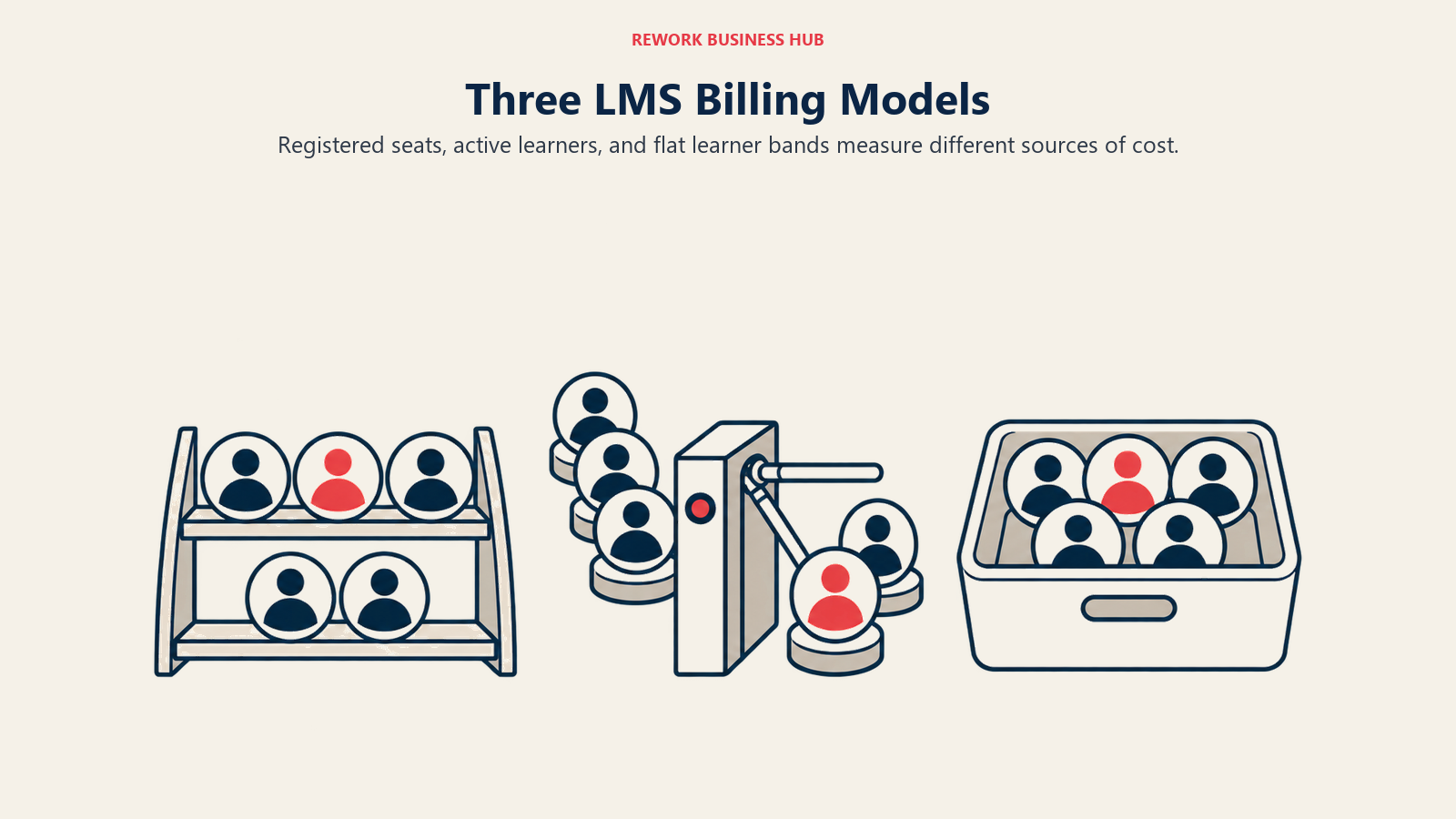
This category splits hard on how a bill actually gets calculated, and that split matters more than the sticker price. A "cheap" per-active-user rate can cost more than a "expensive" flat plan once your real login patterns are in the mix.
| Vendor | Billing model | What it means for your bill |
|---|---|---|
| LearnUpon | Unknown, not published | Only minimums are stated; the actual mechanism appears in the quote |
| TalentLMS | Per-registered-user, tiered bands plus overage | You pay for every seat you create, whether or not that person logs in that month |
| 360Learning | Per-registered-user (Team); mixed registered/MAU (Business, Enterprise) | Team is simple headcount pricing; higher tiers blend models |
| iSpring Learn | Per-active-user, billed annually | Only people who log in that month count, so a quiet month can cost less, but the definition of "active" needs a written answer |
| Docebo | MAU, YAU, or RAU, vendor's choice per contract | Three different active-user definitions exist; confirm which one your quote uses before signing |
| Litmos | Not published | Fully custom, negotiated per deal |
| Cornerstone OnDemand | Not published | Cost depends on organization size and needs, per the vendor's own language |
| Tovuti LMS | Flat annual fee for a learner band | One price covers the first 100 learners regardless of how many actually log in |
| Moodle (self-hosted) | None, self-hosted and free | You pay hosting costs, not a per-user LMS fee |
| Skilljar | Annual subscription plus active-user fee | Two-part pricing: a base subscription plus usage on top |
| Trainual | Not published | Tiered by feature set (Core, Pro, Premium, Enterprise), not stated user bands |
| Continu | Per-tier, set by MAU band | Growth, Professional, and Enterprise are gated by monthly active users, not registered seats |
If your team logs in unevenly, per-active-user billing (iSpring Learn) can beat per-registered-user billing (TalentLMS) even at the same headcount. Confirm the definition of "active" in writing before you compare two quotes as if they measure the same thing.
Quick Comparison Table
| Tool | Best For | Starting Price | Key Strength | Key Limitation |
|---|---|---|---|---|
| TalentLMS | Teams under LearnUpon's 100-user floor that want a real price today | Free (5 users) or $119/month, Core | Fully published tiers, genuinely free entry plan | No native multi-portal architecture like LearnUpon |
| Skilljar | Customer and partner academies specifically | Quote only, add-ons from $10k | Purpose-built for external education, Gainsight-backed | Wrong tool if your need is internal employee training |
| Docebo | Skills-intelligence-driven enterprise learning | Quote only (guidance: 250+ learners) | AI Workforce Readiness Platform, now including 365Talents | No self-serve price at any tier |
| Absorb LMS | Broad enterprise corporate LMS | Quote only, form segmented by learner band | Strong admin depth, new Absorb Aura AI agent suite | Zero published pricing anywhere |
| 360Learning | Collaborative, peer-authored courses under 100 users | $8/user/month, Team plan, no minimum | Subject matter experts build and co-author content | Team plan caps at 100 users |
| iSpring Learn | Budget-conscious teams that want authoring bundled in | $6.91/active user/month at 100 users, annual | Authoring tools bundled, published per-user rate | "Active user" billing needs a written definition |
| Continu | Partner and channel training with a modern admin UI | Quote only, tiers set by monthly active users | Clean interface, strong partner-enablement features | No published price at any tier |
| Litmos | Fast deployment with a large ready-made content library | Quote only | Built-in course library plus a Platinum AI tier | Zero pricing transparency, no minimums published |
| Cornerstone OnDemand | Enterprise talent suite bundled with learning | Quote only, no tiers named | Cornerstone Galaxy consolidates five acquired platforms | Most opaque pricing process in this list |
| Tovuti LMS | One flat, all-inclusive annual plan | $7,500/year for the first 100 learners | Single plan, no tier ladder to compare | Per-learner rate above 100 not published |
| Moodle / MoodleCloud | Open-source core, free self-hosted or low-cost cloud | Free self-hosted; MoodleCloud from $170/year (50 users) | Full customization, no vendor lock-in | Self-hosted requires real technical capacity |
| Trainual | SOP-driven onboarding for very small teams | Quote only, four named tiers, $1,000 setup fee | Purpose-built for process and SOP documentation, not general course delivery | Thinner course-authoring and reporting than a full LMS |
1. TalentLMS - The Clearest Self-Serve Answer to LearnUpon's Floor
TalentLMS solves the exact problem LearnUpon creates: you can see a real number without clearing a 100-user minimum or booking a call. There's a genuinely free plan for up to 5 users and 10 courses, then three published paid tiers, Core at $119/month (1-40 users), Grow at $229/month (1-70 users), and Pro at $449/month (1-100 users, plus $6 per additional user). Annual billing takes 20% off. Enterprise is custom, and the page states it "Starts at 1000 users," with a Flexible enterprise option starting lower, at 500 users.
What TalentLMS doesn't have is LearnUpon's multi-portal trick. It's a single-audience LMS, well-suited to employee training, without built-in separate branded experiences for customers or partners.
Target audience. Small and mid-sized teams, from startups to companies a few hundred employees deep, that want to self-serve a decision instead of clearing a headcount minimum first.
Sizing fit. 1 to 500 comfortably on published tiers. Above 500 to 1,000, you're negotiating Enterprise.
Stage fit. Ideal for a first LMS purchase, or for any team LearnUpon's 100-user floor locks out entirely.
| Pros | Cons |
|---|---|
| Every tier's price and user band is published, no minimum to clear | No native multi-audience portal architecture |
| Genuinely free plan for very small teams | Per-additional-user costs on Pro can add up past the base band |
| 20% discount for annual billing, clearly stated | Enterprise reverts to quote-only above 500 to 1,000 users |
Pricing: Free up to 5 users/10 courses. Core $119/month (1-40 users). Grow $229/month (1-70 users). Pro $449/month (1-100 users, then $6 per additional user). Enterprise custom, starts at 1,000 users (Flexible option from 500). Annual billing saves 20%.
Best for: Teams that want a firm number today and don't clear LearnUpon's user floor. If TalentLMS is already your incumbent and you're shopping past it instead, the TalentLMS alternatives guide covers that comparison.
2. Skilljar - Purpose-Built for the Customer Education Portal, Specifically
If the reason you're looking at LearnUpon is its Customer Education product, Skilljar deserves a direct look before you clear that 300-user floor. Sold as "Skilljar by Gainsight," it's built exclusively for customer and partner education, the kind of academy that trains people outside your company to use your product. It doesn't try to also run internal employee onboarding the way LearnUpon's other two products do; it's a specialist, not a generalist with a customer portal bolted on.
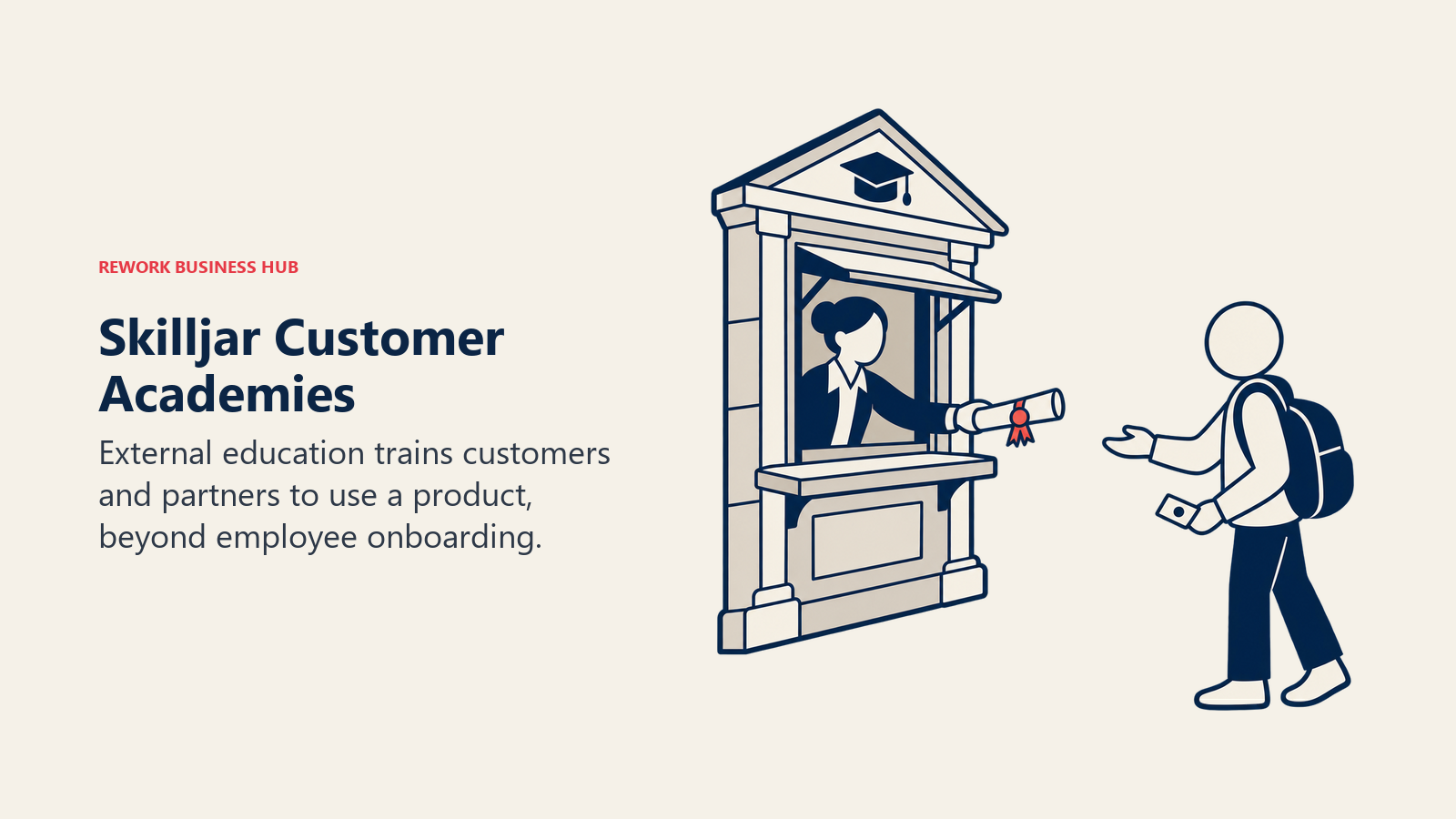
Pricing runs across Essentials, Professional, and Enterprise tiers, all quote-only, calculated as an annual subscription plus an active-user fee. The only public numbers are add-ons: Content Syndication at $10,000 and a Data Connector from $25,000, which say little about the base subscription cost.
Target audience. Product, customer success, or marketing teams launching a certification or academy program for external users.
Sizing fit. Scales with external learner volume rather than internal headcount, so LearnUpon's employee-focused floors don't map cleanly here.
Stage fit. Best once a product is mature enough to justify a dedicated external training program, not a first LMS purchase.
| Pros | Cons |
|---|---|
| Purpose-built for external customer and partner academies | No employee-training product, so you'd still need a second tool internally |
| Gainsight backing brings customer-success integration depth | Quote-only, and even the published add-ons run five figures |
| No published headcount minimum unlike LearnUpon's Customer Education floor | No visibility into base subscription cost at all |
Pricing: Essentials, Professional, and Enterprise, all quote-only. Price equals an annual subscription plus an active-user fee. Published add-ons: Content Syndication $10,000, Data Connector from $25,000.
Best for: Teams whose actual need is a customer or partner academy, not a full internal L&D platform. Pair the rollout with a documented certification tracking program so completion data means something beyond a login count.
3. Docebo - The Skills-Intelligence Enterprise Pick
Docebo is where evaluations land when the real driver is enterprise scale and skills data, not LearnUpon's multi-portal design specifically. It has spent 2026 pushing into what it calls an AI Workforce Readiness Platform: Learning, Skills Intelligence, Enterprise Knowledge, and AgentHub, built partly from its January 2026 acquisition of the French vendor 365Talents, roughly $54.6 million in cash plus up to $5.1 million in earn-out. That acquisition stays a distinct product line next to Docebo's own Elevate and Enterprise tiers, not a rebrand.
Pricing is quote-only across all three lines, billed on active users, with three different definitions in play depending on the contract: Monthly Active Users, Yearly Active Users, or Registered Active Users. The pricing page states plainly that Docebo suits companies "Training at least 250+ learners," a softer guidance than LearnUpon's hard 100-user minimum but pointing at a similar audience. Minimum contract term is one year; most customers sign for three to five.
Target audience. L&D teams at organizations with 250 or more learners that want skills intelligence layered on top of a full-featured LMS.
Sizing fit. 200 to 5,000+. Under 250 learners, you're paying for scale you don't need yet.
Stage fit. Best for established mid-market to enterprise L&D functions, not a first LMS purchase.
| Pros | Cons |
|---|---|
| Skills Intelligence and AgentHub extend well beyond a standard LMS | Quote-only pricing, no self-serve number to plan against |
| Enterprise reporting and admin depth for large deployments | Three different active-user billing definitions to clarify before signing |
| 365Talents adds skills-mapping most competitors here lack | Built for 250+ learners, overkill below that, and requires a 1-year minimum term |
Pricing: Elevate, Enterprise, and 365Talents (Skills Intelligence), all custom pricing based on active users (MAU, YAU, or RAU). No published figures. Minimum 1-year contract.
Best for: L&D teams that want enterprise depth plus a skills-intelligence layer and comfortably clear the 250-learner guidance. If Absorb LMS is also on your shortlist, the Absorb LMS alternatives guide and the direct Absorb LMS vs. Docebo comparison cover that matchup.
4. Absorb LMS - The Broad Corporate LMS Alternative
Absorb LMS competes with LearnUpon on breadth rather than architecture. It's a single, broad corporate LMS with strong admin depth and enterprise reporting, plus a new AI agent line called Absorb Aura built into the platform in 2026. What it shares with LearnUpon is a total absence of published pricing: Absorb's page is a lead form segmented by learner band, from 1-50 up to 25,000+, not a rate card.
Worth a direct correction, since it trips people up mid-search: Absorb has not renamed itself. The homepage still leads with "Absorb LMS," the footer reads "©2026 Absorb Software Inc.," and Absorb Aura is an AI-agent suite bolted onto the existing product, not a company rebrand.
Target audience. L&D teams that want a broad, single-audience corporate LMS with deep admin controls, without LearnUpon's separate-portal structure.
Sizing fit. 50 to 5,000+, based on the learner-band segmentation on its lead form.
Stage fit. Good for teams replacing an aging enterprise LMS, less useful for a first purchase given the sales-led process.
| Pros | Cons |
|---|---|
| Strong admin experience and enterprise reporting | No pricing anywhere, not even a stated minimum |
| New Absorb Aura AI agent suite added in 2026 | No multi-portal architecture for separate audiences |
| Learner-band lead form at least signals rough scale before the call | Sales-led process from the first click, same friction as LearnUpon |
Pricing: No published figures at any tier. Lead form segmented by learner band (1-50, 51-150, 151-250, 251-500, 501-1,000, 1,001-5,000, 5,001-25,000, 25,000+).
Best for: Teams that want one broad corporate LMS instead of LearnUpon's separate-portal model and don't mind a fully sales-led process. See the full Absorb LMS alternatives guide if Absorb itself is the incumbent you're replacing.
5. 360Learning - Collaborative Courses, No Minimum to Clear
360Learning's bet is that the people closest to the work should build the training, not a central L&D team working from a template. Subject matter experts co-author courses, peers give feedback inside the platform, and completion data feeds back into what gets built next. It's a genuinely different working model from LearnUpon's portal-and-catalog structure.
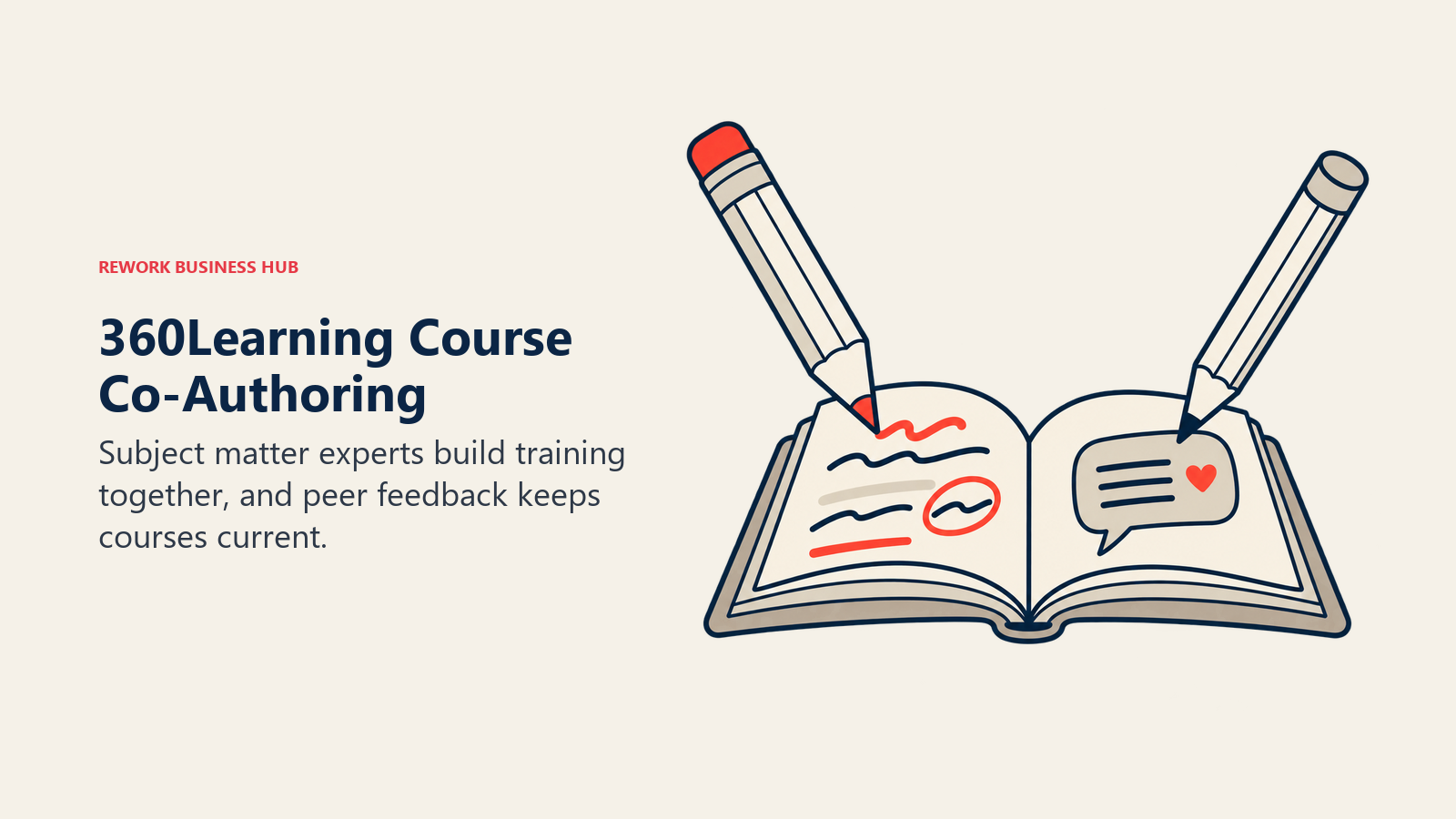
It's also the most transparent price on this list at the entry level: the Team plan is $8 per user per month, billed monthly, with no annual commitment and no minimum volume, capped at 100 users. That's the direct opposite of LearnUpon's 100-user floor: 360Learning welcomes you below that line instead of excluding you from it. Business and Enterprise step up to custom, annual pricing based on a mix of registered and monthly active users once you outgrow the cap.
Target audience. Growing teams of 10 to 100 that want training built collaboratively rather than assigned from a library.
Sizing fit. 10 to 100 on Team, with no minimum. Above that, custom Business or Enterprise pricing.
Stage fit. Strong for companies scaling fast enough that documentation and onboarding content go stale before a central team can rewrite it.
| Pros | Cons |
|---|---|
| Published, no-commitment monthly pricing with zero minimum | Team plan hard-caps at 100 users |
| Collaborative authoring keeps content current | Business and Enterprise revert to quote-only |
| Welcomes exactly the small teams LearnUpon's floor excludes | Less built-in reporting depth than LearnUpon at enterprise scale |
Pricing: Team $8/user/month, up to 100 users, billed monthly, no annual commitment, no minimum volume. Business and Enterprise are custom, generally annual.
Best for: Teams under 100 users that want employees building and reviewing each other's training content. If 360Learning itself is what you're replacing, see the 360Learning alternatives guide.
6. iSpring Learn - Authoring Bundled, Pricing Published at Real Scale
iSpring pairs its LMS with iSpring Suite, its authoring toolkit, so course creation and delivery live under one subscription instead of two. That bundling is the practical reason people switch: instead of pairing LearnUpon with a separate PowerPoint-based authoring tool, you get both in one contract, and unlike LearnUpon, you can see the actual rate before you talk to anyone.
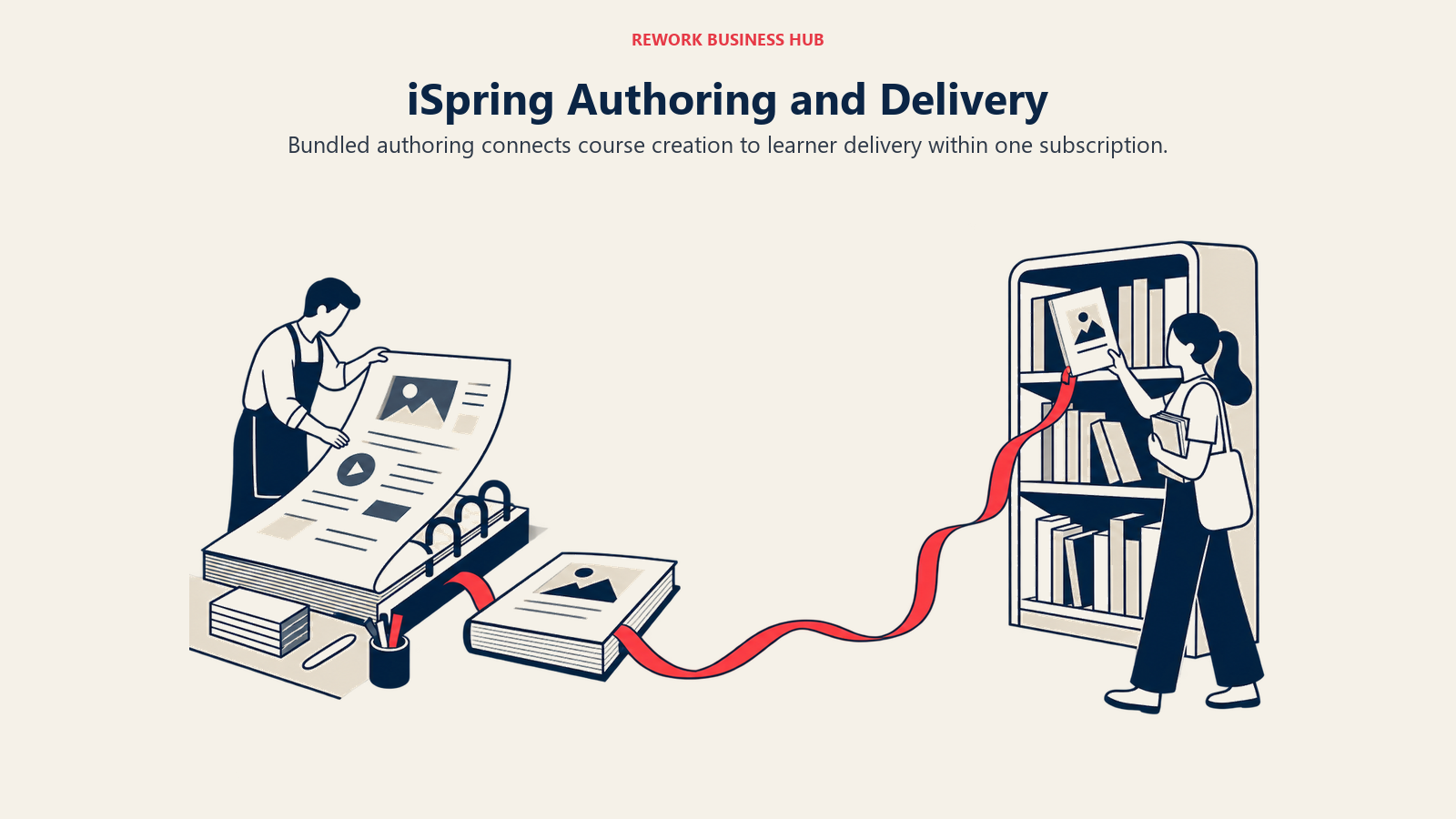
Pricing bills annually per active user (someone who logs in at least once that month): $6.91 per user per month at 100 users ($8,286 a year), dropping to $4.46 at 300 users ($16,050 a year), and $3.97 at 500 users ($23,790 a year). Enterprise is custom above that. Notably, iSpring has no stated minimum, so a team of 20 can price it out just as easily as a team of 200, something LearnUpon's floors don't allow.
Target audience. Budget-conscious L&D teams that want authoring and delivery in one tool with a price they can model before signing.
Sizing fit. 100 to 500 on published Business pricing, with no floor below that. Above 500, Enterprise is a quote.
Stage fit. Good for teams building a course library from scratch who don't want a second authoring subscription.
| Pros | Cons |
|---|---|
| Published, per-active-user pricing at three volume points, no minimum | "Active user" billing means a quiet month can still be a full charge if anyone logs in |
| Authoring suite bundled in, not a separate purchase | No multi-portal architecture for separate audiences |
| Rate drops meaningfully as user count grows | Enterprise tier above 500 users is quote-only |
Pricing: Business plan, billed annually, pay-per-active-user: 100 users $6.91/user/month ($8,286/year), 300 users $4.46/user/month ($16,050/year), 500 users $3.97/user/month ($23,790/year). Enterprise custom.
Best for: Teams that want authoring and LMS delivery bundled, with a real number to plan against instead of a quote or a headcount minimum. For a direct head-to-head against LearnUpon itself, see the iSpring Learn vs. LearnUpon vs. Litmos comparison, the single most relevant sibling article if you're weighing iSpring against the incumbent this guide is about.
7. Continu - Partner Training With a Modern Admin Experience
If LearnUpon's Associations portal is the piece you actually need, the one built for training resellers, affiliates, or channel partners, Continu is worth a look before you clear LearnUpon's 150-user Associations floor. Continu leans hard into partner and channel training as a first-class use case, not an afterthought, and pairs it with a cleaner, more modern admin interface than most enterprise-shaped LMS options.
Pricing runs on three tiers set by monthly active users: Growth under 1,000 MAU, Professional from 1,000 to 5,000 MAU, and Enterprise above 5,000 MAU. None of the three shows a price on Continu's own pricing page.
Target audience. Mid-market L&D and partner-enablement teams that want a modern interface and are comfortable negotiating price.
Sizing fit. Roughly 200 to 5,000+ based on the MAU tier bands, though exact fit depends on the quote.
Stage fit. Good for teams replacing an aging, hard-to-administer LMS rather than buying a first one.
| Pros | Cons |
|---|---|
| Cleaner, more modern admin UI than most enterprise LMS options | No published price at any of the three tiers |
| Strong partner and channel training feature set, a direct answer to LearnUpon's Associations product | No stated headcount minimum published, but tier structure still requires a sales conversation to price |
| MAU tier bands at least signal where you'll land before the call | Smaller community and content marketplace than Moodle or Docebo |
Pricing: Growth (under 1,000 MAU), Professional (1,000-5,000 MAU), Enterprise (5,000+ MAU). No prices published for any tier.
Best for: Teams whose real need is partner or channel training with a modern interface, without LearnUpon's stated 150-user Associations minimum.
8. Litmos - Fast Deployment With a Built-In Content Library
Litmos leans on speed and a ready-made course library rather than deep configuration. Its Foundation, Platinum, and now Platinum AI tiers all ship with a substantial catalog of off-the-shelf compliance and skills content, which shortens the gap between signing and having something live, a different value proposition than LearnUpon's portal architecture entirely.
The tradeoff is that Litmos publishes nothing, and unlike LearnUpon, doesn't even publish a minimum user count. All three tiers show "Contact for Pricing" with no floor stated anywhere.
Target audience. Companies that want a fast-launch LMS with built-in content rather than a blank canvas to build on.
Sizing fit. 50 to 2,000. Works at most sizes since pricing scales through negotiation rather than published tiers or a stated minimum.
Stage fit. Good for teams under time pressure to launch training quickly, less good for teams that need a firm number before they can get budget approved.
| Pros | Cons |
|---|---|
| Large built-in content library speeds up launch | Completely opaque pricing, no minimums published anywhere |
| Platinum AI tier adds AI-assisted authoring and support | No way to estimate cost before a sales conversation |
| No stated headcount floor unlike LearnUpon | Harder to compare against self-serve competitors on this list |
Pricing: Foundation, Platinum, and Platinum AI, all shown as "Contact for Pricing." No user minimums published.
Best for: Teams that want a stocked course library on day one and are comfortable negotiating price rather than reading it off a page.
9. Cornerstone OnDemand - The Broadest Enterprise Talent Suite
Cornerstone OnDemand is the option for buyers who want learning folded into a much larger talent management platform, a bigger ambition than LearnUpon's training-focused portals. Through a string of acquisitions, Saba, EdCast (now Cornerstone Learning Experience), SumTotal, SkyHive, and TaleSpin have all been consolidated into a single platform called Cornerstone Galaxy.
Pricing is the most opaque on this list, more opaque even than LearnUpon's published-minimums approach. There are no plan names and no published figures; the pricing page states only that "Each organization will have a different cost depending on needs and size."
Target audience. Large enterprises that want learning, skills, and talent management under one platform rather than stitched together.
Sizing fit. 500 to 10,000+. This is not a tool sized for mid-market teams.
Stage fit. Best for mature HR organizations consolidating multiple legacy talent systems into one.
| Pros | Cons |
|---|---|
| Consolidates five formerly separate platforms into Galaxy | Zero published pricing, not even a per-tier structure or a stated minimum |
| Deep talent management beyond just learning | Heaviest implementation and admin overhead in this list |
| Enterprise-grade compliance and reporting | Overbuilt and overpriced for anything under a few hundred employees |
Pricing: Quote only. No tier names or figures published; cost depends on organization size and needs.
Best for: Enterprises consolidating legacy learning and talent platforms into a single vendor relationship. For a deeper look at this specific matchup, see the Cornerstone alternatives guide.
10. Tovuti LMS - One Flat Plan, No Portal Ladder
Tovuti's pricing model is worth calling out on its own for how differently it's structured from LearnUpon: instead of separate products by audience, there's one all-inclusive plan. It covers the first 100 learners for $7,500 a year, billed annually only, with webinars, gamification, e-commerce, and course authoring included rather than sold as add-ons or split across a portal system.
The honest gap is what happens past 100 learners. Tovuti doesn't publish a per-extra-learner rate, so outgrowing the first band puts you back in a conversation, just a shorter one since you already know your starting price, which is more than LearnUpon's pricing page offers at any point.
Target audience. Mid-size organizations that want one predictable annual number and a broad feature set without an add-on menu or a multi-product decision.
Sizing fit. Best fit right around 100 learners, where the flat plan is most efficient. Growth past that needs a custom quote.
Stage fit. Good for organizations that want to avoid tier-shopping altogether and are comfortable committing annually.
| Pros | Cons |
|---|---|
| One flat, all-inclusive price, no tier or portal comparison needed | Per-learner rate above 100 not published |
| Webinars, gamification, and e-commerce included, not add-ons | Annual-only billing, no monthly option |
| A real dollar figure, unlike LearnUpon's minimums-only page | No separate audience portals if you actually need LearnUpon's multi-portal structure |
Pricing: $7,500/year for the first 100 learners, one all-inclusive plan, billed annually. Per-extra-learner rate not published.
Best for: Organizations around 100 learners that want a single predictable number instead of tier-shopping or clearing a portal-specific minimum.
11. Moodle / MoodleCloud - Open Source Core, Free or Low-Cost Cloud
Moodle solves LearnUpon's pricing opacity from the opposite direction: self-hosted Moodle LMS is free and open source under the GPL license, full stop. No minimum users, no quote, no sales call. You pay for hosting and the technical capacity to run it yourself, or your implementation partner's fee if you go that route.
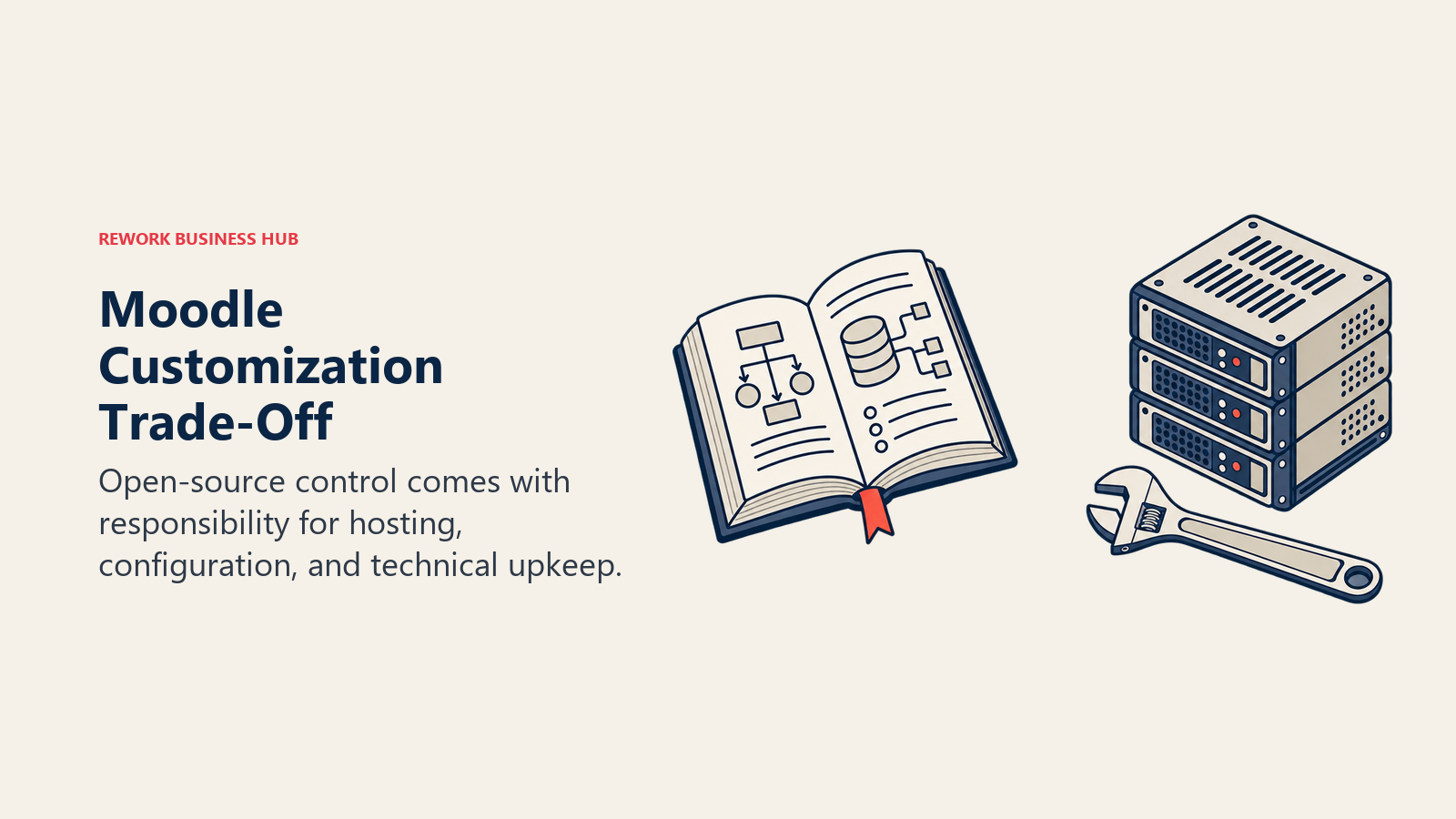
For teams that don't want to self-host, MoodleCloud publishes annual plans starting from $170/year for 50 users, a real anchor figure that puts LearnUpon's silence on pricing into sharp relief. It's a narrower feature set than LearnUpon's multi-portal design out of the box, but the plugin ecosystem closes a lot of that gap for teams willing to configure it.
Target audience. Organizations with the technical capacity (in-house or through a partner) to self-host, or small teams comfortable with MoodleCloud's lighter cloud tier.
Sizing fit. Works at nearly any size self-hosted; MoodleCloud's published tier is built for smaller teams around 50 users.
Stage fit. Good for organizations that value full customization and open-source flexibility over a polished out-of-box SaaS experience.
| Pros | Cons |
|---|---|
| Self-hosted core is genuinely free, no minimum, no quote | Self-hosting requires real technical capacity or a partner budget |
| MoodleCloud gives a real published starting price | No native multi-portal architecture matching LearnUpon's design |
| Huge plugin ecosystem for customization | Enterprise-grade Moodle Workplace edition is sold only through partners, no list price |
Pricing: Self-hosted Moodle LMS is free (GPL license). MoodleCloud plans start from $170/year for 50 users.
Best for: Technically capable teams that want to avoid both LearnUpon's user floors and its pricing opacity entirely. See the full Moodle alternatives guide for more open-source and hybrid options.
12. Trainual - Budget SOP-Driven Onboarding for Very Small Teams
Trainual is the option worth naming for teams so far under LearnUpon's 100-user floor that a full-featured LMS is overkill. It's built around SOPs and process documentation more than formal course delivery, the natural fit for a 5-to-50-person company that needs employees trained on how the business actually runs, not a certification catalog.
Pricing is quote-only across four named tiers, Core, Pro, Premium, and Enterprise, with zero published figures, plus a stated $1,000 one-time implementation fee. That's less transparent than TalentLMS or 360Learning on this list, but Trainual's target buyer is usually comparing it against not having a training system at all, not against an enterprise LMS.
Target audience. Very small companies (5 to 50 employees) that need process and SOP training more than formal course delivery.
Sizing fit. 5 to 50, well below any of LearnUpon's stated floors.
Stage fit. Best for early-stage or fast-growing small companies documenting how the business runs for the first time.
| Pros | Cons |
|---|---|
| Purpose-built for SOP and process documentation, not just courses | Zero published pricing at any of the four tiers |
| Genuinely fits teams far too small for LearnUpon's 100-user floor | Thinner course-authoring and reporting than a full LMS |
| Clear, named tier structure even without dollar figures | $1,000 one-time implementation fee on top of subscription |
Pricing: Core, Pro, Premium, and Enterprise, all quote-only with no published figures. One-time implementation fee of $1,000.
Best for: Very small teams that need documented processes and onboarding more than a formal course catalog. For a closer look at this specific matchup, see the Trainual alternatives guide.
Stage-Fit Matrix
| Learner count | Tools that fit | Why |
|---|---|---|
| Under 50 | TalentLMS, 360Learning, Trainual, Moodle (self-hosted) | No minimum to clear; each publishes a real price or is free |
| 50 to 99 | TalentLMS, 360Learning, iSpring Learn, MoodleCloud | Still under LearnUpon's 100-user Employees floor |
| 100 to 249 | LearnUpon (Employees), TalentLMS, iSpring Learn, Tovuti LMS, Continu | LearnUpon's floor clears here; several published-price options overlap |
| 250 to 499 | Docebo, LearnUpon (Associations at 150+), iSpring Learn, Continu | Docebo's guidance starts here; LearnUpon's Associations floor clears |
| 300+ | LearnUpon (Customer Education), Skilljar, Sana-scale AI platforms | LearnUpon's highest floor and Skilljar's external-academy volume both apply |
| 500 to 5,000+ | Absorb LMS, Cornerstone OnDemand, Docebo, Litmos, Continu | Enterprise reporting and admin depth built for real scale |
Sizing and Persona Table
| Persona | Primary need | Best-fit tools |
|---|---|---|
| Small-team L&D owner (under 100 people) | A real price without clearing a headcount minimum | TalentLMS, 360Learning, Trainual |
| Customer education / partner enablement lead | External academy, not internal onboarding | Skilljar, Continu, LearnUpon's Customer Education or Associations product |
| CHRO or HR director at a mid-market company | Skills intelligence tied to formal learning | Docebo, Absorb LMS |
| Budget-constrained training manager | Bundled authoring plus delivery, published price | iSpring Learn |
| Enterprise L&D consolidating systems | One platform across learning and broader talent management | Cornerstone OnDemand |
| Technical team comfortable self-hosting | Full customization, no licensing cost | Moodle |
| Organization wanting one flat number | Predictable annual cost, no tier ladder | Tovuti LMS |
| Fast-launch team under deadline pressure | Ready-made content library | Litmos |
How to Choose: Decision Framework
| If you need... | Choose |
|---|---|
| A vendor-published price you can check right now, no minimum required | TalentLMS |
| A dedicated customer or partner academy instead of LearnUpon's bundled portal | Skilljar |
| LearnUpon's Associations-style partner training with a modern interface | Continu |
| Skills intelligence layered on top of a full LMS | Docebo |
| The lowest per-seat rate at real scale (300 to 500 users) | iSpring Learn |
| Collaborative, peer-built courses with zero minimum users | 360Learning |
| One flat annual number instead of a tier or portal ladder | Tovuti LMS |
| Full control over an open-source core, self-hosted for free | Moodle |
| Process and SOP training for a team far under any published floor | Trainual |
Before you lock in a shortlist, sanity-check it against your broader HR stack. Our guide to choosing HR software covers the same budgeting and stakeholder questions that come up whether you land on LearnUpon or one of these 12.
Frequently Asked Questions about LearnUpon Alternatives
How much does LearnUpon cost?
LearnUpon publishes no dollar figures. Its pricing page shows three products, each with a minimum user count and nothing else: LearnUpon for Employees "From 100 Users," Associations "From 150 Users," and Customer Education "From 300 Users." All three bundle an Implementation Consultant, Customer Success support, and 24/7/365 technical support, but the actual fee only appears once you're in a quote.
Can a small company under 100 people buy LearnUpon?
Not for the Employees product. LearnUpon states a floor of 100 users for that plan, 150 for Associations, and 300 for Customer Education. A team below those minimums is excluded from LearnUpon entirely, regardless of budget, which is why TalentLMS, 360Learning, and Trainual, none of which publish a minimum, are the natural first stops for smaller teams.
Which LearnUpon alternatives publish a real self-serve price?
Four vendors publish rates without a sales call: TalentLMS (free up to 5 users, paid tiers from $119/month), 360Learning ($8/user/month on Team, capped at 100 users, no minimum), iSpring Learn (from $6.91/active user/month at 100 users, annual, no minimum), and Tovuti LMS ($7,500/year for the first 100 learners). Everyone else here, including Docebo, Absorb LMS, Skilljar, Litmos, Cornerstone, and Continu, is quote-only.
What is the cheapest LearnUpon alternative?
On published numbers, iSpring Learn is the least expensive at scale, working out to roughly $3.97 per user per month at 500 users when billed annually. For very small teams under LearnUpon's floor entirely, TalentLMS's free plan (5 users, 10 courses) or Moodle's free self-hosted core cost nothing to start.
Which alternative matches LearnUpon's multi-audience portal idea?
No single alternative replicates all three of LearnUpon's portals (Employees, Associations, Customer Education) in one product. The closest matches split by audience: Skilljar specializes in customer and partner academies, and Continu leans into partner and channel training with a modern interface. Most buyers end up choosing the specialist tool for whichever audience is the actual priority rather than a single all-in-one replacement.
Does LearnUpon's price include implementation and support?
Per LearnUpon's own pricing page, yes: all three products include an Implementation Consultant, Customer Success support, and 24/7/365 technical support as part of the (unpublished) price. That's a meaningful inclusion worth asking every quote-only competitor to match explicitly, since not all of them bundle implementation support by default.
Is there an enterprise tier above LearnUpon's standard plans?
Yes, but only for Customer Education. LearnUpon publishes an Enterprise plan for that product with white labeling, e-commerce, and group branding, still with no dollar figure attached. Employees and Associations don't show a separate published Enterprise tier.
What to Do Next
Check your actual headcount against LearnUpon's three floors first: 100 for Employees, 150 for Associations, 300 for Customer Education. If you clear one of them, request a LearnUpon quote alongside your top pick from this list so you're comparing two real numbers instead of one number and one guess. If you don't clear any of them, skip straight to TalentLMS, 360Learning, or iSpring Learn, all three of which will quote you a price in minutes with no minimum standing in the way.

Principal Product Marketing Strategist
On this page
- Key Facts
- Why Teams Shop for a LearnUpon Alternative
- Minimum User Floors: Where LearnUpon Excludes You
- Billing Models Compared: Per-Registered-User vs Per-Active-User vs Flat Annual
- Quick Comparison Table
- 1. TalentLMS - The Clearest Self-Serve Answer to LearnUpon's Floor
- 2. Skilljar - Purpose-Built for the Customer Education Portal, Specifically
- 3. Docebo - The Skills-Intelligence Enterprise Pick
- 4. Absorb LMS - The Broad Corporate LMS Alternative
- 5. 360Learning - Collaborative Courses, No Minimum to Clear
- 6. iSpring Learn - Authoring Bundled, Pricing Published at Real Scale
- 7. Continu - Partner Training With a Modern Admin Experience
- 8. Litmos - Fast Deployment With a Built-In Content Library
- 9. Cornerstone OnDemand - The Broadest Enterprise Talent Suite
- 10. Tovuti LMS - One Flat Plan, No Portal Ladder
- 11. Moodle / MoodleCloud - Open Source Core, Free or Low-Cost Cloud
- 12. Trainual - Budget SOP-Driven Onboarding for Very Small Teams
- Stage-Fit Matrix
- Sizing and Persona Table
- How to Choose: Decision Framework
- What to Do Next