Best AI Tools for Digital Banking in 2026
Turn this article into takeaways for your work.


Each assistant summarizes the article only for you and suggests best practices for your work.
If you're evaluating AI tools for digital banking in 2026, Kasisto and interface.ai lead conversational banking, the chat and voice assistants members actually talk to inside your app or contact center. Personetics and Envestnet | Yodlee lead personalization, the engines that turn transaction data into proactive nudges and financial wellness insights. Feedzai, Featurespace, and NICE Actimize lead fraud and financial crime prevention at enterprise scale. ComplyAdvantage and Socure lead KYC and identity verification. And Zest AI, Provenir, Ocrolus, and DataRobot lead AI credit decisioning, the underwriting layer that has to survive a model risk exam, not just a demo. This guide ranks 14 tools across those five jobs, not by whichever vendor bought the loudest conference booth this year.
This is scoped to core digital banking AI infrastructure: conversational assistants, fraud and AML detection, credit decisioning, personalization, and KYC. It is not a general business AI roundup. If you're comparing general-purpose FP&A or accounting AI instead, best AI tools for finance teams, best AI tools for accounting, and best AI tools for virtual CFO services cover that adjacent, non-regulated-banking territory. Pricing below was checked against vendor pages and public reporting in July 2026; nearly every enterprise banking AI vendor here sells on a custom quote, which is normal for this category and noted explicitly where it applies.
Nothing in this article is financial, investment, or legal advice. It's a buyer's guide to software. Talk to your model risk, compliance, and legal teams before you sign anything here.
Updated July 2026: What Changed
- US federal fair lending enforcement narrowed. On April 22, 2026, the CFPB finalized a rule amending Regulation B that eliminates disparate-impact ("effects test") liability under the federal Equal Credit Opportunity Act, effective July 21, 2026, per ABA Banking Journal. That change is federal-only: the Fair Housing Act and most state anti-discrimination statutes still recognize disparate impact, so AI credit models still need to clear those bars.
- Model risk guidance got a rewrite. On April 17, 2026, the OCC, Federal Reserve, and FDIC jointly issued revised supervisory guidance superseding the original 2011 SR 11-7 letter, moving toward a more flexible, principles-based framework, though the agencies explicitly flagged that generative and agentic AI models are novel enough to sit outside the letter of this guidance for now.
- Visa finished absorbing Featurespace. The December 2024 acquisition is now fully integrated into Visa's risk and identity business, meaning ARIC Risk Hub pricing and roadmap run through Visa's enterprise sales motion rather than as a standalone vendor.
- Agentic AI moved from pilot to production in fraud and collections. Feedzai shipped IQ Score (network-sourced fraud intelligence) in June 2026, interface.ai launched Smart Collections for credit unions, and Provenir relaunched its platform around agentic decisioning in February 2026, all signals that AI is moving past chat-widget novelty and into the workflows that touch money movement directly.
Key Facts
- Generative AI and advanced analytics could add $200 billion to $340 billion in annual value to global banking through productivity gains alone, rising toward roughly $2 trillion when revenue and risk-reduction effects are included, per McKinsey's Global Banking Annual Review.
- 52% of banking institutions have made generative AI adoption an explicit priority, with another 39% interested but not yet prioritizing it, per McKinsey.
- AI-driven automation is projected to save banks roughly $900 million in operational costs by 2028, including about 29 million hours saved in digital onboarding, per Juniper Research.
- 74% of US banking customers still say they prefer a human agent over a chatbot for routine banking interactions, and 37% say they have never used a banking chatbot at all, per a Deloitte survey of 2,027 US bank customers, per Deloitte.
- Federal fair lending enforcement under ECOA no longer covers disparate-impact claims as of July 21, 2026, though the Fair Housing Act and state law still do, per ABA Banking Journal.
Quick Comparison Table
| Tool | Best For | Starting Price | Key Strength | Key Limitation |
|---|---|---|---|---|
| Kasisto (KAI) | Conversational banking assistants at scale | Quote-only, tiered by deployment | 1,800+ pre-built banking intents; KAI-GPT banking-specific LLM | Enterprise implementation timeline; not built for community-bank budgets |
| interface.ai | Credit unions and community banks wanting agentic chat and voice | Quote-only, performance-based pricing available | BankGPT voice and chat, contact center automation, Smart Collections | Purpose-built for CU/community bank cores; less fit for global banks |
| Glia | Unifying AI and human agents across every channel | Quote-only ("Priceless Pricing," no seat/minute caps) | ChannelLess architecture blends bot and live agent mid-conversation | Pricing opacity makes budget planning harder without a sales call |
| Personetics | AI-driven personalization and financial wellness nudges | Quote-only, often embedded via your core/digital banking vendor | Reaches 150M+ banking customers across 130+ banks; deep Fiserv integration | Personalization quality depends on the depth of transaction data you feed it |
| Envestnet | Yodlee | AI-ready data aggregation powering personalization | Quote-only, usage/API-based | Connects 17,000+ financial institutions; strong open banking API layer | It's a data and insights layer, not a full personalization UI on its own |
| Feedzai | Enterprise-scale fraud and financial crime prevention | Quote-only, enterprise (Fortune 500 scale) | Analyzes $9T+ in payments across 120B+ events annually | Requirements (3,000+ events/second) rule out mid-market and SMB banks |
| Featurespace (ARIC, Visa) | Real-time behavioral fraud and AML analytics | Quote-only via Visa Risk and Identity Solutions | Evaluates 500 behavioral variables in under 50ms per transaction | Now sold through Visa's enterprise motion, not as an independent vendor |
| NICE Actimize | Enterprise AML and financial crime case management | Quote-only, enterprise | Entity-centric AML plus a shared Insights Network for counterparty risk | Deep implementation lift; built for large FI compliance teams, not startups |
| ComplyAdvantage | AI-driven AML, KYC, and sanctions screening | Starter $99/mo (up to 2,000 entities); enterprise quote-only | Automates a large share of KYC/AML review workload per vendor benchmarks | No built-in identity verification; you still need a separate IDV provider |
| Socure | AI identity verification and KYC onboarding | Usage-based, from about $0.10-$0.40 per watchlist screening | Real-time ID verification plus synthetic-identity fraud detection | Costs scale with volume; full-suite pricing requires a sales conversation |
| Zest AI | AI credit underwriting for banks and credit unions | Quote-only, often six figures/year, per-decision pricing | Explainable ML underwriting built for fair-lending documentation | Contract size and complexity mean it is not a fit for very small lenders |
| Provenir | AI risk decisioning across consumer, BNPL, auto, and SMB lending | Quote-only, enterprise | Single platform spans credit, fraud, case management, and collections | Best suited to multi-product lenders; overkill for a single-product shop |
| Ocrolus | AI document and cash-flow analysis for lending | Free/on-demand tiers; Commit (enterprise) is quote-only | Processes roughly 750,000 credit applications a month with audit-ready output | Strongest for mortgage and SMB lending; not a general banking AI platform |
| DataRobot | Governed AI/ML platform for credit risk models | Quote-only, enterprise | Full model lineage and auditability built for MRM review | General-purpose AI/ML platform, not a banking-specific point solution |
Institution Fit Matrix
| Tool | Community Bank / Credit Union | Regional Bank | National / Global Bank | Digital-Native Neobank |
|---|---|---|---|---|
| Kasisto (KAI) | Possible via partners | Strong fit | Strong fit | Strong fit |
| interface.ai | Strong fit (core use case) | Good fit | Limited fit | Limited fit |
| Glia | Strong fit | Strong fit | Good fit | Good fit |
| Personetics | Good fit (via core vendor) | Strong fit | Strong fit | Good fit |
| Envestnet | Yodlee | Good fit | Strong fit | Strong fit | Strong fit |
| Feedzai | Limited fit (volume minimums) | Good fit | Strong fit | Good fit |
| Featurespace (ARIC, Visa) | Limited fit | Good fit | Strong fit | Good fit |
| NICE Actimize | Limited fit | Good fit | Strong fit | Limited fit |
| ComplyAdvantage | Strong fit (Starter tier) | Good fit | Good fit | Strong fit |
| Socure | Good fit | Good fit | Good fit | Strong fit |
| Zest AI | Strong fit (core use case) | Strong fit | Good fit | Good fit |
| Provenir | Limited fit | Good fit | Strong fit | Good fit |
| Ocrolus | Good fit | Good fit | Good fit | Good fit |
| DataRobot | Limited fit | Good fit | Strong fit | Good fit |
1. Kasisto (KAI) - conversational AI purpose-built for banking
Kasisto has been building bank-specific conversational AI since before "AI banking assistant" was a category, and it shows in the depth of intent coverage. KAI ships with over 1,800 pre-built banking intents out of the box, covering card management, transaction disputes, and account servicing, plus KAI-GPT, a large language model trained specifically on banking conversation data rather than general web text. Top-performing deployments report intent-to-resolution times under 90 seconds for card management and under 120 seconds for dispute filing.
Kasisto sells to banks and credit unions of real scale, with a SaaS tier that recertified SOC 2 Type II in January 2026 and a FedRAMP Moderate authorization on its roadmap for later this year, both signals aimed at regulated buyers who need to check a security box before procurement even starts. Pricing is quote-only and tiered by deployment model, and implementation for a full-scale rollout runs longer than a typical SaaS chatbot buy. If you're evaluating conversational AI more broadly before narrowing to a banking-specific vendor, how to choose an AI chatbot platform and best AI chatbots cover the general-purpose landscape Kasisto competes against on features.
Best for: banks that want deep, banking-specific conversational coverage and are willing to run a proper implementation to get it. Not ideal for: a team that wants to be live with a basic FAQ bot in two weeks.
| Kasisto (KAI) | Detail |
|---|---|
| Pros | 1,800+ banking intents; purpose-built LLM (KAI-GPT); strong security posture (SOC 2 Type II, FedRAMP roadmap) |
| Cons | Quote-only pricing; longer implementation cycle; overkill for a small single-branch institution |
2. interface.ai - the BankGPT platform for credit unions and community banks
interface.ai built its entire roadmap around one buyer: the credit union or community bank that can't afford a big-bank AI budget but is losing members to fintechs with better chat and phone support. Its Agentic Chat AI and Voice AI products replace scripted IVR trees with assistants that pull from your website and documents to resolve requests without a human handoff, and the platform now covers contact center automation, fraud assistance, and employee copilots for staff, not just member-facing chat.
The newest addition, Smart Collections, is a multi-channel agentic AI built to reach delinquent borrowers earlier across chat, voice, and text, a direct response to community lenders' thin collections staffing. interface.ai is trusted by 100+ credit unions and community banks and pitches performance-based pricing models that tie cost to results delivered rather than flat seat fees, though exact numbers require a sales conversation.
Best for: credit unions and community banks that need agentic AI sized and priced for their member base, not a Fortune 100 budget. Not ideal for: a global bank that needs multi-entity, multi-jurisdiction deployment out of the box.
| interface.ai | Detail |
|---|---|
| Pros | Built specifically for CU/community bank economics; voice, chat, collections, and employee copilots in one platform; performance-based pricing option |
| Cons | Narrower fit for large national or global banks; newer entrant compared to legacy conversational AI vendors |
3. Glia - unifying AI and human agents in one interaction
Glia's pitch is that the bot-versus-human debate is the wrong debate. Its ChannelLess architecture lets an AI agent start a conversation and hand off to a live representative mid-thread, on the same channel, without the customer repeating themselves, a design choice aimed directly at the friction most banking chatbots create. Glia reports automating up to 80% of voice calls and digital inquiries for banks and credit unions running its platform.
Pricing runs on what Glia calls "Priceless Pricing," aimed at being predictable and ROI-aligned with no caps on seats, minutes, or AI usage, but the actual number still requires a sales conversation, and it varies by institution type and scope.
Best for: institutions that want AI and live agents working the same queue instead of running as two separate systems. Not ideal for: a team that just wants a bolt-on FAQ widget with no contact-center integration.
| Glia | Detail |
|---|---|
| Pros | Seamless AI-to-human handoff on the same channel; reports up to 80% automation of voice and digital inquiries; pricing model avoids per-seat penalties |
| Cons | No public pricing tiers; value depends on integrating deeply with your existing contact center stack |
4. Personetics - the personalization engine behind proactive banking
Personetics doesn't build the chat window, it builds the intelligence that decides what your bank should say to a customer before they ask. Its Cognitive Banking Platform analyzes transaction data to generate personalized insights, spending nudges, and savings recommendations, and it's now embedded directly inside Fiserv's Experience Digital platform, meaning banks and credit unions running Fiserv's digital banking stack can turn on Personetics-powered personalization without a separate integration project.
Scale is Personetics' strongest credential: the platform reaches more than 150 million banking customers across roughly 130 banks and 35 markets, including six of the top 12 banks in North America and Europe. Pricing is quote-only and commonly bundled through a core or digital banking vendor relationship rather than sold standalone.
Best for: banks that already have solid transaction data and want to turn it into proactive, revenue-generating nudges instead of static statements. Not ideal for: an institution with fragmented or low-quality transaction data, since the AI is only as sharp as the data underneath it.
| Personetics | Detail |
|---|---|
| Pros | Massive proven scale (150M+ customers); deep Fiserv integration cuts implementation time; strong financial-wellness use case |
| Cons | Output quality depends heavily on data quality; standalone pricing is opaque outside a core-vendor bundle |
5. Envestnet | Yodlee - the data layer that makes personalization possible
Where Personetics builds the intelligence layer, Envestnet | Yodlee builds the plumbing underneath it. Yodlee's APIs aggregate financial data, bank accounts, cards, investments, loans, and insurance, across more than 17,000 financial institutions, giving banks and fintechs a single connection point instead of dozens of one-off integrations. Its AI-ready data feeds power hyper-personalization use cases across banking, wealth, and lending.
This is infrastructure, not a finished product: banks typically pair Yodlee's aggregation layer with a personalization engine (like Personetics), or feed it into an AI CRM or CRM platform for relationship banking and wealth teams that need a unified customer view. Pricing is quote-only and generally usage or API-call based.
Best for: teams that need broad, reliable financial data connectivity as the foundation for AI-driven features, whether personalization, lending, or wealth. Not ideal for: a bank looking for an out-of-the-box, customer-facing personalization UI, since Yodlee is the data layer other tools sit on top of.
| Envestnet | Yodlee | Detail |
|---|---|
| Pros | Connects to 17,000+ institutions; mature, widely trusted aggregation layer; strong open banking API surface |
| Cons | Not a finished personalization product on its own; requires pairing with an insights or UI layer |
6. Feedzai - AI-native fraud prevention for the largest financial institutions
Feedzai operates at a scale most fraud vendors don't touch: the platform analyzes more than $9 trillion in payments across 120 billion events a year, and it stopped over $1 billion in attempted fraud in 2025 alone. In June 2026 it launched Feedzai IQ Score, a network-sourced intelligence layer that pulls signal from across its customer base to catch scams in real time rather than relying purely on a single institution's own transaction history.
The tradeoff is fit: Feedzai is built exclusively for Fortune 500-level financial institutions processing trillions in annual payment flows and 100 million-plus consumers, with platform requirements around 3,000-plus events per second that rule out mid-market and SMB banks entirely. Pricing is enterprise quote-only, and there's no self-serve path.
Best for: large banks and payment processors that need enterprise-grade fraud and financial crime coverage across every channel. Not ideal for: a community bank or credit union well below the transaction-volume threshold the platform is architected for. For the broader security tooling fraud teams often run alongside a platform like this, see best AI tools for cybersecurity.
| Feedzai | Detail |
|---|---|
| Pros | Analyzes $9T+ in payments, 120B+ events annually; new network-sourced IQ Score intelligence; proven at Fortune 500 scale |
| Cons | Volume minimums exclude smaller institutions; enterprise-only sales process, no transparent pricing |
7. Featurespace (ARIC Risk Hub, now part of Visa) - real-time behavioral fraud and AML
Featurespace's ARIC Risk Hub built its reputation on behavioral analytics: the platform evaluates up to 500 behavioral variables in under 50 milliseconds against each customer's long-term behavior pattern, protecting roughly 500 million consumers across more than 100 billion payment events a year. Visa acquired Featurespace in December 2024 for roughly £700 million and has since folded ARIC into its broader risk and identity services portfolio, expanding its reach through Visa's existing bank relationships.
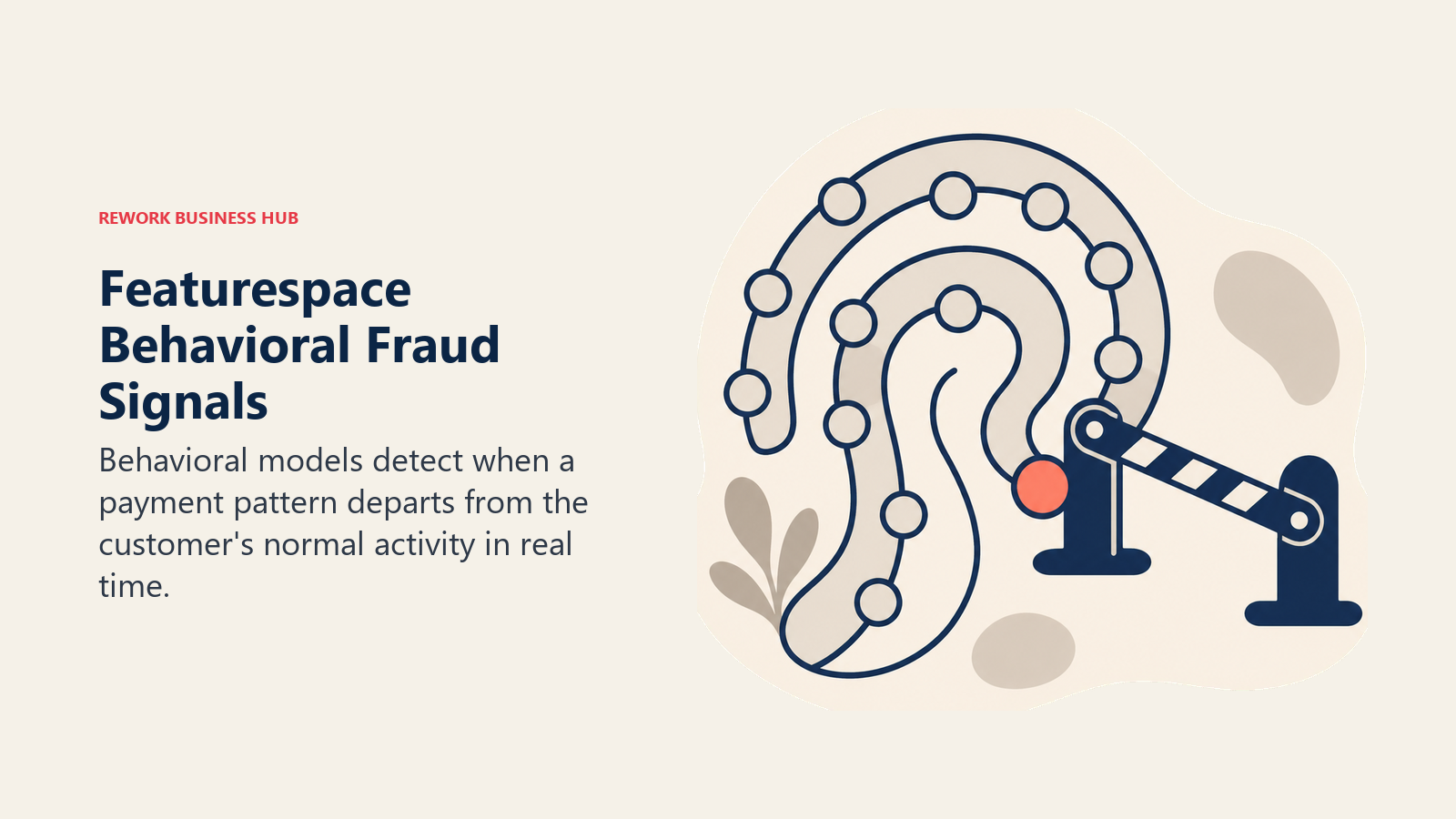
ARIC covers card and payments fraud, application fraud, scam detection, account takeover, check fraud, and AML transaction monitoring in one platform. Because it now sells through Visa's enterprise motion rather than as an independent vendor, procurement and roadmap decisions run through that relationship.
Best for: banks and payment networks that want adaptive, behavior-based fraud detection with the backing (and integration path) of Visa's infrastructure. Not ideal for: an institution that specifically wants to avoid deepening its dependency on a card-network vendor relationship.
| Featurespace (ARIC, Visa) | Detail |
|---|---|
| Pros | Sub-50ms real-time behavioral scoring; covers fraud, scams, account takeover, and AML in one hub; backed by Visa's scale post-acquisition |
| Cons | No longer an independent vendor; pricing and roadmap now run through Visa's enterprise sales process |
8. NICE Actimize - enterprise AML and financial crime management
NICE Actimize is a fixture in large-bank compliance departments, and for good reason: it ranked among the top two vendors in Forrester's AML Solutions Wave for Q2 2025. Its entity-centric AML platform combines machine learning with domain-specific rules to cover KYC-AML program needs end to end, and its newer Insights Network gives institutions shared, real-time visibility into counterparty risk sourced from its broader fraud and financial crime network.
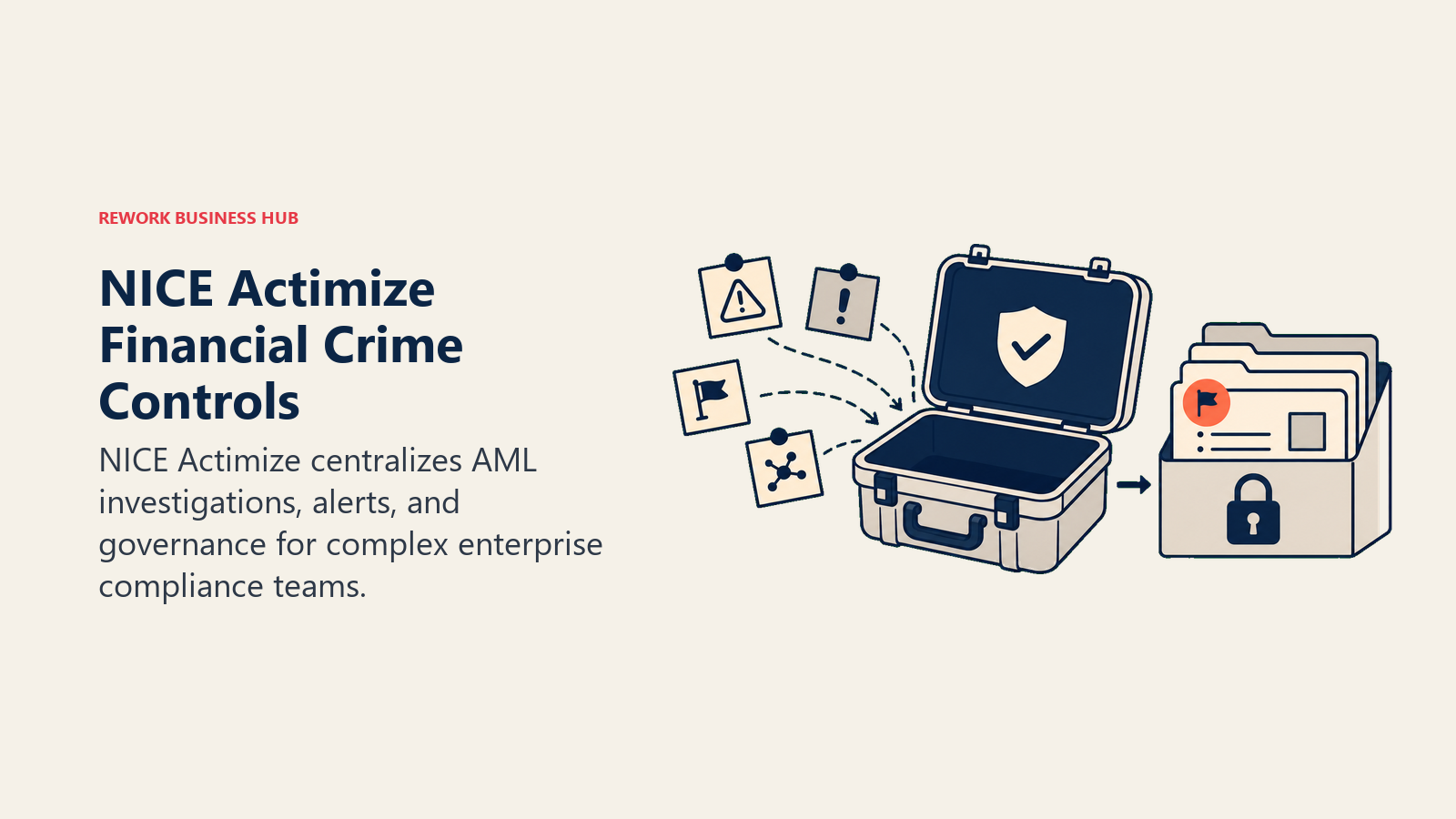
This is enterprise software built for enterprise compliance teams: implementation is a real project, not a plug-in, and pricing is quote-only with no published tiers. It's the right tool when your AML program needs full auditability and a case management workflow regulators will actually accept, not the right tool for a lean compliance team wanting something lightweight.
Best for: large banks and financial institutions that need comprehensive AML case management alongside detection. Not ideal for: smaller institutions without a dedicated compliance operations team to run the platform.
| NICE Actimize | Detail |
|---|---|
| Pros | Top-ranked in independent AML analyst evaluations; entity-centric detection plus case management; shared Insights Network for counterparty risk |
| Cons | Significant implementation lift; enterprise-only pricing and scale; not built for lean compliance teams |
9. ComplyAdvantage - AI-driven AML, KYC, and sanctions screening
ComplyAdvantage is one of the few tools on this list with a public entry-level price: its Starter plan runs $99 a month and covers screening for up to 2,000 entities across adverse media, sanctions and watchlists, PEP checks, and ongoing monitoring. Per the vendor's own benchmarks, the platform's agentic automation handles up to 95% of KYC, AML, and sanctions reviews, cuts onboarding time by roughly half, and reduces false positives by around 70%, figures worth verifying against your own data before you build a business case on them.
The gap: ComplyAdvantage does not offer identity verification. It's a screening and monitoring layer, not a full KYC onboarding stack, so most buyers pair it with a dedicated IDV provider like Socure.
Best for: fintechs and banks that need transparent, usage-based AML and sanctions screening without a six-figure enterprise contract to get started. Not ideal for: a team that wants one vendor to cover both identity verification and AML screening.
| ComplyAdvantage | Detail |
|---|---|
| Pros | Transparent entry-level pricing; strong AML/sanctions automation claims; recognized as a Leader in G2's Spring 2026 Grid Report |
| Cons | No built-in identity verification; you'll need a second vendor for full KYC onboarding |
10. Socure - AI identity verification and KYC for account opening
Socure is the identity layer most of the KYC/AML tools on this list assume you already have. Its ID+ product verifies customer identities in real time using a blend of data sources and machine learning, and its Sigma Synthetic Fraud module specifically targets synthetic identities, fabricated profiles built by blending real and fake information, a fast-growing fraud vector in digital account opening. Socure is trusted by 3,000-plus customers across banking, fintech, and adjacent industries.
Pricing runs on a usage basis: Global Watchlist KYC/AML screening typically runs $0.10 to $0.40 per screening, with volume discounts for institutions that bundle multiple modules or commit to higher throughput. Broader industry benchmarks put typical KYC onboarding cost, across vendors, at roughly $1 to $5 per customer before manual review.
Best for: banks and fintechs that need fast, accurate identity verification at account opening, especially where synthetic identity fraud is a real risk. Not ideal for: a team looking for a single flat-rate SaaS price instead of usage-based billing.
| Socure | Detail |
|---|---|
| Pros | Real-time ID verification at scale; dedicated synthetic-identity detection; trusted by 3,000+ customers |
| Cons | Usage-based pricing complicates budgeting; full-suite cost requires a custom quote |
11. Zest AI - explainable AI underwriting built for fair-lending scrutiny
Zest AI's whole pitch is that machine-learning underwriting doesn't have to be a black box regulators distrust. Its models are built for explainability from the ground up, a direct answer to the fair-lending documentation requirements every AI credit model has to survive, and the platform now supports more than $1 trillion in loan originations across auto, credit card, personal, and HELOC products for lenders ranging from the largest financial institutions down to credit unions processing a few hundred applications a year.
Pricing is enterprise and quote-only, generally landing in the six-figure annual range for mid-sized credit unions and banks, with a per-decision pricing model that scales with the number of loan products and volume covered. Zest Protect, a fraud add-on, is priced and sold separately from core underwriting.
Best for: lenders that need machine-learning underwriting they can actually explain to an examiner. Not ideal for: a very small lender whose application volume doesn't justify a six-figure annual contract.
| Zest AI | Detail |
|---|---|
| Pros | Purpose-built explainability for fair-lending review; proven at $1T+ in originations; scales from large banks to small credit unions |
| Cons | Six-figure typical contract size; underwriting and fraud tools (Zest Protect) are priced as separate modules |
12. Provenir - AI decision intelligence across the full lending lifecycle
Provenir's relaunch in February 2026 repositioned it as a full decision intelligence platform, bringing data ingestion, ML models, decision orchestration, and agentic AI into one governed environment rather than a point solution for a single loan type. It runs real-time risk decisioning across consumer credit, BNPL, auto, and SMB lending through a visual workflow canvas, aimed at lenders who don't want to run five different decisioning tools for five different products.
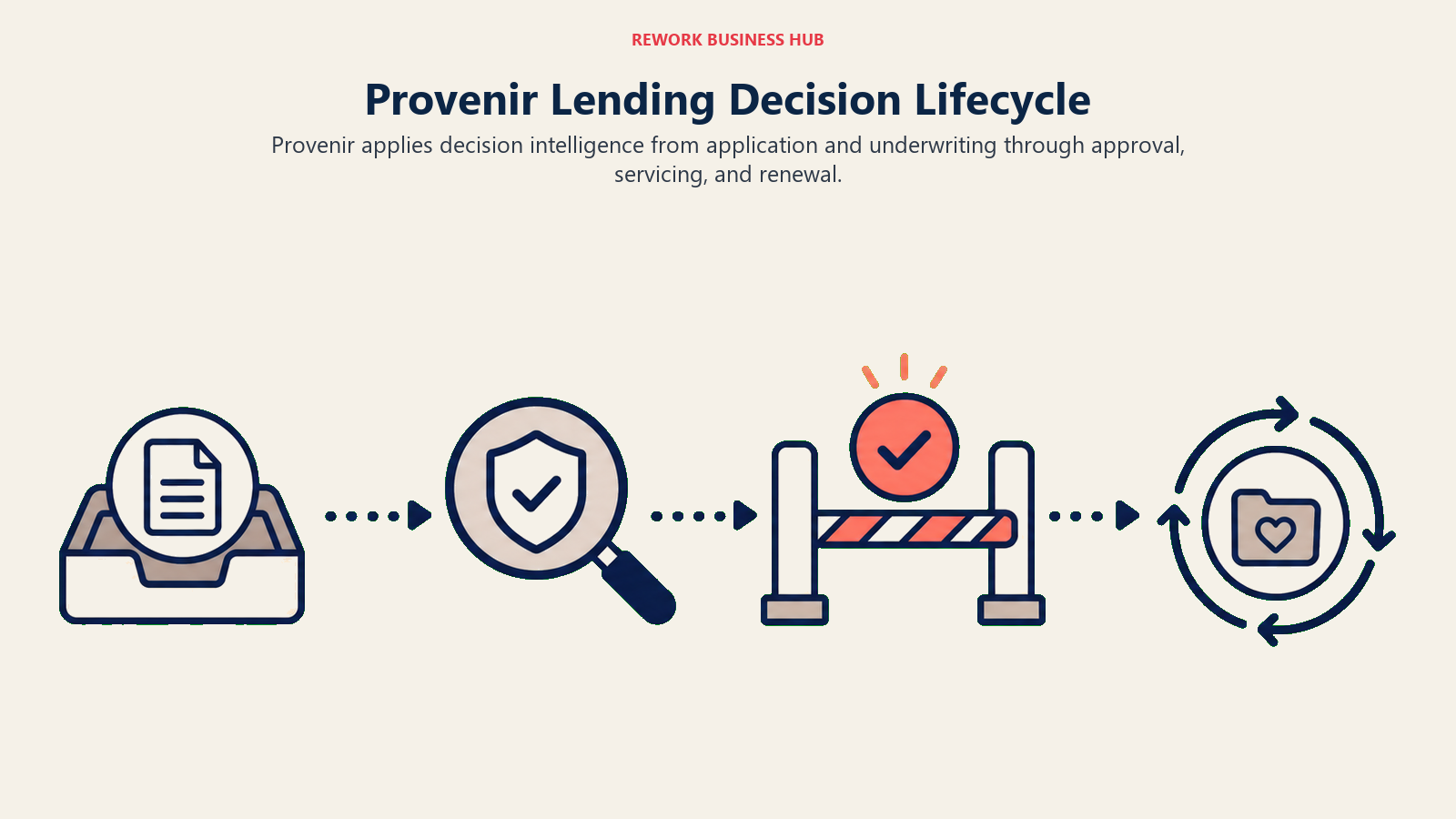
That breadth is also the fit signal: Provenir is best suited to multi-product lenders running consumer, SMB, and BNPL portfolios in parallel, where a unified decisioning layer earns its complexity. Pricing is enterprise and quote-only. For a wider view of what agentic AI can automate outside lending decisions specifically, see best AI agents.
Best for: lenders managing multiple credit products who want one decisioning platform instead of a patchwork. Not ideal for: a single-product lender that would be paying for orchestration capability it won't use.
| Provenir | Detail |
|---|---|
| Pros | Covers credit, fraud, case management, and collections in one platform; new agentic AI decisioning layer (2026); strong fit for multi-product lenders |
| Cons | Complexity and cost are hard to justify for a single-product lending operation; enterprise-only pricing |
13. Ocrolus - AI document and cash-flow intelligence for lending
Ocrolus solves a problem every underwriter knows: turning a stack of bank statements, pay stubs, and tax forms into a decision-ready number is slow and error-prone when done by hand. Its AI engine processes roughly 750,000 credit applications a month, converting financial documents into audit-ready cash-flow and income analytics plus fraud detection, and in April 2026 it launched automated conditioning that extends the same intelligence through document classification, income and asset analysis, and condition resolution for mortgage lenders specifically. The company signed nearly 90 new mortgage lender customers in the year leading into that launch.
Ocrolus offers free, on-demand, and commit (enterprise) pricing tiers, though specific numbers for each still require contacting sales. It's strongest in mortgage and SMB lending, where document-heavy underwriting is the bottleneck.
Best for: mortgage and SMB lenders whose underwriting speed is bottlenecked by manual document review. Not ideal for: a bank looking for a general-purpose banking AI platform rather than a document-and-cash-flow specialist.
| Ocrolus | Detail |
|---|---|
| Pros | Processes ~750K applications/month with audit-ready output; new automated conditioning for mortgage; free tier available to start |
| Cons | Narrower focus (mortgage/SMB document analysis) rather than a broad banking AI platform; enterprise tier is quote-only |
14. DataRobot - governed AI/ML platform for credit risk modeling
DataRobot isn't a banking-specific vendor, it's an enterprise AI/ML platform that a meaningful share of banks use specifically because of how it handles model governance. It's built to run agentic, generative, and predictive AI with full auditability, continuous monitoring, and end-to-end lineage designed to hold up under the kind of regulatory scrutiny model risk management teams face, including automated documentation that maps to MRM review requirements. One customer case study describes a lending team standing up several credit risk models in eight weeks, raising loan acceptance rates and revenue while holding risk constant.
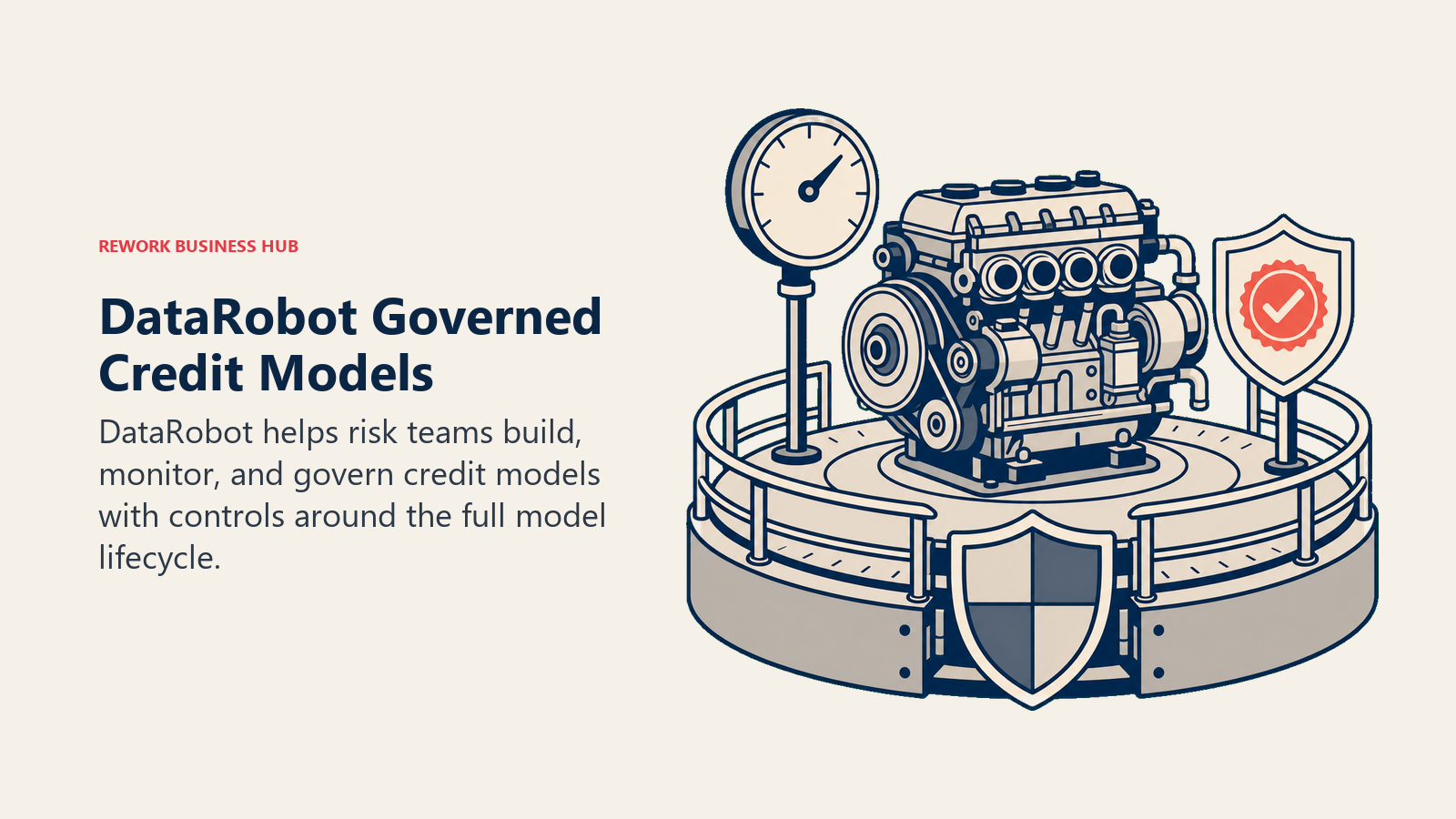
Because it's general-purpose, DataRobot requires more in-house data science capability to configure than a pre-built banking point solution. Pricing is enterprise and quote-only.
Best for: banks with an internal data science function that wants a governed platform for building and monitoring proprietary credit risk models. Not ideal for: a team that wants a pre-built, banking-specific underwriting product out of the box; see Zest AI or Provenir for that instead.
| DataRobot | Detail |
|---|---|
| Pros | Strong model governance and auditability for MRM review; supports agentic, generative, and predictive AI in one platform; proven fast time-to-model |
| Cons | General-purpose platform requires real in-house data science capacity; not a turnkey banking underwriting product |
How to Choose: Decision Framework
Before you sit through a dozen demos, figure out which of the five jobs you're actually hiring AI to do. Most digital banking AI procurement cycles stall because a team evaluates a fraud platform when the real gap was conversational coverage, or vice versa. For the broader software evaluation process outside the AI layer specifically, how to choose ERP software walks through the underlying criteria that still apply.
| If you need... | Pick... | Why |
|---|---|---|
| Deep, banking-specific conversational AI at enterprise scale | Kasisto | 1,800+ pre-built banking intents and a banking-trained LLM |
| Chat, voice, and collections AI sized for a credit union budget | interface.ai | Purpose-built economics and performance-based pricing for CUs and community banks |
| AI and human agents working the same conversation, not two silos | Glia | ChannelLess handoff without the customer repeating themselves |
| Proactive personalization on top of transaction data | Personetics | Proven at 150M+ customer scale, often bundled through your core vendor |
| The data plumbing to power personalization or lending AI | Envestnet | Yodlee | Connects 17,000+ institutions with an AI-ready data layer |
| Enterprise fraud and financial crime detection at massive transaction volume | Feedzai or Featurespace | Both operate at trillions of dollars and 100B+ events annually |
| Comprehensive AML case management for a large compliance team | NICE Actimize | Entity-centric detection plus a full case management workflow |
| Transparent, usage-based AML and sanctions screening to start | ComplyAdvantage | Public $99/mo Starter tier; pair with an IDV provider |
| Real-time identity verification at account opening | Socure | Usage-based pricing, dedicated synthetic-identity detection |
| Explainable underwriting that survives a fair-lending exam | Zest AI | Built-in explainability at $1T+ in originations supported |
| One decisioning platform across multiple lending products | Provenir | Unified credit, fraud, and collections decisioning |
| Faster underwriting on document-heavy applications | Ocrolus | ~750K applications/month processed with audit-ready output |
| A governed platform to build proprietary credit risk models in-house | DataRobot | Full model lineage and auditability built for MRM review |
Compliance Notes: Model Risk and Fair Lending
Every AI tool on this list that touches credit, fraud scoring, or customer-facing decisions eventually runs into two regulatory realities in the US, and they moved in 2026.
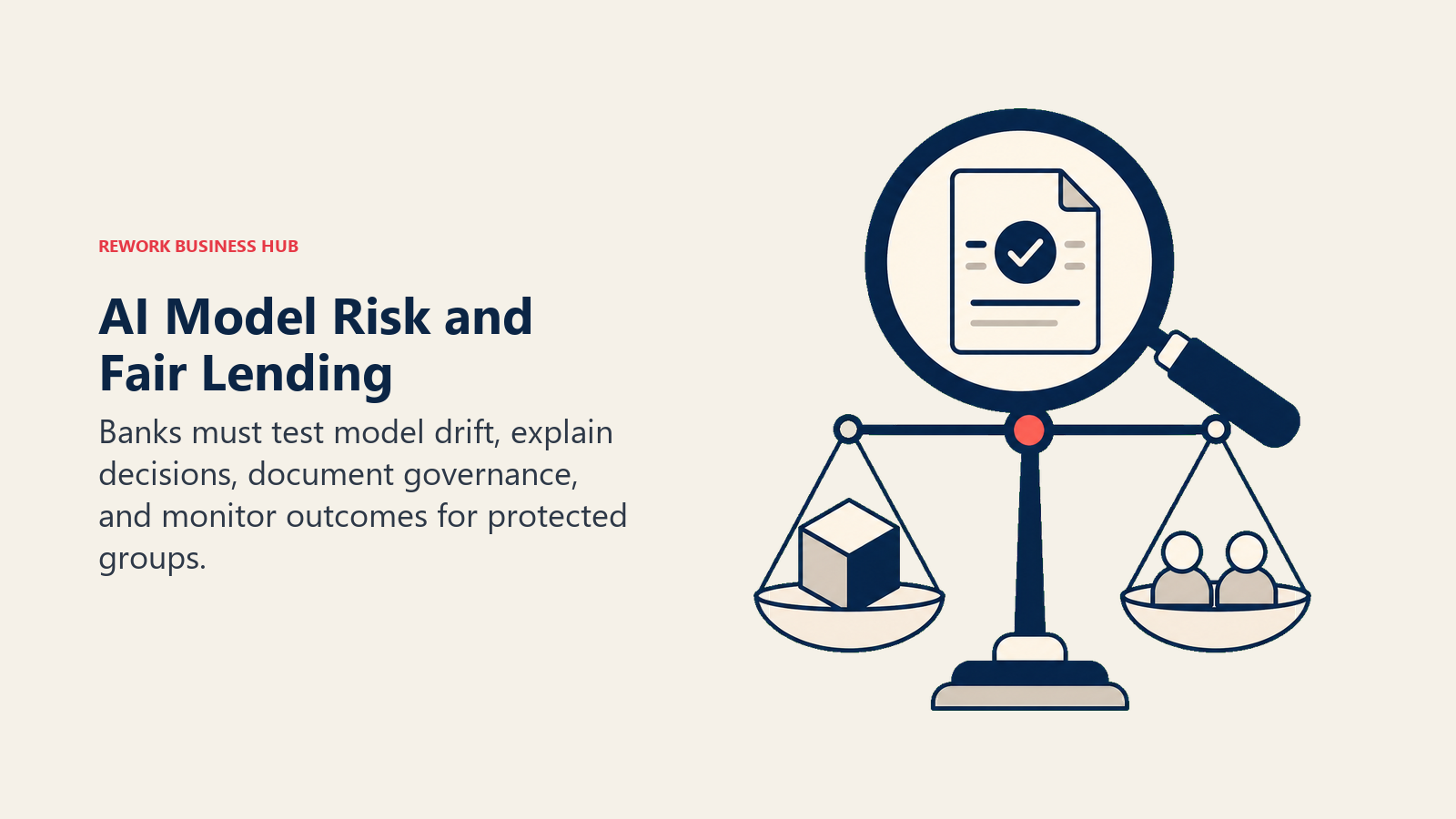
Model risk management. The original SR 11-7 letter from the Federal Reserve and OCC has governed bank model risk since 2011: identify and assess model risk, subject every model to "effective challenge" from technically competent reviewers, and validate on conceptual soundness, ongoing monitoring, and outcomes analysis. On April 17, 2026, the OCC, Federal Reserve, and FDIC jointly issued revised guidance that supersedes the 2011 letter with a more flexible, principles-based framework, but the agencies were explicit that generative and agentic AI models are novel enough to fall outside the strict scope of the new guidance for now. Practical read: if you're deploying DataRobot, Zest AI, Provenir, or any other model touching credit decisions, your model risk team still needs documentation, effective challenge, and ongoing monitoring in place, whether or not the letter of the guidance technically covers your specific model type.
Fair lending. Federal enforcement narrowed on July 21, 2026, when the CFPB's amended Regulation B took effect and eliminated disparate-impact liability under ECOA. That does not make AI credit decisioning risk-free. The Fair Housing Act still recognizes disparate impact for mortgage lending, and most state anti-discrimination statutes were unaffected by the federal rule change. Vendors like Zest AI market explainability specifically because examiners and plaintiffs' attorneys can still ask a lender to justify why a model denied a specific applicant, regardless of which liability theory applies.
None of this is legal advice. Treat every regulatory point above as a starting question for your own compliance, model risk, and legal teams, not a final answer.
Frequently Asked Questions about AI Tools for Digital Banking
What's the difference between AI tools for digital banking and general business AI tools?
Digital banking AI tools are built for regulated financial workflows, fraud detection, AML/KYC compliance, credit underwriting that has to survive a fair-lending exam, and conversational assistants trained on banking-specific language and intents. General business AI tools (like broad FP&A or accounting AI) aren't built to clear the same regulatory bar and typically lack the security certifications banks require during procurement.
Do small community banks and credit unions have realistic AI options, or is this all enterprise-only?
Several tools here are built specifically for smaller institutions. interface.ai's entire roadmap targets credit unions and community banks, ComplyAdvantage has a public $99/month Starter tier, and Zest AI serves lenders processing anywhere from a few hundred to 600,000-plus applications a year. Enterprise-only platforms like Feedzai (3,000+ events/second minimum) are the exception, not the rule.
How does AI credit decisioning stay compliant with fair lending rules?
Explainability is the core mechanism. Tools like Zest AI build models designed to show why a specific application was approved or denied in terms an examiner can evaluate, rather than treating the model as a black box. As of July 21, 2026, federal ECOA enforcement no longer covers disparate-impact claims, but the Fair Housing Act and most state laws still do, so explainable, well-documented models remain the safer path regardless of which federal rule is in force this year.
What changed with SR 11-7 model risk guidance in 2026?
On April 17, 2026, the OCC, Federal Reserve, and FDIC replaced the original 2011 SR 11-7 letter with revised, more flexible, principles-based guidance. The agencies noted that generative and agentic AI models are novel enough that they may sit outside the strict scope of the new guidance, but banks are still expected to apply sound risk management, documentation, and effective challenge to any AI model that influences a customer-facing or credit decision.
Can one vendor cover fraud detection, AML, and identity verification, or do I need multiple tools?
Most banks end up with at least two vendors in this space. ComplyAdvantage, for example, handles AML and sanctions screening but explicitly does not do identity verification, so it's commonly paired with Socure or a similar IDV provider. Larger institutions often run a fraud platform (Feedzai or Featurespace) alongside a separate AML case management system (NICE Actimize) because the detection and investigation workflows differ enough to justify specialized tools.
Why do most digital banking AI vendors hide their pricing?
Enterprise banking software pricing depends on transaction volume, number of products covered, integration complexity, and whether you need on-premises or region-specific hosting for regulatory reasons, variables that don't fit a simple per-seat price tag. A handful of tools here, like ComplyAdvantage's Starter tier and Socure's per-screening pricing, publish entry-level numbers, but full enterprise contracts across this category are almost always quote-only.
Is conversational banking AI actually replacing human customer service?
Not yet, and the data says customers aren't asking it to. A Deloitte survey found 74% of US banking customers still prefer a human agent for routine interactions, and 37% have never used a banking chatbot at all. That's why tools like Glia are built around AI-to-human handoff rather than full replacement, and why even Kasisto's most advanced deployments are measured on resolution speed, not on eliminating agents.
What should a bank evaluate first when comparing these tools: features or compliance readiness?
Compliance readiness first, in this category more than most. A conversational AI tool with great features but no SOC 2 Type II certification, or a credit decisioning model with no explainability documentation, will stall in procurement or fail a model risk review regardless of how good the demo looked. Confirm security certifications, model governance documentation, and audit trail capabilities before you compare feature checklists.
What to Do Next
Pick the one job costing you the most right now, whether that's fraud losses, member churn to fintech competitors, or underwriting turnaround time, and run a scoped pilot with your top two picks for that specific job against real (or sandboxed) data before you touch a second category. Bring your model risk and compliance teams into that pilot from day one, not after you've picked a winner.

Principal Product Marketing Strategist
On this page
- Updated July 2026: What Changed
- Key Facts
- Quick Comparison Table
- Institution Fit Matrix
- 1. Kasisto (KAI) - conversational AI purpose-built for banking
- 2. interface.ai - the BankGPT platform for credit unions and community banks
- 3. Glia - unifying AI and human agents in one interaction
- 4. Personetics - the personalization engine behind proactive banking
- 5. Envestnet | Yodlee - the data layer that makes personalization possible
- 6. Feedzai - AI-native fraud prevention for the largest financial institutions
- 7. Featurespace (ARIC Risk Hub, now part of Visa) - real-time behavioral fraud and AML
- 8. NICE Actimize - enterprise AML and financial crime management
- 9. ComplyAdvantage - AI-driven AML, KYC, and sanctions screening
- 10. Socure - AI identity verification and KYC for account opening
- 11. Zest AI - explainable AI underwriting built for fair-lending scrutiny
- 12. Provenir - AI decision intelligence across the full lending lifecycle
- 13. Ocrolus - AI document and cash-flow intelligence for lending
- 14. DataRobot - governed AI/ML platform for credit risk modeling
- How to Choose: Decision Framework
- Compliance Notes: Model Risk and Fair Lending
- What to Do Next