Best AI Tools for Virtual CFO Services in 2026: 15 Tools for Fractional CFO Practices
Turn this article into takeaways for your work.


Each assistant summarizes the article only for you and suggests best practices for your work.
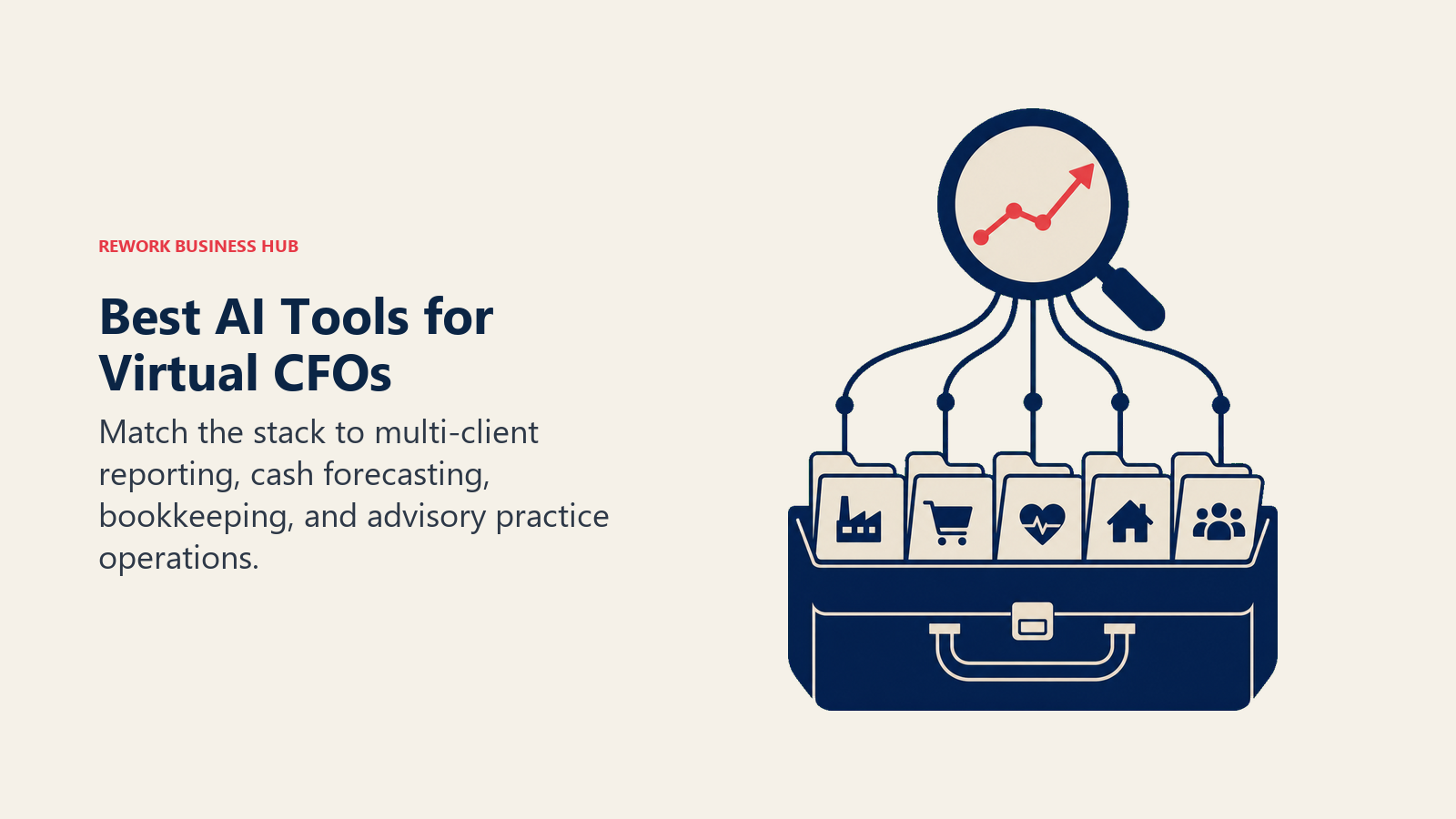
If you're running a virtual or fractional CFO practice in 2026, Spotlight Reporting and Fathom lead for client-facing reporting and benchmarking across a whole portfolio of companies, Jirav and Syft Analytics lead for multi-client planning and consolidated dashboards, Digits and Puzzle lead for AI-native bookkeeping that feeds your advisory work with real-time data, Float and Fluidly lead for cash flow forecasting delivered at scale to an entire client base, and Ignition and Karbon lead for the practice operations work (proposals, billing, workflow) that lets a solo fractional CFO scale past a handful of clients. This guide ranks 15 tools by the job you're hiring AI to do inside a virtual CFO practice serving multiple clients at once, not by whichever vendor shipped the loudest AI announcement this quarter.
This guide is scoped to the practice side of virtual and fractional CFO work: reporting across a portfolio of clients, benchmarking one client against another, forecasting cash flow for a whole book of business, and running the advisory practice itself. If you're building the FP&A stack for one company's internal finance team, best AI tools for finance teams covers that single-company angle (Cube, Datarails, Pigment, Anaplan, Runway, Mosaic, Abacum). If your gap is the ledger, bookkeeping, and monthly close for one client at a time, best AI tools for accounting covers that adjacent category. All three guides are meant to be read together since most virtual CFO practices end up using tools from all three.
Key Facts
- Client advisory services (CAS) practices reported a 17% median revenue growth rate in the most recent benchmark year, with 99% of firms projecting continued median growth over the next three years, per the AICPA and CPA.com 2024 CAS Benchmark Survey.
- Firms that generate meaningful revenue from CFO-level or higher-level business insights advisory work earn more than 30% higher monthly recurring revenue than firms without that offering, per AICPA and CPA.com.
- Only 10% of CAS and advisory practices still bill primarily by the hour; the rest have shifted to fixed-fee or recurring pricing models, per AICPA and CPA.com.
- Median CAS revenue rose 61% year over year, and net client fees per professional climbed to $156,250, a 29% increase, per AICPA and CPA.com.
- Practices that invest in technology serve roughly 50% more clients on average (100 versus 67), per AICPA and CPA.com.
- The global virtual CFO market is projected to grow from $4.7 billion in 2026 to more than $10 billion by 2035, and over 60% of SMEs now use some form of outsourced CFO service, per Fortune.
What Changed in 2026
- Fathom launched Portfolio plans built specifically for firms that need oversight of an entire client base at a glance, separate from its full Pro reporting tier, so a practice can watch 100+ clients cheaply and only upgrade individual companies to deep analytics when needed.
- Spotlight Reporting renamed its top advisory tiers "Super VCFO 25" and "Super VCFO 75," naming the product line directly after the buyer it's built for: firms scaling advisory revenue across a growing client roster.
- Digits rolled out outcome-based pricing for accounting firms in April 2026: a firm pays nothing for a given client unless Digits automates 95% or more of that client's transactions with zero human touch, a direct bet on AI bookkeeping accuracy rather than seat count.
- Jirav's accounting-firm partner pricing runs per client (from roughly $50 to $150 per client per month wholesale) rather than as one flat enterprise contract, a materially different model than buying Jirav directly as a single company.
Quick Comparison Table
| Tool | Best For | Starting Price | Key Strength | Key Limitation |
|---|---|---|---|---|
| Spotlight Reporting | Advisory reporting and benchmarking across a growing client roster | Basic from $295/mo (10 orgs) | "Super VCFO" tiers built explicitly for scaling advisory revenue | No published Enterprise pricing; steps up fast per org tier |
| Fathom | Brandable client reports plus firm-wide portfolio oversight | Portfolio from AU$62/mo (100 companies) | Group benchmarking across clients; cheap portfolio-level tier | Deep analytics require upgrading each client to a Pro seat |
| Jirav | Multi-client FP&A priced to match advisory billing | Wholesale from $50/mo per client | Purpose-built partner pricing for 2,000+ accounting/CFO firms | Direct (non-partner) pricing runs $10K+/yr for one company |
| Syft Analytics | Affordable multi-entity dashboards and consolidations | $23/mo single entity; $125/mo unlimited | Cheapest real path to unlimited-entity reporting | Advanced consolidations sit behind the top tier |
| Digits | AI-native real-time bookkeeping with an AI copilot | $100/mo (Core) | Outcome-based pricing option pays for automated accuracy, not seats | Full-service human support starts at $350/mo |
| Puzzle | AI-native ledger for startup and SMB clients | Free under $20K/mo transaction volume | Up to 98% automated transaction categorization | Best fit narrows outside clean, API-connected startup finances |
| Float | Cash flow forecasting delivered across a client portfolio | $59/mo (Essential) | Accountant partner plans built for 2-4+ clients | Some reviewers flag cost for very small clients |
| Fluidly | AI cash flow forecasting at scale for a whole client base | Free (Lite, 90-day forecast) | Purpose-built to let one accountant forecast for many clients at once | Full 12-month forecasting requires the Pro tier |
| Futrli (Sage) | 3-way forecasting bundled into a Sage-connected practice stack | Practice pricing from ~£20/client/mo | Daily AI cash flow predictions with confidence scoring | Per-client practice pricing varies by firm size; opaque online |
| LivePlan | Client-facing strategic plans and board-ready forecasts | $15/mo (Standard, annual) | Industry benchmark data for client positioning conversations | Not built for ongoing multi-entity portfolio reporting |
| Vareto | AI-native live-data FP&A for higher-end advisory clients | Custom (AI features currently free) | Real-time data model instead of static monthly exports | No public pricing; sales-led for the core platform |
| Relay | Client cash management and banking for the practice itself | Free (Starter); Grow $30/mo | Partner Program discounts up to 27% for accountants/bookkeepers | A banking layer, not a reporting or forecasting tool |
| Ignition | Proposals, engagement letters, and billing automation | $49/mo (Solo, up to 20 clients) | Scales a solo fractional CFO's client agreements and collections | Payment processing fees stack on top of the subscription |
| Karbon | Practice management and workflow across many clients | $59/user/mo (Team) | Purpose-built workflow for accounting and advisory teams | Per-user pricing climbs fast as the practice adds staff |
| Claude | Ad hoc financial analysis and board memos across engagements | Free; Pro $20/mo | Strong reasoning for drafting client-ready explanations fast | Not a system of record; needs verification against real data |
Practice-Stage Framework
Software needs change sharply as a virtual CFO practice grows from one person juggling five retainers to a scaled CAS division managing hundreds of client relationships. Match your stack to where the practice actually is, not where you hope it will be in two years.
| Practice Stage | Client Load | Budget Signal | Best Fits |
|---|---|---|---|
| Solo fractional CFO | 1-10 clients | Under $300/mo tooling budget | Fathom Starter, Syft Standard, Float Essential, Puzzle (free tier), Ignition Solo |
| Boutique CFO advisory firm | 10-40 clients | $300-1,500/mo tooling budget | Spotlight Reporting Super VCFO 25, Fathom Silver/Gold, Jirav (partner tier), Karbon Team |
| Scaled CAS or advisory practice | 40-150+ clients | $1,500-5,000/mo tooling budget | Spotlight Reporting Super VCFO 75, Fathom Portfolio, Jirav CFO Enterprise, Digits (outcome-based) |
| Enterprise CAS or CFO advisory division | 150+ clients | $5,000+/mo tooling budget, custom contracts | Fathom Enterprise, Spotlight Reporting Enterprise, Jirav Enterprise, Karbon Business/Enterprise |
How to Choose: Decision Framework
Most virtual CFO practices don't fail on strategy, they fail on operations: the software stack can't keep up once the client count crosses 15 or 20. Figure out which job is actually breaking before you shop for a new tool.
| If you need... | Pick... | Why |
|---|---|---|
| A branded, client-ready report you can generate for dozens of companies without rebuilding it each time | Fathom or Spotlight Reporting | Both are purpose-built for one advisor producing consistent reports across many client entities |
| Pricing that matches how advisory services are actually billed to accounting and CFO advisory firms | Jirav | Its accounting-firm partner program prices per client, not as one flat enterprise contract |
| The cheapest real path to unlimited-entity dashboards | Syft Analytics | Unlimited-entity tiers start at $125/mo, well below most competitors' entry point |
| Bookkeeping and financials that feed your advisory work without a bookkeeper on every account | Digits or Puzzle | Both push AI-driven categorization and real-time statements; Digits even prices on automation accuracy |
| Cash flow forecasts delivered across an entire client base, not one company at a time | Float or Fluidly | Both are explicitly built so one accountant or fractional CFO can forecast for many clients in parallel |
| A 3-way forecast that plugs directly into a Sage or Xero-connected practice | Futrli (Sage) | Native integration and daily AI-driven cash flow predictions with confidence scoring |
| A polished, client-facing strategic plan or board deck with industry benchmarks | LivePlan | Purpose-built for the plan-and-pitch conversation advisors have with clients, not ongoing bookkeeping |
| Real-time, live-data FP&A for a higher-end advisory client that has outgrown static exports | Vareto | Built around a live data model instead of monthly static snapshots |
| A banking layer that keeps client cash organized and gives the practice itself a partner discount | Relay | Up to 27% Partner Program discounts for accountants and bookkeepers signing up clients |
| To formalize proposals, engagement letters, and collections so the practice can take on more clients | Ignition | Automates the paperwork and billing that otherwise caps how many clients one person can serve |
| Workflow and practice management to keep dozens of client engagements from falling through the cracks | Karbon | Purpose-built practice management for accounting and advisory teams, not generic project software |
| A fast, disposable financial model or board memo for a specific client conversation | Claude | Strong reasoning for drafting client-ready explanations without adopting a new system of record |
1. Spotlight Reporting: Advisory Reporting Built Around a "Super VCFO" Tier
Spotlight Reporting is one of the only platforms on this list that names a pricing tier directly after the buyer it wants: Super VCFO. The product bundles reporting, forecasting, and dashboards into one advisor-facing package, and the tier structure is explicitly built around how many client organizations a firm is actively serving, not how many seats a firm has internally.

The Super VCFO 25 tier is labeled "for getting Advisory services started" and the Super VCFO 75 tier is labeled "for scaling Advisory to grow revenue," which tells you exactly who Spotlight Reporting is chasing: a fractional or virtual CFO practice that wants to formalize benchmarking and forecasting as a paid service line, not just a bookkeeping add-on. Every Super VCFO tier includes a dedicated account manager and tailored training, plus 12 months of free access to Spotlight Sustain, its ESG reporting module.
Best for: Fractional and virtual CFO practices (10-75+ clients) formalizing reporting, forecasting, and benchmarking as a distinct paid advisory service
Key strengths:
- Pricing tiers named and structured directly around scaling advisory client counts
- Reporting, forecasting, and dashboards bundled into one advisor-facing product
- Dedicated account manager and training included on every Super VCFO tier
Limitations:
- No public Enterprise pricing; custom quote required past 75 organizations
- Meaningfully pricier per org than Syft Analytics at the entry tier
- Best value depends on actually selling advisory services, not just compliance work
| What you get | What you don't |
|---|---|
| Reporting, forecasting, and dashboard tools bundled for advisors | No public Enterprise-tier pricing |
| Dedicated account manager on every Super VCFO plan | Meaningfully higher cost per org than Syft Analytics |
| 12 months of Spotlight Sustain ESG reporting included | Best ROI depends on selling advisory, not just compliance |
Pricing: Basic $295/mo (10 orgs); Super VCFO 25 $495/mo (25 orgs); Super VCFO 75 $995/mo (75 orgs); Enterprise custom. See spotlightreporting.com/pricing/us-advisor.
2. Fathom: Brandable Client Reports Plus Firm-Wide Portfolio Oversight
Fathom splits its offering in a way that fits how a virtual CFO practice actually grows: a Pro tier for deep, brandable analysis on individual client accounts, and a newer Portfolio tier built specifically for firms that need oversight of an entire client base at a glance without paying full Pro pricing for every single client.
That two-tier structure lets a practice watch 100 or more clients cheaply on Portfolio, then upgrade a specific client to Pro when that engagement graduates into full advisory work with three-way cash flow forecasts, consolidations, and custom reporting. Every Pro plan includes unlimited brandable reports and group benchmarking, letting a fractional CFO compare one client's margins against anonymized peers in the same portfolio.
Best for: Virtual CFO practices that want to monitor a large client base cheaply and selectively upgrade specific clients to deep analytics
Key strengths:
- Portfolio tier gives cheap, firm-wide oversight of 100+ clients at a glance
- Unlimited brandable reports and group benchmarking on every Pro plan
- Multi-currency consolidations for clients with international entities
Limitations:
- Pricing is published in Australian dollars, excluding GST; confirm your local cost
- Deep analytics (three-way forecasts, consolidations) require the Pro tier per client
- Per-additional-company fees add up fast for a practice with many small clients
| What you get | What you don't |
|---|---|
| Portfolio-level oversight of an entire client base cheaply | Deep analytics require upgrading each client to Pro |
| Unlimited brandable reports and group benchmarking | Pricing quoted in AUD, not USD |
| Multi-currency consolidations for international clients | Per-additional-company fees add up at high client counts |
Pricing: Pro Starter AU$65/mo (1 company) up to Platinum AU$860/mo (50 companies); Portfolio from AU$62/mo (100 companies) to AU$500/mo (unlimited companies). See fathomhq.com/pricing.
3. Jirav: Multi-Client FP&A Priced to Match Advisory Billing
Jirav's differentiator for this category isn't a feature, it's the pricing model. Bought directly as a single company, Jirav runs like any other mid-market FP&A platform: five figures a year. Bought through Jirav's accounting-firm partner program, the same planning, budgeting, and reporting engine is priced per client (roughly $50/mo for Controller Essentials up to $150/mo for CFO Enterprise), specifically so a virtual CFO practice can resell it profitably to each client rather than eating one large platform bill.

Jirav works with more than 2,000 accounting and CFO advisory firms on this wholesale model, and every plan includes white labeling plus up to 15 end-client admin and editor seats with unlimited read-only dashboards, so clients can log in and see their own numbers without needing a full paid seat.
Best for: Accounting and CFO advisory firms (any size) that want to resell FP&A software to clients as a line item, not absorb one flat platform cost
Key strengths:
- Per-client wholesale pricing built for advisory firms reselling to clients
- White labeling and up to 15 end-client users included on every tier
- Driver-based budgeting and up to 7-year forecasts on the CFO Enterprise tier
Limitations:
- Direct (non-partner) pricing for a single company runs $10,000+/year
- Partner pricing requires enrolling in Jirav's formal partner program
- AI-powered forecasts are strongest once historical data has accumulated
| What you get | What you don't |
|---|---|
| Per-client wholesale pricing built for resale to advisory clients | Direct single-company pricing is materially more expensive |
| White labeling and 15 end-client seats included on every tier | Requires enrolling in the formal partner program to unlock it |
| Driver-based budgets and up to 7-year forecasting on CFO Enterprise | AI forecasts improve with more historical client data over time |
Pricing: Accounting-firm partner tiers from $50/mo/client (Controller Essentials) to $150/mo/client (CFO Enterprise); direct single-company plans start around $10,000/yr. See jirav.com/pricing.
4. Syft Analytics: The Cheapest Real Path to Unlimited-Entity Reporting
Syft Analytics doesn't chase the "Super VCFO" positioning Spotlight Reporting and Fathom lean into, but it wins on raw price-per-entity for a practice watching many small clients. Standard, Plus, and Advanced tiers each offer both a single-entity price and an unlimited-entity price, and the unlimited-entity Standard tier at $125/mo undercuts most competitors' entry point for multi-client reporting outright.
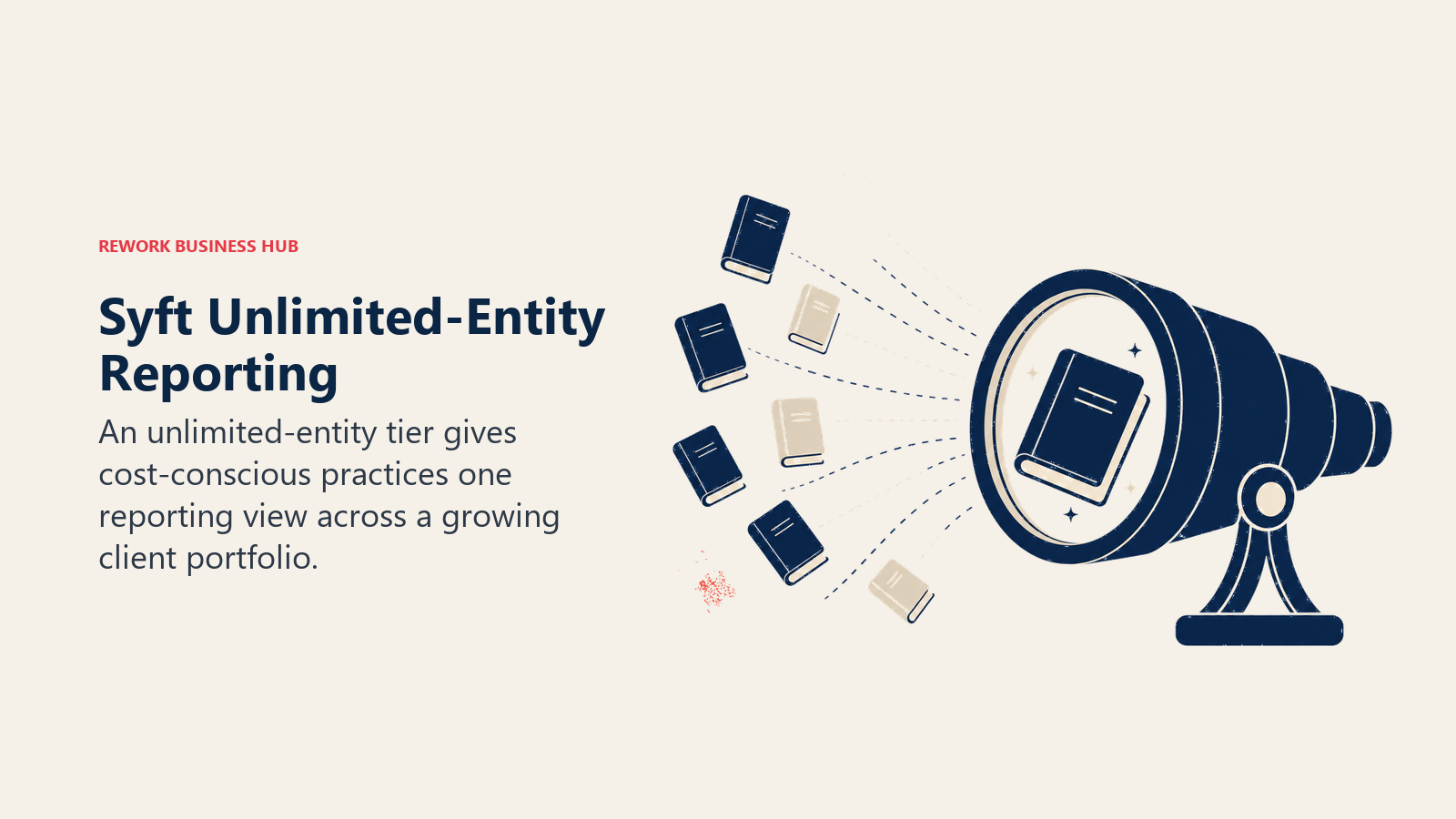
The Plus tier adds multi-currency support and deeper report customization, useful for clients with international operations, while Advanced merges financial and operational data into consolidated dashboards with tailored onboarding. For a fractional CFO still building a client roster, the ability to start at $23/mo for one entity and only step up to unlimited pricing once the client count justifies it keeps early cash flow predictable.
Best for: Cost-conscious virtual CFO practices and bookkeepers scaling from a handful of clients toward an unlimited-entity portfolio
Key strengths:
- Cheapest unlimited-entity tier of any tool in this comparison
- Both per-entity and unlimited-entity pricing on every plan tier
- 14-day free trial with no credit card required
Limitations:
- Advanced consolidations and operational insights sit behind the top tier
- Less brand recognition in the advisory space than Fathom or Spotlight Reporting
- Implementation and integration add-on fees can apply beyond the base plan
| What you get | What you don't |
|---|---|
| Lowest-cost unlimited-entity reporting tier in this category | Advanced consolidations require the top Advanced tier |
| Both per-entity and unlimited pricing on Standard, Plus, Advanced | Less established brand recognition among advisory buyers |
| 14-day free trial on any plan, no card required | Some integrations and AI add-ons cost extra |
Pricing: Standard $23/mo single entity or $125/mo unlimited; Plus $47/mo or $249/mo unlimited; Advanced $95/mo, unlimited-entity plans up to $799/mo. See syftanalytics.com/pricing-page.
5. Digits: AI-Native Bookkeeping That Pays for Itself on Accuracy
Digits is a bet that the advisory layer of a virtual CFO practice is only as good as the bookkeeping underneath it, so it built AI-driven categorization, bill pay, and real-time financial statements as the foundation, with a Full-Service Upgrade for clients that still want a human accountant in the loop.
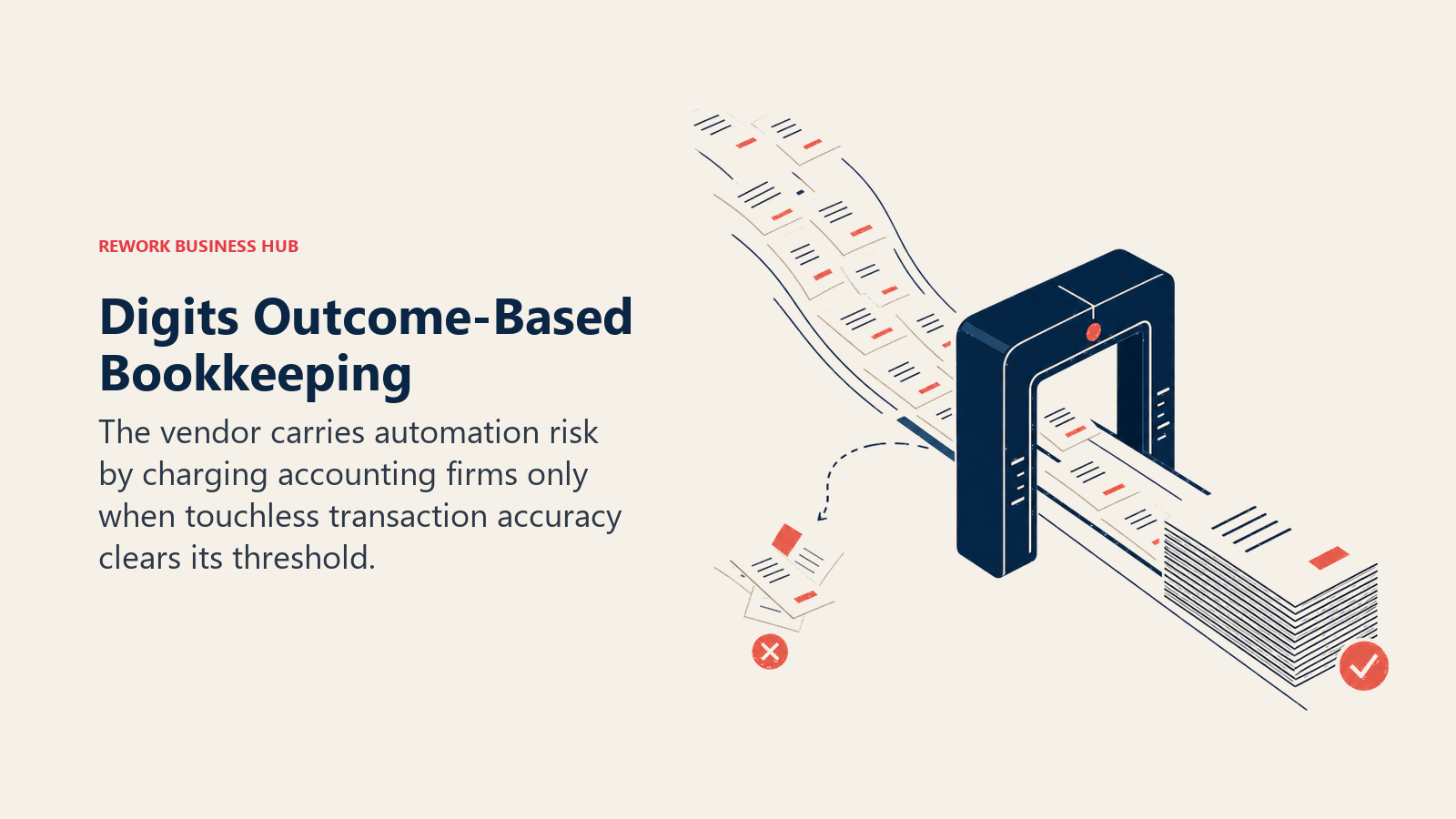
The notable 2026 move is outcome-based pricing for accounting firms, announced in April: a firm pays nothing for a given client's Digits subscription unless the platform automates 95% or more of that client's transactions with zero human touch. If the team has to do more than 5% of the work manually, Digits is free for that client. It's a genuinely different pricing philosophy than per-seat or per-client flat fees, and it puts the automation risk on the vendor instead of the practice.
Best for: Outsourced accounting and virtual CFO firms that want AI-driven bookkeeping feeding their advisory work, with pricing tied to actual automation accuracy
Key strengths:
- Outcome-based pricing for accounting firms ties cost directly to automation accuracy
- AI-driven categorization, bill pay, and real-time statements in one platform
- Full-Service Upgrade available for clients that still want human review
Limitations:
- Standard Core plan pricing ($100/mo) still applies outside the outcome-based firm program
- Full-Service human support starts at $350/mo, a meaningful step up
- Newer entrant with less multi-decade track record than legacy bookkeeping tools
| What you get | What you don't |
|---|---|
| Outcome-based pricing option for accounting firms | Standard Core pricing still applies outside that program |
| AI categorization, bill pay, and real-time statements | Full-service human support adds $350/mo+ |
| Zero cost for clients where automation misses accuracy targets | Newer platform, shorter track record than legacy tools |
Pricing: Core (AI Accounting) $100/mo; Full-Service Upgrade from $350/mo; Advanced custom; outcome-based accounting-firm pricing announced April 2026. See Digits announces outcome-based pricing.
6. Puzzle: AI-Native Ledger for Startup and SMB Clients
Puzzle is narrower than Digits in scope but sharper for a specific client type: startups and SMBs with clean, API-accessible finances running on Stripe, Mercury, Ramp, Brex, Deel, and Gusto. For a virtual CFO practice that specializes in that client profile, Puzzle's up to 98% automated transaction categorization and real-time financials cut the manual bookkeeping load that would otherwise eat into advisory time.
The pricing model fits how a lot of fractional CFO relationships start: free for a client under $20,000 in monthly transaction volume, then scaling from $30 to $150/mo as the client grows and needs burn insights, AI accuracy review, and unlimited users. Higher tiers claim up to a 50% cut in month-end close time through AI-powered automation, which matters directly to a practitioner billing across many client close cycles each month.
Best for: Virtual CFO practices specializing in startup and SMB clients with clean, tool-connected finances
Key strengths:
- Free on-ramp for early-stage clients under $20K/mo transaction volume
- Up to 98% automated transaction categorization
- Native integrations with the exact stack most funded startups already run
Limitations:
- Best fit narrows quickly outside clean, API-accessible startup finances
- Not built for complex multi-entity consolidations
- Higher-tier features (burn insights, AI accuracy review) gated above $100/mo
| What you get | What you don't |
|---|---|
| Free tier for early-stage clients under $20K/mo volume | Narrower fit outside clean startup/SMB finances |
| Up to 98% AI-automated transaction categorization | No built-in multi-entity consolidation |
| Deep native integrations with Stripe, Mercury, Ramp, Brex, Gusto | Burn insights and AI accuracy review gated to $100/mo+ |
Pricing: Free under $20K/mo transaction volume; paid tiers $30-$360/mo; every account gets a 14-day trial with full Complete-plan access. See puzzle.io/pricing.
7. Float: Cash Flow Forecasting Delivered Across a Client Portfolio
Float turns live transaction data from Xero, QuickBooks Online, or FreeAgent into a rolling cash flow forecast, and its accountant partner plans are explicitly structured for firms managing multiple clients rather than one internal finance team. That distinction matters: a lot of cash flow tools are priced and built for a single company's finance function, while Float's partner tier starts at 2-4 clients and scales from there.
For a fractional CFO whose main recurring deliverable is a monthly or weekly cash position update, Float removes the manual model-rebuilding that eats hours across a client roster. The tradeoff shows up in cost for very small clients: at $59-199/mo per business, some reviewers flag Float as expensive relative to the client's overall fee, which is worth factoring into how the practice prices its own retainers.
Best for: Fractional CFOs and bookkeeping firms whose core recurring deliverable is a client cash flow forecast
Key strengths:
- Accountant partner plans built specifically for multi-client portfolios
- Live sync from Xero, QuickBooks Online, and FreeAgent
- Scenario planning lets a client see multiple cash outcomes in one view
Limitations:
- Per-business pricing can feel steep relative to a very small client's overall fee
- Sage Intacct integration is still in development (waitlist)
- No Sage or NetSuite native connection yet for larger clients
| What you get | What you don't |
|---|---|
| Accountant partner plans for 2-4+ clients | Per-business cost can feel steep for very small clients |
| Live sync from Xero, QuickBooks Online, FreeAgent | Sage Intacct connection still on the waitlist |
| Scenario planning for client cash flow conversations | No native NetSuite connection for larger clients |
Pricing: Essential $59/mo, Premium $99/mo, Enterprise $199/mo per business; accountant plans start at 2-4 clients; 14-day free trial. See floatapp.com/pricing-for-business.
8. Fluidly: AI Cash Flow Forecasting at Scale for a Whole Client Base
Fluidly's whole pitch is speed at scale: it uses AI to build a cash flow forecast from a client's Xero or QuickBooks data in minutes instead of the hours a manual model takes, which is exactly the constraint that caps how many clients one accountant or fractional CFO can realistically forecast for in a given week.
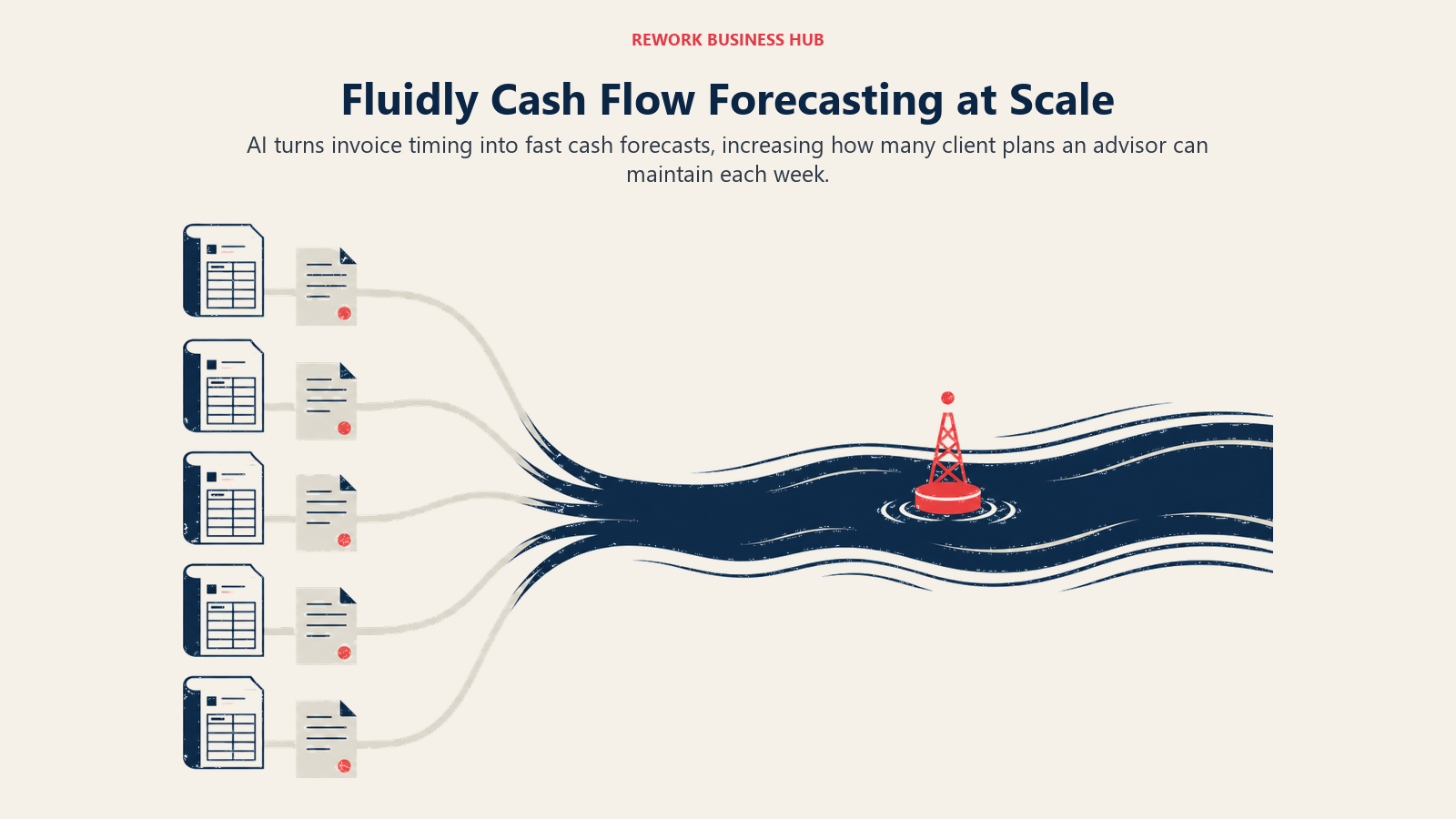
The free Lite tier (single user, 90-day forecast) is enough to prove the model on a first client, and the paid Pro tier (£79/mo) removes the user cap and extends the forecast window to a full 12 months, which is what most advisory-grade cash flow conversations need. Fluidly is a genuine fit for practices whose clients are primarily invoice-paid and struggle with predicting when debtors will actually pay, a problem AI-driven forecasting handles better than a static spreadsheet.
Best for: UK-centric bookkeeping and virtual CFO practices delivering cash flow forecasting across an entire invoice-paid client base
Key strengths:
- AI builds a forecast in minutes instead of hours, a direct multiplier on client capacity
- Free Lite tier lets a practice prove the model before paying
- Purpose-built for clients with debtor and invoice-timing problems
Limitations:
- Full 12-month forecasting and unlimited users require the Pro tier
- Primarily useful for Xero and QuickBooks-connected clients
- Less name recognition in the US market than Float or Fathom
| What you get | What you don't |
|---|---|
| AI forecasts built in minutes for a whole client base | Full 12-month forecasting requires the paid Pro tier |
| Free Lite tier to prove the model on a first client | Mostly proven with Xero/QuickBooks-connected clients |
| Purpose-built for invoice-paid clients with debtor timing issues | Less brand recognition outside the UK market |
Pricing: Free Lite (90-day forecast, 1 user); Pro £79/mo (12-month forecast, unlimited users); Max £149/mo (dedicated account manager). See Fluidly overview via Spotlight Reporting.
9. Futrli (Sage): 3-Way Forecasting Bundled Into a Sage-Connected Practice
Futrli, now sold as Futrli by Sage, produces three-way forecasts across the P&L, balance sheet, and cash flow, grounded in real accounting data pulled from Xero, QuickBooks Online, or MYOB Acumatica. Its daily cash flow algorithm analyzes ledger transactions and assigns traffic-light confidence scores to upcoming income and expense predictions, giving a client an at-a-glance read on forecast reliability rather than a single unexplained number.
For a virtual CFO practice already leaning on Sage products for other clients, the integration story is the draw: forecasting, reporting, and the ledger stay inside one connected ecosystem. Practice-level per-client pricing runs roughly £20-35 per client per month depending on firm size, with larger practices (10+ clients) landing at the lower end, though exact current rates are best confirmed directly with Sage since public pricing pages are inconsistent across regions.
Best for: Virtual CFO practices already standardized on Sage-connected accounting products for their clients
Key strengths:
- 3-way forecasts (P&L, balance sheet, cash flow) grounded in real ledger data
- Daily AI-driven predictions with traffic-light confidence scoring
- Per-client practice pricing scales down as the client roster grows
Limitations:
- Public pricing is inconsistent and best confirmed directly with Sage
- Strongest value depends on being in the Sage/Xero/QuickBooks ecosystem
- Less brand-forward advisory positioning than Spotlight Reporting or Fathom
| What you get | What you don't |
|---|---|
| 3-way forecasting grounded in real ledger data | Public pricing is inconsistent across regions |
| Confidence-scored daily cash flow predictions | Best value tied to the Sage/Xero/QBO ecosystem |
| Per-client practice pricing improves at higher client counts | Less advisory-brand positioning than category leaders |
Pricing: Practice/accountant per-client pricing runs roughly £20-35/client/mo depending on firm size; confirm current rates with Sage. See sage.com cash flow forecasting for accountants.
10. LivePlan: Client-Facing Strategic Plans and Board-Ready Forecasts
LivePlan isn't a day-to-day reporting tool, and a virtual CFO practice shouldn't try to use it as one. What it's genuinely good for is the strategic-planning conversation: building a client-facing business plan, financial forecast, or one-page pitch backed by industry benchmark data, useful for a fractional CFO helping a client raise capital, plan a new location, or prep for a board conversation.
The Premium tier's LiveForecast feature and industry benchmark data are the differentiators worth the upgrade over Standard: benchmarking lets an advisor show a client exactly how their margins and growth compare to similar businesses, a concrete, citable data point in what would otherwise be a subjective planning conversation. The optional Expert add-on layers in 1:1 support for advisors who want a second set of eyes on a client deliverable.
Best for: Fractional CFOs building client-facing strategic plans, forecasts, and benchmarked pitch decks, not ongoing bookkeeping
Key strengths:
- Industry benchmark data gives client planning conversations a concrete comparison
- LiveForecast and performance dashboards on the Premium tier
- Low cost of entry relative to full FP&A or reporting platforms
Limitations:
- Not built for ongoing multi-entity portfolio reporting across many clients
- Syncs with Xero and QuickBooks only, not a broader integration set
- Best suited to point-in-time planning engagements, not recurring advisory
| What you get | What you don't |
|---|---|
| Client-facing plans, forecasts, and benchmark data | Not built for ongoing multi-client portfolio reporting |
| LiveForecast and performance dashboards (Premium) | Syncs only with Xero and QuickBooks |
| Low-cost entry for point-in-time planning engagements | Better suited to one-off plans than recurring advisory |
Pricing: Standard $15/mo (annual) or $20/mo (monthly); Premium $30/mo (annual) or $40/mo (monthly); Expert add-on +$30/mo. See liveplan.com/pricing.
11. Vareto: Real-Time, Live-Data FP&A for Higher-End Advisory Clients
Vareto's bet is that static, monthly-export FP&A is already outdated, and its platform is built around a live data model instead: dashboards and forecasts update continuously rather than waiting for the next manual pull. For a virtual CFO practice with one or two larger, more sophisticated clients that have outgrown a spreadsheet-based cash flow tool but aren't ready for an Anaplan-scale platform, Vareto sits in that gap.
Vareto currently makes its AI features free for all customers, a notable move while the category's incumbents (Cube, Pigment, Anaplan) charge separately for AI add-ons. The core planning platform itself is sold on a custom, sales-led basis with no public tiers, so budgeting requires an actual conversation rather than a self-serve signup.
Best for: Virtual CFO practices with a small number of higher-complexity clients that need live-data FP&A, not a spreadsheet-based cash flow tool
Key strengths:
- Live data model instead of static monthly snapshots
- AI features currently included free rather than sold as a paid add-on
- Positioned between lightweight cash flow tools and enterprise EPM platforms
Limitations:
- No public pricing; every deal requires a sales conversation
- Overkill for smaller clients that just need a cash flow forecast
- Younger platform with a shorter track record than legacy FP&A tools
| What you get | What you don't |
|---|---|
| Live, continuously updating data model | No public pricing; sales-led process only |
| AI features included free rather than a paid add-on | Overkill for smaller, simpler clients |
| Fit between lightweight tools and enterprise EPM platforms | Shorter track record than legacy FP&A incumbents |
Pricing: Custom, sales-led; AI features currently free for all customers. See vareto.com/platform/ai.
12. Relay: Client Cash Management and Banking Built for the Practice Itself
Relay isn't a reporting or forecasting tool, it's a banking layer, and it earns its spot here because cash visibility and control are core to what a virtual CFO actually manages for a client day to day. Relay is built specifically with accountants and bookkeepers in mind: multiple sub-accounts for client fund segregation, and a Partner Program that gives the practice itself real, ongoing discounts as it signs up more clients.
The practical draw is twofold: Relay's Grow-equivalent account is free for the firm's own business banking, and the Partner Program offers up to 27% off based on client volume signed up through the practice, which turns a routine banking recommendation into a modest new revenue or cost-savings line for the practice itself.
Best for: Virtual CFO and bookkeeping practices that want a client-friendly banking layer plus a partner discount for the practice's own account
Key strengths:
- Purpose-built for accountants and bookkeepers managing client cash across sub-accounts
- Partner Program discounts up to 27% based on client volume
- Free tier available for both client accounts and the firm's own banking
Limitations:
- Not a reporting, forecasting, or advisory tool on its own
- Value depends on clients being willing to switch business banking providers
- US-focused; less relevant for practices serving international clients
| What you get | What you don't |
|---|---|
| Client cash management built for accountants and bookkeepers | Not a reporting or forecasting tool |
| Partner Program discounts up to 27% by client volume | Requires clients to actually switch banking providers |
| Free tier for both clients and the practice's own account | Primarily a US-focused banking product |
Pricing: Starter free; Grow $30/mo; Partner Program discounts up to 27% for accountants and bookkeepers based on client volume. See relayfi.com/pricing and relayfi.com/accountants-and-bookkeepers.
13. Ignition: Proposals, Engagement Letters, and Billing Automation
Ignition (formerly Practice Ignition) solves the operational bottleneck that quietly caps how many clients a solo fractional CFO or small advisory firm can actually take on: manually drafting proposals, chasing signatures, and invoicing each client separately. It automates client proposals, engagement letters, e-signatures, and recurring billing in one flow, connecting to QuickBooks, Xero, Sage, and MYOB on the accounting side.
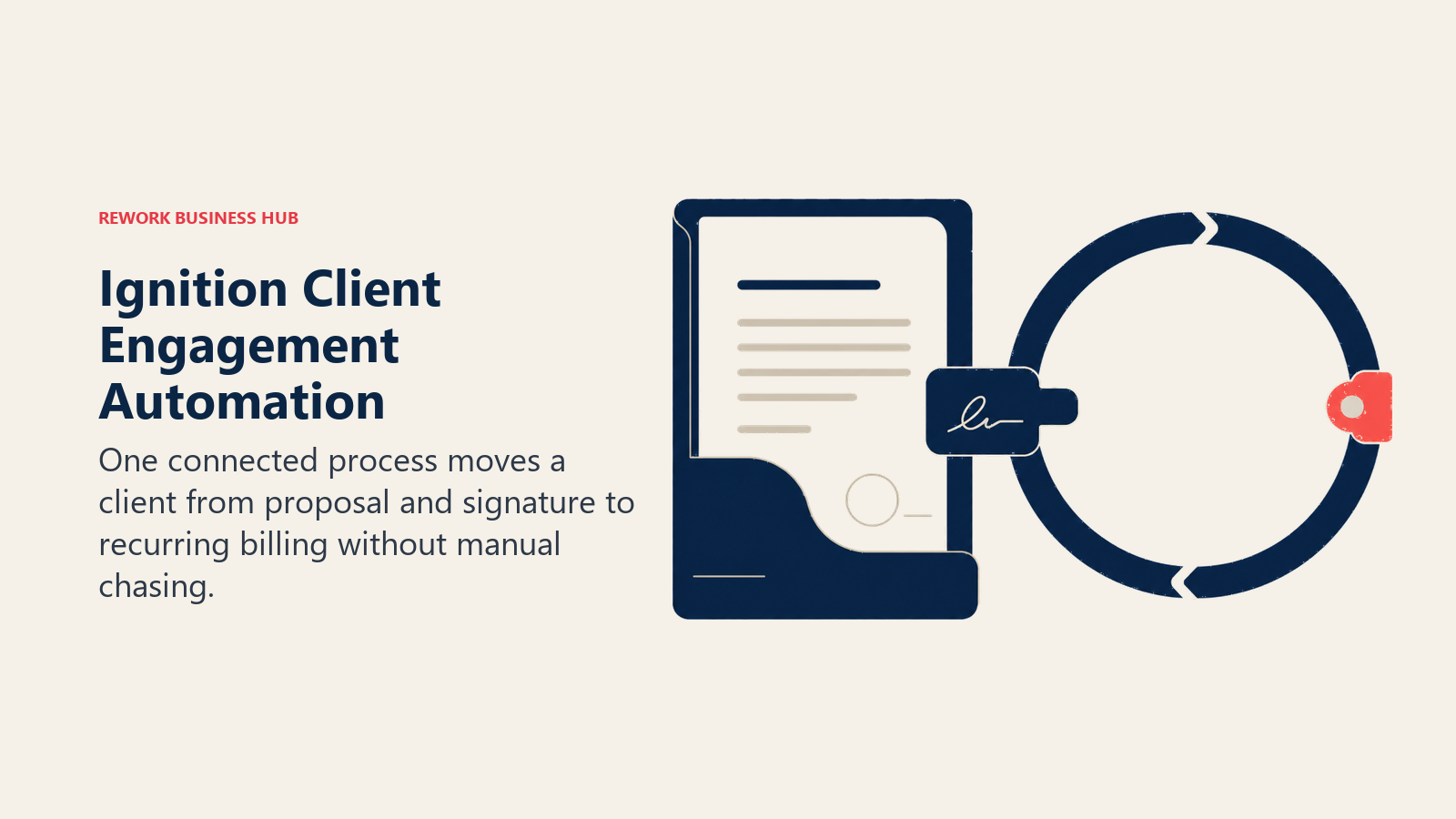
The Solo plan supports up to 20 active clients, enough for most fractional CFOs starting out, while the Pro plan scales to 350 active clients and 15 team members with bulk renewals and custom branding, the tier a scaling advisory practice actually needs. Payment processing carries its own fee on top of the subscription (1% + $0.30 per transaction, capped at $5, plus 0.3% on amounts above $3,000), which is worth modeling into the practice's own margin.
Best for: Fractional CFOs and advisory firms that need to formalize proposals, engagement terms, and recurring billing to scale past a handful of clients
Key strengths:
- Automates proposals, e-signatures, and recurring billing in one flow
- Solo plan supports 20 clients; Pro scales to 350 clients and 15 users
- Deep integrations with QuickBooks, Xero, Sage, MYOB, and practice management tools
Limitations:
- Payment processing fees stack on top of the monthly subscription
- Core plan pricing steps up meaningfully between tiers
- Not a financial reporting or forecasting tool; purely practice operations
| What you get | What you don't |
|---|---|
| Automated proposals, e-signatures, and recurring billing | Payment processing fees add to the subscription cost |
| Solo (20 clients) through Pro+ (350+ clients, 15 users) tiers | Meaningful price step-up moving between tiers |
| Deep integrations across accounting and practice management tools | No financial reporting or forecasting features |
Pricing: Solo $49/mo (20 clients); Core $149/mo; Pro ~$229-279/mo (350 clients, 15 users); Pro+ $499/mo; plus 1% + $0.30 per payment (capped $5). See Ignition pricing coverage.
14. Karbon: Practice Management and Workflow Across Many Clients
Karbon exists to solve a different problem than any reporting or forecasting tool on this list: keeping dozens of client engagements, deadlines, and recurring tasks from falling through the cracks as a virtual CFO practice grows past what one person can track in their head. It's practice management and workflow software built specifically for accounting and advisory teams, with client communication, task tracking, and capacity planning in one shared view.
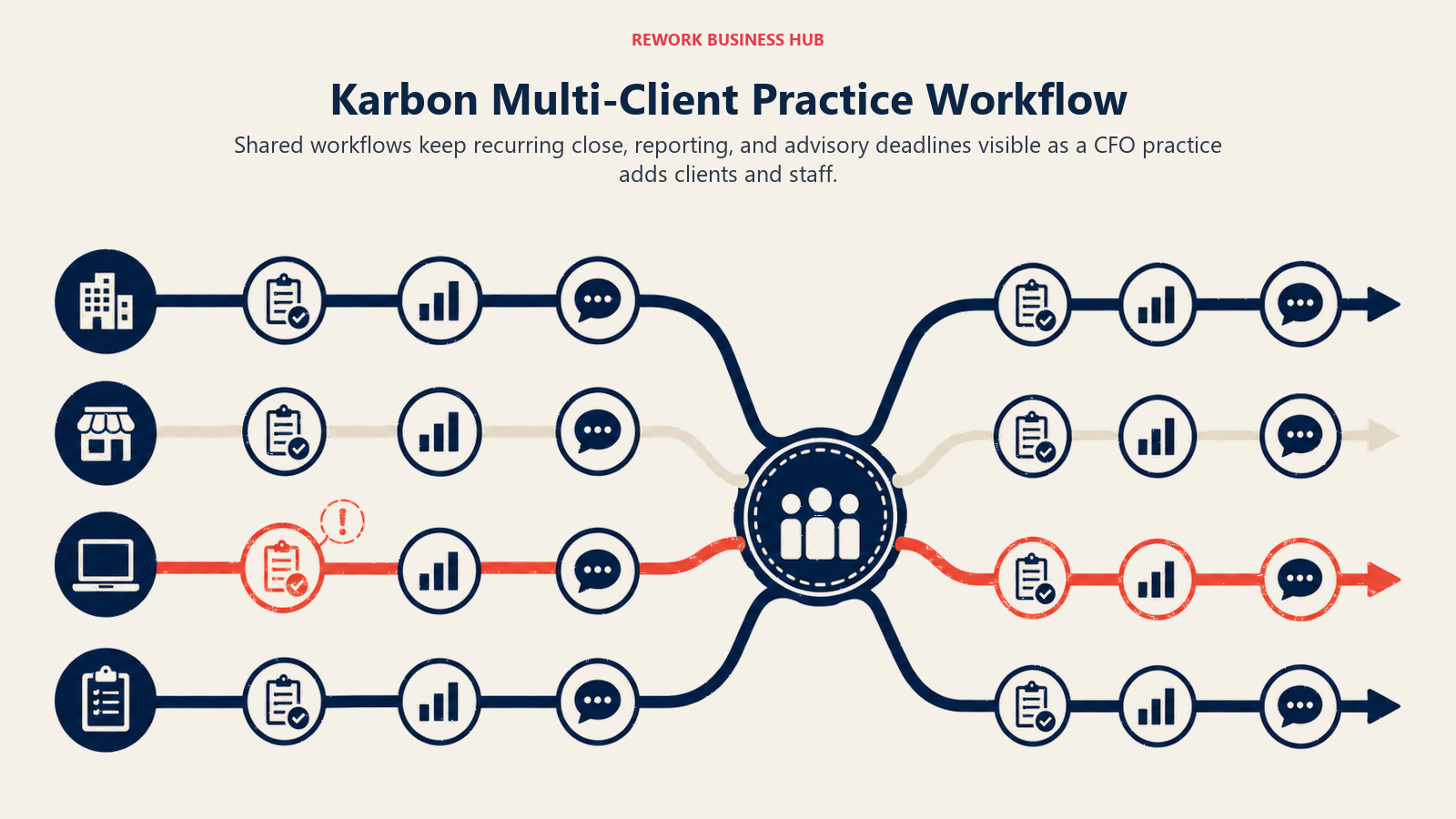
For a boutique CFO advisory firm with a handful of team members, Karbon's Team plan gets the whole staff onto one workflow system for recurring monthly close, reporting, and advisory deliverables across every client. The tradeoff is straightforward: pricing is per user, so cost climbs directly with headcount, not client count, which rewards firms that keep engagements efficient per staff member.
Best for: CFO advisory and CAS teams (2+ people) that need shared workflow and capacity visibility across many client engagements
Key strengths:
- Purpose-built workflow for accounting and advisory firm operations
- Shared client communication and task tracking in one system
- Capacity planning helps a growing practice see where it's overcommitted
Limitations:
- Per-user pricing climbs fast as the practice adds staff
- Overkill for a true solo practitioner with no team to coordinate
- Learning curve for firms migrating off spreadsheets or generic project tools
| What you get | What you don't |
|---|---|
| Practice-specific workflow, task tracking, and client communication | Per-user pricing scales directly with headcount |
| Capacity planning across every active client engagement | Overkill for a true solo practitioner |
| Purpose-built for accounting and advisory firm operations | Real learning curve migrating off spreadsheets |
Pricing: Team $59/user/mo; Business $79/user/mo; Enterprise custom. See karbonhq.com/pricing.
15. Claude: Fast, Client-Ready Financial Analysis and Board Memos
Claude isn't a system of record, and it shouldn't try to be one for a virtual CFO practice. What it's genuinely useful for is the ad hoc work that comes up constantly across a multi-client book of business: modeling a scenario for a specific client conversation, drafting a board or investor memo explaining a variance, or summarizing a client's numbers into plain language before a call. For a side-by-side against ChatGPT and Gemini on this kind of work, see Claude vs ChatGPT vs Gemini.

The practical advantage for a practice juggling many clients is speed and consistency: the same assistant can help draft a memo for client A in the morning and a scenario model for client B in the afternoon, without switching tools. Team and Enterprise tiers add shared workspaces, useful once a boutique advisory firm has more than one fractional CFO working across the same client roster. Every output still needs verification against the client's real numbers before it goes out the door.
Best for: Virtual CFO practices that want a fast, consistent assistant for ad hoc analysis, memos, and client communication across many engagements
Key strengths:
- Strong reasoning for drafting client-ready explanations and memos quickly
- Team and Enterprise tiers support shared workspaces across advisory staff
- Near-zero onboarding for a practice already comfortable with AI chat tools
Limitations:
- Not a live connection to any client's actual ledger or plan
- No audit trail; every output needs verification before it reaches a client
- Usage beyond the seat fee bills separately at API rates on Enterprise
| What you get | What you don't |
|---|---|
| Fast, consistent drafting across many client engagements | No live connection to any client's actual data |
| Team/Enterprise shared workspaces for multi-CFO practices | No audit trail on generated analysis |
| Near-zero onboarding for teams already using AI chat tools | Enterprise usage bills separately at API rates |
Pricing: Free; Pro $20/mo ($17/mo annual); Max $100-200/mo; Team Standard $25/seat/mo, Team Premium $125/seat/mo (5-seat minimum); Enterprise custom. See claude.com/pricing.
Where Virtual CFO Tooling Is Headed
The story running through 2026 is that software vendors finally started naming products after the virtual CFO buyer directly instead of treating the segment as an afterthought of general FP&A or accounting software. Spotlight Reporting's "Super VCFO" tiers and Jirav's accounting-firm partner pricing are both explicit bets that a practice serving 25, 75, or 150+ clients needs pricing and packaging built around client count, not seat count or a single company's revenue. That structural shift matches what the AICPA and CPA.com benchmark data shows: practices that invest in the right technology serve roughly 50% more clients on average, and firms leaning into CFO-level advisory work earn meaningfully higher recurring revenue than those still billing by the hour.

The other clear trend is AI shifting the economics of who does the underlying bookkeeping. Digits' outcome-based pricing (free unless the platform hits a 95% automation threshold) and Puzzle's free on-ramp for early-stage clients both put pressure on the traditional per-client, per-hour bookkeeping fee that used to eat into a fractional CFO's own margin on smaller accounts. If your practice also needs the internal FP&A stack for a single larger client that's outgrown these lighter tools, best AI tools for finance teams covers that scale, and best AI tools for accounting covers the ledger and close side specifically. For practices whose clients skew toward early-stage startups, best AI tools for startups rounds out the picture, and how to choose ERP software is worth reading before recommending a client's next ledger platform, alongside best QuickBooks alternatives and best Xero alternatives if that recommendation is on the table this year. If your typical client is a small business owner rather than a startup founder, best AI tools for small business is a useful companion read for the tools you might recommend on the client's own side of the relationship, and best AI tools in 2026 rounds up the top picks across every category if your practice is evaluating AI adoption more broadly, not just for the CFO seat.
What to Do Next
Pick your practice's current bottleneck, not the tool with the longest feature list. If clients are the constraint, trial Fathom Portfolio or Spotlight Reporting's Super VCFO 25 for two weeks against your five most demanding client accounts. If operations are the constraint, run Ignition and Karbon side by side against your current proposal-to-invoice workflow for one month before committing to either.

Principal Product Marketing Strategist
On this page
- Key Facts
- What Changed in 2026
- Quick Comparison Table
- Practice-Stage Framework
- How to Choose: Decision Framework
- 1. Spotlight Reporting: Advisory Reporting Built Around a "Super VCFO" Tier
- 2. Fathom: Brandable Client Reports Plus Firm-Wide Portfolio Oversight
- 3. Jirav: Multi-Client FP&A Priced to Match Advisory Billing
- 4. Syft Analytics: The Cheapest Real Path to Unlimited-Entity Reporting
- 5. Digits: AI-Native Bookkeeping That Pays for Itself on Accuracy
- 6. Puzzle: AI-Native Ledger for Startup and SMB Clients
- 7. Float: Cash Flow Forecasting Delivered Across a Client Portfolio
- 8. Fluidly: AI Cash Flow Forecasting at Scale for a Whole Client Base
- 9. Futrli (Sage): 3-Way Forecasting Bundled Into a Sage-Connected Practice
- 10. LivePlan: Client-Facing Strategic Plans and Board-Ready Forecasts
- 11. Vareto: Real-Time, Live-Data FP&A for Higher-End Advisory Clients
- 12. Relay: Client Cash Management and Banking Built for the Practice Itself
- 13. Ignition: Proposals, Engagement Letters, and Billing Automation
- 14. Karbon: Practice Management and Workflow Across Many Clients
- 15. Claude: Fast, Client-Ready Financial Analysis and Board Memos
- Where Virtual CFO Tooling Is Headed
- What to Do Next