Best AI Chatbots in 2026 (ChatGPT and the Alternatives)
Turn this article into takeaways for your work.


Each assistant summarizes the article only for you and suggests best practices for your work.
ChatGPT is still the biggest AI chatbot in the world, with roughly 900 million weekly active users, but it's no longer the only serious option. Claude leads for careful long-form writing and coding, Gemini wins if your team lives inside Google Workspace, Microsoft Copilot wins inside Microsoft 365, and a wave of genuinely free alternatives, DeepSeek, Meta AI, and Qwen among them, now match or beat the paid tiers of 2024's frontier models on everyday tasks. This guide ranks 13 AI chatbots for 2026 on current pricing and model versions, so you can pick the one that actually fits how you work.
This guide covers general-purpose, knowledge-focused AI chatbots, the kind you open in a browser tab or app to draft, research, and reason through problems. It does not cover business customer-facing chatbots built to handle support tickets or sales conversations on your website. If that's what you're shopping for, see our separate guide to the best live chat software in 2026, which covers a different category entirely: tools built for your customers to talk to your business, not tools for you to talk to an AI.
Updated July 2026: What Changed
- GPT-5.6 landed on July 9, 2026. OpenAI's new flagship (internally Sol, Terra, and Luna) rolled out to Plus, Pro, Business, and Enterprise, with the highest-effort Sol Pro variant reserved for Pro and Enterprise. Free and Go users still run on GPT-5.5 Instant.
- Google cut Gemini's top tier nearly in half. At I/O 2026, Google dropped the entry Gemini AI Ultra price from $249.99 to $99.99 a month, while adding a $200/month tier with 20x the usage limits of AI Pro.
- Grok 4.5 launched on July 8, 2026, rolling out in stages to SuperGrok and X Premium+ subscribers, with SuperGrok Heavy ($300/month) the only tier that has full access today.
- Microsoft retired standalone Copilot Pro. Consumer Copilot access now lives inside Microsoft 365 Premium ($19.99/month), which folds the assistant into the core Office apps and storage instead of selling it separately.
- Meta is quietly moving off Llama. Meta Superintelligence Labs released Muse Spark in April 2026 as a successor to the Llama line that currently powers Meta AI inside WhatsApp, Messenger, and Instagram.
- Qwen's free developer API tier ended April 15, 2026, though the consumer chat app at chat.qwen.ai remains completely free with no usage cap, a distinction worth knowing before you assume "open-weight" means "free to build on forever."
Key Facts
- 49% of US adults now use AI chatbots, up from 33% in 2024 and just 23% in 2023, with ChatGPT alone reaching 44% of all US adults, per Pew Research Center's Americans and AI 2026 survey.
- ChatGPT's weekly active users hit 900 million in February 2026, more than double the 400 million reported a year earlier, according to a16z's Top 100 Gen AI Consumer Apps report.
- ChatGPT's worldwide web-traffic share fell from 79.0% to 53.9% in a single year while Gemini's share climbed from 5.7% to 27.9%, per Similarweb's Generative AI traffic data.
- Claude's worldwide web-traffic share grew roughly 855% year over year to reach 9.2%, the fastest growth of any major chatbot tracked, according to the same Similarweb Generative AI report.
- ChatGPT is still 2.7x larger than the #2 app, Gemini, on web traffic, but 20% of weekly ChatGPT users also use Gemini in the same week, showing most people now run more than one chatbot rather than picking a single winner, per a16z.
- Gemini's paid subscriber base grew 258% year over year while Claude's paid base grew more than 200%, both outpacing ChatGPT's growth rate in percentage terms even though ChatGPT still leads on raw users, according to a16z's report.
Quick Comparison Table
| Tool | Best For | Starting Price | Key Strength | Key Limitation |
|---|---|---|---|---|
| ChatGPT | General-purpose daily use, broadest ecosystem | Free; Plus $20/mo | Largest user base, widest third-party integrations | Frontier reasoning (Pro) jumps to $200/mo |
| Claude | Long-form writing, coding, business analysis | Free; Pro $20/mo | Strongest careful reasoning and structured output | Smaller consumer plugin ecosystem than ChatGPT |
| Gemini | Google Workspace and Android users | Free; AI Pro $19.99/mo | Deep Workspace/Search integration, huge context window | Best value locked behind Google One bundling |
| Microsoft Copilot | Microsoft 365 teams | Free (basic); M365 Premium $19.99/mo | Embedded directly in Word, Excel, Outlook, Teams | Real value needs an underlying M365 subscription |
| Perplexity | Research with cited sources | Free; Pro $20/mo | Always-cited answers, Model Council multi-model synthesis | Weaker for open-ended creative writing |
| Grok | Real-time X/social data, fast-moving news | Free; SuperGrok $30/mo | Live X integration, rapid model releases | Fewer enterprise governance controls |
| Meta AI | Free use inside WhatsApp, Messenger, Instagram | Free, no paid tier | Built into apps billions already use | Weakest reasoning depth for complex business tasks |
| DeepSeek | Budget-conscious and open-weight users | Free (web and app) | Fully free with no subscription tier | Peak-hour throttling; data hosted in China |
| Mistral Le Chat | EU-based, privacy-conscious teams | Free; Pro $14.99/mo | Cheapest premium tier among major labs | Smaller model lineup than the big three |
| Qwen | Multilingual use, open-source builders | Free, no usage cap | Fully free consumer app, strong open-weight models | Free developer API tier ended April 2026 |
| Poe | Comparing multiple frontier models in one place | Free; Starter $4.99/mo | One subscription, access to GPT, Claude, Gemini, and more | Point-based usage isn't the cheapest way to use one model heavily |
| Pi | Casual, empathetic conversation | Completely free | Zero cost, tone built around emotional intelligence | Not built for productivity or business workflows |
| You.com | Building AI search and agents into your own product | Free; paid from $20/mo | Developer-first search and research APIs | Consumer chat UX is secondary to the API business |
1. ChatGPT: The Default Choice, Still the Biggest by Far
ChatGPT remains the chatbot most people mean when they say "AI chatbot," and the usage numbers back that up: 900 million weekly active users as of February 2026 and more than 1 billion monthly app users as of June, the fastest any app in history has hit that milestone. OpenAI's newest flagship, GPT-5.6 (Sol, Terra, and Luna), rolled out July 9, 2026, with the higher-effort Sol Pro variant reserved for Pro and Enterprise subscribers.
The free and Go ($8/month) tiers run on GPT-5.5 Instant and don't get the 5.6 reasoning models at all, which is the real gap that pushes serious users to Plus. Plus ($20/month) adds GPT-5.6 Sol, Terra, and Luna, plus expanded deep research and Codex usage. Pro ($200/month) unlocks Sol Pro for the hardest, longest-running tasks.
| What you get | What you don't |
|---|---|
| Largest user base and third-party plugin/GPT ecosystem | Frontier reasoning models are locked behind Plus or Pro |
| GPT-5.6 with three reasoning variants (Sol, Terra, Luna) | Free and Go tiers run an older, less capable model |
| Deep research, image generation, and voice mode built in | Pro pricing ($200/mo) is steep for solo users who need it occasionally |
| Business and Enterprise tiers for team deployment | Ecosystem breadth can mean more to configure than a focused tool |
Pricing: Free; Go $8/month; Plus $20/month; Pro $200/month; Business roughly $25 to $30/user/month; Enterprise custom.
Best for: Anyone who wants the single most broadly capable assistant with the widest range of integrations, plugins, and community tooling.
2. Claude: Best for Careful Writing, Coding, and Business Reasoning
Claude has built its reputation on output quality over raw scale: structured, carefully reasoned writing, strong coding performance through Claude Code, and a tone that tends to hedge less and reason more transparently than some competitors. That reputation is translating into growth. Claude's paid subscriber base grew more than 200% year over year, and its worldwide web-traffic share grew roughly 855% to reach 9.2%, the fastest growth of any major chatbot tracked by Similarweb.
The current model lineup is Claude Opus 4.8 (flagship reasoning and coding), Sonnet 4.6 (balanced speed and capability), and Haiku 4.5 (fast, low-cost). Max plans exist for people who run Claude throughout the workday and need longer sessions without hitting rate limits. For a side-by-side against ChatGPT and Gemini on business use cases specifically, see Claude vs ChatGPT vs Gemini: Which LLM Fits Your Business in 2026.
| What you get | What you don't |
|---|---|
| Strongest structured, long-form reasoning and writing quality | Smaller consumer plugin/app ecosystem than ChatGPT |
| Claude Code for serious coding workflows | No native standalone image generator |
| Opus, Sonnet, and Haiku model tiers for different speed/cost needs | Max tier pricing ($100 to $200/mo) is aimed at heavy daily users |
| Fastest-growing paid subscriber base of the major labs | Fewer built-in consumer features (voice, shopping) than ChatGPT |
Pricing: Free; Pro $20/month; Max 5x $100/month; Max 20x $200/month; Team and Enterprise custom.
Best for: Writers, analysts, developers, and operators who want the most careful, well-reasoned output and don't mind a narrower feature set than ChatGPT.
3. Gemini: Best for Google Workspace and Android Teams
Gemini's growth story in 2026 is almost entirely about distribution, not just model quality. Google places Gemini inside Search, Android, and Workspace, products billions of people already use, and that built-in access is the main reason its worldwide traffic share climbed from 5.7% to 27.9% in a year, with paid subscribers up 258% year over year.
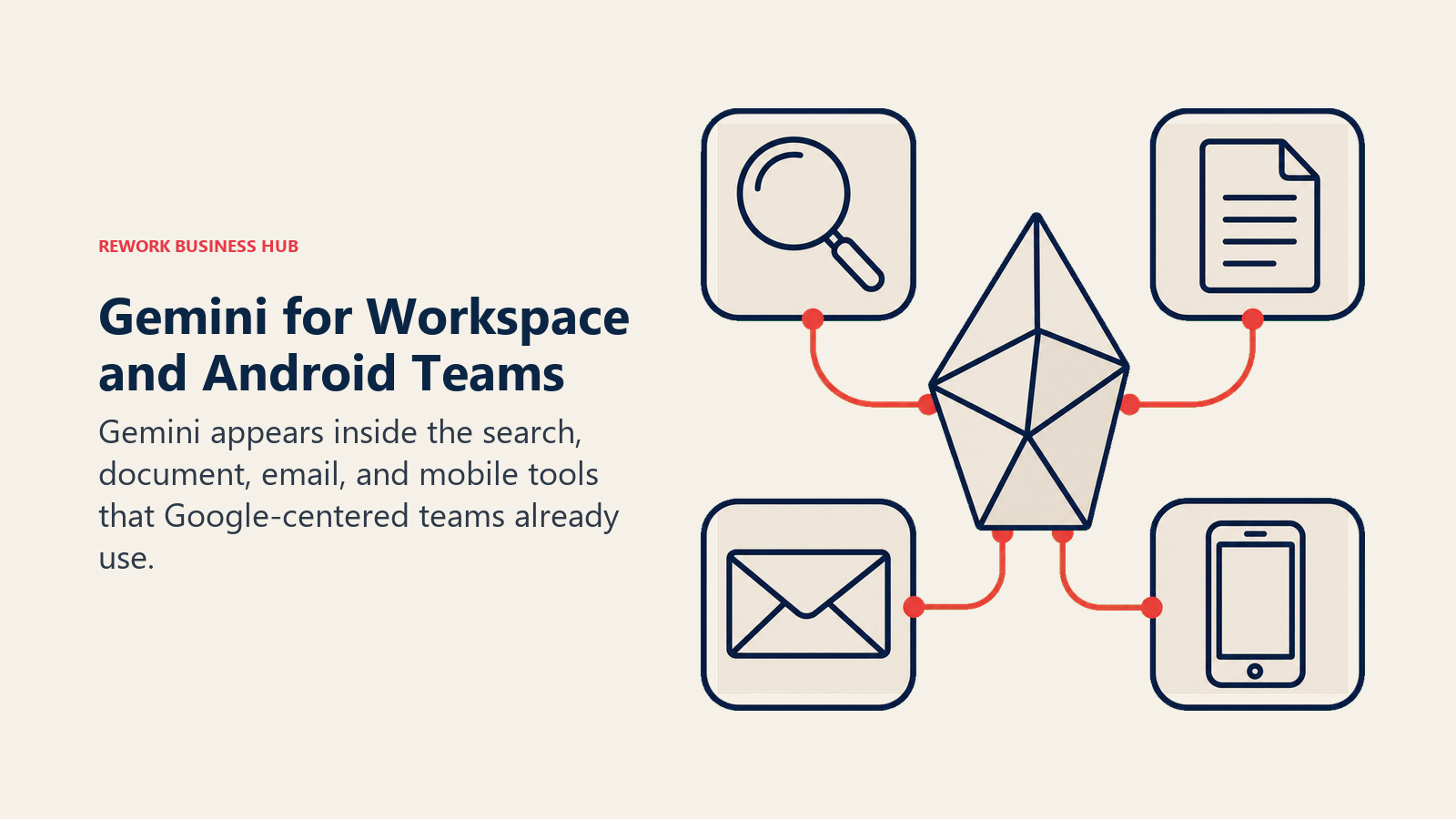
At I/O 2026, Google restructured pricing into three tiers: AI Plus ($7.99/month), AI Pro ($19.99/month), and AI Ultra, which dropped from $249.99 to a $99.99 entry price with a $200/month tier above it for 20x AI Pro's usage limits. The newest model, Gemini 3.5 Flash, launched May 19, 2026, undercutting the older Gemini 3.1 Pro on price while beating it on coding and agentic benchmarks.
| What you get | What you don't |
|---|---|
| Deepest native integration with Search, Gmail, Docs, and Android | Full value requires buying into the Google One/Workspace ecosystem |
| Massive context window, strong for large documents and multimodal tasks | AI Ultra pricing is steep for anyone outside heavy daily use |
| Three tiers (Plus, Pro, Ultra) to match different usage levels | Model naming across Flash/Pro/Ultra can be confusing to track |
| Fastest-growing paid subscriber base among the top three chatbots | Less standalone brand identity than ChatGPT or Claude as "the assistant" |
Pricing: Free; AI Plus $7.99/month; AI Pro $19.99/month; AI Ultra from $99.99/month (entry) to $200/month (top tier).
Best for: Teams and individuals already living inside Gmail, Docs, Sheets, or Android who want the assistant to show up where they already work.
4. Microsoft Copilot: Best for Microsoft 365 Teams
Copilot's pitch has always been proximity: it lives inside Word, Excel, Outlook, and Teams rather than asking you to open another tab. In 2026, Microsoft simplified how you buy it. The standalone $20/month Copilot Pro consumer plan was retired, folded into Microsoft 365 Premium ($19.99/month), which bundles the core Office apps, 1TB of storage, and Copilot into one subscription.
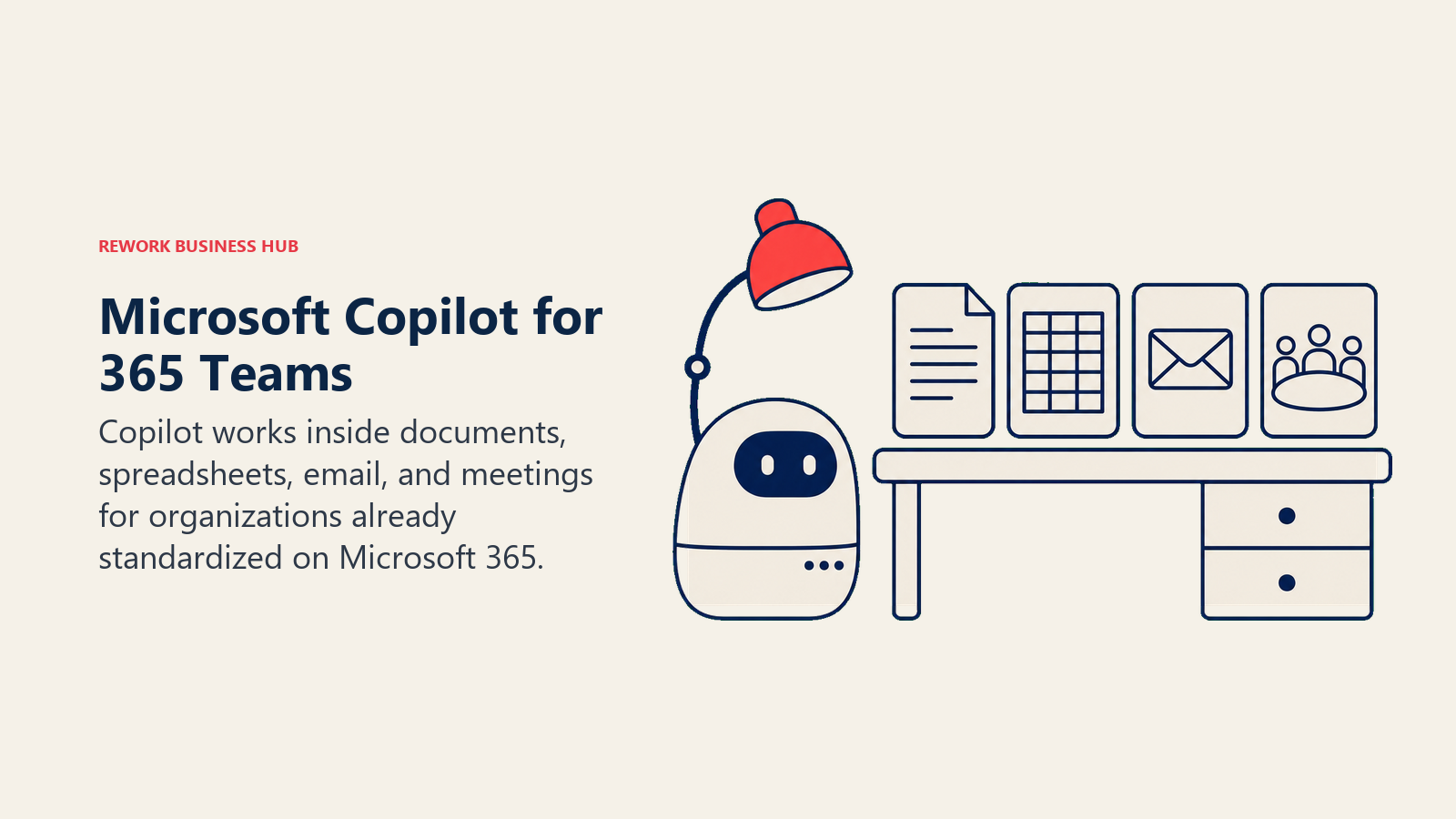
On the business side, Microsoft 365 Copilot Business runs $21/user/month on an annual term (or $25.20 month-to-month), while Business Premium with Copilot built in runs $32/user/month as a permanent plan from July 1, 2026. Enterprise buyers can add Copilot to existing E3 or E5 licenses for $30/user/month, or step up to the new M365 E7 Frontier Suite ($99/user/month, launching May 1, 2026), which bundles E5, Copilot, and a new Agent 365 control plane for managing AI agents across the organization.
| What you get | What you don't |
|---|---|
| Native integration inside the Office apps your team already uses daily | Real value depends on already running (or buying into) Microsoft 365 |
| Single-vendor billing alongside your existing Office licenses | Standalone consumer plan is gone; Copilot now requires an M365 tier |
| Agent 365 control plane for managing AI agents at the org level (E7) | Enterprise pricing complexity across E3/E5/E7 tiers takes work to parse |
| Strong fit for regulated industries already on Microsoft's compliance stack | Less flashy consumer feature set than ChatGPT or Gemini |
Pricing: Free (basic); Microsoft 365 Premium (consumer) $19.99/month; Copilot Business $21 to $25.20/user/month; Business Premium with Copilot $32/user/month; Enterprise add-on $30/user/month; E7 Frontier Suite $99/user/month.
Best for: Organizations standardized on Microsoft 365 that want AI inside the documents, spreadsheets, and email they already live in.
5. Perplexity: Best for Research You Need to Cite
Perplexity's core bet is that an AI answer without a source is only half an answer. Every response comes with citations, which makes it the default pick for competitive intelligence, market research, and board prep where you need to show your work, not just state a conclusion. For a deeper look at Perplexity against ChatGPT Search and Gemini specifically for executive research workflows, see Perplexity vs ChatGPT Search vs Gemini.
The Max tier ($200/month) added a genuinely distinct feature in February 2026 called Model Council, which sends a single query to three frontier models (Claude Opus 4.6, GPT-5.2, and Gemini 3 Pro) at once and synthesizes where they agree, disagree, and add unique insight, useful when a decision is important enough to want more than one model's opinion. Perplexity also ships the Comet browser and Perplexity Labs for building reports and dashboards from research sessions.
| What you get | What you don't |
|---|---|
| Cited, source-backed answers by default | Weaker for open-ended creative writing than ChatGPT or Claude |
| Model Council synthesizes three frontier models on one query (Max) | Smallest traffic share (1.3%) of the major chatbots on this list |
| Comet browser and Labs for research-to-deliverable workflows | Max tier pricing ($200/mo) matches the priciest plans on the market |
| Strong fit for due diligence, competitive intel, and analyst work | Less useful as a general daily assistant for non-research tasks |
Pricing: Free; Pro $20/month; Max $200/month; Enterprise custom.
Best for: Executives, analysts, and researchers who need sourced, verifiable answers rather than confident-sounding prose.
6. Grok: Best for Real-Time Social Data and Fast Model Releases
Grok's differentiator is proximity to X's real-time firehose: it can pull in live posts and trending conversations in a way most competitors can't match, which matters for anyone tracking breaking news, market sentiment, or public reaction in the moment. xAI also ships new models fast. Grok 4.5 launched July 8, 2026 and is rolling out in stages to SuperGrok and X Premium+ subscribers, while SuperGrok Heavy ($300/month) is currently the only tier with full day-one access.
Pricing has gotten more granular in 2026. SuperGrok Lite ($10/month) launched in March as a genuine entry-level paid tier with Grok Imagine and one AI agent included, sitting below SuperGrok proper ($30/month) and X Premium+ ($40/month, bundled with X platform perks). The free tier gives casual users a lighter Grok 4 Mini model, capped around 10 prompts every two hours.
| What you get | What you don't |
|---|---|
| Live access to X's real-time data and trending conversation | Fewer enterprise governance and compliance features than Copilot or Gemini |
| Fast model release cadence (Grok 4.5 shipped within months of Grok 4) | Free tier is capped tightly (about 10 prompts every 2 hours) |
| Granular pricing from $10 (Lite) to $300 (Heavy) to match usage | Newest model access is staggered by tier, not available to everyone at launch |
| Fastest-growing traffic share behind the top three (2.4%, ahead of Perplexity) | Brand reputation for less-filtered output can be a liability in regulated settings |
Pricing: Free; SuperGrok Lite $10/month; SuperGrok $30/month; X Premium+ $40/month; SuperGrok Heavy $300/month.
Best for: Teams tracking real-time news, social sentiment, or public conversation who want an assistant plugged directly into that data.
7. Meta AI: Best Free Option Already Inside Your Messaging Apps
Meta AI's advantage isn't model quality, it's distribution: it's already sitting inside WhatsApp, Messenger, Instagram Direct, and Facebook, apps most people have open daily without installing anything new. Built on the Llama 4 line (Scout and Maverick), it handles document reading, image understanding, and everyday chat directly inside those conversations. Meta Superintelligence Labs released a successor model, Muse Spark, in April 2026, signaling where the underlying technology is heading even as the consumer product name stays the same.
Meta AI remains completely free with no subscription tier, which makes it a reasonable default for casual use, translation, or quick image generation inside a chat thread. It's not designed to compete with ChatGPT or Claude on complex reasoning or long-form business writing, and Meta hasn't shipped a "power user" paid tier the way every other major lab has.
| What you get | What you don't |
|---|---|
| Built directly into WhatsApp, Messenger, Instagram, and Facebook | Weakest reasoning depth of the majors for complex business tasks |
| Completely free with no paywall or usage tier | No dedicated power-user or professional tier |
| Multimodal: reads documents and images inside chat threads | Underlying model line is mid-transition (Llama 4 to Muse Spark) |
| Zero-friction access for the roughly 3 billion people already on Meta's apps | Not built for structured business research or long-form drafting |
Pricing: Free, no paid tier.
Best for: Casual daily use for anyone already living inside WhatsApp, Messenger, or Instagram who wants AI without installing another app.
8. DeepSeek: Best Fully Free, Open-Weight Chatbot
DeepSeek made its name by proving a capable model doesn't have to come with a subscription. The web chat at chat.deepseek.com and the mobile app are entirely free for individual use, with no Plus plan, no Pro tier, and no paywall on file uploads or long conversations. The only real constraint is fair-use throttling during peak hours, which shows up as "Server Busy" messages rather than a hard cap.
For developers, DeepSeek's API is separately priced and notably cheap: deepseek-v4-flash runs as low as $0.14 per million cache-miss input tokens, with a 5-million-token free grant for new accounts. The tradeoff worth knowing about before adopting it for regulated or sensitive business use: DeepSeek's infrastructure is based in China, which raises data governance questions some organizations aren't able to accept regardless of price.
| What you get | What you don't |
|---|---|
| Completely free web chat and app, no subscription required | Peak-hour throttling ("Server Busy") during high demand |
| Extremely cheap API pricing for developers ($0.14/1M input tokens) | Infrastructure is China-based, a blocker for some regulated industries |
| No paywall on file uploads or conversation length | Fewer native integrations than the major Western labs |
| 5M free API tokens for new developer accounts | Smaller enterprise support and governance ecosystem |
Pricing: Free (web and app); API priced separately, starting around $0.14 per million input tokens.
Best for: Budget-conscious individuals and developers who want a genuinely free, capable chatbot without governance requirements that rule out China-hosted infrastructure.
9. Mistral Le Chat: Best Affordable, EU-Hosted Option
Mistral is the clearest European alternative to the mostly US-based field on this list, and Le Chat Pro reflects that positioning on price: at $14.99/month, it undercuts ChatGPT Plus and Claude Pro (both $20/month) while still offering higher message limits, deep research reports, and access to Mistral Vibe for coding. Verified students get an even lower $5.99/month rate.
The honest tradeoff is model lineup depth. Mistral's models are competitive but don't lead independent benchmarks the way Claude Opus or GPT-5.6 Sol Pro do, and the Pro subscription doesn't cover API usage, which is billed separately per token for developers. For teams prioritizing EU data residency or wanting a lower-cost premium tier over top-of-leaderboard performance, Le Chat is a legitimate pick.
| What you get | What you don't |
|---|---|
| Cheapest premium AI chat subscription among major labs ($14.99/mo) | Model lineup doesn't lead independent benchmarks vs the top labs |
| EU-based option for teams prioritizing data residency | Pro subscription doesn't cover API calls, billed separately |
| Mistral Vibe adds coding capability inside the same subscription | Smaller consumer ecosystem and brand recognition than the top 3 |
| Student discount brings Pro down to $5.99/month | Fewer third-party integrations than ChatGPT or Gemini |
Pricing: Free; Pro $14.99/month ($5.99/month for verified students).
Best for: European teams and privacy-conscious individuals who want an affordable premium tier without needing the single most capable model on the market.
10. Qwen: Best Free Open-Source Option for Multilingual Use
Alibaba's Qwen has become the go-to open-weight family for developers who want to self-host or fine-tune a capable model, and the consumer chat product at chat.qwen.ai carries that same free-by-default philosophy: no sign-up required, no usage cap, and access to Alibaba's full model range at zero cost. Qwen's multilingual performance, particularly across Chinese and Southeast Asian languages, is a genuine differentiator against Western-first models.
The one change worth flagging: Qwen discontinued its free developer API tier on April 15, 2026. New Alibaba Cloud accounts still get a meaningful onramp (a 70M+ token trial across models, valid 90 days), but ongoing API use is now pay-per-token, ranging from about $0.05/$0.40 per million tokens (Qwen-Flash) up to $1.25/$3.75 for the largest model on a current promotional rate.
| What you get | What you don't |
|---|---|
| Fully free consumer chat with no usage cap or sign-up required | Free developer API tier ended April 15, 2026 |
| Strong open-weight model family for self-hosting or fine-tuning | Less brand trust with Western enterprise buyers than US labs |
| Genuine multilingual strength, especially Chinese and Southeast Asian languages | Smaller third-party app and plugin ecosystem |
| 70M+ free trial tokens for new developer accounts | China-based infrastructure, a consideration for regulated use |
Pricing: Free (consumer chat); API from roughly $0.05 per million input tokens, developer free tier discontinued.
Best for: Multilingual users, especially in Chinese and Southeast Asian markets, and developers who want an open-weight model they can self-host.
11. Poe: Best for Comparing Multiple Frontier Models in One Place
Poe, built by Quora, solves a different problem than the other tools on this list: instead of picking one model, it gives you one subscription that can talk to GPT, Claude, Gemini, and dozens of other models through a shared point system. That makes it a genuinely useful way to A/B test which model handles your specific task best without paying for four separate subscriptions.
The tradeoff is that you're renting metered access rather than owning a flat, unlimited relationship with any one model. The popular Premium tier ($19.99/month) includes 660,000 monthly compute points shared across every premium model, and heavier users on frontier models specifically can burn through an allocation faster than expected. If you already know you only need one model, a direct subscription to that lab is usually cheaper.
| What you get | What you don't |
|---|---|
| One subscription, access to GPT, Claude, Gemini, and more | Point-based usage isn't the cheapest way to use one model heavily |
| Six tiers from $4.99 to $249.99/month to match usage level | You don't get the deepest feature set of any single model's native app |
| Genuinely useful for comparing model output side by side | Point consumption varies by model, adding a layer to track |
| Roughly 17% discount for annual billing on paid tiers | Not a substitute for a lab's own power-user features (e.g., Claude Code) |
Pricing: Free; Starter $4.99/month; Premium $19.99/month; Premium Plus $49.99/month; Pro $99.99/month; Pro Max $249.99/month.
Best for: People who want to compare multiple frontier models without maintaining separate subscriptions to each one.
12. Pi: Best Free, Conversational Companion
Pi, from Inflection AI, takes a deliberately different design stance from every other tool on this list: it's built around emotional intelligence and tone rather than raw task completion. It's not trying to write your quarterly report or debug your code. It's built for conversation, and it remains completely free with no paid tier, subscription fee, or usage limit.
Inflection's focus has shifted more toward enterprise "empathy-as-a-service" API offerings since a 2024 team departure to Microsoft, and the current Inflection-3 model reportedly cuts hallucination rates by 40% compared to 2024-era models while supporting a 1 million token context window. For business use, Pi is the wrong tool. For a free, low-stakes conversational assistant, it's one of the only options with genuinely no cost anywhere in the product.
| What you get | What you don't |
|---|---|
| Completely free with no subscription tier at any level | Not built for productivity, research, or business workflows |
| Conversational tone built around emotional intelligence | Company's development pace has slowed since its 2024 restructuring |
| Inflection-3 model with a 1M token context window | Weakest fit on this list for anything work-related |
| Consistent uptime and reliable free access | Smallest brand recognition among the tools on this list |
Pricing: Free, no paid tier.
Best for: Casual, low-stakes conversation rather than work tasks, and anyone who wants zero cost with zero catch.
13. You.com: Best for Building AI Search Into Your Own Product
You.com is the outlier on this list in that its real business is the API, not the chat app. It's a developer-first search and research platform, with 57% of Fortune 500 companies reportedly using its Search, Contents, or Research APIs to ground AI agents and RAG pipelines in real-time web data, priced usage-based (Search API at $5 per 1,000 calls, Research API from $12 per 1,000 calls).
The consumer-facing chat product still exists, with a free tier and paid access from $20/month for unlimited queries, but it's a smaller part of the story than the API business behind it. If you're a business or product team building your own AI features and need reliable, licensable web-grounding data rather than another assistant to chat with directly, You.com is worth evaluating on that basis specifically.
| What you get | What you don't |
|---|---|
| Developer-first search, content, and research APIs | Consumer chat UX is secondary to the API business |
| Usage-based pricing with no minimum spend | Less brand recognition as a standalone chatbot vs the top names |
| Reportedly used by 57% of Fortune 500 companies for grounding data | $100 free credit is useful for testing, not sustained free use |
| Free consumer tier plus a $20/month unlimited option | Not the first choice if you just want a daily-use assistant |
Pricing: Free (consumer, limited); paid consumer from $20/month; API usage-based from $5 per 1,000 search calls.
Best for: Product and engineering teams building AI search or agent features into their own software, not individuals shopping for a daily assistant.
How to Choose: Decision Framework
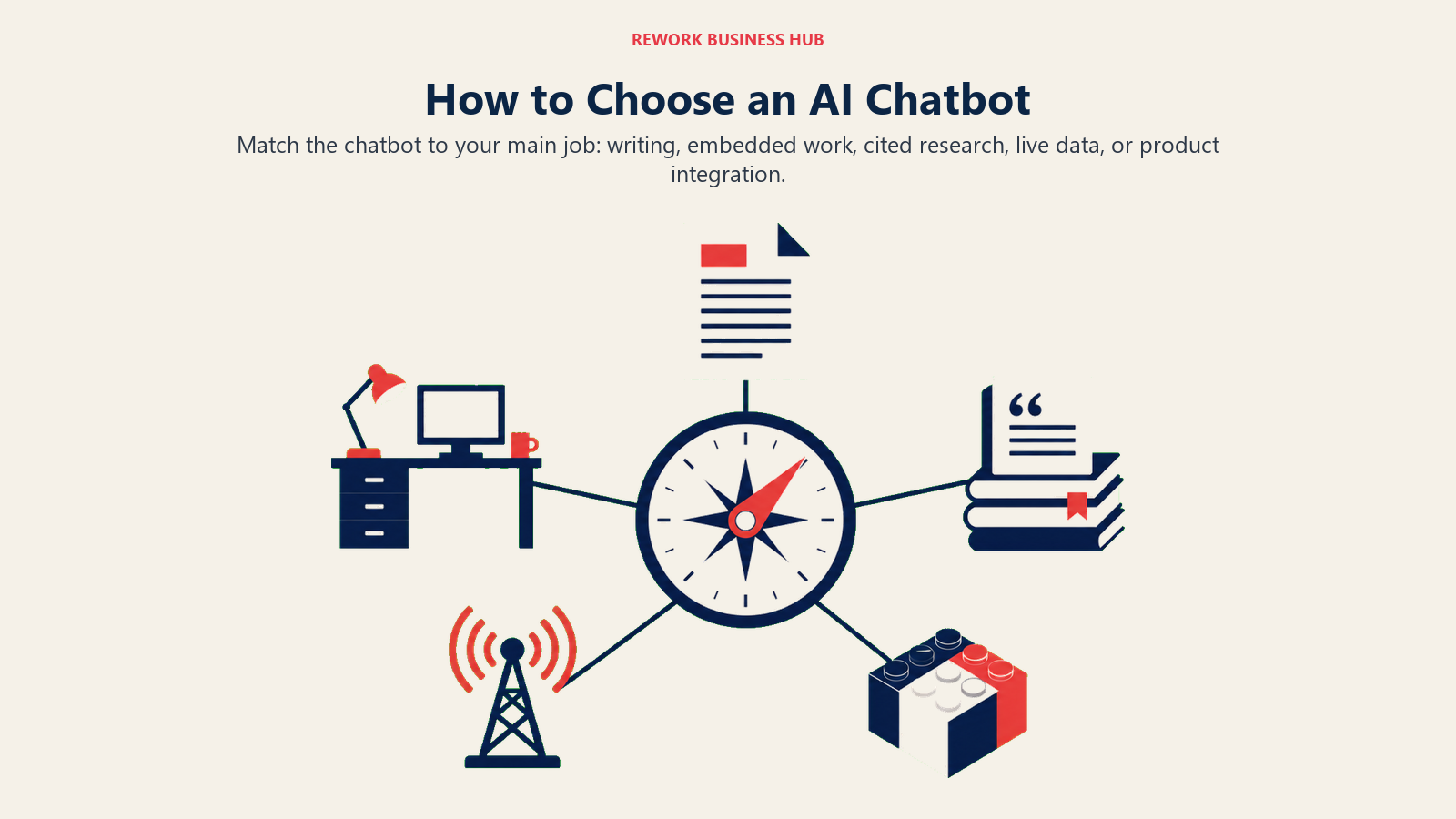
Match the chatbot to your main job: writing, embedded work, cited research, live data, or product integration.
| If you need... | Pick... | Why |
|---|---|---|
| The single most broadly capable, widely integrated assistant | ChatGPT | Largest user base, biggest plugin and GPT ecosystem |
| The most careful long-form writing, analysis, or coding | Claude | Strongest structured reasoning; Claude Code for developers |
| An assistant embedded in Gmail, Docs, Sheets, or Android | Gemini | Deepest native Google Workspace integration |
| AI inside Word, Excel, Outlook, and Teams | Microsoft Copilot | Built directly into the Microsoft 365 apps you already use |
| Cited, source-backed research answers | Perplexity | Every answer comes with citations; Model Council for high-stakes questions |
| Real-time social data and fast model updates | Grok | Live X integration and a rapid release cadence |
| Zero-cost AI already inside your messaging apps | Meta AI | Free, built into WhatsApp, Messenger, and Instagram |
| A completely free, open-weight model with no paywall | DeepSeek or Qwen | Both are fully free consumer products with strong open-weight cores |
| An affordable EU-hosted premium tier | Mistral Le Chat | Cheapest premium subscription among major labs, EU-based |
| To compare several frontier models under one subscription | Poe | Access to GPT, Claude, Gemini, and more via one shared plan |
What to Do Next
Pick based on where you already work, not the model with the loudest headline. If your team lives in Google Workspace, start a Gemini trial. If you're on Microsoft 365, try Copilot inside the apps you already have open. If neither applies, ChatGPT and Claude are both worth running side by side for two weeks on your actual daily tasks (drafting, research, coding, whatever you do most) before committing to a paid tier.
If you're specifically looking for AI built into your CRM and lead pipeline rather than a general-purpose assistant, that's a different shopping list. See Best AI Tools in 2026 for the full 25-tool roundup across every category, or Best AI Tools for Small Business and Best AI Tools for Startups if you're building out a broader stack. And if coding assistance is the actual job to be done, Cursor vs GitHub Copilot vs Windsurf and Best AI Coding Tools in 2026 go deeper than any general chatbot can. For AI writing tools specifically, Jasper vs Copy.ai vs Writer and Best AI Image Generators in 2026 cover the specialist tools that outperform a general chatbot on those specific jobs.

Principal Product Marketing Strategist
On this page
- Updated July 2026: What Changed
- Key Facts
- Quick Comparison Table
- 1. ChatGPT: The Default Choice, Still the Biggest by Far
- 2. Claude: Best for Careful Writing, Coding, and Business Reasoning
- 3. Gemini: Best for Google Workspace and Android Teams
- 4. Microsoft Copilot: Best for Microsoft 365 Teams
- 5. Perplexity: Best for Research You Need to Cite
- 6. Grok: Best for Real-Time Social Data and Fast Model Releases
- 7. Meta AI: Best Free Option Already Inside Your Messaging Apps
- 8. DeepSeek: Best Fully Free, Open-Weight Chatbot
- 9. Mistral Le Chat: Best Affordable, EU-Hosted Option
- 10. Qwen: Best Free Open-Source Option for Multilingual Use
- 11. Poe: Best for Comparing Multiple Frontier Models in One Place
- 12. Pi: Best Free, Conversational Companion
- 13. You.com: Best for Building AI Search Into Your Own Product
- How to Choose: Decision Framework
- What to Do Next