Best AI Agents in 2026: 14 Tools for Autonomous Work
Turn this article into takeaways for your work.


Each assistant summarizes the article only for you and suggests best practices for your work.
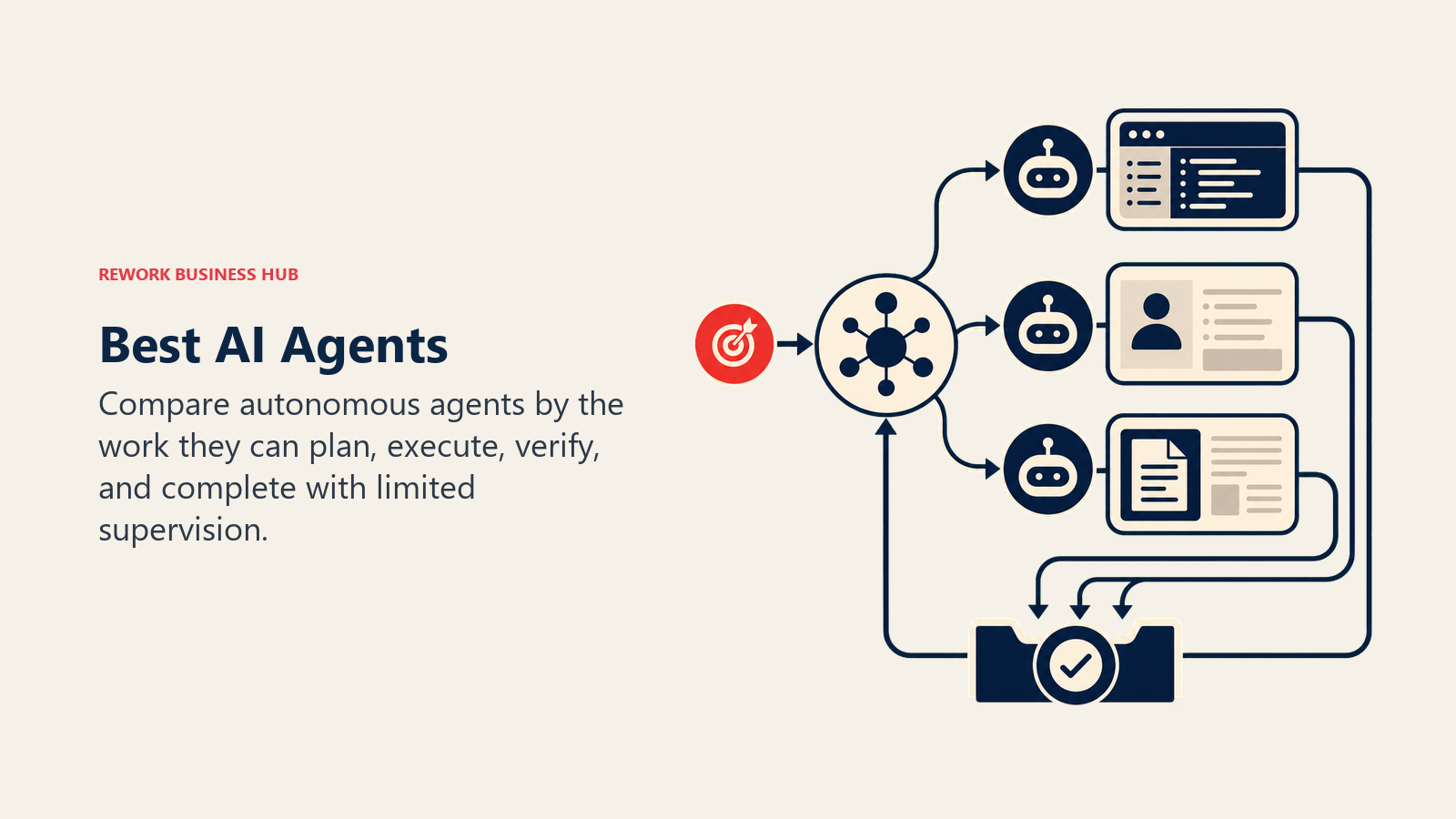
If you're evaluating AI agents in 2026, OpenAI and Anthropic lead general-purpose agent building for developers, Manus and Lindy lead no-code autonomous task agents for individuals and ops teams, Devin and Google's Jules lead autonomous coding, Microsoft Copilot Studio and Salesforce Agentforce lead agents embedded in the enterprise stack you already own, and Rework ships AI copilots inside its CRM, lead routing, and work management products for teams that would rather not stand up a separate agent platform at all. This guide ranks 14 tools by the job you're actually trying to get done, not by whichever vendor shouts "agentic" the loudest.
The term "AI agent" got attached to nearly every product update in the last two years, from a chatbot that can now browse the web to a fully autonomous system that closes support tickets on its own. Those are not the same thing, and buying the wrong one wastes a budget cycle. Each tool below is evaluated on what it actually does autonomously, who it's built for, and what it costs. If you want the underlying definition first, what is agentic AI and what are AI agents walk through the perception-reasoning-planning-action loop these tools all run some version of.
Updated July 2026: What Changed
- OpenAI is winding down Agent Builder and Evals. Both products stop working on the platform from November 30, 2026, so anything built on them needs a migration plan even though the underlying AgentKit tools (ChatKit, Connector Registry) continue.
- Anthropic paused its Agent SDK credit split. A change announced for June 15, 2026 that would have separated Agent SDK usage into its own monthly credit pool was paused before it took effect; usage still draws from the same subscription pool as interactive Claude use.
- Salesforce Agentforce fractured into two incompatible pricing models. Flat $2-per-conversation pricing still exists for customer-facing agents, but most new deployments default to Flex Credits ($500 per 100,000 credits) because it also covers employee and voice use cases the conversation model doesn't. The two models cannot run in the same org at once.
- Cognition restructured Devin's pricing in June 2026, replacing a visible ACU rate card with clean subscription tiers (Free, Pro $20/mo, Max $200/mo, Teams $80/mo + $40/seat) for self-serve buyers, while enterprise customers still see ACU-based billing.
- Manus shipped its 1.6 model family (Lite, standard, Max) along with Scheduled Tasks 2.0 and new Gmail, Calendar, and Notion connectors, pushing it further from "research agent" toward a general operations assistant.
Key Facts
- 40% of enterprise applications will feature task-specific AI agents by the end of 2026, up from under 5% in 2025, per Gartner.
- Over 40% of agentic AI projects will be canceled by the end of 2027 due to escalating costs, unclear business value, or inadequate risk controls, per Gartner.
- 23% of organizations are actively scaling an agentic AI system in at least one business function, with another 39% still experimenting, per McKinsey.
- Only 16% of enterprise AI deployments actually qualify as true autonomous agents; most of what gets called "agentic" today is still a fixed-sequence workflow, per Menlo Ventures.
- Just one in five companies (21%) reports having a mature governance model for autonomous AI agents, per Deloitte.
Quick Comparison Table
| Tool | Best For | Standout Capability | Starting Price | Free Tier? |
|---|---|---|---|---|
| OpenAI (AgentKit + ChatGPT) | Broad, ecosystem-native agent building | Workspace Agents connect to Slack, Salesforce, Notion out of the box | ChatGPT Business $20/user/mo; AgentKit usage-based | Partial |
| Anthropic Claude (Agent SDK) | Developer teams building custom agents | Deepest enterprise LLM market share for agent coding | Pro $20/mo; Agent SDK draws from subscription | Partial |
| Google (Jules + Project Mariner) | Teams already paying for Gemini | Async coding agent (Jules) plus browser-use agent (Mariner) bundled in | AI Plus $7.99/mo (limited Jules) | Partial |
| Manus AI | General-purpose autonomous task agent | One prompt to plan, browse, code, and deliver a finished output | Free (300 daily credits); $20/mo (Standard) | Yes |
| Cognition Devin | Autonomous software engineering | Takes a full ticket end to end, not just autocomplete | Free; $20/mo (Pro) | Yes |
| Microsoft Copilot Studio | Enterprises building internal agents on M365 | Low-code builder tied to Teams, SharePoint, Dynamics | $200/mo per 25,000 Copilot Credits, or included with M365 Copilot | Partial |
| Salesforce Agentforce | Teams already running on Salesforce | Agents reuse existing CRM objects, no new data layer | $2/conversation, or $500 per 100,000 Flex Credits | No |
| Sierra AI | Enterprise customer service, outcome-priced | Pay per successful resolution, not per seat | Custom only; est. $150K+/yr | No |
| Lindy AI | No-code personal and business assistant | Reads email context and drafts replies that sound like you | $29.99/mo (Plus) | No |
| Relay.app | Ops teams wanting human-in-the-loop agents | Built-in approval steps before high-stakes actions run | Free (500 AI credits); $19/mo (Professional) | Yes |
| Gumloop | Data-heavy internal agent building | Visual canvas for document and unstructured-data workflows | Free (5,000 credits); $37/mo (Pro) | Yes |
| n8n | Technical teams wanting self-hosted control | Open-source, execution-based pricing, no vendor lock-in | Free self-hosted; $20/mo (Starter, cloud) | Yes |
| Zapier Agents | Teams already living in Zapier | Autonomous decisions layered onto 30,000+ existing app actions | Free to try; Zapier plans from $19.99/mo | Yes |
| Rework | Mid-size teams wanting agents inside their CRM | AI copilots built into Sales Ops, Lead Ops, and Work Ops | $69/mo billed yearly (Sales Engine, 5 seats) | No |
How to Choose: Decision Framework
| If you need... | Pick... | Why |
|---|---|---|
| A broad agent-building platform tied to the most-used consumer AI ecosystem | OpenAI | Workspace Agents connect to the apps your team already runs; fastest on-ramp |
| A developer-first framework with the deepest enterprise coding footprint | Anthropic Claude | Commands roughly 40% of enterprise LLM API share; mature Agent SDK |
| Coding and browser agents bundled into a subscription you already pay for | Google (Jules + Mariner) | No separate agent vendor; rides on your Gemini plan |
| One agent that plans, researches, and delivers a finished artifact from a single prompt | Manus AI | General-purpose by design; no category to pick first |
| An autonomous engineer that closes tickets, not just autocompletes code | Cognition Devin | Built around ACUs, units of actual autonomous engineering work |
| Internal agents governed by IT inside an existing Microsoft 365 tenant | Microsoft Copilot Studio | Low-code, tied to Teams/SharePoint/Dynamics, no new vendor relationship |
| Agentic AI that reuses your existing Salesforce CRM data | Salesforce Agentforce | No new data layer; agents act on objects you already maintain |
| A dedicated, outcome-priced customer service agent at enterprise scale | Sierra AI | Pay per resolution; built to run the support function, not assist it |
| A no-code assistant for email, calendar, and meeting workflows | Lindy AI | Handles inbox triage and scheduling without a developer |
| Agentic automation with a human sign-off step before high-stakes actions | Relay.app | Approval checkpoints built into the workflow, not bolted on |
| Custom internal agents for document-heavy or data-extraction work | Gumloop | Visual builder purpose-built for unstructured data pipelines |
| Full control and self-hosting with no per-task billing | n8n | Open-source, execution-based pricing, runs on your own infrastructure |
| To add autonomous decisions to automations you've already built | Zapier Agents | Native to the 30,000+ actions most ops teams already use |
| Agent-like automation inside the CRM, lead, and work platform you run day to day | Rework | Lead scoring, routing, and follow-up drafting built into the same data model |
Framework: By Team Size and Technical Depth
| Team Profile | Budget Signal | Best Fits |
|---|---|---|
| Solo operator or founder, no engineering team | Free to under $50/mo | Manus AI free tier, Lindy AI Plus, Zapier Agents free trial |
| Small ops team (5-20 people), light technical depth | $20-$200/mo total stack | Relay.app, Gumloop Pro, n8n Starter, Rework Sales Engine |
| Engineering team building custom agents | $20-$200/seat/mo plus API usage | Anthropic Claude Agent SDK, Cognition Devin, Google Jules |
| Mid-size company (20-500), CRM or ops already in place | Packaged annual pricing | Rework, Salesforce Agentforce (if on Salesforce), Microsoft Copilot Studio |
| Enterprise, dedicated AI or platform team | Custom contracts, six figures+ | Sierra AI, Salesforce Agentforce (Agentforce 1), OpenAI Enterprise |
1. OpenAI: AgentKit and Workspace Agents for the Broadest Ecosystem
OpenAI's bet is reach. Between ChatGPT's consumer and business user base and AgentKit's developer tools (Agent Builder, ChatKit, the Connector Registry), it's the fastest on-ramp if your team already lives inside ChatGPT and wants agents that plug into Slack, Google Drive, Salesforce, Notion, and Atlassian Rovo without custom integration work.
The catch in 2026 is platform churn. OpenAI announced in June that it's sunsetting Agent Builder and Evals by November 30, 2026, which means anything built on those specific tools needs a migration path even as the rest of AgentKit continues. Usage-based pricing (API tokens, $0.03 per Code Interpreter session, $0.10 per GB-day for File Search) also makes cost harder to predict than a flat subscription.
| What you get | What you don't |
|---|---|
| Broadest ecosystem reach; connects to apps your team already uses | Agent Builder and Evals are being deprecated by Nov 2026 |
| Workspace Agents included on ChatGPT Business ($20/user/mo) | Usage-based AgentKit pricing is harder to forecast than a flat fee |
| Familiar interface for teams already on ChatGPT | Less opinionated about governance than Copilot Studio or Agentforce |
Pricing: ChatGPT Business $20/user/mo (Workspace Agents included); AgentKit billed at standard API token rates, plus $0.03/session (Code Interpreter) and $0.10/GB-day (File Search)
Best for: Teams already standardized on ChatGPT who want a fast, connector-rich on-ramp to workspace agents without building a framework from scratch
2. Anthropic Claude: Agent SDK for Developer-Built Autonomous Systems
Anthropic's product philosophy is safety-conscious autonomy: give developers a mature SDK, real tool use, and a model that reasons carefully about when to act and when to stop, rather than a flashy no-code builder. That approach has paid off in enterprise adoption. Anthropic now commands roughly 40% of the enterprise LLM API market, ahead of OpenAI, largely on the strength of coding and agentic use cases.
Claude Code, built on the same Agent SDK developers use to build custom agents, runs about $13 per developer per active day and $150 to $250 per developer per month for most teams, with the vast majority of users staying under $30 on any given day. For teams comparing model providers before committing to an agent framework, Claude vs ChatGPT vs Gemini breaks down the tradeoffs beyond agentic capability. For how Claude Code's cost compares with Cursor and GitHub Copilot at 1, 10, and 50 developers, see Claude Code vs Cursor vs GitHub Copilot.
| What you get | What you don't |
|---|---|
| Deepest enterprise LLM market share for coding and agentic workloads | Requires real engineering investment; not a no-code tool |
| Mature Agent SDK with tool use, memory, and computer use built in | Pricing model has shifted mid-year (SDK credit split announced, then paused) |
| Strong safety and stopping-point defaults for autonomous runs | No packaged vertical agent (support, sales) out of the box |
Pricing: Claude Pro $20/mo; Max plans at 5x and 20x usage; API pricing for Sonnet 5 at $3/$15 per million input/output tokens (standard from September 1, 2026); Agent SDK usage draws from the same subscription pool
Best for: Engineering teams building custom coding, research, or ops agents who want the model with the strongest current enterprise agentic adoption
3. Google: Jules and Project Mariner Inside the Gemini Subscription
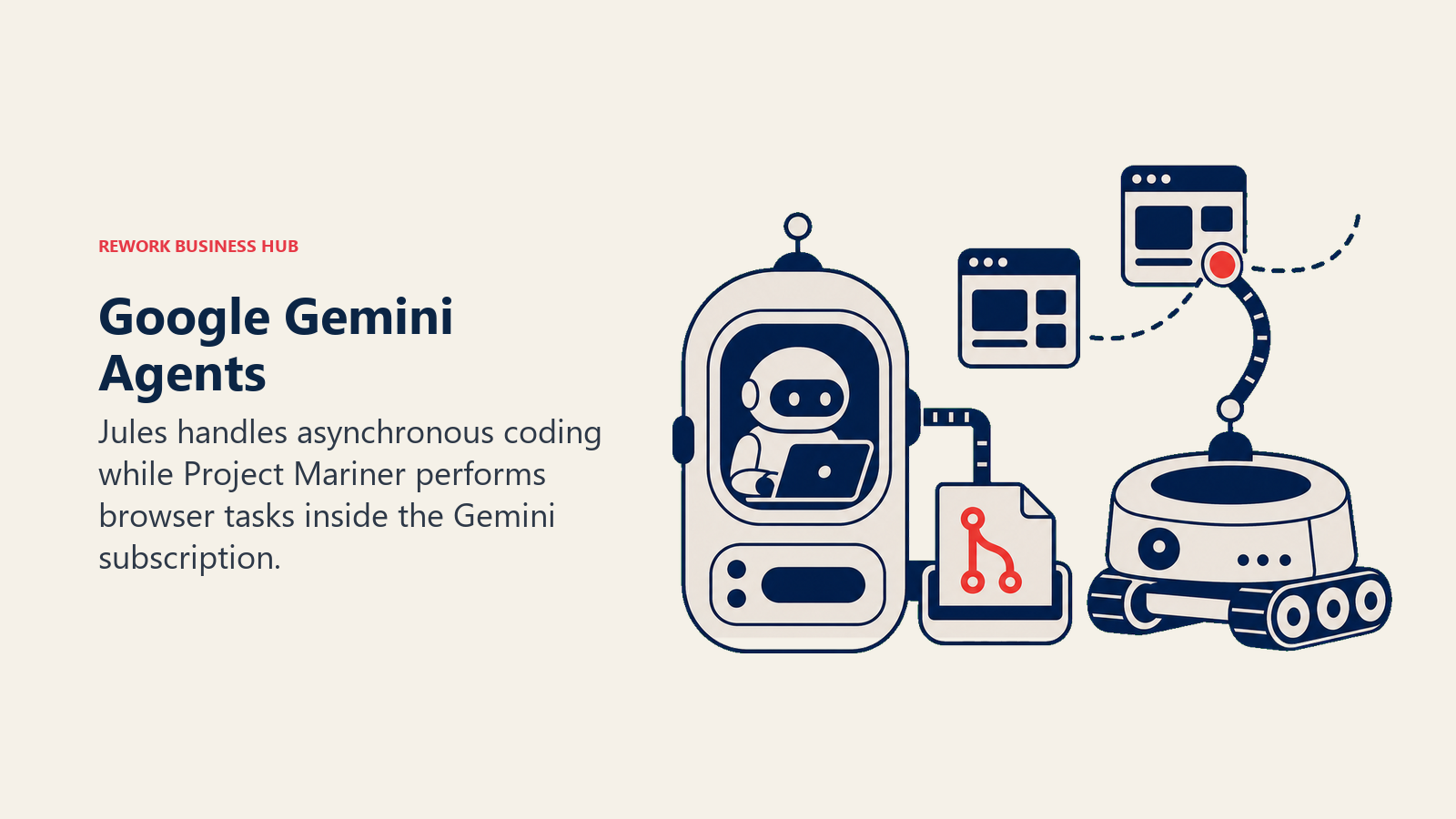
Google took a different path than standalone agent vendors: bundle the agents into the Gemini subscription you already pay for instead of selling them separately. Jules is an asynchronous coding agent that picks up a task, works in the background, and returns a pull request. Project Mariner is a browser-use agent that navigates and completes tasks across websites the way a person would.
For a team already on Google Workspace, this is a low-friction way to get agentic capability without evaluating a new vendor. The tradeoff is that the best access sits behind the most expensive tier: Project Mariner is early access only on Google AI Ultra at $249.99/month, and full Jules capability scales with plan level too.
| What you get | What you don't |
|---|---|
| Coding and browser agents bundled into a subscription you likely already have | Best capability locked behind the $249.99/mo Ultra tier |
| No separate vendor evaluation if you're Google Workspace-native | Project Mariner is still early access, not GA |
| Async coding agent (Jules) fits naturally into existing dev workflows | Less mature standalone agent-builder tooling than OpenAI or Anthropic |
Pricing: Google AI Plus $7.99/mo (limited Jules); AI Pro $19.99/mo; AI Ultra $249.99/mo (Project Mariner early access, top-tier Jules access)
Best for: Teams already standardized on Google Workspace and Gemini who want coding and browser agents without adding a new vendor relationship
4. Manus AI: General-Purpose Agent From a Single Prompt
Manus's philosophy is that most people don't want to pick a category before they start. Give it a goal, plain language, and it plans the steps, browses the web in real time, writes and runs code, analyzes data, and delivers a finished result, a report, a slide deck, a small web app, without you specifying which "type" of agent you need.
The 1.6 model family and Scheduled Tasks 2.0, shipped in 2026, pushed Manus further from a novelty research tool toward something closer to a general operations assistant, especially with new Gmail, Calendar, and Notion connectors. It remains credit-metered, though, and complex or long-running tasks burn through the monthly allowance faster than a simple query.
| What you get | What you don't |
|---|---|
| One agent for research, content, code, and light app building, no category to pick | Credit-based pricing; complex tasks consume the monthly allowance fast |
| Real-time web browsing and code execution in a single flow | Fewer deep enterprise system connectors than Copilot Studio or Agentforce |
| Genuinely usable free tier (300 daily credits) to test before paying | Team/Enterprise governance features are newer and less battle-tested |
Pricing: Free ($0, 300 daily credits); Standard $20/mo (4,000 credits); Pro $40/mo (8,000 credits); Extended $200/mo (40,000 credits); annual billing saves 17%; Team and Enterprise custom
Best for: Individuals, founders, and small teams wanting one general-purpose agent for research, content, and light building without standing up a platform
5. Cognition Devin: Autonomous Software Engineering, Not Autocomplete
Devin's pitch is specific: it's not a coding assistant that suggests the next line, it's an autonomous engineer that takes a ticket, plans the implementation, writes the code, runs tests, and opens a pull request with minimal supervision. Usage is measured in ACUs, roughly 15 minutes of autonomous engineering work, which makes the value metric concrete even if it takes getting used to.
Cognition restructured pricing in June 2026, replacing a visible ACU rate card with clean subscription tiers for self-serve buyers, a response to feedback that usage-based billing was hard to predict. Enterprise customers still see ACU-based billing under the hood. For engineering leaders deciding between an autonomous engineer and a faster autocomplete tool, best AI coding tools covers the broader category, including tools built for pair-programming rather than full autonomy.
| What you get | What you don't |
|---|---|
| Takes a full ticket end to end: plan, code, test, PR | Heavier autonomous runs consume ACUs quickly at the Pro tier |
| Clean subscription tiers as of June 2026 (was pure usage-based) | Best suited to teams with mature CI/CD and test coverage already in place |
| Teams plan bundles seats with centralized billing and admin controls | Not a fit for teams wanting quick inline suggestions, not delegated tickets |
Pricing: Free $0; Pro $20/mo; Max $200/mo; Teams $80/mo base + $40/mo per developer seat; Enterprise custom with ACU billing
Best for: Engineering teams wanting to delegate full tickets, bug fixes, and migrations to an autonomous agent rather than reviewing line-by-line suggestions
6. Microsoft Copilot Studio: Low-Code Agents Governed Inside Microsoft 365
Copilot Studio's philosophy is that enterprise agents should live where IT already has control: inside the Microsoft 365 tenant, governed by the same admin center that manages Teams, SharePoint, and Dynamics. The low-code builder lets business users assemble internal agents (HR bots, IT helpdesk agents, approval workflows) without a developer, while IT retains the security and compliance controls a CISO expects.
Licensed Microsoft 365 Copilot users can build and run internal agents at no extra cost, which makes Copilot Studio close to "free" for organizations already paying for the suite. Standalone use runs on capacity packs instead: $200/month per 25,000 Copilot Credits, or pay-as-you-go through Azure.
| What you get | What you don't |
|---|---|
| Deep governance and admin controls tied to a tenant you already manage | Built for internal use cases; weaker for customer-facing agents |
| Included at no extra cost for licensed Microsoft 365 Copilot users | Credit consumption model gets complex to forecast at scale |
| Low-code builder; business users can assemble simple agents themselves | Full value requires real investment in the Microsoft ecosystem |
Pricing: $200/month per 25,000 Copilot Credits capacity pack; pay-as-you-go via Azure ($0.01/standard message, $0.02/generative message overage); included for licensed Microsoft 365 Copilot users building internal agents
Best for: Enterprises already deep in Microsoft 365 wanting IT-governed internal agents without adding a new vendor relationship
7. Salesforce Agentforce: Agentic AI Built on Your Existing CRM Data
Agentforce's core idea is that the best agent doesn't need a new data layer, it should act directly on the CRM objects, workflows, and automation your team has already built in Salesforce. For orgs with years of Salesforce configuration behind them, that's a real advantage over standing up a separate agent platform and re-connecting it to the same data.
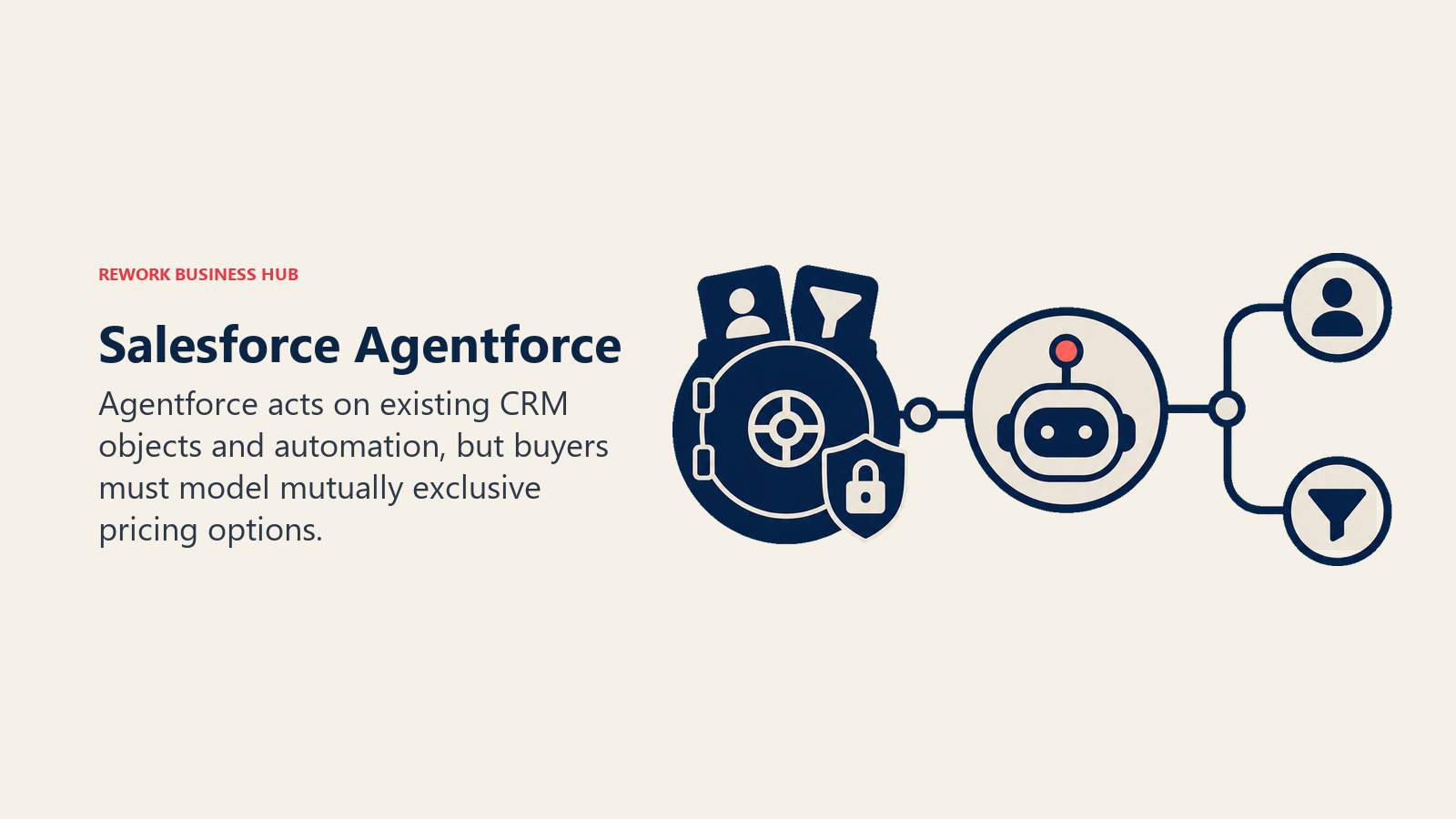
Pricing has genuinely fractured in 2026. Flat $2-per-conversation pricing still exists for customer-facing agents, but most new deployments default to Flex Credits ($500 per 100,000 credits, roughly $0.10 per action) because it also covers employee and voice use cases the conversation model excludes, and the two models can't run in the same org simultaneously. Add the Agentforce User License ($5/user/mo, requires Flex Credits) or unlimited add-ons ($125-150/user/mo), and modeling true cost takes real planning.
| What you get | What you don't |
|---|---|
| Agents reuse existing CRM objects and automation, no new data layer | Requires an existing Salesforce license; not a standalone tool |
| Two pricing models (Conversations, Flex Credits) fit different use cases | The two models are mutually exclusive per org; switching has real cost |
| Deep integration with Salesforce's existing security and governance | Total cost is genuinely hard to estimate before a real usage pattern |
Pricing: $2 per conversation (customer-facing, flat) or $500 per 100,000 Flex Credits (~$0.10/action); Agentforce User License $5/user/mo; unlimited add-ons $125-150/user/mo; Agentforce 1 Editions from $550/user/mo
Best for: Teams already running on Salesforce who want agentic AI layered onto data and workflows they've already built
8. Sierra AI: Outcome-Priced Customer Service Agents at Enterprise Scale
Sierra's pitch is the boldest on this list: hand the customer service function to an AI agent end to end, and pay only when it actually resolves something. That outcome-based model (pay per successful resolution, not per seat or per message) is a genuinely different pricing philosophy from every other tool here, and it puts real pressure on Sierra to make the agent work, not just ship it.
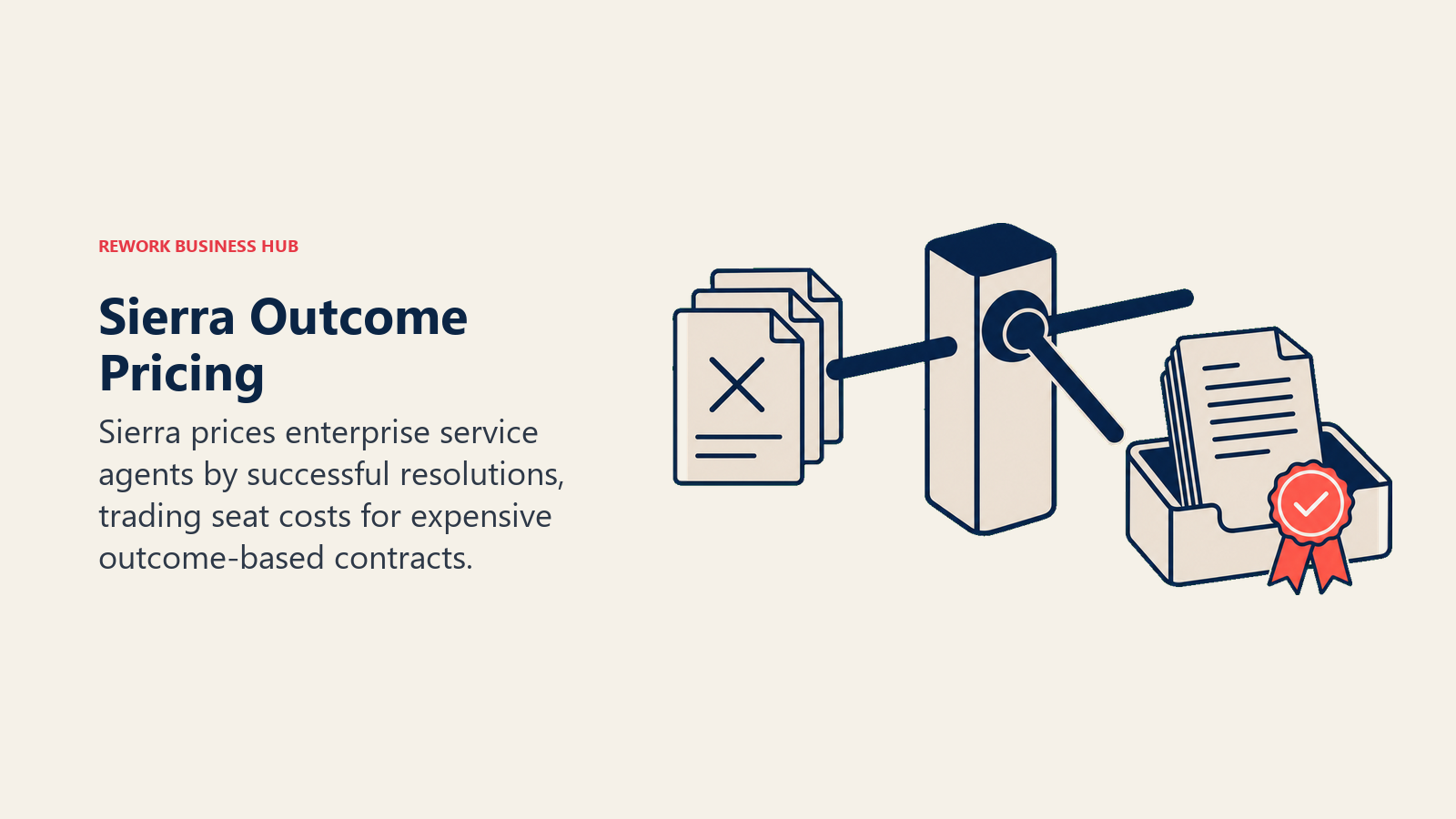
The tradeoff is opacity and cost. Sierra publishes no pricing; every deal goes through a custom enterprise sales process with no free trial or self-serve option, and third-party estimates put annual contracts at $150,000 or more, with year-one total costs (including $50,000-$200,000 in setup fees) often running $200,000 to $350,000+. Deployments typically take three to seven months, and Sierra doesn't include a helpdesk, so you're maintaining a separate ticketing platform alongside it.
| What you get | What you don't |
|---|---|
| Outcome-based pricing; you pay for resolutions, not seat licenses | No published pricing; every deal is custom enterprise sales |
| Purpose-built to run the customer service function, not just assist it | No self-serve or free trial to test before a six-figure commitment |
| Deployments come with dedicated implementation support | No built-in helpdesk; still need a separate ticketing system |
Pricing: Not published; custom enterprise contracts; third-party estimates place annual cost at $150,000+ with $50,000-$200,000 in setup fees
Best for: Large enterprises with high support ticket volume and budget for a dedicated, outcome-priced customer service agent
9. Lindy AI: No-Code Assistant for Email, Calendar, and Meetings
Lindy's philosophy is that most people don't need to learn agent-building at all, they need their inbox and calendar handled. Its strongest feature, the one every reviewer mentions first, is email: Lindy reads context, prioritizes by urgency, and drafts replies that sound like the person it's working for, not a generic autoresponder.
There's no free tier, only a 7-day trial, and the usage model is opaque by design: tiers are sold as "standard, 3x, 7x usage" without published credit numbers, so you find out what "standard" actually covers by running into the ceiling. Extras like phone numbers ($10/month each) and 2x overage billing can push real cost above the sticker price.
| What you get | What you don't |
|---|---|
| Genuinely strong email and calendar automation, no developer needed | No free tier; only a 7-day trial before you commit |
| Computer use (browser automation) unlocked from the Pro tier up | Usage tiers ("standard/3x/7x") don't publish exact numbers |
| Enterprise tier adds SSO, SCIM, and audit logs for larger teams | Extras (phone numbers, overage) can push cost above the sticker price |
Pricing: Plus $29.99/mo per user, Pro $99.99/mo, Max $199.99/mo, Enterprise custom (each tier includes a monthly credit allowance that does not roll over)
Best for: Founders, executives, and ops teams wanting a no-code assistant for inbox and calendar work without hiring a developer
10. Relay.app: Agentic Automation With a Human Approval Step
Relay.app's differentiator is the checkpoint: it builds agentic workflows with human-in-the-loop approval steps designed in from the start, so a person signs off before a high-stakes action (a refund, a customer email, a data change) actually executes. That's a meaningfully different design choice from tools built purely for full autonomy.
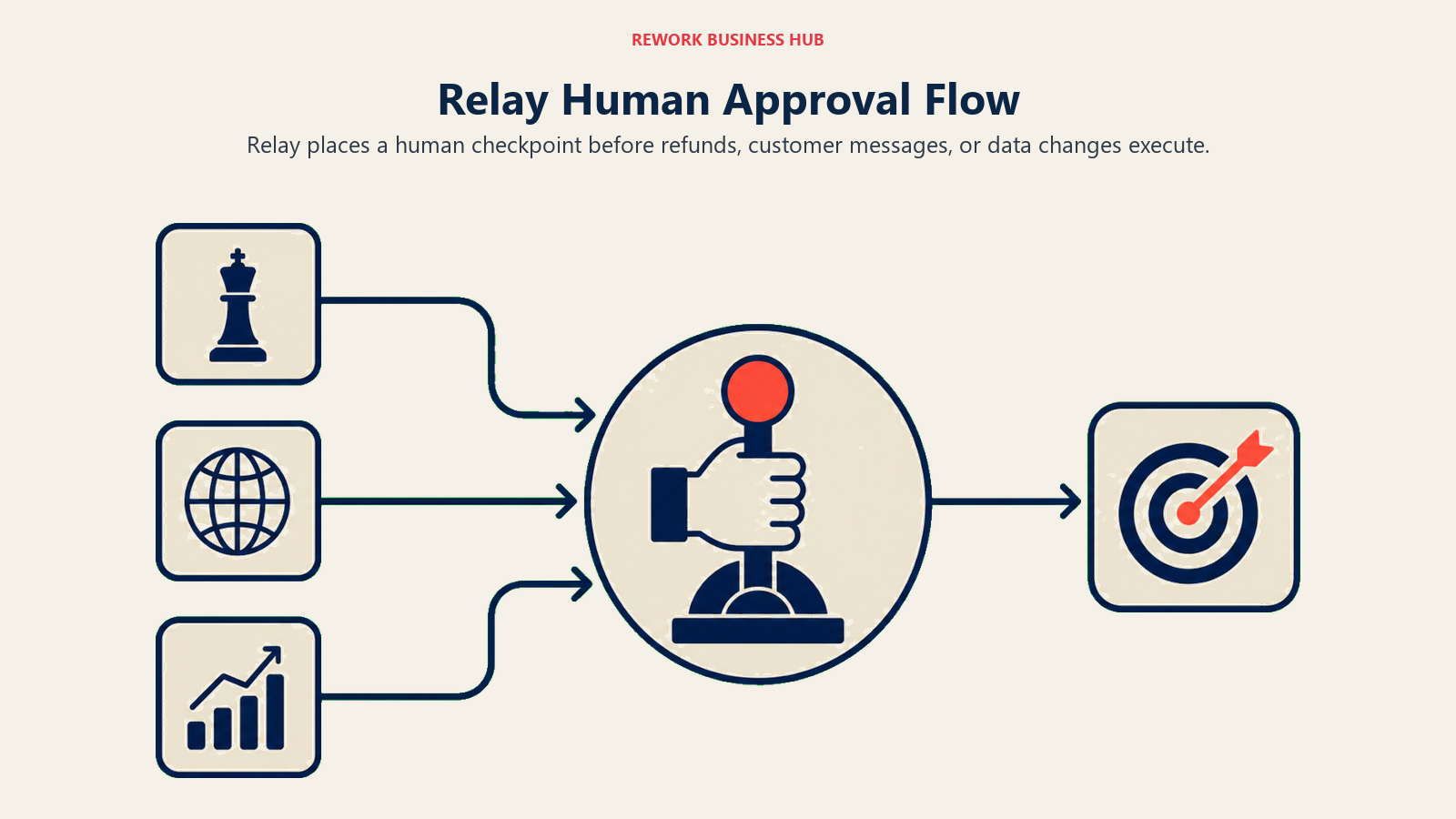
Every plan includes all 200+ app connectors, no paywalled integrations, and the AI assistant runs on your choice of Claude, GPT, or Gemini models. The tradeoff is volume: at the Professional tier, 750 steps and 5,000 AI credits a month can go quickly for a team running several workflows in parallel.
| What you get | What you don't |
|---|---|
| Built-in approval checkpoints before high-stakes actions run | Lower tiers cap out fast if you're running several workflows at once |
| All 200+ integrations included on every plan, no paywalled connectors | Team plan tops out at 10 users; larger orgs need custom Enterprise pricing |
| Choice of underlying model (Claude, GPT, Gemini) per workflow | Less suited to fully autonomous, no-human-in-the-loop use cases |
Pricing: Free ($0, 500 AI credits, 200 steps); Professional $19/mo (2,000 credits, 750 steps); Team $59/mo (10 users, 2,000 credits, 1,500 steps); Enterprise custom
Best for: Ops teams wanting agentic automation with a human sign-off step before consequential actions execute
11. Gumloop: Visual Agent Builder for Data-Heavy Workflows
Gumloop's bet is the visual canvas: a node-based editor purpose-built for document processing, unstructured data extraction, and content generation pipelines, the kind of internal agent work that's messy in a spreadsheet and awkward in a pure chat interface. Backed by a $50 million Series B led by Benchmark, it targets teams that need AI-native automation for data, not just decision-making.
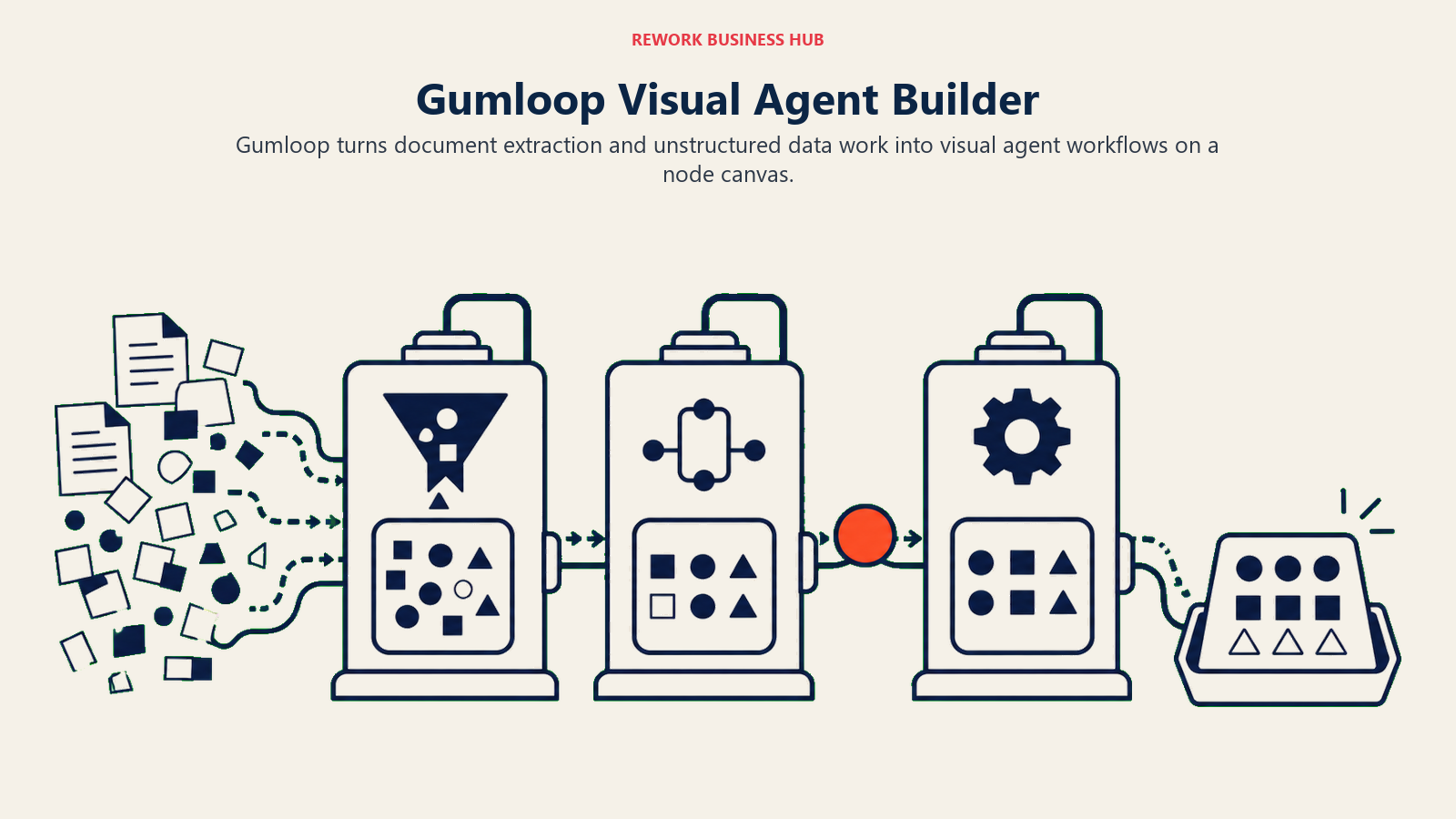
The free tier is genuinely usable (5,000 credits, unlimited agents and flows), and Pro removes seat limits entirely, unlimited seats for $37/month, unusual among agent builders that typically charge per user.
| What you get | What you don't |
|---|---|
| Visual, node-based canvas purpose-built for data and document workflows | Steeper learning curve than a pure chat-based assistant |
| Unlimited seats on the Pro tier ($37/mo), unusual for the category | Fewer pre-built vertical templates than Lindy or Zapier Agents |
| Enterprise tier adds RBAC, SCIM/SAML, VPC, and audit logs | Credit-based pricing still requires monitoring usage on data-heavy runs |
Pricing: Free ($0, 5,000 credits, 1 seat); Pro $37/mo (20,000+ credits, unlimited seats); Enterprise custom
Best for: Ops and data teams building custom internal agents for document-heavy or unstructured-data workflows
12. n8n: Open-Source Control for Technical Teams
n8n's philosophy is ownership: workflow and agent automation you can fully self-host, with no per-task or per-operation billing, just execution-based pricing where one execution covers the entire workflow no matter how many nodes it contains. AI agent workflows use the same execution model as everything else; there's no separate "AI pricing tier" layered on top.
The self-hosted Community Edition is free forever, with no execution or feature limits, and can run on a $5-10/month VPS for low-volume use. That control comes with a real learning curve compared to a pure no-code tool like Zapier or Relay, and cloud plan pricing (roughly $20/month Starter, $50/month Pro, and a Business tier used mainly for its self-hosting and SSO features) scales with execution volume rather than seats.
| What you get | What you don't |
|---|---|
| Free, unlimited self-hosted Community Edition; own your infrastructure | Real learning curve versus Zapier or Relay for non-technical users |
| Execution-based pricing, not per-task or per-seat | AI Assistant is still an early preview, not fully mature |
| No vendor lock-in; open-source core with a large community | Self-hosting requires someone on the team to own the server |
Pricing: Free self-hosted Community Edition (unlimited); Starter roughly $20/mo (2,500 executions); Pro roughly $50/mo (10,000 executions); Business roughly $800/mo (self-hosted option, SSO/SAML); Enterprise custom
Best for: Technical teams wanting full control, self-hosting, and no per-task billing for agent workflows
13. Zapier Agents: Autonomous Decisions Inside Your Existing Automations
Zapier's angle is distribution: rather than asking teams to learn a new agent platform, it puts autonomous decision-making directly into the Zaps and 30,000+ app connectors most ops teams already have running. Copilot, its natural-language builder, lets someone describe what they want and have the corresponding workflow built automatically, and Agents can then make decisions, browse the web, or pull from attached knowledge inside that same workflow.
This is the lowest-friction entry point on this list if your team already runs on Zapier, since there's no new platform to evaluate. It's a weaker fit if you need an agent to handle genuinely long, complex, multi-step reasoning; Zapier Agents work best as decision points inside an existing automation, not as a standalone autonomous system.
| What you get | What you don't |
|---|---|
| No new platform; builds directly into Zaps your team already has | Weaker for long, complex multi-step reasoning than a dedicated agent platform |
| Copilot builds workflows from plain-language descriptions | Agents are a paid add-on, separate from core Zapier plan pricing |
| Connects to 30,000+ existing app actions immediately | Core Zapier plans (tasks-based) can get expensive fast at higher volume |
Pricing: Free to try at agents.zapier.com; core Zapier plans Professional from $19.99/mo (750 tasks), Team from $69/mo; Agents priced as a separate layer on top
Best for: Teams already living inside Zapier who want to add autonomous decisions to existing automations without switching platforms
14. Rework: AI Copilots Built Into Your CRM, Lead, and Work Ops
Rework isn't a dedicated agent-building platform, and it doesn't try to be one. What it ships instead is AI copilots as a native layer inside its existing products: AI-assisted lead scoring and routing in Lead Ops, follow-up and reply drafting inside the unified inbox, and workflow automation across Work Ops, all tied to the same contact record instead of a separate agent you configure and connect yourself.
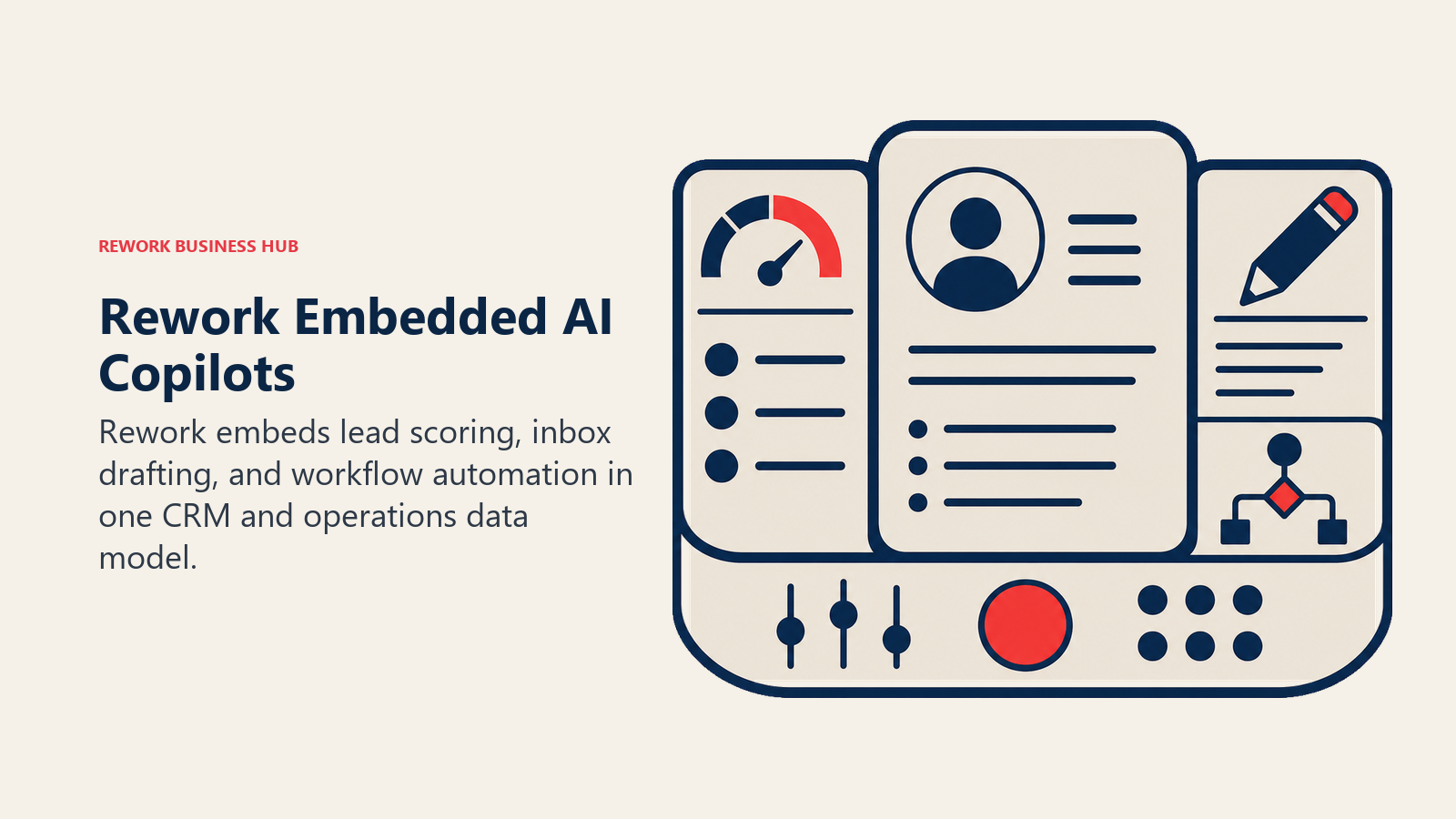
The distinction matters for buyers weighing this list. If the goal is building a custom, open-ended autonomous agent (a coding agent, a research agent, a browser-use agent), a dedicated platform like OpenAI, Anthropic, or Manus is the better fit; that's not what Rework sells. If the goal is agent-like automation for the specific job of running sales, lead, and work processes, and you'd rather not stitch a standalone agent platform onto a separate CRM, Rework's built-in approach removes an entire integration layer. That's the same "one data model instead of five stitched tools" positioning behind Rework's lead management product, extended to the AI layer on top of it.
| What you get | What you don't |
|---|---|
| AI copilots built into the CRM, lead, and work data you already run | Not a platform for building custom, open-ended autonomous agents |
| No separate agent vendor or integration layer to maintain | Fewer AI capabilities than a dedicated agent builder for novel tasks |
| Mid-size packaged pricing, no per-seat "contact sales" wall | Not ideal for solo operators or teams under 5 users |
Pricing: the Sales Engine (CRM) is $69/month billed yearly or $80 month to month, with 5 sales seats included; extra seats come in blocks of 5. The Revenue Engine adds the omnichannel inbox and lead capture for $159/month billed yearly. A 14-day free trial is available. See rework.com/pricing.
Best for: Mid-size teams (20-500 people) who want agent-style automation embedded in the sales, lead, and work platform they already run, not a separate agent to build and connect
Pricing at a Glance
| Tool | Entry Price | Pricing Model | Free Tier? |
|---|---|---|---|
| OpenAI | $20/user/mo (ChatGPT Business); AgentKit usage-based | Subscription plus API usage | Partial |
| Anthropic Claude | $20/mo (Pro) | Subscription plus API usage | Partial |
| Google (Jules + Mariner) | $7.99/mo (AI Plus, limited) | Tiered subscription | Partial |
| Manus AI | Free; $20/mo (Standard) | Credit-based tiers | Yes |
| Cognition Devin | Free; $20/mo (Pro) | Subscription plus ACU billing at scale | Yes |
| Microsoft Copilot Studio | $200/mo per 25,000 credits | Capacity packs or pay-as-you-go | Partial (included with M365 Copilot) |
| Salesforce Agentforce | $2/conversation or $500/100K Flex Credits | Usage-based, requires Salesforce license | No |
| Sierra AI | Custom (est. $150K+/yr) | Outcome-based, per resolution | No |
| Lindy AI | $29.99/mo (Plus) | Flat tiers, opaque usage caps | No |
| Relay.app | Free; $19/mo (Professional) | Credit and step-based tiers | Yes |
| Gumloop | Free; $37/mo (Pro) | Credit-based tiers | Yes |
| n8n | Free self-hosted; $20/mo (Starter, cloud) | Execution-based | Yes |
| Zapier Agents | Free to try; Zapier plans from $19.99/mo | Task-based plus Agents add-on | Yes |
| Rework | $69/mo billed yearly (Sales Engine, 5 seats) | Engine with seats in blocks of 5; monthly or yearly | No |
Where AI Agents Are Headed
Two forces are pulling in opposite directions right now. Adoption is accelerating on paper, Gartner expects 40% of enterprise apps to carry a task-specific agent by year-end, and 74% of companies expect to be using AI agents at least moderately by 2027, per Deloitte. But actual scaled deployment is much thinner: no more than 10% of organizations report scaling AI agents in any single business function, per McKinsey, and Menlo Ventures found that most of what gets marketed as "agentic" is still a fixed-sequence workflow wearing an agent label. That gap between adoption headlines and production reality is exactly why Gartner also projects over 40% of agentic AI projects will be canceled by 2027.
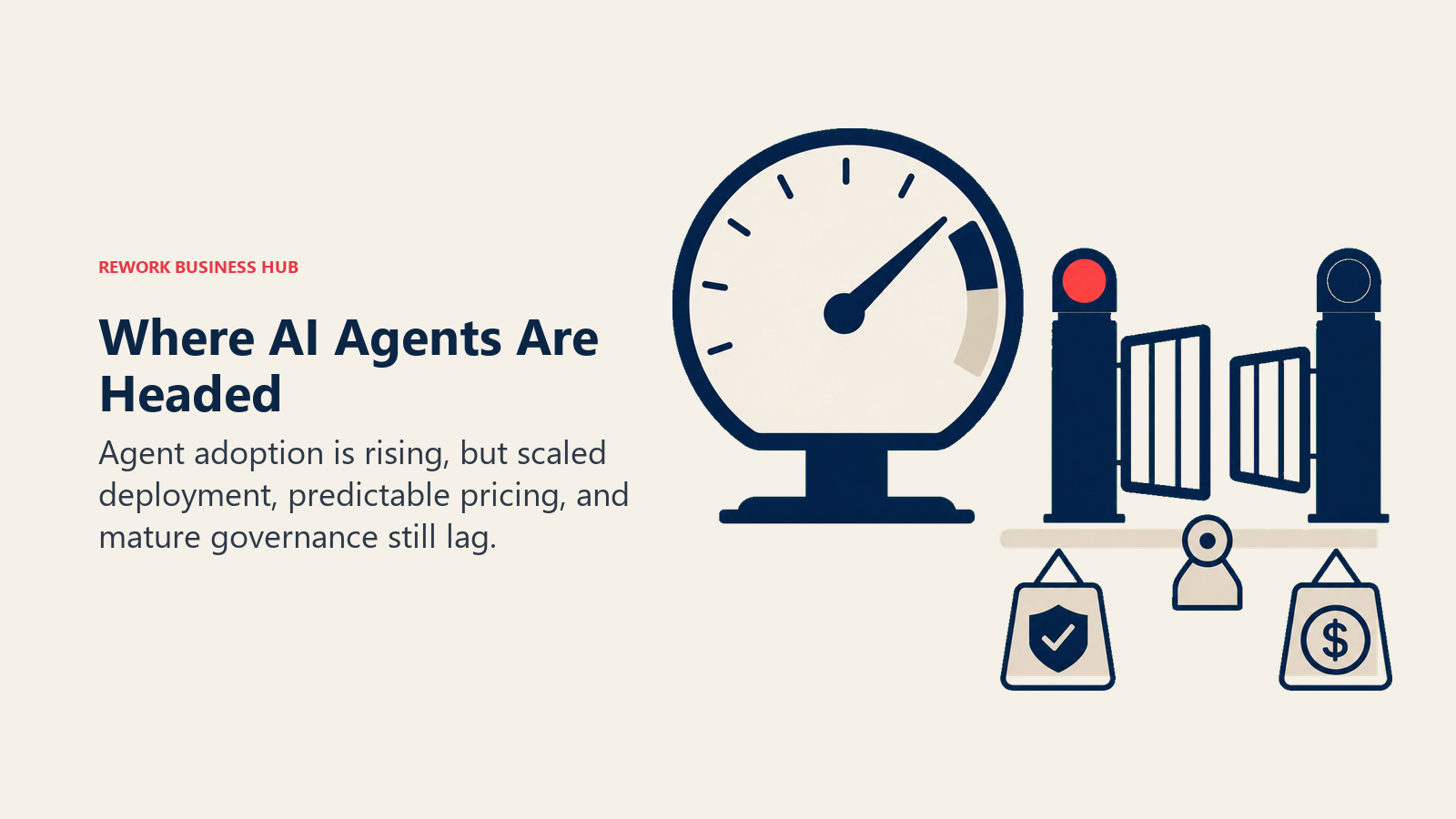
Pricing is shifting too, away from flat per-seat licenses and toward usage-based and outcome-based models (Salesforce's Flex Credits, Sierra's pay-per-resolution, Manus and Gumloop's credit systems), which ties cost more directly to value but makes budgeting harder to forecast. And governance is lagging both trends: only 21% of companies report a mature model for agent oversight, which is the real reason pilots stall before they reach production. If you're building an internal case for agent adoption, the governance gap and AI copilots vs AI agents are worth reading before you write the check.
What to Do Next
Pick the one job costing you the most right now, whether that's engineering throughput, support ticket volume, or a fragmented lead-to-close process, and shortlist two tools against the decision framework above rather than trying every option on this list. Run a scoped two-week pilot with a real workflow and a real owner before signing anything longer than a month, and put a governance checkpoint in place before the agent touches production systems; that's the step Deloitte's research shows most companies skip. And if your primary pain is agent-style automation scattered across a CRM, lead capture, and work management rather than a missing point feature, Rework's pricing starts with the Sales Engine at $69/month billed yearly for 5 sales seats.

Principal Product Marketing Strategist
On this page
- Updated July 2026: What Changed
- Key Facts
- Quick Comparison Table
- How to Choose: Decision Framework
- Framework: By Team Size and Technical Depth
- 1. OpenAI: AgentKit and Workspace Agents for the Broadest Ecosystem
- 2. Anthropic Claude: Agent SDK for Developer-Built Autonomous Systems
- 3. Google: Jules and Project Mariner Inside the Gemini Subscription
- 4. Manus AI: General-Purpose Agent From a Single Prompt
- 5. Cognition Devin: Autonomous Software Engineering, Not Autocomplete
- 6. Microsoft Copilot Studio: Low-Code Agents Governed Inside Microsoft 365
- 7. Salesforce Agentforce: Agentic AI Built on Your Existing CRM Data
- 8. Sierra AI: Outcome-Priced Customer Service Agents at Enterprise Scale
- 9. Lindy AI: No-Code Assistant for Email, Calendar, and Meetings
- 10. Relay.app: Agentic Automation With a Human Approval Step
- 11. Gumloop: Visual Agent Builder for Data-Heavy Workflows
- 12. n8n: Open-Source Control for Technical Teams
- 13. Zapier Agents: Autonomous Decisions Inside Your Existing Automations
- 14. Rework: AI Copilots Built Into Your CRM, Lead, and Work Ops
- Pricing at a Glance
- Where AI Agents Are Headed
- What to Do Next